I have always loved Bleak House and I have always found its opening chapter amongst the most powerful and satirical of beginnings. In terms of creation of mood, it is also there at the top. Dickens knew how to exploit repetition, in this case of a single word, to drive home his damning assault upon the English justice system. A description of London under fog follows a description of mire, in which people slip and slide. The fog is ‘everywhere’ and its ubiquitousness is confirmed in a panoramic sequence of memorable descriptive detail. It culminates, using a technique familiar to film audiences, with an ever-more-penetrating focus upon Chancery. ‘The raw afternoon is rawest, and the dense fog is densest, and the muddy streets are muddiest near that leaden-headed old obstruction, appropriate ornament for the threshold of a leaden-headed old corporation, Temple Bar. And, … at the very heart of the fog, sits the Lord High Chancellor, in his High Court of Chancery. Never can there come fog too thick, never can there come mud and mire too deep, to assort with the groping and floundering condition which this High Court of Chancery, most pestilent of hoary sinners, holds this day in the sight of heaven and earth.’
I have read about and watched the unfolding disaster at the Beeb with all the horror of someone who discovers that a much loved member of the family (an auntie, perhaps) has betrayed that affection and regard. With obfuscation so widespread at the BBC, I fear that the corporation has become so leaden-headed that I cannot feel sorry for it. What the Dickens did it think it was up to?
I’m sure that many writers who read Daisy Waugh’s Sunday Times Magazinecolumn about promoting her book will have smiled. Whimsical as ever, Daisy Waugh nevertheless touches some raw writer nerves, especially amongst those, like me, who are new to the self-promotion game. She first describes herself ‘lying on a giant polystyrene cut-out’ of her name, dressed in ‘a tight red satin skirt’ and ‘some magnificent shoes covered in velvet and jewels, on loan from Manolo Blahnik.’ This for a book cover or a poster. The thrust of her article concerns ‘Literary Death Matches’, a kind of Strictly-Come-Reading-Without-A-Partner in the pub, where writers show off a bit of verbal leg to entertain the ‘fairly drunken crowd’. Judging appears to be a touch subjective, the appearance, not the writing, of the author being crucial to success. The irony of Daisy Waugh’s final sentence (‘Whatever it takes, I’m up for it.’) not only amuses her reader, but also serves to highlight the anguish of authors who face a hostile and not necessarily objective audience scrutiny of something they have beaten brain-cells to bits for. This post is a toast to the thousands of unpublished gems that really deserved better treatment and to those publishers and reviewers who genuinely do know their stuff and employ it well for the benefit of authors and readers alike.
I’d like to think that all writers get a fair judgement, but the world isn’t fair.
This weekend the leaves have been falling fast from the trees after the first frosts and some of the puddles have been iced over in the morning. When watching the weather forecast yesterday evening I realised that there are barely nine hours of daylight now. Usually I hate the plunge into winter darkness, but this year there seems to be so much to do that I shall probably barely notice it. In the Family will be published on November 15th and I am also helping several other writers whose books are about to come out. I am delighted to have been invited to give an author evening at Bookmark, the wonderful independent bookshop in Spalding (the small market town where my novel takes place) and I have also been asked to talk to some reading groups. I must admit that, although I’m very familiar with talking to bookshop customers, I don’t have much experience of reading groups. Some of them sound very sophisticated. Does anyone have advice? What have you talked to them about when you’ve joined them?
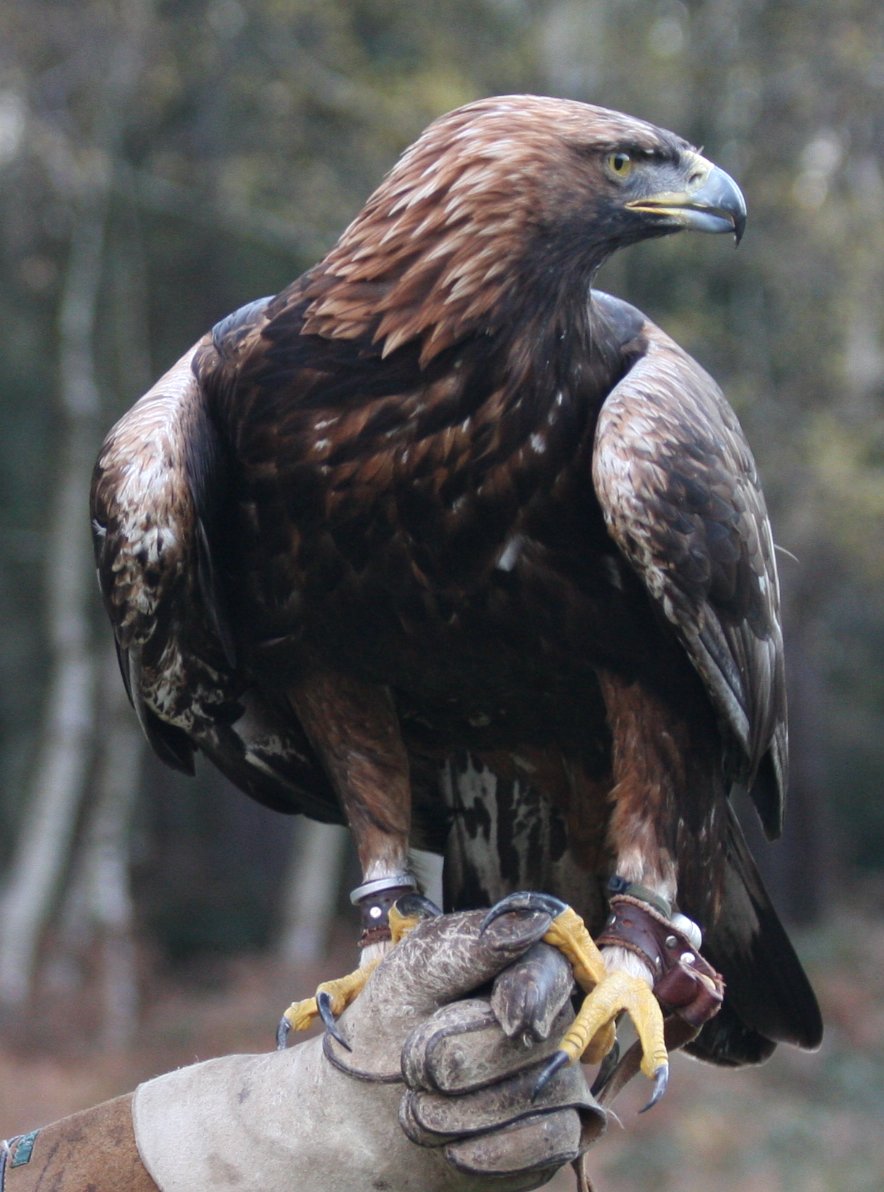
Crimes stir feelings in all of us and, of course, provide the writer with a fertile creative soil in which to grow a fictional crop. As someone who has to admit to being enthralled by the psychology of the perpetrator of crime, I join the ranks of those who pursue every detail of real crime to try to discover the mentality which could explain ‘why’… So what kind of crime touches me most? Not necessarily the most grisly; not the most brutal. I am likely to be fascinated by something which may seem to most to be quite venial. It’s also true that I find my interest stirred by offences against victims who cannot understand what is happening to them: the mentally infirm, children, animals. I heard yesterday of the rescue after six years of two golden eagles, imported as eaglets without legal paperwork and kept in a small garden shed with no windows; in six years, they never flew and never left the shed. Though I am not a bird fanatic, I find myself stirred by the power and majesty of a bird which I have seen flying free on Mull and which Tennyson memorably compared to a thunderbolt in its stoop. Because the ‘owner’ of these two birds put shelter over their heads and fed them appropriately, he was not prosecuted. I’m delighted to learn that both birds were bought by a specialist falconer, who has transformed their lives, training and flying them and bonding with them; but what of the man who kept them? What was it in him that wanted to keep eagles in the first place if he had no intention of training them and why did he commit them to a life of imprisonment? Will he do the same again? Is his a similar mindset to that of the egg-robber who keeps his wild birds’ eggs in secret to fulfil some inner personal need? What most grabs your interest in crime?
I have been interested to read quite a number of recent Twitter posts which confirm a powerful hatred of fireworks and of Bonfire Night. I enjoyed these two: “When I’m rich, I’m going to buy ALL the fireworks on sale on Merseyside and bury them” and “I refuse to endorse 400-year-old celebration of anti-Catholic bigotry.” Personally, I have mixed feelings; the problem is that Bonfire Night and Hallowe’en have blended into a fortnight’s slow-release firework fest, combining the best of the visual extravaganza with the worst of the mischief. However, I remember that, when I was growing up in Spalding, in the East of England, Bonfire Night and Mischief Night were rolled into one on November 5th and children blacked their faces with soot on a cork or dressed up as ghosts and took their guy around the neighbourhood to demand (with appropriate chants) their treats; owners of pets knew that there would be only a couple of days of potential danger for their animals and the whole thing seemed to be blessed with innocent fun and excitement. I have not forgotten that my imagination was always inspired by the occasion, for there lay behind it all a sense of the macabre and of lurking threat, which was real enough in the time of James 1st and still finds its way in various forms into the work of crime novelists. I rather like Bonfire Night… and a plot to blow up Parliament is the stuff of fancy!
To read that which is beautifully written is a joy and a burst of unanticipated surprise in these days of abbreviated txt and abrupt communication. I have recently re-visited Anne Zouroudi’s The Messenger of Athens and remain as captivated as ever by the author’s capacity to express the hidden significance of things and to create a mood by magic, for we are barely conscious of her technique, so mesmerised are we by her unaffected style and visual clarity. It is not just the Greek island topography, which is evoked by subtle selection of appropriate detail and diction, but the darker touches of her sharp and cynical delineation of human nature and the sense of people’s insignificance in the wider scheme of things that nudge us into a world which is tellingly harsh; the irony of this in what is a stereotypical tourist setting is striking. A deceptively simple example from the text (four letters) is the paragraph describing how Thodoris Hatzistratis’ ‘Grandpa’ (such a warm and comfortably affectionate term) has been laid out for burial by the women, his appearance rejuvenated in death and by their ministrations. Delicate use of pejorative vocabulary, such as ‘jaundiced’, suggests a darker tone. Then, in a powerfully brief one-sentence paragraph, comes: ‘Around his nostrils, a fat fly crawled.’
Anne doesn’t know me, but I became more interested in her work after I attended a seminar that she gave at Bloomsbury Publishing in June. If you haven’t read her novels, you should.
I have been spending an unusual Saturday today, reading Pam McIlroy’s Twitter ‘TAIR’ (Thoughts As I Read) through Mari Hannah’s new release Settled Blood, her second Kate Daniels novel. Being new to Twitter, I had not anticipated how compelling such an exercise could be. I have found myself creating a novel around Pam’s tweets, a novel which is no doubt very different from (and inferior to!) the original, but, I would argue, as fascinating as personal creativity gets to be. The success of something like this depends on the skill of the reader to capture key aspects in a pithy way (and Pam’s delivery is trenchant indeed!) and, as I discovered as I was drawn in, some genuine audience participation to engage the mind. I have been, as might be guessed in a writer contemplating the imminent launch of her debut novel, more than a little nervous about reactions to my book, so my response to Pam’s TAIR through Settled Blood(to be launched on November 7th) has been touched with some extra personal piquancy. So, as the TAIR tears onwards to its conclusion, I should like to congratulate Pam on her wonderful work and to wish Mari all the best for her launch. Appetite whetted yet? Mine is…
In a month of very new experiences, I’m proud to have been accepted by the Crime Writers’ Association this week. Yesterday, I received my CWA member’s card, some very helpful information and the three latest copies of Red Herrings. I’m delighted to discover that the editor of Red Herrings lives in Huddersfield, which is not very far from where I am, and I’m hoping to be able to meet him. The information about meetings, conventions, conferences and readers’ groups all looks exciting. The CWA’s Diamond Jubilee Conference takes place in Bowness at the end of April next year. I shall certainly attend and hope perhaps that it will enable me to meet some of the readers of my blog and some of the merry tweeters I have so far encountered ethereally on Twitter. In the meantime, if you have advice on how to make sure that I get the most from the CWA, I should be very grateful to hear it.
Now that viewers have had a chance to see Alfie Barker’s trailer for In the Family, I should like to share with visitors to this blog a view of his talent. His film Assumption, which went live just over a year ago, found favour across the world and, as you will see from the comment below, has been seen by Shane Meadows (Director of This is England, who said, “I honestly thought it was a really touching film, very restrained, which is rare, and poetic.”) and also by IMDb founder Col Needham. The film has just finished a year-long North American film festival tour, which started at Vancouver’s International Film Festival. Alfie has had his films presented in Malaysia, Estonia, Bulgaria, New York (where Assumption “received the longest and most enthusiastic applause of the evening”), California and the U.K. and has won twenty-one international awards. His latest film, No Regrets, which tackles themes related to the harsh disease of Alzheimer’s, is due out in December. If you like what you have seen, as I am sure you already do, you may wish to check out his website at http://alfiebarker.com/ to view his fabulous work. Expect to be moved.
I am privileged and proud to have been able to work with him.




 Christina James, crime novelist