In memoriam: the otnineen…

Spun out

I am not a very practical person. No, I will rephrase that: I am practical in certain areas (making jam, pickles, bread, baking cakes, remembering birthdays and anniversaries, prodding truculent pension fund officials into action), but I don’t possess the full spectrum of practicality. Admittedly, there are some things I choose not to be practical about: scraping the ice off the windscreen on a cold winter’s morning or working out the intricacies of our borough’s refuse disposal system of four bins and a plastic box at the last count, each of which has to be put in the right place on the right day if it is to be collected (though I pay the price of not being able to join the camaraderie of the worried knot of villagers that always gathers after a bank holiday – I am fascinated by the revenge of the bin men in our hygiene-conscious, recycling-PC age). Equally, my husband, who is much more practical than I am, is helpless (he claims) when it comes to ironing shirts or booking an appointment to have his hair cut. Ours is a symbiotic relationship, QED.

But when it comes to solving problems involving plumbing, carpentry or electricals, I confess to being genuinely out of my depth and always defer humbly to my husband’s opinion. (Apologies to the power-drill-wielding women of the world.) Thus, when a month or so ago, the washing machine stopped mid-cycle and took some cajoling out of its sulk, and I said to my husband, “I think the otnineen’s on the blink!” (I should say that, since our son’s early effort to get his tongue round the real term, we’ve always called it this.), he replied: “It’s just a glitch; you get them with all appliances.” And I believed him. And I believed him on subsequent occasions when it made a wheezing noise (“You’ve put too much in it.”) or ground to a halt half-full of water (“Just turn it off and turn it on again and set it to spin.”).

So yesterday when I called, “Jim, there are thick black clouds of smoke billowing out of the washing machine,” I thoroughly expected him to say, “It’s just having an off-day. Leave it to have a little rest and try again tomorrow.” I was therefore astonished when he came sprinting downstairs shouting that it was highly dangerous and shot into the utility room, outpaced only by the dog, who, as is his custom in any kind of domestic disturbance, had decided that discretion was the better part of valour and de-camped to the garden.

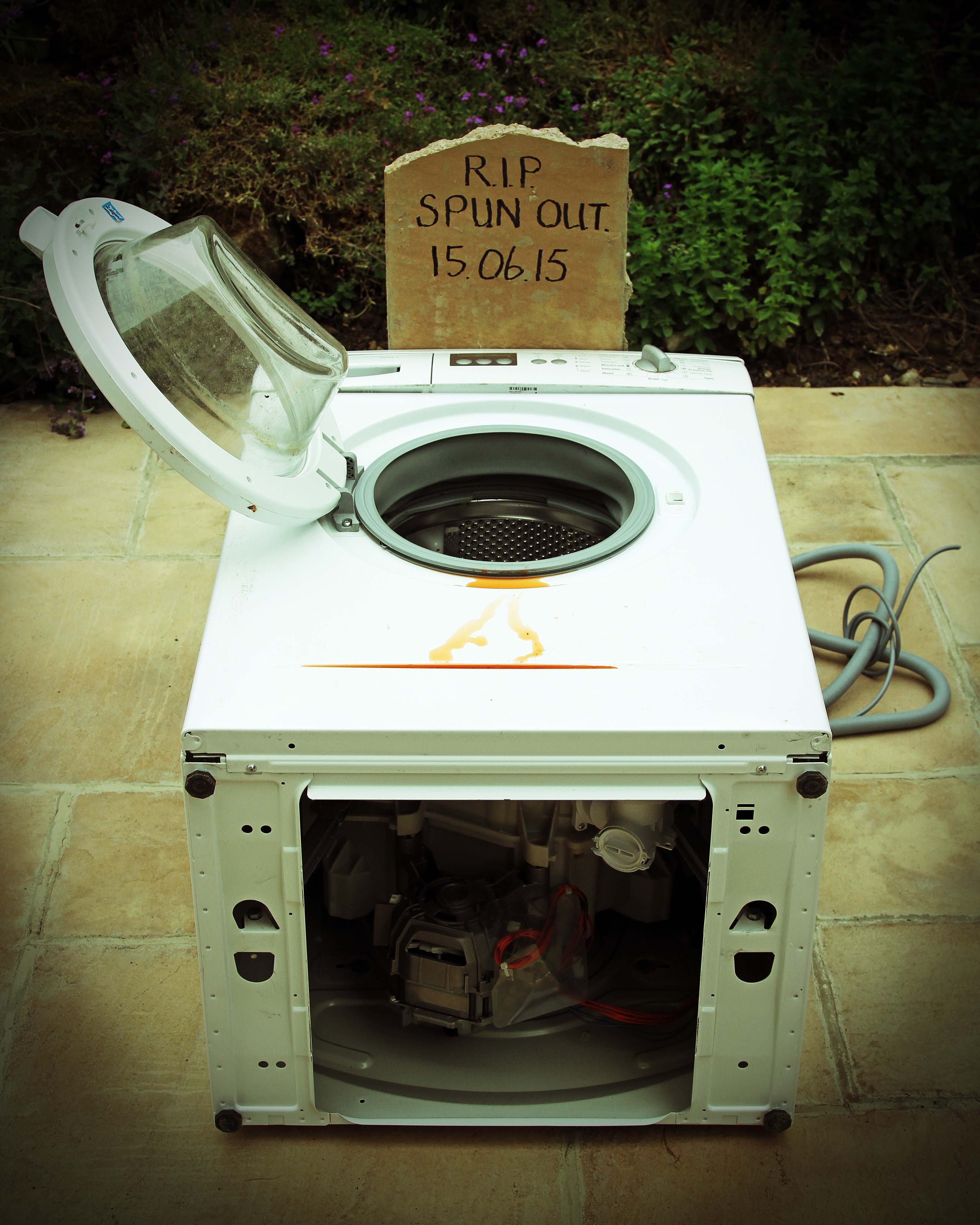
The poor old otnineen – I think it was twelve or thirteen – has now been wrenched out and expelled. It stands in the yard, a forlorn old servant awaiting the white knights from John Lewis to take it away; for you may be interested to know, as I have just discovered, that, like a white-goods Sarah Gamp, John Lewis does layings-in and layings-out for washing machines and will remove the old one when the new one is delivered, at no extra charge. I wonder that there hasn’t been a film made of it, like ‘Departures’. I can’t wait for the new one to arrive: more than three days without doing any washing and my (quite practical) system of never spending more than ten minutes ironing any single load of washing falls to pieces. But I can’t help feeling a small pang for the burnt-out old friend in the yard. I do hope that John Lewis will send it spinning into a never-ending cycle of drum rhythms in the great otnineen paradise in the parallel universe.

Compellingly unsettling: Catherine Eisner’s ‘A Bad Case’, from @saltpublishing …

EisnerI first encountered the work of Catherine Eisner in 2008, when I read Sister Morphine (also published by Salt) and it absolutely blew me away. I was convinced at the time that it was a major, very important novel and the comparatively modest success that it has enjoyed since then has not caused me to change my mind. I still believe that it will be ‘discovered’ by a much larger audience, including some discerning and influential critics, much in the same way as John Kennedy Toole’s A Confederacy of Dunces finally achieved the (sadly posthumous) attention it deserved.

A Bad Case has strong links to Sister Morphine, picking up on some of the same themes and even exploring further the lives of some of the same characters. Both works consist of a series of discrete but linked short stories, a format which I find very appealing. It enables the author to expand the sometimes constricting form of the short story whilst taking advantage of the fine discipline that it imposes, simultaneously giving the characters more depth by setting them in a shared context.

I have to confess that, although I by no means belong to the school of thought that opines that an author’s biography and his or her work are inextricably linked (i.e., you can’t understand the one without the other, a wonderful excuse for prying), Eisner herself intrigues me almost as much as her work. This is because she is profoundly knowledgeable in so many different fields: she understands the pop scene of the 1960s; she obviously knows a lot about the publishing industry; she exhibits more than a passing acquaintance with a wide range of ‘mind-altering substances’; she is erudite, although she wears her learning lightly, pronouncing telling mots justes upon the giants (and some of the minnows) of Western civilisation’s authors, artists and musicians across many centuries; she understands Latin and several European languages besides English; she has an acute ear for dialect (in A Bad Case, southern Irish, especially) as well as the varying cadences of speech that derive from differences in social standing; and, if she has not lived among the British aristocracy, she has clearly had opportunities to observe it at first hand. Wow!

But it is not Eisner’s accomplishments as a polymath that most fascinate me. I am hooked on her work because she writes with a vigour that both contributes to and has pushed the boundaries of an outstanding literary tradition. I don’t have a single word that encapsulates what this tradition stands for, but I can list some of its luminaries. They are Jonathan Swift (though Eisner’s indignatio is more of the jocosa than the saeva variety); Somerville & Ross and Samuel Beckett. Elements of A Bad Case also remind me of Molly Keane’s Good Behaviour. It is not lost on me that all of these writers are Irish, but although Eisner is clearly interested in Ireland and Irish characters, I doubt that it is because she has Irish blood herself. I think it is because her strong sense of the inescapable absurdity of fate, her ability to communicate the disgusting terribleness of the human condition, her knack of pulling off some elements of the supernatural while staying just this side of credibility and her wonderful power with words, all interlaced with robust black humour, happily also epitomise the best of Anglo-Irish writing.

So to the writing itself. Eisner may often be tongue-in-cheek, but the subjects she chooses are harsh. They include false imprisonment (I found A Room to the End of Fall, the first story in the volume, of particular interest, because my next novel, The Crossing, also explores false imprisonment, though in quite a different way.), paedophilia, treason, espionage, adultery, suicide and madness. The cover of A Bad Case quotes Kate Clanchy, who says that Eisner’s writing is ‘slightly, scarily deranged’. Although I understand perfectly what Clanchy means, this is not my reading of Eisner’s work. The characters may be deranged, but not the author. She pays them the compliment of presenting their world through the prism of their own outlook and sentiments, which have been conditioned by their often adverse experiences. If the reader can’t keep up, that is too bad: if there is one thing Eisner never does, it is patronise her readers by pandering to some notion of sparing their refined sensibilities. If the reader feels unsettled, that is good. If, despite understanding the richly conflicting, occasionally brutal and always uncompromising world that Eisner paints, the reader also laughs out loud, that is perfect. I have no better words to express my admiration than to say again: Wow!

Over the past few years I have played an Eisner guessing game with a friend. (I do hope that if Catherine Eisner reads this, she won’t be offended!) It’s only half serious and has its roots in our first reading of Sister Morphine, when we were each convinced that ‘Catherine Eisner’ was a pseudonym for someone much better known in the world of literature. If we’d taken bets on it, he would have lost, because his preferred candidate has since died. I’m still half-convinced that my own prospect is the correct one: I may never find out the truth. However, if you are also intrigued, I know that there is only one way for you to get closer to it: by reading Sister Morphine and A Bad Case, if possible in that order. I heartily recommend both of them to you, as I am certain you will not be faint-hearted.

What I’d like, knitted up and sorted, once and for all…

Knitted

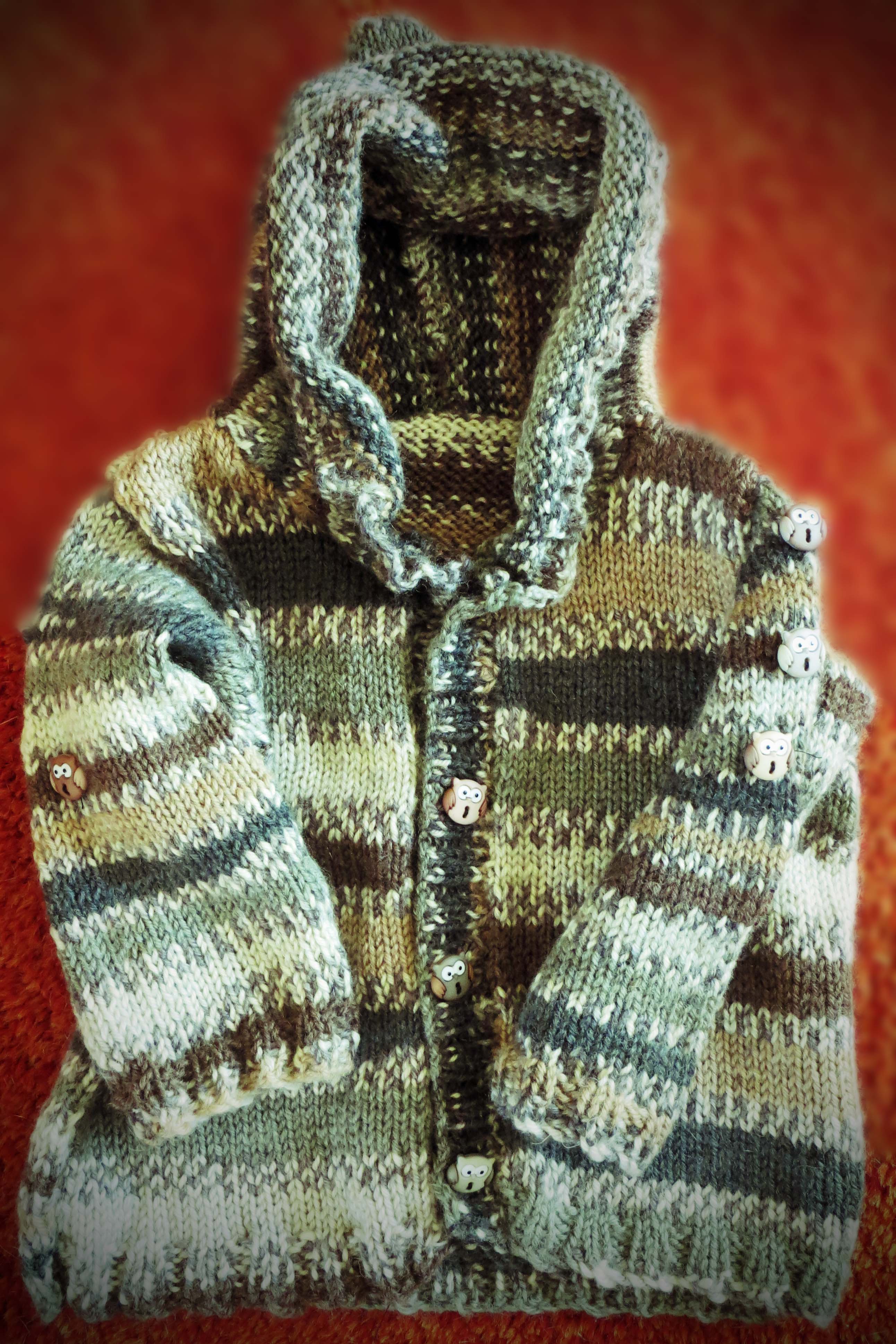
I made the cardigan in the photograph for a small friend of mine and I have to admit I am quite proud of it. The small friend is a she who likes owls (the multi-shaded wool is called ‘Owl’ by its suppliers) and I found the owl buttons online. I was even more delighted when they arrived and I discovered that they’d come from an online retailer based at Gedney, a small village close to my native Spalding.

This particular little girl owns very few clothes in pink. Her mother, whilst objective enough to include some pink in her daughter’s wardrobe, is determined not to turn her into a ‘princess’ and, in any case, I had other ideas for this project (pink not having been a very popular colour for girls during my own childhood, I should never have considered this colour as a must for any daughter of mine, had I had one); I like owls myself and have noticed that they tend not to shine brightly pink as they silently flit between the trees at dusk. And, if you follow me on Twitter, you’ll know that my chosen header picture there hasn’t a trace of pink in it. When looking for other garments with which to indulge the small friend, my worst expectations were quickly confirmed by what I found, that many are not only pink, but pink in a very sexist way. I’ve discovered (but not been tempted to buy) pink tops printed with patterns of cupcakes and hearts, pale pink coats adorned with dark pink bows and little pink socks with lacy ruffled tops. Most retailers of children’s clothing stock their racks with boy-girl equivalents and I’ve found that the boy equivalents are almost always much more interesting and, generally, much less narrowly stereotyped by colour. For example, at Monsoon, I found some beautiful long-sleeved T-shirts in green and gold, decorated respectively with wild animals on a prairie and a train packed with animal passengers. Some of the motifs were appliquéd or embroidered, making the fabric fascinating for a small girl already interested in all things tactile. I bought them for her: there was nothing overtly masculine about them and they were much more fun than the horizon-narrowing pink-iced buns on a darker pink ground topped with scarlet glacé cherries. Her mum has also bought beautiful boys’ clothes for her which look as good on her as on any boy. Based on my limited recent experience as a shopper for infants, I’m astonished that the racks of sickly pink fairy-frocks sell: I had fondly assumed that at least some of the clear message thinking women (and men!) have been sending for so many years now to the producers and buyers of children’s goods would have got through; I’d have expected to see the ‘pretty-in-pink’ clothes bunched in limp, unconsidered crowds during the sales. But in all the shops where I browsed, the pink princess outfits seemed to be disappearing like hot cakes – or cupcakes!

What I especially don’t understand is the logic behind dressing little girls in clothes like these. In the past, girls wore skirts and boys wore trousers or shorts (I belong to the first generation of girls to have made a big push first to be allowed to wear trousers and later to have them accepted as smart workwear), but there were few other concessions to gender except whether buttons were placed on the left or the right of the garment (a confusing convention that thankfully seems largely to have died out). Girls and boys wore the same styles and colours in coats, jumpers, cardigans, shirts, vests and socks. Only swimwear and footwear were different, and then not always: small girls often wore the same (hideously uncomfortable when wet) knitted swimming trunks as boys and stout lace-up shoes in the winter or bar-sandals in the summer were fairly universal. Granted, colours were often drab (browns, greens and greys didn’t show the dirt, swatches of cloth and hanks of wool were often left over from the making of adult garments) and choosing ‘unisex’ clothes may partly have been inspired by the domestic economics of hand-me-downs. I acknowledge there was also quite a lot to put up with before the advent of man-made materials and truly waterproof clothes. Most children had only one school coat and often had to wear it damp on the day following a downpour. All but the wealthiest grew heartily sick of their clothes before they grew out of them: two school skirts, two jumpers and two or three shirts, plus a dress ‘for best’, was the norm and, although I didn’t think of it then, this must have meant mothers, and sometimes fathers (not all fathers ensconced themselves behind their newspapers when they returned home) were engaged in a constant round of washing and ironing. I’m not trying to hark back to some kind of golden age.

But still, as far as our clothing went, girls and boys were pretty much equal. I certainly never wore anything that suggested that my future would be focused on baking cup-cakes and wearing lipstick (though I happen to enjoy both), nor did my brother’s clothes indicate that he was destined to be a footballer, astronaut or mechanic. I make these points tongue-in-cheek, but underlying them is a very serious principle indeed: that of achieving true equality between the sexes and removing the glass ceiling once and for all. How are the women and men of the future going to be inspired to exercise a completely free choice, electing to become engineers or hairdressers, electricians or fashion designers, bus drivers or nurses – or indeed, bakers or make-up artists – because they’ve thought about it and this is what they want to be, if at the age of a few months they have already been placed in a gender pigeon-hole created by parents in cahoots with clothing manufacturers?

I began by saying that I’m proud of the owl cardigan. It’s been a long time since I knitted a garment and, though the pattern was simple, I enjoyed making it and felt a sense of achievement when it was finished – especially as its owner seems to like it. It’s a unisex cardigan, suitable equally for a girl or a boy, and could equally have been made by a man or a woman. One of the people who taught me to knit was my stepfather, a burly fifteen-stone builder with hands as big as soup tureens. Boys – and girls – and parents – take note.


Paul McVeigh, a strikingly original voice…

The Good SonIt’s some time since I wrote a book review. I’ve recently read several books that I’ve meant to write about, yet somehow events have overtaken me. But this book is so brilliant that I don’t want to try to offer excuses!

Set in the Belfast Troubles, The Good Son tells the story of Mickey Donnelly’s last summer holiday before he goes to ‘Big School’. McVeigh cleverly captures the texture of the Ardoyne by presenting the tale entirely through Mickey’s eyes, but in such a way that the reader gets glimpses of the sinister adult world that exists in a kind of parallel universe to the squabbles, make-believe and silly but cruel playground fights that are lived with such intensity by the children of the neighbourhood. Mickey’s narrative is at once extremely funny and full of pathos. He tries to be brave and to help his mother and little sister and is often wise beyond his years, but the ten-year-old that he is reasserts himself when he least expects it, often at the most inconvenient moments.

McVeigh’s portrayal of a poor Irish Catholic family is a modern take on the classic Irish story. It belongs to a literary tradition that includes the work of James Joyce, Sean O’Casey and Frank O’Connor, yet McVeigh speaks with a strikingly original voice of his own. Mickey’s Mam isn’t Stephen Dedalus’s sainted martyr of a mother or Sean O’ Casey’s dignified but tragic Juno, though her character shares elements displayed by both, but she’s also a boisterous daughter of the slums, not above slapping her small son ‘because she feels like it’ or giving him a good tongue-lashing, yet also full of love and care for all her four children, including Mickey’s detestable elder brother Paddy. She even shows some kind of residue of affection for the ne’er-do-well husband and father who flits in and out of their lives, a masterful depiction of the classic Irish drunkard. She holds down several dead-end jobs that just about provide her family with subsistence, but she doesn’t feel sorry for herself. Secretly, she is also helping the paramilitaries, though whether she is being coerced into this is never quite clear.

Above all, it is the dialogue in this novel that holds the reader spellbound. McVeigh manages to convey the lilt and dynamic cut-and-thrust of the Belfast dialect without overdoing it with too much local fussiness (his judicious repetitive deployment of a handful of words, such as ‘scundered’ and ‘lumber’ is extremely effective).   Also brilliant is his use of nicknames to show the child’s universe that Mickey inhabits: Ma’s-a-Whore, Measles, Fartin’ Martin, Glue Boy and Glue Girl, Wee Maggie. Mickey’s world is fragmented, a large dollop of drab reality mixed with small sips from the many forms of popular culture that he drinks in indiscriminately to nourish his imagination: Doris Day, John Wayne, Darth Vader and Yogi Bear all make unexpected appearances in The Good Son.

I can’t write any more without giving too much away. I’ve read The Good Son during the course of this weekend. I can’t claim to have completed it at one sitting, but I did resent every moment that I had to put it down to get on with the more mundane realities of my existence. ‘You must read it’ is what I really want to say!

Tablet

Tablet
Some years ago, when I attended a Scottish Library Association dinner, I was seated with a Scotsman who, while consuming his third double Scotch, was castigating me for eating carrots, on the grounds that they are very calorific. “Ye need to watch carrots,” he said. “They make ye fat.” (To save readers of this blog the chore of carrying out any additional research, I am reliably informed by Google that a large carrot contains about eighty calories and an average cooked helping about forty. A double Scotch contains 110.)
I was reminded about this conversation during my visit to Glasgow, from which I have just returned. One of the most endearing things about the Scots is their love of all kinds of ‘unhealthy’ food and drink and their ability to justify this completely with no trace of guilt whatsoever. When I worked for a Scottish library supplier in Dumfries (not for nothing the home of the deep-fried Mars Bar – and I understand that ice-cream and frozen butter have now been added to the town’s repertoire), we had a fully-working canteen staffed by two stalwart ladies who believed that the way to cope with Scottish winters was to look after the inner man (or woman). The menu was always robust: lasagne and chips, pie and chips, and mince, neeps and tatties (often also including chips, though I never experienced triple potato dishes on the same plate in Scotland, as I have several times in Ireland), always followed by a pudding.
Visiting customers were also fed by the canteen, although they took their meals in the boardroom. On one occasion I suggested that a bowl of salad might make a nice change for some of our less valiant guests, instead of tatties or chips. The ladies looked at me in horror: “Salad? In the winter, hen?” The compromise was substantial plated salads (ham and egg pie, Scotch eggs or cold beef) with potato salad and… chips. The two canteen ladies were perfectly aware of health and fitness regimes, but, like most Scots of my acquaintance, simply not interested in them. “We know what we should eat,” as another Scot once said to me. “We just don’t like it.” I once discovered the canteen ladies, neither of whom was much more than five feet tall, running round the outside of the building before they served lunch. Both were scarlet in the face and dangerously out of breath. “We’re trying to get down below fourteen stone before Christmas,” explained one. “Aye, so we can have plenty to drink,” the other added.
So, by this gently circuitous route, to the main topic of today’s post, which is… ta da: TABLET! If you haven’t been to Scotland, it may be helpful to provide a definition at this point. Tablet is a cross between toffee and fudge. My guess is that it’s made mainly with lots of sugar and butter. It melts in your mouth and gives you an energy boost to die for. It’s as integral a part of Scottish life as Irn-Bru, Tunnock’s Milk Chocolate Coated Caramel Wafer Biscuit and shortbread. And at least as ‘bad’ for you.
But you wouldn’t know that either from the upright Scots attitude towards it or the name ‘tablet’ itself. Not only is the name majestic, imbued with ancient wisdom – think Moses and the ten commandments or Sumerian cuneiform script, both inscribed on tablets – but it has an authoritative ring, as if the product were essential to your health. It’s a word that conveys much more gravitas than ‘pill’, with its undertones of neurosis, hypochondria and birth control. Mention ‘tablet’ to a party of Scots men and women and they’ll know immediately what you mean: a joyous feast of what in other lands might be forbidden fruit, often consumed in quite large quantities. Full of northern promise.
Nowadays, tablet has an additional, very modern meaning: the name the IT industry has given to the small, streamlined machine with various multi-functional capabilities (Don’t ask me the difference between a tablet and a laptop, as I shall get very confused, even though I now own one of each, but I’m sure that one exists.). If anything, I feel, the advent of this chichi newcomer enhances the reputation and the possibilities of traditional Scottish tablet even further: how prescient of ancient Scots confectioners to come up with a name that would also epitomise sexy technology to upwardly-mobile thirty-something educated men and, by extension, their baffled but trusting mothers and fathers.
And hats off to the Cambridge University Press marketing team – as you would expect, no slouches when it comes to words and their meanings – for picking up the potential of both meanings of the word and, at the same time, providing joy to everyone passing by their stand at the conference by dispensing unlimited quantities of this Scottish toffee-fudge to maintain energy levels during three days of worthy but occasionally soporific talks.

A-less-than-favourite favourite rail journey…

Cross Country train approaching Wakefield Westgate

Cross Country train approaching Wakefield Westgate

I’m writing this on the train to Glasgow, where I’m about to attend a conference. It’s a Cross Country train. Though I haven’t had a duff experience on Cross Country trains before, on this occasion I’m finding the service a little less than up to snuff. I’ve got a first class ticket (cheap weekend deal) and have been looking forward to being pampered in the way I have enjoyed so much on GNER / East Coast trains. The last time I travelled first class on one of the latter (cheap weekday deal, unsociable hours), I was regaled with tea, biscuits, vodka and tonic, sparkling water, pasta arrabbiata with salad garnish, a packet of crisps, fruit, some date and walnut cake, a glass of wine and coffee. And a free copy of The Times. All included in the price of the ticket! By the time I staggered off that train, some two hours after I had boarded it, I’d have been happy to phone the Prime Minister and tell him how wonderful the experience was, if any of the crew had asked me to.

The standards on the present train are a little different. When I boarded, First Class was jammed with people, including one occupying my reserved seat. To add insult to injury, he was wearing a purple jumper. I was told that there were no seat reservations operative on the train, ‘as the system is down, but we have some boffins trying to fix it’. I was advised to grab or fight for a seat, on a may-the-best-woman-win type of basis. I decided to keep close watch on a man who hadn’t taken off his coat – a tell-tale sign that he wasn’t planning a long journey (I’m not a crime writer for nothing; I can read clues!). Sure enough, he ‘alighted’ (I’ve no idea why all train guards use this poncy term – perhaps they have a vision of the gossamer-winged traveller, wand in hand, floating like a dandelion seed from train to platform) at the next station, possibly relieved that I didn’t try to follow him, as he might have thought I was a stalker, and I hopped into his seat sharpish before another crowd of people with worthless seat reservations got on.

If I’m sounding like a grumpy old woman so far, that’s probably because by this time I’ve had a glimpse of the at-seat menu. The ‘complimentary’ food available consists of tea, coffee, water, fruit cake, biscuits and crisps. And there are lots of ‘ors’ on the menu, implying that two choices maximum would be seemly. I haven’t got to my age without knowing how to push the envelope, so I have demanded tea, water, fruit cake (which turns out to be one inch square and plastic-wrapped) and crisps in short order, in a very firm, dowager sort of voice. To this I’ve added an egg-and-cress sandwich and a tiny bottle of Pinot Grigio from the ‘paying’ menu (no hot food available – that will be £7.95 to you, Madam). There is not a newspaper in sight, although I have seen that a lady seated nearby is doing the crossword in Woman’s Weekly. I doubt if this has been supplied by Management. (I’ve also seen Management – he hides in the still room, guarding his supply of complaints forms, and twitches if anyone barges through to ask him about seat reservations.)

However, now I have eaten my sandwich and drunk my Pinot Grigio, water and tea and inspected the sell-by dates on the cake and crisps to see if they are fit for human consumption, I have to admit that I am quite enjoying myself. For a start, one of my fellow travellers is a man with two collies – I thought there was only one at first, but another peeped round from the seat behind mine and fixed me with her liquid eyes – and he has demanded not one, two or three, but four bottles of still water to put in their water bowl. And he wants free cake, crisps and coffee as well. So he has busted my temporary record of four free items by a margin of three… but I’ve been able to stroke his two lovely dogs to console myself for the disappointment!

And then there’s the journey itself. Of all the journeys I undertake, this one wins hands-down for interest and enjoyment. Already, from this train today, I have seen the innermost secrets of Victorian Leeds and the architectural wonder of York Station and I’m looking forward to the dour but unique crumbling red brick of the station at Darlington, Newcastle’s panoramic kaleidoscope of aesthetically gob-smacking, state-of the-art bridges, stupendous river, industrial buildings and purposeful roads, Alnmouth’s deceptive sleepiness (it lies between the buzzing commuter town of Alnwick and the lovely village of Alnmouth itself, on the gloriously beautiful Northumberland coast) and, best of all, the sight of the majestic, historic, sandstone bridge at Berwick-on-Tweed with the huge sweep of sea beyond it. And after Dunbar (another favourite place, with its Braveheart-style castle) and venerable, stately Edinburgh, I shall eventually arrive in vibrant Glasgow. Not to mention the fact that I’ve had time to map out the next few chapters of The Crossing (D.I. Yates 4).

So what’s not to like?   Well, if Arriva’s UK rail Managing Director Chris Burchell is reading this, I have a message for him. At a push, he might get away with this service on the basis that it’s the weekend and the destination is magical, mystical Scotland, but he should know that I’m very glad that it’s Virgin, and not Arriva, which has won the East Coast franchise, because, on the basis of my experience today, the prospect of an Arriva standard for my regular, working week, London-and-return journey would fill me with despair. Next time I board the train at King’s Cross, I’ll be looking forward to what I’ve missed this time: tea, biscuits, vodka and tonic, sparkling water, pasta arrabbiata with salad garnish (or similar), a packet of crisps, fruit, some date and walnut cake (or similar), a glass of wine and coffee. And a free copy of The Times. All included in the price of the ticket. I understand that Arriva’s Cross-Country franchise has been extended to 2019 from the original 2016; that’s a pity, but perhaps Virgin will win it next time around…
Cross Country trains 2

No place like home?

Sheep Market, Spalding

Sheep Market, Spalding

My son called me yesterday evening to gloat because of the outcome for him of a BBC quiz he’d just completed, entitled ‘Where would you be happiest in Britain?’ (The quiz can be found here, if you’re interested. I assume, for readers of this blog who live outside Britain, that it will guide your choice should you wish to emigrate from your country. 😉  I should add that, since the way into it is by selection of a miserable three photographic choices, I rather suspect that it has an equal paucity of possible places to put participants!) It told him that the place in which he’d be happiest is Lewes, in East Sussex (also its choice for my husband – QED my point about the limitations of the quiz), but his reason for calling was to let me know it also forecast the place in which he’d be most miserable. The prediction for him was ….Spalding! Where, apparently, the inhabitants are bereft of several character traits that those of other places have in spades, including friendliness. My son was delighted because he’s always affirmed that I, a native of Spalding, was born among bog-dwellers with webbed feet (and, in point of fact, my paternal aunt did have webbed feet!), whereas he is one of God’s Yorkshiremen.

Not willing to take this lying down, I decided to complete the quiz myself. It told me quite firmly that the place I’d be happiest living in would be Oxford (where there is, allegedly, a very high ratio of ‘cultured, conscientious and’ … ahem… ‘neurotic ’ people, just like me, apparently). And the place in which I’d be least happy? You may have guessed it already: Spalding!

Now, apart from pointing out the obvious – that the BBC must have a real down on my home town; so much so, that I wonder if the quiz might have been compiled by Jeremy Clarkson after he found out that all the restaurants serving food (hot or cold!) there are closed by 10 p.m. – I’d like to take issue with this.

First of all, I know Oxford well and have never considered it to be my idea of residential heaven. It’s pleasant enough and I’ve been to some good concerts there and eaten some excellent food in its (largely overpriced) restaurants. I have a significant number of friends and acquaintances who live or work there, most of whom are cultured and conscientious and some of whom are undoubtedly neurotic.

But, over the years, I’ve also had some pretty duff experiences in Oxford. Here are a couple of examples:

When I was working for a Scottish library supplier, I was once booked into a hotel (called Green Gables, but there, its resemblance to the home of L.M.Montgomery’s heroine ended), a turn-of-the-twentieth-century building that sat right in the middle of a run-down housing estate containing a maze of roads through which feral dogs and glue sniffers roamed at large. The hotel didn’t serve food and I didn’t dare to go out after dark in search of any, so I dined on a cereal bar that I had in my brief case and a glass of tap water. My room looked as if it hadn’t been decorated since 1930 (the décor was bottle green and cream) and the ‘en suite shower’ (cunningly concealed behind a clear plastic curtain) was fitted with a rubber mat which, when lifted, revealed a thriving family of wood lice. Not very Oxford as Oxford conceives of itself!

My second example, however, is quintessentially Oxonian. I was visiting a publisher who persuaded me to attend an evening soirée featuring a ‘traditional African music ensemble’. Intrigued, I changed my train ticket and turned up at the event, hoping to feast on some of the exotic music and dancing I’d seen executed by a visiting troupe from Zimbabwe when I worked in Huddersfield (another awful town, according to the BBC). Imagine my chagrin when the ensemble turned out to consist of a quartet of upper middle class white Oxford ladies of a certain age playing its own arrangement of ‘native’ music on some very European instruments! I couldn’t capture my idea of Oxford better than by telling this tale, which does indeed demonstrate that Oxford is conscientious (if self-consciously so), cultured (in its own inimitable way) and neurotic (possibly).

When I think of places which have made me miserable, therefore, I’d have to include Oxford in the list. There are more deserving candidates, however. Among these, I’d cite Rotherham, a town that seems to have had nothing going for it since its magical (definitely, then, before the Industrial Revolution snapped it into its jaws!) ‘merry England’ manifestation, described by Sir Walter Scott in Ivanhoe; Solihull, for several years home of the HQ of Dillons and Waterstones, a place which never seemed to have anything to recommend it except a larger-than-average number of dress shops catering for ‘the fuller figure’; its much bigger and uglier sister, Birmingham (though I admit the canal system there is superb and worth a visit); Bridgnorth, a place so benighted that even the local copper didn’t know where the library was; and, last but not least in the misery-making-for-me stakes, Middlesbrough, which I’ve visited twice and where I had my car broken into on both occasions.

And places where I’ve been happiest? Sometimes in London, spending delightful evenings with friends, though I’d hate to live there; often in Surbiton or Mawdesley, basking in special friends’ wonderful hospitality; at my God’s-own-Yorkshireman son’s various homes over time, both entertained and amused by him and his wife; and – yes – in Spalding; certainly, in Spalding, that sink of human baseness by BBC reckoning. I spent the first seventeen years of my life there, so I’d have experienced a childhood of Dickensian deprivation if I hadn’t been very happy some of that time, and an unusual teenager if I hadn’t also sometimes felt melodramatically sad. Finally, I do actually like the place I live in now – otherwise, why would I have chosen it? – even though the BBC thinks it is only 54% suitable for a person with my character traits.

Which brings me to my final point. Supposing that I do exhibit more than average conscientiousness, cultural awareness and neuroticism, why should I want to ghettoise myself with a massive bunch of people just like me? My immediate neighbours are as unlike me as possible. They include a racehorse trainer, a physiotherapist, a lawyer, a doctor and several businessmen, as well as a number of retired people. Their passions include horseracing, greyhound racing, playing the harp, planting rare snowdrops and keeping bees, in none of which I have more than a passing interest. Some are bluff, hearty, hail-fellow-well-met and extrovert; others are quieter, more reserved, but fascinating once engaged in conversation. Some take three holidays a year; one lives in the South of France for six months out of the twelve; others never have a holiday and hardly leave the village at all. We all appreciate the surrounding countryside. We all like being within a short drive of several major cities and towns. Other than these common points of consensus, mutual variety is the spice of our lives in so far as we share them.

So there you are, BBC. Mood and character createth the individual woman… or man; but not the place. In my book, anyway.
Up t’ pub… with spring in the step…

Up t' pub

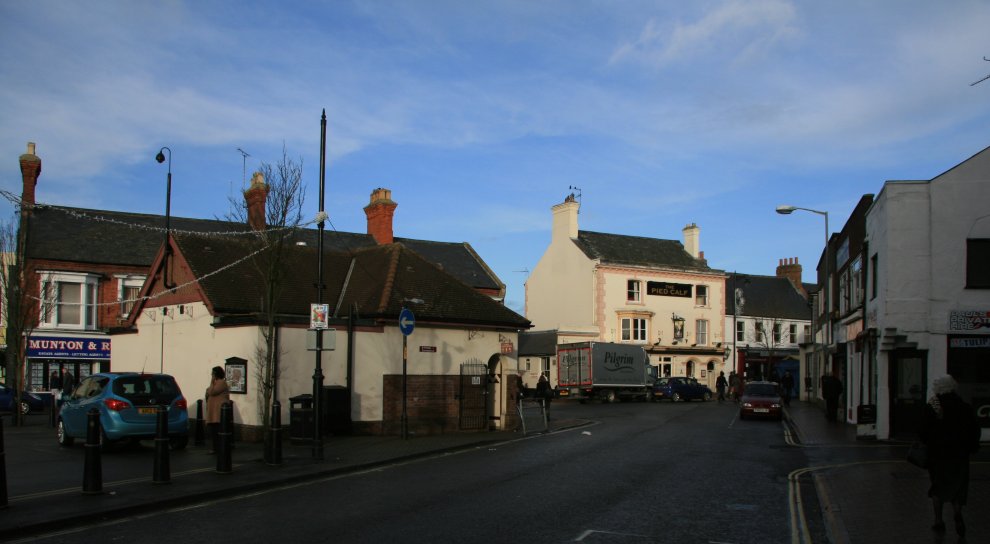
I’d like to celebrate this, the first weekend of spring, by offering homage to my local pub. It’s been there all winter (and, I guess, for several centuries of winters, as it’s a former inn on an old drovers’ road), a perennial stalwart, dispensing warmth, hospitality and good cheer on the coldest and most miserable of evenings. It boasts an open fire and its own generator, which means that when there’s a power cut or the water supply fizzles out (not infrequent events in this village) we and all our neighbours can rely on the pub to produce heart-warming soup and sustenance  in our hour of need. There are no other buildings in the village except houses and a deconsecrated church – we don’t even have a shop – so the pub also does sterling service as a polling station for both local and general elections. Not surprisingly, this village always achieves a high turn-out. Most of us vote in the evening, which gives us a chance to catch up with each other and sample the beverages on offer at the same time.

Yesterday evening was light and clear. The trees across the valley had just begun to bud and were glowing with promise in the hazy sunshine of the early evening. The local sheep have now had their lambs, which were bleating softly. The towns across the valley were also tinged with the glow of the setting sun. As on many first days of spring, however, there was a fierce wind and some of winter’s chills still lingered in the air. My husband and I, out with the dog on his evening perambulation, decided to call in at the pub.

It is only a slight exaggeration to say that all human life was there. A group of four beer-bellied blokes occupying a corner table hilariously trooped out together every half hour  or so for a cigarette break, and then trooped back in. A large family, complete with granddad (who seemed to be footing the bill) had just finished an early supper. Also eating supper was a morose middle-aged couple who appeared not to be speaking to each other. A largish hen party came in, evidently consisting of the bride and her mates plus her mother and several of hers. She was wearing a sash proclaiming her a bride to be, a crown of tinsel and, somewhat incongruously, some red ‘Rudolph’ felt antlers left over from Christmas. A little later, an extremely thin, elderly woman arrived, the advance reconnoitring party for another group of ladies, these somewhat older. She left the pub briefly before returning to usher them all in, so it must have passed her selection criteria for acceptable hostelries. The usual old cronies were seated on high stools at the end of the bar, putting the world to rights. More young men braved the trestle tables outside, clearly finding the cold preferable to the prospect of losing seats inside whilst out for fag breaks. And there were several ‘casuals’ in for a swift pint before departing, all of whom stooped to stroke the dog. The landlord, a dog-lover, brought him a handful of chews.

And, of course, included in the number, a pair of wellie-wearing eccentrics with an amiable hound, all three a little miry around the edges.

City pubs have an aura of their own, a suave immaculateness inspired by fierce competition and, for the most part, a shifting clientele that harbours no sentiments of loyalty. There is something quite different, timeless as well as uplifting, about a country pub and its dynamic. Dressed in mediaeval clothes, the patrons of my local yesterday evening might have been encountered by Chaucer and his pilgrims, in an inn en route to Canterbury. And I’m sure they’d all have had a tale to tell…

Interview Special: Crime Author Christina James Becomes Less Of A Mystery

The turn of the season…

The last of the Brussels sprouts

The last of the Brussels sprouts


Last Saturday, I helped my husband to prepare his allotment, for sowing with a new cycle of plants and seeds. He needed some assistance, because during the long winter months the shelter that he and his partner-in-grime had built over it last year to foil the pigeons (it succeeded) had collapsed under the weight of an unexpectedly heavy fall of snow. Carefully, we untied some dozens of pieces of binder twine and rolled up long lengths of chicken wire to ready them for the grand rebuilding. Improved design, he says, will help to prevent the same happening again; we shall see!
Red cabbage in a winter shroud

Red cabbage in a winter shroud

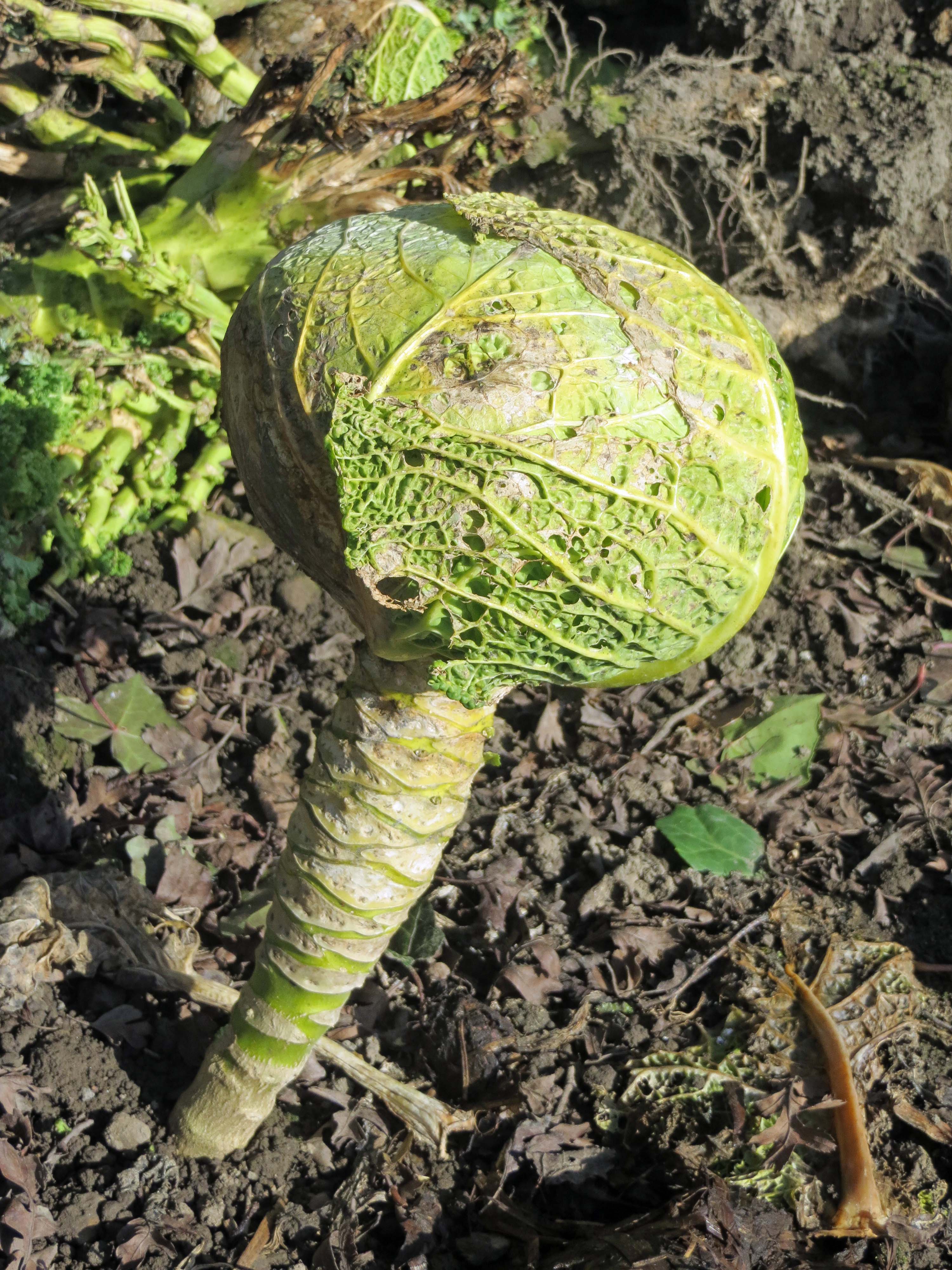
Partly because they were pretty difficult to reach amongst the debris of broken timbers and chicken wire, and partly because we’d had some over-supply, leftovers of last year’s crop remained, a brassica graveyard. Eight or so stalks of blackening Brussels sprouts tilted in a broken rank towards the boundary fence, a row of wounded soldiers at their last gasp. Several misshapen kohl rabi poked from the earth like a giantess’s bunions.

Kohl rabi bunion

Kohl rabi bunion


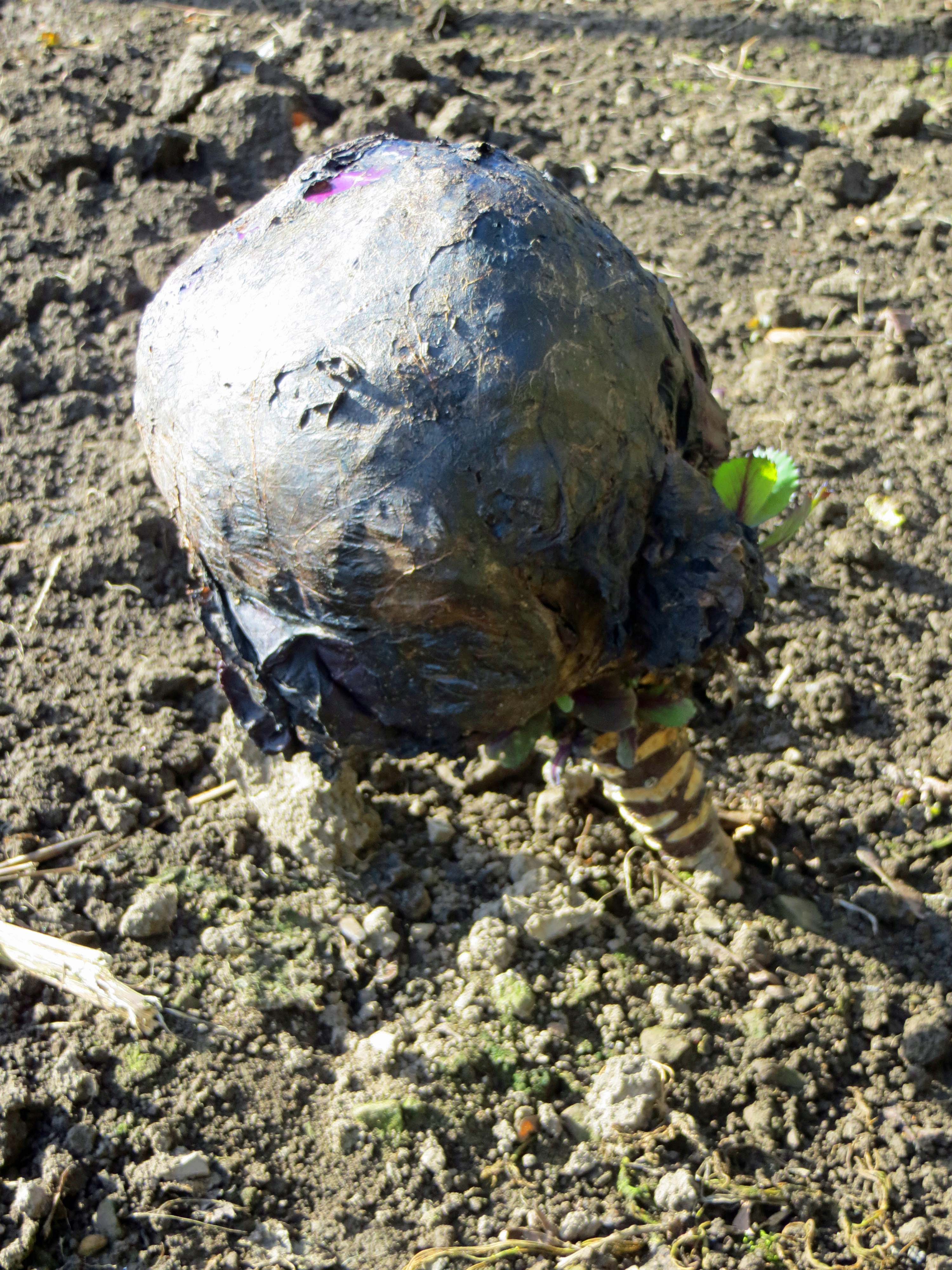
Some heads of red cabbage, severed from their stalks, lay on the ground, broken and rotting, their outer layers turned into slimy winding sheets. Their lone companion, still growing, had grown a new rosette of small heads after the original cabbage had been cut, twisting itself into three dark petalled shapes, a macabre bouquet paying last respects at the funeral. Dried sticks of weed poked through the soil, which glistened unhealthily with a scattering of glossy green clumps of over-wintered willowherb and expanding whorls of nipplewort.
Savoy cabbage in terminal decline

Savoy cabbage in terminal decline

Overhead, the sun shone with real warmth. New purple buds were swelling on the tangle of hawthorn twigs in the gateway. The bees in the adjoining apiary were flying, great tits were two-toning in the hedge and a lone hare loped away over the meadow. Spring was on its way, but I don’t recollect having ever been so vividly aware of the round of decay that must precede renewal.

Oddly, I found it comforting: it was as it should be. And somehow it made me feel more philosophical about death. Each plant and creature has its time. Then comes the Grim Reaper. It is only seemly. And there is something wonderful about the soil which is both grave and nursery; now it is manured and turned, I am reminded of the beauty of Gerard Manley Hopkins’ ‘shining-shot furls’ of ploughed land, from which will spring new life.

O' Canada

Reflections on Canadian Culture From Below the Border

oliverstansfieldpoetry

A collection of free verse poetry.

Easy Michigan

Moving back home

Narrowboat Mum

Fun, Frugal and Floating somewhere in the country!

Maria Haskins

Writer & Translator

lucianacavallaro

Myths are more than stories

Murielle's Angel

A novel set on the Camino de Santiago

jennylloydwriter

Jenny Lloyd, Welsh author of the Megan Jones trilogy; social history, genealogy, Welsh social history, travel tales from Wales.

Chris Hill, Author

I'm Chris Hill - author of novels Song of the Sea God and The Pick-Up Artist

littlelise's journey

Sharing experiences of writing

unpublishedwriterblog

Just another WordPress.com site

Les Reveries de Rowena

Now I see the storm clouds in your waking eyes: the thunder , the wonder, and the young surprise - Langston Hughes

Diary of a Wimpy Writer

The story of a writer who didn't like to disturb.

Rebecca Bradley

Murder Down To A Tea

Helen Carey Books

Helen Carey Books