

Succumbing to snow…
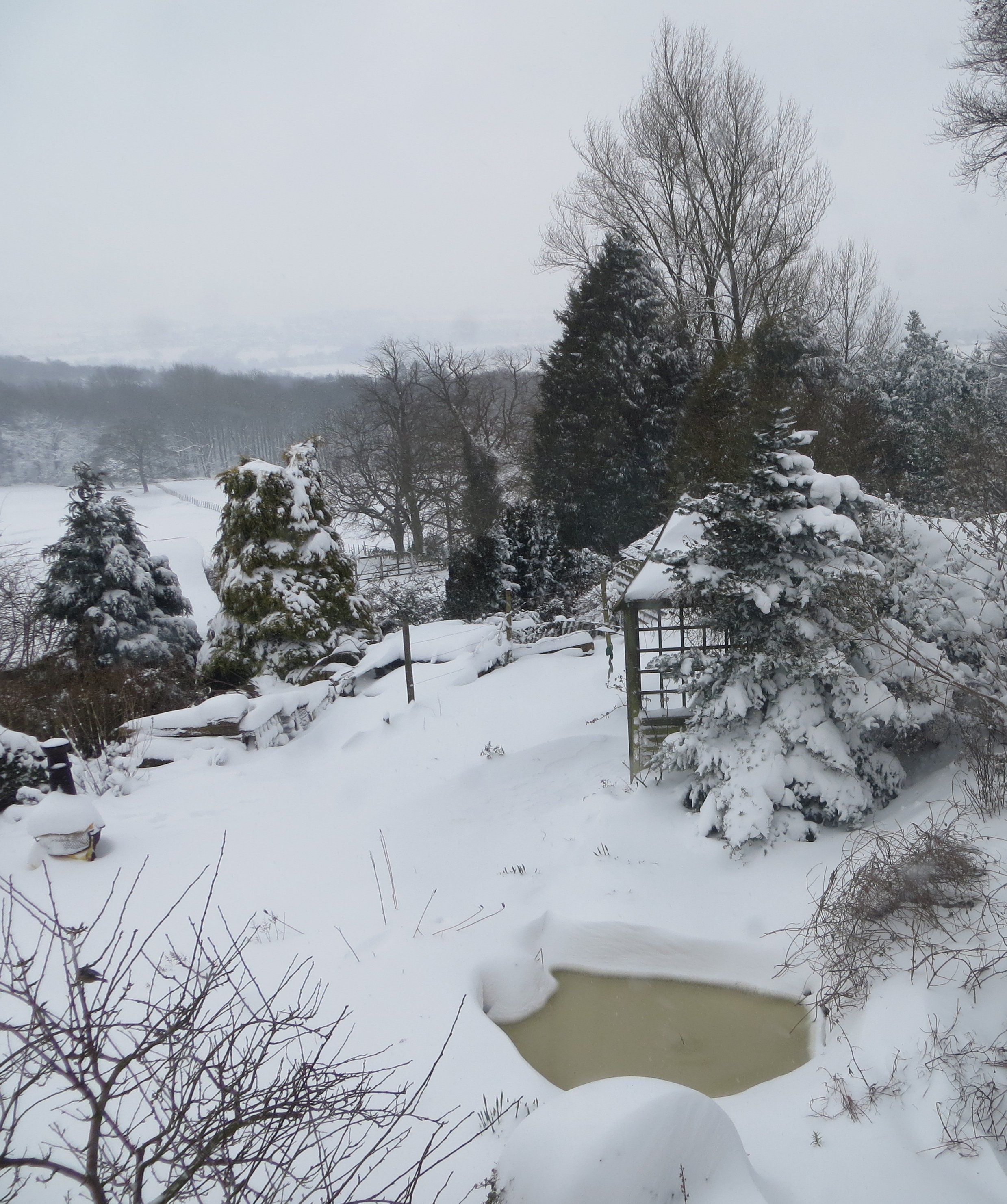
At the risk of sounding hackneyed – because it seems to me that the whole country is talking of nothing else – I have decided to devote today’s post to snow. How could I not? I have now been effectively snowed in (it has been just about possible to walk out but not drive) for forty-eight hours, twenty of those without electricity. And towards the end of March, too! I have been living here for almost twenty years and have seen snow like this only once before, on 25th January 1996. I remember the date because it was Burns Night and also the anniversary of the day on which I got engaged. I was driving home from the library supply company in Scotland at which I was working at the time and narrowly missed having to spend the night in my car on the A66 as the snow came thicker and faster. I remember my sense of relief when I finally made it to Scotch Corner, only to find the A1 gridlocked in both directions. It took me more than four hours to crawl into Leeds, where the traffic had virtually ground to a halt. Eventually I arrived at a roundabout with an adjacent hotel and went in to see if I could get a room for the night. A Burns Night dinner had been taking place there and most of the diners were stranded, so there was a shortage of rooms. However, when I told the receptionist I had driven from Scotland, she was so impressed that she gave me the bridal suite for the night, complete with flowers, fruit and mini bottles of champagne! The irony was that my husband and son were also stranded nearby, but we couldn’t contact each other. In those days, cellphones were rarer; my company had just bought one for me, but none of us had personal mobiles. On the next day, when I finally reached home (having passed my husband’s abandoned car, its roof now neatly bisected by a snow-laden branch), the snow was not as deep then as it is now; and it was the fourth week of January, after all, and not the third week of March! I feel not so much a sense of outrage at this current deluge as one of disbelief: seeing lambs in the snow is one thing, but snow on nesting blackbirds quite another!
Yesterday I also discovered how little can be accomplished without electricity. I couldn’t shower, cook, clean, listen to music, put on the washing machine or do the ironing. Instead I wrote yesterday’s blog-post, made some final adjustments to Almost Love, toasted myself in front of the wood-burning stove, acted as referee between the dog and cat as the occasional skirmish broke out for pole position on the hearthrug and read the first two hundred pages of Vanished Kingdoms by Norman Davies, my treat to myself when I visited Leeds on Friday (along with a cappuccino and a slice of Belgian chocolate tart). I also meditated on possible plots for my next novel and read last week’s papers for inspiration. The Joss Stone attempted murder case amazes with its improbability. Few writers would dare to invent anything so bizarre!
Most of this was very enjoyable, though I was beginning to feel twitchy by the time that power was restored in the late afternoon. As soon as the lights came back on, I rushed for the shower in case the power bounty proved to be temporary. My husband was more philosophical. He had decided that the opportunity for Saturday ablutions had been and gone and devoted himself instead to clearing away the debris of a day’s accumulated washing-up. (Next time there is a power-cut I must remember that unwashed husband = clean dishes.)
Today it is bitterly cold, although the sun is shining. The snow is being whipped up by the wind and inflicting sharp stings to the face and any other exposed skin. Drifts on the verges are several feet deep, meaning that it is only possible to walk on the roads, which have now mostly been cleared to a single track. Nevertheless, I was determined to go out this morning. I once had a colleague who was sent to work in Canada in the winter months; he said that, for him, cabin fever set in after two or three weeks of snow. I can cope with barely one day! We accompanied the dog on his normal three-mile walk. It took twice as long as usual, but the woods were spectacularly beautiful.
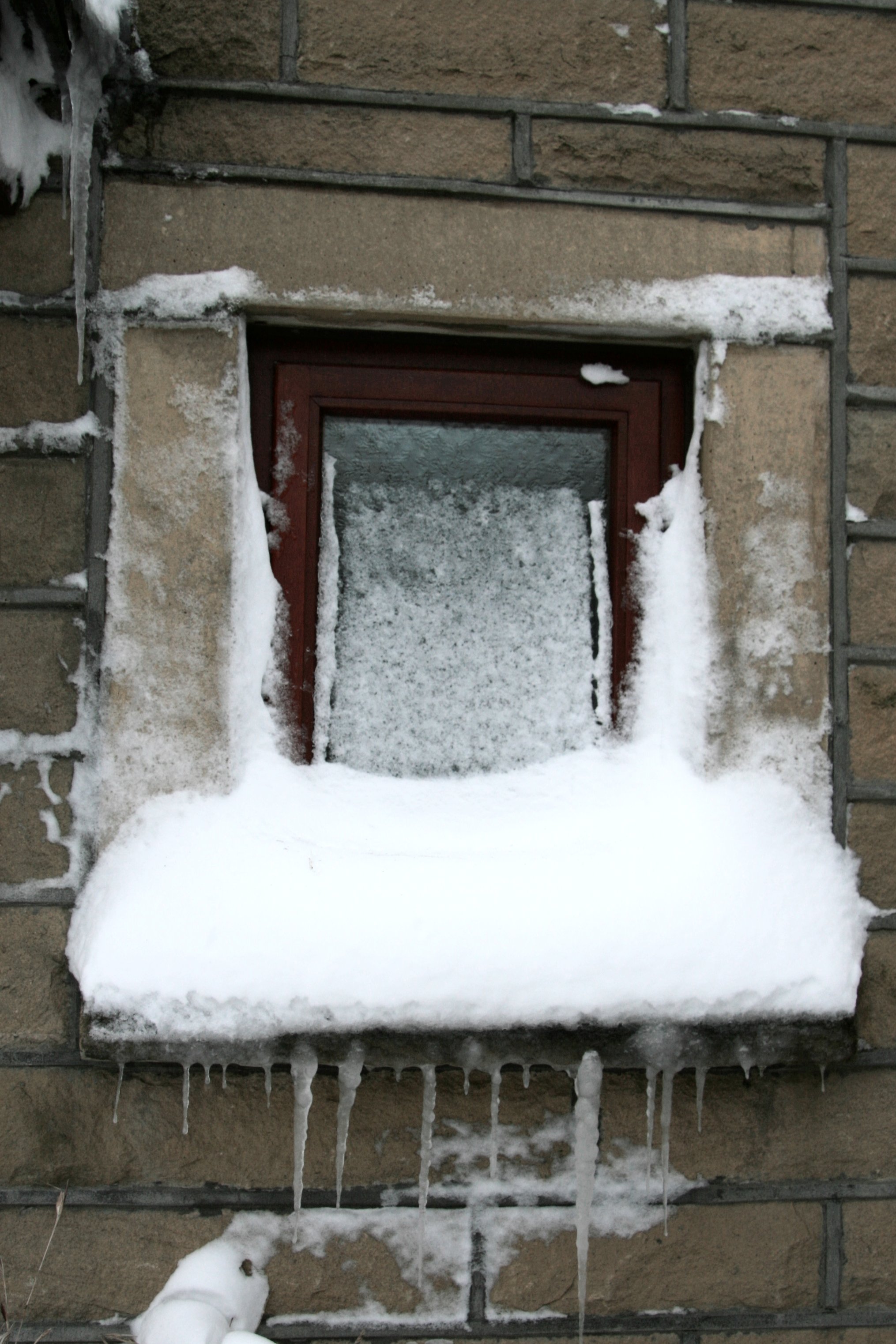
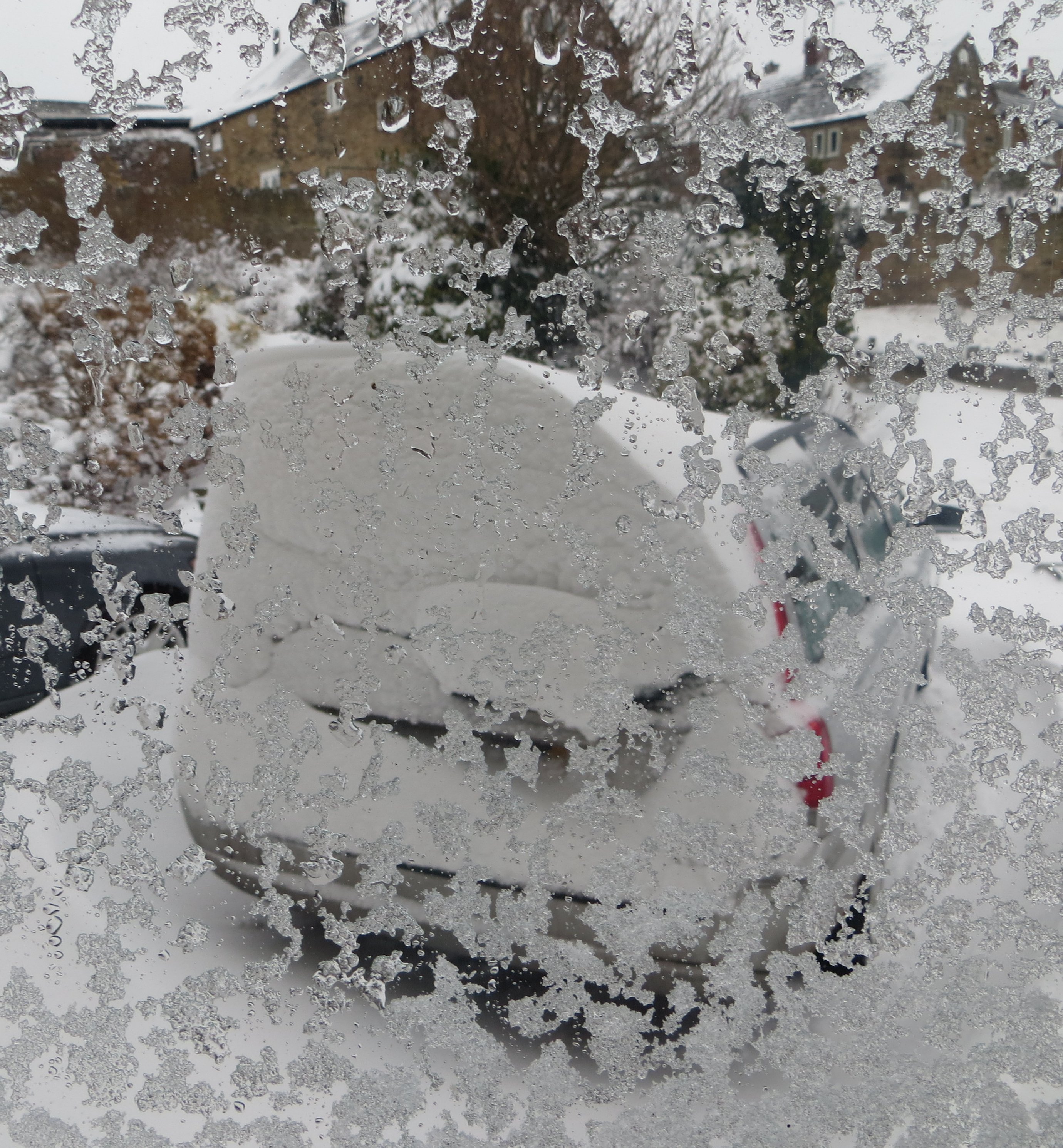
I am including some pictures of my garden, which I took yesterday. The whole of this blog-post is really an excuse to share them!
In love with Cromer…

It seems fitting to write about Cromer on World Poetry Day. If you are new to the blog, please don’t be baffled by this! Regular readers will know that Cromer is the adopted home of Salt Publishing, which is becoming ever more renowned for its fiction. Last year it achieved international fame with The Lighthouse, Alison Moore’s debut novel, which was shortlisted for the 2012 Man Booker prize. (Its crime list includes In the Family, my first crime novel, and will shortly also feature Almost Love, the second in the DI Yates series.)
However, Salt built its reputation for literary excellence on its superb poetry list; in my view it is the greatest current British publisher of contemporary poetry. Some Salt poets are poets’ poets, though most are very accessible. I believe that perhaps, of all its achievements, Salt’s greatest has been to develop its ‘Best of’ lists, especially the Best of British Poetry series, and the Salt Book of Younger Poets. Now widely adopted by undergraduate courses in English literature and creative writing, these books bring contemporary poetry alive to a new generation, as well as supply more mature readers with an impeccable selection of great poems. The Best of British Short Stories series achieves a similar effect in a different genre. And, not to spare his blushes, Chris Emery, the founding inspiration behind Salt, now publishes his own poetry under the Salt imprint. If you have not yet read The Departure, I recommend it wholeheartedly.
Back to Cromer. I was there for a long weekend because, as I mentioned on Sunday, I was asked to play a small part in the Breckland Book Festival. I stayed at The Barn, one of the cottages owned by The Grove Hotel (itself steeped in history – parts of it are eighteenth-century and its original owners were the founders of Barclays Bank). I called in on Chris and Jen Hamilton-Emery after the Breckland event and my husband and I were kindly invited to have dinner with them. They were brimful of ideas as usual and delighted that Chris has been appointed writer-in-residence at Roehampton University, as well as looking forward to celebrating Jen’s birthday today (that it is on World Poetry day is a poetic thing in itself!).
The rest of our time in Cromer was spent exploring the beaches and the streets of the town. Twice we walked along the beach in the dark and, on Monday morning, we took our dog for a very early morning run there. Even in bitterly cold weather, the town itself is enchanting. Developed in the mid-nineteenth century to cater for the emerging middle classes, who could for the first time afford holidays away from home, it seems to have been preserved intact from any attempted depredations by the twentieth century. There are not even many Second World War fortifications in evidence, though a pill-box languishes in the sand of the west beach, its cliff-top site long since eaten by the sea. The pier retains its pristine Victorian originality – it is well-maintained but has not been ‘improved’. Some of the hotels, again ‘unreconstructed’, are quite grand and all serve superb food at reasonable prices, as do the many cafés and restaurants. It is true that some of the shops seem to exist in a time warp. My favourite is the ladies’ underwear shop that does not appear to stock anything designed after 1950; it even displays ‘directoire’ knickers – much favoured by my grandmother – in one of its windows.
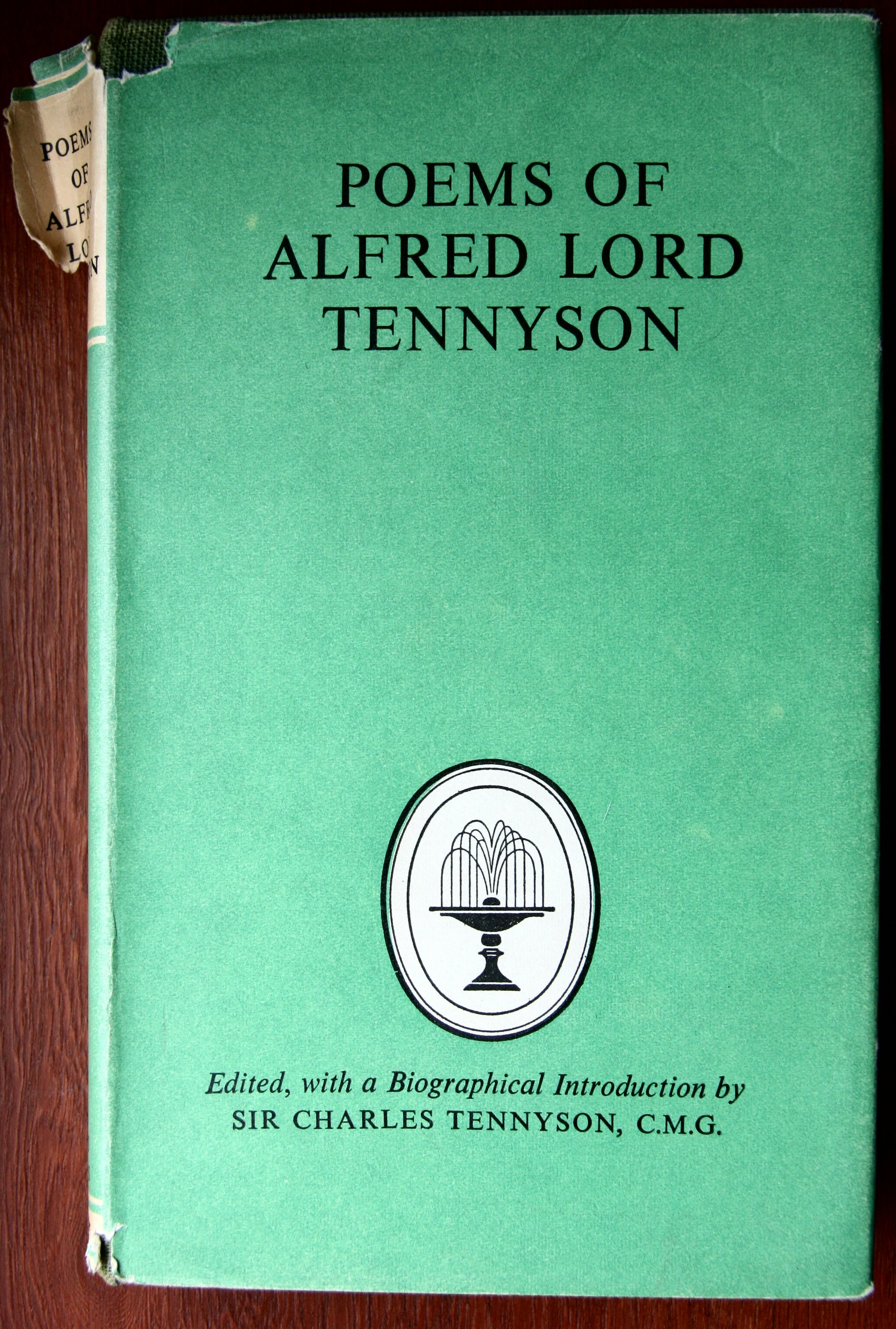
Cromer has a literary past, too. Winston Churchill stayed there as a boy and Elizabeth Gaskell was a visitor, as the pavement of the seafront testifies. (Churchill apparently wrote to a friend: ‘I am not enjoying myself very much.’) That Tennyson also came here, even if I had not already decided that I loved it, alone would have served to set my final stamp of approval upon the town: Lincolnshire’s greatest poet, he is also one of my favourites. (I’ve always considered James Joyce’s ‘LawnTennyson’ jibe to be undeserved.) I know that Tennyson would have been fascinated by Salt if he had been able to visit Cromer today. I can picture him perfectly, sitting in Chris’ and Jen’s Victorian front room, sharing his thoughts about poetry – as one fine poet to another – in his wonderfully gruff, unashamedly Lincolnshire voice.
And so, Jen, Chris and Salt, have a very happy Cromer day, listening to the lulling rhythm of the rolling, scouring waves and painting salty pictures in the sky.

A brief encounter with Brighton… and a book
Last week I visited Brighton for the first time in perhaps ten years. I was there because The Old Ship Hotel had been chosen as the venue for the annual academic bookselling and publishing conference for which I organise the speaker programme. I discovered that there has been an inn on the site of The Old Ship since Elizabethan times. Originally just called The Ship, it acquired its venerable epithet after another Ship hotel was built nearby – this one a mere stripling dating from the period of the Civil War. Hotels in Brighton can be evocative places. I have also stayed at The Grand, both before and after it was wrecked by the IRA bomb, on both occasions to attend the Booksellers Association Conference (I liked it better before than after) and one year spent several days in a seedy little guest house when the company I was working for forgot to book until the last minute and all the hotels were full.
Brighton itself has not changed much in ten years, although it looked very odd when I arrived, because the streets and seafront were covered in grubby snow. A moderately heavy snowfall on the day before seemed to have caused a local catastrophe in which everything – public transport, the highways, even restaurants and cafés – ground to a halt. I concluded that they’re ‘nesh’ in the South of England; we clear away snow like that in half an hour in Yorkshire! Or perhaps Brightonians – if that’s the right word – are just staggered to see the white stuff at all and it therefore strikes them down with a sort of horrified inertia.
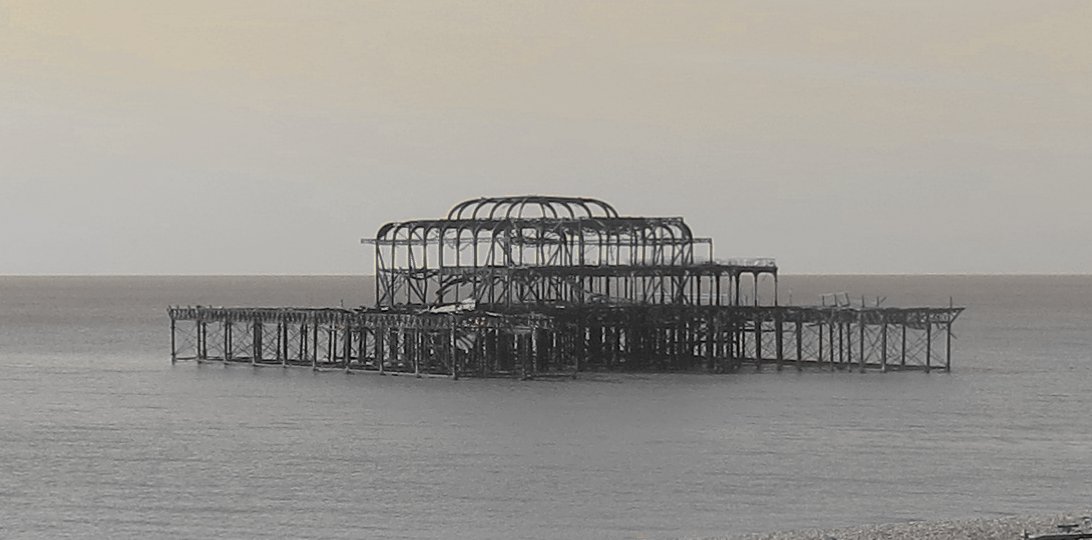
Anyway, by midday, although it was still very cold, the snow had melted and I ventured out from The Old Ship to meet my former English teacher for lunch (more about this on another occasion). Before the conference started, I also managed to take a walk along the promenade and was saddened to see the hideous buckled corpse of the West Pier, still rising up out of the sea like a squashed daddy longlegs. The structure has suffered terminal damage since my last visit.
After presentations, drinks and speeches, dinner, more speeches and more drinks, I went to bed. I was rudely awakened at about 4 a.m. by the noise of a huge crowd outside. I exaggerate only a little when I say that it sounded like the storming of the Bastille! I began to realise that my de luxe room, with its fine view of the sea, came with mixed privileges. Looking discreetly out of the window, I saw a gang of perhaps forty youths running about on the seafront, many of them braying obscenities. And they didn’t move on – they just stayed there! Brighton has obviously degenerated since the days of Pinkie Brown, who was a better class of yob altogether.
Since it was obvious that I would get no more sleep until the mob dispersed or was moved on, I adopted my usual all-purpose tactic for dealing with adversity and took out a book. It was The Mistress of Alderley by Robert Barnard, not a novelist I’d read before. Under normal circumstances, it wasn’t the sort of novel I’d have especially enjoyed. Although the setting is meant to be contemporary, the characters seem to belong to a time warp. The mistress of Alderley herself, a retired actress called Caroline Fawley, seems to me to be straight out of the set of Brief Encounter. However, under any circumstances I should have enjoyed the detailed descriptions of Leeds which number among the novel’s strengths and, while the fracas outside continued to roar, I found the descriptions of Caroline’s genteel rural life quite soothing. The icing on the cake was that it turned out to be a sham, a pretence laid bare by the murder of Caroline’s slippery millionaire lover.
I had almost completed The Mistress of Alderley by breakfast, by which time the louts had melted away and a rosy dawn was launching itself above the dead pier.

Think of a number…
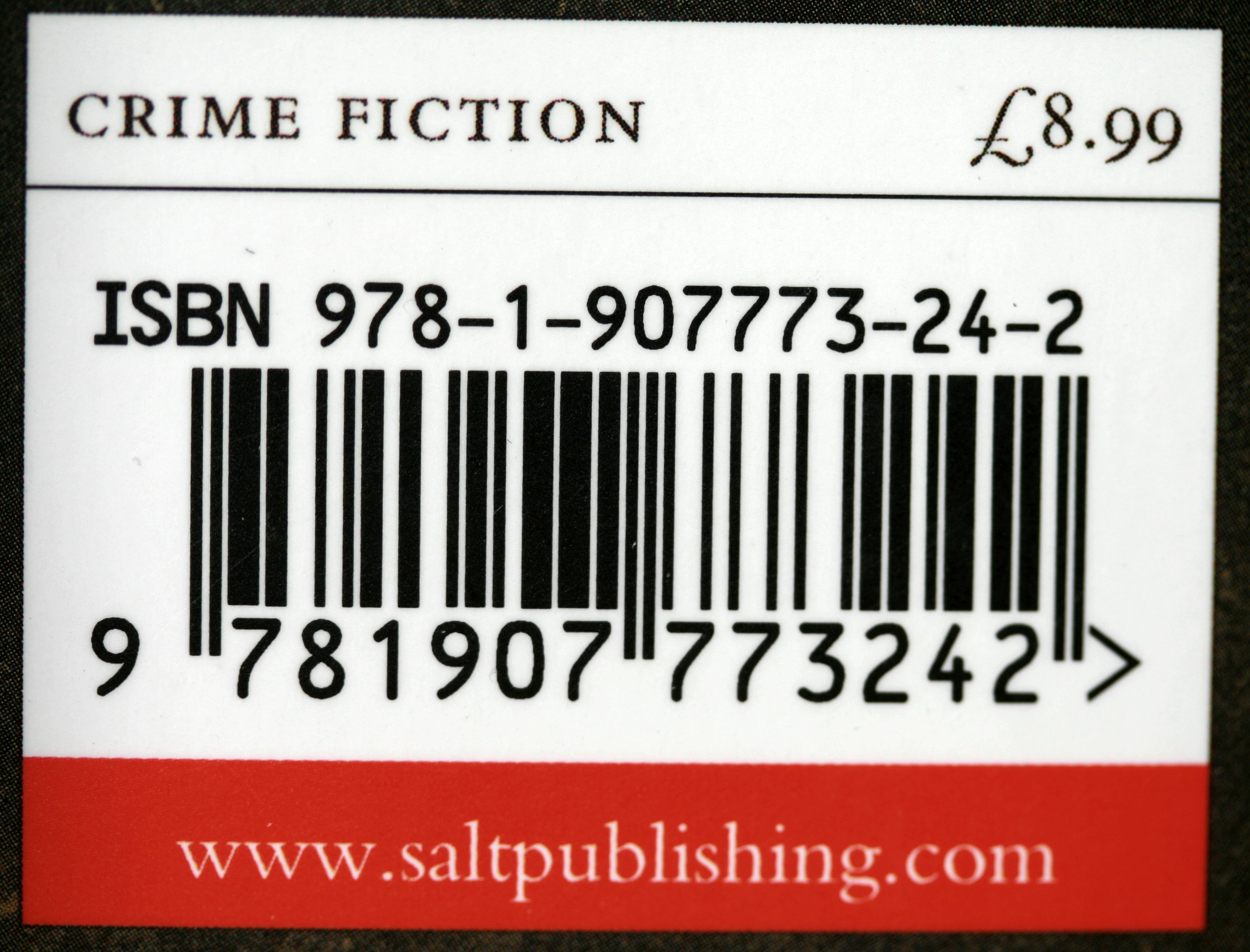
When I got my first job in the book industry, the ISBN was waiting in the wings. It was actually doing a little more than that – people in the trade were encouraged to quote the ISBN on orders, and printed order forms usually included them. By the end of the 1970s, almost all books had an ISBN printed on the back cover. Yet, while these rune-like digits were not exactly a sham, they served no useful purpose either. I remember my first boss asking me what I thought of ISBNs. I shrugged. They meant little more to me then than the ‘By appointment to the Queen’ notice on a marmalade jar. ISBNs – the brainchild of a HarperCollins director called Carl Lawrence, one of the grand old men of publishing in my youth – were like the dummy burglar alarms that some people attach to the front of their houses: they indicated, even warned, of something that was not actually in place. That something was a well-organised, automated book industry supply chain.
The trade was quick to catch on, though. By the end of the 1970s, teleordering had been invented and the bigger bookshops and bookselling chains were experimenting with EPOS systems. Some publishers’ reps had handheld devices by which they could transmit orders to head office as they received them (these very early forerunners of the iPad bore about as much resemblance to it as Dom Joly’s giant spoof mobile bears to Apple’s sleek invention today). For the first time, booksellers and librarians were able to identify the correct edition of a book by inspecting the magic barcode on the back. All of these breakthroughs depended on the humble ISBN.
There were some hiccoughs, of course. Rows about how ISBNs should be used erupted right from the start. Eventually it was agreed that not only every edition but also every format of a title should have a unique ISBN. This was a relatively simple concept in an era when most titles appeared first as hardbacks and then as paperbacks if they were successful. Some publishers, however, persisted in allocating ISBNs to non-book material – to posters, for example, or to book packages. I remember arriving at work one day to discover forty dumpbins of a James Herriot title dumped – literally – on the doorstep. I had ordered forty copies, but the publisher had allocated the ISBN to the dumpbin, not the book.
Nevertheless, the ISBN was a wonderful invention. For the first time in its history, the book industry basked in praise for being so innovative. We were told that our use of the ISBN was rivalled only by the ingenious cataloguing mechanism developed at the same time by the car parts industry. This was praise indeed!
Today, ISBNs are ubiquitous. They are used by publishers in most developed countries and routinely quoted by customers when ordering books. (As a purist and something of a pedant, I shudder every time I hear someone say ‘ISBN number’. ISBN, of course, stands for International Standard Book Number, so the added word ‘number’ is redundant. Americans have got round this by creating a word from the acronym – they refer to ‘IZBENS’.)
And, amazingly, considering that all we are talking about is a set of digits, ISBNs still stir up controversy. Now that e-books are available in so many formats, publishers and booksellers are asking whether it is really feasible to allocate a unique ISBN to each. Bibliographic agencies, librarians and some booksellers and publishers say that it should be. Other booksellers and publishers disagree.
Elly Griffiths and Tom Benn in fine form at Breckland!
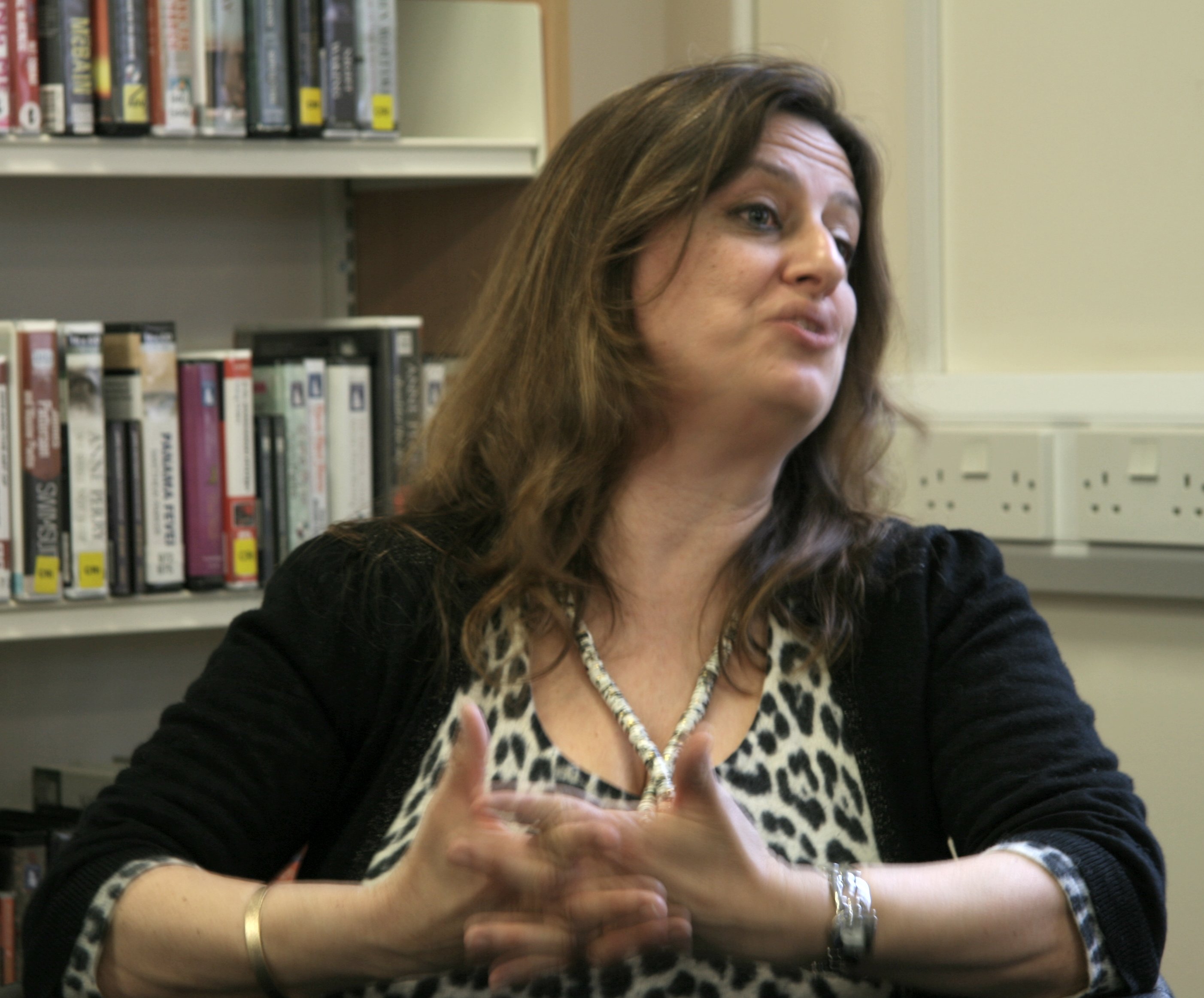


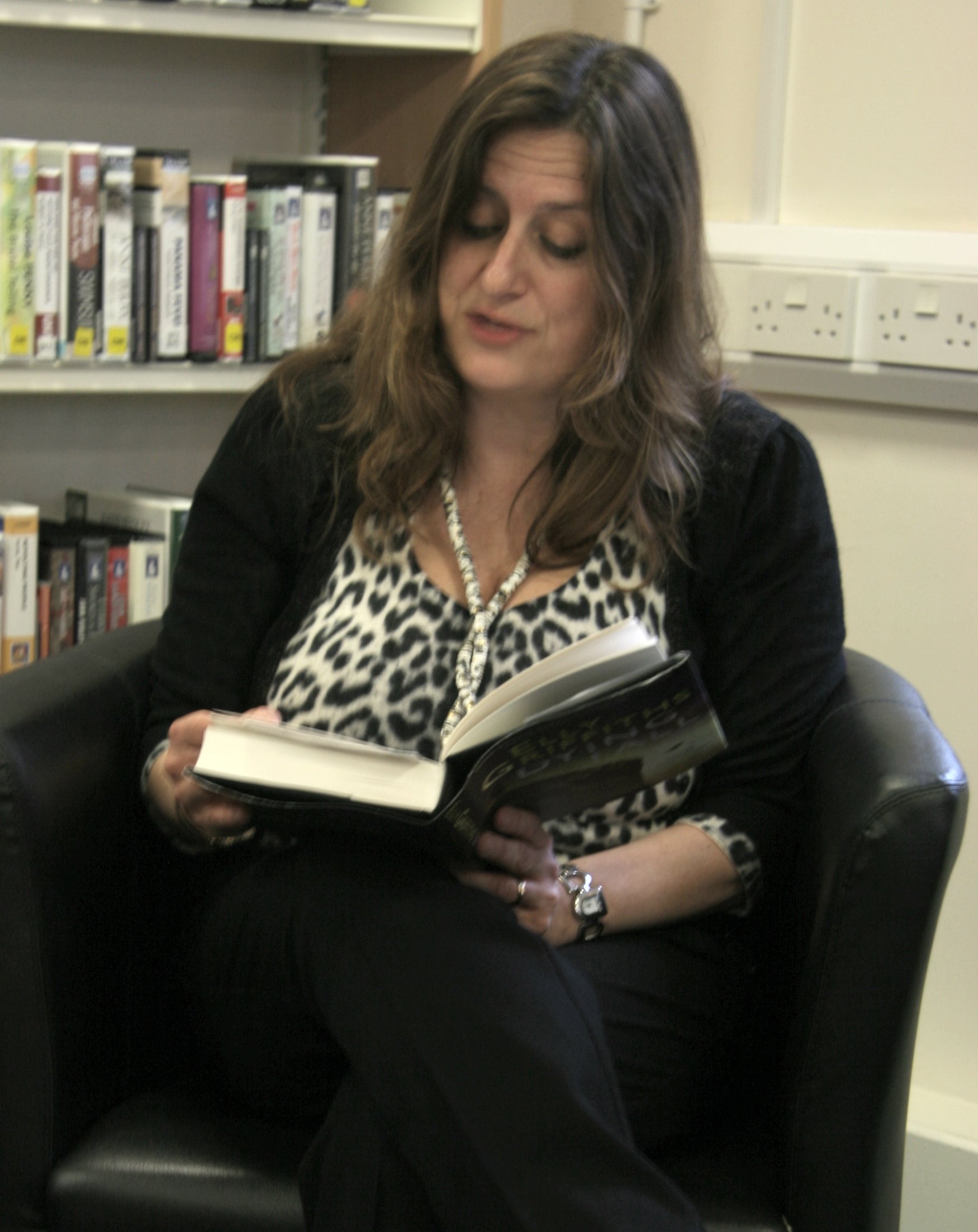
The small Norfolk town of Watton yesterday afternoon braced itself for bleak and squally weather, the rain coming in short eddies between gusts of wind that made the temperature seem even colder than it was. Inside, the library was a haven of warmth and hospitality, as Claire Sharland and her colleagues put the finishing touches to the Breckland Book Festival crime-writing event and offered welcoming cups of tea.
Elly Griffiths, Tom Benn and I all arrived early, as requested, and gathered in a small office to introduce ourselves and get to know each other a little better before we were ‘on’. I was fascinated to discover that Elly also writes novels about the Italian ex-pat community as Domenica de Rosa, her fabulous real name, and that Tom was encouraged to publish by his tutor at UEA, who helped him to place his first novel, The Doll Princess, with Jonathan Cape.
When we emerged from the small office at 3 p.m., the events space in the library had filled completely with people. I estimate that there were about forty in the audience – an impressive turn-out on such a dismal day.
Tom and Elly both read from their latest novels. Tom made the distinctive Mancunian dialect in which he writes come alive with his reading and, by doing so, also brought out the sophisticated humour which runs like a fine thread through the whole of Chamber Music. Elly also chose a humorous piece of dialogue from Dying Fall, and made the audience laugh with her vivacious rendering.
We were fortunate to have such a receptive and intelligent audience. Most had read the work of one of the authors; some had read both. Their comments and questions took in a discussion about the two writers’ very different but, in each case, key use of topography, character development, how each uses his or her writing to explore and develop relationships and the extent to which they feel defined by belonging to the crime writing genre (they don’t). We even managed to get on to some more general topics, such as e-books, authors’ royalties and the Net Book Agreement (the latter introduced, not by me, but by a member of the audience who had been a bookseller in the distinguished Waterstones bookshop at UEA).
Time flew in the company of Elly and Tom and their audience of like-minded lovers of literature. I had not read either Elly’s or Tom’s books before, but shall certainly keep them in my sights from now on. I hope also that we shall meet again in the future.
I can’t conclude without adding that the tea and home-made cakes with which we were rewarded at the start of the signing session were excellent. I’ve discovered that cake and conversation are two things that Norfolk does very well indeed!

Cake, coffee and crime, a killer combination in The British Library
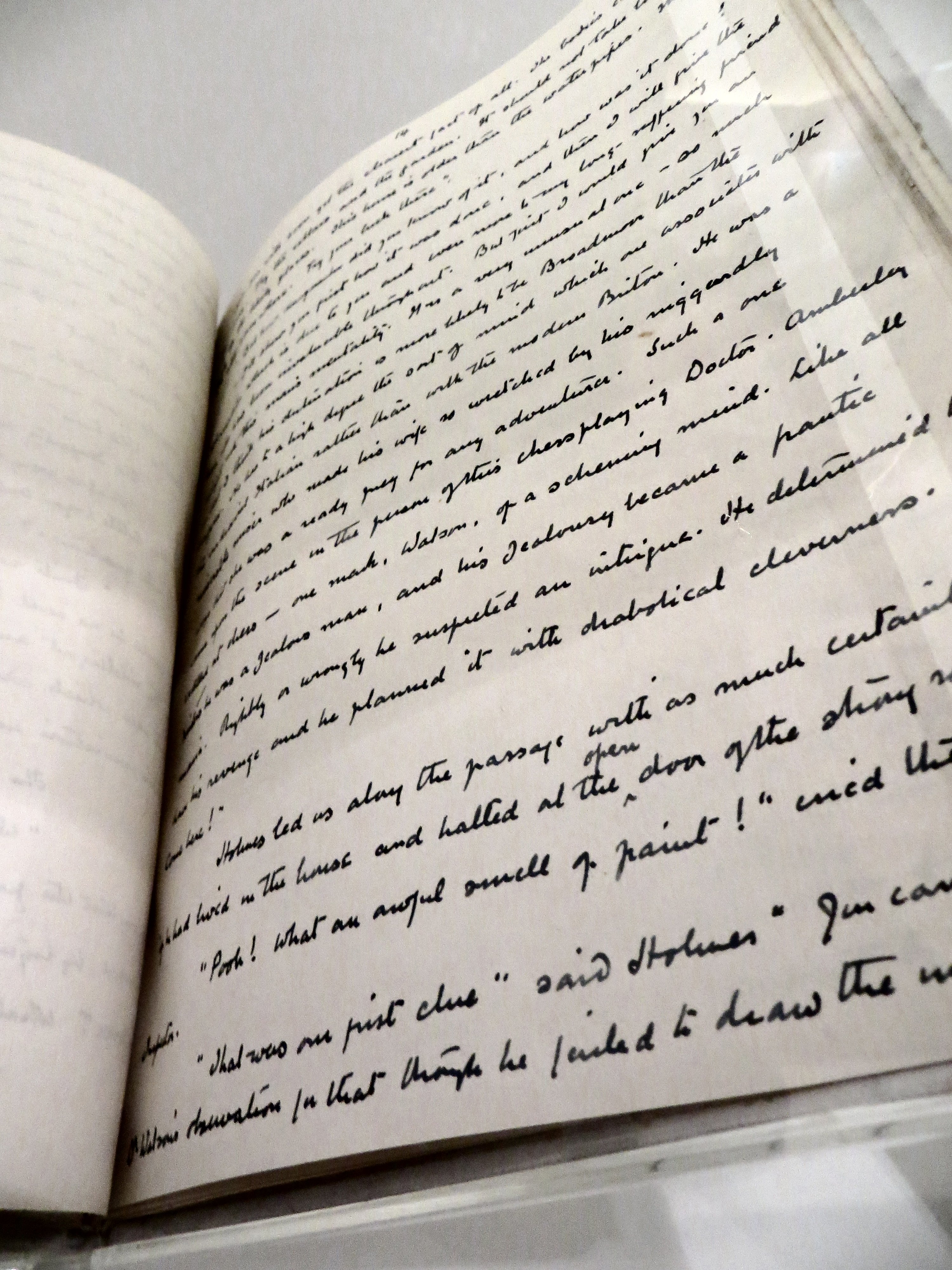
Ooops! Naughty Christina!
Yesterday, London was in the grip of one of those gloomy, fog-bound days of which Dickens wrote so eloquently. The streets were grey and obscured by swirling mists so heavy that they fell like grubby rain on clothes and hair. People were scurrying about, heads down, doing damage with their umbrellas.
The British Library shone, as always, an oasis of light, heat, calm and coffee… and, importantly, cakes. I went to the café there to meet a colleague and, our business done in ten minutes, we had a wonderful time drinking in the power of George III’s magnificent book collection (which is displayed behind glass and occupies the full height of the building) while eating chocolate pastries.
My colleague had to leave at midday, which gave me an hour to kill before my next meeting. This was just as I had planned, because I had picked up from Twitter that a Crime Writing exhibition is currently on display there.
Sponsored by the Folio Society (which has apparently published quite a lot in the genre, a point to remember when trawling secondhand bookshops for old Folio Society titles), the exhibition takes an alphabetical approach to crime writing. It consists of twenty-six glass showcases, one for each letter of the alphabet, each one showing or explaining some aspect of the crime writer’s craft. Unsurprisingly, ‘A’ is for Agatha Christie; ‘Z’, less obviously, for ‘Zodiac’ – i.e. for crime writing based on the occult.
It is an inspired way of celebrating the genre. My favourite letters included ‘L’ for lady crime writers – I had not realised that until P.D. James published her debut crime novel, Cover her Face, in 1962, the fictional lady sleuth had pretty much dropped out of sight since Victorian times – and, of course, ‘B’ for Baker Street. The Holmes showcase included some specimens of Conan Doyle’s manuscripts (which I photographed before I was told to put away my camera by a security guard – I honestly had not realised that photography was not allowed!). I revisited many crime-related topics that I’ve researched myself, often presented in ways that made me regard them anew, and discovered some fascinating facts; for example, that Wilkie Collins’ estimated annual income from The Woman in White (published in 1860) was £60,000 p.a.
This equates to about £4.5m today. It and many of the other exhibits served to prove that, right from the start of its inception as a genre, crime writing could be made to pay. The exhibition, which is free, takes about half an hour to absorb. I highly recommend a visit if you get the opportunity – especially if it is raining and you are struck down by a pressing need for coffee… and cake.
Proofs positive…
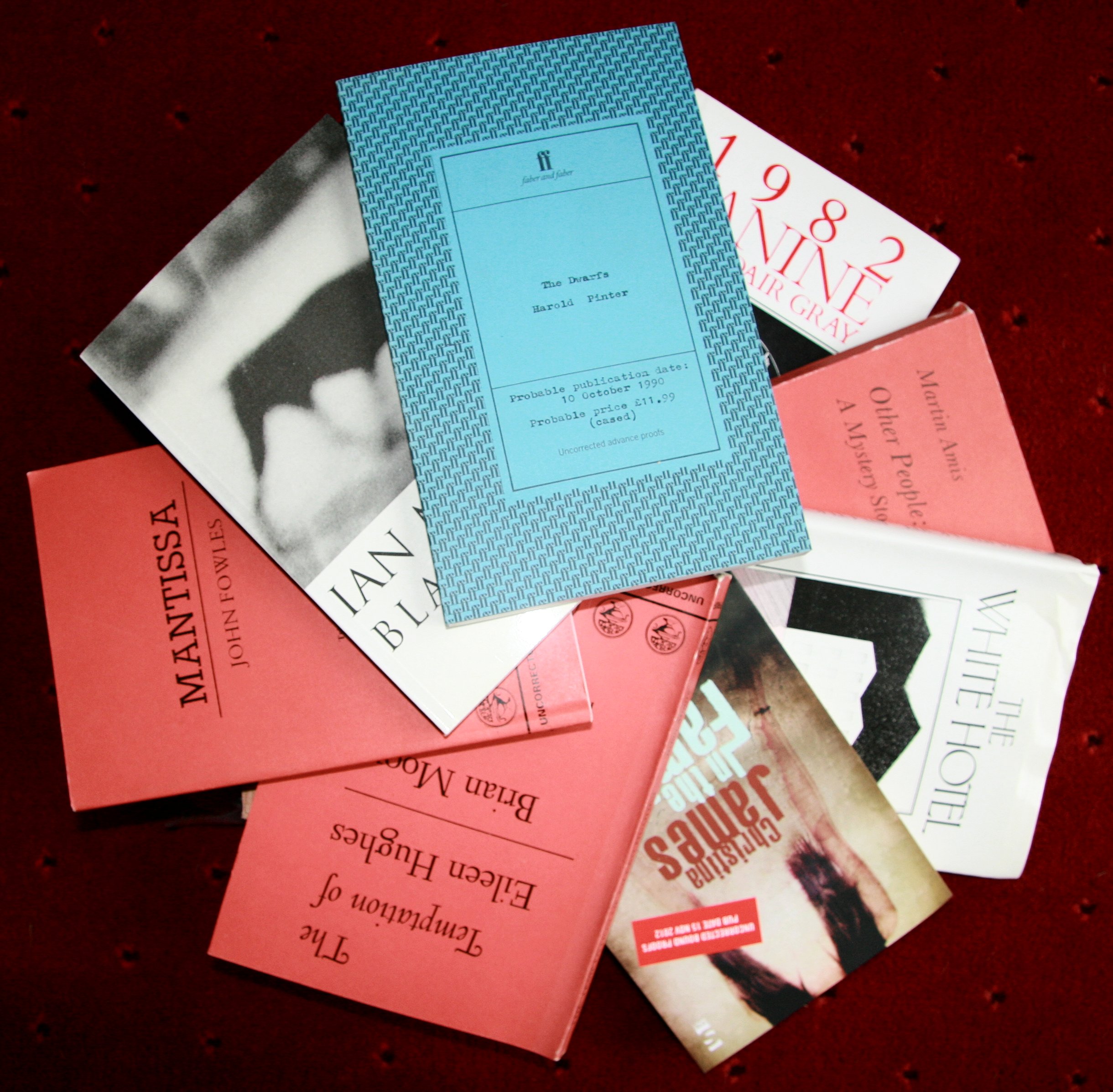
One of the most interesting things about proof copies is that you don’t own them. Most have printed on the cover that they cannot be sold. Some publishers also say: ‘This is the property of the publisher and not for sale.’ Yet I have never heard of a publisher who asked for a proof to be returned. The ones that I have, which represent some of my happiest years, working as the purchaser for a library supplier, will probably stay on my shelves until I die. Then they will be my son’s problem: will he ‘own’ them, or not? I suppose that he will take them on and become their guardian, just as I have been their châtelaine since they were young and untried.
I remember how I acquired some of them. Publishers’ reps get to know their customers’ tastes in literature, of course, and often they would produce two or three proofs from their bags and give them to me; or I would be sent one by post in advance of a launch. The biggest haul always came from Cape, Chatto and Bodley Head. These three companies (which were later swallowed up by Random House) jointly used the same sales team. For a number of years, the representative whom I saw, David Moore, used to drive across the Pennines from his home in Lytham St Annes, spend the night at a hotel in Wakefield and ‘travel’ the Leeds bookshops the next day. As my office was close to the hotel, he would call on me towards the end of the afternoon, just after he’d completed his journey (and in time for a cup of tea). When I’d given him his order, I’d ask if I could have a look in the boot of his car, which always contained two or three boxes of the next season’s titles in proof. I would come away with a rich haul; I was never disappointed.
I keep the proofs on the bookshelves in my study, not downstairs with the finished books. They are actually more precious to me than their suaver counterparts – I have finished copies of some of the titles as well. I have just lifted some of them down. Strange to think that, when they were printed, some of them were obscure titles from young unknown authors who have since become very famous. Of course, some of the authors were famous then: my collection includes The Dwarfs, by Harold Pinter, Mantissa, by John Fowles, Black Dogs, by Ian McEwan and The Temptation of Eileen Hughes, by Brian Moore. I think that all of these writers were well-established at the time. However, I also have 1982, Janine by Alasdair Gray and The White Hotel, by D M Thomas; each of these books catapulted its author into acclaim. Curious to think that I read and liked these brilliant but then unknown works and myself made a small contribution towards launching them upon the world.
I still have a couple of proof copies of In the Family. I don’t flatter myself that in years to come they will be sought after in the way in which some of the titles in my collection are. Nevertheless, it amuses me to allow them to rub shoulders with the great and famous, in some cases in the augenblick before fame came. It is almost like putting In the Family into a time machine.
My favourite bookshop!

Yesterday I visited Waterstone’s Gower Street, which in my mind is called simply ‘Gower Street’ and, in many other people’s, is still indelibly fixed as ‘Dillons’. A great bookshop and, of all the bookshops I have visited (there have been a few), easily my favourite. It’s situated in the heart of Bloomsbury. Approaching from Gordon Square, you come upon it suddenly, an Arts and Crafts enchanted castle before which there is always a litter of student bicycles, as if thrown down in homage at its feet. On an early spring day, especially when the sun is shining, your heart lifts immediately.
The shop was founded by Una Dillon, herself one of the extended ‘Bloomsbury set’. Almost every other door of the houses in Gordon Square and adjoining Fitzroy Square is adorned with a blue plaque celebrating the fact that a Bloomsbury author lived there; Una Dillon created the shop to serve them. The building was originally an early experiment in franchise retailing, a sort of forerunner of the Galeries Lafayette or Selfridges. It was designed to house twenty-four retail units, one of which was initially taken by Una Dillon. Gradually, over a period of years, she expanded until she had bought all of the units and therefore the whole building. (This also lifts my heart: I wonder if there is the remotest possibility that this could still happen today? Could a bookshop oust, say, Zara, Boots, Gap, Marks & Spencer and their ilk from such an ‘emporium’? I have my doubts!) Consequently, behind the scenes, it is a rabbit warren of corridors and small offices. It is also a protected building – of which I’m entirely in favour – although it does mean that not even a nail can be knocked into the wall without English Heritage’s being first consulted.
This shop came under my jurisdiction for several years in the 1990s. At the time, there were booksellers there who could remember Una Dillon’s being wheeled into staff meetings in her wheelchair and who were still in awe of her memory. (I must admit that the image of this is conflated in my mind, unfairly I’m sure, with the image of Jeremy Bentham’s stuffed corpse, similarly wheeled into meetings at UCL nearby, but I’m sure that Una was still alive on the occasions of which they spoke!)
I myself have many excellent memories connected with the shop – for example: the launch for George Soros’s book, which attracted so many people that it had to be held in a lecture theatre at UCL, with a television link to an overspill room; coming out of the manager’s office and finding Will Self chatting to the staff in the reception area; walking back a little dazed to King’s Cross through a summer dawn on a Sunday morning, having – with all of the staff – been up all night stocktaking. And it is still my favourite place for browsing and buying books.
Great bookshops are like people – they have personalities. A great old bookshop like Gower Street also has secrets. As far as I know, there has never been a murder committed there, but there could have been. Maybe someone will write a novel about it!
How creative a fertile imagination, given the opportunity!

A shedful of secrets
Some time ago I wrote about Moon, the chef in the Chinese restaurant where I worked as a student, and how I was convinced that he had it in him to be a latter-day Jack the Ripper.
The summer when Moon and I worked together preceded the so-called ‘Yorkshire Ripper’ era, though there is some evidence that Peter Sutcliffe may already have begun his attacks by then. By the time that I was married and living in a semi-detached house in Leeds, at least twenty women had been injured or murdered by what was believed to be a single perpetrator, and the Ripper investigation was in full swing. During the last few years before Sutcliffe was caught, some of his victims were no longer prostitutes and all women living in Yorkshire were warned not to be out alone in the streets during the evening or in the early hours of the morning. We were even advised not to take the rubbish out after dark. Naturally, this both terrified us and had a substantial effect on the way that we organised our lives. For example, my husband drove me fourteen miles to work every day and came to pick me up in the evening so that I should not have to linger at bus stops or railway stations by myself.
After ‘Wearside Jack’ had played his silly pranks (He sent tapes to the police claiming to be the Ripper, speaking in a strong Geordie accent; it was not until 2006 that he was finally brought to justice.), members of the public were advised to be especially vigilant if they saw anyone acting suspiciously who also spoke Geordie. Our next-door neighbour worked for the Ministry of Defence at Barnbow in Leeds. He was a very shy man in early middle age who hardly ever spoke. He had a large family, but seemed to spend very little time with them. Most evenings and weekends he would hide himself away in a large shed that had been erected between his house and ours. And, when he did speak, it was with a Geordie accent.
My husband and I, who, like almost everyone else we knew, were obsessed with the Ripper case, discussed this neighbour energetically on several occasions and, before too long, had convinced ourselves that he was a likely Ripper candidate. We dithered about what to do about this: after all, we had no evidence to go on besides his accent and his general shiftiness. The police would probably laugh at us and, in any case, we didn’t want to cause trouble for him if he was innocent. Consequently – and fortunately, as it turned out – we had taken no action at all when Sutcliffe was finally apprehended. (Despite having ourselves read and listened to all the Ripper news bulletins for years, it was a friend who lived in King’s Lynn and had seen it on the TV news who rang to tell us that he had been caught.)
Our neighbour continued with his mysterious shed-based life. One day, after our son was old enough to play outside, he was invited into the shed. He told us that the neighbour had built an elaborate radio station in there and was in touch with people all over the world. He had let our son listen to some conversations that he’d had with his contacts in Russia and China.
He was still living next door, still devoting himself to life in the shed, when we moved away from the area. Obviously he turned out not to have been the Yorkshire Ripper. Nevertheless, with hindsight and perhaps a touch of imagination, I wonder if he was just an innocent radio ham, or whether his ‘hobby’ concealed a more sinister purpose. He was, after all, an MOD engineer…
‘Almost Love’ almost flowering…
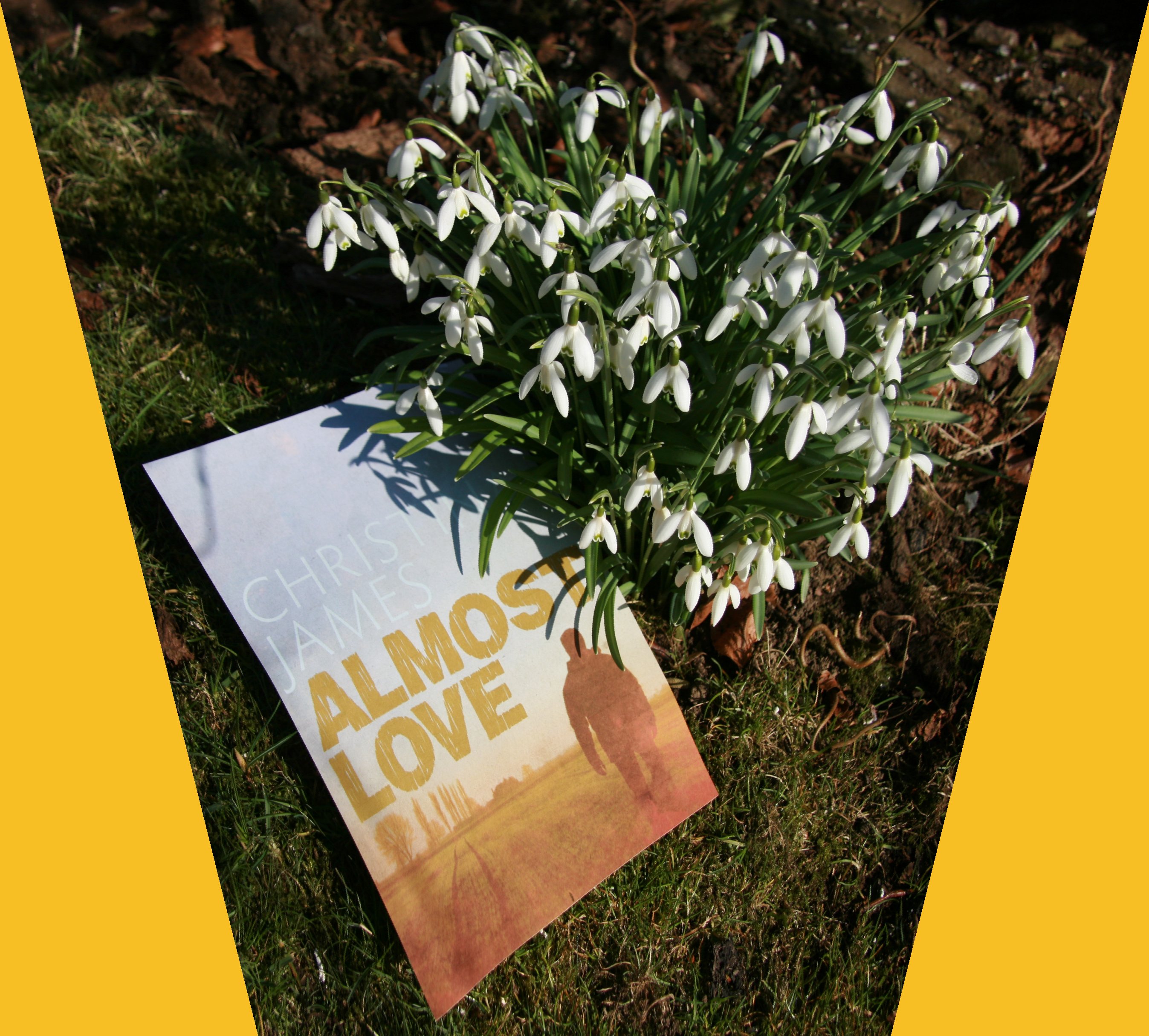
Yesterday was the first of March, St. David’s Day. Although there was frost on the ground, the sun, when it broke through the cloud, was shining brightly and with real warmth. The snowdrops and primulas have already been in flower for some time and yesterday I noticed that the dwarf daffodil buds are swelling. When I drove out at 6.15 p.m., there was still some daylight left. Spring is pushing aside a bleak winter!
Yesterday was also the day on which I wrote the last few sentences of Almost Love. Because of the non-sequential way in which I write (a habit that I am trying to break), they belong to a chapter about one hundred pages from the end; it was a chapter that I’d been trying to finalise for some time. Then, when there was nothing else left to work on (and therefore no way out of attending to it), it almost sorted itself, quietly and relatively quickly.
There’s still revision to be done, of course, although I revise all the time while I’m writing, but rounding off this novel has been quite different from finishing In the Family, which left me feeling battered and dazed. (I remember it well, partly because it was completed on the day of the royal wedding, which gave me more time to myself than usual.) This time I just felt happy in an understated sort of way.
The next novel is germinating at the back of my mind. It will need quite a lot of research, which I shall enjoy. For the moment, however, I shall focus on tending to Almost Love and enjoying the time before it bursts into bloom in June.
 Christina James, crime novelist