

Not about a baby… but a moral crime, in my book
Views my own, but one or two people may share them!
Our society thrives on gossip and there is, apparently, nothing more entertaining to us than to get the goss on celebrities, especially when they are members of the royal family. I believe that there has been some news this week about a couple of them, but, for myself, I have done no more than register the single central fact of the story, just for knowledge’s sake. I can do the rest in my head rather than have my head done in by a stream of statements of the obvious which the rest of the world seems to want to pore over, with some noticeable exceptions on Twitter!
Frankly, if ever there were a need for gagging the media, it’s now, as they focus with the usual unacceptable intensity upon the private lives of a young couple who deserve to be left well alone. Their families aside, who have a right to be interested in the detail, I honestly feel the rest of us can manage well enough with our knowledge of procreation. There are currently some very worrying stories about women in the world which should demand our attention and, whilst we might like some good news to cheer our miserable December souls, we don’t need to have pages of it rammed down our gullets. Good luck to you, happy fecund female and proud mate; we understand your excitement, your discomfort and your joy. We’ll want to know that both mother and baby are healthy and well on your publication day, but now the world really does have other things to think about.
‘We’re expecting’ … less intrusion.
Woman is pregnant. Sorted.
The New Yorker on Great Novels with Bad Endings
The New Yorker has just run an article on Great Novels with Bad Endings – see http://www.newyorker.com/online/blogs/books/2012/11/on-great-novels-with-bad-endings.html. Although I agree with almost every word, it is amusing that this comes from America, where crime novels, especially, often suffer from the lame ending phenomenon. I don’t think it’s because American crime writers run out of imagination before they finish writing; rather, that there is something in-built in the psyche of the American reader – and undoubtedly these authors understand their readers much better than I do – that demands a return to the cosy status quo at the end of the book. Almost all of the many Kellerman novels end with a cheerful family gathering or similar, the evil perpetrator having been killed or gaoled so that the family can dust down the barbecue again. The Hannibal Lecter novels likewise conclude with happy domestic scenes that almost seem to have been superimposed, as if it is essential to bat away the darkness and return to the safe banality of normal life, even at the expense of art. It is America’s own take on ‘the willing suspension of disbelief’! But perhaps this is what crime writing is about: it helps us to make sense of evil and then reassures us that good will always win. The challenge therefore is how to write as powerfully about happiness and security as about dark threats, death and strife. Which authors are able to rise to this? Only Jane Austen springs to mind.
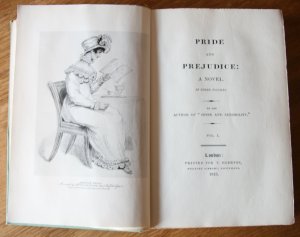 Oh, dear, I’ve taken on the States! Am I just too full of English pride and prejudice?
@wself To Will Self, on the passing of the typewriter. R.I.P.

So, Will Self (Times2 2012-11-21) mourns the end of the typewriter era, does he?
Sorry, Will, I can’t share your sentimentality; you may compare the ‘pure invention’ of the typewriter to that of the bicycle (‘all it requires is human power and it can take you anywhere’), but this is nonsense, really. Lots of us like riding bikes, but are thankful that there are faster modes of transport. Some of us still like using fountain pens, but only for the shorter missives. Even with pen- and pedal-pushing power, we don’t travel far on our fictional and literal journeys. You may feel that your words are ‘floating somewhere off in the electronic void’, but you know that they are not – and if you’re that worried about them you can always print hard copy to fondle. Frankly, I don’t believe you; as a writer, you know full well that you ‘think the sentences out in your head before you hit the keys’ with a computer as well as with a typewriter, so you don’t kid me that you don’t value the editing facility of the former. You admit to being fetishistic about the typewriters you’ve acquired; here are two pictures of mine – thank heavens they are just there to be ‘a cool, solid presence’ of a purely ornamental kind. Give me the computer, screen and keyboard – clunky isn’t funky and it’s definitely not cool.

As if I needed an excuse…
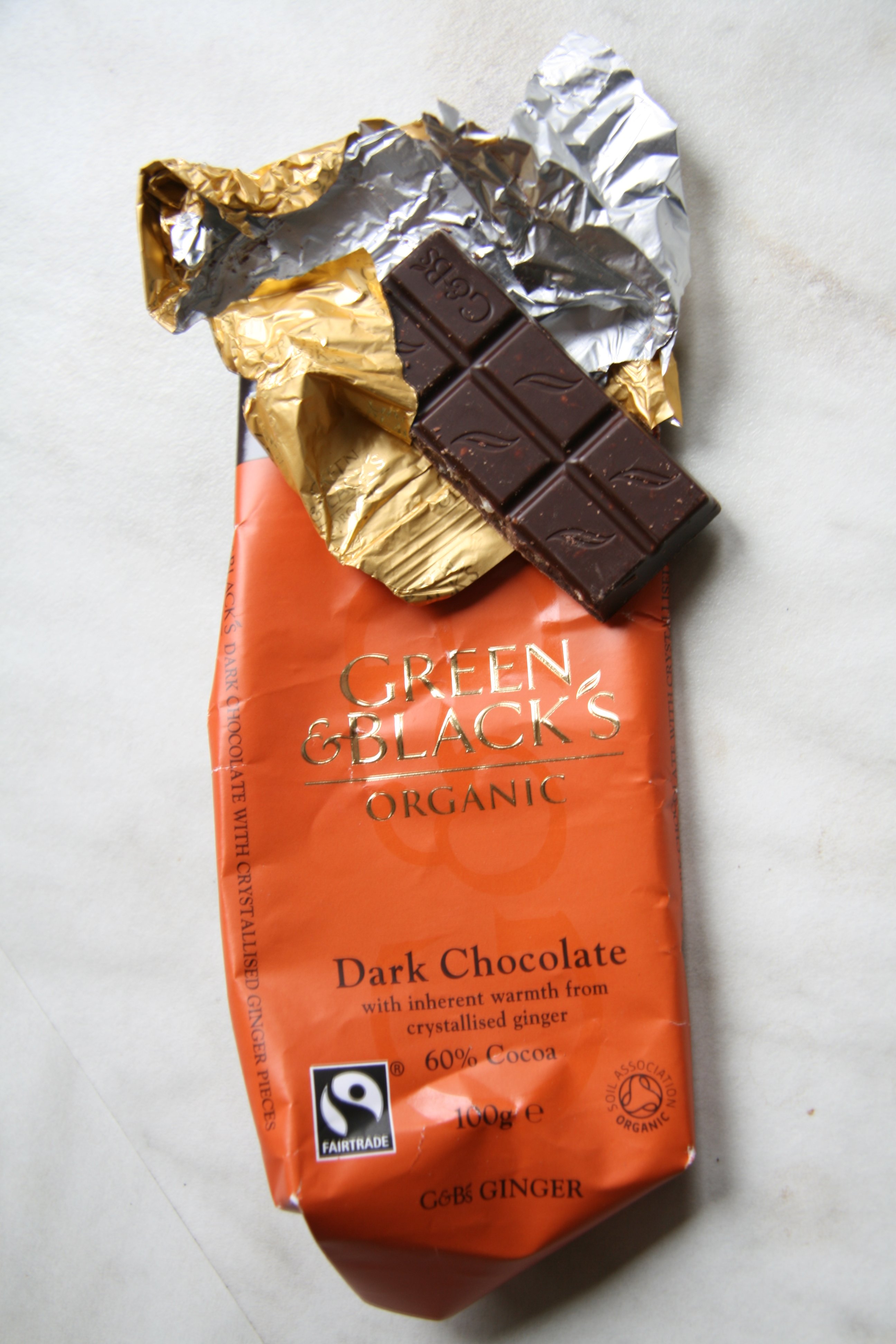
Ooops, not much left of this one!
An article in yesterday’s BBC online magazine describes ‘scientific’ evidence that chocolate makes you clever. This is based on the theory that rats and snails live longer and have better cognitive function when they eat chocolate. More tenuously, the authors link chocolate consumption with human intelligence, especially of the prize-winning variety. Apparently the number of Nobel prize-winners per thousands of population is highest in countries where the per capita consumption of chocolate is also highest. Unsurprisingly, Switzerland takes the (chocolate) biscuit, whilst Sweden is the odd one out, because although it has the second-highest number of Nobel prizes for its population size, chocolate consumption is low there. (The authors say, somewhat archly, that ‘this may be because Sweden has a patriotic bias’ when awarding Nobel prizes.) Speaking for myself, this is good news indeed: if I keep on eating chocolate at my present rate, I should be sweeping the literary board in no time: not only the Nobel prize for literature, but the Man Booker, the Pulitzer and even the Theakston’s Old Peculier Award all seem well within my grasp! A thought strikes me, however: Is my chocolate-eating prowess above average, average, or – whisper it quietly – possibly lower than the norm? I can’t do the maths!
Now the alpha male in the house (not a chocolate eater) is feeding the snails chocolate on his vegetable patch to win them over from his greens. He clearly needs to discover Green and Black’s for himself.
Don’t drop twitter
We used to go for walks in the wild and leave our tracks, like Pooh and Piglet and the Woozles; you could mark our progress, if you were a tracker, by the broken twigs or the thread of cotton caught on a bush. If we were really anti-social, you would find evidence of us in the bits of litter we left in our wake.
Now we walk in an ethereal world and we leave a trail of trivia in the tangled pathways of the digital web, by which we may be noticed and identified… or hunted. The trouble is, that we incriminate ourselves by what might once have been quickly overwhelmed by weather or overgrown by nature, but which is now non-biodegradable and there in perpetuity, for anyone to discover. And, if we happen to drop a tweet wrapper, the wet noses of the lawyers will sniff us out and pad inexorably along until we find ourselves surrounded by snapping, salivating jaw-suits.
We should have more respect for the world in which we now wander and treat it with care and goodwill; above all, we need to think about the possible consequences of thoughtless disregard for our environment and close properly other people’s gates and take our offensive twitter home with us.
Laura Thompson’s Daily Telegraph article on crime fiction
Laura Thompson’s Daily Telegraph article, Emma and the detectives, http://www.telegraph.co.uk/culture/books/booknews/9672296/Emma-and-the-detectives.html today poses the question ‘Is crime the new literary fiction?’, in advance of tonight’s Kings Place debate on the topic. Having considered whether crime fiction provides contemporary relevance (Of course, some of it does!), Laura Thompson moves to her central thesis, that it is the superior entertainment value that causes its popularity, rather than its presentation of life in today’s world. Daringly, she offers this: “I would go so far as to say that, in a sense, all novels should aspire to the condition of crime writing: that the genre showcases what is desirable, even necessary, in a book.” To which I should reply, “If any novel is good, it will inevitably contain features characteristic of good literature; its genre is irrelevant.”
She goes on to cite Emma as a literary example of a crime novel; I have no argument with this self-evident truth. What worries me is that she goes on to say: “At the end of the book, when Emma realises, ‘with the speed of an arrow, that Mr Knightley must marry no one but herself’, the solution has all the satisfying ‘Oh, of course!’ that one gets when a murderer is identified.” Perhaps my reading of Emma is different, but Laura Thompson might like to consider that the ‘speed of an arrow’ moment is in fact the ultimate irony for alert readers who have guessed this outcome almost from the beginning of the book.
I agree with her about the entertainment value of crime fiction; however, what for me makes the best crime fiction makes the best fiction: plot, characterisation, mood, setting, suspense and to crown the lot, fine use of language.
I’m sure that a great deal of good sense will be talked tonight.
Fog at the BBC
I have always loved Bleak House and I have always found its opening chapter amongst the most powerful and satirical of beginnings. In terms of creation of mood, it is also there at the top. Dickens knew how to exploit repetition, in this case of a single word, to drive home his damning assault upon the English justice system. A description of London under fog follows a description of mire, in which people slip and slide. The fog is ‘everywhere’ and its ubiquitousness is confirmed in a panoramic sequence of memorable descriptive detail. It culminates, using a technique familiar to film audiences, with an ever-more-penetrating focus upon Chancery. ‘The raw afternoon is rawest, and the dense fog is densest, and the muddy streets are muddiest near that leaden-headed old obstruction, appropriate ornament for the threshold of a leaden-headed old corporation, Temple Bar. And, … at the very heart of the fog, sits the Lord High Chancellor, in his High Court of Chancery. Never can there come fog too thick, never can there come mud and mire too deep, to assort with the groping and floundering condition which this High Court of Chancery, most pestilent of hoary sinners, holds this day in the sight of heaven and earth.’
I have read about and watched the unfolding disaster at the Beeb with all the horror of someone who discovers that a much loved member of the family (an auntie, perhaps) has betrayed that affection and regard. With obfuscation so widespread at the BBC, I fear that the corporation has become so leaden-headed that I cannot feel sorry for it. What the Dickens did it think it was up to?
Daisy Waugh, on what writers will do for publicity
I’m sure that many writers who read Daisy Waugh’s Sunday Times Magazine column about promoting her book will have smiled. Whimsical as ever, Daisy Waugh nevertheless touches some raw writer nerves, especially amongst those, like me, who are new to the self-promotion game. She first describes herself ‘lying on a giant polystyrene cut-out’ of her name, dressed in ‘a tight red satin skirt’ and ‘some magnificent shoes covered in velvet and jewels, on loan from Manolo Blahnik.’ This for a book cover or a poster. The thrust of her article concerns ‘Literary Death Matches’, a kind of Strictly-Come-Reading-Without-A-Partner in the pub, where writers show off a bit of verbal leg to entertain the ‘fairly drunken crowd’. Judging appears to be a touch subjective, the appearance, not the writing, of the author being crucial to success. The irony of Daisy Waugh’s final sentence (‘Whatever it takes, I’m up for it.’) not only amuses her reader, but also serves to highlight the anguish of authors who face a hostile and not necessarily objective audience scrutiny of something they have beaten brain-cells to bits for. This post is a toast to the thousands of unpublished gems that really deserved better treatment and to those publishers and reviewers who genuinely do know their stuff and employ it well for the benefit of authors and readers alike.
I’d like to think that all writers get a fair judgement, but the world isn’t fair.
Alfie in the ascendant
 Now that viewers have had a chance to see Alfie Barker’s trailer for In the Family, I should like to share with visitors to this blog a view of his talent. His film Assumption, which went live just over a year ago, found favour across the world and, as you will see from the comment below, has been seen by Shane Meadows (Director of This is England, who said, “I honestly thought it was a really touching film, very restrained, which is rare, and poetic.”) and also by IMDb founder Col Needham. The film has just finished a year-long North American film festival tour, which started at Vancouver’s International Film Festival. Alfie has had his films presented in Malaysia, Estonia, Bulgaria, New York (where Assumption “received the longest and most enthusiastic applause of the evening”), California and the U.K. and has won twenty-one international awards. His latest film, No Regrets, which tackles themes related to the harsh disease of Alzheimer’s, is due out in December. If you like what you have seen, as I am sure you already do, you may wish to check out his website at http://alfiebarker.com/ to view his fabulous work. Expect to be moved.
I am privileged and proud to have been able to work with him.
Director’s cut
Please enjoy piecing together the visual clues in Alfie Barker’s excellent trailer for my debut novel, In the Family.
 Christina James, crime novelist