

Where sheep may safely graze…

Terence the tup

Most of Terence’s flock

Brave new world
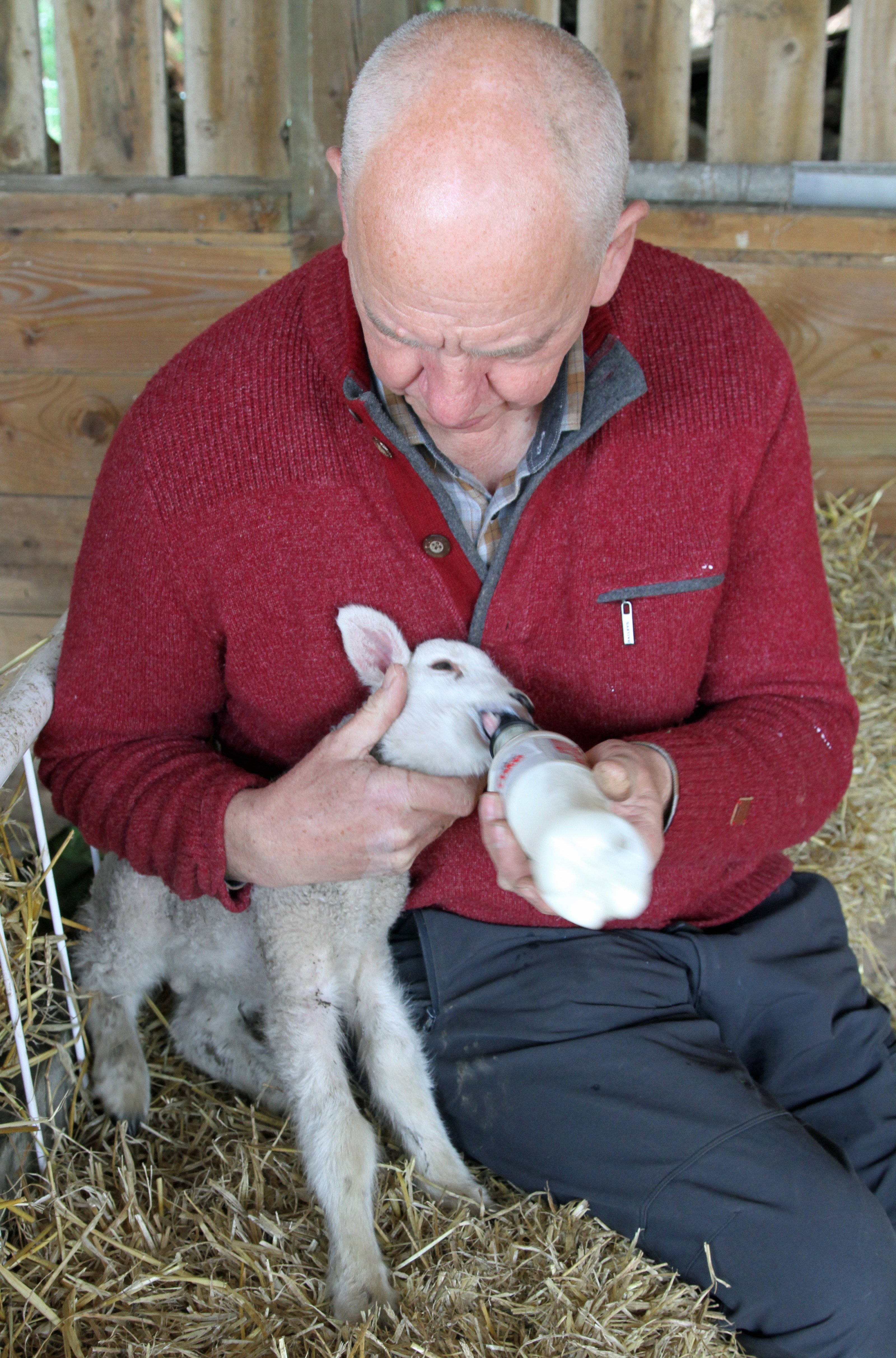
Supplement for the smallest triplet, to help mum…
We celebrated the start of spring this weekend by paying our friends Priscilla and Rupert a visit. We were looking forward to seeing their new-born lambs. They have eight ewes altogether, of whom four have borne a total of nine lambs (three sets of twins and one of triplets). They don’t know whether the other ewes are in lamb or not – apparently it is very difficult to tell whether a ewe is pregnant unless she undergoes the ovine equivalent to a scan, which for most farmers would be prohibitively expensive. (It occurs to me that an enterprising entrepreneur should come up with a ewe’s pregnancy testing kit!)
Whether or not the remaining ewes have been successfully impregnated, one thing is certain: Terence the Tup is in clover. Some of my readers will remember that Terence had a few runs-in with a mating harness at the beginning of the winter. Once Rupert had finally figured out how to put it on, it chafed Terence, so he was allowed to step out of it forever. This meant that his virility could not be measured. All that Priscilla and Rupert could do was wait and hope that he had triumphed.
Terence takes over the story:
You wouldn’t believe this, but that Rupert has fitted up a telescope in his bedroom so that he can spy on me. Prurient, that’s what I call it. If a ram tried that, he’d be locked up. It’s bad enough trying to get a bit of privacy when you’ve eight ladies to look after, without him butting in. He says he’s doing it on humanitarian grounds. Pah!
Everyone seems to think that I’ve struck it lucky here, that it’s an easy billet for me, with just eight women and no other blokes trying to muscle in. I’ll have you know it’s not a straightforward as it looks. For one thing, some of my girls are quite flighty. They’ll argue with each other over who should be next for my favours and then, when I pick one and take her side, they’ll all turn on me. Sometimes, that means I don’t get anywhere with any of them and I have to wait until things have settled down before I try again. Then Rupert comes out (having, I imagine, been glued to his bedroom window – you’d think he’d have better things to do) and says he’ll get rid of me if I don’t perform. You can’t win.
And another thing… Rupert and Priscilla bought special fodder for the ewes once they thought they were in lamb, to give them the right nourishment. I’d no objection to that, but they were downright stingy when it came to letting me eat it as well. I didn’t get any of it ‘officially’. They didn’t seem to understand that I was as busy making lambs as the ladies were – busier, in fact. I’m a dad of nine now, and counting, not just a mum of two or three. They should have seen that I needed the victuals to keep my strength up.
I found a way round this eventually. I decided to cold-shoulder any lady who wouldn’t share her provender with me. It worked a treat: they all gave me some. They might not have minded ganging up on me sometimes, but if there was one thing that none of them could stand, it was being ignored. I should have tried it in the first place: they’d all have been in the club in no time. Rupert thinks that I’m getting a bit fat now, but what does he know about BMIs for sheep?
Once the lambs started to come, though, I got the boot. Seriously, it’s the truth: I know it sounds outrageous. They used some hurdles to fence off part of the field to segregate me from the girls, and fastened me in with one of last year’s lambs, ‘to keep me company’. Little whippersnapper. I give him a good head-on crack, skull to skull, whenever I think no-one’s looking. Fortunately, the telescope has been trained on the girls who’ve yet to give birth, so Rupert doesn’t see it if I’m careful. I ask you, though, what kind of maternity unit does he think he’s running here? I’m certain there are no telescopes involved in ‘Call the Midwife’.
By the way, eight of my nine are boys; they could use me in China. ‘Ramming it’, I call it.
To Brighton again, with spring in step…

As you can tell from the date of the picture I took from the train window just over a week ago, this post is a little behindhand. I was then, and am now, heading south on East Coast rail. What a lot has changed in one week! The temperatures have soared, high pressure has established itself over the whole of the UK and the train Wifi is working for once! I’m conference-bound today, with all the lightness of heart that good weather brings. Here’s what I wrote last week:
I’m on the train to London again, for the first time in quite a while. It’s just after 7 a.m. and broad daylight – a luxury that I haven’t experienced on this journey at this time since last October. It’s chilly: the fields are damp, still drying out after the rains, and a low mist rises from the earth as it warms up for the day. The sky is oyster-coloured and fretted with a complex pattern of clouds that seem to form the shape of the skeleton of a whale, or some long-dead prehistoric beast; I see a dog running across the grass, but can’t spot its owner. Mostly the land in this area is flat and arable, but occasional huddles of cows or solitary horses tethered in a paddock, grazing peacefully, flash by.
As usual, there is a problem with the train’s WiFi, but mercifully the electrical sockets are working, so I can still use my laptop. This is just as well, because, try as I might, I’m struggling to find my fellow passengers interesting. Opposite me sits a burly man reading the Metro newspaper. He licks his finger to get a purchase every time he turns the page, an unhygienic habit that I’ve always found irritating (particularly when employed by bank tellers counting out notes that I must then grasp). I wonder how much newsprint he swallows each week? The man sitting opposite is slenderer, younger and quite geeky. He’s wearing square, heavy-framed spectacles and is immersed in his iPad. I can just see that he is reading the Financial Times (and can tell that he is familiar with East Coast – he’s downloaded the paper before getting on the train!). At least there’s not much prospect of his sucking on his thumb and index finger as he scrolls down the articles!
Looking round, I see that all my fellow passengers are men. The ones behind me, each seated at a separate table, are all reading documents and making notes: weekend work that didn’t get done, I guess.
Now the train is approaching Newark Northgate. The sun is riding quite high in the sky, but is still watery and pale. Newark is this train’s last stop before King’s Cross. Quite a crowd of people is waiting to embark, but again not a woman in sight. Smarter than I, perhaps – they’ve managed to stay at home to enjoy what promises to be a bright early spring day.
Breakfast arrives (I’m travelling first class, though on a very cheap ticket, because I ordered it weeks ago). It’s a smoked salmon omelette. Porridge and fruit compote, which was what I really wanted, has apparently ‘sold out’. I’m sceptical about how this could happen on a Monday morning. Someone forgot to fill in an order form, perhaps? The omelette is OK, but the half-bagel on which it sits looks tough and rubbery. I decide to give it a miss.
All of this, I’m sure you’ll agree, is quite humdrum. The journey is one that I’ve made scores of times before, usually, but not always, with more promising travelling companions. (I’m hoping that the rest of it will be as uneventful and that the train will arrive on time, as I have only forty minutes to cross the city to get my connection at Victoria.) But my spirits are lifting. I feel the old magic that I’ve always associated with train journeys since I was a child. It’s been dulled by the dreariness of winter, but today it has returned, in full strength.
It’s 8.10 a.m. and the sunlight is streaming through the train window, flinging a glare of orange across the computer screen so that I can hardly see these words. Spring is here. When I arrive in London, spring will be burgeoning there, too. It is the beginning of March and at last it seems as if the year has really started. There is the whole of the spring to sip at as if it were a delicacy and the almost-certainty that it will be followed by the feast of summer. It will be eight whole months before we shall arrive at the end of October and watch with dismay the withering of the trees and the light as winter approaches again.
Today, I am travelling to London, then on to Eastbourne: an ordinary work-day expedition. But it is part of a much bigger, more exciting journey: my odyssey into 2014.
Today, I am travelling to Brighton, where this year there will be no heaps of snow on the promenade and I’ll be interested to see just how little the storms have left of the West Pier skeleton, which I wrote about and photographed twelve months ago.
Have a lovely week of spring weather, everyone.
I want some clichéd spring!

Ewe and two lambs

A spirited spring face

Female hazel flower, magnified; in the foreground, the much more visible male catkin

Hazel male flowers: ‘lambs’ tails’ or catkins

Goat willow (‘pussy willow’) hedgerow

Way ahead of time, tucked in a sunny spot on a bank: primrose
Like most writers, I abhor clichés, but one cliché that makes me glad each year is the certainty of the English spring, in all its sweet naffness: little lambs gambolling, pale flowers bursting into bloom, pussy willows, forced rhubarb and chocolate cream eggs jazzing up the fare in the supermarkets… and all of the 101 other things that mean that winter is being pushed off into exile. And, if I hadn’t realised this before, last year’s spring (which, if you remember, didn’t happen) left me mourning for an annual cliché that was then even more powerfully etched into our minds by its absence.
When I was young, I didn’t mind heading into the winter: autumn meant pristine new school exercise books or, some years later, the excitement of a new university year; it meant going home in the slightly scary darkness; it meant that the ice cream van that had stood at the end of the street on long summer Sundays had been replaced by the toffee apple man’s van (he who vigorously summoned the children of the neighbourhood by ringing an old school bell out of his window); it meant chestnuts and hot toast and Heinz vegetable soup. But that kind of cosiness and the underlying slightly edgy sense of the danger that might be lurking in the dark (and would, perhaps, grasp you in its claws if you were sent up to Mrs Dack’s shop for some milk after the 6 p.m. news) has long since been replaced for me by the dreary feeling of unwell-being that winter brings: of snivels and snuffles, mornings that are wet and foggy rather than icy and bright and, in the part of the world where I now live, mud, mud and more mud.
I think that much of the problem lies in the fact that we English don’t ‘do’ winter well. Go further South in Europe and the Italians and Spanish celebrate short sharp winters that include coping with heroic bursts of snow before getting back to the norm of a balmy spring-to-autumn of sunshine that lasts for eight months of the year. Go North, and you find Germans, Scandinavians and Russians revelling in the winter, showing off their prowess on skis and skates, sometimes with a great deal of bravado. (A few years ago, I had a Finnish client (day-job) who boasted that he always skied in T-shirt and shorts.)
Perhaps the only country that is as bad at wintering as we are (or worse!) is France, but the French people that I know seem to solve the problem by going into virtual hibernation: The weather is foul – they stay at home – and eat and drink, mon brave, and sulk until the spring appears. Then there are the Scots, whose winters are colder and gloomier than ours and who succeed in behaving in a correspondingly chill and more lugubrious way. However, there is a grandeur about their melancholy: it is a Carlylean gloom of grandiose proportions, not to be compared with the trivial gnat-like whining about the weather in which we English indulge. And, like the French, the Scots understand that the only way to get through the winter is by eating the appropriate food and taking a wee dram whenever the opportunity presents itself. I endured three Scottish winters when I was working in Dumfries (home of the deep-fried Mars Bar, though even Dumfries folk regard this delicacy as an extreme remedy, to be used only at times of urgent necessity) and I have to admit that getting through day after day on six hours of daylight was not easy. At the place where I worked, we were supported through the winter months by the culinary achievements of our two stalwart canteen ladies. Menu favourites were meat and tatties, beefsteak suet pudding and haggis or hash with chips. If we asked for something light, they served up lasagne. I once suggested that a winter salad would make a nice change and they nearly fainted. ‘Salad? In the winter? How will you get the energy to do your work, hen? How will you keep warm while you’re working?’ (Of our workforce of 160, half a dozen worked in the packing bay; the rest of us were seated at desks, with the heating turned up a good 5 degrees higher than was strictly necessary.) Yet perhaps they had the right idea: we were trapped in the catastrophe of winter, and they were battling with it on our behalf.
So I say again that the English are the most hopeless of all nations when it comes to winter. But we are good at spring, and especially at perpetuating the clichés that go with it. Tomorrow is the first of March: not officially spring yet, therefore, but good enough for me! And I invite you to celebrate it with me in whatever joyful, hackneyed way you wish.
[Being as usual snowed under (a winter metaphor indeed!) with work, I asked my husband to take some clichéd photos to go with this post, but, with his usual delicate touch when behind a camera, he has instead, I think you’ll agree, managed to capture some extraordinarily un-clichéd pictures from what would otherwise have been very commonplace spring-time situations.]
2014, starting at the pace of a skeleton bob…
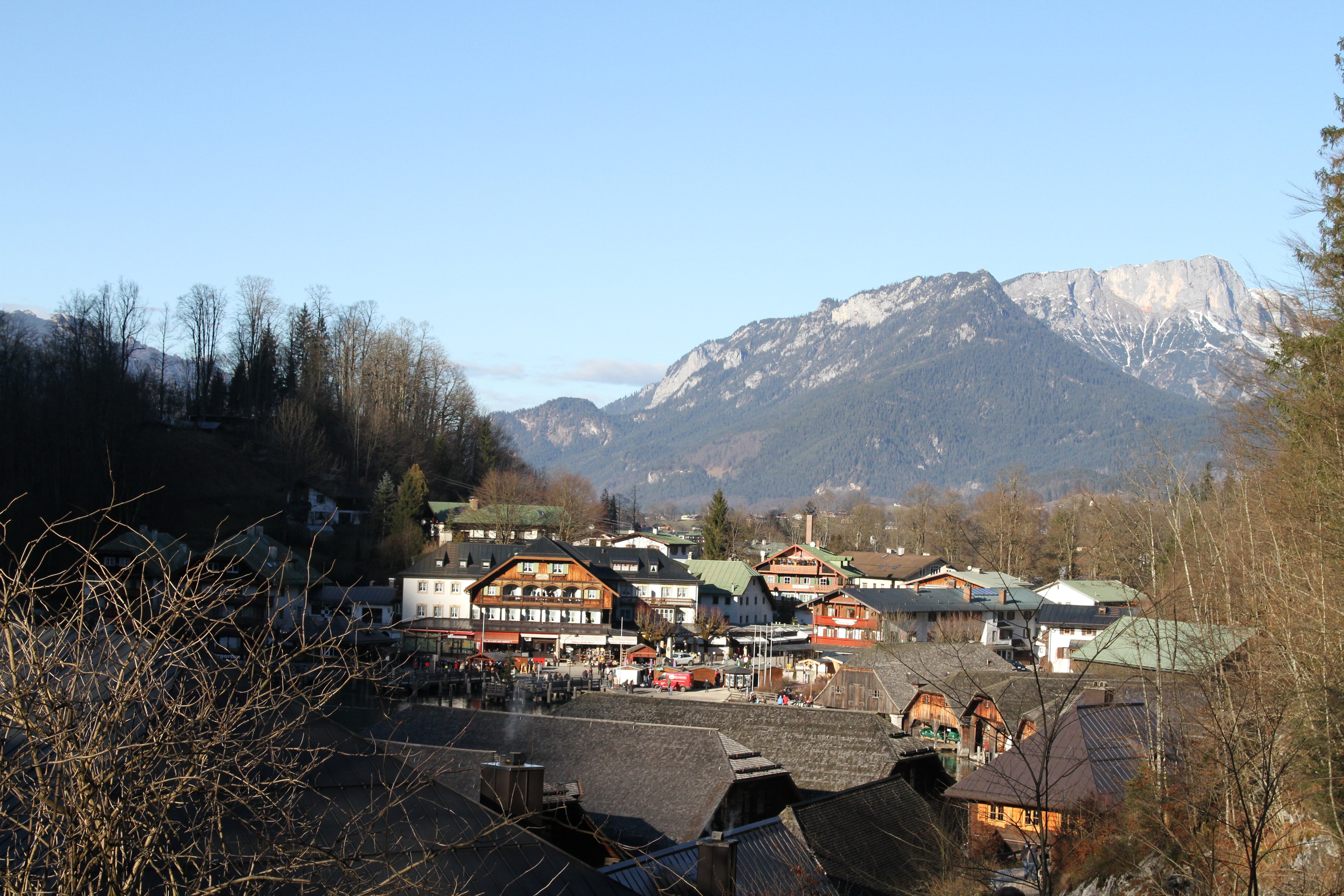
Schönau am Königsee
New Year’s Day 2014 was one of the most varied and interesting I have ever experienced. It began with breakfast in Bad Reichenhall, a small Bavarian town that nestles among the mountains on the Austrian border, on a cold but sunlit morning. My friends and I then drove to Schönau am Königsee, a traditional Alpine town just south of Berchtesgaden that has become a winter sports resort, and took a small circular walk around part of the Königssee, a lake etched so deep into the landscape that it looks like a Norwegian fjord; it’s Germany’s third deepest and well known for the echo created by its rocky walls. There is a church on the other side of this lake, but the sun was shining so brightly, with its light reflected so brilliantly on the surface of the water, that it was impossible to see through the glare.

Königssee in winter sunshine
Towards the end of the circular walk is a ski slope which is in constant use, thanks to snow machines. (Somewhat bizarrely, there is a hen-run to one side of it, complete with a wooden chicken coop on wheels and several brightly-plumaged hens.) Unable to ski myself, I marvelled at the grace and speed with which the skiers descended. There were some snowboarders, too: mostly children, who were tackling the challenge of the swift descent with extraordinary confidence and fluidity of movement.

Enjoying winter at Schönau am Königsee
The town itself is a bit of a tourist trap (I’m not sure what kind of Alpine souvenir a fluffy pink teddy bear represents), complete with live ever-so-genuine-Bavarian volksmusic, but by climbing beyond the car park and the town we swiftly reached the Olympic-standard permanent sled run.

Welcome to bobsleigh!
The World Cup 2013-14 season for both skeleton and bobsleigh ends here on January 26th 2014, and by chance and great good fortune we were able to watch several of the national teams practising solo skeleton, which is an even hairier version of bobsleighing: the competitor lies face up, feet first, on a small sledge as it zooms down the ice track. His entire journey takes less than a minute.
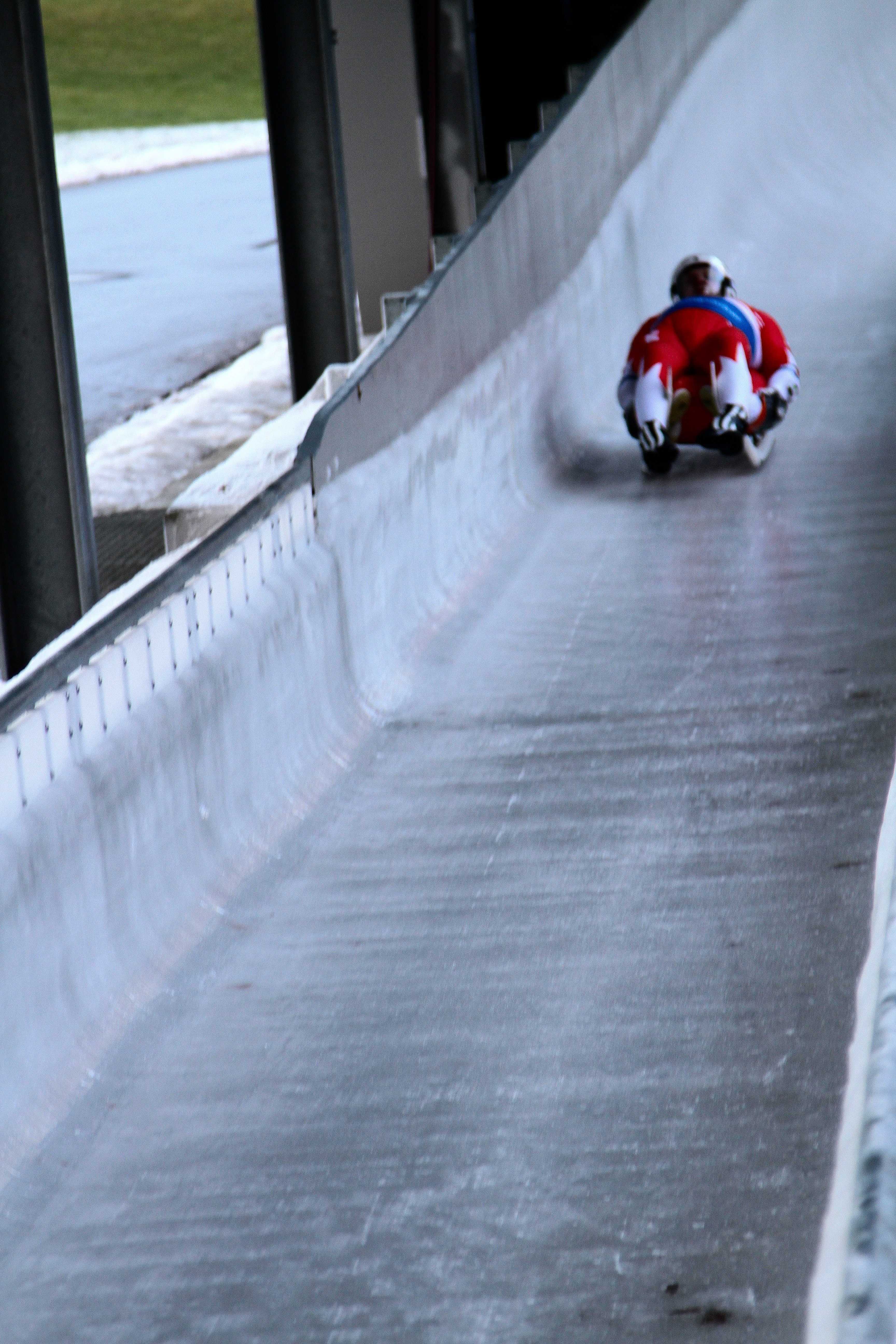
Solo skeleton bob – phew!
One rider came to grief as he passed us and skithered on his side to the final bend, where he came to an ignominious halt and clambered in ungainly fashion over the barrier, clutching his sledge. He was embarrassed and annoyed, but otherwise unharmed.

Boathouses at Königssee
By this time, it was getting dark, but we were keen to complete our excursion by making a short detour to the site of the Berghof, Hitler’s Alpine home and headquarters. Beyond this lies the Eagle’s Nest, the bolt-hole to which he planned to withdraw in the event of a defeat while he was in residence at the Berghof. Of course, he was in his Berlin bunker when the Allies finally closed in on him, but I was interested to be informed that, although the Berghof was first bombed by the RAF and then torched by the SS troops just before their departure, the Allies decided to leave the Eagle’s Nest itself intact. It still stands to this day, as a café-restaurant, though cannot be reached in the winter.
The Berghof itself has been reinvented as a ‘documentation centre’. It is also now a small tourist attraction, with some access to the bunker system, together with a car park, a restaurant and a shop. The ascent to it from Berchtesgaden is steep, and the road precarious: there is no barrier for much of the way and the drops below the bends are lethal. I imagined the people of Berchtesgaden and the Obersalzberg area going about their business over seventy years ago, prevented by a closely-patrolled security cordon from their earlier nineteen-thirties jaunts up the mountain to catch sight of Hitler, only vaguely aware that something ‘important’ was going on above them when Hitler’s soldier aides descended upon the town to buy supplies.
Unfortunately, the document centre was closed on New Year’s Day, so we were unable to view the grim records of the Third Reich that it houses. It may have been because of this, or perhaps owing to the beauty and almost sacred tranquillity of the place – which, save for that one short period of depraved activity, has obtained almost since the dawn of mankind – that I could gather no real sense of the evil that once lurked there. It is true that there are clues for those who care to look for them: for example, the distinctive archways that now form the windows of the shop were once part of Hitler’s garage complex, as the footage from old films, shown on a constant ‘newsreel’ in one of those windows, illustrates, but I experienced none of the deathly despair and outrage that visits to other wartime sites have prompted in me. I suppose that that in itself is a triumph: a sign that the bedrock of primeval goodness in this place has triumphed over the temporary evil that it once harboured and then cast out.
Happy New Year, everyone!
All text and photographs on this website © Christina James
Salt and I inextricably linked, even on holiday…

Salzach River, Salzburg
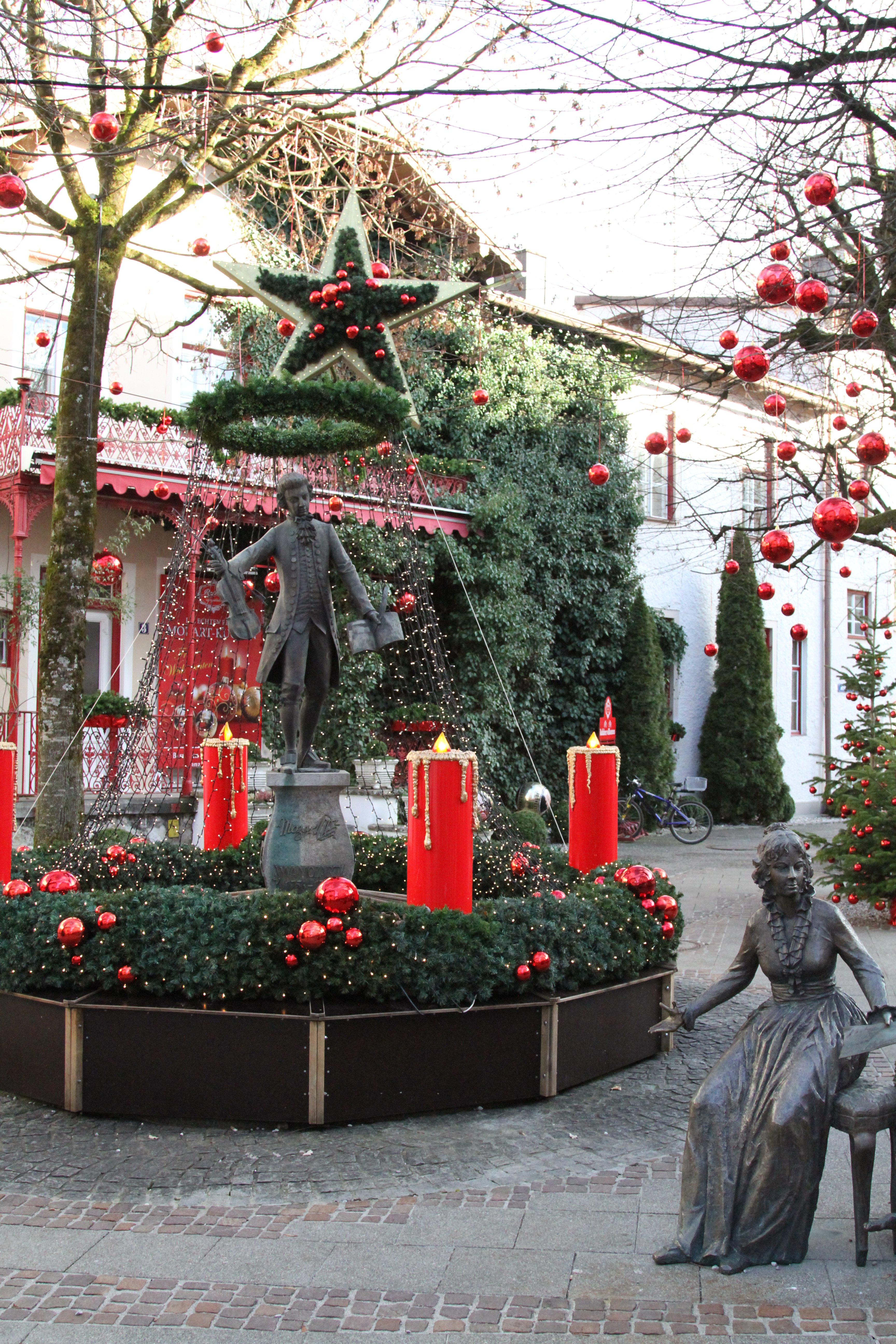
Chocolatiers’ Mozart Christmas grotto, Bad Reichenhall

Salzburg skyline in December
Salzburg is a breathtakingly beautiful city that seems to exist mainly to ensure the immortality of one man: the child prodigy composer Wolfgang Amadeus Mozart. There are Mozart cafés, Mozart restaurants and Mozart museums – and even tourist gift shops where you can buy Mozart rubber ducks and flying birds with Mozart’s face, all wearing powdered wigs. There is a spectacular concert hall where the programme includes the work of many composers, foremost among whom is – Mozart. There are Mozart chocolates, made by two rival companies: the original chocolatiers, whose business is very small and still confined mainly to the Salzburg region, and a younger, upstart firm whose aggressive marketing has been so successful that its distinctive round, filled chocolates, individually-wrapped in red foil, can now be purchased in many countries besides Austria. This company has created a Mozart grotto next to its main shop over the border in Bad Reichenhall, which features a statue of the composer, a fountain and bushes hung with winking red lights and huge baubles in its trademark silvery red.
Today, the city’s prosperity depends very much on Mozart tourism, but it was a wealthy place long before the composer’s birth. As its name suggests, its fortune was built on salt. This, of course, resonates with me, because Salt, good fortune and creativity are very much linked in my mental map. There is a famous salt mine close by the city which offers tours to visitors. We decided not to visit, as we have recently been to a similar attraction in Kraków. The Austrian one, apparently, makes a particular attempt to please family parties: its offers include enabling children to dress up as eighteenth-century peasant salt-workers.
The river that runs through the city also takes its name from salt: tolls on the salt-carrying barges created some of its wealth. Walking along the boulder-strewn riverside is a pleasing experience and there are several picturesque bridges, one of which is hung all the way along with lovers’ padlocks.
The Salzburg area has been unseasonably warm between Christmas and the New Year. There is snow here, but only high in the mountains. The local people are amazed at how mild the weather has been. Nevertheless, the people in the streets all wear hats, scarves, boots and quilted jackets or loden coats. Babies in buggies are muffled to the eyebrows. It is possible to stand in the sun and feel real warmth on your face, but as soon as you step into one of the many alleyways or just enter the shadows of the tall terraced buildings, the cold bites. There may be no snow at the moment, but you feel that it is only biding its time. February is the coldest month here: the Austrian mountain winter has really only just begun.
What does Salzburg have to offer in the way of inspiration for a crime fiction writer? On the face of it, this bright, industrious city, peopled with serene residents and laughing holidaymakers, does not seem a promising setting for dark deeds. However, in the alleyway marked ‘Juden Gasse’, with its stolpersteine or brass commemorative cobblestones, we stumble upon some of the darkest deeds that man has ever perpetrated upon man; and, not many kilometres away, lurks the Eagle’s Nest, mountain retreat of one of the world’s most sinister fantasists and almost the most prolific murderer of all time.
If I could return to the past, I’d have no desire to be a great lady…

Rufford Old Hall

Rufford Old Hall – Great Hall roof timbers
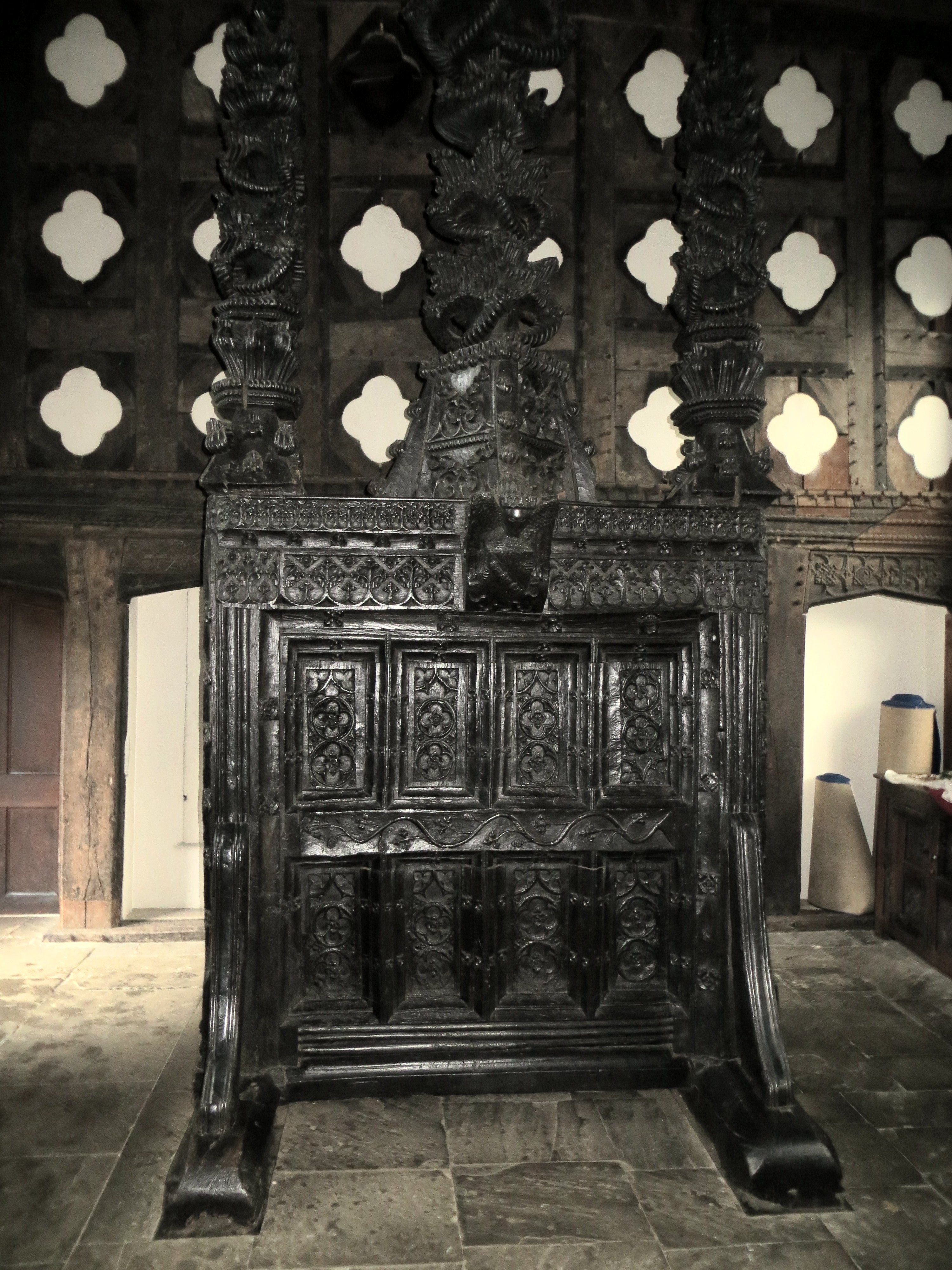
Rufford Old Hall – Great Hall screen

Rufford Old Hall – Great Hall screen – fingers!
After bouncing round the country like a yo-yo for ten days, penetrating some of the less glamorous outer reaches of bookselling (Don’t ask: it’s nothing you’d ever see on the high street!), on Saturday we spent another wonderful day with Priscilla and Rupert in Lancashire. This time our walk – with two frisky dogs – entailed walking across fields and along a canal bank to Rufford Old Hall, a fine Tudor building.
This in itself was a great treat. An Elizabethan manor-house, it made me realise that, if I could return to the past, I’d have no desire to be a great lady (fat chance – I’m sure all my ancestors were peasants, probably of the most primitive kind; my family name actually means ‘sheep-shearer’ and we are all squat, blue-eyed Saxons, not tall, interesting Normans, fiery, red-haired Danes or exotic, white-blond Flemings).
But I digress. I’d have no desire to be a great lady, at the mercy of political fortune, likely to have a husband who would either leave me for long periods while he fought in wars (expecting me on occasion to raise militia to protect our estate), or be obliged to entertain the monarch on a tour of ‘progress’ and therefore invite my own financial ruin. It would have been much pleasanter and more settled to have been one of the fortunate Hesketh family, who owned Rufford for many generations, and lady of the manor of a substantial but not pretentious house like theirs.
When we visited, the upstairs of the house (which is now owned by the National Trust) was being renovated and therefore out of bounds, but the downstairs, including the wonderful Great Hall (which is not too ‘great’ to be cosy when lit by an open fire) and various rooms of later dates, was open to the public. I was especially fascinated by the screen at the entrance to the Hall, the only survivor of its kind, which acted as a joint draught-excluder and obscurer of servants bearing away unsightly dirty dishes. It is a beautiful piece of carved oak, complete with quirks that say so much about the early Heskeths who commissioned it: for example, one of its panels is upside down and one of the angels it depicts has a supernumerary finger: A tribute to Anne Boleyn, also supposed to have had this ‘blemish’ (which was later produced as evidence that she was a witch)? Or, more probably, an observance of the mediaeval belief that no work of art should be perfect, lest it offend God? Also intriguing was the signature carved in the original Elizabethan glass of the bay window of the Hall, dated 1513 (so it was five centuries old this year). I’d love to have met its author!
The National Trust guardians of the Hall were sympathetic, cheerful folk, not at all forbidding or restrictive, as some of their counterparts at other NT houses have been. They’d decked the Hall to celebrate Dickens. Placards with quotations from A Christmas Carol were everywhere, and the guides themselves had dressed up in mid-Victorian garb.
And so back to Priscilla and Rupert’s, to sample their sloe gin and blackberry brandy: the good life, indeed, and the best foretaste of Christmas we could ever have dreamt of! Not forgetting a trip to see the huge willow tree that the weather had part tumbled and Rupert had finished off, at great risk to his life, while Priscilla was in bed with ‘flu. What is it about men and trees? Never mind OK lumberjacks in high heels: it seems to me that every man contains within his soul a death-wish – not just a desire to perish in any old way, but by having a tree fall on him, or (to me) worse horror, by means of a chain-saw or axe. Fortunately, although Rupert fell fifteen feet, he survived with a few scratches… and suffered more from the (just) excoriation of Priscilla’s wrath.
I feel I haven’t done full justice to male folly and trees in this post: I’ll come back to it again. Remind me to tell you of a monster ‘useful piece of hardboard’; of Fred (of bird impersonation fame), thirty feet up a ladder, his grasp firmly around the top of a tree he was in the act of chopping off; of Ken, who made our dining-room table, almost sawing off his index finger ‘by mistake’!
Kraków Planty in golden October…
When I consulted the BBC online weather forecast in advance of our trip to Kraków, I learnt that the night-time temperatures there the previous week had been zero and, during the day, had barely climbed to ten degrees Celsius. On arrival early in the evening on the Friday before last, I was therefore pleasantly surprised to find that, although there was a nip in the air, it was nowhere near as cold as I’d expected. The atmosphere was extremely festive: well wrapped up in colourful winter clothes, people were parading the streets, arms linked, talking and laughing, much as they promenade in Spanish towns and cities before dinner; and, unlike in some other eastern European cities I have visited, dinner was served at the restaurants until a reasonably late hour.
The festive mood continued on the following day.
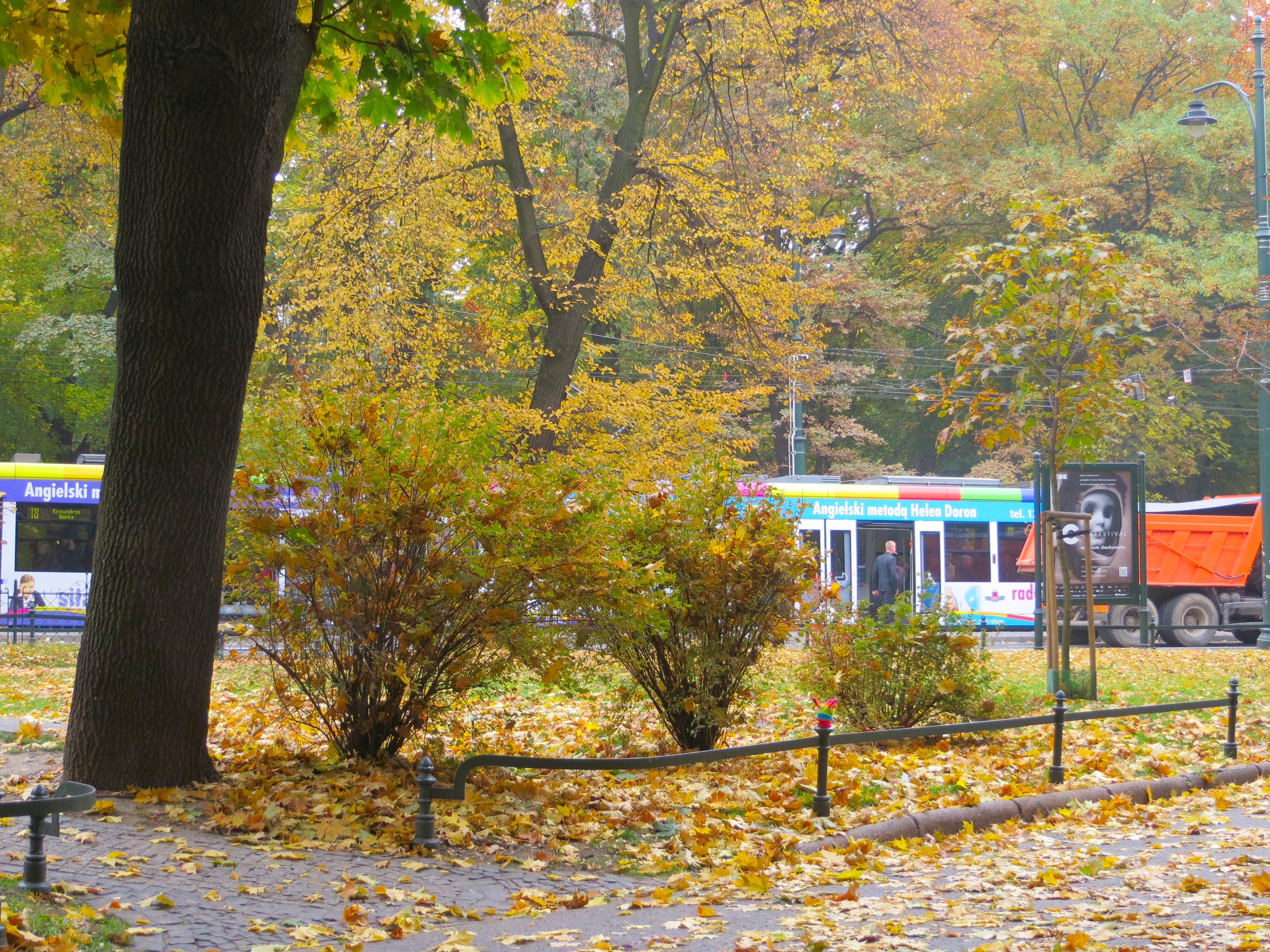
Kraków is a beautiful place. The Stare Miasto, or ‘Old Town’, is entirely circumscribed by a park (or rather a series of them, divided by the radial roads) called Planty, which runs around the line of the old city walls. Sometimes, this is just a narrow strip of land dividing the pavement from the road, but often it broadens into large tree-scattered areas of grass containing children’s playgrounds, statues and benches. Always there is a wide path to walk along, so there is no hazard to pedestrians from motor vehicles (though the cyclists are pretty manic and don’t seem to have discovered either bells or horns!). There are some distinguished museums and other significant tourist attractions in Kraków, but many residents and visitors to the city seemed to me to spend a great deal of time just walking around Planty.
On the Saturday of our visit the park was particularly lovely. Because of the cold spell the week before, the trees had all changed colour and were presenting a glorious display of gold, russet and tawny brown. Most striking, however, was the rapidity with which the leaves were falling: a gentle burnished leafstorm was constantly swirling to the ground and people were catching the colours as they walked along.
Although we never discovered its exact nature, there exists some special relationship between the citizens of Kraków and the falling of the leaves. This may have something to do with the rapidity of the ‘fall’, which we were very fortunate to experience. At our hotel, the staff had placed richly-coloured fallen leaves on the tables and in alcoves on the stairs. In the streets, whole families were collecting the leaves in sheaves and walking along holding them as if they were bouquets of flowers. At the open market in the main square several stalls were selling autumn posies made up of leaves, berries and nuts and, although these were priced between 12 and 20 zlotys (quite a lot in that part of the world for a perishable decoration), they were selling well and being carried around like Elizabethan nosegays.

The fantasia of falling leaves continued for the next three days. On Tuesday we awoke to heavy rain. There had been a storm in the night, and the trees had now been laid almost bare, the rich carpet of leaves on the ground sodden and trampled underfoot. In Kraków, it is autumn’s lease that hath all too short a date. The golden leaves have almost all gone now. It will be a whole year before they make their brief appearance once more.
To bend with apples the moss’d cottage-trees…
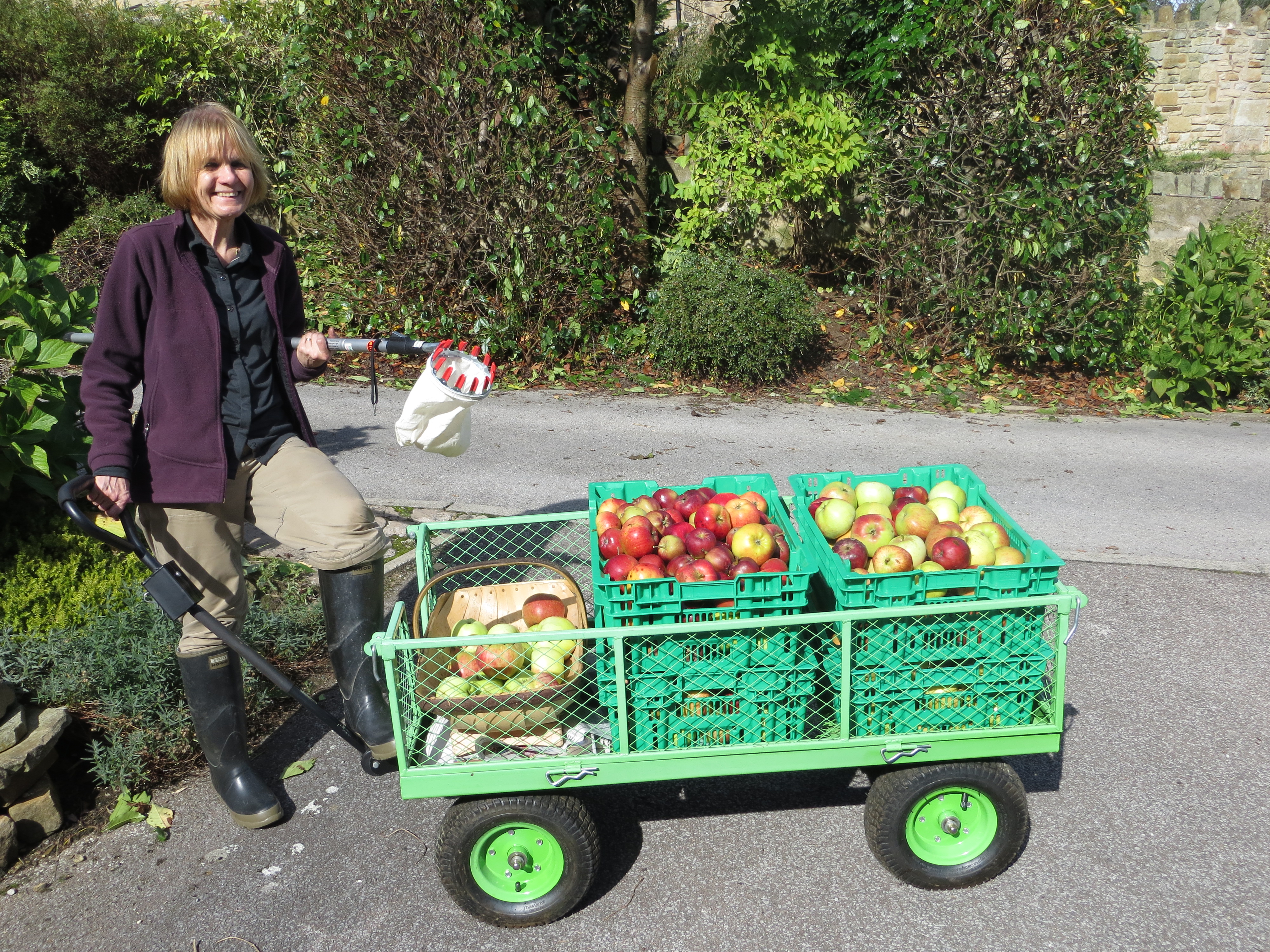
And fill all fruit with ripeness to the core
In my youth I was fairly impervious to the seasons, but in recent years I have come to dread the winter months. It’s not so much the cold that I dislike as the long hours of darkness and the even more dismal short hours of fuggy daylight. I particularly hate the murkiness of late November and December and always rejoice when the New Year brings a better quality of light. My husband once pointed out to me that January 21st marks the end of the two darkest months of the year, and now I always have a mini-celebration on that date.
It is therefore with mixed feelings that I welcome the autumn, even such a warm and mellow one as we have been enjoying this year. We’re already more than a week into October and, at the end of the month, the dark mornings will descend in a brutal rush when the clocks are changed. Now the shades of winter are hiding in the trees, making the first leaves fall. Soon all the branches will be bleakly bare. Although we’ve had a good summer, no-one in Yorkshire has forgotten last winter, which managed to extend itself almost into April: here, we had eight-foot snow drifts at the end of March.
There are some good things to look forward to, however. This has been an excellent year for crops of all kinds – the combination of a wet, late spring and warm early summer seems to have suited almost every species of fruit and vegetable. I’ve already written about freezing our bonanzas of beans and peas, and the exceptional blackberry harvest that we’ve enjoyed. The plums have been prolific, too. And now there is a bumper crop of apples.

I had a crush on this
We have two apple trees, one an eater, the other a cooker – a Cox’s Orange Pippin and a Beauty of Kent; our neighbours own four, theirs all varieties of eaters. The Cox rarely produces enough apples to last us until Christmas, but the Beauty of Kent is a stalwart yielder – we collected ten trays of apples last year and did not manage to eat all of them or give them away before they began to rot at Easter – and the neighbours rarely get around to harvesting the significant yields that their trees produce in any kind of systematic way. The waste has been regrettable, but hard to address. This year, my husband decided that we should countenance it no longer and suggested that we should try our hand at making cider.

Pomace face
Correction: that isn’t what he originally suggested. At first he said that we should try making apple juice, and accordingly we bought the equipment. My husband loves embarking on projects of this kind and they all have one feature in common: they are always more expensive than he says they will be, often by many times – the pond, for example; then the beehive ‘starter kit’ (£450 would give us all we needed to maintain two colonies of bees, but we soon needed another hive and a very strange miscellany of costly equipment that looked as if it had been knocked up by Heath Robinson, not to mention the cost of the bees themselves, which turned out not to have been included in the initial figure). I don’t for a minute believe that this is because my husband has a poor head for figures or is incapable of adding up the costs of his enterprises; in fact, I’m quite certain that it’s his way of getting me to agree to them. Once he’s pointed out the entirely reasonable price attached to whatever is his latest enthusiasm, and I’ve agreed to this outlay, we have reached the point of no return and further investment, when it is needed, becomes impossible to refuse.

The turn of the screw
So it has been with the apples venture. The cheapest press proved, on closer inspection, too inferior to contemplate; the screw cap bottles that we’d saved possibly not suitable for the pasteuriser (pasteuriser? I don’t remember that being part of the discussion!), so two boxes of matching shiny new ones have been purchased; and, it turns out, we also needed a host of small tools – a bottle-drying gadget, a thermometer, muslin bags, ‘food grade’ plastic buckets, etc., etc. However, I had agreed that it was a wicked waste not to do something with the apples, so I totted up the cost (about £800) and dug out the credit card. Expensive, I thought, but a real quality-of-life-project, and at least there was nothing more we could possibly need.

And by a cider press, with patient look
Wrong!
I’ve met my husband before, so in retrospect I’m a little astonished at my own naiveté. The equipment duly came, we picked up a couple of trays of windfalls and spent a happy afternoon chopping, pressing and bottling them. I was particularly impressed with the pasteuriser, which bubbles away, and apparently doubles as a tea urn – so if we decide to hold a village fete on our lawn, no further financial outlay will be required. Enthusiastic about our success – we now had eight bottles of de luxe quality apple juice (I tried not to cost out the price of each) – I asked my husband if we’d be making another batch the following weekend.
He assumed a look that I know well: a mixture of foxy evasiveness and guileless bonhomie unique to himself. “I’ve been thinking,” he said. “There are so many apples this year, that perhaps we should have a go at making cider, too.” I shrugged. “Sure,” I said. “Why not? We’ve got all the equipment now.”
“Well, the thing is,” he said, “there are one or two other items that we need…”

Plop!

The last oozings
Upshot: we spent a further happy day in glorious sunshine on Sunday gathering up windfalls and plucking marked or damaged apples. The cider-making extras came yesterday – the additional cost was a mere £122 – and we spent the day chopping and squeezing eight trays of apples (in my case this activity was punctuated by several telephone calls to a restaurant in Krakow, of which more in a later post). We now have thirty litres of cider bubbling away in the garage, and five of the bottles of apple juice still to drink. And all of this for less than £1,000!

All that, for all this!
I must admit, though, that the experience has been so enjoyable that the outlay has been worth it and, as my husband so sagely remarked, the apple press is a beautiful piece of machinery that will last us for many more years, and eventually become an heirloom. Thinking a little more short-term, the cider should be ready by Easter and I’m sure the anticipation of it will help us through the dreary darkest days.
[Having read all this and, he says, ‘appreciated’ the tone of it, my husband requests the opportunity for a re-post riposte (guest), from his perspective. Hmmm.]
All text and photographs on this website © Christina James
On your marks, get set, raddle!
Terence the tup eagerly anticipating the harness… no, the ewes…
Yesterday our friends Priscilla and Rupert from Lancashire (the ones who showed us Pendle Hill earlier in the summer) visited to accompany us on one of our local Yorkshire walks. They have a smallholding (an idyllic place) and keep chickens, geese and sheep. The conversation turned to ram harnesses. They’ve just bought a shearling ram to service their eight ewes.
Rupert had spent Friday afternoon trying to get the ram harness on, but without success. It wasn’t that the ram was being obstreperous: named Terence the Tup, he’s as docile, Rupert says, as rams come. The problem was that the harness, which is an elaborate contraption made up of multiple straps and clips, came with no instructions. Not only was it almost impossible to put on, but Terence several times managed to step calmly out of it as soon as their backs were turned. Priscilla said that Rupert was a typical man in not wanting to ask for help (I suggested that he called the NFU, but he frowned that that would be totally demeaning), so we compromised by looking up ‘fitting ram harnesses’ online.
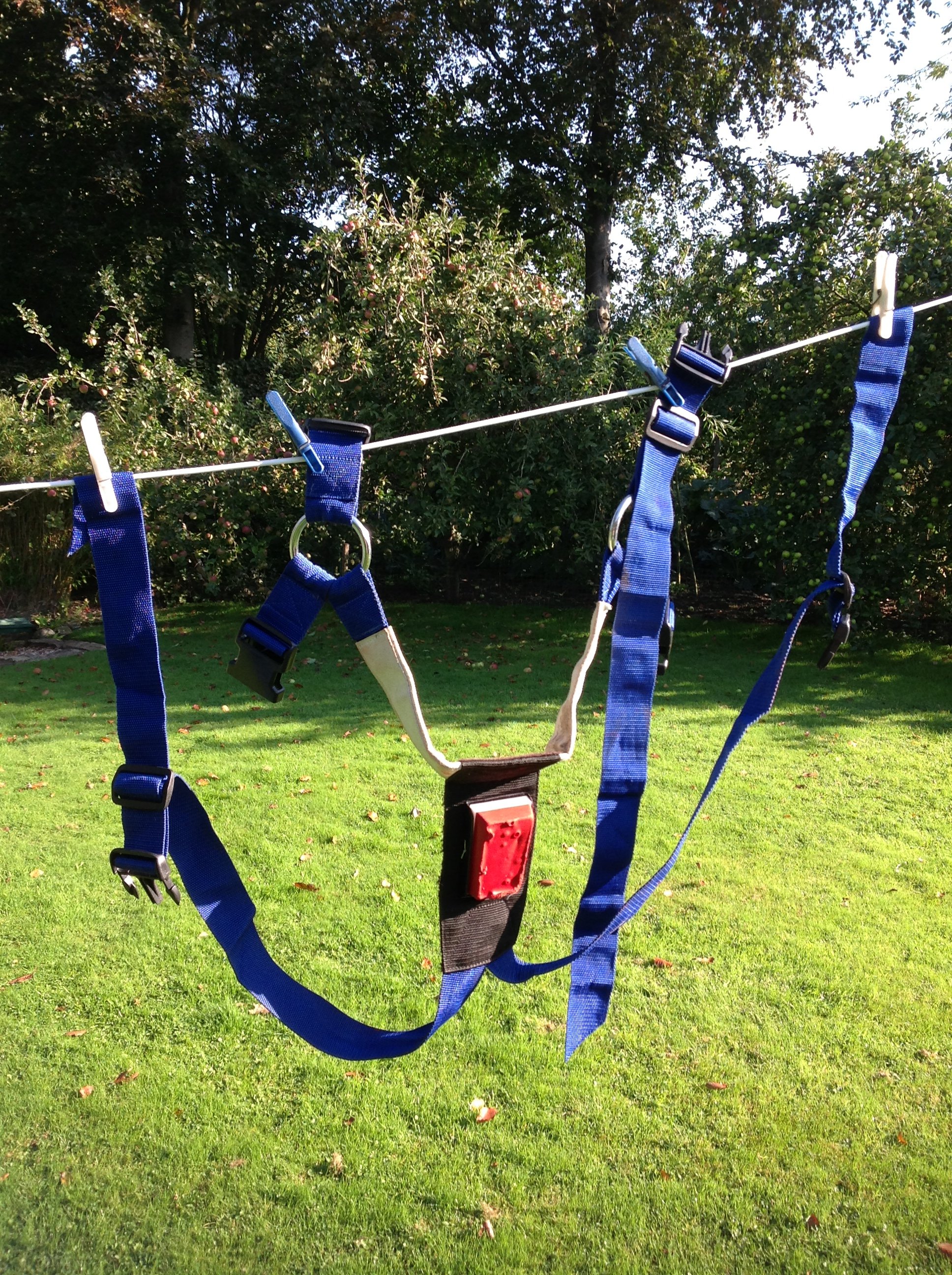
The riddle of the raddle…
It seems that Rupert is not alone in experiencing this difficulty: there are farmers’ forums that devote many pages to harness complaints, mostly without providing the answers and, even when they do, they’re about as comprehensible as the instructions from a Scandinavian flat-pack. One respondent even said, just look for the mud marks on the ewe – it’s cheaper! I should have explained that the purpose of the harness, which is fitted with a coloured crayon, is to let the farmer know when the ram has mated. When the ram mounts the ewe, the crayon leaves a mark which shows that the deed has been completed; so sophisticated is this method that there are soft, medium and hard crayons, according to the number of ewes; soft doesn’t sound much good. As the same effect can be achieved simply by daubing the ram daily with raddle paint (red ochre powder mixed with a little cooking oil, apparently!), it’s impossible not to believe that whoever invented these devices was having a laugh. The harnesses seem to have caught on, however: at this time of year, masochistic sheep farmers may be observed across the countryside, struggling with their own bucolic version of Rubik’s cube.
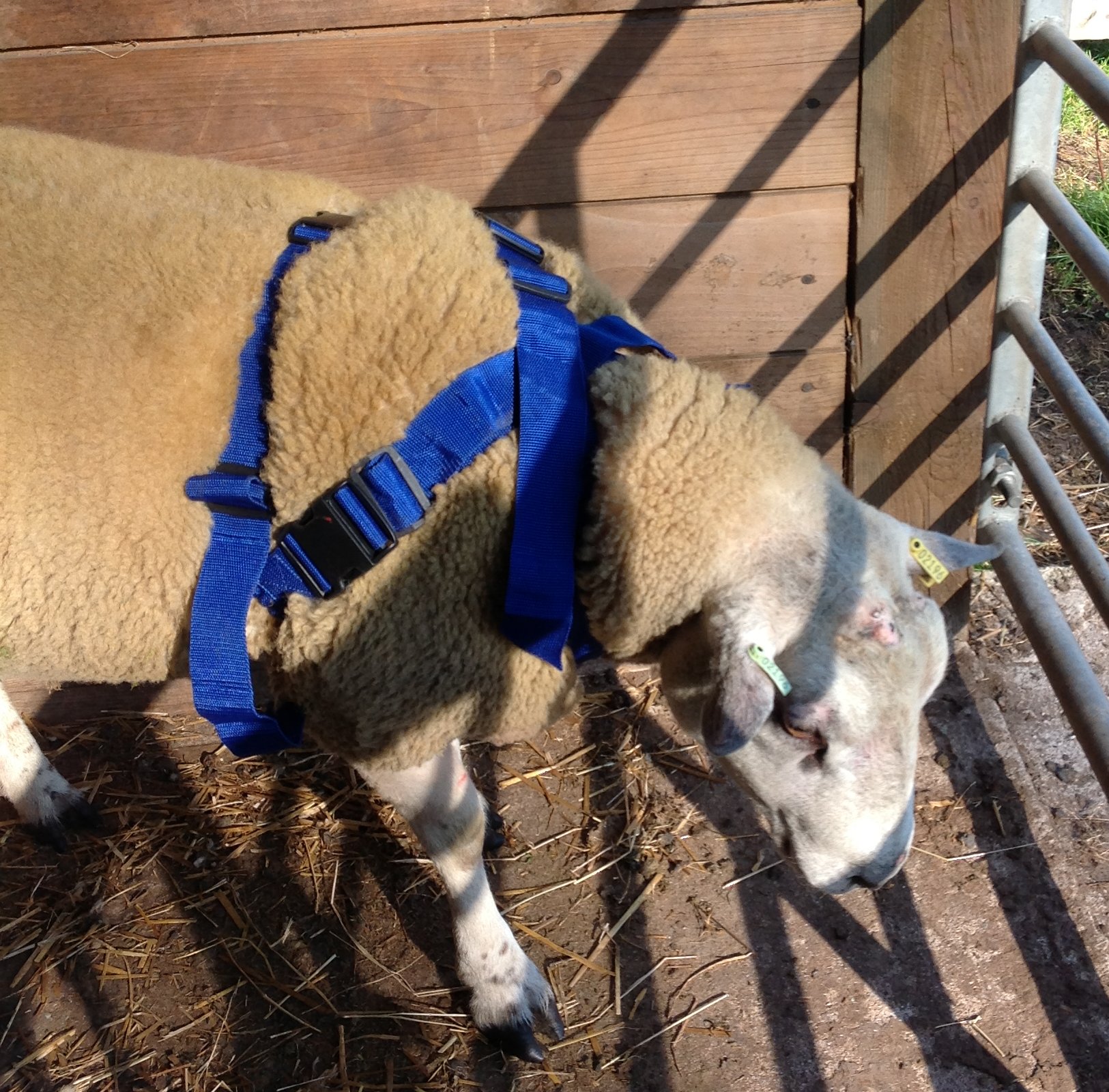
Terence is not amused… but success for Rupert!
Chuckling over our conversation again this morning, I wondered what Friday afternoon’s episode looked like from Terence’s point of view?
I knew when I saw Rupert’s place it’d be a good billet. He’d sorted me with eight wives, a nice number for a harem, and it means I get them all to myself. I’m not so keen on the bigger gigs where I’d have to share a twohundredsome with some other blokes. It’s not that I’m anti-social, just that team ramming tends to encourage inappropriate equipment and performance comparisons and it’s definitely dodgy to find an old tup leering sideways around the manger to measure you up. There’s one such ram in particular I can’t abide: his name is Fuchsia (What kind of a name is that for a straight fella?). My name is Terence the Tup, so you can imagine what people call him. Classie business
Another reason that I’m keen on coming to Rupert’s is that he strikes me as a sensible chap. Like me, he’s a bit lugubrious, but underneath we both have a wicked sense of humour. I credited him at first with quite a lot of common sense, too, because he played a tight game of it at the auction; when he got me home, he turned me right out with the girls and didn’t bother with one of those ridiculous harnesses that I’ve seen used elsewhere. I was a bit surprised, therefore, when I’d no sooner got comfy in his field last Friday and was just beginning to have a sniff round the ladies when I saw him approaching, brandishing one of those things. Baaaaaaa, I thought. Last time I had a close encounter with one of these, being fitted on a friend of mine, it made me blush to see a self-respecting ram looking like a bondage freak. But the straps were all over the shop and the air was blue, I’m not exaggerating. ‘Mister,’ I bleated at the farmer, ‘kindly remember that there are ladies present.’ But he was too cross to listen.
Anyway, since it was Rupert and obviously not a man with a chicken’s brain, I decided to co-operate, at least up to a point. Wasn’t there an old fella called Gandhi who invented something called ‘passive resistance’? Very effective, I’ve always thought. So I just stood there, chewing on a piece of turnip to alleviate the boredom, while Rupert endeavoured to truss me up.
The first time, he put it on upside down. I didn’t let on, of course, but it wasn’t very bright of him. For one thing, the crayon was squashed up against my brisket, pointing inwards, whereas a lamb could see that it’s meant to face outwards, to put some colour on to the lady. He soon realised that it was wrong and had another go. This time he ended up with two straps spare: those two are supposed to be crossed over my shoulders, but again I didn’t say. Would you help a chap if he was trying to push you into a strait-jacket?
Then the real fun and games started. Priscilla and Rupert have a dog. She’s a sleek black little thing and a bit of a minx, but friendly enough. She’s not one of those rogue dogs that chase sheep. Classie, I think her name is. Anyway, she showed up at this point and, for some reason best known to himself, Rupert decided to have a practice on her.

Catching her was something else. Once he’d finally got her in his grip she squirmed and wriggled while Rupert tried to hold her down with one hand and stick the harness on her with the other. Why he thought this would help was beyond me. Eventually, she ran off with the harness dangling and with Rupert in pursuit. I just stood and chewed my turnip.
Priscilla came out then to catch the dog. She put its lead on and tied it to the fence. Rupert was back with me by this time and beckoned Priscilla over. I must admit that I was slightly bemused when he asked her to kneel down on the grass and started clipping the straps in various permutations on her. But I’m broad-minded: ‘Whatever turns you on,’ I thought.
They must have come up with some new ideas by doing this, because Priscilla stood up and came across to hold me while Rupert had another go on me. By Larry, he was sweating. ‘I think that’s right, now,’ he said, ‘but it probably needs to be tighter.’ Shucks, I thought, he’s getting the hang of it. ‘Don’t hurt him! Don’t hurt him!’ Priscilla said, sweetly panicky. I smirked. Rupert tightened the straps a little, but gingerly. He slapped me on my rump and I walked forward a few paces, nonchalantly displaying the harness as I went. ‘I think that’s done the trick,’ said Rupert, and they both went into the house.
I walked over to the far side of the field, where most of my ladies had gathered, and stepped out of the bloody thing. I gave it a well-aimed kick. I didn’t quite manage to flip it into the ditch, but I trampled it down into the mud. Put yourself in my position: wearing that’s like having someone peeping through the keyhole of your bedroom door every night.
As I ambled towards my ladies, I had a look through a gap in the hedge and glimpsed Fuchsia in the next field with some ladies of his own. I met his eye and wondered why he was looking so sheepish: he’s usually a cocky so-and-so. Then I realised: he’d got a harness on and he’d been trussed into it good and proper. Seeing him like that made my day, I can tell you; he looked a right flower.
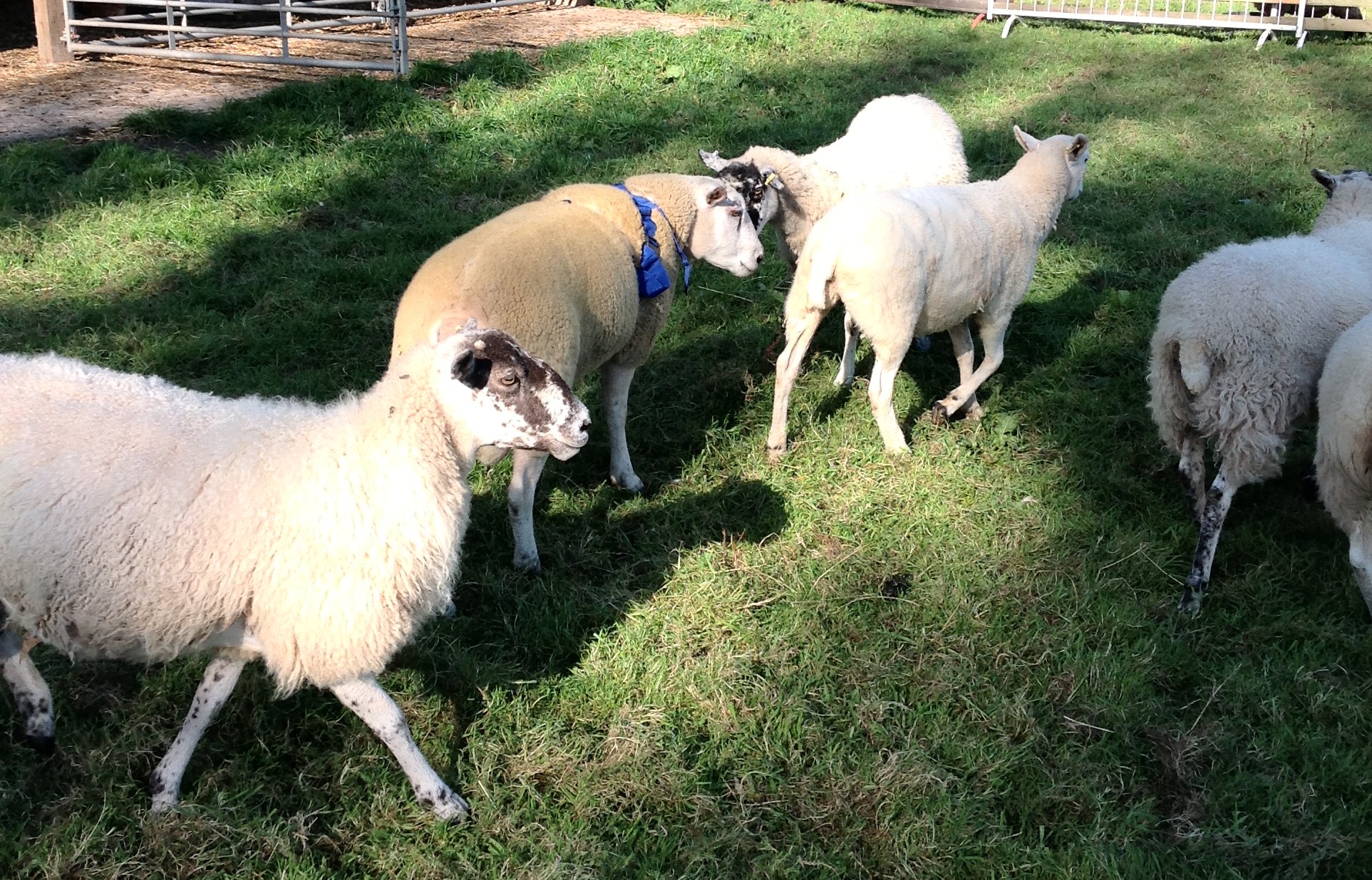
Now, Fuchsia, this is how to do it! Pity about this bloody harness, though.
The bounty of a summer’s day…

Clematis étoile violette
Today has been one of those perfect late summer days that you look on and savour when it’s the bleak middle of winter. The sun has been shining, but a gentle breeze has prevented the heat from becoming oppressive. When we took the dog for a walk this morning, the wheat was almost ripe and straight, unspoiled by the rainstorms of a couple of weeks ago; the barley stubble was pure gold. By lunchtime, I’d written my quota of words for the novel I’m working on. The garden is a pleasure to be in: it hasn’t yet matured into its blowsy, trollopy autumn look and the late summer flowers are still blooming. The clematis étoile violette is at its spectacular best.

Peacock butterfly

Honey bee foraging
The flowers of our golden marjoram and oregano are attracting our honey-bees and the many kinds of bumble-bee that seem to be flourishing this year (I like the red-bottomed ones!) and there are more butterflies than I’ve ever before seen here – the peacock butterflies have been especially prolific and one popped in to be photographed before we helped it back to the yellow buddleia.

Cox’s orange pippin
There will be a good apple crop later, as the ripening Cox’s orange pippin shows. And there is crab for dinner tonight!
Aside from the beauties of nature, the day got off to a wonderful start, with two very generous reviews of Almost Love, by Elaine Aldred and Trish Nicholson, to join Valerie Poore’s excellent one; all are on the DI Yates page of this website! May I wish you, all three, a summery bounty – you spent a great deal of time and care over these, as well as over the reading of the novel – and may I also extend warm greetings to all who visit and comment here.
A wonderful day. And a shameless excuse to share some photographs.
 Christina James, crime novelist