


One place, two misfortunes…

In preparation for the weekend festivities, I paid my customary visit to the local farm shop. Situated about three miles from my house, it is a genuine establishment of the genus (i.e., it doesn’t sell tights or sliced bread). It has rather a wonderful selection of local foods, including organically-farmed meat, local cheeses, dairy products and fresh produce. There is also a delicatessen that sells pies, cakes and ready-made dishes from the shop’s own kitchen, as well as more exotic items from further afield – continental sausages and Parma ham, for example, and unusual oils and vinegars. There is a small kiosk between the shop and the delicatessen which opens in summer to dispense Yorkshire-made ice-creams. A recent innovation has been the Thursday morning appearances of the ‘fish lady’, a peripatetic fishmonger who has made an arrangement to park her van next to the shop to sell an impressive variety of fish freshly caught off the east coast. Sometimes she has edible seaweed for sale; it is a particular family weakness.
This is my favourite type of shopping and I realise that, so far, I’ve made it sound pretty idyllic. To strike a more discordant note, the shop has also been the scene of two dramatic episodes in my life, one of which also involved a crime.
The first event happened about six years ago, when I had just finished some work and was in a hurry to prepare for a self-catering holiday due to start the following day. I made it to the shop for provisions about ten minutes before closing time, leapt out of my car, and promptly fell flat on my face. I’d managed to park on the sleeping policeman that encourages drivers to slow down before they reach the car park. I injured my right arm quite badly and had to persevere with many months of physiotherapy before it worked properly again (it still protests if I carry heavy bags). I mention this mishap lightheartedly, though, because I remember it chiefly for teaching me a lesson about language. My doctor at the time was German. Although her professional English was pretty flawless, her understanding of idiomatic terms wasn’t perfect. I spent a good ten minutes having a thoroughly cross-purpose conversation with her before she suddenly burst out, “Well, what was he doing, lying in the road?” I realised with some shame that I had misled her into thinking that I had tripped over an actual, flesh-and-blood copper lying down in the shop’s driveway (perhaps even one under the influence?!)
The second event was darker. It happened at the beginning of the second week of Wimbledon last year. As is my custom during Wimbledon fortnight, I’d got up very early in the morning in order to fit in a day’s work before the tennis started. I was also worried about the fact that, mysteriously, I’d completely lost internet access. I was therefore probably not paying proper attention when I visited first the delicatessen and then the main shop, hoping to make my purchases quickly so that I could tune in to SW19. However, I did notice that, aside from two elderly ladies who were examining packets of bacon, the only other people in the shop besides myself were an ill-assorted couple pushing one of those big buggies with three wheels. I couldn’t see the child inside it: despite the fact that it was a hot summer’s day and we were indoors, they had the apron of the buggy fastened as high as it would go. If there was a child, it made no noise. I say that they were ill-assorted, because although the woman’s glossy black shoulder-length hair persuaded me at first that she was in her twenties, I realised when they came closer that she must have been nearer fifty. The man was much younger – I’d guess not more than thirty. He was slightly-built with sandy hair. She was quite buxom.
The shop has three aisles. It did strike me as peculiar that, whichever aisle I was walking along, I kept on meeting this couple coming towards me. They didn’t appear to buy very much, but each was carrying a plastic basket containing a few items. They made it to the check-out just before me. I met the woman’s eye, and she responded to my smile with what I can only describe as a smirk. What was even odder was that when the cashier, seeing a small queue forming, requested that a colleague open the second till, the man adroitly slipped across with his basket instead of allowing me to go next. The couple paid and left the shop quickly. It was at this point that I realised that my purse was missing.
I asked the cashiers to call the couple back in, lock the doors and call the police (this from my training as a bookseller), but they were totally flummoxed by the whole thing and, by the time they’d taken action, the couple had long gone. I subsequently discovered that, although the shop has CCTV, it does not reach the back area where the fridges containing produce stand. I had spent some time looking in these fridges and conclude that my purse must have been taken then. So the couple were probably professional thieves.
I can’t prove that it was them, of course, and the police were simply impatient when they discovered that there was no concrete evidence of the theft. I knew immediately that they wouldn’t try to pursue it. What I lost was relatively trivial: about £40 in cash and an almost new Radley purse that had been given to me as a present; plus my credit cards, of course: I spent a dismal afternoon making sure that they were all cancelled, instead of watching Federer, as I’d planned. I can testify, however, that the damage caused by theft goes much deeper than the loss of the stolen items. I felt as if I’d been personally assaulted and it took a good three months before I felt able to return to the shop.
You could say that it was mostly my fault. I’d travelled the world without being robbed and then let down my guard just three miles from home! It was a hard punishment for a moment’s absent-mindedness. I’ve said this before in a different context: theft is a despicable crime.
The first corpses of spring?

The eyes say it…
Spring has come at last, having mothballed itself after a false start six weeks ago when, amazingly, the dwarf daffodils, which were already out, went into hibernation and then bloomed again after the snow had melted. The other narcissi have come late, but now they seem to be on fast-forward through their flowering; like child film-stars, their youth has been sucked straight into the adult world of make-up and seduction – and the bumblebees are falling for it. (Somewhat disturbingly, given the exceptionally long winter months that they may or may not have survived, the honey-bees have yet to appear in any numbers.)
The birds have started nesting late, but they’re now frenetically active. On the plum tree this morning, a great tit whose beak held an enormous (by bird standards) bale of sheep’s wool, waited patiently for his mate to do her nest-box honours. The sight prompted a timely reminder that the resident killer, having skulked inside since November, aside from brief forays to the soft ground behind the gas tank when it was made emphatically clear to him that ‘behind the sofa’ would not do as an alternative, is also on the stir. During the long winter months, he has amused himself by scratching at the wallpaper in the boiler-room that constitutes his principal residence (the shop-bought scratching-pad the only pristine article in there), picking at the piping on the sofa cushions when he thinks no-one is looking and terrorising the dog. (The dog weighs twenty-seven kilos and the cat less than two, so no especial outrage on behalf of the canine is necessary!)
Now sixteen, but neither arthritic nor showing any sign of lessening powers of co-ordination, the cat is at his cruellest in the spring. He is still able to climb to the top of the pergola, always home to two or three nests, and jump from it to the shed, where there is usually one more amongst the rambling roses. I cannot recall a spring when he has not brought at least one terrified chaffinch, blue-tit or blackbird into the house. Usually they are still alive and sometimes it is possible to free them – which makes his his eyes glow reddish-green with owner-hatred – but sadly they often die of fright. His repertoire of tactics is ingenious. I once entered our bedroom to find a cock house sparrow flying round, battering the walls in its frenzy to get out, while the cat crouched on the bed, waiting for it to tire. I concluded that he must have climbed out through the open window on to the outside sill and snatched it from there: a cat-burglar in reverse. He is not without moral sense and is well aware that birds are contraband creatures. He catches them furtively and tries to conceal his crime, whereas mice are slain with a fanfare and a flourish: he lays them out with ceremony upon the kitchen floor.
We’ve always kept cats. When we lived in Leeds, we had an elderly neighbour who used to phone me to tell me when she saw the then feline incumbent, whose name was Peachum, out stalking prey. If I rushed outside quickly enough, to the cat’s chagrin the bird sometimes escaped; but I’m sure that Peachum still managed to capture what he regarded as his rightful quota. As both a bird- and cat-lover, I am troubled by the ethics of this annual cull. In summers like last year’s, when spring was so early that some bird species raised three broods instead of two (we had a super-abundance of blackbirds), it might be possible to argue that the cat is just helping to maintain the balance of nature; our neighbourhood sparrowhawk, by the by, is responsible for far more small-bird deaths than any cat, having awe-inducing eye-sight, silence, stealth and speed.
I wonder whether this year the clutches will be larger, or smaller, as nature adjusts itself? I shall now do my best to restrain my otherwise charming resident killer. I shall encourage him to accept that baiting the dog provides a superior form of entertainment… if fewer corpses.
The essence of crime fiction: things are not always what they seem…

I was awake during the night, thinking vaguely about today’s blog-post and, much more strenuously, about how to get back to sleep, when a twenty-year-old memory presented itself unbidden. It was, in fact, a series of memories that covered a period of five years or so.
I was running a small library supply company. Most of us had individual PCs, but we needed a proper computer system. Having interviewed a number of candidates (including some very poncy large-company operators who didn’t get out of bed for less than six figures at one end of the scale and hilarious wide boys at the other who wouldn’t have fooled a child with their patter), we opted for a small hardware company that had been established for some time in Leeds and the consultant to whom they sub-contracted systems and software development. His name was Will.
Over the next few months, I came to know Will a little. He took endless trouble to make sure he understood how our quirky manual system worked so that he could replicate it ‘virtually’, ironing out a few of the inconsistencies along the way. He always carried with him a large portable Compaq, and he carried out all of his configurations on this. He seemed to have unlimited patience. Software development was at the stage when it took a proficient techie five minutes to type in a piece of code, after which he would have to wait for half an hour or so for the machine to whirr and rumble through its set of tricks in order to produce the next stage of the programme. Like all computer guys of the period, therefore, Will spent a lot of time sitting around drinking coffee and smoking cigarettes (it was before they were banned in offices). If we were not too busy, sometimes he would talk to us about the business while he waited; occasionally, he would tell us about his personal life.
He said that he had a wife called Catherine. They didn’t always live together because she suffered from depression and, when it got really bad, she would go to stay with her mother for a spell. They had a son whose name was Ian, who went to a special school and so was away during term-time. Will gave me to understand that Ian was exceptionally gifted, which was why they were investing so much in his education.
Will was tall – taller than my husband, who is six foot three – and heavily built. He had a soft voice and a rather alternative way of dressing (not uncommon in geeks). Everyone in the office liked him. He told us that his mother called him ‘the gentle giant’.
A few months into the project, Will was suddenly taken ill. He was admitted to Leeds General Infirmary and told that he had lung cancer (in retrospect, after so many cigarettes, it was not surprising), but that the prognosis was good, because, as far as they could tell, only one lung was affected. The diseased lung was removed. My boss and I visited him at the hospital shortly afterwards. It was a boiling hot July evening. Will had lost a lot of weight; his face was pale and gaunt, but his skin seemed flawlessly clear, as if made of alabaster, and he’d grown his hair, always on the long side, to shoulder-length. He looked almost Christ-like. He was very thirsty and said he’d like some beer. The ward sister said it would be OK, so my boss went out to an off-licence to buy some cans of Guinness.
Will’s mother was his other visitor. A diminutive, bird-like woman (it seemed hardly credible that this giant of a man could be her son), she was notable for her inquisitive bright brown eyes and flushed cheeks. She said that she also had lost a lung and had managed with a single one for many years, so she was sure that Will would be OK. Will himself was enthusing about a generous present of money that he had received from a relative, which he intended to spend on walking gear for himself and Karen. It would be part of his fitness regime when he was discharged from hospital.
“Who’s Karen?” I asked.
Will looked at his mother, obviously discomfited. “My wife.”
“I thought her name was Catherine?”
“It is. She sometimes uses Karen, though. She likes it.”
I didn’t understand, but he was obviously keen to change the subject and it would have been rude to press him further. My boss returned with the beer and after half an hour or so we left. As we said goodbye, Will promised to keep in touch and to let us know as soon as he was well enough to start work again.
After I hadn’t heard from him for three months, I wrote him a letter. I had his mobile phone number (not many people had mobiles then: he was an early adopter), but I thought that writing would be less intrusive. The next day I received a telephone call from a woman who identified herself as Karen. She told me that Will had died almost four weeks previously. I told her that I was sorry. She brushed off my condolences quite brusquely – I put it down to grief and was about to apologise for troubling her when she interrupted. She said that Will had left a lot of computer equipment and some software in ‘his’ house, together with manuals belonging to clients, and that if I thought that there was anything belonging to my company I should come and claim it.
I knew that Will had lived in an old lodge house, close to a paper mill at which he had worked as the manager before he took up software design full-time. It was easy to find. Karen was waiting for me at the gate. She was a short, plump woman with long, very dark hair and a conspicuous limp. I’d say she was in her late thirties – Will had been some years older. She led me into a room in which she had set out several computers, other pieces of equipment and a large array of folders. I rummaged through the latter and found the one containing confidential information about my company. It was impossible for me to identify which of the floppy disks contained the code that Will had been working on; I knew that we’d have to write off the project. Although Karen was friendly, she seemed very weary. I left as quickly as I could.
Of course we talked about Will for a while at work, but we hadn’t known him well and his memory quickly faded. A new software engineer was brought in and a new system designed. After some years, I left the company to take up a post at a much larger organisation.
My new boss was a woman – the only woman boss I’ve ever had and, ironically, the most unreasonable and psychotic of all my bosses. She was half Italian, half what was then called Yugoslav, and I can testify that this produced a volatile set of genes! Many times I had to work late into the night, writing a report that she’d requested at 4 p.m., to be delivered the following day.
It was on such an occasion that, having worked for a couple of hours one evening and with at least another couple ahead of me, I went downstairs to make tea. Popping my head round the door to ask my husband if he would also like some, I saw that he was watching a television programme. To my amazement, the woman whose face filled the screen, now older and more drawn, was Karen’s. I stayed to listen to what she was saying.
The camera moved from the close-up shot so that the viewer could take in more of the setting. I saw that she was standing in a cemetery. The camera moved to the headstone, and I saw that it marked Will’s grave.
“I don’t feel bitter for myself,” she said, “but I wish that I had left him sooner. I tried many times, but he always persuaded me to come back to him. I blame myself that I didn’t go for good when I found that I was pregnant. When he beat me up, I was terrified for the baby.”
“The baby was born damaged?” asked the unseen commentator gently.
“Yes,” she said flatly. “He is epileptic and has learning difficulties. Severe learning difficulties.” She wasn’t crying, but her face was inexpressibly sad.
“And what about you? You say that your injuries are progressive. How does that affect you?”
“My spine is damaged. I can just about walk with a stick. I’ve been told that I’ll be in a wheelchair in five years or so.” Again, it was the matter-of-factness and the resignation in her tone that were harrowing.
The programme cut to another woman with a similar story to tell. I watched it until the end. It concluded with a list of telephone numbers and addresses to which battered wives could turn for help.
I’ve often wondered since about Catherine. Was it a name that Will concocted in order to exonerate himself, to distance himself in some way from his appalling actions by pretending that his victim wasn’t Karen? Or was it a name that she herself had used on those occasions on which she had tried to escape from him?
[For obvious reasons, I have changed the names in this account. Everything else is completely true and unembellished.]
Surbiton – potential (for me) as a crime novel location…

As some of my readers with good memories may recall, DI Tim Yates has a sister who lives in Surbiton. So far, his sister has appeared only in In the Family and has no name; she makes no appearance in Almost Love. However, she is a benign, if shadowy, presence waiting in the wings and (I am certain) will crop up in a more central role in a future book.
As I’ve said before, topography and a sense of place are important to me, both in my own writing and in that of others, and I therefore try to place my characters in settings that I know well. I’m familiar with Surbiton because my long-suffering friend Sally lives there. She has allowed me to stay in her lovely turn-of-the-twentieth-century house on almost all of my visits to London over the past fourteen years and she makes strenuous occasions like the London Book Fair tolerable during the day and a joy when I return to her house in the evenings for conversation, wine and good food.
Surbiton is itself an interesting place. It is the quintessential English suburb – even its name suggests it. If you were to hear of it without knowing its location, you would not conjure up an image of a Fenland village or a rugged Scottish town. It sounds like what it is; it even has an equally suburban twin: Norbiton. The twins have mellowed together, their streets laid out and their houses and gardens maintained much as they were in late Victorian times. Even the shops have old-fashioned façades. You feel you might meet Mr Pooter coming round the corner, or see Jerome K Jerome and his friends boating on Surbiton’s stretch of the Thames. Many of the gardens in the street where Sally lives contain beautiful magnolia trees, a feature I think also of the time when they were first laid out, when magnolias were very popular. I love to see them in bloom and am always glad when the Book Fair coincides with their flowering, as it did this year.
Even Surbiton has to move a little with the times, however. On my latest visit, I was amused to see a sign directing would-be purchasers to a new housing development; amused, because the developers have called it Red Square. Now that is a brave step! I don’t know how established residents of Surbiton might feel about this designation, but, as someone who has visited its more famous Russian namesake, I have to confess I see few points of similarity.
I’ve not yet decided upon the exact street in which Tim’s sister lives. Originally, I had conceived of a rather genteel existence for her, perhaps working as a lecturer at nearby Kingston University and living in one of the pretty, solid, semi-detached houses within walking distance of the station. But perhaps she is not like this at all. Younger than Tim, perhaps she is an undercover agent working for MI5. She may even be about to move into a safe house in Red Square.

Dog eat dog on the street…

Life can be raw on the mean streets of Barcelona. Down La Rambla, in spite of the police presence, teams of pickpockets roam, taking advantage of the tourists’ distraction to coax valuables out of pockets and purses from handbags. ‘Three-cup-where’s-the-ball?’ hoodwinks naïve player and unwitting audience alike (not all are audience). Along the pavements, with heads and shoulders bent into four-wheeled municipal refuse bins, scavengers of everything from metal to cardboard sift and sort the unwanted detritus of urban life and load it into supermarket trolleys, selling it on later at street corners where, next level up, men with vans pay only low denominations in return. Beggars with appealing canine companions or a pair of crutches play to the emotions of passers-by. Buskers in teams work the subway trains, as does the ‘poet’ with his single learned verse. Tuneless extroverts invade bars and restaurants to serenade diners, prodding shoulders with a nudge and placing an empty bowl on the table. The homeless sleep in parks.
A separate economy is operating beneath the tourist world and it is hard-bitten and single-minded; it has its own hierarchy and its own rules. Though the casual observer may see nothing much of it, careful scrutiny of just a small portion of a street or a tube station unveils the surreptitious transfer of illicit packages, information or cash; eyes that are everywhere and nowhere, looking for gain or Guardia with equal determination. There is a quality in shiftiness that singles out its owner from the rest of the urban swirl and it’s always interesting to use the invisibility of a café vantage point to sift out bad from good. Crowds down the ages have been the haven of criminals, cutpurses and vagabonds, the noise and crush and apparently innocent jostle enabling skilful sleight of hand and surreptitious, instant disappearance.
Too much mistrust springing from too much reading of crime? Not so: watch the hands and eyes and see for yourself. It’s a dog-eat-dog dogfight on the streets.
Don’t get me wrong. I love Barcelona, its lovely Catalan people and its edge. I’m just playing with reality…
I’d like to knock down that Victorian edifice…

Taking up the theme of food again, I’m still reading about Victorian houses and customs in order to get a feel for how the very old people whom I knew in my youth grew up. One of the things that strikes is me is how indelibly the Victorian age made its mark on those who were born within it. My grandmother was born in 1892 and was nine when Queen Victoria died, yet all her life she was a Victorian. She even dressed like one, in ankle-length skirts and pastel-coloured blouses trimmed in lace, with high collars.
Not only did Queen Victoria’s reign seem to imbue everyone who lived in it with norms and values that were immediately spurned by the next generation, but it succeeded in erecting an almost insuperable barrier between itself and the age which preceded it. The most alarming thing of all is how women seemed to become walled up as part of this process.
They were literally walled up: condemned to stay in the house almost all of the time, maintaining and cleaning it or supervising its cleaning and maintenance, depending on their class; spending each day of their lives ensuring that the master of the house returned to a perfectly-kept residence. This in itself would have been irksome enough, but social aspirations added to women’s domestic workload in the most intolerable way. In an age when the middle classes were burgeoning, so that many people had more of what is now called ‘disposable income’, and when, for the first time, machinery could churn out materials and finished goods very cheaply, houses became filled with all kinds of artefacts, many of them quite useless. Whether they were bought or made at home, all of these things also needed care and maintenance – the latter involving a great deal of washing and cleaning when houses were warmed by coal fires and lit by candles or gas. Clothes and food became much more elaborate. Women were not only not allowed to go out to work, they felt compelled to spend every waking hour carrying out tasks which today we would regard as of minimal value or even futile. Meals in middle-class households consisted of many dishes. When providing food, the housewife was expected to achieve an illogical combination of outward show – especially when there were guests at the table – and the practice of frugality. This often meant that the same food appeared on the table several times running before it was finally consumed, each time ingeniously and time-consumingly served up in a slightly different way.
I’ve often reflected that, to a greater or lesser extent, all except the very young spend some of their time living in the past. Although my own and my husband’s tastes in furniture are quite traditional, and therefore most of our possessions have not dated all that much, I know that the décor and soft furnishings in my house are very much of the period at which we moved in to it in 1994, and that visitors will recognise this. It is a phenomenon that was yet more true of previous generations: they thriftily kept the same furniture until it had, quite literally, worn out. And it wasn’t just the surroundings that belonged in the past; attitudes, values and points of reference were also behind the times. Exactly how far behind often depended on location, sometimes also on education. In London at the turn of the twentieth century, the Bloomsbury Group famously rejected the lifestyle and morals of their Victorian parents; however, Victorian lifestyles and morals were still alive and well in the Spalding of the 1950s and 1960s. It took the combination of the pop scene (I don’t just mean the music, but everything that went with it) and the advent of the first working-class generation to be university-educated to instigate real change.
In some ways I feel privileged to have lived through all of this and, through aligning my reading with my own memories, to have come, belatedly, to some kind of understanding of it. Women today still complain about glass ceilings and the impossibility of ‘having it all’. True equality has been a long time coming and is not quite here yet. The journey was started by those Victorian girls who were allowed just enough education to understand what they were missing. Some nineteenth century women were so frustrated, or so badly treated by their husbands, that they turned to murder (the weapon of choice was poison), knowing that the death penalty would surely be their fate if they were caught.
What I’d really like to be able to do would be to travel back to the past and knock down that huge Victorian edifice, as the Berlin Wall was knocked down, in order to be able to see beyond it to the Georgian age that preceded Victoria’s. I wonder what those women, in their lighter, brighter, more sparsely-furnished houses, were like; whether they led happier lives than their Victorian descendants; whether knowing them better would prove the hypothesis that civilisation develops, not in linear fashion, but in loops and curlicues, like oxbow lakes. The Victorians, so enterprising in so many ways, were out there in their boats, not realising that they were grounded in a swamp.
I’d kill for a slice of coffee and walnut cake…

Get stuck in to a good book…
On Thursday, I had a conversation with a librarian in Doncaster who would like me to take part in a literary festival that will be run in May by the Doncaster Library Service. After further discussion, we decided that it would probably be more effective for everyone if, instead of participating in one of the library-based events, I were to run a couple of writers’ workshops, one at a local school and one at an open prison. I warmed to this idea immediately; as a bookseller, I have supplied books to two open prisons; more recently, I have read the MS of a fascinating memoir written by a writer-in-residence who works in a prison in the North-East. I shall be happy to work further with the prison community if I can be of use. I’ll write more about these two events nearer the time.
Before we decided on this plan of action, when the idea was still that I should participate in a library-focused event, our chat had been about what sort of writer we should choose to present with me. To my initial surprise, she suggested a cookery writer, but, the more I thought about it, the more appropriate I thought that this was. Aside from the interest in food (among many other subjects) that both this blog and the many other crime-writing blogs to which it has been introduced (and introduced itself) have expressed, now that I’ve thought about it, I think that a crime writer and a cookery writer have a lot in common.
The similarities are there if you look for them. Firstly, and of most importance, we are both genuinely interested in the craft of writing: although the crime writer’s main purpose is to devise an interesting plot peopled with intriguing characters and the cookery writer’s is to develop practical recipes that people really want to try out, the means, for both of us, is as important as the end. In a certain sense, we are both genre writers, but the style and standard of the writing is important to us; mostly we don’t deserve to have the word ‘genre’ applied to us in a condescending or pejorative way (though we have both suffered from this). I don’t deny that there is huge variation in the quality of writing accomplished by both crime writers and cookery writers, but at our best we produce classics. When my friend Sally gave me How to Eat and The Domestic Goddess as a very generous birthday present ten years ago, I was both amazed and entranced by Nigella Lawson’s wonderfully fresh and funny prose style. You may gorge yourself upon her books both literally and metaphorically, delighting in the sensual language and wonderful photographs even as you assemble the ingredients for a luscious cake and anticipate eating it later. The best crime novels are like this, too: each page not to be gobbled down quickly because it gets you a little closer to the denouement, but lingered over and savoured for the pleasure that the words bring of themselves.
Similarly, a well-set-out recipe is like a well-crafted short story. It tells a tale, from the beginning, when there might be a note on some kind of utensil – a springform cake tin, for example, or a coeur à la crème ramekin – to the afterword, which might offer serving suggestions or other tips once the culinary masterpiece has been completed. Conversely, a poorly-conceived recipe, one which perhaps is not clear about quantities or method, disappoints and exasperates just as much as a badly-written thriller. And, whilst I don’t think that it is possible to ‘learn’ writing step-by-step in quite the way in which you follow a recipe, writers can certainly give others pointers to how their writing can be developed – hence the workshop idea. Conversely, an inspired cook will add some special twist or variation to a recipe to make it more delicious and uniquely his or her own.
There is one point on which we will always be at opposite poles, however: cookery-writing is about celebrating life and that which sustains it. Food and the sharing of food is a civilising influence. Almost every great nation has developed its own cuisine. Crime writing, on the other hand, is about what threatens a civilised existence, sometimes including life itself: a sobering thought, yet, as I’ve said before, the end of a crime novel usually brings with it some kind of catharsis and a feeling that all is right with the world again. And along the way, both heroes and villains can enjoy some excellent food. From the Victorian victuals described by Wilkie Collins to DI Banks’ pub lunches and Paola Brunetti’s elegant meals en famille, crime-writing owes a lot to cookery. I’d better not embark upon a consideration of how cookery-writing might be indebted to crime; otherwise my imagination might run riot!
Bodies have a habit of turning up…

John Taylor, an undertaker, has been imprisoned for seventeen years for murdering his wife, even though the police have found no body; I suppose that an undertaker is in a uniquely convenient situation for disposing of a corpse without trace. When I read the story, it reminded me of the murder of Muriel McKay, whose body was also never found, though two men were convicted of killing her (police believed that her assassins mistook her for Rupert Murdoch’s then wife, Anna Murdoch, who is also a writer). Such murders stick in the mind because it is so rare for the body not to be discovered. Even where there isn’t sufficient evidence to convict without one and the murderer appears to have got away with it, bodies have an odd habit of turning up unexpectedly, sometimes many years later. I’m thinking now of the ‘lady in the lake’ murder of Carol Park, who disappeared in 1976, but whose body was not found until 1997, by which time her husband, Gordon, who was then convicted of her murder, had married twice again.
The new Pompeii and Herculaneum exhibition at the British Museum shows us how durable human remains are – though these particular skeletons were preserved by unusual natural phenomena. Yet well-preserved ancient skeletons from the past are often found in ordinary graves – the recent discovery of Richard III’s almost intact bones offers a good example. Even unceremoniously-buried bones, such as those found in an old charnel pit discovered during this year’s Crossrail excavations and thought to date from the time of the Great Plague of 1665 show remarkable resistance to the passage of time. The supreme example, of course, of a body which has stood the test of time and miraculously appeared millennia after his demise is that of ‘Ötzi the Iceman’ in the Ötztal Alps; ice is a great preserver.
You’d think it would be easy to conceal a body for ever, but clearly it isn’t. No doubt some murderers have managed to do it; some will even have committed the ‘perfect crime’ – i.e., one that has not been discovered. This is a macabre kind of virtuoso performance that can never be boasted about or celebrated, though no doubt some will have been unable to resist and fallen into the trap of talking about the deed, thus giving themselves away.
Bodies: the stuff of crime writing; tough and surprisingly persistent in making their appearance.
Shakespeare, a man more sinning?

Recent research, I was amused to read, shows that Shakespeare was fined for hoarding malt and corn and selling it to his neighbours at times of poor harvest. At the time, he was already an established author with (presumably) a reasonable income, so indigence could not have been an excuse. We already knew that in his youth he poached deer and that as an adult he was fined for not attending church. The two latter are perhaps more in keeping with the anarchic streak that we expect from a writer, but discoveries of the Bard’s foibles and failings are always greeted with a sense of incredulity, if not outrage. This is curious, for surely it is illogical to expect the nation’s most profound student of character to have been himself a colourless tabula rasa. Besides, living in Elizabethan England was an uncertain business at all social levels and we know that Shakespeare was not without the type of social ambition that could be fuelled only by money. His acquisition of New Place, a substantial house, would have sent a message to prosperous Stratford burghers that he could claim his place as their equal.
The world seems to require a moral standard from Shakespeare, as if his intellect and wordpower somehow elevate him to a heavenly plane, where there is a writer paradise entirely free from sin, that we may look up to and admire; we don’t seem to require this of other writers in the same way. Byron’s poetry, for example, is not judged by his immorality. So why the sense of shock with Shakespeare? Perhaps it is because we know so little of Shakespeare’s life, so that every new snippet of information about him carries greater weight and significance than if his career were better documented. I do, however, think that it is more likely that it is because he is viewed as a kind of literary god, whose grasp of humanity is superhuman, and as the yardstick by which we judge all our literary heritage; it is unthinkable to ascribe grubby behaviour to such a mighty individual!
However, as a writer of murder stories, I am glad that Shakespeare was demonstrably a sinner and very human. His understanding of and rapport with the realities of human behaviour and character paved the way for the rest of us by creating some of the most eloquent murderers of all time. I’m not sure that a goody two shoes would have been able to manage that.
Whose jurisdiction? Cops and the county boundary…
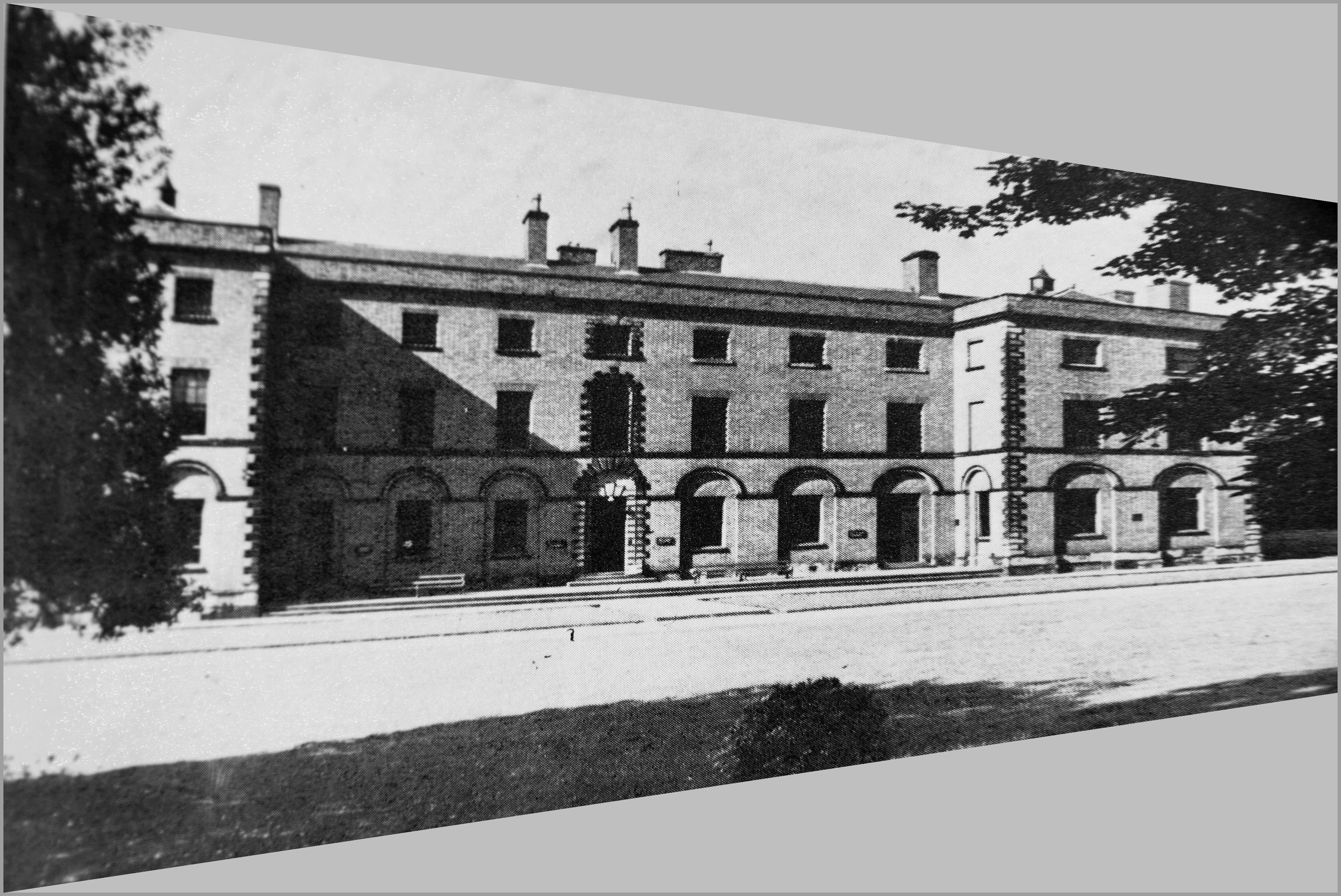
Lincoln County Gaol
My husband is an aficionado of Traffic Cops, a television programme that I abhor. It’s an extraordinary thing, but I’ve yet to meet a woman who likes it and, similarly, to meet a man who doesn’t. (No doubt I shall soon be hearing contradictions from both sexes!) For me, it illustrates far more reliably than football the adage that men are from Mars and women are from Venus; ours is a strictly non-football-supporting household, regardless of gender, and I know many others where both husband and wife are football enthusiasts (although not always rooting for the same team!). Yet Traffic Cops seems to appeal exclusively to males – apparently all of them. Why do they like it? When I’ve glanced at it, it has featured two burly no-nonsense coppers of limited vocabulary driving along the motorway until they manage to apprehend some idiot who is doing something particularly stupid while at the controls of a car. After they’ve stopped him (or her, but it is most often a he), they’re filmed saying, with music hall politeness,‘Would you mind sitting in the back of our car for a few minutes, sir?’ One of them then winks at the camera and says to viewers out of the corner of his mouth ‘We’ve got a right one ’ere.’ And so it goes on.
On the few occasions that I’ve been persuaded to watch these snippets, I’ve felt particular disdain when the cops have reached the county boundary without managing to catch their quarry and turned back. This has seemed to me to be nimby officialdom at its worst! My husband, however, assures me that it must be some time since I watched it, as they don’t do this any more – the different police forces now co-operate with each other across county divides and have even celebrated on the programme their newly-established collaboration.
I was reminded of this yesterday when I began reading about nineteenth-century Lincolnshire in preparation for my next novel. It will be set in the twentieth century, but I want to understand what the background and values of some of the older characters would have been; in other words, the kind of place it was when they were growing up. I was fascinated to read that felons who were arrested on the Great North Road (today’s A1) were often acquitted because the exact spot on which they were arrested was in dispute. If it could not be established whether it was in Holland, Kesteven or Lindsey (Lincolnshire’s equivalent to the Yorkshire Ridings), they were released. Police from Holland weren’t supposed to ‘trespass’ in Kesteven in the line of duty; police from Kesteven didn’t venture into Lindsey, etc. – a rule apparently observed by their modern-day counterparts until very recently. In the earlier part of the nineteenth century, when more than a score of offences carried the death penalty, my guess is that this meant that criminals were pretty hot on their Fenland geography.
None of the three districts of the county had adequate prison facilities until Lincoln Gaol was built. Lincoln is situated in Lindsey, the largest and most ancient of these districts (once a kingdom in its own right). It was agreed that all three districts could avail themselves of Lincoln’s new ‘house of correction’: Lindsey would pay half the costs, Kesteven two thirds of the remainder, and Holland the rest. I was amused to read that after some years it was suggested that the salary of the ‘chief gaoler’ (today he would be called the prison governor) should be raised by £16. The councils of Lindsey and Kesteven agreed to pay, but Holland – the region in which I grew up – demurred. It used to be said that the people of Holland were ‘tighter even than Yorkshire folk’ and, on this occasion, they did not disappoint. Their refusal to pay a little more than £3 extra annually to this no doubt very hard-working gentleman was exactly true to form. Reading it gave me not a feeling of pride, but certainly a warm glow of understanding. I can just imagine my great uncles arguing the toss over such an issue and prudently deciding to keep their wallets closed.
I’m glad that police forces are co-operating now and have ceased to observe artificial boundaries. I know that this is a loophole that has been exploited many times in the past, sometimes allowing people to get away with murder – literally.

