

Tablet

Some years ago, when I attended a Scottish Library Association dinner, I was seated with a Scotsman who, while consuming his third double Scotch, was castigating me for eating carrots, on the grounds that they are very calorific. “Ye need to watch carrots,” he said. “They make ye fat.” (To save readers of this blog the chore of carrying out any additional research, I am reliably informed by Google that a large carrot contains about eighty calories and an average cooked helping about forty. A double Scotch contains 110.)
I was reminded about this conversation during my visit to Glasgow, from which I have just returned. One of the most endearing things about the Scots is their love of all kinds of ‘unhealthy’ food and drink and their ability to justify this completely with no trace of guilt whatsoever. When I worked for a Scottish library supplier in Dumfries (not for nothing the home of the deep-fried Mars Bar – and I understand that ice-cream and frozen butter have now been added to the town’s repertoire), we had a fully-working canteen staffed by two stalwart ladies who believed that the way to cope with Scottish winters was to look after the inner man (or woman). The menu was always robust: lasagne and chips, pie and chips, and mince, neeps and tatties (often also including chips, though I never experienced triple potato dishes on the same plate in Scotland, as I have several times in Ireland), always followed by a pudding.
Visiting customers were also fed by the canteen, although they took their meals in the boardroom. On one occasion I suggested that a bowl of salad might make a nice change for some of our less valiant guests, instead of tatties or chips. The ladies looked at me in horror: “Salad? In the winter, hen?” The compromise was substantial plated salads (ham and egg pie, Scotch eggs or cold beef) with potato salad and… chips. The two canteen ladies were perfectly aware of health and fitness regimes, but, like most Scots of my acquaintance, simply not interested in them. “We know what we should eat,” as another Scot once said to me. “We just don’t like it.” I once discovered the canteen ladies, neither of whom was much more than five feet tall, running round the outside of the building before they served lunch. Both were scarlet in the face and dangerously out of breath. “We’re trying to get down below fourteen stone before Christmas,” explained one. “Aye, so we can have plenty to drink,” the other added.
So, by this gently circuitous route, to the main topic of today’s post, which is… ta da: TABLET! If you haven’t been to Scotland, it may be helpful to provide a definition at this point. Tablet is a cross between toffee and fudge. My guess is that it’s made mainly with lots of sugar and butter. It melts in your mouth and gives you an energy boost to die for. It’s as integral a part of Scottish life as Irn-Bru, Tunnock’s Milk Chocolate Coated Caramel Wafer Biscuit and shortbread. And at least as ‘bad’ for you.
But you wouldn’t know that either from the upright Scots attitude towards it or the name ‘tablet’ itself. Not only is the name majestic, imbued with ancient wisdom – think Moses and the ten commandments or Sumerian cuneiform script, both inscribed on tablets – but it has an authoritative ring, as if the product were essential to your health. It’s a word that conveys much more gravitas than ‘pill’, with its undertones of neurosis, hypochondria and birth control. Mention ‘tablet’ to a party of Scots men and women and they’ll know immediately what you mean: a joyous feast of what in other lands might be forbidden fruit, often consumed in quite large quantities. Full of northern promise.
Nowadays, tablet has an additional, very modern meaning: the name the IT industry has given to the small, streamlined machine with various multi-functional capabilities (Don’t ask me the difference between a tablet and a laptop, as I shall get very confused, even though I now own one of each, but I’m sure that one exists.). If anything, I feel, the advent of this chichi newcomer enhances the reputation and the possibilities of traditional Scottish tablet even further: how prescient of ancient Scots confectioners to come up with a name that would also epitomise sexy technology to upwardly-mobile thirty-something educated men and, by extension, their baffled but trusting mothers and fathers.
And hats off to the Cambridge University Press marketing team – as you would expect, no slouches when it comes to words and their meanings – for picking up the potential of both meanings of the word and, at the same time, providing joy to everyone passing by their stand at the conference by dispensing unlimited quantities of this Scottish toffee-fudge to maintain energy levels during three days of worthy but occasionally soporific talks.
“I’ve been a wild rover for many a year, and spent all my money on bleep and bleep…”
“Dost thou think, because thou art virtuous, there shall be no more cakes and ale?”
The crazy topics for which researchers are awarded grants are often a source of great amusement to me. During the past year I’ve read about a project that, after many months of expensive labour, ‘successfully’ created a formula for the ‘ideal’ slice of toast and marmalade (it wouldn’t succeed in our household, where some of us like our toast burnt and others don’t); a study that ‘proved’ that there is a link between depression and being unhappy at work; and, just this week, a piece of research that shows that the pop songs of today contain twice as many references to alcohol as the ones of twenty years ago.
At first I thought that the last of these was very funny indeed. Good on the researchers who have persuaded whomever awarded their grant that it would be a good use of scarce resources to pay them to sit around endlessly listening to pop music. More power to their (drinking?) elbow. But now I’ve had time to consider, I’ve begun to wonder if there isn’t something more sinister afoot here. Assuming that this study is not entirely mindless and redundant, to what use is it intended to be put? Is the government going to start censoring pop songs? If so, it would very decidedly be the thin end of the wedge. It’s not just about pop music: from the earliest times, alcohol has been a part of almost all cultures, as is reflected in their art and literature. Just imagine what would happen if a Nahum Tate style of censorship were to be applied to books. Offending works would have to be covered in brown paper, and an approximation of their titles offered instead:
• Tizer with Rosie, by Laurie Lee
• Irn Bru Galore, by Compton Mackenzie
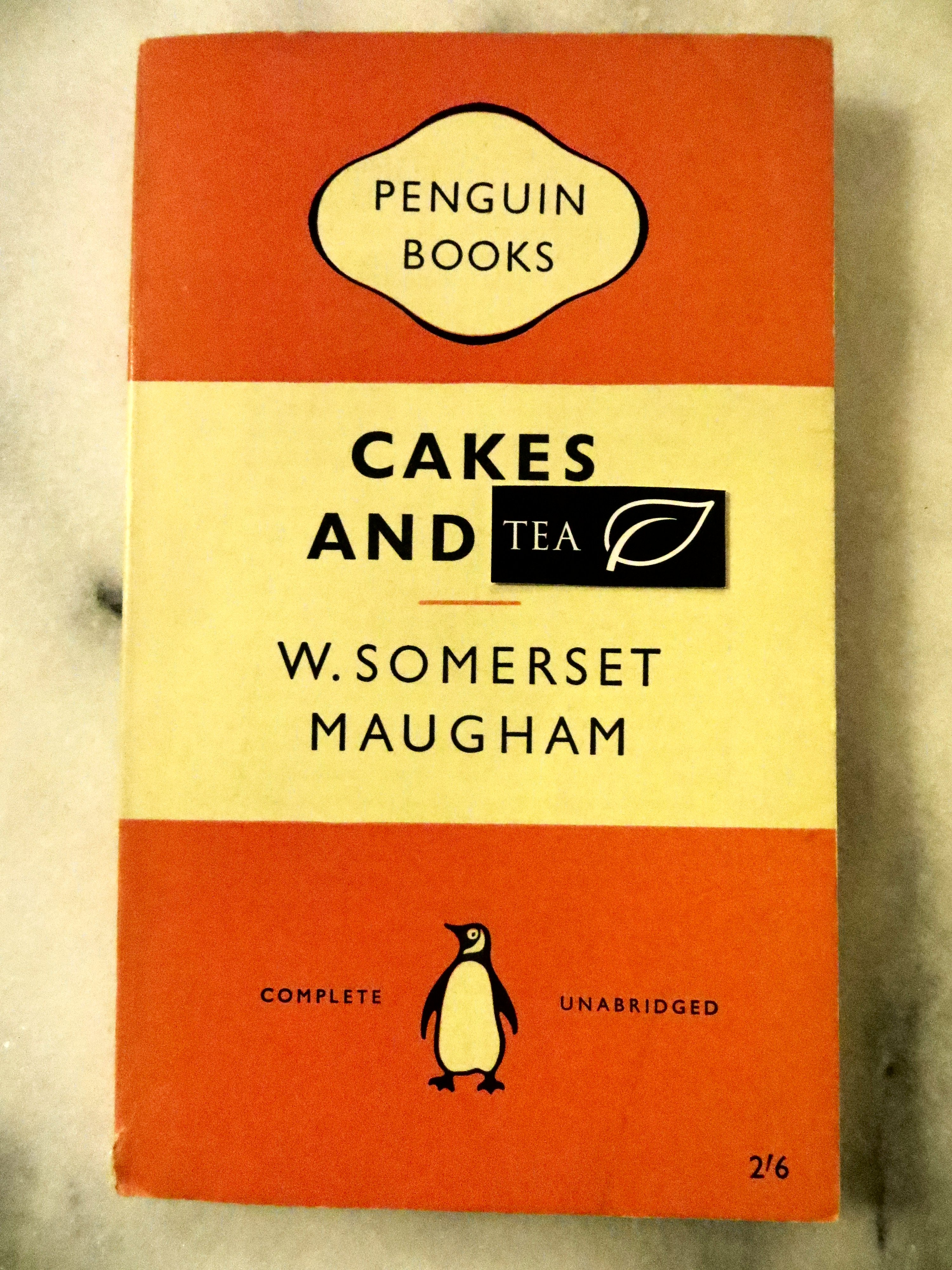
• Cakes and Tea, by Somerset Maugham
• Dandelion Juice, by Ray Bradbury
However, having to alter the titles would be a mere bagatelle compared to the changes that would have to be made to the works themselves. Homer’s ‘wine-dark sea’, almost his trademark description, would have to become the ‘grape-juice dark sea’; Lady Macbeth would have been stuffed if, instead of being able to observe, as the grooms slipped into a drunken stupor, ‘that which hath made them drunk hath made me bold’, they’d all been swigging elderflower water and sitting up playing cards, as lively as crickets; and ‘wine, women and song’ (which I’ve just looked up, and find, to my amazement, that it is a saying usually attributed to Martin Luther) would not have the same ring to it if it became ‘water, women and song’.
I jest, but I am also being serious. This type of statistical analysis is not only nonsense, but also very dangerous. Cultures cannot be manipulated, and even if this particular statistic is true, it doesn’t necessarily mean that society is becoming more decadent. One interpretation might be that, at present, writers of pop songs are going through a very literal phase, which may mean that there are fewer double entendres to pick up on and correspondingly more overt references to be spotted by the earnest conductors of surveys. The pop songs of my youth were full of allusions to drugs, drinks and sex, but many of these were disguised. I wonder if present-day researchers would have spotted them? Self-evidently, also, my generation survived and turned out to be no more or less decadent than any other. Culture must be allowed to regulate itself.
If the government interferes in this, you may find me in my local singeasy.
 Christina James, crime novelist