
The likes of a blogpost? A crime of expression…

The likes of

As I’ve admitted in a previous post to having pedantic tendencies, I won’t apologise for them again today. In fact, snowed in and beleaguered by a power-cut as I am and having, at the time of writing, no hot water, no central heating and no means of obtaining hot drinks or cooking food (though mercifully I am sitting in front of a warm stove with a goodly supply of logs to burn and books to read), I have decided to treat myself to a bit of a Saturday rant.
Every so often, an expression that I particularly dislike seems to pop up with alarming frequency in the media. The one that I am thinking of at the moment is ‘the likes of’. It has been around for a long time and has always made me shudder. I associate it very much with certain annoying adults of my childhood who both used it and also perpetuated other hateful stereotypical sayings, such as ‘Had you thought of that?’ (thus indicating none too subtly that the speaker regarded himself or herself as of superior sense and intelligence) or, most heinous of all to me, ‘Yes, but…’ to any helpful suggestion that I might have ventured to make.
However, I had believed that use of ‘the likes of’ had been steadily waning in popularity for at least three decades. I had not encountered it much at all for ten years or so, until January this year. Now it seems to have resurfaced with a vengeance, like a virus that has lain dormant and suddenly been exploded back into life by some trick of the climate. The first occasion on which I noticed its resurgence was when Bradley Wiggins made his winning appearance at the BBC Sportspersonality of the Year Awards and said that he had never imagined that he would be standing there on stage with ‘the likes of’ the Duchess of Cambridge and the others with her. Among the rash of new incidences that have cropped up since then, a recent review by a well-known literary columnist referred to ‘the likes of Kafka’ and yesterday a newscaster on Radio 4, announcing bad weather warnings, spoke of ‘the likes of Oxford and Wales’.
Aside from the fact that to me it sounds more than a little derogatory, what exactly is meant to be conveyed by ‘the likes of’? Whom else besides the Duchess herself (pace Hilary Mantel) could possibly be described as ‘the likes of’ the Duchess of Cambridge? Who is the ‘like’ of Kafka, that most uncompromisingly individual of authors? Where are ‘the likes of’ Oxford and Wales, two distinctive geographical places, one a city, the other a country, which are not remotely like each other and neither of which, to my knowledge, resembles anywhere else? Is the expression supposed to liberate some kind of imaginative power in the listener, by inviting him or her to supply his or her own references to fill the implied gap? Thus I might think ‘this is like Kafka and Jeffrey Archer’ or you might think ‘this is like Oxford and Orkney’: all very confusing and not at all helpful.
What I’m attempting, I suppose, is to understand why the phrase exists at all. What does it add to the point that is being communicated? If Bradley Wiggins had said, ‘I never expected to be standing on stage with the Duchess of Cambridge and…’, would anything have been lost by the omission of ‘the likes of’? Would he not actually have come across as more gracious and complimentary? If the newscaster had simply said, ‘There are severe weather warnings for Oxford and Wales’, would our understanding of the message have been impaired by his not having included the rogue phrase?
Sometimes I’m a fan of redundant phrases. They can make what we say more graphic, more picturesque, even more nuanced and sensitive. But ‘the likes of’? Spare me! If the likes of you and me agree to boycott this nasty conjunction of three little words, perhaps we can start a fashion that will spread throughout the English-speaking world until, like smallpox, the expression has been completely eradicated. ‘Yes, but,’ you might say colloquially, ‘one day the likes of Bradley Wiggins is sure to emerge again. Had you thought of that?’
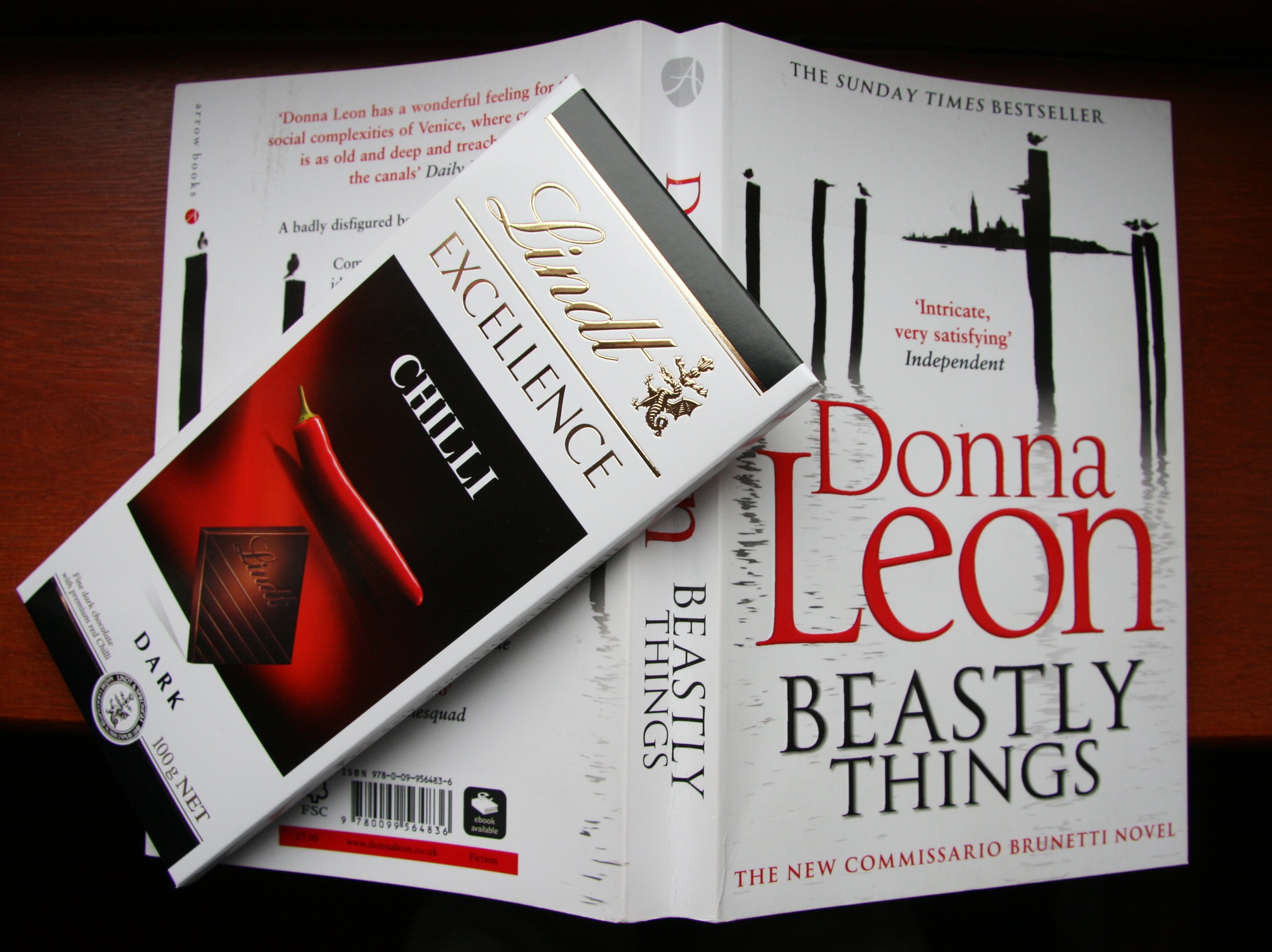
Beastly blended pleasures

Blended pleasures

I have been a fan of Donna Leon for a long time.  My respect for her redoubles now that I’ve read Beastly Things (which was one of my son’s/daughter-in-law’s Mother’s Day presents to me – no hidden comment intended, I’m sure!).  This novel should be thrust in the face of all those smug, sententious critics who think that crime fiction is not ‘serious’.  Without giving too much away, it is about the institutionalised abuse of animals and how substandard meat is being dishonestly introduced into the food chain.  It was published before the horsemeat controversy was exposed, so it is prescient as well as topical.

Reading Beastly Things can be painful and even, at times, horrific.   In addition to animal maltreatment, it explores blackmail and the corrosive effect that lying has on personal relationships.  The novel begins with a murder – the result in part of the collision of all these themes – but the death is less central to it than they are (although the victim suffers from Madelung disease, clearly well-researched by the author, which makes him interesting and helps to give credibility to the plot).

Paradoxically, some of the most beautiful and memorable passages describe the carcasses of slaughtered animals.  The whole book is a metaphor for the degenerative state of Italian politics.  It suggests that these have so tainted public life that people no longer have a moral yardstick by which to govern their private lives.  The novel would be extremely depressing were it not for the finely-crafted passages about Commissario Guido Brunetti’s relationship with his wife Paola.  These run like a musical refrain through all the Brunetti books.  I am not often jealous of other writers, but I really do envy the way in which Leon succeeds in presenting Brunetti’s perfect marriage to the perfect woman – Paola is beautiful, intelligent, rich and a good cook who daily prepares a delicious lunch and dinner for Brunetti and her two (fairly perfect) teenage children, as well as holding down a demanding job as a university lecturer – without being coy or cloying.  She achieves this by portraying the marriage against the backdrop of Italy’s continuing ills.  The implication is that the Commissario’s personal idyll is daily under threat and could be destroyed at any moment by some unseen force or miasma.  And, of course, his professional life is filled with seamy horrors.

There is always a sombre undertone to Leon’s work, but this is one of her darkest novels yet – the more so because it is not in the slightest bit far-fetched.  It could easily have been based on fact and, for all I know, it has been.  I recommend it wholeheartedly – but if you are planning to read it, you should invest in a bar of chocolate as well, to keep up your serotonin levels!

In love with Cromer…

Christina at Cromer

It seems fitting to write about Cromer on World Poetry Day. If you are new to the blog, please don’t be baffled by this!  Regular readers will know that Cromer is the adopted home of Salt Publishing, which is becoming ever more renowned for its fiction.  Last year it achieved international fame with The Lighthouse, Alison Moore’s debut novel, which was shortlisted for the 2012 Man Booker prize. (Its crime list includes In the Family, my first crime novel, and will shortly also feature Almost Love, the second in the DI Yates series.)

However, Salt built its reputation for literary excellence on its superb poetry list; in my view it is the greatest current British publisher of contemporary poetry.  Some Salt poets are poets’ poets, though most are very accessible.  I believe that perhaps, of all its achievements, Salt’s greatest has been to develop its ‘Best of’ lists, especially the Best of British Poetry series, and the Salt Book of Younger Poets.  Now widely adopted by undergraduate courses in English literature and creative writing, these books bring contemporary poetry alive to a new generation, as well as supply more mature readers with an impeccable selection of great poems.  The Best of British Short Stories series achieves a similar effect in a different genre.  And, not to spare his blushes, Chris Emery, the founding inspiration behind Salt, now publishes his own poetry under the Salt imprint.  If you have not yet read The Departure, I recommend it wholeheartedly.

Back to Cromer.  I was there for a long weekend because, as I mentioned on Sunday, I was asked to play a small part in the Breckland Book Festival.  I stayed at The Barn, one of the cottages owned by The Grove Hotel (itself steeped in history – parts of it are eighteenth-century and its original owners were the founders of Barclays Bank).  I called in on Chris and Jen Hamilton-Emery after the Breckland event and my husband and I were kindly invited to have dinner with them.  They were brimful of ideas as usual and delighted that Chris has been appointed writer-in-residence at Roehampton University, as well as looking forward to celebrating Jen’s birthday today (that it is on World Poetry day is a poetic thing in itself!).

The rest of our time in Cromer was spent exploring the beaches and the streets of the town.  Twice we walked along the beach in the dark and, on Monday morning, we took our dog for a very early morning run there.  Even in bitterly cold weather, the town itself is enchanting.  Developed in the mid-nineteenth century to cater for the emerging middle classes, who could for the first time afford holidays away from home, it seems to have been preserved intact from any attempted depredations by the twentieth century.  There are not even many Second World War fortifications in evidence, though a pill-box languishes in the sand of the west beach, its cliff-top site long since eaten by the sea.  The pier retains its pristine Victorian originality – it is well-maintained but has not been ‘improved’.  Some of the hotels, again ‘unreconstructed’, are quite grand and all serve superb food at reasonable prices, as do the many cafés and restaurants.  It is true that some of the shops seem to exist in a time warp.  My favourite is the ladies’ underwear shop that does not appear to stock anything designed after 1950; it even displays  ‘directoire’ knickers – much favoured by my grandmother – in one of its windows.

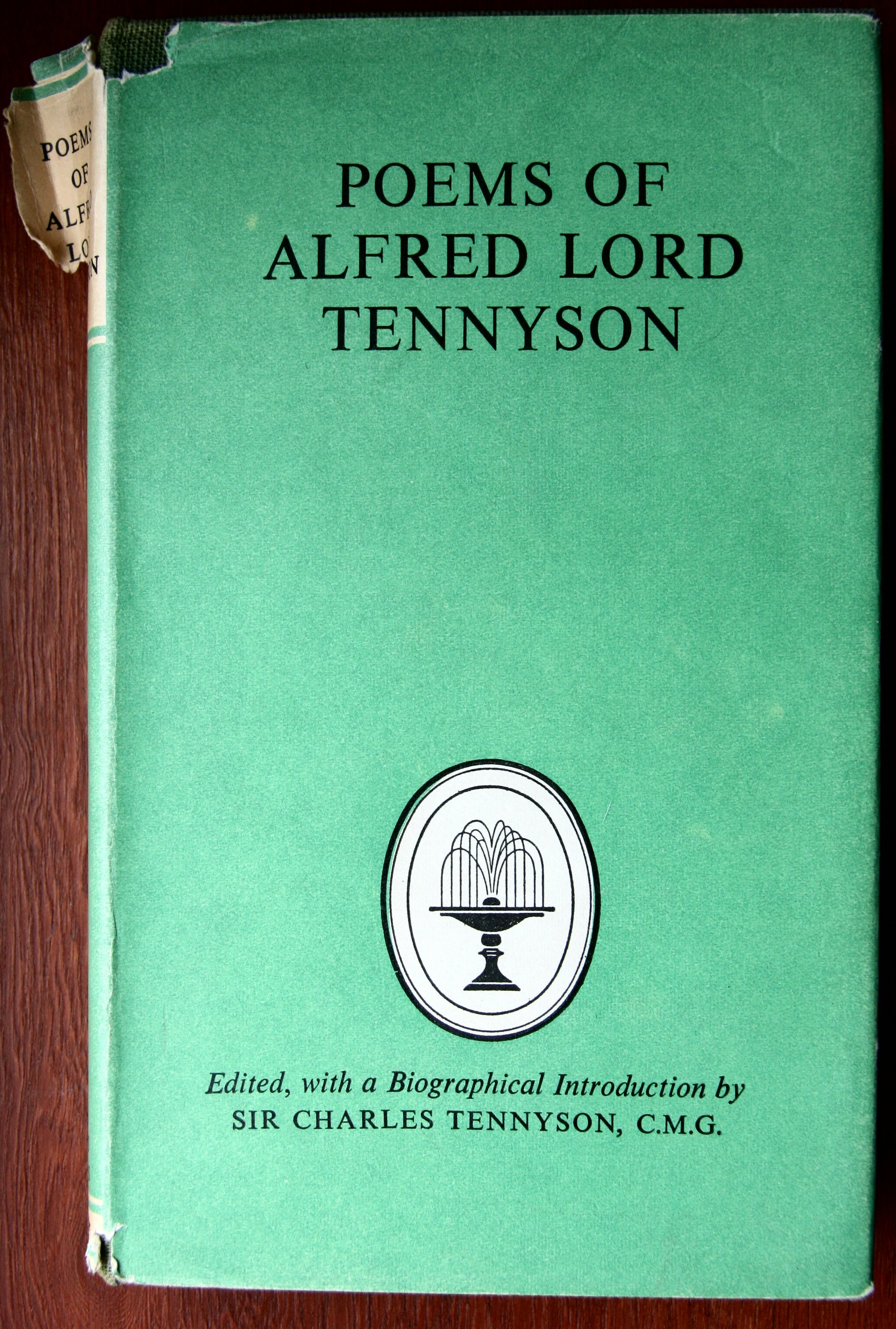
Cromer has a literary past, too.  Winston Churchill stayed there as a boy and Elizabeth Gaskell was a visitor, as the pavement of the seafront testifies.  (Churchill apparently wrote to a friend: ‘I am not enjoying myself very much.’)  That Tennyson also came here, even if I had not already decided that I loved it, alone would have served to set my final stamp of approval upon the town: Lincolnshire’s greatest poet, he is also one of my favourites.  (I’ve always considered James Joyce’s ‘LawnTennyson’ jibe to be undeserved.)  I know that Tennyson would have been fascinated by Salt if he had been able to visit Cromer today.  I can picture him perfectly, sitting in Chris’ and Jen’s Victorian front room, sharing his thoughts about poetry – as one fine poet to another – in his wonderfully gruff, unashamedly Lincolnshire voice.

And so, Jen, Chris and Salt, have a very happy Cromer day, listening to the lulling rhythm of the rolling, scouring waves and painting salty pictures in the sky.

9781907773150frcvr.inddTennyson

A brief encounter with Brighton… and a book

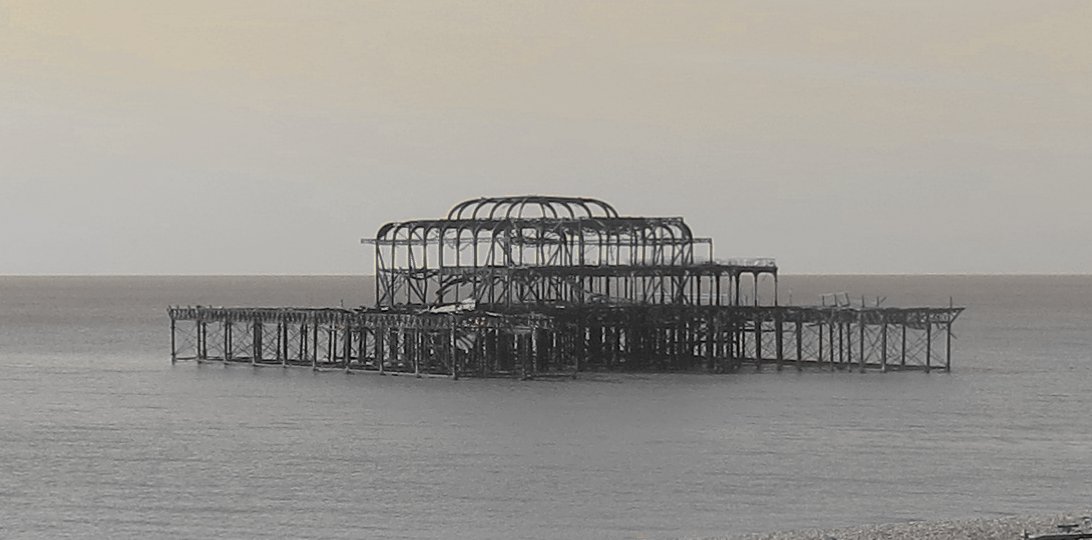
West Pier

Last week I visited Brighton for the first time in perhaps ten years. I was there because The Old Ship Hotel had been chosen as the venue for the annual academic bookselling and publishing conference for which I organise the speaker programme. I discovered that there has been an inn on the site of The Old Ship since Elizabethan times. Originally just called The Ship, it acquired its venerable epithet after another Ship hotel was built nearby – this one a mere stripling dating from the period of the Civil War. Hotels in Brighton can be evocative places. I have also stayed at The Grand, both before and after it was wrecked by the IRA bomb, on both occasions to attend the Booksellers Association Conference (I liked it better before than after) and one year spent several days in a seedy little guest house when the company I was working for forgot to book until the last minute and all the hotels were full.
Brighton itself has not changed much in ten years, although it looked very odd when I arrived, because the streets and seafront were covered in grubby snow. A moderately heavy snowfall on the day before seemed to have caused a local catastrophe in which everything – public transport, the highways, even restaurants and cafés – ground to a halt. I concluded that they’re ‘nesh’ in the South of England; we clear away snow like that in half an hour in Yorkshire! Or perhaps Brightonians – if that’s the right word – are just staggered to see the white stuff at all and it therefore strikes them down with a sort of horrified inertia.
Anyway, by midday, although it was still very cold, the snow had melted and I ventured out from The Old Ship to meet my former English teacher for lunch (more about this on another occasion). Before the conference started, I also managed to take a walk along the promenade and was saddened to see the hideous buckled corpse of the West Pier, still rising up out of the sea like a squashed daddy longlegs. The structure has suffered terminal damage since my last visit.
After presentations, drinks and speeches, dinner, more speeches and more drinks, I went to bed. I was rudely awakened at about 4 a.m. by the noise of a huge crowd outside. I exaggerate only a little when I say that it sounded like the storming of the Bastille! I began to realise that my de luxe room, with its fine view of the sea, came with mixed privileges. Looking discreetly out of the window, I saw a gang of perhaps forty youths running about on the seafront, many of them braying obscenities. And they didn’t move on – they just stayed there! Brighton has obviously degenerated since the days of Pinkie Brown, who was a better class of yob altogether.
Since it was obvious that I would get no more sleep until the mob dispersed or was moved on, I adopted my usual all-purpose tactic for dealing with adversity and took out a book. It was The Mistress of Alderley by Robert Barnard, not a novelist I’d read before. Under normal circumstances, it wasn’t the sort of novel I’d have especially enjoyed. Although the setting is meant to be contemporary, the characters seem to belong to a time warp. The mistress of Alderley herself, a retired actress called Caroline Fawley, seems to me to be straight out of the set of Brief Encounter. However, under any circumstances I should have enjoyed the detailed descriptions of Leeds which number among the novel’s strengths and, while the fracas outside continued to roar, I found the descriptions of Caroline’s genteel rural life quite soothing. The icing on the cake was that it turned out to be a sham, a pretence laid bare by the murder of Caroline’s slippery millionaire lover.
I had almost completed The Mistress of Alderley by breakfast, by which time the louts had melted away and a rosy dawn was launching itself above the dead pier.

The Grand

With apologies, a postponement!

Postponement

I’m afraid that I have to announce a postponement of my Gower Street event this week to May 2nd 2013. I had been looking forward to meeting some blog and Twitter friends this week, but I hope the delay will not destroy the eventual opportunity. With grateful thanks for your understanding.
Christina.

Think of a number…

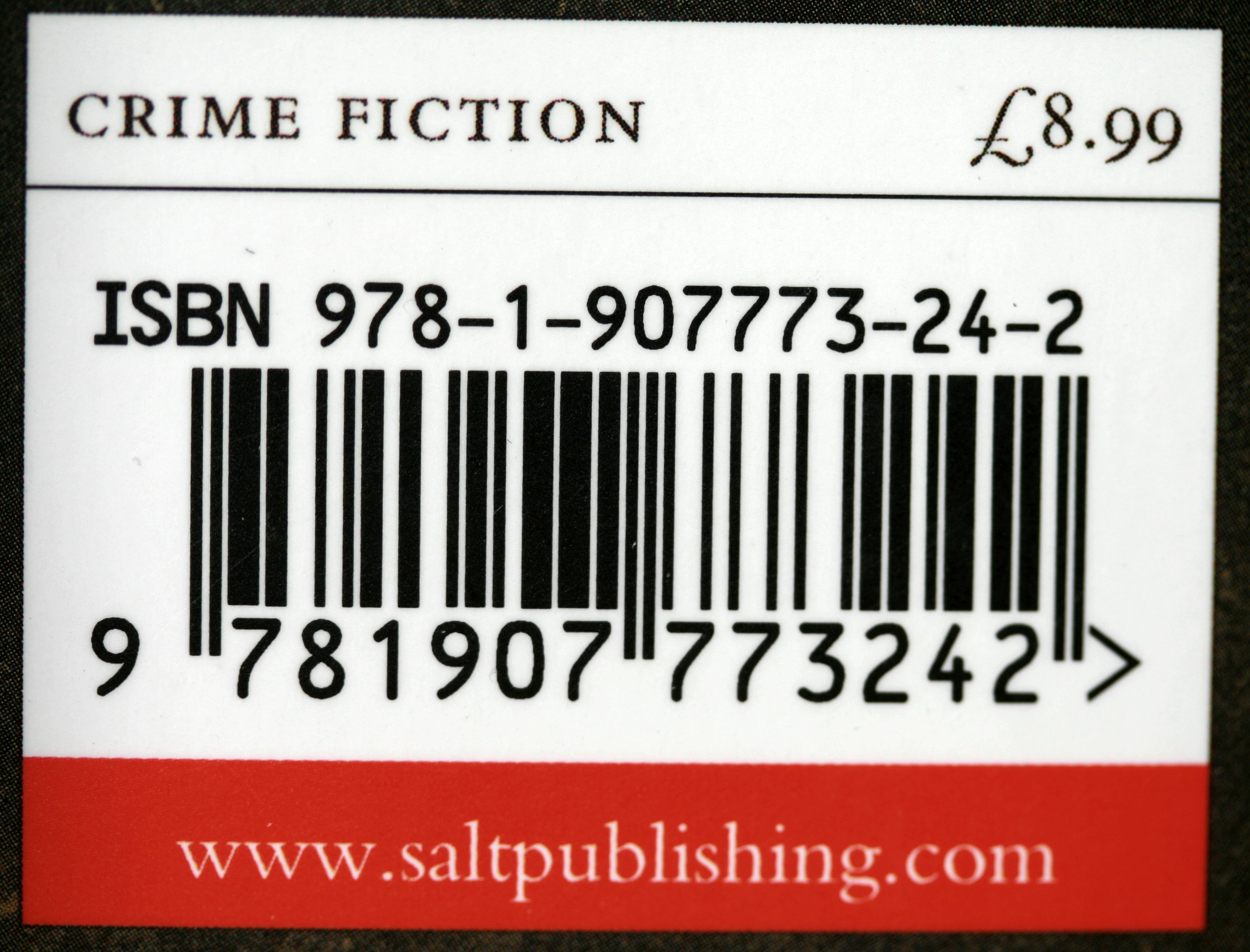
ISBN

When I got my first job in the book industry, the ISBN was waiting in the wings.  It was actually doing a little more than that – people in the trade were encouraged to quote the ISBN on orders, and printed order forms usually included them.  By the end of the 1970s, almost all books had an ISBN printed on the back cover.  Yet, while these rune-like digits were not exactly a sham, they served no useful purpose either.  I remember my first boss asking me what I thought of ISBNs.  I shrugged.  They meant little more to me then than the ‘By appointment to the Queen’ notice on a marmalade jar.  ISBNs – the brainchild of a HarperCollins director called Carl Lawrence, one of the grand old men of publishing in my youth – were like the dummy burglar alarms that some people attach to the front of their houses: they indicated, even warned, of something that was not actually in place.  That something was a well-organised, automated book industry supply chain.

The trade was quick to catch on, though.  By the end of the 1970s, teleordering had been invented and the bigger bookshops and bookselling chains were experimenting with EPOS systems.  Some publishers’ reps had handheld devices by which they could transmit orders to head office as they received them (these very early forerunners of the iPad bore about as much resemblance to it as Dom Joly’s giant spoof mobile bears to Apple’s sleek invention today).  For the first time, booksellers and librarians were able to identify the correct edition of a book by inspecting the magic barcode on the back.  All of these breakthroughs depended on the humble ISBN.

There were some hiccoughs, of course.  Rows about how ISBNs should be used erupted right from the start.  Eventually it was agreed that not only every edition but also every format of a title should have a unique ISBN.  This was a relatively simple concept in an era when most titles appeared first as hardbacks and then as paperbacks if they were successful.  Some publishers, however, persisted in allocating ISBNs to non-book material – to posters, for example, or to book packages.  I remember arriving at work one day to discover forty dumpbins of a James Herriot title dumped – literally – on the doorstep.  I had ordered forty copies, but the publisher had allocated the ISBN to the dumpbin, not the book.

Nevertheless, the ISBN was a wonderful invention.  For the first time in its history, the book industry basked in praise for being so innovative.  We were told that our use of the ISBN was rivalled only by the ingenious cataloguing mechanism developed at the same time by the car parts industry.  This was praise indeed!

Today, ISBNs are ubiquitous.  They are used by publishers in most developed countries and routinely quoted by customers when ordering books.  (As a purist and something of a pedant, I shudder every time I hear someone say ‘ISBN number’.  ISBN, of course, stands for International Standard Book Number, so the added word ‘number’ is redundant.  Americans have got round this by creating a word from the acronym – they refer to ‘IZBENS’.)

And, amazingly, considering that all we are talking about is a set of digits, ISBNs still stir up controversy.  Now that e-books are available in so many formats, publishers and booksellers are asking whether it is really feasible to allocate a unique ISBN to each.  Bibliographic agencies, librarians and some booksellers and publishers say that it should be.  Other booksellers and publishers disagree.

True crime… beautifully executed.

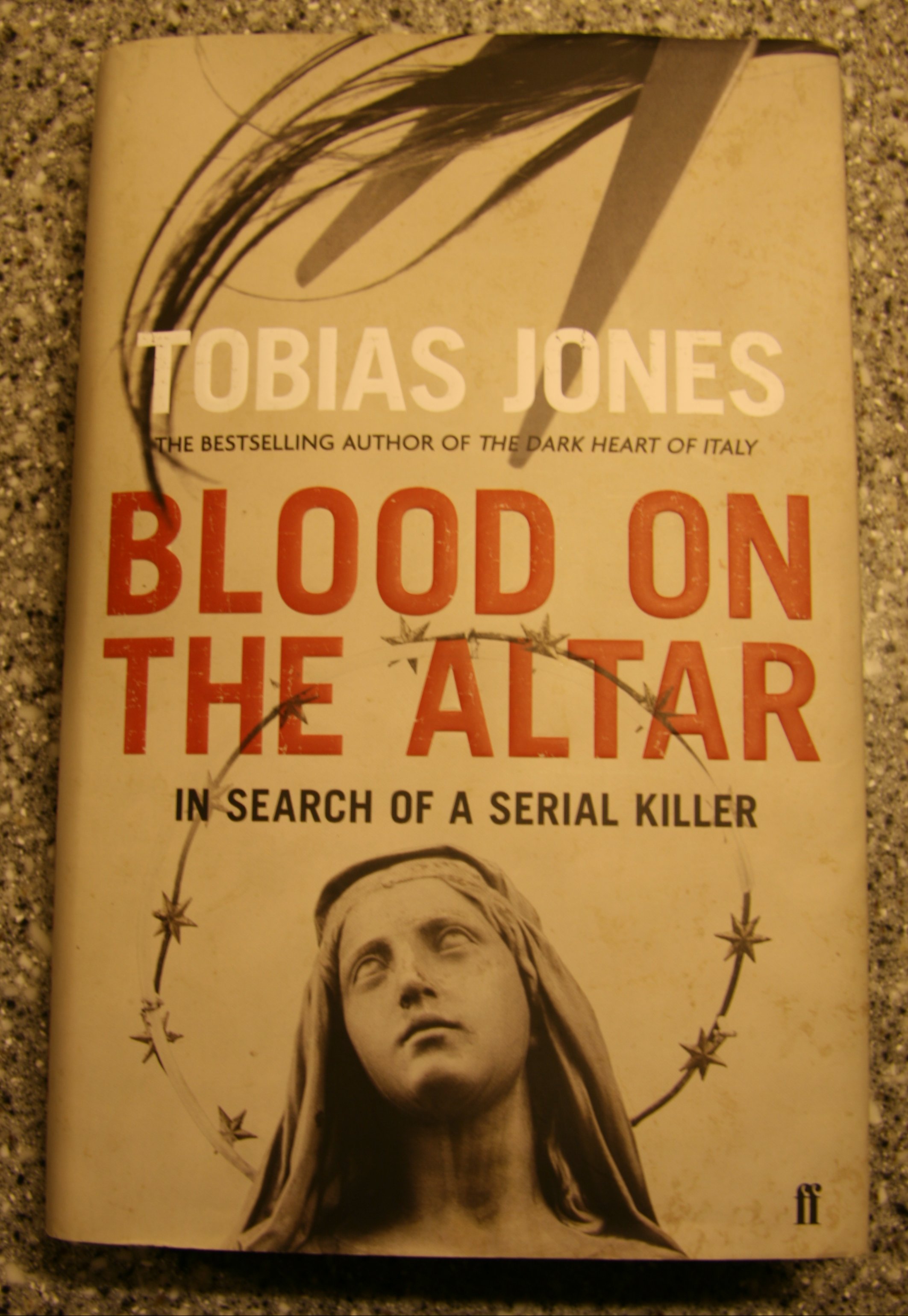
Blood on the Altar

Blood on the Altar (faber & faber), by Tobias Jones, is undoubtedly the most unusual true crime account I have ever read, and one of the most disturbing.  Jones was an investigative journalist living in Italy when he heard of the case of Elisa Claps, a sixteen-year-old schoolgirl who disappeared after attending church one Sunday morning in her home town of Potenza, deep in the south of the country.  Jones befriended the Claps family; from the outset, they suspected that Danilo Restivo, a strange young man prone to exhibiting an unhealthy interest in certain local women and also, apparently, a stalker of Elisa, had murdered her.  Among Restivo’s unsettling habits was a fetishistic obsession with female hair.  However, his family was more eminent than the Claps family and his father undoubtedly able to influence such local officials as the public prosecutor and others in authority, like the priest in charge of the church where Elisa disappeared.  As a result, although all the evidence pointed towards his guilt, he was not brought to justice.  The evidence itself became obscured by a tissue of lies, evasions and half-truths in which many people, including some of Elisa’s own friends, appeared to be complicit.

Elisa’s brother, Gildo, spent almost twenty years trying to get at the truth of what happened, helped at intervals by Jones.  Eventually, Jones became depressed by the corruption that seemed to be endemic in the region and returned to England to start a new life.  He had been pursuing his new interests for some years when the case of Heather Barnett made the headlines.  She was a seamstress living in Bournemouth and she had been brutally murdered and disfigured.  In her hands were clumps of hair, not all of it belonging to her.  It transpired that Danilo Restivo, who pretended to comfort her children after they discovered her body, was the neighbour who lived opposite her house.  From his window, he could see into her bedroom window.

Eventually the police charged Restivo with Barnett’s murder. While the case was progressing, the remains of Elisa Claps were discovered high in the rafters of the church in Potenza where she had disappeared and Restivo was at last charged with this murder, too.  Jones speculates that, since there was a gap of nine years between the two murders, it is likely that Restivo killed other women in the interim.  In particular, the murder of a young Korean girl in Bournemouth about eighteen months before Heather Barnett’s death shows many similarities to the later crime.  (Another man was found guilty of this murder, but the police have reopened this case recently, following the publication of Jones’ book.)

Like a well-plotted crime novel, Blood on the Altar tells two stories.  The ‘main plot’ recounts the murders and offers a psychological profile of Restivo; the ‘sub-plot’ explores the remote region of Italy where the first crime takes place and tries to explain the collective psyche of its inhabitants.  In the process, Jones gives the reader some evocative descriptions of the Italian countryside and of local customs.  All of this is of relevance both to an understanding of Restivo’s character and to how he managed to evade the law, which in turn allowed him to commit the second murder (and probably others).  However, the approach that Jones has taken has one drawback: it relegates Heather Barnett to a kind of bit-part in the book.  Jones does not engage with her tragedy and that of her family as he engages with the tragedy of Elisa and the Claps family.  This has the effect of making the story a bit lop-sided; however, that is a minor quibble about what is a fascinating, unsettling and beautifully-written book.

Elly Griffiths and Tom Benn in fine form at Breckland!

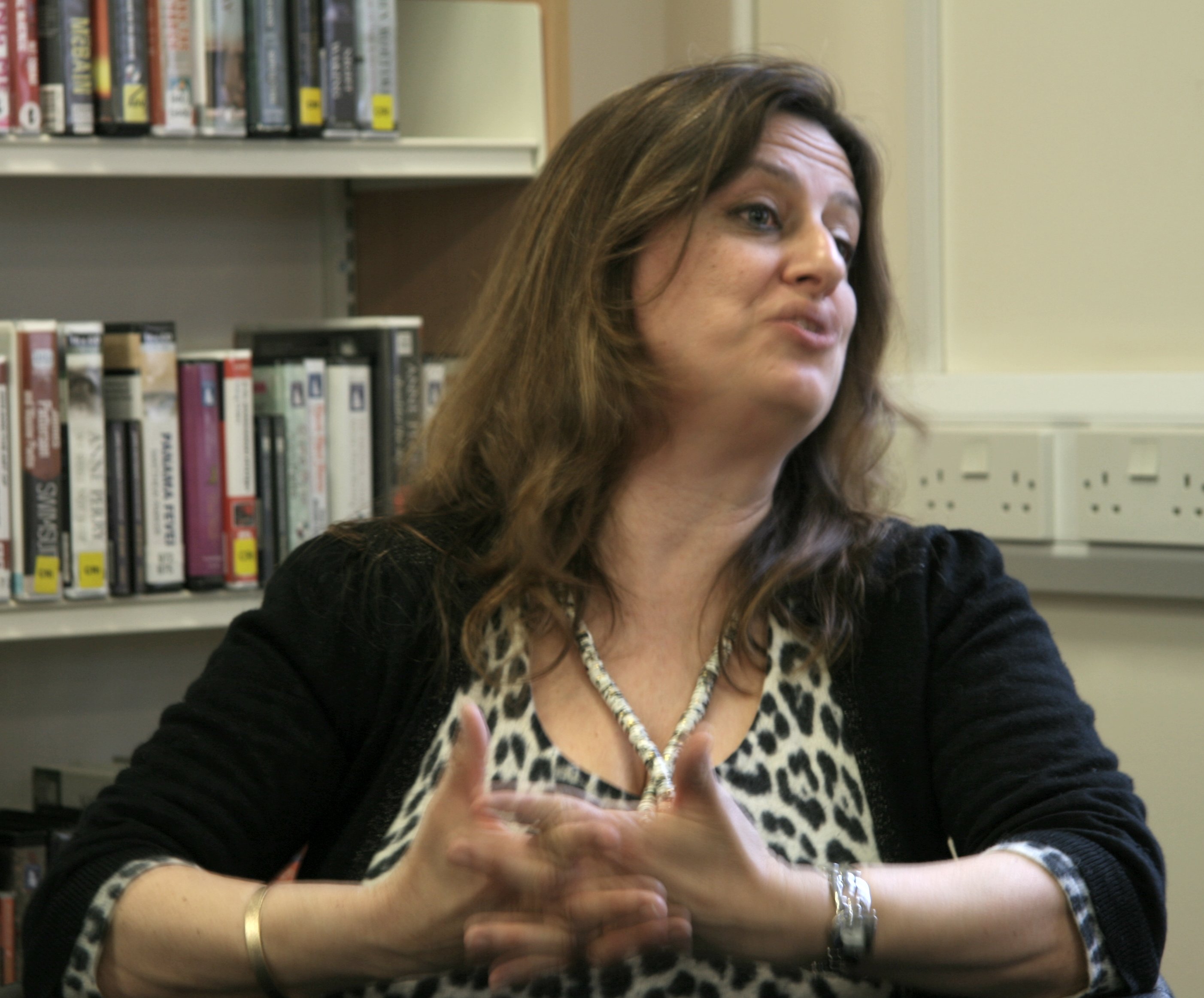
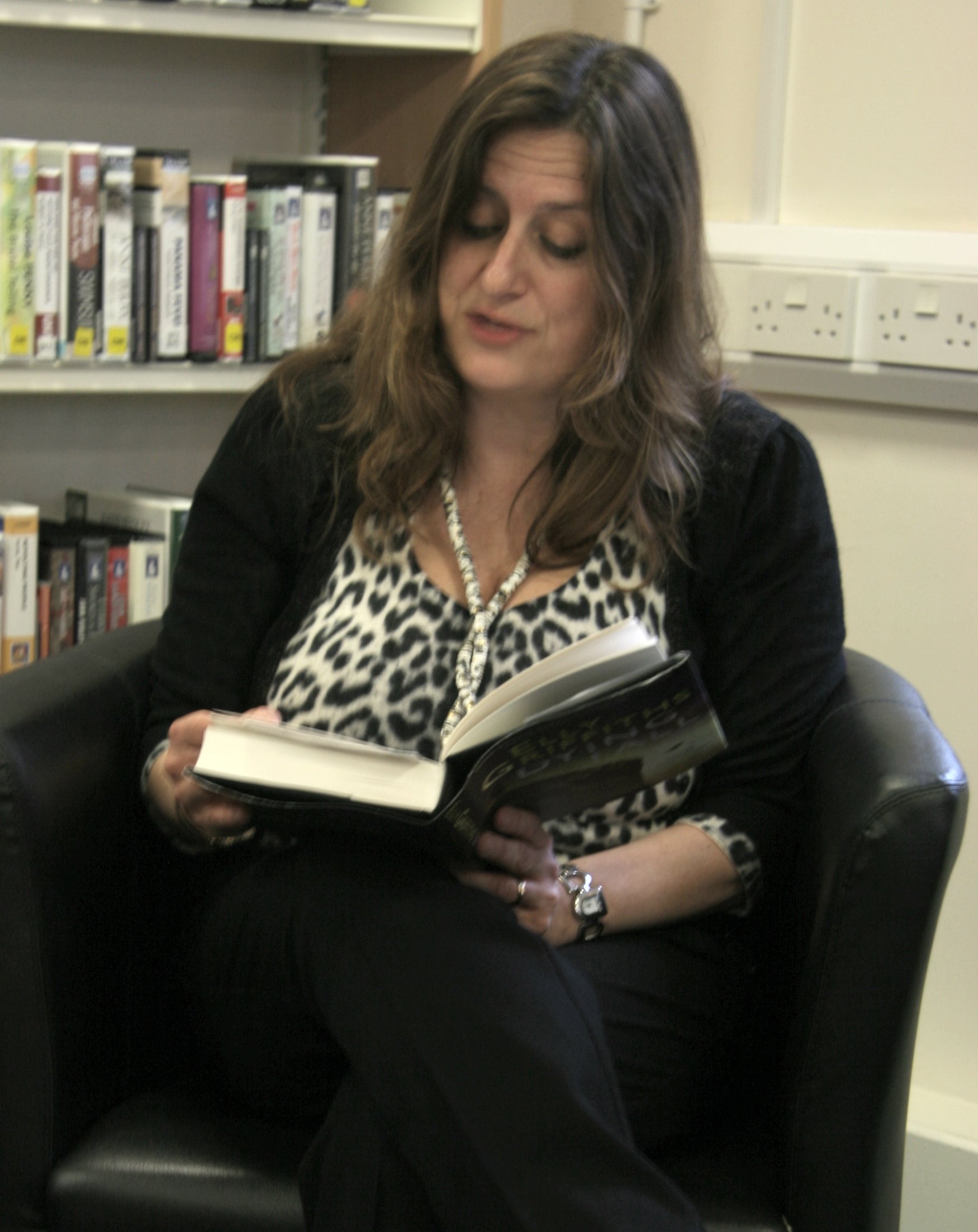
Breckland Watton 5Breckland Watton 4Breckland Watton 2Breckland Watton 7

The small Norfolk town of Watton yesterday afternoon braced itself for bleak and squally weather, the rain coming in short eddies between gusts of wind that made the temperature seem even colder than it was. Inside, the library was a haven of warmth and hospitality, as Claire Sharland and her colleagues put the finishing touches to the Breckland Book Festival crime-writing event and offered welcoming cups of tea.
Elly Griffiths, Tom Benn and I all arrived early, as requested, and gathered in a small office to introduce ourselves and get to know each other a little better before we were ‘on’. I was fascinated to discover that Elly also writes novels about the Italian ex-pat community as Domenica de Rosa, her fabulous real name, and that Tom was encouraged to publish by his tutor at UEA, who helped him to place his first novel, The Doll Princess, with Jonathan Cape.
When we emerged from the small office at 3 p.m., the events space in the library had filled completely with people. I estimate that there were about forty in the audience – an impressive turn-out on such a dismal day.
Tom and Elly both read from their latest novels. Tom made the distinctive Mancunian dialect in which he writes come alive with his reading and, by doing so, also brought out the sophisticated humour which runs like a fine thread through the whole of Chamber Music. Elly also chose a humorous piece of dialogue from Dying Fall, and made the audience laugh with her vivacious rendering.
We were fortunate to have such a receptive and intelligent audience. Most had read the work of one of the authors; some had read both. Their comments and questions took in a discussion about the two writers’ very different but, in each case, key use of topography, character development, how each uses his or her writing to explore and develop relationships and the extent to which they feel defined by belonging to the crime writing genre (they don’t). We even managed to get on to some more general topics, such as e-books, authors’ royalties and the Net Book Agreement (the latter introduced, not by me, but by a member of the audience who had been a bookseller in the distinguished Waterstones bookshop at UEA).
Time flew in the company of Elly and Tom and their audience of like-minded lovers of literature. I had not read either Elly’s or Tom’s books before, but shall certainly keep them in my sights from now on. I hope also that we shall meet again in the future.
I can’t conclude without adding that the tea and home-made cakes with which we were rewarded at the start of the signing session were excellent. I’ve discovered that cake and conversation are two things that Norfolk does very well indeed!

Breckland Watton 8

Putting a person to a name… Waterstones Gower Street

gowerstreetposter.indd

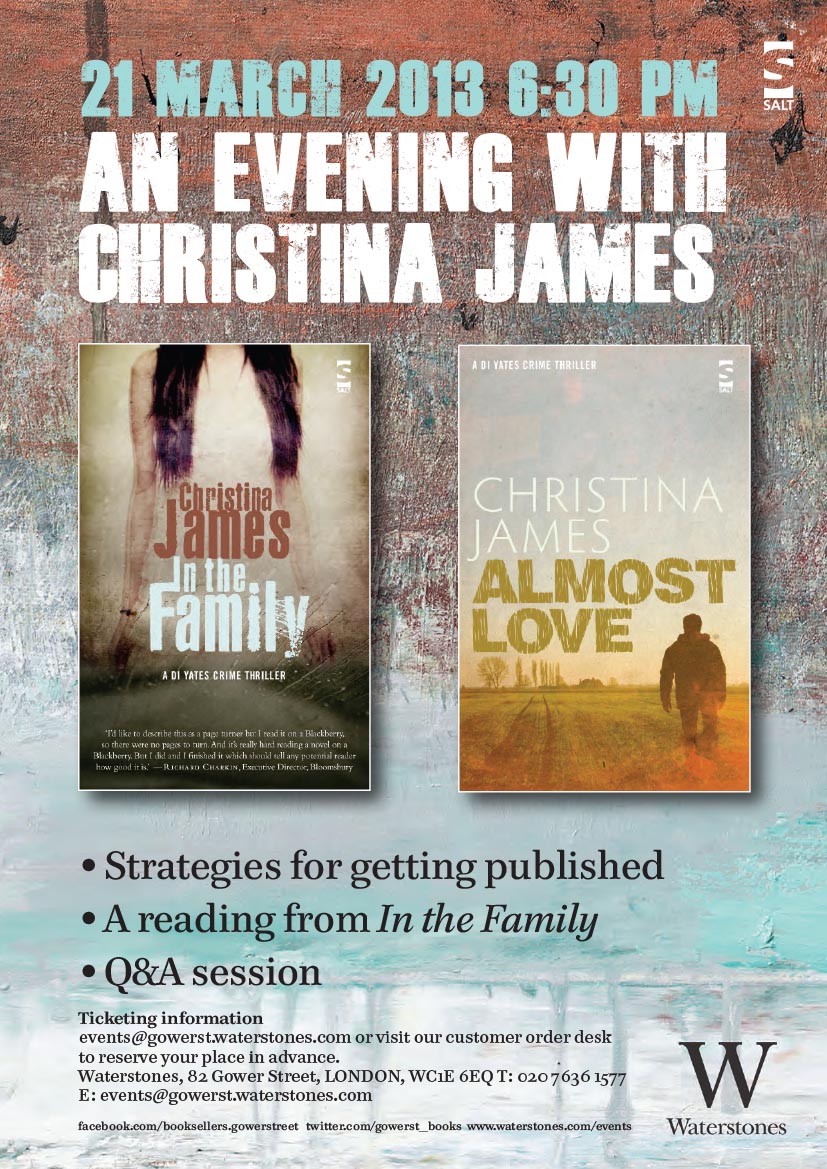
As readers of this blog have often kindly expressed an interest in my books, I thought you might like to know that an event has generously been organised for me by Sam, the wonderful Events Manager at Waterstones Gower Street, on Thursday 21st March 2013. It will start at 6.30 p.m. and last for perhaps an hour. I shall be reading a short excerpt from In the Family and perhaps also one from Almost Love (which will be published in June), and offering a few tips, from a personal perspective, on how to get published. After this, there will be a short Q & A – and a glass of wine! The event is a sort of forerunner of a larger Salt crime event that will be hosted by Gower Street on 23rd May 2013.
I know that readers of the blog are scattered far and wide and that some of you don’t live in Europe. Wherever you are, I am very grateful to you for your interest and have been delighted to ‘meet’ you on these pages. For those of you who happen to be in London next Thursday or can travel there easily (and would like to, of course!), I should be delighted to have the opportunity to meet you in person.

Banks on form – opinion from a regular investor…

Watching the Dark

I am a Peter Robinson addict – I think that I have read all of his books and I’ve certainly read all of the Banks novels.  I’ve just completed Watching the Dark, which was one of the books that I bought during my trip to Gower Street last week.

This is Banks back on track, after what I felt was a slight dip in performance with Bad Boy.  The novel is set partly in Yorkshire, partly in Tallinn, and involves a cold case murder that is reopened after an Estonian investigative journalist is found dead in a remote ruined Yorkshire farmhouse that has been used as accommodation for immigrant workers.  The novel explores the vicious exploitation of guest workers by employment agencies and loan sharks, as well as highlighting the dangers to young girls of getting drunk when alone in foreign cities.  The descriptions of Tallinn are evocative and convincing; in his Afterword, Robinson says that he visited the city in order to research the novel and pays tribute to several of its inhabitants who helped him.

Banks has had a chequered romantic career.  Robinson has now chronicled the good years, the ultimate disintegration of his marriage to Sandra and his affairs with several other women, especially the on-off relationship with his colleague Annie Cabbot.  He is possibly indicating that the Annie relationship has completely run its course by introducing a new, glamorous policewoman, Inspector Joanna Passero, in this novel.  The relationship between her and Banks gets off to a rocky start and there is no sexual element to it – yet.  However, the signs are there: by the end of the novel, she has confessed to him that she is worried that her (Italian) husband is being unfaithful to her.  My guess is that the scene is now set for some torrid episodes with Banks in the next of the series!

I enjoyed Watching the Dark hugely.  However, I have to admit that reading the Banks novels has become for me the equivalent of eating a box of chocolates – something to be devoured almost without thinking, for the sheer comforting pleasure of knowing exactly what will be delivered.  Perhaps because they are so predictable, I don’t think that the latest two Banks books have come anywhere near another recent Robinson title in which Banks doesn’t feature: Before the Poison.  I read this almost a year ago, and thought that it was masterly.

O' Canada

Reflections on Canadian Culture From Below the Border

oliverstansfieldpoetry

A collection of free verse poetry.

Easy Michigan

Moving back home

Narrowboat Mum

Fun, Frugal and Floating somewhere in the country!

Maria Haskins

Writer & Translator

lucianacavallaro

Myths are more than stories

Murielle's Angel

A novel set on the Camino de Santiago

jennylloydwriter

Jenny Lloyd, Welsh author of the Megan Jones trilogy; social history, genealogy, Welsh social history, travel tales from Wales.

Chris Hill, Author

I'm Chris Hill - author of novels Song of the Sea God and The Pick-Up Artist

littlelise's journey

Sharing experiences of writing

unpublishedwriterblog

Just another WordPress.com site

Les Reveries de Rowena

Now I see the storm clouds in your waking eyes: the thunder , the wonder, and the young surprise - Langston Hughes

Diary of a Wimpy Writer

The story of a writer who didn't like to disturb.

Rebecca Bradley

Murder Down To A Tea

Helen Carey Books

Helen Carey Books