Under way and making way in Rotterdam…

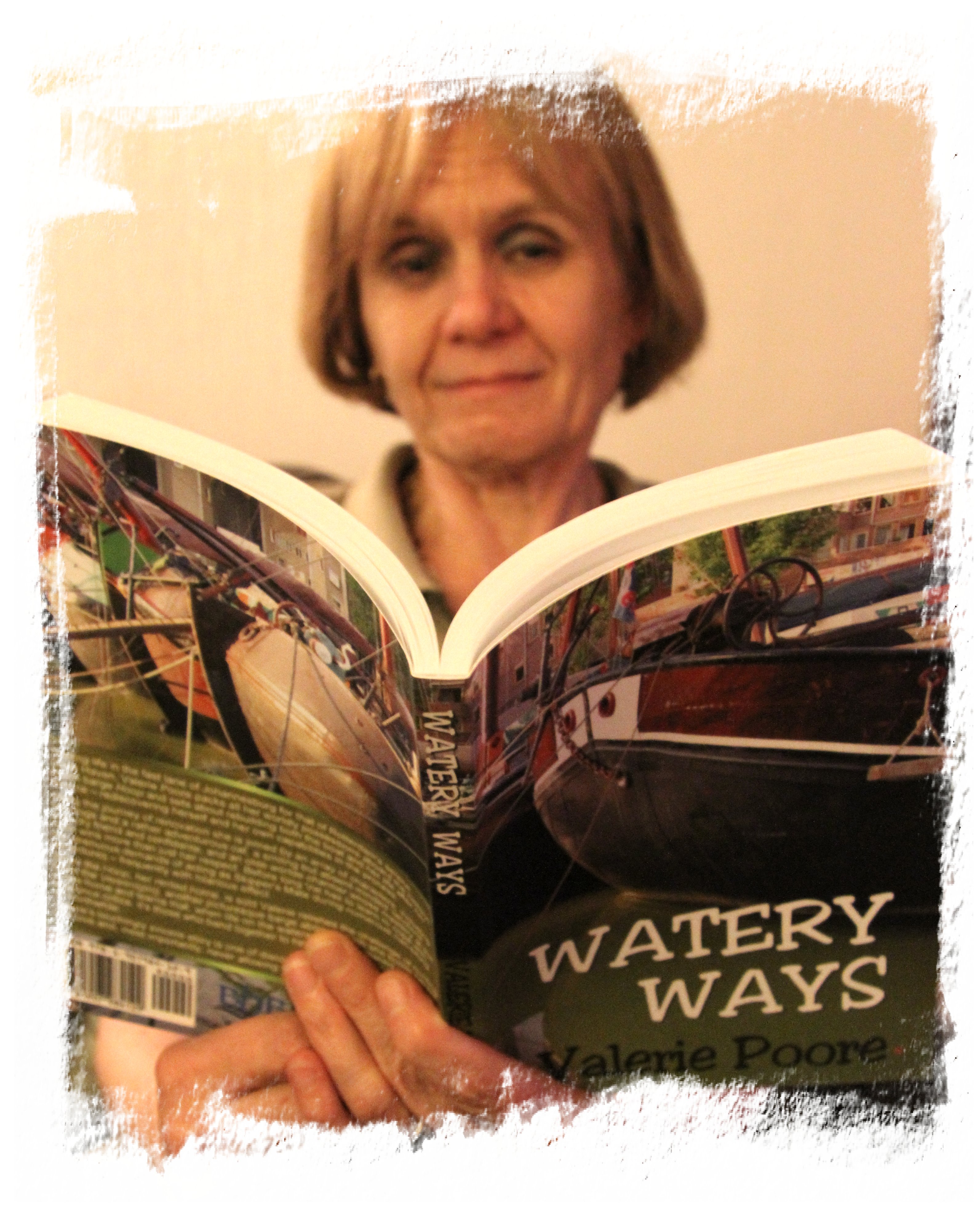
Reading 'Watery Ways'
Valerie Poore’s Watery Ways is a book of three love affairs. Each has its highs and lows, pleasures and pains. The human one seems to be the least anguished and captures well a true meeting of minds and hearts; the others are much more fraught with complete cargoes of crises, one being the development of the author’s passion for life on the water, with its close-knit harbour community, and the other her embarkation upon an emotional journey to her own live-aboard barge.

Having enjoyed narrow-boating on canals and rivers in the UK and sailed around the Western Isles of Scotland, I knew that this book would have much to interest me. I came upon Val and her books during my own voyages of discovery into social networking. She is active on Twitter and Facebook and I quickly realised that, in addition to being a generous supporter of other authors and an astute literary commentator, she has the ability to write captivatingly of her wide-ranging experiences and many practical skills.

Watery Ways charts her experiences as a new member of the nautical family of Oude Haven, the oldest harbour in Rotterdam and home now to a collection of vintage boats, lovingly restored by their owners to standards established by a commission of experts set up by the harbour’s special Foundation. As a tenant aboard one of these barges, Val found her personal background of self-sufficiency and expertise in the restoration of wooden artefacts well-suited to the task of refurbishing and maintaining her ‘new’ accommodation.

Using a present tense narrative and both factual and imaginative description, Val enables the reader to enjoy the immediacy of the moment and presents a graphic picture of places, people and events. The atmosphere of the harbour and the characters of its quirky inhabitants are evoked in unfussy but very personal prose. The technical detail, essential for an autobiographical account such as this, is explained in terms that present no problems to the lay reader: Val’s style is precise and lucid. Though there is sentiment, her matter-of-fact manner never allows it to become cloying; we are able to empathise easily with her feelings. Her capacity to interest a non-boating audience is considerable, not least because of her self-depreciating sense of humour and her willingness to share her many discomforts and mistakes, and the occasional success. For me, she doesn’t create an over-romanticised idyll that might seduce the reader into wanting to buy a boat, but does provide insight into the delights of ‘faring’ along urban, industrial and completely rural canals. She succeeds in transmitting the strange time-warp sensation that voyagers on such waterways experience as they move along at a pace of life that belongs to ages gone by, taking days to cover distances that modern road and rail transport completes in hours. There is a magic here, for the relationship of bargee to barge is very real and just as much of an affair as one between human lover and human lover. The boats themselves seem to have individual temperaments and eccentricities.

Watery Ways provides a very reassuring and positive image of human nature, a contrast to the violence of international events such as the 9/11 atrocity, which took place during Val’s first long boat trip with her partner Koos to Lille and to which she refers with great sensitivity.

I very much enjoyed reading this book. I know that Val is working on a sequel, telling of the next instalment of her life afloat and of the complete renovation of her own pakschuit (local delivery barge), the Vereeniging. The present book concludes by describing how she acquired this vesseI and I am very much looking forward to her account of her work to make it habitable and to meet Oude Haven’s rigorous historic criteria.

Follow Valerie on Twitter: and visit her website.

Watery Ways is published by Boathooks Books, ISBN 978-1-907984-12-9
An admission of ignorance…

Top of the Gutenberg pops!

Top of the Gutenberg pops!

A web-developer named Christopher Pound has carried out a text data mining trawl (I shall write about text data mining in another post – it is a bit of a hot topic in some publishing sectors at the moment) to reveal the 100 most popular books by different authors to be accessed via the Project Gutenberg free e-book site. Books for both adults and children are included.  The top 10 from both categories are:

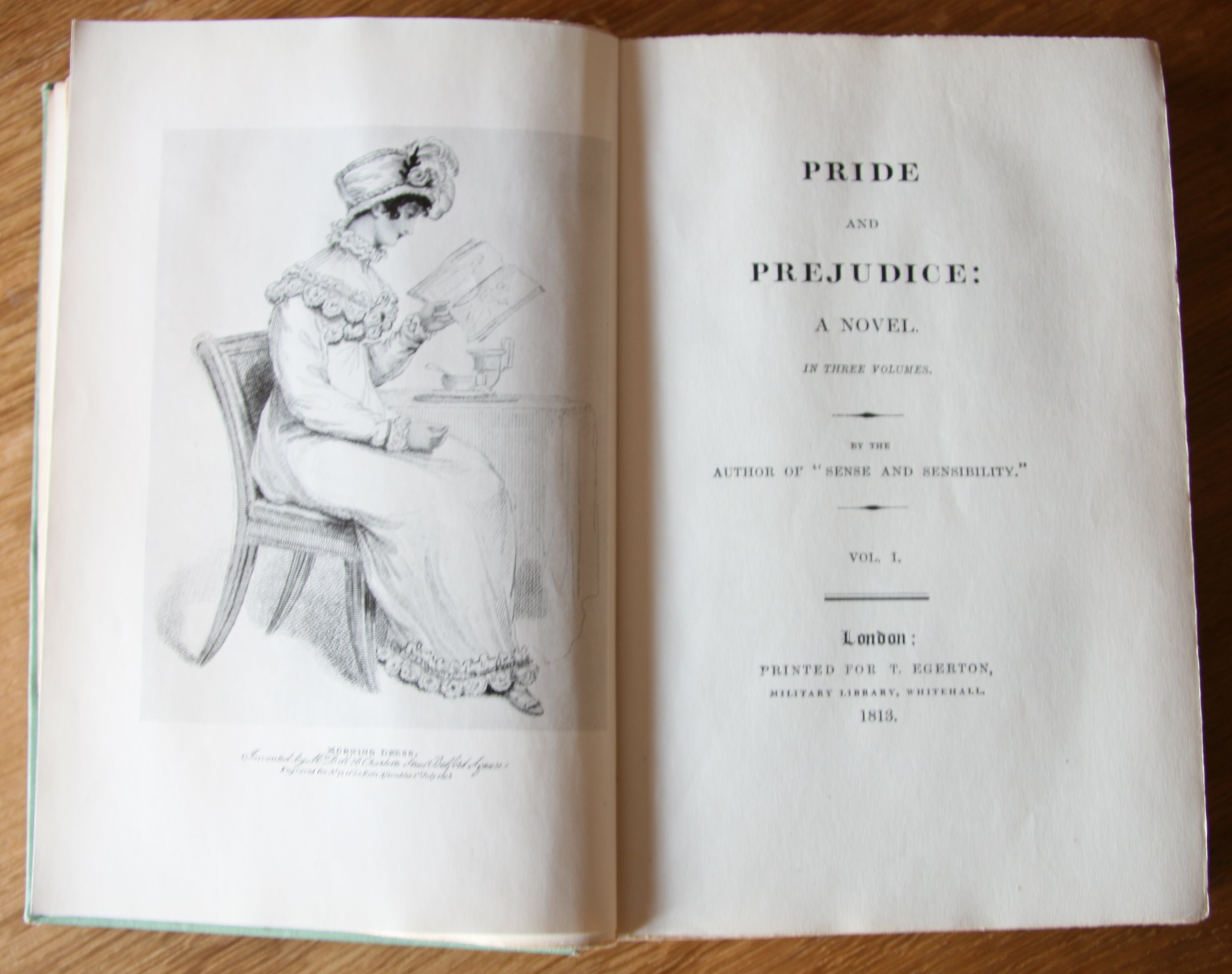
Pride and Prejudice (Austen, Jane)

Jane Eyre (Brontë, Charlotte)

Little Women (Alcott, Louisa May)

4  Anne of Green Gables (Montgomery, L. M. [Lucy Maud])

The Count of Monte Cristo (Dumas, Alexandre)

6  The Secret Garden (Burnett, Frances Hodgson)

Les Misérables (Hugo, Victor)

Crime and Punishment (Dostoyevsky, Fyodor)

The Velveteen Rabbit (Bianco, Margery Williams)

10  Adventures of Huckleberry Finn (Twain, Mark)

Can you spot the odd one out?  Or am I just revealing my own crass ignorance when I say that I have never heard of The Velveteen Rabbit?  According to Wikipedia, this book, which was published in 1922, was selected as one of ‘Teachers’ Top 100 Books for Children’ by the (American) National Education Association in 2007.  Apparently it has also been the subject of numerous film adaptations, talking books, etc.  Wikipedia sums up the plot as follows: A stuffed rabbit sewn from velveteen is given as a Christmas present to a small boy, but is neglected for toys of higher quality or function, which shun him in response. The rabbit is informed of magically becoming Real by the wisest and oldest toy in the nursery as a result of extreme adoration and love from children, and he is awed by this concept; however, his chances of achieving this wish are slight.

Peter Rabbit, Alice in Wonderland, Heidi and Uncle Tom’s Cabin all appear in the Top 100, but considerably lower down in the list.

Statistics like these always make me want to know more.  Why has The Velveteen Rabbit proved so popular, at least when accessed via Project Gutenberg?  It isn’t because it’s not available in print: Amazon lists it and states that there are both print and talking book versions available.  Is it because American teachers are more likely to direct pupils to e-book sites than teachers in other countries?  Do they perhaps even download it and arrange for it to be printed for their classes via a Print on Demand company?  Or, as I’ve suggested, is it just that there’s been a blip in my education? In fact, several blips, because in all my years as a bookseller and library supplier, I have never come across either this book or its author.

Here is Christopher Pound’s full list.


Prince Charles and I are not of one mind…

From Ordnance Survey Landranger 110 map

From Ordnance Survey Landranger 110 map

I love old houses and have been visiting stately homes since I was a child. I celebrate them as a unique part of our English heritage and I am always fascinated to read about the people who lived in them and to gaze upon their portraits. I’m making this clear at the outset, because what I’m about to write may seem a little out of character, not to say controversial.

I read in last Sunday’s Times that Prince Charles is throwing his considerable weight behind the fight to save Wentworth Woodhouse, which requires £100m to be spent on it to conserve the building and reverse subsidence. By a strange coincidence, some years ago, the Prince intervened even more directly to save Dumfries House, by spending £20m from the Prince’s Trust on its renovation. I say coincidence, because for three years I worked in Dumfries and had a flat there, so I’m familiar with and have lived near both the old piles in which he has taken an interest. (If he starts campaigning for any more such buildings near me, I shall begin to think that he is stalking me!)

Wentworth Woodhouse is not so very far away, though I’ve only visited it once, and then only the grounds, because until recently the house wasn’t open to the public. At the time of my visit, about five years ago, it wasn’t possible to get close to it: it had to be viewed from a public footpath on the other side of the boundary fence. I didn’t in fact know of its existence until the publication of Black Diamonds, by Catherine Bailey, which I bought after reading rave reviews when the book came out in 2008 and which is a meticulously-researched account of one of the families that lived in the house – so it doesn’t cover the whole of its history, but I found Bailey’s account gripping and it inspired me to want to see the mansion for myself.

Wentworth Woodhouse has been described as Britain’s finest Georgian house. It is certainly its largest. The main front of the house is 606 feet long, twice the length of Buckingham Palace. It has more than 1,000 windows. The newspaper article says that the nursery was situated an eighth of a mile from the dining room. Guests were given different-coloured confetti so that they could find their rooms again when they retired to bed (I remember reading this in Bailey’s book, as well). Even the stables are huge: in common with many other visitors, I mistook them for the house itself when first I came upon them. In fact, huge is the best word that I can think of to describe Wentworth Woodhouse itself: or gigantic, or enormous, or gargantuan, or outsize. In my view, it is both a monster and a monstrosity. It is gratuitously massive just for the sake of it. It has been symmetrically constructed, with two elongated wings, but is not otherwise architecturally distinguished. It actually gives the impression of being rather squat, even though the main building is three storeys high, because of its preposterous length. If it had been built today, say by an oil sheikh or a Silicon Valley magnate, I’m sure that it would be denounced for its vulgarity. Wentworth Woodhouse is a white elephant. I do not think that it merits the expenditure of £100m to preserve it, especially as I’m sure that this would be just the beginning. Despite the present owner’s ambitious plans to develop several commercial ventures there, I cannot imagine that it could ever be self-sustaining. £100m is a colossal sum of money and would, I feel, be better spent on saving many ‘lesser’ buildings instead.

There is another reason why I hold this view. Wentworth Woodhouse has been one of the most bitterly socially-divisive buildings in our history. I don’t mean the usual upstairs-downstairs disparities illustrated by soap operas like Downton Abbey, about which we probably feel far more uneasy than the people who lived and worked in such houses at the time. Wentworth Woodhouse was built on coal – both literally and metaphorically. The house sits on what was once a rich coal seam. Generations of its owners met the massive expenses of its upkeep by selling the mining rights to the coal that lay deep below its lands. The nearby village of Elsecar was a coal-mining village. Its inhabitants either mined the coal or worked at the house itself. It is still a pleasant but modest village that contains no large properties; the only large property for miles around was Wentworth Woodhouse itself.

The Fitzwilliam family, which owned the house for most of its history and whose story Catherine Bailey tells, were on the whole kind employers, even though the sons sometimes exerted droit de seigneur and fathered a few bastards on the local girls. By the time of the Second World War, its glory days were long over. After the war, it fell victim to what can only be described as an act of vandalism fuelled by class hatred. In 1946, Emmanuel Shinwell, the ruling Labour Party’s Minister of Fuel and Power and a man of extreme proletarian views, insisted that open cast mining should take place on the estate, even though the richest of the coal seams were not close to the surface. He stopped short at demolishing the house itself, but the debris from the mining was actually banked up against its windows. The grounds and gardens were completely wrecked.

Wentworth Woodhouse is now owned by one Clifford Newbold, who bought it for £1.5m some years ago and has since spent more than £5m on carrying out as much repair work as he says he can afford. He is now seeking to sue the Coal Authority for £100m for the depredations to the house and estate that resulted from Shinwell’s instructions. This is the initiative that Prince Charles is supporting. To me, it seems like an invidious and depressing resurrection of a vengeful class war that played itself out almost seventy years ago and from which I should prefer to believe that we have learned and moved on. In addition to this, whether or not the lawsuit is successful or funds are raised to restore the house by some other means – for example, via the National Lottery – it will be the nation itself that pays. One way or another, that £100m will ‘belong’ to us. Do we want to spend it on Wentworth Woodhouse? I suggest that we don’t. This not-so-old, not-so-beautiful, enormous house has been the scene of many past crimes on both sides of the class divide: generations have toiled below the ground there in inhuman conditions, and many miners lost their lives working the Barnsley coal seam; young girls had their lives ruined by the stigma of bearing illegitimate children to an elite of young men impossible to refuse and the upper class occupants of the house suffered the trauma and indignity of being reviled and trapped in their pile by the evangelical social engineering of a scion of the Glasgow working classes. It has not been a happy place, nor a place where greatness has flourished.

It is my belief that, like other places that have been the scene of great pain and suffering, Wentworth Woodhouse should be allowed to die, not a death by a thousand cuts, as money is successively raised and then exhausted, but in one final burst of theatre, one last grand gesture. I think that Wentworth Woodhouse, like many another ageing building, should make its exit via a blast of dynamite and tumble to the ground with dignity, like a huge beast that has now lived out its natural span.

Controversial, maybe. In some ways, I am surprised at myself. But I do believe this, strongly.

The murmuring of innumerable bees…

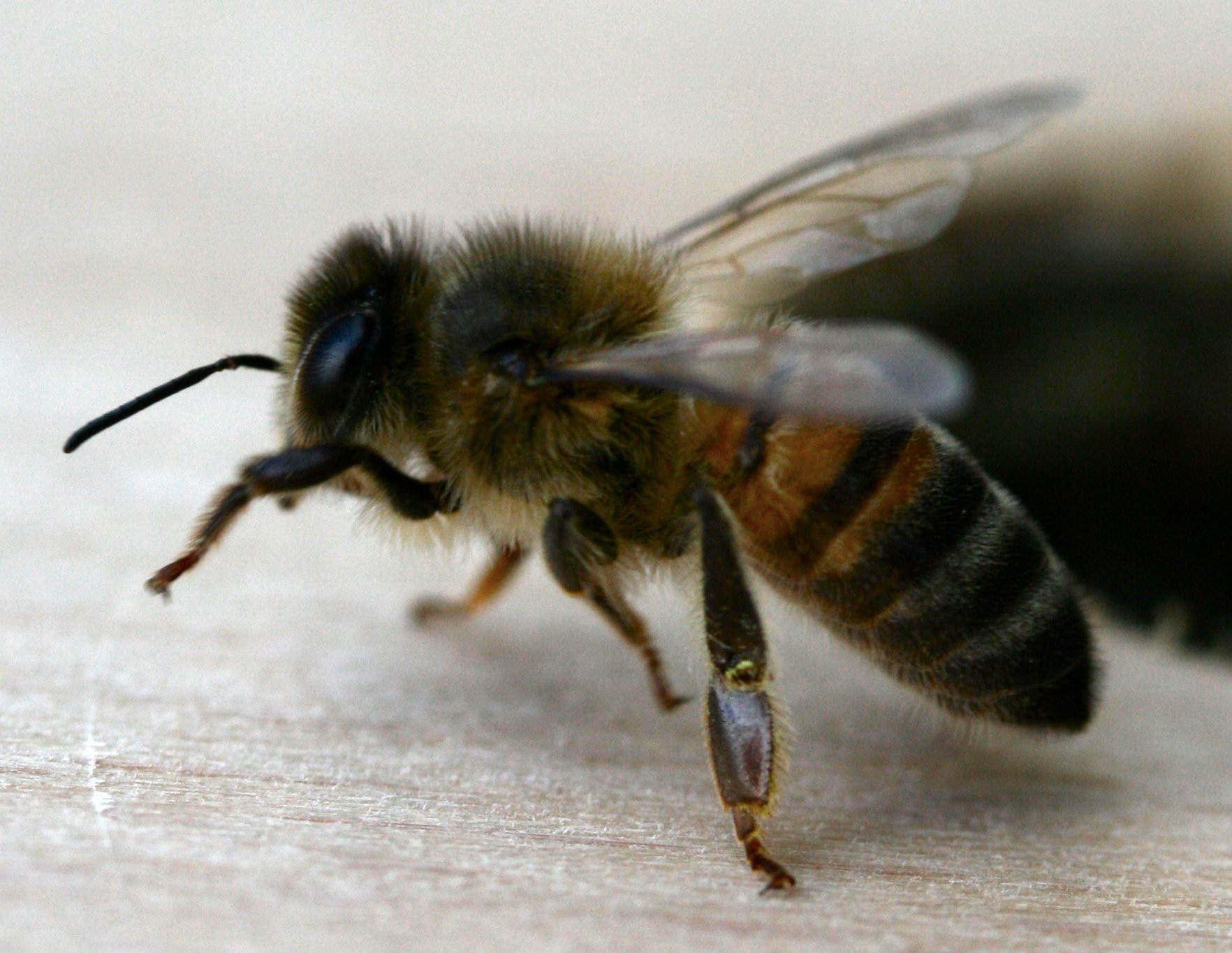
Honey bee
Yesterday I went on a pilgrimage to Ripon with my husband, in quest of bees. We (I say ‘we’ – he is the bee-keeper, the one who has acquired the considerable amount of scientific knowledge needed and has the requisite patience; I am the bee-keeper’s assistant, so can get by on more limited quantities of both and shirk my duties if I feel like it.) started keeping bees a number of years ago, with reasonable success. However, the terrible winter and very wet spring here took their toll and, like many beekeepers, we suffered losses.

Because, according to the press, some 80% of the nation’s bee colonies perished this winter, ‘supply and demand’ now dictates that the cost of a ‘nucleus’ colony is very high (up to £250) and it’s definitely a sellers’ market. Hobby beekeeping isn’t cheap anyway, with hives, frames and beekeeping paraphernalia. The equipment is, to me, like something designed by Heath Robinson or Rube Goldberg and I’m not surprised it’s pricey, given the frankly bizarre design of smokers, heated honey-capping knives, centrifugal honey extraction drums and solar wax melters; the few existing suppliers who have cornered the market definitely call the shots. Anyone thinking of starting up should throw those rose-tinted, back-to-nature, self-sufficiency specs away and go for crystal clear lenses. Then there are the bees themselves: they aren’t like kittens; they don’t come out to melt you with their charms when you are trying to decide whether to offer them a home and they don’t take kindly to being shipped by car and bumped around, before being hoiked out of one temporary home and bundled into another. Though some strains of bee, such as the Italian ‘ligustica’, are more gentle, bees tend to be ‘mongrels’ with very variable temperaments; sometimes a queen bee has genes with an attitude problem. So, though you might dream of summer days and drowsing in the garden sunshine, imagining yourself transported to the Mediterranean by the murmuring of the apiarian equivalent of the Italian soldiers in Captain Corelli’s Mandolin, the reality can be more like taking on the aliens in Independence Day or WWII kamikaze pilots, hell-bent on taking you out even at the cost of their own lives. Think high-pitched incoming whine and be prepared to take cover. Unhappy bees do not subscribe to the concept that assault and battery is a crime. They just do it.

However, for those of us who do love bees and have become used to their temperamental ways and needs, caution is the watchword, and we pulled the plug on the travelling box and retreated quickly to a very safe distance. They’ve settled in already. Apparently, they get their bearings by flying backwards the first time that they leave the hive, to note where they are as they look back on it. They are remarkable creatures: they’re incomplete individually, but together comprise what is known as a superorganism. Each worker has her own task to perform and this changes over time as she ages, becoming finally a nectar- and pollen-gathering ‘forager’. The male ‘drones’ have their moment of glory, flying with the virgin queen to enable her to mate with several of them, before dying a gloriously sexy death (genitalia ripped right out of them!), or never doing anything until they are kicked out by the workers in the autumn so that they don’t deplete precious food reserves over the winter. I’m not a feminist by any means, but I can think of a few men whose families would benefit from similar summary treatment!

Because of the way in which they organise their lives and collaborate, bees have cropped up in art and literature from earliest times. Ancient Egyptian hieroglyphics feature bees; the early Greek writers celebrated them in song and verse. In more recent times, Alexandra Kollontai used the bee colony as a metaphor for life and love in Russia in the aftermath of the 1917 revolution, in her masterpiece Love of Worker Bees.

Bees are a joyful trouble. If they’re successful, they swarm, and the bee-keeper, in hot pursuit, has to shin up trees or plunge into thickets, hanging on precariously with one hand as he tries to trap them in a traditional straw ‘skep’ or a cardboard box. (You notice I say ‘he’ – this is emphatically not this beekeeper’s assistant’s job – though I know that there are many very skilled female beekeepers.) They suffer from a parasite called varroa mite, on which war has to be waged all the time if the colony is to flourish. Bees eat unconscionable quantities of sugar syrup during the autumn and often yield only a few small jars of honey per hive in return, but the benefits of their wider gifts to agriculture and the environment are incalculably great.

And I have to admit, in spite of all those expenses and troubles, now that the garden is once again a-buzz with murmuring bees, it feels as if the summer has begun in earnest at last.

The spurs have it…

Chanticleer 1
Some creatures capture the human imagination more readily than others. Hares have always been magical, perhaps because of their singular behaviour during the spring, perhaps because of the magnificent way in which they will sit up on their hind legs in a field, catch a whiff or a glimpse of danger and bound away, leaping and weaving, ducking and taking advantage of cover and terrain, to throw any would-be pursuers off the scent; most mystical of all, the near-silent pair dance through a woodland glade, for once so mutually bonding that a standing human watcher is passed unnoticed. By comparison, the rabbit is streets behind in the enigma stakes. He shuffles and bobs about, waving his scut ineffectually and, as soon as he takes fright, scampers off with no pretence at dignity or even of making a measured retreat.

Domestic animals exercise similarly varying effects upon the fancy. I’ve never been close to horses, but I can see why people say that they’re noble. There’s a certain stolid majesty about cows as they stand grazing and gazing; pigs endear with their uncannily human-like squabbles. However, farmyard animals generally don’t bring with them the same depth of historical literary allusion, maybe because writers of earlier generations were more accustomed to draw their metaphors from the wild, maybe because we know that the cows and pigs and horses of, say, late mediaeval England bore only a generic resemblance to the ones that we see today. For at least the last two hundred years animal husbandry has involved the intensively selective breeding of farm animals in order to accentuate their most marketable and productive features: today’s cows and sheep are very different from those that feature in eighteenth century paintings; pigs are bred to yield less fatty meat as dietary preferences change. There’s also often a kind of placidity about the creatures found on the modern farm, as if they understand and have accepted that their purpose in life is to bend to the will of their human masters in return for plenty of good food.

Bulls are an exception, of course. I’ve known some very tricky bulls, especially those unpredictable Channel Islands fellows, only too ready to vent on unwary passers-by their frustration and bad tempers. When a bull catches your eye and rolls his own, stamps his hoof and tosses his head – or makes any of these movements – you know at once that discretion is the better part of valour and that, if there is no stile nearby, your best bet is to dive over the nearest hedge or barbed wire fence, a few nasty scratches being preferable to serious injury or death. Bulls in stalls can be even more irate and the escape routes more limited; during my youth, I knew of several Lincolnshire farmers who were gored by bulls in the byre, one of them fatally. The bull does not take kindly to having his masculinity compromised. Yet still they are domesticated, at least in the sense that they look nothing like their forbears.

One creature, however, that evokes for me all the mystery and romance, the pomp and pride as well as the murderousness, of the Middle Ages, is the cock. I’m well aware that chickens have also been subject to generations of selective breeding techniques designed to improve either the laying-power of the hens or the quality of meat for the pot; yet a proud cock, strutting among his hens, still seems to carry the primeval stamp of his ancient forefathers. He shakes his comb and wattles menacingly at impertinent human observers; he preens and poses in the midst of his harem, spurs sharp and threatening. He is a fighter; barbarously, his fighting instinct has been exploited by men until quite recent times. It is the cock who, through the ages, has serenaded the dawn and it is for this, above all else, that he has secured his pole position in the literary canon. From Aesop’s fighting cocks to the rooster after whose third crow Simon Peter betrayed Christ (unusually, all four Gospels agree about this), to Chaucer’s Chauntecleer to stories from other cultures, such as the generations-old Indian story of the cock and the hen, cocks have always crowed and have always been part of myth and fable, woven by talented narrators into great tall stories.

I met a particularly handsome Chanticleer yesterday, when visiting one of my oldest friends, who lives in Lancashire. I’ve taken his picture. Chaucer would have loved him.
Chanticleer 2

Cuculus canorus, a welcome criminal…

Cuculus canorus
This spring continues to be extraordinary. Yesterday evening, I was out walking the dog and had almost reached home again when I heard my first cuckoo of the year. In farming communities, it’s traditional to note down when this happens, so, to be precise, the time was 19.10 on May 30th 2013. I heard it again in the early hours of this morning, just as the dawn was breaking. (In the one day left of May, ‘he sings all day’!) Every year cuckoos come to call around the village, but this must be my latest first hearing in all the twenty years of my residence. I wonder if cuckoos are also behindhand because of the late spring and whether their June ‘changed tune’ (with an extra ‘cuk’) will be delayed until July?

Cuckoos are fascinating. The name itself, so precise in its onomatopoeic evocation of the call, is exotic. They are beautiful arboreal birds, shy of humans: I’ve seen them on only a few occasions, years apart. They’re pale grey in colour, with a gorgeous dark barred pale underbelly, and have a hawk-like flight and perching posture. What captured my imagination as a primary school child and still beguiles me is their anti-social behaviour. They are the vandals and parasites of the bird world, each one performing its own microcosmic act of ethnic cleansing. The females plant a single egg in the nest of a (usually) much smaller bird, such as a dunnock or a pipit; then, when the chick hatches, it dominates proceedings, diverting with a huge and gaping maw the host parents’ attention from their own offspring before turfing the latter, eggs and/or nestlings, out of the nest, thereby guaranteeing itself a monopoly on the food supply. What is strange is that the foster parents don’t seem to notice, instead running themselves ragged to feed a chick that soon grows to be much bigger than they are.

‘A cuckoo in the nest’ was an expression that I heard a lot when I was a child. It was used to describe someone – often male – whose self-indulgent behaviour and habits were spoiling things for the rest of the family or community: a heavy drinker or a work shirker, for example. It had various gradations of meaning: it was a bit like ‘fly in the ointment’, only more so; it also had overtones of the now over-used ‘the elephant in the room’ – although the latter saying implies that no-one is prepared to mention whatever it is that the elephant represents, which is not typical of forthright Lincolnshire folk. ‘Cuckoo’ is slang (particularly in America) for ‘crazy’, hence the title of the book and film ‘One Flew Over the Cuckoo’s Nest’; but in Lincolnshire dialect, someone saying ‘You’re a cuckoo’ (as opposed to ‘You’re cuckoo’), was paying you the compliment of calling you witty, or was amused by something that you’d just said. (A variant of this was ‘You’re a caution’.)

So, are cuckoos lovable or not? I think that they remain a puzzle: an enigmatic variant of Nature that has got by without obeying the rules. Like people who live by their wits, they expend a great deal of energy on not paying their way: energy that could equally well be expended on working within society instead of preying on it. Instead, once they’ve deposited their eggs – each female lays up to twelve – they swan off (so to speak!) to tropical Africa, where they spend nine months sunning themselves, the ornithological equivalent of the idle rich. I realise that I’m straying into dangerously anthropomorphic territory here, but it strikes me that the cuckoo is the Raffles of the bird world.

Cuckoos are fast declining in number and I am the more excited, therefore, when I hear their call; they are so traditionally part of an English spring that I hope we don’t lose them.

Every word stabs…

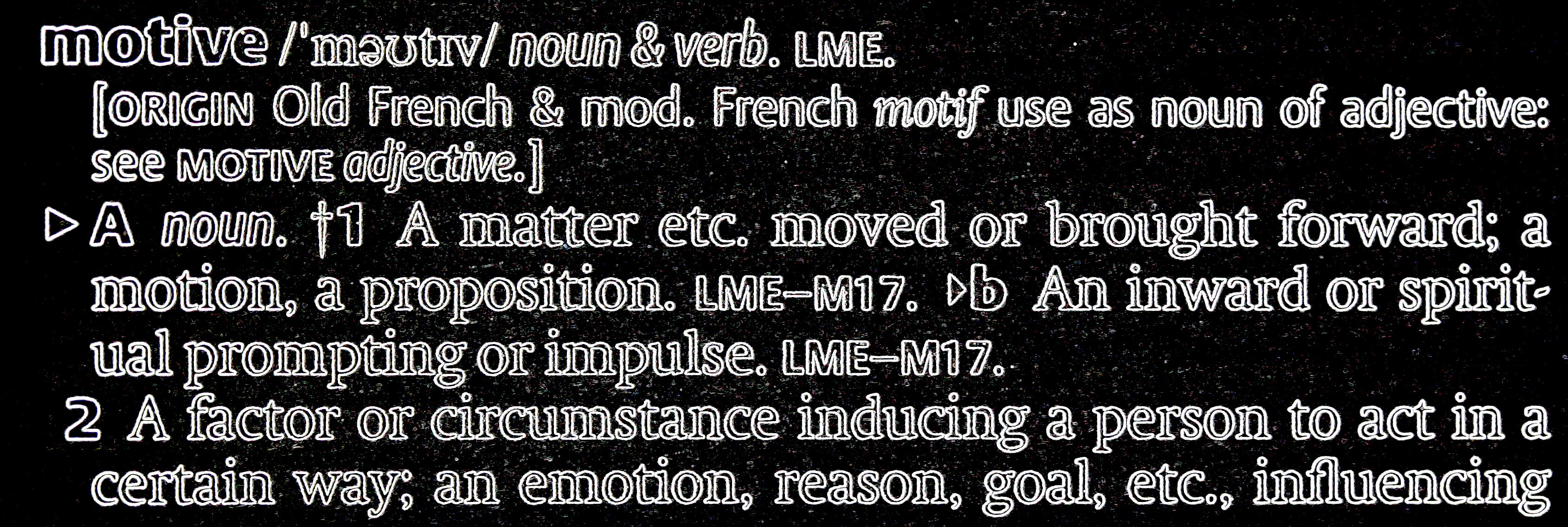
Motive
Motive is a fascinating part of murder, because it is bound up with the psychology of the killer. I find myself thinking of the motives that have driven people to dispose of others: resentment, hatred, envy, greed, retaliation, revenge, fear, anger… very human emotions that we all experience at one time or another, thankfully without fatalities. But what is it that pushes someone beyond the self-control that limits the majority? If we are to believe some crime fiction and the apparent evidence of real cases, there is sometimes the desire for fame, or notoriety, but this is perhaps very rare, if true at all.

Of course, investigators of murder cases think very closely indeed about motive, as that may well point to the perpetrator, or at least narrow down the possibilities: Who might have had a grudge? Who was close to the victim, by kin- or friendship? Who might have gained from the death?

These days, unfortunately, there are more frequently political motives for murder, when reason is overpowered by belief, and we might well gasp in astonishment that anyone could be fanatical enough to take a life in so public a way as last week in Woolwich. Most murderers seek anonymity.

It’s common to hear people say, “I’d kill for a… beer, a smoke, a cup of tea, a Mars Bar”, but the statement’s intentional hyperbole confirms its lack of seriousness. However, I have heard one person say, quite matter-of-factly and without any obvious intent to shock, that he could kill, full stop. Needless to say, I found his comment quite unnerving and, after considering the kind of person he seemed to be, not beyond the bounds of possibility. I have also turned the focus upon myself and asked myself if I could kill and, if yes, under what circumstances and with what motive? Crime of passion? Maternal defence of child? Revenge for abuse? Being for some reason or another at wits’ end? And if I were to commit murder, would I do it in a calculated way so as to minimise the risk of detection? Here I am, essentially a very pacific person, heading the way madness lies; however, as a crime writer, I do spend time on self-analysis, the better to understand the minds of my fictional characters.

Regular readers of this blog will see a link here with my recent rhubarb post, which of course was tongue-in-cheek stuff, and might now be determining never to cross my path. Fear not, whatever murderous intentions I have will be sated with words.

Don’t you love it when a book has personal resonance!

Stone Cradle

Stone Cradle is the second novel that I’ve read by Louise Doughty.  The first, Whatever You Love, was an entirely different kind of book: a contemporary novel about child bereavement.  Stone Cradle is a historical novel set in the Fens at the turn of the twentieth century, about a Traveller family.  I bought it both because I’m interested in the Lincolnshire of that period and because it resonates with me personally, for reasons that I shall explain later, but first I’d like to say that any writer who can produce two such completely different, yet equally compelling, novels ticks several boxes for me straight away.

Stone Cradle is in part about the bleakness of being a working-class woman living in a predominantly farming community of the period.  The story is told in the first person, alternately by a female Traveller, Clementina, and her daughter-in-law, Rose, a farmer’s adopted daughter who renounces the harsh life on the farm for the spurious glamour of running away to marry Clementina’s son, Elijah.  It is one of the poignant ironies of the book that, although they share a great deal in common (including the fact that Elijah is illegitimate and Rose herself the illegitimate daughter of a mother who, like Clementina, worked hard to keep her), she and Clementina detest each other from the moment that they first meet.  This is partly because they are rivals for Elijah’s affections, even though he is more often absent than present from their lives and both know that he is a ne’er-do-well, but even more because the norms and values of each are incomprehensible to the other.  The dual first-person narrative captures this cleverly and is the more accomplished for going over the same events twice, through the eyes of each, without being repetitive.  As someone who is experimenting with this technique at the moment, I know how difficult it is to pull off!

Rose persuades Elijah to live in a house in Cambridge (where Clementina presents herself as an uninvited guest and never moves out) for several years after their marriage, but Elijah’s fecklessness and their consequent poverty force them eventually to re-join the Travelling community.  Rose never fits in.  She dies twenty years before Clementina.  At the beginning of the novel, Elijah, himself now an old man, is shown burying his aged mother.  To save a few shillings, he has Rose’s grave opened and Clementina’s coffin laid on hers.  Had they known, both women would have been appalled; the act epitomises both Elijah’s insensitivity and the privation that has followed them throughout their lives.

Two further qualities make this novel exceptional: the brilliant way in which Louise Doughty captures what it was like to be a member of the nineteenth-century Travelling community and her depiction of the period itself.  The book has obviously been extensively researched, yet nowhere does the author parade her knowledge.  One of the reasons for my being more often than not equivocal about historical novels is that, unless the author is very skilled indeed, the reader is presented with an outside-looking-in narrative: in other words, the author’s fictional take on what s/he has gained from the history books.  Worse, this is sometimes accompanied by what I call the costume drama factor, i.e., a stereotypically ‘olde worlde’ way of making the characters think and speak, probably based on watching too many films.  It takes a very talented writer not to fall into these traps, but Louise Doughty is such a writer.

Now I come to the personal resonance bit.  In her acknowledgments, the author pays tribute to the Romany museum in Spalding (of which I was hitherto unaware) and the Boswell family.  She actually gives the most noble of the Romany families in the book the name ‘Boswell’.  It is another of the novel’s distinctions that the Traveller characters are not over-sentimentalised.  There are rough and feckless Travellers, as well as ‘good’ ones, just as there are good and bad ‘gorjers’ (non-Travellers) living in and around Cambridge.  The Boswell family was well-known in the Spalding of my youth.  Their patriarch, whose first name I don’t know, because he was always referred to as ‘Bozzie’, had ceased to travel and built up a profitable scrap-metal business just outside the town.  By the time I was born, he was reputed to be a millionaire and lived in a very nice house.  I went with my father to see him on several occasions.  In those days, I think that at least some of his family were still Travellers, and some may be still.  Louise Doughty seems to indicate, however, that there is still a permanent Boswell presence in Spalding and evidently the Boswells were the inspiration behind the museum.  I am determined to visit it next time I go to Spalding.

Something that I look forward to…

Crimewatch

It’s just occurred to me that it’s been a long time since the last Crimewatch programme, so I’ve looked it up on the BBC website and discovered that the next episode will be on Thursday.  Something to look forward to later in the week!  For visitors from overseas, this appeal programme features real unsolved crimes and asks for help from the public to pinpoint the perpetrators.

I’ve been a Crimewatch fan almost since it began.  In the early days, I was attending quite a demanding evening class and would rush home afterwards to see it.  I always missed the first twenty minutes or so, which made the remainder of the programme all the more enjoyable.  I don’t like the glitzier image of recent years as much as the more straightforward regime presided over by Nick Ross, but I still hate to miss it.  This week’s episode is on the rise of mobile phone thefts, apparently, which doesn’t sound riveting… but we shall see!

I haven’t often been bored by Crimewatch, but I do favour some of the regular sections over others.  I like the rogues’ gallery, because it’s fun to speculate and put the face to the crime – though I realise that such games are purely subjective, for one thing, and, for another, fail to take into account the fact that police mugshots, like passport photographs, are bound to look sinister, because the subject is forbidden to smile.  I’m always absorbed by the reconstructions, which tend to feature murder or rape.  Sometimes I wish I could call out to the victims, tell them not to take that shortcut or forget to lock their door.  Clips that I like least tend to feature CCTV footage of mindless violence – although I know that it is right to highlight this – or what can perhaps be best described as a dark sister of the Antiques Roadshow: the parade of artefacts discovered by police to be in the possession of criminals who can’t or won’t say how they came by them.  I know at first hand that theft is a foul crime: my house has been burgled twice and I’ve also (as you may have read here) had my purse stolen.  But somehow this collection of inanimate objects doesn’t engage the attention in the same way.  Clips that show those bereft of treasured items and asking for their return are a different matter; I can empathise with the victims completely.

Best of all, though, are the retrospectives.  Sometimes a whole programme is devoted to these.  If this programme is additional to the season’s schedule, that’s a bonus.  What’s so fascinating about the retrospectives is the way in which they provide step-by-step documentation of how the villains in a previously featured case have been caught.  (Understandably, crimes which Crimewatch itself has helped to solve are most frequently chosen.)  I’m not a police procedural writer, as my readers know, although this is a very palatable way of finding out how the police operate, but it’s the insight into the criminal mind offered by the retrospectives that really grabs me.  Sometimes the perpetrator has shown such Machiavellian cunning that I’m full of admiration for the police in outwitting him or her; sometimes s/he seems to have behaved in such a stupid or reckless way that it’s surprising that they weren’t apprehended immediately.

If you have access to British TV (I know that this doesn’t apply to everyone who will read this) and you haven’t seen Crimewatch before, I invite you to join me on Thursday evening, 30th May, BBC1 at 9 p.m.  If you are already a fan, I look forward to keeping you company!  Perhaps we can compare notes afterwards.

Ms James, in the dining room, with the rhubarb crumble…

Rhubarb crumble
I’ve spent a great deal of the bank holiday weekend cooking: two types of muffin, cheesecake, bread, meringues, fish pie, quiche and barbecue sauces, since you ask. And today, Sunday-style lunch for my guests before they depart, with rhubarb crumble.

I live just outside what is known as the ‘rhubarb triangle’, a smallish area near Wakefield in West Yorkshire famous for early ‘forced’ rhubarb. In Lincolnshire, too, rhubarb has always thrived. It seems to like cold, wet regions with severe winters. When I was growing up, every garden had a crown or two of rhubarb. The forced rhubarb industry uses heated, dark, forcing sheds to encourage the rhubarb plants to mature early and pickers have traditionally harvested the stalks by candlelight to preserve their sweetness; but generations of amateurs have employed the simpler method of planting it in a sheltered spot and placing an old tin bucket or a more picturesque terracotta bell over one of the crowns.

Rhubarb was a family staple; even though my mother detested it, she would cook it for everyone else. Her first job, in 1945, was quality control technician at the local canning factory, where rhubarb was processed in bulk. (It was war-time, and jobs were plentiful: I believe her main qualification for this was that her school leaving certificate said that she’d studied biology!) Years later she confessed that she’d never had known if there was something wrong with the rhubarb, because it all tasted poisonous to her. I think that it’s one of those foods, like Marmite and peanut butter, that you either adore or loathe.

I’ve always found it rather an enigmatic – fruit or vegetable? I’m not sure which it is. To me, there’s always been something rather mysterious and exotic about it. There’s even poetry in the names of many of the varieties: German Wine, Riverside Giant, Valentine, Sunrise.

One thing’s certain: you eat the stalks and not the leaves, which contain such poisons as oxalic acid. You’d have to eat a lot of very unpalatable leaves to die, however, though boiling the leaves with soda apparently increases their toxicity.

My imagination is caught: the means by which a murderer might do away with someone by serving up a tasty crumble, laced with pulped rhubarb leaves and soda. Ms. James, in the dining room, with neither rope nor lead piping in sight. 😉

O' Canada

Reflections on Canadian Culture From Below the Border

oliverstansfieldpoetry

A collection of free verse poetry.

Easy Michigan

Moving back home

Narrowboat Mum

Fun, Frugal and Floating somewhere in the country!

Maria Haskins

Writer & Translator

lucianacavallaro

Myths are more than stories

Murielle's Angel

A novel set on the Camino de Santiago

jennylloydwriter

Jenny Lloyd, Welsh author of the Megan Jones trilogy; social history, genealogy, Welsh social history, travel tales from Wales.

Chris Hill, Author

I'm Chris Hill - author of novels Song of the Sea God and The Pick-Up Artist

littlelise's journey

Sharing experiences of writing

unpublishedwriterblog

Just another WordPress.com site

Les Reveries de Rowena

Now I see the storm clouds in your waking eyes: the thunder , the wonder, and the young surprise - Langston Hughes

Diary of a Wimpy Writer

The story of a writer who didn't like to disturb.

Rebecca Bradley

Murder Down To A Tea

Helen Carey Books

Helen Carey Books