A woman at last, on my first visit and on the last night…
Proms 3
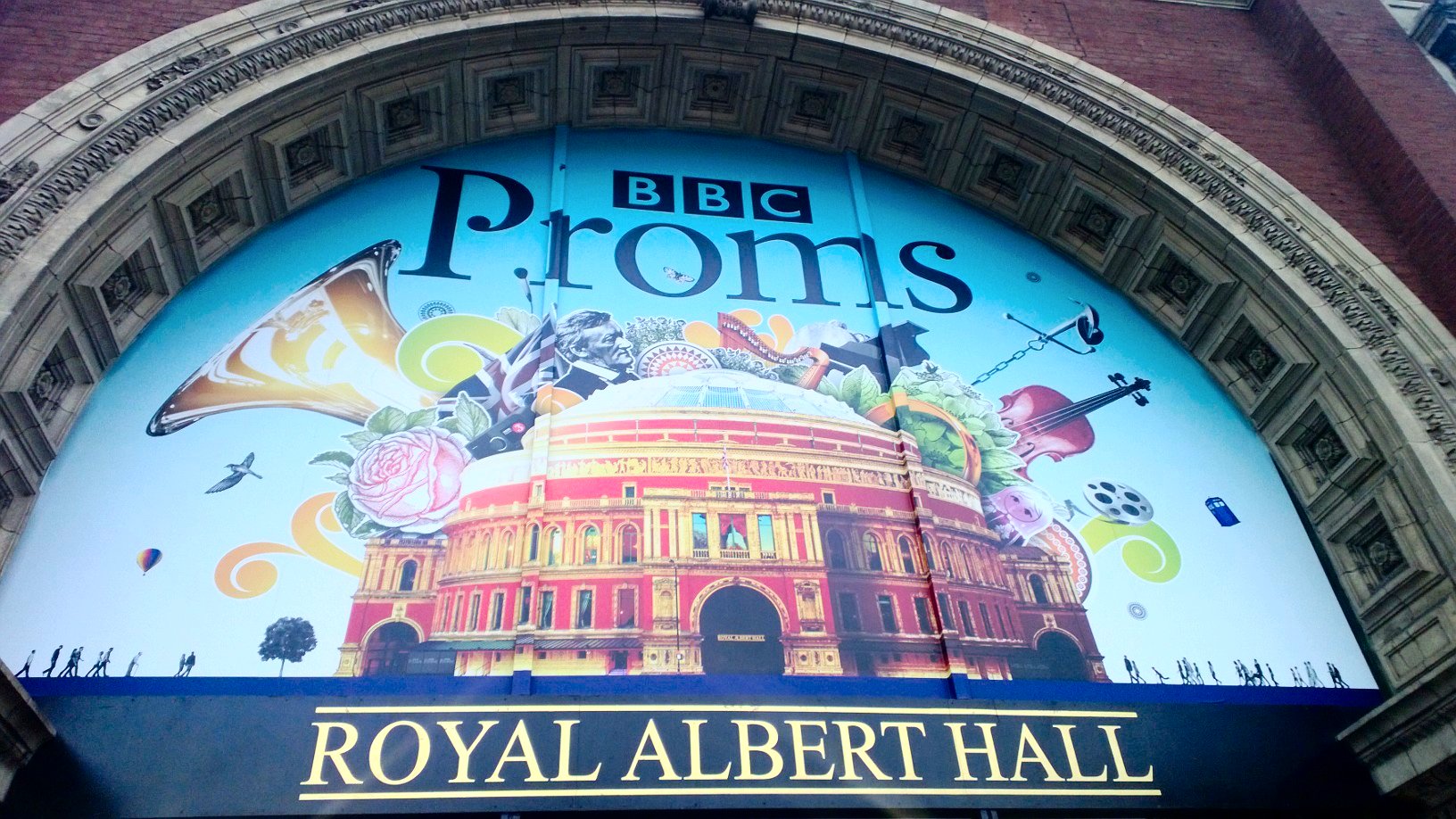
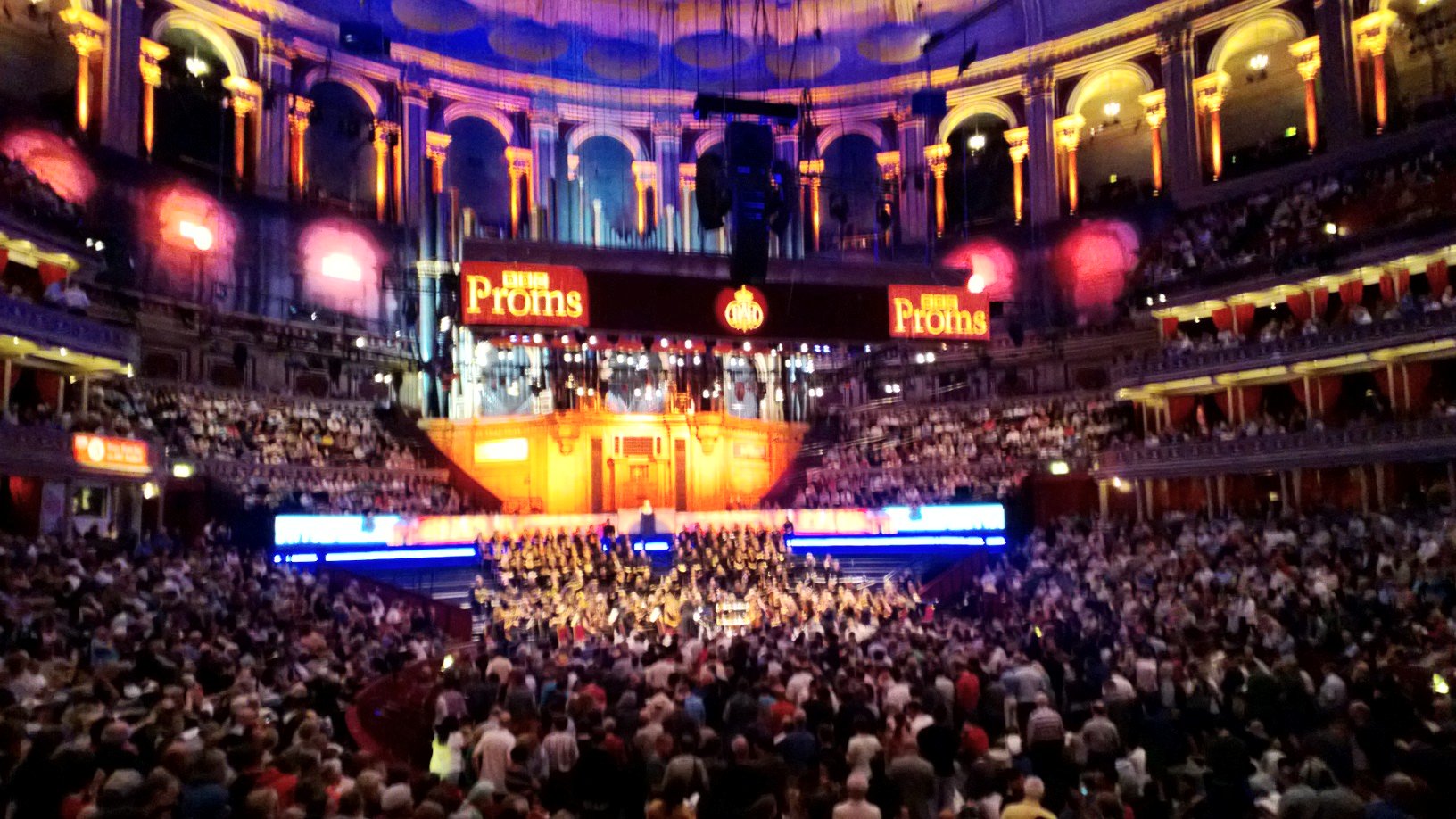
I meant to write about my first visit to the BBC Proms, on Saturday 17th August, shortly after it happened, but I mislaid my programme for a few days and then decided that I’d wait until I’d watched the televised version of the Last Night before posting this account.
The two events had in common that they were conducted by Marin Alsop, a female American conductor who is one of the very few women to have penetrated her almost imperviously masculine profession and the first woman ever to have conducted the Last Night of the Proms concert. She referred to this herself when she gave a short but eloquent speech after the Last Night performance, saying that when she told her parents at the age of nine that she wanted to be a conductor they always encouraged her and that her message to other young people, especially musicians, with ‘impossible’ aspirations was ‘Never give up.’
Almost inevitably, male reaction to her appointment ranged from the overtly hostile (the Russian conductor Vasily Petrenko called her a ‘cute girl’; since she is twenty years his senior, I can only conclude that he was suffering from a small prod from the green-eyed god) to the vaguely patronising (although it’s understandable that newspaper accounts emphasised the fact that she was the first woman, less commendable was innuendo from some of them that she was very good ‘for a woman’), compared with Alsop’s own business-like declaration that Sir Henry Wood would have felt that her selection as conductor demonstrated ‘natural progress to more inclusion in classical music.’
All I have to add to this is that she was brilliant. It’s an over-used adjective, but the only one that fits. She conducted both the concert that I attended (No. 47, which featured works by German composers Brahms and Schumann and was also distinguished by being performed by the Orchestra of the Age of Enlightenment, whose members use only genuine period instruments, and the Choir of the Enlightenment) and the Last Night with an energy, fluidity of movement and grace that was more evocative of the performance of a distinguished ballerina than that of a conductor. She obviously lived every note of the music with passion as it was played under her tutelage. It was clear, also, that the orchestra loved her, and she quickly struck a rapport with the audience, too. I particularly admired the way she greeted us, with her hand on her heart, and the understated clothes that she wore (sober tailored trouser suits with just a touch of colour). She was elegant without being flamboyant, a genius imbued with genuine modesty. She also had a sense of humour, and clearly enjoyed conducting Nigel Kennedy as he treated the Last Night audience to his rich repertoire of improvised and impeccably-timed virtuoso antics.
Finally realising my ambition of attending one of the Proms in person and making my first visit to the Royal Albert Hall was even better than I had anticipated. The Hall itself is a monument to Victorian hubris, yet it is impossible not to revel in its magnificence. Above all, it stands as the symbol of hope in an age of expansion and continues to represent the best of culture that civilised society has to offer. The famous portraits of Albert and Victoria in their youth which hang in the foyer have a lightness and optimism about them which would later be all but eclipsed in memory by his early death and her dour widowhood. The Albert Hall was a sumptuous place for those who could afford to go there, yet it was Sir Henry Wood’s dream to make classical music available to all and he certainly, at the Queen’s Hall, enabled a much wider stratum of society to enjoy the performances. This still obtains today: those who are prepared to risk disappointment and don’t mind standing throughout the performances can still pick up tickets at short notice for only a few pounds.
The tongue-in-cheek jingoism of the second half of the Last Night never ceases to delight me, though it becomes more anachronistic year by year (and, worryingly, some of the audience seem to embrace it without quite enough irony). That it has become a meeting of nations, whose flags swirl colourfully, is the ultimate irony. I particularly enjoyed all the solos by Joyce DiDonato. Apparently her costumes were by Vivienne Westwood, which strikes me as very appropriate. However, for my money, it was Marin Alsop herself who stole the show.
Over the road from the Royal Albert Hall stands the massive gilded statue of ‘Royal Albert’ himself. I’d never seen this before, and found it quite disturbing. There’s nothing playful or democratic about this. It’s a construction intended to awe and impress, a monument beyond ostentation that celebrates the British Empire and this scion of its imperial family and, much as if he belonged to some ancient Egyptian dynasty, implicitly raises him to the status of demi-god. Sir Henry Wood may have brought fine music to the petit-bourgeoisie of his day, but at the same time others were busy building and legitimising the British Empire, carefully both ignoring and concealing the fact that it was being constructed on the labours of a British industrial class that could barely afford to feed its children and dependent on the suppression of many other fine civilisations throughout the world. It is difficult to believe that this was happening only three or four generations ago, that Britain only began the long road to true democracy with the introduction of universal suffrage in 1918 and, yet more surprisingly, that it only ‘gave back’ most of its overseas colonies within living memory.
Proms 1

A short York walk

York Minster and scaffolders

York Minster and scaffolders

For the past two days, I’ve been attending a conference in York. I used to visit the city regularly when we lived in Leeds. It was a favourite place to take our son when he was young: we’ve been boating on the river there, visited the Jorvik Museum and the Railway Museum and, of course, explored the Minster. We’ve been to the pantomime and plays at the repertory theatre and we’ve always also enjoyed simply walking through the streets. In the summer, York is full of tourists; in the winter, there may be fewer, though still plenty, and there’s often a more local festive atmosphere: we’ve seen jugglers and fire-eaters performing in the shopping precinct in Stonegate, where there are also chestnut sellers when Christmas gets close. Some time ago, relatives of friends of ours lived in one of the houses in Stonegate and kept a shop there. They had to carry out some repair work and discovered that the foundations of their house included beams from an Anglo-Saxon tithe barn.
That’s the magic of York: it’s steeped in history. The people of York have handled their historical past magnificently, too. Old buildings have been repaired but not ‘restored’: there are several roofless ruins that have been tidied up but not renovated with the dubious help of ‘artist’s impressions’ of what they might have looked like in the past.
I don’t think that until Wednesday I’d visited York for the best part of ten years (apart from an ill-fated train journey home from London one Friday evening, when a signals problem meant that all trains North were diverted to York and I was dumped there in the middle of a very cold February evening, reliant on my husband’s driving more than thirty miles to pick me up – which it has to be said he did with a very bad grace, as if I’d personally invented a way of spoiling Friday night. A venial crime on his part, perhaps!). I didn’t have much spare time, but I was determined to spend at least an hour revisiting old haunts.
Reassuringly little has changed. I saw the obligatory crowd of American tourists – mainly ladies of a certain age (and size!) – who were listening avidly to their guide. I listened to her as well for a few minutes, as she told them about the Plantagenet royal family and its strong association with York. What she said was only approximately correct, but I suppose that wasn’t the point! She captured the mystery and glamour right enough. The Minster was swathed in scaffolding, as ever, as was the Dean Court Hotel that stands opposite it. I’ve stayed in that hotel and spoken there at past conferences. It’s a picturesque place, but its fabric seems to suffer from perennial crises! I walked as far as Bootham Bar and took a picture of a plaque that I’d not noticed before, dedicated to a Civil War Royalist, and another, in Monkgate, of the ornate entrance of St. Wilfrid’s, the Roman Catholic church.

Petergate plaque York

Petergate plaque York

St. Wilfrid's York

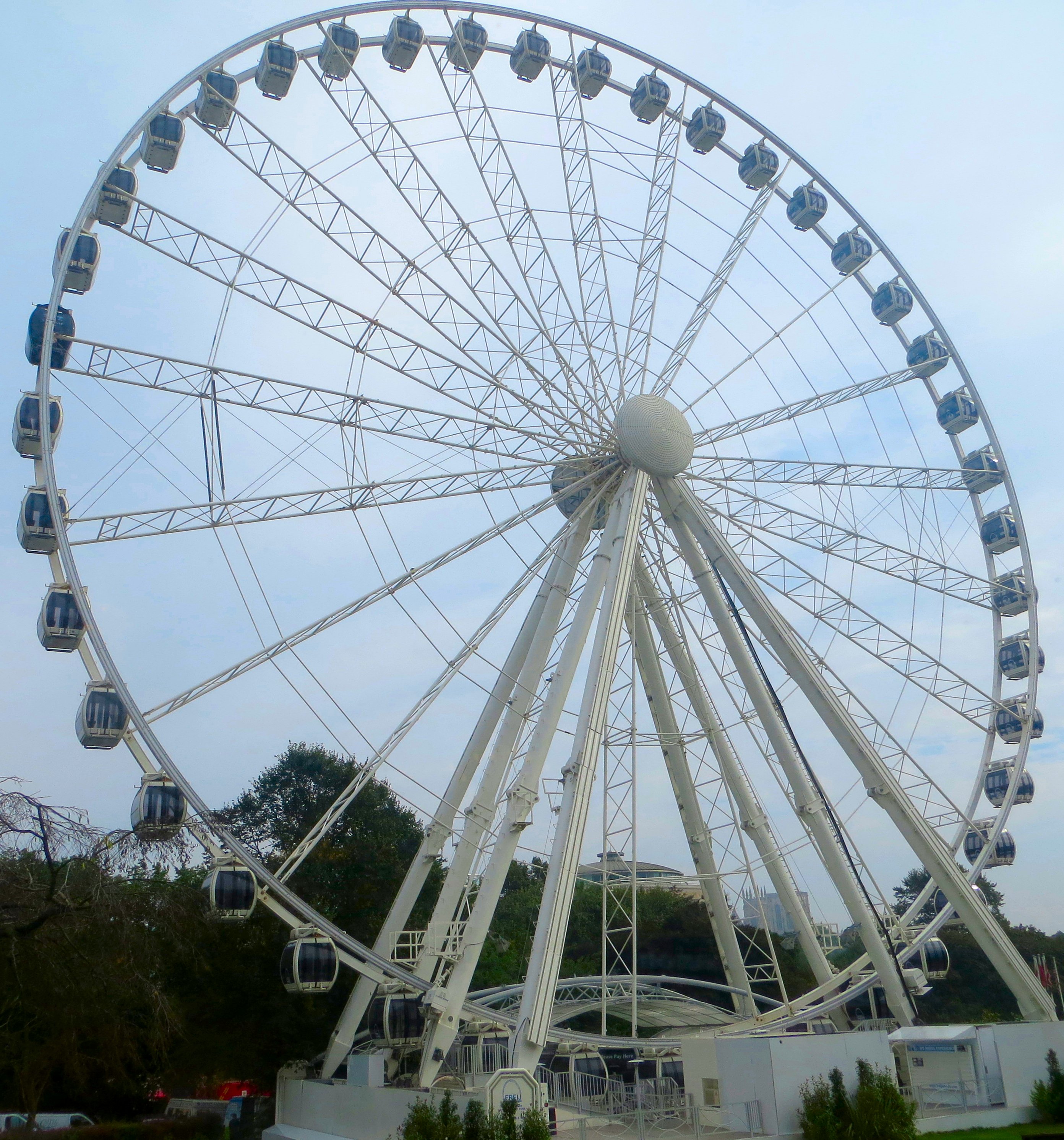
And so back to my hotel for more sessions about libraries (yesterday’s covered cataloguing, which is not the most exciting topic in the world, especially on the last perfect sunny day before the rain set in). The Royal Hotel stands adjacent to the station, so is very convenient for conferences. It is also right next to the only major innovation that I spotted during my short walk: a giant Ferris wheel, apparently named the ‘York Eye’ (I immediately thought, ‘pork pie’!). I scrutinised this from several angles, and decided that I wasn’t all that keen on it. Since the London Eye was erected to celebrate the Millennium, these wheels have become popular. I’m sure that they help the tourist industry, but I can’t help hoping that, like the Manchester Eye and the Birmingham Eye before it, this one will be a temporary installation. To me it was incongruous to see this monster looming over such an ancient city. There doesn’t seem to be much practical point to it, either. The argument for building these structures in other cities has been that they provide sightseers with a panoramic view: but in York this can be achieved simply by taking a turn on the wonderfully-preserved city walls.

York Eye

York Eye

Some reflections on my father-in-law…

Dad

Yesterday was my father-in-law’s birthday. If he were still alive, he would have been 103; he was already old enough to be a grandfather by the time his first child was born. My husband was the youngest of three boys, the first of whom was still-born. My parents-in-law had their children late because the Second World War intervened.

Already thirty, Dad volunteered for active service early in the war; because of his age, this was long before he would have been officially ‘called up’. In retrospect, it was a smart move: it meant that he ‘had a good war’ and, although he certainly found himself in some dangerous situations, he was not often in the forefront of the fighting. He elected to join the Coldstream Guards and was employed as the batman and driver of a brigadier who was also an aristocrat – someone whom the government wanted to keep out of harm’s way. Ironically, the brigadier was killed right at the end of the war, when the armoured car in which he was being driven to a strategy meeting in the field went over a Teller mine. By some fluke, he had taken a reserve driver with him on that day, so my father-in-law survived.

He didn’t talk much about the war or, indeed, about his own youth. I know that he was the eldest boy of a family of seven (he had one elder and two younger sisters, and a younger brother; two other siblings died in infancy). His father was a chicken farmer who was gassed in the First World War (like one of my own ancestors). I don’t know how long he survived after this, but he certainly didn’t work again. When Dad married my mother-in-law, he was still taking responsibility for his own family and continued to send his mother money regularly until she died.

He wasn’t bitter about the war, nor did he question the way it was run. He had a small fund of stories that he told, but he always related them in a matter-of-fact way, as if what happened was inevitable. For example, he was part of the second wave of D-Day landings. He said that he and his colleagues ran inland from the beach, saw a German tank ahead and ran back towards the sea again (discretion the better part etc.) – hardly the glorious unstoppable heroics celebrated long afterwards in books and films! (I remember noting the very gradual shift away from unrealistic, partisan and fictional representations of the war to a more balanced and gritty portrayal of its truths.) Soldiers were issued with cans of corned beef as emergency rations – the type that had a metal strip round its middle that you pulled to divide the can into two halves. He remembered that, when it was very hot, as soon as they pulled the can apart, the meat was covered with blowflies. But they ate it, anyway. As they worked their way up through France and the Netherlands towards Germany, one of the more amazing tasks that befell Dad was to dig daily a ‘foxhole’ in the ground for his superior; though the trench was a defensive measure, he would arrange a waterproof tarpaulin and fill it with warm water so that the brigadier could take a bath. Shades of Blackadder indeed! He also remembered the many corpses of bloated cows that littered the French countryside, dead because their owners had fled and no-one had been left to milk them. Always an enthusiastic but never obsessive gambler, Dad made modest but often successful bets on dog- and horse-racing, which still took place in various places along his route, and had to obtain permission from the brigadier to send his winnings home.

From my observation of my father-in-law and my own father and the fathers of my friends who were half a generation younger, I’d say that there was a great dividing line between those who fought in the war and those who didn’t. Dad belonged to a generation which dealt in absolutes. He believed in authority, hierarchies, decorum and The Queen. There was a way of doing things and he liked it to be observed. My husband relates that his father met him off the train after his first university term with: ‘That’s a very disgraceful pair of shoes that you’re wearing.’ He didn’t ‘get’ that his son didn’t value polished toe-caps. He always meant well, having a kindly heart, but wasn’t very attuned to the sensitivities of others. When I first met him, we drove to find him on the day’s estate shoot; at the time, I was not keen on any kind of meat, but, since he happened to be carrying a brace of duck, he thrust them into my hands as an intended kindly gesture! Later, when I revealed that I was scared of moths (a phobia that I’ve since conquered), he caught a large one and informed me: ‘Now I’m going to show you what a beautiful creature a moth is.’ When he discovered that I disliked Christmas pudding (an aversion to which I have remained constant), he lay back in his chair, shut his eyes in disgust, and announced: ‘Christmas wouldn’t be Christmas without Christmas pudding.’

It interests me, though, how people can be cut off from the era in which they live by an event that those younger than themselves cannot wholly relate to. Dad survived the war by more than forty years, but he never really belonged to the era that succeeded it, which, in this case, saw the children of retainers (like himself) to the landed classes develop through educational opportunity an independence that challenged the authority of the class system. I suspect that this has also been true of others who have lived in previous centuries through sudden seismic shifts of values: from the Civil War to the Restoration, for example, or from the Regency to the reign of Queen Victoria.

I haven’t talked to my husband about yesterday’s date, but I’m sure that it won’t have escaped his notice. His father was a more remote ‘father figure’ than fathers are today, but he was loved and respected and is still remembered; indeed, his last generous act, shortly before he died, when he was not really fit to drive, was to take his car and head off to a local orchard, in order to bring us back a whole box of Cox’s apples. He lived up to his own very high standards. They were just different from ours.

No crime here, at all, apart from some crafty behaviour!

Girls together in the paddock

Girls together in the paddock


Waiting for breakfast

Waiting for breakfast


Harriet

Harriet


Last week my husband and I were looking after the neighbours’ dogs – all twenty of them – for two shifts a day. This may sound like a lot of dogs, but in years gone by there have been more than twice as many. Let me explain. The neighbours used to be professional greyhound trainers. They’ve almost given this up now – they’re both approaching seventy – but they haven’t given up on the greyhounds. You may have read about how racing greyhounds are often maltreated by their owners: beaten, starved, abandoned or put down once they have become useless for the track. Well, our neighbours have always stood by their dogs and taken care of them until they die naturally, sometimes at a great age (in greyhound terms) because they are so well cared for. These dogs live in a greyhound hotel.
There are seventeen greyhounds left now (the other three of the twenty are house dogs), all residing in a converted turkey barn. All but four of them have a kennel each. Then there are two pairs sharing: Tiger and Kim, and Imogen and Bonnie, who are litter sisters. Looking after them takes the best part of the morning each day, starting at 06.30. It would take longer if there weren’t a strict routine which the dogs understand. Nevertheless, they love a rookie and miss no opportunity to get one over on you if they can. For example, Imogen and Bonnie are apt to dash out of their kennel when you go in to collect their food and water bowls, so it has an elaborate strap attached to the door, allowing you to hold the door to behind you while you’re in there. Both sat demurely on their beds watching me struggle with this contraption. If I hadn’t bothered with it, I’m sure they’d have slipped out to race around the barn.
My husband mucks out the kennels while I supervise the walks. First on the rota are three stately old gentlemen, Des, Laddie and Woody. They’re all black (which is why I haven’t taken their pictures: they don’t photograph well), apart from their now slightly grizzled noses. They walk out together, sedately. Unlike ‘the girls’ who come later, they don’t knit their leads into knots as we go round the paddock, twice. All the dogs wear muzzles, not because they’re dangerous to humans (they’re extremely affectionate), but because kennel dogs have a pack mentality and can’t be relied on not to gang up on each other. By the same token, several of them together would chase and kill a domestic dog if they got the chance. When I’m walking them I hope they won’t spot a pheasant; otherwise I know I’ll be flat on my face and they’ll be disappearing over the horizon!
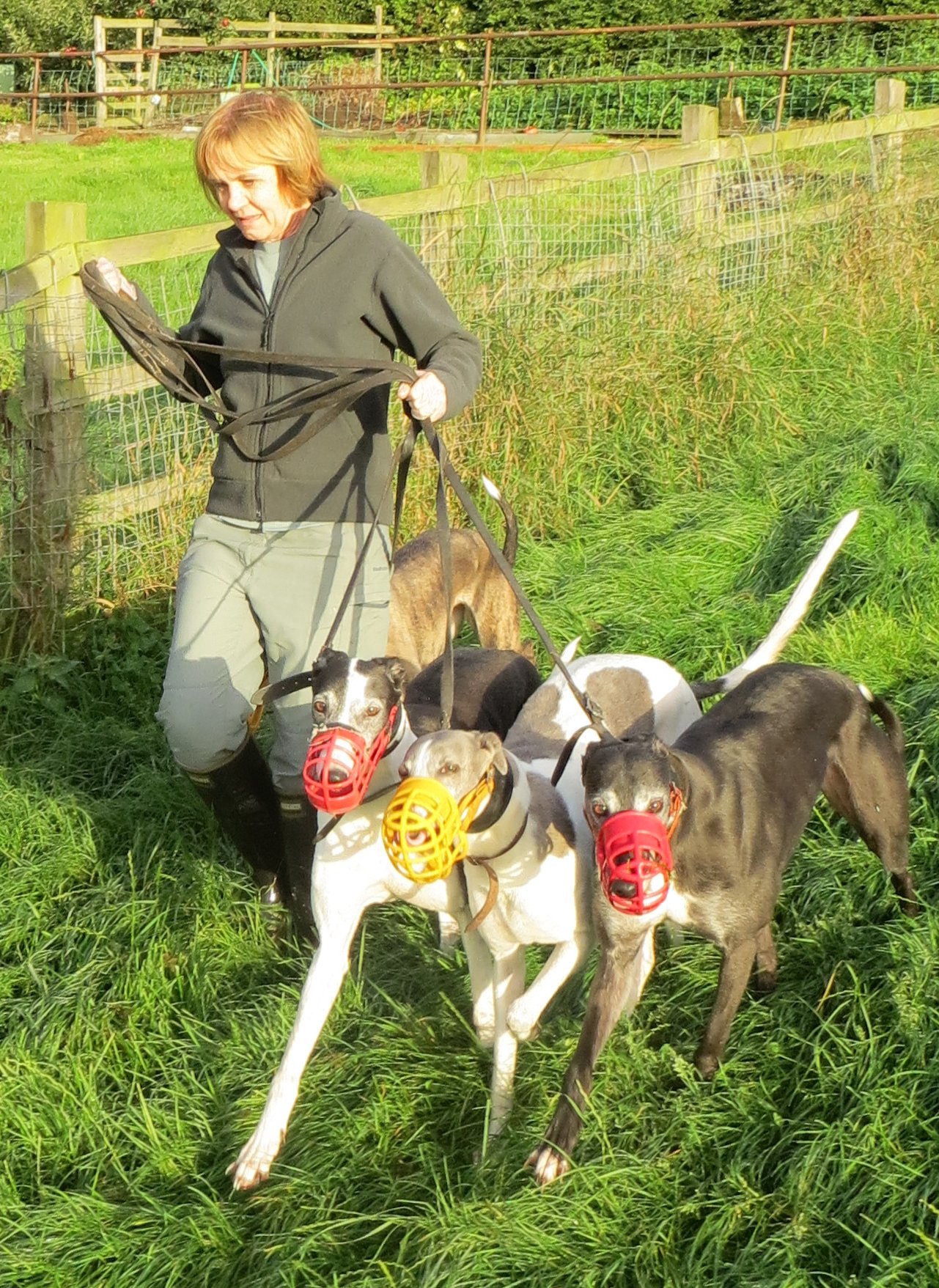
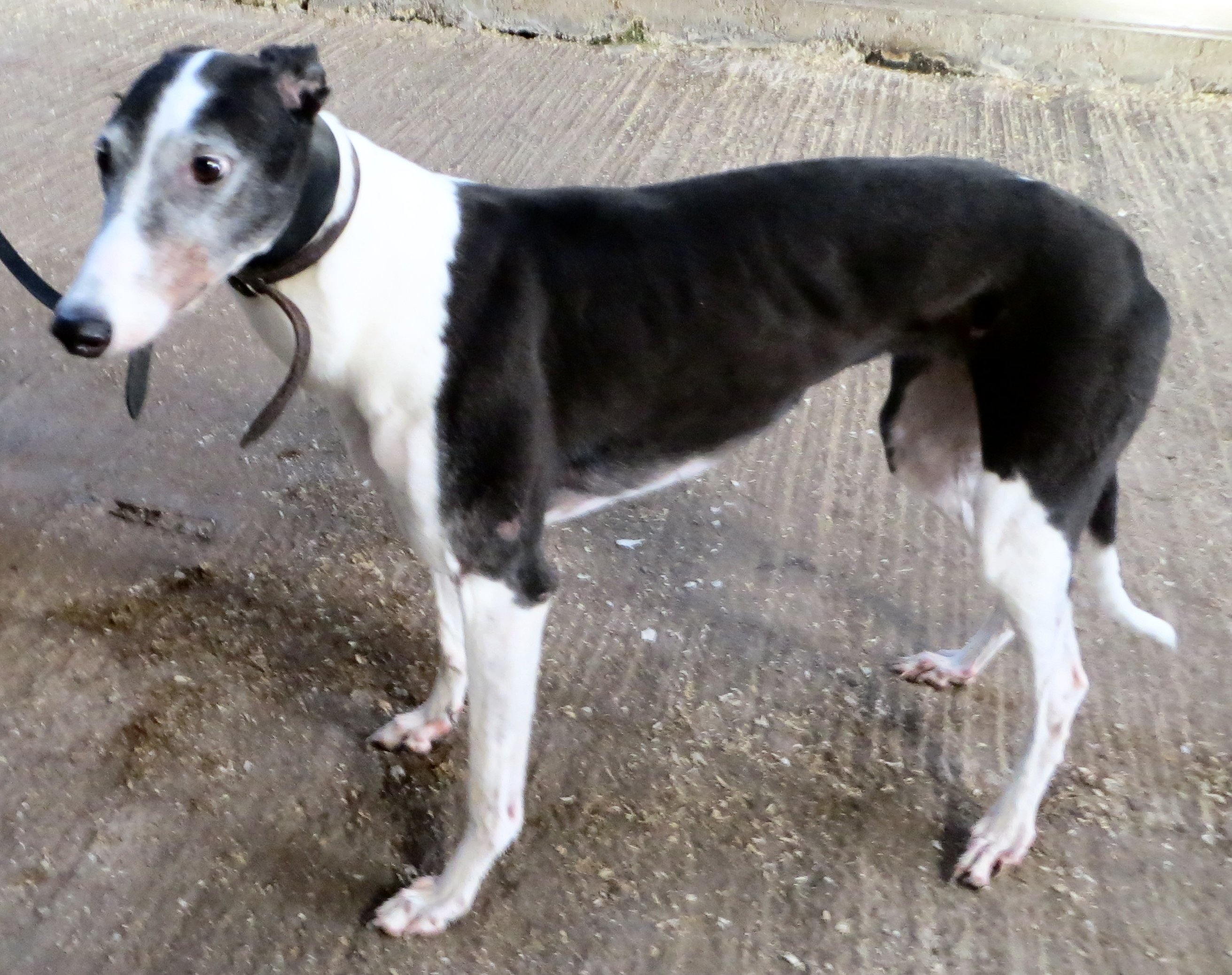
When we return, if the old boys’ kennels aren’t ready, their leads are hung on hooks while they wait. Usually they stand patiently, but on one occasion last week when the four girls – Imogen, Bonnie and Harriet, who are sisters, and Katie – were being prepared for their walk, they danced at the old boys and got them all worked up. I was worried that one might have a heart attack, like overly-titillated businessmen with weak hearts at a lap-dancing session. The girls are much younger than the other dogs – though youth is now a relative concept in the turkey barn. I’ve taken a picture of the girls, and one of Harriet (Hattie) on her own, because she’s my favourite.
Meantime, Charlie, cunning but quite decrepit, and Norman, fairly robust but not very bright, are released into the pen, an indoor exercise area, because they’re not up to going out. Charlie has always been a sickly dog and is usually on some kind of medication: last year just pills, this year a different kind of pill and an ointment rubbed between his toes every day. Charlie is a bit of a lead-swinger and sneaky with it. Because of his sore paws, he has to be led carefully out of his kennel and helped over the kerb on the pavement outside, but when he’s allowed back to eat he’ll take every chance to shoot slyly past me, with a sprightliness that defies expectation, sideways into Norman’s kennel so that he can consume both dogs’ breakfasts.
Finally, there’s the crew round the corner in a row of converted stables: eight dogs in late middle age who are allowed out for a romp round the paddock on their own: Tiger and Kim, Lottie and Pete, Walter and Minnie, Holly and Buster (this last a beautiful dog, a gentle giant who always comes for a cuddle, a prizewinner in his day). These dogs are considered too elderly to leap the fence of the paddock if a rabbit has the temerity to pass in the adjoining field: though I wouldn’t want to put it to the test, especially as they hurtle out at high speed for their temporary freedom!
Breakfast for the dogs is cereal and milk with an egg in it; their main meal, during the second shift, consists of biscuits, meat and gravy with a dollop of margarine. The gravy is a kind of everlasting stew, heated up daily in an old First World War field kitchen boiler. The barn is full of such useful relics: the scoop for the milk is a handle-less saucepan, and this year, as in previous years, I’ve had to hold my thumb over the holes where the handle used to be riveted as I fill it. The dishcloth is recycled from domestic use, and in ribbons. The food is stored in a series of old chest freezers, to deny the vermin.
After the dogs have had their main meal, bowls are collected and washed and the whole of the kennels settles down. There is no more whimpering, squealing, jumping up and down or barking, just a deep sense of peace: all needs met, all dues paid.
It’s exhausting work, but I still look forward to next year, albeit with a certain sadness that some of these dogs by then will be no more. There’s a blackboard in the kitchen in which the food is prepared: it carries an ancient message: ‘Hugo: if doesn’t lift his head and look at you, he doesn’t want his breakfast. Pedro: doesn’t like beef, chicken only.’ It’s an informal memorial to two departed friends (they were brothers) and simultaneously bears witness to the standards of quality maintained in this magnificent rest home for greyhounds.

Two scavengers in a truck?

Oh, and there's a green bin, too...

Oh, and there’s a green bin, too…

I live in a small village in the Pennines. It’s just in the lee of the Pennines, in fact: I used to say that it was ‘in the foothills’, until someone told me that I was making myself sound like Sherpa Tenzing. But I was right – these are foothills. Anyway, our house is served by an excellent local authority (very hot on value for money and citizens’ rights! It is in the People’s Republic of South Yorkshire, btw).
I’m mentioning all of this because the week started with a public holiday. Public holidays are fabulous (though if you work from home you hardly notice them), but in this village, as I guess in many towns and villages up and down the land, they cause a major anxiety: will the dustman (no, I’m not going to say ‘dustperson’) come on the same day as usual or not?
I have to say that our dustmen are usually excellent and although they may come late after a holiday, sometimes accompanied by relief workers, they try to stick to the correct date. But there is another, related, angst: will the bank holiday have caused the rubbish collection schedule to go awry?
For the past several years, collecting, storing and disposing of rubbish in this community has become, if not a fine art, then at least an activity requiring more patience and practical intelligence than I, for one, possess. I leave all this to my husband, who on Tuesday evenings may be observed standing outside engaged in earnest conversation with a knot of neighbours. All are keen to get it right – otherwise Armageddon may come lurching round the prettily carved millstone which heralds the start of the village, and the streets will be strewn with detritus.
I’m not the expert, as I’ve said, but I’ve worked out this much: We have four bins, which are blue, brown, grey and green… and a green box. The bins are for paper, glass/cans/plastic, garden rubbish and ‘domestic waste’ (I think that means everything else). The box pre-dated the bins, but I understand that it’s for bottles and cans (I am now reliably informed that it has been superseded by a bin, but passes muster as an overflow when the grown-up children come to stay) . Each household is issued with a rota. For groups of houses, there is a bin collection point, to which owners must trundle their ‘wheelies’ (rumbling characterises Tuesday evenings). One bin, the grey ‘domestic waste’ one, is emptied on alternate weeks; the three others and the plastic box in the intervening weeks. Woe betide anyone who puts out the wrong bin, puts the bins out in the wrong place, puts the wrong rubbish in any of the bins or fills a bin so full that it won’t close. The dustmen will then ignore them, refusing to empty them. Recalcitrant or exceptionally stupid householders might even be reported for fouling up the process!
The twenty-first century has debunked or devalued many occupations. Lawyers have lost their gloss and bankers are positive pariahs. Teachers and nurses are still respected by ordinary people, but continue to have scorn sprayed on them by the government. Jobs in high street retailing, always a young person’s industry, have been decimated by out-of-town shopping centres and semi-automated check-outs. It is with a mixture of irony and amusement, therefore, that I observe that the opening decades of this century have witnessed the rise and ever-upwards-rise of the dustman. Dustmen today are no longer Alfred Doolittles or Lonnie Donegan’s ‘My old man’. They are not shuffling, shifty or half-sharp. They are tough and businesslike, assiduous workers running a streamlined system, a system that is vital and in which they are all-powerful. These dustmen are not the bent-over, bandy-legged figures of my youth. They are tall, strong men*, rather smartly dressed in their donkey jackets, uniform overalls and fluorescent gilets, all sporting safety boots and brightly-coloured industrial rubber gloves. Anger one of these dustmen at your peril.
It is a supreme example of social justice at work. Having been a bookseller, which I admit is a privileged career, certainly at what is known as the ‘high end’ of retailing, I’ve often reflected how much we undervalue those who perform the services that make our daily lives run smoothly. Waiters and waitresses have always been near the top of my list of the under-appreciated, because, as a student, I worked as a waitress (also as a chambermaid, which was close to being a slave, in a posh hotel). I’ve no first-hand knowledge of emptying bins (a job at which I’m sure I would be very bad), but I do know that, for at least a century, dustmen were practically the British equivalent of untouchables. How magnificent that they have turned the tables now! More power to their elbow! May their spirits ever increase!
Perhaps by the middle of this century, when we’re told that most of us will be living in cities and have to find new ways of working together with less personal space, dustmen will have climbed much further up the ladder-rungs of the career hierarchy. As university degrees become more devalued and more bright young people choose apprenticeships or go straight from school to manual work, perhaps ‘You might consider being a dustman…’ will be one of the options offered from the career adviser’s portfolio. And, rather as in Eastern Europe over the past fifty years, perhaps some of our greatest future authors will have supported their early writing years by emptying dustbins.
I feel inclined to refer readers of this post to Lawrence Ferlinghetti’s wonderful poem, ‘Two Scavengers In A Truck, Two Beautiful People In A Mercedes’, which just about sums up my feelings. Sometimes it’s great to be grungy ‘in the high seas of this democracy’!

[*In July, in Germany, I watched a refuse collection team; it included an immaculately groomed young woman, who engaged in all the tasks and in the banter.  I have yet to see a dustbinwoman in this country; even though there may be some, they are a rarity.  I blame the grunge ceiling.]

A fiendishly clever murder story… and much more!

The Saint Zita Society

I’ve been a Ruth Rendell fan for a very long time; in fact, since before she was famous.  I remember a conversation that I had with the Hutchinson rep (a delightful man called Frank Storey, who was then on the verge of retirement) when I was the purchasing manager for a library supply company in the early 1980s; I enthused about The Master of the Moor.  Frank had given me a proof copy of the novel on his previous visit.  I told him that I thought Rendell had huge possibilities, especially for the library market; he said that Hutchinson was committed to her, but that sales were still disappointing.

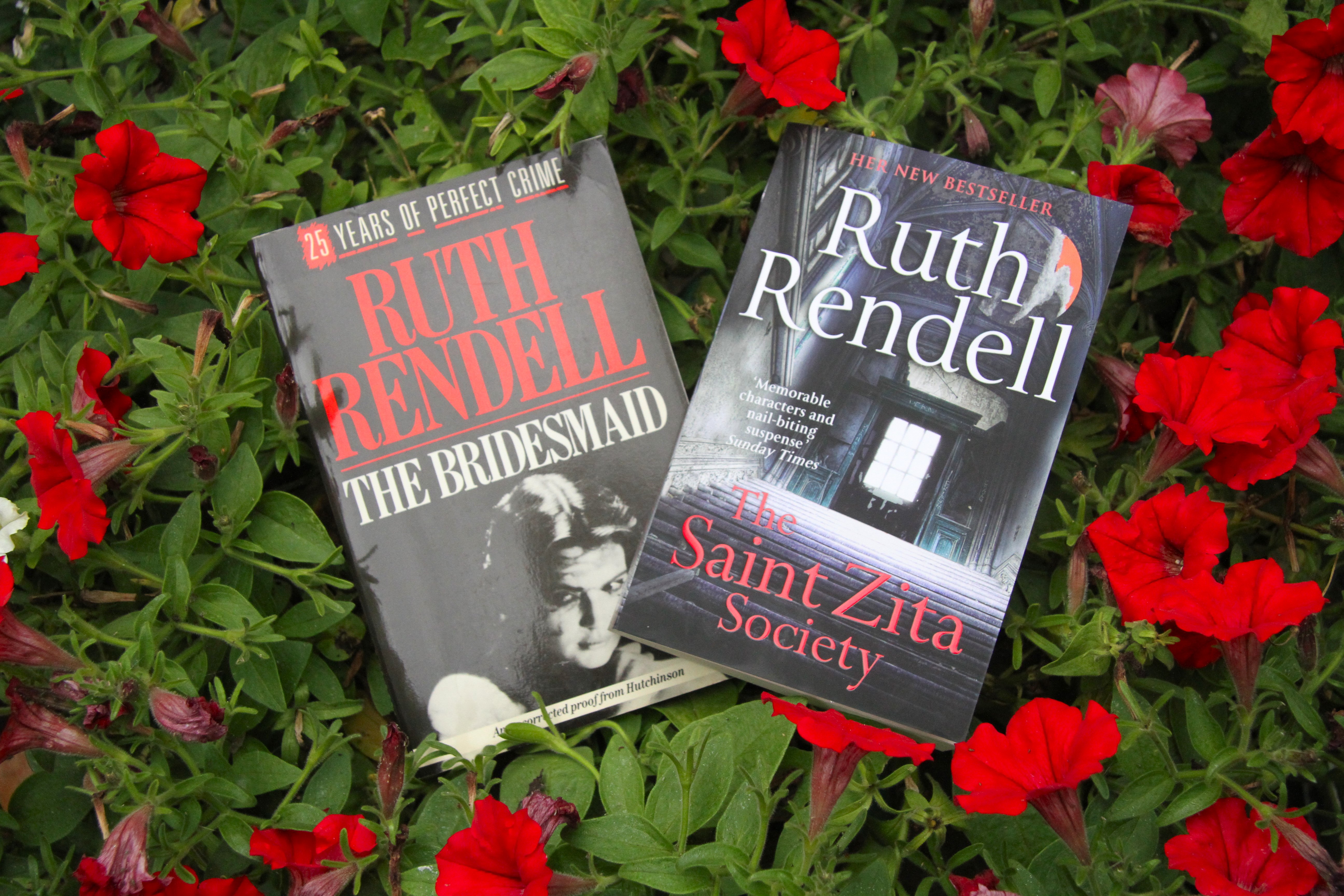
They must have improved dramatically soon afterwards.  I no longer have the proof of The Master of the Moor (nor several other Rendell proofs that have passed through my hands, probably because I gave them to librarians), but I’ve just taken down from my bookshelf a proof of The Bridesmaid (published in 1989) and see that on the title page is inscribed ‘No 413 in a limited edition of 500’.  I think that it’s safe to assume that an author who can prompt her publisher to pay for a proof-copy print run of 500 and then take the trouble to number each volume has arrived!  In the intervening years, I’ve continued to read Ruth Rendell and also enjoy (perhaps even prefer) the psychological thrillers she writes as Barbara Vine.

Opening The Saint Zita Society, her latest book, at its title page, I see that Rendell’s been loyal to Hutchinson and Arrow, both now Random House imprints.  I’ve just completed this novel; it has been a fascinating read.  It’s about the owners of the houses in a well-heeled street in London, Hexham Place, and (especially) their servants.  (Saint Zita, apparently, is the patron saint of servants.)  One of the key characters in the novel, June, is that fictional stereotype, the elderly female retainer.  She’s worked loyally for her employer (a sort of fake princess) for more than sixty years.  June is one of the prime movers in the Saint Zita Society, which the servants of Hexham Place decide to set up as the vehicle of a collaborative effort to improve their lives.  I’m certain that the portrayal of June is deliberately hackneyed, because the other servants in the novel are anything but stereotypes.  They range from the exotically-named Montserrat, who is supposed to be an au pair but never seems to do any work, to the mentally challenged and rather sinister Dex, a jobbing gardener who takes instructions from a deity called Peach who lives in his mobile phone.  Dex has served time in an institution for the criminally insane for attempting to murder his mother. Rendell has always excelled at black humour and the scenes featuring Dex are some of her best.  Then there is Thea, who insists that she is not a servant, yet nevertheless acts in that capacity (unofficially and unpaid) to her landlords, a gay couple.  Thea is a professional doormat.  Even though she knows that people are making use of her, she can’t say no and thus ends up romantically entangled with Jimmy, the chauffeur of an eminent academic who is soft on his servants – and incidentally responsible for introducing Dex into the community – because he started life in humble circumstances.  It is another of the novel’s delights that the many gradations of snobbery pertaining in Hexham Place are captured to a ‘t’. My favourite character is the beautiful and tragic nanny, Rabia, a Muslim woman whose children and husband are all dead because of a genetic disorder perpetuated through intermarrying.  Her father wishes her to give up her post and return home so that another marriage can be arranged for her with a certain Mr Iqbal.  Iqbal himself is a nurseryman whose work brings him several times to Hexham Place.

If all of this is beginning to sound more like a comedy of manners than a modern crime novel, it means I have managed to capture some small part of its essence.  Hexham Place and the characters who frequent it – despite their wholeheartedly embracing the paraphernalia of twenty-first century life, including  Smartphones, satnavs and civil partnerships – do not really belong to a particular time or place.  There is an elegiac quality to The Saint Zita Society and a timelessness that puts me in mind of the later works of another female writer whom I greatly admire: Muriel Spark.  Rendell’s novel has much in common with Spark’s The Finishing School (2005), another work that takes a traditional subject – in this instance life in a girls’ boarding school, instead of Rendell’s tale of servants – and whisks it to a higher plane.  Neither of these books is really about the everyday situations with which they purport to deal.  Both are timeless studies of humanity itself.  There is, however, an additional twist to The Saint Zita Society, because although it deserves to take its place alongside some of the greatest human comedies in the language, it is also, as the reader expects from Rendell and then almost forgets, a crime novel.  Among its many other qualities, The Saint Zita Society is a fiendishly clever murder story.

On the road to self-sufficiency and thrift…

Stocked up...

Since returning from my holiday at the end of July, I’ve spent a considerable portion of my time freezing fruit and vegetables.  My husband has been growing produce for several years, a neighbour having generously allowed him to fence off part of a paddock for the purpose.  This year is the first year that we’ve had a glut, so, in the interests of both quality of life and thrift (quickly skating over the cost of a new freezer and pasteuriser and their running costs!), I’ve taken up food preservation on an almost industrial scale.  I wasn’t going to mention this, as I thought it might bore you, but now I am, since today’s newspaper contains half a page of tips from the wife of the new Governor of the Bank of England on how to avoid spending too much on pencils, folders and pencil cases when preparing for ‘back-to-school’ (she recycles everything: I’d have hated her if she’d been my mother, as I loved buying stationery at the start of a new term, the more colourful and expensive, the better; besides, imagine her embarrassment if one of her kids were to flaunt a pencil with ’10 Downing Street’ inscribed on it! I recommend that she visits Poundland – of which more anon).

So, here are my top five dos and don’ts for successful freezing.  I’ve included some advice on harvesting the crop as well – think Nigella Lawson (I wish!) with a touch of Alan Titchmarsh.

DON’TS

  • If you have to pass beehives on your way to your vegetable garden, DON’T walk across the front of the hive.  This will annoy the bees, particularly if your favourite colour is blue and you are wearing blue clothes, which to a bee is (pardon the simile) like a red rag to a bull.  Instead, walk round the back of the hive, even if this means bumping your head on the low-hanging branches of any apple trees that might just be growing there.  (In the good life, experience is everything.)
  • If a horse should put its head over the fence that separates your garden from the paddock, DON’T offer it a handful of whatever it is you’re harvesting, however much it appreciates your friendship.  If you do, next time you look round, you’ll find four or five horses, all of which seem to have the necks of giraffes and the effrontery of Barbary macaques.
  • DON’T allow marauders into the kitchen to steal handfuls of the raw peas or fruit that you’ve harvested and prepared.  Bolt the door and make them go out and pick their own.
  • DON’T bother to blanch peas.  They’re fine placed straight into the containers from the pod and you can munch them as you work – after all, you picked and shelled them.  (But you will have to blanch beans, otherwise they turn brown).
  • It’s a good idea to chill the water that you plunge vegetables into after having boiled them for one minute to blanch; but DON’T do this by adding ice cubes.  It is sossy, inevitably causes you to skim across the kitchen on the one that got away and requires a new batch of ice cubes for each lot.  Instead, place a freezer brick in the water.  My mother-in-law, who never did culinary tasks by halves, once gave me one only slightly smaller than Sisyphus’s rock; but two ordinary ones will do the job.

DOS

  • DO use small plastic boxes (rather than bags) in the freezer.  They stack better and protect the contents.  Recycled Chinese takeaway cartons are excellent (although on no account allow this as an excuse for increased male consumption of chop suey).  My rather poncy local supermarket sells boxes at £2 for eight.  I bought up all its stock (three packs of eight) and, in desperate need for more, for the first time entered Poundland’s less portentous portals, where I found similar packs of eight costing what it says on the shop.  While there, I also bought a book that I’d been looking for about British colonial Africa, which is probably the most unlikely literary find I’ve ever made!  Poundland rules, OK?  But never let it be said that Christina is cheap, like Maureen 118 212.
  • If you think ahead and buy ice cream to accompany your defrosted fruit, DO conceal the tubs behind items unlikely to appeal to the male psyche – e.g., ‘cubed beetroot for borscht’.  Understand that this may not be a sufficient deterrent: the tubs may also need booby-trapping.
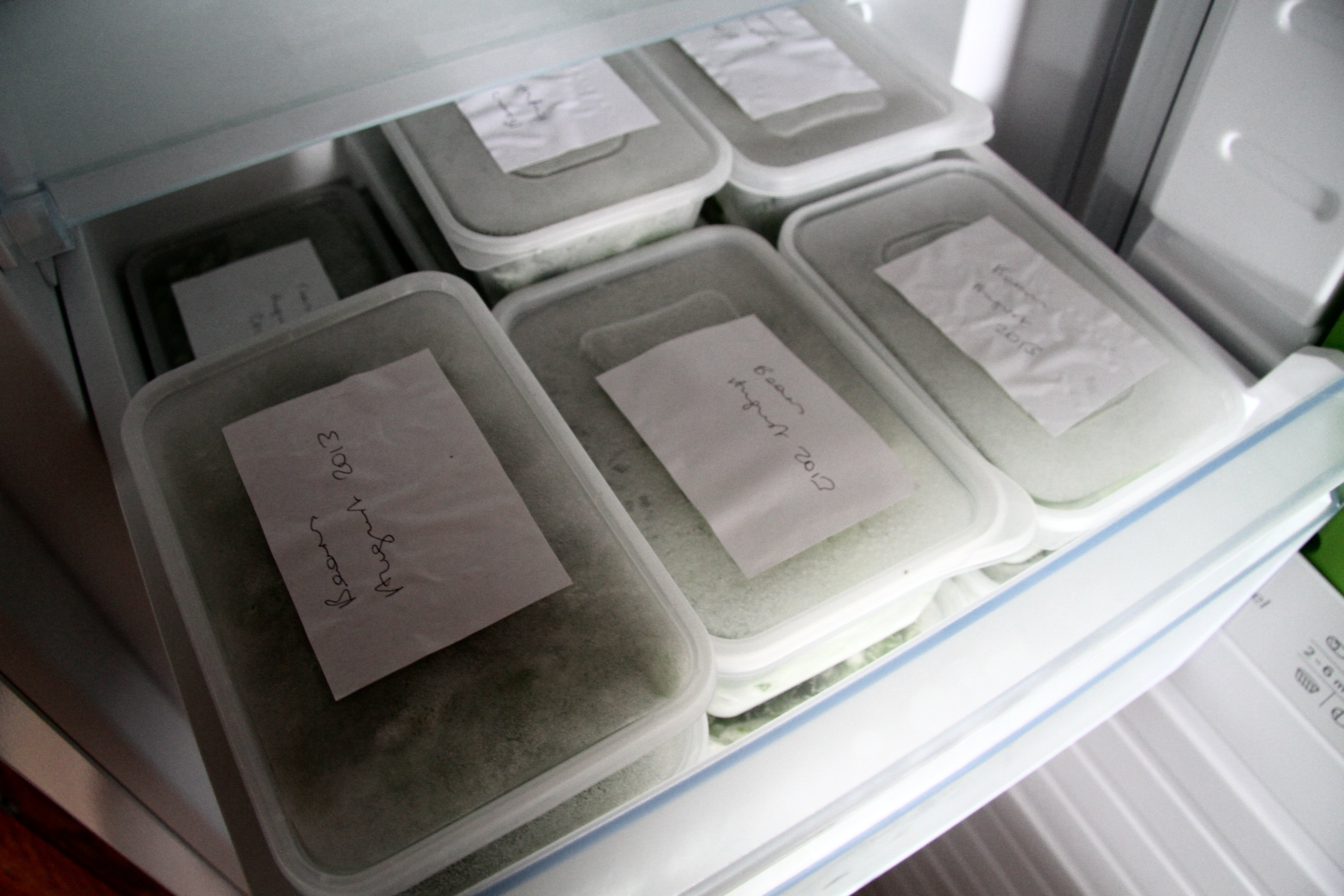
  • DO label the boxes with the date and note of the contents – though there is no need to go overboard.  Mine say ‘Peas, July 2013’ or ‘Beans, August 2013’.  It is a mistake to convert labelling into an art form: “White Lady, sliced.  Harvested 6th August at 06.00 on a dewy morning, sun just peeping through.  Blanched and chilled between 10.10 and 10.20 hours.  Put to freeze at 10.30 hours.  Twelve ounces: serves four.”  Apart from the time that it takes, it will turn you into a freezer nerd.  And no, I don’t harvest beans at 06.00.
  • DO fill the freezer pretty much to capacity if you can.  I can’t prove this personally, but all the electricity companies say that this cuts down on fuel consumption (and who would doubt their integrity?).
  • DO remember how much stuff you’ve got in there, especially when you’re shopping for fruit and vegetables in the winter.  You don’t want next summer to come round and find that you’re still eating last year’s produce, having in the meantime absent-mindedly spent a fortune and incurred thousands of airmiles on asparagus from Peru.

Finally, I have one tip that can be either a DO or a DON’T, depending on your point of view:

If you want to pick and freeze blackberries, you may choose to ask your husband to accompany you, as he will probably know all the best places, can reach higher and further into the brambles than you can, and may be impervious to their thorns.  However, be aware that he may also be paranoid about other blackberry pickers discovering his favourite spots, especially if these are close by a road.  He may therefore expect you to squat down behind the brambles every time a car passes by, in order to avoid drawing attention to your blackberrying activities, which is not only murder on the knees, but will convince your dog and other dog-walkers and their dogs that you are mad.  The choice is yours.

I hope that this has been useful… and at least as interesting as pencils.  Happy freezing!

Disclaimer: All characters in this post are fictitious.  No husbands or mothers-in-law have been harmed in the freezing process.  (Though chest freezers do lend themselves to…  no, I won’t go there.)

This story never loses its allure…

Richard III and the Murder in the Tower

I’ve written before about my interest in the Wars of the Roses and Richard III.  The whole nation’s awareness of this monarch and his deeds was triggered earlier this year by the discovery of his skeleton in a car park in Leicester.

As a result of both this and the television series The White Queen, based on several novels written about the Wars of the Roses by Philippa Gregory, I’m sure that both historical and fictional accounts of Richard’s reign must be achieving buoyant bookshop sales at present.  If so, it’s a bandwagon that I was happy to jump on myself when I visited Blackwell’s Broad Street last week, by buying a book that I’d not encountered before, Richard III and the Murder in the Tower.

The topic, of course, is a familiar one.  This book, which was published in 2009, is yet another enquiry into the fate of the princes in the tower, Edward IV’s two sons Edward, Prince of Wales, and Richard, Duke of York.  Unlike many of its predecessors, however, it is a scholarly and very balanced account which, whilst not attempting to provide a definitive answer to the question of who killed the two princes (and indeed whether they were killed), presents all the facts that are known about the events leading up to their disappearance and sets down the possibilities of what could have happened to them.

The author, Professor Peter Hancock, is an American academic, which may be the reason why he is able to tell his story with such dispassionate flair.  It’s a curious fact that most English people who are interested in this story become heated partisans of either Richard III or Henry VII; I’ve noticed that the same phenomenon applies to discussions about the next English civil war that was to take place in the middle of the seventeenth century, one that was arguably even more bloody and brutal than the dynastic fight to the death between the houses of York and Lancaster.  On some topics, English people have a reputation for showing undemonstrativeness to the point of being phlegmatic, but many are fiercely curious about their own past and correspondingly committed to allegiances to historical characters who may or may not have been supported by those of their ancestors who actually knew these people.  (From what I know of my own antecedents, for example, I’m pretty convinced that they were Cromwellians, not Royalists, though I should have preferred them to have been the latter.)

To return to Professor Hancock, he has painstakingly examined all the available documents relating to the reigns of Edward IV, Richard III and Henry VII and, although he has not turned up much new material, his keen eye for detail and astute interpretation of the facts have resulted in some very plausible alternative accounts of what may have actually happened.  I won’t say what these are, for obvious reasons.  He also encourages readers to consider the actions of the protagonists from the point of view of their contemporaries and the mores that prevailed at the time, rather than through the filter of what we now consider to be acceptable civilised behaviour (though it should be added that struggles for power today are conducted with just the same naked savagery as they were in the Middle Ages).

If I have any quibbles, they are all minor ones.  Professor Hancock devotes a chapter to each of the key players, including Edward IV’s mistress, Jane Shore, except, inexplicably, Elizabeth Woodville, his queen.  I should have been fascinated to know what he makes of her role – my curiosity whetted further by Philippa Gregory’s fictional rendering of this enigmatic consort.  The text is also somewhat repetitive in places, perhaps because it was written over a long period of time, perhaps because the structural device of considering each of the main players makes repetition inevitable; if the latter, it is a small price to pay for the all-round appraisal that such an approach allows.  Finally, Professor Hancock has a few favourite words that grate on the ear.  The one that I dislike the most is ‘assumedly’, which he uses in the sense of ‘I assume that’.  However, I confess I prefer this to that other conjectural phrase so often cropping up in history books: ‘He [or she] must have …’

I finished reading this book on the same evening that the final (tenth) episode of The White Queen was televised.  I’d enjoyed the serial up to that point, but was dismayed by the ham acting and poor fight choreography that characterised its conclusion.  From the melodramatic deaths of Edward of Middleham and Anne Neville at the beginning to the risibly shabby reconstruction of the Battle of Bosworth that was meant to be its climax (it appeared to be carried out by half a dozen extras having a mock skirmish in a wood on a Sunday afternoon), for the entire hour this dramatisation teetered perilously on the brink of farce.  Professor Hancock’s book, which I picked up again after it was over, provided a refreshing contrast.  I recommend it to anyone who is intrigued by Richard III and the fate of his nephews.

Faster food and fashion… This irks!

Classic & Italian side
I’ve not had a gripe about words and their usage for some time. However, last night an old irritation re-emerged as I was preparing dinner.
I hate colloquial abbreviations that turn a perfectly serviceable – and sometimes quite beautiful – word or phrase into a much more humdrum, not to say unintelligent, expression. This is an irk (I’ve just made a noun of that!) that goes way back into my childhood. I grew up in an era when the relative affluence of the 1960s was taking consumerism to new levels and my mother frequently sent me on errands to our local shop, which (even then) belonged to Spar. As part of the independent retailer drive against the supermarket chains which, even in towns like Spalding, were just beginning to take hold (my Uncle David, who also kept a shop and didn’t belong to any kind of co-operative, was always railing against them), the shop usually displayed a few items marked ‘special offer’. As a nine-year-old or thereabouts (I admit that I was probably an insufferable little prig!), I remember the strong sense of semantic outrage that I felt on the first occasion that I heard the shopkeeper describe one of these as ‘on offer’. Now, of course, this is such a familiar term that ‘special offer’ has almost disappeared from usage; many retailers even use the term ‘offer’ without a preposition.
Since then, many similar slimmed-down inventions have offended my ear. The term ‘Brussels sprouts’ is a case in point. My father frequently abbreviated this to ‘Brussels’, which I felt gave the vegetable, although it provided good, solid English fare, a hint of continental exoticism. I was not so delighted when I came to live in Yorkshire and found that the locals always call them ‘sprouts’ – a less attractive word I could hardly conceive of!
Then there were ‘high heels’, those potent rites of passage into womanhood that girls aspired to and were once not allowed to wear until well into their teens. I’m not quite sure when this happened – possibly longer ago than I realise – but I note that now they are always called ‘heels’. Ugh! If you’d used this word to my grandmother, who was not particularly enamoured of the male sex, she would immediately have understood that you were referring to a couple of less-than-satisfactory men, not a pair of glamorous shoes.
And, while we’re on the subject, what about ‘mains’, as in ‘main course’? It’s another one that’s crept up on me. When was the second word dropped? Did restaurants not have enough space on menus and billboards to write the whole phrase? It sounds like an apology for a waterworks.
And now – wait for it! – as I discovered yesterday evening, Sainsbury’s is describing its garlic ciabatta bread as ‘a classic and Italian side’. A classic and Italian side of what? Of course, I know that it refers to ‘side dish’, or, as the Americans would say, something to be presented or eaten ‘on the side’. But why not say so? Why mangle the language in this way and diminish both the magic of the words and their sense?
Perhaps I’ve now become an insufferable much older prig… or perhaps I have a point.

The ‘grande dame’ of English bookshops!

Blackwells Broad StreetBlackwell
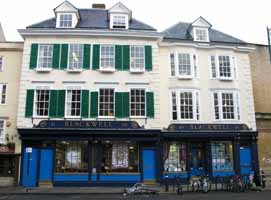
Last Friday, I experienced the rare treat of visiting Blackwell’s Broad Street, the Blackwell bookshop chain’s flagship shop in Oxford. It is a bookshop that I know quite well, though it is two or three years since I was last there. It is one of a handful of large world class bookshops in this country – as readers of this blog will know, my own particular favourite is Waterstones Gower Street, but that is partly because it holds strong personal associations for me and is therefore much more of an old friend than Broad Street. Gower Street is like a rather quirky intellectual woman of a certain age, always coming up with racy surprises of which you might not have thought her capable. She’s one of the liberated ‘new women’ of the early twentieth century, as her Arts and Crafts clothing and the pedigree of her creator, Una Dillon, both demonstrate. Broad Street, on the other hand, is the grande dame of British bookshops. She is an eminent Victorian, offspring of the sternly teetotal Benjamin Henry Blackwell, whose fine bookselling tradition was carried on by his son, also Benjamin, and very famous grandson Basil (‘The Gaffer’) who presided over this shop and its sister stores for more than sixty years.
It was not the first of Oxford’s bookshops that I visited on Friday, but, once through its surprisingly modest front door (it could be the entrance to any moderately well-to-do person’s house), I wondered why I had bothered with the others. Here were riches indeed! And cared for by very professional staff who seemed never to intrude on browsers except at that vital moment – which they must have sensed by some kind of invisible booksellers’ radar – when I was stumped and needed help.
I didn’t actually find the exact book that I wanted – I’m not sure that this book even exists, as I was searching by topic rather than title, but I spent an enchanted two hours in the shop nevertheless. I came away with three purchases, but could have splashed out on many more. I was also delighted to see four copies of Almost Love and two of In the Family on the shelves of the crime fiction section. I happen to know from my previous life that the crime fiction buyer in this shop is probably the best in the country, so I am doubly appreciative that he has chosen to stock my books.
Blackwell’s Broad Street also has a great coffee bar in which people may really be seen looking at and talking about the books they have just bought (instead of just reading the paper or examining their shopping); it has also several brilliant, if eclectically-arranged, second-hand sections. If you know Oxford, I am sure that you will have visited this bookshop. If you don’t know it and should ever find yourself in the city, I recommend that you include Broad Street in your itinerary!

O' Canada

Reflections on Canadian Culture From Below the Border

oliverstansfieldpoetry

A collection of free verse poetry.

Easy Michigan

Moving back home

Narrowboat Mum

Fun, Frugal and Floating somewhere in the country!

Maria Haskins

Writer & Translator

lucianacavallaro

Myths are more than stories

Murielle's Angel

A novel set on the Camino de Santiago

jennylloydwriter

Jenny Lloyd, Welsh author of the Megan Jones trilogy; social history, genealogy, Welsh social history, travel tales from Wales.

Chris Hill, Author

I'm Chris Hill - author of novels Song of the Sea God and The Pick-Up Artist

littlelise's journey

Sharing experiences of writing

unpublishedwriterblog

Just another WordPress.com site

Les Reveries de Rowena

Now I see the storm clouds in your waking eyes: the thunder , the wonder, and the young surprise - Langston Hughes

Diary of a Wimpy Writer

The story of a writer who didn't like to disturb.

Rebecca Bradley

Murder Down To A Tea

Helen Carey Books

Helen Carey Books