
Fascination with the aristocracy? Read this…
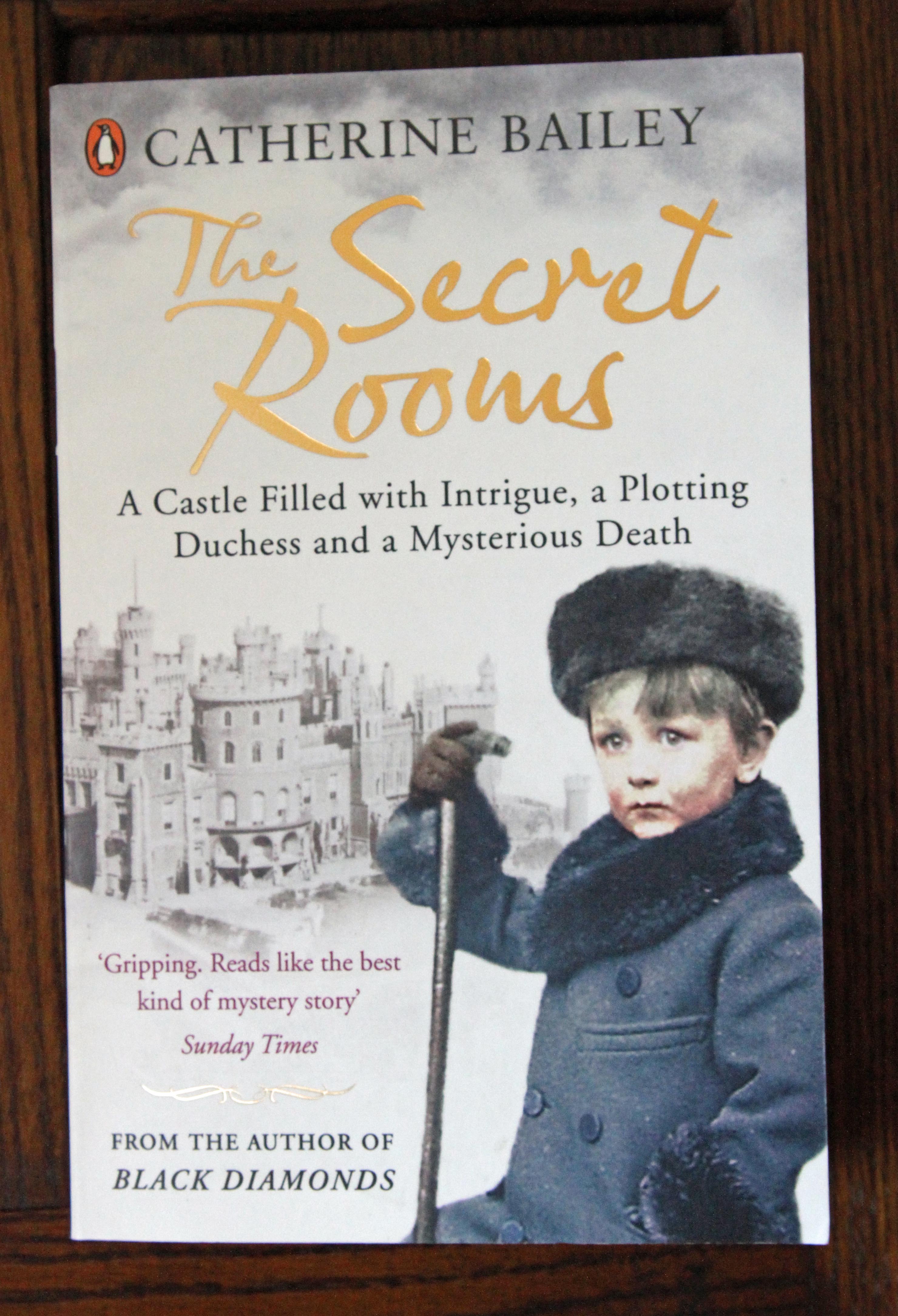
The Secret Rooms

I first encountered Catherine Bailey’s work when I read Black Diamonds, a book to which I was drawn by an article in The Sunday Times about Wentworth Woodhouse, a massive stately home not far away from where I live and of which I had previously been barely aware.

By chance, The Secret Rooms is also about a stately home situated in an area with which I am very familiar, Belvoir Castle in Leicestershire.  It isn’t too far away from Spalding and is a place which I visited several times in my childhood, once on a primary school trip and at least twice more when my mother was hooked on Sunday afternoon visits to the grand houses that had begun to open their doors to the public in order to make ends meet (admission charges were half a crown for adults, children half-price).

Although I’m sure that the guides I encountered and the guide-book that my mother would have religiously bought told me something about the Manners family who lived there,  I have long since forgotten the details.  I do, however, remember the name ‘Manners’ and I knew that Lady Diana Manners, the sister of the ninth Duke of Rutland, was a renowned beauty who eventually became the witty society hostess Lady Diana Cooper, wife of the journalist Duff Cooper.  She and he were both writers and still writing when I got my first job in the book industry.

Like Black Diamonds, The Secret Rooms gradually uncovers the secrets of an aristocratic family that tried its best to conceal them.  The chief concealer in this instance is the ninth Duke. He occupies the central role in this story (I won’t call him a ‘hero’, as he doesn’t quite match up to the term).  His full name was John Brinsley Henry Manners.  A World War One veteran (of sorts), he died of a chest infection when only in his fifties, a death certainly hastened and possibly caused by shutting himself up in the dank basement servants’ quarters at Belvoir for days on end with the family papers, from which he excised many details relating to himself.  He particularly wanted to expunge all trace of three distinct periods in his life.  Catherine Bailey manages to get to the bottom of his secrets in two of these; the third remains a mystery.

If John is not a hero, neither is he quite an anti-hero, but Bailey provides a fine portrait of an anti-heroine: Violet, Duchess of Rutland, John’s mother.  Partisan (even when distributing her favours among her own children), snobbish and scheming, she sweeps through the book, an anachronism even in her own time, the epitome of ruthless privilege, an arch-representative of a social class that was finally annihilated by the Second World War.  Bailey tries to suggest that Violet was responsible for all or most of John’s shortcomings.  In this, she does not quite succeed.  From her account, John may have been more melancholy than his mother and, warped by her rejection of him during childhood, undoubtedly less socially confident, but she can hardly be held to account for the shabby way in which he treated his much younger wife, or indeed the way in which he exploited women generally.  The reader sympathises, however, with the fact that John’s talents as a historian – he became a distinguished self-taught mediaevalist – are scorned by the family, who simply see his accomplishments as further evidence of his ‘oddness’.  Only his uncle, Charles Lindsay, shows any real empathy with him or insight into his character.  It may be significant that ‘Charlie’ is a closet homosexual.  The author hints that some of John’s behaviour might be attributed to his own suppressed sexual proclivities.

Black Diamonds is a very successful book.  The Secret Rooms has already won many plaudits and is well on its way to being as stellar, if not more so, than its predecessor.  Bailey has grown more assured as a writer in the latter book, which is generally of benefit to the reader, and both books are equally well-researched.  Her control of the narrative is admirable, although it occasionally results in a certain amount of artifice which can jar a little.  For example, her account of John’s movements during the First World War does not follow the chronological order of events, unlike the rest of the book; we are ambushed with the details, first, of his broken engagement and secondly, of his marriage, with no prior warning of the existence of either of the women concerned.  Granted, this makes the book read more like a thriller (if that’s want the reader wants); it may also indicate that these episodes were written with one eye on turning it into a film or television documentary.  But I’m being too churlish, now, about a book that absorbed me for four evenings in a row during a recent short break on the East coast, when I was also recuperating from a nasty cold.  If you like well-written English social history, have a fascination with the aristocracy, or just enjoy immersing yourself in a true-life mystery, you will not be disappointed in this book.

Bank on books and invest in public libraries – do it, David!

@savelincslibs

I know that some of the readers of this blog have been following my contribution to the ‘Save Lincolnshire Libraries’ campaign.  I thought, therefore, that you might also be interested in an article that appeared in The Times last Thursday, which says:

“Economists have calculated the monetary value of sporting and cultural activities and found that going to the library frequently was – in satisfaction terms – worth the same as a pay rise of £1,359.”

Playing team sports came close behind – but still it was behind – at a value of £1,127.

Now, I’m not naïve enough to expect anyone to swallow this without a little pinch of salt.  How do you put a monetary value on any activity?  It could be taken to extreme limits: for example, I could estimate that the monetary value of my husband is £5,000 per annum, but only if he does the hoovering.  If he doesn’t do the hoovering, it drops to -£5; and either figure would have to be offset by the amount that he ratchets up on my credit card buying stuff for his greenhouse.  I jest, of course, though some of the assumptions made by the research team at the London School of Economics strike me as equally far-fetched.  The article continues:  “The authors … speculated that  … the sort of person who went to a gym was probably already tired of life and unhappy with their lot.”   I have no idea how they arrived at this conclusion.  Most of the people I know who attend gyms are irritatingly bouncy, dripping their endorphins and their self-righteous early morning starts all over everyone else.  I’m quite grateful for this observation, nevertheless, as it obviously lets me off ever setting foot in a gym again for the rest of my life.

But let me get back to the point.  If libraries are worth so much to the well-being of the individual, you’d think that, by now,  the government – and especially David Cameron, with his slightly suspect ‘well-being index’ – would have latched on to this and decided that it was a bad idea to keep on closing libraries and cutting their services.  Just think how they could keep inflation down if every time someone asked for a pay-rise, they could be told that £1,359 of it would be paid in library benefits!   By the by, the Prime Minister has responded to the splendid petition and letter given to him by ‘Save Lincolnshire Libraries’ campaigner Julie Harrison by passing them on to the Department for Culture, Media and Sport, as being rather too hot to handle himself.  He should realise just how much libraries mean to, especially rural, communities in the county of my birth and elsewhere and take a lead on this at least.

I know that the government is struggling to see the value of libraries in today’s society and that it can’t get away from the idea that they are ‘old hat’.  In reply, I’d like to tell them to dust off their history books a little. Recently, I have been reading David Kynaston’s Austerity Britain.  If you haven’t come across David Kynaston’s three books, which at present cover the years 1945 – 1959 (there are more in the pipeline), you should rush out and buy them immediately, because they are the most brilliant evocation of post-war society you are ever likely to come across.  Austerity Britain chronicles the years 1945 – 1951 and, by chance also on Thursday, I reached the section on public libraries.  Kynaston quotes some Mass Observation opinions on why public libraries were so little used in 1947 and why people preferred magazines:

None of them subjects is interesting to me.  All I like is gangster stories, though there’s precious much chance of reading here.  Three rooms we got and three kids knocking around.  No convenience, no water.  I’m glad to get out of the house, I can tell you.

– Cos I ain’t got no interest in them [books] – they all apparently lead up to the same thing.

– I’m not very good at reading, I never was.  I’ve never liked it some’ow.

– Too long.  I have started books and I have to read through the first pages two or three times.  I like to get stuck straight into a story – there’s too much preliminary, if you see what I mean.

You might have expected public libraries to be more appreciated at this time of austerity, when wages were low and almost everything was rationed.  Apparently they weren’t.  But ten years later, when the nation was back on the road to prosperity, public libraries were enjoying the start of their heyday.  This lasted for at least three decades.  When I started work as a young library supplier at the end of the 1970s, public libraries were still highly regarded and librarians enjoyed considerable prestige.  They were also extremely well-supported by both local and national government.

Is there a moral here?  I’d say that if the experience of the past can teach us anything, it is that people are more interested in culture, including cultural services, when their lives are financially stable.  It makes sense, if you think about it, for people who are happy and settled in their jobs and home life to ‘make time’ to go to the library.  It is also understandable if people who are unemployed and desperately looking for work don’t feel able to find space for using the free public library service.  That is my take on it, anyway, and I think that the government should note the facts.  If Mr Gove is as worried as he says he is about standards of literacy among the young, he should encourage his colleagues at the Culture Department to stick up for public libraries.  There can be no cheaper or more effective way of encouraging high standards of literacy than to get children interested in books at an early age and to make as many books as they can read available to them, regardless of their social background.

When I was a child growing up in Spalding, the public library was on the ground floor of Ayscoughfee Hall.  (It subsequently moved to a purpose-built building in Henrietta Street and it was while taking a gap year to work as an assistant at this library that my friend Mandy brought me the book about Jack the Ripper when I was working in the Chinese restaurant with the putatively murderous cook called Moon.) There were only a few shelves of children’s books, and I had exhausted these long before the end of my primary school years.  The librarian there, a kindly lady, used her discretion and allowed me to join the adult section of the library, even though the rules stated that this was not possible for children under twelve.  There exists a very stereotypical idea of librarians as mousy, unhumorous and devoted to regulations (especially ‘no talking’);  I’m certain that this is unfair and that librarians like the one I knew in Spalding quietly go the extra mile all of the time in order to help people read and enjoy books.  We should celebrate librarians as well as libraries: along with booksellers, they are the great unsung heroes and heroines of civilised society.

(But before I get too eulogistic, I’d like to add that I’m now planning a future blog-post called Librarians I Have Known.  I won’t pre-empt it by offering more than a glimpse here, but, suffice it to say, it will include tales of red shoes, prostitutes, Spirella corsets and Sanderson sofas.  I may just have been lucky, but many of the librarians I’ve encountered have been very far removed from the stereotype.)

#Lobby4Libraries THE BIG UPDATE

This is the most magnificent campaign against library cuts in Lincolnshire and I’m delighted to give it my support. Please add yours and support @savelincslibs to keep libraries in communities.

The best of the London Book Fair 2014

LBF bag and mag

LBF bag and mag

This year’s London Book Fair and the Digital Minds Conference that preceded it were characterised for me by two related issues that recurred time and again: the importance of preserving copyright and the need for publishers to experiment and be flexible about formats, business models and sustainable pricing. Associated with the latter, in particular, were several inspired talks and presentations that demonstrated the opportunities that can be harvested from adopting an intelligent approach towards print and electronic content and therefore finding ways to enable them to complement, rather than compete with, each other.
I was particularly impressed by Martha Lane Fox, the former Internet entrepreneur recently made Chancellor of the Open University, who gave the afternoon keynote talk at the Digital Minds Conference. She said that she was ‘crazy about the Web every single day because of the power it can bring to people’s lives,’ sometimes in very complex situations. She was referring particularly to countries where strict censorship is practised, or where women have not yet achieved equality of opportunity. She said that publishers should continue to fight for basic digital skills to be introduced across all communities. “The consumer has an incredible time of it right now. It is the duty of the publisher to help the consumer on his or her journey.”
Also fascinating was the panel session at the conference entitled Hybrid and Author Publishing, which was essentially about self-publishing. Orna Ross, of the Alliance of Independent Authors, was a particularly compelling speaker, because she has both published with an eminent publisher (Penguin) and published her own works, and she said that she infinitely preferred the latter experience. Her reason? She feels that self-publishing gives her greater freedom of expression and the ability to experiment: for example, this year she has set herself the task of publishing nine short books (one a month, with some break months). She said that she ‘absolutely didn’t want her first self-published book to be taken up by a traditional publisher.’ However, she acknowledged that her writing career had been supported by the initial successes that she had gained through traditional publishing. Hugh Howey, another author who took part in this session, said that audiobooks were under-valued by authors and highly sought after by the reading public. Having spotted this, he has ensured that all of his books are available in audio format and revealed that he ‘could live off his audio sales.’ Food for thought!
Another panel session was entitled Subscription Models: Pros and Cons. It discussed the relatively new trend of selling trade e-books via subscription models. Andrew Weinstein, of Scribd, said that it had been launched as a dedicated subscription service for consumers. Subscribers pay $1 per month and publishers are paid per download. Scribd works closely with HarperCollins, which has promoted its growth by making many HarperCollins backlist titles available in e-format. Nick Perrett of HarperCollins said that there is a rapid shift taking place in publishing from what was essentially a trade-focused structure to what is now becoming a consumer structure. The best outcome for the publisher is to have multiple points at which consumers can access content. After this, their core job is to maximise the royalties that go back to authors. Good analytics are therefore vital: one of the advantages that HarperCollins has gained from working with Scribd is that it obtains a rich data set which can be used to inform both marketing and publishing decisions. There is more about Scribd here.
Among the speakers at the digital seminars that take place throughout the Fair was Rebecca McNally, Publishing Director at Bloomsbury UK, who described the genesis of Bloomsbury Spark, a born-digital imprint for Young Adults. She said that Spark is a one-of-a-kind global imprint for Young Adult literature which publishes across all fiction genres. Bloomsbury has particularly focused on the YA market because it has a burgeoning online reading and writing community. It is also less susceptible to market variation across geographical regions than, for example, picture books. It has some powerful informal advocates among the blogging community and, as a result, is migrating to digital faster than any other fiction sector. Young Adult in digital format actually has a broader constituency than it has in print.
Authors benefit from Spark because Bloomsbury is able to offer a global publishing structure accompanied by local marketing support; it has a fair e-book deal that includes a print option; the translation rights are sold for p and e formats; the list is highly selective and distinguished. Bloomsbury carries out a massive cross-promotional campaign across the Spark publications; it encourages authors to send submissions direct to the Bloomsbury website, rather than operating through agents. Rebecca cautioned would-be Spark authors to remember the target reader (so far 180 submissions out of about 3,000 have been considered ‘too porny’) and to read the submission guidelines (she estimated that 30% of submissions had been disqualified because they weren’t followed). More information about Bloomsbury Spark can be found here.
Continuing with the copyright / flexibility in publishing themes, this year’s Charles Clark lecture was delivered by Shira Perlmutter, Acting Administrator for Policy and External Affairs at the United States Patent and Trademark Office [USPTO]. Her talk set out the differences between recent legislation on copyright in the USA and Europe and indicated the areas in which each could claim to be ahead of the other. She said that, given the shared interests and concerns of both communities, close transatlantic co-operation in the future would be vital. There were three main issues to consider: to ensure that the development of international markets be allowed to continue without jeopardising copyright; that specific legal rules, although they might have to be rigid, should be embedded where possible in a more flexible framework; that more legislation should be developed to set boundaries and limits, rather than addressing specific copyright infringement issues.
After several years at Earls Court, in 2015 the London Book Fair will move back to the Olympia conference centre, which has been refurbished in its absence. Those of us who remember many earlier book fairs are quite pleased about this, as, although Olympia is harder to reach than Earls Court, it seems like an old friend. I think that most of us are also hugely grateful that an earlier plan to give the Excel Conference Centre, in East London, another chance has been rejected. Those who attended LBF 2006 there have not forgotten the almost total lack of ladies’ toilets, the absolutely total lack of anywhere decent to eat, the stands labelled back-to-front as if we’d just walked through Alice’s looking-glass, the unfortunate proximity of London Junior Fashion Week (half-naked giggling teenagers wandering by accident amongst the books) and the nightmare of the first day, when we were riding round and round on the unmanned Docklands Light Railway with no clue about when to get off the train or where we were meant to be heading when we did! Whereas next year, if I can’t be bothered to wait for the spur railway to Olympia, at least I’ll know that if I turn left out of Kensington High Street station and keep walking, eventually I’ll arrive at the exhibition centre, where there will be toilets, civilised cafés, a proper floor plan and no accidental captives!

Under way and making way at Greenwich University…

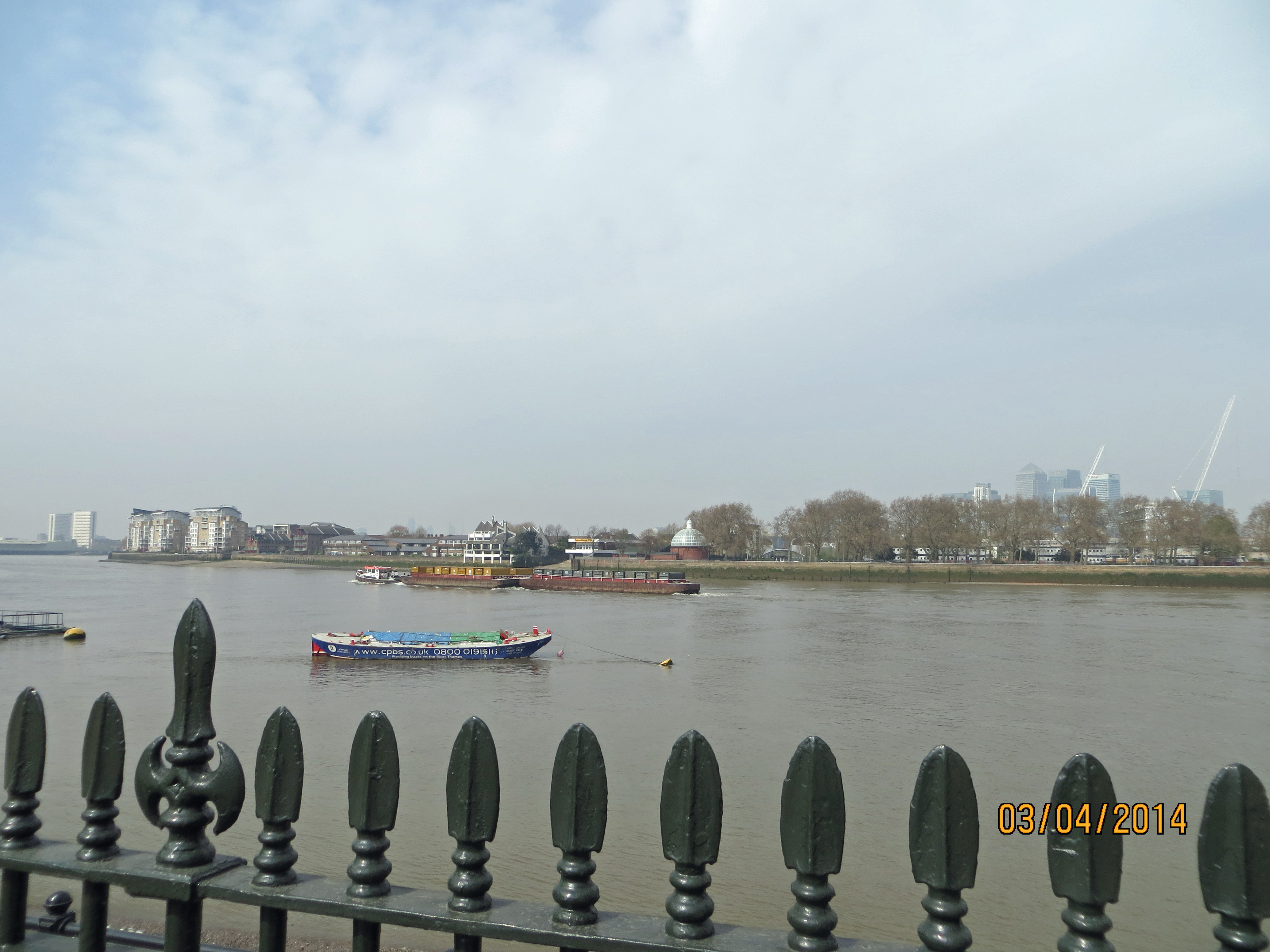
The Thames at Greenwich

The Thames at Greenwich


Old Royal Naval College, Greenwich

Old Royal Naval College, Greenwich

Ten days ago, I went to Greenwich University to discuss a project for a new journal which will allow students to publish articles alongside academics and get equal recognition for their work. This was exciting in itself and an initiative which is greatly overdue: for as long as I can remember, academics have delighted to ‘co-author’ works with students and grab most of the credit as a reward for their ‘names’, while allowing the students themselves to do the donkey work (although I should add that there are some honourable exceptions and also that one or two other journals already exist that are published along the same principles). I shall probably write more about this project when it is up and running.
Greenwich University is a vibrant place. It has long been the home of the Maritime College: there have been naval buildings there since Elizabethan times. Adjacent is Deptford, famous for its docks and as the place where Christopher Marlowe, allegedly a spy for the Elizabethan government, was murdered. Greenwich itself is the final resting place of the Cutty Sark. The university dates from the mid-nineteenth century, though some of the buildings are much older. It stands proudly against a steep curve of the Thames, alongside a stretch of the river that is uncompromisingly wide and majestic. This is frequented by both barges and pleasure boats, which reminded me a little of the river traffic in Shanghai.
The university is housed in a series of white stone buildings with evocative names such as Queen Anne Court, Queen Mary Court, King William Court and the Dreadnought Library. Much more recently, one of the buildings has been dedicated to the memory of Stephen Lawrence. There is a maritime museum, admission to which is free, and across the road another museum which is currently hosting an exhibition of J.M.W. Turner’s sea paintings. Unfortunately, I had no time to visit either of them, but I shall be returning later in the summer and plan to be much better-organised then.
I know from personal experience that, as well as being cosmopolitan, Greenwich students are extremely switched on, because for the last several years I have recruited student panels from among their ranks for some of the conferences and seminars that I have organised. Like students everywhere, they seem to prefer to wear a uniform. This spring, for the girls, it is cropped tops and pale (very short) denim shorts, these worn with thick tights and brightly-coloured canvas ankle boots, and, for the boys (many of whom sport Pete Doherty-style pork pie hats), skinny jeans with long plaid shirts.
Not to be confused with the ‘real’ students was the seemingly endless procession of secondary school parties that were doing a tour of the campus and its attractions. Each was (more or less) in the care of two or three harassed teachers, though the pupils were without exception doing their best to ignore the latter; they were slouching along at a snail’s pace, spread out across the pathways two or three abreast, just like the pupils I have seen dawdling to and from our local secondary school. The real-deal students, by contrast, were marching along rapidly and purposefully, busy, busy, busy, laughing and chatting, with too much to do but taking it all in their stride. A couple of years ago they were probably staunch members of the slow-stroll brigade. Is university really so effective at inspiring them to action, I wonder, or are those having to endure the ignominy of supervision just trying to drive their teachers berserk by taking the longest possible time to trail from A to B?
Despite the somewhat alarmist weather reports about the ‘Stage 10’ smog in London which I heard being discussed on the Tube and elsewhere during my journey, it was a beautiful, clear, sunny spring day in Greenwich and at least five degrees warmer than the dank and misty Yorkshire that I’d left at 7 a.m. Spring may be coming slowly, if surely, to the North, but I can bear witness that in London and environs it is now full-on.
My meeting about the journal slid by all too quickly, three hours gone in an Augenblick. I’d hoped to have time for at least a quick peek at the Cutty Sark before I left, but my watch told me that I had less than an hour to get back to King’s Cross if I were not to endure the combined wrath and triumph of the ticket collector as he rejected my fixed-time ticket and forced me to buy another. I’ll therefore have to save that pleasure for next time, too.
However, as I was waiting at the traffic lights in one of the busy main streets that threads through the old town of Greenwich, I happened to look back and see the masts of this historic ship rising surreally above the buildings and a row of buses, as if it had just joined the queue of local available public transport. I took a quick snap before I hurried on.
Cutty Sark

Cutty Sark

Where sheep may safely graze…

Terence the tup

Terence the tup

Most of Terence's flock

Most of Terence’s flock

Brave new world

Brave new world

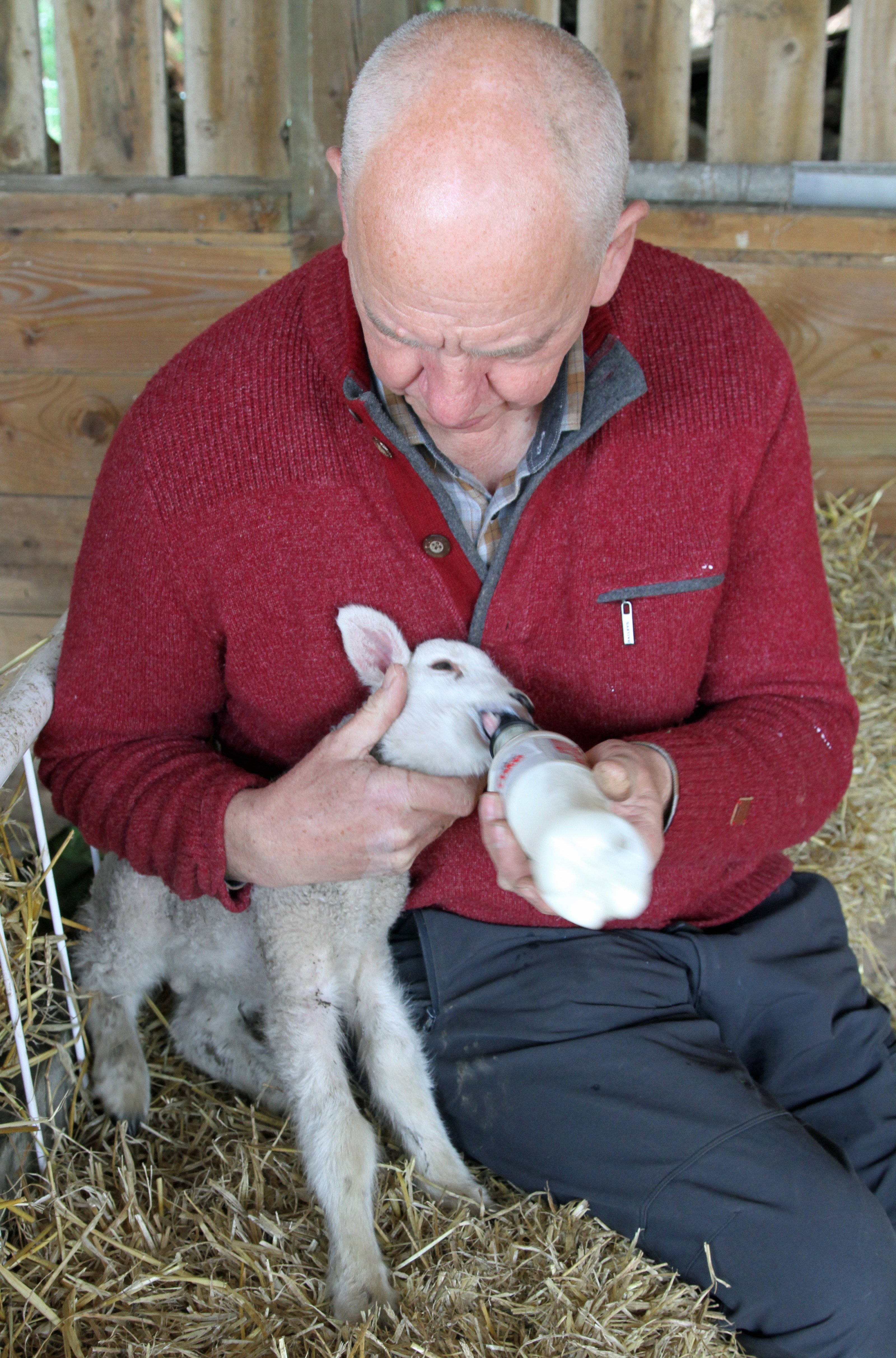
Supplement for the smallest triplet, to help mum...

Supplement for the smallest triplet, to help mum…

We celebrated the start of spring this weekend by paying our friends Priscilla and Rupert a visit. We were looking forward to seeing their new-born lambs. They have eight ewes altogether, of whom four have borne a total of nine lambs (three sets of twins and one of triplets). They don’t know whether the other ewes are in lamb or not – apparently it is very difficult to tell whether a ewe is pregnant unless she undergoes the ovine equivalent to a scan, which for most farmers would be prohibitively expensive. (It occurs to me that an enterprising entrepreneur should come up with a ewe’s pregnancy testing kit!)
Whether or not the remaining ewes have been successfully impregnated, one thing is certain: Terence the Tup is in clover. Some of my readers will remember that Terence had a few runs-in with a mating harness at the beginning of the winter. Once Rupert had finally figured out how to put it on, it chafed Terence, so he was allowed to step out of it forever. This meant that his virility could not be measured. All that Priscilla and Rupert could do was wait and hope that he had triumphed.
Terence takes over the story:
You wouldn’t believe this, but that Rupert has fitted up a telescope in his bedroom so that he can spy on me. Prurient, that’s what I call it. If a ram tried that, he’d be locked up. It’s bad enough trying to get a bit of privacy when you’ve eight ladies to look after, without him butting in. He says he’s doing it on humanitarian grounds. Pah!
Everyone seems to think that I’ve struck it lucky here, that it’s an easy billet for me, with just eight women and no other blokes trying to muscle in. I’ll have you know it’s not a straightforward as it looks. For one thing, some of my girls are quite flighty. They’ll argue with each other over who should be next for my favours and then, when I pick one and take her side, they’ll all turn on me. Sometimes, that means I don’t get anywhere with any of them and I have to wait until things have settled down before I try again. Then Rupert comes out (having, I imagine, been glued to his bedroom window – you’d think he’d have better things to do) and says he’ll get rid of me if I don’t perform. You can’t win.
And another thing…  Rupert and Priscilla bought special fodder for the ewes once they thought they were in lamb, to give them the right nourishment. I’d no objection to that, but they were downright stingy when it came to letting me eat it as well. I didn’t get any of it ‘officially’. They didn’t seem to understand that I was as busy making lambs as the ladies were – busier, in fact. I’m a dad of nine now, and counting, not just a mum of two or three. They should have seen that I needed the victuals to keep my strength up.
I found a way round this eventually. I decided to cold-shoulder any lady who wouldn’t share her provender with me. It worked a treat: they all gave me some. They might not have minded ganging up on me sometimes, but if there was one thing that none of them could stand, it was being ignored. I should have tried it in the first place: they’d all have been in the club in no time. Rupert thinks that I’m getting a bit fat now, but what does he know about BMIs for sheep?
Once the lambs started to come, though, I got the boot. Seriously, it’s the truth: I know it sounds outrageous. They used some hurdles to fence off part of the field to segregate me from the girls, and fastened me in with one of last year’s lambs, ‘to keep me company’. Little whippersnapper. I give him a good head-on crack, skull to skull, whenever I think no-one’s looking. Fortunately, the telescope has been trained on the girls who’ve yet to give birth, so Rupert doesn’t see it if I’m careful. I ask you, though, what kind of maternity unit does he think he’s running here? I’m certain there are no telescopes involved in ‘Call the Midwife’.
By the way, eight of my nine are boys; they could use me in China. ‘Ramming it’, I call it.

Surprises come in threes at Oadby Library!

Oadby Library event

During the latter part of last Thursday afternoon, after a sun-splashed if chilly week, the heavens opened and the rain came bouncing down. The gate that leads into our garden was sodden in no time. The M1, which we had just joined to begin our journey to the event at Oadby Library, quickly became waterlogged: there were treacherous sheets of water to negotiate as the traffic on the approaches to the various cities that we passed built up towards rush hour. By the time that we reached the Leicester ring-road, we’d encountered virtual gridlock. Irate drivers were crawling along for a few yards at five mph before juddering once again to a standstill, their progress and tempers not helped by the rain, Leicester’s amazingly laid-back traffic lights system and the fact that in several places on the dual carriageway two lanes merge into one (every driver being reluctant to yield to another).

This was not an auspicious start to an event that had been planned months in advance and strenuously published, by Chris and Jen at Salt Publishing, by myself and by various other kind tweeters along the way. I had known not to expect too much, as the library had already warned me that only three tickets had been sold – and indeed would have ‘pulled’ the event had I not insisted that I should be happy to speak even if only one person turned up to hear me.

I arrived precisely on time, at 6.30 p.m., later than intended, and my audience – consisting indeed of just three people – had all got there before me. I barely had time to notice that Oadby has a lovely library before I hastened into the ante-room where they had assembled, together with the librarian, Anne Sharpe. However, by this time I had already experienced the first of several wonderful surprises. The first person that I met after Anne was Rosalind Adam. We are mutual bloggers and Twitter friends – I’ve been enjoying Rosalind’s blog for some time, though we had not met before. It was a delight to be able to talk to Rosalind in the flesh. We each agreed that the other was exactly what we had expected – and that this was not always the case when meeting someone previously encountered only through the ether. At the moment, I’m particularly excited about a book for children on Richard III that Ros has just finished writing and hope to be able to review it on this blog in due course.

I was a bit slow on the uptake at registering the second surprise. I’ll have to excuse myself by offering the explanation that I was busy sorting out my books and papers for the readings. I’m also quite short-sighted, but I prefer to wear my spectacles only when I’m driving. Anyway, the event was about to start when I looked up and recognised that the only male member of the audience was Colin Marshall, for many years the manager of the campus bookshop at Leicester University and still employed by the university today, although he has now ascended to a higher plane and is in charge of all the retail operations on the campus there. Colin’s presence introduced one of those occasions when my life as a novelist collides with the day job – and this time it was the most enjoyable collision imaginable. Colin has for several decades attended the conference for which I have organised for some fourteen years the speaker programme. He was also awarded the Booksellers Association’s Lifetime Achievement Award in 2013. His presence at the event was not entirely a coincidence, as he had been kindly told about it by Professor Christine Fyfe, the Pro-Vice-Chancellor in charge of Teaching and Learning – and the Library – at Leicester University, whom we both know. However, there was also a real coincidence at work: Colin and his wife Sandra live in Oadby and she had quite separately seen the event advertised by the library and decided that she would like to attend. Having the opportunity to meet Sandra was the third lovely surprise of the evening: she’s funny, sensitive, extremely well-read, loves dogs and cats (she told me that she and Colin have managed to organise their lives with such symmetry that they have four children, three dogs and two cats), is a great companion and raconteur and furthermore is living proof that Colin is a dark horse!

Ros, Colin, Sandra and Anne therefore constituted my audience at Oadby. It was the smallest audience I’ve ever had. I’ve attended other writers’ events that have managed to attract only small audiences and I’ve found that they divide into two categories: small and dismal, and small and select. I’d like to state unequivocally that, thanks to Ros, Colin, Sandra and Anne, this event was of the latter type. It began quite formally with a reading from In the Family and a Q & A session, but before long had turned into a lively debate about writing, literature, other crime writers and future events at Oadby Library. We overshot the allotted time by half an hour, so that I had barely time to conclude with my ‘world première’ reading of the first chapter of Sausage Hall, third title in the DI Yates series, which I’m grateful to be able to say was very well-received.

At the end of the evening, we took a quick look round the library and had our photograph taken there. Ros had to leave at this point: she has kindly already written about the evening on her blog. We said goodbye to Anne, our charming and extremely well-read hostess, and retired to the car park to release our dog, who had accompanied us for the ride. Then Sandra, Colin, my husband, the dog and I adjourned to the pub down the road (The Fox) to continue the conversation. Eventually, Sandra and Colin went home and we headed back North through the rain-sodden night.

There are some evenings, unfortunately all too rare, when, as a writer, you really feel that you are making progress in the most worthwhile of ways, by talking to a group of sympathetic and interested readers. (The size of the group is immaterial.) For me, the event at Oadby Library was such an occasion. Anne said that she would invite me back again later in the year. I’m looking forward to it already. I’d like to thank her for her wonderful hospitality, and to thank Ros, Sandra and Colin for braving the elements to visit the library last Thursday and for contributing to the marvellous conversation that took place there.

London grit: Anya Lipska’s latest…

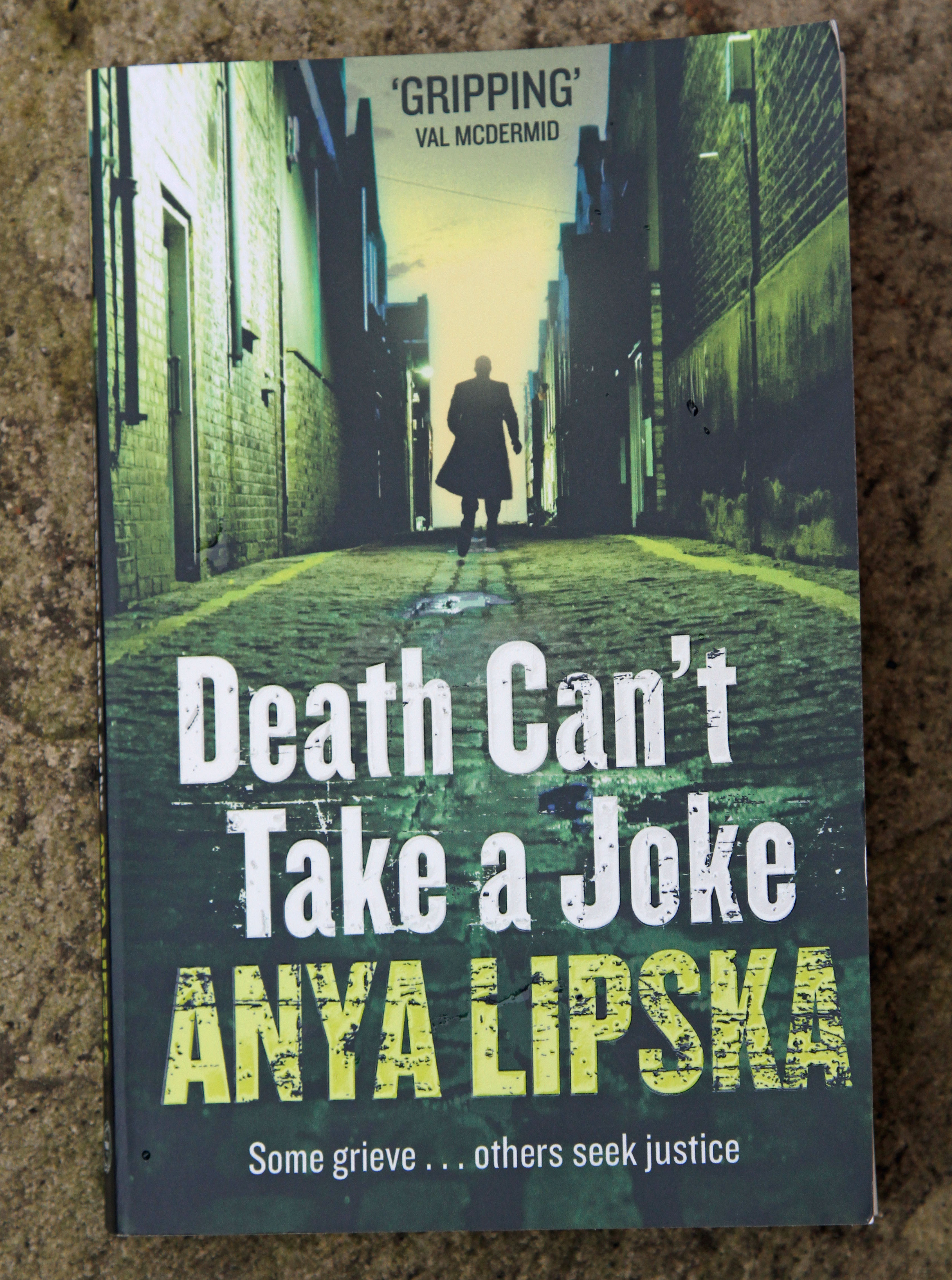
Death Can't Take a Joke

This is Anya Lipska’s second novel and again features Janusz Kiszka, the maverick unofficial private investigator, and DC Natalie Kershaw, by now not quite a rookie, of London Docklands Police.  As with Where the Devil Can’t Go, the first of the series, at the heart of the novel lies the tension of the complex relationship that is unfolding between these two central characters. It is counter-balanced by the inner torments and insecurities that each of them experiences individually.  Kiszka, in particular, is haunted by demons from the past, especially for the death in Poland of his first love some twenty years before, for which he feels responsible.  Kershaw is gradually gaining confidence as she begins to succeed in her chosen career; she is proud to have been assigned to her first murder case.  It takes only a little adversity to knock her back, however.  Lipska shows the reader their thoughts and feelings through an adroit use of a dual interior monologue, created with a light touch.

Once again, much of the rich texture of this novel is derived from Lipska’s portrayal of the Polish community in London.  It is clearly a milieu that she understands well, but this is not to detract from her skill in depicting it.  Not every writer is capable of conveying with authenticity the character of an environment with which he or she is familiar.  It is also clear that, like all good writers, she does not merely present us with the raw material; she shapes it, so that she succeeds in making even the minor Polish characters memorable and not mere stereotypes.  Her judicious use of Polish words contributes to the texture of the writing and never seems forced.  (Apparently I’m not the only reader who has been intrigued by them: in response to demand, Lipska has included at the end of the novel a glossary of the Polish words that she has used.)

One character that had seemed to be a little in danger of tipping into the stereotype category in the first novel was that of Kershaw’s boss, Sergeant ‘Streaky’ Bacon. However, in this book, his personality is much more rounded, with some surprising touches: most notably, his concern for Kershaw herself.  Kershaw’s relationship with him improves as he takes on board her capabilities and notices her dedication.

I’ve not said much about the plot of this novel because it is so tightly constructed, with so little superfluous detail, that it would be only too easy to mar this review with a ‘spoiler’.  Very briefly, an apparent suicide which Kershaw is sent to investigate and the murder of one of Kiszka’s friends both take place within a very short space of time.  Are the two deaths linked?

Kershaw and Kiszka set out on separate missions to discover the identities of the perpetrators, Kiszka’s cavalier disregard for orthodox methods clashing with Kershaw’s commitment to operating within the law.  There are some nice ironies along the way, including a surprising last twist near to the end, but there is nothing in this plot that seems contrived: it unfolds with perfect conviction.

Death Can’t Take a Joke is my top read for this spring.  I thoroughly recommend it and I’d like to suggest that, if you missed Where the Devil Can’t Go when it was first published, you won’t be disappointed if you decide to splash out and buy both novels at the same time.

Anya’s book is being launched on 27th March 2014 and I wish her the very best for that!

Copyright and Clark

Clark's Publishing Agreements

I’ve just written a review of Clark’s Publishing Agreements: A Book of Precedents (Ninth Edition).   It’s been published by Bloomsbury and costs £130 (you get a CD for this as well).  I’m not expecting many of my readers to be interested in buying it, but, in case you are, you can obtain a 35% discount off the cover price if you’re attending the London Book Fair.  The ISBN is 978 1 78043 220 5.

The General Editor is Lynette Owen, a colleague and acquaintance whom I admire greatly.  She picked up the baton when Charles Clark, the doyen of copyright law in publishing, died in 2006.  I never met him, but I’ve met people who did and I’ve also seen photos of him.  I picture him as a sort of Rumpole character, a larger-than-life man of what used to be called ‘breeding’ and great intellect, who was both as sharp as a tack and tenacious as a street Arab when it came to defending authors’ and publishers’ right to get paid for their labours.

In fact, although copyright has always needed to be defended, Charles Clark died before the real squeeze began.  Beginning with the Digital Economy Act (2010), which was closely followed by the Hargreaves Report (2011), Richard Hooper’s work on the Copyright Hub (2012) and the Finch Report on Open Access (also 2012), UK copyright law has come under strenuous attack from a government that seems neither to appreciate that the intellectual property of writers and their publishers needs to be protected as much by law as, say, design patents protect pioneering engineers, nor fully to realise just how much of the national income is generated by a flourishing publishing industry.  That industry has, of course, responded with vigour, but in clear-headed fashion.  It is to the credit of both publishers and authors that, on the whole, they have not lost their cool over this.  Instead, they have worked hard together – along with various trade organisations and lawyers – to modify copyright law so that it is accepted as fit for purpose in a digital age without allowing it to be dismantled to the extent that large-scale publishing becomes unsustainable. (I’m not talking about self-publishing here: it has its own micro-economy that is distinctly related to the efforts of the individual author.  But self-publishing is not viable for many types of book, including multi-author works and the numerous academic or non-fiction works that need high levels of pre-publication investment.)  Richard Hooper’s collaborative work demonstrates this patient, reasoned approach at its best.

The backbone of the 9th edition of Clark consists of a series of ‘model’ contracts pertaining to most of the different types of publishing situation  – print and digital, individual and collective, direct and through third parties – for publishers and authors to consult.  Most of them can be amended according to individual needs and circumstances.  The ‘precedents’ therefore collectively represent an up-to-date compendium of best practice in publishing which takes into account all of the recent legislation and the industry’s informed responses to it.

The book offers much more than that, however.  The prefaces to the precedents, the introduction and the nine extensive appendices together explain the context in which the precedents have been set – i.e., the complex world in which writers and publishers have to operate today.  I found Appendix G, which explains exactly what an author’s ‘moral rights’ are, particularly fascinating.  I’d go further, and say that this book has yet more significance: for the collected precedents, commentaries and articles which it contains together demonstrate why copyright is valuable and why everyone who is active in the creative industries should fight to keep it.

Each year since his death, Charles Clark’s family has sponsored the Charles Clark Memorial Lecture.  It always addresses some aspect of copyright and I always try to attend.  The lecture is organised by the Publishers Licensing Society [PLS] and delivered at the London Book Fair.  Two years ago, the guest speaker was Maria Martin-Prat, Head of the Copyright Unit at the European Commission Internal Market Directorate General.  Her speech was eloquent and well-reasoned.  She said many things that resonated with her audience – and undeniably, since it largely comprised publishers and authors, she was preaching to the converted.  However, just one point that she made, towards the end of her presentation, has really stuck in my mind.  Speaking of Open Access, she said that she could understand why the talented and ambitious young people currently studying at universities or working for professional qualifications appreciated being able to obtain yet more and more content free of charge and were therefore vociferous supporters of the ‘free at the point of access’ principle on which Open Access is based; but, in a few years’ time, a considerable proportion of those same young people will have themselves become authors.  If they fail to understand copyright now, and therefore do not help to protect it, they will discover, too late, that they can demand no financial reward for their work nor claim any right to its ownership.  Maria Martin-Prat’s message to her audience was that, if all types of writing are to continue to flourish and to delight, there can be no more important task that demonstrating to the young that copyright is precious and should be treasured.  It is a point that I make as often as I can when I am speaking to young audiences.

I can’t conclude without congratulating Lynette Owen on her flawless work as editor.  I’m sure that Charles Clark is resting in peace, knowing that his work continues to live on under her capable tutelage.

The writer and her blog: Dr Lucy Robinson

Dr Lucy Robinson, from the University of Sussex website

Dr Lucy Robinson, from the University of Sussex website

I’ve been in Brighton for most of this week, attending the academic bookselling and publishing conference for which I’ve been organising the speaker programme for the past fourteen years. I shall eventually write about the whole of this conference, but in a different forum and for a different audience: I don’t think that a detailed account of the present hot topics in academic publishing would greatly appeal to most of the readers of this blog! However, I do think – and hope – that you’ll be interested in the following account of the comments made by Dr Lucy Robinson, lecturer in Modern History at the University of Sussex and published historian, during a fascinating panel session for authors that took place on the first day of the conference.
Lucy said that there was sometimes a tension between writing her blog and writing her book (she has already published a book with Manchester University Press and is currently working on another). Sometimes, she almost feels that there is a competition going on between them and wonders which is the right way to go: should she focus more on the book or concentrate on the blog? But she also said that a smart author could create a ‘virtuous circle’ in which the blog could feed creatively into the book.
She said that she disseminates her research via a number of social networks, but at the same time wants to publish her history of the 1980s in a conventional publishing format. She explained that the challenges facing a contemporary historian are different from those that a historian of, say, the early modern period has to address. For the latter, the main difficulty lies in getting his or her hands on the small amount of material that now survives. Lucy’s challenge is that her material is ‘everywhere’ and that it is important to tell a version of everyone’s story, down to, for example, the cakes that people in the ’80s made or ate. The format that she uses is therefore to a large extent the product of the particular time that she writes about. To organise the material in a conventional book with the same effectiveness that the digital format allows is difficult. Nevertheless, she wants to see her work in both formats.
One of her reasons for this is that, although she values the internet as a medium, she also loves books. Another is that, for an academic, getting a book published by a recognised publisher is an ‘esteem marker’. Academic careers depend upon producing ‘globally significant research in academic form.’ The object is to influence others – fellow academics, researchers, students – to do or think something differently as a result of the research. This goal of impact cannot be achieved unless the research has been published in a traditional, authenticated format. This does not mean that she does not value the blog, however. She said that “the blog helps you to keep up-to-date. It allows you to change your mind. It is little. It is safe. I can best describe it as a way of being ecological with your work: then you can write it up in your book afterwards to give the work authority.”
She added that writers are now on a journey and it is a tricky one. Social networking enables a sort of autobiographical build-up of identity. Parallel to this is the other persona of the academic writing the book, ‘saying clever stuff and selling it to people.’ She repeated that there is a tension there. One of the audience asked her why the print output of her work was so important to her. She replied that she simply wanted to write a book called ‘The History of the 1980s’.
I found this really interesting, because I think that fiction writers often experience the same kind of dichotomy. We, too, value both formats; most of us also seek validation via the printed word. We understand the value of reaching our readers online, via social networking and blogs, and we don’t begrudge the time and effort spent producing work for them to consume free of charge, work that we hope that they will enjoy. There can be few greater rewards for a writer than to gain a following of loyal online readers who are under no compulsion to read our work but nevertheless return to it time and again because they appreciate it. At the same time, most of us also want to write more formally and there can be few writers who don’t mind whether or not they are paid for their formal creative output. Payment is itself a kind of validation. I said this to Lucy over a cup of tea after her presentation and also mentioned that, for me, there was the further dilemma of not having the energy – or, sometimes, merely the ‘bandwidth’ – to write both blog and book and do the day job as well. She agreed, and said that, although for the conference she had distilled her experiences as an academic writer, many of the things of which she spoke had come from the world of fiction writing originally. Academic writers had picked up on some of the digital initiatives that fiction writers had developed and adapted them to their own writing.
Food for thought, and fascinating, I hope you’ll agree. Lucy’s blog may be found here. I hope that perhaps she will become an occasional visitor to this blog now. I’d also welcome comments from other writers who would like to join this debate.

O' Canada

Reflections on Canadian Culture From Below the Border

oliverstansfieldpoetry

A collection of free verse poetry.

Easy Michigan

Moving back home

Narrowboat Mum

Fun, Frugal and Floating somewhere in the country!

Maria Haskins

Writer & Translator

lucianacavallaro

Myths are more than stories

Murielle's Angel

A novel set on the Camino de Santiago

jennylloydwriter

Jenny Lloyd, Welsh author of the Megan Jones trilogy; social history, genealogy, Welsh social history, travel tales from Wales.

Chris Hill, Author

I'm Chris Hill - author of novels Song of the Sea God and The Pick-Up Artist

littlelise's journey

Sharing experiences of writing

unpublishedwriterblog

Just another WordPress.com site

Les Reveries de Rowena

Now I see the storm clouds in your waking eyes: the thunder , the wonder, and the young surprise - Langston Hughes

Diary of a Wimpy Writer

The story of a writer who didn't like to disturb.

Rebecca Bradley

Murder Down To A Tea

Helen Carey Books

Helen Carey Books