

An unashamedly anecdotal account of a visit to the House of Commons…

Yesterday, I was in London again for the day job. I had four meetings, all of which went according to plan, and topped off the day by attending the Author Publisher Dialogues, sponsored by the All Party Publishing Group and the All Party Writers Group, which took place at Portcullis House in the early evening. I have attended author events in the House of Commons before, but I hadn’t previously visited Portcullis House. It is an ultra-modern construction of steel and glass that faces the House, apparently used as a kind of overflow building.
Unsurprisingly, security was tight. There was an airport-style scanner, through which my bags and jacket had to be passed, and several security officials were on duty. (I wonder what they made of the contents of my laptop bag, which by that stage in the day contained not only the computer, but also three books acquired from the wonderful help-yourself stash that sits permanently in the basement of one of the publishers I visit, an assortment of toiletries from Boots, some greetings cards from a nice shop that I know and two packets of apple and cinnamon hot cross buns from the Marks and Spencers in Chancery Lane.) Belongings retrieved, I was asked to wear a lanyard with a time-stamped badge proclaiming that I had been checked. Now labelled with this cross between kitemark and sell-by date, I was directed upstairs to a sort of glass-enclosed gallery, the walls of which were decorated with portraits of eminent politicians. I recognised Harold Wilson, Margaret Thatcher and Shirley Williams, all painted to look remarkably like each other, if that doesn’t sound too far-fetched.
The event took place in the Macmillan Room, named presumably after Harold Macmillan, who was both publisher and politician (I met him once, but that’s a different story!). It was chaired by Tristram Hunt MP, who is Chair of the APPG; he’s also a journalist and broadcaster. One of the speakers, Kwasi Kwarteng, is also an MP as well as being a published author: his most recent book is entitled Ghosts of Empire. (The two other author speakers were Professor Peter Atkins and Susan Standring, who has been responsible for several of the most recent editions of Gray’s Anatomy.) Hunt is a Labour politician and Kwarteng a Tory, but they seemed to be fairly united in their views on how much government should contribute to publishing. They were careful to say that the publishing industry is so successful that it needs no financial help from government, but they also indicated that they are staunch supporters of copyright law. As both are published writers, this was to be expected, but also what the audience wanted to hear. One of the reasons why publishers have stepped up their presence at such events in recent years is that there are certain factions in government which would like to pass legislation distinctly threatening to copyright as we know it. I shall write about this in a separate post and I’ll also report on the event itself at a later date, too. This is meant to be a light-hearted account!
As in the House of Commons itself, each room in Portcullis House is fitted with a television screen that tells the occupants which MP is speaking and on what subject. A shrill bell rings for several minutes when it is time for them to vote. Our two MPs rushed off when this happened, leaving the other speakers to hold the fort. Stoically, they kept on speaking throughout the din and, although it was impossible to hear what they said, their Dunkirk spirit filled me with pride. Theirs was such a very British approach.
The end of the event coincided with a mass exodus of MPs. When I emerged from the Macmillan Room, there was a long crocodile of them walking two-by-two down the glass corridor at funereal pace, feet turned outwards, murmuring inaudibly to each other. Young or old, each was exhibiting this same distinctive behaviour. It reminded me of the sequences in Jurassic Park of the dinosaur herbivores moving peacefully and slowly through the undergrowth. I wondered if MPs need training to walk in this way or whether it comes naturally when you are Running the Country.
It was unsettling on my way out to encounter, standing at the exit, a policeman who was carrying what looked like a small Kalashnikov (sorry, I’m not well up on guns). That policemen in European countries are routinely armed seems unexceptional – it helps that sometimes their guns look like toys – but I’ve always found it disquieting to see officials on UK soil bearing arms. I remember the sense of shock I felt when I bumped into a group of paratroopers in Northern Ireland once, their weapons at the ready. This policeman was friendly, though. When I said, ‘Don’t shoot!’, he replied, ‘No, I won’t, I’m not in the mood tonight!’
The government has been claiming that the recession is ending for so long now that its statistics have lost every shred of credibility as far as I’m concerned. However, I do have my own very scientific way of taking the temperature of the economic climate. It involves London taxi drivers. For at least the past two years, hailing a taxi in London has been easier than falling off a log. You’ve only needed to step out into the road and six have appeared, their yellow ‘cab free’ lights twinkling. The successful cabbie has then regaled me for the entire journey with his views on the direness of the economy and his considered opinion that Armageddon has arrived. It may have been partly because I was in the, for me, more chi-chi than normal environs of Westminster that a good two dozen cabs passed me in the space of fifteen minutes, all with their lights switched firmly off. I nevertheless conclude that taxi firms are booming once again – and therefore also the businesses that they serve.
Panicking that I would miss my train, I was forced to double back to the underground. The tube train I boarded chugged along imperturbably, with extra delays at Victoria and Green Park. Eventually I reached King’s Cross with three minutes to spare and sprinted across the concourse before collapsing in my reserved seat in a most unladylike fashion. I was so much revived by a steward bearing tea (and, eventually, a gin-and-tonic) that I was even able to attempt a bit of writing on the two-hour journey home.
It was quite an exhilarating day. At its conclusion, the animals lay in wait, each reacting in his own way to my absence: the dog greeted me ecstatically; the cat turned his back to punish me for my desertion.
Who is your ‘key’ customer?
E reader
I’m not always in agreement with received opinion that what happens in publishing in the USA happens here eighteen months to two years later. However, properly-gathered statistics are always fascinating and it would be foolhardy for a book market watcher such as myself to ignore the results of the latest US consumer survey that’s been carried out by Nielsen BookData. Called the ‘US Entertainment Report’, it publishes information about games, films and music as well as books, but I shall confine myself here to the findings on books. If you’re interested in the other categories, you can find a summary here.
The survey finds that e-book buyers are 21% more likely to be female. The age-groups buying the most e-books are those aged 35-44 and those aged 55-64. (I’m not sure why there’s a dip in the 45 – 54 age group: perhaps they’re so broke paying for their children to go to university that they can’t afford to buy an e-reader!) What’s amazing is that the 18-24 age group buys least e-books, even fewer than the 65+ group. Perhaps the reasons for this are also financial. Or, since the academic e-book market is now well-developed in the USA, it may be that young Americans associate e-books with study and print with relaxation. An amusing thought, but of course based purely on speculation on my part!
What is undoubtedly of significance is that print book buyers are more likely to be female, too: 18% more likely, in fact (highest sales are again to the 55-64 age group, followed by the 65+ group). This is not a surprise, because print book consumer surveys have consistently shown women to be heavier book buyers than men for at least the last thirty years. Received wisdom has always been that women buy more books because they’re buying for the whole family. However, unless e-book sales models change, we may have to revise our opinion about who is actually reading the books, as well as who’s buying them, since at present it is not possible to share an e-book unless you also share your e-reader with someone else (not a very practical arrangement). There is considerable pressure among consumer groups, especially in the USA, to introduce models that allow sharing of the same e-book among a limited group of people, on the principle that print books have always been shared among family members. In the meantime, as writers, we have a golden opportunity to consider what these female-biased statistics mean.
All my life, I’ve disapproved of the so-called ‘woman’s read’; as a bookseller, I’d give publishers short shrift if they tried to promote a book by saying that it appealed to the ‘women’s market’. How piquant it would be to discover that they were barking up the wrong tree and that the real niche market belonged to men! And how well it pinpoints the absurdity of gender-based promotion: clearly women have been reading war stories, thrillers and science fiction all along and I wouldn’t mind betting that, at the same time, more than a few men have been reading romances and bodice rippers. In fact, one of the earliest e-book surveys undertaken, way back in 2001, suggested that there was a big market for romances among long distance truckers!
As a writer, therefore, whom should you regard as your ‘key’ customer? I’d say everyone! In the last analysis, it’s the quality of the writing that counts. But you might like to think a little more about formats: the more flexibility there, the more copies you are likely to sell.
Warning, this post is not for the prudish…

Don’t read this – it is a very hard and naughty bit…
A physics professor from the University of Cambridge has objected to a sexually-explicit passage from Ovid’s Amores that was set as part of this year’s Cambridge OCR Board AS-level paper (the candidates sitting the exam will therefore mostly have been 16 or 17). Apparently, he thinks that the piece was unsuitable for students of this age, because the examination rubric states that ‘candidates should be able to … produce personal responses to Latin literature, showing an understanding of the Latin text’.
As an aside, I’d be prepared to hazard a guess that at least some of the examinees were not as innocent as the professor supposes. However, I do not need to speculate on how knowledgeable they may have been on the subject of the piece – an adulterous liaison between the poet and a married woman – because that is not the issue. If it were, then examinations would also have to exclude literary works that refer to all crimes, including murder, and all works set either in the past or in foreign countries unknown to the candidates. That would rule out the whole of Shakespeare, the whole of Jane Austen and most modern masterpieces. Surely the point of great literature is that it has the power to evoke an imaginative response in the reader that transcends his or her actual experiences. It achieves a fusion between art and life that yet maintains intact the distinction between the two. As Orhan Pamuk puts it so eloquently in The Naïve and Sentimental Novelist, “We dream assuming dreams to be real; such is the definition of dreams. And so we read novels assuming them to be real – but somewhere in our mind we also know very well that our assumption is false.”
What is depressing about the good professor’s comments, however, is not their patent absurdity (he is a professor of Physics, after all, not of Literature), but the fact that they signal a deadening retrogressive trend that is in danger of spreading beyond the confines of the classroom. I was a schoolgirl during the tail end of a period when some school texts still in circulation were described as ‘abridged’ or even ‘expurgated’: for example, my rather old-fashioned grammar school still had many sets of the Warwick Shakespeares. They had been relieved of all scenes of a sexual nature and any words that could be construed as ‘blasphemous’. However, by then, these texts were still in use for reasons of economy, rather than to preserve the pupils’ innocence. When we came to the examinations, we were expected to have read the full-fat versions. Teachers advised us to refer to these in the Collected Works, or sometimes reproduced the excised passages on separate cyclostyled sheets of paper.
To my knowledge, the Latin texts that we studied had never been subjected to the same cleansing process: my Latin ‘A’ Level syllabus included the original works by Juvenal and Catullus – much racier than Ovid – as well as Ovid himself. I cannot remember having had any difficulty in understanding them or of their having caused offence or difficulty in the classroom. What I do recall is how fresh and original they still seemed, two millennia after they were first published, and the brilliance of the teacher who helped us to appreciate them.
I’m delighted that Mary Beard, Professor of Classics at Cambridge, has robustly defended the choice of excerpt in the Latin exam paper, because I’d hate us to slide backwards into a kind of dark age of political correctness in literature. Today we are scornful of Nahum Tate’s version of King Lear, in which Cordelia marries Edgar and all the ‘good’ characters live happily ever after. We are positively amused by the efforts of Thomas Bowdler, who not only supervised the production of a ‘family edition’ of Shakespeare, but also considered that Edward Gibbon’s The History of the Decline and Fall of the Roman Empire was too risqué for polite society, and ‘improved’ it accordingly. More recently, my generation was exasperated by Mary Whitehouse’s well-meaning but narrow-minded attempts to clean up television.
We flatter ourselves that we live in a more sophisticated age than Tate or Bowdler. Many of their contemporaries, in fact, looked askance at what they were trying to achieve, just as my generation ridiculed Mary Whitehouse. Yet fashions in morality and what is ‘acceptable’ often don’t progress in linear fashion, making the next more discerning than its predecessor. In the nineteenth century, English literature was propelled at first slowly, then ever more rapidly, from the exceptionally daring creativity of the Regency era to a decades-long period that celebrated anodyne writings in which sexuality had to be conveyed in the strange telegraphese of young girls’ blushes and young gentlemen riding hard to hounds to quell their natural yearnings. Alternatively, these characters just faded away, blissful in the knowledge that their virtue had not been compromised. Woe betide the ‘fallen woman’, whose plight was not recognised until the end of the century, when Thomas Hardy wrote Tess of the d’Ubervilles.
When I was at school, it was a commonly-held belief that Physics was a finite subject: that mankind had ‘cracked’ it and had discovered all that there was to it. I know very little indeed about science, but I have read that today Physics is an incredibly exciting as well as very complex subject, one which attracts the finest minds as scientists push back the boundaries of knowledge all the time. I both respect and am in awe of them. I would suggest that they have at least one thing in common with those who choose to make literature their life’s work: they build on the creativity of the generations that preceded them. As far as I know, there is no expurgated version of Newton or Einstein: the only limitations placed on their students concern the latters’ capacity for understanding. The same restriction, and this restriction only, should apply to those who study Shakespeare, Catullus, Juvenal – and Ovid.
Under way and making way in Rotterdam…
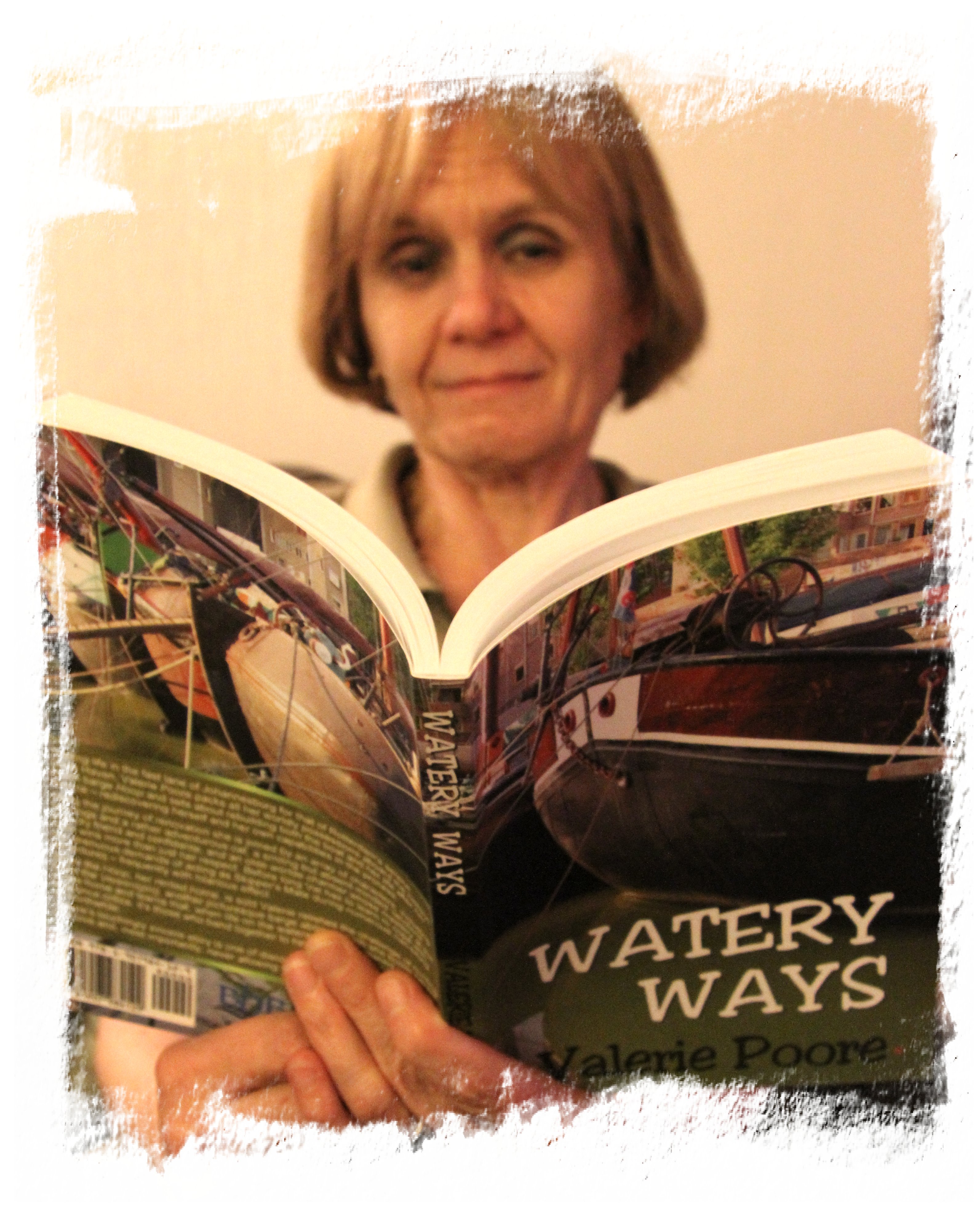
Valerie Poore’s Watery Ways is a book of three love affairs. Each has its highs and lows, pleasures and pains. The human one seems to be the least anguished and captures well a true meeting of minds and hearts; the others are much more fraught with complete cargoes of crises, one being the development of the author’s passion for life on the water, with its close-knit harbour community, and the other her embarkation upon an emotional journey to her own live-aboard barge.
Having enjoyed narrow-boating on canals and rivers in the UK and sailed around the Western Isles of Scotland, I knew that this book would have much to interest me. I came upon Val and her books during my own voyages of discovery into social networking. She is active on Twitter and Facebook and I quickly realised that, in addition to being a generous supporter of other authors and an astute literary commentator, she has the ability to write captivatingly of her wide-ranging experiences and many practical skills.
Watery Ways charts her experiences as a new member of the nautical family of Oude Haven, the oldest harbour in Rotterdam and home now to a collection of vintage boats, lovingly restored by their owners to standards established by a commission of experts set up by the harbour’s special Foundation. As a tenant aboard one of these barges, Val found her personal background of self-sufficiency and expertise in the restoration of wooden artefacts well-suited to the task of refurbishing and maintaining her ‘new’ accommodation.
Using a present tense narrative and both factual and imaginative description, Val enables the reader to enjoy the immediacy of the moment and presents a graphic picture of places, people and events. The atmosphere of the harbour and the characters of its quirky inhabitants are evoked in unfussy but very personal prose. The technical detail, essential for an autobiographical account such as this, is explained in terms that present no problems to the lay reader: Val’s style is precise and lucid. Though there is sentiment, her matter-of-fact manner never allows it to become cloying; we are able to empathise easily with her feelings. Her capacity to interest a non-boating audience is considerable, not least because of her self-depreciating sense of humour and her willingness to share her many discomforts and mistakes, and the occasional success. For me, she doesn’t create an over-romanticised idyll that might seduce the reader into wanting to buy a boat, but does provide insight into the delights of ‘faring’ along urban, industrial and completely rural canals. She succeeds in transmitting the strange time-warp sensation that voyagers on such waterways experience as they move along at a pace of life that belongs to ages gone by, taking days to cover distances that modern road and rail transport completes in hours. There is a magic here, for the relationship of bargee to barge is very real and just as much of an affair as one between human lover and human lover. The boats themselves seem to have individual temperaments and eccentricities.
Watery Ways provides a very reassuring and positive image of human nature, a contrast to the violence of international events such as the 9/11 atrocity, which took place during Val’s first long boat trip with her partner Koos to Lille and to which she refers with great sensitivity.
I very much enjoyed reading this book. I know that Val is working on a sequel, telling of the next instalment of her life afloat and of the complete renovation of her own pakschuit (local delivery barge), the Vereeniging. The present book concludes by describing how she acquired this vesseI and I am very much looking forward to her account of her work to make it habitable and to meet Oude Haven’s rigorous historic criteria.
Follow Valerie on Twitter: Follow @vallypee and visit her website.
Watery Ways is published by Boathooks Books, ISBN 978-1-907984-12-9
Prince Charles and I are not of one mind…

From Ordnance Survey Landranger 110 map
I love old houses and have been visiting stately homes since I was a child. I celebrate them as a unique part of our English heritage and I am always fascinated to read about the people who lived in them and to gaze upon their portraits. I’m making this clear at the outset, because what I’m about to write may seem a little out of character, not to say controversial.
I read in last Sunday’s Times that Prince Charles is throwing his considerable weight behind the fight to save Wentworth Woodhouse, which requires £100m to be spent on it to conserve the building and reverse subsidence. By a strange coincidence, some years ago, the Prince intervened even more directly to save Dumfries House, by spending £20m from the Prince’s Trust on its renovation. I say coincidence, because for three years I worked in Dumfries and had a flat there, so I’m familiar with and have lived near both the old piles in which he has taken an interest. (If he starts campaigning for any more such buildings near me, I shall begin to think that he is stalking me!)
Wentworth Woodhouse is not so very far away, though I’ve only visited it once, and then only the grounds, because until recently the house wasn’t open to the public. At the time of my visit, about five years ago, it wasn’t possible to get close to it: it had to be viewed from a public footpath on the other side of the boundary fence. I didn’t in fact know of its existence until the publication of Black Diamonds, by Catherine Bailey, which I bought after reading rave reviews when the book came out in 2008 and which is a meticulously-researched account of one of the families that lived in the house – so it doesn’t cover the whole of its history, but I found Bailey’s account gripping and it inspired me to want to see the mansion for myself.
Wentworth Woodhouse has been described as Britain’s finest Georgian house. It is certainly its largest. The main front of the house is 606 feet long, twice the length of Buckingham Palace. It has more than 1,000 windows. The newspaper article says that the nursery was situated an eighth of a mile from the dining room. Guests were given different-coloured confetti so that they could find their rooms again when they retired to bed (I remember reading this in Bailey’s book, as well). Even the stables are huge: in common with many other visitors, I mistook them for the house itself when first I came upon them. In fact, huge is the best word that I can think of to describe Wentworth Woodhouse itself: or gigantic, or enormous, or gargantuan, or outsize. In my view, it is both a monster and a monstrosity. It is gratuitously massive just for the sake of it. It has been symmetrically constructed, with two elongated wings, but is not otherwise architecturally distinguished. It actually gives the impression of being rather squat, even though the main building is three storeys high, because of its preposterous length. If it had been built today, say by an oil sheikh or a Silicon Valley magnate, I’m sure that it would be denounced for its vulgarity. Wentworth Woodhouse is a white elephant. I do not think that it merits the expenditure of £100m to preserve it, especially as I’m sure that this would be just the beginning. Despite the present owner’s ambitious plans to develop several commercial ventures there, I cannot imagine that it could ever be self-sustaining. £100m is a colossal sum of money and would, I feel, be better spent on saving many ‘lesser’ buildings instead.
There is another reason why I hold this view. Wentworth Woodhouse has been one of the most bitterly socially-divisive buildings in our history. I don’t mean the usual upstairs-downstairs disparities illustrated by soap operas like Downton Abbey, about which we probably feel far more uneasy than the people who lived and worked in such houses at the time. Wentworth Woodhouse was built on coal – both literally and metaphorically. The house sits on what was once a rich coal seam. Generations of its owners met the massive expenses of its upkeep by selling the mining rights to the coal that lay deep below its lands. The nearby village of Elsecar was a coal-mining village. Its inhabitants either mined the coal or worked at the house itself. It is still a pleasant but modest village that contains no large properties; the only large property for miles around was Wentworth Woodhouse itself.
The Fitzwilliam family, which owned the house for most of its history and whose story Catherine Bailey tells, were on the whole kind employers, even though the sons sometimes exerted droit de seigneur and fathered a few bastards on the local girls. By the time of the Second World War, its glory days were long over. After the war, it fell victim to what can only be described as an act of vandalism fuelled by class hatred. In 1946, Emmanuel Shinwell, the ruling Labour Party’s Minister of Fuel and Power and a man of extreme proletarian views, insisted that open cast mining should take place on the estate, even though the richest of the coal seams were not close to the surface. He stopped short at demolishing the house itself, but the debris from the mining was actually banked up against its windows. The grounds and gardens were completely wrecked.
Wentworth Woodhouse is now owned by one Clifford Newbold, who bought it for £1.5m some years ago and has since spent more than £5m on carrying out as much repair work as he says he can afford. He is now seeking to sue the Coal Authority for £100m for the depredations to the house and estate that resulted from Shinwell’s instructions. This is the initiative that Prince Charles is supporting. To me, it seems like an invidious and depressing resurrection of a vengeful class war that played itself out almost seventy years ago and from which I should prefer to believe that we have learned and moved on. In addition to this, whether or not the lawsuit is successful or funds are raised to restore the house by some other means – for example, via the National Lottery – it will be the nation itself that pays. One way or another, that £100m will ‘belong’ to us. Do we want to spend it on Wentworth Woodhouse? I suggest that we don’t. This not-so-old, not-so-beautiful, enormous house has been the scene of many past crimes on both sides of the class divide: generations have toiled below the ground there in inhuman conditions, and many miners lost their lives working the Barnsley coal seam; young girls had their lives ruined by the stigma of bearing illegitimate children to an elite of young men impossible to refuse and the upper class occupants of the house suffered the trauma and indignity of being reviled and trapped in their pile by the evangelical social engineering of a scion of the Glasgow working classes. It has not been a happy place, nor a place where greatness has flourished.
It is my belief that, like other places that have been the scene of great pain and suffering, Wentworth Woodhouse should be allowed to die, not a death by a thousand cuts, as money is successively raised and then exhausted, but in one final burst of theatre, one last grand gesture. I think that Wentworth Woodhouse, like many another ageing building, should make its exit via a blast of dynamite and tumble to the ground with dignity, like a huge beast that has now lived out its natural span.
Controversial, maybe. In some ways, I am surprised at myself. But I do believe this, strongly.
The murmuring of innumerable bees…
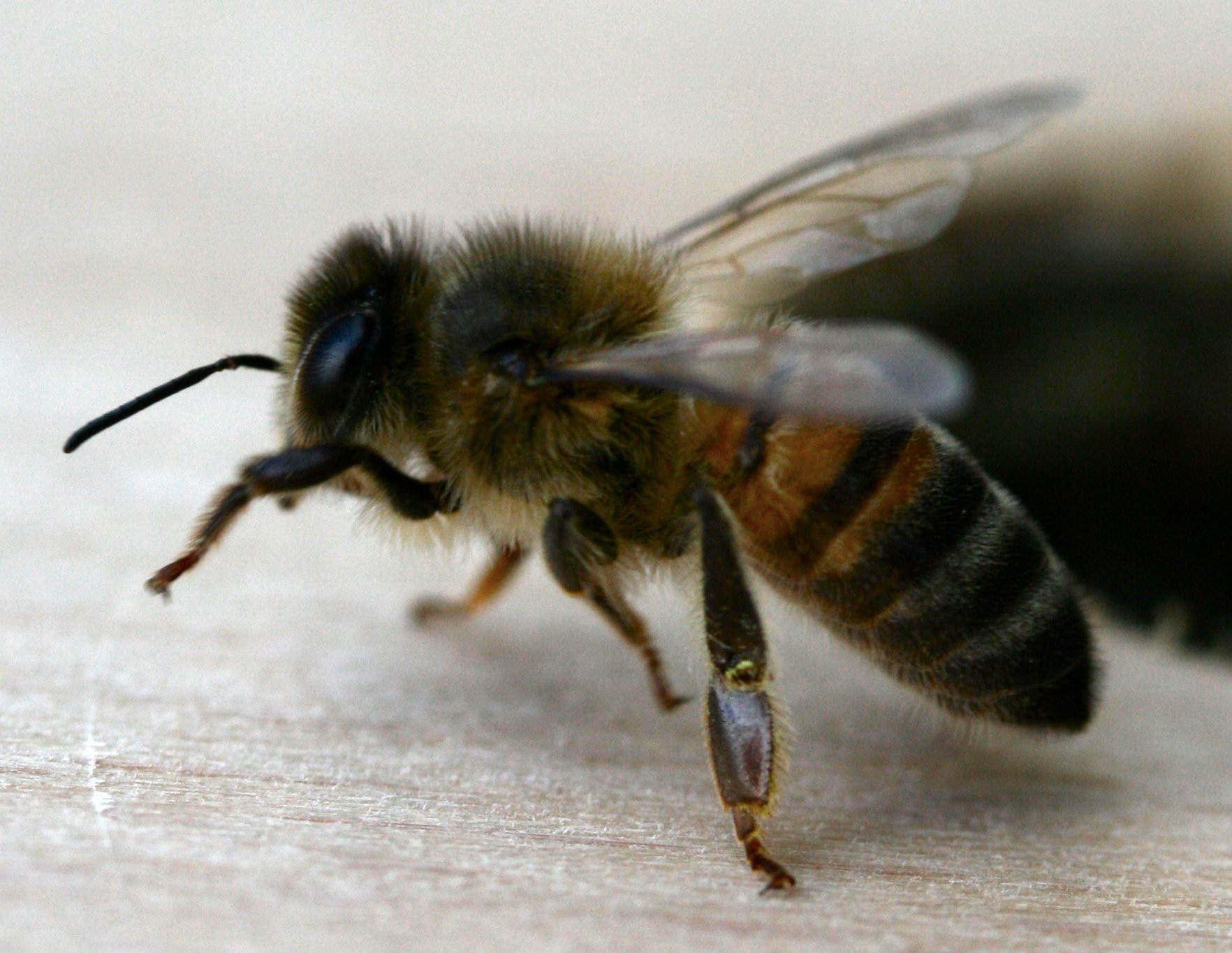
Yesterday I went on a pilgrimage to Ripon with my husband, in quest of bees. We (I say ‘we’ – he is the bee-keeper, the one who has acquired the considerable amount of scientific knowledge needed and has the requisite patience; I am the bee-keeper’s assistant, so can get by on more limited quantities of both and shirk my duties if I feel like it.) started keeping bees a number of years ago, with reasonable success. However, the terrible winter and very wet spring here took their toll and, like many beekeepers, we suffered losses.
Because, according to the press, some 80% of the nation’s bee colonies perished this winter, ‘supply and demand’ now dictates that the cost of a ‘nucleus’ colony is very high (up to £250) and it’s definitely a sellers’ market. Hobby beekeeping isn’t cheap anyway, with hives, frames and beekeeping paraphernalia. The equipment is, to me, like something designed by Heath Robinson or Rube Goldberg and I’m not surprised it’s pricey, given the frankly bizarre design of smokers, heated honey-capping knives, centrifugal honey extraction drums and solar wax melters; the few existing suppliers who have cornered the market definitely call the shots. Anyone thinking of starting up should throw those rose-tinted, back-to-nature, self-sufficiency specs away and go for crystal clear lenses. Then there are the bees themselves: they aren’t like kittens; they don’t come out to melt you with their charms when you are trying to decide whether to offer them a home and they don’t take kindly to being shipped by car and bumped around, before being hoiked out of one temporary home and bundled into another. Though some strains of bee, such as the Italian ‘ligustica’, are more gentle, bees tend to be ‘mongrels’ with very variable temperaments; sometimes a queen bee has genes with an attitude problem. So, though you might dream of summer days and drowsing in the garden sunshine, imagining yourself transported to the Mediterranean by the murmuring of the apiarian equivalent of the Italian soldiers in Captain Corelli’s Mandolin, the reality can be more like taking on the aliens in Independence Day or WWII kamikaze pilots, hell-bent on taking you out even at the cost of their own lives. Think high-pitched incoming whine and be prepared to take cover. Unhappy bees do not subscribe to the concept that assault and battery is a crime. They just do it.
However, for those of us who do love bees and have become used to their temperamental ways and needs, caution is the watchword, and we pulled the plug on the travelling box and retreated quickly to a very safe distance. They’ve settled in already. Apparently, they get their bearings by flying backwards the first time that they leave the hive, to note where they are as they look back on it. They are remarkable creatures: they’re incomplete individually, but together comprise what is known as a superorganism. Each worker has her own task to perform and this changes over time as she ages, becoming finally a nectar- and pollen-gathering ‘forager’. The male ‘drones’ have their moment of glory, flying with the virgin queen to enable her to mate with several of them, before dying a gloriously sexy death (genitalia ripped right out of them!), or never doing anything until they are kicked out by the workers in the autumn so that they don’t deplete precious food reserves over the winter. I’m not a feminist by any means, but I can think of a few men whose families would benefit from similar summary treatment!
Because of the way in which they organise their lives and collaborate, bees have cropped up in art and literature from earliest times. Ancient Egyptian hieroglyphics feature bees; the early Greek writers celebrated them in song and verse. In more recent times, Alexandra Kollontai used the bee colony as a metaphor for life and love in Russia in the aftermath of the 1917 revolution, in her masterpiece Love of Worker Bees.
Bees are a joyful trouble. If they’re successful, they swarm, and the bee-keeper, in hot pursuit, has to shin up trees or plunge into thickets, hanging on precariously with one hand as he tries to trap them in a traditional straw ‘skep’ or a cardboard box. (You notice I say ‘he’ – this is emphatically not this beekeeper’s assistant’s job – though I know that there are many very skilled female beekeepers.) They suffer from a parasite called varroa mite, on which war has to be waged all the time if the colony is to flourish. Bees eat unconscionable quantities of sugar syrup during the autumn and often yield only a few small jars of honey per hive in return, but the benefits of their wider gifts to agriculture and the environment are incalculably great.
And I have to admit, in spite of all those expenses and troubles, now that the garden is once again a-buzz with murmuring bees, it feels as if the summer has begun in earnest at last.
The spurs have it…

Some creatures capture the human imagination more readily than others. Hares have always been magical, perhaps because of their singular behaviour during the spring, perhaps because of the magnificent way in which they will sit up on their hind legs in a field, catch a whiff or a glimpse of danger and bound away, leaping and weaving, ducking and taking advantage of cover and terrain, to throw any would-be pursuers off the scent; most mystical of all, the near-silent pair dance through a woodland glade, for once so mutually bonding that a standing human watcher is passed unnoticed. By comparison, the rabbit is streets behind in the enigma stakes. He shuffles and bobs about, waving his scut ineffectually and, as soon as he takes fright, scampers off with no pretence at dignity or even of making a measured retreat.
Domestic animals exercise similarly varying effects upon the fancy. I’ve never been close to horses, but I can see why people say that they’re noble. There’s a certain stolid majesty about cows as they stand grazing and gazing; pigs endear with their uncannily human-like squabbles. However, farmyard animals generally don’t bring with them the same depth of historical literary allusion, maybe because writers of earlier generations were more accustomed to draw their metaphors from the wild, maybe because we know that the cows and pigs and horses of, say, late mediaeval England bore only a generic resemblance to the ones that we see today. For at least the last two hundred years animal husbandry has involved the intensively selective breeding of farm animals in order to accentuate their most marketable and productive features: today’s cows and sheep are very different from those that feature in eighteenth century paintings; pigs are bred to yield less fatty meat as dietary preferences change. There’s also often a kind of placidity about the creatures found on the modern farm, as if they understand and have accepted that their purpose in life is to bend to the will of their human masters in return for plenty of good food.
Bulls are an exception, of course. I’ve known some very tricky bulls, especially those unpredictable Channel Islands fellows, only too ready to vent on unwary passers-by their frustration and bad tempers. When a bull catches your eye and rolls his own, stamps his hoof and tosses his head – or makes any of these movements – you know at once that discretion is the better part of valour and that, if there is no stile nearby, your best bet is to dive over the nearest hedge or barbed wire fence, a few nasty scratches being preferable to serious injury or death. Bulls in stalls can be even more irate and the escape routes more limited; during my youth, I knew of several Lincolnshire farmers who were gored by bulls in the byre, one of them fatally. The bull does not take kindly to having his masculinity compromised. Yet still they are domesticated, at least in the sense that they look nothing like their forbears.
One creature, however, that evokes for me all the mystery and romance, the pomp and pride as well as the murderousness, of the Middle Ages, is the cock. I’m well aware that chickens have also been subject to generations of selective breeding techniques designed to improve either the laying-power of the hens or the quality of meat for the pot; yet a proud cock, strutting among his hens, still seems to carry the primeval stamp of his ancient forefathers. He shakes his comb and wattles menacingly at impertinent human observers; he preens and poses in the midst of his harem, spurs sharp and threatening. He is a fighter; barbarously, his fighting instinct has been exploited by men until quite recent times. It is the cock who, through the ages, has serenaded the dawn and it is for this, above all else, that he has secured his pole position in the literary canon. From Aesop’s fighting cocks to the rooster after whose third crow Simon Peter betrayed Christ (unusually, all four Gospels agree about this), to Chaucer’s Chauntecleer to stories from other cultures, such as the generations-old Indian story of the cock and the hen, cocks have always crowed and have always been part of myth and fable, woven by talented narrators into great tall stories.
I met a particularly handsome Chanticleer yesterday, when visiting one of my oldest friends, who lives in Lancashire. I’ve taken his picture. Chaucer would have loved him.

Cuculus canorus, a welcome criminal…

This spring continues to be extraordinary. Yesterday evening, I was out walking the dog and had almost reached home again when I heard my first cuckoo of the year. In farming communities, it’s traditional to note down when this happens, so, to be precise, the time was 19.10 on May 30th 2013. I heard it again in the early hours of this morning, just as the dawn was breaking. (In the one day left of May, ‘he sings all day’!) Every year cuckoos come to call around the village, but this must be my latest first hearing in all the twenty years of my residence. I wonder if cuckoos are also behindhand because of the late spring and whether their June ‘changed tune’ (with an extra ‘cuk’) will be delayed until July?
Cuckoos are fascinating. The name itself, so precise in its onomatopoeic evocation of the call, is exotic. They are beautiful arboreal birds, shy of humans: I’ve seen them on only a few occasions, years apart. They’re pale grey in colour, with a gorgeous dark barred pale underbelly, and have a hawk-like flight and perching posture. What captured my imagination as a primary school child and still beguiles me is their anti-social behaviour. They are the vandals and parasites of the bird world, each one performing its own microcosmic act of ethnic cleansing. The females plant a single egg in the nest of a (usually) much smaller bird, such as a dunnock or a pipit; then, when the chick hatches, it dominates proceedings, diverting with a huge and gaping maw the host parents’ attention from their own offspring before turfing the latter, eggs and/or nestlings, out of the nest, thereby guaranteeing itself a monopoly on the food supply. What is strange is that the foster parents don’t seem to notice, instead running themselves ragged to feed a chick that soon grows to be much bigger than they are.
‘A cuckoo in the nest’ was an expression that I heard a lot when I was a child. It was used to describe someone – often male – whose self-indulgent behaviour and habits were spoiling things for the rest of the family or community: a heavy drinker or a work shirker, for example. It had various gradations of meaning: it was a bit like ‘fly in the ointment’, only more so; it also had overtones of the now over-used ‘the elephant in the room’ – although the latter saying implies that no-one is prepared to mention whatever it is that the elephant represents, which is not typical of forthright Lincolnshire folk. ‘Cuckoo’ is slang (particularly in America) for ‘crazy’, hence the title of the book and film ‘One Flew Over the Cuckoo’s Nest’; but in Lincolnshire dialect, someone saying ‘You’re a cuckoo’ (as opposed to ‘You’re cuckoo’), was paying you the compliment of calling you witty, or was amused by something that you’d just said. (A variant of this was ‘You’re a caution’.)
So, are cuckoos lovable or not? I think that they remain a puzzle: an enigmatic variant of Nature that has got by without obeying the rules. Like people who live by their wits, they expend a great deal of energy on not paying their way: energy that could equally well be expended on working within society instead of preying on it. Instead, once they’ve deposited their eggs – each female lays up to twelve – they swan off (so to speak!) to tropical Africa, where they spend nine months sunning themselves, the ornithological equivalent of the idle rich. I realise that I’m straying into dangerously anthropomorphic territory here, but it strikes me that the cuckoo is the Raffles of the bird world.
Cuckoos are fast declining in number and I am the more excited, therefore, when I hear their call; they are so traditionally part of an English spring that I hope we don’t lose them.
Every word stabs…
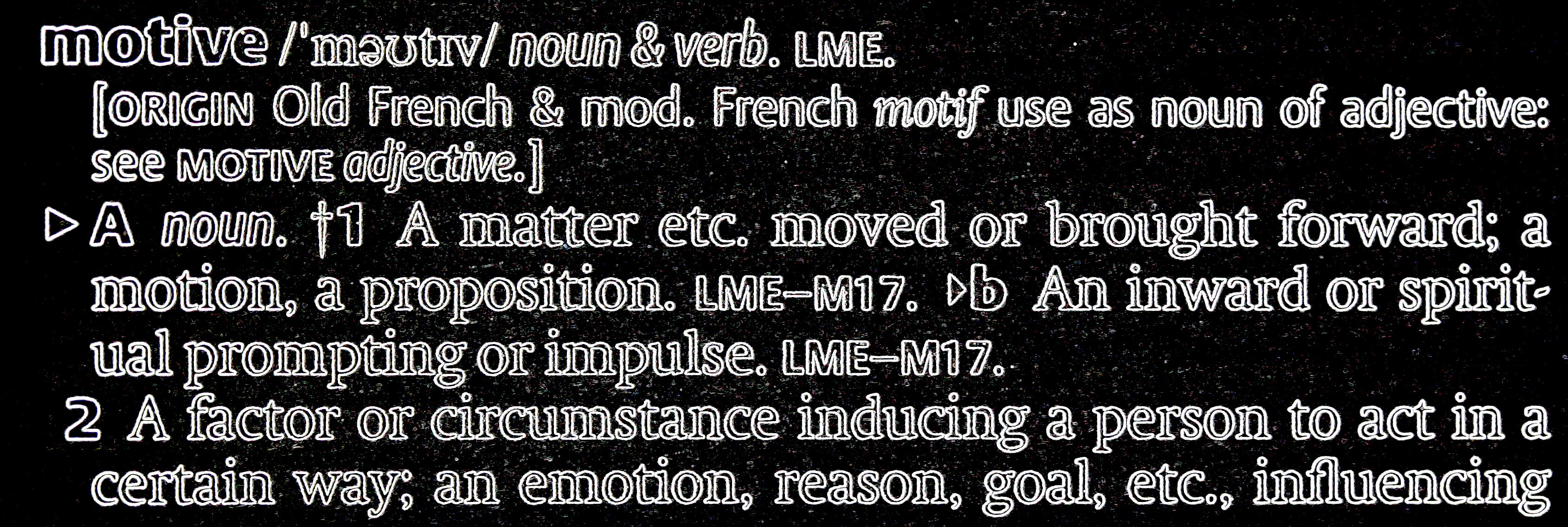
Motive is a fascinating part of murder, because it is bound up with the psychology of the killer. I find myself thinking of the motives that have driven people to dispose of others: resentment, hatred, envy, greed, retaliation, revenge, fear, anger… very human emotions that we all experience at one time or another, thankfully without fatalities. But what is it that pushes someone beyond the self-control that limits the majority? If we are to believe some crime fiction and the apparent evidence of real cases, there is sometimes the desire for fame, or notoriety, but this is perhaps very rare, if true at all.
Of course, investigators of murder cases think very closely indeed about motive, as that may well point to the perpetrator, or at least narrow down the possibilities: Who might have had a grudge? Who was close to the victim, by kin- or friendship? Who might have gained from the death?
These days, unfortunately, there are more frequently political motives for murder, when reason is overpowered by belief, and we might well gasp in astonishment that anyone could be fanatical enough to take a life in so public a way as last week in Woolwich. Most murderers seek anonymity.
It’s common to hear people say, “I’d kill for a… beer, a smoke, a cup of tea, a Mars Bar”, but the statement’s intentional hyperbole confirms its lack of seriousness. However, I have heard one person say, quite matter-of-factly and without any obvious intent to shock, that he could kill, full stop. Needless to say, I found his comment quite unnerving and, after considering the kind of person he seemed to be, not beyond the bounds of possibility. I have also turned the focus upon myself and asked myself if I could kill and, if yes, under what circumstances and with what motive? Crime of passion? Maternal defence of child? Revenge for abuse? Being for some reason or another at wits’ end? And if I were to commit murder, would I do it in a calculated way so as to minimise the risk of detection? Here I am, essentially a very pacific person, heading the way madness lies; however, as a crime writer, I do spend time on self-analysis, the better to understand the minds of my fictional characters.
Regular readers of this blog will see a link here with my recent rhubarb post, which of course was tongue-in-cheek stuff, and might now be determining never to cross my path. Fear not, whatever murderous intentions I have will be sated with words.
Don’t you love it when a book has personal resonance!

Stone Cradle is the second novel that I’ve read by Louise Doughty. The first, Whatever You Love, was an entirely different kind of book: a contemporary novel about child bereavement. Stone Cradle is a historical novel set in the Fens at the turn of the twentieth century, about a Traveller family. I bought it both because I’m interested in the Lincolnshire of that period and because it resonates with me personally, for reasons that I shall explain later, but first I’d like to say that any writer who can produce two such completely different, yet equally compelling, novels ticks several boxes for me straight away.
Stone Cradle is in part about the bleakness of being a working-class woman living in a predominantly farming community of the period. The story is told in the first person, alternately by a female Traveller, Clementina, and her daughter-in-law, Rose, a farmer’s adopted daughter who renounces the harsh life on the farm for the spurious glamour of running away to marry Clementina’s son, Elijah. It is one of the poignant ironies of the book that, although they share a great deal in common (including the fact that Elijah is illegitimate and Rose herself the illegitimate daughter of a mother who, like Clementina, worked hard to keep her), she and Clementina detest each other from the moment that they first meet. This is partly because they are rivals for Elijah’s affections, even though he is more often absent than present from their lives and both know that he is a ne’er-do-well, but even more because the norms and values of each are incomprehensible to the other. The dual first-person narrative captures this cleverly and is the more accomplished for going over the same events twice, through the eyes of each, without being repetitive. As someone who is experimenting with this technique at the moment, I know how difficult it is to pull off!
Rose persuades Elijah to live in a house in Cambridge (where Clementina presents herself as an uninvited guest and never moves out) for several years after their marriage, but Elijah’s fecklessness and their consequent poverty force them eventually to re-join the Travelling community. Rose never fits in. She dies twenty years before Clementina. At the beginning of the novel, Elijah, himself now an old man, is shown burying his aged mother. To save a few shillings, he has Rose’s grave opened and Clementina’s coffin laid on hers. Had they known, both women would have been appalled; the act epitomises both Elijah’s insensitivity and the privation that has followed them throughout their lives.
Two further qualities make this novel exceptional: the brilliant way in which Louise Doughty captures what it was like to be a member of the nineteenth-century Travelling community and her depiction of the period itself. The book has obviously been extensively researched, yet nowhere does the author parade her knowledge. One of the reasons for my being more often than not equivocal about historical novels is that, unless the author is very skilled indeed, the reader is presented with an outside-looking-in narrative: in other words, the author’s fictional take on what s/he has gained from the history books. Worse, this is sometimes accompanied by what I call the costume drama factor, i.e., a stereotypically ‘olde worlde’ way of making the characters think and speak, probably based on watching too many films. It takes a very talented writer not to fall into these traps, but Louise Doughty is such a writer.
Now I come to the personal resonance bit. In her acknowledgments, the author pays tribute to the Romany museum in Spalding (of which I was hitherto unaware) and the Boswell family. She actually gives the most noble of the Romany families in the book the name ‘Boswell’. It is another of the novel’s distinctions that the Traveller characters are not over-sentimentalised. There are rough and feckless Travellers, as well as ‘good’ ones, just as there are good and bad ‘gorjers’ (non-Travellers) living in and around Cambridge. The Boswell family was well-known in the Spalding of my youth. Their patriarch, whose first name I don’t know, because he was always referred to as ‘Bozzie’, had ceased to travel and built up a profitable scrap-metal business just outside the town. By the time I was born, he was reputed to be a millionaire and lived in a very nice house. I went with my father to see him on several occasions. In those days, I think that at least some of his family were still Travellers, and some may be still. Louise Doughty seems to indicate, however, that there is still a permanent Boswell presence in Spalding and evidently the Boswells were the inspiration behind the museum. I am determined to visit it next time I go to Spalding.
 Christina James, crime novelist