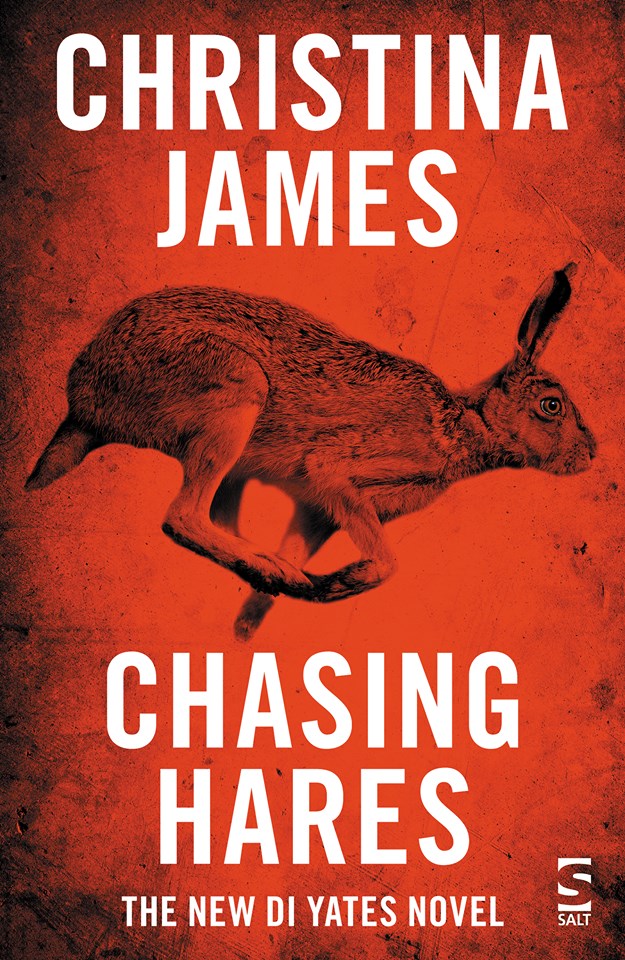


In its launch week, a wonderful review of ‘The Crossing’!

“… when we’re pretty sure we have the whole picture and are reflecting on the roller coaster nail biter of a journey as the end approaches, the author punches us in the stomach. Once again we’re treated to a big last minute shock in the same way she shook us in Sausage Hall.”
May I express here my sincere thanks to @TheBookbag’s Ani Johnson. The review may be found in full here.

Ani Johnson
.
The turn of the season…

The last of the Brussels sprouts
Last Saturday, I helped my husband to prepare his allotment, for sowing with a new cycle of plants and seeds. He needed some assistance, because during the long winter months the shelter that he and his partner-in-grime had built over it last year to foil the pigeons (it succeeded) had collapsed under the weight of an unexpectedly heavy fall of snow. Carefully, we untied some dozens of pieces of binder twine and rolled up long lengths of chicken wire to ready them for the grand rebuilding. Improved design, he says, will help to prevent the same happening again; we shall see!
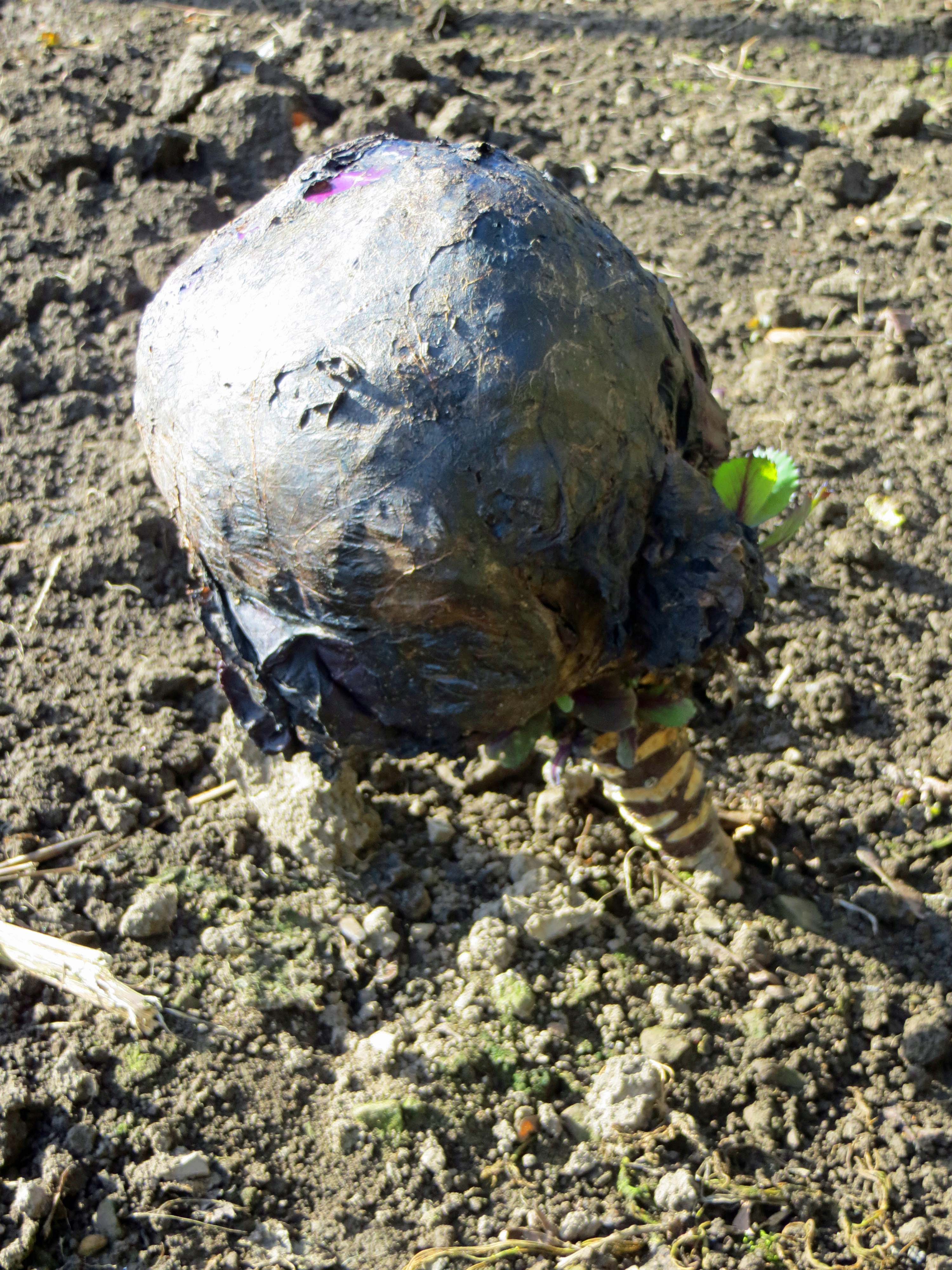
Red cabbage in a winter shroud
Partly because they were pretty difficult to reach amongst the debris of broken timbers and chicken wire, and partly because we’d had some over-supply, leftovers of last year’s crop remained, a brassica graveyard. Eight or so stalks of blackening Brussels sprouts tilted in a broken rank towards the boundary fence, a row of wounded soldiers at their last gasp. Several misshapen kohl rabi poked from the earth like a giantess’s bunions.

Kohl rabi bunion
Some heads of red cabbage, severed from their stalks, lay on the ground, broken and rotting, their outer layers turned into slimy winding sheets. Their lone companion, still growing, had grown a new rosette of small heads after the original cabbage had been cut, twisting itself into three dark petalled shapes, a macabre bouquet paying last respects at the funeral. Dried sticks of weed poked through the soil, which glistened unhealthily with a scattering of glossy green clumps of over-wintered willowherb and expanding whorls of nipplewort.
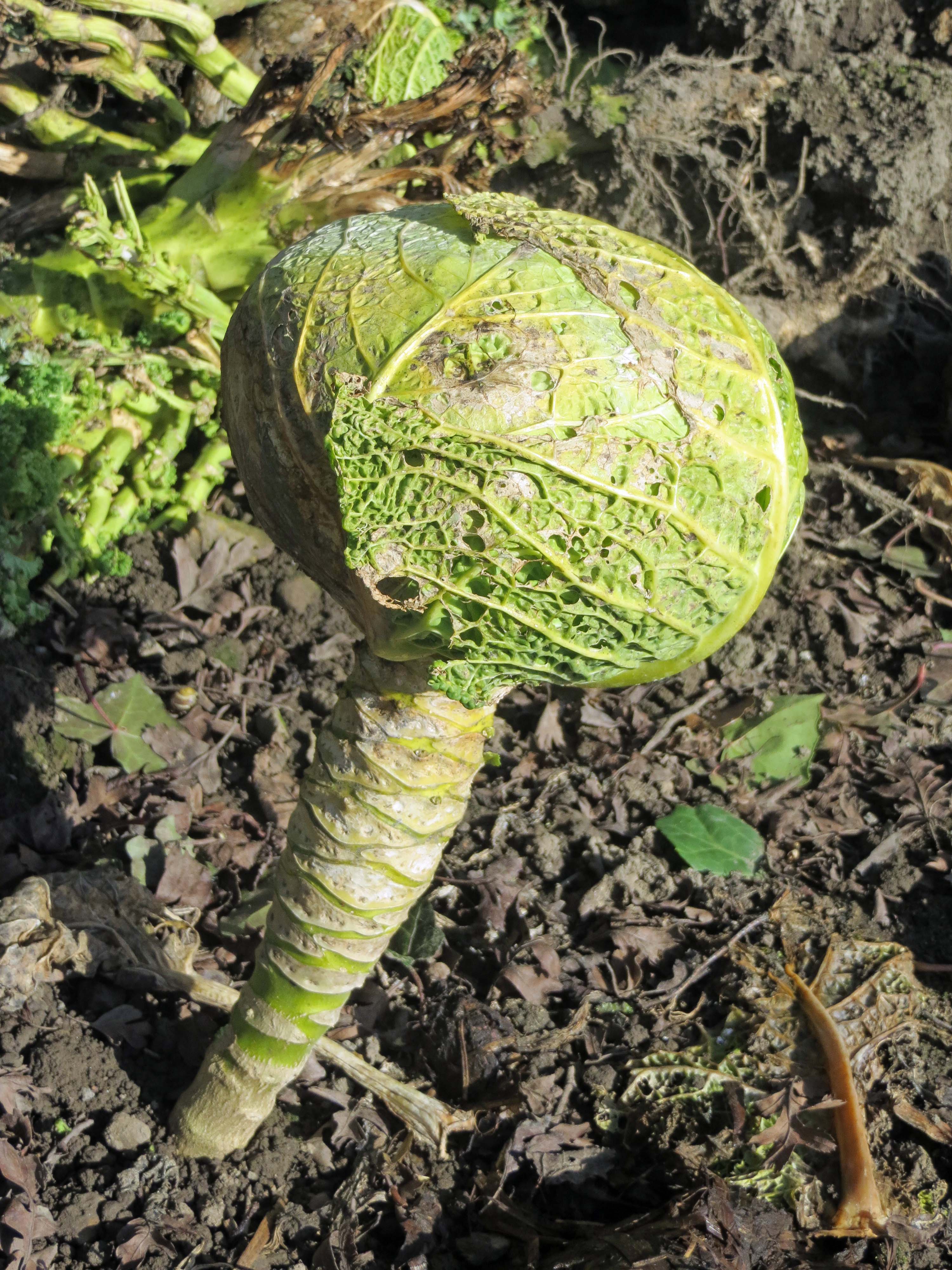
Savoy cabbage in terminal decline
Overhead, the sun shone with real warmth. New purple buds were swelling on the tangle of hawthorn twigs in the gateway. The bees in the adjoining apiary were flying, great tits were two-toning in the hedge and a lone hare loped away over the meadow. Spring was on its way, but I don’t recollect having ever been so vividly aware of the round of decay that must precede renewal.
Oddly, I found it comforting: it was as it should be. And somehow it made me feel more philosophical about death. Each plant and creature has its time. Then comes the Grim Reaper. It is only seemly. And there is something wonderful about the soil which is both grave and nursery; now it is manured and turned, I am reminded of the beauty of Gerard Manley Hopkins’ ‘shining-shot furls’ of ploughed land, from which will spring new life.
To be, or not to be… a lady.

Bess of Hardwick
‘And I of ladies most deject and wretched …’
I’m not actually feeling depressed myself: with these words, Ophelia, in Shakespeare’s Hamlet, bewails the fact that Hamlet, who has recently been wooing her, is now treating her with utter contempt and has implied that she, because she is a woman, can be no lady, unless a licentious ‘painted’ one. The word ‘lady’ is one I’ve been pondering since, a week ago, we spent two very enjoyable days walking with our friends Priscilla and Rupert and, over breakfast, I told an anecdote from my remote bookselling past, which, briefly, goes like this:
The founder of the small library supply company for which I used to work, who was a First World War veteran and a very old man (I’ll call him ‘Mr Smith’) when I first met him, always stayed at the George Hotel in Stamford on his visits to and from London. His wife, a formidable lady by all accounts, the eldest of five clannish and strong-willed sisters, was a semi-invalid who spent most of her time at home, engaged in various projects that could be completed from her bed; for example, she taught herself fluent German. However, when her illness – whatever it was, it always sounded quite vague to me – was in remission, she would occasionally accompany him on his business trips and eventually they checked in together at the George, which is a magnificent old coaching inn and quite grand in its way. One of the services it has always offered is tea in bed, delivered by a waiter. On the morning after their arrival, the waiter duly knocked at the door and entered with their tea tray. The founder’s wife sat up in bed to take it from him. The founder himself also sat up and the waiter addressed him with the following greeting:
‘Good morning, Mr Smith. Not the usual lady, I see!’
Aside from the fact that I find this very funny – it became one of the company legends – it’s interesting because of its use of the word ‘lady’, always a slipperier noun than its plainer alternative, ‘woman’. My husband was once berated by some female colleagues for saying ‘Good morning, ladies,’ even though, as he pointed out, ‘Good morning, women,’ sounds both comic and slightly disrespectful (and in any case, he added, he always said, ‘Good morning, gentlemen,’ to a group of men). But ‘lady’ is not a straightforward term. If not used with care, it can be very patronising: why do we refer to ‘dinner ladies’ and ‘cleaning ladies’, but use the terms ‘female’ or ‘woman’ as epithets for women with a recognised profession (policewoman, female barrister, woman MP)? Would anyone today refer to a ‘lady teacher’ or a ‘lady librarian’? (There were actually ‘lady librarians’ running the public library service before the Second World War; they were generally women from the upper middle classes, whose families were so well-heeled that the local authorities didn’t need to pay them a salary and, as soon as salaries were introduced, many of these jobs were then taken by men! ) And what of the careers to which women have been admitted only in more recent times? Would anyone seriously allude to a lady soldier, a lady bus driver or a lady CEO? Don’t we all abhor the slimy man who refers to his spouse as ‘the lady wife’?
And yet … amid the hubbub of modern life, we may – sometimes – still wish to be referred to as ‘ladies’. For example, when a mother with a lively child in tow says to it, ‘Give up your seat to this lady,’ or ‘Be careful, don’t bump into that lady,’ it would be only the most truculent and militant of us who would correct her and say, ‘Please refer to me as a woman.’ Shops – including online ones – still refer to ‘ladies’ fashions’ and, although some facilities in hotels, restaurants and public places are now marked ‘Men’ and ‘Women’, most still use the more traditional ‘Gentlemen’ and ‘Ladies’. Speechmakers still begin their address with ‘Ladies and Gentlemen’ – or sometimes even the grander ‘My Lords, Ladies and Gentlemen,’ with its delightful implication that all ‘ladies’ are in some way aristocratic. And most of us are fascinated by the great ladies of the past: Bess of Hardwick, who began life as a ‘woman’ and worked her way up; Lady Castlemaine, one of Charles II’s two most famous mistresses (though the other, Nell Gwynne, was definitely a ‘woman’); and two scintillating Duchesses of Devonshire, each quite different from the other – Georgiana, the eighteenth century holder of that title, and the recently-deceased Deborah, chatelaine of Chatsworth House, who was born a lady and became a greater one.
Listing some of these ladies, however, brings out another connotation of the word: it can be and often is very closely associated with the oldest profession. Thus the deliciously evocative ‘ladies of the night’, ‘his lady-friend’ (meaning ‘not his wife’) and a ‘lady no better than she should be’, a term much favoured by my grandmother, usually delivered with a flash of the eye and a pulling-down of her skirt over her knees, as if to imply that her virtue, at least, was safe.
I return to Ophelia. One of Shakespeare’s most enigmatic heroines, she is portrayed both as the ultimate virgin and, after her madness sets in, as a foul-mouthed woman conversant with sexual practices unbefitting a ‘maid’. ‘Lady’ is a word she uses frequently. She herself embodies its ambiguity, and by extension the double entendre of the word itself. It is an equivocation which today’s women, who in this country have almost but not quite achieved equality and in many others are still fighting a tough uphill battle to get anywhere near it, often resent. Are we ladies or women? Does the word ‘lady’ still have a place in our society? What of its counterpart, ‘gentleman’? But that, perhaps, raises a wholly different topic!
I’ll leave the penultimate word to Ophelia:
‘Good night, ladies; good night, sweet ladies; good night, good night.’
And the last to myself:
Or, perhaps, ‘Good-bye, Ladies? Hello, Women?’ Words, words, words!
Flirting with the M5 – in love with your hard shoulder… Feel my soft verges…

Summit tunnel, Smethwick, Birmingham Canal Navigations
Head northwest out of Birmingham City Centre towards Wolverhampton along Thomas Telford’s ‘new’ main line, a canal designed to replace James Brindley’s wandering minstrel of a waterway (he was a man who followed contours) with an uncompromisingly direct route to Tipton, and you are, before too long, faced with the choice of old or new. We once came from Wolverhampton on Telford’s route, which may have resolved the needs of the working boat traffic of his day in reducing distance by a third, overcoming dreadful congestion at locks and replacing worn-out towpaths, but the experience did nothing for me as a 21st century tourist boater looking for interest; the straight miles of tedious and unrewarding scrubland were about as delightful as a purposeful motorway drive compared to a romantic dalliance with a B road. I of course admit that each serves its turn, according to need. Chacun à son goût! Telford’s dramatic cutting through the Smethwick Summit, with the magnificent Galton Bridge bestriding it, is an astonishing engineering achievement which one can admire, and we did, that time, but this year we had no difficulty in pursuing our favourite right turn in celebration of Brindley along the ‘old’ main line.
Now you will have deduced that I am an incurably poetic soul, who hankers after historical roses, but, if that is the case, you’ve jumped right… to the wrong conclusion. The thing about this old Brindley canal is that it has become touched with modern magic, in the form of juicy juxtapositions of modes of transport (and other things), and I hope from our photographs that you will see what I mean.
Turning right at Smethwick Junction provided us with some welcome diversion from quite a long horizontal journey (from the King’s Norton Junction south of Birmingham) in the form of the three locks which take the boater up to a stretch of canal that is, for me, just wonderful. I don’t expect everyone to share my taste.
Passing the Grade II listed pumping house between the two main lines at Brasshouse Lane bridge (If you get the chance to go inside, you’ll find, as I did, a Victorian marvel of a machine on different levels, one of the original two which were capable of lifting 200 locks of water a day; it replaced the earlier pumping houses on the ‘Engine Arm’ of the canal.), the old line leads under the Summit Tunnel. Though it all seems very rural just here, the thundering traffic of an A road dual carriageway passes unseen over this concrete underpass! There’s your first juxtaposition!

Yes, here we are in rural Birmingham.
A heron, cranking itself from the towpath and lifting itself high into the air above us, is proof of the richness of canals, supporting wildlife as they do here, in the most unpromising terrain of urban and industrial Birmingham.

Flight of the heron
And now we meet the majestic (Yes, I mean it!) M5, a contrast to this beautiful canal (Yes, I certainly mean it!), with a pleasant moment of inconsistency as four kayakers pass by. The skyline, too, has a splendid coherence here.
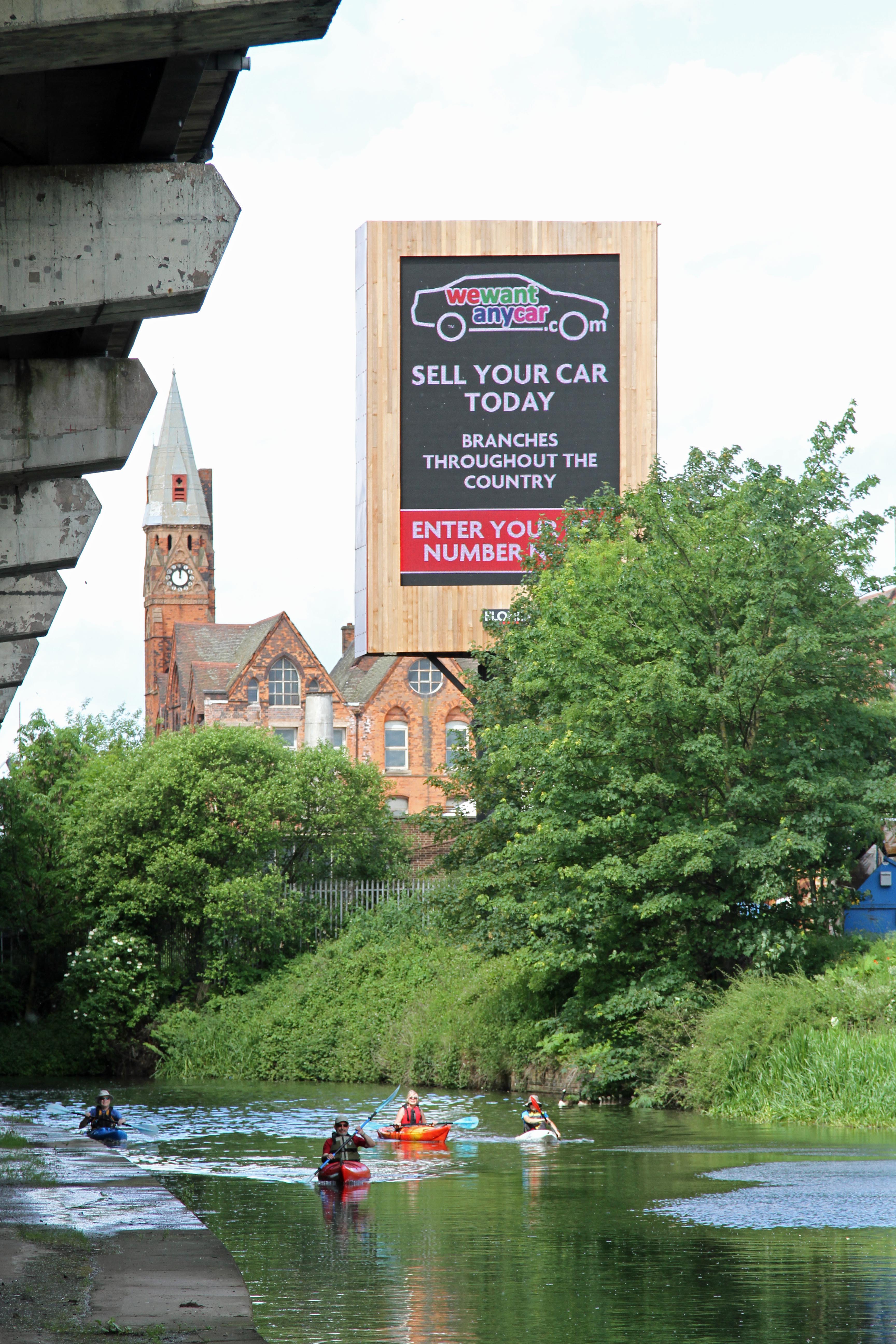
M5 cantilever and kayaks
Up above, the juggernauts carry their loads in a roar, but we can barely hear them as our boat quietly transports us into a dream.

Here we come; there they go, through the M5 portico!
Wild life flourishes and Smethwick adds to the population of Canada geese, we note, as this crèche bobs by.
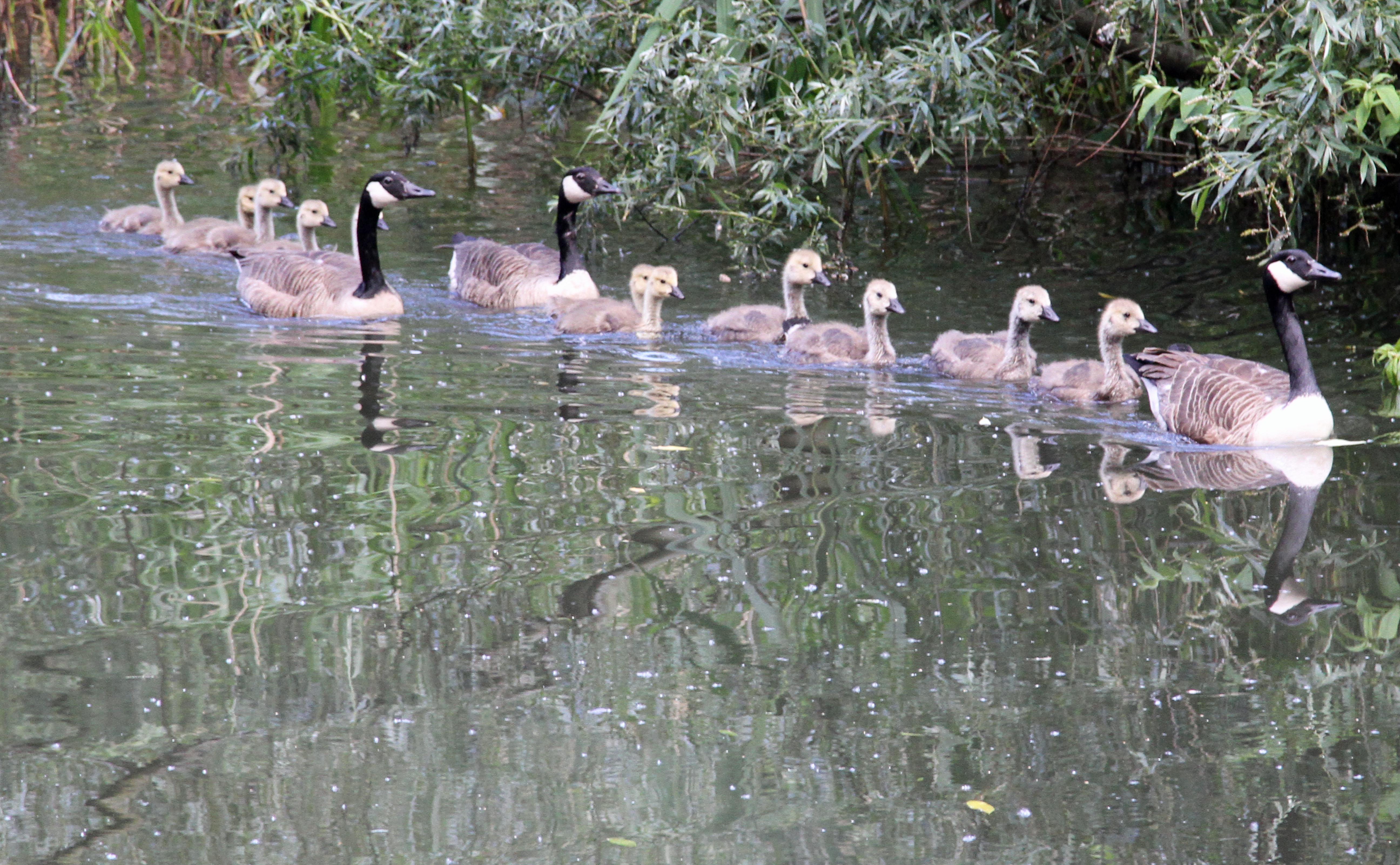
Canada goose creche
Straight lines and verticals abound in this motorway underworld, but our waterway winds deliciously, refusing to comply, and we wander willingly with it, from side to side.

And under we go again.
I think that Brindley would have delighted in this, a towering sandwich of route ways. I should love to be able to show him and watch his reaction!
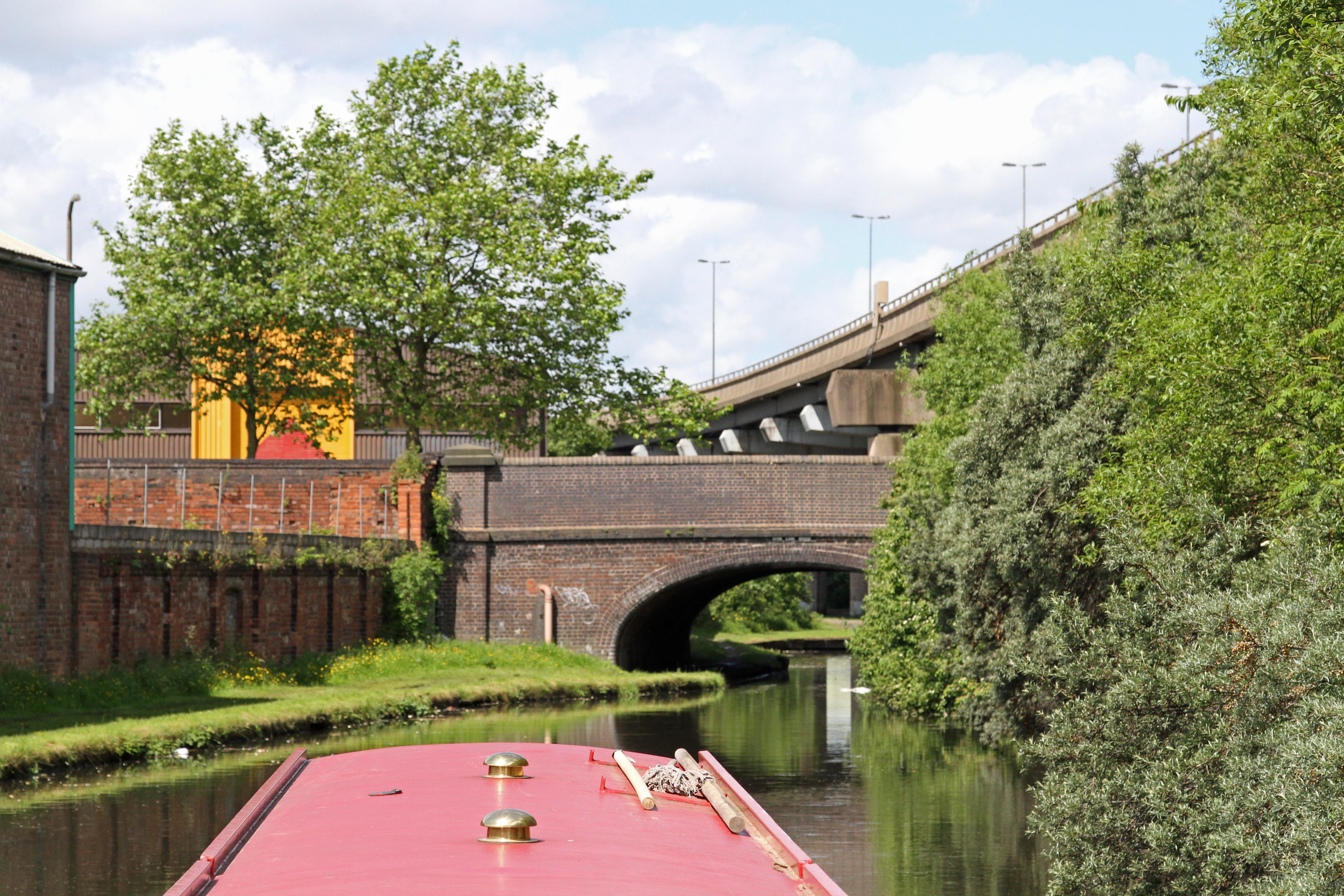
Triple decker – canal, road, motorway.
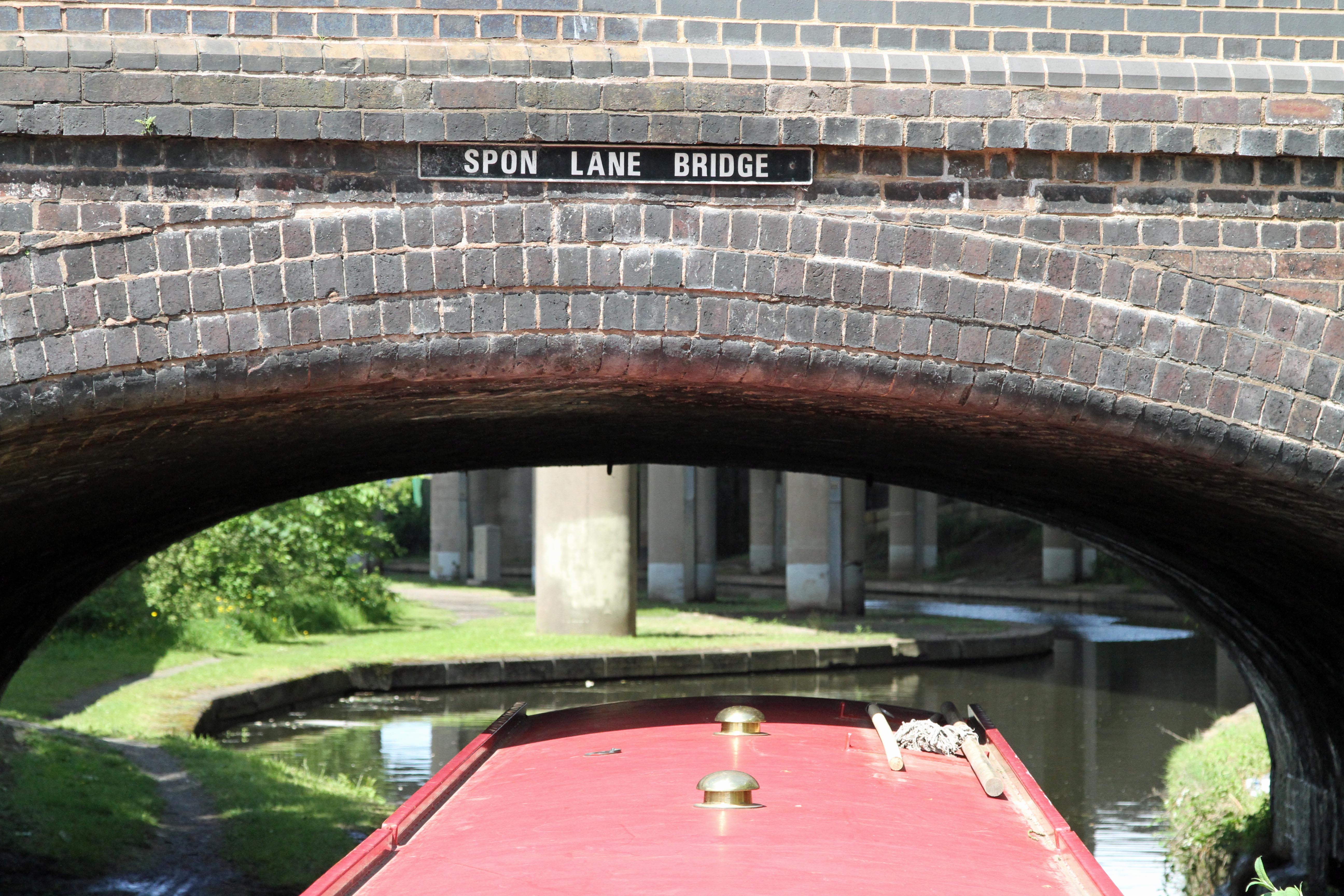
Spon Lane Bridge
These colonnades may be formed from steel and concrete, but there is peace here for those of a contemplative frame of mind; the numbing noise of the carriageway above seems far away.

Cloister
We’ve come up through Spon Lane locks before and marvelled at the contrast between the new and old main lines; we’re not at all tempted to lock down this flight of three, as we know how much more there is to see along this refurbished section of Brindley’s canal.
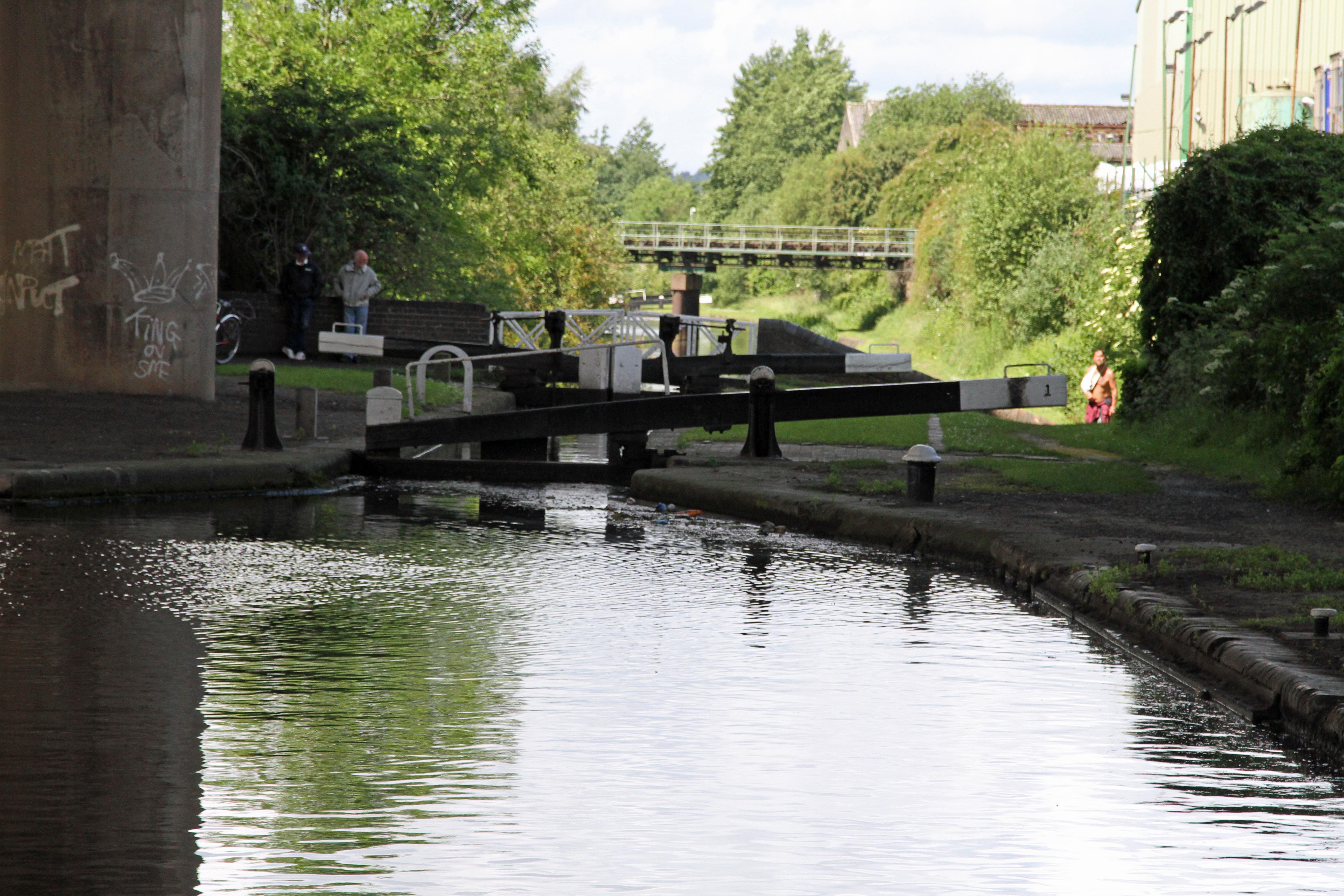
Spon Lane Locks: chance to rejoin the new main line. No thanks!
Three locks back at Smethwick Junction gave us this much height above Telford’s cut.
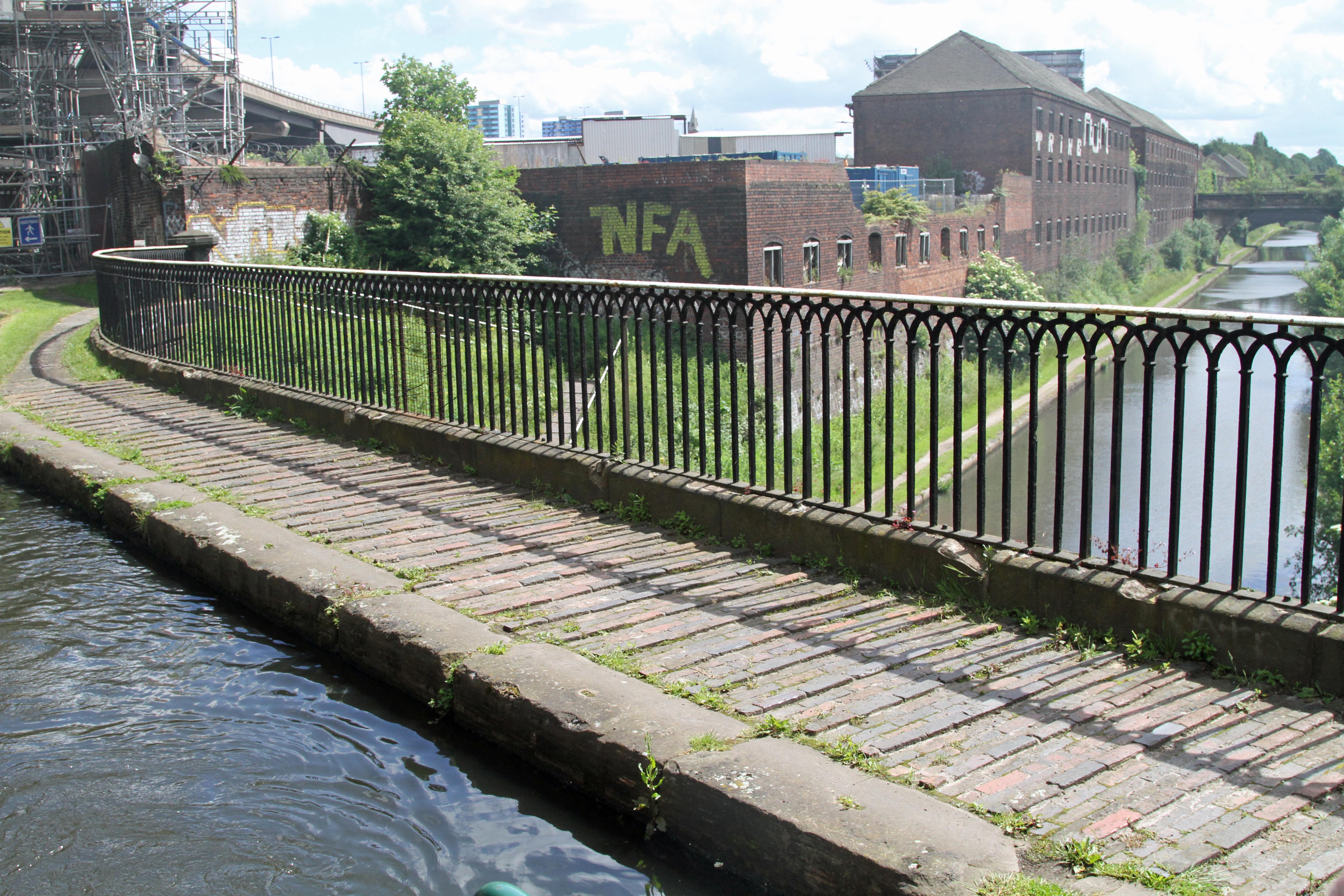
Stewart aqueduct: Below, the new main line heads for Galton Bridge.
I’m rather sorry that it’s impossible to get all four levels of transport into one photograph from the vantage point of a narrowboat just here… and three must do.

Four levels of transport: New main line below, old main line, Birmingham-Wolverhampton railway, M5!
For those of us who prefer the language of a bygone age of transport! Train station? Hah!

A magical name to conjure with…
I wonder what Blakey Hall was like and whether the owner rode on horseback over this bridge. I love the whimsical shape in this, its contemporary context.
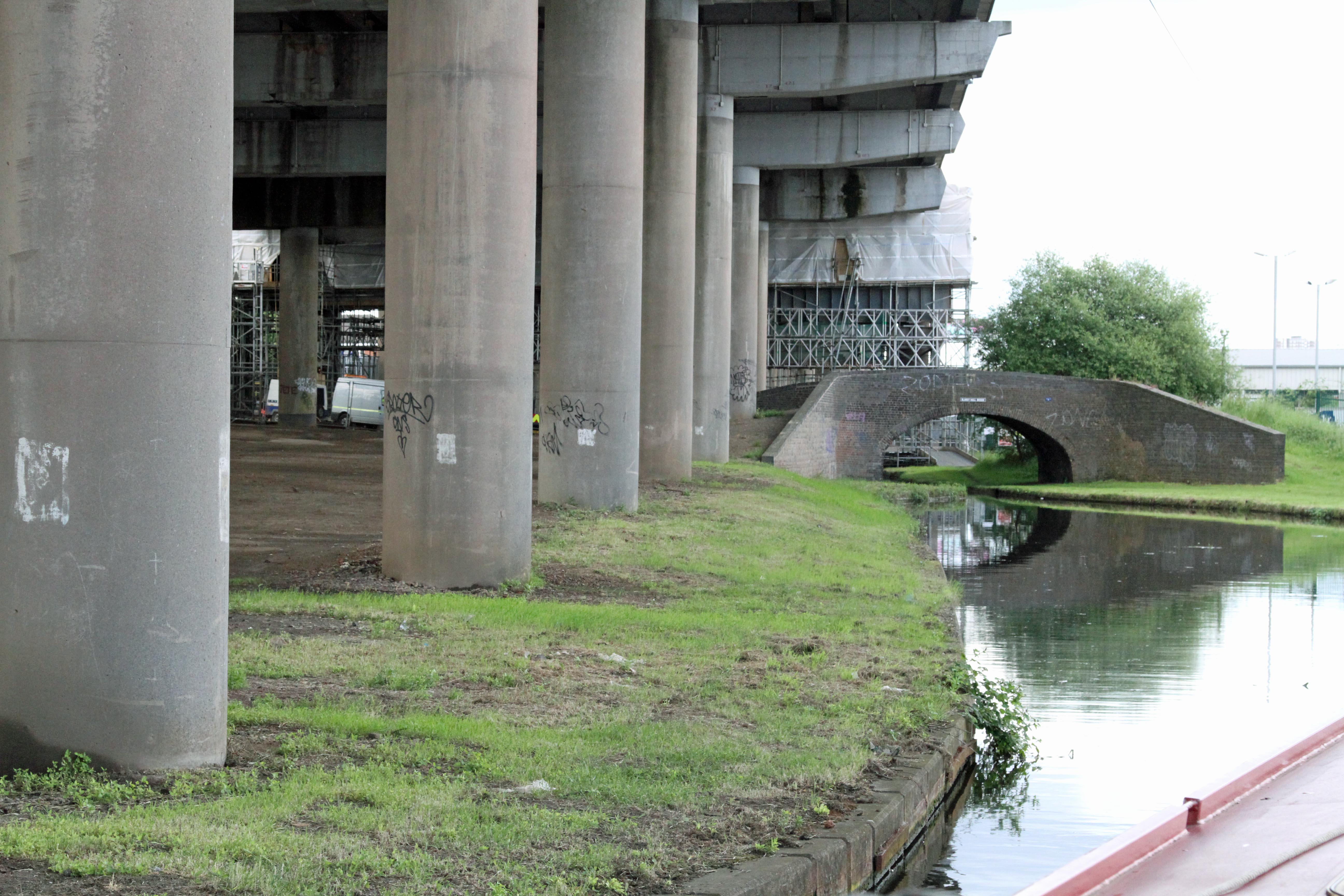
Blakey Hall Bridge – a matter of age and scale…
A sixty-eight foot narrowboat isn’t the easiest vessel to steer through tight spaces, but get the line right and you’re through.

Judgement matters at Blakey Hall Bridge.
Sorry, I couldn’t miss the opportunity for this pun. 😉

A view from the bridge…
If you have an artistic eye, there’s plenty here to entertain it.

Perspective
Hopkins’ “skate’s heel sweep[ing] smooth on a bow bend”? Perhaps, but in slow motion!
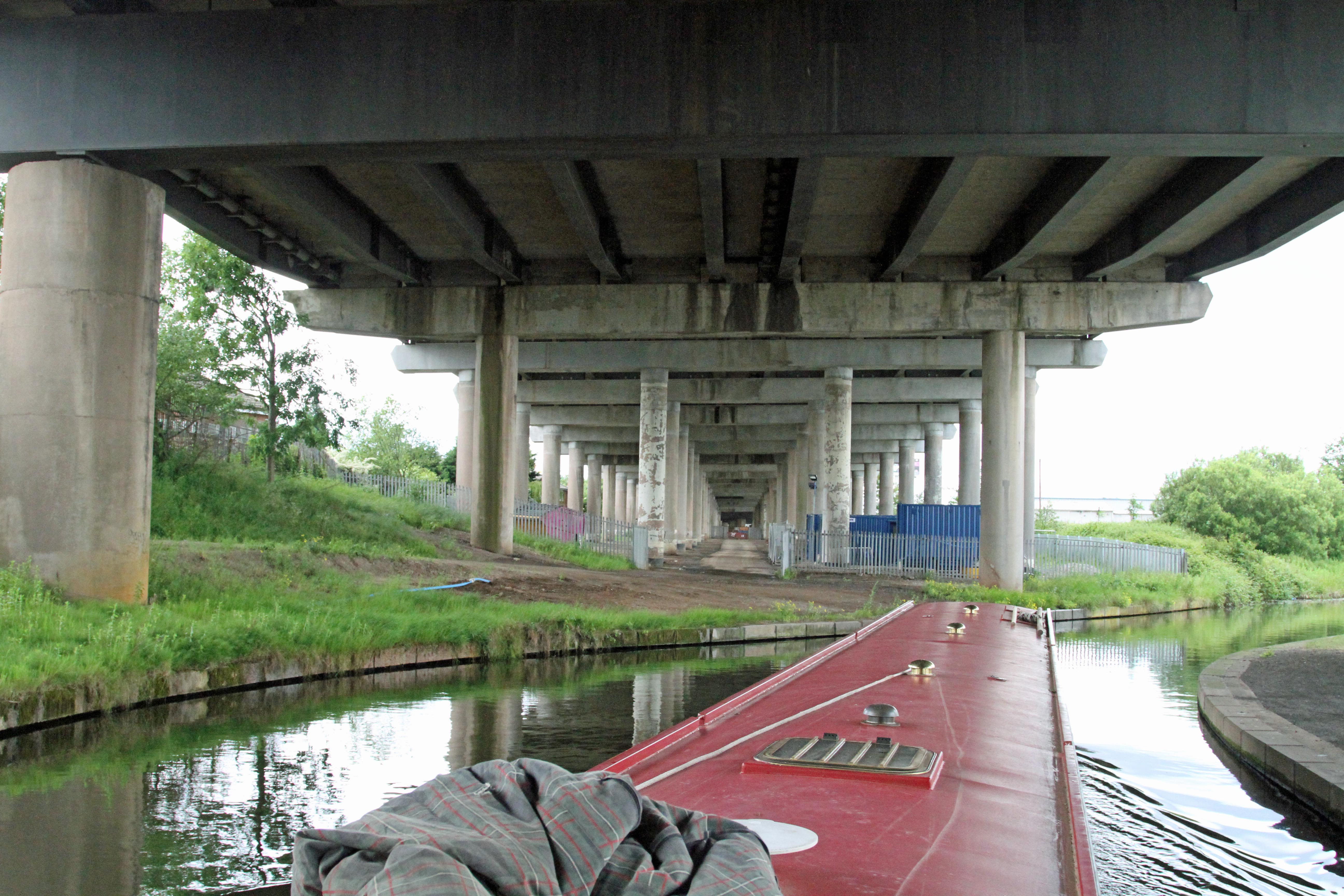
Into the curve…
Modern canal bridge design, with a slight brickwork salute to the past.
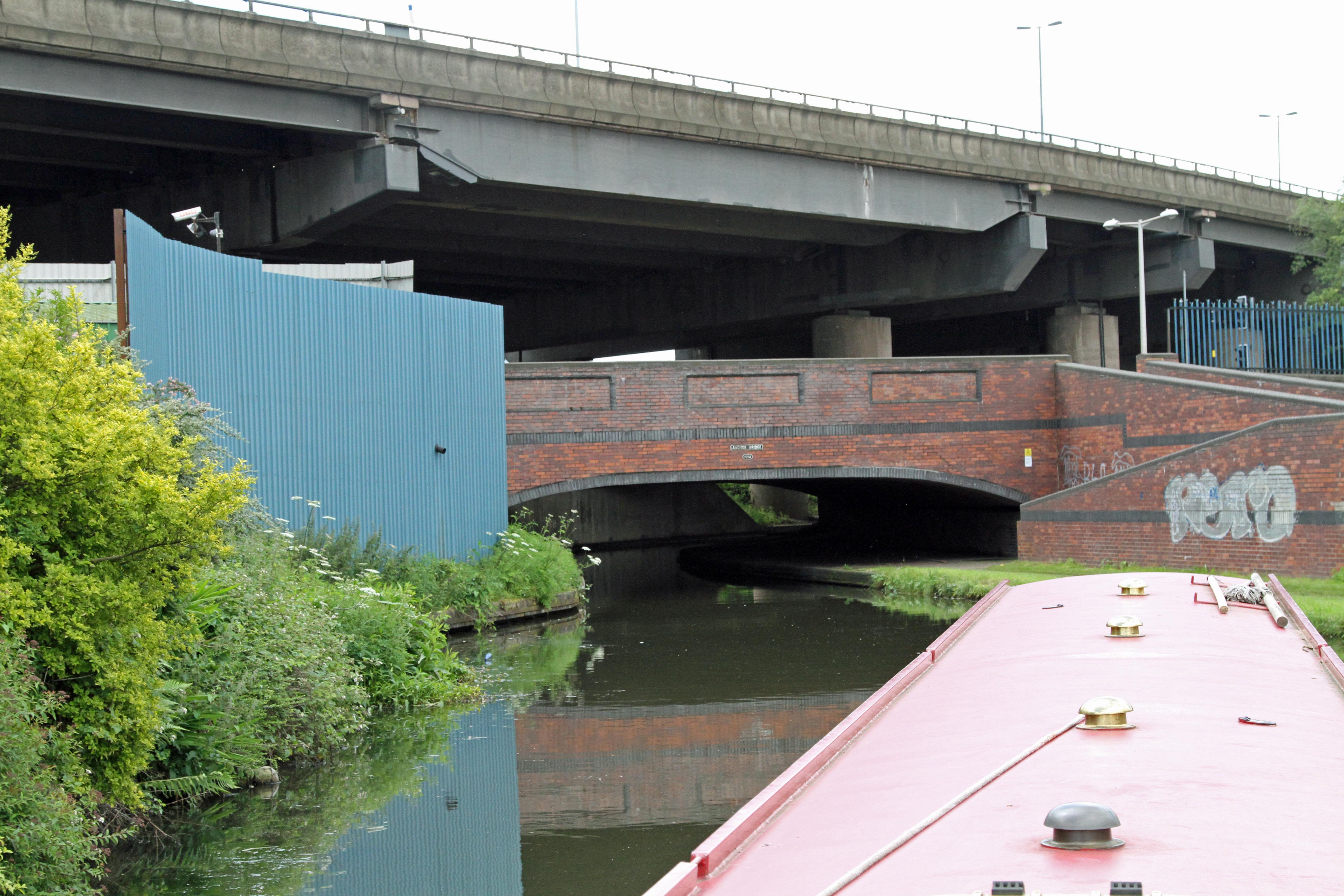
Anchor Bridge 1994
Once again, there’s definitely a line to take to make the turn.

Swing wide, sweet narrowboat…
Telford wanted us to hold the tiller straight!
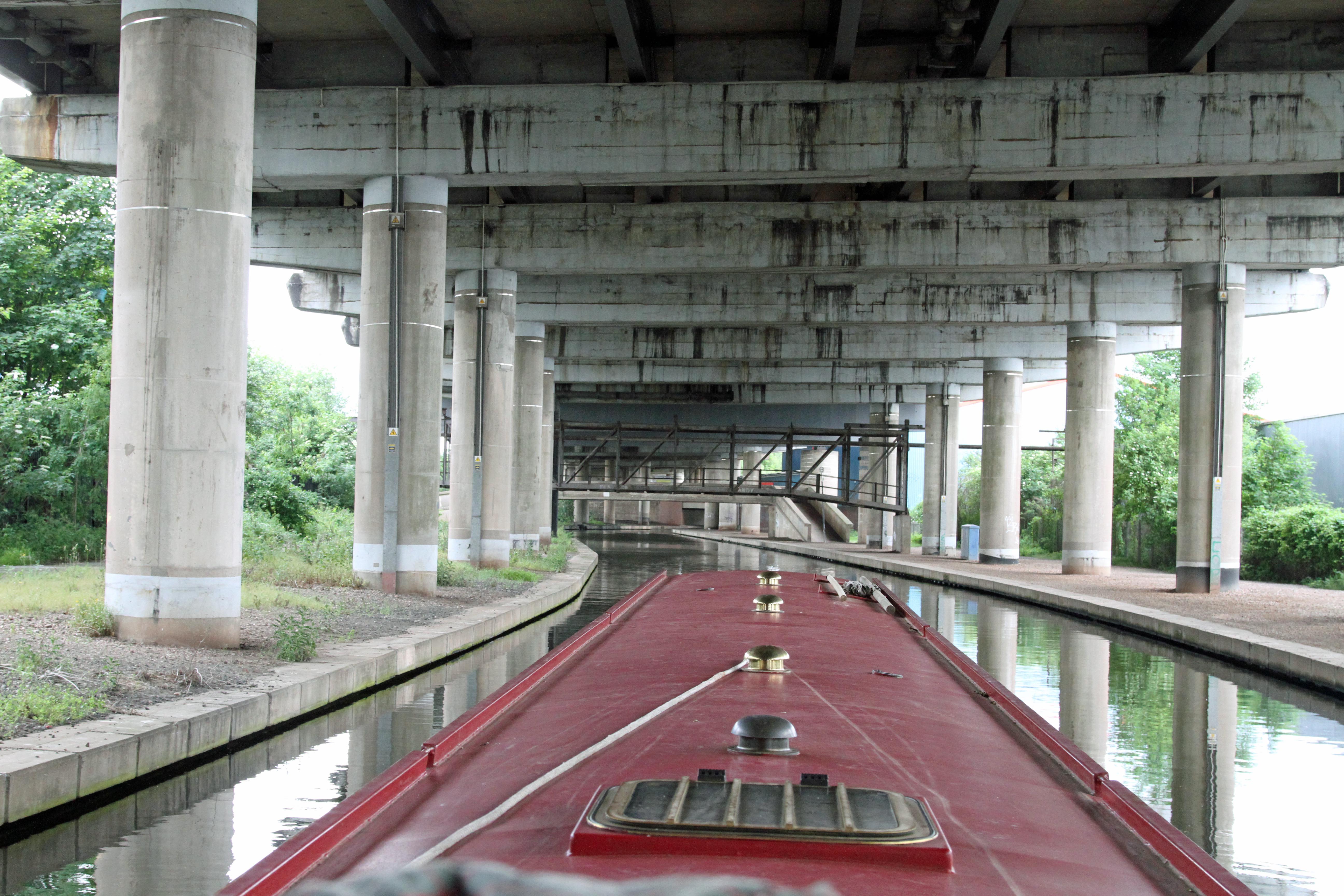
You swing it to the left, then you swing it to the right…
Here’s one we’re saving for the future: up to Titford Pool and back.
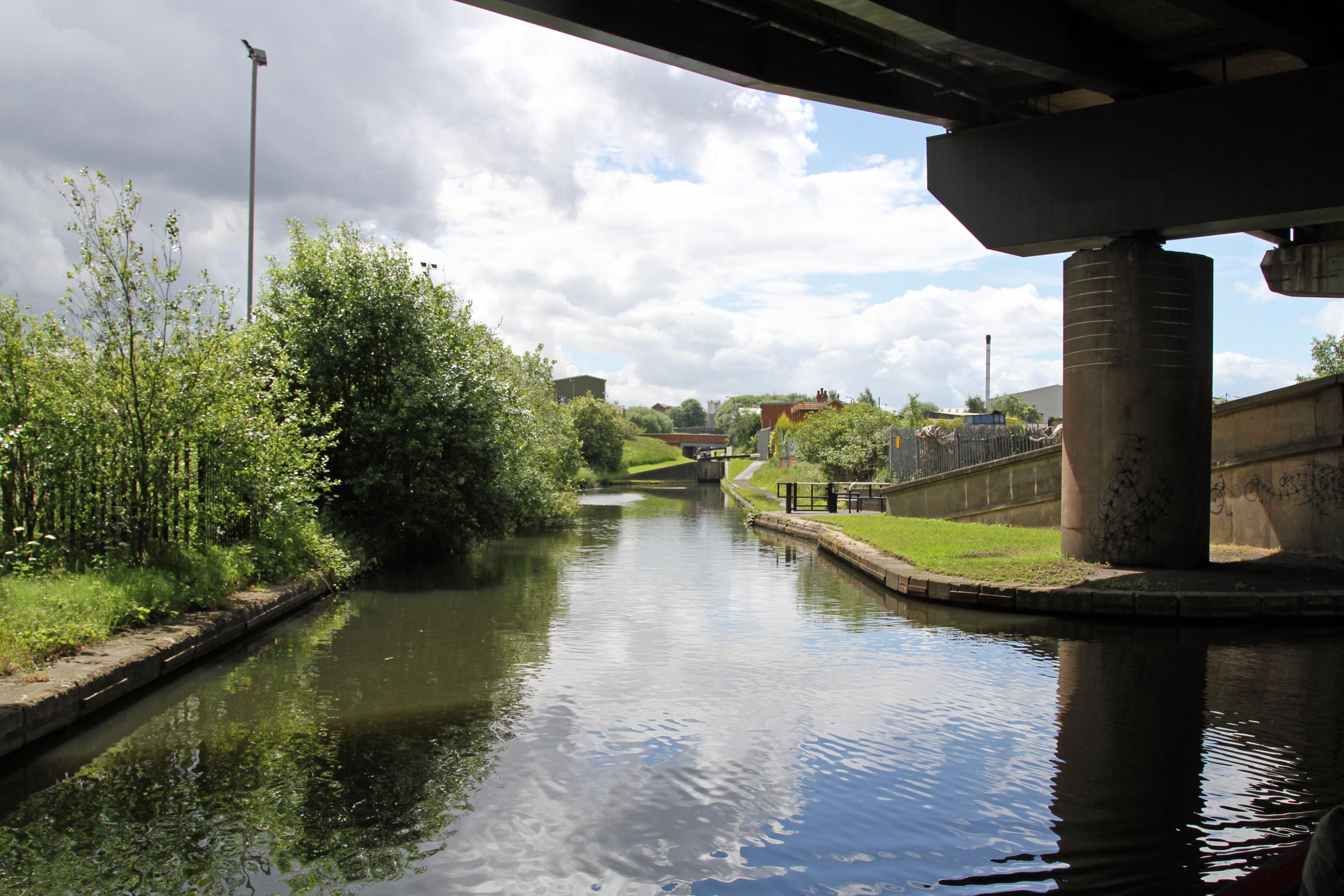
Oldbury Junction and the Titford Canal
Graffiti interest? Well, of course!
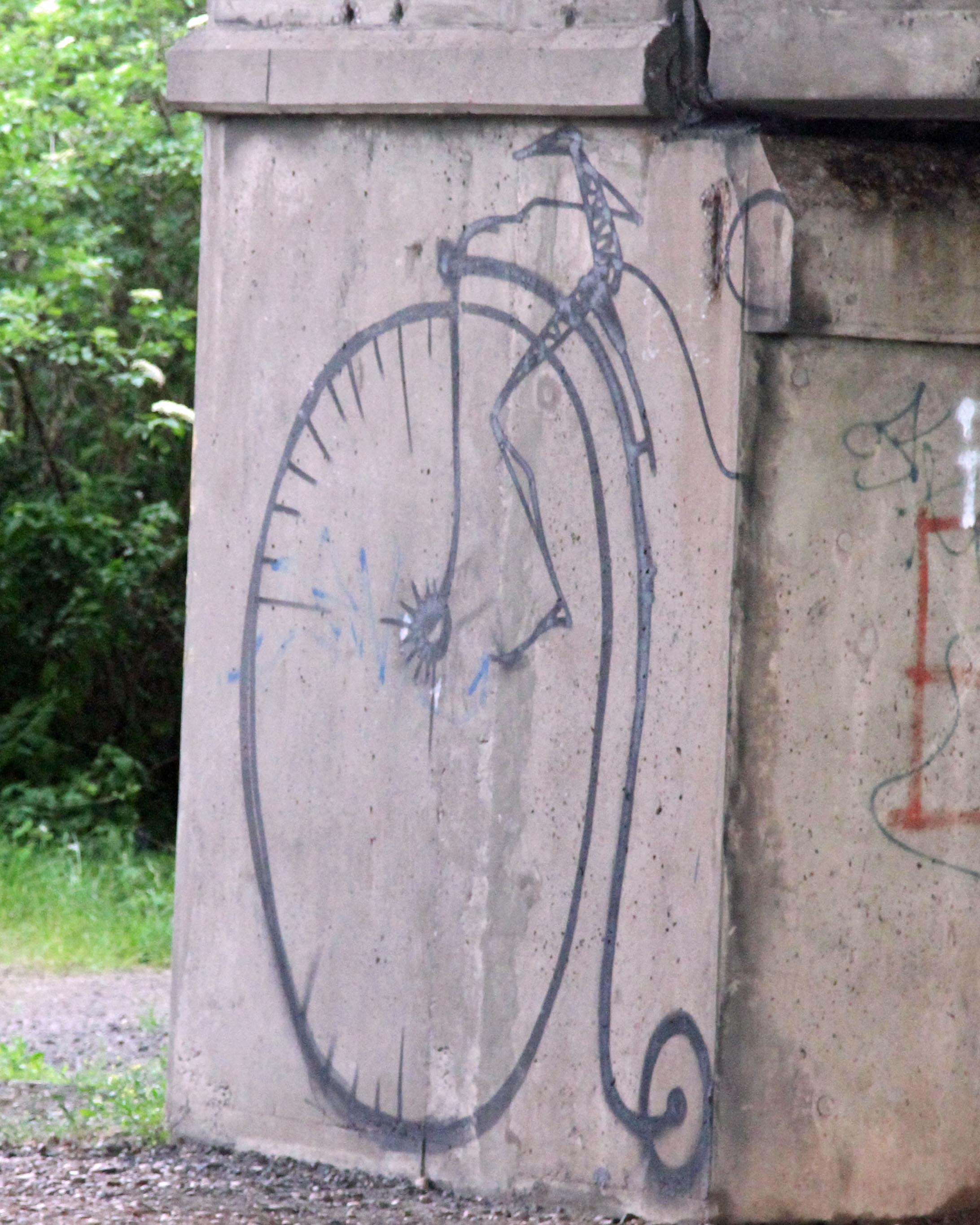
Fancy taking a ride along the towpath or down the M5?
And now we say goodbye to the M5, with sadness at the end of a romantic encounter. We’ve dillied and dallied all the way.

Stone Street Bridge 2001
Thank you for joining me on this narrowboat ride. Perhaps you will admit to being at least surprised to find what lies beneath the M5, even if you can’t find it in you to love it as much as we do!
All text and photographs on this website © Christina James
A flavour of floral June along the canal…

Staffs and Worcs Canal
Canal banks in June: great mounds of blackberry-promising fatfulness; blushes of dog-rose, fluffing; field roses with hearts of gold; elder sprays of cream parasols; purple-loosestrife spikily soaring; yellow flags already rent and over-blown, but bright to the end; hemp-agrimony, overdressed and busty for an opera of bloom; meadow-sweet candy-frothing and a-buzz; hemlock towering on red-splotched trunks with canopies of flowers; bittersweet, weaving its poisonous way with velvet cunning through the twiggery; armies of mare’s tail on the march; suckabee Himalayan balsam just beginning to pout; tow-path beds of campion, partying in pink; sweeps of buttercups amongst the broken banks of the pasture; good old hogweed, slumming it with grandeur; inevitable rosebay willowherb rising and aspiring to July; lush grasses teetering on the brink.
Sit in the almost silent narrowboat bow and love the flower parade, whose scents undulate like the ripples spreading wide.

Elder

Field rose
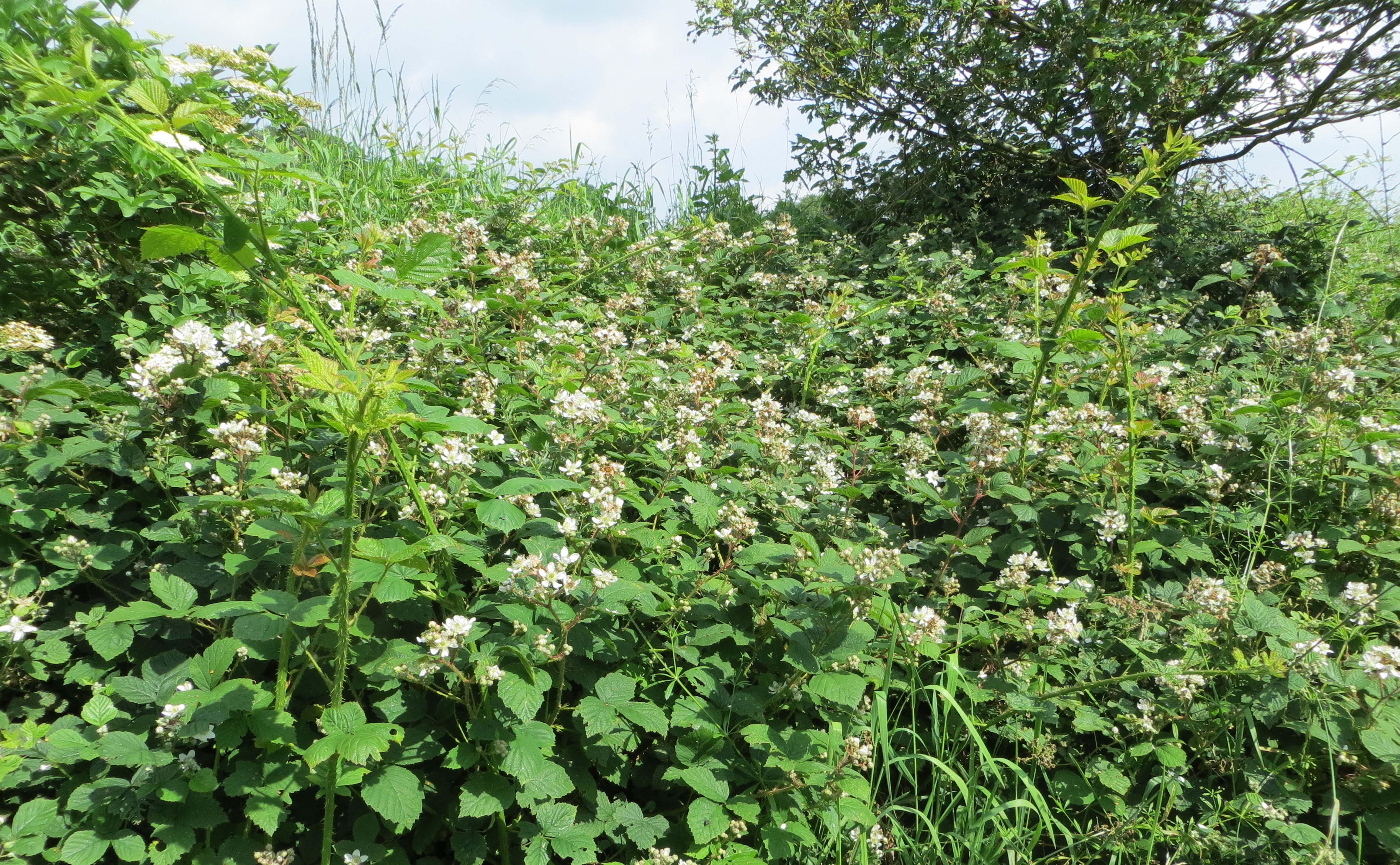
Bramble

Hogweed
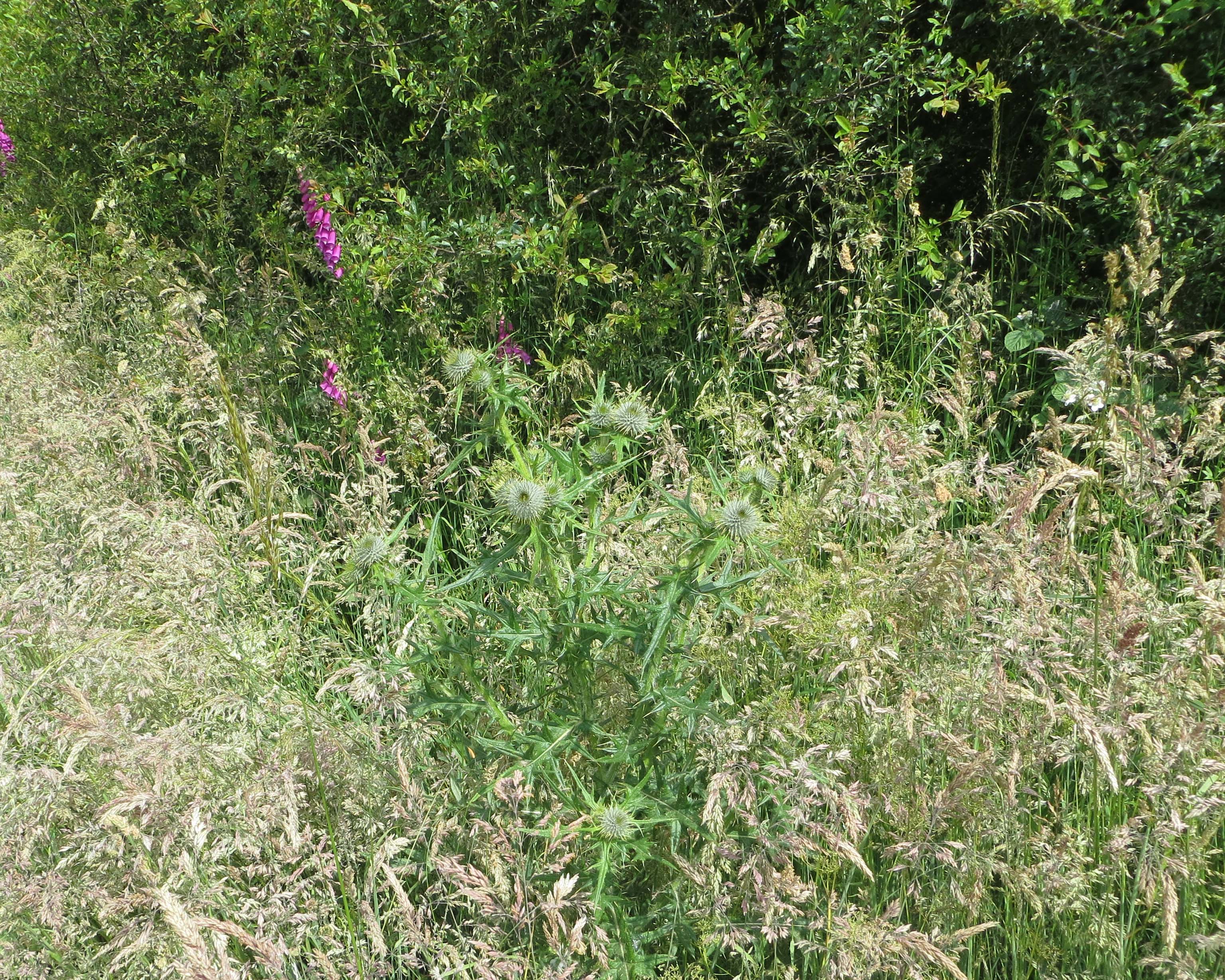
Spear thistle amidst a medley of grasses

Rampant rosebay on the rise
Where sheep may safely graze…

Terence the tup

Most of Terence’s flock

Brave new world
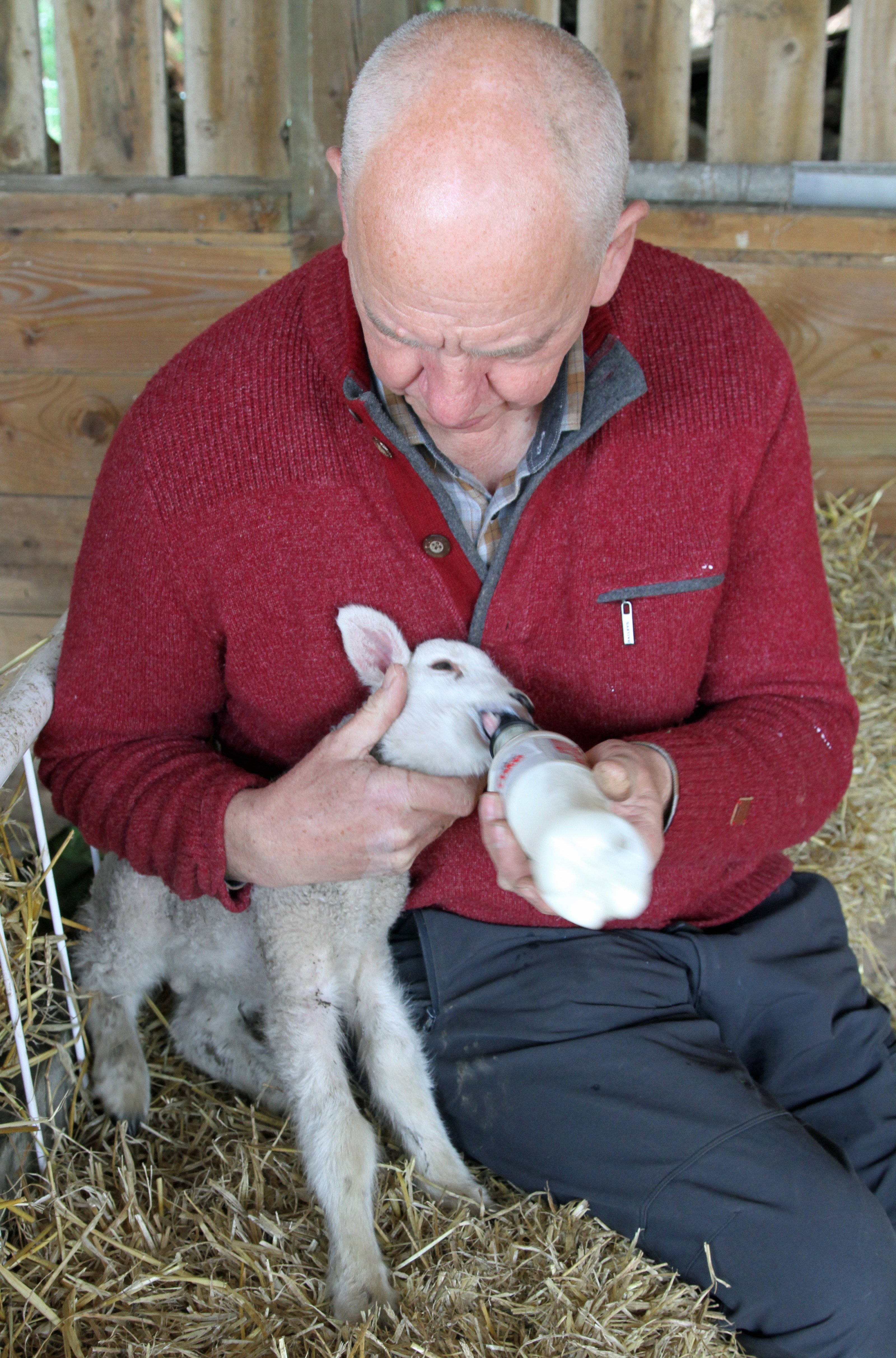
Supplement for the smallest triplet, to help mum…
We celebrated the start of spring this weekend by paying our friends Priscilla and Rupert a visit. We were looking forward to seeing their new-born lambs. They have eight ewes altogether, of whom four have borne a total of nine lambs (three sets of twins and one of triplets). They don’t know whether the other ewes are in lamb or not – apparently it is very difficult to tell whether a ewe is pregnant unless she undergoes the ovine equivalent to a scan, which for most farmers would be prohibitively expensive. (It occurs to me that an enterprising entrepreneur should come up with a ewe’s pregnancy testing kit!)
Whether or not the remaining ewes have been successfully impregnated, one thing is certain: Terence the Tup is in clover. Some of my readers will remember that Terence had a few runs-in with a mating harness at the beginning of the winter. Once Rupert had finally figured out how to put it on, it chafed Terence, so he was allowed to step out of it forever. This meant that his virility could not be measured. All that Priscilla and Rupert could do was wait and hope that he had triumphed.
Terence takes over the story:
You wouldn’t believe this, but that Rupert has fitted up a telescope in his bedroom so that he can spy on me. Prurient, that’s what I call it. If a ram tried that, he’d be locked up. It’s bad enough trying to get a bit of privacy when you’ve eight ladies to look after, without him butting in. He says he’s doing it on humanitarian grounds. Pah!
Everyone seems to think that I’ve struck it lucky here, that it’s an easy billet for me, with just eight women and no other blokes trying to muscle in. I’ll have you know it’s not a straightforward as it looks. For one thing, some of my girls are quite flighty. They’ll argue with each other over who should be next for my favours and then, when I pick one and take her side, they’ll all turn on me. Sometimes, that means I don’t get anywhere with any of them and I have to wait until things have settled down before I try again. Then Rupert comes out (having, I imagine, been glued to his bedroom window – you’d think he’d have better things to do) and says he’ll get rid of me if I don’t perform. You can’t win.
And another thing… Rupert and Priscilla bought special fodder for the ewes once they thought they were in lamb, to give them the right nourishment. I’d no objection to that, but they were downright stingy when it came to letting me eat it as well. I didn’t get any of it ‘officially’. They didn’t seem to understand that I was as busy making lambs as the ladies were – busier, in fact. I’m a dad of nine now, and counting, not just a mum of two or three. They should have seen that I needed the victuals to keep my strength up.
I found a way round this eventually. I decided to cold-shoulder any lady who wouldn’t share her provender with me. It worked a treat: they all gave me some. They might not have minded ganging up on me sometimes, but if there was one thing that none of them could stand, it was being ignored. I should have tried it in the first place: they’d all have been in the club in no time. Rupert thinks that I’m getting a bit fat now, but what does he know about BMIs for sheep?
Once the lambs started to come, though, I got the boot. Seriously, it’s the truth: I know it sounds outrageous. They used some hurdles to fence off part of the field to segregate me from the girls, and fastened me in with one of last year’s lambs, ‘to keep me company’. Little whippersnapper. I give him a good head-on crack, skull to skull, whenever I think no-one’s looking. Fortunately, the telescope has been trained on the girls who’ve yet to give birth, so Rupert doesn’t see it if I’m careful. I ask you, though, what kind of maternity unit does he think he’s running here? I’m certain there are no telescopes involved in ‘Call the Midwife’.
By the way, eight of my nine are boys; they could use me in China. ‘Ramming it’, I call it.
An opening
He didn’t smile as he inserted the knife, but he felt the satisfaction within him. With only slight pressure, the fine blade slid remarkably easily into her chest. The sun was shining and the sky quite, quite blue, just the way he loved it for a moment like this; colour mattered. The grasses on the dyke bank softly sighed their green tune and swallows looped and flickered with azure ease down over the water to drink, unconcerned about the scene being played out just above and alongside their surface glide. The savage bruise to her face was turned to the ground and she seemed almost asleep, were it not for the now irregular breathing and the gurgle in her throat. It was kindness itself to ease her out of this life whilst she lay unconscious, the violence of an hour ago lost to her. He cradled her head as she moved on, stroking her hair with the tenderness of the lover he wasn’t.
A moment of stillness hung over the fen, as of a breath held for fear of disturbing a sleeping giant. Then, as he pushed his boot hard against the bank to raise himself and turned his head to check the horizon for human interference, a frog leaped into the dyke and a wren skittered away from a waterside reed thicket. The moment and he were done.
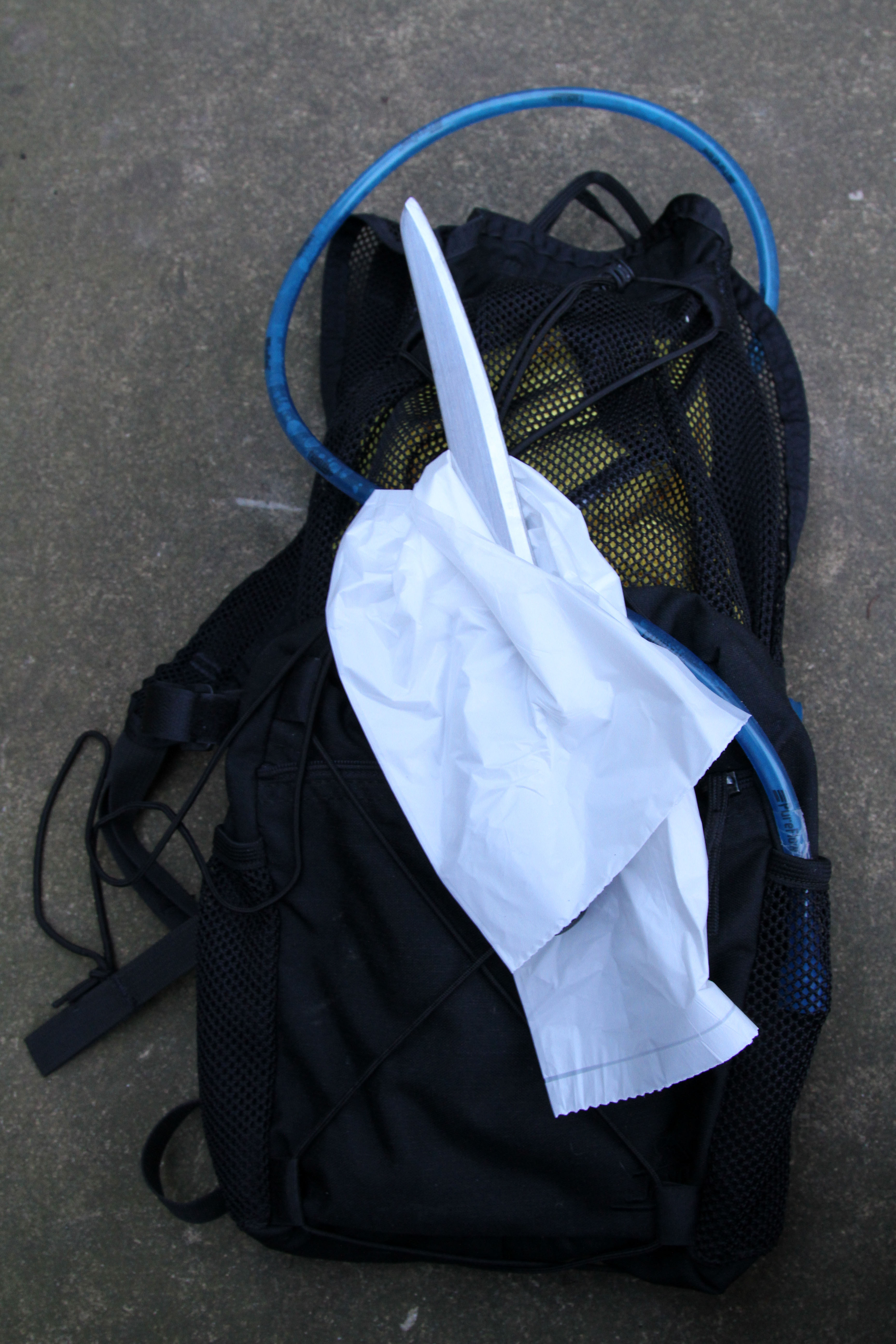
He slid her into the water, rinsed his hands and the knife and walked away without looking back, along the bank to the rough hardcore track where the stolen van stood in the space between rough elders and hawthorns. Glancing frequently towards the distant road, he pulled the bike from the vehicle, stripped off his every garment and threw all into the back before dressing again in the mountain biker gear he’d brought with him. A sprinkle of petrol, a tossed match and he was off on the bike, on his way up the track away from the road with just the knife, wrapped in plastic, in his Camelbak. From a distance, the smoke looked like the work of a farmer.
Twelve miles away, he dropped the knife from a bridge into the waters of the Welland and tossed the plastic wrapping after it. Then he rode home, where he hosed off the bike and his shoes with the meticulous care he always applied after a cross-country jaunt and went inside to complete the cleansing process. In the bathroom, he stared carefully at the image in the mirror, gazing with calm confidence into the eyes which had now avidly watched the utter horror of three randomly-chosen women.
Away in the fen, the woman’s body had floated face down to the centre of the dyke. It would be four days before a field hand in a tractor would glance down and then stare intently at a shape which could not be misinterpreted.
I’m on the train! Again… :(
Once again I am on a train travelling south to London, and once again it is winter. I’ve made this journey many times since I last wrote about my fellow-travellers in January, but today it is quite cold outside and the people who have crowded on to this train are much more reminiscent of my January acquaintances than any I’ve encountered since.
Today, the people travelling in first class (it is very cheap on this service) are lively and cheerful. Most are talking to each other animatedly, so there is less scope for me to guess about their backgrounds or attribute murderous motives to them. Some are clearly business people, but many are going to London for a day out, to shop for Christmas. Several appear to be families engaged in both activities: the man (or woman) poring over spreadsheets or reports while other family members chat noisily over his or her head. One conspicuous difference at this time of year is that all the blocks of four seats around the large tables are taken. The ‘airliner’ seats for one, each with a smaller table, have mostly been shunned. I love the airliner seats, which are usually in heavy demand, but today I feel anti-social, sitting here in solitary splendour tapping away at my laptop.
The most extraordinary thing about these pre-Christmas travellers is that not one of them is glued to a mobile phone. There are no raised voices enunciating “I’m on the train”, intruding upon others’ thoughts with infuriating penetration; no ever-so-busy women spending the time from when they board the train at Doncaster to when they get off it at King’s Cross systematically calling everyone in their address book (it’s surprising how often my journeys have fallen victim to one of these); no raucous men calling their mates to reminisce about having had a few too many the night before.
The only thing that disappoints about this group – and the disappointment is a big one – is that not a single one of them seems to me to be likely murderer material. I realise that murderers come in all shapes and guises, but they have one thing in common: if they’re not being paid to kill, they exhibit some kind of negative excess. All are excessively desperate, or vengeful , or greedy, or deranged. It is hard to believe that any of these joyful, excited people now sharing the carriage with me harbours such qualities with sufficient intensity to be transformed to a killer.
So what shall I say about them? Guessing what they’d like for Christmas might be fun.
I’ll start with the easy ones. The two femmes d’un certain age sitting opposite me are both swathed in expensive scarves: one sports a bright red pashmina-style creation with tassels, the other a svelte black velvet cravat discreetly patterned in silver. If they buy presents for each other, I’m sure that it will be festive scarves again. Again? Well, the ones they’re wearing were probably last year’s reciprocated presents.
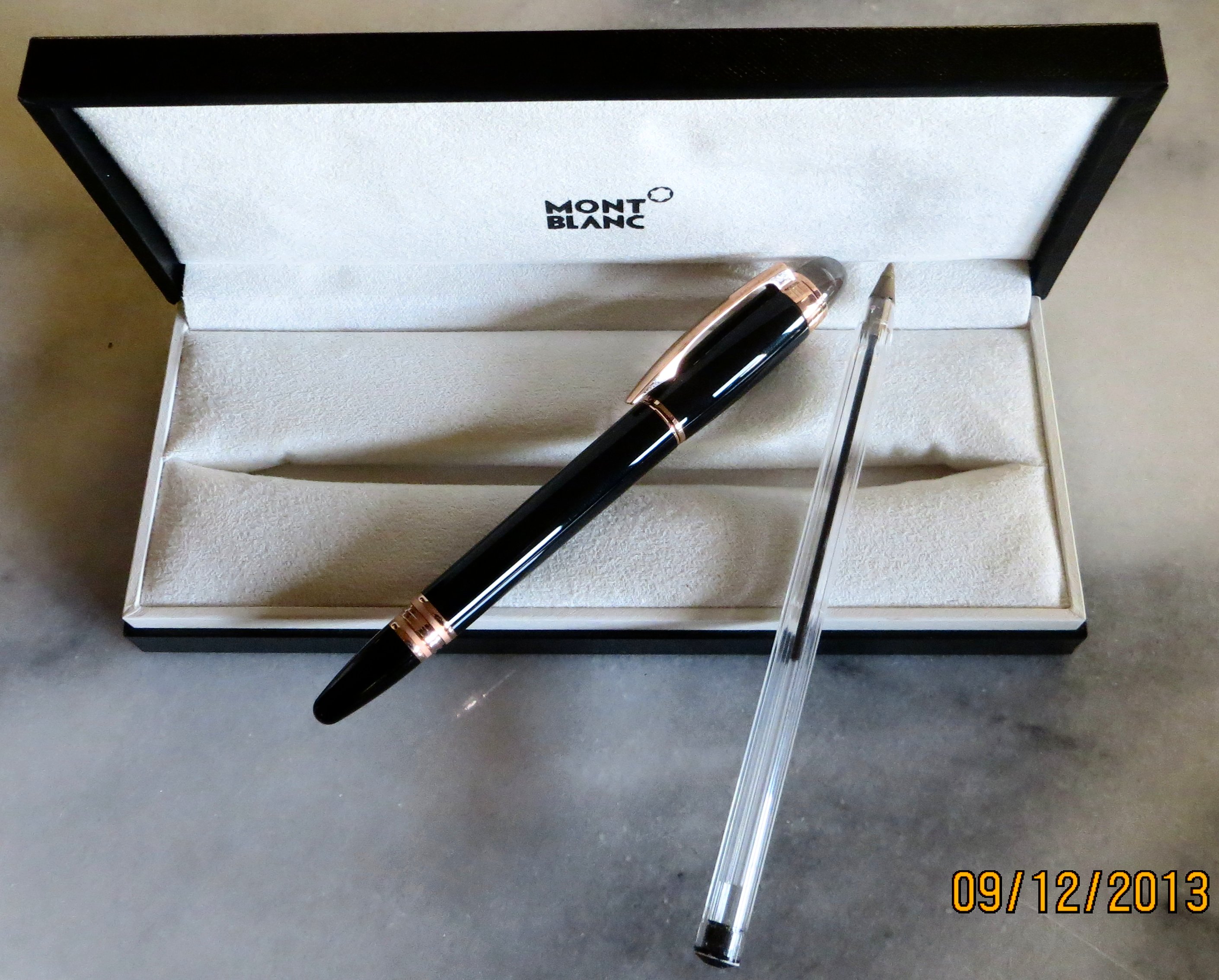
The man at the next table, still hunched over his report as his wife and two teenage daughters chatter and wave their arms, is making occasional notes with an ancient, chewed biro that looks as if it might have started life as a promotional gift from Kwik-Fit. If he really has to toil so hard for the whole journey (and is not just taking the soft option by ignoring his family), I feel that he deserves a decent pen. A Waterman, at least, if not a Mont Blanc. The two girls, both dressed in gauzy tops with lots of silver jewellery, huge eyes accentuated with expertly-applied make-up, are probably expecting to receive more of all of these things… and a lot more besides. The elder looks old enough to drive …. so Dad probably does need to keep on with the grafting. His wife, fingertips nail-barred to perfection, is sporadically reading on her Kindle between joining in the laughter and the chat. I doubt that Kindle vouchers will hack it for her, though. She, too, is wearing jewellery, much less than her daughters, but items of a different order from theirs: two sleek rings, one with a diamond embedded; a slender gold necklet; studs in her ears, which look suspiciously like diamonds. Her watch is probably gold, though mounted on a plain black leather strap. I’m sure she’d like an upgrade: a new gold watch for her, complete with a gold bracelet this time, please.
Time to hazard a guess at the tastes of the more inscrutable passengers now. The three companionable men sitting together: what would they like? They don’t look like football fans and, mercifully, aren’t discussing sport. One is reading the paper; one (I’m pleased to say, silently) listening to music; one sipping coffee and looking out of the window. No clues there. I could award them all new boxers and socks, but it wouldn’t be very enterprising of me. I think I’ll take a risk and give them all tickets for a murder mystery weekend. I know that Walton Hall, near Wakefield, has a couple coming up. I might even go to one of them myself. I may not be able to spot any latent murderers on this train, but there’s no harm in getting some of its occupants into the right frame of mind.
The Rhyme of the Flying Dutch Man

Koos Fernhout, a bewhiskered and bespectacled Rotternaut
In the land of the Rotternauts dwelled a man
Whose hair was wondrous white;
Bewhiskered and bespectacled,
He glimmered pale at night.
And around the port he would pace with the gait
Of one who’d sailed the waves
And told his tale to anyone
He transfixed with his gaze.
Just so it happened when I peered at the shape
That rose in front of me,
He motioned me to silence
And began beguilingly:
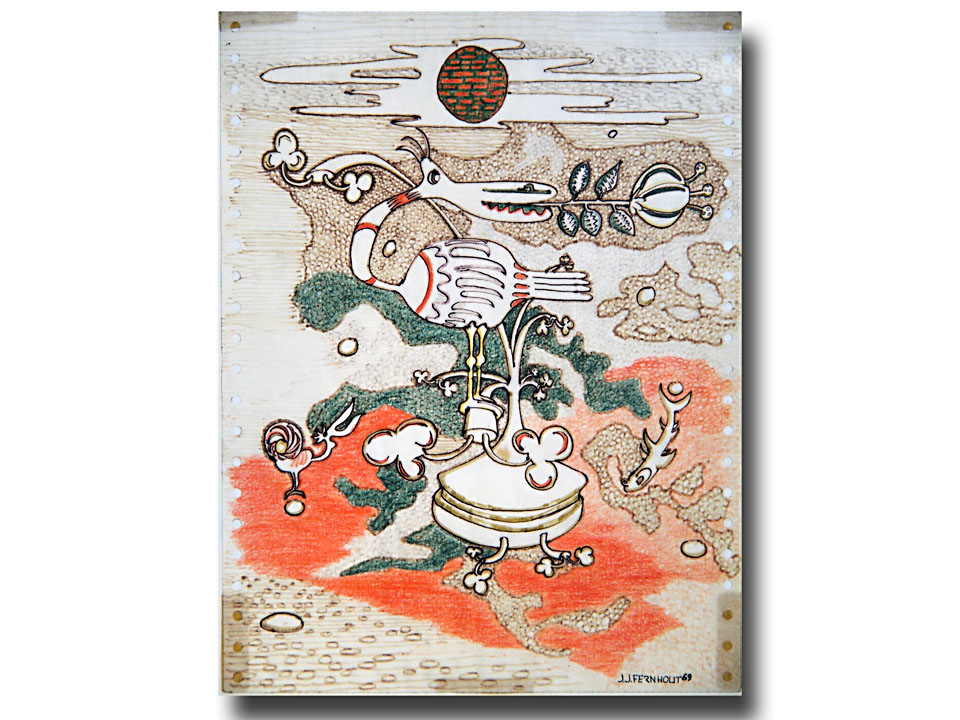
Flower Bird , image courtesy of Koos Fernhout
‘There is, in a necklace of paradise isles
Beyond the eastern sea,
A jewelled piece of heaven
Where grows a magic tree.
And when the keel of the ship grinds the sands there
And rests from ocean gales
The trav’ller may find solace
And hear the songs of whales.
For the things of the sea fly in air out there
And birds swim in the deep –
Pluck flowers from the seabed
For the magic tree to keep.
And the pebbles of the land are wont to hatch
Into mammals, birds and fish –
The magic tree takes care of all
And fulfils every wish.’
And with that, the mariner vanished away!
Spell-bound, I saw them all:
Fish and birds and flowers…
And a magic tree, grown tall.
When I saw it on Facebook, I was captivated by the above Flower Bird artwork by the Dutch photographer and artist Koos (pronounced as in ‘rose’) Fernhout; it had a narrative quality and immediately conjured up for me a combination of mental images: Far Eastern art, mystical tales, The Rime of the Ancient Mariner, The Flying Dutchman, the world as it was before humans minimised it, the fantastical stories of sailors returning from voyages of exploration, paradise, the next world. As you will see from the FB conversation, others were also smitten. Koos so much enjoyed the poem I felt compelled to write that he put it alongside his image, which is, believe me, quite an accolade. If you are unfamiliar with his work, you may enjoy a visit to his gallery, where you will find that he has an unerringly gifted photographic vision. To whet your appetite, I have also included an example below. Incidentally to all this, Koos happens to be a resident of the barge community I have described here. Many thanks to him for the pleasure of posting his pictures today.
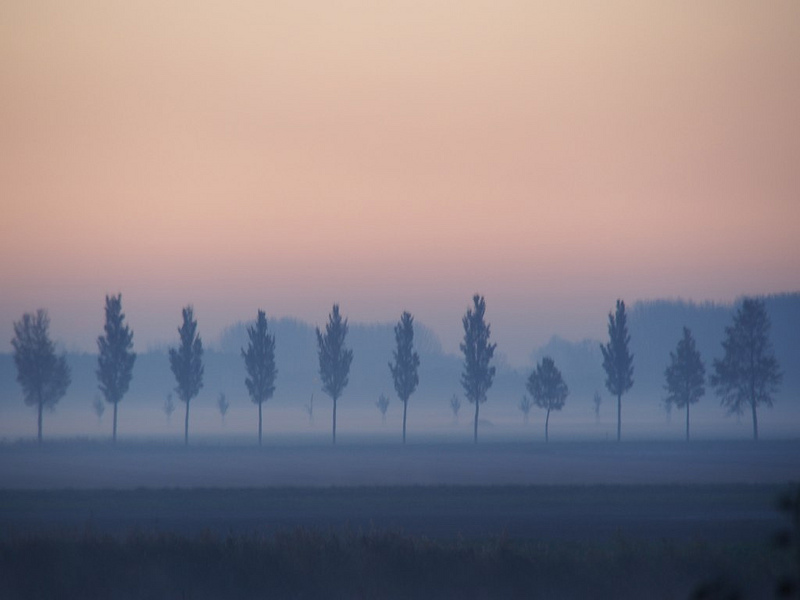
Fernhout landscape
Auschwitz-Birkenau butterfly, from the husband of Christina James…

Peacock butterfly on the steps to the death chamber, Birkenau
I asked for a riposte to Christina’s cider-pressing post, but that was not to be! However, by way of recompense, she has allowed me space to comment on what must be one of the greatest crimes inflicted by man upon man. While she has been busy with what she calls ‘the day job’, which has been, on this occasion, a publisher-librarian conference held in Krakow (for the pedantic, this is pronounced by Poles as KrakOUF, with the stress on the second syllable), I visited Auschwitz and Birkenau, one hour and forty minutes away by bus.
On the face of humanity, a carbuncle, perhaps now healing slowly, but sensitive to the touch and destined to leave a permanent scar. Yet the body politic suffers still and continues to break out in boils symptomatic of the same underlying disease. Mankind, disfigured, cannot find a cure and treats, always too late, the symptoms alone. These gross and scabbing reminders of our failure as a race to reach the root of our ills do not make comfortable our self-examination in the mirror of consciousness, but I found, on this, my second visit after some years, that the experience was already becoming, for the latest visitors, too organised, desensitising.
Brick, concrete, iron, steel, stone and dust, all strung about with the twisted barbarous wires; original timbers are gradually disintegrating or have gone. All about, the millions of October leaves are falling, falling. Summer’s beauty choked by approaching winter cold, they are gathered up in heaps, loaded into barrows and trucks and taken away for burning or to rot down. Colour and life turned to ashes. Shorn of their tresses, the trunks and branches are emaciated, twiggy fragile limbs starkly outlined against the sky.
Irony in the bus loads of tour groups disgorging their cargoes and delivering them into the hands of the camp guides. Selection by language. An industry in itself. The cameras click; the iPads embrace the scenes as each former terror is re-hashed for public consumption. Work makes free. Tourism makes realism – ‘No photographs here’ signs ignored as every shred of individual dignity is wrenched from the heaps of human history and saved for later: ‘I was there; it was awful; look at my pictures.’ I have to step away, unable to stem emotion. My leaves fall like tears, like lives.
Symbolism of railway lines, stretching through the gate to infinity. The sleepers are relinquishing their hold upon the rails, wasting from within. Will those be replaced, like wooden huts, to show what it was like? The other sleepers are softly breathing their message to us, the words falling as gently as leaves, and we strain to hear against the sound of the narrative of the guide. Their language is universal. The guide says that we are now walking the same way as the doomed, but we are not. Once more I break away, this time for good, and let imagination tell the story. And then, on the cracked steps to those underground chambers, now guarded by a staunch metal grid, a delicate beauty opens wings amongst the many fallen leaves and flies into the air. The loveliness of lost lives is captured for me in a butterfly.
All text and photographs on this website © Christina James
 Christina James, crime novelist