

The bells, the bells…

Universiteitsbibliotheek, Leuven
The day job recently took me to Belgium, a country I first visited as a schoolgirl, but which has since seen me only fleetingly, passing through it on my way south from Rotterdam. It deserves far greater and closer scrutiny from me and I’m delighted now to be able to share a particular highspot of my all-too-brief stay.
KU Leuven is the largest university in Belgium. Founded in 1425, it today enjoys a formidable reputation as a leading and innovative European research establishment, having itself co-founded the League of European Research Universities.
My visit to its wonderful academic library, the Universiteitsbibliotheek, not far from the centre of Leuven, included a chance to see in use its imposing and spacious reading room

One half of the lovely library reading room
and a private guided group tour of its 73.5 metre bell tower, which now is open to the public (tickets from here). Access to the lower four floors of the tower, the square bit, is by spiral

The spiral tower staircase, viewed from the Grand Staircase
staircase and these floors house an exhibition depicting the story of the double destruction by fire, in each of the two World Wars, of the library’s collections in two buildings, the old University Hall in the Oude Markt and this one.

Oude Markt, in 1913

Oude Markt in 1914

University Library in 1913
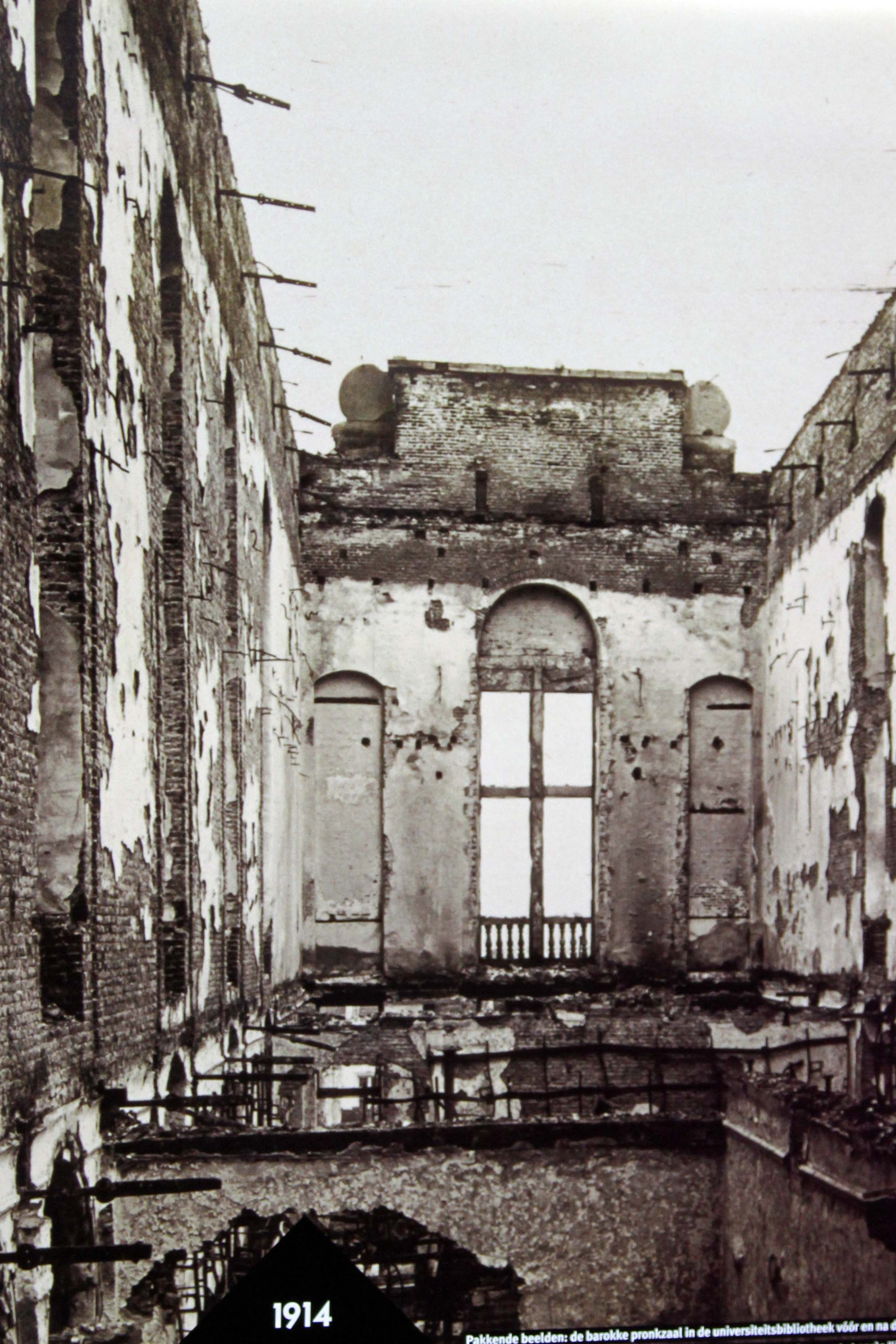
University Library in 1914
We were guided by beiaardier/carilloneur Luc Rombouts. Under the tower’s stone cupola, he plays its carillon, one of the most beautiful in the world and donated by US engineers as a war memorial. Indeed, the whole of this 1928 Flemish Renaissance-style library was built with American funding.

US architect vision of the new library post WWI.
The exhibition itself, a collection of still and moving images, proved to be a fascinating insight into the power of a library destroyed to excite outrage and generate propaganda. It is generally accepted that the 1914 fire was the work of German soldiers, but it is not completely clear which side was responsible for the one in 1940, though each blamed the other.

The Nazi propaganda machine swings into action in 1940. Recognise anyone?
Fortunately, the forty-eight bells of the 1928 carillon, because of the design of the tower, could not be removed for munitions as they were elsewhere during WWII and survived, being added to in 1983 (again with US support) with a further fifteen bells.
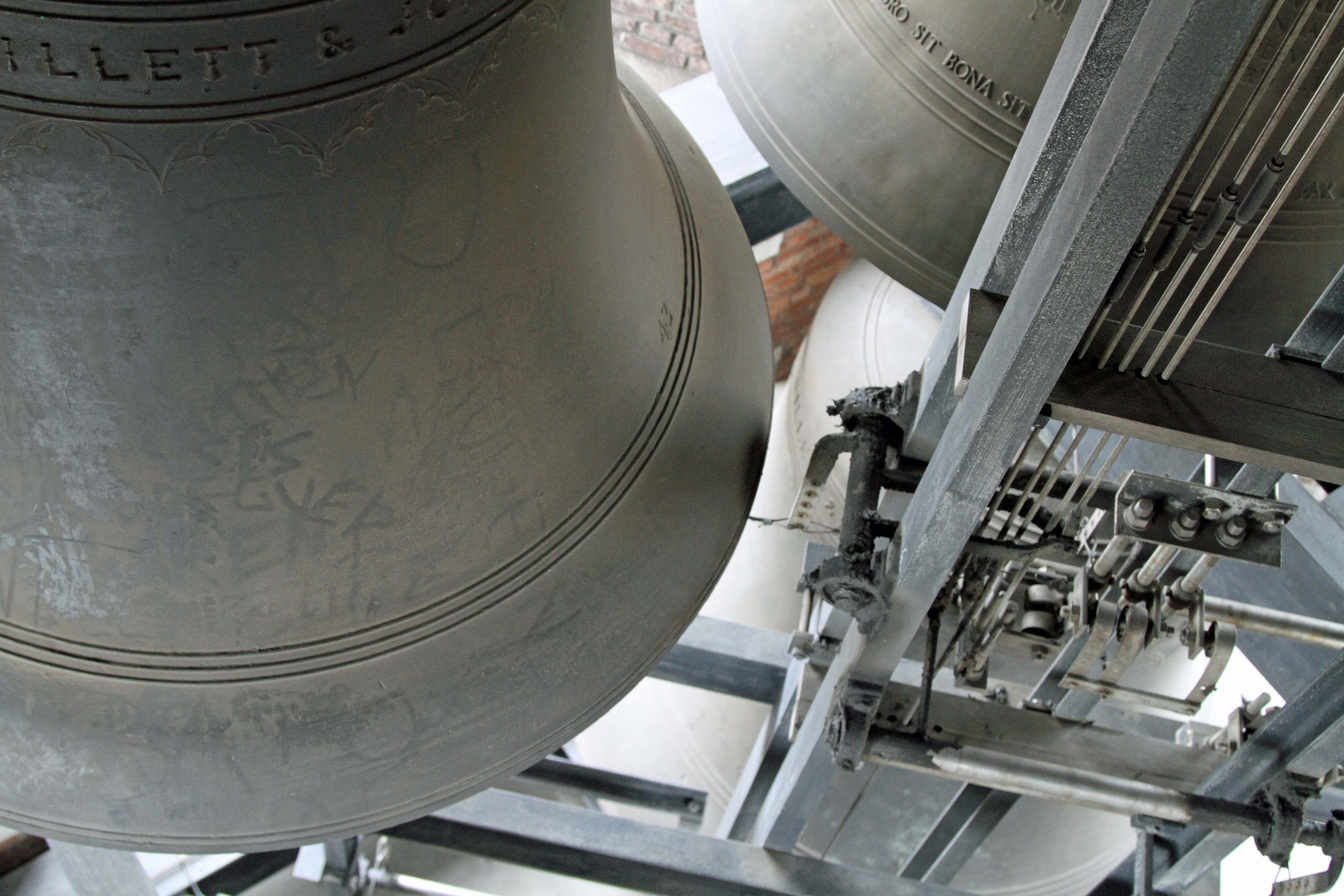
Gillett and Johnston carillon bells

Automated mechanism for playing the bells on the hours and quarters

Luc Rombouts at the baton keyboard
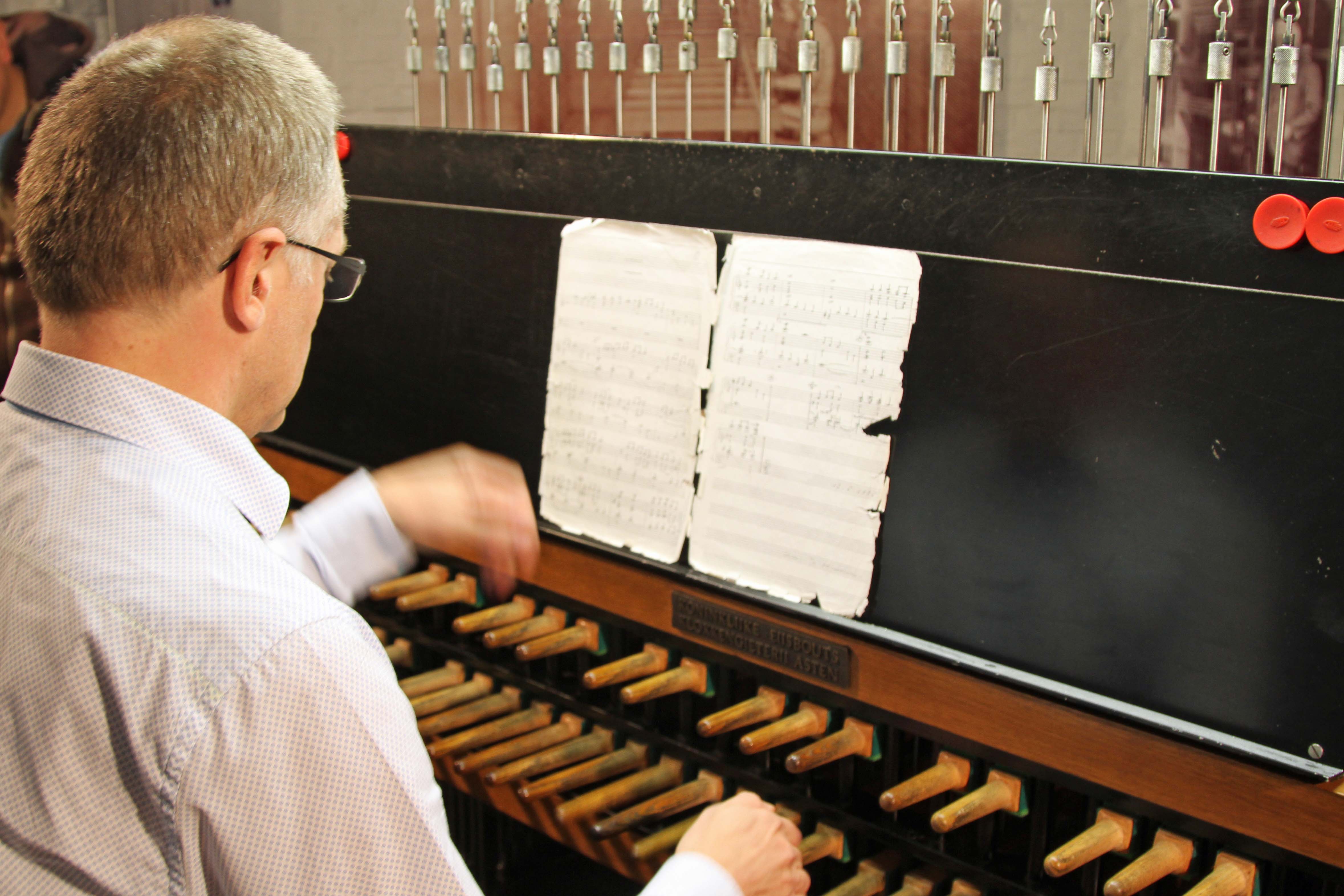
Luc playing ‘Yesterday’

Luc playing ‘Streets of London’
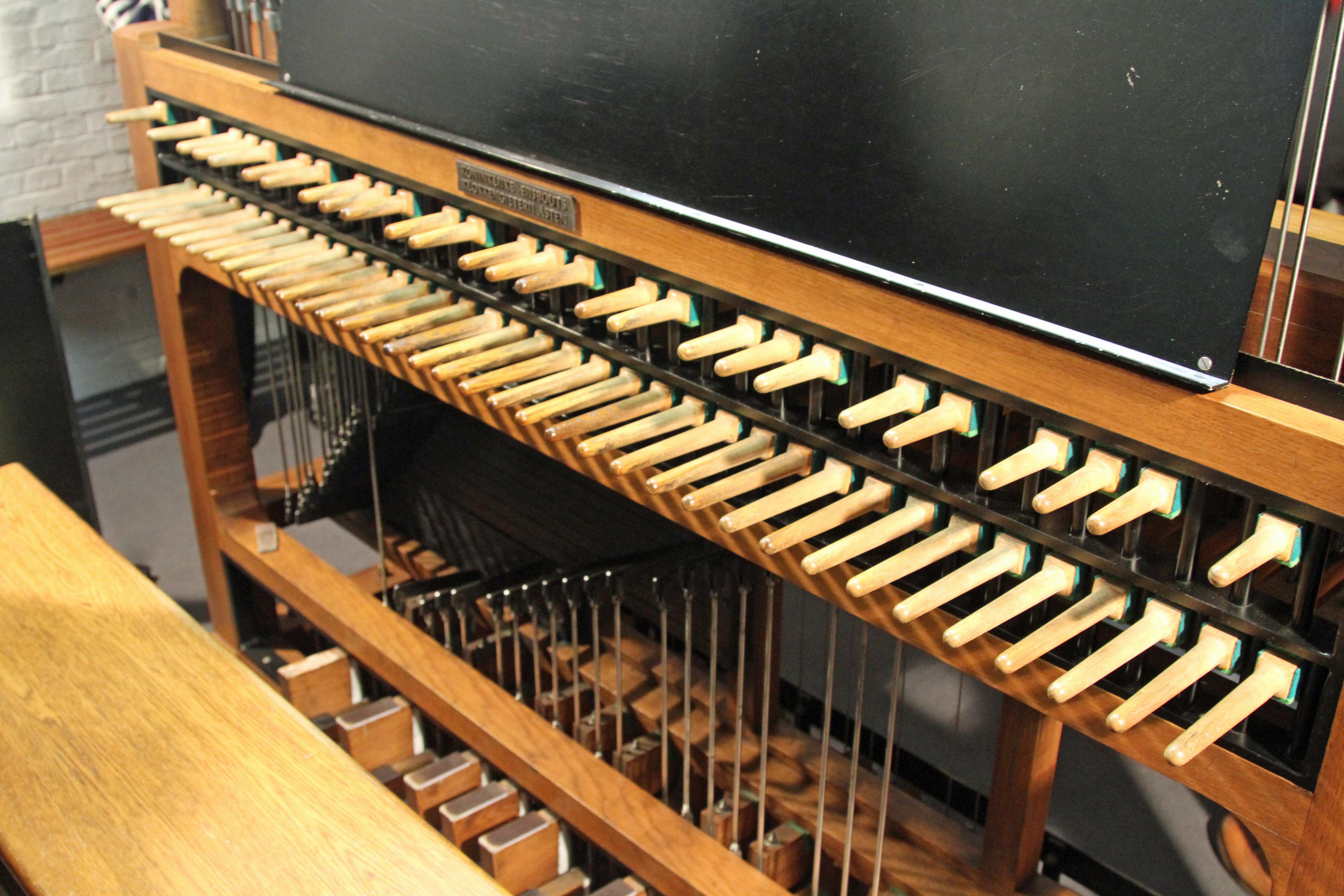
The carillon instrument
Luc not only allowed us to see the carillon instrument, but brought time – the normal quarter-hour Reuzegom, a Flemish folk song – to a halt, in order to play for us; the sounds of the Beatles’ ‘Yesterday’ were soon filling the air around us, the square in front of the library and the lovely city of Leuven itself. He demonstrated on this organ-like machine skills which had taken him four years to learn, banging his fists on the baton keyboard and pumping the pedals with his feet; he also told us about the bells themselves – they were ordered from the Croydon foundry of Gillett and Johnston, because English bells had the finest, most accurate pitch; he made the whole visit interesting, personal and friendly and our sincere thanks are due to him for all of this.

View of Sint-Pieterskerk, in the centre of Leuven, from the bell tower balcony
All text, photographs and video on this website © Christina James
Why I love France
I’ve recently returned from a holiday in France, a sojourn in recent years devoted to the planning of my next novel. I’ve tried to work out how many times I’ve been there and failed, but it’s certainly more than twenty, probably approaching forty. Altogether, I must have spent at least eighteen months of my life in France, beginning with our honeymoon in Paris (a shoestring affair – we had very little money and went there in an old minivan with four remoulded tyres, three of which had bulges in their side-walls – but none the less magical for that: eating packet curries that you’ve just cooked on a Primus stove on the banks of the Seine has a certain frisson that couldn’t be captured, say, sitting beside the Manchester Ship Canal).
I’ve had great holidays in other countries, of course, so why does France remain special? In an attempt to work this out, I’ve listed ten things unique to France and very endearing to me.
- The roads. It’s true that France now has some brilliant (if péage-pricey) motorways; but turn off them and you’ll quickly come to bumpy lanes occasionally sprinkled with battered signs announcing that the chaussée is deformée, the accotements non stabilisés. And they don’t just mean a little bit, either. ‘Non stabilisés’ means that, if you drive on to the verge, you’re likely to be pitched into the ditch or sink up to the top of your chassis in mud. And where else in the world could drivers be exhorted to take heed that there are ‘betteraves sur la route’?

Road signs warn of just about anything
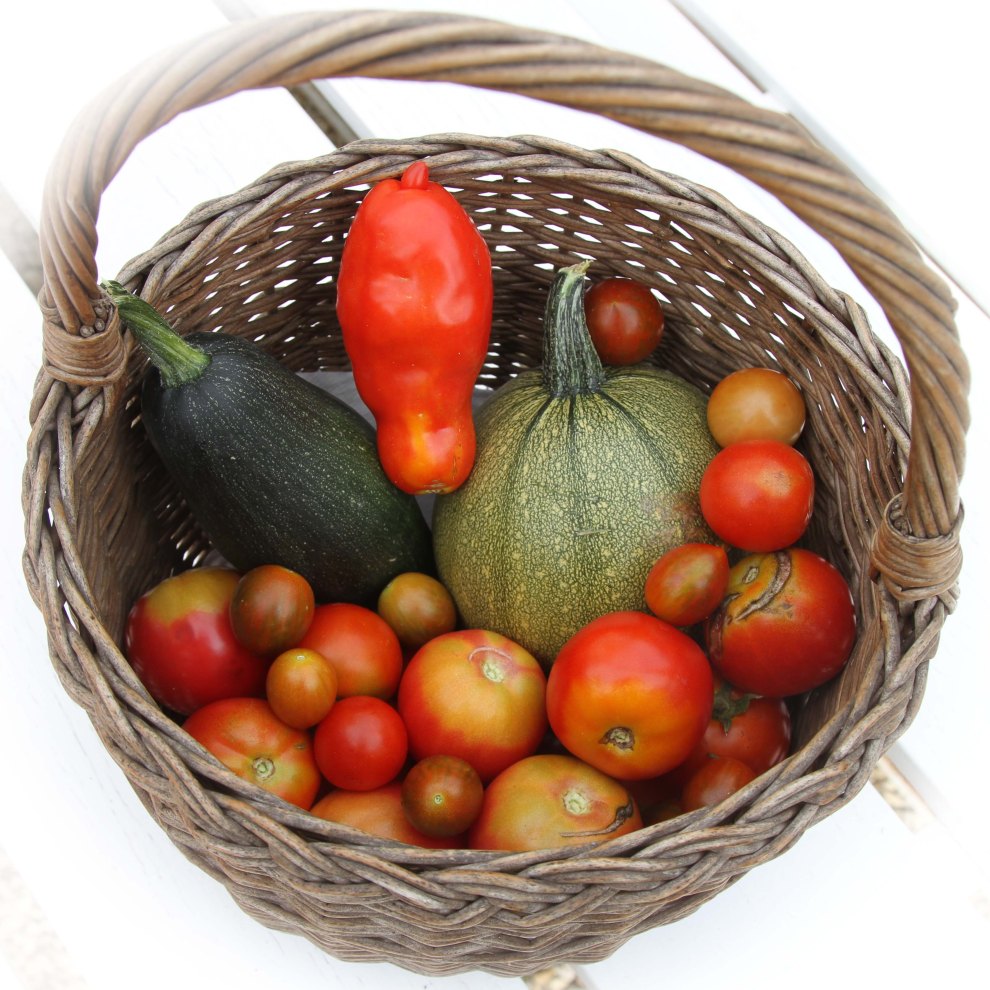
- The produce. Almost every gîte owner I’ve ever met has supplied produce from his or her garden – usually tomatoes, often plums, apples, greengages, courgettes, fat elephant garlic and other vegetables, too. The tomatoes, in particular, are a gastronomic delight: outsize and eccentrically-shaped, they’ve been warmed by a fiercer sun than the ones we grow here and ooze juice when sliced and left to steep in olive oil, creating a salad that is a special occasion in itself.
- The restaurants. Even in the tiniest, most out-of-the-way place it’s likely that you’ll stumble on an immaculately-kept restaurant serving several sumptuous courses for a very modest sum, sometimes with wine included. How these places make enough money to survive is a continuing mystery – but perhaps they don’t need to. Maybe they are sidelines run by farmers’ wives or millionaire philanthropists? Conversely (you might not think I’d find this endearing, but it is so French that it tickles me) I’ve frequently stopped at a restaurant in a French town in July or August, only to find ‘Fermé pour les vacances’ posted on the door. English restaurateurs take their holidays in February. French ones? Certainly not. Nothing is allowed to interrupt the rhythm of their lives.
- Two-hour lunches. Speaking of the rhythm of life, French lunches are another case in point. Although, tragically, I see some evidence in large cities of the quickly-grabbed sandwiches and takeaway salads that you encounter in almost every urban environment outside France, the two-hour lunch still dominates and most French people seem prepared to work daily until 7 p.m. rather than sacrifice it. When you’re on holiday, of course, there’s no need to rush!
- The wine. No need to elaborate further, I think.
- Shops in small towns. Practically every town in France, however tiny, supports one each of the following: a boulangerie (often, more than one),

La boulangerie
a florist’s and a hairdresser’s. If the town is even slightly bigger, there’s usually a pharmacy as well. The baker’s I can understand, and to a certain extent the pharmacy, but florists and hairdressers, in a place containing perhaps fifty houses? Wonderful, but an economic mystery.
- Low entry prices for tourist attractions and low or no parking costs. The UK could certainly learn from the French here. During my recent holiday I revisited Versailles for the first time in decades, and was pleasantly surprised to find that entry to the whole shebang (the chateau, the gardens, the Petit Trianon, the Grand Trianon and the Queen’s Estate) costs a modest €25.
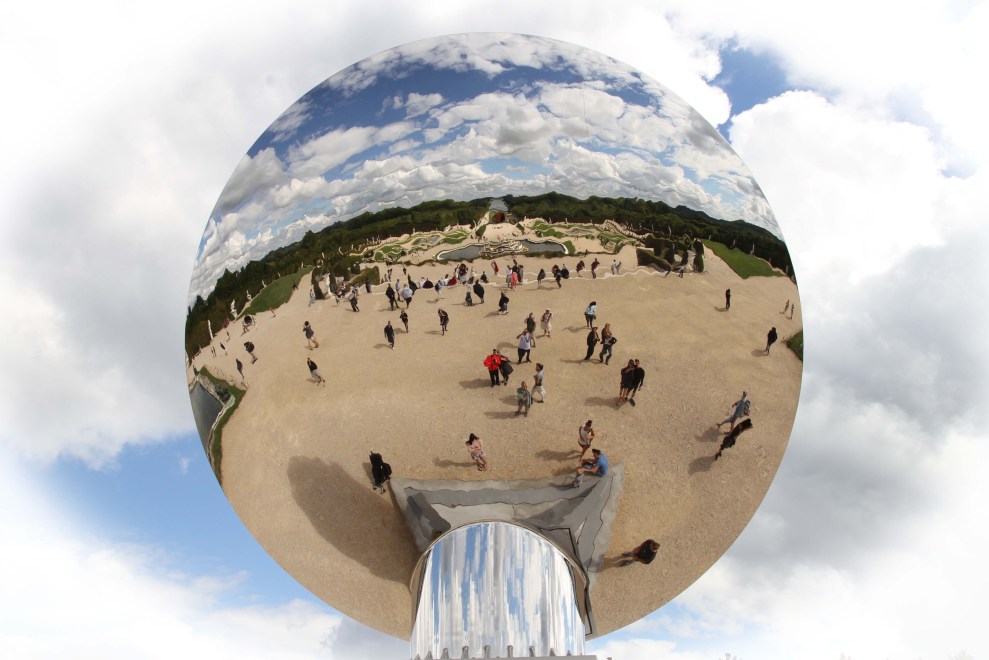
Anish Kapoor mirror balloon, included in the entry price to Versailles
And car parks, if they charge at all, usually cost somewhere between one and three euros for the whole day.
- French trains. A newish experience for us in our most recent holidays. Aside from the phenomenal TGVs, they’re suave two-decker trains. Even the local ones glide smoothly through the countryside at great speed and seem to be as punctual as their counterparts in Germany and the Netherlands. And, again, they’re so cheap!
- Wonderful old buildings that have been dragged into the twenty-first century. I once read that one in every forty-nine buildings in the UK is listed or had some kind of preservation order slapped on it. Whilst I understand the principle of this and broadly agree with it, we do seem to do to death preoccupation with our built heritage (As a bookseller, I’ve been on the other side of the fence: it’s virtually impossible even to knock a nail into the wall if your bookshop’s in a listed building). The French must have even more old buildings than we do; they’ve survived better because of the climate. Mediaeval barns and pigeonniers and other ancient agricultural buildings abound; many holiday houses are hundreds of years old. The town nearest the gîte I’ve just stayed in is dominated by a donjon built in the early eleventh century. It had a fifteenth century church and many Tudor-style buildings (a timber and mortar architecture I’d not encountered in other parts of France).
 The French don’t ruin these buildings (I don’t actually think they go overboard on bricolage), but they aren’t precious about them, either. On my way back to the UK, I stopped in an old market town for breakfast at an old-fashioned bar, complete with plastic tables and pinball machine, where several old men were playing dominoes. The fascias, at street level, were of plastic, too, but if you looked upwards the windows were mullioned, the gables (I’d guess) sixteenth century. A building spoilt or a building kept alive because people still enjoy using it? (As an aside, this bar, like many I’ve encountered, sells coffee to patrons and encourages them to buy their own pastries from the boulangerie next door. No ‘please do not consume food not bought on the premises’ nonsense!)
 - The people. I’ve already said quite a lot about them in this piece. Self-evidently, they are responsible for making France what it is. The current sick man of Europe? I’m sure they’d disagree with this smug recent IMF assessment of their economy, but even if they were to acknowledge there’s some truth in it, they’re clearly intent on having a ball while they convalesce.


Stimulus for a story…

In South Lincolnshire on the afternoon of 28th January 1970, the countryside was enveloped in thick, freezing fog. It made the roads treacherous and there were protracted delays on the trains. Driving in country lanes was especially hazardous. Although some level crossings had already been fitted with so-called ‘continental barriers’, with relatively sophisticated warning systems, most were still simple five-barred gates operated manually. The practice in country districts where there wasn’t much traffic was to leave the gates closed against the road. Vehicles wishing to cross had to summon the crossing-keeper, who usually resided in an adjacent lodge-house tied to the job. Such an arrangement existed at Sutterton Dowdyke, a tiny hamlet a few miles south of Boston and east of the A16.
On 28th January, the regular Peterborough to Skegness train was considerably delayed by the fog. The driver of a tanker lorry owned by the council who regularly travelled on Dowdyke Road rang the bell to summon the crossing keeper to open the gates. The driver and his mate had been sent to empty a cesspit in the area and, task completed, were now returning to their depot. The crossing keeper, a woman in late middle age, came out and chatted with them briefly before opening the gates. The driver eased the lorry onto the crossing (most crossings at the time were notoriously bumpy) and was sitting right in the middle of it when the train came thundering through the fog, which had muffled the noise it was making until this moment, and flung the lorry into the air. The train was derailed. It ploughed into the lodge-house and turned the building one hundred and eighty degrees on its foundations. The lorry driver’s mate was killed instantly; the lorry driver himself was taken to hospital, critically injured.
Miraculously, the crossing-keeper was not hurt, but collapsed at the scene and was also taken to hospital, badly shocked.
My family and I first learned of the accident when watching the nine o’clock news that evening. The site of the accident wasn’t named, but my father recognised the lodge-house. We drove there immediately and then on to the Pilgrim Hospital to visit the crossing keeper. She was my father’s aunt and my own great-aunt.
My memories of that night sowed the first seeds of the plot of The Crossing, the fourth DI Yates novel, which I have just completed.
In memoriam: the otnineen…
I am not a very practical person. No, I will rephrase that: I am practical in certain areas (making jam, pickles, bread, baking cakes, remembering birthdays and anniversaries, prodding truculent pension fund officials into action), but I don’t possess the full spectrum of practicality. Admittedly, there are some things I choose not to be practical about: scraping the ice off the windscreen on a cold winter’s morning or working out the intricacies of our borough’s refuse disposal system of four bins and a plastic box at the last count, each of which has to be put in the right place on the right day if it is to be collected (though I pay the price of not being able to join the camaraderie of the worried knot of villagers that always gathers after a bank holiday – I am fascinated by the revenge of the bin men in our hygiene-conscious, recycling-PC age). Equally, my husband, who is much more practical than I am, is helpless (he claims) when it comes to ironing shirts or booking an appointment to have his hair cut. Ours is a symbiotic relationship, QED.
But when it comes to solving problems involving plumbing, carpentry or electricals, I confess to being genuinely out of my depth and always defer humbly to my husband’s opinion. (Apologies to the power-drill-wielding women of the world.) Thus, when a month or so ago, the washing machine stopped mid-cycle and took some cajoling out of its sulk, and I said to my husband, “I think the otnineen’s on the blink!” (I should say that, since our son’s early effort to get his tongue round the real term, we’ve always called it this.), he replied: “It’s just a glitch; you get them with all appliances.” And I believed him. And I believed him on subsequent occasions when it made a wheezing noise (“You’ve put too much in it.”) or ground to a halt half-full of water (“Just turn it off and turn it on again and set it to spin.”).
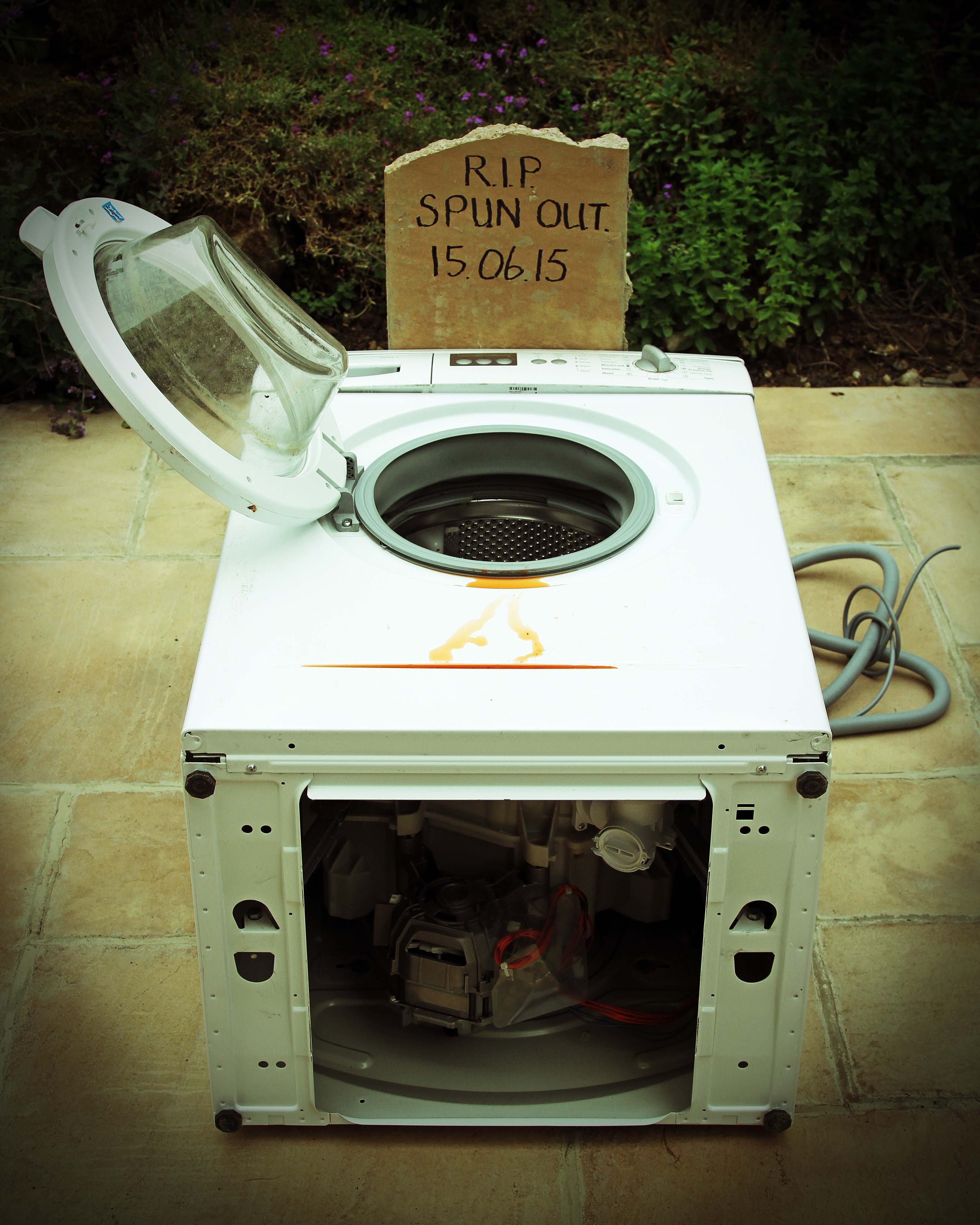
So yesterday when I called, “Jim, there are thick black clouds of smoke billowing out of the washing machine,” I thoroughly expected him to say, “It’s just having an off-day. Leave it to have a little rest and try again tomorrow.” I was therefore astonished when he came sprinting downstairs shouting that it was highly dangerous and shot into the utility room, outpaced only by the dog, who, as is his custom in any kind of domestic disturbance, had decided that discretion was the better part of valour and de-camped to the garden.
The poor old otnineen – I think it was twelve or thirteen – has now been wrenched out and expelled. It stands in the yard, a forlorn old servant awaiting the white knights from John Lewis to take it away; for you may be interested to know, as I have just discovered, that, like a white-goods Sarah Gamp, John Lewis does layings-in and layings-out for washing machines and will remove the old one when the new one is delivered, at no extra charge. I wonder that there hasn’t been a film made of it, like ‘Departures’. I can’t wait for the new one to arrive: more than three days without doing any washing and my (quite practical) system of never spending more than ten minutes ironing any single load of washing falls to pieces. But I can’t help feeling a small pang for the burnt-out old friend in the yard. I do hope that John Lewis will send it spinning into a never-ending cycle of drum rhythms in the great otnineen paradise in the parallel universe.
Paul McVeigh, a strikingly original voice…
 It’s some time since I wrote a book review. I’ve recently read several books that I’ve meant to write about, yet somehow events have overtaken me. But this book is so brilliant that I don’t want to try to offer excuses!
Set in the Belfast Troubles, The Good Son tells the story of Mickey Donnelly’s last summer holiday before he goes to ‘Big School’. McVeigh cleverly captures the texture of the Ardoyne by presenting the tale entirely through Mickey’s eyes, but in such a way that the reader gets glimpses of the sinister adult world that exists in a kind of parallel universe to the squabbles, make-believe and silly but cruel playground fights that are lived with such intensity by the children of the neighbourhood. Mickey’s narrative is at once extremely funny and full of pathos. He tries to be brave and to help his mother and little sister and is often wise beyond his years, but the ten-year-old that he is reasserts himself when he least expects it, often at the most inconvenient moments.
McVeigh’s portrayal of a poor Irish Catholic family is a modern take on the classic Irish story. It belongs to a literary tradition that includes the work of James Joyce, Sean O’Casey and Frank O’Connor, yet McVeigh speaks with a strikingly original voice of his own. Mickey’s Mam isn’t Stephen Dedalus’s sainted martyr of a mother or Sean O’ Casey’s dignified but tragic Juno, though her character shares elements displayed by both, but she’s also a boisterous daughter of the slums, not above slapping her small son ‘because she feels like it’ or giving him a good tongue-lashing, yet also full of love and care for all her four children, including Mickey’s detestable elder brother Paddy. She even shows some kind of residue of affection for the ne’er-do-well husband and father who flits in and out of their lives, a masterful depiction of the classic Irish drunkard. She holds down several dead-end jobs that just about provide her family with subsistence, but she doesn’t feel sorry for herself. Secretly, she is also helping the paramilitaries, though whether she is being coerced into this is never quite clear.
Above all, it is the dialogue in this novel that holds the reader spellbound. McVeigh manages to convey the lilt and dynamic cut-and-thrust of the Belfast dialect without overdoing it with too much local fussiness (his judicious repetitive deployment of a handful of words, such as ‘scundered’ and ‘lumber’ is extremely effective). Also brilliant is his use of nicknames to show the child’s universe that Mickey inhabits: Ma’s-a-Whore, Measles, Fartin’ Martin, Glue Boy and Glue Girl, Wee Maggie. Mickey’s world is fragmented, a large dollop of drab reality mixed with small sips from the many forms of popular culture that he drinks in indiscriminately to nourish his imagination: Doris Day, John Wayne, Darth Vader and Yogi Bear all make unexpected appearances in The Good Son.
I can’t write any more without giving too much away. I’ve read The Good Son during the course of this weekend. I can’t claim to have completed it at one sitting, but I did resent every moment that I had to put it down to get on with the more mundane realities of my existence. ‘You must read it’ is what I really want to say!
Tablet

Some years ago, when I attended a Scottish Library Association dinner, I was seated with a Scotsman who, while consuming his third double Scotch, was castigating me for eating carrots, on the grounds that they are very calorific. “Ye need to watch carrots,” he said. “They make ye fat.” (To save readers of this blog the chore of carrying out any additional research, I am reliably informed by Google that a large carrot contains about eighty calories and an average cooked helping about forty. A double Scotch contains 110.)
I was reminded about this conversation during my visit to Glasgow, from which I have just returned. One of the most endearing things about the Scots is their love of all kinds of ‘unhealthy’ food and drink and their ability to justify this completely with no trace of guilt whatsoever. When I worked for a Scottish library supplier in Dumfries (not for nothing the home of the deep-fried Mars Bar – and I understand that ice-cream and frozen butter have now been added to the town’s repertoire), we had a fully-working canteen staffed by two stalwart ladies who believed that the way to cope with Scottish winters was to look after the inner man (or woman). The menu was always robust: lasagne and chips, pie and chips, and mince, neeps and tatties (often also including chips, though I never experienced triple potato dishes on the same plate in Scotland, as I have several times in Ireland), always followed by a pudding.
Visiting customers were also fed by the canteen, although they took their meals in the boardroom. On one occasion I suggested that a bowl of salad might make a nice change for some of our less valiant guests, instead of tatties or chips. The ladies looked at me in horror: “Salad? In the winter, hen?” The compromise was substantial plated salads (ham and egg pie, Scotch eggs or cold beef) with potato salad and… chips. The two canteen ladies were perfectly aware of health and fitness regimes, but, like most Scots of my acquaintance, simply not interested in them. “We know what we should eat,” as another Scot once said to me. “We just don’t like it.” I once discovered the canteen ladies, neither of whom was much more than five feet tall, running round the outside of the building before they served lunch. Both were scarlet in the face and dangerously out of breath. “We’re trying to get down below fourteen stone before Christmas,” explained one. “Aye, so we can have plenty to drink,” the other added.
So, by this gently circuitous route, to the main topic of today’s post, which is… ta da: TABLET! If you haven’t been to Scotland, it may be helpful to provide a definition at this point. Tablet is a cross between toffee and fudge. My guess is that it’s made mainly with lots of sugar and butter. It melts in your mouth and gives you an energy boost to die for. It’s as integral a part of Scottish life as Irn-Bru, Tunnock’s Milk Chocolate Coated Caramel Wafer Biscuit and shortbread. And at least as ‘bad’ for you.
But you wouldn’t know that either from the upright Scots attitude towards it or the name ‘tablet’ itself. Not only is the name majestic, imbued with ancient wisdom – think Moses and the ten commandments or Sumerian cuneiform script, both inscribed on tablets – but it has an authoritative ring, as if the product were essential to your health. It’s a word that conveys much more gravitas than ‘pill’, with its undertones of neurosis, hypochondria and birth control. Mention ‘tablet’ to a party of Scots men and women and they’ll know immediately what you mean: a joyous feast of what in other lands might be forbidden fruit, often consumed in quite large quantities. Full of northern promise.
Nowadays, tablet has an additional, very modern meaning: the name the IT industry has given to the small, streamlined machine with various multi-functional capabilities (Don’t ask me the difference between a tablet and a laptop, as I shall get very confused, even though I now own one of each, but I’m sure that one exists.). If anything, I feel, the advent of this chichi newcomer enhances the reputation and the possibilities of traditional Scottish tablet even further: how prescient of ancient Scots confectioners to come up with a name that would also epitomise sexy technology to upwardly-mobile thirty-something educated men and, by extension, their baffled but trusting mothers and fathers.
And hats off to the Cambridge University Press marketing team – as you would expect, no slouches when it comes to words and their meanings – for picking up the potential of both meanings of the word and, at the same time, providing joy to everyone passing by their stand at the conference by dispensing unlimited quantities of this Scottish toffee-fudge to maintain energy levels during three days of worthy but occasionally soporific talks.
No place like home?

Sheep Market, Spalding
My son called me yesterday evening to gloat because of the outcome for him of a BBC quiz he’d just completed, entitled ‘Where would you be happiest in Britain?’ (The quiz can be found here, if you’re interested. I assume, for readers of this blog who live outside Britain, that it will guide your choice should you wish to emigrate from your country. 😉 I should add that, since the way into it is by selection of a miserable three photographic choices, I rather suspect that it has an equal paucity of possible places to put participants!) It told him that the place in which he’d be happiest is Lewes, in East Sussex (also its choice for my husband – QED my point about the limitations of the quiz), but his reason for calling was to let me know it also forecast the place in which he’d be most miserable. The prediction for him was ….Spalding! Where, apparently, the inhabitants are bereft of several character traits that those of other places have in spades, including friendliness. My son was delighted because he’s always affirmed that I, a native of Spalding, was born among bog-dwellers with webbed feet (and, in point of fact, my paternal aunt did have webbed feet!), whereas he is one of God’s Yorkshiremen.
Not willing to take this lying down, I decided to complete the quiz myself. It told me quite firmly that the place I’d be happiest living in would be Oxford (where there is, allegedly, a very high ratio of ‘cultured, conscientious and’ … ahem… ‘neurotic ’ people, just like me, apparently). And the place in which I’d be least happy? You may have guessed it already: Spalding!
Now, apart from pointing out the obvious – that the BBC must have a real down on my home town; so much so, that I wonder if the quiz might have been compiled by Jeremy Clarkson after he found out that all the restaurants serving food (hot or cold!) there are closed by 10 p.m. – I’d like to take issue with this.
First of all, I know Oxford well and have never considered it to be my idea of residential heaven. It’s pleasant enough and I’ve been to some good concerts there and eaten some excellent food in its (largely overpriced) restaurants. I have a significant number of friends and acquaintances who live or work there, most of whom are cultured and conscientious and some of whom are undoubtedly neurotic.
But, over the years, I’ve also had some pretty duff experiences in Oxford. Here are a couple of examples:
When I was working for a Scottish library supplier, I was once booked into a hotel (called Green Gables, but there, its resemblance to the home of L.M.Montgomery’s heroine ended), a turn-of-the-twentieth-century building that sat right in the middle of a run-down housing estate containing a maze of roads through which feral dogs and glue sniffers roamed at large. The hotel didn’t serve food and I didn’t dare to go out after dark in search of any, so I dined on a cereal bar that I had in my brief case and a glass of tap water. My room looked as if it hadn’t been decorated since 1930 (the décor was bottle green and cream) and the ‘en suite shower’ (cunningly concealed behind a clear plastic curtain) was fitted with a rubber mat which, when lifted, revealed a thriving family of wood lice. Not very Oxford as Oxford conceives of itself!
My second example, however, is quintessentially Oxonian. I was visiting a publisher who persuaded me to attend an evening soirée featuring a ‘traditional African music ensemble’. Intrigued, I changed my train ticket and turned up at the event, hoping to feast on some of the exotic music and dancing I’d seen executed by a visiting troupe from Zimbabwe when I worked in Huddersfield (another awful town, according to the BBC). Imagine my chagrin when the ensemble turned out to consist of a quartet of upper middle class white Oxford ladies of a certain age playing its own arrangement of ‘native’ music on some very European instruments! I couldn’t capture my idea of Oxford better than by telling this tale, which does indeed demonstrate that Oxford is conscientious (if self-consciously so), cultured (in its own inimitable way) and neurotic (possibly).
When I think of places which have made me miserable, therefore, I’d have to include Oxford in the list. There are more deserving candidates, however. Among these, I’d cite Rotherham, a town that seems to have had nothing going for it since its magical (definitely, then, before the Industrial Revolution snapped it into its jaws!) ‘merry England’ manifestation, described by Sir Walter Scott in Ivanhoe; Solihull, for several years home of the HQ of Dillons and Waterstones, a place which never seemed to have anything to recommend it except a larger-than-average number of dress shops catering for ‘the fuller figure’; its much bigger and uglier sister, Birmingham (though I admit the canal system there is superb and worth a visit); Bridgnorth, a place so benighted that even the local copper didn’t know where the library was; and, last but not least in the misery-making-for-me stakes, Middlesbrough, which I’ve visited twice and where I had my car broken into on both occasions.
And places where I’ve been happiest? Sometimes in London, spending delightful evenings with friends, though I’d hate to live there; often in Surbiton or Mawdesley, basking in special friends’ wonderful hospitality; at my God’s-own-Yorkshireman son’s various homes over time, both entertained and amused by him and his wife; and – yes – in Spalding; certainly, in Spalding, that sink of human baseness by BBC reckoning. I spent the first seventeen years of my life there, so I’d have experienced a childhood of Dickensian deprivation if I hadn’t been very happy some of that time, and an unusual teenager if I hadn’t also sometimes felt melodramatically sad. Finally, I do actually like the place I live in now – otherwise, why would I have chosen it? – even though the BBC thinks it is only 54% suitable for a person with my character traits.
Which brings me to my final point. Supposing that I do exhibit more than average conscientiousness, cultural awareness and neuroticism, why should I want to ghettoise myself with a massive bunch of people just like me? My immediate neighbours are as unlike me as possible. They include a racehorse trainer, a physiotherapist, a lawyer, a doctor and several businessmen, as well as a number of retired people. Their passions include horseracing, greyhound racing, playing the harp, planting rare snowdrops and keeping bees, in none of which I have more than a passing interest. Some are bluff, hearty, hail-fellow-well-met and extrovert; others are quieter, more reserved, but fascinating once engaged in conversation. Some take three holidays a year; one lives in the South of France for six months out of the twelve; others never have a holiday and hardly leave the village at all. We all appreciate the surrounding countryside. We all like being within a short drive of several major cities and towns. Other than these common points of consensus, mutual variety is the spice of our lives in so far as we share them.
So there you are, BBC. Mood and character createth the individual woman… or man; but not the place. In my book, anyway.
Up t’ pub… with spring in the step…
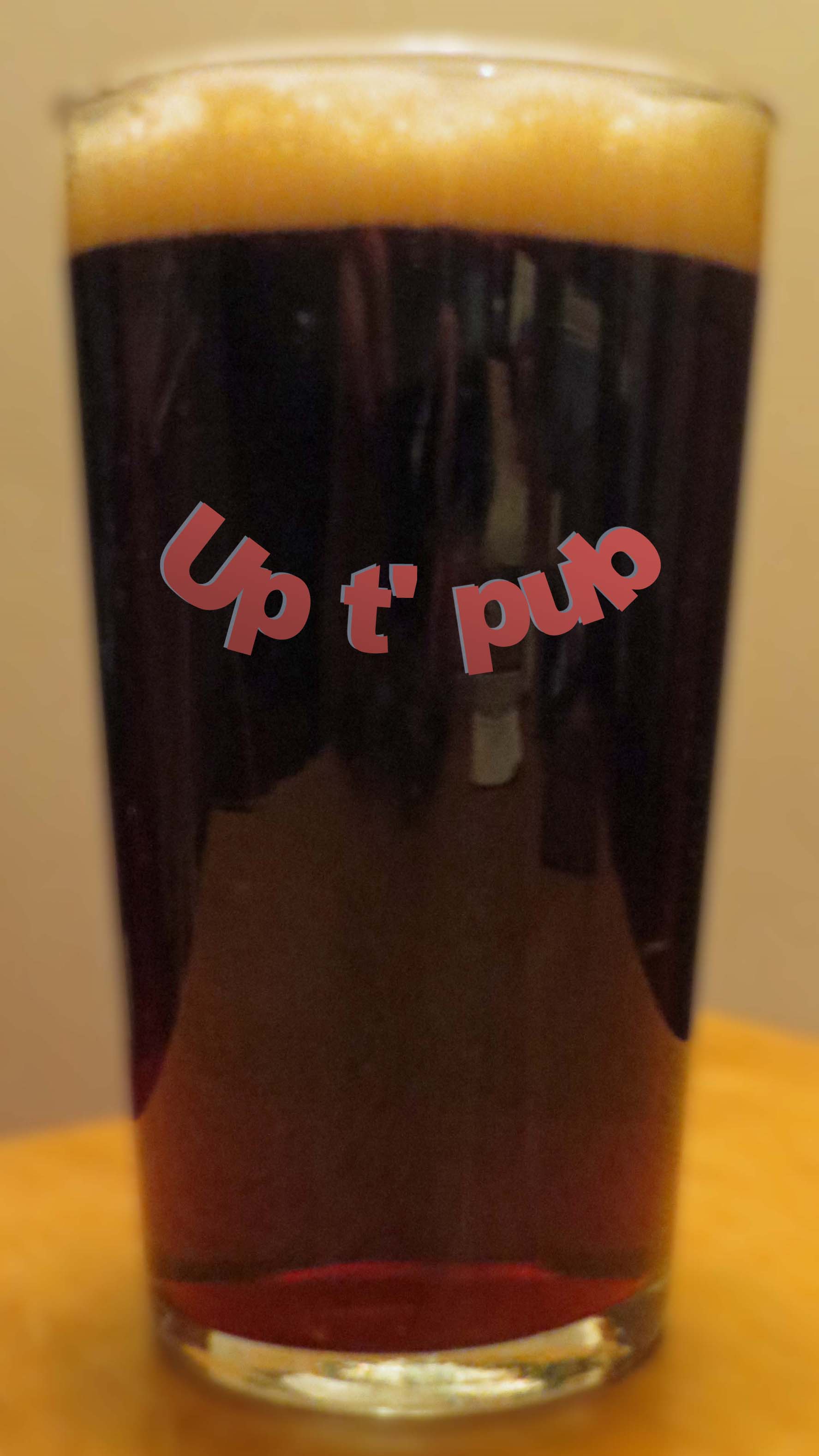
I’d like to celebrate this, the first weekend of spring, by offering homage to my local pub. It’s been there all winter (and, I guess, for several centuries of winters, as it’s a former inn on an old drovers’ road), a perennial stalwart, dispensing warmth, hospitality and good cheer on the coldest and most miserable of evenings. It boasts an open fire and its own generator, which means that when there’s a power cut or the water supply fizzles out (not infrequent events in this village) we and all our neighbours can rely on the pub to produce heart-warming soup and sustenance in our hour of need. There are no other buildings in the village except houses and a deconsecrated church – we don’t even have a shop – so the pub also does sterling service as a polling station for both local and general elections. Not surprisingly, this village always achieves a high turn-out. Most of us vote in the evening, which gives us a chance to catch up with each other and sample the beverages on offer at the same time.
Yesterday evening was light and clear. The trees across the valley had just begun to bud and were glowing with promise in the hazy sunshine of the early evening. The local sheep have now had their lambs, which were bleating softly. The towns across the valley were also tinged with the glow of the setting sun. As on many first days of spring, however, there was a fierce wind and some of winter’s chills still lingered in the air. My husband and I, out with the dog on his evening perambulation, decided to call in at the pub.
It is only a slight exaggeration to say that all human life was there. A group of four beer-bellied blokes occupying a corner table hilariously trooped out together every half hour or so for a cigarette break, and then trooped back in. A large family, complete with granddad (who seemed to be footing the bill) had just finished an early supper. Also eating supper was a morose middle-aged couple who appeared not to be speaking to each other. A largish hen party came in, evidently consisting of the bride and her mates plus her mother and several of hers. She was wearing a sash proclaiming her a bride to be, a crown of tinsel and, somewhat incongruously, some red ‘Rudolph’ felt antlers left over from Christmas. A little later, an extremely thin, elderly woman arrived, the advance reconnoitring party for another group of ladies, these somewhat older. She left the pub briefly before returning to usher them all in, so it must have passed her selection criteria for acceptable hostelries. The usual old cronies were seated on high stools at the end of the bar, putting the world to rights. More young men braved the trestle tables outside, clearly finding the cold preferable to the prospect of losing seats inside whilst out for fag breaks. And there were several ‘casuals’ in for a swift pint before departing, all of whom stooped to stroke the dog. The landlord, a dog-lover, brought him a handful of chews.
And, of course, included in the number, a pair of wellie-wearing eccentrics with an amiable hound, all three a little miry around the edges.
City pubs have an aura of their own, a suave immaculateness inspired by fierce competition and, for the most part, a shifting clientele that harbours no sentiments of loyalty. There is something quite different, timeless as well as uplifting, about a country pub and its dynamic. Dressed in mediaeval clothes, the patrons of my local yesterday evening might have been encountered by Chaucer and his pilgrims, in an inn en route to Canterbury. And I’m sure they’d all have had a tale to tell…
The turn of the season…

The last of the Brussels sprouts
Last Saturday, I helped my husband to prepare his allotment, for sowing with a new cycle of plants and seeds. He needed some assistance, because during the long winter months the shelter that he and his partner-in-grime had built over it last year to foil the pigeons (it succeeded) had collapsed under the weight of an unexpectedly heavy fall of snow. Carefully, we untied some dozens of pieces of binder twine and rolled up long lengths of chicken wire to ready them for the grand rebuilding. Improved design, he says, will help to prevent the same happening again; we shall see!
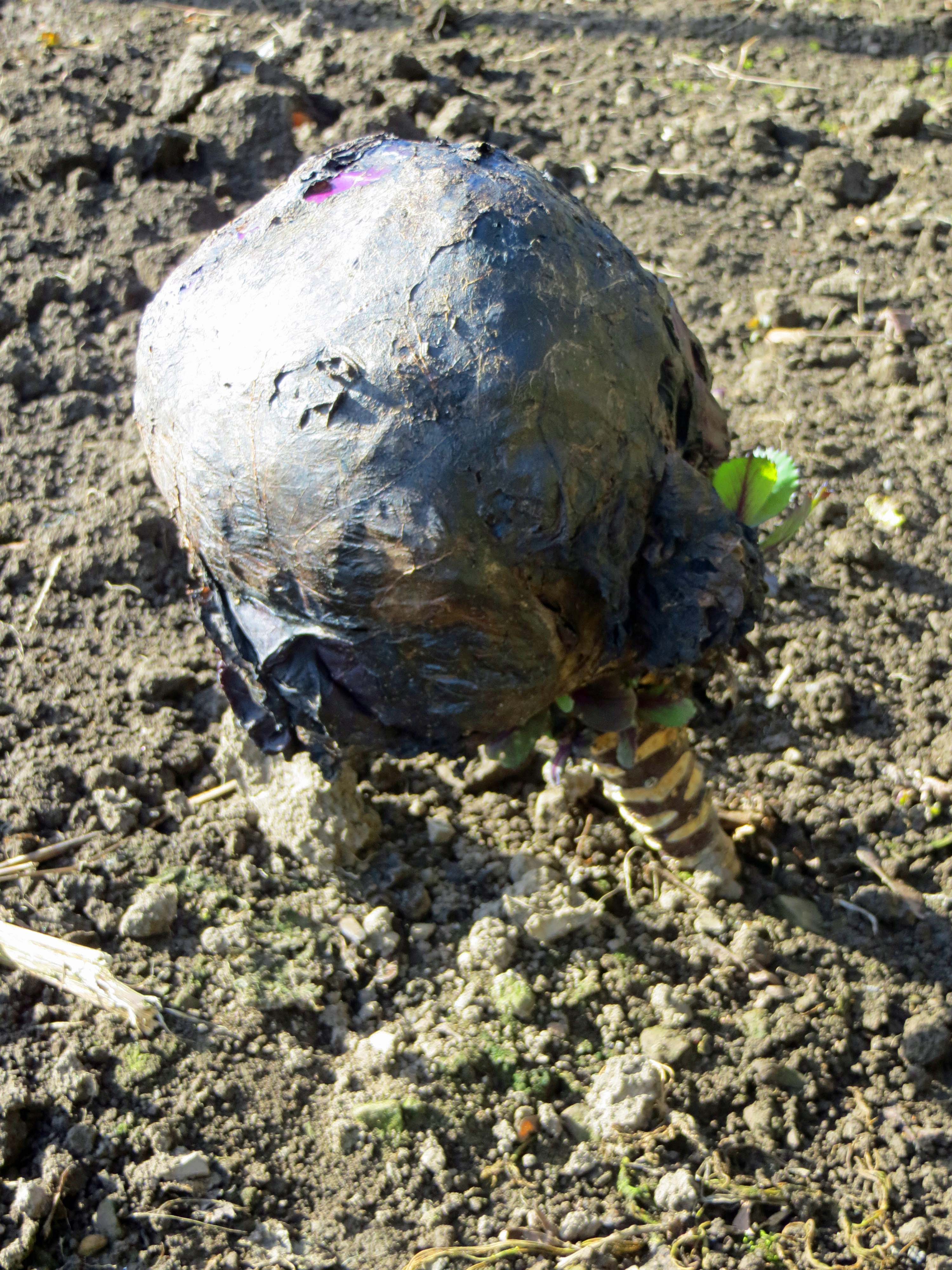
Red cabbage in a winter shroud
Partly because they were pretty difficult to reach amongst the debris of broken timbers and chicken wire, and partly because we’d had some over-supply, leftovers of last year’s crop remained, a brassica graveyard. Eight or so stalks of blackening Brussels sprouts tilted in a broken rank towards the boundary fence, a row of wounded soldiers at their last gasp. Several misshapen kohl rabi poked from the earth like a giantess’s bunions.

Kohl rabi bunion
Some heads of red cabbage, severed from their stalks, lay on the ground, broken and rotting, their outer layers turned into slimy winding sheets. Their lone companion, still growing, had grown a new rosette of small heads after the original cabbage had been cut, twisting itself into three dark petalled shapes, a macabre bouquet paying last respects at the funeral. Dried sticks of weed poked through the soil, which glistened unhealthily with a scattering of glossy green clumps of over-wintered willowherb and expanding whorls of nipplewort.
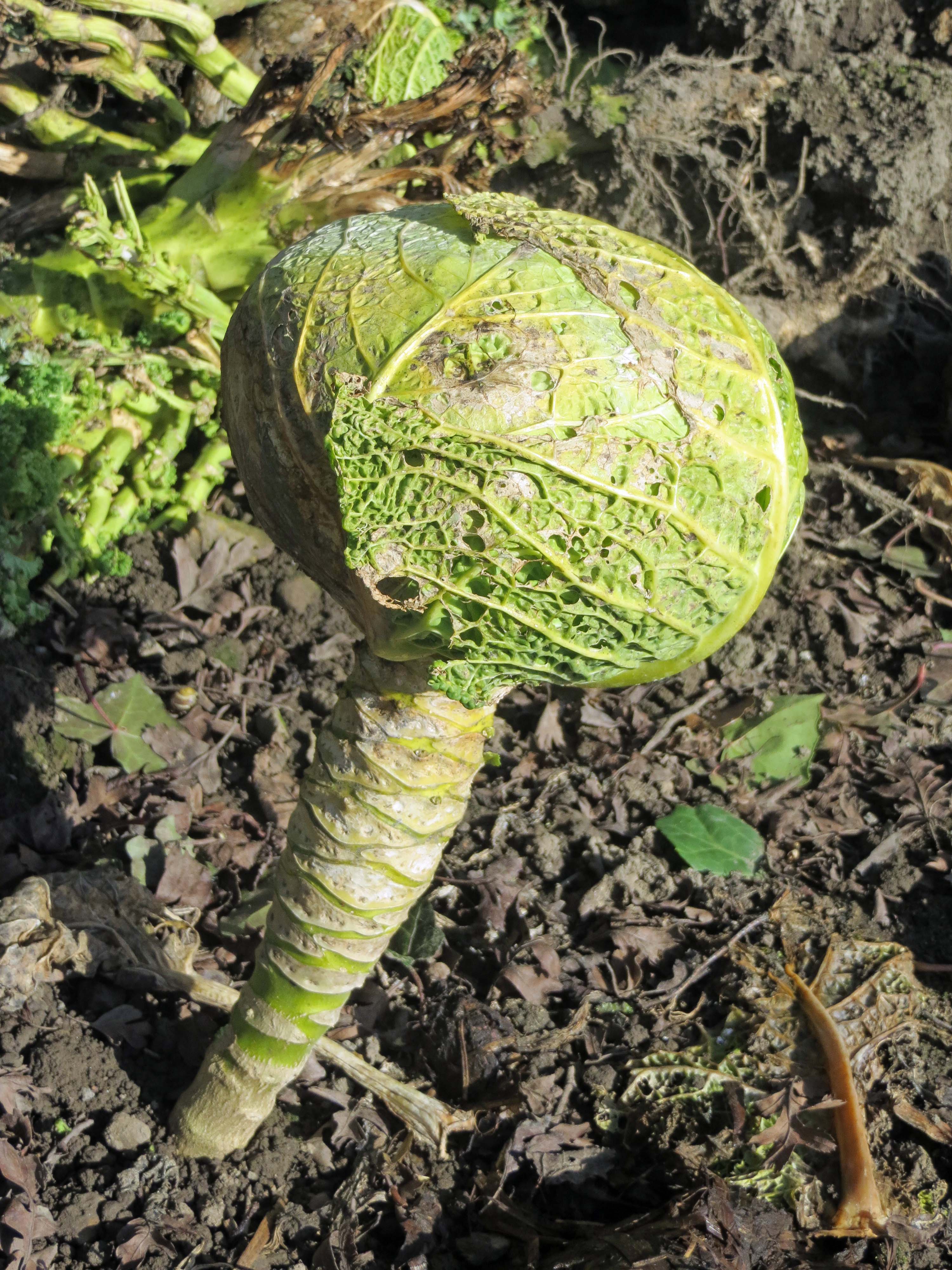
Savoy cabbage in terminal decline
Overhead, the sun shone with real warmth. New purple buds were swelling on the tangle of hawthorn twigs in the gateway. The bees in the adjoining apiary were flying, great tits were two-toning in the hedge and a lone hare loped away over the meadow. Spring was on its way, but I don’t recollect having ever been so vividly aware of the round of decay that must precede renewal.
Oddly, I found it comforting: it was as it should be. And somehow it made me feel more philosophical about death. Each plant and creature has its time. Then comes the Grim Reaper. It is only seemly. And there is something wonderful about the soil which is both grave and nursery; now it is manured and turned, I am reminded of the beauty of Gerard Manley Hopkins’ ‘shining-shot furls’ of ploughed land, from which will spring new life.
Do buy…
January and February have been almost wall-to-wall work, with a great deal of travel to boot. I have already written here about my trip to Malaysia. The following week I was in Dubai (or ‘Do buy’, as the locals call it, with a fine mixture of wit and cynicism). As I returned to the UK two weeks ago, I realise that it’s a little late to write something newsworthy about my visit, but, since it was a fascinating experience – and Dubai is quite different from anywhere else I have been – perhaps you will indulge me by allowing this very belated post.
Dubai is about bling. Not out-for-the-day, cheap-and-cheerful Blackpool and Skegness bling, but the real thing – although I realise that I may be drumming an oxymoron into service by saying so, much as if I’d asserted that Tinseltown was genuine. I’ll revise that a little, therefore. Dubai is expensive. It’s not a place to visit unless a) you have plenty of money (or someone else is footing the bill) and b) you don’t mind paying through the nose for everything, including items that come either cheap or free in other places. The £20 charge for twenty-four hours of Internet access is but a minor example. Most things, from bottled water to chocolates to dinner, cost roughly one and a half times as much as in the UK; and you don’t even think about buying alcohol! A tiny bottle of brandy from the mini-bar will set you back 120 dirhans (that’s about £25); the cheapest bottle of wine in the restaurant that I visited was 270 dirhans, or more than £50. Sure, certain pleasures, some not even legal in the West, are openly available. For example, the second hotel in which I stayed had a private beach, at the top of which were, sitting in a circle, several gentlemen resplendent in djellabas and smoking hookahs. I can’t be entirely certain, but the substance they were exhaling smelled suspiciously like skunk.
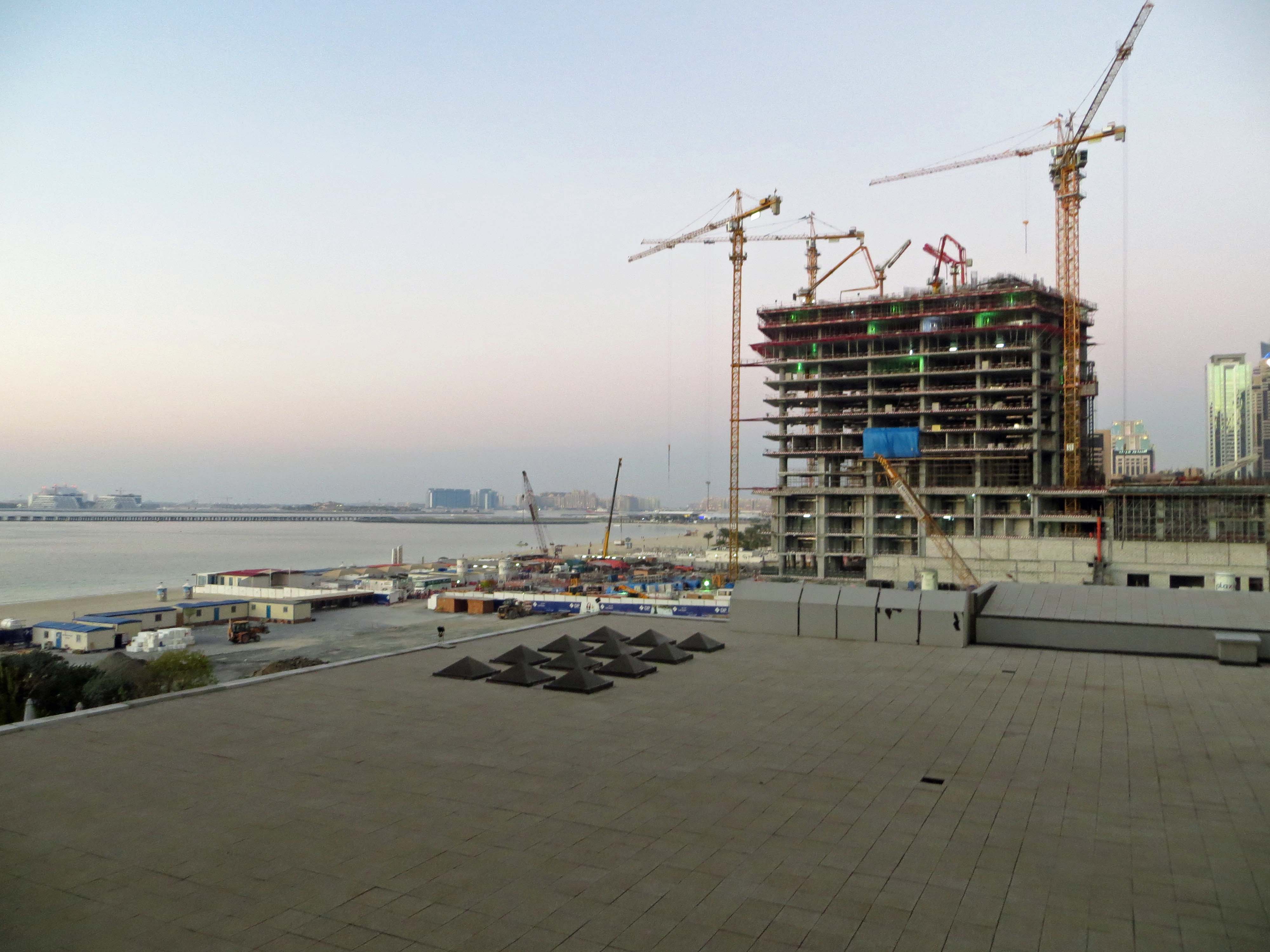
Despite the cost and the noise – the place is like a giant building site and, indeed, is said to house one third of the world’s cranes at any one time – Dubai is immensely popular. The serried ranks of hotels stretch for mile upon mile – all the major international chains are represented – so that you’d think there would certainly be over-capacity. However, when by mistake I was booked into my business hotel for two nights instead of three and had to find another, it took several attempts to discover one that wasn’t fully-booked. This second hotel was an eye-opener. It was aimed at holidaymakers rather than business people, so my room, of very modest size, contained two double beds, a balcony overlooking a giant red crane that presided over yet another building site, a well-stocked and exorbitantly expensive mini-bar (with a ‘free’ plastic bag in which to collect ice from the machine in the corridor) and the most magnificent range of ‘free’ toiletries I have ever encountered in a hotel. These included a ‘bath massaging bar’ and ‘moisture infusion facial bar’ (soap to you and me), some mega-rich body cleaner (alias shower gel) and an after-sun cool-and-calm gel (this item accurately described). I must admit that I’m a sucker for toiletries, and these went some small way towards selling me the Dubai dream – or should I say, mirage?
So what is the attraction of this place, which one hundred years ago was just a little village in a rather uninteresting, out-of-the way bit of desert? Put succinctly, what Dubai has to offer, especially to those from more northern climes when the end of January has yet to arrive, is sun, sea, sand and shopping. Oh, and ‘sophistication’. However sceptical I may be – and I tend to choose holiday destinations for their potential for providing either exercise or some insight into culture and history, so Dubai would never have been a natural choice for me – the entrepreneurs who have brought and are still bringing their many cranes and pile-drivers to Dubai have achieved a spectacular success. They’ve created the illusion that a sun-kissed paradise and moneyed leisure are temporarily within the reach of those who aren’t mega-rich, but merely a little better off, or rather a lot better at saving up for holidays, than the average.
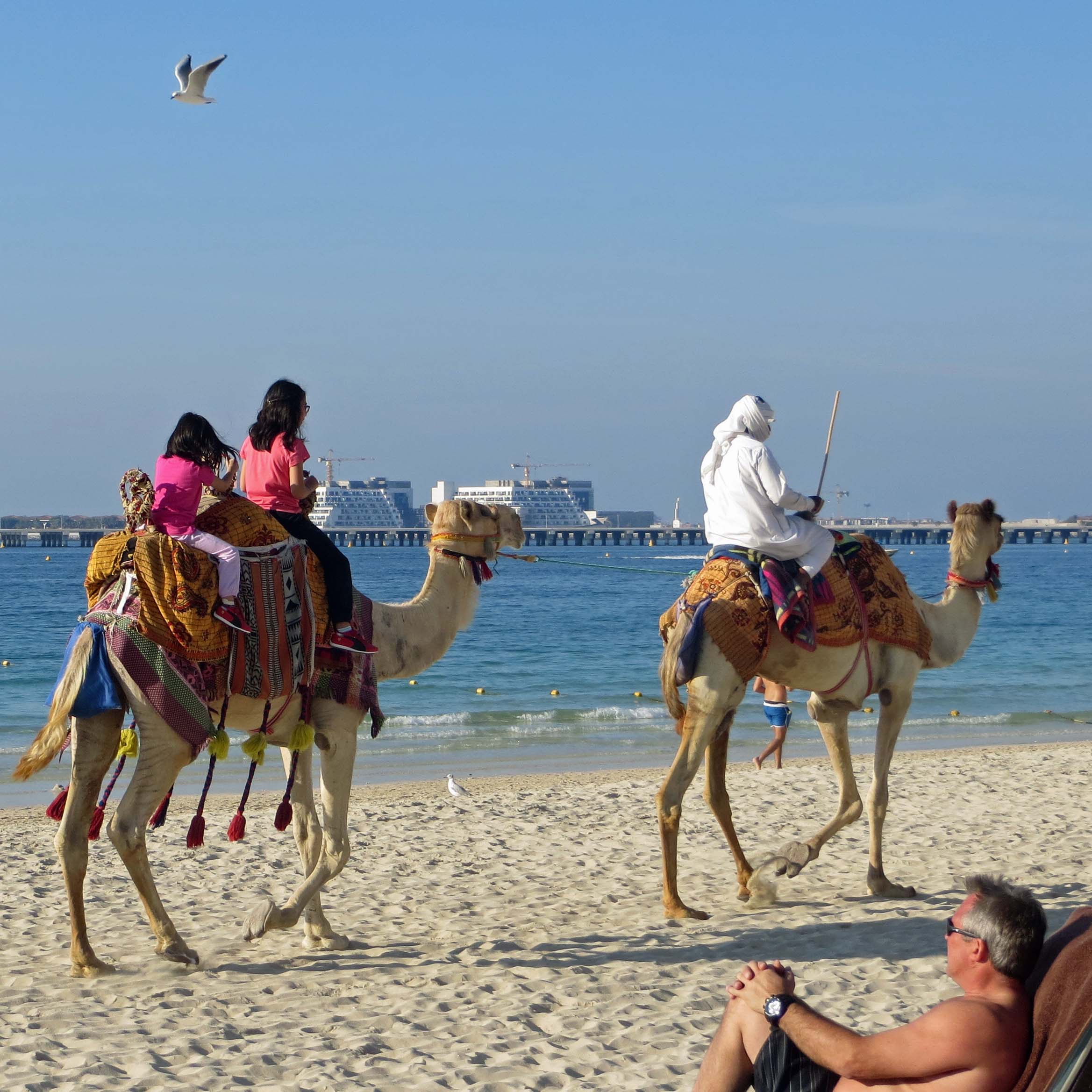
What to do in Dubai becomes a challenge if you don’t go with the flow. This consists of lying on the beach (the second hotel had a tennis-court-sized patch of ‘private’ beach, which it thought entitled it to a certain cachet), paddling in the sea and swimming in the pool, in between ordering drinks and burgers from the liveried black stewards who hover solicitously. Oh, and if you fancy something a little more exotic, a man swathed from head to foot in white, like an extra from The English Patient, passes by on his camel every ten minutes or so. He is leading another camel, on which you can buy a ride. I watched several portly, middle-aged English and American men engaged in this activity, and concluded that they must have been deprived of donkey rides as children.
What did I do? I arrived at the second hotel mid-afternoon, having spent more than a day and a half working quite intensely. Venturing out to explore the private beach, where I was able to exchange the token given to me by the hotel receptionist for a bath sheet, I was escorted by one of the liveried stewards to a sun-lounger, across which he carefully angled an umbrella so that I wouldn’t burn. I then stretched out and fell asleep, waking only an hour and a half later. It was the first time I’d sun-bathed on a beach since I took a summer 1977 holiday in Brittany (where the weather was a good deal more chancy) with some beach-loving friends. When I woke up, I enjoyed myself watching people passing (including those on the camel) for half an hour or so. When two hours were up, I was bored and returned to my hotel room to use my absurdly-expensive Internet connection to send some e-mails.
It was an experience, certainly, and one enhanced by a star-lit al fresco dinner (They weren’t really stars, but the lights on the ceaselessly toiling cranes; however, by removing my spectacles and exercising my imagination a little, I could convince myself that the Milky Way was smiling down on me.) in a roof-top restaurant where the food was delicious and the company (I was with two very congenial colleagues) even better. So, if you were to ask me whether I enjoyed my free half-day in Dubai, the answer would be, unequivocally, yes. But if you’d told me that I’d hit the jackpot and earned another six days of leisure there before I could go home, I’m not sure my sanity would have been equal to the privilege.
 Christina James, crime novelist