

Prince Charles and I are not of one mind…

From Ordnance Survey Landranger 110 map
I love old houses and have been visiting stately homes since I was a child. I celebrate them as a unique part of our English heritage and I am always fascinated to read about the people who lived in them and to gaze upon their portraits. I’m making this clear at the outset, because what I’m about to write may seem a little out of character, not to say controversial.
I read in last Sunday’s Times that Prince Charles is throwing his considerable weight behind the fight to save Wentworth Woodhouse, which requires £100m to be spent on it to conserve the building and reverse subsidence. By a strange coincidence, some years ago, the Prince intervened even more directly to save Dumfries House, by spending £20m from the Prince’s Trust on its renovation. I say coincidence, because for three years I worked in Dumfries and had a flat there, so I’m familiar with and have lived near both the old piles in which he has taken an interest. (If he starts campaigning for any more such buildings near me, I shall begin to think that he is stalking me!)
Wentworth Woodhouse is not so very far away, though I’ve only visited it once, and then only the grounds, because until recently the house wasn’t open to the public. At the time of my visit, about five years ago, it wasn’t possible to get close to it: it had to be viewed from a public footpath on the other side of the boundary fence. I didn’t in fact know of its existence until the publication of Black Diamonds, by Catherine Bailey, which I bought after reading rave reviews when the book came out in 2008 and which is a meticulously-researched account of one of the families that lived in the house – so it doesn’t cover the whole of its history, but I found Bailey’s account gripping and it inspired me to want to see the mansion for myself.
Wentworth Woodhouse has been described as Britain’s finest Georgian house. It is certainly its largest. The main front of the house is 606 feet long, twice the length of Buckingham Palace. It has more than 1,000 windows. The newspaper article says that the nursery was situated an eighth of a mile from the dining room. Guests were given different-coloured confetti so that they could find their rooms again when they retired to bed (I remember reading this in Bailey’s book, as well). Even the stables are huge: in common with many other visitors, I mistook them for the house itself when first I came upon them. In fact, huge is the best word that I can think of to describe Wentworth Woodhouse itself: or gigantic, or enormous, or gargantuan, or outsize. In my view, it is both a monster and a monstrosity. It is gratuitously massive just for the sake of it. It has been symmetrically constructed, with two elongated wings, but is not otherwise architecturally distinguished. It actually gives the impression of being rather squat, even though the main building is three storeys high, because of its preposterous length. If it had been built today, say by an oil sheikh or a Silicon Valley magnate, I’m sure that it would be denounced for its vulgarity. Wentworth Woodhouse is a white elephant. I do not think that it merits the expenditure of £100m to preserve it, especially as I’m sure that this would be just the beginning. Despite the present owner’s ambitious plans to develop several commercial ventures there, I cannot imagine that it could ever be self-sustaining. £100m is a colossal sum of money and would, I feel, be better spent on saving many ‘lesser’ buildings instead.
There is another reason why I hold this view. Wentworth Woodhouse has been one of the most bitterly socially-divisive buildings in our history. I don’t mean the usual upstairs-downstairs disparities illustrated by soap operas like Downton Abbey, about which we probably feel far more uneasy than the people who lived and worked in such houses at the time. Wentworth Woodhouse was built on coal – both literally and metaphorically. The house sits on what was once a rich coal seam. Generations of its owners met the massive expenses of its upkeep by selling the mining rights to the coal that lay deep below its lands. The nearby village of Elsecar was a coal-mining village. Its inhabitants either mined the coal or worked at the house itself. It is still a pleasant but modest village that contains no large properties; the only large property for miles around was Wentworth Woodhouse itself.
The Fitzwilliam family, which owned the house for most of its history and whose story Catherine Bailey tells, were on the whole kind employers, even though the sons sometimes exerted droit de seigneur and fathered a few bastards on the local girls. By the time of the Second World War, its glory days were long over. After the war, it fell victim to what can only be described as an act of vandalism fuelled by class hatred. In 1946, Emmanuel Shinwell, the ruling Labour Party’s Minister of Fuel and Power and a man of extreme proletarian views, insisted that open cast mining should take place on the estate, even though the richest of the coal seams were not close to the surface. He stopped short at demolishing the house itself, but the debris from the mining was actually banked up against its windows. The grounds and gardens were completely wrecked.
Wentworth Woodhouse is now owned by one Clifford Newbold, who bought it for £1.5m some years ago and has since spent more than £5m on carrying out as much repair work as he says he can afford. He is now seeking to sue the Coal Authority for £100m for the depredations to the house and estate that resulted from Shinwell’s instructions. This is the initiative that Prince Charles is supporting. To me, it seems like an invidious and depressing resurrection of a vengeful class war that played itself out almost seventy years ago and from which I should prefer to believe that we have learned and moved on. In addition to this, whether or not the lawsuit is successful or funds are raised to restore the house by some other means – for example, via the National Lottery – it will be the nation itself that pays. One way or another, that £100m will ‘belong’ to us. Do we want to spend it on Wentworth Woodhouse? I suggest that we don’t. This not-so-old, not-so-beautiful, enormous house has been the scene of many past crimes on both sides of the class divide: generations have toiled below the ground there in inhuman conditions, and many miners lost their lives working the Barnsley coal seam; young girls had their lives ruined by the stigma of bearing illegitimate children to an elite of young men impossible to refuse and the upper class occupants of the house suffered the trauma and indignity of being reviled and trapped in their pile by the evangelical social engineering of a scion of the Glasgow working classes. It has not been a happy place, nor a place where greatness has flourished.
It is my belief that, like other places that have been the scene of great pain and suffering, Wentworth Woodhouse should be allowed to die, not a death by a thousand cuts, as money is successively raised and then exhausted, but in one final burst of theatre, one last grand gesture. I think that Wentworth Woodhouse, like many another ageing building, should make its exit via a blast of dynamite and tumble to the ground with dignity, like a huge beast that has now lived out its natural span.
Controversial, maybe. In some ways, I am surprised at myself. But I do believe this, strongly.
The murmuring of innumerable bees…
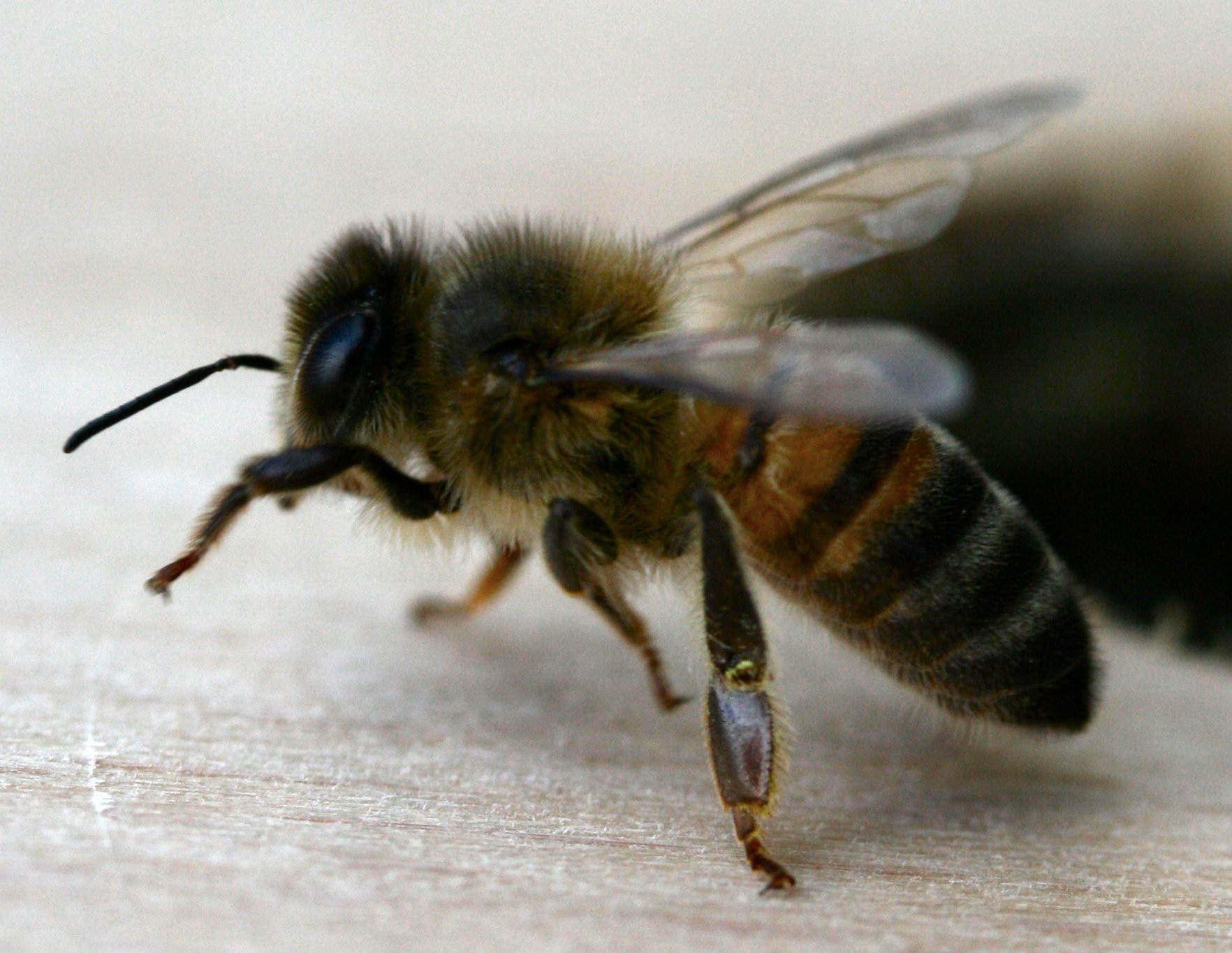
Yesterday I went on a pilgrimage to Ripon with my husband, in quest of bees. We (I say ‘we’ – he is the bee-keeper, the one who has acquired the considerable amount of scientific knowledge needed and has the requisite patience; I am the bee-keeper’s assistant, so can get by on more limited quantities of both and shirk my duties if I feel like it.) started keeping bees a number of years ago, with reasonable success. However, the terrible winter and very wet spring here took their toll and, like many beekeepers, we suffered losses.
Because, according to the press, some 80% of the nation’s bee colonies perished this winter, ‘supply and demand’ now dictates that the cost of a ‘nucleus’ colony is very high (up to £250) and it’s definitely a sellers’ market. Hobby beekeeping isn’t cheap anyway, with hives, frames and beekeeping paraphernalia. The equipment is, to me, like something designed by Heath Robinson or Rube Goldberg and I’m not surprised it’s pricey, given the frankly bizarre design of smokers, heated honey-capping knives, centrifugal honey extraction drums and solar wax melters; the few existing suppliers who have cornered the market definitely call the shots. Anyone thinking of starting up should throw those rose-tinted, back-to-nature, self-sufficiency specs away and go for crystal clear lenses. Then there are the bees themselves: they aren’t like kittens; they don’t come out to melt you with their charms when you are trying to decide whether to offer them a home and they don’t take kindly to being shipped by car and bumped around, before being hoiked out of one temporary home and bundled into another. Though some strains of bee, such as the Italian ‘ligustica’, are more gentle, bees tend to be ‘mongrels’ with very variable temperaments; sometimes a queen bee has genes with an attitude problem. So, though you might dream of summer days and drowsing in the garden sunshine, imagining yourself transported to the Mediterranean by the murmuring of the apiarian equivalent of the Italian soldiers in Captain Corelli’s Mandolin, the reality can be more like taking on the aliens in Independence Day or WWII kamikaze pilots, hell-bent on taking you out even at the cost of their own lives. Think high-pitched incoming whine and be prepared to take cover. Unhappy bees do not subscribe to the concept that assault and battery is a crime. They just do it.
However, for those of us who do love bees and have become used to their temperamental ways and needs, caution is the watchword, and we pulled the plug on the travelling box and retreated quickly to a very safe distance. They’ve settled in already. Apparently, they get their bearings by flying backwards the first time that they leave the hive, to note where they are as they look back on it. They are remarkable creatures: they’re incomplete individually, but together comprise what is known as a superorganism. Each worker has her own task to perform and this changes over time as she ages, becoming finally a nectar- and pollen-gathering ‘forager’. The male ‘drones’ have their moment of glory, flying with the virgin queen to enable her to mate with several of them, before dying a gloriously sexy death (genitalia ripped right out of them!), or never doing anything until they are kicked out by the workers in the autumn so that they don’t deplete precious food reserves over the winter. I’m not a feminist by any means, but I can think of a few men whose families would benefit from similar summary treatment!
Because of the way in which they organise their lives and collaborate, bees have cropped up in art and literature from earliest times. Ancient Egyptian hieroglyphics feature bees; the early Greek writers celebrated them in song and verse. In more recent times, Alexandra Kollontai used the bee colony as a metaphor for life and love in Russia in the aftermath of the 1917 revolution, in her masterpiece Love of Worker Bees.
Bees are a joyful trouble. If they’re successful, they swarm, and the bee-keeper, in hot pursuit, has to shin up trees or plunge into thickets, hanging on precariously with one hand as he tries to trap them in a traditional straw ‘skep’ or a cardboard box. (You notice I say ‘he’ – this is emphatically not this beekeeper’s assistant’s job – though I know that there are many very skilled female beekeepers.) They suffer from a parasite called varroa mite, on which war has to be waged all the time if the colony is to flourish. Bees eat unconscionable quantities of sugar syrup during the autumn and often yield only a few small jars of honey per hive in return, but the benefits of their wider gifts to agriculture and the environment are incalculably great.
And I have to admit, in spite of all those expenses and troubles, now that the garden is once again a-buzz with murmuring bees, it feels as if the summer has begun in earnest at last.
The spurs have it…

Some creatures capture the human imagination more readily than others. Hares have always been magical, perhaps because of their singular behaviour during the spring, perhaps because of the magnificent way in which they will sit up on their hind legs in a field, catch a whiff or a glimpse of danger and bound away, leaping and weaving, ducking and taking advantage of cover and terrain, to throw any would-be pursuers off the scent; most mystical of all, the near-silent pair dance through a woodland glade, for once so mutually bonding that a standing human watcher is passed unnoticed. By comparison, the rabbit is streets behind in the enigma stakes. He shuffles and bobs about, waving his scut ineffectually and, as soon as he takes fright, scampers off with no pretence at dignity or even of making a measured retreat.
Domestic animals exercise similarly varying effects upon the fancy. I’ve never been close to horses, but I can see why people say that they’re noble. There’s a certain stolid majesty about cows as they stand grazing and gazing; pigs endear with their uncannily human-like squabbles. However, farmyard animals generally don’t bring with them the same depth of historical literary allusion, maybe because writers of earlier generations were more accustomed to draw their metaphors from the wild, maybe because we know that the cows and pigs and horses of, say, late mediaeval England bore only a generic resemblance to the ones that we see today. For at least the last two hundred years animal husbandry has involved the intensively selective breeding of farm animals in order to accentuate their most marketable and productive features: today’s cows and sheep are very different from those that feature in eighteenth century paintings; pigs are bred to yield less fatty meat as dietary preferences change. There’s also often a kind of placidity about the creatures found on the modern farm, as if they understand and have accepted that their purpose in life is to bend to the will of their human masters in return for plenty of good food.
Bulls are an exception, of course. I’ve known some very tricky bulls, especially those unpredictable Channel Islands fellows, only too ready to vent on unwary passers-by their frustration and bad tempers. When a bull catches your eye and rolls his own, stamps his hoof and tosses his head – or makes any of these movements – you know at once that discretion is the better part of valour and that, if there is no stile nearby, your best bet is to dive over the nearest hedge or barbed wire fence, a few nasty scratches being preferable to serious injury or death. Bulls in stalls can be even more irate and the escape routes more limited; during my youth, I knew of several Lincolnshire farmers who were gored by bulls in the byre, one of them fatally. The bull does not take kindly to having his masculinity compromised. Yet still they are domesticated, at least in the sense that they look nothing like their forbears.
One creature, however, that evokes for me all the mystery and romance, the pomp and pride as well as the murderousness, of the Middle Ages, is the cock. I’m well aware that chickens have also been subject to generations of selective breeding techniques designed to improve either the laying-power of the hens or the quality of meat for the pot; yet a proud cock, strutting among his hens, still seems to carry the primeval stamp of his ancient forefathers. He shakes his comb and wattles menacingly at impertinent human observers; he preens and poses in the midst of his harem, spurs sharp and threatening. He is a fighter; barbarously, his fighting instinct has been exploited by men until quite recent times. It is the cock who, through the ages, has serenaded the dawn and it is for this, above all else, that he has secured his pole position in the literary canon. From Aesop’s fighting cocks to the rooster after whose third crow Simon Peter betrayed Christ (unusually, all four Gospels agree about this), to Chaucer’s Chauntecleer to stories from other cultures, such as the generations-old Indian story of the cock and the hen, cocks have always crowed and have always been part of myth and fable, woven by talented narrators into great tall stories.
I met a particularly handsome Chanticleer yesterday, when visiting one of my oldest friends, who lives in Lancashire. I’ve taken his picture. Chaucer would have loved him.

Don’t you love it when a book has personal resonance!

Stone Cradle is the second novel that I’ve read by Louise Doughty. The first, Whatever You Love, was an entirely different kind of book: a contemporary novel about child bereavement. Stone Cradle is a historical novel set in the Fens at the turn of the twentieth century, about a Traveller family. I bought it both because I’m interested in the Lincolnshire of that period and because it resonates with me personally, for reasons that I shall explain later, but first I’d like to say that any writer who can produce two such completely different, yet equally compelling, novels ticks several boxes for me straight away.
Stone Cradle is in part about the bleakness of being a working-class woman living in a predominantly farming community of the period. The story is told in the first person, alternately by a female Traveller, Clementina, and her daughter-in-law, Rose, a farmer’s adopted daughter who renounces the harsh life on the farm for the spurious glamour of running away to marry Clementina’s son, Elijah. It is one of the poignant ironies of the book that, although they share a great deal in common (including the fact that Elijah is illegitimate and Rose herself the illegitimate daughter of a mother who, like Clementina, worked hard to keep her), she and Clementina detest each other from the moment that they first meet. This is partly because they are rivals for Elijah’s affections, even though he is more often absent than present from their lives and both know that he is a ne’er-do-well, but even more because the norms and values of each are incomprehensible to the other. The dual first-person narrative captures this cleverly and is the more accomplished for going over the same events twice, through the eyes of each, without being repetitive. As someone who is experimenting with this technique at the moment, I know how difficult it is to pull off!
Rose persuades Elijah to live in a house in Cambridge (where Clementina presents herself as an uninvited guest and never moves out) for several years after their marriage, but Elijah’s fecklessness and their consequent poverty force them eventually to re-join the Travelling community. Rose never fits in. She dies twenty years before Clementina. At the beginning of the novel, Elijah, himself now an old man, is shown burying his aged mother. To save a few shillings, he has Rose’s grave opened and Clementina’s coffin laid on hers. Had they known, both women would have been appalled; the act epitomises both Elijah’s insensitivity and the privation that has followed them throughout their lives.
Two further qualities make this novel exceptional: the brilliant way in which Louise Doughty captures what it was like to be a member of the nineteenth-century Travelling community and her depiction of the period itself. The book has obviously been extensively researched, yet nowhere does the author parade her knowledge. One of the reasons for my being more often than not equivocal about historical novels is that, unless the author is very skilled indeed, the reader is presented with an outside-looking-in narrative: in other words, the author’s fictional take on what s/he has gained from the history books. Worse, this is sometimes accompanied by what I call the costume drama factor, i.e., a stereotypically ‘olde worlde’ way of making the characters think and speak, probably based on watching too many films. It takes a very talented writer not to fall into these traps, but Louise Doughty is such a writer.
Now I come to the personal resonance bit. In her acknowledgments, the author pays tribute to the Romany museum in Spalding (of which I was hitherto unaware) and the Boswell family. She actually gives the most noble of the Romany families in the book the name ‘Boswell’. It is another of the novel’s distinctions that the Traveller characters are not over-sentimentalised. There are rough and feckless Travellers, as well as ‘good’ ones, just as there are good and bad ‘gorjers’ (non-Travellers) living in and around Cambridge. The Boswell family was well-known in the Spalding of my youth. Their patriarch, whose first name I don’t know, because he was always referred to as ‘Bozzie’, had ceased to travel and built up a profitable scrap-metal business just outside the town. By the time I was born, he was reputed to be a millionaire and lived in a very nice house. I went with my father to see him on several occasions. In those days, I think that at least some of his family were still Travellers, and some may be still. Louise Doughty seems to indicate, however, that there is still a permanent Boswell presence in Spalding and evidently the Boswells were the inspiration behind the museum. I am determined to visit it next time I go to Spalding.
Ms James, in the dining room, with the rhubarb crumble…

I’ve spent a great deal of the bank holiday weekend cooking: two types of muffin, cheesecake, bread, meringues, fish pie, quiche and barbecue sauces, since you ask. And today, Sunday-style lunch for my guests before they depart, with rhubarb crumble.
I live just outside what is known as the ‘rhubarb triangle’, a smallish area near Wakefield in West Yorkshire famous for early ‘forced’ rhubarb. In Lincolnshire, too, rhubarb has always thrived. It seems to like cold, wet regions with severe winters. When I was growing up, every garden had a crown or two of rhubarb. The forced rhubarb industry uses heated, dark, forcing sheds to encourage the rhubarb plants to mature early and pickers have traditionally harvested the stalks by candlelight to preserve their sweetness; but generations of amateurs have employed the simpler method of planting it in a sheltered spot and placing an old tin bucket or a more picturesque terracotta bell over one of the crowns.
Rhubarb was a family staple; even though my mother detested it, she would cook it for everyone else. Her first job, in 1945, was quality control technician at the local canning factory, where rhubarb was processed in bulk. (It was war-time, and jobs were plentiful: I believe her main qualification for this was that her school leaving certificate said that she’d studied biology!) Years later she confessed that she’d never had known if there was something wrong with the rhubarb, because it all tasted poisonous to her. I think that it’s one of those foods, like Marmite and peanut butter, that you either adore or loathe.
I’ve always found it rather an enigmatic – fruit or vegetable? I’m not sure which it is. To me, there’s always been something rather mysterious and exotic about it. There’s even poetry in the names of many of the varieties: German Wine, Riverside Giant, Valentine, Sunrise.
One thing’s certain: you eat the stalks and not the leaves, which contain such poisons as oxalic acid. You’d have to eat a lot of very unpalatable leaves to die, however, though boiling the leaves with soda apparently increases their toxicity.
My imagination is caught: the means by which a murderer might do away with someone by serving up a tasty crumble, laced with pulped rhubarb leaves and soda. Ms. James, in the dining room, with neither rope nor lead piping in sight. 😉
A walk into the past… and a request for anecdote!

Yesterday my husband and I drove to the Newmillerdam Country Park near Wakefield and, from there, walked to Waterton Park Hotel via old railways and canal towpaths. We were accompanied by our son and daughter-in-law, who were married at the hotel almost two years ago. It’s a favourite place for weddings, because the building, a Palladian mansion house, is situated on an island in a lake, which makes it extremely photogenic. The house was built by Charles Waterton, the famous early nineteenth century naturalist, who was Yorkshire’s answer to Audubon. Ahead of Walter Potter, he was also a celebrated taxidermist, although, as far as I know, he didn’t indulge in creating the sentimental yet ghoulish animal tableaux that made Potter famous. Waterton was a serious naturalist at a time when naturalism was only just emerging from the status of appropriate hobby for benighted clergymen who had taken up their livings in rural areas to becoming recognised as a ‘proper’ science. I’ve just looked Waterton up and now discover that, unusually for Yorkshire gentry of the period, his family was Catholic. Waterton himself claimed an impressive ancestry that stretches credibility – among other famous luminaries from the distant past, he claimed descent from Ailric, King’s Thane to Edward the Confessor, Vladimir the Great and Sir Thomas More. (Interestingly, George Moore, whom I wrote about last week, also annexed Sir Thomas. Perhaps he represented a kind of badge of honour to nineteenth century Catholic gentlemen, much as some modern Americans may believe they can have no better pedigree than their family’s having arrived on the Mayflower, or Australians than being able to boast descent from convicts.)
Back to the present. There was a wedding taking place at Waterton Park Hotel yesterday. The bride and groom had taken their vows and were strolling with their guests on the lawns prior to adjourning for their wedding breakfast. I was much impressed by the hotel staff, who were as attentive to them as they were to my son and daughter-in-law two years ago. As I’ve written before, I’m fascinated by those whose jobs consist of providing a service to others, whether they are booksellers, restaurateurs or hoteliers. The best of them make every customer and every guest feel special, day in and day out. It is quite a feat.
As the hotel is not so very far from home, I’ve never had reason to stay there, although I’ve eaten there on many occasions. Passing through the foyer to the bar on my way to buy drinks, I noticed that the hotel offers a murder mystery weekend later in the year. I’ve wondered several times about trying out one of these events, but in the end I’ve always been deterred by the risk that I might be bored. In such a setting as Waterton Park, though, I might be tempted to try it. I wonder if any readers of this blog have indulged in one of these contrived adventures? If so, I should love to hear some anecdotes from your experiences, to help in my decision to give Waterton mystery a try.
Raising the bar…

Yesterday evening, I went with my husband to our favourite local Italian restaurant. It’s quite an amazing place to find in a small city like Wakefield: housed in a large building with two floors, it has been handsomely fitted out. The tables have marble tops; there are tasteful pictures and mirrors on the walls. The waiters are impeccably polite and wear a crisp informal uniform of white shirts and black trousers. The menu has always been varied, the prices reasonable. This restaurant has succeeded in combining professionalism with a personal touch.
For the past three years or so, its appeal has been enhanced by the services of an inspired and dedicated Portuguese manager. He told us that he brought his family to Wakefield because there was no work in Portugal; that he had tried Putney, but found the cost of living in London too high; that he was proud to be running what has many times been described as the best restaurant in the city; and that, aside from returning to Portugal once a year for a family reunion, he is not interested in holidays. Under his aegis were instituted a daily ‘specials’ board, cheaper prices for pasta dishes and pizzas on weekdays and free hors d’oeuvres for diners while consulting the menu. For regular customers like us, he always added something extra: free tomato bread with the main course, or a complimentary limoncello with the coffee.
Yesterday he wasn’t there. He could have been taking a day off – it was Monday, after all, and the restaurant wasn’t busy. I don’t think so, however. We had more than an inkling that he had moved on, attracted perhaps by the higher salaries on offer in a bigger city, or snapped up by one of the big Yorkshire hotels. We didn’t ask the waiter, who was as attentive and polite as ever, but subtle changes suggested that the Portuguese manager was no longer influencing operations. There was no ‘specials’ board; there were fewer choices on the menu (the vegetable-based pizzas had disappeared and several types of pasta were no longer on offer); there were no weekday reductions. Although the waiter recognised us and gave us a friendly greeting, we received no complimentary extras.
The food was as good and as well presented as ever, the service faultless. If it had been our first time dining at this restaurant, we’d have left well-pleased, extolling its virtues. As it was, we felt slightly short-changed… and more than a little sad that we’ll probably never meet the Portuguese manager again; conversations with him meant much more than the extras. It made me think that, although it’s true that excellence creates its own rewards, each time you set the bar higher you are creating more demanding expectations from your loyal customers. For every writer (and every blogger!), that is a challenging thought.
When right seems wrong…

The farmers I knew in Lincolnshire were mostly millionaires. They lived in huge houses, set proudly in the midst of their many acres, and were rarely seen on tractors; they drove luxury limousines with personalised number-plates; they made their money from growing crops on what is perhaps the richest arable land in the country.
Farming is quite different where I live now, in the foothills of the Pennines. Most of the farmers are tenants, the land they hold carved from estates that were parcelled up generations ago. Today, the farms are small by modern standards; mostly devoted to animal husbandry, they are barely large enough to sustain the families owning them, some of whom have been working them for many years. One farmer told me that his lease entitles the family to hold the land for five generations, of which he represents the fourth. I am impressed by this family’s loyalty both to its landlord and to farming as an occupation, and fearful for its future. What will happen to it when the present incumbent’s son dies?
In reality, the family may have to quit long before then. Modern farming is a scientific business. Farmers are not, in the main, scientists; therefore, as farming methods become more sophisticated, they have to rely on the trained representatives of, say, the feed manufacturing companies to give them advice. A couple of years ago the farmer I have mentioned (who is still in his twenties) was rebuilding his dairy herd after inadvertently buying two tubercular cows from a neighbour and consequently having to slaughter his whole herd (in accordance with DEFRA regulations). Building up a new herd was expensive. He had always farmed in the traditional way, keeping the cows in byres in the winter and allowing them into the fields to graze in the late spring and summer months. The feed manufacturer advised him that this was inefficient, because cows use up energy wandering about and trample much of what they feed on. The modern way is to improve milk yields by keeping them in the byres the year round and feeding them on corn. The company’s representative paid visits to advise him on the quality of the corn he should use and how much to give each cow. The cows were kept in.
Yesterday, I was therefore surprised – but delighted – to see that the whole herd was out in the fields. Anyone who has seen a cow skip and dance when it is first released into a meadow after a long winter can be in no doubt that, although fastening them up in byres may not actually be cruel, they surely value their freedom.
When the farmer is about he usually stops for a chat. He was there yesterday and told me that he’d had to abandon the corn-feeding regime over the summer months because the cost of the corn was bankrupting him. Milk yields had dropped, too. During the winter, his milk cheque had covered barely half the amount he’d had to pay for feed. As he commented in his laconic way, “Something’s not right here.”
If he is right, this sounds to me like a case of legitimised fraud. It reminds me of how communities in Africa have been devastated after being persuaded by large companies to grow cash crops, destroying traditional self-sufficiency and yoking people to an artificial dependency. This Pennine farmer’s case is not as irrevocable, of course: he has still the option of going back to more conventional farming methods, which he’s chosen to do. Nevertheless, he is still repaying the loan to replace his herd, which is not yet back to its former size, and now has to bear the additional millstone of debt for the corn. The investment in the extra feed has been counter-productive; his business has taken a big step backwards. No-one will be brought to account for this, except, perhaps, the farmer himself, if he is unable to pay the debt quickly enough. The feed manufacturer will have all the weight of the law – and of ‘science’ – on its side.
Crime and legality are sometimes difficult to distinguish.

Taraxacum, much maligned…

In my lifetime, dandelions seem to have been always despised. My father, a keen gardener who also kept an allotment, would survey his realm with gimlet eye and hoik out offending juveniles before they could take hold. My husband does the same. Although my friends and I, as children, presented bunches of wildflowers to our mothers, they never included dandelions. Later, my son was similarly selective. Playground wisdom used to say that touching a dandelion in bloom made you wet the bed – though picking them to blow away the ‘clocks’ later in the year was not deemed to have a similar effect. (It occurs to me now that the products of this latter activity must have sprung up afterwards to annoy my father.) We picked the daisies and buttercups that grew in profusion on the banks of the Coronation Channel that skirted Spalding, then an excitingly isolated place to play (mothers in those days worried neither about accidental drowning nor ‘stranger danger’), but not the dandelions. The only time that I took any interest in a dandelion was when someone told me it would make a good meal for my tortoise, but, accustomed as he was to a townie’s diet of chopped tomato and lettuce, he turned up his nose at it. Suspicion confirmed: dandelions were weeds, and useless.
As I said earlier this week, we’ve had a very strange spring. Some plants have flowered late, others early. Some seem to have flourished; others have struggled to survive. Dandelions are hardy plants – they keep on flowering for many months, their succession of new buds clinging close to the soil and evading even the mower’s blades; the tiniest portion of root becoming a new plant within days. A couple of years ago, I even saw one blooming a few days into the new year, its head poking through a dusting of snow. They are stubborn survivors. But this spring they haven’t needed to put up a fight to survive: instead, they have been having a ball! They must have relished all that snow and rain. They are popping up everywhere, their dark leaves glossy and luxuriant, their perfect heads glimmering like star-cut diamonds. I am reminded of the beautiful picture of a dandelion and hare in Kit Williams’ gorgeous puzzle book Masquerade, a botanically accurate depiction so lovingly executed that the artist must have valued the plant. One of the fields that the dog and I walk through daily is luminous gold, the dandelions so profuse that they might have been planted deliberately as a crop. (When he saw the glorious vision, he became puppyish with excitement and whirled round amongst the flowers, coming back to me with legs stained with their colour!) Their beauty is captivating, though I know their days are numbered: the farmer who owns the field will either cut them down with the grass or send in the cows to do the job.
Drinking in their splendour, I wondered how a farmer’s wife of two or three hundred years ago might have reacted to this sight. Dandelions first flower at the time of year that earlier generations dreaded as the notorious ‘hungry gap’, the period when all the fresh produce grown for the winter months was exhausted and the current year’s crop of vegetables had yet to mature. Diets became meagre and unbalanced; sometimes people suffered from hallucinations or showed other signs of malnutrition. I have no proof, but my guess is that such a woman would not have despised this fine display, nor turned her back upon it. I’ve just looked up ‘dandelion’ in my herbal, and discovered that the leaves can be used in salads, or cooked in soups and stews. The heads can be fried, or dried and then crushed as condiments. Dandelion wine has a powerful kick. Dandelion infusion makes a fine herbal tea. Dandelion roots, roasted and ground, can be used as a substitute for coffee, much like chicory roots. Dandelions are also reputed to have medicinal properties and, for generations, were used to cure or alleviate a wide range of ailments. I discover that the dandelion was only downgraded to the status of ‘weed’ at the end of the nineteenth century. Like the tortoise, we have turned into townies. Will the twenty-first century let the tide of fashion turn again and restore the reputation of the dandelion?
In the meantime, I’m going to enjoy the spectacle of their blooming profusion and look for a hare (quite common here) leaping over them.
One month to publication!

So here I am, one month away from the publication day for Almost Love, which has reached the proof stage. I have marked the day by putting the ‘milestone’ countdown widget here (as if I needed it!), because that seems a celebratory thing to do, as well as adding the clickable cover picture and link to an interview about Almost Love, both of which are to your right on the sidebar. It’s enormously exciting, and humbling, for me to be able to visit the Salt Publishing home page and to see my second novel there, whirling on the carousel amongst those other glorious titles, including Alison Moore’s latest (The Pre-War House and Other Stories, launching tonight at Waterstones Nottingham), David Gaffney’s More Sawn-Off Tales and Alice Thompson’s new novel, Burnt Island, not forgetting my fellow crimewriter Matthew Pritchard’s Scarecrow (to be published in the autumn).
So much has happened since November 2012, when In the Family came out to face the world, and I am very grateful indeed to the many readers of that book who took the trouble not only to read it but also to comment so favourably on it. I have made many online friends since then, via Facebook, Twitter and this blog; they have been stalwart in their support and their sharing and retweeting has sometimes been so vigorous that I have barely been able to keep up with it. If I missed passing on my thanks to you, please forgive me and accept them from me now.
I’d like to express my appreciation, too, to all those readers who have visited here, pressed the ‘like’ and r.t. buttons, followed and commented. This opportunity to engage with you and your thoughtful comments has been beyond helpful to me in more ways than I could ever have imagined when I started blogging last October. It has also been a lot of fun!
I am indebted to Jen and Chris at Salt Publishing for all their support, which is unfailing and ever-present, as I’m sure all their authors will readily confirm. Their incredible creativity, their capacity for managing the impossible in no time at all and their long-suffering, good-humoured indulgence of human failings are what make them truly top publishers.
May I complete this post by announcing four events connected to the launch of Almost Love:
Waterstones Gower Street
Thursday June 20th, 18.30 – 19.30
An evening with Salt crime writers
Christina James, who reads from her new novel, Almost Love
Laura Joyce, who reads from The Museum of Atheism (published November 2012)
Matthew Pritchard, who reads from Scarecrow (to be published September 2013)
Admission by ticket or at the door. Wine will be served. Books will be on sale.
Bawtry Community Library
Thursday June 27th, 18.30 – 19.30
Christina James gives readings and speaks about crime-writing
Tea, coffee, refreshments. Books will be on sale.
Co-ordinated by Claire Holcroft and George Spencer, Doncaster Library Service
Wakefield City Library, Burton Street, Wakefield
Alison Cassels, Library Officer in Charge of Promoting Reading, writes:
As well as Crime Writing Month, 29th June is National Readers Group day, so we’ll be promoting it to our readers groups too. What we have planned for the day is our Readers Group morning, with coffee 11.00-11.30, then discussion groups 11.30-12.00, discussing three books (including In the Family), then 12.00-12.30 a general discussion on crime novels, followed by people recommending books they love until 13.00. After lunch, Christina James will be presenting her second novel, Almost Love, in a public session, from 14.00-15.00.
Event at Adult Education Centre, North Lincolnshire Libraries
Date and time to be confirmed.
 Christina James, crime novelist