

Bodies and what to do with them…
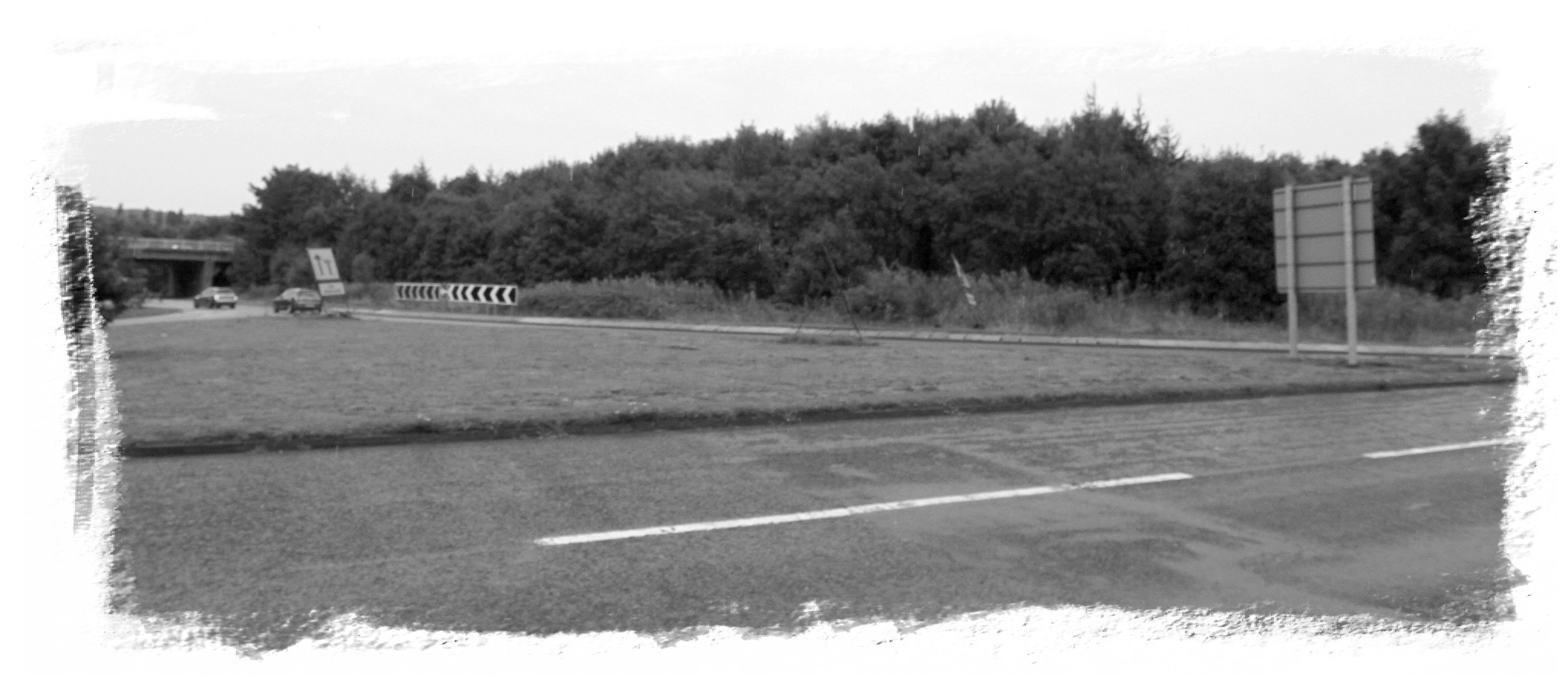
Handy off-road parking under that bridge over there… and oodles of space under the roundabout’s trees…
My husband drove me to the station yesterday morning. I was on my way to yet another (day-job) conference. On the way, we noticed that the slip road that takes us on to the motorway was once again half-closed for repairs. This led to a re-run of one of our favourite conversations – which, incidentally, I capitalised on at the beginning of In the Family. Murdering your victim is fine (so to speak), but how you dispose of the body is a much trickier problem.
Unless they live deep in the Russian steppes, this is a perennial problem for murderers. Some have resorted to ingenious solutions, yet still been found out. I’m thinking of Haigh, the acid bath murderer, or the ‘lady in the lake’ killer (the woman’s husband, Gordon Park, was eventually found guilty: he got away with it for half an adult lifetime, but was still caught in the end, when divers found the body). In certain rare circumstances, justice has not required the discovery of the body in order to convict the killer. Muriel McKay’s body was never found (there was a gruesome theory that she was fed to pigs on the farm where she was held captive), but the two brothers responsible for her death were imprisoned nevertheless.
There are many ways of disposing of a body, especially if the killer isn’t squeamish, but on a crowded island like ours there is always the danger of being spotted, even in the middle of the night. This brings me to my husband’s preferred method of victim disposal. He says that if he were to commit his hypothetical murder, he would bury the body in the middle of a large roundabout. There are two not so very far from where we live that might do nicely. The larger of these is overgrown with a wild thicket of shrubs and trees that is never penetrated by the Council’s gardeners. A body buried there would not be discovered for many years, unless a decision were to be taken to change the route of the motorway. Potentially there would be two problems to overcome, however: the ground might be very hard and unyielding (like our garden, which had virtually no topsoil until we imported some) and therefore it might take a long time to dig a large, deep hole; furthermore, situated as the roundabout is, near a hotel and the beginnings of a large conurbation, the danger of being discovered in the act of digging there would be great. This hazard would be compounded by the fact that there is nowhere inconspicuous to park adjacent to this roundabout. My husband would therefore have to risk parking on the hard shoulder and pretend to have broken down, which might prompt an interesting conversation with the inevitable helpful passing police patrolman:
‘Why did you leave your car unattended, sir?’
‘I was just digging a hole on this roundabout.’
‘Why was that, sir?’
Alternatively he would need to park in one of the nearby streets and lug the body several hundred yards, crossing a busy road and the motorway slip-road in order to reach the roundabout. He’d also have to be strong enough to carry a dead weight of, probably, nine stone or so (assuming that his victim was a woman) or half that much again if a man. You begin to see why some murderers resort to the ghoulish job of cutting up their victims.
No, my husband decided, the smaller of the two roundabouts, which is still large and overgrown in the middle, would be a better bet. A hole could easily be dug in advance there, for the undergrowth is thick and, in the leafy season, impenetrable to the eye. It has the advantage of being accessible from a long, poorly-lit slip-road that is often deserted at night, with a lay-by very close to it. Unfortunately, the lay-by itself is the popular haunt of men in vans during the day (I’ve never been able to fathom why, but judging from what I’ve seen, I wouldn’t be surprised if a few dodgy transactions took place there) and sometimes used as an overnight stop by truck drivers. My husband would therefore have to make sure that there were no truckers there on the night he buried the body. Much more convenient, he said, is the hard standing underneath the motorway bridge, right on the roundabout, where many a time we’ve seen lorries and cars parked, sometimes overnight. Twenty yards maximum for the heavy lifting. Then, he said, he’d dump the body quickly and drive the car away, so that the vehicle would be there for no more than five minutes, if that. He’d already have had the body in the freezer, wrapped in plastic, so it would be a neat and clinical affair. A pair of heavy duty gloves and an ex-military trenching tool (this latter he has had for some time – it folds neatly into a small case that can be attached to a belt) would complete his kit for an inconspicuous return on foot to complete the job. He’d be able to take his time to put the body in the hole, replace the soil and cover the grave well with the dead leaves that lie there so that no-one would notice that the earth had been disturbed before it grew over properly again. Simple.
I was not convinced. For one thing, there’d still be a chance of the ubiquitous police patrolman spotting the car and stopping to investigate. Or a lorry driver might turn up late. Then there’s Sierra Yankee Nine-Nine, South Yorkshire’s proudly-owned police helicopter. What if the pilot were out for a late night recce, and spotted him from above? There is also the forensics to consider: even wrapped in plastic, the body might leave some traces in his car and, if the remains were found sooner than he expected, he’d have to explain why soil matching that on the roundabout had clung to the soles of his boots. But for me the insurmountable obstacle would be the corpse’s necessary, if temporary, residence in my freezer. I have not spent the latter part of the summer freezing vegetables to have them jostle with a grisly cadaver; nor could I ever feel the same about Ben and Jerry’s Dough-ble Whammy ice-cream if I’d seen a lifeless hand nestling against the carton.
No, it’s back to the drawing-board for my husband. He’ll have to find a less domesticated way of getting rid of his victim. He says we could have a trial run with me as a dummy corpse, but I’m not to be taken in by that one. The journey to the station, however, passed very quickly.
An extraordinary woman

Bess of Hardwick
Last Saturday we had visitors and the weather looked very uncertain. We therefore abandoned plans to take them to the cotton mill at Styal (which involves quite a lot of walking about outside) and instead headed for Hardwick Hall.
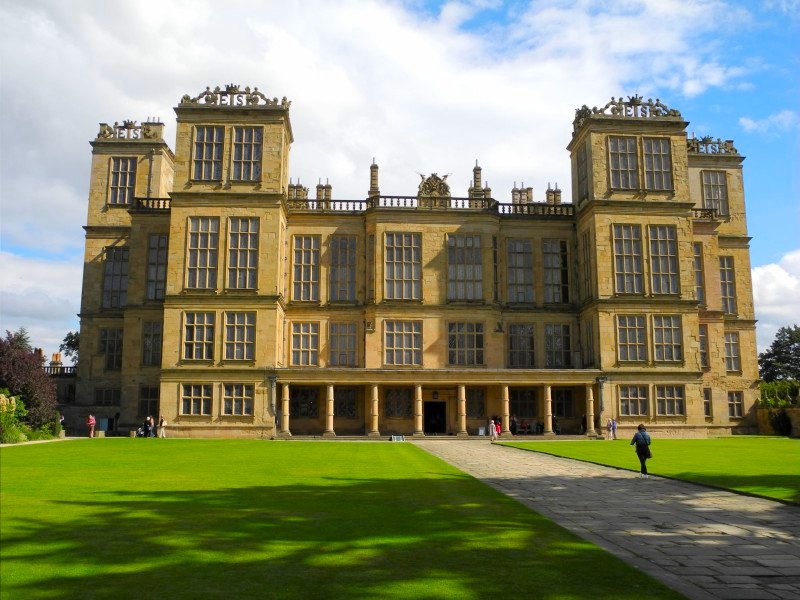
Hardwick Hall
As it happens, this is one of my favourite old houses. I’ve visited it several times, on the first occasion as a schoolgirl. I was surprised on this latest visit to learn that it was acquired by the National Trust shortly after its last domestic resident, the Duchess Evelyn, died in 1960, as I had assumed that I’d originally seen it before the Trust got to work on it (it was very run-down and gloomy then), but I must have been wrong. I suppose it must take years to restore an old house as large as this. Actually, I loved it when it was a bit dirty and dilapidated, though I appreciate that it couldn’t have been left like that. Yet it was very atmospheric; I really felt as if I might have met Bess of Hardwick herself coming down the stairs.
Bess would have been an extraordinary woman at any time, but her achievement was unique in the Elizabethan age during which she flourished (she died when she was 81, and actually spanned almost the whole of the Tudor period). She was born during the early years of Henry VIII’s reign and died five years after James I succeeded to the throne. Of relatively humble background – her family were minor gentry – she gradually made herself one of the most powerful women in England through her four marriages, each husband being richer and more influential than the previous one. I’m not sure how she managed to circumvent the laws about women’s property actually belonging to their husbands that pertained at the time (and for centuries afterwards), but I suppose it must have been something to do with the terms of her widow’s jointures. However she managed it, by middle age she was a very wealthy woman in her own right, with an income of £9,500 p.a., of which we are told that she spent £8,500. By comparison, the humblest labourers on her estate were paid a penny a day.

A graphic detail from the frieze around the grand reception room
Bess’s last husband, George Talbot, the Earl of Shrewsbury, was for many years gaoler to Mary Stuart (an unenviable task), and Hardwick contains examples of embroideries that Bess and the exiled Scottish queen worked on together. She and Mary clearly got on well. One of the most famous portraits of Mary hangs in the gallery at Hardwick. Bess also succeeded in maintaining good relations with Elizabeth I. There is another portrait there of Elizabeth, wearing an elaborate dress that Bess presented to her as a New Year’s gift.
I’m certain that Bess would have been a very difficult woman to live with. Obviously always a strong-minded character, by the time she married Talbot her character had hardened into obduracy. Hardwick Hall was indisputably her house, not her husband’s (they also owned the forerunner of Chatsworth). She proclaimed this by having the initials ‘ES’ (for Elizabeth Shrewsbury) carved on its castellations. Hardwick was built right next to the old Hardwick Hall, a much less splendid house, where she had lived as a child. Although she took some of the stone from the old hall to use in the new one, the old one was never demolished: its ruin still stands. She and George Talbot (he also proud and intransigent) did not enjoy a happy marriage and at one point were formally separated. Elizabeth I instructed them to live together again, to set a good example, but it is doubtful if this instruction was carried out in the spirit, if indeed it was observed in the letter.
Bess eventually became the grandmother of Arbella Stuart, who had strong claims to the throne and grew up at Hardwick. As a young woman, she was a semi-prisoner there. Recent excavations have discovered an Elizabethan exercise book which may have belonged to Arbella. This item, obviously, had lain concealed for very many years, but almost everything there is contemporary with the building of the house. The reason that I like Hardwick Hall so much is that the wall-hangings, artefacts and furnishings are more or less as they were in Bess’s time. This is because it was successively used as a hunting-lodge and to accommodate a younger branch of the family, especially after the later Chatsworth was built.
Hardwick is evidently one of the most popular of the National Trust houses; it is almost always thronged with visitors and has been impressively restored by the Trust over the last half century; the loss, especially to me, of its former compelling ambience is a very small price to pay for preserving such a beautiful old house. And I’m certain that, if it were possible to visit it late on a dark winter’s night, it would still be easy to imagine Bess moving down the broad, shallow stone stairs, her rich silk dress swishing slightly as she went.

I really felt as if I might have met Bess of Hardwick herself coming down the stairs.
Meaty… from @stephenbooth

I think that I’ve read all of Stephen Booth’s novels except Already Dead, the latest. (It’s difficult to keep up!) I’ve just completed The Kill Call, its predecessor. Booth’s a writer I much admire, partly because I like the characters that he’s developed in the Cooper / Fry novels, partly because he describes so well the Pennine countryside in which the books are set. It’s not too far from where I live and I find his descriptions both evocative and accurate. And then there are his plots, which improve with every book.
The Kill Call particularly features Diane Fry, his troubled Detective Sergeant, though DC Ben Cooper still has a large role in this book. As in the previous novels, Fry is at odds with most of the people who populate her world and, as has also happened before, Cooper’s well-meaning attempts to help her rebound on him. In fact, I’d say that, if there is a (minor) blemish in this book, it’s that Cooper’s Good Samaritan acts occasionally tip over into soppiness, at least for this reader: Booth is clearly trying to point up Fry’s prickliness, but I don’t think that you’d need to be an outwardly tough, inwardly traumatised woman police officer to find Ben Cooper’s attentions as depicted in The Kill Call irritating, which is a pity, because Booth has got the taut relationship that exists between them exactly right in the previous novels in the series.
That is a small quibble, however. The Kill Call has a great deal to offer, not least its fascinating historical detail. Booth is particularly excellent on the history of the recent past. I hadn’t before come across accounts of the underground nuclear shelters created in the Peak District during the Cold War, but the detail that he writes about them is completely convincing. Booth compares this period of history with what happened in the plague district of Eyam, to great effect. However, the main plot focuses on the legality of hunting and shady dealings in the meat industry, both of course highly topical. The title cleverly refers to both. The first murder victim is a reprehensible man; Booth holds the reader’s interest and sympathy by developing the story of those closest to him. A web of lies, deceit and treachery unfolds; it is complex, but extremely well-handled and perfectly credible.
I won’t reveal any more, as I’ve probably disclosed quite enough already! I’d just like to conclude by saying that I think that Booth should recognise that he has taken the ill-starred, prone-to-misunderstanding, tense quasi-sexual relationship between Fry and Cooper as far as he can now without developing it further. One or the other or both should pluck up the courage to explore their feelings more clearly, or one or the other should move on. This may be what Booth has planned. But, as I’ve already explained, I have yet to read Already Dead, so if anyone reading this has beaten me to it, please don’t give me any clues!
A woman at last, on my first visit and on the last night…
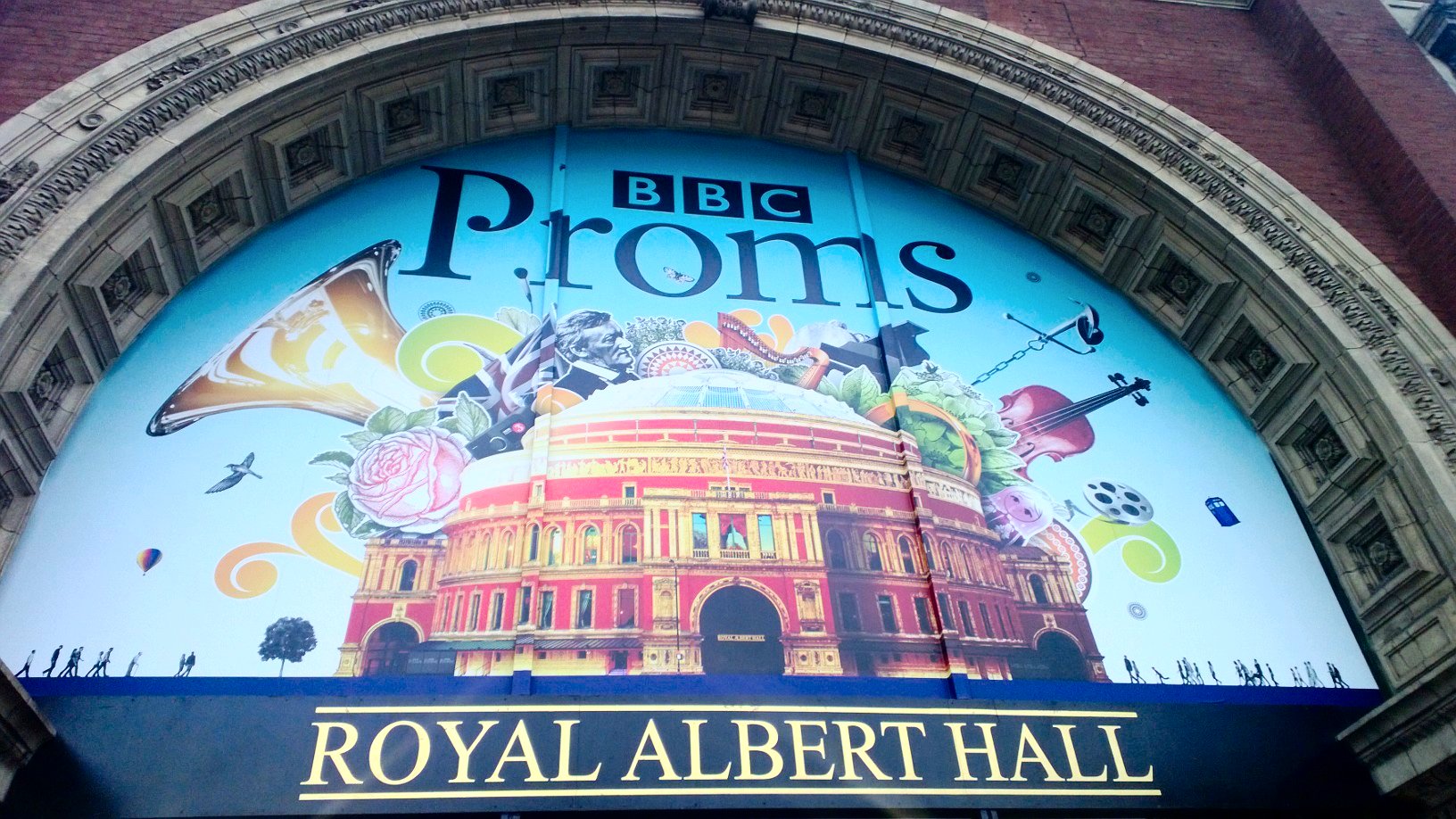
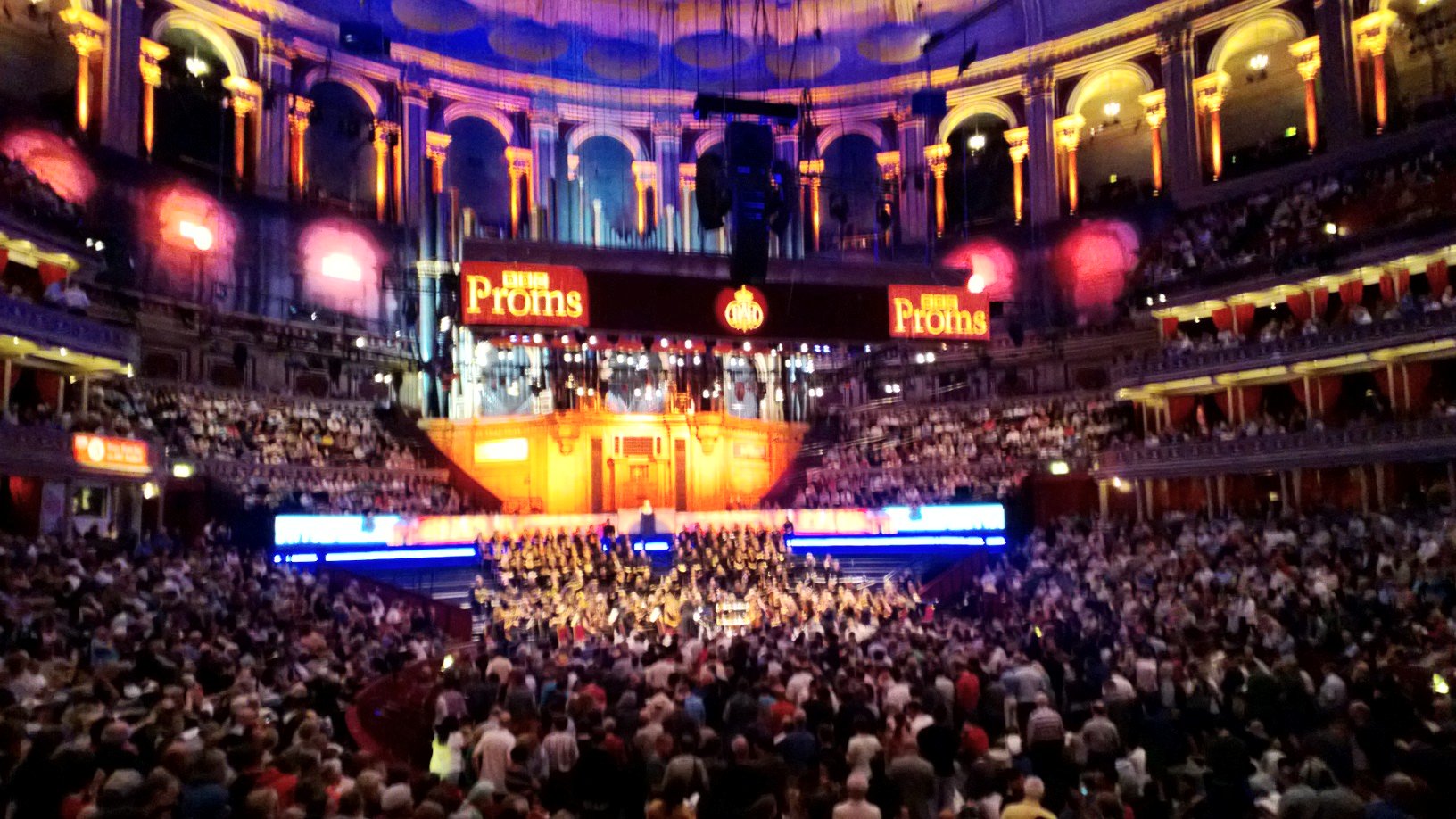
I meant to write about my first visit to the BBC Proms, on Saturday 17th August, shortly after it happened, but I mislaid my programme for a few days and then decided that I’d wait until I’d watched the televised version of the Last Night before posting this account.
The two events had in common that they were conducted by Marin Alsop, a female American conductor who is one of the very few women to have penetrated her almost imperviously masculine profession and the first woman ever to have conducted the Last Night of the Proms concert. She referred to this herself when she gave a short but eloquent speech after the Last Night performance, saying that when she told her parents at the age of nine that she wanted to be a conductor they always encouraged her and that her message to other young people, especially musicians, with ‘impossible’ aspirations was ‘Never give up.’
Almost inevitably, male reaction to her appointment ranged from the overtly hostile (the Russian conductor Vasily Petrenko called her a ‘cute girl’; since she is twenty years his senior, I can only conclude that he was suffering from a small prod from the green-eyed god) to the vaguely patronising (although it’s understandable that newspaper accounts emphasised the fact that she was the first woman, less commendable was innuendo from some of them that she was very good ‘for a woman’), compared with Alsop’s own business-like declaration that Sir Henry Wood would have felt that her selection as conductor demonstrated ‘natural progress to more inclusion in classical music.’
All I have to add to this is that she was brilliant. It’s an over-used adjective, but the only one that fits. She conducted both the concert that I attended (No. 47, which featured works by German composers Brahms and Schumann and was also distinguished by being performed by the Orchestra of the Age of Enlightenment, whose members use only genuine period instruments, and the Choir of the Enlightenment) and the Last Night with an energy, fluidity of movement and grace that was more evocative of the performance of a distinguished ballerina than that of a conductor. She obviously lived every note of the music with passion as it was played under her tutelage. It was clear, also, that the orchestra loved her, and she quickly struck a rapport with the audience, too. I particularly admired the way she greeted us, with her hand on her heart, and the understated clothes that she wore (sober tailored trouser suits with just a touch of colour). She was elegant without being flamboyant, a genius imbued with genuine modesty. She also had a sense of humour, and clearly enjoyed conducting Nigel Kennedy as he treated the Last Night audience to his rich repertoire of improvised and impeccably-timed virtuoso antics.
Finally realising my ambition of attending one of the Proms in person and making my first visit to the Royal Albert Hall was even better than I had anticipated. The Hall itself is a monument to Victorian hubris, yet it is impossible not to revel in its magnificence. Above all, it stands as the symbol of hope in an age of expansion and continues to represent the best of culture that civilised society has to offer. The famous portraits of Albert and Victoria in their youth which hang in the foyer have a lightness and optimism about them which would later be all but eclipsed in memory by his early death and her dour widowhood. The Albert Hall was a sumptuous place for those who could afford to go there, yet it was Sir Henry Wood’s dream to make classical music available to all and he certainly, at the Queen’s Hall, enabled a much wider stratum of society to enjoy the performances. This still obtains today: those who are prepared to risk disappointment and don’t mind standing throughout the performances can still pick up tickets at short notice for only a few pounds.
The tongue-in-cheek jingoism of the second half of the Last Night never ceases to delight me, though it becomes more anachronistic year by year (and, worryingly, some of the audience seem to embrace it without quite enough irony). That it has become a meeting of nations, whose flags swirl colourfully, is the ultimate irony. I particularly enjoyed all the solos by Joyce DiDonato. Apparently her costumes were by Vivienne Westwood, which strikes me as very appropriate. However, for my money, it was Marin Alsop herself who stole the show.
Over the road from the Royal Albert Hall stands the massive gilded statue of ‘Royal Albert’ himself. I’d never seen this before, and found it quite disturbing. There’s nothing playful or democratic about this. It’s a construction intended to awe and impress, a monument beyond ostentation that celebrates the British Empire and this scion of its imperial family and, much as if he belonged to some ancient Egyptian dynasty, implicitly raises him to the status of demi-god. Sir Henry Wood may have brought fine music to the petit-bourgeoisie of his day, but at the same time others were busy building and legitimising the British Empire, carefully both ignoring and concealing the fact that it was being constructed on the labours of a British industrial class that could barely afford to feed its children and dependent on the suppression of many other fine civilisations throughout the world. It is difficult to believe that this was happening only three or four generations ago, that Britain only began the long road to true democracy with the introduction of universal suffrage in 1918 and, yet more surprisingly, that it only ‘gave back’ most of its overseas colonies within living memory.
A short York walk

York Minster and scaffolders
For the past two days, I’ve been attending a conference in York. I used to visit the city regularly when we lived in Leeds. It was a favourite place to take our son when he was young: we’ve been boating on the river there, visited the Jorvik Museum and the Railway Museum and, of course, explored the Minster. We’ve been to the pantomime and plays at the repertory theatre and we’ve always also enjoyed simply walking through the streets. In the summer, York is full of tourists; in the winter, there may be fewer, though still plenty, and there’s often a more local festive atmosphere: we’ve seen jugglers and fire-eaters performing in the shopping precinct in Stonegate, where there are also chestnut sellers when Christmas gets close. Some time ago, relatives of friends of ours lived in one of the houses in Stonegate and kept a shop there. They had to carry out some repair work and discovered that the foundations of their house included beams from an Anglo-Saxon tithe barn.
That’s the magic of York: it’s steeped in history. The people of York have handled their historical past magnificently, too. Old buildings have been repaired but not ‘restored’: there are several roofless ruins that have been tidied up but not renovated with the dubious help of ‘artist’s impressions’ of what they might have looked like in the past.
I don’t think that until Wednesday I’d visited York for the best part of ten years (apart from an ill-fated train journey home from London one Friday evening, when a signals problem meant that all trains North were diverted to York and I was dumped there in the middle of a very cold February evening, reliant on my husband’s driving more than thirty miles to pick me up – which it has to be said he did with a very bad grace, as if I’d personally invented a way of spoiling Friday night. A venial crime on his part, perhaps!). I didn’t have much spare time, but I was determined to spend at least an hour revisiting old haunts.
Reassuringly little has changed. I saw the obligatory crowd of American tourists – mainly ladies of a certain age (and size!) – who were listening avidly to their guide. I listened to her as well for a few minutes, as she told them about the Plantagenet royal family and its strong association with York. What she said was only approximately correct, but I suppose that wasn’t the point! She captured the mystery and glamour right enough. The Minster was swathed in scaffolding, as ever, as was the Dean Court Hotel that stands opposite it. I’ve stayed in that hotel and spoken there at past conferences. It’s a picturesque place, but its fabric seems to suffer from perennial crises! I walked as far as Bootham Bar and took a picture of a plaque that I’d not noticed before, dedicated to a Civil War Royalist, and another, in Monkgate, of the ornate entrance of St. Wilfrid’s, the Roman Catholic church.

Petergate plaque York

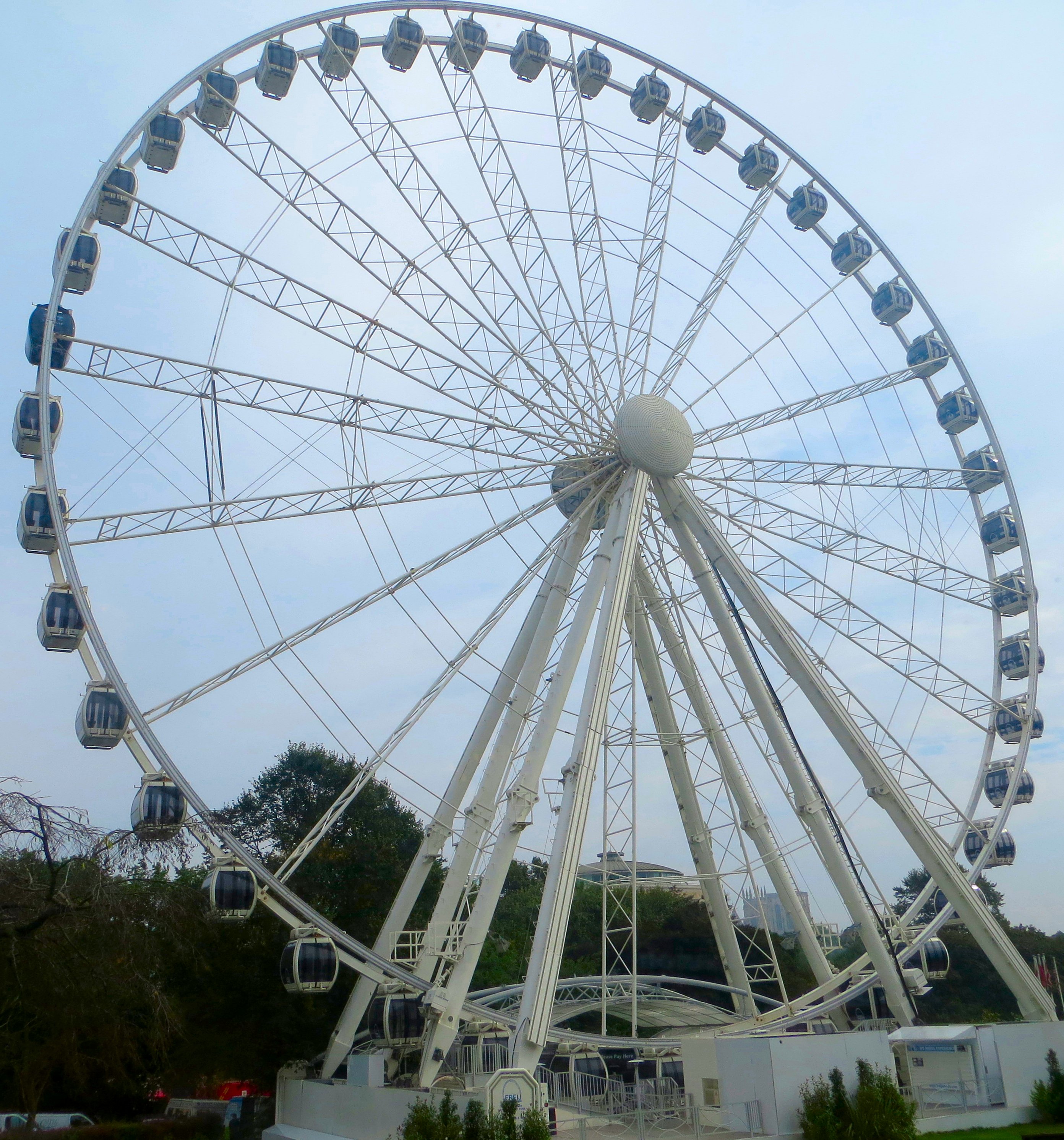
And so back to my hotel for more sessions about libraries (yesterday’s covered cataloguing, which is not the most exciting topic in the world, especially on the last perfect sunny day before the rain set in). The Royal Hotel stands adjacent to the station, so is very convenient for conferences. It is also right next to the only major innovation that I spotted during my short walk: a giant Ferris wheel, apparently named the ‘York Eye’ (I immediately thought, ‘pork pie’!). I scrutinised this from several angles, and decided that I wasn’t all that keen on it. Since the London Eye was erected to celebrate the Millennium, these wheels have become popular. I’m sure that they help the tourist industry, but I can’t help hoping that, like the Manchester Eye and the Birmingham Eye before it, this one will be a temporary installation. To me it was incongruous to see this monster looming over such an ancient city. There doesn’t seem to be much practical point to it, either. The argument for building these structures in other cities has been that they provide sightseers with a panoramic view: but in York this can be achieved simply by taking a turn on the wonderfully-preserved city walls.
York Eye
No crime here, at all, apart from some crafty behaviour!
Girls together in the paddock

Waiting for breakfast
Harriet
Last week my husband and I were looking after the neighbours’ dogs – all twenty of them – for two shifts a day. This may sound like a lot of dogs, but in years gone by there have been more than twice as many. Let me explain. The neighbours used to be professional greyhound trainers. They’ve almost given this up now – they’re both approaching seventy – but they haven’t given up on the greyhounds. You may have read about how racing greyhounds are often maltreated by their owners: beaten, starved, abandoned or put down once they have become useless for the track. Well, our neighbours have always stood by their dogs and taken care of them until they die naturally, sometimes at a great age (in greyhound terms) because they are so well cared for. These dogs live in a greyhound hotel.
There are seventeen greyhounds left now (the other three of the twenty are house dogs), all residing in a converted turkey barn. All but four of them have a kennel each. Then there are two pairs sharing: Tiger and Kim, and Imogen and Bonnie, who are litter sisters. Looking after them takes the best part of the morning each day, starting at 06.30. It would take longer if there weren’t a strict routine which the dogs understand. Nevertheless, they love a rookie and miss no opportunity to get one over on you if they can. For example, Imogen and Bonnie are apt to dash out of their kennel when you go in to collect their food and water bowls, so it has an elaborate strap attached to the door, allowing you to hold the door to behind you while you’re in there. Both sat demurely on their beds watching me struggle with this contraption. If I hadn’t bothered with it, I’m sure they’d have slipped out to race around the barn.
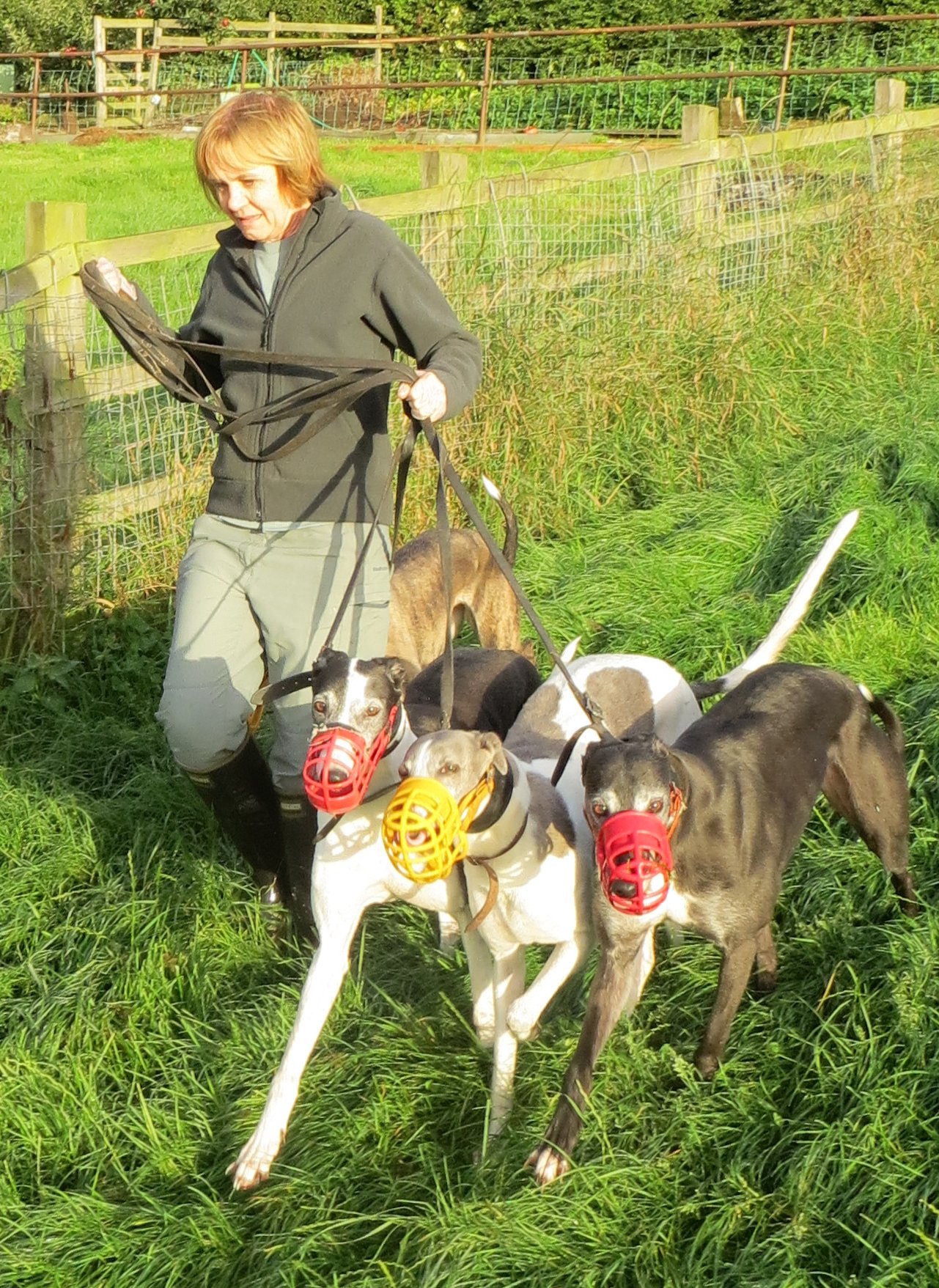
My husband mucks out the kennels while I supervise the walks. First on the rota are three stately old gentlemen, Des, Laddie and Woody. They’re all black (which is why I haven’t taken their pictures: they don’t photograph well), apart from their now slightly grizzled noses. They walk out together, sedately. Unlike ‘the girls’ who come later, they don’t knit their leads into knots as we go round the paddock, twice. All the dogs wear muzzles, not because they’re dangerous to humans (they’re extremely affectionate), but because kennel dogs have a pack mentality and can’t be relied on not to gang up on each other. By the same token, several of them together would chase and kill a domestic dog if they got the chance. When I’m walking them I hope they won’t spot a pheasant; otherwise I know I’ll be flat on my face and they’ll be disappearing over the horizon!
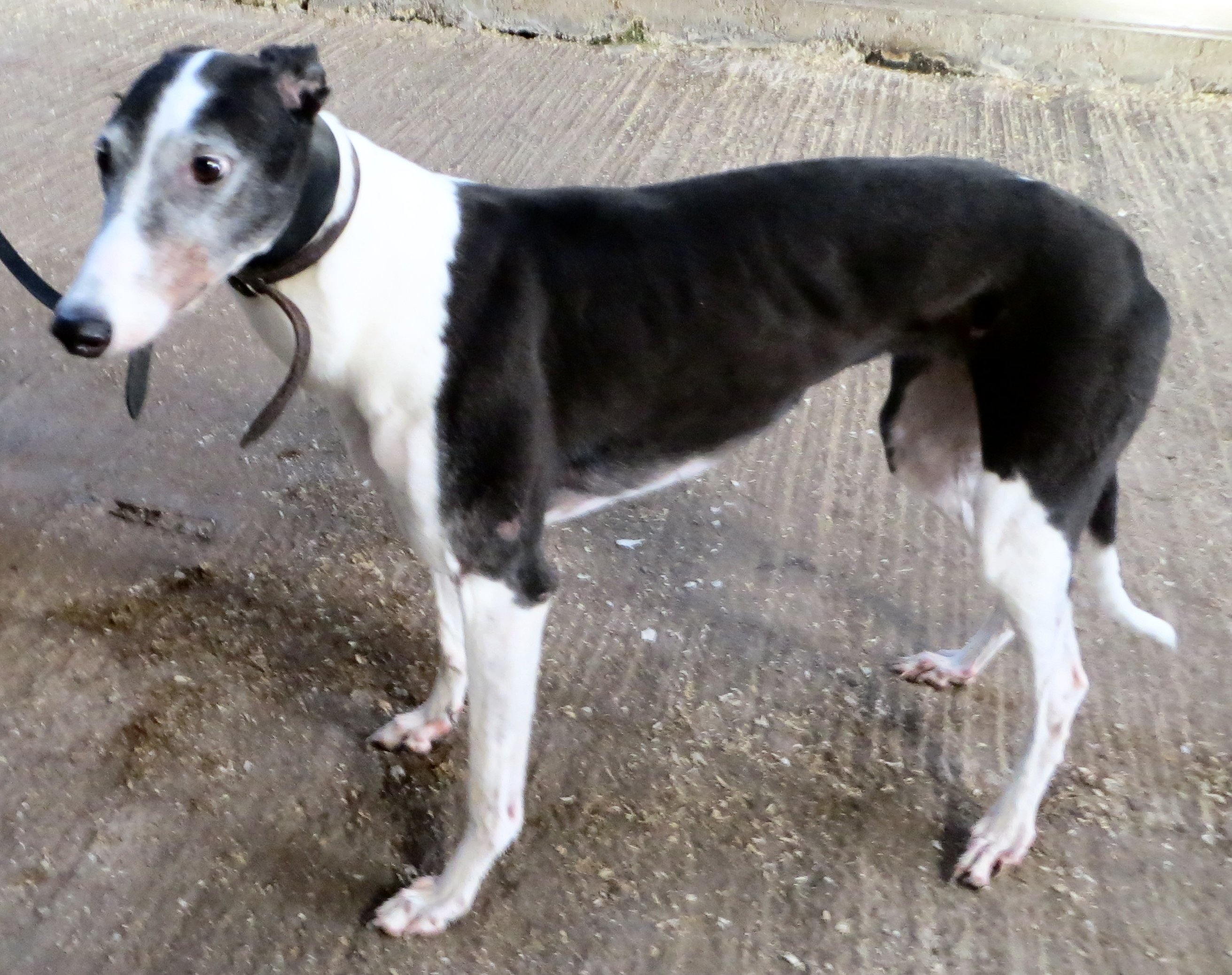
When we return, if the old boys’ kennels aren’t ready, their leads are hung on hooks while they wait. Usually they stand patiently, but on one occasion last week when the four girls – Imogen, Bonnie and Harriet, who are sisters, and Katie – were being prepared for their walk, they danced at the old boys and got them all worked up. I was worried that one might have a heart attack, like overly-titillated businessmen with weak hearts at a lap-dancing session. The girls are much younger than the other dogs – though youth is now a relative concept in the turkey barn. I’ve taken a picture of the girls, and one of Harriet (Hattie) on her own, because she’s my favourite.
Meantime, Charlie, cunning but quite decrepit, and Norman, fairly robust but not very bright, are released into the pen, an indoor exercise area, because they’re not up to going out. Charlie has always been a sickly dog and is usually on some kind of medication: last year just pills, this year a different kind of pill and an ointment rubbed between his toes every day. Charlie is a bit of a lead-swinger and sneaky with it. Because of his sore paws, he has to be led carefully out of his kennel and helped over the kerb on the pavement outside, but when he’s allowed back to eat he’ll take every chance to shoot slyly past me, with a sprightliness that defies expectation, sideways into Norman’s kennel so that he can consume both dogs’ breakfasts.
Finally, there’s the crew round the corner in a row of converted stables: eight dogs in late middle age who are allowed out for a romp round the paddock on their own: Tiger and Kim, Lottie and Pete, Walter and Minnie, Holly and Buster (this last a beautiful dog, a gentle giant who always comes for a cuddle, a prizewinner in his day). These dogs are considered too elderly to leap the fence of the paddock if a rabbit has the temerity to pass in the adjoining field: though I wouldn’t want to put it to the test, especially as they hurtle out at high speed for their temporary freedom!
Breakfast for the dogs is cereal and milk with an egg in it; their main meal, during the second shift, consists of biscuits, meat and gravy with a dollop of margarine. The gravy is a kind of everlasting stew, heated up daily in an old First World War field kitchen boiler. The barn is full of such useful relics: the scoop for the milk is a handle-less saucepan, and this year, as in previous years, I’ve had to hold my thumb over the holes where the handle used to be riveted as I fill it. The dishcloth is recycled from domestic use, and in ribbons. The food is stored in a series of old chest freezers, to deny the vermin.
After the dogs have had their main meal, bowls are collected and washed and the whole of the kennels settles down. There is no more whimpering, squealing, jumping up and down or barking, just a deep sense of peace: all needs met, all dues paid.
It’s exhausting work, but I still look forward to next year, albeit with a certain sadness that some of these dogs by then will be no more. There’s a blackboard in the kitchen in which the food is prepared: it carries an ancient message: ‘Hugo: if doesn’t lift his head and look at you, he doesn’t want his breakfast. Pedro: doesn’t like beef, chicken only.’ It’s an informal memorial to two departed friends (they were brothers) and simultaneously bears witness to the standards of quality maintained in this magnificent rest home for greyhounds.
Two scavengers in a truck?

Oh, and there’s a green bin, too…
I live in a small village in the Pennines. It’s just in the lee of the Pennines, in fact: I used to say that it was ‘in the foothills’, until someone told me that I was making myself sound like Sherpa Tenzing. But I was right – these are foothills. Anyway, our house is served by an excellent local authority (very hot on value for money and citizens’ rights! It is in the People’s Republic of South Yorkshire, btw).
I’m mentioning all of this because the week started with a public holiday. Public holidays are fabulous (though if you work from home you hardly notice them), but in this village, as I guess in many towns and villages up and down the land, they cause a major anxiety: will the dustman (no, I’m not going to say ‘dustperson’) come on the same day as usual or not?
I have to say that our dustmen are usually excellent and although they may come late after a holiday, sometimes accompanied by relief workers, they try to stick to the correct date. But there is another, related, angst: will the bank holiday have caused the rubbish collection schedule to go awry?
For the past several years, collecting, storing and disposing of rubbish in this community has become, if not a fine art, then at least an activity requiring more patience and practical intelligence than I, for one, possess. I leave all this to my husband, who on Tuesday evenings may be observed standing outside engaged in earnest conversation with a knot of neighbours. All are keen to get it right – otherwise Armageddon may come lurching round the prettily carved millstone which heralds the start of the village, and the streets will be strewn with detritus.
I’m not the expert, as I’ve said, but I’ve worked out this much: We have four bins, which are blue, brown, grey and green… and a green box. The bins are for paper, glass/cans/plastic, garden rubbish and ‘domestic waste’ (I think that means everything else). The box pre-dated the bins, but I understand that it’s for bottles and cans (I am now reliably informed that it has been superseded by a bin, but passes muster as an overflow when the grown-up children come to stay) . Each household is issued with a rota. For groups of houses, there is a bin collection point, to which owners must trundle their ‘wheelies’ (rumbling characterises Tuesday evenings). One bin, the grey ‘domestic waste’ one, is emptied on alternate weeks; the three others and the plastic box in the intervening weeks. Woe betide anyone who puts out the wrong bin, puts the bins out in the wrong place, puts the wrong rubbish in any of the bins or fills a bin so full that it won’t close. The dustmen will then ignore them, refusing to empty them. Recalcitrant or exceptionally stupid householders might even be reported for fouling up the process!
The twenty-first century has debunked or devalued many occupations. Lawyers have lost their gloss and bankers are positive pariahs. Teachers and nurses are still respected by ordinary people, but continue to have scorn sprayed on them by the government. Jobs in high street retailing, always a young person’s industry, have been decimated by out-of-town shopping centres and semi-automated check-outs. It is with a mixture of irony and amusement, therefore, that I observe that the opening decades of this century have witnessed the rise and ever-upwards-rise of the dustman. Dustmen today are no longer Alfred Doolittles or Lonnie Donegan’s ‘My old man’. They are not shuffling, shifty or half-sharp. They are tough and businesslike, assiduous workers running a streamlined system, a system that is vital and in which they are all-powerful. These dustmen are not the bent-over, bandy-legged figures of my youth. They are tall, strong men*, rather smartly dressed in their donkey jackets, uniform overalls and fluorescent gilets, all sporting safety boots and brightly-coloured industrial rubber gloves. Anger one of these dustmen at your peril.
It is a supreme example of social justice at work. Having been a bookseller, which I admit is a privileged career, certainly at what is known as the ‘high end’ of retailing, I’ve often reflected how much we undervalue those who perform the services that make our daily lives run smoothly. Waiters and waitresses have always been near the top of my list of the under-appreciated, because, as a student, I worked as a waitress (also as a chambermaid, which was close to being a slave, in a posh hotel). I’ve no first-hand knowledge of emptying bins (a job at which I’m sure I would be very bad), but I do know that, for at least a century, dustmen were practically the British equivalent of untouchables. How magnificent that they have turned the tables now! More power to their elbow! May their spirits ever increase!
Perhaps by the middle of this century, when we’re told that most of us will be living in cities and have to find new ways of working together with less personal space, dustmen will have climbed much further up the ladder-rungs of the career hierarchy. As university degrees become more devalued and more bright young people choose apprenticeships or go straight from school to manual work, perhaps ‘You might consider being a dustman…’ will be one of the options offered from the career adviser’s portfolio. And, rather as in Eastern Europe over the past fifty years, perhaps some of our greatest future authors will have supported their early writing years by emptying dustbins.
I feel inclined to refer readers of this post to Lawrence Ferlinghetti’s wonderful poem, ‘Two Scavengers In A Truck, Two Beautiful People In A Mercedes’, which just about sums up my feelings. Sometimes it’s great to be grungy ‘in the high seas of this democracy’!
[*In July, in Germany, I watched a refuse collection team; it included an immaculately groomed young woman, who engaged in all the tasks and in the banter. I have yet to see a dustbinwoman in this country; even though there may be some, they are a rarity. I blame the grunge ceiling.]
The ‘grande dame’ of English bookshops!
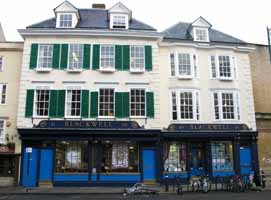

Last Friday, I experienced the rare treat of visiting Blackwell’s Broad Street, the Blackwell bookshop chain’s flagship shop in Oxford. It is a bookshop that I know quite well, though it is two or three years since I was last there. It is one of a handful of large world class bookshops in this country – as readers of this blog will know, my own particular favourite is Waterstones Gower Street, but that is partly because it holds strong personal associations for me and is therefore much more of an old friend than Broad Street. Gower Street is like a rather quirky intellectual woman of a certain age, always coming up with racy surprises of which you might not have thought her capable. She’s one of the liberated ‘new women’ of the early twentieth century, as her Arts and Crafts clothing and the pedigree of her creator, Una Dillon, both demonstrate. Broad Street, on the other hand, is the grande dame of British bookshops. She is an eminent Victorian, offspring of the sternly teetotal Benjamin Henry Blackwell, whose fine bookselling tradition was carried on by his son, also Benjamin, and very famous grandson Basil (‘The Gaffer’) who presided over this shop and its sister stores for more than sixty years.
It was not the first of Oxford’s bookshops that I visited on Friday, but, once through its surprisingly modest front door (it could be the entrance to any moderately well-to-do person’s house), I wondered why I had bothered with the others. Here were riches indeed! And cared for by very professional staff who seemed never to intrude on browsers except at that vital moment – which they must have sensed by some kind of invisible booksellers’ radar – when I was stumped and needed help.
I didn’t actually find the exact book that I wanted – I’m not sure that this book even exists, as I was searching by topic rather than title, but I spent an enchanted two hours in the shop nevertheless. I came away with three purchases, but could have splashed out on many more. I was also delighted to see four copies of Almost Love and two of In the Family on the shelves of the crime fiction section. I happen to know from my previous life that the crime fiction buyer in this shop is probably the best in the country, so I am doubly appreciative that he has chosen to stock my books.
Blackwell’s Broad Street also has a great coffee bar in which people may really be seen looking at and talking about the books they have just bought (instead of just reading the paper or examining their shopping); it has also several brilliant, if eclectically-arranged, second-hand sections. If you know Oxford, I am sure that you will have visited this bookshop. If you don’t know it and should ever find yourself in the city, I recommend that you include Broad Street in your itinerary!
The bounty of a summer’s day…

Clematis étoile violette
Today has been one of those perfect late summer days that you look on and savour when it’s the bleak middle of winter. The sun has been shining, but a gentle breeze has prevented the heat from becoming oppressive. When we took the dog for a walk this morning, the wheat was almost ripe and straight, unspoiled by the rainstorms of a couple of weeks ago; the barley stubble was pure gold. By lunchtime, I’d written my quota of words for the novel I’m working on. The garden is a pleasure to be in: it hasn’t yet matured into its blowsy, trollopy autumn look and the late summer flowers are still blooming. The clematis étoile violette is at its spectacular best.

Peacock butterfly

Honey bee foraging
The flowers of our golden marjoram and oregano are attracting our honey-bees and the many kinds of bumble-bee that seem to be flourishing this year (I like the red-bottomed ones!) and there are more butterflies than I’ve ever before seen here – the peacock butterflies have been especially prolific and one popped in to be photographed before we helped it back to the yellow buddleia.

Cox’s orange pippin
There will be a good apple crop later, as the ripening Cox’s orange pippin shows. And there is crab for dinner tonight!
Aside from the beauties of nature, the day got off to a wonderful start, with two very generous reviews of Almost Love, by Elaine Aldred and Trish Nicholson, to join Valerie Poore’s excellent one; all are on the DI Yates page of this website! May I wish you, all three, a summery bounty – you spent a great deal of time and care over these, as well as over the reading of the novel – and may I also extend warm greetings to all who visit and comment here.
A wonderful day. And a shameless excuse to share some photographs.
When fear overpowers reason…
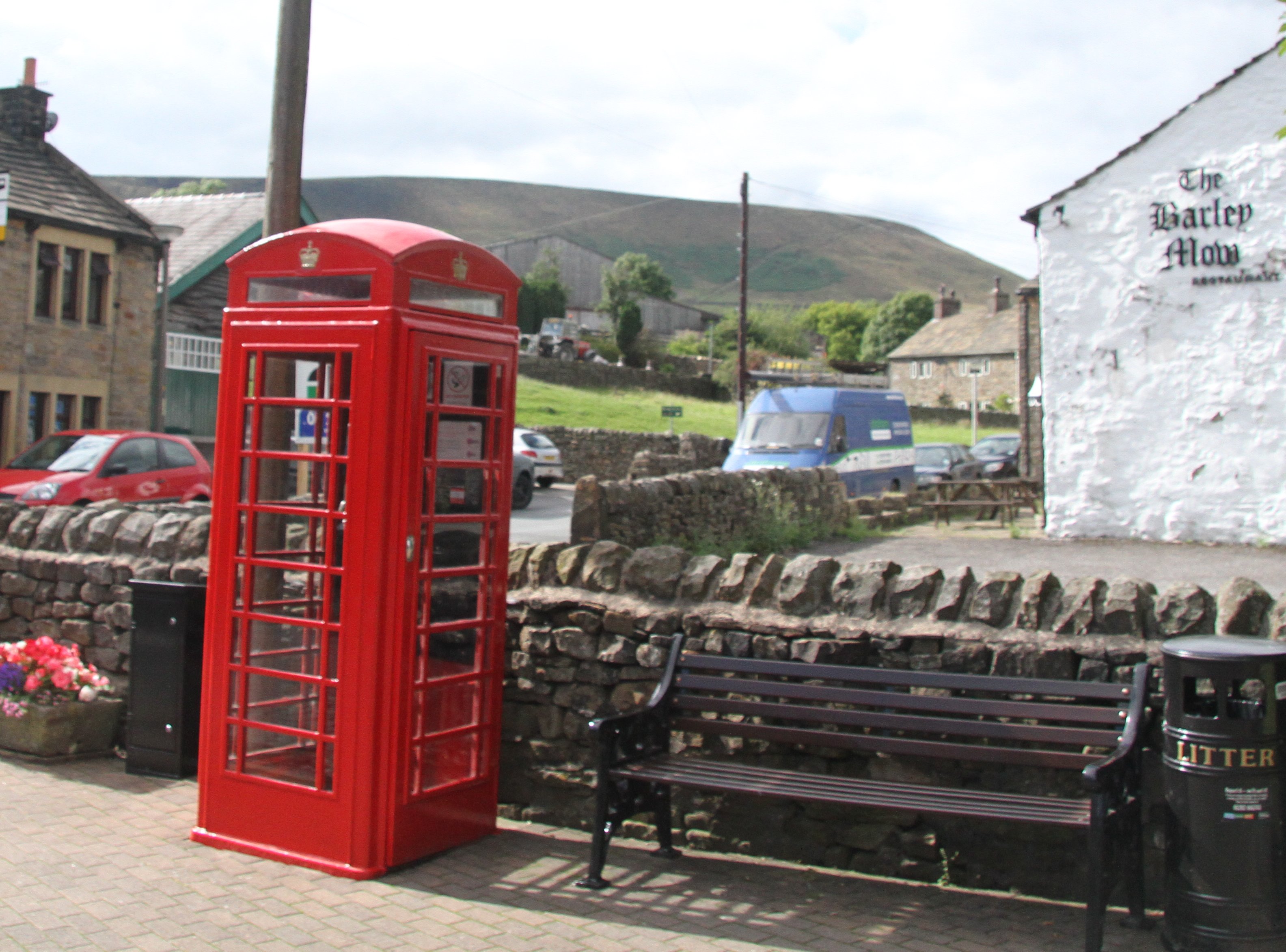
Pendle Hill, from the village of Barley
A week ago today I took the day off and went with my husband to meet friends in order to walk up Pendle Hill in Lancashire. I’ve been meaning to write about it ever since and have finally been spurred to do so by a book review I’ve just read – of which more shortly. I’d never been to this part of Lancashire before and had no idea of how beautiful it is.
Pendle Hill, which is perhaps best accessed via the picturesque village of Barley, is well worth the steep climb that it demands of those intent on reaching the top. It is a windswept plateau unprotected against the elements, even on a fine summer’s day (though a stone circle, grouse-butt style, has been erected as a kind of refuge); once you have arrived at the summit, it is possible to see much of the Lake District, the Yorkshire Dales (including the Three Peaks), Derbyshire’s High Peak, North Wales and, on a very clear day, so I’m told, the Isle of Man. The 360˚ view is truly spectacular.
Aside from the wonderful panorama of Pendle Hill, the area is famous as the home of the defendants in the Pendle Witch Trial, in 1612. Twenty people from the Pendle district, sixteen of them women, were tried at Lancaster Assizes for witchcraft. The crimes that they were accused of committing were diverse, varying from murder by witchcraft to ‘bewitching’ people or animals, usually by causing them to fall sick or die. Some of them were sentenced to death; others had to stand in the pillory in the markets of Clitheroe, Padiham, Colne and Lancaster.
Their stories make sobering reading. Those indicted of witchcraft were usually, but not always, old women. One of the most renowned of the Pendle witches was Ann Whittle, alias ‘Chattox’, who lived in the Forest of Pendle. She was indicted on several counts of sorcery and admitted (probably under duress) that some fourteen or fifteen years before her arrest she had sold her soul to the devil. Her daughter was also accused of witchcraft. The nineteenth-century chroniclers of the witches conclude their account of her story as follows: “… no longer anxious about her own life, she acknowledged her guilt, but humbly prayed the judges to be merciful to her daughter, Anne Redferne; but her prayer was in vain.”
The roots of the Lancashire Witch Trials were political: they formed part of the Protestant response to the Counter-Reformation that reached its peak in this country during James I’s reign. More locally, they played on much older superstitions that had survived in rural societies, possibly from pre-Christian times.
What I didn’t know when I visited Pendle Hill was that there was a Lincolnshire equivalent to the Pendle Witches. Two sisters, Margaret and Philippa Flower, were hanged for witchcraft in Lincoln in 1619. They were therefore the exact contemporaries of the Lancashire witches. Their story is told in Witches: a tale of sorcery, scandal and seduction, by Tracy Borman, a newly-published book which was reviewed in The Sunday Times on 11th August and which I shall certainly buy and read. Yet more interesting, from my perspective, is that the Flower sisters were employed as maidservants at Belvoir Castle by the Earl of Rutland and were accused of bewitching his children, one of whom died. Belvoir Castle and Burghley House were the two great houses of the area in which I grew up and I visited them several times during my childhood. I also knew Lincoln well. The present prison was built in the late nineteenth century, in gothic style, and before that prisoners were held in the eighteenth century gaol at Lincoln Castle; the Flower sisters were probably locked in the Castle dungeons. Public hangings took place above the upper town, from the north-east tower, until 1868. (My stepfather’s mother’s family kept a theatrical boarding house in Lincoln and she was a small child there, almost, though not quite, within living memory of the hangings: she died in the 1980s, when she was well into her nineties. She remembered tales of the scene, with cheers and jeers from the watching crowd below.) Taking them as a yardstick of how little progress civilisation had made in the intervening three centuries perhaps makes it less surprising, if no less shocking, that women were being put to death for witchcraft only four hundred years ago. Even more shamefully, old women have been persecuted simply for being old and misshapen during my own lifetime. When I was a primary school child, there was a row of tumbledown cottages that I had to walk past every day. Two of them were home to two ancient ladies with wispy white hair. One was almost bent double. She walked very slowly with a stick, her eyes usually fixed on the ground. She had warts on her face and the prognathous chin that very old ladies sometimes develop. It’s difficult now to say how old she might have been: as she’d spent most of her life without benefit of the National Health Service, she may not have been as aged as she looked. But I remember quite clearly that schoolboys used to shout ‘Witch!’ at her as they passed, if she happened to be standing outside. With hindsight, I shudder at the pain she must have felt, and that she had to suffer because she was old and ‘different’. It can be a pale reflection only, I know, but still it offers some insight into the anguish and terror that the Lancashire witches and Margaret and Philippa Flower had to endure before rough hands finally put them out of their misery.
Could such persecution happen today? In Western society, not in its literal form, perhaps, but Arthur Miller’s inspired choice of the Salem Witch Trials in The Crucible to illustrate Senator McCarthy’s irrational pursuit of communists and the Cleveland child abuse investigations both illustrate that modern parallels still exist. Old women may no longer be the prime targets, but we still harbour primitive fears of people who are different, and, motivated by fear, are still capable of turning upon them savagely.

The Pendle Inn sign, Barley
 Christina James, crime novelist