

Into Lincolnshire, for the Wolds Words Writers’ Workshop…

Louth Library, Lincolnshire
The writers’ workshop that my husband and I jointly led on Friday 18th October was part of the thirteenth Wolds Words Festival. It is a flourishing event that takes place annually in and around the pretty market town of Louth. The workshop was scheduled in the library, an impressively busy place in which the considerable bookstock was displayed most invitingly. The library staff were all great: extremely helpful, both to those attending the workshop and to their regular library users. It’s one of the most successful small libraries I’ve ever visited and clearly the librarians work hard to achieve this.
We said that we would work with up to twelve participants and the workshop quickly sold out (though not everyone actually made it on the day). We were asked to focus on two aspects of writing: crime and using local history in fiction. We heard that a workshop on plot construction that had taken place on the previous day had also been very successful.
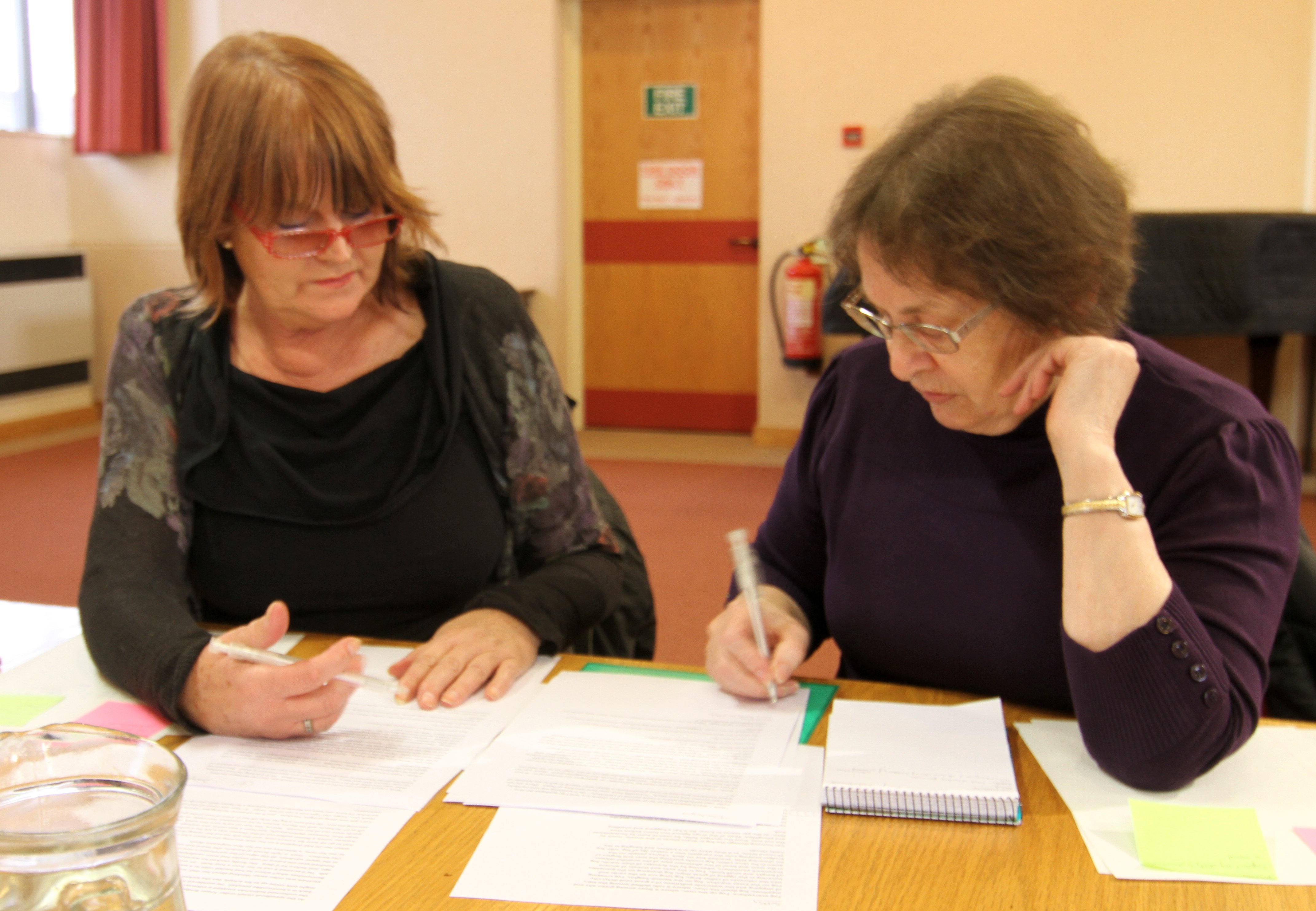
Wolds Writers’ Workshop
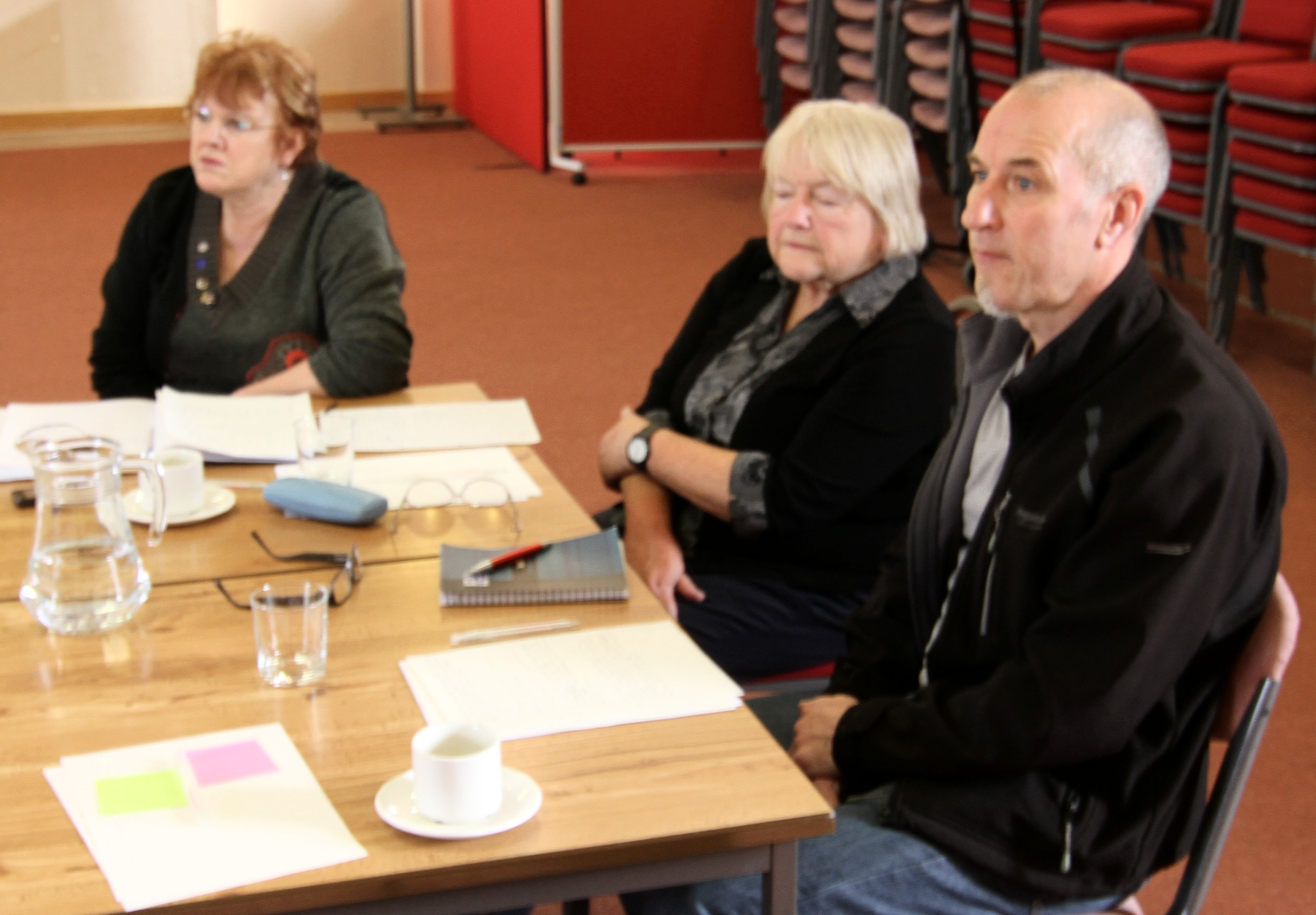
Wolds Writers’ Workshop
As a warming-up exercise, I gave the group some of my own tips on how to get published. As I’ve already offered some of these in this blog and shall be writing about others in more detail in future posts, I’m not covering them again here. Similarly, I’m not including my tips on how to incorporate local history into fiction here, saving them for a separate post.

Wolds Writers’ Workshop
We moved on to discussing why the participants had chosen the workshop and what they hoped to get out of it. Their answers were, perhaps not too surprisingly, very similar, and boiled down to a single joint ambition with three further ‘sub-wishes’. The over-arching goal of everyone present was to see their work published. One of the writers had already had poems published in anthologies; one had published a factual account of the sea some twenty years before and one had contributed short stories to an online magazine. None of the others had had work published. Two had written novels, but neither had been successful in finding a publisher.
The ‘sub-wishes’ were perhaps even more interesting: they each concerned confidence, or the lack of it. They included the expressed desire to write something that was worth reading ‘at all’; the fear that a certain flaw – in one case, an inability to write convincing dialogue – was an insurmountable stumbling-block; and the suspicion that the author’s take on life was too left-field ever to find a publisher. To these doubts, I replied that almost everyone can write something worth reading if they work at it hard enough; that ‘flaws’ can be overcome or minimised, again with hard work; and that many readers prefer a more unusual viewpoint to something more conventional, though I agreed that this may make it more difficult to attract a traditional publisher.

Wolds Writers’ Workshop
Next we read and explored four short passages from very different novels, each demonstrating some particular aspect of writing. We looked at the ‘fog’ passage from Bleak House as an example of creating atmosphere; Virginia Woolf’s description of the Ramsays’ holiday house in To the Lighthouse to establish a sense of place; a passage from Where the Devil Can’t Go, a novel by Anya Lipska, a talented new crime writer whom I’ve written about previously in the blog, that depicts her heroine’s character; and finally a piece of dialogue from my own novel, In the Family. We each took forty minutes to write a short passage following on from one of these, or alternatively any short fictional piece of our own choosing. The writings were shuffled and passed around until we had each read all of the passages; no-one knew who had written which. Each of us then told the others what we liked about the piece that we had in front of us at the end. We all found plenty to praise, which I think confirmed resoundingly that there is a writer in almost everyone. I should very much like to thank all the writers for their really enthusiastic and participative response to the occasion.

Wrights of Louth, Bookshop
Copies of my books were sold at the event by the local bookshop in Louth, which I also visited afterwards. One of its distinguishing features is that its sign hangs upside down! There is a story behind this: The shop used to be a general grocery store of the kind that I remember as a child, but which has completely disappeared now. Its owner, a man called Bill Platt, who ran it for many years from 1913 until he was in his seventies, was famed for his knowledge of local history as well as for the quality of his shop in Little Eastgate. He had business acumen, too. When the sign over his shop doorway blew down in a storm, it was affixed by accident the wrong way up; Bill recognised that it quickly became a talking point and therefore a good advert and simply left it like that. A local businessman, Mick Wright, who, with his wife Carol, turned the store into a newsagent’s and bookshop, has continued the tradition!

In conversation with bookshop owner Dean Wright
I had a long and pleasant conversation with Mick and his joint owner son Dean, and was extremely impressed by their can-do attitude towards running a bookshop in modern times. Their strategy is to diversify without abandoning the bookshop’s essential character and to provide exemplary service; they specialise in books about Lincolnshire. I purchased several by local authors, and was extremely grateful to be given a discount!
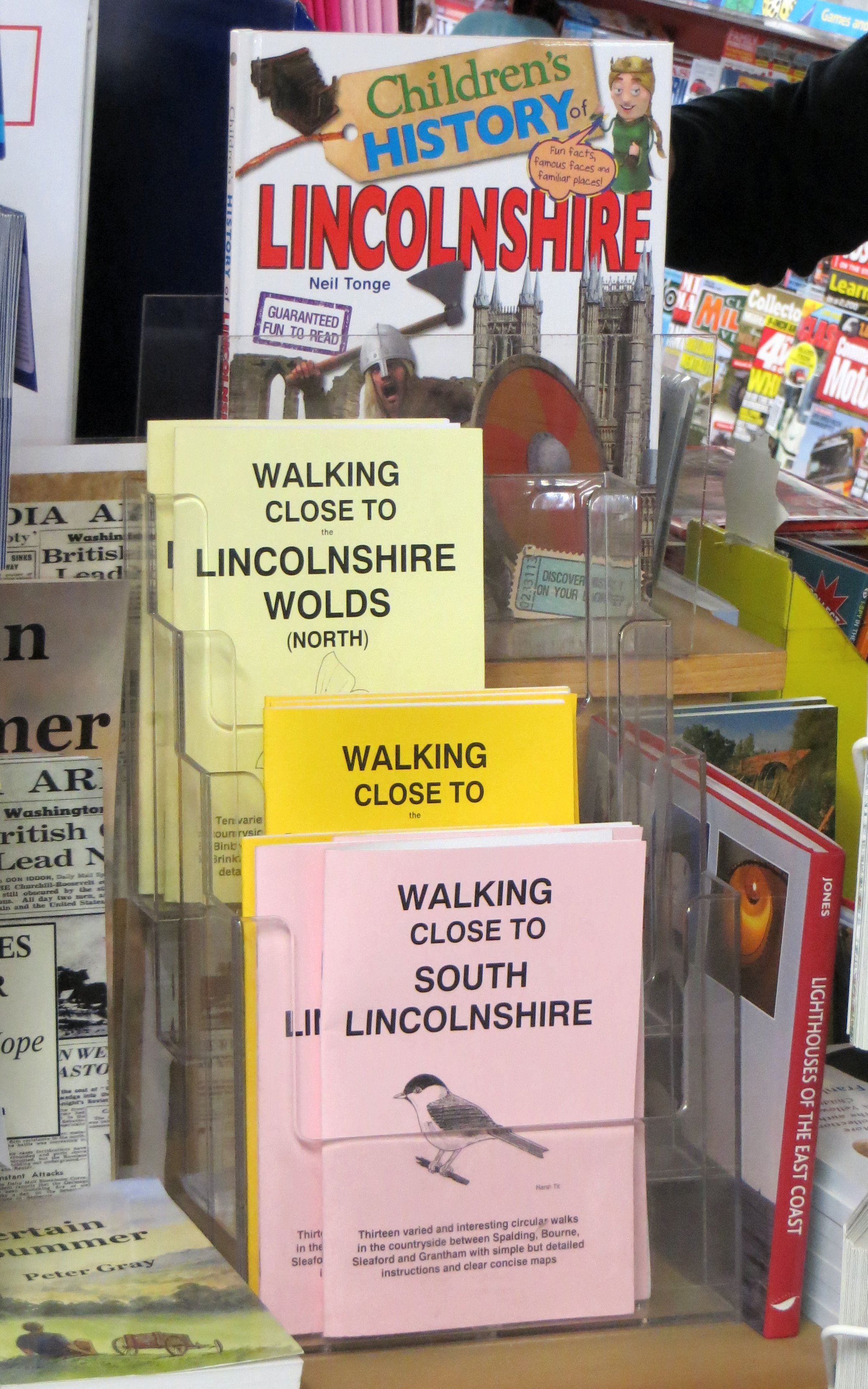
Speciality: Lincolnshire!
As you can see, I’ve included a few pictures of the event, the library and the bookshop. I’d never been to Louth before: it is quite a distance from Spalding. It is a lovely old market town; having now discovered it, I certainly plan to return. If you are ever in the area, it is well worth a visit – and don’t forget to take in the library and the bookshop while you’re there!
Privileged to tour the Jagiellonian Library, Kraków

Copernicus’ original autographed manuscript of ‘De revolutionibus’
The last of my Kraków posts is the one that recalls for me the most special time of my visit. I should explain that I went to Kraków in order to facilitate the meetings of an international librarian advisory panel. We were very privileged to have as our host Marek Krośniak, the Serials Acquisitions Librarian at the Jagiellonian University Library in Kraków. Marek not only allowed us to hold our meetings at the library, but also arranged for us to take a tour of some of its priceless treasures.
The Jagiellonian University, founded in 1364, is one of the oldest academic foundations in Europe. Its collection of manuscripts, incunabulae and other rare printed books dates from every period of its existence and is incomparable. It includes an extensive collection of handwritten scores by famous composers. Also amazing is the knowledge of the librarians who curate this collection. No less than four specialist librarians explained the rarest treasures to us. (Understandably, security was tight: the door to the room holding these volumes was locked behind us and each of the books was stored in a locked glass case. There were also security guards in attendance.)
I have a fairly large collection of photographs taken during the tour (all without using flash, as requested). It was difficult to make the choice, but I have selected four that I hope will illustrate the distinction and diversity of the whole collection. First is the original manuscript of Copernicus’ De revolutionibus, in which he presents his theory of the heliocentric system of the universe. This autographed manuscript never left his possession in his lifetime and the first printed edition of the work was from a copy made by his pupil, Georg Joachim Rheticus. Famous throughout the world, it was acquired by the Jagiellonian in 1956 and is possibly the library’s pièce de résistance, though there are many other contenders for this crown. Second is the first missal with an illuminated flower border to have been produced in Kraków. It belongs to the high mediaeval period (and is reminiscent of some of the early books that I saw in the University of Barcelona library and wrote about earlier this year).

Krakovian missal 1494

Krakovian missal 1494
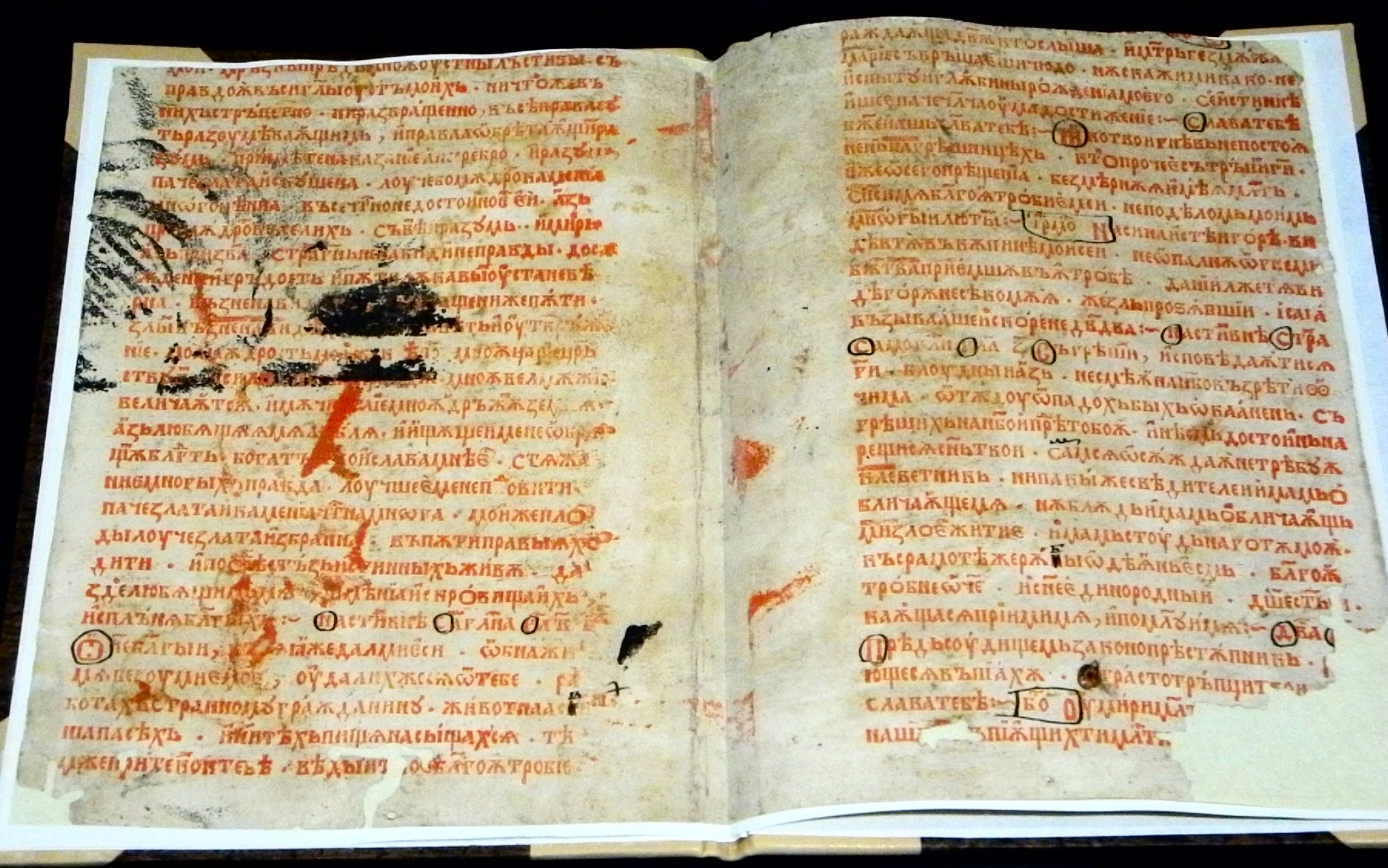
Third is the earliest known book to have been printed in Cyrillic characters. Fascinatingly, it is also one of the earliest extant proof copies: in the photograph, you can see the printer’s corrections on the pages.
First known example of Cyrillic printing 1491
Finally, there is one of Mozart’s handwritten scores, this a one-act Singspiel, or comic opera, called Bastien and Bastienne, written when he was a boy and performed in the open air in 1768. The library’s large collection of original scores includes works by Berlioz, Chopin, Bach, Beethoven, Mendelssohn Bartholdy and other famous musicians, but Mozart had a special relationship with Kraków (and is possibly the world’s favourite composer), so that’s why I have chosen to feature his work here.

Mozart’s score for ‘Bastien and Bastienne’
It is difficult, if not impossible, to convey how exciting it was to be allowed to see these beautiful books and to learn their history from experts. I hope that I have managed to share a little of the excitement with you. And I’d like to thank Marek Krośniak and his colleagues very much indeed for providing all of our party with this wonderful opportunity.
All text and photographs on this website © Christina James
Salt… How appropriate!

Salt mine headstock
This is the second of my Polish pieces. I’m sorry that it follows on from the first after quite a gap – I’ve been hi-jacked by a nasty cold this week. I’ll try to be a bit more punctual from now on.
Cold notwithstanding, I should have preferred to get this post out earlier, because its main purpose is to share with you some photographs of our visit to the famous Wieliczka salt mine some seventeen kilometres outside Kraków. The chambers and carvings in the mine are spectacular – as you can see. Discovering them was an opportunity that we almost passed up, because we’re pretty averse to joining any kind of organised tour, and the salt mine is obviously not a place where tourists can be allowed to wander around on their own; indeed, so many tunnels are there, it would be very easy to get lost. We were persuaded to make the visit only the evening before, by some Danish people dining in the same restaurant. I suppose that making holiday plans on the advice of complete strangers about whom you know nothing and whom you’re never likely to see again is as good a way as any! In any case, I’m published by Salt and it therefore seems an appropriate kind of tribute to Chris and Jen Hamilton-Emery.
Determined not to be an entire pushover to the tourist industry, we travelled to the mine on an ordinary service bus instead of one of the special tour buses. For me, one of the highlights of the day was encountering people from the suburbs as they travelled on this bus, though I was much less enthusiastic about the return journey in the afternoon, when the driver was clearly behind schedule and rattled along at such a speed that I had to face the back of my seat and hang onto it in order not to be thrown into the aisle. I was grateful that I hadn’t had lunch! I was also fascinated to note that, beyond the suburbs, Kraków has quite an industrial hinterland.
Tours at the mine are extremely regimented and quite expensive – entry costs about as much as a visit to the Tower of London, which is extortionate by Polish standards. The experience was also shot through with a slightly bizarre streak: for example, our tour was called a ‘non-tour tour’ (we worked out that this meant that we were not part of a pre-booked group). Endearing rather than annoying was how the enterprise running the mine tried to make money out of absolutely everything, from coffees and ice-creams to printed guides, knick-knacks made of rock salt and ‘genuine miners’ soup’, but in a slightly amateurish way. It is noticeable in Poland that everyone is desperate to make money, but in a friendly, almost apologetic, manner. The same thought struck me when I was watching the drivers of the horse-drawn carriages in the main square in Kraków trying to cajole tourists into taking rides.
The non-tour tour guide was a young woman immaculately dressed in uniform. She was extremely professional and her English near perfect. She was obviously highly educated and very knowledgeable about the history of the mine, which has existed since mediaeval times. Rock salt was quarried there for seven hundred years, until 2002, after which the mine was devoted entirely to tourism. Engagingly, the guide explained that this was because more money could be made out of tourists than digging for salt. There is another commercial salt mine elsewhere in Poland, with much lower extraction costs, and that provides the supply.
I was almost as interested in my fellow tourists as the mine itself. We were a jovial bunch from many countries; the only thing we had in common was that we had chosen an English-speaking guide, rather than one who spoke the other languages on offer: Polish, German, Dutch, French or Italian. Our group therefore included people from India, Japan, China and the USA, as well as several other Brits. I particularly admired the Indian couple, who gamely negotiated with two quite small children the up-and-down kilometres that we had to walk within the mine.
The initial descent, down many short flights of wooden stairs within a vertical shaft, was neither frightening nor particularly taxing, if dizzily repetitive. Walking back up all of those stairs would have been a challenge, and might have caused a few heart attacks. Nevertheless, I didn’t enjoy the return to the surface, which had to be made in a small miners’ cage, crammed in with seven others. I was delighted to reach the exit and emerge into the warm autumn sunshine again.
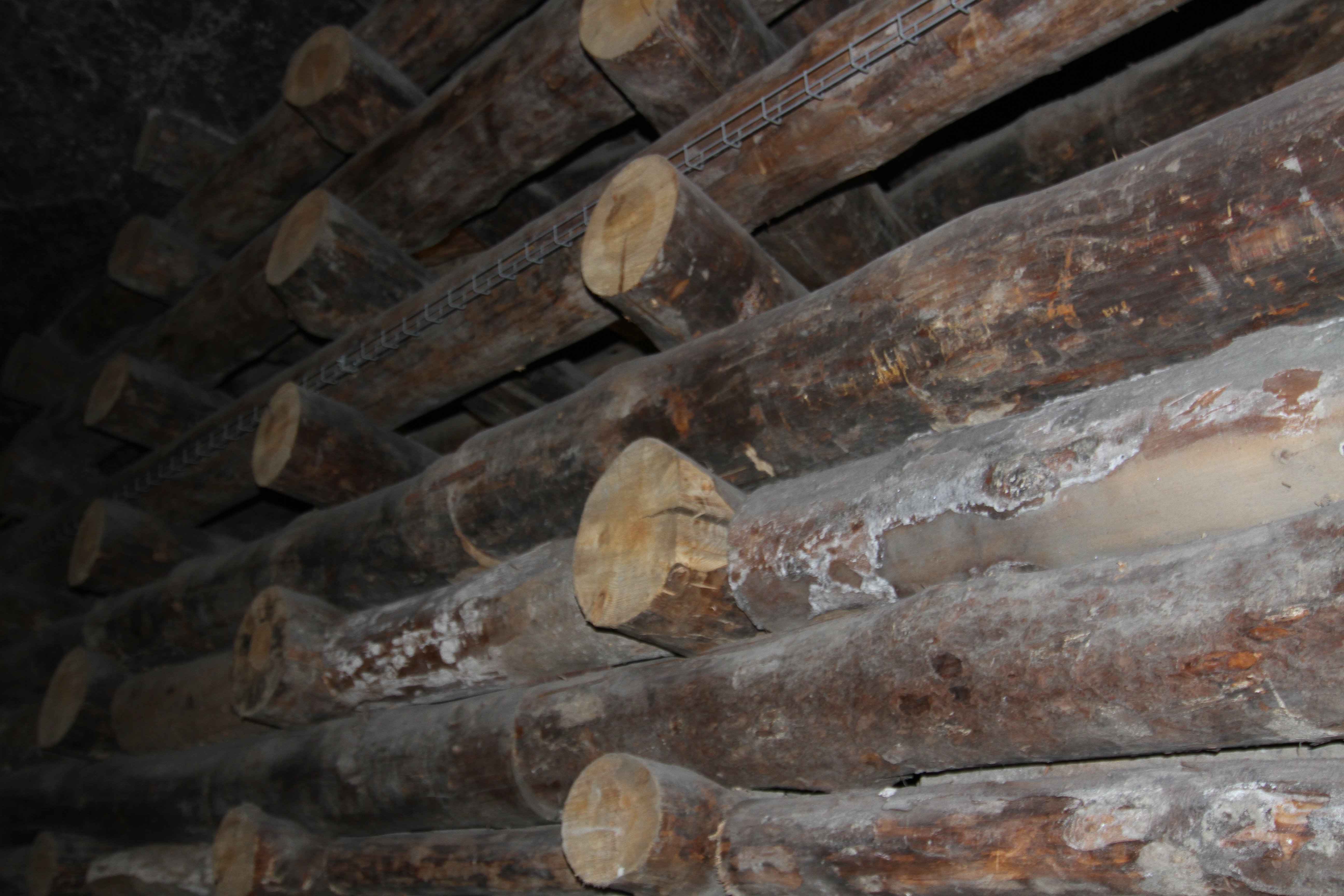
I’ve already written more than I intended, so I’ll leave the pictures to speak for themselves now, just adding that all the sculptures and carvings – and indeed all the floors – in the mine have been fashioned from rock salt and that (although it is probably self-evident) Polish salt miners were very devout, some of the chambers having been turned into chapels, the most impressive being the Chapel of St. Kinga, which, with its altarpieces, wall-friezes and statuary, as well as carved floor, all in rock salt, is like a cathedral. The caverns are astonishing in scale (the Staszic Chamber has a ceiling thirty-six metres high), in some cases with self-supporting ceiling, in others prevented from collapse by elaborate wooden prop systems or by much more modern metal rods, inserted into drilled holes and therefore much less obtrusive to the eye.
I hope that you’ve got the taste of the salt from all this, if not a taste for a salt mine visit; you can lick the walls of the tunnels if you like (visitors are encouraged to do so)! Alternatively, you can read a Salt book…
Traditional timber supports

Tribute, in salt

Raising the salt

Gnome from gnome?

Flight into Egypt, Kinga Chapel

Pulpit, Kinga Chapel

Solid salt floor ’tiles’, Kinga Chapel

Roof support system
Kraków Planty in golden October…
When I consulted the BBC online weather forecast in advance of our trip to Kraków, I learnt that the night-time temperatures there the previous week had been zero and, during the day, had barely climbed to ten degrees Celsius. On arrival early in the evening on the Friday before last, I was therefore pleasantly surprised to find that, although there was a nip in the air, it was nowhere near as cold as I’d expected. The atmosphere was extremely festive: well wrapped up in colourful winter clothes, people were parading the streets, arms linked, talking and laughing, much as they promenade in Spanish towns and cities before dinner; and, unlike in some other eastern European cities I have visited, dinner was served at the restaurants until a reasonably late hour.
The festive mood continued on the following day.
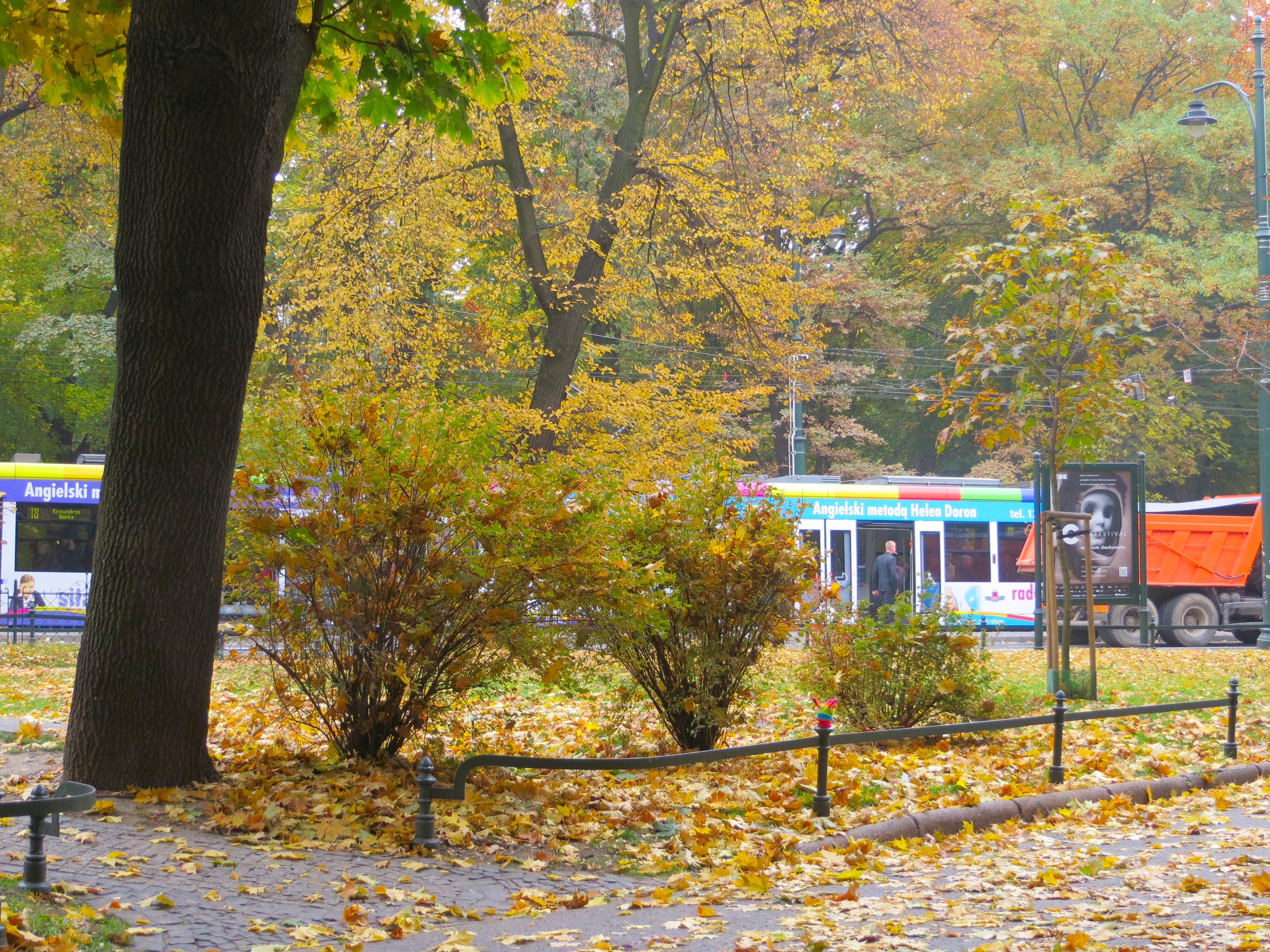
Kraków is a beautiful place. The Stare Miasto, or ‘Old Town’, is entirely circumscribed by a park (or rather a series of them, divided by the radial roads) called Planty, which runs around the line of the old city walls. Sometimes, this is just a narrow strip of land dividing the pavement from the road, but often it broadens into large tree-scattered areas of grass containing children’s playgrounds, statues and benches. Always there is a wide path to walk along, so there is no hazard to pedestrians from motor vehicles (though the cyclists are pretty manic and don’t seem to have discovered either bells or horns!). There are some distinguished museums and other significant tourist attractions in Kraków, but many residents and visitors to the city seemed to me to spend a great deal of time just walking around Planty.
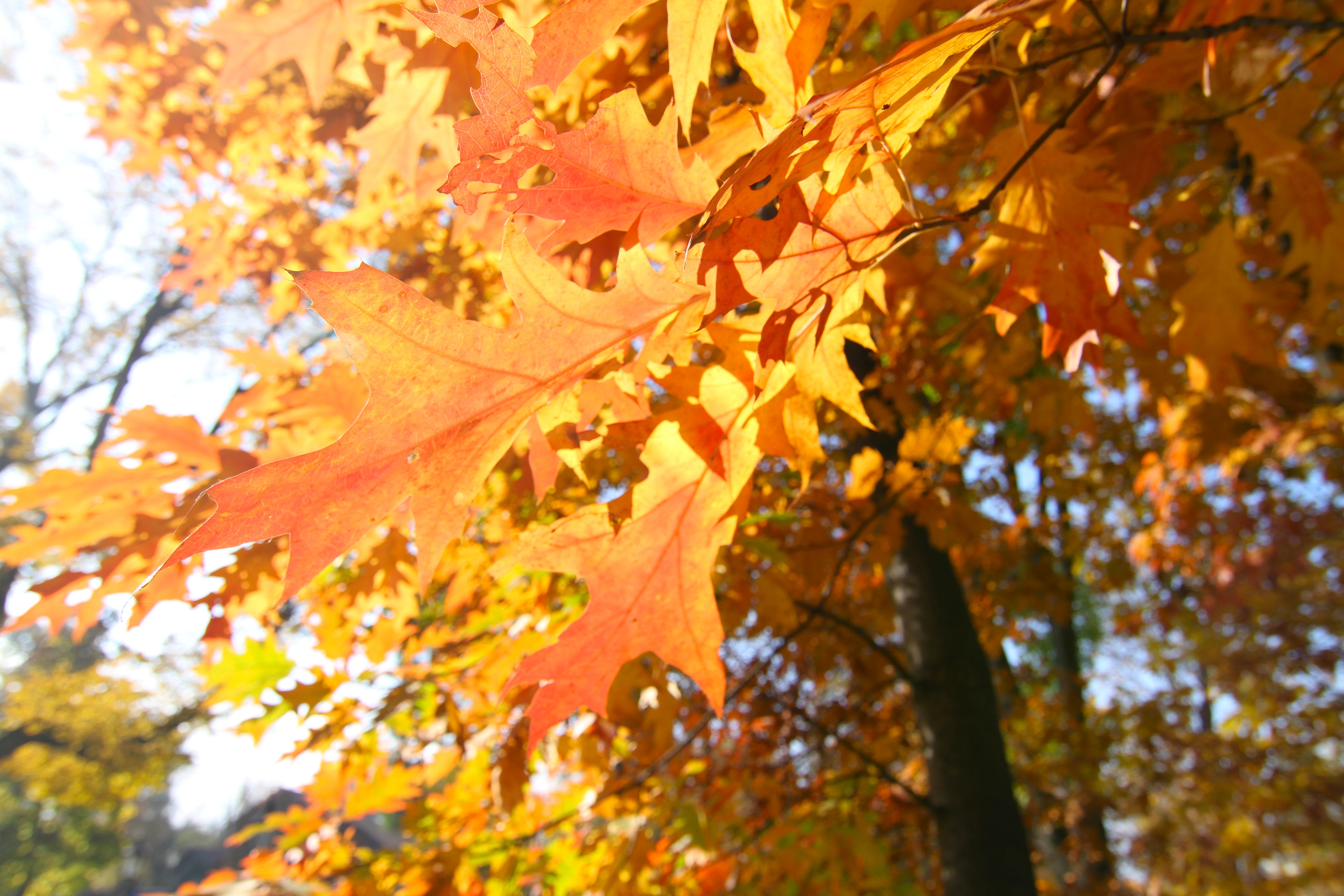
On the Saturday of our visit the park was particularly lovely. Because of the cold spell the week before, the trees had all changed colour and were presenting a glorious display of gold, russet and tawny brown. Most striking, however, was the rapidity with which the leaves were falling: a gentle burnished leafstorm was constantly swirling to the ground and people were catching the colours as they walked along.
Although we never discovered its exact nature, there exists some special relationship between the citizens of Kraków and the falling of the leaves. This may have something to do with the rapidity of the ‘fall’, which we were very fortunate to experience. At our hotel, the staff had placed richly-coloured fallen leaves on the tables and in alcoves on the stairs. In the streets, whole families were collecting the leaves in sheaves and walking along holding them as if they were bouquets of flowers. At the open market in the main square several stalls were selling autumn posies made up of leaves, berries and nuts and, although these were priced between 12 and 20 zlotys (quite a lot in that part of the world for a perishable decoration), they were selling well and being carried around like Elizabethan nosegays.

The fantasia of falling leaves continued for the next three days. On Tuesday we awoke to heavy rain. There had been a storm in the night, and the trees had now been laid almost bare, the rich carpet of leaves on the ground sodden and trampled underfoot. In Kraków, it is autumn’s lease that hath all too short a date. The golden leaves have almost all gone now. It will be a whole year before they make their brief appearance once more.
Auschwitz-Birkenau butterfly, from the husband of Christina James…

Peacock butterfly on the steps to the death chamber, Birkenau
I asked for a riposte to Christina’s cider-pressing post, but that was not to be! However, by way of recompense, she has allowed me space to comment on what must be one of the greatest crimes inflicted by man upon man. While she has been busy with what she calls ‘the day job’, which has been, on this occasion, a publisher-librarian conference held in Krakow (for the pedantic, this is pronounced by Poles as KrakOUF, with the stress on the second syllable), I visited Auschwitz and Birkenau, one hour and forty minutes away by bus.
On the face of humanity, a carbuncle, perhaps now healing slowly, but sensitive to the touch and destined to leave a permanent scar. Yet the body politic suffers still and continues to break out in boils symptomatic of the same underlying disease. Mankind, disfigured, cannot find a cure and treats, always too late, the symptoms alone. These gross and scabbing reminders of our failure as a race to reach the root of our ills do not make comfortable our self-examination in the mirror of consciousness, but I found, on this, my second visit after some years, that the experience was already becoming, for the latest visitors, too organised, desensitising.
Brick, concrete, iron, steel, stone and dust, all strung about with the twisted barbarous wires; original timbers are gradually disintegrating or have gone. All about, the millions of October leaves are falling, falling. Summer’s beauty choked by approaching winter cold, they are gathered up in heaps, loaded into barrows and trucks and taken away for burning or to rot down. Colour and life turned to ashes. Shorn of their tresses, the trunks and branches are emaciated, twiggy fragile limbs starkly outlined against the sky.
Irony in the bus loads of tour groups disgorging their cargoes and delivering them into the hands of the camp guides. Selection by language. An industry in itself. The cameras click; the iPads embrace the scenes as each former terror is re-hashed for public consumption. Work makes free. Tourism makes realism – ‘No photographs here’ signs ignored as every shred of individual dignity is wrenched from the heaps of human history and saved for later: ‘I was there; it was awful; look at my pictures.’ I have to step away, unable to stem emotion. My leaves fall like tears, like lives.
Symbolism of railway lines, stretching through the gate to infinity. The sleepers are relinquishing their hold upon the rails, wasting from within. Will those be replaced, like wooden huts, to show what it was like? The other sleepers are softly breathing their message to us, the words falling as gently as leaves, and we strain to hear against the sound of the narrative of the guide. Their language is universal. The guide says that we are now walking the same way as the doomed, but we are not. Once more I break away, this time for good, and let imagination tell the story. And then, on the cracked steps to those underground chambers, now guarded by a staunch metal grid, a delicate beauty opens wings amongst the many fallen leaves and flies into the air. The loveliness of lost lives is captured for me in a butterfly.
All text and photographs on this website © Christina James
To bend with apples the moss’d cottage-trees…
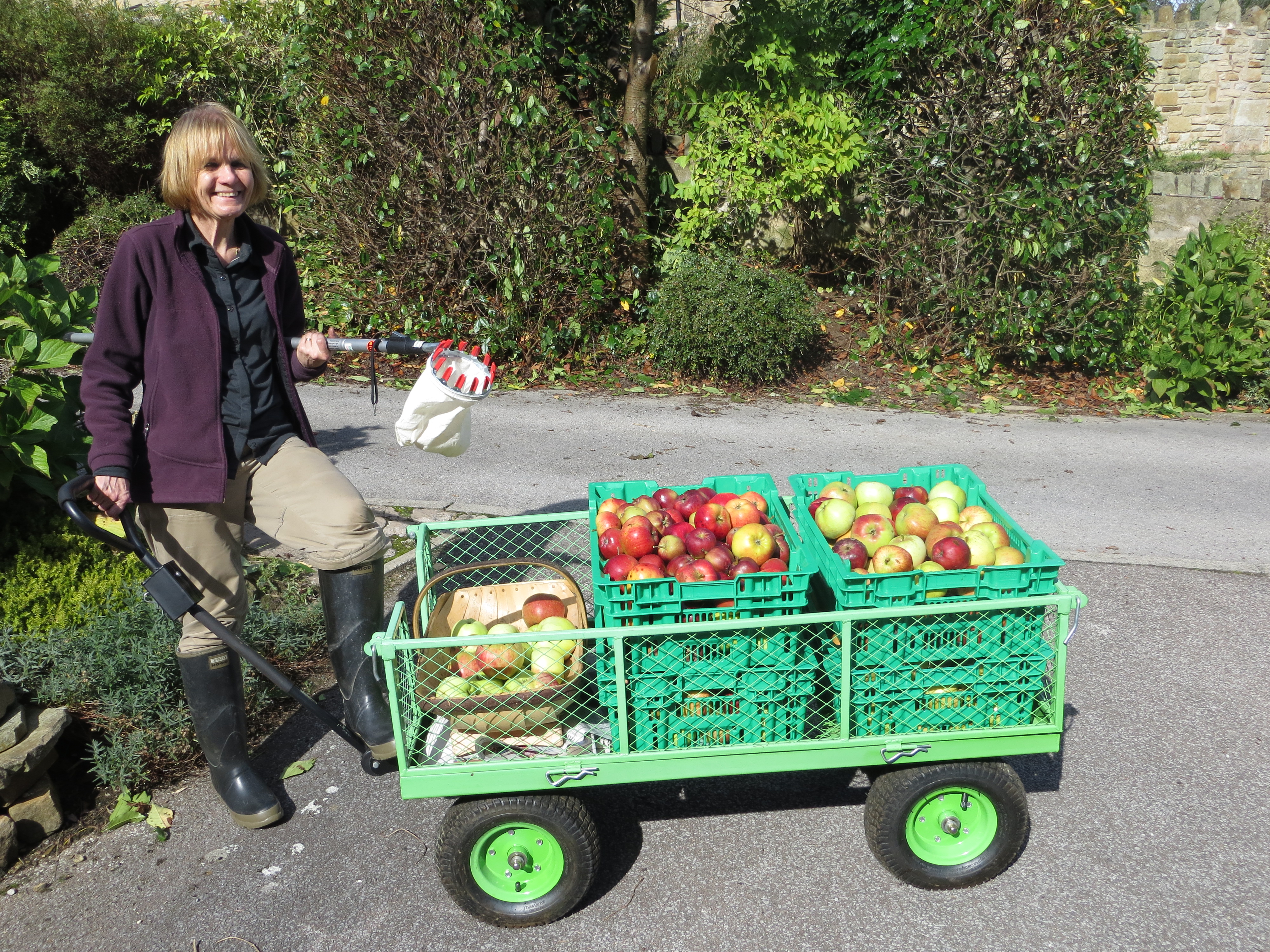
And fill all fruit with ripeness to the core
In my youth I was fairly impervious to the seasons, but in recent years I have come to dread the winter months. It’s not so much the cold that I dislike as the long hours of darkness and the even more dismal short hours of fuggy daylight. I particularly hate the murkiness of late November and December and always rejoice when the New Year brings a better quality of light. My husband once pointed out to me that January 21st marks the end of the two darkest months of the year, and now I always have a mini-celebration on that date.
It is therefore with mixed feelings that I welcome the autumn, even such a warm and mellow one as we have been enjoying this year. We’re already more than a week into October and, at the end of the month, the dark mornings will descend in a brutal rush when the clocks are changed. Now the shades of winter are hiding in the trees, making the first leaves fall. Soon all the branches will be bleakly bare. Although we’ve had a good summer, no-one in Yorkshire has forgotten last winter, which managed to extend itself almost into April: here, we had eight-foot snow drifts at the end of March.
There are some good things to look forward to, however. This has been an excellent year for crops of all kinds – the combination of a wet, late spring and warm early summer seems to have suited almost every species of fruit and vegetable. I’ve already written about freezing our bonanzas of beans and peas, and the exceptional blackberry harvest that we’ve enjoyed. The plums have been prolific, too. And now there is a bumper crop of apples.

I had a crush on this
We have two apple trees, one an eater, the other a cooker – a Cox’s Orange Pippin and a Beauty of Kent; our neighbours own four, theirs all varieties of eaters. The Cox rarely produces enough apples to last us until Christmas, but the Beauty of Kent is a stalwart yielder – we collected ten trays of apples last year and did not manage to eat all of them or give them away before they began to rot at Easter – and the neighbours rarely get around to harvesting the significant yields that their trees produce in any kind of systematic way. The waste has been regrettable, but hard to address. This year, my husband decided that we should countenance it no longer and suggested that we should try our hand at making cider.

Pomace face
Correction: that isn’t what he originally suggested. At first he said that we should try making apple juice, and accordingly we bought the equipment. My husband loves embarking on projects of this kind and they all have one feature in common: they are always more expensive than he says they will be, often by many times – the pond, for example; then the beehive ‘starter kit’ (£450 would give us all we needed to maintain two colonies of bees, but we soon needed another hive and a very strange miscellany of costly equipment that looked as if it had been knocked up by Heath Robinson, not to mention the cost of the bees themselves, which turned out not to have been included in the initial figure). I don’t for a minute believe that this is because my husband has a poor head for figures or is incapable of adding up the costs of his enterprises; in fact, I’m quite certain that it’s his way of getting me to agree to them. Once he’s pointed out the entirely reasonable price attached to whatever is his latest enthusiasm, and I’ve agreed to this outlay, we have reached the point of no return and further investment, when it is needed, becomes impossible to refuse.

The turn of the screw
So it has been with the apples venture. The cheapest press proved, on closer inspection, too inferior to contemplate; the screw cap bottles that we’d saved possibly not suitable for the pasteuriser (pasteuriser? I don’t remember that being part of the discussion!), so two boxes of matching shiny new ones have been purchased; and, it turns out, we also needed a host of small tools – a bottle-drying gadget, a thermometer, muslin bags, ‘food grade’ plastic buckets, etc., etc. However, I had agreed that it was a wicked waste not to do something with the apples, so I totted up the cost (about £800) and dug out the credit card. Expensive, I thought, but a real quality-of-life-project, and at least there was nothing more we could possibly need.

And by a cider press, with patient look
Wrong!
I’ve met my husband before, so in retrospect I’m a little astonished at my own naiveté. The equipment duly came, we picked up a couple of trays of windfalls and spent a happy afternoon chopping, pressing and bottling them. I was particularly impressed with the pasteuriser, which bubbles away, and apparently doubles as a tea urn – so if we decide to hold a village fete on our lawn, no further financial outlay will be required. Enthusiastic about our success – we now had eight bottles of de luxe quality apple juice (I tried not to cost out the price of each) – I asked my husband if we’d be making another batch the following weekend.
He assumed a look that I know well: a mixture of foxy evasiveness and guileless bonhomie unique to himself. “I’ve been thinking,” he said. “There are so many apples this year, that perhaps we should have a go at making cider, too.” I shrugged. “Sure,” I said. “Why not? We’ve got all the equipment now.”
“Well, the thing is,” he said, “there are one or two other items that we need…”

Plop!

The last oozings
Upshot: we spent a further happy day in glorious sunshine on Sunday gathering up windfalls and plucking marked or damaged apples. The cider-making extras came yesterday – the additional cost was a mere £122 – and we spent the day chopping and squeezing eight trays of apples (in my case this activity was punctuated by several telephone calls to a restaurant in Krakow, of which more in a later post). We now have thirty litres of cider bubbling away in the garage, and five of the bottles of apple juice still to drink. And all of this for less than £1,000!

All that, for all this!
I must admit, though, that the experience has been so enjoyable that the outlay has been worth it and, as my husband so sagely remarked, the apple press is a beautiful piece of machinery that will last us for many more years, and eventually become an heirloom. Thinking a little more short-term, the cider should be ready by Easter and I’m sure the anticipation of it will help us through the dreary darkest days.
[Having read all this and, he says, ‘appreciated’ the tone of it, my husband requests the opportunity for a re-post riposte (guest), from his perspective. Hmmm.]
All text and photographs on this website © Christina James
On your marks, get set, raddle!

Terence the tup eagerly anticipating the harness… no, the ewes…
Yesterday our friends Priscilla and Rupert from Lancashire (the ones who showed us Pendle Hill earlier in the summer) visited to accompany us on one of our local Yorkshire walks. They have a smallholding (an idyllic place) and keep chickens, geese and sheep. The conversation turned to ram harnesses. They’ve just bought a shearling ram to service their eight ewes.
Rupert had spent Friday afternoon trying to get the ram harness on, but without success. It wasn’t that the ram was being obstreperous: named Terence the Tup, he’s as docile, Rupert says, as rams come. The problem was that the harness, which is an elaborate contraption made up of multiple straps and clips, came with no instructions. Not only was it almost impossible to put on, but Terence several times managed to step calmly out of it as soon as their backs were turned. Priscilla said that Rupert was a typical man in not wanting to ask for help (I suggested that he called the NFU, but he frowned that that would be totally demeaning), so we compromised by looking up ‘fitting ram harnesses’ online.
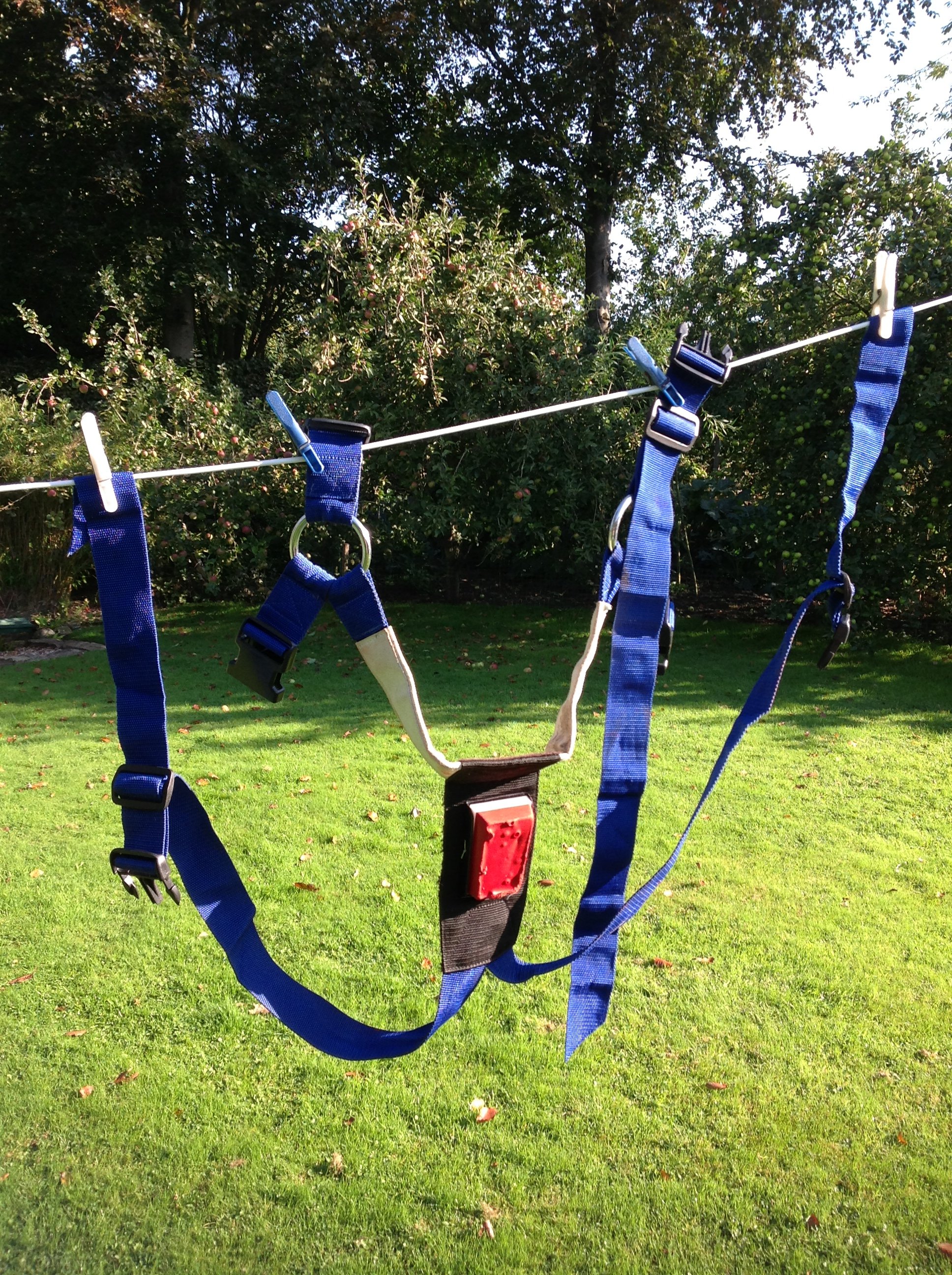
The riddle of the raddle…
It seems that Rupert is not alone in experiencing this difficulty: there are farmers’ forums that devote many pages to harness complaints, mostly without providing the answers and, even when they do, they’re about as comprehensible as the instructions from a Scandinavian flat-pack. One respondent even said, just look for the mud marks on the ewe – it’s cheaper! I should have explained that the purpose of the harness, which is fitted with a coloured crayon, is to let the farmer know when the ram has mated. When the ram mounts the ewe, the crayon leaves a mark which shows that the deed has been completed; so sophisticated is this method that there are soft, medium and hard crayons, according to the number of ewes; soft doesn’t sound much good. As the same effect can be achieved simply by daubing the ram daily with raddle paint (red ochre powder mixed with a little cooking oil, apparently!), it’s impossible not to believe that whoever invented these devices was having a laugh. The harnesses seem to have caught on, however: at this time of year, masochistic sheep farmers may be observed across the countryside, struggling with their own bucolic version of Rubik’s cube.
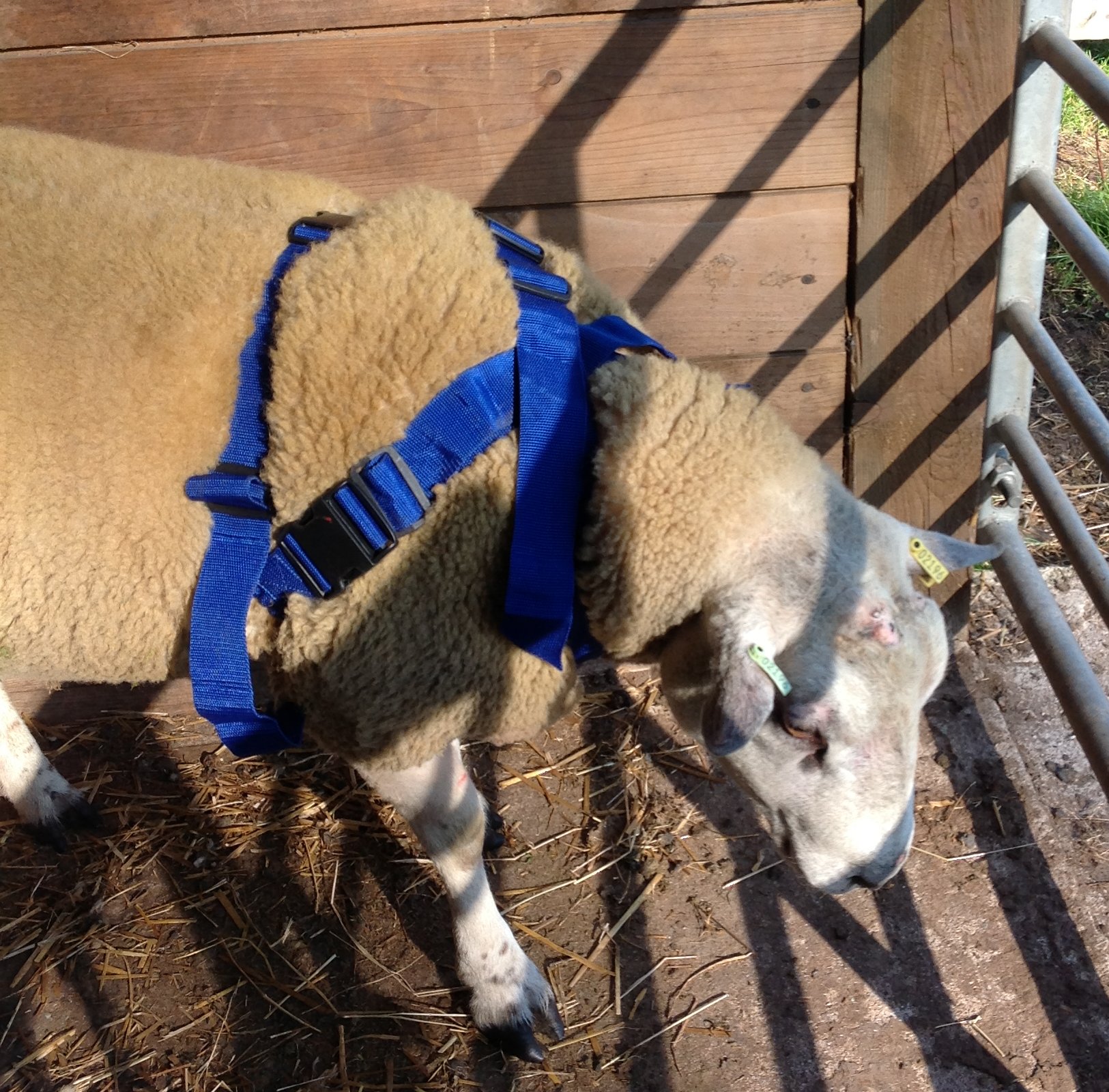
Terence is not amused… but success for Rupert!
Chuckling over our conversation again this morning, I wondered what Friday afternoon’s episode looked like from Terence’s point of view?
I knew when I saw Rupert’s place it’d be a good billet. He’d sorted me with eight wives, a nice number for a harem, and it means I get them all to myself. I’m not so keen on the bigger gigs where I’d have to share a twohundredsome with some other blokes. It’s not that I’m anti-social, just that team ramming tends to encourage inappropriate equipment and performance comparisons and it’s definitely dodgy to find an old tup leering sideways around the manger to measure you up. There’s one such ram in particular I can’t abide: his name is Fuchsia (What kind of a name is that for a straight fella?). My name is Terence the Tup, so you can imagine what people call him. Classie business
Another reason that I’m keen on coming to Rupert’s is that he strikes me as a sensible chap. Like me, he’s a bit lugubrious, but underneath we both have a wicked sense of humour. I credited him at first with quite a lot of common sense, too, because he played a tight game of it at the auction; when he got me home, he turned me right out with the girls and didn’t bother with one of those ridiculous harnesses that I’ve seen used elsewhere. I was a bit surprised, therefore, when I’d no sooner got comfy in his field last Friday and was just beginning to have a sniff round the ladies when I saw him approaching, brandishing one of those things. Baaaaaaa, I thought. Last time I had a close encounter with one of these, being fitted on a friend of mine, it made me blush to see a self-respecting ram looking like a bondage freak. But the straps were all over the shop and the air was blue, I’m not exaggerating. ‘Mister,’ I bleated at the farmer, ‘kindly remember that there are ladies present.’ But he was too cross to listen.
Anyway, since it was Rupert and obviously not a man with a chicken’s brain, I decided to co-operate, at least up to a point. Wasn’t there an old fella called Gandhi who invented something called ‘passive resistance’? Very effective, I’ve always thought. So I just stood there, chewing on a piece of turnip to alleviate the boredom, while Rupert endeavoured to truss me up.
The first time, he put it on upside down. I didn’t let on, of course, but it wasn’t very bright of him. For one thing, the crayon was squashed up against my brisket, pointing inwards, whereas a lamb could see that it’s meant to face outwards, to put some colour on to the lady. He soon realised that it was wrong and had another go. This time he ended up with two straps spare: those two are supposed to be crossed over my shoulders, but again I didn’t say. Would you help a chap if he was trying to push you into a strait-jacket?
Then the real fun and games started. Priscilla and Rupert have a dog. She’s a sleek black little thing and a bit of a minx, but friendly enough. She’s not one of those rogue dogs that chase sheep. Classie, I think her name is. Anyway, she showed up at this point and, for some reason best known to himself, Rupert decided to have a practice on her.

Catching her was something else. Once he’d finally got her in his grip she squirmed and wriggled while Rupert tried to hold her down with one hand and stick the harness on her with the other. Why he thought this would help was beyond me. Eventually, she ran off with the harness dangling and with Rupert in pursuit. I just stood and chewed my turnip.
Priscilla came out then to catch the dog. She put its lead on and tied it to the fence. Rupert was back with me by this time and beckoned Priscilla over. I must admit that I was slightly bemused when he asked her to kneel down on the grass and started clipping the straps in various permutations on her. But I’m broad-minded: ‘Whatever turns you on,’ I thought.
They must have come up with some new ideas by doing this, because Priscilla stood up and came across to hold me while Rupert had another go on me. By Larry, he was sweating. ‘I think that’s right, now,’ he said, ‘but it probably needs to be tighter.’ Shucks, I thought, he’s getting the hang of it. ‘Don’t hurt him! Don’t hurt him!’ Priscilla said, sweetly panicky. I smirked. Rupert tightened the straps a little, but gingerly. He slapped me on my rump and I walked forward a few paces, nonchalantly displaying the harness as I went. ‘I think that’s done the trick,’ said Rupert, and they both went into the house.
I walked over to the far side of the field, where most of my ladies had gathered, and stepped out of the bloody thing. I gave it a well-aimed kick. I didn’t quite manage to flip it into the ditch, but I trampled it down into the mud. Put yourself in my position: wearing that’s like having someone peeping through the keyhole of your bedroom door every night.
As I ambled towards my ladies, I had a look through a gap in the hedge and glimpsed Fuchsia in the next field with some ladies of his own. I met his eye and wondered why he was looking so sheepish: he’s usually a cocky so-and-so. Then I realised: he’d got a harness on and he’d been trussed into it good and proper. Seeing him like that made my day, I can tell you; he looked a right flower.
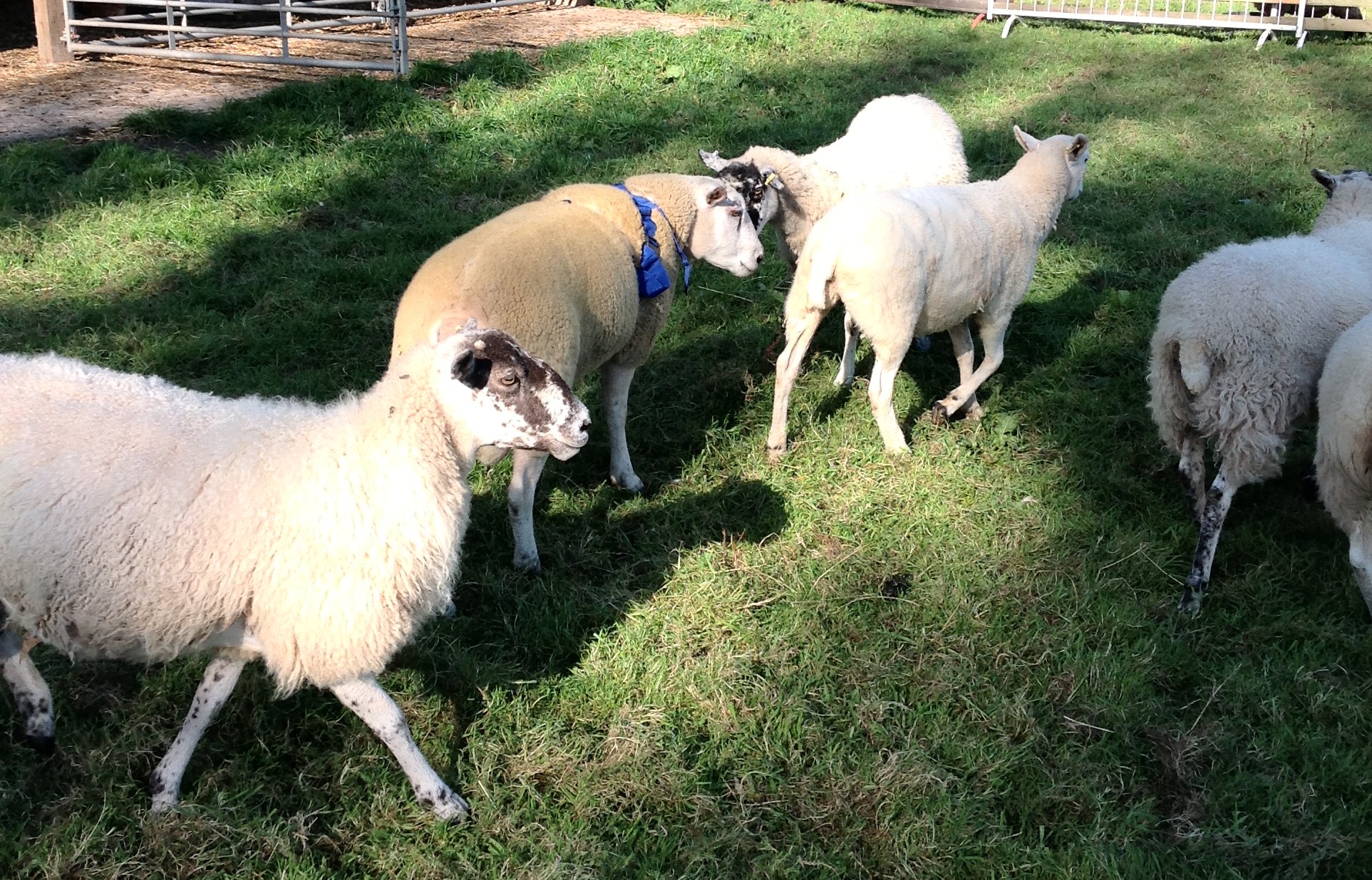
Now, Fuchsia, this is how to do it! Pity about this bloody harness, though.
BOOKS ARE MY BAG… and it’s a goody!

BA goody bag
[This is the second of my posts about BOOKS ARE MY BAG. You might like some background to the campaign here.]
I spent yesterday at the Booksellers Association Conference, which was held for the second year running on the campus of Warwick University. It was a wonderfully upbeat occasion and celebrated the many successes of the BOOKS ARE MY BAG campaign (now also known as BAMB), which was launched to the industry at the London Book Fair in April. All the activities that were built on this afterwards culminated in the public launch on 14th September.

Patrick Neale, President of the Booksellers Association
Patrick Neale, current President of the BA (and also proprietor of a wonderful bookshop in Oxfordshire – and also, incidentally, a former colleague of mine) listed some of the many triumphs of 14th September. Here are a few of the key ones:
• The BAMB campaign ‘trended’ on social media.
• Footfall in bookshops increased by 17.4% and sales by 18.5%. Booksellers everywhere said that it ‘felt like Christmas.’
• The most pleasing thing of all was that everyone in the industry – booksellers and publishers alike – realised that this was just the start of celebrating the unique attributes of the physical bookshop.
Dame Gail Rebuck, CEO of Random House, who visited Patrick’s shop on 14th and cut his BAMB cake, said that she loved the sense of energy that the campaign has brought. She said, ‘Of course publishers care about bookshops; they are the lifeblood of our culture.’ She was not the only celebrated person to visit Patrick’s bookshop on that day. First of all, Samantha Cameron came in with her daughter (so the staff decided not to pester her); then the Prime Minister himself followed and the staff, deciding that he was fair game, asked if they could take his photograph. He said that he was in favour of the campaign and obliged (all memories of Jimmy Wales and the ‘free’ information in Wikipedia evidently forgotten!).
I shall write more about the conference – which was full of good ideas for authors as well as for publishers and booksellers – and about the campaign. For now, though, I’d just like to share with you the contents of the wonderful goody bag that I received at the end of the day, along with another BOOKS ARE MY BAG bag, which I shall carry with the same pride as its two predecessors, now grubby from a whole summer of being paraded everywhere I’ve been. I’m doubly proud that a postcard about Almost Love was included.
Oh, and in case you’re interested, here’s that photo of the PM outside Patrick’s shop!

Cameron booking a place in history
Cheek to cheek with London at night…

Waterloo midnight’s fine…
I’ve just been in London for three days. It was mostly for the day job: I’m afraid the lazy days of August are now a distant dream. Autumn, with its increased workload and vigorous round of conferences and exhibitions, has now kicked in with a vengeance. The nights are also getting longer, of course, and on Wednesday evening there was a decided nip in the air. Nevertheless, I was having a wonderful time. After five meetings with colleagues and friends (none of them arduous, it should be said, and all of them interesting), I rounded off the day in style by meeting my friend Sally, with whom, as I’ve mentioned before, I stay when I’m in London, and going to see Top Hat at the Aldwych.
Although I’ve seen many (probably too many!) amateur musical productions, I don’t think I’ve ever been to one in the West End before. It was truly breathtaking. Top Hat was made famous by Fred Astaire and Ginger Rogers, for whom it was written, and first produced in 1935. The Aldwych version is faithful to the original – I’m glad to say that it’s not a spiky modern take on what has always been intended to be a slice of sumptuous fantasia – and I’d guess, although I don’t know, probably even follows the same choreography. The dancing was superb. The lead roles were played by Kristen Beth Williams and Gavin Lee, and to my eye – although I daresay this will be considered sacrilege in some quarters – their dancing was every bit as fluid, graceful and amazing as Fred’s and Ginger’s (which I’ve seen on film). The dancing by every member of the cast was of the same high standard. The costumes were magnificent – Williams wore at least ten outfits on stage, each one more glamorous than the last – and the two-tiered set was extremely clever, a brilliant way of making the most out of what is in fact quite a small early twentieth century stage.
The theatre was packed, and not just with people of a certain age. It set me wondering why a musical with no ‘hidden message’, whose appeal resides in the extravagance of everything about it, from the virtuoso performances to the clothes and make-up, should be so popular. I thought that it might be because we’re all fed up with so-called austerity, and seeking a break from it. Spending the evening in a make-believe world where money is no object and everyone is talented and beautiful certainly did the trick for me. I guess that this may be the reason why the original Top Hat went down such a storm, too. The glamour and genius of Fred and Ginger were obviously powerless to dispel the dark shadows that were gathering over Europe in 1935, but they must have given their audiences a night off from thinking about them.
Understandably, the Aldwych doesn’t allow photographs to be taken during performances, so I hope that my words and your imagination will supply the deficit. I have, however, included a photograph of another heart-stirrer, the view from Waterloo Bridge. It was approaching midnight when I was walking over the bridge to catch the train back to Sally’s, so I managed to capture only a fraction of its magic. It’s a place that never ceases to delight me when I’m there. The sweeping views of the Thames, the elegant and floodlit buildings, the reflection of the lights on the water and the London Eye (which is larger and more substantial than the other Ferris wheels I’ve written about) always make me feel proud of our capital city. London can be grey and dingy, mean and impoverished, just like all big cities, I suppose: but on Waterloo Bridge it twinkles and shimmers with the same aplomb and grace that the dancers showed in Top Hat.
Golf and a gnomic utterance
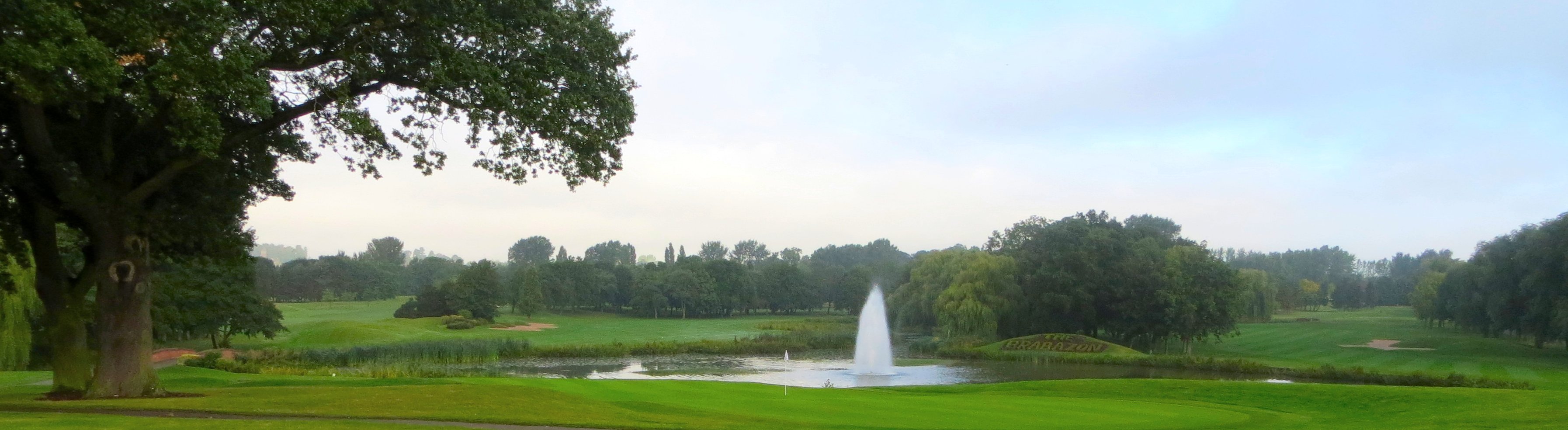
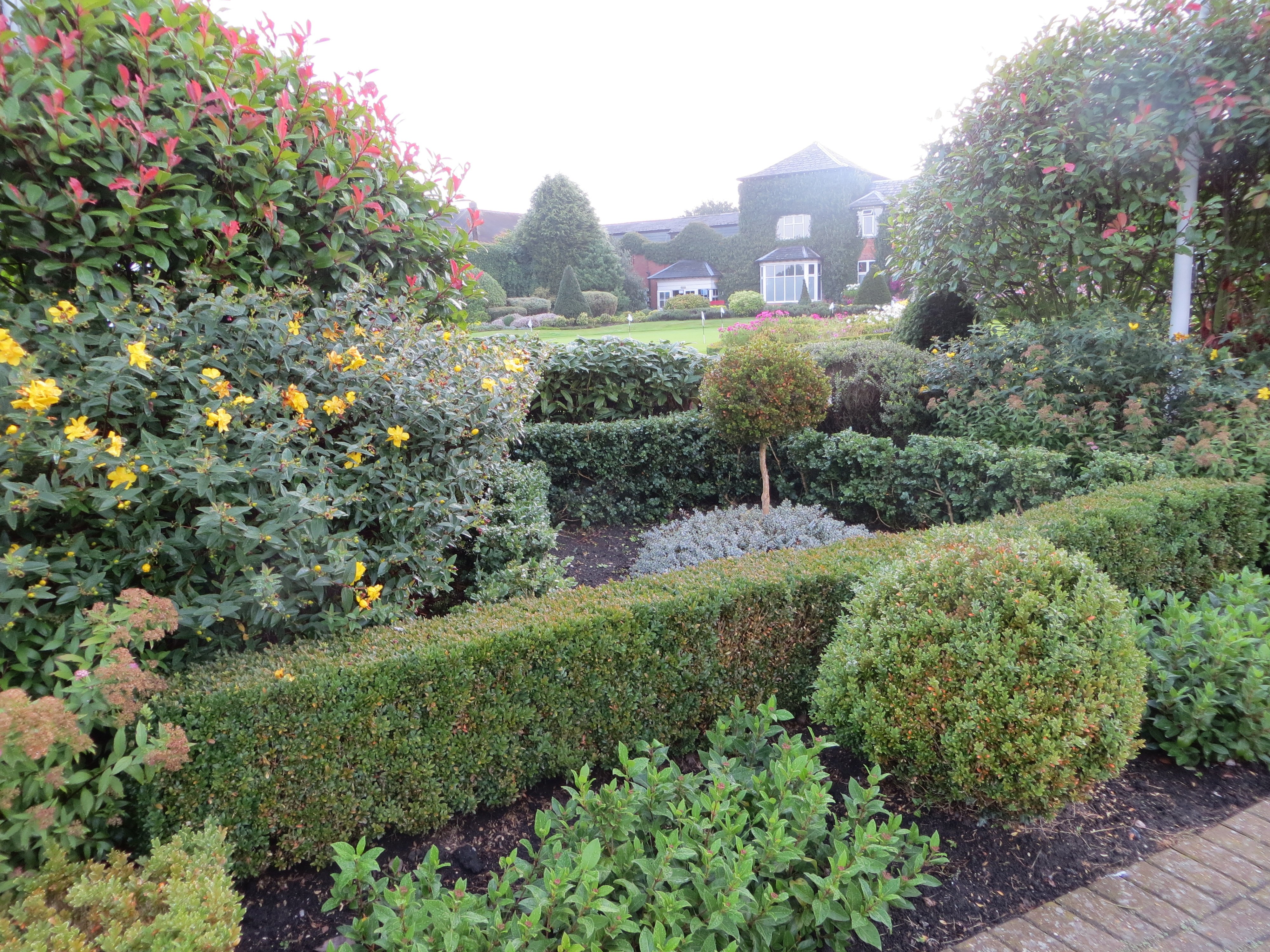
The conference that I attended last week was held at The Belfry, the hotel and golf complex situated close to Birmingham and venue, quick internet research tells me, for at least four Ryder Cup tournaments. I know little about golf, so this was quite an experience, enhanced even further by the fact that the hotel was undergoing some refurbishment, with the result that the conference itself was held in a marquee. As someone who put her foot down about camping about a quarter of a century ago, I viewed this latter development with some trepidation; however, despite intermittent rain, the marquee was neither damp nor draughty (rather the reverse) and in fact quite luxuriously appointed. It even had a small ante-room that had been kitted out with proper flushing loos.
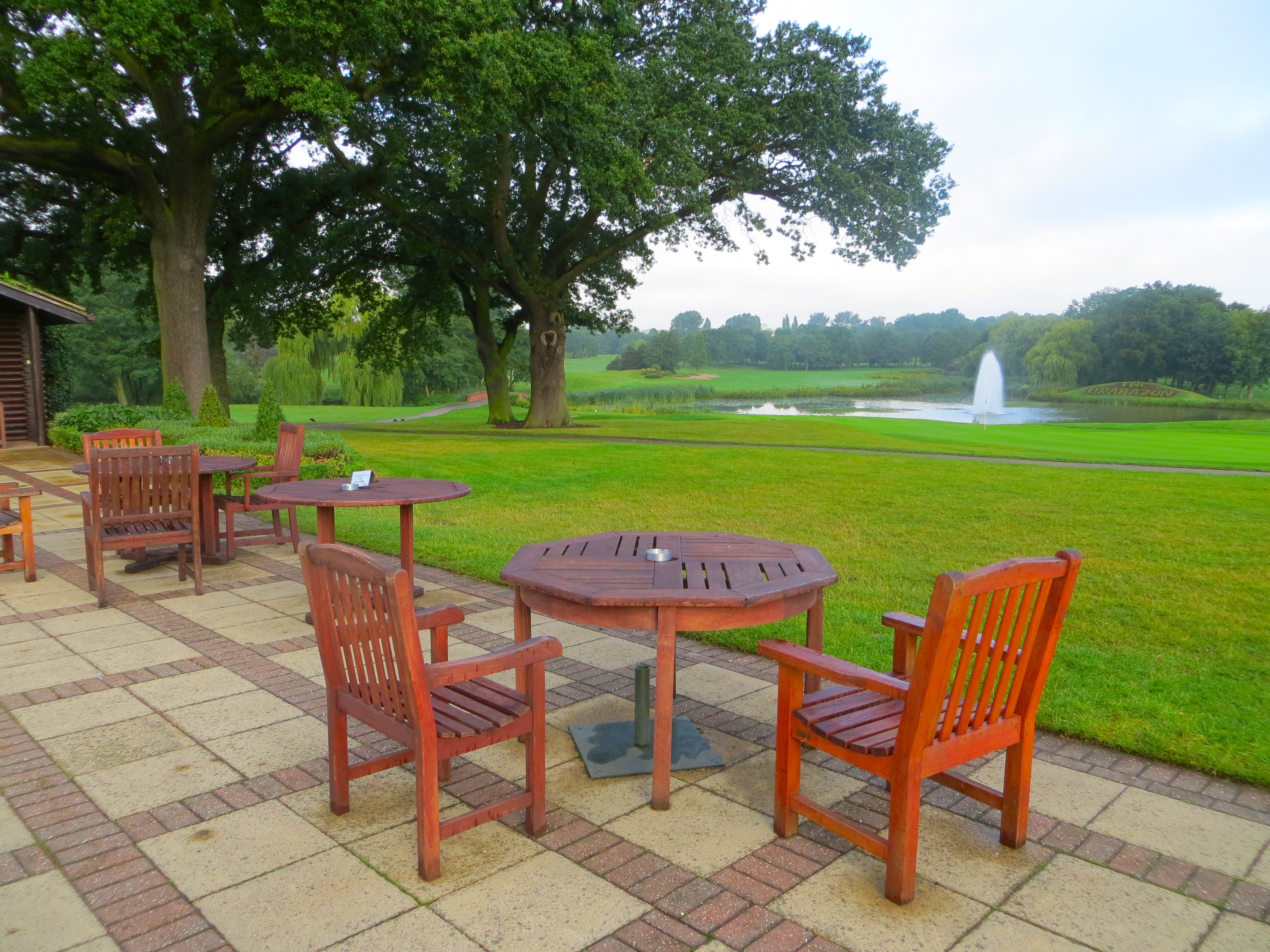
I still felt that I was the temporary inhabitant of a somewhat alien landscape, however. The golf course (It is actually three golf courses, the most difficult of which, the ‘Brabazon’, I was reliably informed, is a legend of its kind; this must have been true, as assorted men could at most times be seen gazing across at it, some taking photographs, others just lost in a trance of admiration) is perfect in every way. The acres of lush grass are flawless, manicured and bright green. The trees are symmetrical, the fountains crystal clear, the pathways pristine. It looks like a film set, rather than a managed slice of English countryside, but for a particular kind of film. It’s not the sort of place where you might encounter Mr Darcy striding across the greensward (though there would be some convenient lakes for him to jump into if he were so inclined) and you’d certainly not be able to imagine the muffled screams of a madwoman in the attic (in any case, the hotel itself is rather a low-lying, stubby building and may not have attics). It would probably be most suitable as the backdrop of a romantic comedy. I could conceive of Cameron Diaz, running across the course in a pair of Jimmy Choos to get to her lover, a posse of infuriated golfers in her wake; or Pop Larkin, annoying the staider representatives of middle England by turning up with his noisy and unpredictable brood. (Several golfers staying at the hotel were accompanied by young families, but all the children seemed to be behaving impeccably.)
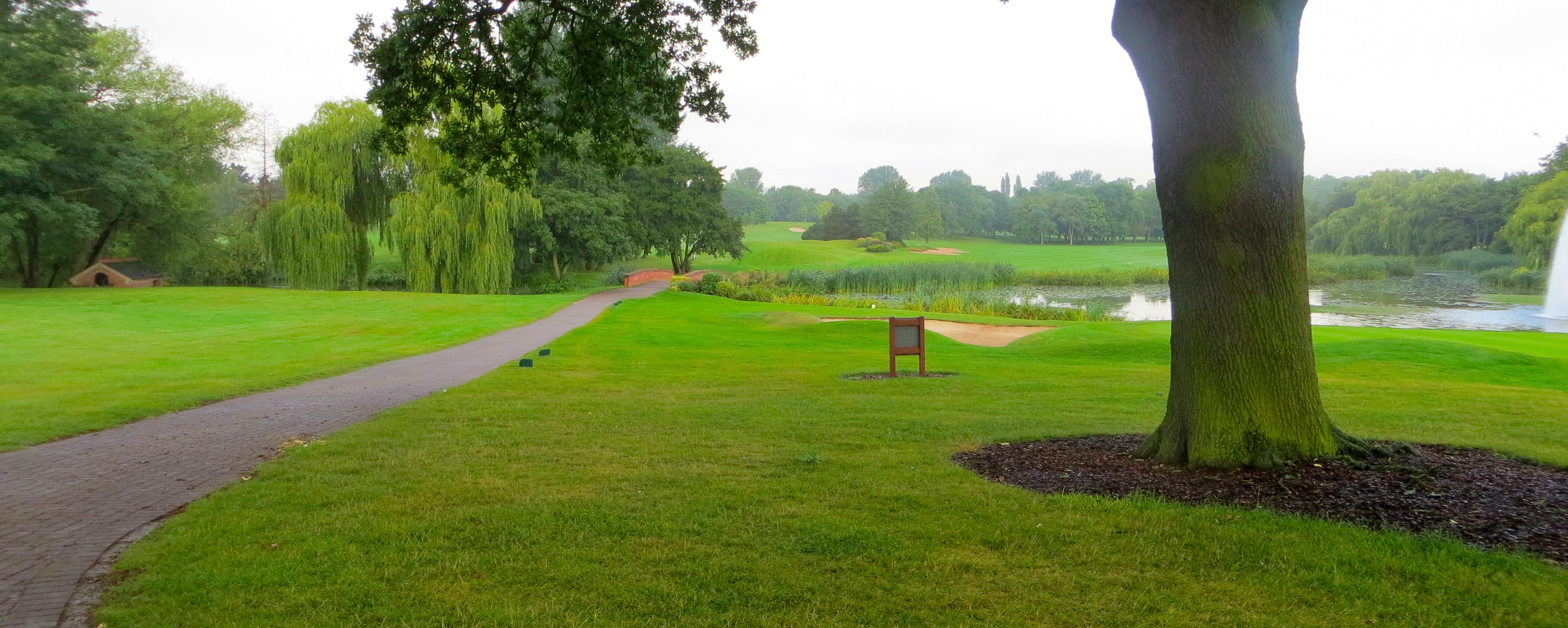
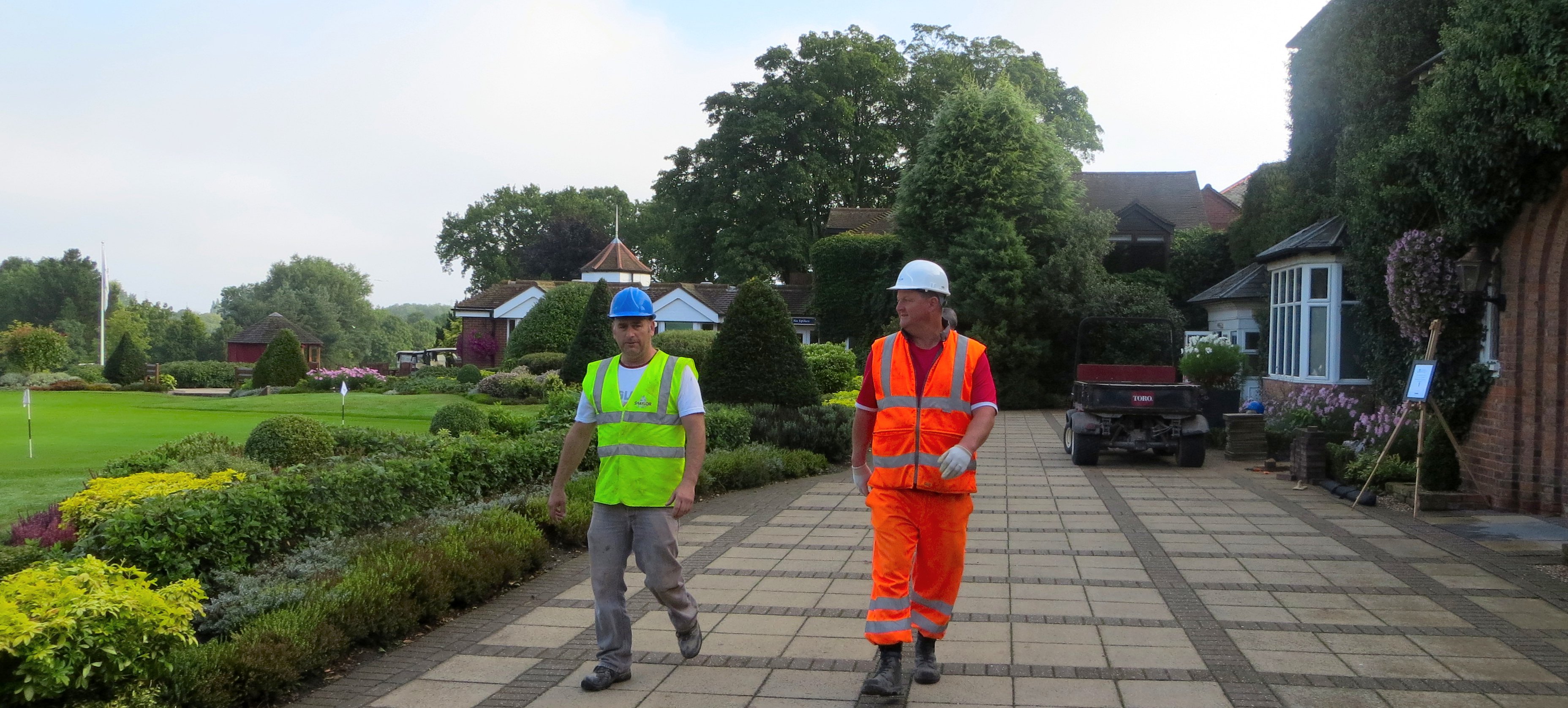
This is not to say that no dangers are to be encountered in a place that exists largely for golf. The Belfry boasts a whole fleet of motorised golfing buggies. To me, they seemed to be extra large, a type of off-road version of the ones I’ve seen in Yorkshire. They came bowling round the pathways at some speed, making walking hazardous for the unsuspecting. Either one of the hotel’s attractions is the fringe sport of potting conference-goers, or the drink-driving laws don’t apply in its grounds. An additional, temporary, danger was caused by the gangs of workmen employed on the renovations. They were frequently to be encountered striding about purposefully, balancing what looked like iron girders on their shoulders. I tried to photograph two of them engaged in this activity, but a bevy of passing buggies got in the way. I did manage to snap them on their way back for more girders, however. The one on the left stuck his tongue out at me, too late for my picture: I felt like Just William, establishing good relations by means of a skirmish.
What is beyond dispute is that The Belfry is a very photogenic place. This whole blog-post is therefore just an excuse to show you some pictures of it. I won’t say anything about the conference, as that belongs firmly in the compartment of my life marked ‘day-job’ – except to offer you a rather extraordinary sentence delivered by one of the speakers, which may amuse you and has already sown the seeds of a possible plot in my mind: “We uncover the discordant voice of dentistry – all dentists hate each other!”
Happy golfing!
 Christina James, crime novelist