

Succumbing to snow…
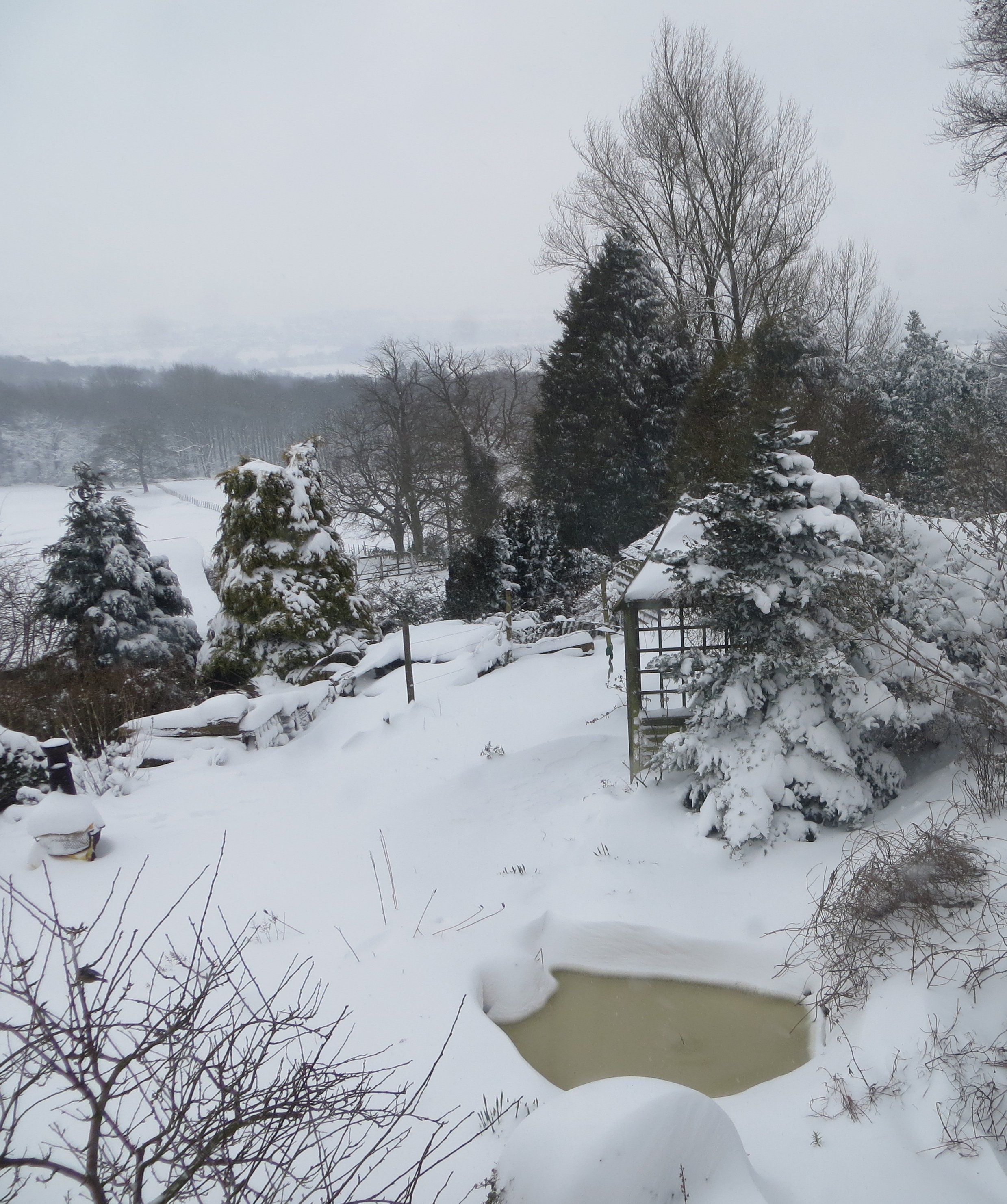
At the risk of sounding hackneyed – because it seems to me that the whole country is talking of nothing else – I have decided to devote today’s post to snow. How could I not? I have now been effectively snowed in (it has been just about possible to walk out but not drive) for forty-eight hours, twenty of those without electricity. And towards the end of March, too! I have been living here for almost twenty years and have seen snow like this only once before, on 25th January 1996. I remember the date because it was Burns Night and also the anniversary of the day on which I got engaged. I was driving home from the library supply company in Scotland at which I was working at the time and narrowly missed having to spend the night in my car on the A66 as the snow came thicker and faster. I remember my sense of relief when I finally made it to Scotch Corner, only to find the A1 gridlocked in both directions. It took me more than four hours to crawl into Leeds, where the traffic had virtually ground to a halt. Eventually I arrived at a roundabout with an adjacent hotel and went in to see if I could get a room for the night. A Burns Night dinner had been taking place there and most of the diners were stranded, so there was a shortage of rooms. However, when I told the receptionist I had driven from Scotland, she was so impressed that she gave me the bridal suite for the night, complete with flowers, fruit and mini bottles of champagne! The irony was that my husband and son were also stranded nearby, but we couldn’t contact each other. In those days, cellphones were rarer; my company had just bought one for me, but none of us had personal mobiles. On the next day, when I finally reached home (having passed my husband’s abandoned car, its roof now neatly bisected by a snow-laden branch), the snow was not as deep then as it is now; and it was the fourth week of January, after all, and not the third week of March! I feel not so much a sense of outrage at this current deluge as one of disbelief: seeing lambs in the snow is one thing, but snow on nesting blackbirds quite another!
Yesterday I also discovered how little can be accomplished without electricity. I couldn’t shower, cook, clean, listen to music, put on the washing machine or do the ironing. Instead I wrote yesterday’s blog-post, made some final adjustments to Almost Love, toasted myself in front of the wood-burning stove, acted as referee between the dog and cat as the occasional skirmish broke out for pole position on the hearthrug and read the first two hundred pages of Vanished Kingdoms by Norman Davies, my treat to myself when I visited Leeds on Friday (along with a cappuccino and a slice of Belgian chocolate tart). I also meditated on possible plots for my next novel and read last week’s papers for inspiration. The Joss Stone attempted murder case amazes with its improbability. Few writers would dare to invent anything so bizarre!
Most of this was very enjoyable, though I was beginning to feel twitchy by the time that power was restored in the late afternoon. As soon as the lights came back on, I rushed for the shower in case the power bounty proved to be temporary. My husband was more philosophical. He had decided that the opportunity for Saturday ablutions had been and gone and devoted himself instead to clearing away the debris of a day’s accumulated washing-up. (Next time there is a power-cut I must remember that unwashed husband = clean dishes.)
Today it is bitterly cold, although the sun is shining. The snow is being whipped up by the wind and inflicting sharp stings to the face and any other exposed skin. Drifts on the verges are several feet deep, meaning that it is only possible to walk on the roads, which have now mostly been cleared to a single track. Nevertheless, I was determined to go out this morning. I once had a colleague who was sent to work in Canada in the winter months; he said that, for him, cabin fever set in after two or three weeks of snow. I can cope with barely one day! We accompanied the dog on his normal three-mile walk. It took twice as long as usual, but the woods were spectacularly beautiful.
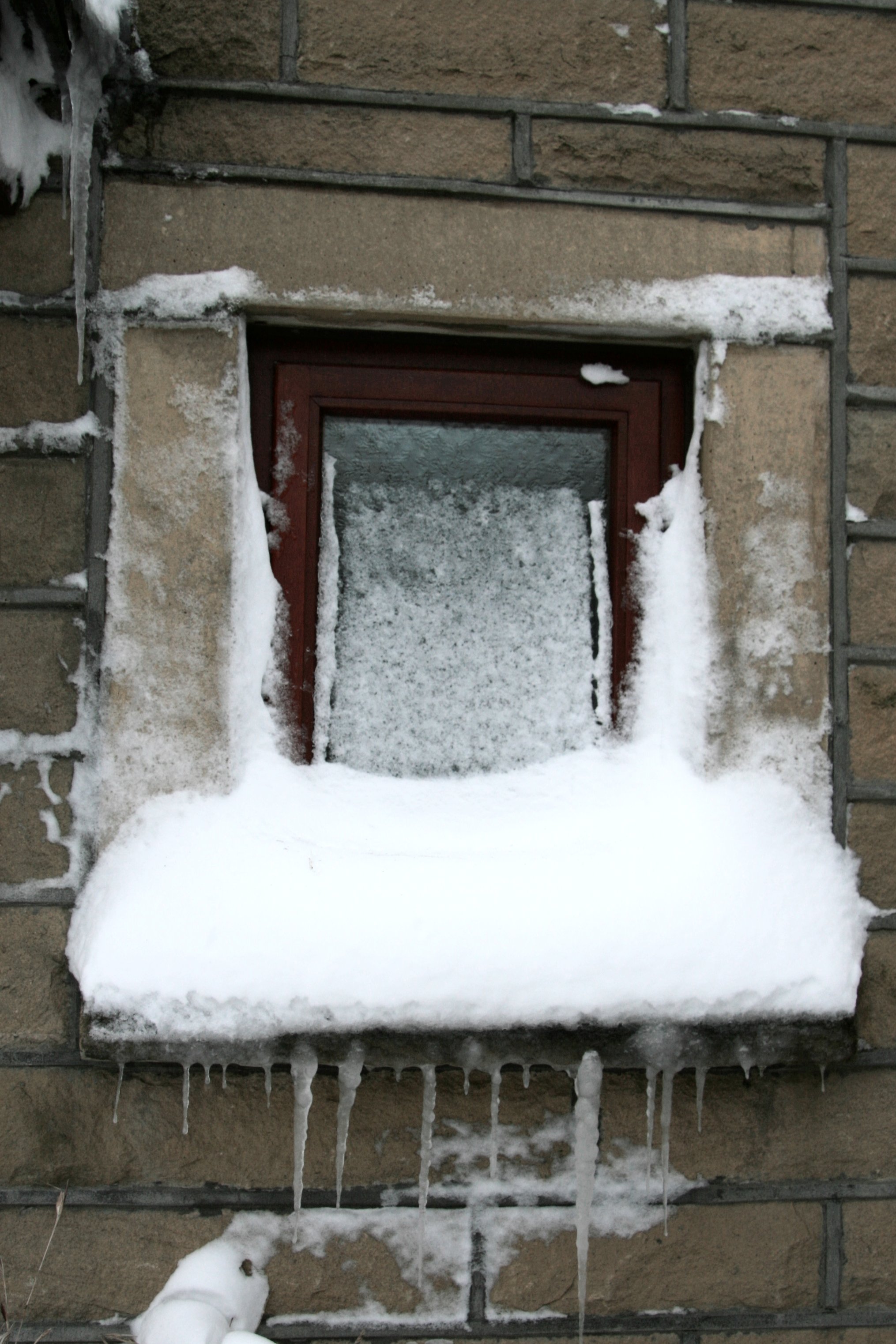
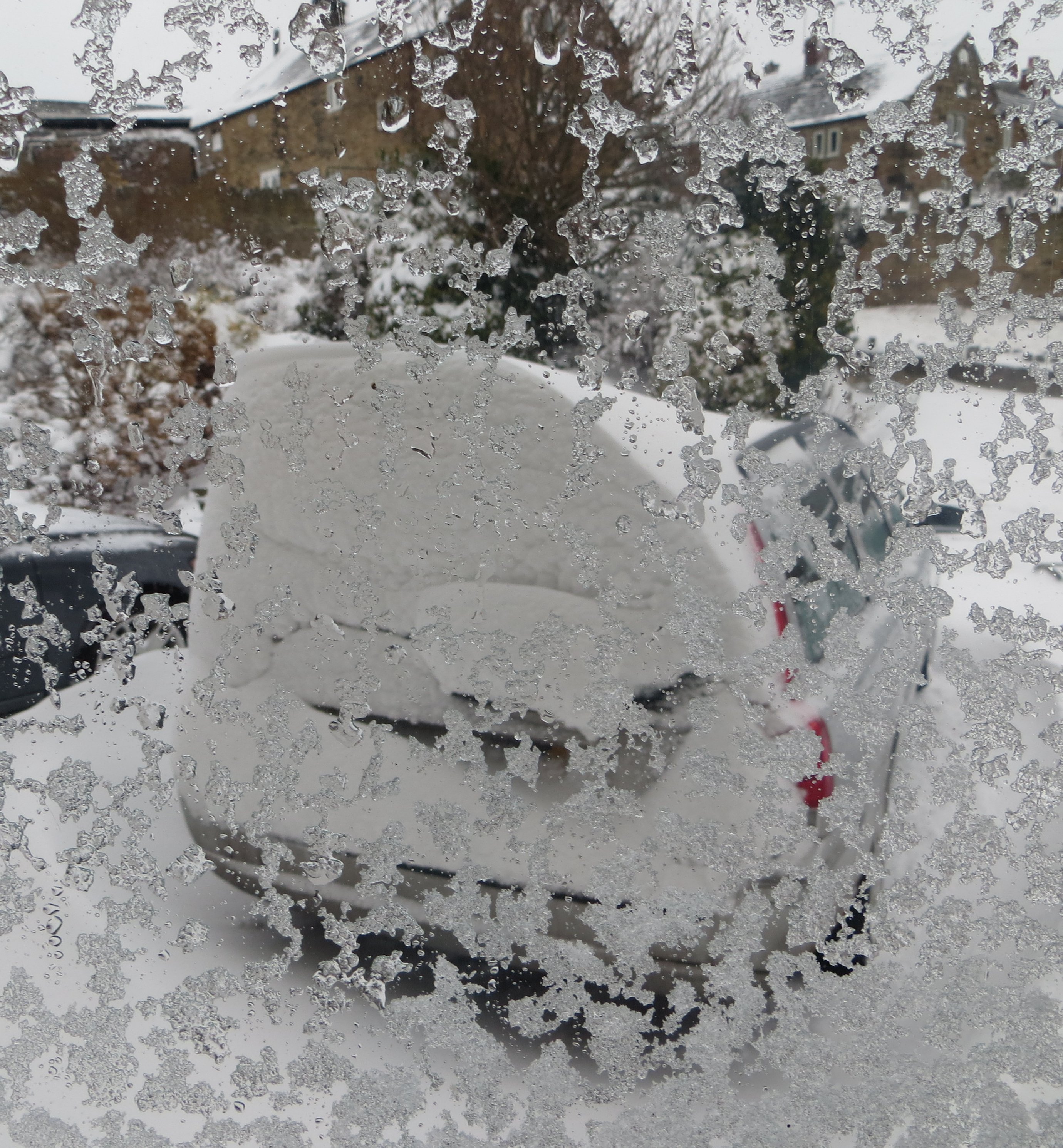
I am including some pictures of my garden, which I took yesterday. The whole of this blog-post is really an excuse to share them!
In love with Cromer…

It seems fitting to write about Cromer on World Poetry Day. If you are new to the blog, please don’t be baffled by this! Regular readers will know that Cromer is the adopted home of Salt Publishing, which is becoming ever more renowned for its fiction. Last year it achieved international fame with The Lighthouse, Alison Moore’s debut novel, which was shortlisted for the 2012 Man Booker prize. (Its crime list includes In the Family, my first crime novel, and will shortly also feature Almost Love, the second in the DI Yates series.)
However, Salt built its reputation for literary excellence on its superb poetry list; in my view it is the greatest current British publisher of contemporary poetry. Some Salt poets are poets’ poets, though most are very accessible. I believe that perhaps, of all its achievements, Salt’s greatest has been to develop its ‘Best of’ lists, especially the Best of British Poetry series, and the Salt Book of Younger Poets. Now widely adopted by undergraduate courses in English literature and creative writing, these books bring contemporary poetry alive to a new generation, as well as supply more mature readers with an impeccable selection of great poems. The Best of British Short Stories series achieves a similar effect in a different genre. And, not to spare his blushes, Chris Emery, the founding inspiration behind Salt, now publishes his own poetry under the Salt imprint. If you have not yet read The Departure, I recommend it wholeheartedly.
Back to Cromer. I was there for a long weekend because, as I mentioned on Sunday, I was asked to play a small part in the Breckland Book Festival. I stayed at The Barn, one of the cottages owned by The Grove Hotel (itself steeped in history – parts of it are eighteenth-century and its original owners were the founders of Barclays Bank). I called in on Chris and Jen Hamilton-Emery after the Breckland event and my husband and I were kindly invited to have dinner with them. They were brimful of ideas as usual and delighted that Chris has been appointed writer-in-residence at Roehampton University, as well as looking forward to celebrating Jen’s birthday today (that it is on World Poetry day is a poetic thing in itself!).
The rest of our time in Cromer was spent exploring the beaches and the streets of the town. Twice we walked along the beach in the dark and, on Monday morning, we took our dog for a very early morning run there. Even in bitterly cold weather, the town itself is enchanting. Developed in the mid-nineteenth century to cater for the emerging middle classes, who could for the first time afford holidays away from home, it seems to have been preserved intact from any attempted depredations by the twentieth century. There are not even many Second World War fortifications in evidence, though a pill-box languishes in the sand of the west beach, its cliff-top site long since eaten by the sea. The pier retains its pristine Victorian originality – it is well-maintained but has not been ‘improved’. Some of the hotels, again ‘unreconstructed’, are quite grand and all serve superb food at reasonable prices, as do the many cafés and restaurants. It is true that some of the shops seem to exist in a time warp. My favourite is the ladies’ underwear shop that does not appear to stock anything designed after 1950; it even displays ‘directoire’ knickers – much favoured by my grandmother – in one of its windows.
Cromer has a literary past, too. Winston Churchill stayed there as a boy and Elizabeth Gaskell was a visitor, as the pavement of the seafront testifies. (Churchill apparently wrote to a friend: ‘I am not enjoying myself very much.’) That Tennyson also came here, even if I had not already decided that I loved it, alone would have served to set my final stamp of approval upon the town: Lincolnshire’s greatest poet, he is also one of my favourites. (I’ve always considered James Joyce’s ‘LawnTennyson’ jibe to be undeserved.) I know that Tennyson would have been fascinated by Salt if he had been able to visit Cromer today. I can picture him perfectly, sitting in Chris’ and Jen’s Victorian front room, sharing his thoughts about poetry – as one fine poet to another – in his wonderfully gruff, unashamedly Lincolnshire voice.
And so, Jen, Chris and Salt, have a very happy Cromer day, listening to the lulling rhythm of the rolling, scouring waves and painting salty pictures in the sky.

A brief encounter with Brighton… and a book
Last week I visited Brighton for the first time in perhaps ten years. I was there because The Old Ship Hotel had been chosen as the venue for the annual academic bookselling and publishing conference for which I organise the speaker programme. I discovered that there has been an inn on the site of The Old Ship since Elizabethan times. Originally just called The Ship, it acquired its venerable epithet after another Ship hotel was built nearby – this one a mere stripling dating from the period of the Civil War. Hotels in Brighton can be evocative places. I have also stayed at The Grand, both before and after it was wrecked by the IRA bomb, on both occasions to attend the Booksellers Association Conference (I liked it better before than after) and one year spent several days in a seedy little guest house when the company I was working for forgot to book until the last minute and all the hotels were full.
Brighton itself has not changed much in ten years, although it looked very odd when I arrived, because the streets and seafront were covered in grubby snow. A moderately heavy snowfall on the day before seemed to have caused a local catastrophe in which everything – public transport, the highways, even restaurants and cafés – ground to a halt. I concluded that they’re ‘nesh’ in the South of England; we clear away snow like that in half an hour in Yorkshire! Or perhaps Brightonians – if that’s the right word – are just staggered to see the white stuff at all and it therefore strikes them down with a sort of horrified inertia.
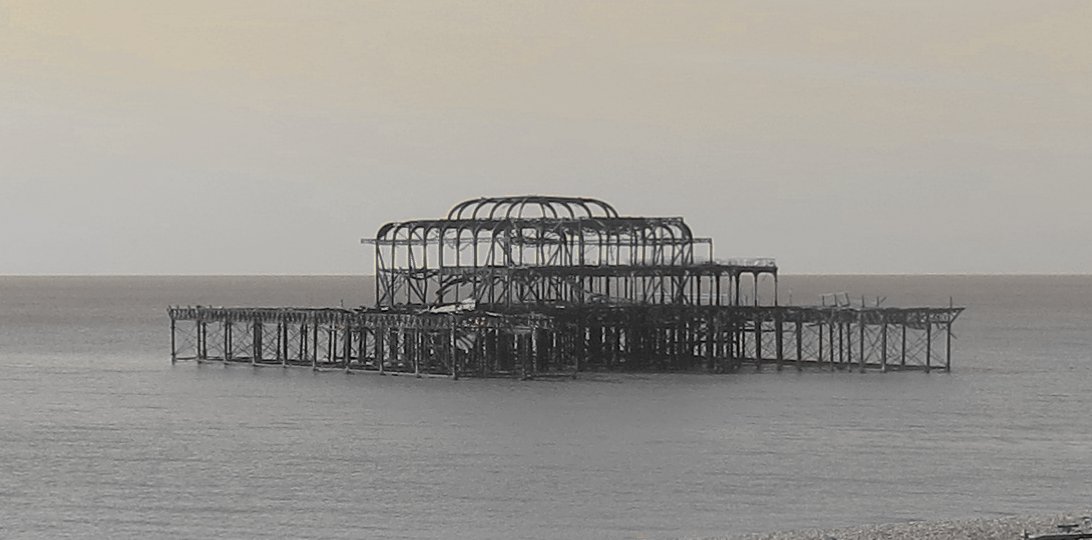
Anyway, by midday, although it was still very cold, the snow had melted and I ventured out from The Old Ship to meet my former English teacher for lunch (more about this on another occasion). Before the conference started, I also managed to take a walk along the promenade and was saddened to see the hideous buckled corpse of the West Pier, still rising up out of the sea like a squashed daddy longlegs. The structure has suffered terminal damage since my last visit.
After presentations, drinks and speeches, dinner, more speeches and more drinks, I went to bed. I was rudely awakened at about 4 a.m. by the noise of a huge crowd outside. I exaggerate only a little when I say that it sounded like the storming of the Bastille! I began to realise that my de luxe room, with its fine view of the sea, came with mixed privileges. Looking discreetly out of the window, I saw a gang of perhaps forty youths running about on the seafront, many of them braying obscenities. And they didn’t move on – they just stayed there! Brighton has obviously degenerated since the days of Pinkie Brown, who was a better class of yob altogether.
Since it was obvious that I would get no more sleep until the mob dispersed or was moved on, I adopted my usual all-purpose tactic for dealing with adversity and took out a book. It was The Mistress of Alderley by Robert Barnard, not a novelist I’d read before. Under normal circumstances, it wasn’t the sort of novel I’d have especially enjoyed. Although the setting is meant to be contemporary, the characters seem to belong to a time warp. The mistress of Alderley herself, a retired actress called Caroline Fawley, seems to me to be straight out of the set of Brief Encounter. However, under any circumstances I should have enjoyed the detailed descriptions of Leeds which number among the novel’s strengths and, while the fracas outside continued to roar, I found the descriptions of Caroline’s genteel rural life quite soothing. The icing on the cake was that it turned out to be a sham, a pretence laid bare by the murder of Caroline’s slippery millionaire lover.
I had almost completed The Mistress of Alderley by breakfast, by which time the louts had melted away and a rosy dawn was launching itself above the dead pier.

‘Almost Love’ almost flowering…
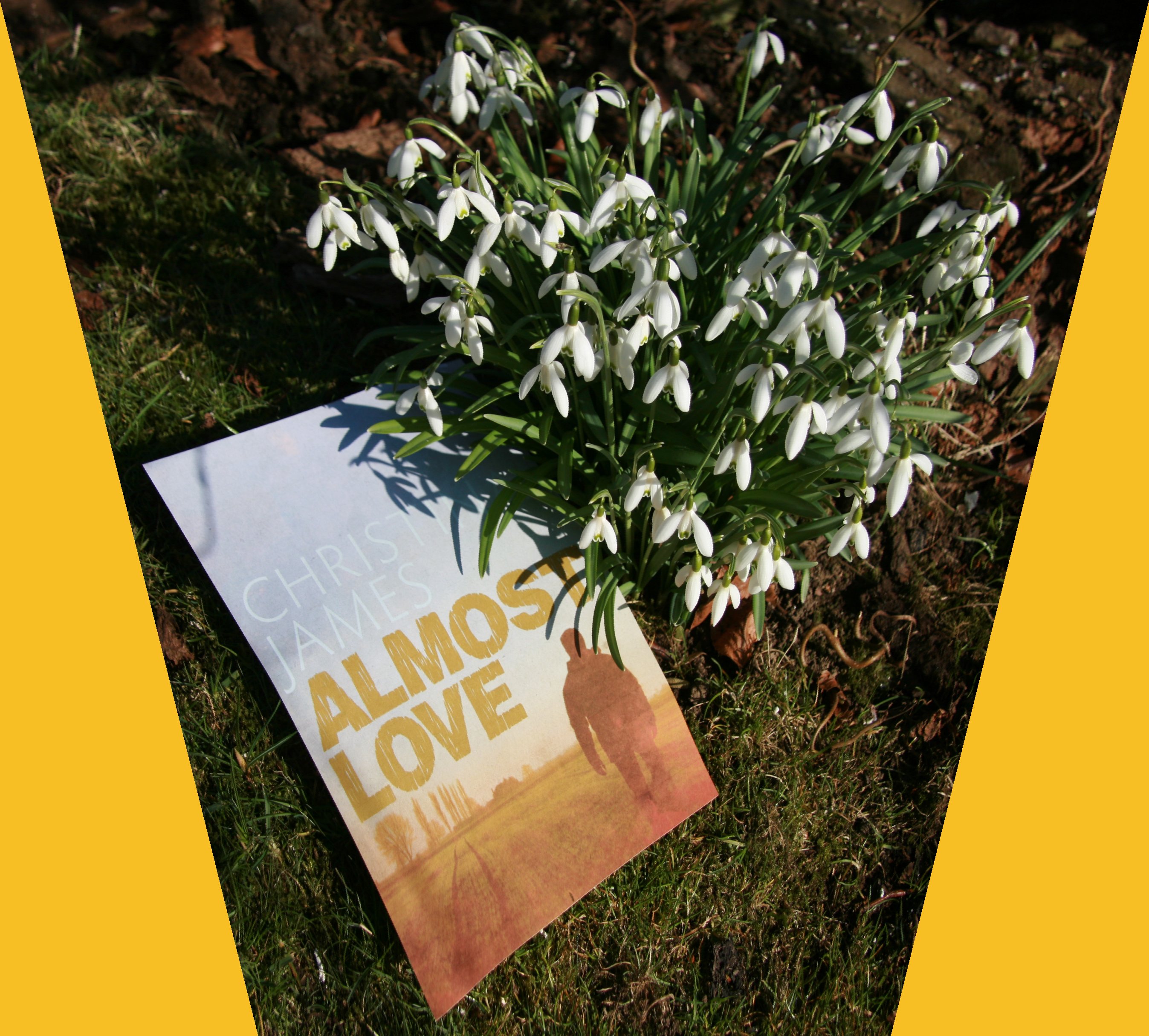
Yesterday was the first of March, St. David’s Day. Although there was frost on the ground, the sun, when it broke through the cloud, was shining brightly and with real warmth. The snowdrops and primulas have already been in flower for some time and yesterday I noticed that the dwarf daffodil buds are swelling. When I drove out at 6.15 p.m., there was still some daylight left. Spring is pushing aside a bleak winter!
Yesterday was also the day on which I wrote the last few sentences of Almost Love. Because of the non-sequential way in which I write (a habit that I am trying to break), they belong to a chapter about one hundred pages from the end; it was a chapter that I’d been trying to finalise for some time. Then, when there was nothing else left to work on (and therefore no way out of attending to it), it almost sorted itself, quietly and relatively quickly.
There’s still revision to be done, of course, although I revise all the time while I’m writing, but rounding off this novel has been quite different from finishing In the Family, which left me feeling battered and dazed. (I remember it well, partly because it was completed on the day of the royal wedding, which gave me more time to myself than usual.) This time I just felt happy in an understated sort of way.
The next novel is germinating at the back of my mind. It will need quite a lot of research, which I shall enjoy. For the moment, however, I shall focus on tending to Almost Love and enjoying the time before it bursts into bloom in June.
February Fenland
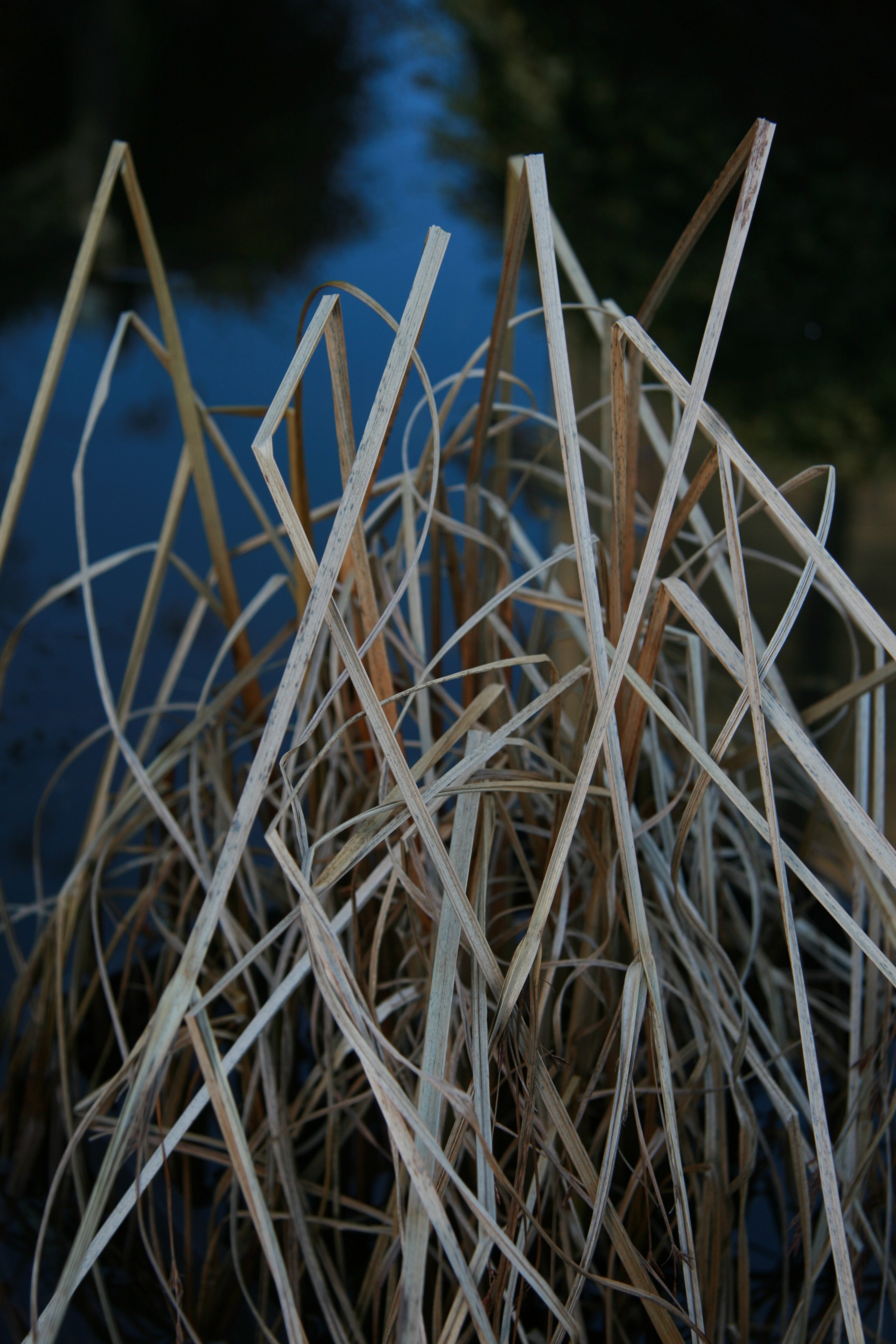

Somewhere, in the middle distance, there is the sound of sighing, the susurration of dry reedbeds in the breaths of the first, softer, south-westerly winds of the year. Zephyr-mild and whispering the warmth of a climbing sun, these breezes are the harbingers of a brighter time to come. The colours of the February Fens are muted yet, with the fawns of stubble acres and last year’s broken sedges; the raw umbers and charcoals of the turned soil; the sky is still ice-blue.
The dykes are snow-melt bright, surface-painted by the leaning lines of power poles that disappear into distance. Mallard, pochard and teal splash to landings on open water; the geese are already on the move. South-facing banks and scrubby corners by tumbling corrugated sheds are stirring with life; a dandelion blooms; the cheerful, chirpy two-tone of great tits rings from the elders and the wren whirrs amongst the brambles. The blackbirds are already building in the holly hedge by the farmyard wall. Look closely and the sap green spears are thrusting; round village ponds the daffodil buds are clustering. More cold may come, but, inexorably, the Fens are swelling with warmth and light and water, a hope-filled harmony of growth and life. The land is rich with promise, with gilded silt.
February swings its way between the seasons, but the farmer eyes the sky and sniffs the air, kicks the drying turf and sees the scales dip into Spring; the Fens will soon open again to the ploughshares and the seed-drills. Soon… soon…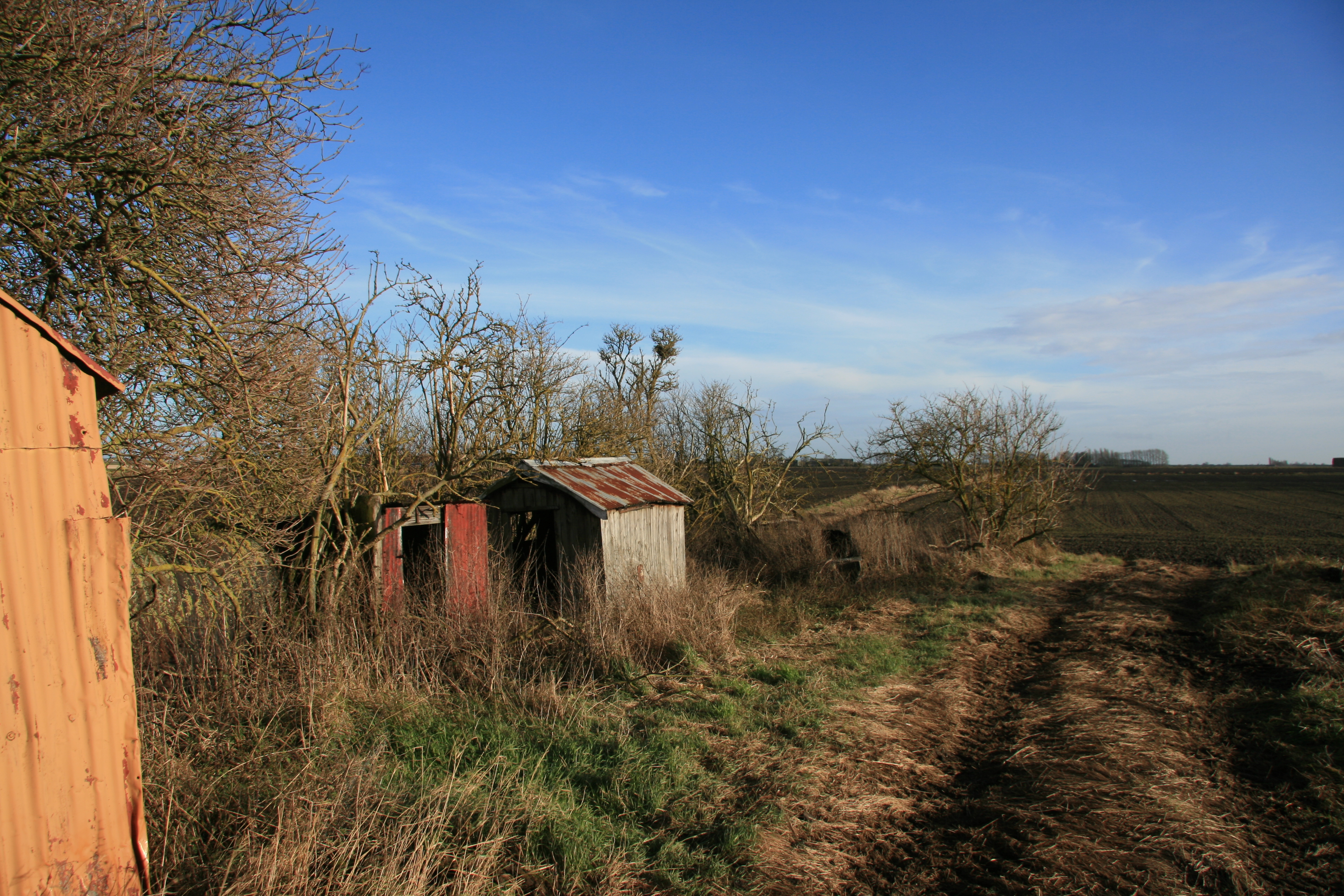
Into the Fens again!

Parish Church of St. Mary and St. Nicholas, Spalding
Yesterday, I made my second East Anglian excursion of the year, this time to Cambridge. It was a bitterly cold day and, although it was dawn by the time that I reached Peterborough, the light remained subdued by one of those swirling mists that often accompanies sub-zero winter days. I did not enjoy the cold (it was impossible to get warm, even by wearing a coat on a heated train), but I was delighted by the mist, as it enhanced the jolt of surprise that Ely Cathedral always springs when it sails suddenly into view. Not for nothing is it called the ‘Ship of the Fens’ and yesterday it truly looked like a huge galleon that had just weighed anchor on a white-capped sea.
Whilst Ely is one of the country’s oldest cathedrals (parts of it date back to the seventh century), the Fens as a whole are famous for their beautiful churches. When I was a child, every shopping expedition to Peterborough included a visit to Peterborough Cathedral. It was here that I first learned of the beheading of Mary Queen of Scots at Fotheringhay. She was originally buried in Peterborough Cathedral, though later exhumed and reinterred, by order of James I, in Westminster Abbey.
However, some of the finest Fenland churches are not cathedrals, but the more modest – although still magnificent – parish churches. I was both baptised and married in the Parish Church of St. Mary and St. Nicholas in Spalding; I was a pupil at Spalding Parish Church Day School, affiliated to this church.
I have recently acquired several books about South Lincolnshire in order to research Almost Love, my next novel. Among these is Geese, Gowts and Galligaskins, by Judith Withyman, a history of life in a fenland village from the mid-sixteenth to the mid-seventeenth centuries. (I shall review it when I’ve finished reading it.) Most of the papers that she draws on, in this vivid re-creation of how people lived in the Fens three or four hundred years ago, were discovered by her in the 1970s, in a chest kept in St. Mary’s Church at Pinchbeck, a large village that has become almost a ‘suburb’ of Spalding.
Such records are treasures and I wonder how many other Lincolnshire churches contain such secrets that are silently waiting to be yielded up to the interested and observant?
A view of ourselves… in the northern landscape.
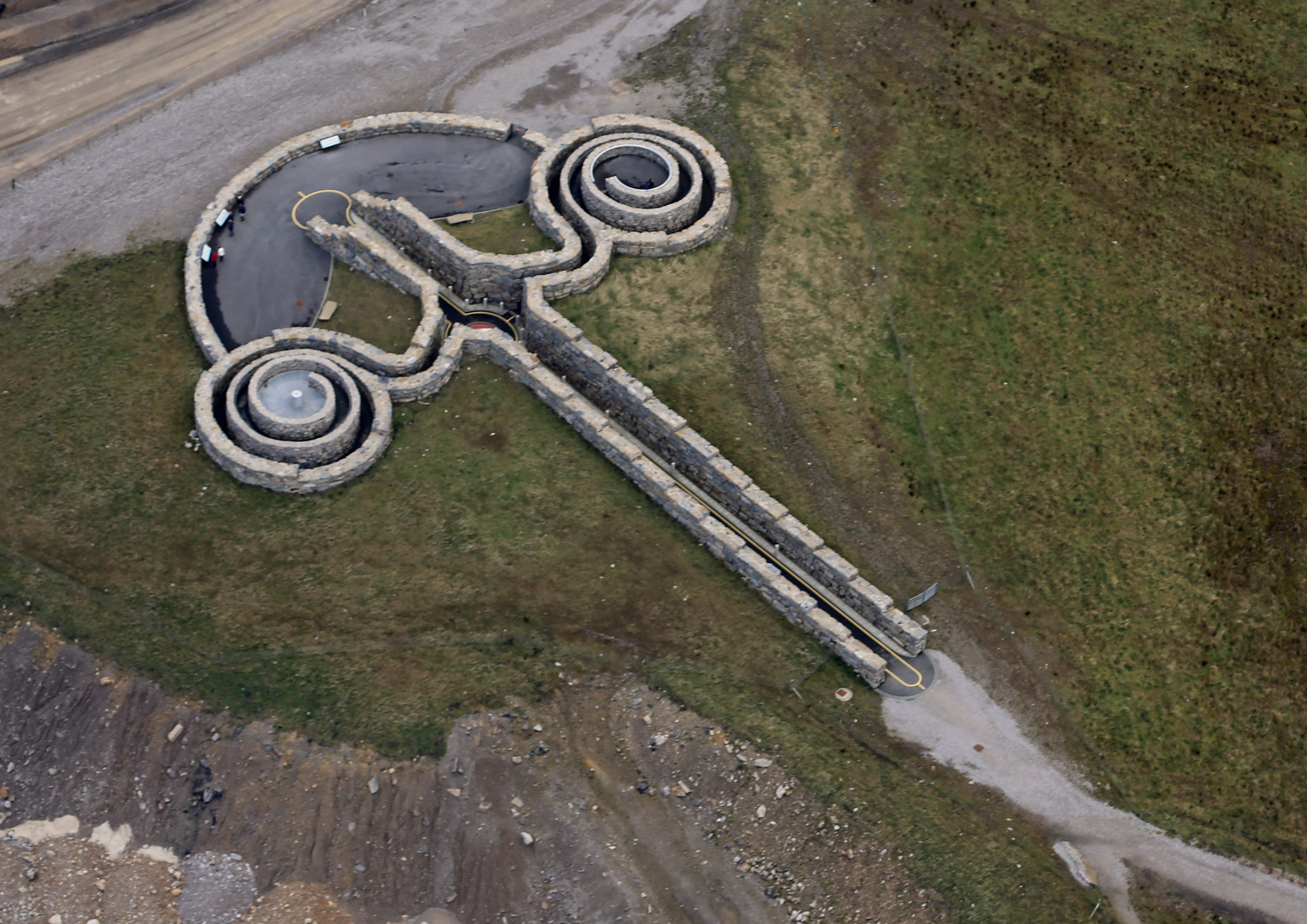
Andy Goldsworthy, Charles Jencks, Anthony Gormley and Andrew Sabin have all changed the way we look at the world, thanks to their vision and landscape-changing sculpture on a monumental scale. Whether we look at the huge tree trunks incorporated into dry-stone walls that Goldsworthy created at the Yorkshire Sculpture Park, the ‘Goddess of the North’, into which Jencks transformed the debris of Shotton surface mine in Northumberland, the ‘Angel of the North’ that Gormley raised upon on a hill near Gateshead or ‘Coldstones Cut’, Sabin’s sculptural symbol overlooking a Nidderdale limestone quarry, we cannot fail to be moved. There is something elemental about the work of these men, which returns us to a land of ancient myth and to stories told around fires from generation to generation; their impact upon our psyche is immeasurable, though we may try to quantify it. We are thrust deep into the earth, forced to look upon the wild ocean’s swelling rages, inspired to peer out from our little world into the universe, led to contemplate the natural processes of time and conjured into the mysteries of legends that have haunted our race over millennia.
I visited ‘Coldstones Cut’ yesterday, on a clear, cold and brutally windy day. I followed the footsteps of the (already!) more than forty thousand visitors that the Sabin sculpture has attracted, although it was completed only two and a half years ago; practically speaking, it is the viewing platform for a stone quarry otherwise visible only from the air, so skilfully has it been hidden in the Pennine landscape. As I took advantage of the chance to view the magnificently clear 360-degree landscape from the tips of the twin ramshorn curls that shake themselves at the sky, I could understand the artist’s presentation of an internal ‘street’ (complete with bollards, yellow lines and humped roundabout) to demonstrate the purpose to which the quarry’s materials are put and, much more beguiling to me, draw my own conclusions about a shape which for me evokes male and female organs and the myths of fertility gods and goddesses. How imaginative the minds which first conceived of this project! How lucky for all of us that there were others to plan and argue for its completion! How monumental the task to bring such a sculptural idea into being!
Here we are, in the 21st Century, still desperately in need of the same sense of purpose as those who, in the far-off lands of our past, cut horses into hills and drew wild beasts on walls of caves. We are one humanity, living with the creative urge of our ancestors and looking for the same answers as they. We may carve, build, draw, paint… or write, but our need is the same: to place ourselves somewhere and to make sense of why we are here.
Thank you, Andrew Sabin and the many people it took to deliver this wonderful artwork to us. It is a living, life-affirming and awe-inspiring emblem of stark, brutal beauty and significance.
Tricked into hope?
 I know that the weather is unseasonably mild at the moment. Even the honey-bees have been flying, now that the light is changing and there are glimpses of sun; nor are they without hope of pollen, if not much nectar, as the gorse is flowering here, primulas are out and the snowdrops are swelling into white droplets of beauty amongst the new spears of grass. Three great skeins of geese flew over this morning, heading north-west in honking trails, suggestive of a spring to come. And, although the mud is still with us, the last few fine days have caused the worst of the surface water to drain away.
Yet the weather forecast says that it will get colder towards the end of the week, when we’ll probably feel that we’re in the grip of winter again. I know from bitter experience that it’s possible to be deluded by false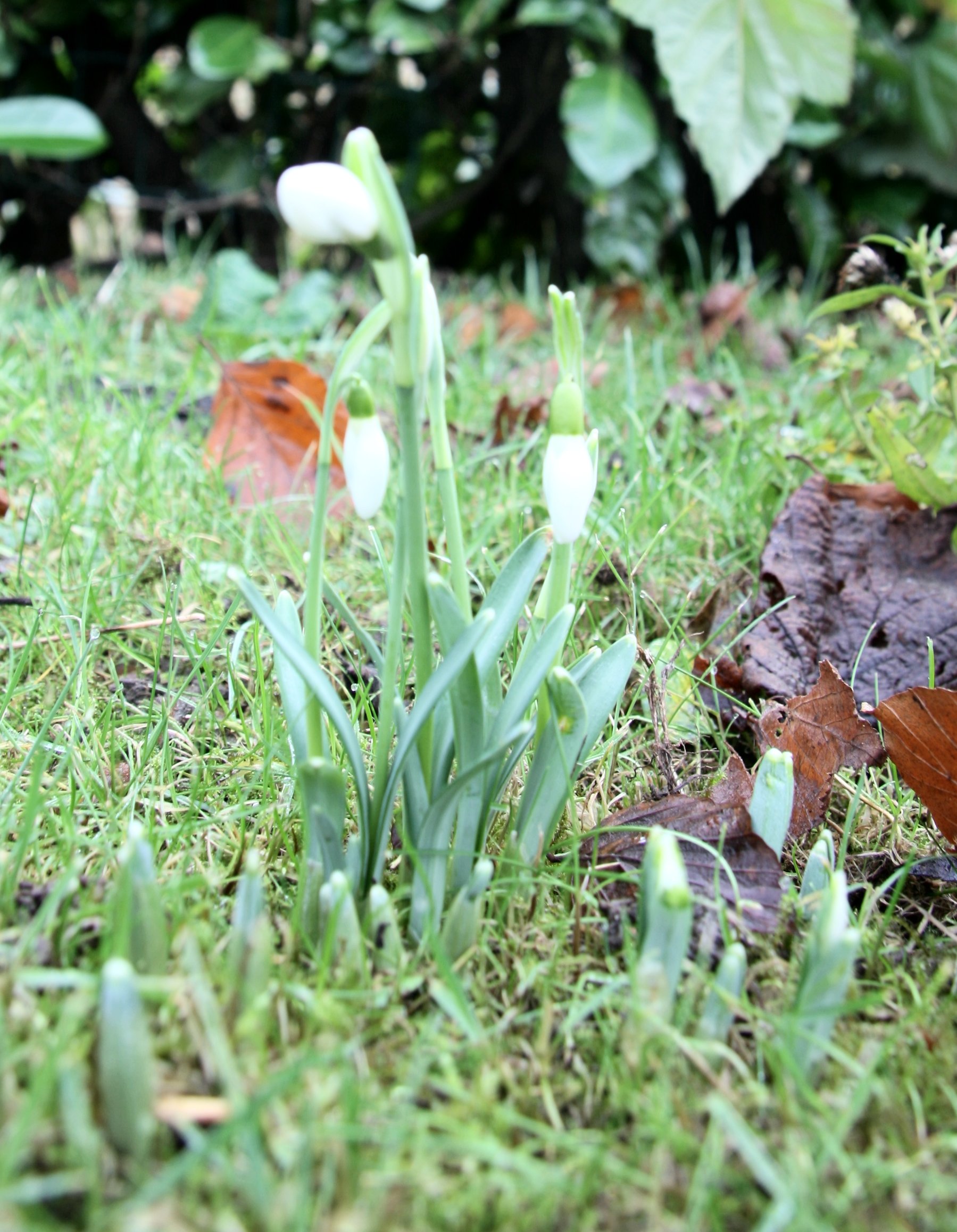 hopes of an early spring; I fear that the primulas, snowdrops and geese are all beguiled by the writer of the natural world, who has penned a false conclusion to a story of darkness and destruction, tricking them into feeling that all is well, whilst the villainous winter has another few chapters of unexpected violence. We have still to get through February, which is, statistically speaking, the coldest month, and the one I always dread the most; good month for murders, February!
We take heart, however, that goodness will prevail and we search among the winter words for clues that the forces of warmth and light are gathering. The birch-tops are already turning their beautiful smoky purple as their buds swell and it will soon be January 21st, when the darkest two months of the year will be past.
Spalding: a setting for ‘In the Family’, but more to it than that…

The Pied Calf, in Spalding’s Sheep Market
When I returned to Spalding recently for a signing session at Bookmark, I was struck by the beauty of this old town, the layout of which has remained essentially unchanged since the eighteenth century. Because it was a market town to which livestock were driven for auction – there were various market-places, such as Hall Place and what is still called the Sheep Market – the approach roads were made broad and straight at a time when streets in other towns were narrow and winding. The River Welland also makes a significant contribution to its character. Deep and full, with steep banks that have been fortified in places, within living memory it carried ships to the town from the Lincolnshire coast. I myself can remember the grain boats that were still plying their trade between Fosdyke and Birch’s, the cattle cake merchants in the High Street, when I was a primary school child.
While I was growing up in Spalding, however, I was pretty impervious to its charms. I was impatient to leave what seemed to me to be an intellectual backwat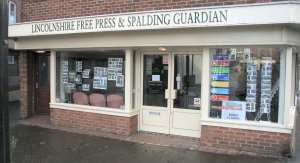 er where sugar beet and tulips were the main topics of conversation, the Young Farmers’ Club dominated social events and the local newspaper – the Spalding Guardian – was full of photographs of girls who had been a few years ahead of me at school, now smiling and swathed in Nottingham lace, marriage being the traditional rite of passage of a farmer’s wife. This was not the life for me. I sought the wider horizons that I believed a university education could give me.
Therefore it was with a certain sense of irony that I set the DI Yates novels in Spalding. I acknowledge now that Spalding gave my young self many more gifts than I could appreciate at the time: a sense of community, the genuine interest that professionals – teachers, clergymen, doctors – showed in helping me to fulfil my ambitions, a safe environment where my friends and I could wander freely with no adults present. Now, almost unexpectedly – I did not at first plan to give Tim Yates a home and a career in Spalding – I continue to benefit from its bounty. Perhaps it has always been a benign presence at the back of my subconscious. Perhaps now I also know that exploring those wider horizons was not necessarily as rewarding as what I had to start with.
For the muddy-minded!

A boot-sucking quagmire
It is now official that 2012 has been the wettest year in my part of the world since records began (and in most other parts of England – it is apparently only because Scotland and Northern Ireland have been drier that this dubious distinction has not been earned by the UK as a whole). As I look back on it, I remember it less as a year of rain than a year of mud: mud squelching underfoot every day on the dog walk; the banks of streams reduced to treacherous muddy jellies after continually being breached by waters in spate; mud topped by thick blankets of leaves plastered together like papier mâché, creating involuntary ski runs down the hillside for the unwary; mud-caked wellies, mud-spattered trousers and trails of mud every day on the kitchen floor as boots and paws traverse it; even mud on my handbag once, as I carelessly rested it in the footwell, having already clambered into the car with mud on my boots. Mud, mud, mud.
I’m always on the look-out for new experiences and situations to write about, but, until yesterday, mud seemed an unpromising material for a crime-writer to work with. Bodies are often hidden under snow, lie obscured by drifts of crisp chestnut-coloured leaves or are tossed into miraculously-dry ravines to dry for years so that they become mummified. But mud? Only a manic or very foolish murderer would try to dig in sodden mud to conceal a body: there would be tell-tale boot-prints everywhere; the hole would keep on filling with water; the whole business would be a muddle!
Then, yesterday, as I was toiling back up the hill, my feet slipping and sliding on a path made smooth by running water and wading through patches of boot-sucking quagmire, my heart leapt as the grinning visage of a skull confronted me. It was re-emerging from the mud, its head turned towards me, the teeth grimacing, the backbones arching clear of the water. It took me a moment to realise that it had belonged to a sheep, presumably one that had got caught in the blackthorn hedge last summer or even the summer before that, and died.
So mud could hold copy for a crime-writer, because inexorably, over time, it might yield up its grisly secrets.
 Christina James, crime novelist