

When fear overpowers reason…
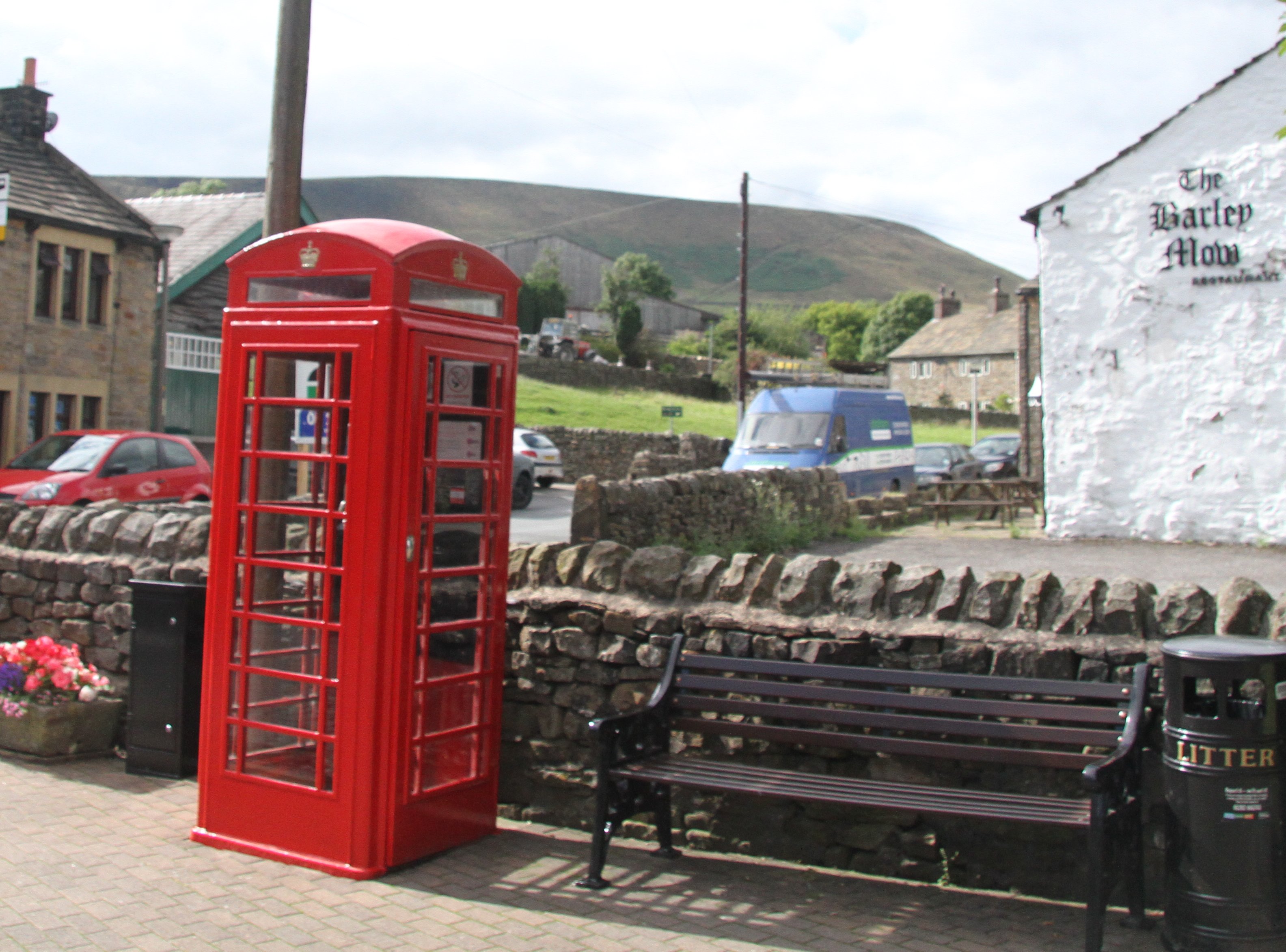
Pendle Hill, from the village of Barley
A week ago today I took the day off and went with my husband to meet friends in order to walk up Pendle Hill in Lancashire. I’ve been meaning to write about it ever since and have finally been spurred to do so by a book review I’ve just read – of which more shortly. I’d never been to this part of Lancashire before and had no idea of how beautiful it is.
Pendle Hill, which is perhaps best accessed via the picturesque village of Barley, is well worth the steep climb that it demands of those intent on reaching the top. It is a windswept plateau unprotected against the elements, even on a fine summer’s day (though a stone circle, grouse-butt style, has been erected as a kind of refuge); once you have arrived at the summit, it is possible to see much of the Lake District, the Yorkshire Dales (including the Three Peaks), Derbyshire’s High Peak, North Wales and, on a very clear day, so I’m told, the Isle of Man. The 360˚ view is truly spectacular.
Aside from the wonderful panorama of Pendle Hill, the area is famous as the home of the defendants in the Pendle Witch Trial, in 1612. Twenty people from the Pendle district, sixteen of them women, were tried at Lancaster Assizes for witchcraft. The crimes that they were accused of committing were diverse, varying from murder by witchcraft to ‘bewitching’ people or animals, usually by causing them to fall sick or die. Some of them were sentenced to death; others had to stand in the pillory in the markets of Clitheroe, Padiham, Colne and Lancaster.
Their stories make sobering reading. Those indicted of witchcraft were usually, but not always, old women. One of the most renowned of the Pendle witches was Ann Whittle, alias ‘Chattox’, who lived in the Forest of Pendle. She was indicted on several counts of sorcery and admitted (probably under duress) that some fourteen or fifteen years before her arrest she had sold her soul to the devil. Her daughter was also accused of witchcraft. The nineteenth-century chroniclers of the witches conclude their account of her story as follows: “… no longer anxious about her own life, she acknowledged her guilt, but humbly prayed the judges to be merciful to her daughter, Anne Redferne; but her prayer was in vain.”
The roots of the Lancashire Witch Trials were political: they formed part of the Protestant response to the Counter-Reformation that reached its peak in this country during James I’s reign. More locally, they played on much older superstitions that had survived in rural societies, possibly from pre-Christian times.
What I didn’t know when I visited Pendle Hill was that there was a Lincolnshire equivalent to the Pendle Witches. Two sisters, Margaret and Philippa Flower, were hanged for witchcraft in Lincoln in 1619. They were therefore the exact contemporaries of the Lancashire witches. Their story is told in Witches: a tale of sorcery, scandal and seduction, by Tracy Borman, a newly-published book which was reviewed in The Sunday Times on 11th August and which I shall certainly buy and read. Yet more interesting, from my perspective, is that the Flower sisters were employed as maidservants at Belvoir Castle by the Earl of Rutland and were accused of bewitching his children, one of whom died. Belvoir Castle and Burghley House were the two great houses of the area in which I grew up and I visited them several times during my childhood. I also knew Lincoln well. The present prison was built in the late nineteenth century, in gothic style, and before that prisoners were held in the eighteenth century gaol at Lincoln Castle; the Flower sisters were probably locked in the Castle dungeons. Public hangings took place above the upper town, from the north-east tower, until 1868. (My stepfather’s mother’s family kept a theatrical boarding house in Lincoln and she was a small child there, almost, though not quite, within living memory of the hangings: she died in the 1980s, when she was well into her nineties. She remembered tales of the scene, with cheers and jeers from the watching crowd below.) Taking them as a yardstick of how little progress civilisation had made in the intervening three centuries perhaps makes it less surprising, if no less shocking, that women were being put to death for witchcraft only four hundred years ago. Even more shamefully, old women have been persecuted simply for being old and misshapen during my own lifetime. When I was a primary school child, there was a row of tumbledown cottages that I had to walk past every day. Two of them were home to two ancient ladies with wispy white hair. One was almost bent double. She walked very slowly with a stick, her eyes usually fixed on the ground. She had warts on her face and the prognathous chin that very old ladies sometimes develop. It’s difficult now to say how old she might have been: as she’d spent most of her life without benefit of the National Health Service, she may not have been as aged as she looked. But I remember quite clearly that schoolboys used to shout ‘Witch!’ at her as they passed, if she happened to be standing outside. With hindsight, I shudder at the pain she must have felt, and that she had to suffer because she was old and ‘different’. It can be a pale reflection only, I know, but still it offers some insight into the anguish and terror that the Lancashire witches and Margaret and Philippa Flower had to endure before rough hands finally put them out of their misery.
Could such persecution happen today? In Western society, not in its literal form, perhaps, but Arthur Miller’s inspired choice of the Salem Witch Trials in The Crucible to illustrate Senator McCarthy’s irrational pursuit of communists and the Cleveland child abuse investigations both illustrate that modern parallels still exist. Old women may no longer be the prime targets, but we still harbour primitive fears of people who are different, and, motivated by fear, are still capable of turning upon them savagely.

The Pendle Inn sign, Barley
A merciless killer…

A half-tunnel of hedgerow shades the path from the sun; new bramble tentacles rear up and across the way, reaching for light, their tips still soft, but their stems already clutching at clothing; rabbits are nervous tics at the edge of vision, ready to bolt. This is a lonely, little-used link between roads, though at one end, in the undergrowth under the hazels, illicit, smutty relationships are consummated and discarded with their condoms; the entrance by the field gate, where cars can pull in, is a drift of fast food bags, cartons and fly-tipped debris. Ah, the beauty of rural England!
It is, in fact, part of a favourite walk for us and, especially, the dog, since pheasant and partridge are here in numbers; he will hold a point for over half an hour, which would, were we shooters, make a twelve bore superfluous – a butterfly net would make better sport. As I climb over the stile into the field, where a small herd of bonny brown cows and calves grazes the bank, I encounter a neat heap of dark feathers. The Python team would call this a late blackbird, too late in its take-off to escape the trademark kill of the sparrowhawk. Foxes and cats dispatch their prey untidily, scattering feathers far and wide and often leaving other debris as well. The sparrowhawk, by contrast, is the most thrifty and purposeful of murderers. He calculates. He acts with intent, each action precise and pre-meditated. He uses the terrain, hedges being particularly appropriate for his silent up-and-over surprise attack. Small birds may just flit into the dense hedgerow in time, but his yellow-rimmed eyes are burning with bloodlust and his whole being utters supremacy. He extracts nourishment gram by methodical gram from his hapless quarry, gorging on blood, flesh and bone until there is nothing left except that pathetic heap of feathers, dropped straight down from the branch on which he sits as he feasts.
Imagine that you are the sparrow or the blackbird, caught in those dread talons even as you realise the danger, so swift is the arrowed form. At least your exit is quick.
Just who is mad round here?
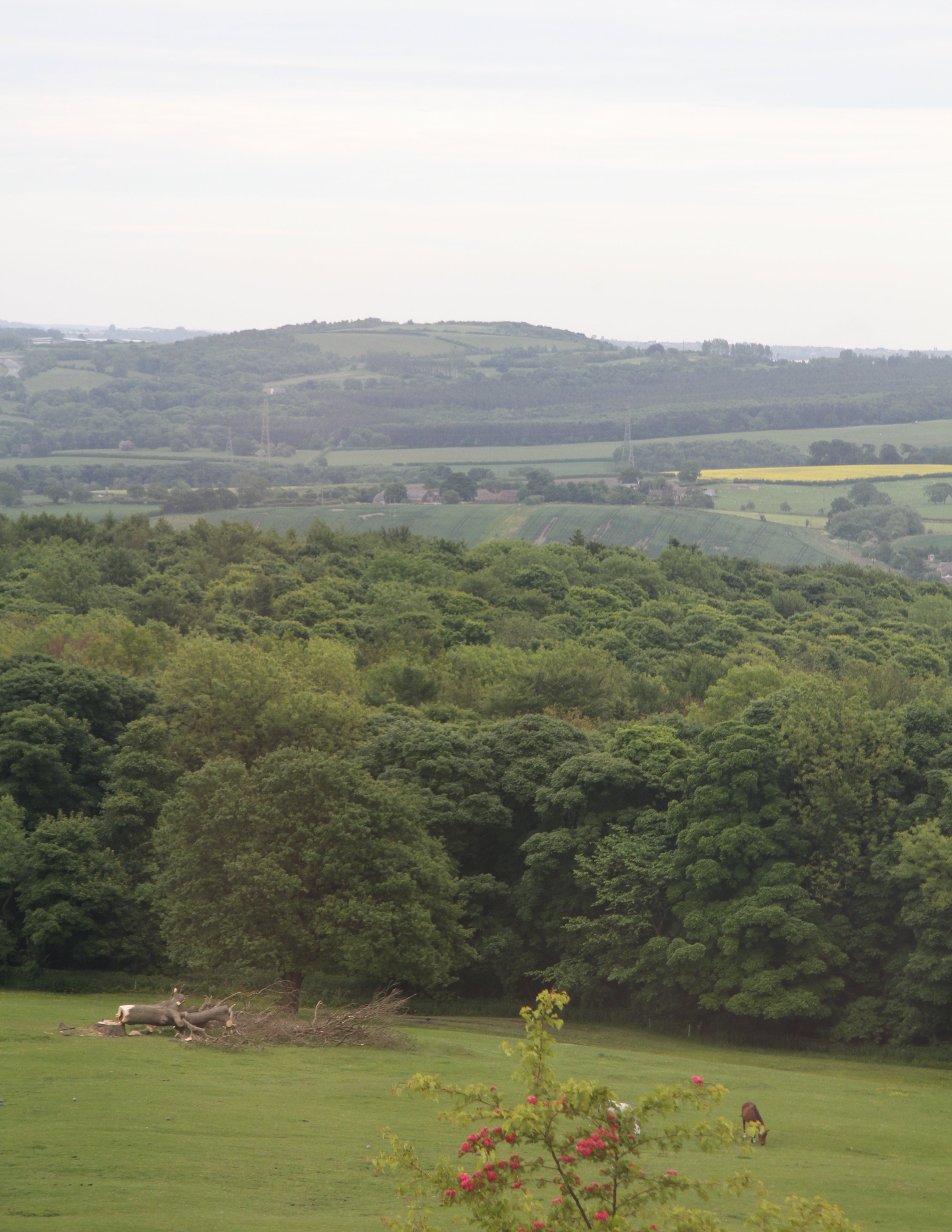
Early summer morning from the bedroom window
I was awoken in the early hours, just as dawn was breaking, by my husband – trying to punch me in the face! No, I’m not a battered wife: he’s just a very vivid dreamer. On occasions, he has dreamt that he’s a wolf, or is being pursued through the streets with a crowd following him. This time, apparently, he was trying to ward off a street seller who was persuading him forcibly to buy a fizzy drink. I take heart that my strictures about junk food have found root in his subconscious!
It’s surprising that we get any sleep at all at this time of year, what with the dog demanding to be let out at all hours so that he can eat grass or bark at hedgehogs and the cat, who is small but fierce, keening like a banshee below the bedroom window to defend his territory from the large and thuggish tom-cat next door. This morning, as my husband and I lay awake in the dawn listening to these various noises, we heard the (temporarily) local cuckoo.
“There’s the cuckoo,” he said, “unless it’s Fred again.”
I was trying to get back to sleep, but my ears pricked up.
“What do you mean, unless it’s Fred again?”
“Didn’t I tell you? Fred impersonates birds really well. He has a whole range in his repertoire. He does a really good cuckoo. He said that a cuckoo came right up to his house the other day, before it realised that it was only a human and flew off again.”
I considered. I’ve been writing enthusiastically about hearing the cuckoos for weeks now. Since Fred has seen at least one of them, and it’s unlikely that in fact it was he out there before 5 a.m. today, it can’t always have been his impersonations that I’ve heard. Nevertheless, if you should happen to look over my recent cuckoo posts again, I feel duty bound to warn you that all the cuckoo noises I’ve recorded may not have emanated from cuckoos. Instead, a burly Yorkshireman named Fred may have been responsible.
Nothing else in my day today matched its surreal beginning! Perhaps I’m going cuckoo!
The murmuring of innumerable bees…
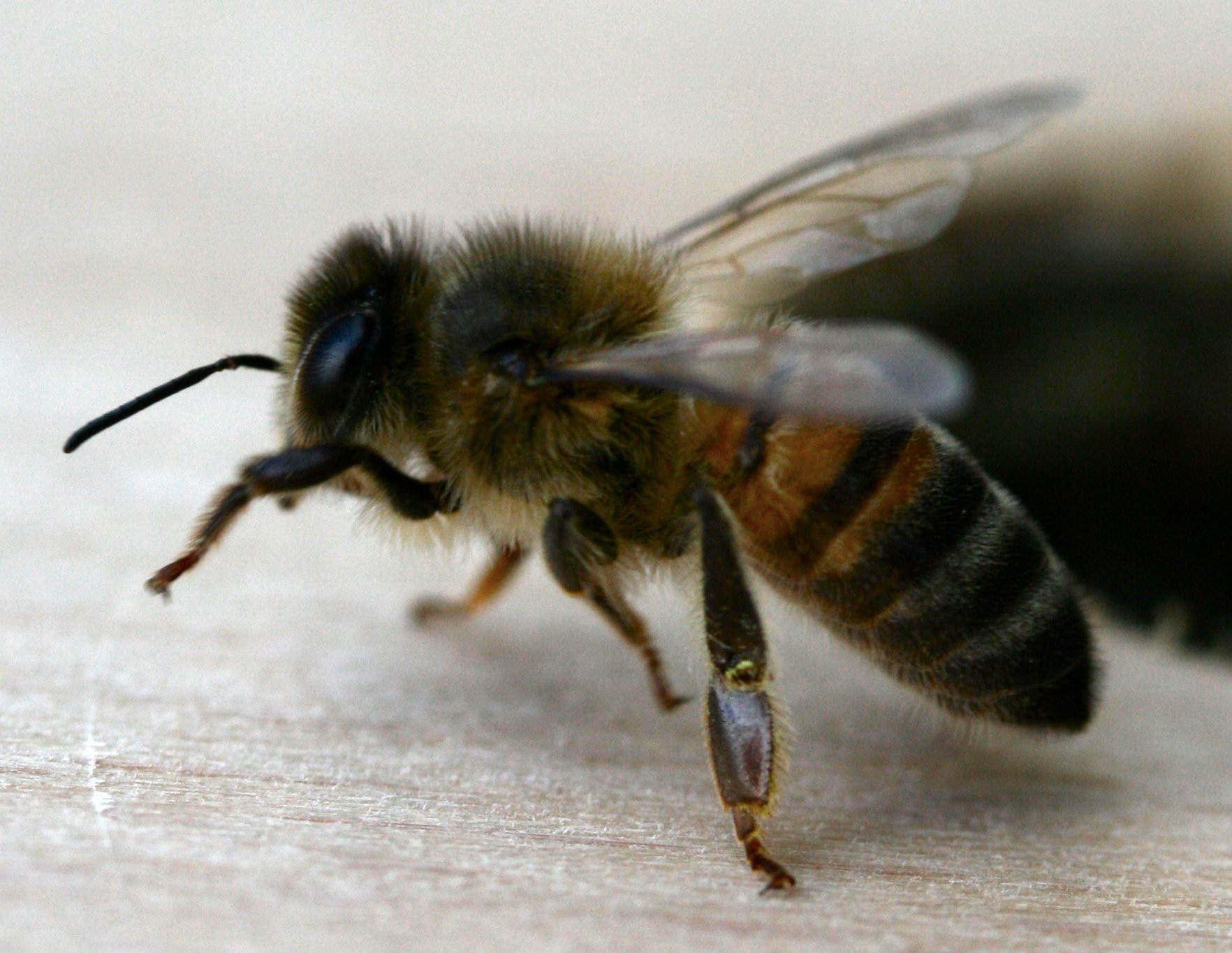
Yesterday I went on a pilgrimage to Ripon with my husband, in quest of bees. We (I say ‘we’ – he is the bee-keeper, the one who has acquired the considerable amount of scientific knowledge needed and has the requisite patience; I am the bee-keeper’s assistant, so can get by on more limited quantities of both and shirk my duties if I feel like it.) started keeping bees a number of years ago, with reasonable success. However, the terrible winter and very wet spring here took their toll and, like many beekeepers, we suffered losses.
Because, according to the press, some 80% of the nation’s bee colonies perished this winter, ‘supply and demand’ now dictates that the cost of a ‘nucleus’ colony is very high (up to £250) and it’s definitely a sellers’ market. Hobby beekeeping isn’t cheap anyway, with hives, frames and beekeeping paraphernalia. The equipment is, to me, like something designed by Heath Robinson or Rube Goldberg and I’m not surprised it’s pricey, given the frankly bizarre design of smokers, heated honey-capping knives, centrifugal honey extraction drums and solar wax melters; the few existing suppliers who have cornered the market definitely call the shots. Anyone thinking of starting up should throw those rose-tinted, back-to-nature, self-sufficiency specs away and go for crystal clear lenses. Then there are the bees themselves: they aren’t like kittens; they don’t come out to melt you with their charms when you are trying to decide whether to offer them a home and they don’t take kindly to being shipped by car and bumped around, before being hoiked out of one temporary home and bundled into another. Though some strains of bee, such as the Italian ‘ligustica’, are more gentle, bees tend to be ‘mongrels’ with very variable temperaments; sometimes a queen bee has genes with an attitude problem. So, though you might dream of summer days and drowsing in the garden sunshine, imagining yourself transported to the Mediterranean by the murmuring of the apiarian equivalent of the Italian soldiers in Captain Corelli’s Mandolin, the reality can be more like taking on the aliens in Independence Day or WWII kamikaze pilots, hell-bent on taking you out even at the cost of their own lives. Think high-pitched incoming whine and be prepared to take cover. Unhappy bees do not subscribe to the concept that assault and battery is a crime. They just do it.
However, for those of us who do love bees and have become used to their temperamental ways and needs, caution is the watchword, and we pulled the plug on the travelling box and retreated quickly to a very safe distance. They’ve settled in already. Apparently, they get their bearings by flying backwards the first time that they leave the hive, to note where they are as they look back on it. They are remarkable creatures: they’re incomplete individually, but together comprise what is known as a superorganism. Each worker has her own task to perform and this changes over time as she ages, becoming finally a nectar- and pollen-gathering ‘forager’. The male ‘drones’ have their moment of glory, flying with the virgin queen to enable her to mate with several of them, before dying a gloriously sexy death (genitalia ripped right out of them!), or never doing anything until they are kicked out by the workers in the autumn so that they don’t deplete precious food reserves over the winter. I’m not a feminist by any means, but I can think of a few men whose families would benefit from similar summary treatment!
Because of the way in which they organise their lives and collaborate, bees have cropped up in art and literature from earliest times. Ancient Egyptian hieroglyphics feature bees; the early Greek writers celebrated them in song and verse. In more recent times, Alexandra Kollontai used the bee colony as a metaphor for life and love in Russia in the aftermath of the 1917 revolution, in her masterpiece Love of Worker Bees.
Bees are a joyful trouble. If they’re successful, they swarm, and the bee-keeper, in hot pursuit, has to shin up trees or plunge into thickets, hanging on precariously with one hand as he tries to trap them in a traditional straw ‘skep’ or a cardboard box. (You notice I say ‘he’ – this is emphatically not this beekeeper’s assistant’s job – though I know that there are many very skilled female beekeepers.) They suffer from a parasite called varroa mite, on which war has to be waged all the time if the colony is to flourish. Bees eat unconscionable quantities of sugar syrup during the autumn and often yield only a few small jars of honey per hive in return, but the benefits of their wider gifts to agriculture and the environment are incalculably great.
And I have to admit, in spite of all those expenses and troubles, now that the garden is once again a-buzz with murmuring bees, it feels as if the summer has begun in earnest at last.
Cuculus canorus, a welcome criminal…

This spring continues to be extraordinary. Yesterday evening, I was out walking the dog and had almost reached home again when I heard my first cuckoo of the year. In farming communities, it’s traditional to note down when this happens, so, to be precise, the time was 19.10 on May 30th 2013. I heard it again in the early hours of this morning, just as the dawn was breaking. (In the one day left of May, ‘he sings all day’!) Every year cuckoos come to call around the village, but this must be my latest first hearing in all the twenty years of my residence. I wonder if cuckoos are also behindhand because of the late spring and whether their June ‘changed tune’ (with an extra ‘cuk’) will be delayed until July?
Cuckoos are fascinating. The name itself, so precise in its onomatopoeic evocation of the call, is exotic. They are beautiful arboreal birds, shy of humans: I’ve seen them on only a few occasions, years apart. They’re pale grey in colour, with a gorgeous dark barred pale underbelly, and have a hawk-like flight and perching posture. What captured my imagination as a primary school child and still beguiles me is their anti-social behaviour. They are the vandals and parasites of the bird world, each one performing its own microcosmic act of ethnic cleansing. The females plant a single egg in the nest of a (usually) much smaller bird, such as a dunnock or a pipit; then, when the chick hatches, it dominates proceedings, diverting with a huge and gaping maw the host parents’ attention from their own offspring before turfing the latter, eggs and/or nestlings, out of the nest, thereby guaranteeing itself a monopoly on the food supply. What is strange is that the foster parents don’t seem to notice, instead running themselves ragged to feed a chick that soon grows to be much bigger than they are.
‘A cuckoo in the nest’ was an expression that I heard a lot when I was a child. It was used to describe someone – often male – whose self-indulgent behaviour and habits were spoiling things for the rest of the family or community: a heavy drinker or a work shirker, for example. It had various gradations of meaning: it was a bit like ‘fly in the ointment’, only more so; it also had overtones of the now over-used ‘the elephant in the room’ – although the latter saying implies that no-one is prepared to mention whatever it is that the elephant represents, which is not typical of forthright Lincolnshire folk. ‘Cuckoo’ is slang (particularly in America) for ‘crazy’, hence the title of the book and film ‘One Flew Over the Cuckoo’s Nest’; but in Lincolnshire dialect, someone saying ‘You’re a cuckoo’ (as opposed to ‘You’re cuckoo’), was paying you the compliment of calling you witty, or was amused by something that you’d just said. (A variant of this was ‘You’re a caution’.)
So, are cuckoos lovable or not? I think that they remain a puzzle: an enigmatic variant of Nature that has got by without obeying the rules. Like people who live by their wits, they expend a great deal of energy on not paying their way: energy that could equally well be expended on working within society instead of preying on it. Instead, once they’ve deposited their eggs – each female lays up to twelve – they swan off (so to speak!) to tropical Africa, where they spend nine months sunning themselves, the ornithological equivalent of the idle rich. I realise that I’m straying into dangerously anthropomorphic territory here, but it strikes me that the cuckoo is the Raffles of the bird world.
Cuckoos are fast declining in number and I am the more excited, therefore, when I hear their call; they are so traditionally part of an English spring that I hope we don’t lose them.
Taraxacum, much maligned…

In my lifetime, dandelions seem to have been always despised. My father, a keen gardener who also kept an allotment, would survey his realm with gimlet eye and hoik out offending juveniles before they could take hold. My husband does the same. Although my friends and I, as children, presented bunches of wildflowers to our mothers, they never included dandelions. Later, my son was similarly selective. Playground wisdom used to say that touching a dandelion in bloom made you wet the bed – though picking them to blow away the ‘clocks’ later in the year was not deemed to have a similar effect. (It occurs to me now that the products of this latter activity must have sprung up afterwards to annoy my father.) We picked the daisies and buttercups that grew in profusion on the banks of the Coronation Channel that skirted Spalding, then an excitingly isolated place to play (mothers in those days worried neither about accidental drowning nor ‘stranger danger’), but not the dandelions. The only time that I took any interest in a dandelion was when someone told me it would make a good meal for my tortoise, but, accustomed as he was to a townie’s diet of chopped tomato and lettuce, he turned up his nose at it. Suspicion confirmed: dandelions were weeds, and useless.
As I said earlier this week, we’ve had a very strange spring. Some plants have flowered late, others early. Some seem to have flourished; others have struggled to survive. Dandelions are hardy plants – they keep on flowering for many months, their succession of new buds clinging close to the soil and evading even the mower’s blades; the tiniest portion of root becoming a new plant within days. A couple of years ago, I even saw one blooming a few days into the new year, its head poking through a dusting of snow. They are stubborn survivors. But this spring they haven’t needed to put up a fight to survive: instead, they have been having a ball! They must have relished all that snow and rain. They are popping up everywhere, their dark leaves glossy and luxuriant, their perfect heads glimmering like star-cut diamonds. I am reminded of the beautiful picture of a dandelion and hare in Kit Williams’ gorgeous puzzle book Masquerade, a botanically accurate depiction so lovingly executed that the artist must have valued the plant. One of the fields that the dog and I walk through daily is luminous gold, the dandelions so profuse that they might have been planted deliberately as a crop. (When he saw the glorious vision, he became puppyish with excitement and whirled round amongst the flowers, coming back to me with legs stained with their colour!) Their beauty is captivating, though I know their days are numbered: the farmer who owns the field will either cut them down with the grass or send in the cows to do the job.
Drinking in their splendour, I wondered how a farmer’s wife of two or three hundred years ago might have reacted to this sight. Dandelions first flower at the time of year that earlier generations dreaded as the notorious ‘hungry gap’, the period when all the fresh produce grown for the winter months was exhausted and the current year’s crop of vegetables had yet to mature. Diets became meagre and unbalanced; sometimes people suffered from hallucinations or showed other signs of malnutrition. I have no proof, but my guess is that such a woman would not have despised this fine display, nor turned her back upon it. I’ve just looked up ‘dandelion’ in my herbal, and discovered that the leaves can be used in salads, or cooked in soups and stews. The heads can be fried, or dried and then crushed as condiments. Dandelion wine has a powerful kick. Dandelion infusion makes a fine herbal tea. Dandelion roots, roasted and ground, can be used as a substitute for coffee, much like chicory roots. Dandelions are also reputed to have medicinal properties and, for generations, were used to cure or alleviate a wide range of ailments. I discover that the dandelion was only downgraded to the status of ‘weed’ at the end of the nineteenth century. Like the tortoise, we have turned into townies. Will the twenty-first century let the tide of fashion turn again and restore the reputation of the dandelion?
In the meantime, I’m going to enjoy the spectacle of their blooming profusion and look for a hare (quite common here) leaping over them.
Slaughtered before their time?
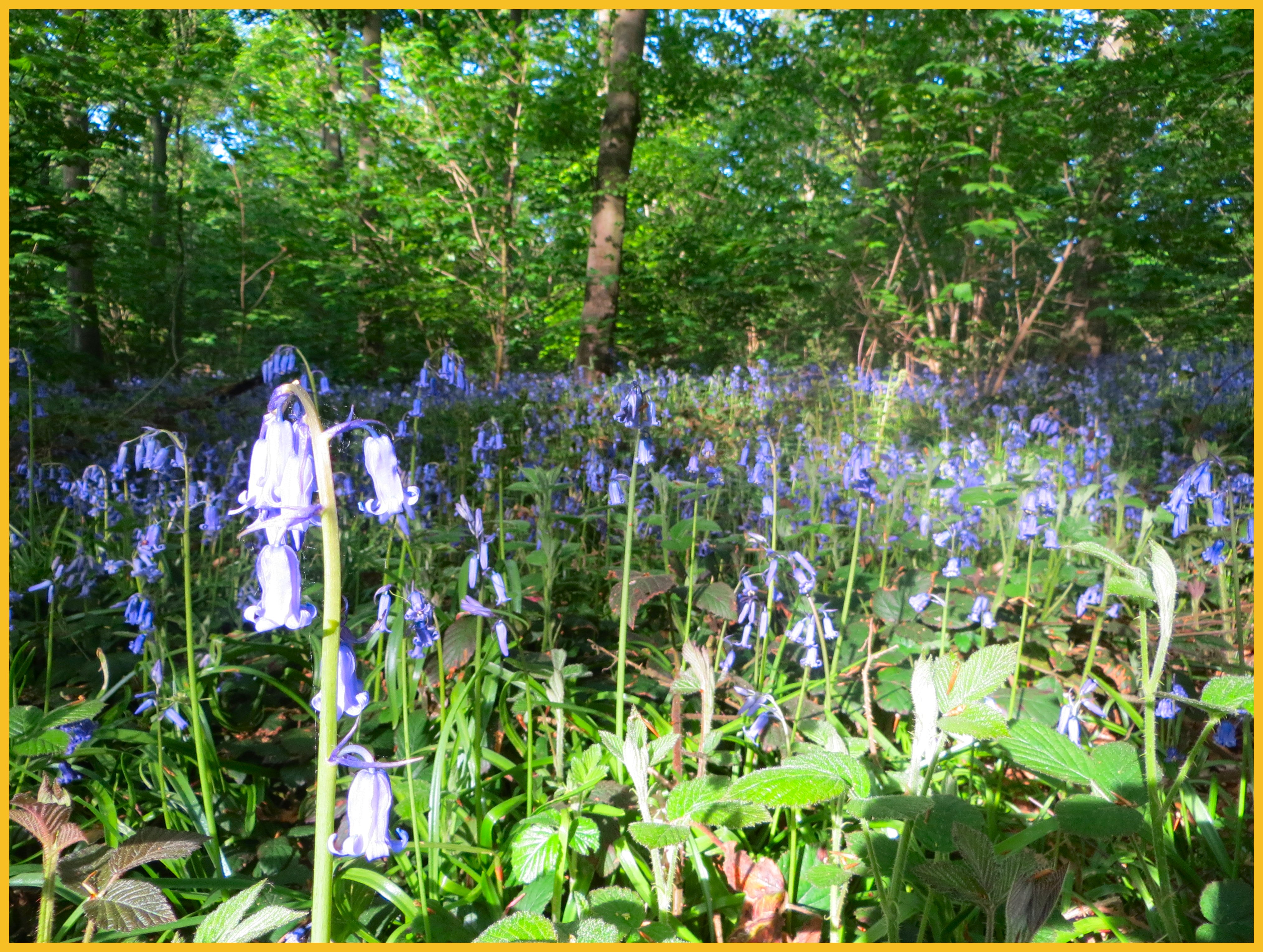
As I walked down in the woods today, there were no bears, but dark forces were threatening beauty, as they do every year at this time… but this May is different, for the beauty is still young.
The cold, snowy winter and even snowier March, following a brief spell of mild weather that fooled both the birds and the very early flowers, upset the order of the usual harbingers of spring, as many are late: the daffodils have collided with the tulips; flowering currant and cherry are blooming together. Perhaps ironically, the fruit trees are full of promise; up here in the hills, they often succumb to the devious daggers of frost, but their blossom has arrived so late that it has dodged the devastating chill. I’m anticipating a late summer and early autumn laden with bounty.
Anyway, back to the woods, where normality is not well: the bluebells, one of my favourite wild flowers, have been cautious, dithering in the cold and arriving at least two weeks later than usual. The trees, by contrast, are embracing the spring in a rush. Perhaps nurtured by the continuous snow and rain of the endless winter months, their green leaves are burgeoning unusually thickly and very fast for the time of year. The bluebells, in their huge swathes, have yet to reach perfection, that moment when the understorey is carpeted so richly with their violet-blue that all the trees appear to be floating in an indigo haze. This year, however, they will have to make haste if they are to work their customary mood magic, for the woodland canopy is fast closing over. It seems that they will be slaughtered before their time, starved of light and stifled. In most years, by mid-May, they are bedraggled by a month in flower, their loveliness fulfilled and their seeds set. But not this year.
The phases of woodland plant life are delicately juxtaposed, each species adapted to take advantage of the moment. But now the time is out of joint and there is nothing to be done to set it right.
The first corpses of spring?

The eyes say it…
Spring has come at last, having mothballed itself after a false start six weeks ago when, amazingly, the dwarf daffodils, which were already out, went into hibernation and then bloomed again after the snow had melted. The other narcissi have come late, but now they seem to be on fast-forward through their flowering; like child film-stars, their youth has been sucked straight into the adult world of make-up and seduction – and the bumblebees are falling for it. (Somewhat disturbingly, given the exceptionally long winter months that they may or may not have survived, the honey-bees have yet to appear in any numbers.)
The birds have started nesting late, but they’re now frenetically active. On the plum tree this morning, a great tit whose beak held an enormous (by bird standards) bale of sheep’s wool, waited patiently for his mate to do her nest-box honours. The sight prompted a timely reminder that the resident killer, having skulked inside since November, aside from brief forays to the soft ground behind the gas tank when it was made emphatically clear to him that ‘behind the sofa’ would not do as an alternative, is also on the stir. During the long winter months, he has amused himself by scratching at the wallpaper in the boiler-room that constitutes his principal residence (the shop-bought scratching-pad the only pristine article in there), picking at the piping on the sofa cushions when he thinks no-one is looking and terrorising the dog. (The dog weighs twenty-seven kilos and the cat less than two, so no especial outrage on behalf of the canine is necessary!)
Now sixteen, but neither arthritic nor showing any sign of lessening powers of co-ordination, the cat is at his cruellest in the spring. He is still able to climb to the top of the pergola, always home to two or three nests, and jump from it to the shed, where there is usually one more amongst the rambling roses. I cannot recall a spring when he has not brought at least one terrified chaffinch, blue-tit or blackbird into the house. Usually they are still alive and sometimes it is possible to free them – which makes his his eyes glow reddish-green with owner-hatred – but sadly they often die of fright. His repertoire of tactics is ingenious. I once entered our bedroom to find a cock house sparrow flying round, battering the walls in its frenzy to get out, while the cat crouched on the bed, waiting for it to tire. I concluded that he must have climbed out through the open window on to the outside sill and snatched it from there: a cat-burglar in reverse. He is not without moral sense and is well aware that birds are contraband creatures. He catches them furtively and tries to conceal his crime, whereas mice are slain with a fanfare and a flourish: he lays them out with ceremony upon the kitchen floor.
We’ve always kept cats. When we lived in Leeds, we had an elderly neighbour who used to phone me to tell me when she saw the then feline incumbent, whose name was Peachum, out stalking prey. If I rushed outside quickly enough, to the cat’s chagrin the bird sometimes escaped; but I’m sure that Peachum still managed to capture what he regarded as his rightful quota. As both a bird- and cat-lover, I am troubled by the ethics of this annual cull. In summers like last year’s, when spring was so early that some bird species raised three broods instead of two (we had a super-abundance of blackbirds), it might be possible to argue that the cat is just helping to maintain the balance of nature; our neighbourhood sparrowhawk, by the by, is responsible for far more small-bird deaths than any cat, having awe-inducing eye-sight, silence, stealth and speed.
I wonder whether this year the clutches will be larger, or smaller, as nature adjusts itself? I shall now do my best to restrain my otherwise charming resident killer. I shall encourage him to accept that baiting the dog provides a superior form of entertainment… if fewer corpses.
Snapshot of a diner in Barcelona…
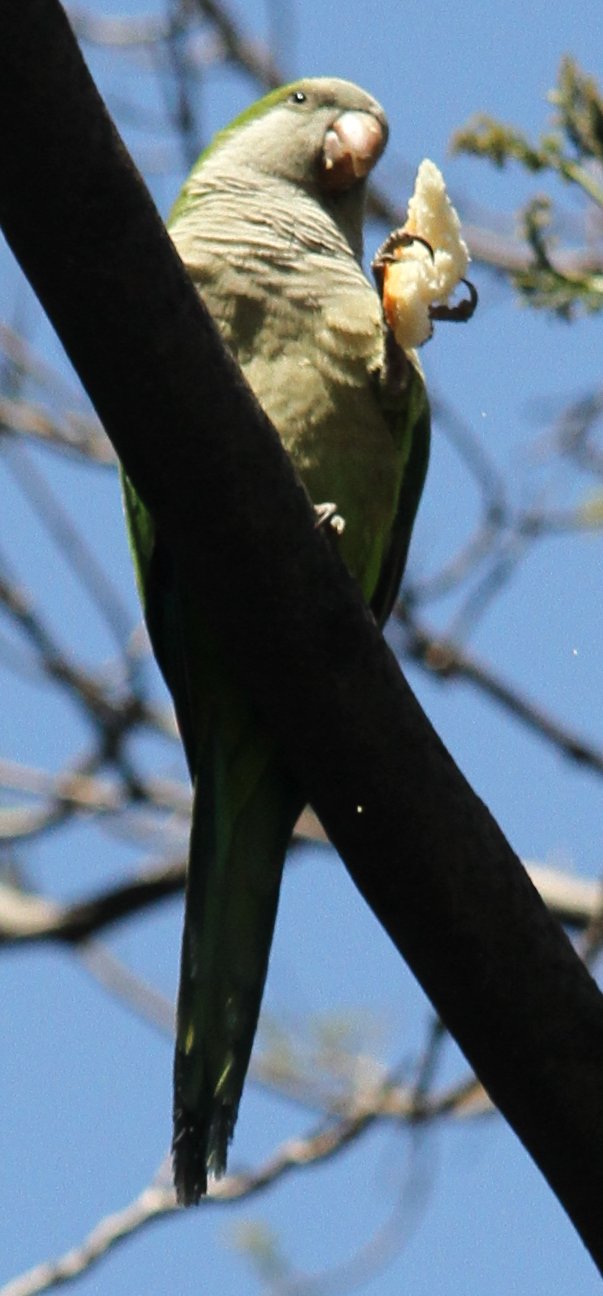
As someone who has written at some length about birds – the herons and curlews of Lincolnshire; the pheasants that go in fear of their lives during the winter months in the Pennine village in which I live – I’ve been very interested in the bird life of Barcelona. Most of the birds here are exactly what you would expect to find in a major city with lots of parks which is also a Mediterranean sea-port. I’ve seen gulls and feral pigeons, sparrows and ducks a-plenty; swifts swirling around the buildings: in other words, the same birds that I should encounter in similar habitats in England at appropriate times of year. I have, however, been amazed that the many palm trees of Barcelona are filled, not with the melodious song of the blackbird and song-thrush, but with the raucous cry of the parakeet. These piratical birds swoop screeching down upon the crusts and pizza-ends discarded by tourists and, despite their inferior size, give the pigeons a fairly vicious dusting down if they try to put up a fight. They’re nothing but semi-tropical thugs, really, but I can’t help feeling a sneaking admiration for them, even so. It’s not just that they live by their wits, but also because they do it in such a brazen way. I suppose that in one sense they have no option: gorgeous in luminous lime green, they can hardly make their livelihoods by stealth. There is something entertaining about the fact that they carry their finds up to a safe branch and, clutching the morsel in one foot, nibble delicately at it like over-dressed and picky diners on the terrasses beneath them.
Miry March in South Holland
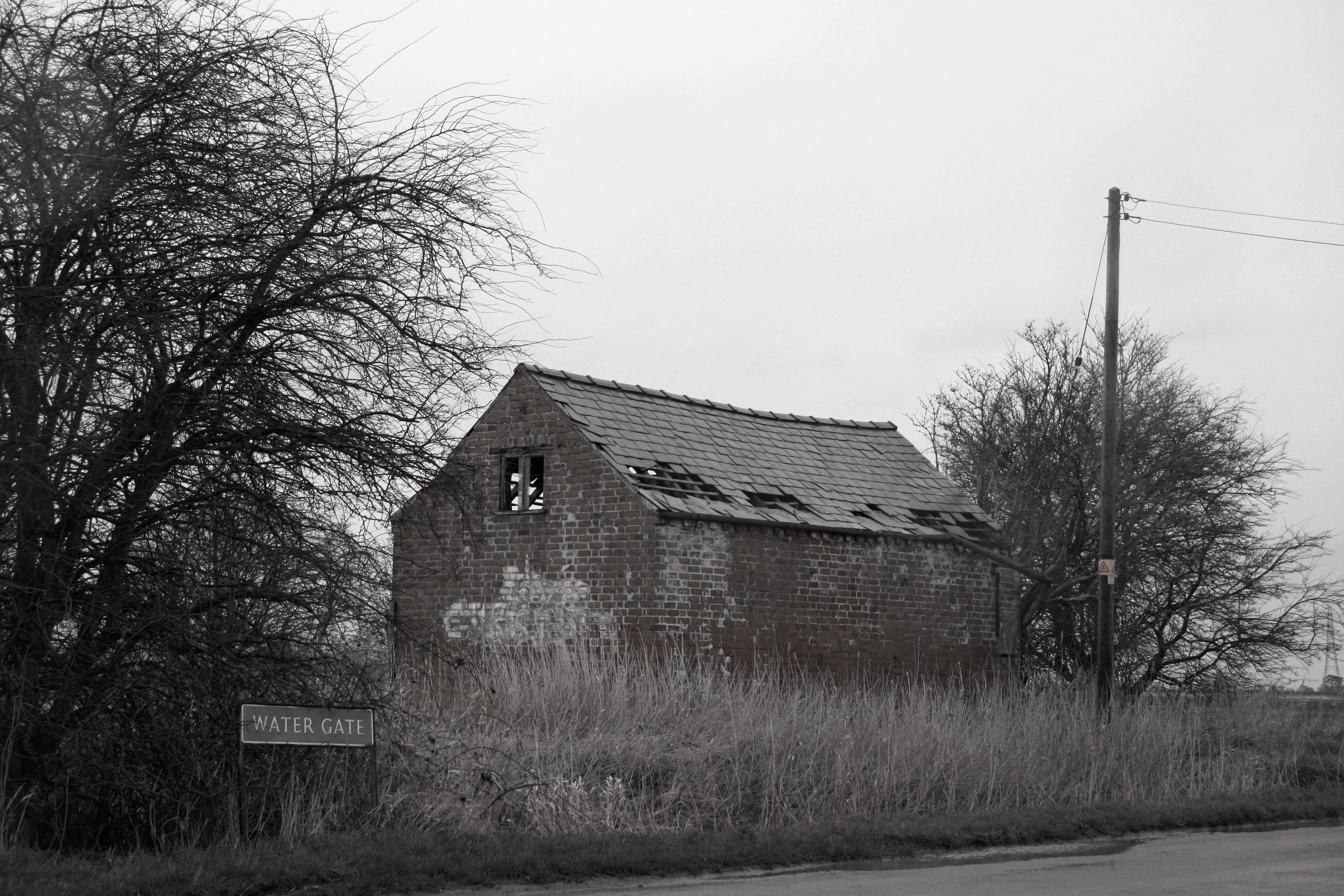
At Quadring Eaudyke the drains run, easing the water from the earth. Watergate and Rushy Drove sing their names of fen and farm to the listening land. Lincs Pumps and Pipelines are in business. Now muddy, mid-March Lincolnshire leans to the spring as tractors tread the acres, their mighty ploughs furling multi-shared furrows, bright with gleaming soil and screaming gulls following to feed, heads black with breeding splendour. Close to the dyke, a fancy pheasant fluffs a whirr of wings and ruffles up a creck-creck call to hens, subsides and pecks again.
Everywhere, home-made ‘Mud on road’ signs celebrate the gloriously spreading feast of mire, while ‘Leeks for sale’ promote the remaining winter crop, with a field half-plucked and batteries of trimmed, pale white and green vegetable bounty on boxes on the verge. The cabbages are past their best: sheep graze the leftovers of leaves and stalks or browse the dedicated crops of roots.
And now, against horizons of leaning spires of churches, metal frames of pylons and grey skies that don’t just threaten but pelt with slanting rain or driven snow, so fickle is the season, roll in the rippling tides of plastic sheeting spread on soil and seed to speed new growth.
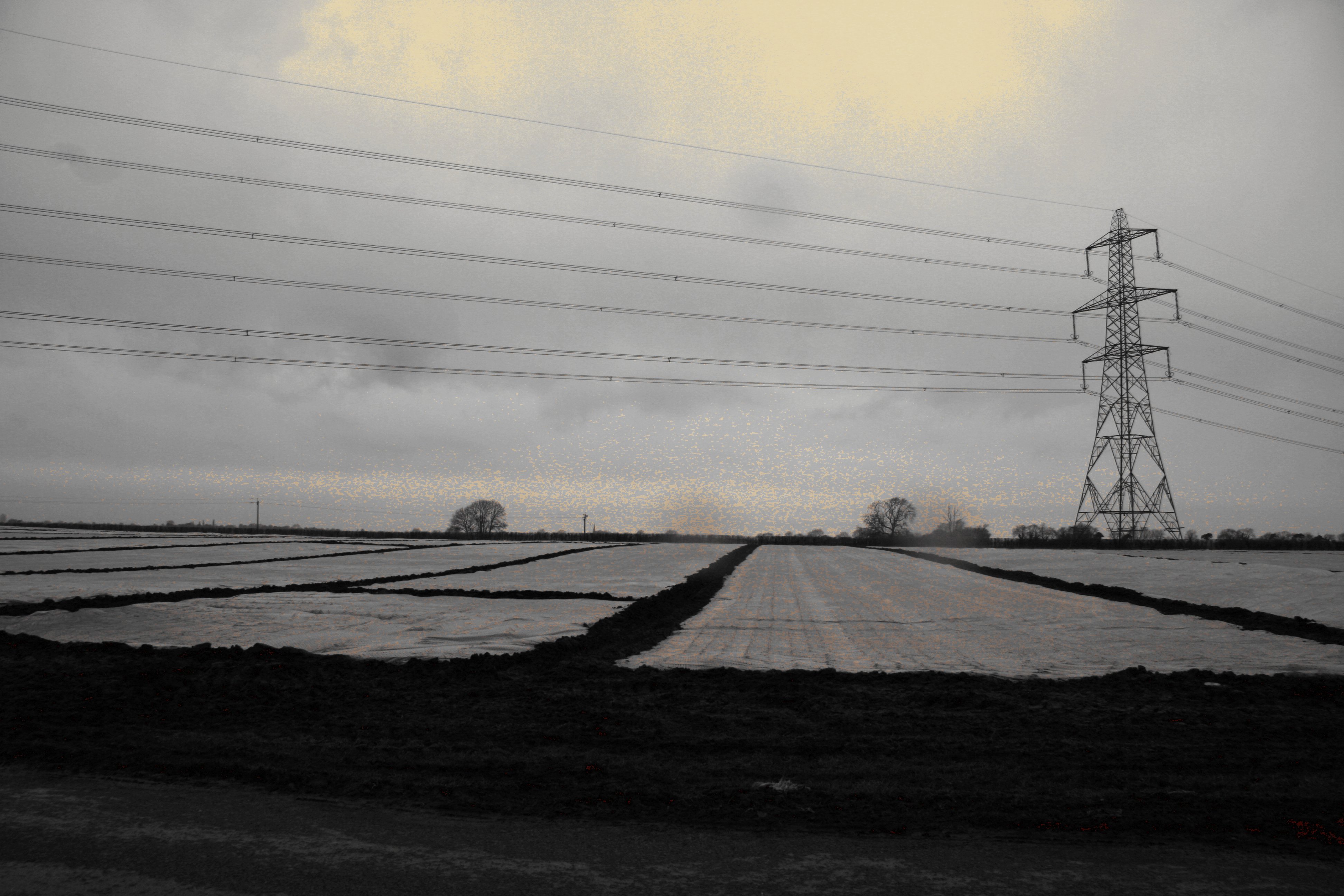
And further south, where Surfleet Seas End and Moulton Seas End mark where once the real tides washed ashore, down towards Peppermint Junction, vast swathes of Taylors Bulbs are already deep green and undulate in windy waves; glass houses feed the nation’s supermarkets and those abroad with tonnes of early daffs, with millions of blooms to follow from the open fields. It might be Holland, and is named so, the land reclaimed and drained by dykes twenty feet wide and plenty deep. Here the banks of smaller dykes, protected from cold North Sea winds, have daffodils and periwinkles full in flower, with snowdrops hanging on in drifts of white. Above them, weeping willows are bright yellow with swelling buds and pussy willow catkins grey with fur.
It is spring in the Fens, though the harshest of winter weather still beats in from the east, and the casual passing eye might miss the signs that tell people here that the dark season is done.

 Christina James, crime novelist