

Back to Barcelona – work again!
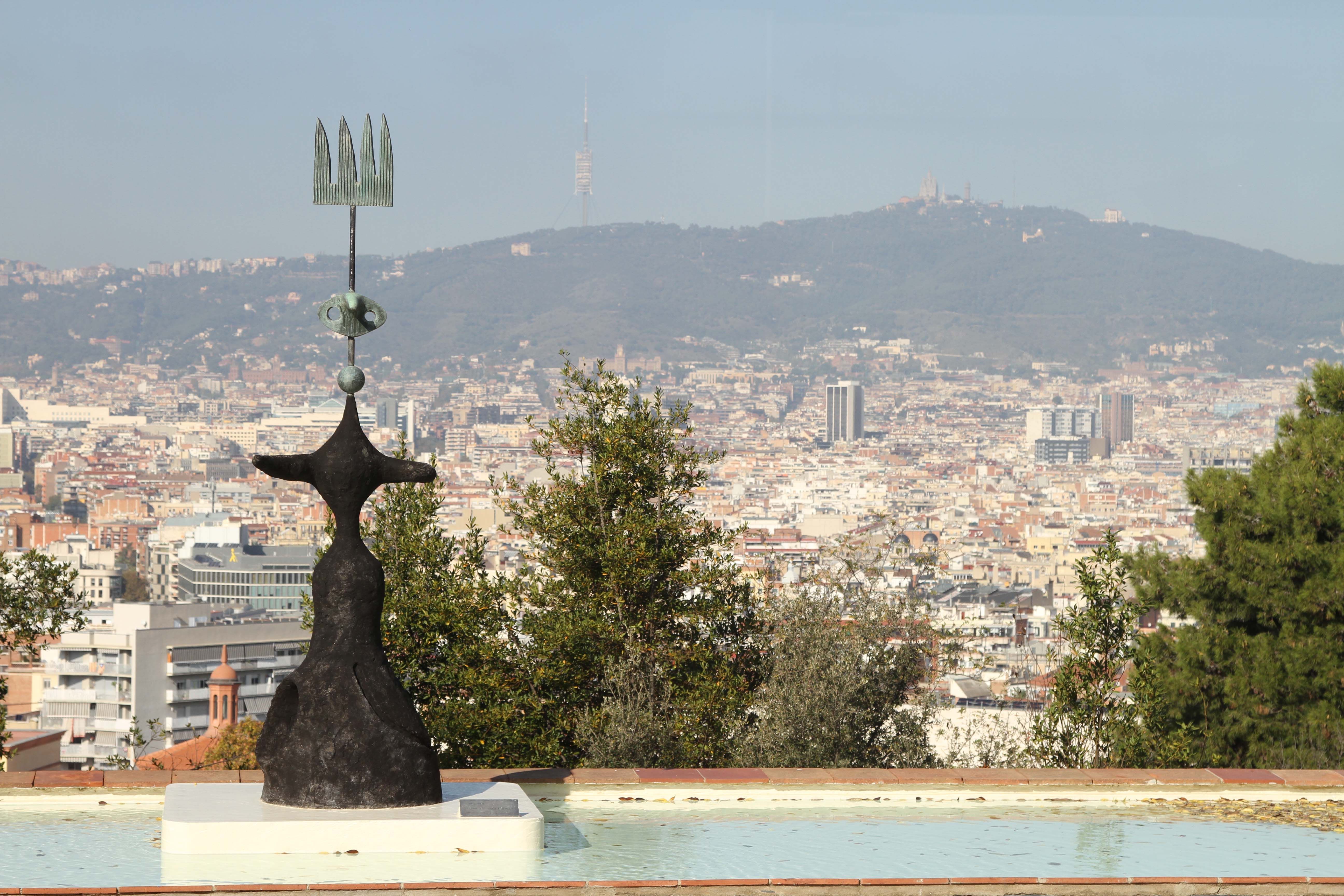
Barcelona from the Fundació Joan Miró
Easter crept up on me this year, because I spent the greater part of the week leading up to it doing the day job in Barcelona. I was last there in November, when the weather was very similar to how it is now (How I envy the Spanish their short, mild winters!). Long-time readers may remember that I wrote of an earlier visit, in April 2013, when I was lucky enough to be there during the St George’s Day bookshop celebrations, the inspiration for our own World Book Day.
As it happened, there were more opportunities for down time in November and so last week’s distinct lack of them may be compensated by a selection of 2015 photographs of one of the world’s most beautiful and interesting cities. They aren’t in any particular order, but reflect visits to Antoni Gaudí’s inspirational work at Casa Batlló,
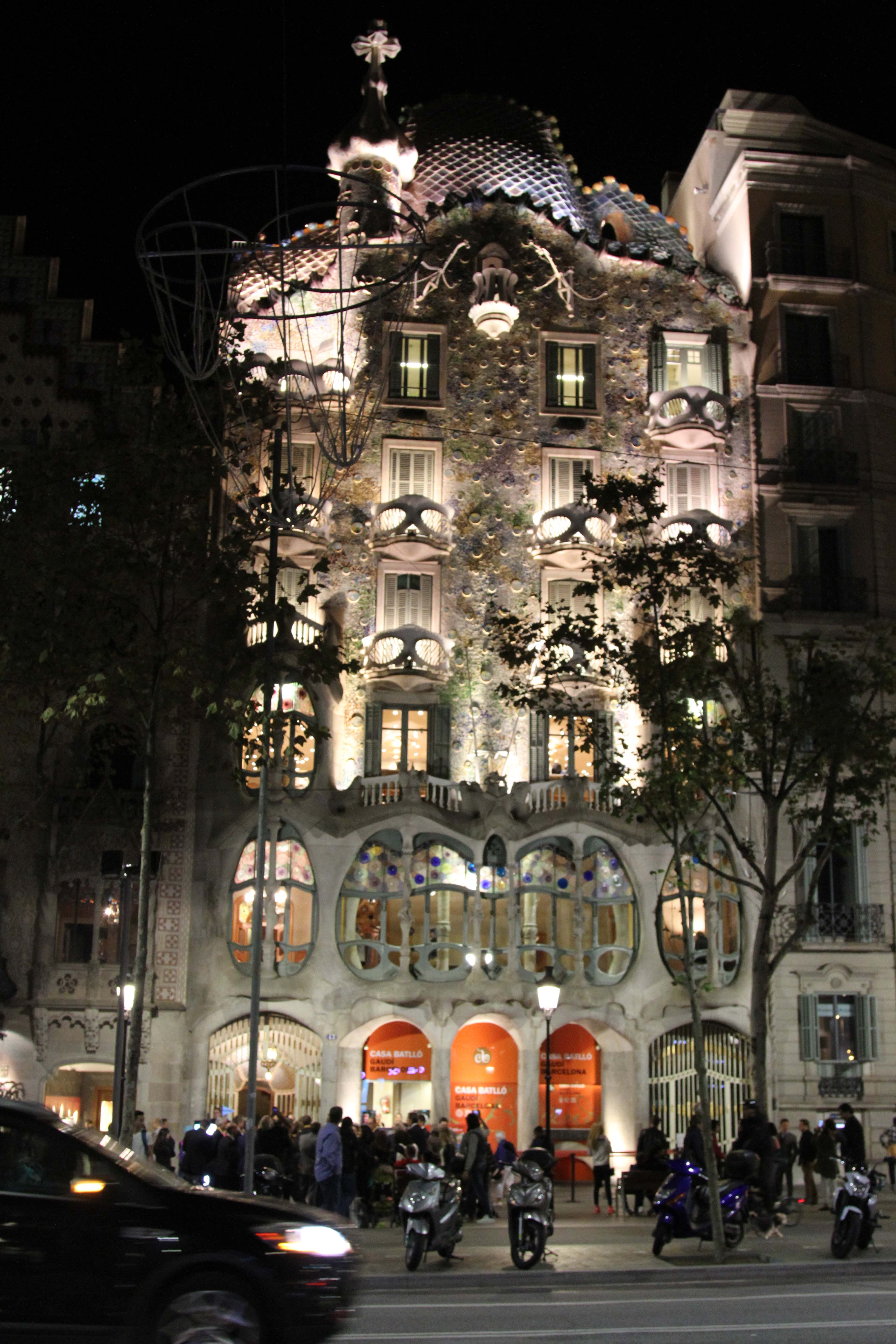
Casa Batlló at night
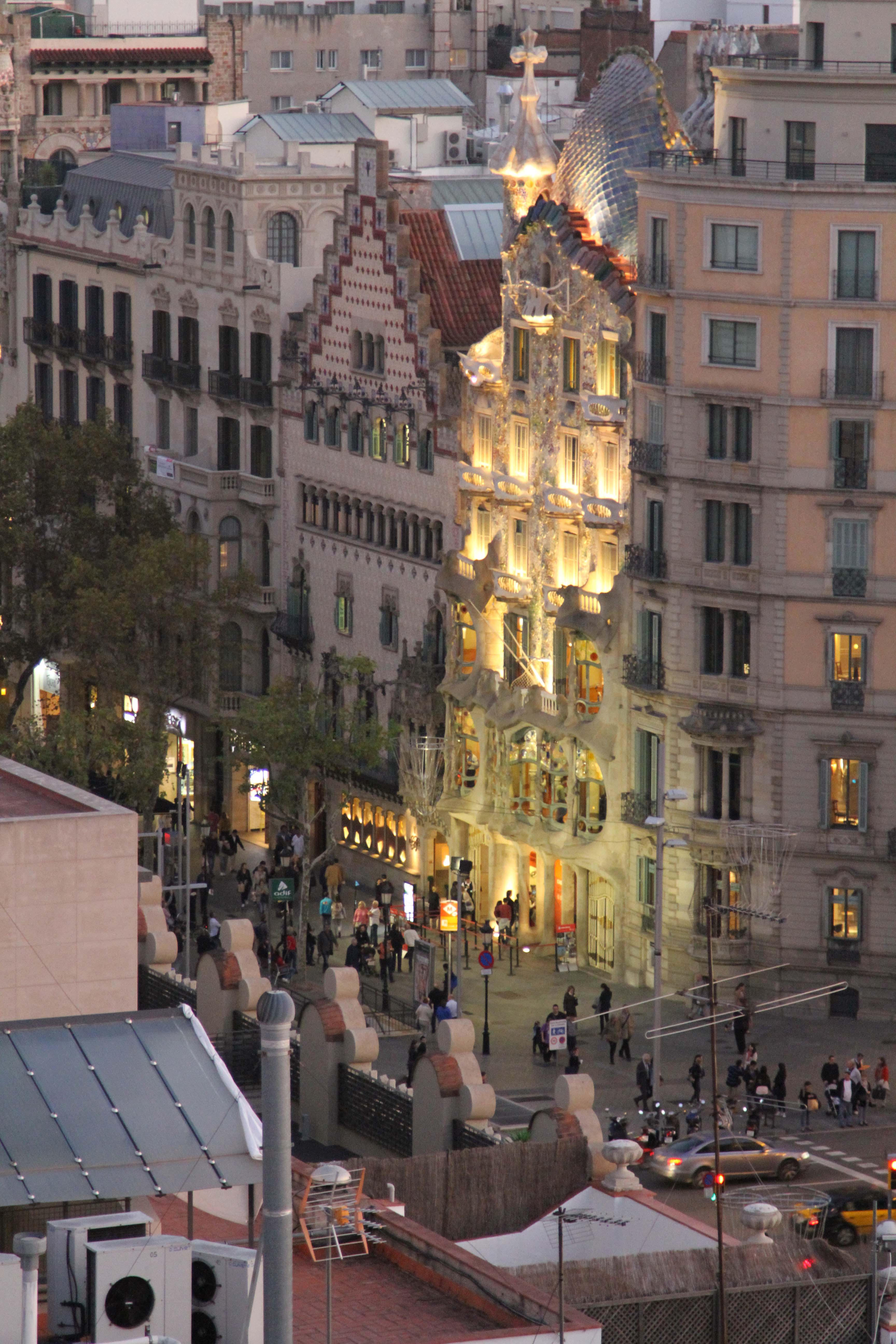
Casa Batlló from the Majestic Hotel

Casa Batlló interior, a photographer’s dream
Park Güell

Park Güell: Some of Gaudí’s least-photographed tiles

Park Güell viaducts: perpendiculars not much in Gaudí’s vocab.

Ditto
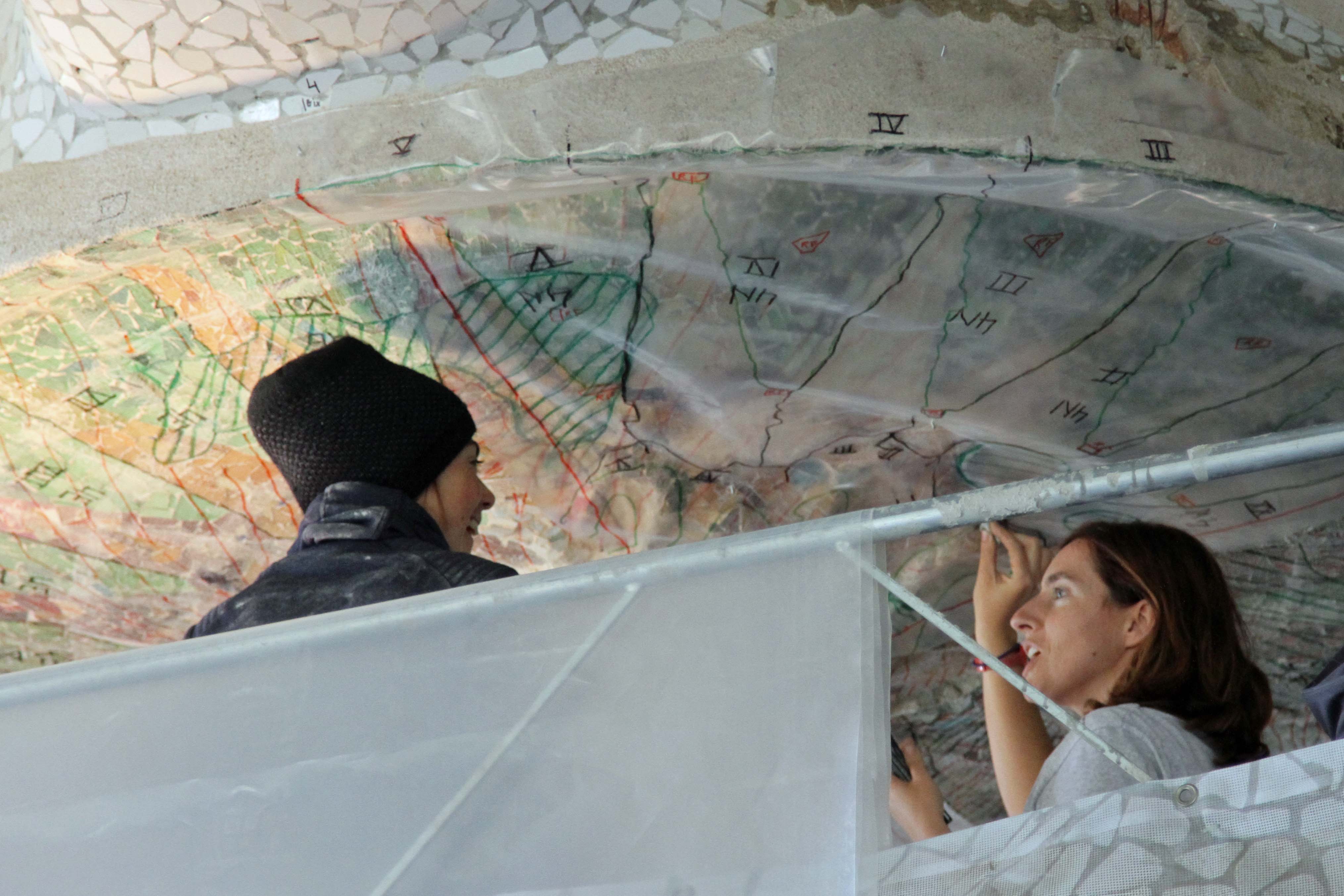
Park Güell: restoration

Park Güell: women repair, women prune, women dig and plant
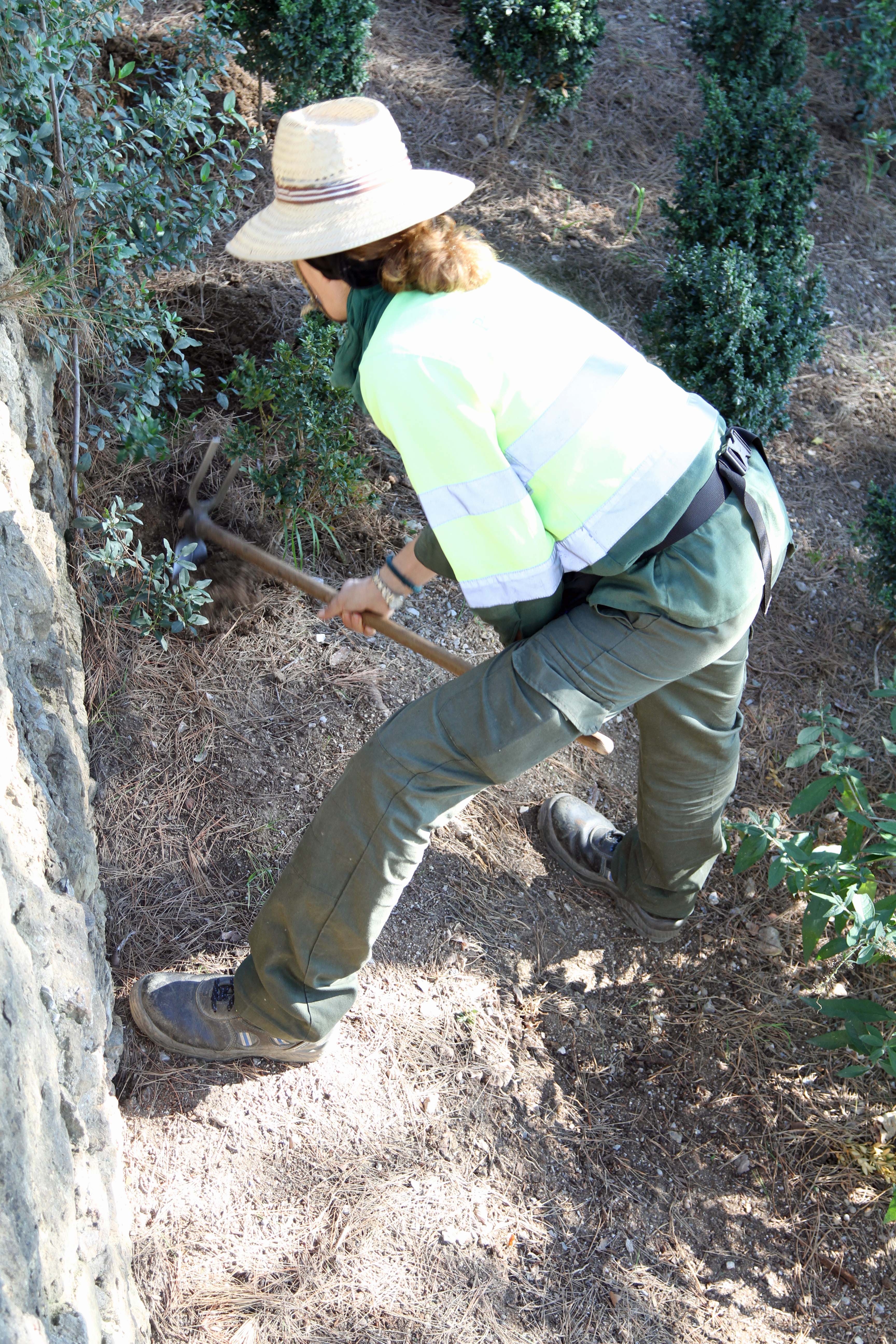
Park Güell

Park Güell

Park Güell: denizen
and Palau Güell

Palau Güell rooftop view

Palau Güell: Wooden setts in the entrance hall to soften the sound of horses’ hooves and carriage wheels

Palau Güell: ceiling detail

Palau Güell: interior light

Palau Güell: favoured catenary arch shape for windows
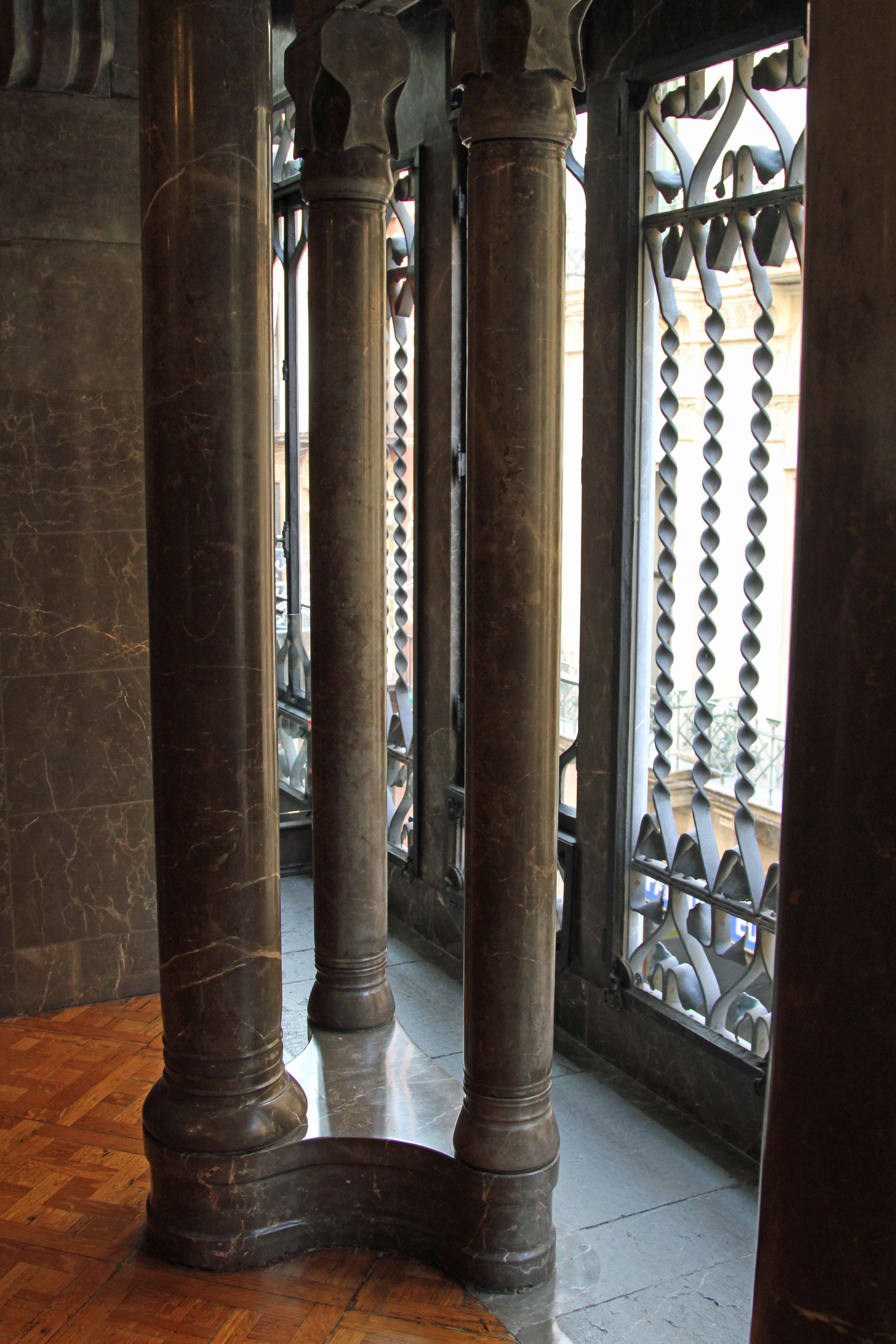
Palau Güell: triple columns for light and support
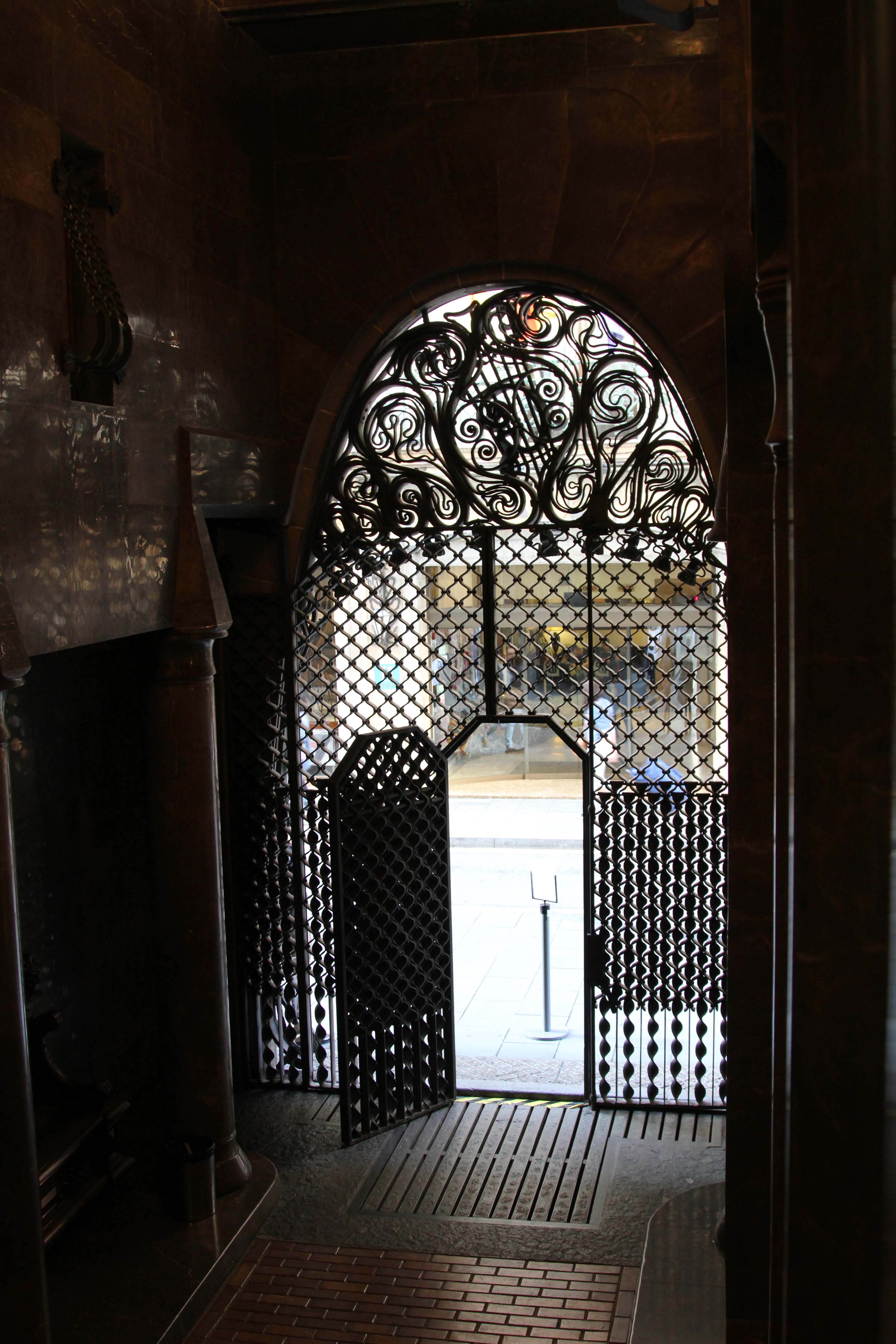
Palau Güell: carriage exit
and to the Fundació Joan Miró.

Fundació Joan Miró
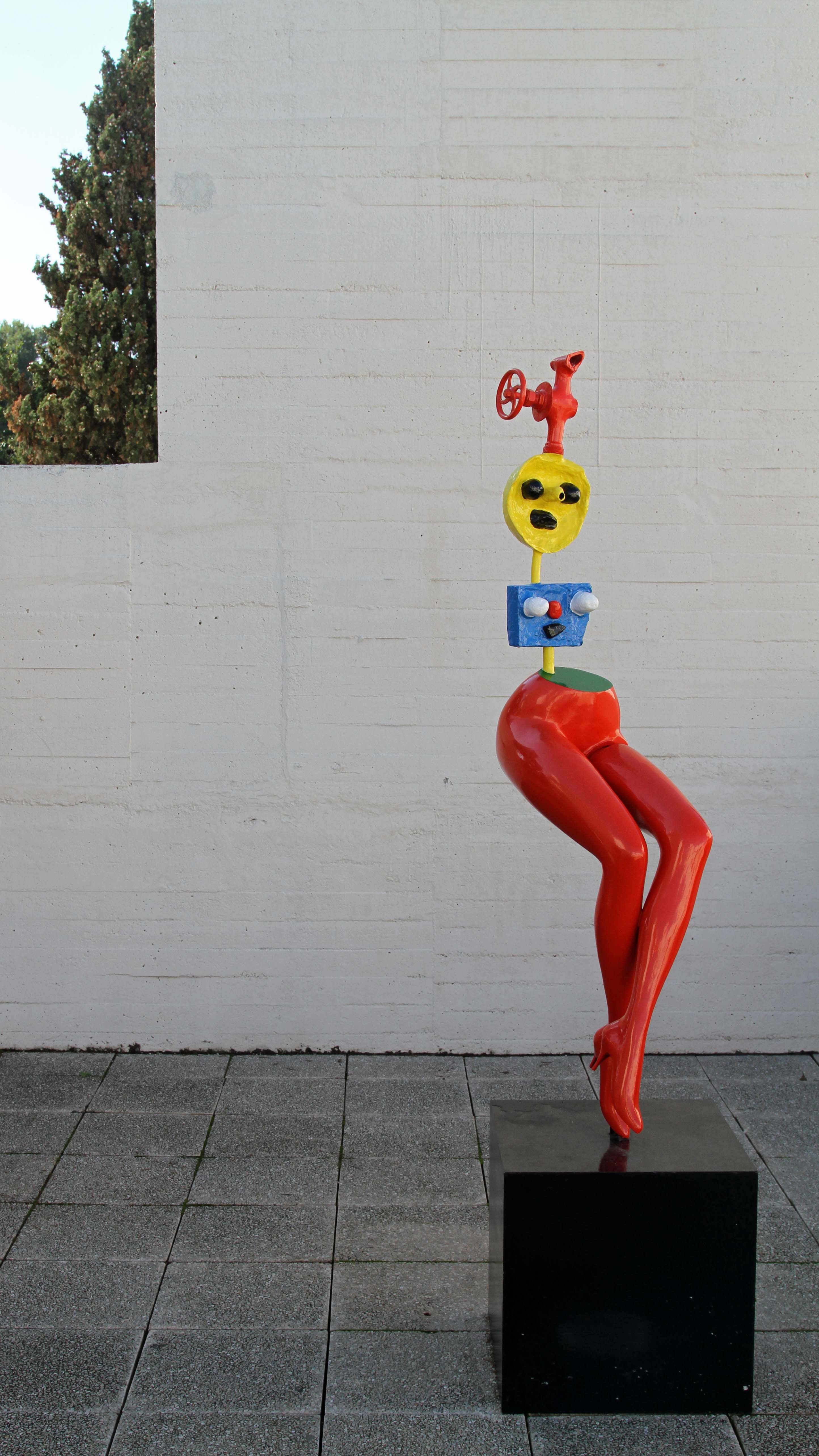
Fundació Joan Miró
There are some pictures, too, of places I wandered around and the people and animals I saw as I went. There were cats everywhere: scrawny cats crouching in alleyways, suspicious cats craning their necks from the tiled roofs, a family of sleek, well-fed black and white cats living in a courtyard at the university. Dogs were on and off leash, living happy doggy lives; being an English pointer owner, I was delighted to find a rescued black and white pointer playing on Carmel Hill (Park Güell) with her mum.

Choice!

Predictable, perhaps, but off the beaten tourist track
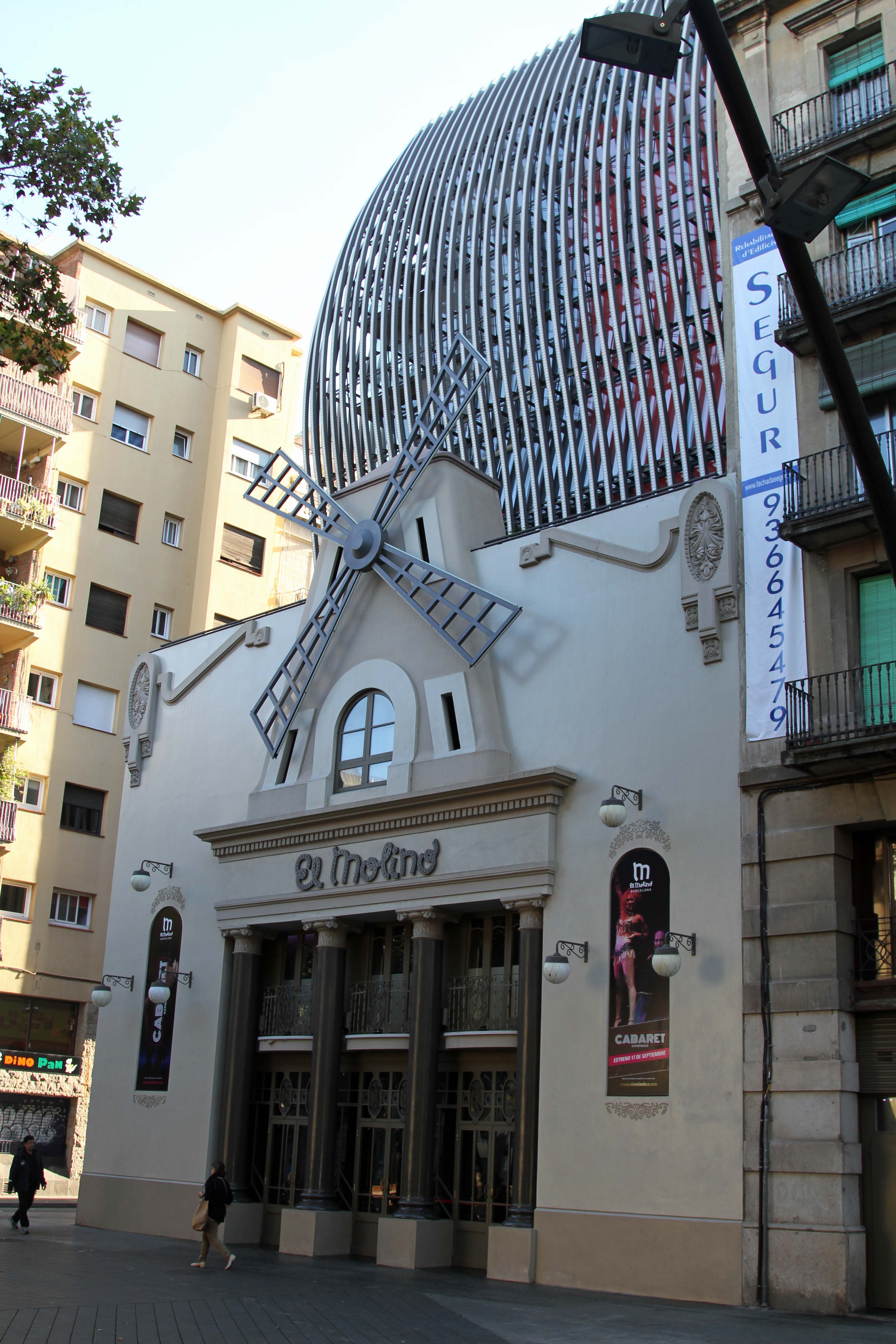
Echo of Montmartre

Please, Papa!

Nothing mean, here.

Best paws forward

Best paws backward

Parc de Pedralbes: water sculpture

Parc de Pedralbes: tree sculpture

Metro: enjoying Milan Kundera

Metro: The wearable lightness of being – man in hat
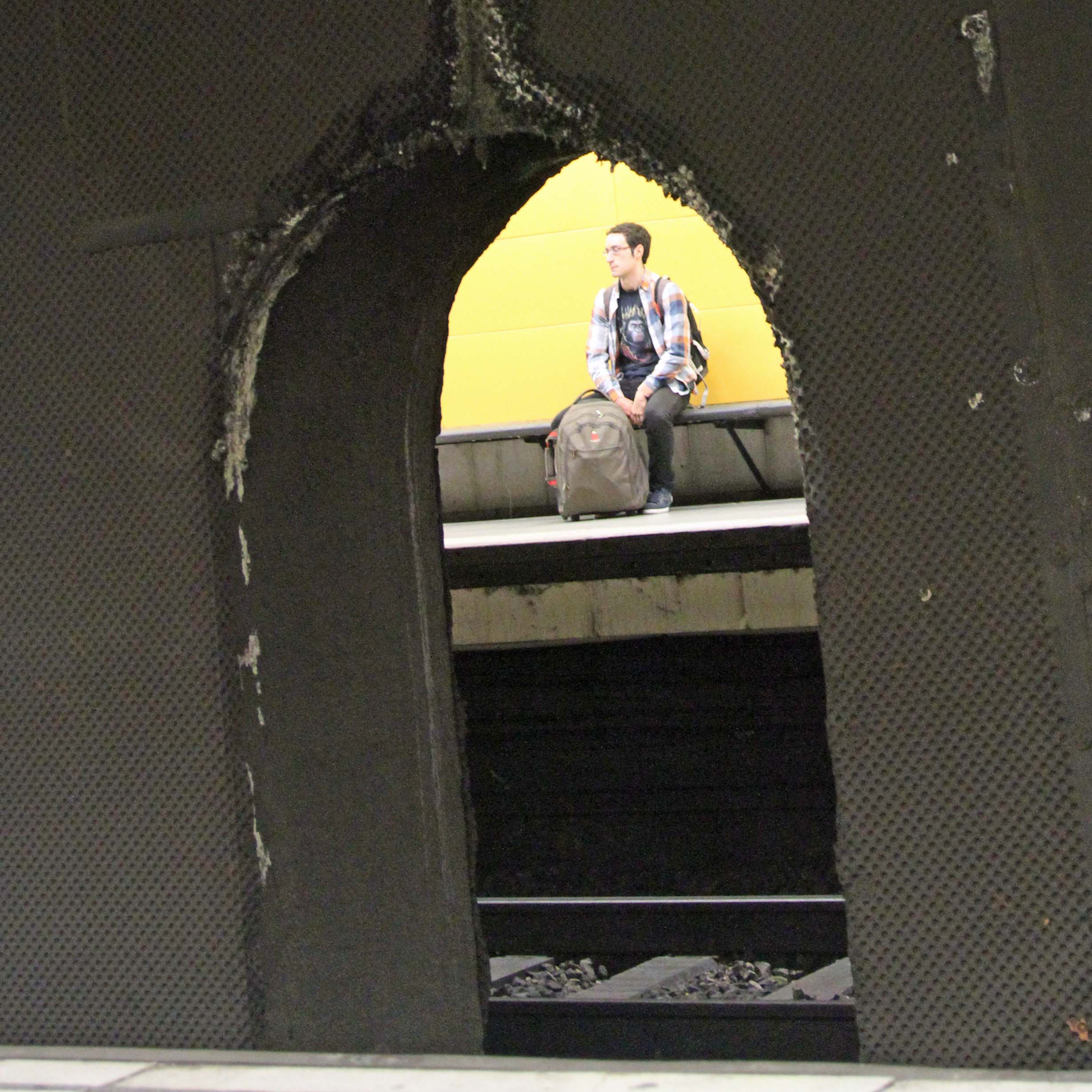
Metro: On the other side
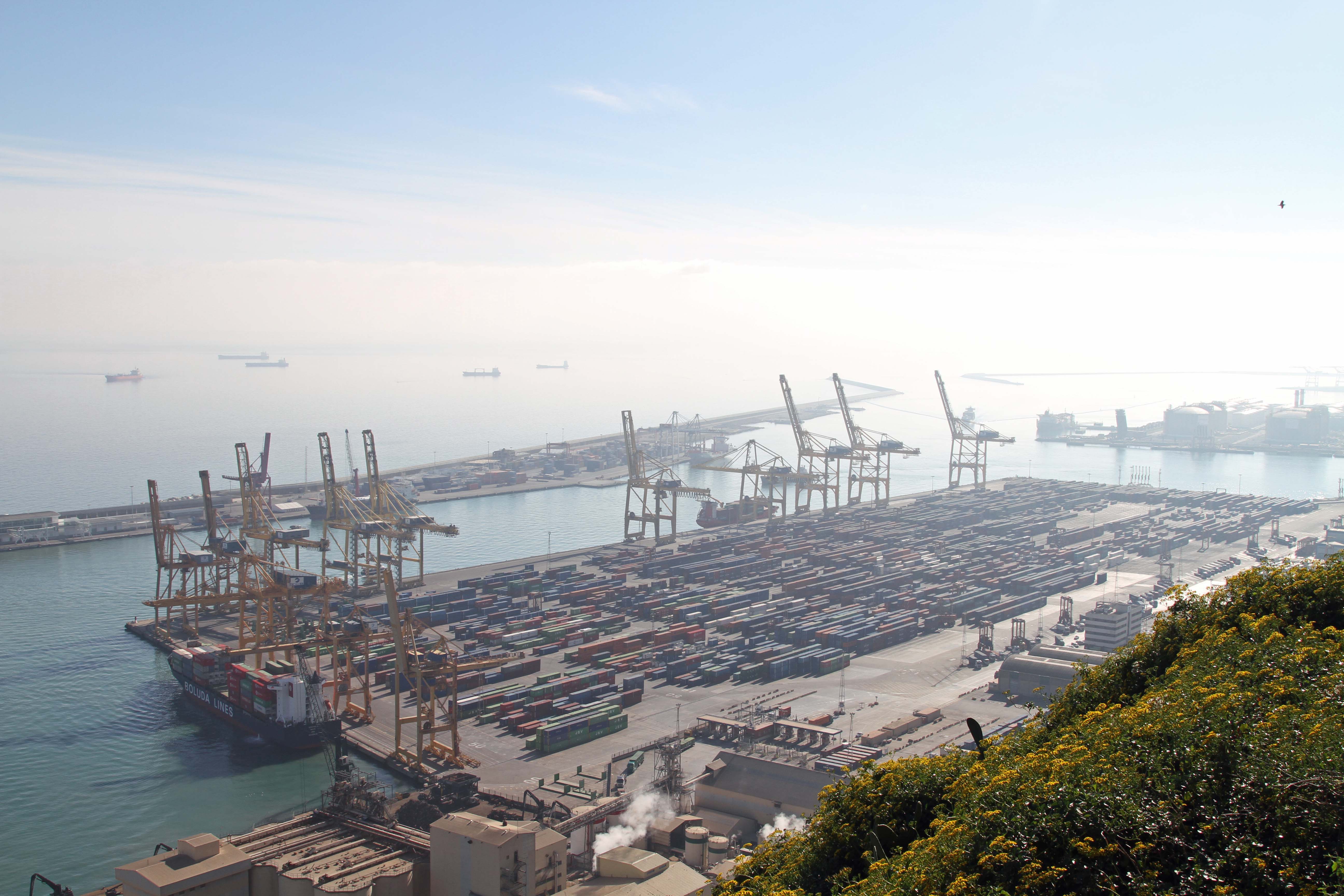
The port: view from Montjuïc
Anyway, as I’ve said, this is just a selection, which doesn’t really need much explanation, but I hope you didn’t expect too much in the way of classic views – you can find those in the guide books! Here’s a tourist picture to finish with: woman in Park Güell.
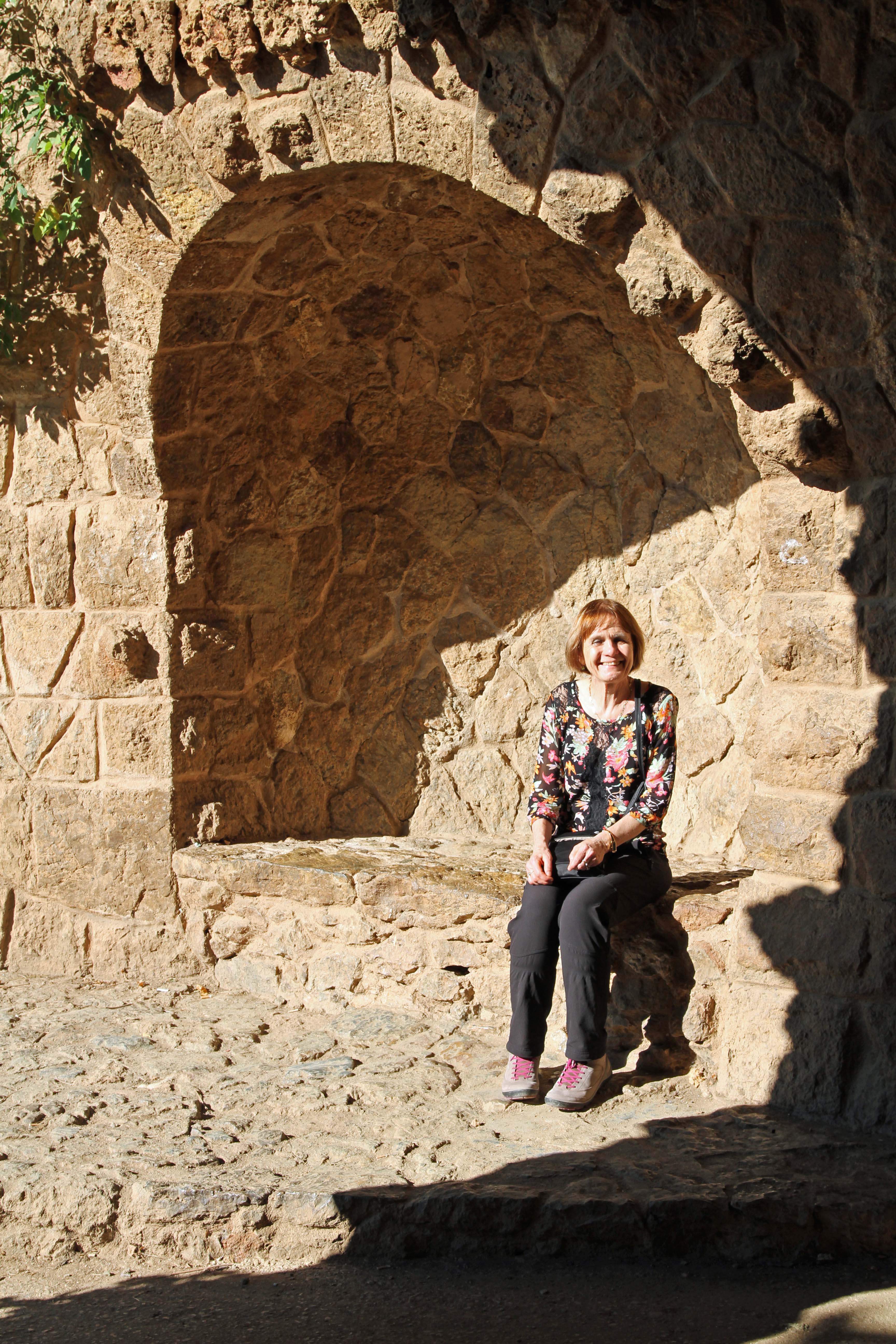
Park Güell: tourist
In quest of the soul of South Korea
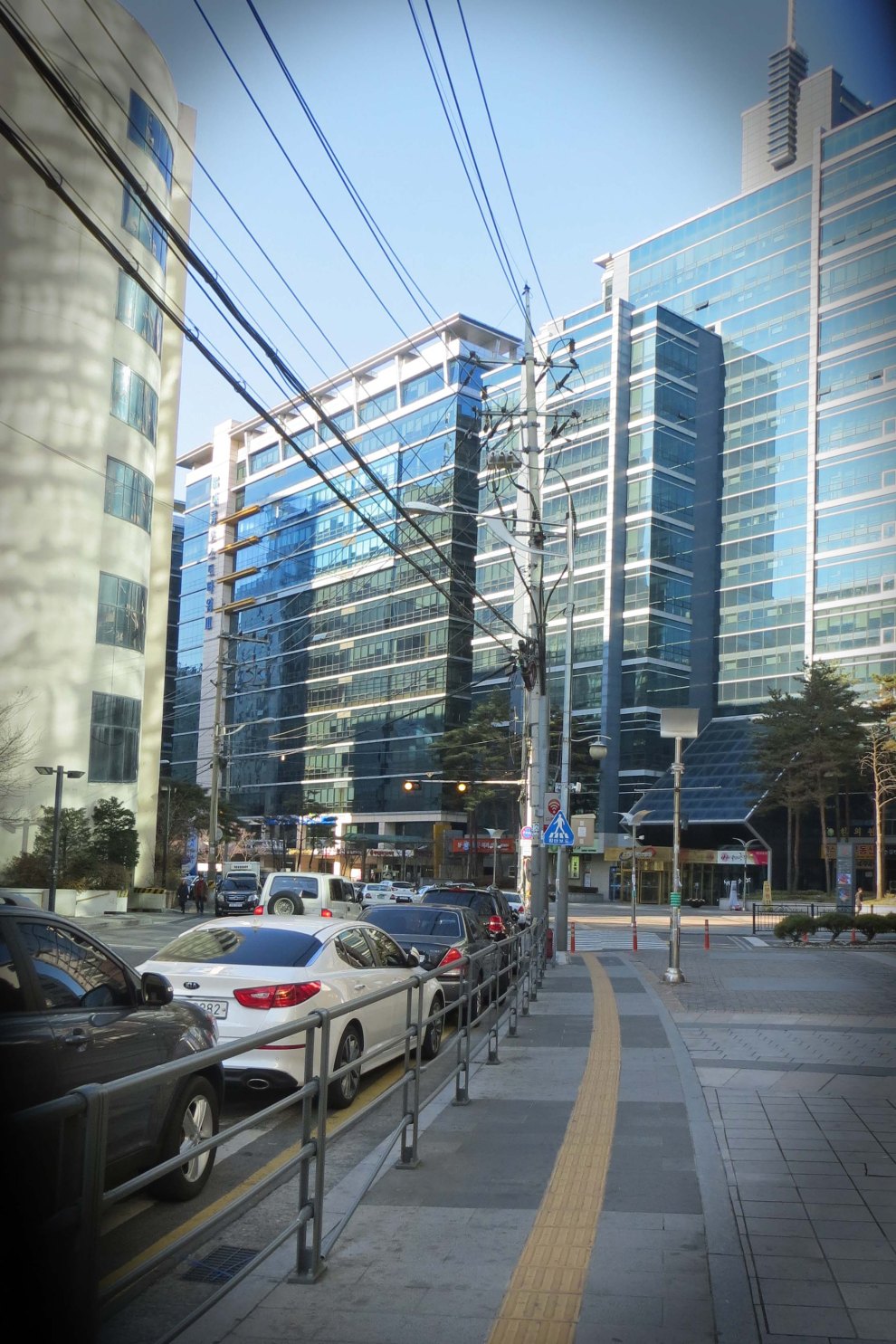
Last week, the day job took me to Seoul, the capital of South Korea. I didn’t have very much time to explore this city, as, for family reasons, I had to cut my visit as short as possible. These impressions are therefore based on two walks that I made within about a one-mile radius from my hotel, my visit to the (amazing) library at Seoul National University, several evening trips to restaurants and what I could see from two one-hour taxi rides.

Seoul is a massive, sprawling city set within a giant curve of the Han River. If you land at Incheon Airport, the city appears to be ahead to the east and to your left. Gradually, the road sweeps round until you hit the city centre quite suddenly. There is a lot of traffic, with bottlenecks and impatient queues clogging the arterial roads at either end of the day.
The city centre had a slightly odd look when I was there, because many shops and hotels had removed only some of their Christmas decorations. Many still sported Christmas trees (the ones at my hotel were adorned with little placards announcing ‘Danger of Electric Shock’). I’ve no idea why Christmas disappears from Seoul in stages in this way; my Asian colleagues were equally baffled.
Although there are many cars, the streets teem with pedestrians. On the Sunday afternoon, many young people, in particular, were out walking, muffled against the cold (it varied from -1 to -10 degrees) in thick padded clothes. What immediately struck me as a Western observer was how the young women continually try to please their male partners, laughing up into their faces when the latter make jokes and hanging on to their arms as if unable to support themselves. To me, it seemed as if there was something formal, almost ritualistic, about this behaviour. It didn’t appear to be spontaneous.
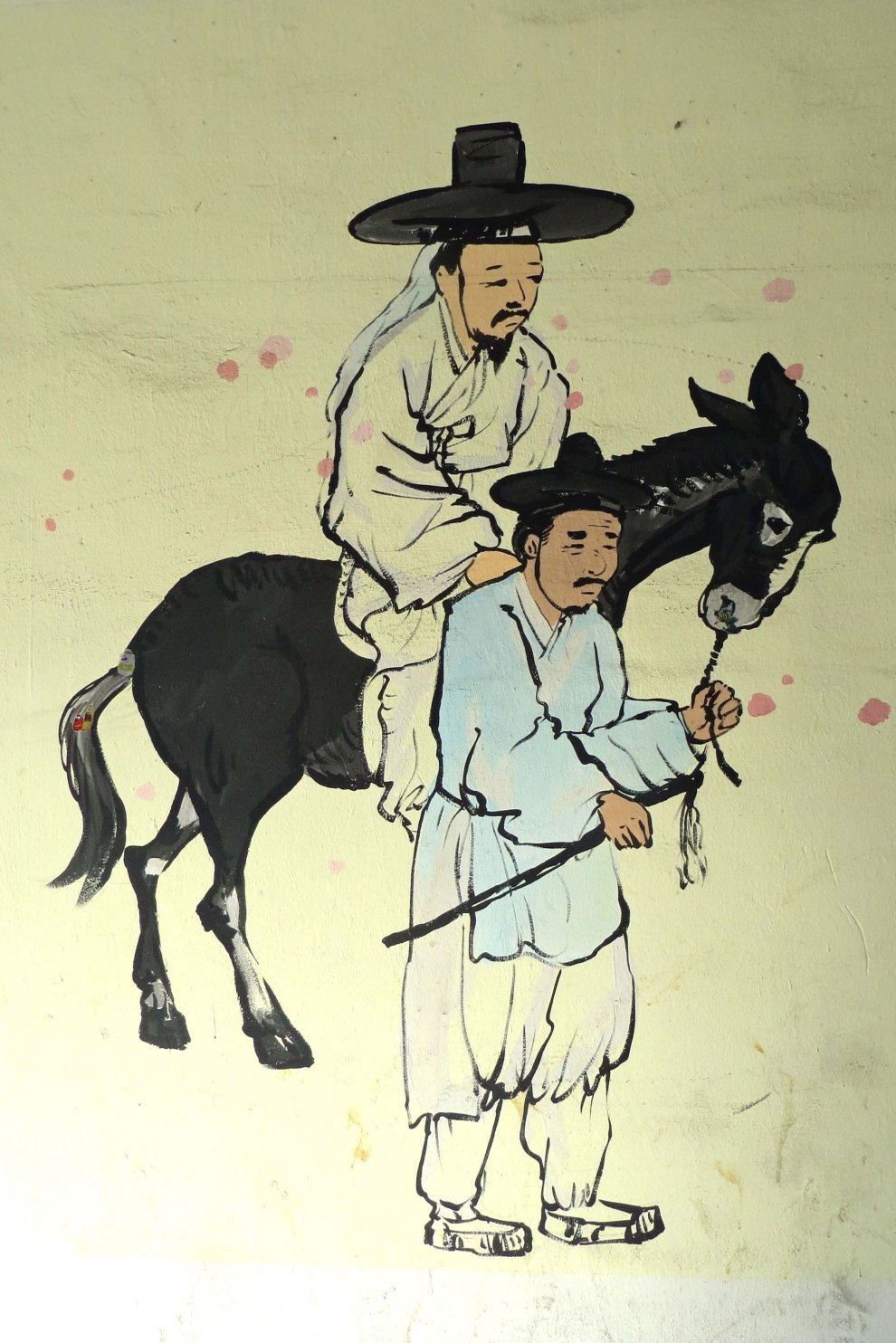
The crowds on weekdays are quite different. They stream purposefully along the pavements, obviously on their way to work. The main streets are broad, often with traffic islands in the middle. ‘Jay walking’ is strictly not allowed: there are notices banning it. Just a few yards down from my hotel, a policeman with a whistle was stationed near a spot where the pavement narrowed each morning. He blew his whistle and waved a kind of luminous wand (reminiscent of a battery-powered Darth Vader light sabre that my son owned as a child) if anyone stepped off it in an attempt to circumnavigate the throng. In the evening, you see the people surging forth again, sometimes stopping at one of the many street food stands that occupy the lanes and alleys branching off from the main thoroughfares. Some of these alleys and passageways are decorated with murals that celebrate Korea’s ancient past.

Food seems to be the national passion. In the network of streets and alleys that I explored, almost every business was a restaurant, café or bar. Some have fish tanks standing in the street outside, from which you can choose the fish you fancy for dinner. (I assume that, once they’re removed from the tank, they’re taken out of sight to be dispatched.)

As well as these individual premises, there are whole malls devoted to every type of cuisine – in addition to Korean restaurants, there are Japanese sushi bars, Italian pizzeria, Swiss chocolate houses, and even an approximation of a British pub, sporting the sign ‘HAND COOKED DINING PUB’ – though, as I found when my hosts took me to an Italian restaurant, most practise ‘fusion’ cookery.

Whether you order a pizza, spaghetti, pie and peas or a hot chocolate, you’re likely to be offered a dish that, although it resembles its national original, is also redolent of Korean herbs and spices. My favourite restaurant, which I visited on my last evening, was a Korean B-B-Q restaurant. (This is how it is always spelt: these restaurants appear to be nationally celebrated.) It had charcoal braziers set into the tables. Patrons order raw meat from a selection on the menu (my own party chose a mixture of beef and pork), together with a range of salad and sauce accompaniments, and cook their own food. The main course was followed by two kinds of soup, one meat and vegetable based, one fish and seafood based, both very spicy. Koreans usually drink beer with this kind of meal, though there was also a strong white wine on offer (you drink it in sherry-type glasses, in very small quantities, and it tastes a bit like saké).
What else do Koreans like besides food? I was keen to find out so that I could buy presents, but even Koreans were at a loss to tell me. I discovered that Korea is home to a renowned type of ginseng and very good for silk ties. There are whole shops devoted to candles (though, on closer inspection, I found that the candles are imports from New York and Paris) and chemists’ shops, often selling vast ranges of foreign make-up, are popular. Otherwise, the main passions do indeed seem to be food and drink. This impression was borne out by the wares at the airport shops, where I saw very little on display except extensive pyramids of food and alcohol and an impressive range of electronic products. I couldn’t even find postcards, either at the airport or anywhere else.
Would I like to return? As I said at the beginning, my stay was very short and I can’t claim to have formed an accurate opinion of Seoul. I certainly liked the people: they were courteous and fun-loving, hard-working but not over-serious: I’d like to go back to become better acquainted with some of them. But I didn’t find Seoul itself as interesting as some of the other Asian cities I’ve visited. I’d be very happy, though, to be told that I’ve completely missed the point.


The Crossing at Stamford

Stamford in Lincolnshire bestrides the River Welland (which also flows through the Spalding of the DI Yates books) and marks the ancient ford across the river where the Romans chose to route Ermine Street on its way north. Going there to sign copies of The Crossing, the fourth DI Yates book, seemed very appropriate!
It seems to be a continuing theme of The Crossing events that they are fated to happen in extreme weather. Harlow Carr was squally, Spalding was tempestuous and yesterday Stamford was bitterly cold! The cold hit me as soon as I got up yesterday morning. Venturing out with the dog before dawn, I noticed that a clutch of flowerpots outside the back door seemed to have sprouted a mysterious white substance. Closer inspection revealed it to be snow. Once clear of the parking area in front of my house (treacherous with black ice), I saw that all the rooftops and hedgerows in the village were twinkling with crisp snow.
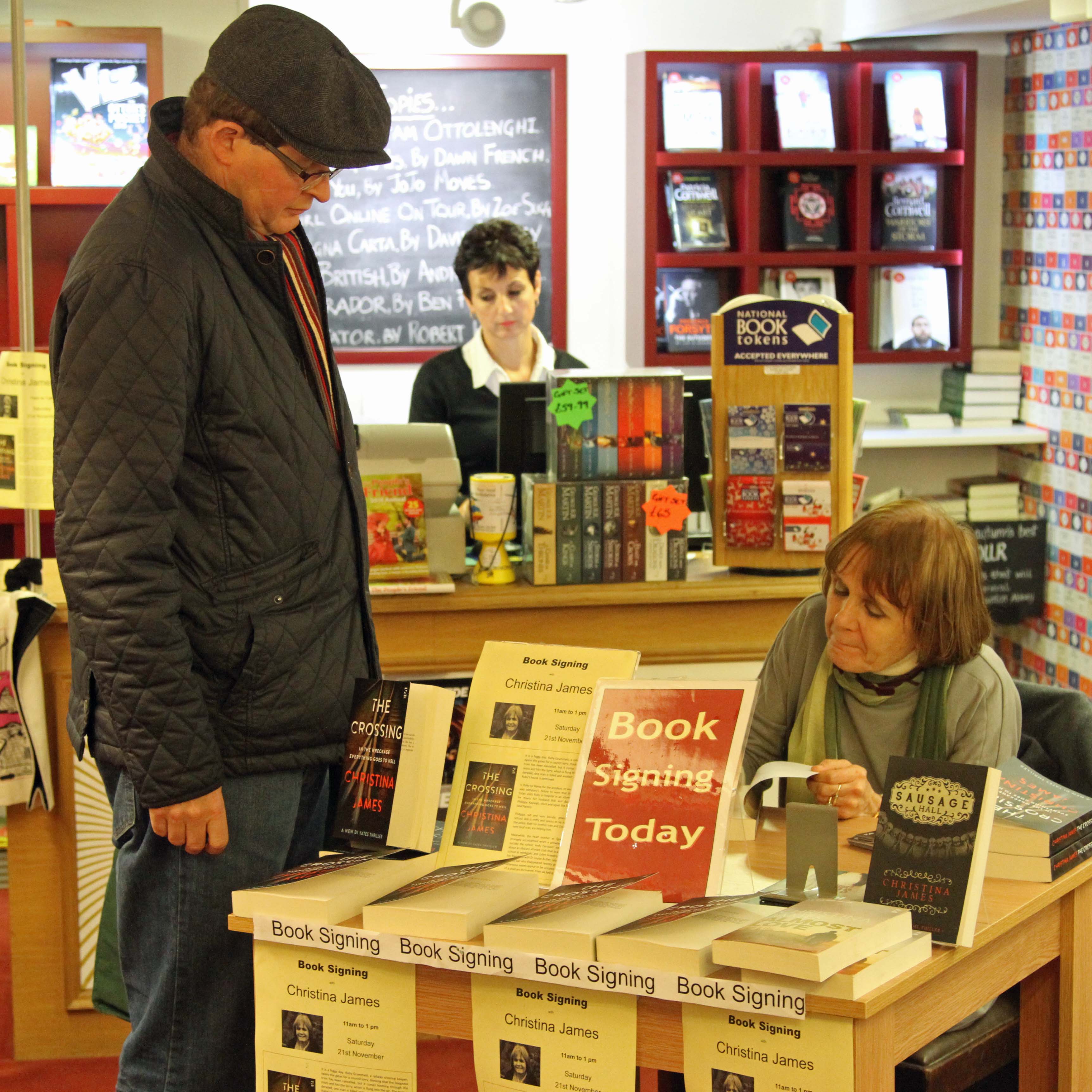
It’s a two-hour drive to Stamford and, although my husband and I were heading due south, it seemed to get colder as the sun rose higher in the sky. Stamford itself was in the grip of a vicious north wind which, the weather forecast informed us, was blowing straight down from the Arctic. It didn’t seem to deter the citizens of the town: wrapped up in thick coats, hats and scarves, all seemed to be going about their business cheerfully. The Christmas decorations had been put up, most of the shop windows now carried Christmas displays and the cold served only to make the atmosphere more festive.
My destination, Walker’s Bookshop in the town centre, was as warm and welcoming as always. Its Christmas stock had been laid out beautifully and customers came, sometimes in droves, sometimes in flurries, to admire it and to browse and buy. I’d been allocated a table near to the cash desk to sign copies of The Crossing and we did a brisk trade throughout my allotted time there.

I’d like to thank both the people of Stamford and the several visitors to the town whom I met not only for buying the book, but also for the fascinating conversations in which we engaged throughout the day. There was the lady whose father had owned some of the gravel pits that I write about in Almost Love. She told me that when she was a child they’d found many things in the pits, including a mammoth’s tooth (I mention the mammoth’s remains in the book), a pewter salver and several skeletons, some of which had been buried face down, perhaps because they belonged to murderers or suicides. The artefacts had all been given to a local museum, but the bones were removed by police who ‘just put them into bags and carted them away. It was the sixties and seventies. They didn’t bother to reinter them or find out how old they were.’ Shades of Sausage Hall! It is tantalising to think that some may have been the result of more recent murders: if so, the murderer(s) got off scot free! There was another lady from Cornwall who said her neighbour was Dawn French. She asked me about my writing routine. I said that although most of my writing is done in my office, I can also write on trains and in cafes. Dawn, apparently, must have absolute solitude and silence when she writes. Several men made purchases: they tended to be more interested in the series and how the novels relate to each other than more general information about the South Lincolnshire setting or how they came to be written. People of all ages stopped to talk to me. My youngest buyer was still at school. I was delighted that so many young people were interested, including a young woman who would have bought the whole set if we hadn’t run out of Sausage Hall and said, while buying the other three, that she’d order it. Some old friends also made the considerable journey from Nottingham to give their support.
The time flew by, as it always does for me when I’m in a bookshop. I had a truly wonderful day. I’d like to thank Tim Walker and Jenny Pugh for arranging the signing session and Mandy and Karen for looking after me so brilliantly while I was in the shop. It’s a very distinguished bookshop indeed and well worth the short detour off the A1 if you happen to be passing that way.
On the way home, it didn’t seem so cold, but perhaps that was just because I was enveloped in the rosy glow of having been able to meet so many new enthusiasts.
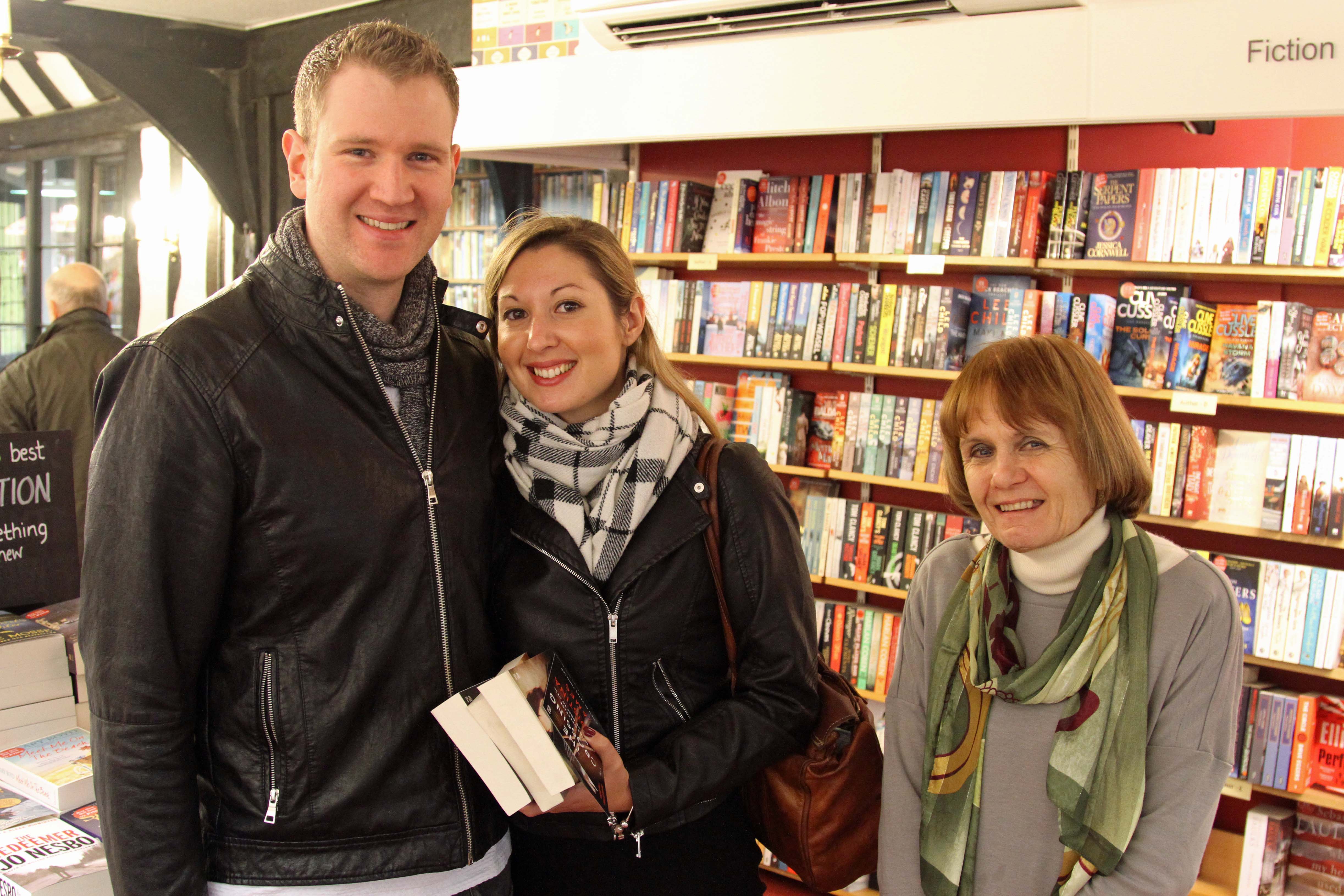
Harlow Carr: just the spot for a signing session!
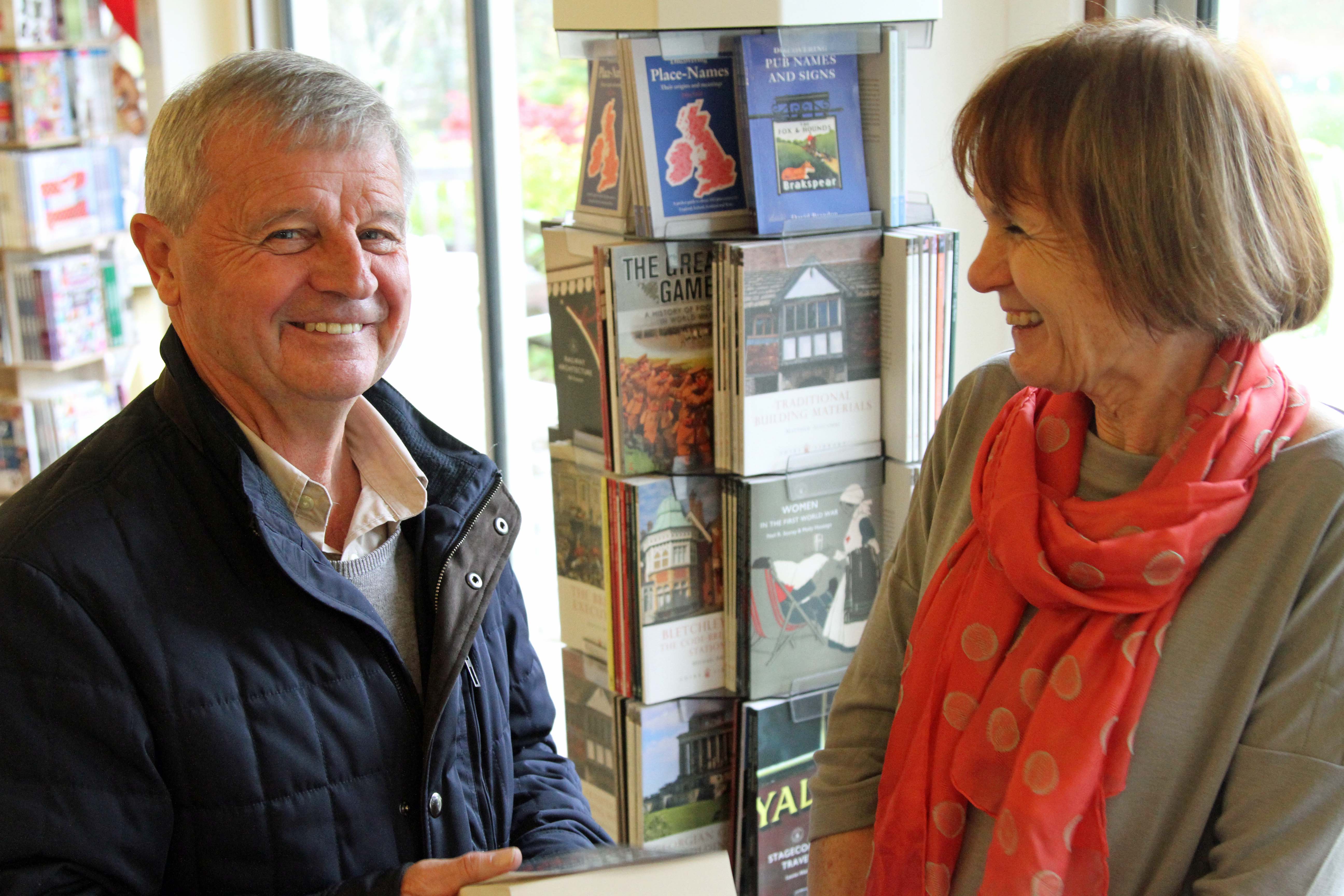
Yesterday, I felt amazingly lucky to have been invited to launch The Crossing at the bookshop at Harlow Carr Gardens, near Harrogate in North Yorkshire. (Strictly speaking, it was a pre-launch, my first ever!) I’ve been to Harlow Carr before, but a long time ago, and I think my first visit pre-dated the shop. It’s certainly well-established and flourishing now: it’s one of the loveliest bookshops I’ve visited and, some of its customers told me, undoubtedly the best one in the Harrogate area. Far from hiding its light under a bushel (or perhaps a pergola), it has succeeded in building up a huge clientele from many miles around. If you are ever in the vicinity, it’s well worth making a detour.
Yesterday dawned late. The weather was cold and squally, with sharp downbursts of torrential rain. As I drove further north, fewer and fewer leaves were clinging to the tress, while the roads and pavements were a whirling mass of auburn, chestnut and brown as the less tenacious ones came tumbling down and as rapidly began to disintegrate into sogginess.
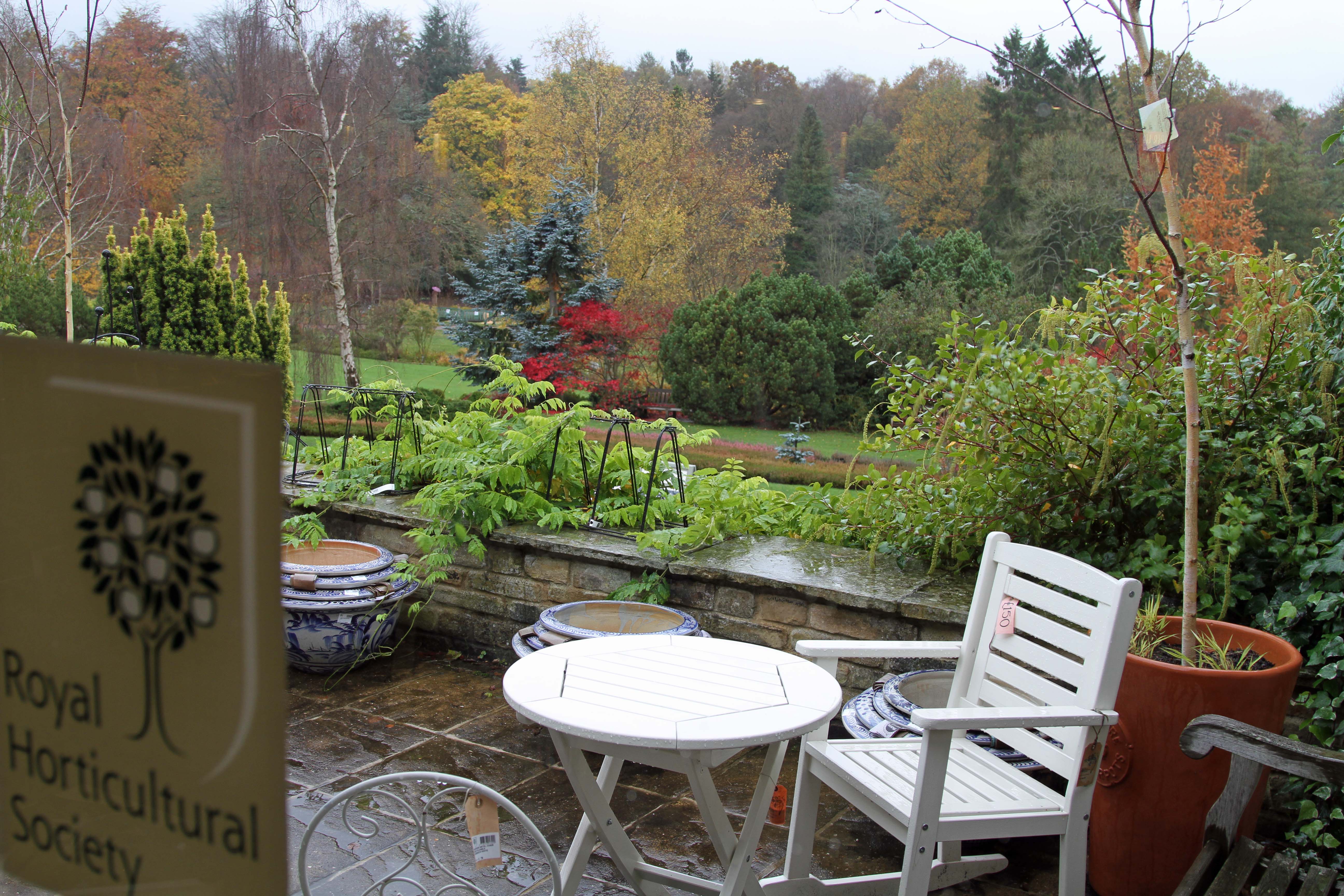
My view of patio, gardens and woodland
At Harlow Carr, the rain was thick and steady. The place is in quite a sheltered spot, in a hollow after a hilly climb on winding roads, so the trees that line the walks and the woods that form a backdrop to the formal gardens were still respectably clothed in gold and russet (though a vicious wind in the afternoon dislodged many of their leaves and set them swirling and eddying around the patio outside the shop). The shop itself was a haven of warmth and hospitality. Yesterday marked the launch of its Christmas stock: the bookshelves were heaving with tempting new titles and the rest of the shop was equally festive, a cornucopia of beautiful displays of cards, toiletries, accessories, seasonal decorations and all things Yorkshire.

Isabel, a truly professional bookseller
I was welcomed by Isabel and Nige, who showed me one of the best displays of my books I’ve ever encountered (helped, of course, by the fact that there are now four of them, clad in the distinguished Salt covers designed by Chris Hamilton-Emery, of which I am always so proud). My signing session was scheduled from 13.00 to 16.00 and, as it was already after 12.30, Isabel whisked me and my husband to Betty’s (Yes, Harlow Carr has a Betty’s as well! For the uninitiated, Betty’s tea-rooms are second to none on the planet.) to choose a delicious sandwich lunch. Then it was back to the staff room in the bookshop for a cup of tea. This was actually one of my favourite parts of the day. There are similarities between the staff rooms in bookshops the world over, so new ones are always reminiscent of my bookselling days and whenever I’m invited into one I immediately feel at home.
My three-hour signing stint passed all too rapidly. I met some very nice people and engaged in conversations on a huge variety of topics, from tractor seats to the novels of Peter Robinson and how I schedule my own writing. It was a new kind of audience for me: practical, engaged, leisurely. Almost everyone was wearing wellingtons or hiking boots. Many pushed children in buggies. All were wrapped up in glistening waterproofs against the rain.
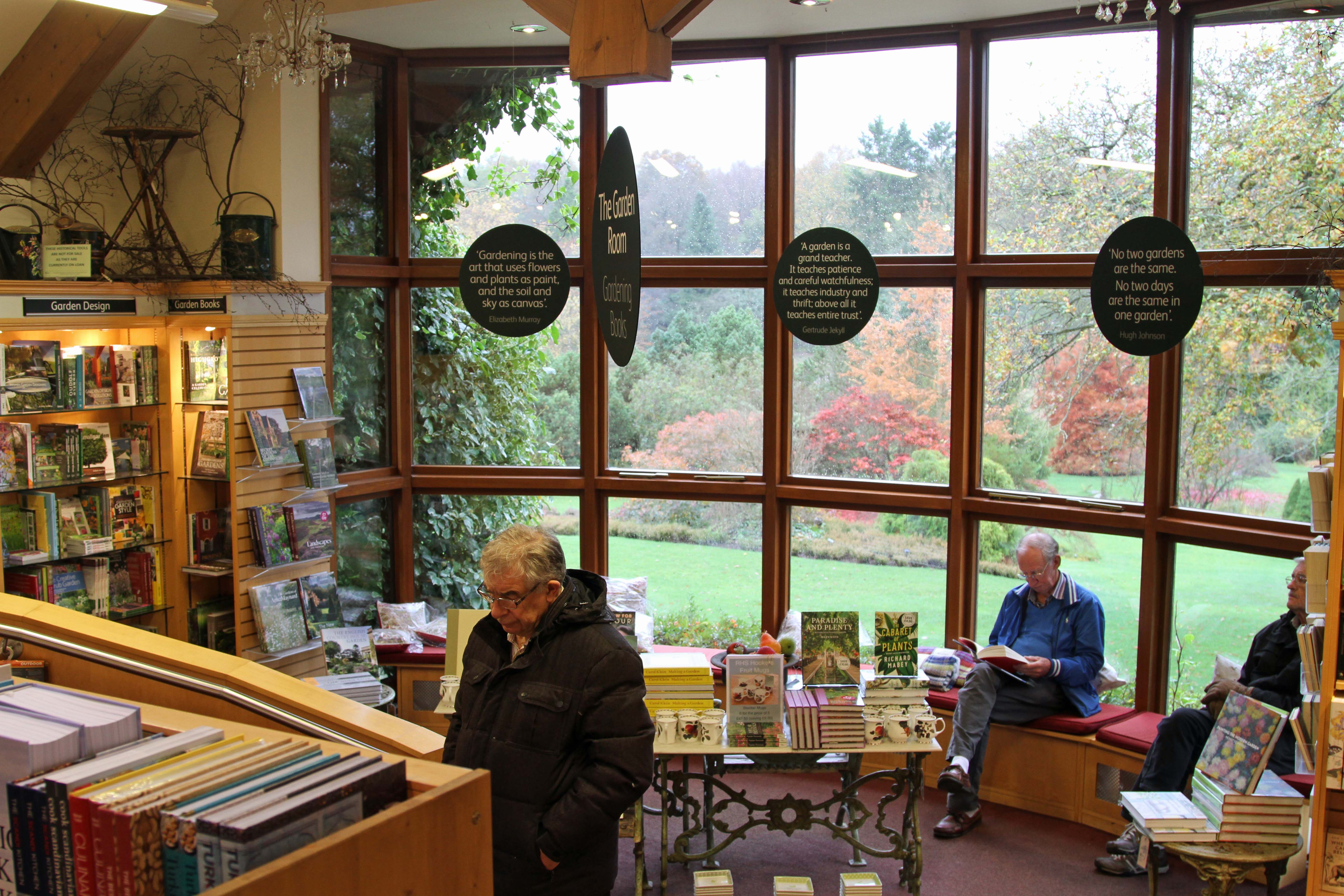
The lovely bookshop reading area
And very many people stayed in the shop for long periods of time, some of them upwards of an hour. I don’t think that it was just because they were sheltering from the rain: there is a rich variety of other places within the Harlow Carr complex where they could have done that. They were genuinely interested in (all kinds of) books and writing and also extremely careful when it came to choosing the ones they were going to buy. Every sale was the result of considered deliberation, whether of my books or those of other writers. It made me very proud and appreciative when the choice fell on one of the DI Yates novels!
I loved this shop immediately and appreciated the many kindnesses and efficiencies offered by all of its staff, especially Isabel, who continued to look after me for the whole afternoon until, off duty, I was able to roam the floors and make some purchases of my own. Isabel and Nige said that they’d only just started arranging author events (though you wouldn’t have known it from their professionalism) and kindly offered to keep in touch and invite me again. I shall be there like a shot!
I left one small present of my own: a complete set of the four DI Yates novels for the shop to raffle. Everyone who buys one of my books over the next month will be offered a raffle ticket, and the winner will receive the full set of books after the draw. If you live in Yorkshire or are planning to visit the county between now and the first week in December, perhaps this might provide a further small temptation for you to track down a very great bookshop!

Why I love France
I’ve recently returned from a holiday in France, a sojourn in recent years devoted to the planning of my next novel. I’ve tried to work out how many times I’ve been there and failed, but it’s certainly more than twenty, probably approaching forty. Altogether, I must have spent at least eighteen months of my life in France, beginning with our honeymoon in Paris (a shoestring affair – we had very little money and went there in an old minivan with four remoulded tyres, three of which had bulges in their side-walls – but none the less magical for that: eating packet curries that you’ve just cooked on a Primus stove on the banks of the Seine has a certain frisson that couldn’t be captured, say, sitting beside the Manchester Ship Canal).
I’ve had great holidays in other countries, of course, so why does France remain special? In an attempt to work this out, I’ve listed ten things unique to France and very endearing to me.
- The roads. It’s true that France now has some brilliant (if péage-pricey) motorways; but turn off them and you’ll quickly come to bumpy lanes occasionally sprinkled with battered signs announcing that the chaussée is deformée, the accotements non stabilisés. And they don’t just mean a little bit, either. ‘Non stabilisés’ means that, if you drive on to the verge, you’re likely to be pitched into the ditch or sink up to the top of your chassis in mud. And where else in the world could drivers be exhorted to take heed that there are ‘betteraves sur la route’?

Road signs warn of just about anything
- The produce. Almost every gîte owner I’ve ever met has supplied produce from his or her garden – usually tomatoes, often plums, apples, greengages, courgettes, fat elephant garlic and other vegetables, too. The tomatoes, in particular, are a gastronomic delight: outsize and eccentrically-shaped, they’ve been warmed by a fiercer sun than the ones we grow here and ooze juice when sliced and left to steep in olive oil, creating a salad that is a special occasion in itself.
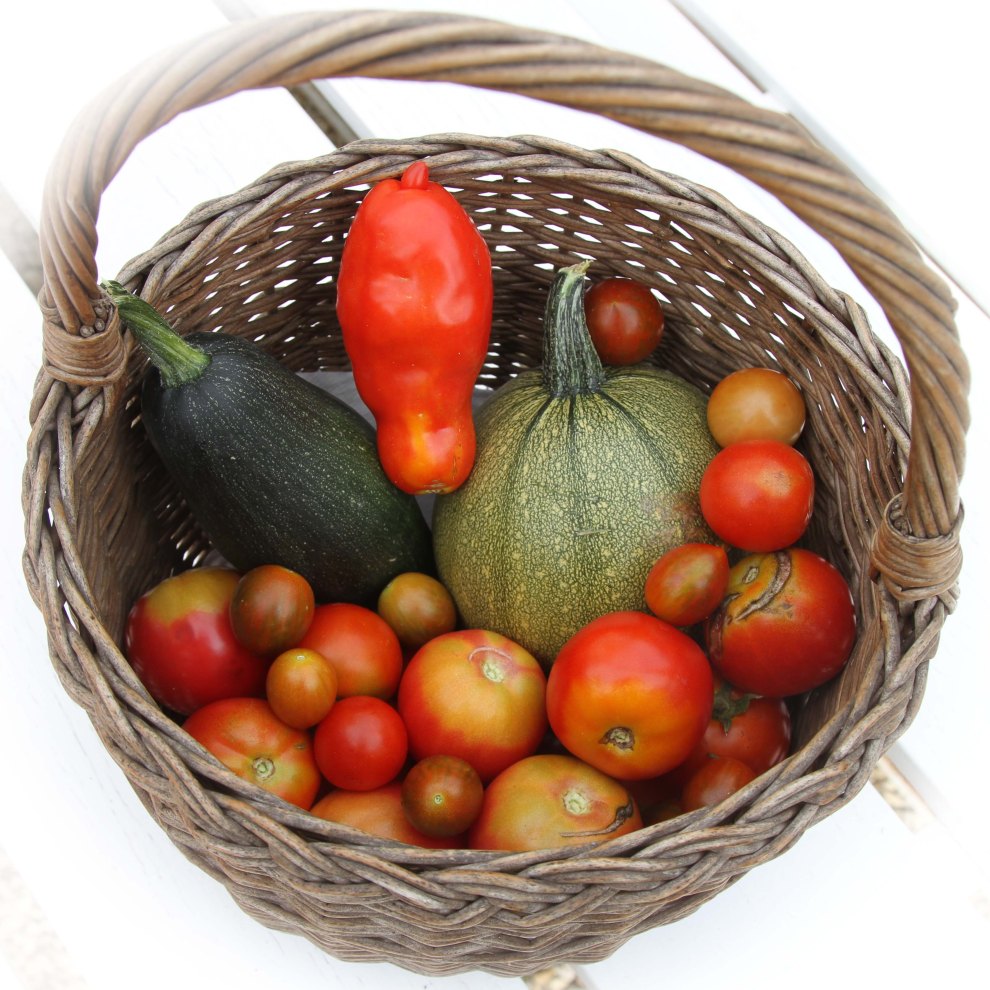
- The restaurants. Even in the tiniest, most out-of-the-way place it’s likely that you’ll stumble on an immaculately-kept restaurant serving several sumptuous courses for a very modest sum, sometimes with wine included. How these places make enough money to survive is a continuing mystery – but perhaps they don’t need to. Maybe they are sidelines run by farmers’ wives or millionaire philanthropists? Conversely (you might not think I’d find this endearing, but it is so French that it tickles me) I’ve frequently stopped at a restaurant in a French town in July or August, only to find ‘Fermé pour les vacances’ posted on the door. English restaurateurs take their holidays in February. French ones? Certainly not. Nothing is allowed to interrupt the rhythm of their lives.
- Two-hour lunches. Speaking of the rhythm of life, French lunches are another case in point. Although, tragically, I see some evidence in large cities of the quickly-grabbed sandwiches and takeaway salads that you encounter in almost every urban environment outside France, the two-hour lunch still dominates and most French people seem prepared to work daily until 7 p.m. rather than sacrifice it. When you’re on holiday, of course, there’s no need to rush!
- The wine. No need to elaborate further, I think.
- Shops in small towns. Practically every town in France, however tiny, supports one each of the following: a boulangerie (often, more than one),

La boulangerie
a florist’s and a hairdresser’s. If the town is even slightly bigger, there’s usually a pharmacy as well. The baker’s I can understand, and to a certain extent the pharmacy, but florists and hairdressers, in a place containing perhaps fifty houses? Wonderful, but an economic mystery.
- Low entry prices for tourist attractions and low or no parking costs. The UK could certainly learn from the French here. During my recent holiday I revisited Versailles for the first time in decades, and was pleasantly surprised to find that entry to the whole shebang (the chateau, the gardens, the Petit Trianon, the Grand Trianon and the Queen’s Estate) costs a modest €25.
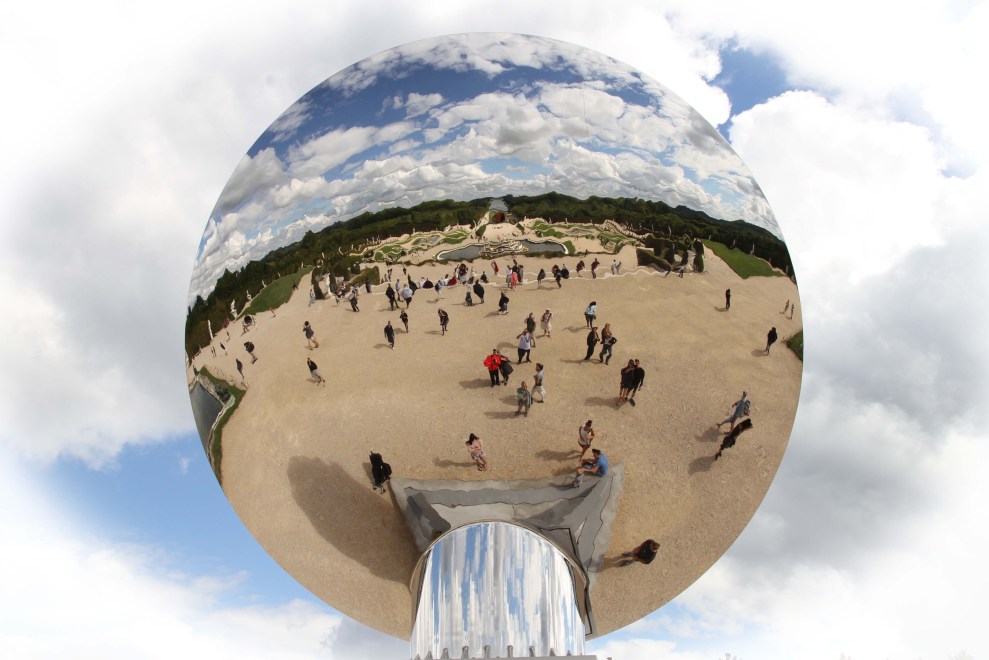
Anish Kapoor mirror balloon, included in the entry price to Versailles
And car parks, if they charge at all, usually cost somewhere between one and three euros for the whole day.
- French trains. A newish experience for us in our most recent holidays. Aside from the phenomenal TGVs, they’re suave two-decker trains. Even the local ones glide smoothly through the countryside at great speed and seem to be as punctual as their counterparts in Germany and the Netherlands. And, again, they’re so cheap!
- Wonderful old buildings that have been dragged into the twenty-first century. I once read that one in every forty-nine buildings in the UK is listed or had some kind of preservation order slapped on it. Whilst I understand the principle of this and broadly agree with it, we do seem to do to death preoccupation with our built heritage (As a bookseller, I’ve been on the other side of the fence: it’s virtually impossible even to knock a nail into the wall if your bookshop’s in a listed building). The French must have even more old buildings than we do; they’ve survived better because of the climate. Mediaeval barns and pigeonniers and other ancient agricultural buildings abound; many holiday houses are hundreds of years old. The town nearest the gîte I’ve just stayed in is dominated by a donjon built in the early eleventh century. It had a fifteenth century church and many Tudor-style buildings (a timber and mortar architecture I’d not encountered in other parts of France).
 The French don’t ruin these buildings (I don’t actually think they go overboard on bricolage), but they aren’t precious about them, either. On my way back to the UK, I stopped in an old market town for breakfast at an old-fashioned bar, complete with plastic tables and pinball machine, where several old men were playing dominoes. The fascias, at street level, were of plastic, too, but if you looked upwards the windows were mullioned, the gables (I’d guess) sixteenth century. A building spoilt or a building kept alive because people still enjoy using it? (As an aside, this bar, like many I’ve encountered, sells coffee to patrons and encourages them to buy their own pastries from the boulangerie next door. No ‘please do not consume food not bought on the premises’ nonsense!)
 - The people. I’ve already said quite a lot about them in this piece. Self-evidently, they are responsible for making France what it is. The current sick man of Europe? I’m sure they’d disagree with this smug recent IMF assessment of their economy, but even if they were to acknowledge there’s some truth in it, they’re clearly intent on having a ball while they convalesce.


A-less-than-favourite favourite rail journey…

Cross Country train approaching Wakefield Westgate
I’m writing this on the train to Glasgow, where I’m about to attend a conference. It’s a Cross Country train. Though I haven’t had a duff experience on Cross Country trains before, on this occasion I’m finding the service a little less than up to snuff. I’ve got a first class ticket (cheap weekend deal) and have been looking forward to being pampered in the way I have enjoyed so much on GNER / East Coast trains. The last time I travelled first class on one of the latter (cheap weekday deal, unsociable hours), I was regaled with tea, biscuits, vodka and tonic, sparkling water, pasta arrabbiata with salad garnish, a packet of crisps, fruit, some date and walnut cake, a glass of wine and coffee. And a free copy of The Times. All included in the price of the ticket! By the time I staggered off that train, some two hours after I had boarded it, I’d have been happy to phone the Prime Minister and tell him how wonderful the experience was, if any of the crew had asked me to.
The standards on the present train are a little different. When I boarded, First Class was jammed with people, including one occupying my reserved seat. To add insult to injury, he was wearing a purple jumper. I was told that there were no seat reservations operative on the train, ‘as the system is down, but we have some boffins trying to fix it’. I was advised to grab or fight for a seat, on a may-the-best-woman-win type of basis. I decided to keep close watch on a man who hadn’t taken off his coat – a tell-tale sign that he wasn’t planning a long journey (I’m not a crime writer for nothing; I can read clues!). Sure enough, he ‘alighted’ (I’ve no idea why all train guards use this poncy term – perhaps they have a vision of the gossamer-winged traveller, wand in hand, floating like a dandelion seed from train to platform) at the next station, possibly relieved that I didn’t try to follow him, as he might have thought I was a stalker, and I hopped into his seat sharpish before another crowd of people with worthless seat reservations got on.
If I’m sounding like a grumpy old woman so far, that’s probably because by this time I’ve had a glimpse of the at-seat menu. The ‘complimentary’ food available consists of tea, coffee, water, fruit cake, biscuits and crisps. And there are lots of ‘ors’ on the menu, implying that two choices maximum would be seemly. I haven’t got to my age without knowing how to push the envelope, so I have demanded tea, water, fruit cake (which turns out to be one inch square and plastic-wrapped) and crisps in short order, in a very firm, dowager sort of voice. To this I’ve added an egg-and-cress sandwich and a tiny bottle of Pinot Grigio from the ‘paying’ menu (no hot food available – that will be £7.95 to you, Madam). There is not a newspaper in sight, although I have seen that a lady seated nearby is doing the crossword in Woman’s Weekly. I doubt if this has been supplied by Management. (I’ve also seen Management – he hides in the still room, guarding his supply of complaints forms, and twitches if anyone barges through to ask him about seat reservations.)
However, now I have eaten my sandwich and drunk my Pinot Grigio, water and tea and inspected the sell-by dates on the cake and crisps to see if they are fit for human consumption, I have to admit that I am quite enjoying myself. For a start, one of my fellow travellers is a man with two collies – I thought there was only one at first, but another peeped round from the seat behind mine and fixed me with her liquid eyes – and he has demanded not one, two or three, but four bottles of still water to put in their water bowl. And he wants free cake, crisps and coffee as well. So he has busted my temporary record of four free items by a margin of three… but I’ve been able to stroke his two lovely dogs to console myself for the disappointment!
And then there’s the journey itself. Of all the journeys I undertake, this one wins hands-down for interest and enjoyment. Already, from this train today, I have seen the innermost secrets of Victorian Leeds and the architectural wonder of York Station and I’m looking forward to the dour but unique crumbling red brick of the station at Darlington, Newcastle’s panoramic kaleidoscope of aesthetically gob-smacking, state-of the-art bridges, stupendous river, industrial buildings and purposeful roads, Alnmouth’s deceptive sleepiness (it lies between the buzzing commuter town of Alnwick and the lovely village of Alnmouth itself, on the gloriously beautiful Northumberland coast) and, best of all, the sight of the majestic, historic, sandstone bridge at Berwick-on-Tweed with the huge sweep of sea beyond it. And after Dunbar (another favourite place, with its Braveheart-style castle) and venerable, stately Edinburgh, I shall eventually arrive in vibrant Glasgow. Not to mention the fact that I’ve had time to map out the next few chapters of The Crossing (D.I. Yates 4).
So what’s not to like? Well, if Arriva’s UK rail Managing Director Chris Burchell is reading this, I have a message for him. At a push, he might get away with this service on the basis that it’s the weekend and the destination is magical, mystical Scotland, but he should know that I’m very glad that it’s Virgin, and not Arriva, which has won the East Coast franchise, because, on the basis of my experience today, the prospect of an Arriva standard for my regular, working week, London-and-return journey would fill me with despair. Next time I board the train at King’s Cross, I’ll be looking forward to what I’ve missed this time: tea, biscuits, vodka and tonic, sparkling water, pasta arrabbiata with salad garnish (or similar), a packet of crisps, fruit, some date and walnut cake (or similar), a glass of wine and coffee. And a free copy of The Times. All included in the price of the ticket. I understand that Arriva’s Cross-Country franchise has been extended to 2019 from the original 2016; that’s a pity, but perhaps Virgin will win it next time around…

Up t’ pub… with spring in the step…
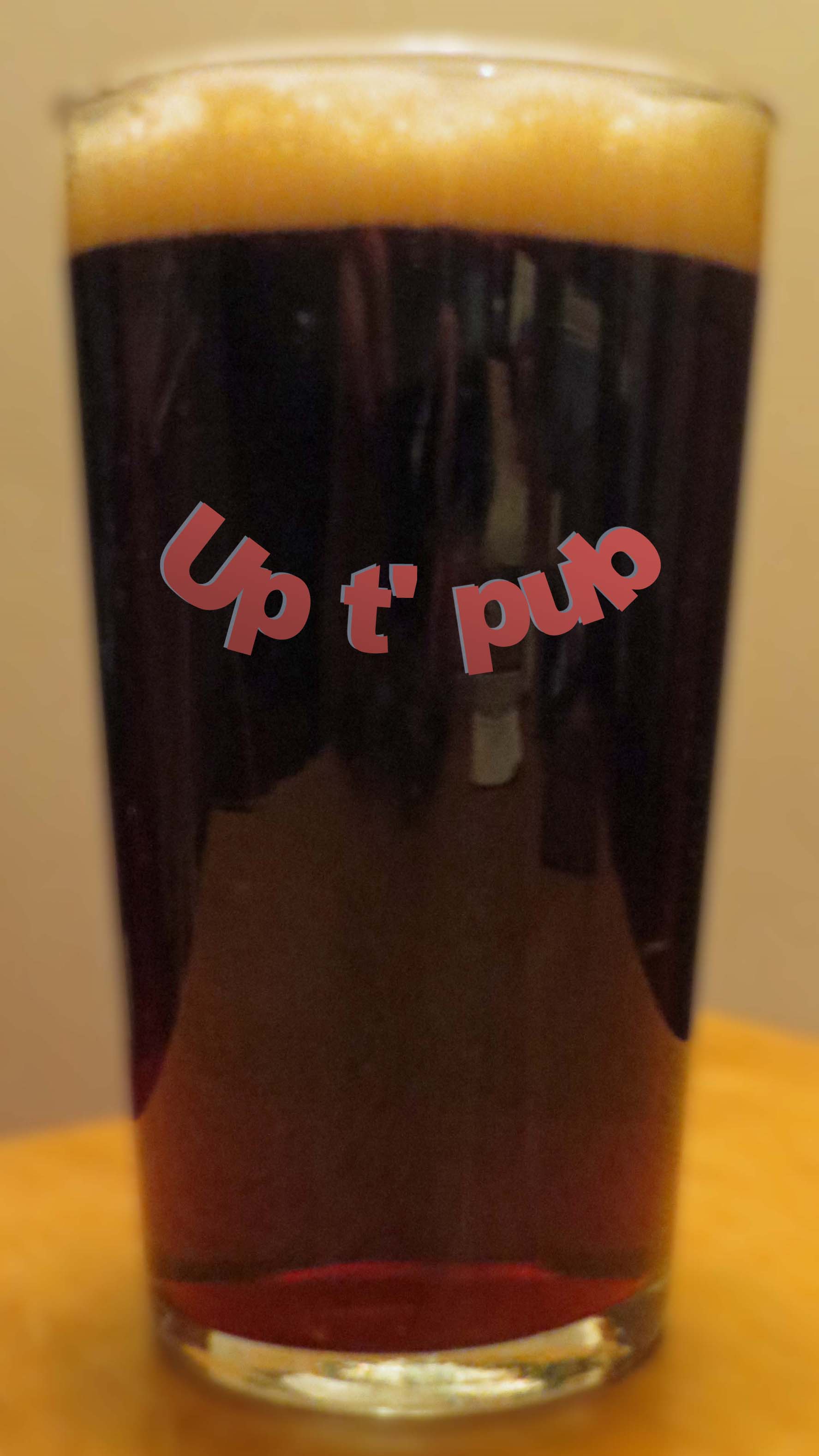
I’d like to celebrate this, the first weekend of spring, by offering homage to my local pub. It’s been there all winter (and, I guess, for several centuries of winters, as it’s a former inn on an old drovers’ road), a perennial stalwart, dispensing warmth, hospitality and good cheer on the coldest and most miserable of evenings. It boasts an open fire and its own generator, which means that when there’s a power cut or the water supply fizzles out (not infrequent events in this village) we and all our neighbours can rely on the pub to produce heart-warming soup and sustenance in our hour of need. There are no other buildings in the village except houses and a deconsecrated church – we don’t even have a shop – so the pub also does sterling service as a polling station for both local and general elections. Not surprisingly, this village always achieves a high turn-out. Most of us vote in the evening, which gives us a chance to catch up with each other and sample the beverages on offer at the same time.
Yesterday evening was light and clear. The trees across the valley had just begun to bud and were glowing with promise in the hazy sunshine of the early evening. The local sheep have now had their lambs, which were bleating softly. The towns across the valley were also tinged with the glow of the setting sun. As on many first days of spring, however, there was a fierce wind and some of winter’s chills still lingered in the air. My husband and I, out with the dog on his evening perambulation, decided to call in at the pub.
It is only a slight exaggeration to say that all human life was there. A group of four beer-bellied blokes occupying a corner table hilariously trooped out together every half hour or so for a cigarette break, and then trooped back in. A large family, complete with granddad (who seemed to be footing the bill) had just finished an early supper. Also eating supper was a morose middle-aged couple who appeared not to be speaking to each other. A largish hen party came in, evidently consisting of the bride and her mates plus her mother and several of hers. She was wearing a sash proclaiming her a bride to be, a crown of tinsel and, somewhat incongruously, some red ‘Rudolph’ felt antlers left over from Christmas. A little later, an extremely thin, elderly woman arrived, the advance reconnoitring party for another group of ladies, these somewhat older. She left the pub briefly before returning to usher them all in, so it must have passed her selection criteria for acceptable hostelries. The usual old cronies were seated on high stools at the end of the bar, putting the world to rights. More young men braved the trestle tables outside, clearly finding the cold preferable to the prospect of losing seats inside whilst out for fag breaks. And there were several ‘casuals’ in for a swift pint before departing, all of whom stooped to stroke the dog. The landlord, a dog-lover, brought him a handful of chews.
And, of course, included in the number, a pair of wellie-wearing eccentrics with an amiable hound, all three a little miry around the edges.
City pubs have an aura of their own, a suave immaculateness inspired by fierce competition and, for the most part, a shifting clientele that harbours no sentiments of loyalty. There is something quite different, timeless as well as uplifting, about a country pub and its dynamic. Dressed in mediaeval clothes, the patrons of my local yesterday evening might have been encountered by Chaucer and his pilgrims, in an inn en route to Canterbury. And I’m sure they’d all have had a tale to tell…
The turn of the season…

The last of the Brussels sprouts
Last Saturday, I helped my husband to prepare his allotment, for sowing with a new cycle of plants and seeds. He needed some assistance, because during the long winter months the shelter that he and his partner-in-grime had built over it last year to foil the pigeons (it succeeded) had collapsed under the weight of an unexpectedly heavy fall of snow. Carefully, we untied some dozens of pieces of binder twine and rolled up long lengths of chicken wire to ready them for the grand rebuilding. Improved design, he says, will help to prevent the same happening again; we shall see!
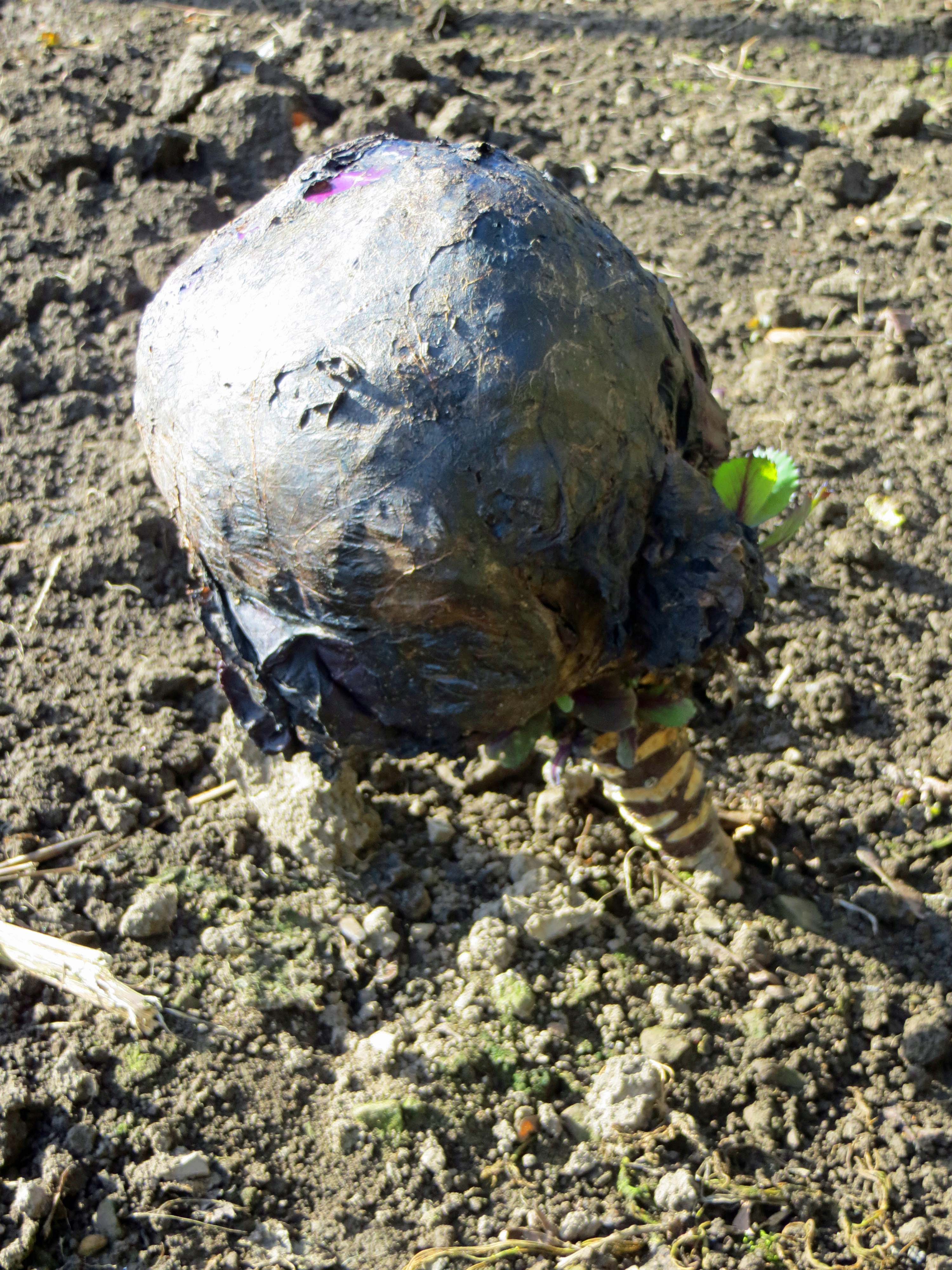
Red cabbage in a winter shroud
Partly because they were pretty difficult to reach amongst the debris of broken timbers and chicken wire, and partly because we’d had some over-supply, leftovers of last year’s crop remained, a brassica graveyard. Eight or so stalks of blackening Brussels sprouts tilted in a broken rank towards the boundary fence, a row of wounded soldiers at their last gasp. Several misshapen kohl rabi poked from the earth like a giantess’s bunions.

Kohl rabi bunion
Some heads of red cabbage, severed from their stalks, lay on the ground, broken and rotting, their outer layers turned into slimy winding sheets. Their lone companion, still growing, had grown a new rosette of small heads after the original cabbage had been cut, twisting itself into three dark petalled shapes, a macabre bouquet paying last respects at the funeral. Dried sticks of weed poked through the soil, which glistened unhealthily with a scattering of glossy green clumps of over-wintered willowherb and expanding whorls of nipplewort.
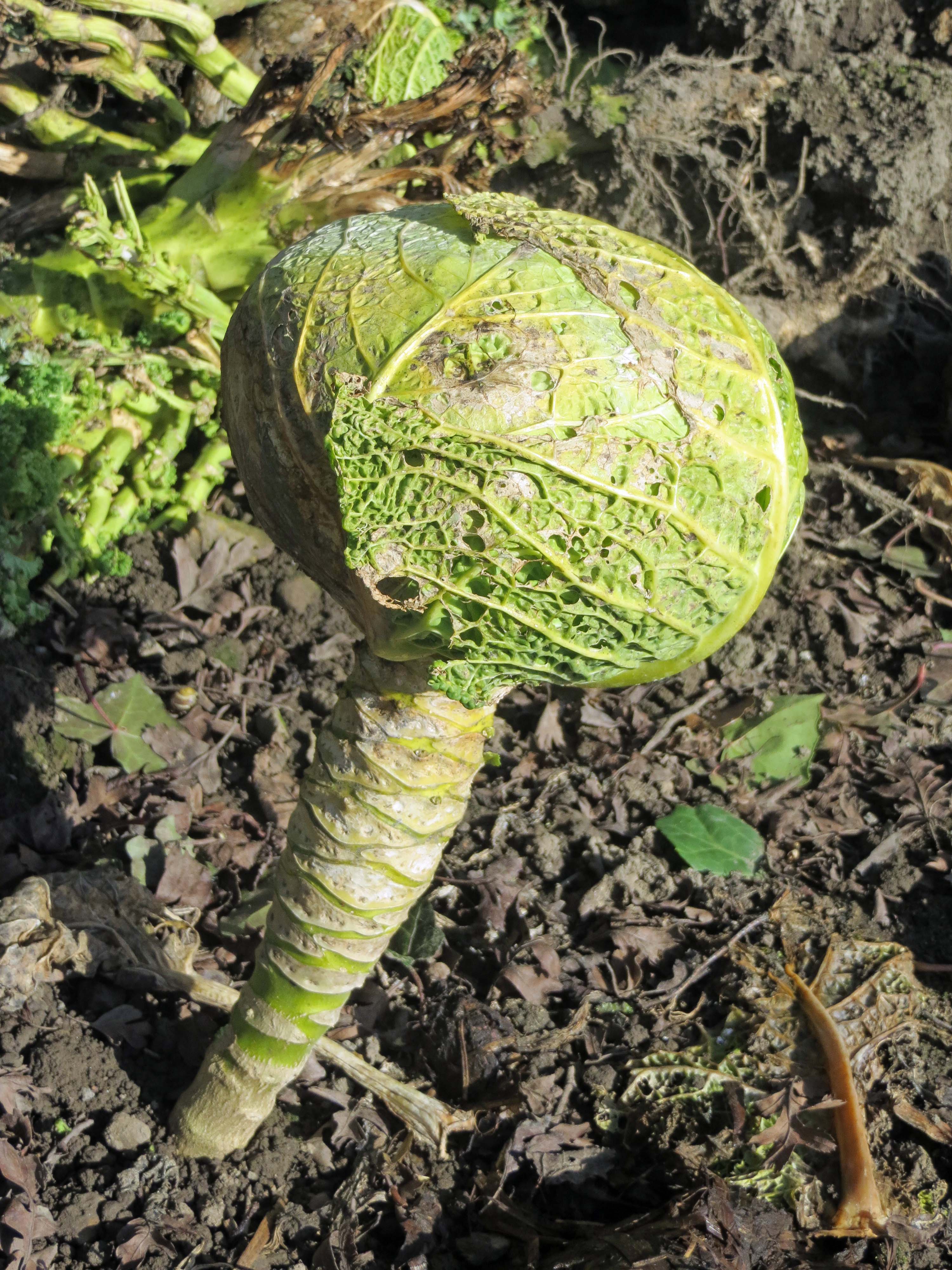
Savoy cabbage in terminal decline
Overhead, the sun shone with real warmth. New purple buds were swelling on the tangle of hawthorn twigs in the gateway. The bees in the adjoining apiary were flying, great tits were two-toning in the hedge and a lone hare loped away over the meadow. Spring was on its way, but I don’t recollect having ever been so vividly aware of the round of decay that must precede renewal.
Oddly, I found it comforting: it was as it should be. And somehow it made me feel more philosophical about death. Each plant and creature has its time. Then comes the Grim Reaper. It is only seemly. And there is something wonderful about the soil which is both grave and nursery; now it is manured and turned, I am reminded of the beauty of Gerard Manley Hopkins’ ‘shining-shot furls’ of ploughed land, from which will spring new life.
Do buy…
January and February have been almost wall-to-wall work, with a great deal of travel to boot. I have already written here about my trip to Malaysia. The following week I was in Dubai (or ‘Do buy’, as the locals call it, with a fine mixture of wit and cynicism). As I returned to the UK two weeks ago, I realise that it’s a little late to write something newsworthy about my visit, but, since it was a fascinating experience – and Dubai is quite different from anywhere else I have been – perhaps you will indulge me by allowing this very belated post.
Dubai is about bling. Not out-for-the-day, cheap-and-cheerful Blackpool and Skegness bling, but the real thing – although I realise that I may be drumming an oxymoron into service by saying so, much as if I’d asserted that Tinseltown was genuine. I’ll revise that a little, therefore. Dubai is expensive. It’s not a place to visit unless a) you have plenty of money (or someone else is footing the bill) and b) you don’t mind paying through the nose for everything, including items that come either cheap or free in other places. The £20 charge for twenty-four hours of Internet access is but a minor example. Most things, from bottled water to chocolates to dinner, cost roughly one and a half times as much as in the UK; and you don’t even think about buying alcohol! A tiny bottle of brandy from the mini-bar will set you back 120 dirhans (that’s about £25); the cheapest bottle of wine in the restaurant that I visited was 270 dirhans, or more than £50. Sure, certain pleasures, some not even legal in the West, are openly available. For example, the second hotel in which I stayed had a private beach, at the top of which were, sitting in a circle, several gentlemen resplendent in djellabas and smoking hookahs. I can’t be entirely certain, but the substance they were exhaling smelled suspiciously like skunk.
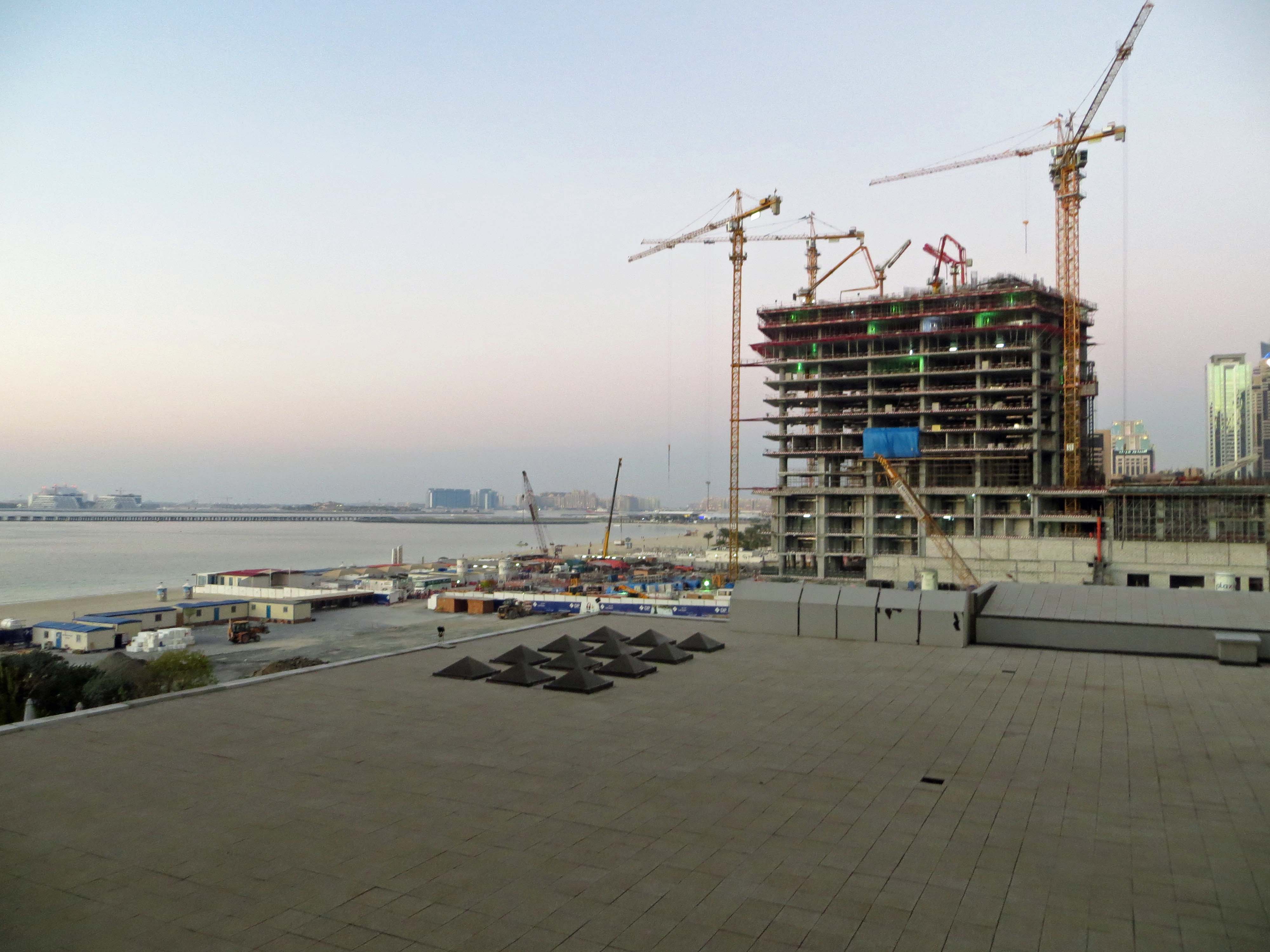
Despite the cost and the noise – the place is like a giant building site and, indeed, is said to house one third of the world’s cranes at any one time – Dubai is immensely popular. The serried ranks of hotels stretch for mile upon mile – all the major international chains are represented – so that you’d think there would certainly be over-capacity. However, when by mistake I was booked into my business hotel for two nights instead of three and had to find another, it took several attempts to discover one that wasn’t fully-booked. This second hotel was an eye-opener. It was aimed at holidaymakers rather than business people, so my room, of very modest size, contained two double beds, a balcony overlooking a giant red crane that presided over yet another building site, a well-stocked and exorbitantly expensive mini-bar (with a ‘free’ plastic bag in which to collect ice from the machine in the corridor) and the most magnificent range of ‘free’ toiletries I have ever encountered in a hotel. These included a ‘bath massaging bar’ and ‘moisture infusion facial bar’ (soap to you and me), some mega-rich body cleaner (alias shower gel) and an after-sun cool-and-calm gel (this item accurately described). I must admit that I’m a sucker for toiletries, and these went some small way towards selling me the Dubai dream – or should I say, mirage?
So what is the attraction of this place, which one hundred years ago was just a little village in a rather uninteresting, out-of-the way bit of desert? Put succinctly, what Dubai has to offer, especially to those from more northern climes when the end of January has yet to arrive, is sun, sea, sand and shopping. Oh, and ‘sophistication’. However sceptical I may be – and I tend to choose holiday destinations for their potential for providing either exercise or some insight into culture and history, so Dubai would never have been a natural choice for me – the entrepreneurs who have brought and are still bringing their many cranes and pile-drivers to Dubai have achieved a spectacular success. They’ve created the illusion that a sun-kissed paradise and moneyed leisure are temporarily within the reach of those who aren’t mega-rich, but merely a little better off, or rather a lot better at saving up for holidays, than the average.
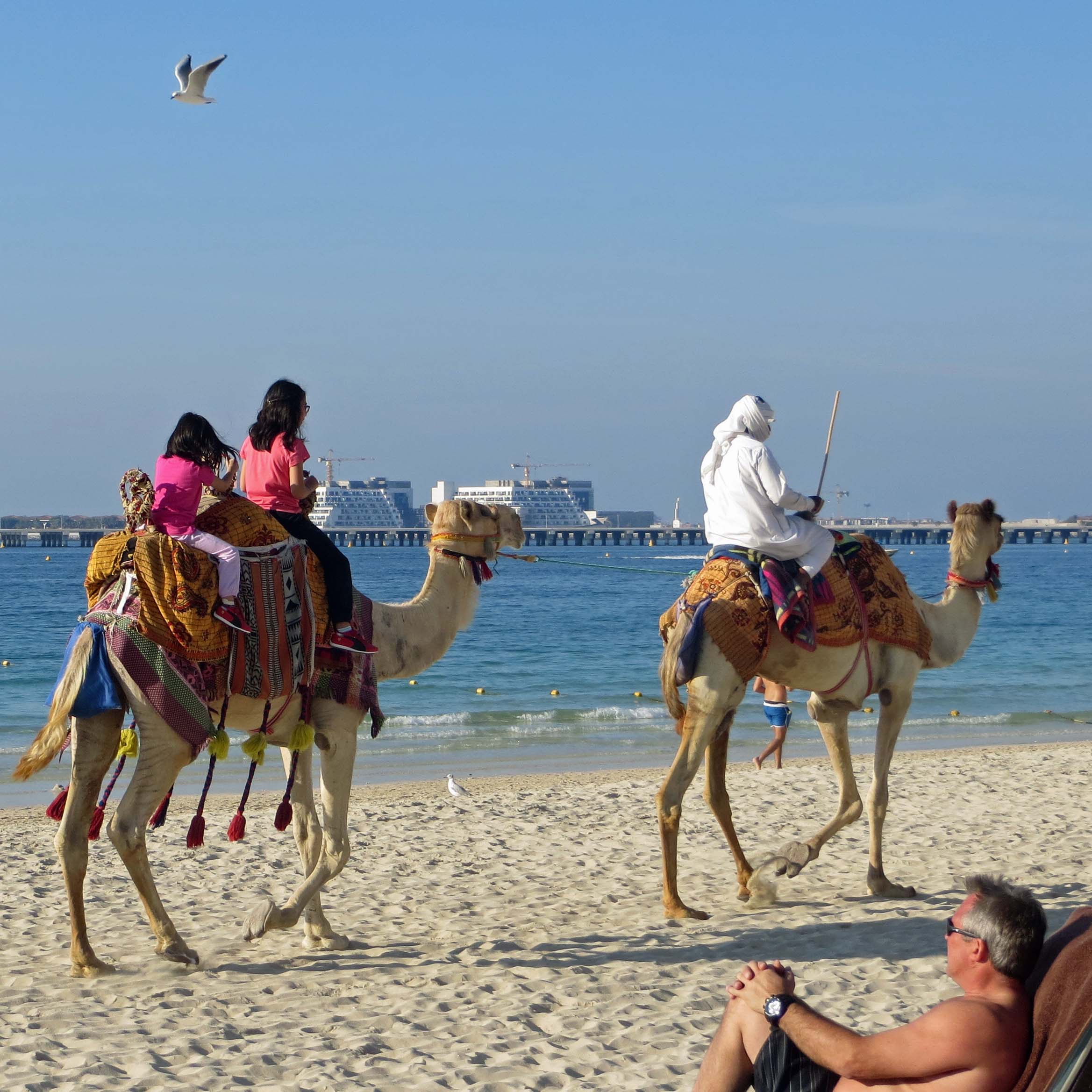
What to do in Dubai becomes a challenge if you don’t go with the flow. This consists of lying on the beach (the second hotel had a tennis-court-sized patch of ‘private’ beach, which it thought entitled it to a certain cachet), paddling in the sea and swimming in the pool, in between ordering drinks and burgers from the liveried black stewards who hover solicitously. Oh, and if you fancy something a little more exotic, a man swathed from head to foot in white, like an extra from The English Patient, passes by on his camel every ten minutes or so. He is leading another camel, on which you can buy a ride. I watched several portly, middle-aged English and American men engaged in this activity, and concluded that they must have been deprived of donkey rides as children.
What did I do? I arrived at the second hotel mid-afternoon, having spent more than a day and a half working quite intensely. Venturing out to explore the private beach, where I was able to exchange the token given to me by the hotel receptionist for a bath sheet, I was escorted by one of the liveried stewards to a sun-lounger, across which he carefully angled an umbrella so that I wouldn’t burn. I then stretched out and fell asleep, waking only an hour and a half later. It was the first time I’d sun-bathed on a beach since I took a summer 1977 holiday in Brittany (where the weather was a good deal more chancy) with some beach-loving friends. When I woke up, I enjoyed myself watching people passing (including those on the camel) for half an hour or so. When two hours were up, I was bored and returned to my hotel room to use my absurdly-expensive Internet connection to send some e-mails.
It was an experience, certainly, and one enhanced by a star-lit al fresco dinner (They weren’t really stars, but the lights on the ceaselessly toiling cranes; however, by removing my spectacles and exercising my imagination a little, I could convince myself that the Milky Way was smiling down on me.) in a roof-top restaurant where the food was delicious and the company (I was with two very congenial colleagues) even better. So, if you were to ask me whether I enjoyed my free half-day in Dubai, the answer would be, unequivocally, yes. But if you’d told me that I’d hit the jackpot and earned another six days of leisure there before I could go home, I’m not sure my sanity would have been equal to the privilege.
Assalamu alaikum, people of Kuala Lumpur
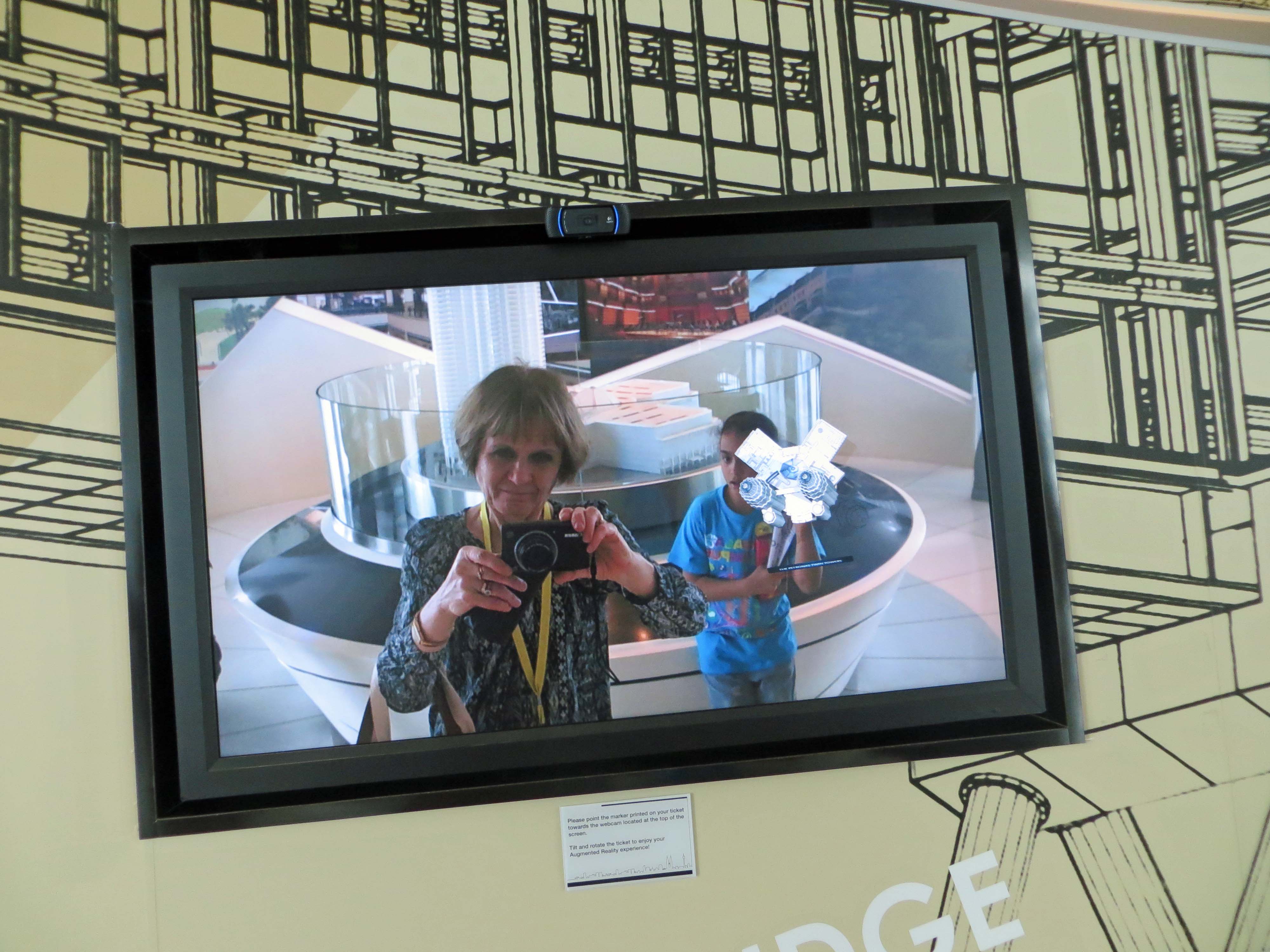
Composing oneself at the top of Petronas Towers

“It’s only a model!”
Last week, the day job took me to Kuala Lumpur. I was away for five days, two of which were spent travelling almost around the clock (mad, I know, but I assure you it was worth it!). Once I had arrived, I was privileged to be the honoured and somewhat overwhelmed guest of two universities in the city. My impressions of the country and its people during so short a stay, although vivid, are therefore inevitably sketchy, so I apologise in advance for any observations that may strike those who know Malaysia better than I do as either incomplete or simply wrong.
Malaysia is a young (just over half a century since independence), very proud country, and also a thrustingly ambitious one. All of these qualities are epitomised by the twin towers – the Petronas Towers – that were built in the KLC district of the city in 1998 and are now the tallest twin towers in the world. Following many recommendations from my Asian colleagues, I chose to spend most of my single free half-day travelling to them and taking the tourists’ trip to the top. As the Towers are eighty-eight storeys high, this provides a panoramic view of Kuala Lumpur and delivers a 360-degree demonstration of just how much development work is taking place there. High-rise buildings are everywhere and many, although dwarfed by the Petronas Towers themselves, are giants by UK standards. Nor is it all about size: most of the buildings are beautifully designed and Malaysians are increasingly strict about the standards of architecture they consider acceptable for their capital city. Whilst at the top of one of the Petronas Towers, I was lucky enough to see an inferior skyscraper being demolished: it collapsed in clouds of black dust.

In the race to the top, one down… and more, I think, to go.
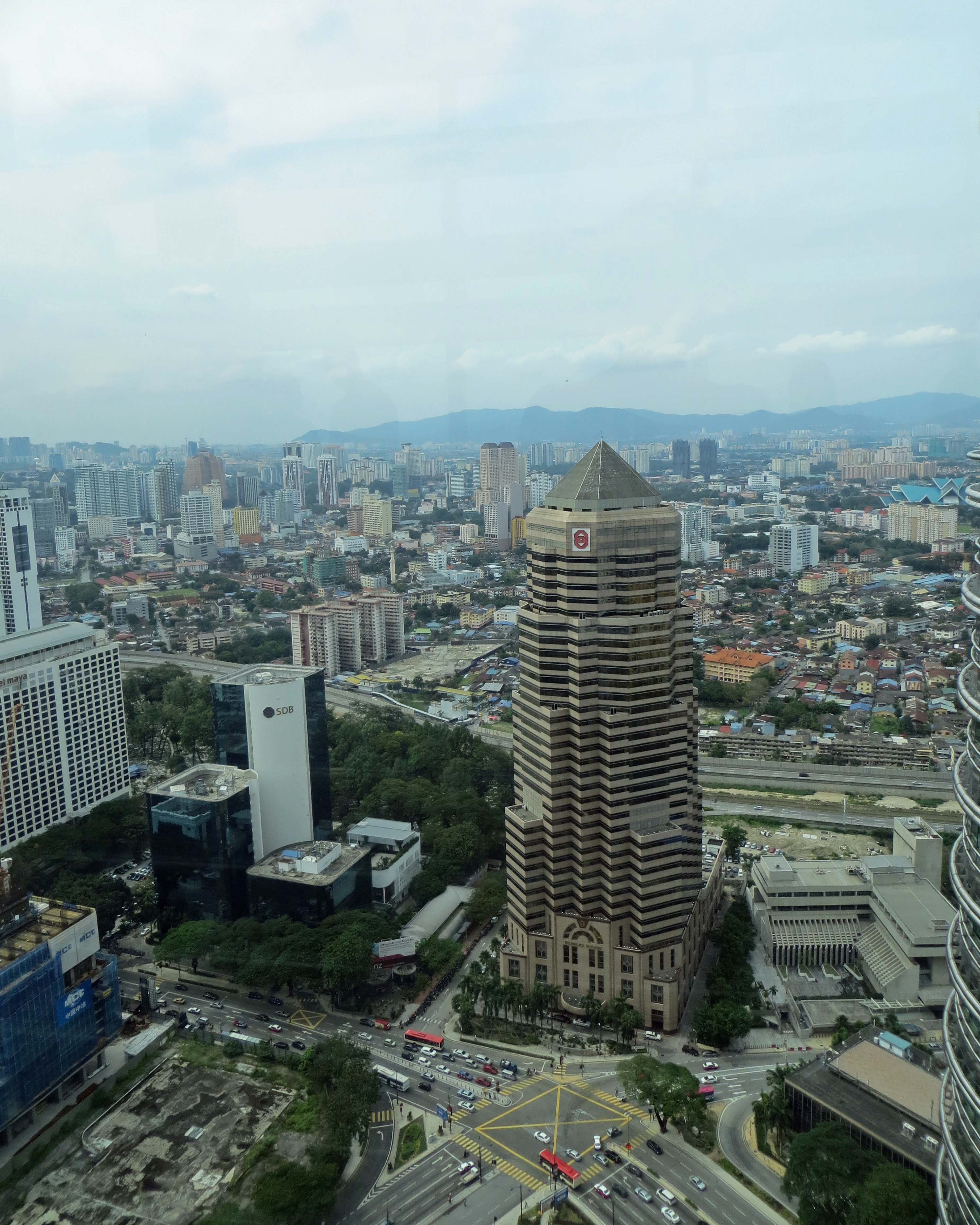
A view from the bridge… between the towers

Another view from the bridge
As I’ve said, my impressions are based on only a little information, but it did strike me that Kuala Lumpans are in such a hurry to become world leaders that they are in danger of destroying not just their immediate past, but also their much older heritage; and this notion resonated with some of my colleagues when I voiced it. I saw little architecture in the city that was more than thirty years old and nothing at all that was likely to have pre-dated my own birth.
Yet, paradoxically, despite their keenness to ‘get on’, the overwhelming majority of Malaysians whom I met, almost all of whom were extremely well-educated, were gentle, polite, courteous, humorous and modest. They were not ‘go-getters’ in the sharp-elbowed sense. They have their own, highly honourable, way of making progress in today’s world. Much of this stems from the fact that they are also very devout. At both of the universities that I visited, the call to prayers sounded five times each day. The prayer rooms hold only twenty to thirty people and those not able to take part exactly on the hour await their turn patiently, but they make it quite clear, whatever the task in which they are engaged or the conference or focus group to which they are contributing, that prayer comes first.
Despite this apparent unanimity about how things should be done, I did observe some collisions as Eastern values met Western ones; not, however, at the universities, where highly-qualified librarians and academics have no problem with reconciling traditional dress and customs with exacting, high-profile jobs. The suite of rooms in which our meetings took place are normally occupied by eminent doctors and surgeons and are designed to help them relax from cutting-edge medical research and surgical operations. That we were very privileged to have had them generously give up these quarters to us for a whole day was not lost upon us.
Most of the men and women employed by the university wear traditional dress. This is at once exuberant and dignified. The men’s tunics and the women’s shalwar kameezes (they call them this, even though mostly the garments consist of three-quarter-length tunics and long skirts, rather than trousers) are beautifully made, often embroidered or sequined, and frequently in very bright colours. Sometimes the women wear tailored versions in heavy silk. The more austere outfits are a little more nun-like, and stick to plainer cloth – usually cotton – in light blues, greys and navy. But all these advocates of traditional dress wear their clothes with pride and often the women fasten their hijabs with many-jewelled brooches or enhance them with a framework of pearls. I saw no black burqas or niqabs at the universities.
Where I did see one such outfit was at the Petronas Towers. Since these are frequented by tourists, its owner may not have been Malaysian. I could see from her eyes and deduce from the age of her husband that she was very young – probably a girl still in her teens. And she didn’t look unhappy: he was holding her hand and they were walking along together, laughing. What was striking was the difference between this couple and another Asian couple (again, of course, I cannot make an accurate guess at their nationality), also taking the Twin Towers tour and also holding hands. The girl, also probably in her late teens, was wearing a short-sleeved black T-shirt and immaculate, but very short, white shorts.
How will Malaysia’s future unfold? From now on, I shall be fascinated to observe and find out. I hope that it will prosper as it wishes, and I also hope that it will at the same time manage to preserve its heritage and its traditions. I think that its most prominent religion may be the key: this week I was extremely honoured to have been able to immerse myself in how true Islam – tolerant, humorous, friendly, hospitable and forgiving – makes a huge contribution to the world in which we live.
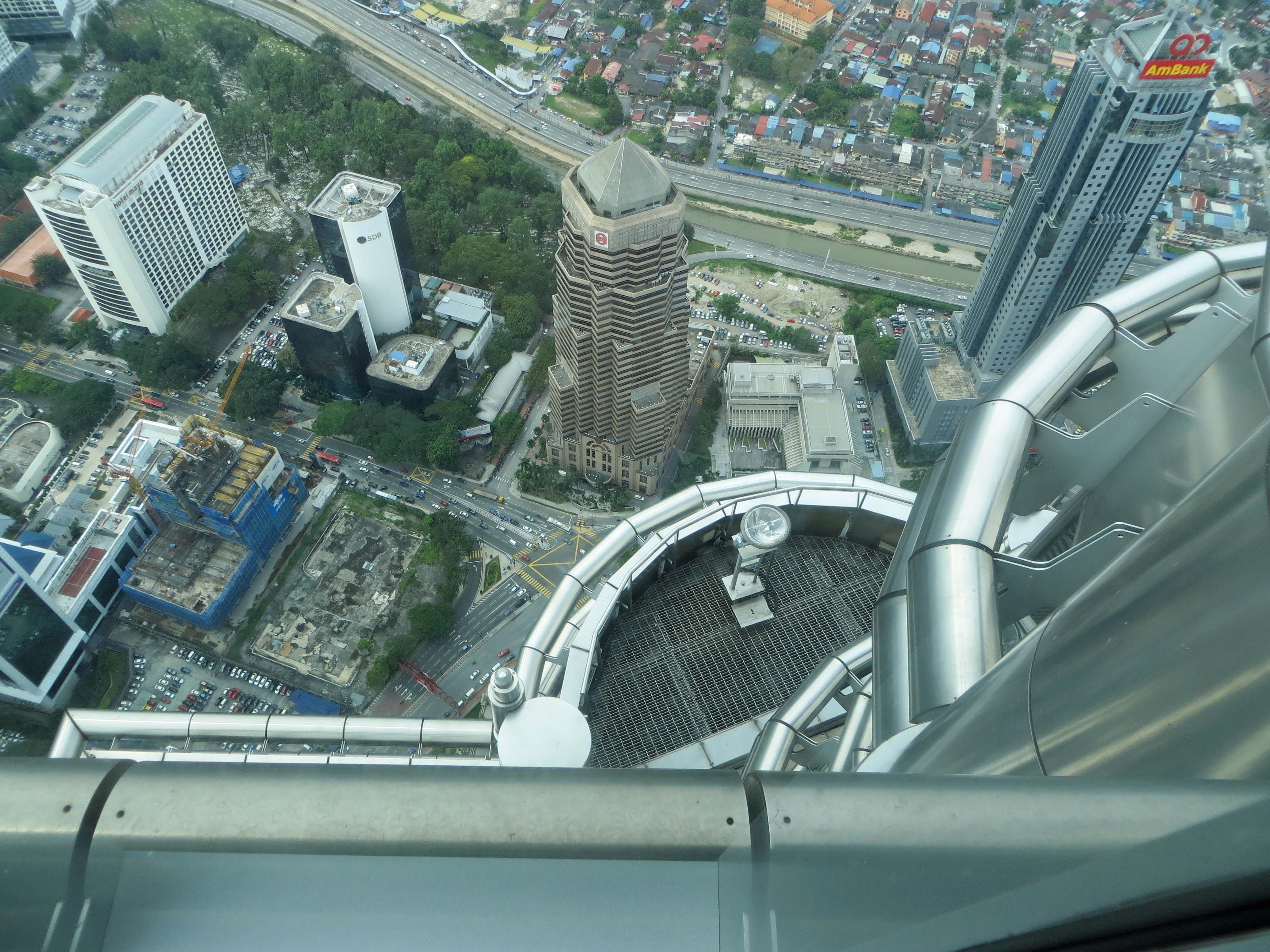
A sense of proportion?

And a sense of scale

And so high above all those!

A few degrees of the 360
 Christina James, crime novelist