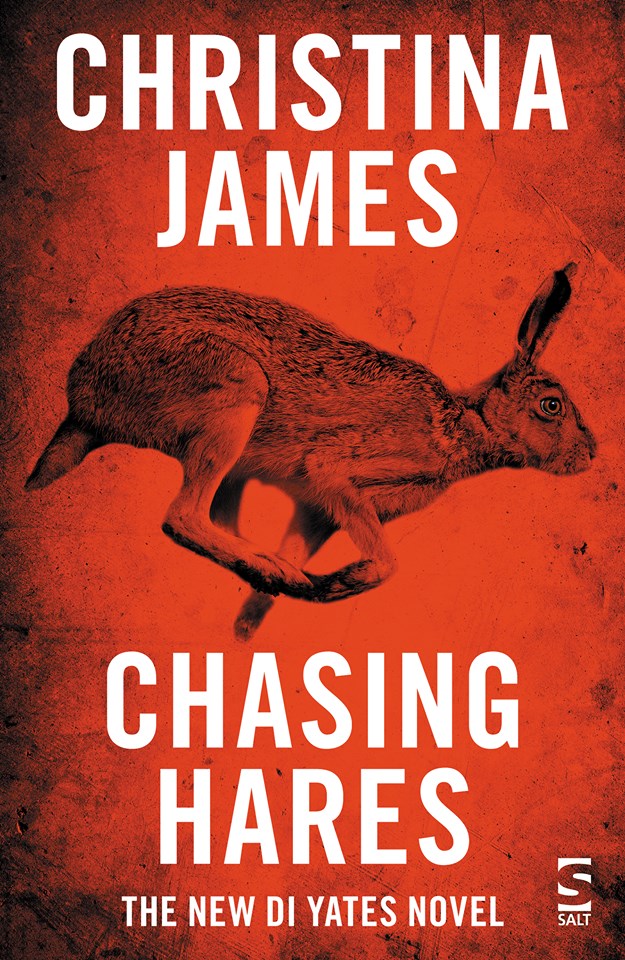


Next Thursday, 2nd May 2013: An Evening with Christina James at Waterstones Gower Street

Sam, the wonderful Events Manager at Waterstones Gower Street, has organised ‘An Evening with Christina James’ on Thursday 2nd May 2013. It will start at 6.30 p.m. and last for perhaps an hour. I shall be reading a short excerpt from In the Family and perhaps also one from Almost Love (which will be published in June), and offering a few tips, from a personal perspective, on how to get published. After this, there will be a short Q & A – and a glass of wine! The event is a sort of forerunner of a larger Salt crime event that will be hosted by Gower Street on 23rd May 2013.
I know that readers of the blog are scattered far and wide and that some of you don’t live in Europe. Wherever you are, I am very grateful to you for your interest and have been delighted to ‘meet’ you on these pages. For those of you who happen to be in London next Thursday or can travel there easily (and would like to, of course!), I should be delighted to have the opportunity to meet you in person.
The most compelling first novel I’ve read in a long time…
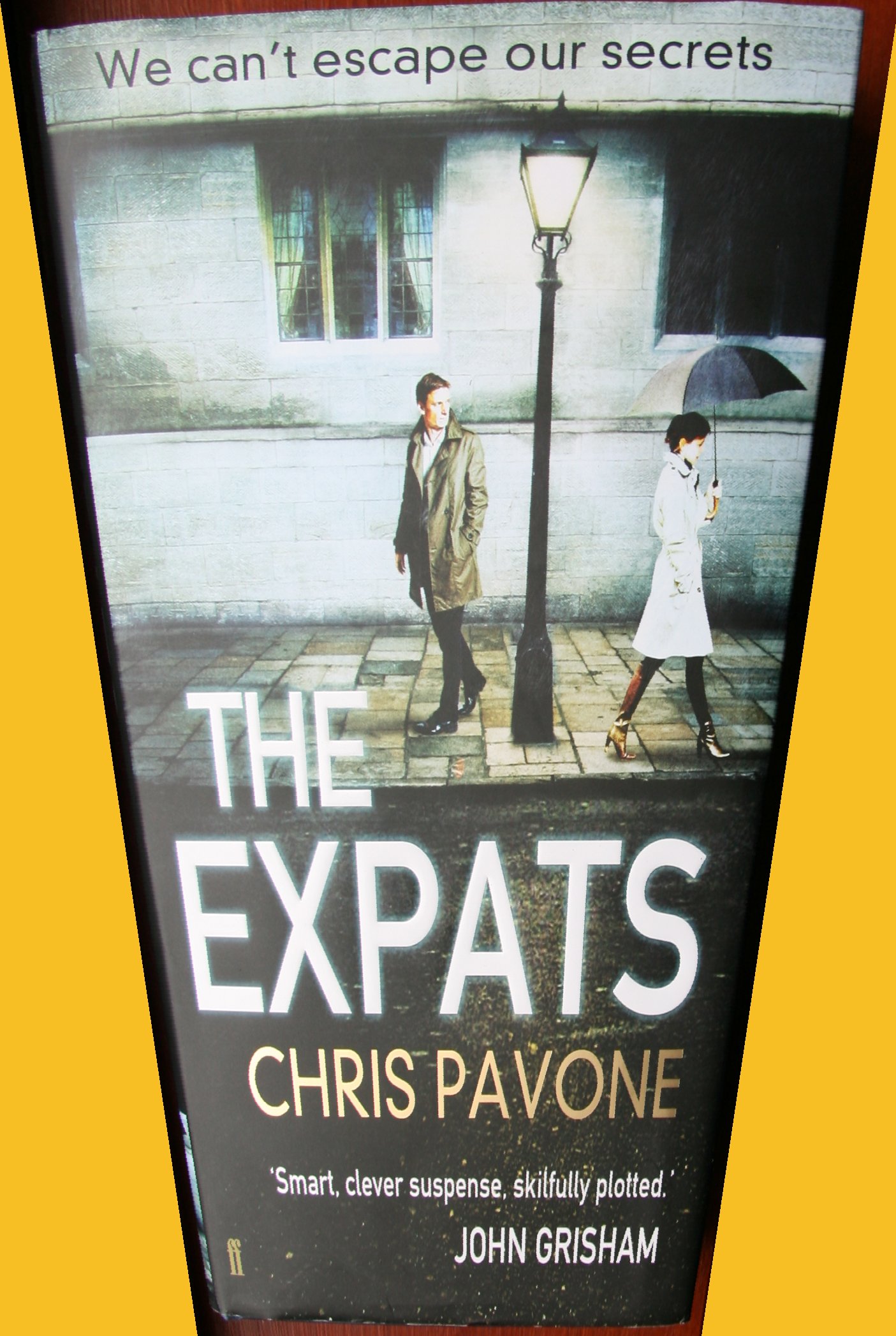
The Expats, by Chris Pavone, is undoubtedly the most compelling first novel I’ve read in a long time. Since the blurb says that the author has been a book editor for twenty years and his list of people to acknowledge includes such luminaries as Molly Stern, Angus Cargill and Stephen Page, I conclude that he had a bit of a head start over most new fiction writers, but I wouldn’t want to hint, even for a moment, that the author of this brilliant book does not deserve heaped praise.
The overall plot is a little reminiscent of that of Mr. and Mrs. Smith – and, indeed, I could imagine Angelina Jolie and Brad Pitt playing the lead roles if the novel were ever made into a film. Like the Stieg Larsson novels, it is also about an expert hacker. Pavone is more subtle than Larsson when he explores the moral issues connected with the murky worlds of undercover agents and hackers – the female protagonist, Kate Moore, especially ponders whether an illegal or dishonest action can be justified in order to promote a greater good, and does not find reassuring answers.
The characters of Kate and her husband, Dexter Moore, are especially well-drawn and the portrayal of the two ‘villains’, Bill and Julia, is very successful, because for most of the book the extent and nature of their villainy is difficult to gauge; in fact, at one stage, we are made to think that they might be good guys after all, though the reader’s gut instinct is not to trust this possibility. I also love the character of the Smiley-like Hayden, who has a rich cameo part.
The author’s descriptions of various European settings – Paris, the Alps, Amsterdam and, above all, Luxembourg – are compelling. Twists and turns of plot continue until almost the last page, but never seem far-fetched. If I have a very minor complaint, it is that Kate’s sudden access of sentimentality at the end is unconvincing.
One small sadness is that, although I should like to see more of Kate in future novels, the ending makes this unlikely (though not impossible). Whatever Chris Pavone’s plans for his next book, I await it with impatience.
Footnote: Tomorrow I am going to a conference (day-job!) and shall be away for five days. I shall continue with the blog-posts, however. Regular readers of the blog may remember that one of the early posts was about how I trained for In the Family by writing a series of short stories, at Chris Hamilton-Emery’s suggestion. There are ten stories altogether. I’ve been revising them recently and may try to publish them. For each of the next five days, I intend to post on the blog the opening paragraphs of the first five. If you’d like to make any comments, they’d be extremely welcome.
Putting a person to a name… Waterstones Gower Street
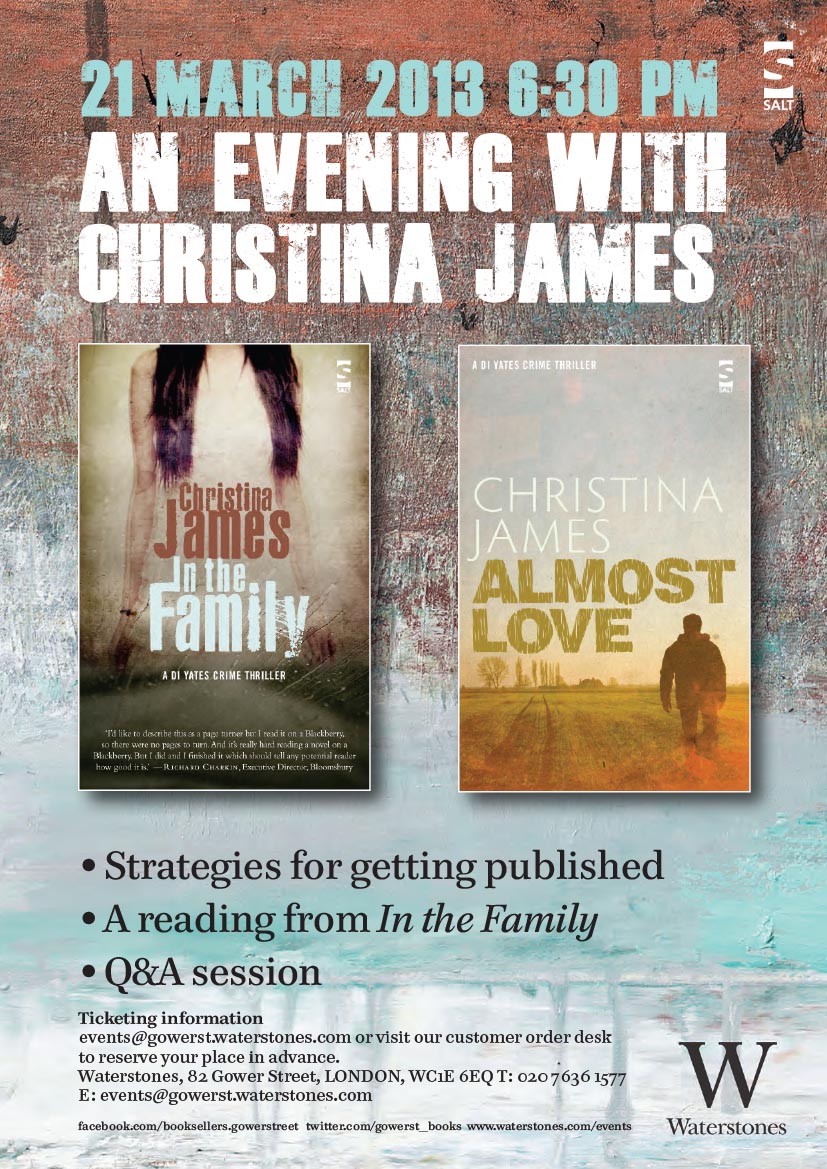
As readers of this blog have often kindly expressed an interest in my books, I thought you might like to know that an event has generously been organised for me by Sam, the wonderful Events Manager at Waterstones Gower Street, on Thursday 21st March 2013. It will start at 6.30 p.m. and last for perhaps an hour. I shall be reading a short excerpt from In the Family and perhaps also one from Almost Love (which will be published in June), and offering a few tips, from a personal perspective, on how to get published. After this, there will be a short Q & A – and a glass of wine! The event is a sort of forerunner of a larger Salt crime event that will be hosted by Gower Street on 23rd May 2013.
I know that readers of the blog are scattered far and wide and that some of you don’t live in Europe. Wherever you are, I am very grateful to you for your interest and have been delighted to ‘meet’ you on these pages. For those of you who happen to be in London next Thursday or can travel there easily (and would like to, of course!), I should be delighted to have the opportunity to meet you in person.
Proofs positive…
One of the most interesting things about proof copies is that you don’t own them. Most have printed on the cover that they cannot be sold. Some publishers also say: ‘This is the property of the publisher and not for sale.’ Yet I have never heard of a publisher who asked for a proof to be returned. The ones that I have, which represent some of my happiest years, working as the purchaser for a library supplier, will probably stay on my shelves until I die. Then they will be my son’s problem: will he ‘own’ them, or not? I suppose that he will take them on and become their guardian, just as I have been their châtelaine since they were young and untried.
I remember how I acquired some of them. Publishers’ reps get to know their customers’ tastes in literature, of course, and often they would produce two or three proofs from their bags and give them to me; or I would be sent one by post in advance of a launch. The biggest haul always came from Cape, Chatto and Bodley Head. These three companies (which were later swallowed up by Random House) jointly used the same sales team. For a number of years, the representative whom I saw, David Moore, used to drive across the Pennines from his home in Lytham St Annes, spend the night at a hotel in Wakefield and ‘travel’ the Leeds bookshops the next day. As my office was close to the hotel, he would call on me towards the end of the afternoon, just after he’d completed his journey (and in time for a cup of tea). When I’d given him his order, I’d ask if I could have a look in the boot of his car, which always contained two or three boxes of the next season’s titles in proof. I would come away with a rich haul; I was never disappointed.
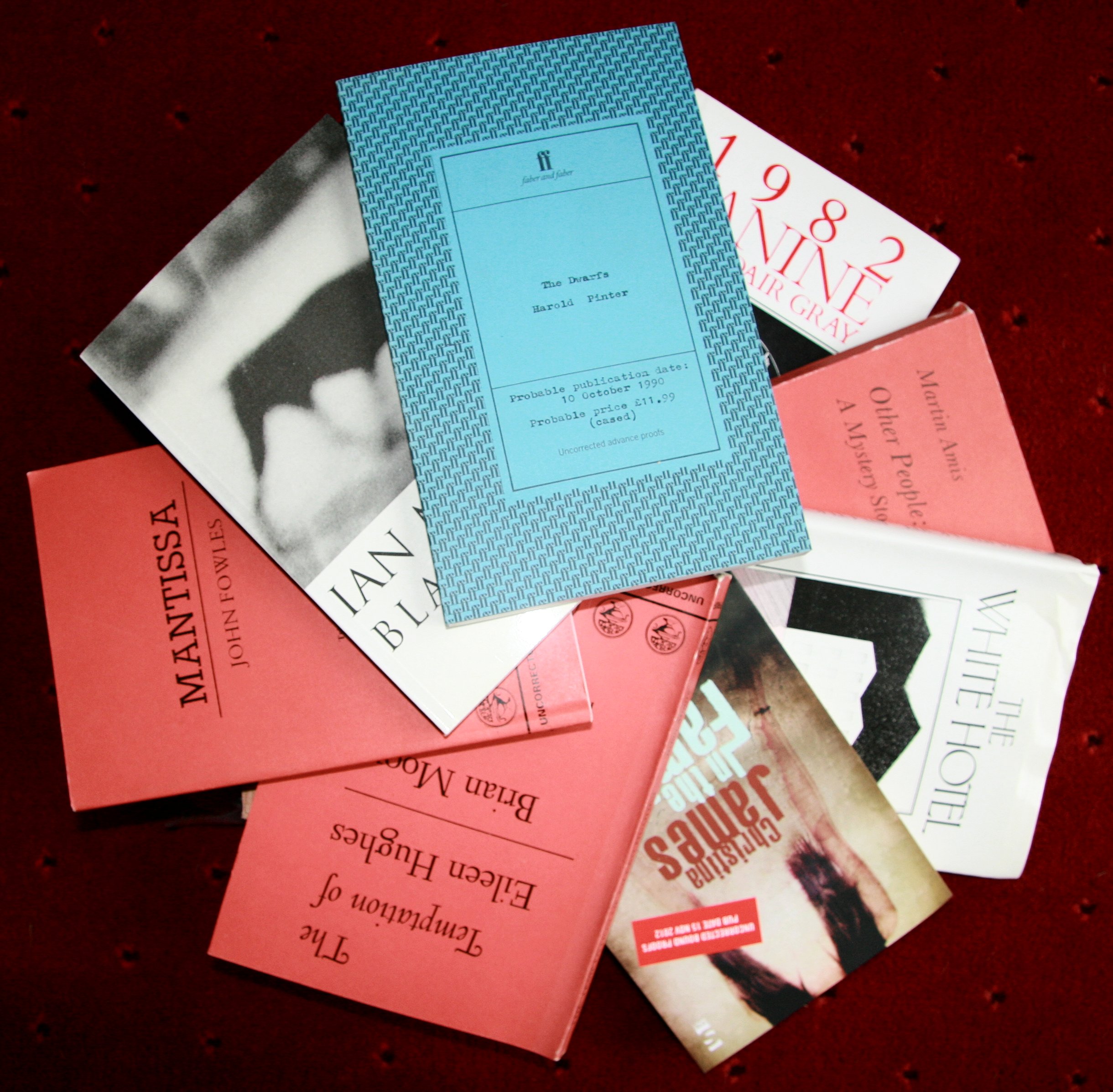
I keep the proofs on the bookshelves in my study, not downstairs with the finished books. They are actually more precious to me than their suaver counterparts – I have finished copies of some of the titles as well. I have just lifted some of them down. Strange to think that, when they were printed, some of them were obscure titles from young unknown authors who have since become very famous. Of course, some of the authors were famous then: my collection includes The Dwarfs, by Harold Pinter, Mantissa, by John Fowles, Black Dogs, by Ian McEwan and The Temptation of Eileen Hughes, by Brian Moore. I think that all of these writers were well-established at the time. However, I also have 1982, Janine by Alasdair Gray and The White Hotel, by D M Thomas; each of these books catapulted its author into acclaim. Curious to think that I read and liked these brilliant but then unknown works and myself made a small contribution towards launching them upon the world.
I still have a couple of proof copies of In the Family. I don’t flatter myself that in years to come they will be sought after in the way in which some of the titles in my collection are. Nevertheless, it amuses me to allow them to rub shoulders with the great and famous, in some cases in the augenblick before fame came. It is almost like putting In the Family into a time machine.
The old curiosity shop…
I’ve been asked by several readers of In the Family about the shop where Doris Atkins lived; it was also, of course, the place where she was murdered. As I’ve written in a previous post, this shop was drawn almost entirely from my memories of the establishment that my great-uncle kept when I was a child. My grandmother lived there, too, and was effectively the housekeeper. It was the house in which they’d both grown up. My great-grandfather died in the 1930s, but my great-grandmother was still alive when I was born. I have a very vague memory of her sitting up in bed, a tiny frail old lady with waist-length snow-white hair. She died a horrible death by falling on an electric fire.
The shop itself had been the front room of the fairly substantial family home, built, I’d say, in the mid-nineteenth century. It would be incorrect to call it a terraced house; it was rather one of those houses that you still find in some old towns: detached, but snuggling right up to its neighbour. The neighbouring building on one side was a much smaller, newer house; on the other, the Punch Bowl pub (where dancing lessons were held on Saturday mornings: my grandmother tried in vain to persuade me to learn tap-dancing). The address was Westlode Street, as in the novel. I’ve since discovered that this is the only street in the country bearing this name.
The shop itself was relatively modern. Although my great-uncle was a Scrooge-like character (he would give my brother and me packets of out-of-date jelly babies and dolly mixtures at birthdays and Christmas), he had spent some money on modernising it, possibly because he’d once run foul of the environmental health department at Spalding Council. My grandmother was certainly an obsessive cleaner and scrubbed the floor and all the surfaces in the shop every day. The bay windows on either side of the door had been converted into ‘picture windows’ that took displays. There was a tall, glass-fronted cupboard which was filled up every day by the Sunblest man with loaves of bread, tea-cakes and currant loaves. He usually also brought a tray of cream cakes. The cream was all the colours of the rainbow; I shudder now to think of the dyes that must have been used in these creations. Another daily visitor was the pop man: my father told me that his visits had removed the need for the shop to make its own carbonated drinks; as a schoolboy, he and his friends had had fun making fruit sodas three times as effervescent as they should have been!
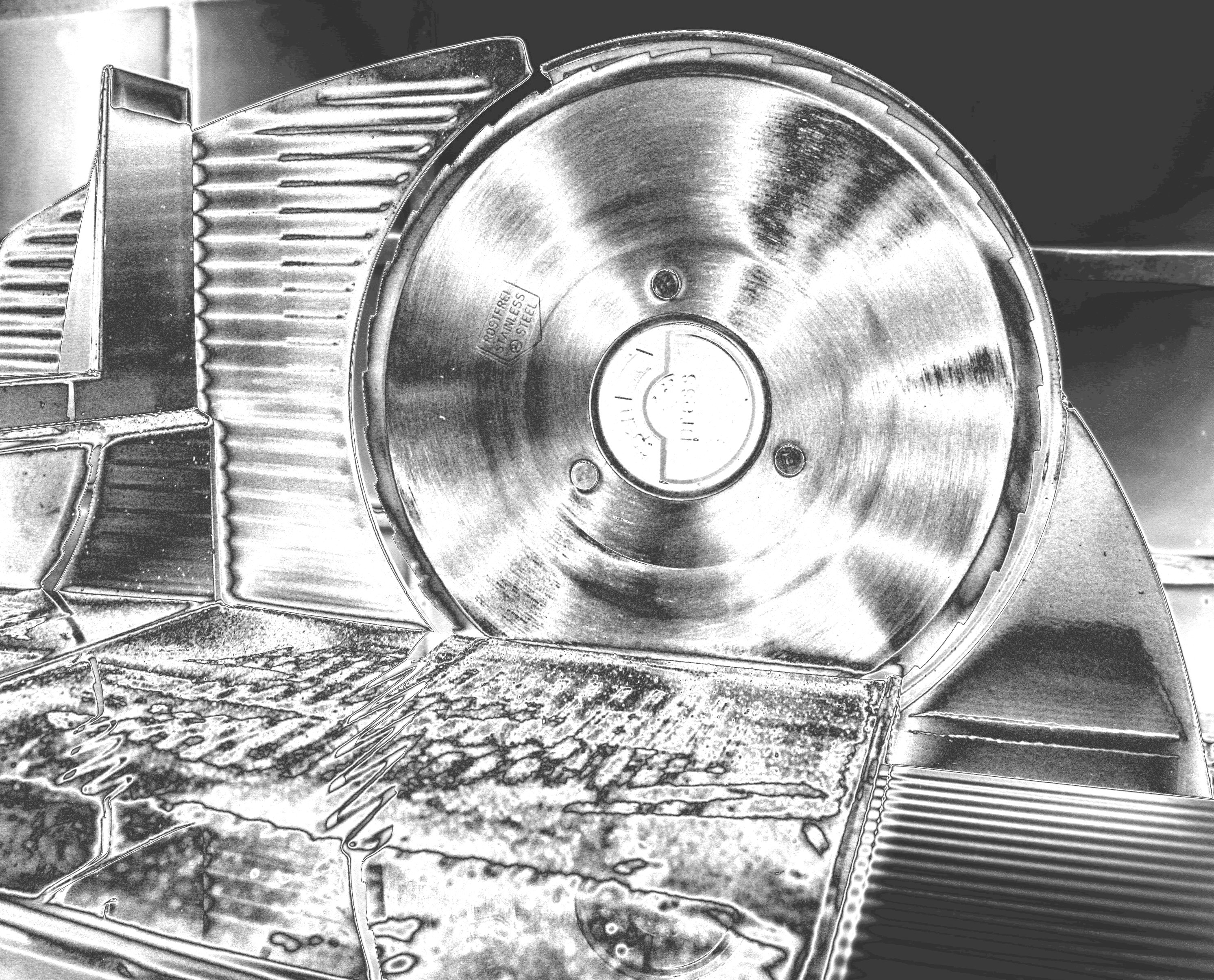
The shop also had a manual ham and bacon slicer – one of those fire-engine red machines with a lethal circular cutting blade to be seen in most general shops of the time – and several fridges, including a shiny rectangular-shaped Frigidaire with a glass display front that was great-uncle’s pride and joy. It did not impress me as much as the squat, square fridge in which he kept ice-cream. I was intrigued less by the contents than by the mystery of its black rubber lid; this was several inches thick – presumably for insulation purposes – and too heavy for a child to lift (which may have been part of its attraction for its owner – there was no risk that his great-nephews and -nieces would plunder the stock).
Pocket-money sweets were laid out in trays near the till, right under great-uncle’s nose. He always wore a long, dun-coloured shopman’s coat and was rarely seen without his trilby hat. When he wasn’t busy serving, he sat in the shop on a tall stool, painstakingly writing out the price-tags that were stuck into meat and vegetables on vicious-looking skewers. He had a few secrets under the counter, too. For years I wondered what the box labelled ‘ONO’ contained and why my mother was so cross when I tried to look inside it. It was only after I had left home that I read in a novel that this was the brand-name of a type of contraceptive.
But the crown jewels of the place, for me and for all children who visited, were the serried ranks of tall sweet jars that stood on shelves along the back wall. They were uniform in size and shape, with thick lids of many colours – perhaps made not of plastic, but of one of its predecessors, such as Bakelite. They contained bulls’ eyes; mint imperials; Fox’s Glacier Mints; Nuttall’s Mintoes; Bluebird liquorice toffee; Milk Maid dairy toffees; aniseed balls; gobstoppers; red liquorice strands; black liquorice strands; winter mixture; chocolate Brazils; Liquorice Allsorts; Payne’s Poppets. I could go on. They looked so beautiful standing there together, a hymn to the confectioner’s craft. Choose a quarter of any of them – it would be conveyed by a tin trowel to a narrow, trough-like pair of scales – and their spell was broken. Their real charm was collective; it resided in their magnificent diversity of shape, colour and size. They inspired a sort of sensory holy grail quest that making no single choice could ever satisfy, because their pull was visual as well as visceral.
I had hoped to write about the house behind the shop, but I’ve probably said enough for now. I’ll come back to it in a future post!
Your good name and character are safe with me!

Today’s photograph shows an extra Christmas present that I received from my daughter-in-law. I am very pleased indeed with it and have just taken it out of its Cellophane wrapper, as it will be going on its first outing tomorrow.
It has made me think about fictional characters and to what extent they are (or should be) drawn from life. There have been some famous court cases in which certain authors’ character portrayals, or their exact use of the names of real people, have been challenged by the ‘victims’. I remember that the first edition of Richard Adams’ The Girl in a Swing had to be withdrawn, because one of the characters had been given the precise name of someone that Adams knew. (I was deeply involved in this, as it meant my having to call just about every public library in the country with the request to return for credit any copies that they held!)
Do most friends of novelists mind seeing themselves portrayed in their work? On the whole, I should hope that they would find it quite flattering (depending on the nature of the portrayal and the quality of the writing!), though I have not asked this question of any of my friends directly, as I don’t wish to alarm them. None of the characters in In the Family is based on a ‘real’ person, though some of them, of course, show the feelings, use the mannerisms and even, on occasion, utter the same words and phrases of people whom I know. I feel that this is an inevitable part of the creative process; otherwise, all my characters would resemble Martians!
Literary works that incorporate ‘real’ authors are always fascinating – at least to other authors. Aldous Huxley, W.B. Yeats, Lady Ottoline Morrell and Nancy Cunard all appeared many times in the fictional works of their large circles of literary friends and acquaintances, sometimes wittily disguised, sometimes barely disguised at all. Some of these portraits have hit home in quite a cruel way. Ottoline Morrell, in particular, was the instantly-recognisable butt of several less-than-generous satirical sketches, though to my knowledge she never resorted to litigation. It is harder for crime writers to ‘steal’ characters in this way, especially for the role of villain! However, Dorothy L. Sayers’ biographer makes a convincing case for Lord Peter Wimsey’s having been based on a man whom she had loved in vain.
You would think it would be easy to avoid taking names from life, as it seems straightforward enough to invent them. However, unless you are a latter-day Charles Dickens and choose your characters’ names to reflect their personalities, it is harder than you might think. They have to sound convincing and be interesting but not banal. J.K. Rowling has said that the name ‘Harry Potter’ originally belonged to someone that she knew at school. In the Family contains the names of several people who lived in Spalding when I was a child, though they have been taken completely out of context in the novel: Atkins, Bertolasso, Frear and Armstrong are all names from that era, as is the first name Giash, which belonged to the only Pakistani I’d met at the time. I knew several Dorises, Elizas and Kathryns; no Bryony, but it is a name that my mother considered giving to me when I was born (I had a lucky escape there, I feel!); no Tirzah, either, but one of my ancestors rejoiced in that name (two others were called Hezekiah and Jeremiah, according to the family bible).
I have yet to mine some of the more picturesque old Lincolnshire surnames: Gotobed, Withyman, Sentance and Berrill. Perhaps they will appear in later books. In scenes I’ve set outside Lincolnshire, I tend to choose the names of real places that I know well. For example, Tim Yates has a sister (who will surface at some point!) who lives in a street in Surbiton that in real life is home to one of my dearest friends, but that is where the similarity will end: Tim’s sister’s appearance and personality will not be stolen from my friend.
So, I think I have answered my own question! I love my new bag, because its message is so witty, but my own message – to all my friends – is that you are safe. I value your friendship too much to try to plunder your character, even for the sake of DI Yates!
My fiercest critic
 My six author’s copies of In the Family came from Salt Publishing yesterday. They looked very nice, nestling in the box like a litter of kittens. Even though I need only one for myself, I shall part with them reluctantly! However, I have already sent one on its way, with my full blessing: I’ve given it to Anita, my neighbour, who had not the slightest idea until today that I am a writer. Nor is she a reviewer, a bookseller or anything remotely to do with publishing; she does not even belong to a reading group. She keeps a horse and dogs (lots of them).
When she was ill a few years ago, she discovered in herself a liking for books that she had not experienced when she was younger and (since my house is heaving with them) I became her unofficial librarian. We have a shared liking for crime novels and our tastes are remarkably similar. We also both hate the winter! When the evenings began to draw in, a year ago, she asked me if I had some books for her to read and I took round a wheelbarrow-load. They just about lasted her until the spring. I think of Anita as my yardstick: she is my model for all the unseen people I can never know personally for whom ‘a good read’ is an important part of life and who know what they like without analysing it too much. One thing I can rely on Anita to do is to tell me the truth. As a Yorkshirewoman through and through, if she doesn’t like In the Family, she will certainly say so. If she says that she does like it, I shall feel greatly privileged.
The power of the monologue
In my novel In the Family, Hedley Atkins speaks for himself, his monologue providing an insight into his character and psychology. I remember first being transfixed as a school pupil by the monologue of Browning’s Porphyria’s Lover, a powerfully atmospheric poem in which the speaker sits with Porphyria, strangled by him with her own hair, upon his knee and reveals (with the delicacy of touch that Browning also deploys in My Last Duchess, a poem about a very powerful man who has his wife done away with) how he has quite matter-of-factly ensured that she will be entirely his. A combination of scene-setting (a contrast between the storm outside and the cosy cottage atmosphere created by Porphyria) and the brooding personality of the lover heightens the sense of menace. The horror is achieved in an understated way, not by graphic depiction of blood and guts. The power of monologue is well-known in drama, too: for example, Alan Bennett’s Talking Heads characters brilliantly demonstrate how apparently incidental details cohere to develop our engagement and to surprise us.
Are we so hardened by our exposure to the prevalent and unsubtle presentation of graphic violence on film and in books that we are no longer absorbed and excited by suggestion? I hope not.
Publication day
 Today is the day that my book has been published. When In the Family was little more than the glint of an idea, I dreamed of this day. I don’t know what I expected – certainly not some kind of red carpet event! Hundreds of booksellers beating a path to my door? Having been a bookseller myself, hardly that! The best that I can hope for is that booksellers in all sorts of places are very kindly getting sweaty and grubby opening boxes which contain my book among others. Booksellers are the great unsung heroes of the publishing industry and they deserve a separate blog entry to themselves about that.
So what is happening today? A mellow autumn sun is shining palely; the leaves continue to fall. I’ve been to the local farm shop to order a goose for Christmas and was lucky enough to find the ‘fish lady’ there, so bought a crab for dinner. All of this feels like a celebration – the kind of celebration I like best, just appreciating the good things as they come and knowing the book is there, like a warm glow in the background. Thank you for your support along the way. I hope that you will find a way of celebrating with me, too.
Available from Salt Publishing at:
http://www.saltpublishing.com/shop/proddetail.php?prod=9781907773242
Director’s cut
Please enjoy piecing together the visual clues in Alfie Barker’s excellent trailer for my debut novel, In the Family.
 Christina James, crime novelist