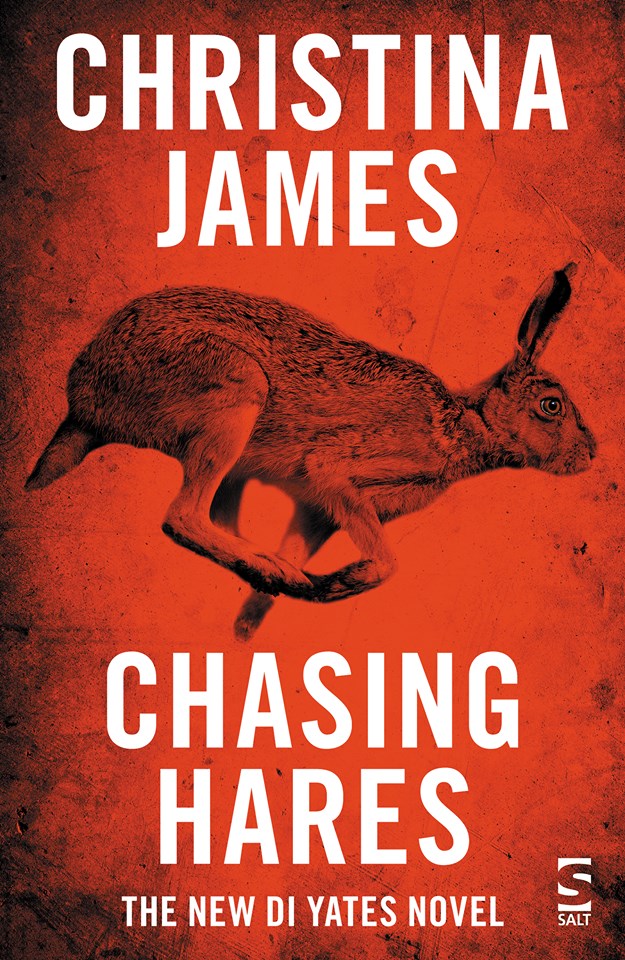


Strong links in the chain to ‘Sausage Hall’, to be published Nov. 17th 2014

I am extremely grateful to you, the readers of this blog, both those of you whom I’ve met in person and those from countries around the world whom I’ve met ‘virtually’, for the huge welcome that you have given Sausage Hall. Thank you very much indeed.
As many of you know, Sausage Hall will be published next Monday, November 17th. My wonderful publishers, Chris and Jen Hamilton-Emery at Salt Publishing,
 their equally stellar PR consultant, Tabitha Pelly, Faber (which now represents Salt titles) and my bookselling and librarian friends have combined to make happen a series of celebration events.
The first of these is today, Thursday November 13th, when Nicola Gilroy will be interviewing me live on Radio Lincolnshire at 14.05. I hope that you will be able to listen; if not, I think the interview will be on iPlayer for twenty-four hours after broadcast.
Monday November 17th is a very special day indeed. I’m spending much of it at Spalding High School,

where I was once a student (Facebook doesn’t know this, having inexplicably assigned me to Wycliffe Senior School and Sixth Form College! I don’t intend to disabuse it!). I’m giving a young writers’ workshop and talking about how I came to write Sausage Hall, but first of all I’m being taken on a tour of the school by Adrian Isted, the present Head of English. I’m really looking forward to this, and especially to meeting the students.
Also on November 17th, in the evening, Bookmark, Spalding’s very distinguished bookshop,
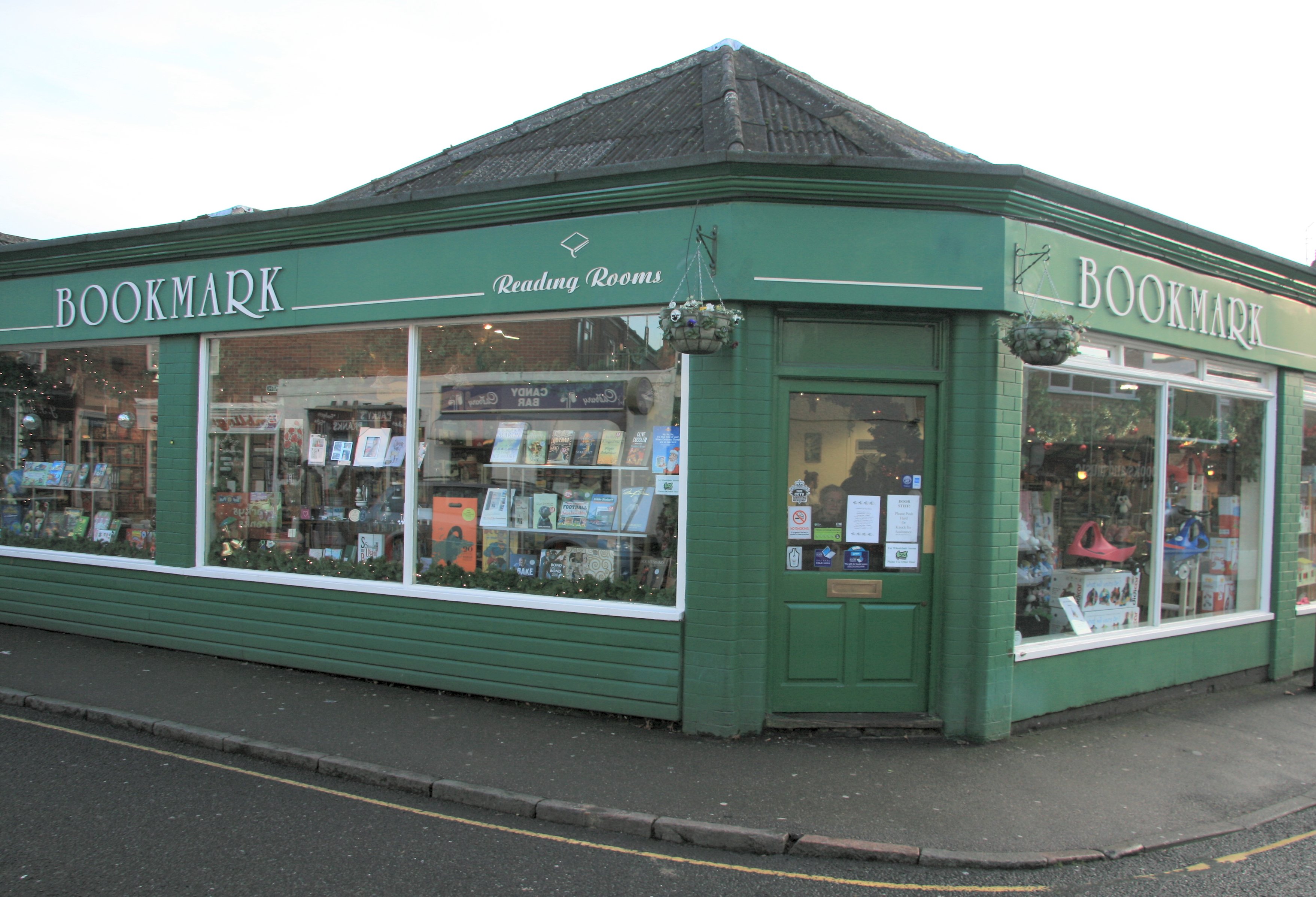
is hosting the official launch event. This will begin at 19.00. I’m delighted to be able to announce that it is being sponsored by Adams and Harlow, the pork butchers, who will supply sausage-themed canapés. Wine will also be served. As well as signing copies of Sausage Hall, I’ll be giving some readings and talking about all the DI Yates novels. I’d like to offer my thanks in advance to Christine Hanson and Sam Buckley, who have supported all the novels as they’ve been published. In conjunction with Spalding Guardian, they’ve also arranged a DI Yates competition, the prizes for which will be four sets of the DI Yates titles.
On November 18th, I’m travelling to Walkers Books in Stamford,

where I’ll be signing copies of Sausage Hall and talking about it informally between 11.00 and 13.00. I’d like to thank Tim Walker and Jenny Pugh for all their support. More about this may be found here.
Wednesday November 19th finds me back at wonderful Wakefield One, where Alison Cassels has organised Tea at Sausage Hall, an informal talk-and-signing session, with refreshments, that will start at 14.30. Regular readers will know that Wakefield One has been a particularly magnificent supporter of mine. Books will be supplied by Richard Knowles of Rickaro Books, another staunch supporter.
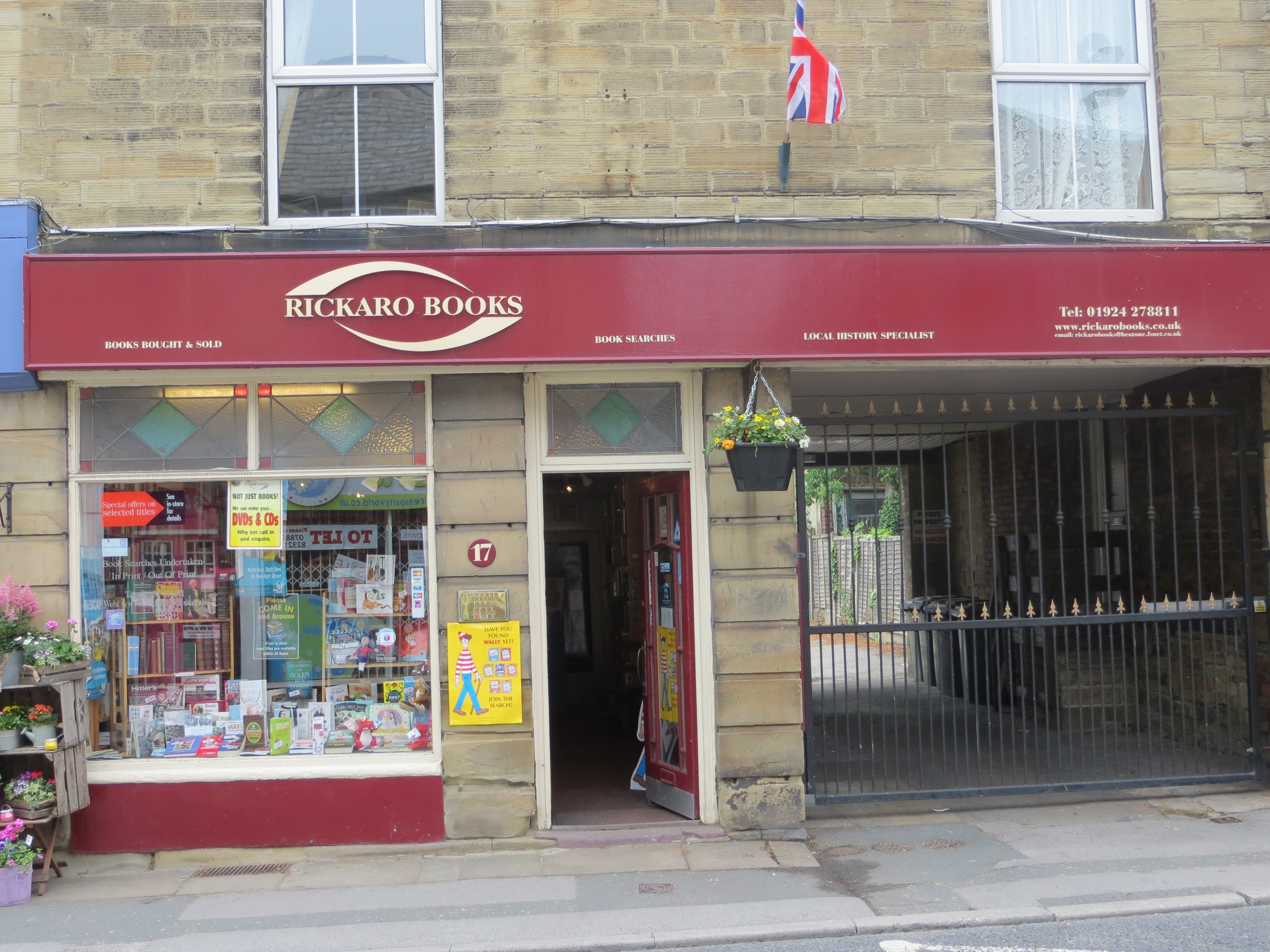
Rickaro Books, Horbury
There is more about Tea at Sausage Hall here. If you live in the Wakefield area or are visiting, it would be great to see you at this event.
On Thursday November 20th the Waterstones bookshop in Covent Garden is giving a London launch event. As Adams and Harlow are sponsoring this, too, there will be sausages as well as wine! This reading and signing session will begin at 19.00 and continue until the shop closes. It has already attracted a large audience, so it should be quite a party! The store’s brilliant manager, Jen Shenton, and I would be delighted to see you there. More information can be found here.
And Friday 21st November? At present, nothing is planned, so this will be a rest day… but I’m open to offers!
Hallowe’en? Not in my memory of the Spalding of the 1950s…
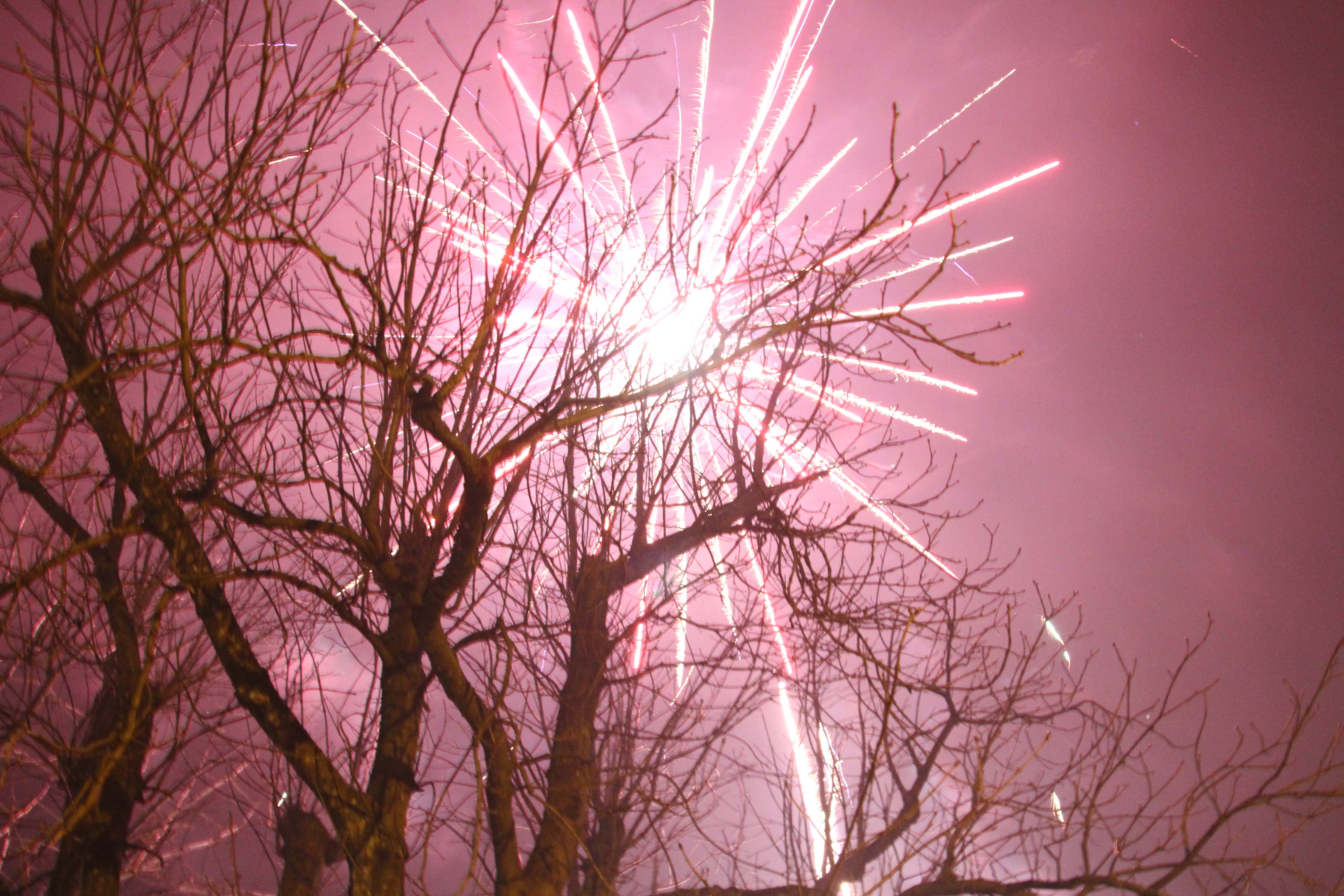
The prospect of tonight’s steady stream of youthful ‘trick or treaters’ (for readers around the globe, children in the UK visit houses at Hallowe’en to offer a choice: a trick played upon the household or a treat given by the household to the visitors to ward off any tricks) has stirred in me memories of the Bonfire Nights (or Guy Fawkes Nights) of my childhood.
I’m talking about a time when we didn’t ‘do’ Hallowe’en – at least, not in South Lincolnshire. Although I think it’s mainly an import from the USA (I anticipate contradiction!) , some parts of the UK did celebrate Hallowe’en, even then: when I went to university, my flat-mate, who came from Lancashire, told me how her two brothers at Hallowe’en, which they called ‘Mischief Night’, had removed the gates from their school and put them on the roof. But in Spalding, where I grew up, there was only Bonfire Night, celebrated on November 5th, the anniversary of the date on which Guy Fawkes tried to blow up the Houses of Parliament. In retrospect, I realise that our Bonfire Nights incorporated some elements of Hallowe’en as well.
Bonfire Night was among my favourite events on the calendar. My brother and I started preparations weeks in advance, at first by collecting materials for as big a bonfire as our father would let us build at the bottom of our (quite large) garden. Then we’d beg old clothes from relatives to make a guy. He was constructed out of a shirt or jacket tacked on to a pair of trousers and stuffed with newspaper. The sleeves and legs of the trousers were fastened with string. His face would be made from a carved and hollowed-out mangold wurzel (field beet) containing a candle, if we were ambitious, or, more often than not, just covered with a cardboard mask bought from Woolworths. Each year there was a Woolworths counter overflowing with these masks, which featured the faces of ghosts, witches, pirates and skeletons; I think this was where the Hallowe’en element came in. The guy also wore a hat, if we could get one: good hats were in short supply. Guys were usually completed at least a week before Bonfire Night, so they could be showed off. We were allowed to sit ours outside the gate of our house with a tin bearing a ‘Penny for the Guy’ sign, but my mother wouldn’t let us push him around the streets begging for pennies, as some children did. She thought it was ‘common’!
The suspense leading up to Bonfire Night was huge. Teachers joined in the fun: I vividly remember making bonfires, guys and fireworks out of plasticine in a primary school art class. And we must have heard the story of the original Guy Fawkes – some of whose accomplices had had strong links with East Anglia – every single year. Along with 1066, it was certainly the episode in British history with which I was best acquainted.

At the end of school, we rushed home to dress up. Girls wore garish make-up and boys’ fathers often blacked their sons’ faces with pieces of cork held in the ashes of the fire or drew moustaches on them (some pictures of Guy Fawkes showed him with a twirling, Salvador Dali-type moustache). We wore whatever we could get together as fancy dress: it was before the era of the purpose-made (money-spinning) clothes that children’s parents buy for Hallowe’en and Bonfire Night now. Parents sometimes helped, and the outfits could be ingenious: I remember one child dressed as a skeleton – his mother had made an outfit out of black cartridge paper with the bones drawn on in white chalk. Girls often became witches for the night – we were taught at school how to make black pointed hats, also from cartridge paper. Whatever the outfit, we all had one of the cardboard masks from Woolworths (which were made out of the type of card now used for egg-boxes). We’d turn up at neighbours’ houses heavily disguised with our masks pulled down, then whip them up to reveal the made-up face beneath. The idea was that no-one could recognise us, with or without the mask.
We were permitted to take the guy with us on Bonfire Night itself. Ours was transported in the old family push-chair, an ancient conveyance made from khaki canvas and which had solid wheels. Although I suppose it’s unlikely that there were services-issue push-chairs, it looked as if it might have been army surplus, sold by the Army and Navy stores. I don’t think anyone in the family could remember where it originally came from. It was wide and cumbersome and difficult to take up and down the houses in the street without running off the paths and into people’s flower borders. Some children carried mangold wurzels or hollowed-out sugar beets with candles in them.
It was dark when we went Guy Fawkesing, but we were allowed to go round the houses on our own, though always in groups of at least three (my brother and I joined the two girls who lived next door). The boundaries were our street and the next one. The streets were thronged with children: it was the height of the baby boom and two or three children lived at almost every house. I’m sure we were all quite safe out on the streets that night.
There were just two rhymes that we chanted to the householders:
Please to remember
The fifth of November
Gunpowder, treason and plot
I see no reason
Why gunpowder treason
Should ever be forgot.
and:
Please spare a penny for the poor old guy!
If you haven’t got a penny, a ha’penny will do;
If you haven’t got a ha’penny
Then God bless you!
The householder would then give us each a penny – sometimes twopence, if we were lucky – and usually some sweets as well. Sherbet dabs (boiled-sweet lollies in a bag of sherbet) and sherbet fountains (a tube of sherbet with a hollow ‘straw’ of liquorice to suck it up with) were my favourites. We carried old Ovaltine tins with string handles for the loot.
The trick was to get round as soon after dark as possible, before people ran out of treats, and then go home in time to see some of the children who came knocking at our own door and inspect their outfits. Sometimes when we went the rounds, early fireworks were already being let off and the air smelt excitingly of gunpowder.
After the last Guy Fawkesing stragglers had gone home, it was time to light the bonfire. First of all, the guy was seated on the top of it. Then my father would light the fire and we were instructed to stand back. I always felt a bit sad when the guy succumbed to the flames: he’d been a friend for the whole of the previous week… but there would be another one the next year. When he was well alight, my father began to light the fireworks. We always had a mixed box of Standard fireworks – I think they cost ten shillings (I’ve been amazed to read that a similar box now costs £45!) – a few ‘special’ fireworks, usually large golden rain or firework fountains (as we weren’t keen on loud bangs) or rockets, and some sparklers and hand-held fireworks. Each family had its own bonfire and fireworks: large firework parties for the whole neighbourhood had yet to be thought of. We baked potatoes in the ashes of the bonfire and ate toffee apples if the toffee apple man had been round that day (which he was usually enterprising enough to have managed). When we went into the house at the end of the evening, we were given vegetable soup with big hunks of bread to warm us up.
Miraculously, most of the Bonfire Nights of my childhood were bright and clear: I remember seeing rockets sailing into the stars. On the couple of times that it rained, we still went on the Guy Fawkesing rounds, but the bonfire had to be postponed until the next day. Then we were bitterly disappointed.

To be, or not to be… a lady.

Bess of Hardwick
‘And I of ladies most deject and wretched …’
I’m not actually feeling depressed myself: with these words, Ophelia, in Shakespeare’s Hamlet, bewails the fact that Hamlet, who has recently been wooing her, is now treating her with utter contempt and has implied that she, because she is a woman, can be no lady, unless a licentious ‘painted’ one. The word ‘lady’ is one I’ve been pondering since, a week ago, we spent two very enjoyable days walking with our friends Priscilla and Rupert and, over breakfast, I told an anecdote from my remote bookselling past, which, briefly, goes like this:
The founder of the small library supply company for which I used to work, who was a First World War veteran and a very old man (I’ll call him ‘Mr Smith’) when I first met him, always stayed at the George Hotel in Stamford on his visits to and from London. His wife, a formidable lady by all accounts, the eldest of five clannish and strong-willed sisters, was a semi-invalid who spent most of her time at home, engaged in various projects that could be completed from her bed; for example, she taught herself fluent German. However, when her illness – whatever it was, it always sounded quite vague to me – was in remission, she would occasionally accompany him on his business trips and eventually they checked in together at the George, which is a magnificent old coaching inn and quite grand in its way. One of the services it has always offered is tea in bed, delivered by a waiter. On the morning after their arrival, the waiter duly knocked at the door and entered with their tea tray. The founder’s wife sat up in bed to take it from him. The founder himself also sat up and the waiter addressed him with the following greeting:
‘Good morning, Mr Smith. Not the usual lady, I see!’
Aside from the fact that I find this very funny – it became one of the company legends – it’s interesting because of its use of the word ‘lady’, always a slipperier noun than its plainer alternative, ‘woman’. My husband was once berated by some female colleagues for saying ‘Good morning, ladies,’ even though, as he pointed out, ‘Good morning, women,’ sounds both comic and slightly disrespectful (and in any case, he added, he always said, ‘Good morning, gentlemen,’ to a group of men). But ‘lady’ is not a straightforward term. If not used with care, it can be very patronising: why do we refer to ‘dinner ladies’ and ‘cleaning ladies’, but use the terms ‘female’ or ‘woman’ as epithets for women with a recognised profession (policewoman, female barrister, woman MP)? Would anyone today refer to a ‘lady teacher’ or a ‘lady librarian’? (There were actually ‘lady librarians’ running the public library service before the Second World War; they were generally women from the upper middle classes, whose families were so well-heeled that the local authorities didn’t need to pay them a salary and, as soon as salaries were introduced, many of these jobs were then taken by men! ) And what of the careers to which women have been admitted only in more recent times? Would anyone seriously allude to a lady soldier, a lady bus driver or a lady CEO? Don’t we all abhor the slimy man who refers to his spouse as ‘the lady wife’?
And yet … amid the hubbub of modern life, we may – sometimes – still wish to be referred to as ‘ladies’. For example, when a mother with a lively child in tow says to it, ‘Give up your seat to this lady,’ or ‘Be careful, don’t bump into that lady,’ it would be only the most truculent and militant of us who would correct her and say, ‘Please refer to me as a woman.’ Shops – including online ones – still refer to ‘ladies’ fashions’ and, although some facilities in hotels, restaurants and public places are now marked ‘Men’ and ‘Women’, most still use the more traditional ‘Gentlemen’ and ‘Ladies’. Speechmakers still begin their address with ‘Ladies and Gentlemen’ – or sometimes even the grander ‘My Lords, Ladies and Gentlemen,’ with its delightful implication that all ‘ladies’ are in some way aristocratic. And most of us are fascinated by the great ladies of the past: Bess of Hardwick, who began life as a ‘woman’ and worked her way up; Lady Castlemaine, one of Charles II’s two most famous mistresses (though the other, Nell Gwynne, was definitely a ‘woman’); and two scintillating Duchesses of Devonshire, each quite different from the other – Georgiana, the eighteenth century holder of that title, and the recently-deceased Deborah, chatelaine of Chatsworth House, who was born a lady and became a greater one.
Listing some of these ladies, however, brings out another connotation of the word: it can be and often is very closely associated with the oldest profession. Thus the deliciously evocative ‘ladies of the night’, ‘his lady-friend’ (meaning ‘not his wife’) and a ‘lady no better than she should be’, a term much favoured by my grandmother, usually delivered with a flash of the eye and a pulling-down of her skirt over her knees, as if to imply that her virtue, at least, was safe.
I return to Ophelia. One of Shakespeare’s most enigmatic heroines, she is portrayed both as the ultimate virgin and, after her madness sets in, as a foul-mouthed woman conversant with sexual practices unbefitting a ‘maid’. ‘Lady’ is a word she uses frequently. She herself embodies its ambiguity, and by extension the double entendre of the word itself. It is an equivocation which today’s women, who in this country have almost but not quite achieved equality and in many others are still fighting a tough uphill battle to get anywhere near it, often resent. Are we ladies or women? Does the word ‘lady’ still have a place in our society? What of its counterpart, ‘gentleman’? But that, perhaps, raises a wholly different topic!
I’ll leave the penultimate word to Ophelia:
‘Good night, ladies; good night, sweet ladies; good night, good night.’
And the last to myself:
Or, perhaps, ‘Good-bye, Ladies? Hello, Women?’ Words, words, words!
A fortnight in Provence…
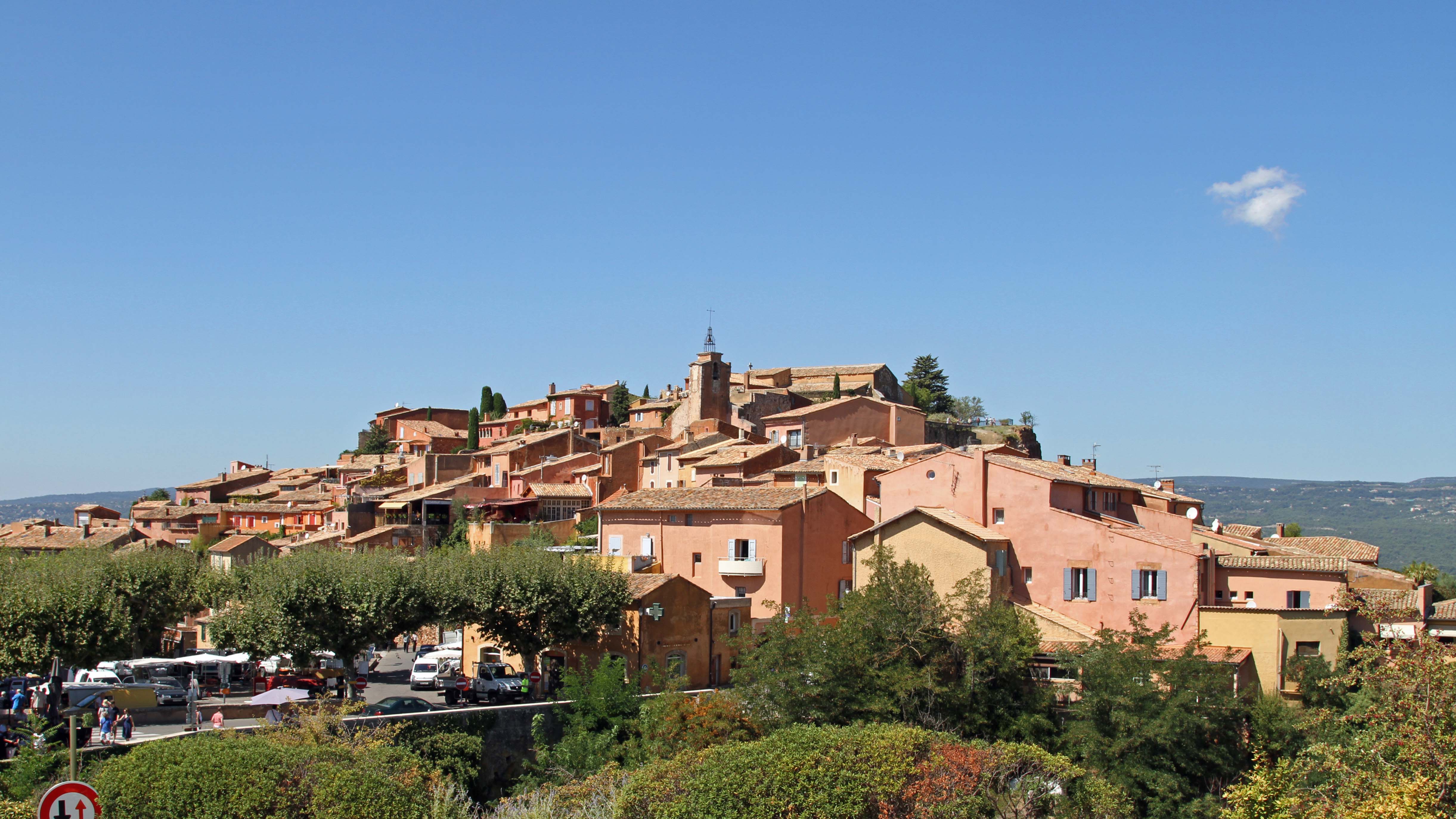
The ochre-coloured village of Roussillon
I think it was Barbara Pym who said that the trouble with keeping a diary is that half the time you have nothing to say and the other half you are so busy doing something demanding that there’s no time to write. The same goes for blog posts. There are several things that I’ve been meaning to write about for weeks and still not got round to. However, today I’ve (almost) caught up with the day job and it’s raining outside. Winter’s coming and the engineer has just been to service the boiler, which means the house is feeling cosy. A perfect blog-post-writing situation!
My husband and I are Francophiles and veterans of many holidays in France (our favourite remains the two weeks we spent at a camp-site at Argentière while we explored the French Alps on foot. We were young and very poor and the camp-site was accommodatingly cheap; it had two shaft toilets, two showers and no hot water. We lived on Vesta curries and tinned beans. But the walks – and the views – were amazing!). We’ve been to most of the départements in France, but until this year we’d never visited Provence – partly, I must admit, because after the publication of A Year in Provence and its sequels we had assumed it would be a tourist trap. This year, we took our holiday later and, knowing that it would coincide with la rentrée, we made the plunge and booked a gîte at L’Isle-sur-la-Sorgue, a pretty town that lies just outside the area made famous by the Peter Mayle books.

L’Isle-sur-la-Sorgue
It’s known for the huge market that takes it over on Sundays and its elaborate Sorgue waterway system, operated by a series of waterwheels and sluices, that irrigates the surrounding countryside. The tourist season was not completely finished, but we saw only a few Belgians, Dutch and Germans taking late holidays and almost no Britons. The town itself remains unspoilt by outlandish tourist attractions.
The same could be said for the region beyond it. There are some interesting places to visit, including: La Fontaine de Vaucluse, the source of the beautiful Sorgue (its depth remains uncertain, though numerous attempts, including one by Jacques Cousteau, have tried to plumb it) – Petrarch rather liked it here;

La Fontaine de Vaucluse
the ochre rocks of Roussillon, in the Parc Naturel Régional du Luberon, that (allegedly) supplied the pigment for Van Gogh’s sunflowers;

Ochre cliffs of Roussillon
a working lavender factory. Yet none of these sets out to exploit tourists in a hard-nosed kind of way. Of them all, I liked the lavender factory the best. It has a small shop attached, set in hectares of its own rolling lavender fields. The first thing that struck me about the lavender was how tall it grows there, accustomed as I am to the more compact, domesticated-looking variety found in Norfolk.

A load of lavender
The people who own the Provenςal factory also manage the shop and arrange short tours of the essential oil distillation process. They have constructed working models that demonstrate how the lavender essence is extracted from the flowers and they’re able to show some compelling footage of people in peasant dress working in the lavender fields before the Second World War, cutting rapidly with lethal-looking scythes and machetes. Apparently accidents were frequent – they worked so fast that they often injured themselves – but their mantra was ‘that which has caused the pain provides the cure’ – or so the commentator maintained. My guess is that they whipped something a little more colourful from their vocabulary when arms or legs were spurting blood, but the point being made was that lavender is a powerful antiseptic.
Lavender also has many other medicinal properties. I was fascinated to learn that it comes in three grades: lavender officinalis, the top grade, which is the one used for medicinal purposes; lavende aspic, a kind of middle grade which is mainly used as an essential oil in perfumes and amphorae;

Essential oils
and lavendin, made from a hybrid of two varieties of lavender with the consequence that it is actually sterile (so of no use to bees!). Lavendin is used as a herb and dried to fill scented sachets and such things as padded coat-hangers. Apparently, it has some medicinal uses, but you have to know what they are: it can aggravate burns, for example.
We’d taken the tour (and been distracted from the guide’s words by seeing a praying mantis clinging to a water bottle in the workshop), made a few purchases and returned to our car when I realised that I’d bought only lavende aspic. I returned to the shop to purchase some lavende officinalis, and found it was deserted. I conducted a small reconnoitre and discovered the two assistants outside in the yard, both gasping away on their fags. Very French! And even more Peter Mayle!!
A quest for the truth: Catana Tully’s ‘Split at the Root’

Catana Tully with her sisters Judith, left, and Adela, right.
An autobiography which challenges the reader’s perceptions of things is always going to be worth reading; when the life itself is rich in experience and narrated with flair and refined prose, the whole book won’t fail to impress. I read Catana Tully’s ‘Split at the Root: A Memoir of Love and Lost Identity’ over two days, mesmerised by her account of her upbringing, at first in Guatemala, by a German couple who split her from her birth mother and re-grafted her upon the stem of their family, though without formally adopting her.
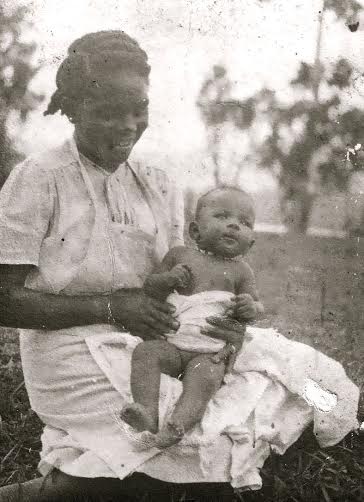
Catana with her birth mother

Catana with her German mother
The delicate handling of this chronological narrative, covering the whole of the author’s life, ensures that the circumstances are viewed from Catana’s perspective as she grows and matures, not with the benefit of hindsight from her position today; her subjectivity, stage by stage, therefore limits perspective and obliges the reader to examine personal attitudes to what happens and to the various characters who appear in Catana’s story. As a writer of crime fiction, I’m only too aware of the power of suggestion, implication and withheld information, and I found myself exploring what was being given without too much absolute certainty as to the validity of my deductions; Catana Tully plays the reader with supreme skill and the surprises continue to come again and again, right to the very end. This process, of course, ensures considerable empathy with the growing girl, but Catana doesn’t pull punches with her presentation of less appealing features of her developing character (gosh, she had some temper!).
I’m very reluctant to provide here much precise information about the narrative, as to do so would undoubtedly spoil others’ experience of reading it, but I will say that issues of (not in any order) heritage, culture, language, skin colour, prejudice (and I don’t just mean racial), origin, family, relationships, love, duty, education, psychology and adoption are presented for scrutiny in the most unobtrusive way, woven into the fabric of the story so skilfully that the mind continues to work on them long after the reading is complete.
This is a narrative which was clearly painful in the telling, for it lays bare the very nature of Catana herself and must have caused her considerable anguish, but her sense of humour and her great good sense both shine through, so that I was left with a feeling of great joy in the celebration of the self and the huge significance of personal identity. ‘Finding oneself’ is a pale way of depicting what this book is about, for it doesn’t shrink from shattering stereotypes and stereotypical ways of looking at and dealing with the world in the process of a quest that is quite overwhelming in its complexity.
Have I overwhelmed you with all this? I hope not, for the narrative is very readable indeed and the experiences which the book charts are fascinating, stimulating and often delightful. This is not a book that has an axe to grind or a message to pound home: it is a glorious tribute to the individual, in all her multi-faceted forms. Do read it; you will not be disappointed.
In in verse proportion: half the stress; double the delight!

Richard of Rickaro Books presents the Tracey Emin-endorsed Books Are My Bag bag
Yesterday I spent a superlative afternoon at Rickaro Books, Horbury, to celebrate three events: the launch of Holding Your Hand Through Hard Times, by A Firm Of Poets (some of whom are now also Firm Friends of this blog!) on the first day of this year’s Books Are My Bag festivities; the birthday of one of Rickaro Books’ regular customers; and last, but by no means least, the thirteenth birthday of Rickaro Books itself. Toasts were drunk in sparkling wine while it rained outside: a wonderfully cosy and pleasantly decadent way of spending a Saturday afternoon!
The four poets who performed yesterday were Ralph Dartford, a founding member of A Firm Of Poets, accounts of whose at once tongue-in-cheek and poignant performances (‘Now then! / In November 1950 / Pablo Picasso / visited Sheffield / for a hair cut, / Peace, / and some toast.’) have graced this blog before (he has a lovely wife who always supports his performances);

Ralph Dartford
Matt Abbott, a born performance poet, whose rendering of a pathetic yet comic drunk was particularly hilarious (‘I’ll have a bottle of Beck’s from the fridge / ‘cause you all might have stopped drinking / but I’m from Horbury Bridge / and I’m – yeah, I’ll have some gravy, love …’);

Matt Abbott
and, new to me but very impressive indeed, the goth poet Geneviève Walsh (‘So many love songs which compare desire to sunshine, / a practice as futile as comparing art to dust. / This is England, see, and the sunshine’s more akin / to a tax rebate / or a lottery win’).

Geneviève Walsh
The work of all these poets, as well as that of John Darwin and Matthew Hedley Stoppard (whom I’ve also met and been wowed by at an event at Rickaro Books, so I was disappointed that he couldn’t be there yesterday) appears in the beautifully-produced, chapbook-style Holding Your Hand Through Hard Times.

Holding Your Hand Through Hard Times
If you happen to be in West Yorkshire, you could do no better than to buy it from Rickaro Books and have a look round the shop at the same time – it is a very distinctive shop which sells both new and antiquarian books.
But I mentioned four poets and I’ve only described three. There was, in fact, a fourth poet present, who also performed, joining A Firm Of Poets as he regularly does; his poems (which he read from his mobile phone, having forgotten to bring the text with him!) don’t feature in Holding Your Hand Through Hard Times. His name is William Thirsk-Gaskill.
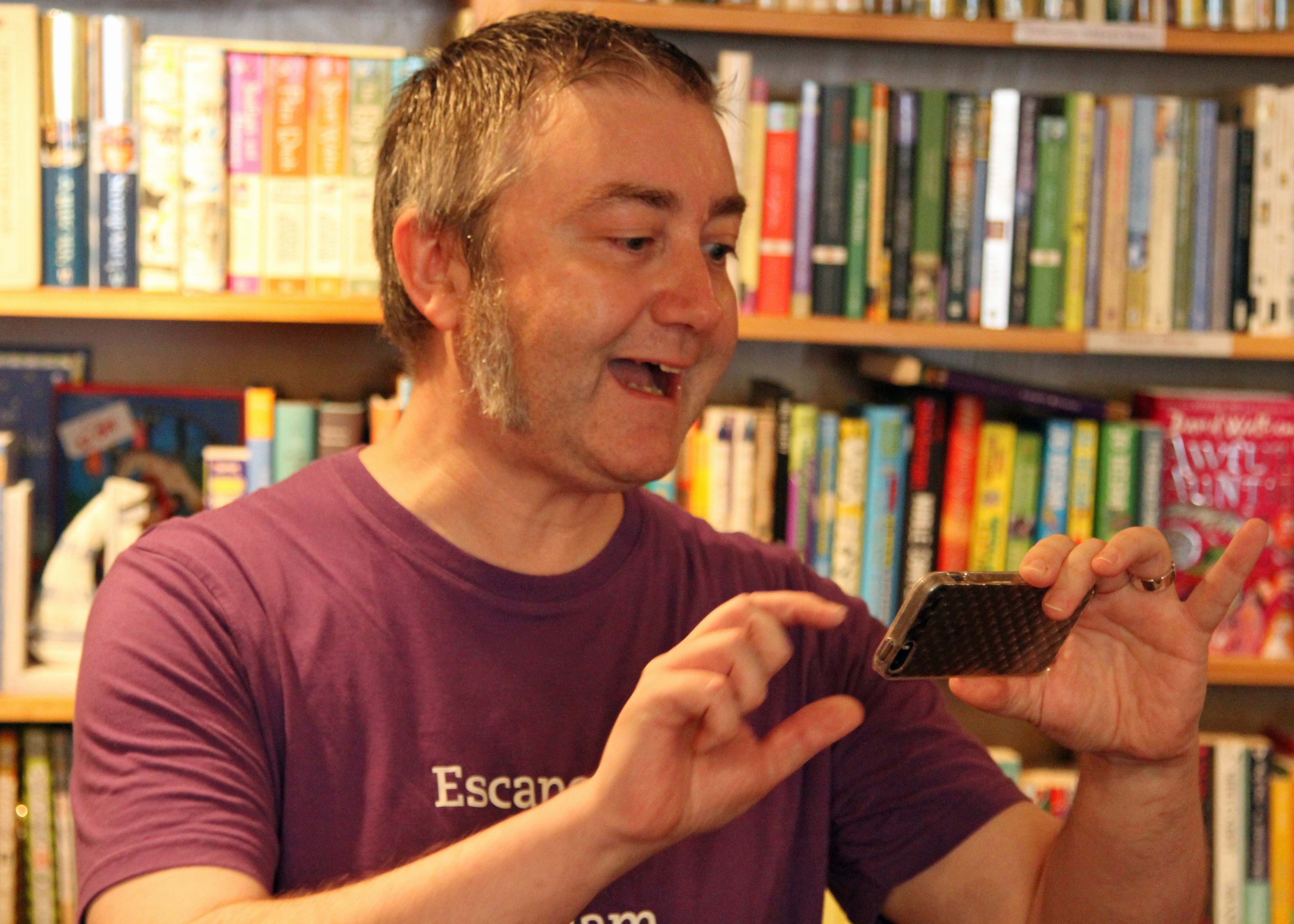
William Thirsk-Gaskill
Perhaps because he now has a double-barrelled name, my husband and I didn’t recognise the former plain William Gaskill at first – though my husband says that he knew the voice as soon as he heard William speak. When we first met, he was a very talented schoolboy and we were also young, though not as young as he was (William obligingly informed us that my husband was twenty-nine at the time, so I will have been twenty-eight!). To see him again gave the day an extra special bonus. William was also selling a book: Escape Kit, a novella, which we have bought but have yet to read. I’ll review it here when I’ve finished it.
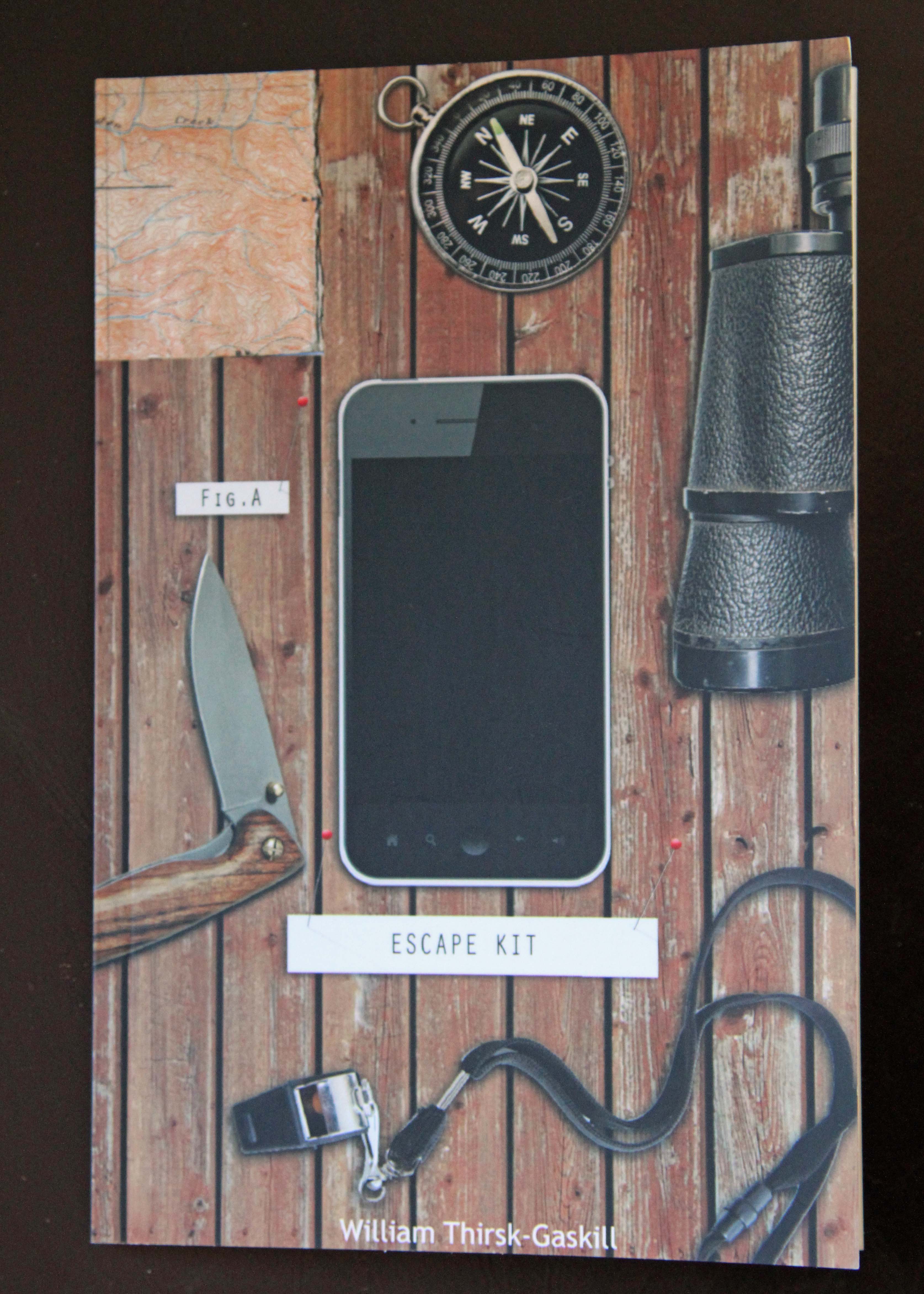
Escape KIt
Events at Rickaro Books are always distinctive, memorable and successful. It was a great privilege to be able to attend its Books Are My Bag launch and celebrate with A Firm of Poets. I am therefore extraordinarily proud to be able to tell my readers that Richard of Rickaro Books will be supplying the stock at ‘Tea at Sausage Hall’, Wakefield One’s wonderful way of celebrating the publication of the third of my DI Yates series, on November 19th. And I’m thrilled that some of A Firm of Poets have said that they will be supporting me by attending. Riches indeed! Thank you all so much. I’m looking forward to it already. Meantime, I wish you every success with your books.

Books Are My Bag 2014
A brief visit to Ann Arbor

As readers of this blog may know from Twitter, two weeks ago I made a brief (day job) visit to Ann Arbor. It is a university town, home of the University of Michigan and adjacent to, but by no means overshadowed by, the great industrial city of Detroit. Aside from passing twice through the airport (seventies in style; seen better days), I saw nothing of Detroit itself.
I spent only a few leisure hours in downtown Ann Arbor, as I was working for the rest of my very short stay. However, I was fortunate enough to visit its compact and pretty centre on an unseasonably warm, summery day. Brilliant sunshine bathed Main Street in heat and light; the pavement cafes were doing a brisk trade; the local populace sauntered up and down the sidewalks, bare-legged and dressed in T-shirts, most of them in happy and expansive mood.

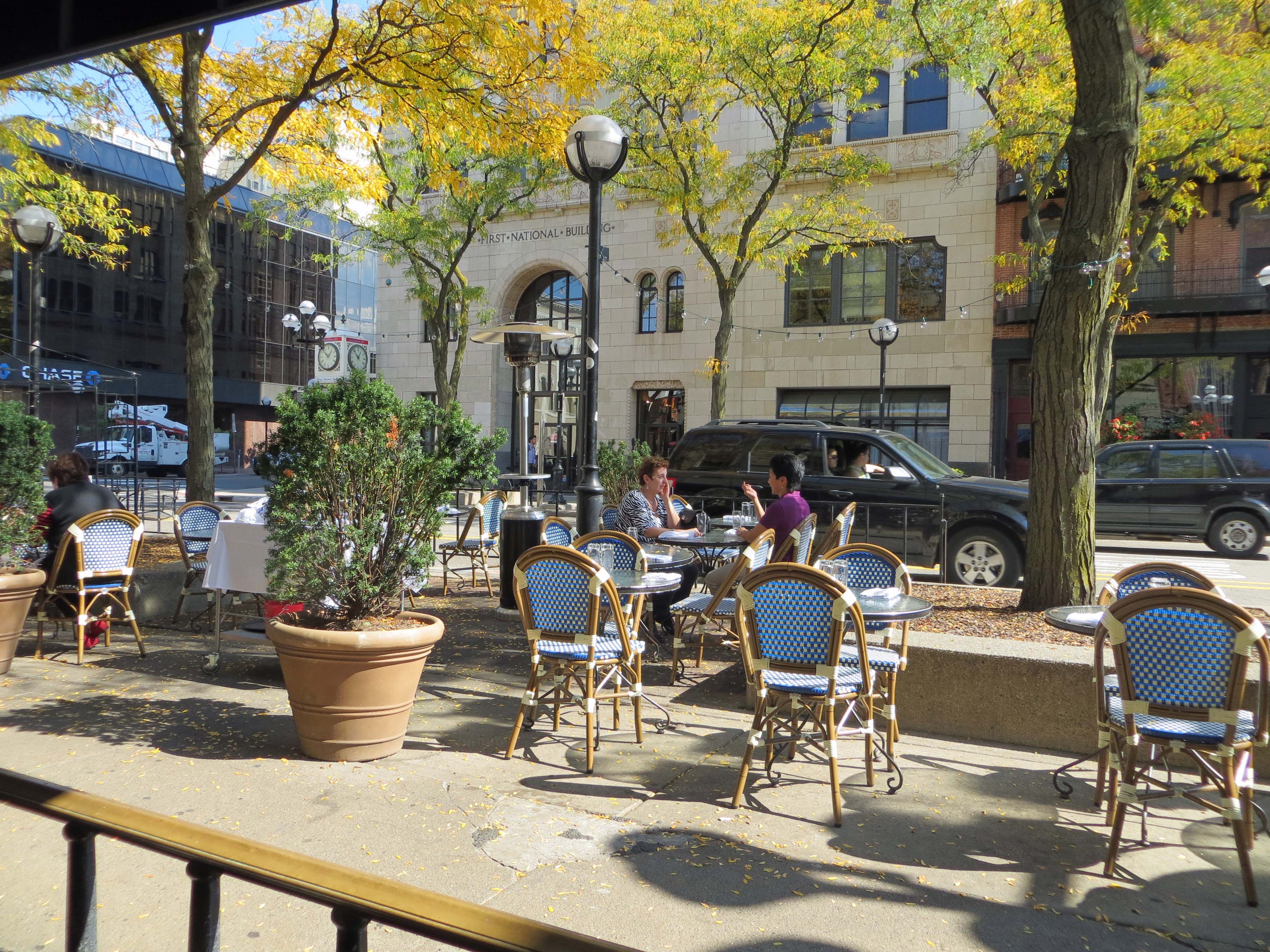
Talking to a few locals (a taxi-driver, the concierge at my hotel), I discovered that the people of Ann Arbor are particularly proud of its trees, which are at their most glorious in early autumn. By the standards of distance that pertain in the USA, Ann Arbor is not far from Canada, and its ‘fall’, I imagine, has similar characteristics to its neighbour’s. In early October, the trees sport every hue from palest lemon-yellow to deepest russet and ruby-red. This may sound just like our own English trees in the autumn, but there are two spectacular differences: in the first place, the colours in Michigan are often more vivid; in the second place, the trees ‘turn’ in a very uneven way. Thus you might find half of the same tree still sporting leaves of glossy green, the other half already turned a fiery red. My hosts told me that the trees sometimes remain like this until the end of November, before they become completely red or brown and shed their leaves at last.

The trees made an enormous impression, but I was also delighted with Ann Arbor itself. The staff in the cafés, restaurants and shops, many of which were French in style, were friendly without being over the top, business-like without compromising good service. I particularly liked the Café Felix, where I enjoyed a light salad lunch, and Cherry Republic, the wonderful shop a little further down the street which sold everything that could conceivably be made of cherries and was very proud of the quality of its goods (the saleslady asked for my name and address in case I wanted to return any of my purchases: I told her that I’d have a long journey bringing them back!).

Cherry Republic
It also sold maple syrup – Michigan maple syrup, I was exhorted to note, not the Canadian stuff.

Also intriguing were the squirrels. In this part of the world they are not grey, but either black or red, or red-and-black. Here’s a picture of one that caught my eye.

In case you’re wondering about the name ‘Ann Arbor’, the town was founded in the first half of the nineteenth century by two men whose wives were both named Ann. According to legend, they therefore decided to call the town after both of them. ‘Arbor’ is self-explanatory: perhaps they intended it to be a place of rest and contentment; it may or may not have referred to a particular arbor under which the women sat.
I’m hoping to return to Ann Arbor in December, when perhaps I’ll see some snow. I’ll keep you posted!
WriterFest!

Yesterday Jim, my editor, and I enjoyed the immense privilege of running a writers’ workshop at Wakefield One, the City of Wakefield’s wonderful new complex that incorporates the library and other arts and community facilities. Like the event in which I took part at Wakefield One last year, it was part of Wakefield’s LitFest, and impeccably organised by Alison Cassels, who, in my experience, is second to none at enthusing and gathering in intelligent and appreciative audiences for such occasions.
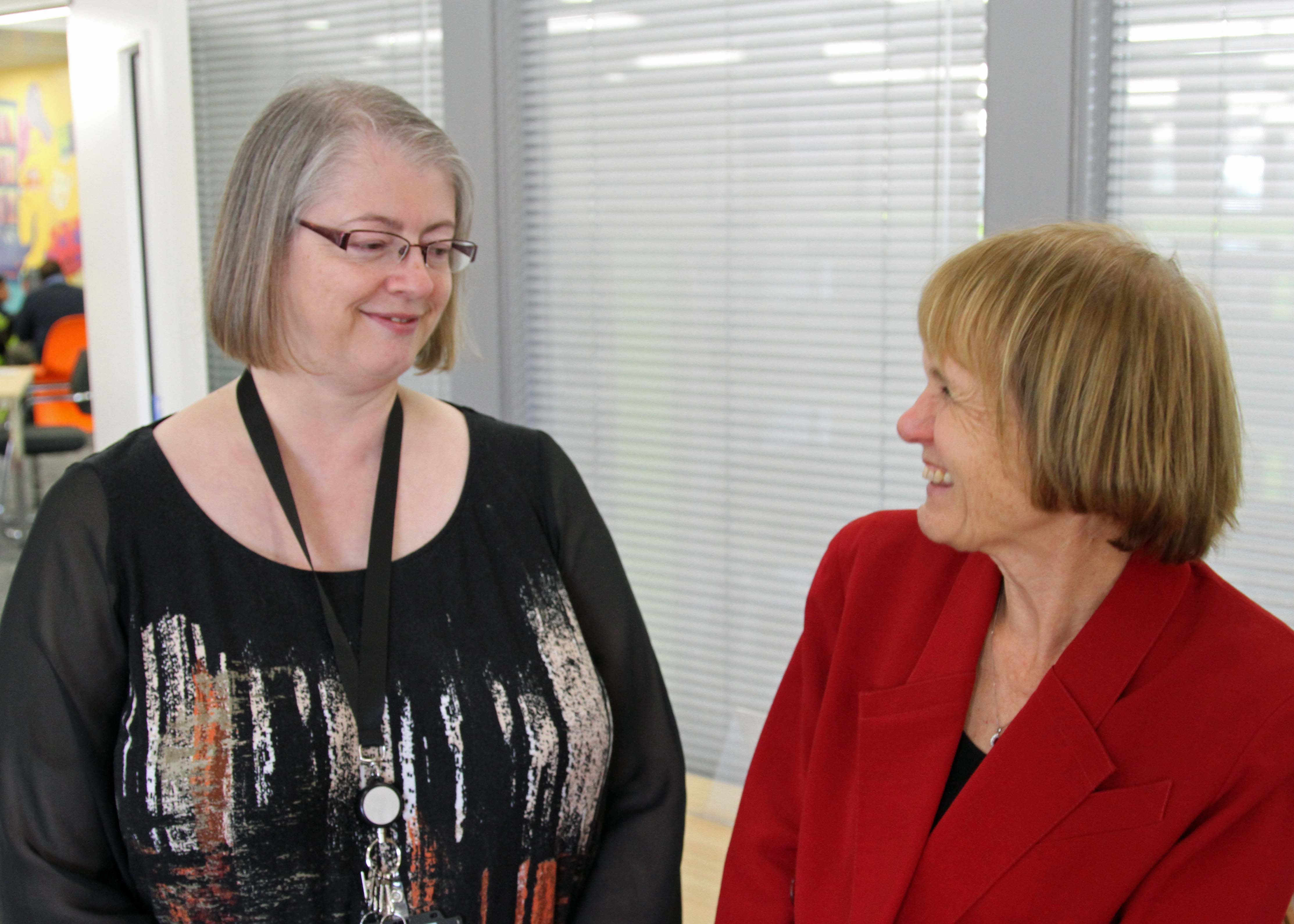
Alison Cassels, organiser par excellence
Eventually, there were twenty-two lively and responsive participants of all ages, from twenty upwards. One recent graduate came with his grandfather.

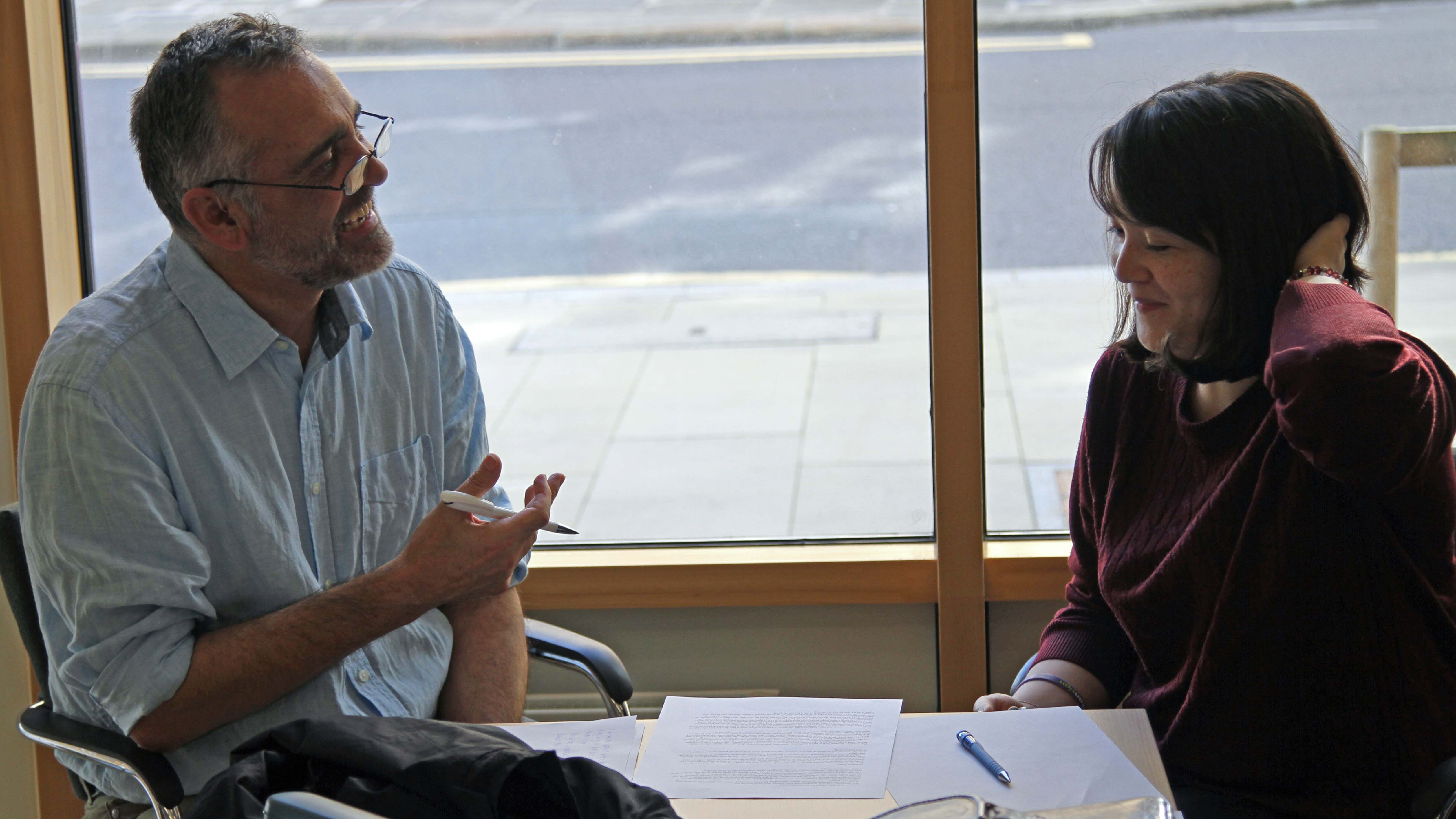
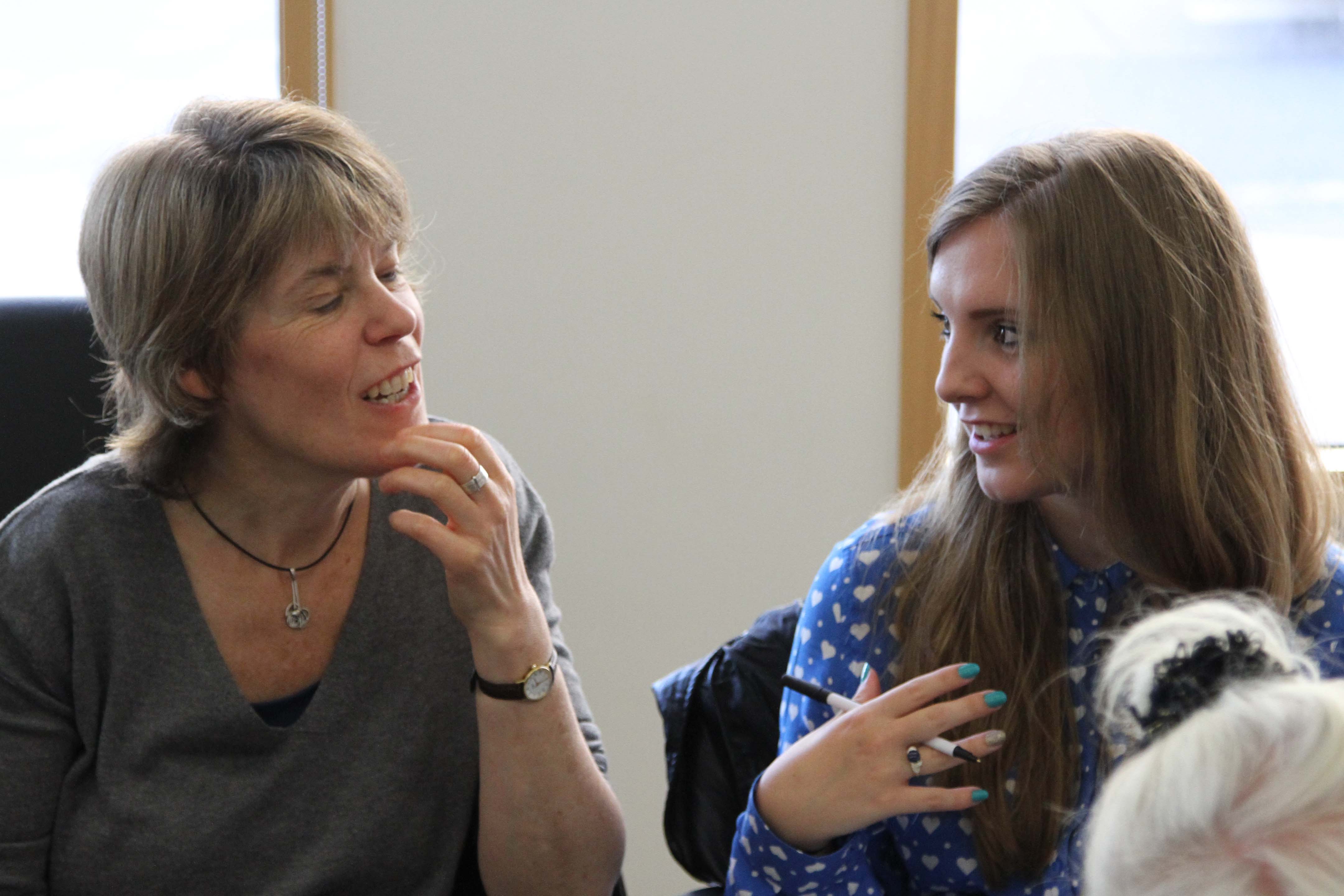
We began by giving the workshop delegates a sheet containing the opening paragraphs of six novels and asked them to take on the editor’s task of choosing (and providing justification for their selection!) just one that they would personally want to publish. The results were Illuminating: although one of the extracts (actually from a novel by Ruth Rendell) emerged as the clear winner, all six had at least one champion. Everyone was thus able to appreciate the dilemma of choice that an editor faces when sent many different manuscripts. Then, in pairs and against the clock, the group accepted the challenge of producing an opening paragraph that might persuade an editor not to reject it. The results were exceptional: all were coherent, interesting and, most impressively, cliché-free; the activity itself generated wonderful engagement, as you can see in the photographs here.



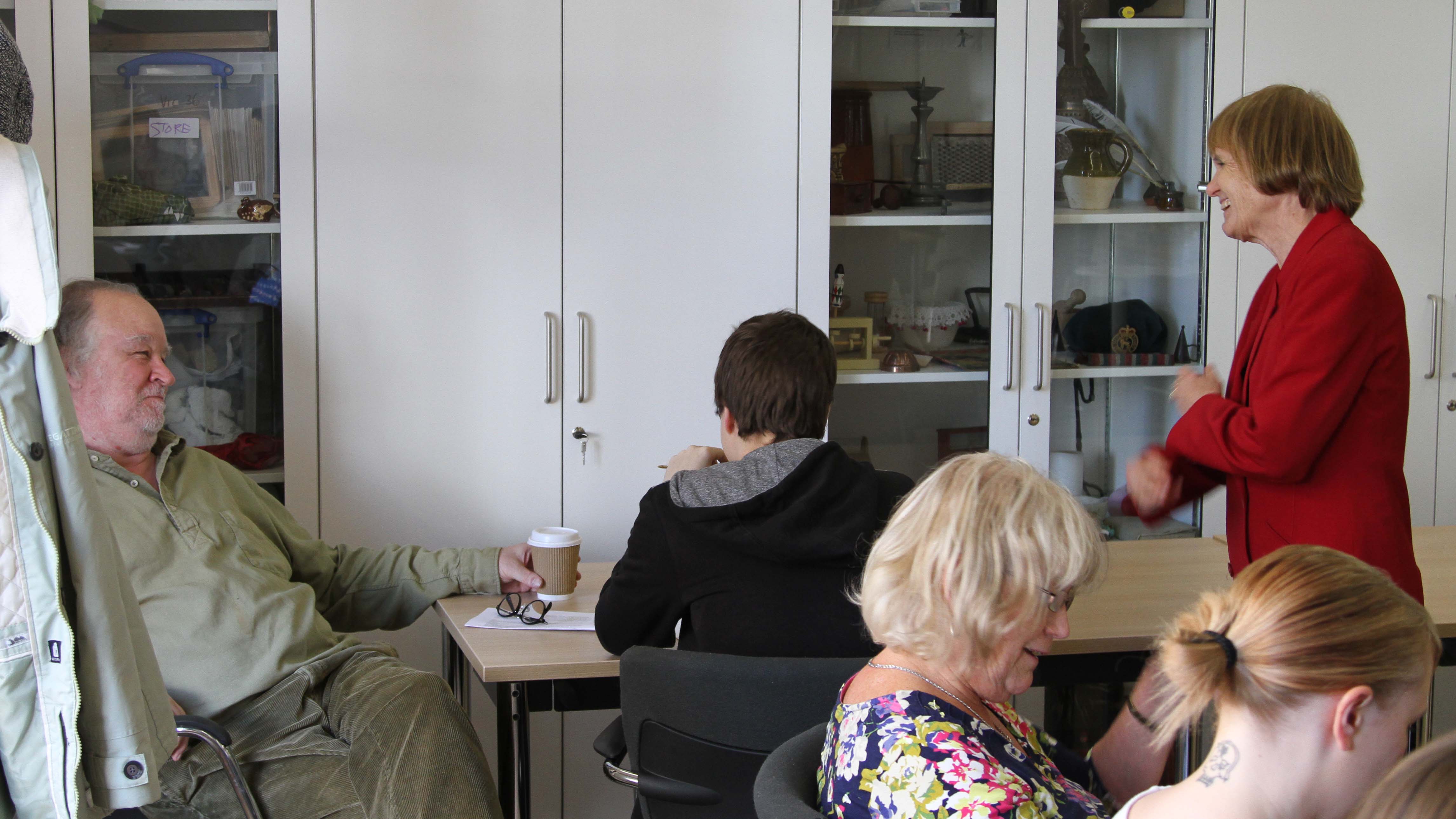
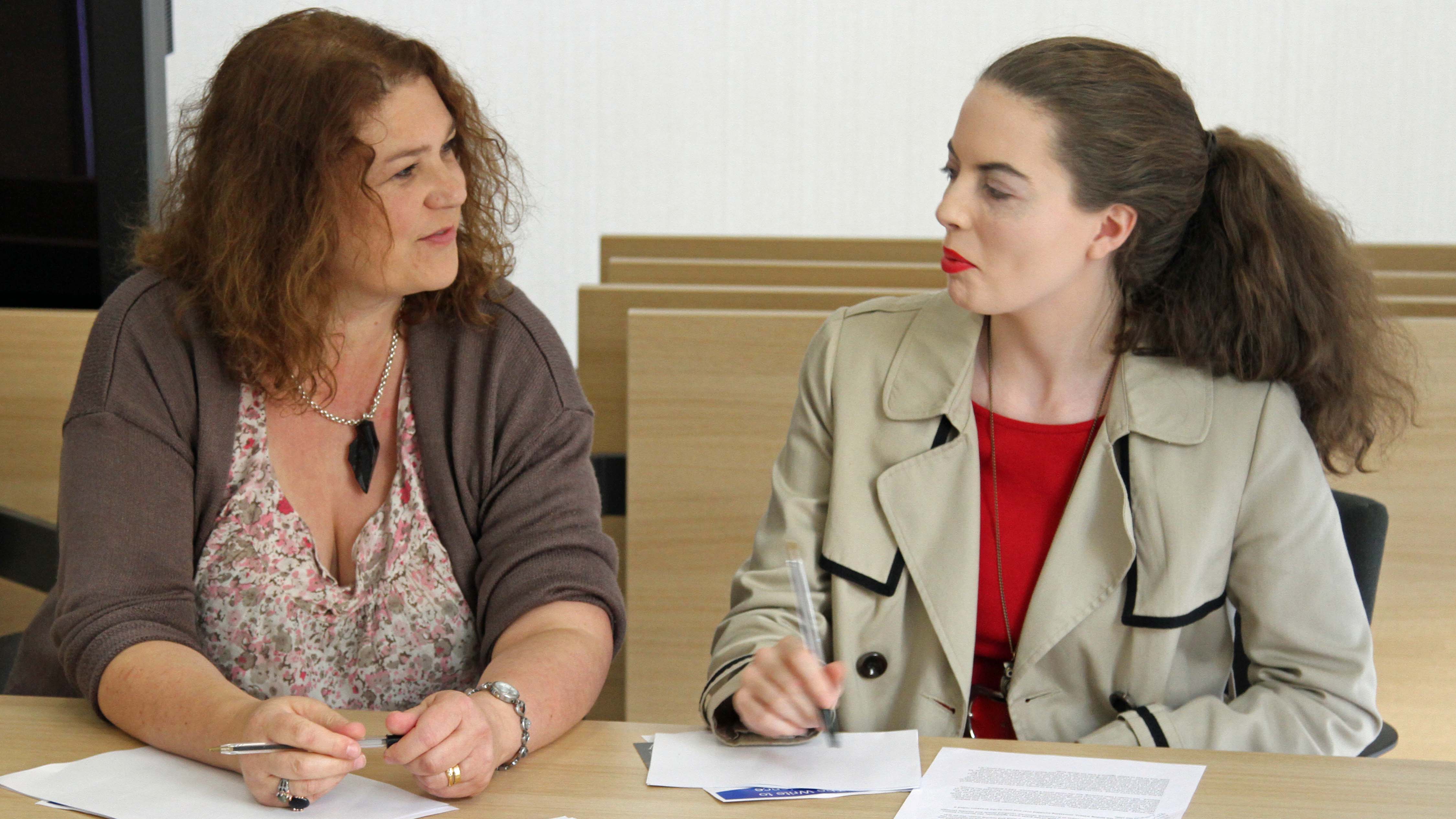

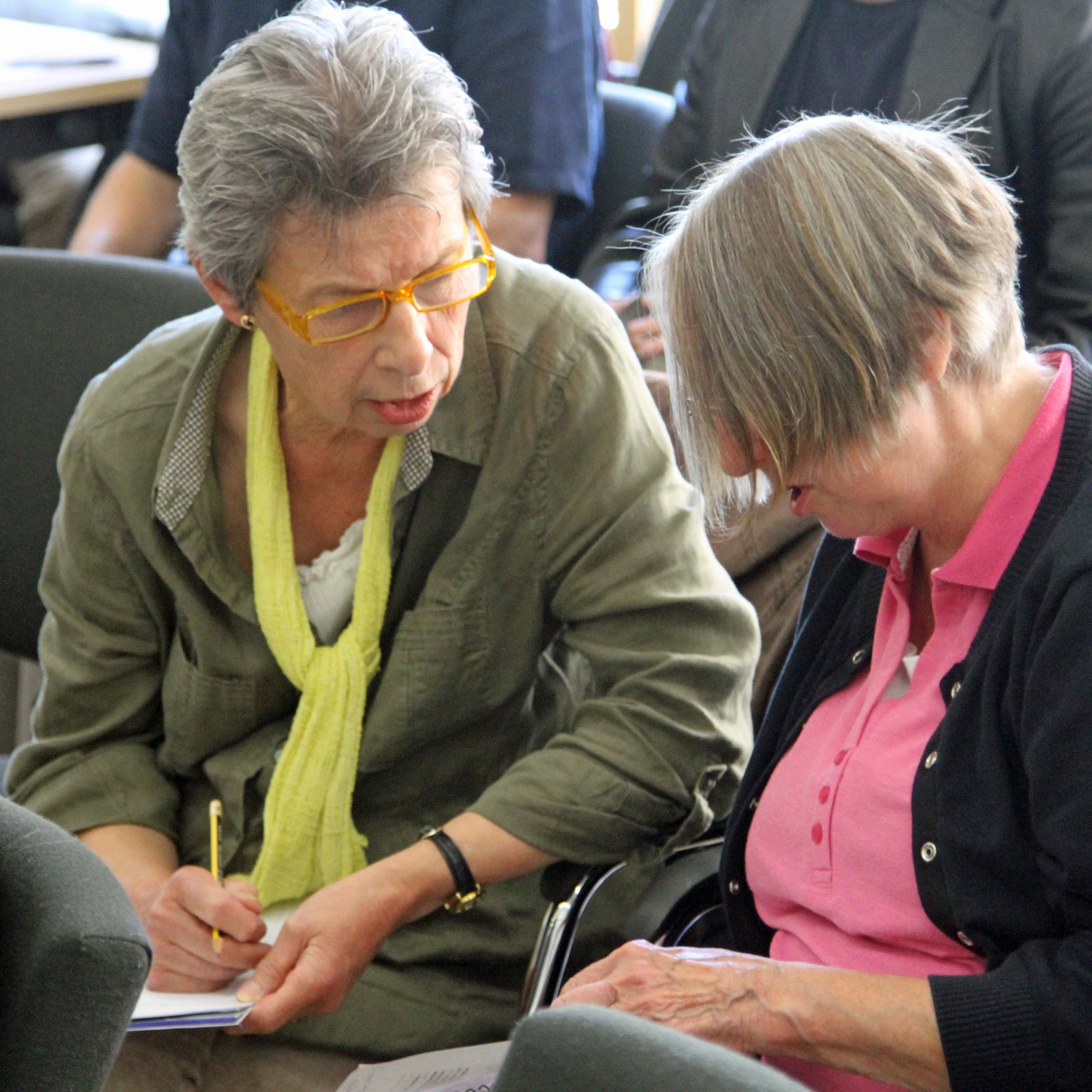


I then went on to explore some of the practicalities of getting published and what new (and, indeed, established) authors need to do in order to engage and keep their readers. This audience was thoughtful as well as appreciative and turned it into a dynamic, interactive session. Finally, I read the opening chapter of Sausage Hall, the third in the DI Yates series, which will be published on 17th November; it was well-received (I’d been holding my breath, as I’m sure all authors do when they give their new ‘baby’ its first airings). The workshop members were generous: many bought copies of In the Family and Almost Love in the signing session at the end; some were kind enough to buy both.
The informal debate continued after the workshop was officially over. Several participants said that they’d been delighted to receive Salt Publishing’s online alerts. If any of the readers of this blog would also like to obtain these, just let me know and I’ll pass on the information.
Very many thanks indeed to Alison Cassels and the rest of the staff at Wakefield One (not forgetting those who work in the Create coffee shop, which produces a mean cappuccino!) and heartfelt gratitude to all those who joined the workshop – I hope that you will become occasional or even regular visitors to this blog.
Saying ‘thank you’ to @jennyoldhouse and @JennyBurnley1, two lovely Jennies!


This summer, events and commitments have seemed to conspire to restrict the time I had become used to spending on blog posts and engaging with others on the social media, by which I really mean Twitter, because, try as I might to be active with it, I can’t feel very comfortable with the lumbering mode of global communication that Facebook always proves to be to me. Even Twitter has found me out as a tweeting dilettante, never spending long at all up there amongst the flocks in the branches, but flitting in and out in sharp bursts like a swallow. So, first, may I apologise to loyal friends who must think me at best unreliable and, at worst, not a friend to them at all. Some of you (you know who you are) have put up with my scant regard for relationship consistency with huge patience and unstinting support in my absences, for which, please do accept huge thanks for keeping this bird in flight.
In the context of all this, I should like to make as public a declaration of thanks as this blog permits to a wonderful pair of Jennies, who, separately and at different times, could almost be assumed to have been acting in collusion to make me feel good about myself and about my novels. They have joined a wonderful group of reviewers of the first two DI Yates books who have taken much trouble both to read them and then to provide splendidly constructive and insightful commentary upon them. The DI Yates page on this site quotes them verbatim, which is my best way of saying ‘thank you’. However, Jenny Lloyd, who has reviewed both books, and Jenny Burnley, who has just reviewed Almost Love, have yet to find their comments transferred here (I’ve been remiss about this and I’ll be rectifying it shortly!) and I’m thus giving them a post to themselves by way of appreciation.
Both Jennies have been absolutely consistent in their celebration of other writers’ and bloggers’ work, mine included, and I’d like them to know just how much I value such selfless enthusiasm for writing about and spreading what they read, which helps so many people on the networks. I’d also like to say how much I enjoy their work, too. Thankfully, their qualities are shared by many of my virtual friends and acquaintances; they do epitomise the best of good social media practice, which means that they are always a pleasure to talk to.
I imagine that readers of this post will readily understand how I feel upon reading such reviews as these two, not just because they are so positive, but because their insights are so very thoughtful. Here they are:
Jenny Lloyd, on In the Family:
While laid up with an injury, the days can seem interminably long. What I needed was a book that would take my mind off the pain in my knee and the stultifying boredom that comes from sitting in one place for too long. I’d just finished reading The Luminaries (an 800 plus page book I would never have got round to tackling if I hadn’t been laid up). Then my daughter found the lost charger for my Kindle while looking for something else (as always happens). Browsing through some of the titles, I came across In the Family by Christina James, a book I’d bought some time ago, immediately following my reading of the author’s other book, Almost Love.
There is always a risk, after reading a really good book by an author, that one’s expectations will be disappointed by the next one. So it was with fingers crossed that I began In the Family, hoping I would enjoy it as much as Almost Love. I needn’t have worried, though. If anything, I enjoyed this one more.
In the Family has all the ingredients which one expects from a crime-thriller but it is the author’s skill which takes these ingredients and turns them into a crime-story bristling with mystery and suspense, written with intelligence and deep psychological insights. And the characters! Some of this family’s characters you would not want to meet, let alone be related to, but the author portrays them so well I now feel I have met them all and they linger in my memory still. Essentially, I felt the central theme of this story explored how damaged people can result in damaged families with devastating consequences for any children involved.
The gist of the story; a skeleton is found buried alongside a road and Inspector Tim Yates is called in to investigate. The remains are that of a young woman, Kathryn Sheppard, who disappeared thirty years before. As Tim and his team unravel what happened to Kathryn, the Atkins family’s past comes back to haunt them.
I devoured this book in two days; not because I had little else to do but because I honestly couldn’t stop reading it. My measure of a good read is: how much I don’t want to stop reading to go and do something else; how much I relish picking it up again; and how much I don’t want it to end. In the Family scored top marks on all counts.
I feel I must thank Mrs James for the thoroughly enjoyable two days I spent captivated by her story. The Luminaries may have won the Booker Prize last year, but for me In the Family was the better read. Mrs James has a third novel coming soon; I will be first in the queue to buy!
Jenny Burnley, on Almost Love:
This excellent crime thriller weaves a complex story around the main characters of Detective Inspector Tim Yates and Alex Tarrant, following the inexplicable disappearance of Dame Claudia, a celebrated archaeologist with a mysterious past. In a weak, alcohol-fuelled moment, Alex, married to the boring, but dependable Tom, allows herself to be seduced by the dastardly Edmund, a dangerous, unlikeable character. This adulterous liaison is central to the story, which moves along at a cracking pace. The reader is drawn along deeper into the story, demanding to know the all-important answer to ‘whodunit’ and how. This quest required reading late into the night to unravel the mystery and see what happened next. Suspects abound in Almost Love and there is plenty of action, tension and suspense, with many clever twists and turns. The characters are exceptionally well-drawn, with close attention paid to human foibles and weaknesses. As the story unfolds, a dramatic late twist leaves the reader breathlessly awaiting the next D.I. Yates novel.
Thank you, Jenny and Jenny. You have jointly ‘made my summer’ and I know that your good offices as discriminating reviewers benefit many authors and make them feel very good about what they do. Thank you, too, to all those other wonderful reviewers and readers who have supported my books so far.
Fine theatre!

I have a confession to make: On July 1st, I went to see Skylight, the play by David Hare that has been performing at Wyndham’s Theatre this summer, and have been meaning to write about it ever since! Sic transit gloria aestatis! It stars Carey Mulligan and Bill Nighy – and in fact, apart from two short appearances by Matthew Beard as Nighy’s son Edward, they have the stage to themselves for the whole two-hour performance, which must require considerable stamina, especially as both play their characters with enormous energy and verve.
First performed in 1995, Skylight tells the story of an extra-marital affair between Tom Sergeant (Nighy) and Kyra Hollis (Mulligan) that draws to an abrupt close after Tom’s wife Alice finds out. The termination is at Kyra’s insistence, not Alice’s; but reconciliation is made virtually impossible for Tom after Alice develops a terminal illness shortly afterwards. He nurses her until she dies, an event taking place some time before the action of the play. Kyra, who somewhat implausibly had not only been working for Tom’s business but also sharing his and Alice’s house, leaves precipitately, trains as a teacher and builds a new life for herself teaching deprived children in a run-down part of London. Her flat, in another bleak London borough, is a long journey from the school where she works. The action takes place just before Christmas. The flat is cold and it is snowing. Edward appears unexpectedly out of the blue to tell Kyra of his mother’s death. He appears not to know why she ceased to live with his family.

A few hours after Edward’s departure, just after Kyra has taken a bath in an attempt to get warm, Tom shows up. He gives more details about Alice’s death, but the real reason for his visit is to try to find out why Kyra abandoned him and perhaps – though he does not state this explicitly – to persuade her to return to him. Kyra treats him warily and with irony, though a certain fondness begins to creep through. At first, the audience is entirely on her side. Tom comes across as a self-centred self-apologist who believes that his money can usually get him what he wants. He is disparaging about Kyra’s job, her pupils, her lifestyle and her Spartan flat. However, the genius of the play lies in the fact that the emphasis then gradually shifts to reveal Kyra’s shortcomings, as well as Tom’s. This yo-yoing of sympathy for one or the other character happens more rapidly as the play goes on. The conceits, the posturing, some element of lying or at least disregard for the truth and, through it all, the essential decency of both Kyra and Tom are exposed as the two actors deliver David Hare’s sparkling lines with convincing vehemence and wit. The onlooker hopes against hope that they will revive their relationship.
Skylight is a miracle of good casting. Kyra is older, more sophisticated and less waif-like than the Jenny of An Education, yet Mulligan’s performance shows something of the obstinate naiveté and acceptance of face values at odds with reality that she created in the earlier role. Nighy’s depiction of Tom is unlike any other role that I have seen him play, though Tom’s wit, his irony, his rather louche outlook on life and the sense of melancholy vying with humour are all Nighy trademarks. Throughout the whole performance, the actors create with consummate skill the presence of an invisible third character – Alice, for whom Tom made a skylight when she was lying in bed, too ill to look out of a conventional window. Perhaps it is Alice who triumphs in the end.
When I attended the performance on July 1st, the theatre was packed. I’m not sure if tickets are available for the remaining few performances before the play closes, but if you are able to get hold of one, snatch at the opportunity – plays of this calibre are rare indeed, even in the West End!

Wyndham’s Theatre, Charing Cross Road
 Christina James, crime novelist