

A very clever book… Where’d You Go, Bernadette
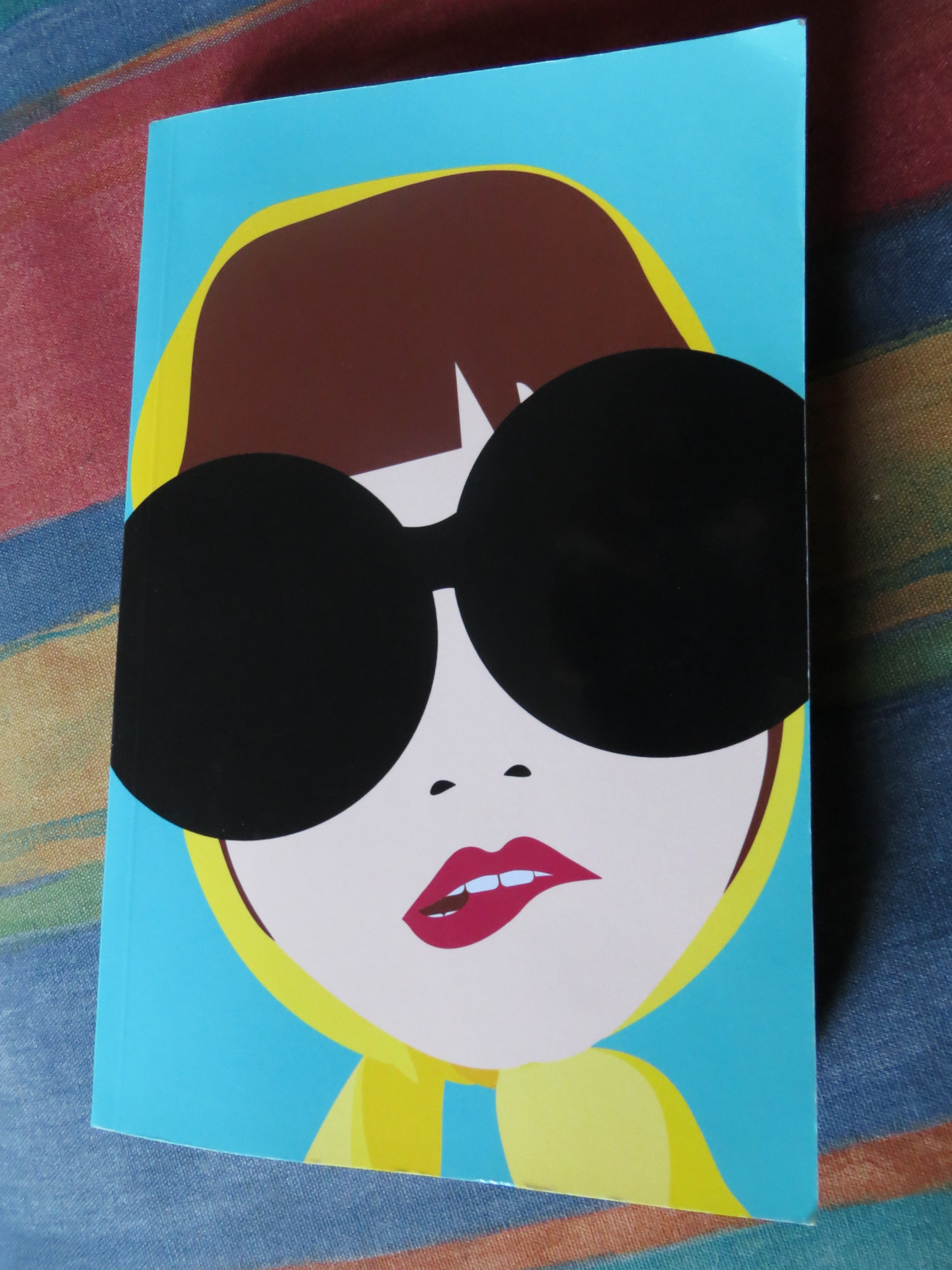
This novel is very funny, very wise and actually quite sad. Written by Maria Semple, it tells the story of Bernadette Fox, a woman who, when she was young, was a brilliant prize-winning architect. However, her first big project was destroyed out of malice and she never worked again. Nor did she become a brilliant home-maker to her daughter Bee (who was born after Bernadette’s many miscarriages and has had operations for a heart ailment) and her husband, Elgie Branch, an arch-nerd who is high in the Microsoft hierarchy. (One of this novel’s particular attractions for me is that I worked on a project for Microsoft some years ago and I therefore know that it captures that company’s culture to a ‘t’.) Needless to say, given Elgie’s profession, they live in Seattle, in a house that is becoming increasingly derelict because Bernadette refuses to care for it and Elgie is always at work.
At another level, the book is about the malaise that has afflicted contemporary life in America – and by extension all Western societies. It veers from the wildly funny – the Galer Street School scenes (which depict an aspirational school that is almost, but not quite, part of the ton, and present how, among its other tribulations, it has to contend with an adjacent fish factory) are hilarious– to the creepily sinister: the scenes in which Elgie and his PA, who briefly becomes his mistress, try to get Bernadette committed to a psychiatric institution are frighteningly realistic.
At its heart, this novel is a romantic comedy, but it is also an astute satire. The speech cadences of the characters are uncannily accurate; their ways of thinking are sometimes bizarre, but always credible within the context of what they are doing. Amid the traumas besetting their lives, there is a continual preoccupation with things: Bernadette becomes attached to a fishing vest with many pockets to keep her belongings in; Elgie has both a nebuliser and something called a ‘neti pot’ to aid his breathing; Bernadette (through her ‘virtual’ maid Manjula, who turns out to be not all that she seems) orders shoals of clothes for them to take to Antarctica.
Antarctica? For a story that starts in Seattle? I know it sounds weird, but even this is logical within the structure of the plot, which is creative, but never forced. This is entirely appropriate, because, ultimately, what Where’d you go, Bernadette does superbly well is to celebrate creativity.
The photograph is of a proof copy that was given to me by my friend Sally; the jacket of the published version may look slightly different. It was published in July, by Orion.
When the Devil Drives… plenty to enjoy in the passenger seat!

There are many things about this novel, the first of Chris Brookmyre’s that I’ve read, that I admire. The novel is set in Scotland and the author successfully conveys that country’s rawness and beauty without descending into shortbread and Bannockburn lyricism. The plot is brilliantly crafted, with believable twists and turns until the very last sentence; it explores the dynamics of relationships on several different levels; and one of the protagonists, a private investigator named Jasmine Sharp, who inherits her uncle’s private investigation agency, Sharp Investigations, is only twenty-one years old, which makes her unique amongst the fiction detectives of my experience. She’s also an actress manqué, which helps her considerably in her adoption of a career that she has literally fallen into by accident. In When the devil drives, Jasmine’s pursuit of a long-disappeared missing person collides with the investigation of a present-day crime being conducted by Catherine Macleod, a senior police officer. Parallels and contrasts are drawn between the two women in both their professional and personal lives.
Jasmine’s relationship with Fallan, the man who confesses to having killed her father, is the most compelling of the many relationships that Brookmyre portrays. Fallan is an enigmatic character; still barely operating on this side of the law (in at least one instance he commits a criminal act, though there is the underlying suggestion that this is morally justified), he is an ex-con who, by his own admission, owes Jasmine an unpayable debt. She should shun and despise him, but she becomes ever more fascinated with him, while it becomes even clearer that she needs his help. To the end of the novel, however, his true character and, the reader suspects, his true relationship to her remain ambiguous. (When the devil drives contains an extract from Brookmyre’s next novel, Flesh Wounds, and I therefore know that Fallan features in it. I shall be happy to buy Flesh Wounds just to find out more about him.)
Catherine has a similarly edgy but not hopelessly antagonistic relationship with her husband. More bohemian than she, he clearly thinks that she is over-protective towards their two sons – a natural result, we are encouraged to conclude, from what she sees and suffers daily as a policewoman. I have to confess that I find the portrayal of Catherine the weakest facet of this novel. Her assured public role – she is almost brutally terse in her treatment of colleagues – sits ill with the neurotic wife and mother that she becomes at home. However, the main problem with Catherine is that her character fails to engage the reader to the same degree that Jasmine’s does. Many crime writers develop two characters to act as foils to each other: Stephen Booth’s Fry and Cooper and Anya Lipski’s Kiszka and Kershaw spring immediately to mind – but their success lies in making each character as appealing as the other, despite their very obvious differences. By contrast, in When the devil drives, I found myself impatient to get back to Jasmine during the Catherine scenes.
This is a realtively minor blemish, however. I won’t say too much about the intricate plot of this novel, as I don’t want to spoil it – and I should like to encourage anyone who is reading this to get hold of a copy of the book. Brookmyre has an original style and I’m sure will write many more such successful and entertaining novels.
Meaty… from @stephenbooth

I think that I’ve read all of Stephen Booth’s novels except Already Dead, the latest. (It’s difficult to keep up!) I’ve just completed The Kill Call, its predecessor. Booth’s a writer I much admire, partly because I like the characters that he’s developed in the Cooper / Fry novels, partly because he describes so well the Pennine countryside in which the books are set. It’s not too far from where I live and I find his descriptions both evocative and accurate. And then there are his plots, which improve with every book.
The Kill Call particularly features Diane Fry, his troubled Detective Sergeant, though DC Ben Cooper still has a large role in this book. As in the previous novels, Fry is at odds with most of the people who populate her world and, as has also happened before, Cooper’s well-meaning attempts to help her rebound on him. In fact, I’d say that, if there is a (minor) blemish in this book, it’s that Cooper’s Good Samaritan acts occasionally tip over into soppiness, at least for this reader: Booth is clearly trying to point up Fry’s prickliness, but I don’t think that you’d need to be an outwardly tough, inwardly traumatised woman police officer to find Ben Cooper’s attentions as depicted in The Kill Call irritating, which is a pity, because Booth has got the taut relationship that exists between them exactly right in the previous novels in the series.
That is a small quibble, however. The Kill Call has a great deal to offer, not least its fascinating historical detail. Booth is particularly excellent on the history of the recent past. I hadn’t before come across accounts of the underground nuclear shelters created in the Peak District during the Cold War, but the detail that he writes about them is completely convincing. Booth compares this period of history with what happened in the plague district of Eyam, to great effect. However, the main plot focuses on the legality of hunting and shady dealings in the meat industry, both of course highly topical. The title cleverly refers to both. The first murder victim is a reprehensible man; Booth holds the reader’s interest and sympathy by developing the story of those closest to him. A web of lies, deceit and treachery unfolds; it is complex, but extremely well-handled and perfectly credible.
I won’t reveal any more, as I’ve probably disclosed quite enough already! I’d just like to conclude by saying that I think that Booth should recognise that he has taken the ill-starred, prone-to-misunderstanding, tense quasi-sexual relationship between Fry and Cooper as far as he can now without developing it further. One or the other or both should pluck up the courage to explore their feelings more clearly, or one or the other should move on. This may be what Booth has planned. But, as I’ve already explained, I have yet to read Already Dead, so if anyone reading this has beaten me to it, please don’t give me any clues!
A fiendishly clever murder story… and much more!
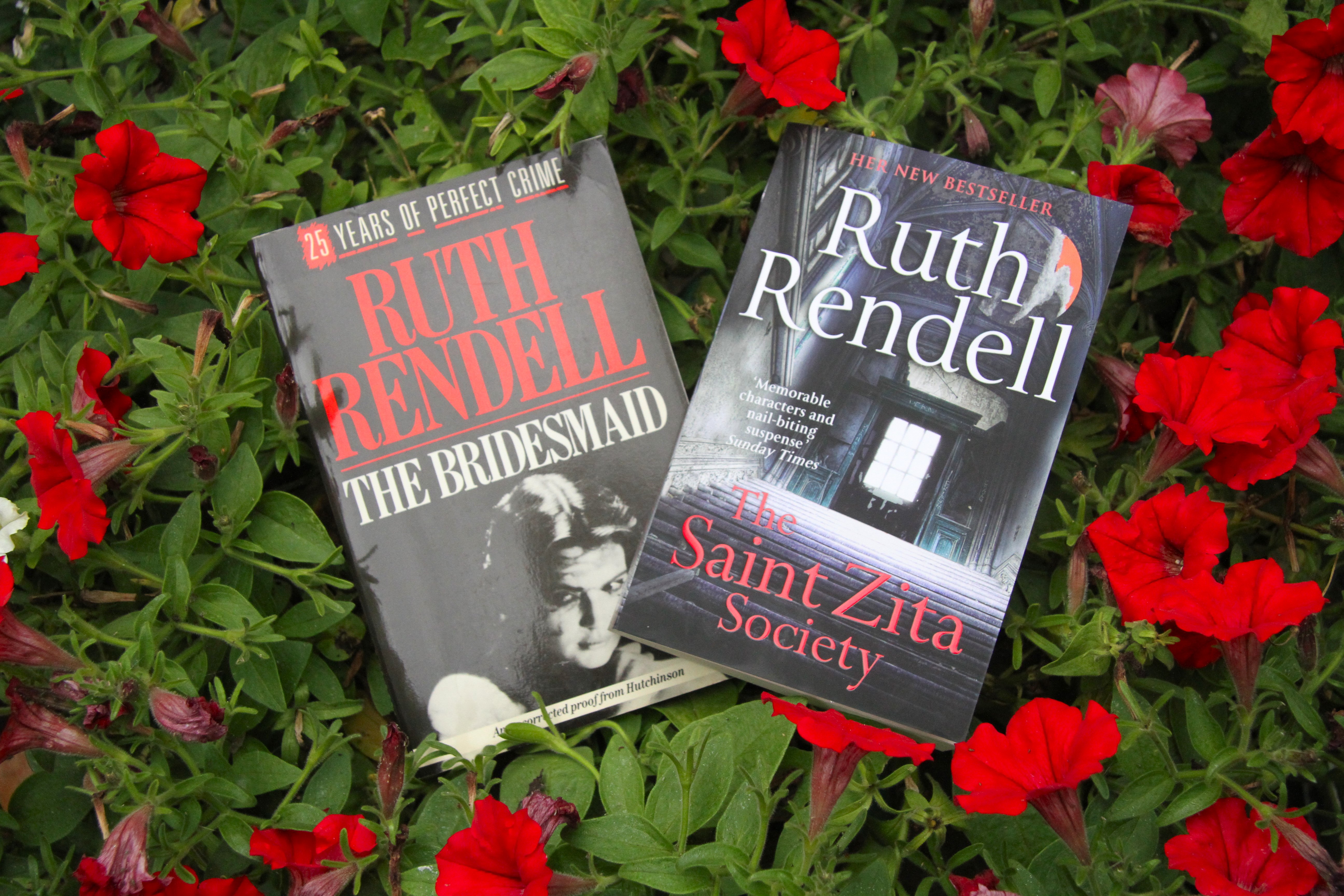
I’ve been a Ruth Rendell fan for a very long time; in fact, since before she was famous. I remember a conversation that I had with the Hutchinson rep (a delightful man called Frank Storey, who was then on the verge of retirement) when I was the purchasing manager for a library supply company in the early 1980s; I enthused about The Master of the Moor. Frank had given me a proof copy of the novel on his previous visit. I told him that I thought Rendell had huge possibilities, especially for the library market; he said that Hutchinson was committed to her, but that sales were still disappointing.
They must have improved dramatically soon afterwards. I no longer have the proof of The Master of the Moor (nor several other Rendell proofs that have passed through my hands, probably because I gave them to librarians), but I’ve just taken down from my bookshelf a proof of The Bridesmaid (published in 1989) and see that on the title page is inscribed ‘No 413 in a limited edition of 500’. I think that it’s safe to assume that an author who can prompt her publisher to pay for a proof-copy print run of 500 and then take the trouble to number each volume has arrived! In the intervening years, I’ve continued to read Ruth Rendell and also enjoy (perhaps even prefer) the psychological thrillers she writes as Barbara Vine.
Opening The Saint Zita Society, her latest book, at its title page, I see that Rendell’s been loyal to Hutchinson and Arrow, both now Random House imprints. I’ve just completed this novel; it has been a fascinating read. It’s about the owners of the houses in a well-heeled street in London, Hexham Place, and (especially) their servants. (Saint Zita, apparently, is the patron saint of servants.) One of the key characters in the novel, June, is that fictional stereotype, the elderly female retainer. She’s worked loyally for her employer (a sort of fake princess) for more than sixty years. June is one of the prime movers in the Saint Zita Society, which the servants of Hexham Place decide to set up as the vehicle of a collaborative effort to improve their lives. I’m certain that the portrayal of June is deliberately hackneyed, because the other servants in the novel are anything but stereotypes. They range from the exotically-named Montserrat, who is supposed to be an au pair but never seems to do any work, to the mentally challenged and rather sinister Dex, a jobbing gardener who takes instructions from a deity called Peach who lives in his mobile phone. Dex has served time in an institution for the criminally insane for attempting to murder his mother. Rendell has always excelled at black humour and the scenes featuring Dex are some of her best. Then there is Thea, who insists that she is not a servant, yet nevertheless acts in that capacity (unofficially and unpaid) to her landlords, a gay couple. Thea is a professional doormat. Even though she knows that people are making use of her, she can’t say no and thus ends up romantically entangled with Jimmy, the chauffeur of an eminent academic who is soft on his servants – and incidentally responsible for introducing Dex into the community – because he started life in humble circumstances. It is another of the novel’s delights that the many gradations of snobbery pertaining in Hexham Place are captured to a ‘t’. My favourite character is the beautiful and tragic nanny, Rabia, a Muslim woman whose children and husband are all dead because of a genetic disorder perpetuated through intermarrying. Her father wishes her to give up her post and return home so that another marriage can be arranged for her with a certain Mr Iqbal. Iqbal himself is a nurseryman whose work brings him several times to Hexham Place.
If all of this is beginning to sound more like a comedy of manners than a modern crime novel, it means I have managed to capture some small part of its essence. Hexham Place and the characters who frequent it – despite their wholeheartedly embracing the paraphernalia of twenty-first century life, including Smartphones, satnavs and civil partnerships – do not really belong to a particular time or place. There is an elegiac quality to The Saint Zita Society and a timelessness that puts me in mind of the later works of another female writer whom I greatly admire: Muriel Spark. Rendell’s novel has much in common with Spark’s The Finishing School (2005), another work that takes a traditional subject – in this instance life in a girls’ boarding school, instead of Rendell’s tale of servants – and whisks it to a higher plane. Neither of these books is really about the everyday situations with which they purport to deal. Both are timeless studies of humanity itself. There is, however, an additional twist to The Saint Zita Society, because although it deserves to take its place alongside some of the greatest human comedies in the language, it is also, as the reader expects from Rendell and then almost forgets, a crime novel. Among its many other qualities, The Saint Zita Society is a fiendishly clever murder story.
This story never loses its allure…

I’ve written before about my interest in the Wars of the Roses and Richard III. The whole nation’s awareness of this monarch and his deeds was triggered earlier this year by the discovery of his skeleton in a car park in Leicester.
As a result of both this and the television series The White Queen, based on several novels written about the Wars of the Roses by Philippa Gregory, I’m sure that both historical and fictional accounts of Richard’s reign must be achieving buoyant bookshop sales at present. If so, it’s a bandwagon that I was happy to jump on myself when I visited Blackwell’s Broad Street last week, by buying a book that I’d not encountered before, Richard III and the Murder in the Tower.
The topic, of course, is a familiar one. This book, which was published in 2009, is yet another enquiry into the fate of the princes in the tower, Edward IV’s two sons Edward, Prince of Wales, and Richard, Duke of York. Unlike many of its predecessors, however, it is a scholarly and very balanced account which, whilst not attempting to provide a definitive answer to the question of who killed the two princes (and indeed whether they were killed), presents all the facts that are known about the events leading up to their disappearance and sets down the possibilities of what could have happened to them.
The author, Professor Peter Hancock, is an American academic, which may be the reason why he is able to tell his story with such dispassionate flair. It’s a curious fact that most English people who are interested in this story become heated partisans of either Richard III or Henry VII; I’ve noticed that the same phenomenon applies to discussions about the next English civil war that was to take place in the middle of the seventeenth century, one that was arguably even more bloody and brutal than the dynastic fight to the death between the houses of York and Lancaster. On some topics, English people have a reputation for showing undemonstrativeness to the point of being phlegmatic, but many are fiercely curious about their own past and correspondingly committed to allegiances to historical characters who may or may not have been supported by those of their ancestors who actually knew these people. (From what I know of my own antecedents, for example, I’m pretty convinced that they were Cromwellians, not Royalists, though I should have preferred them to have been the latter.)
To return to Professor Hancock, he has painstakingly examined all the available documents relating to the reigns of Edward IV, Richard III and Henry VII and, although he has not turned up much new material, his keen eye for detail and astute interpretation of the facts have resulted in some very plausible alternative accounts of what may have actually happened. I won’t say what these are, for obvious reasons. He also encourages readers to consider the actions of the protagonists from the point of view of their contemporaries and the mores that prevailed at the time, rather than through the filter of what we now consider to be acceptable civilised behaviour (though it should be added that struggles for power today are conducted with just the same naked savagery as they were in the Middle Ages).
If I have any quibbles, they are all minor ones. Professor Hancock devotes a chapter to each of the key players, including Edward IV’s mistress, Jane Shore, except, inexplicably, Elizabeth Woodville, his queen. I should have been fascinated to know what he makes of her role – my curiosity whetted further by Philippa Gregory’s fictional rendering of this enigmatic consort. The text is also somewhat repetitive in places, perhaps because it was written over a long period of time, perhaps because the structural device of considering each of the main players makes repetition inevitable; if the latter, it is a small price to pay for the all-round appraisal that such an approach allows. Finally, Professor Hancock has a few favourite words that grate on the ear. The one that I dislike the most is ‘assumedly’, which he uses in the sense of ‘I assume that’. However, I confess I prefer this to that other conjectural phrase so often cropping up in history books: ‘He [or she] must have …’
I finished reading this book on the same evening that the final (tenth) episode of The White Queen was televised. I’d enjoyed the serial up to that point, but was dismayed by the ham acting and poor fight choreography that characterised its conclusion. From the melodramatic deaths of Edward of Middleham and Anne Neville at the beginning to the risibly shabby reconstruction of the Battle of Bosworth that was meant to be its climax (it appeared to be carried out by half a dozen extras having a mock skirmish in a wood on a Sunday afternoon), for the entire hour this dramatisation teetered perilously on the brink of farce. Professor Hancock’s book, which I picked up again after it was over, provided a refreshing contrast. I recommend it to anyone who is intrigued by Richard III and the fate of his nephews.
Please, sir, may I have more noir?
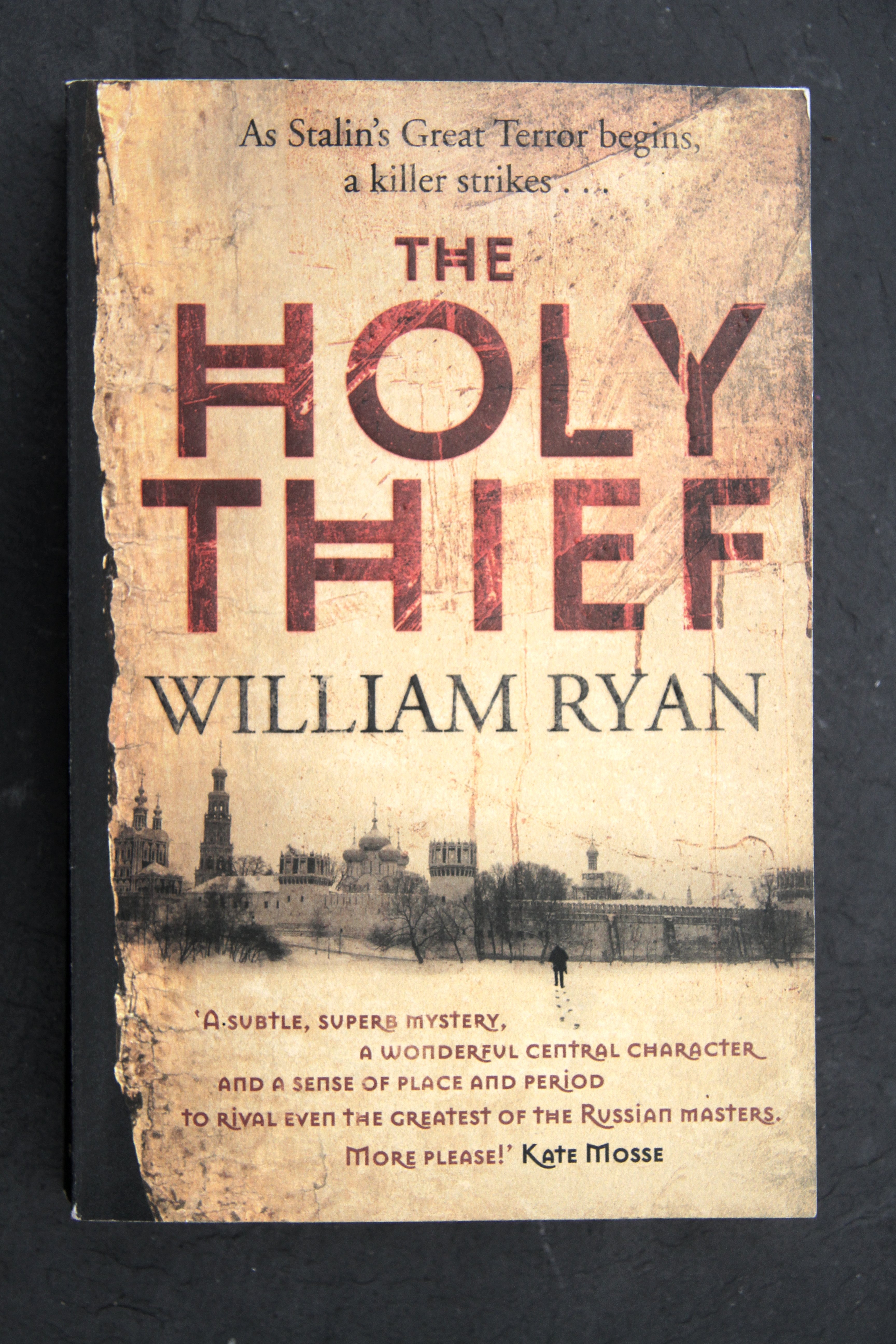
The Holy Thief is the third of the three books that I bought at Bookmark when I was in Spalding. I left this one until last because my son, who specialised in twentieth century Eastern European history at university, put me off it slightly by saying that novelists who write about Stalinist Russia never quite get the historical backdrop right. However, having begun this novel towards the end of last week, I found that I couldn’t put it down and finished it within a couple of days.
William Ryan has obviously researched the Stalinist period very well. He offers a select bibliography at the end of the novel, among which are the works of Orlando Figes, whose social history The Whisperers also made a great impression on me when I read it. He doesn’t obtrude his knowledge of the period (a skill that I always think is the hallmark of a distinguished writer), but in my view – and of course neither Ryan nor I really knows! – he has captured perfectly the seediness, uncertainty and underlying paranoia that permeated the whole of life when Stalin was the Russian leader. Very skilfully, over the course of the novel, he also manages to convey the futility of many of the brutal and savage actions carried out in the name of the state by the Stalinist regime. Lives are snatched or broken, but to what effect? It is as if the waters close over the people and events that have been targeted and the whole monstrous machine just creaks on as it did before, a savage animal against which the only defence is to remain in the shadows.
Captain Alexei Korolev, the hero of this novel, is an interesting take on the protagonist of the Russian crime thriller. He owes something to Le Carré’s George Smiley, but of course he belongs to an earlier part of the twentieth century and he is much more establishment than Smiley: he is a policeman, not a spy. Smiley already knows that ideologies are tawdry, slippery things and destroy the soul and that being a devotee of the truth – if the truth can be defined – is dangerous; Korolev, who has been a successful CID officer, has to discover this inch by inch, the hard way, by becoming the victim himself. In the process, he comes face to face with the terrifying yet essentially faceless members of the organised criminals who control Moscow’s criminal underworld.
If I have any criticism to make of this novel, it is that in places it is almost not dark enough. Ryan certainly doesn’t go in for gratuitous violence or sensationalism, which I applaud, but sometimes his writing seems to convey a sense of optimism that is not warranted by the period and events of which he writes. In Figes’ The Whisperers, there are no good people left: all those he describes know that they cannot rely on friends, family members, even sons or daughters, not to betray them; whereas in The Holy Thief morality, generosity and even taking the risk of offering casual kindness to strangers still prevail amongst people principled enough and brave enough not to allow their standards to drop. But that is where fiction diverges from reality: a novel is not a meaningless collection of events: it has to carry some message to the reader. Stalin’s Terror, on the other hand, had no proper meaning, no message: it simply channelled the crazed paranoia of one very powerful man into the brutal gratification of his sadistic henchmen.
This is undoubtedly a potent read and one that I enjoyed very much!
The most atmospheric of writers…
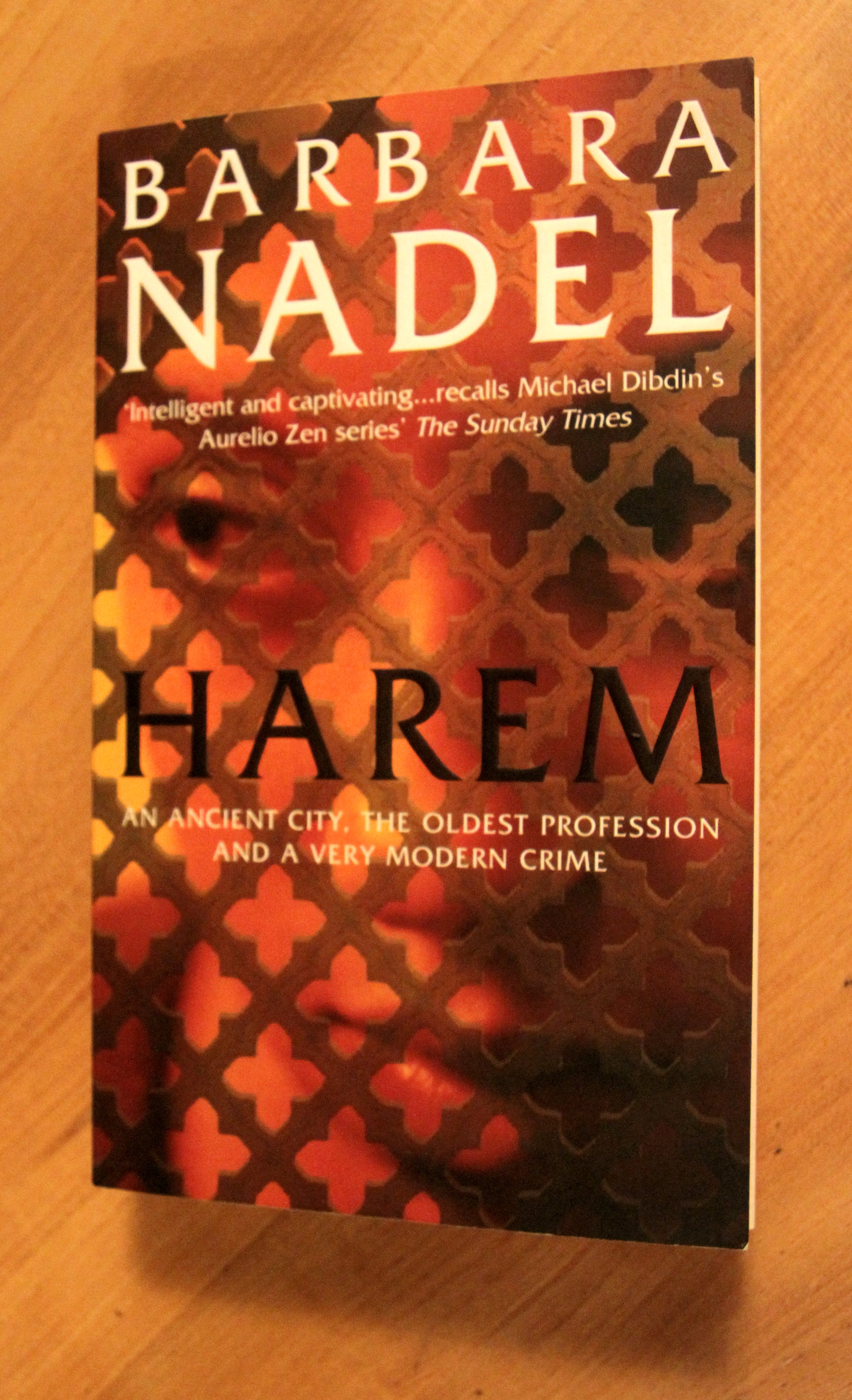
One of the great pleasures to be obtained from reading crime fiction is that most crime writers are acutely aware of both the geography and the mood of the communities that they write about. I won’t claim that there is such a thing as national character – I know that I shall immediately be shot down in flames if I even hint at it – but I’m certain that the massive popularity that Scandinavian crime writers have achieved owes a significant debt to the ambience of their work: the dark nights and cold days that they evoke, which in turn inspire brooding and melancholy characters who seem determined always to spot the worm in the bud, despite the consummate beauty of their surroundings. Similarly, the novels of Donna Leon and Michael Dibdin, which are set in Italy, skilfully succeed in communicating the rich cultural heritage of that country.
No-one, however, captures the essence or psyche of a country better than Barbara Nadel. Perhaps I should say city, rather than country, as all of her novels that I’ve read have been set in Istanbul. With apparent ease, she captures the contradictions of a city that has always looked both East and West: its exoticism and squalor; the brutality of some of its people and the sophisticated philosophical outlook of others; the thrusting modernity that jostles but does not oust more ancient superstitions. Other writers have written eloquently about this city, especially Orhan Pamuk, whose Nobel prize-winning work, so exquisitely wrought, seems to derive its depth from these very contradictions; yet, in my opinion, no-one, not even Pamuk, surpasses Nadel’s descriptions of Istanbul’s mean streets and boisterous crowds when she is writing at her best.
I’ve read three or four of her books now. I particularly admire her depiction of her world-weary but wise and humorous detective, Çetin Ikmen, who is beleaguered not only by the absurdities of red tape and the inefficiency and bigotry of his colleagues at work, but also by his large, unruly and ever-growing extended family at home. The latter is presided over by his ebullient and chaotic, much less well-educated wife, Fatma.
Harem is a particularly accomplished novel, because it examines issues of profound significance in Western countries through the filter of setting them in Istanbul. This not only makes it easier for the Western European reader to read about them, but also points up the dual thinking still prevalent in almost all countries by presenting it as a peculiarly Turkish phenomenon. This provokes the immediate response: ‘That couldn’t happen here!’, followed soon afterwards by: ‘Or could it?’ The original crimes committed in Harem are rape and the exploitation of women, leading in some instances to murder. The first of the murder victims is Hatice, a friend of Ikmen’s teenage daughter Hulya. Nadel’s account of Ikmen’s boss’s reluctance to pursue the girl’s murderers and bring them to justice because she evidently was not a virgin before they attacked her is particularly poignant. We might try to flatter ourselves that such an attitude could not prevail in our country, were it not that only in the last few days a British barrister has described a thirteen-year-old girl against whom sexual offences were committed as ‘predatory’. Nor does Nadel pull her punches when it comes to describing the perpetrators of rape. Hatice had unwittingly become involved with a group of people practising organised depravity, but her case is mirrored by one even closer to home for Ikmen, that of the abusive relationship that exists between two of his own police officers. As one would expect from a writer of Nadel’s talent, the moral conclusions that she draws are complex, but she is quite clear that women should never suffer from sexual abuse, whatever their personal moral code. This message may seem obvious, yet it is one that societies everywhere seem to be taking a long time to digest. Harem makes a very valuable contribution to the debate.
Of the other characters, several old friends feature in this novel. My particular favourite is Mehmet Suleyman, Ikmen’s disdainfully aristocratic colleague, who in this book finds himself less able than usual to sail, cosseted and immaculate, through his life, as if the teeming, grubby throng of humanity that it is his job to police does not really exist. Suleyman’s volatile Irish wife is suffering from post-natal depression and he has to run the gauntlet of her tantrums and her misery. And then there is Fatma, impossible but lovable, weaving her idiosyncratic magic on her weary but essentially adoring husband.
I wholeheartedly recommend Harem. If you’re new to Barbara Nadel, you won’t lose anything by starting with this book, as, despite being one of a series, it stands completely on its own, as such novels should. However, I’m certain that, if you do read Harem first, it will make you also want to sample some of the others.
A significant writer, with flair: M.R. Hall, @MRHall_books
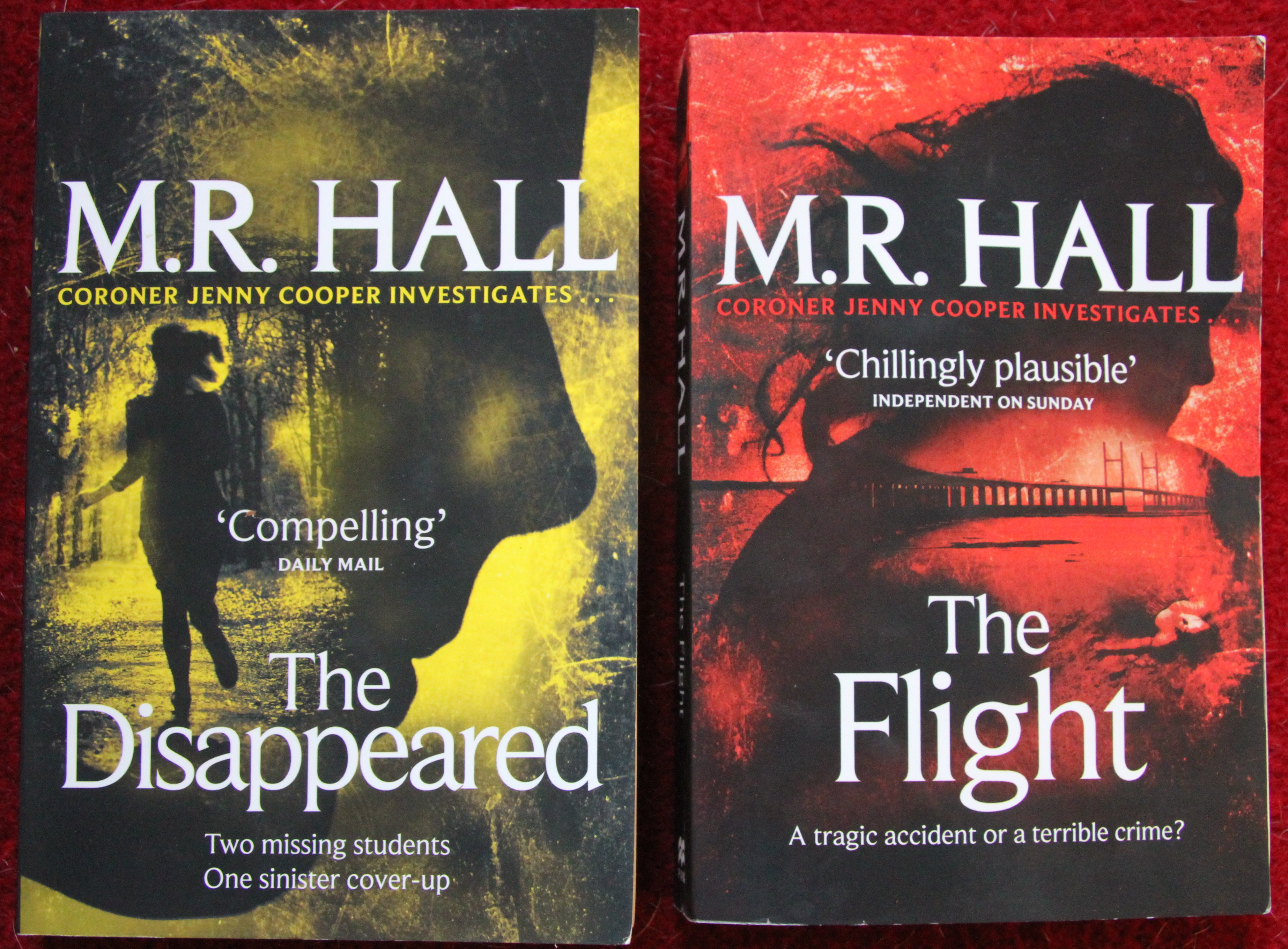
I bought The Flight and The Disappeared, by M.R. Hall, from Bookmark in Spalding and took them with me on holiday to read. I had not heard of the author before, but Christine Hanson, the proprietor of Bookmark, had mounted a display of them in the shop and had also read The Flight, which she said was excellent. I was certainly prepared to accept her judgment.
To confess the exact truth, I started The Flight, which is the later novel, first, and didn’t much like it. It deals with an air crash, and the first fifty pages or so reminded me very much of those disaster movies that were so popular in the 1980s, which had a very thin storyline and depended on the histrionics of the disaster itself to maintain interest. This was compounded by an amazing amount of technical detail that, although I dislike segregating books into ‘men’s reads’ and ‘women’s reads’, struck me as having more of a male than a female appeal.
I therefore put The Flight aside and embarked upon The Disappeared. Upon picking it up, I thought immediately that it would be much more to my taste. The story is about the disappearance of two Muslim teenagers and how Jenny Cooper, the Severn Vale District Coroner, mounts an investigation into the cause of their deaths (as they have officially been declared dead, but no bodies found) seven years afterwards, at the request of the mother of one of them. The novel deals with several topical and sensitive issues, including Muslim extremism and the activities, sometimes of dubious legality, of the security services. All this is riveting, and beautifully written. What engaged me most of all, however, was the detailed and delicate portrayal of states of mind that can perhaps be described as hyper-sensitive, but by no means indicate madness or irrationality, and how those suffering from them can be persecuted by unscrupulous people trying to serve their own unethical purposes by discounting them or even bringing them into disrepute by suggesting that they are unreliable. Fine parallels are drawn between Jenny’s own mental state and that of Amira Jamal, the mother of one of the missing youths. Both need professional help for their mental conditions, yet each is perceptive and intelligent, with an intuitive understanding of the forces that are really at work, despite being disbelieved and ‘rubbished’ by others and, to differing extents, cowed by this. Yet, in both instances, the reader is left in some lingering doubt about their powers of judgment. A particularly good example of this occurs when Jenny’s sulky teenage son (with whom a more mentally robust mother would have had a straightforward conversation, setting out a few home truths) enlists the help of her smug ex-husband to move out of her house. While the son is packing, the husband explains that one of the reasons that the son is going is that Jenny is not fit to look after him, citing the fact that there is never any food in the house. From what has gone before, the reader knows that this statement, if exaggerated, has on several occasions been true (there are further occasions when the son has selfishly demolished all the food). It is left to the reader to reflect that a son in his last year at college should not be as helpless as this one appears to be, but it is a manifestation of the author’s considerable talent that Hall demonstrates that there are faults on both sides. It is from such balanced depiction of human relationships, and how they fray and chafe against each other, that the book gains distinction. The taut relationship between Jenny Cooper and her ex-policewoman clerk, Alison Trent, is also particularly well-drawn.
So, having enjoyed The Disappeared immensely and devoured it impatiently to the last page, I decided to give The Flight another try. To any other reader who, like me, finds the first eighth or so of this book daunting, I’d like to say that it’s well worth persevering with. It’s true that there is a lot of technical detail throughout (and I can only applaud the author’s obvious mastery of it; I’m sure that a huge amount of research must have gone into the crafting of this novel), but the reason for it becomes increasingly apparent as the story progresses. M.R. Hall has constructed an intricate but worryingly believable plot which, even more than in The Disappeared, entrances as it unfolds. Jenny’s personal story is also developed well in this later work: she is released from some of her demons, but manages to create others in their place; and her dealings with Alison are even more fraught than in its predecessor.
I’m delighted to have discovered M.R. Hall, especially through one of my favourite bookshops, and look forward with impatience to the next Jenny Cooper story. In the meantime, I believe that there are a couple of others in the series that I have yet to read. Do I have any reservations at all? Only one comparatively minor one. It concerns the character of Jenny herself. Hall has been much praised for getting inside the head of a woman with such sympathy and understanding. I’d say that 95% of the time this praise is well-deserved, but sometimes Jenny is just a bit too snivelly and self-pitying for my taste, though she soon snaps out of it. Hall should perhaps consider that resourceful women who live alone never (in my experience) behave like this. They know that the knight in shining armour won’t come rushing to their aid and adopt a pragmatic approach accordingly – as Jenny always does, after her odd lapses. But, as I’ve said, this is a minor personal niggle, and possibly it’s unfair even to mention it.
The idyll and the agony, with Anne Zouroudi (@annezouroudi) …

The Feast of Artemis is the seventh novel that Anne Zouroudi has written about her mysterious amateur detective Hermes Diaktoros. It’s only the second of the series that I’ve read – I completed The Messenger of Athens last year, shortly after hearing Zouroudi speak at a crime writers’ evening held at the offices of Bloomsbury, her publisher – so I now have the very great pleasure of being able to look forward to devouring the other five. I shall buy them as soon as I can.
I find the quality of Zouroudi’s writing almost haunting. It is classic in that it belongs to the oldest European literary tradition of all, that which has Homer himself sitting at its head. I’ve written elsewhere about how Zouroudi’s intensely poetical yet austerely precise descriptions of the Greek landscape remind me of Homer’s own accounts of the Greek islands in The Odyssey, which, more than two millennia after they were conceived, still amaze with their freshness. The Feast of Artemis also contains such evocative passages, but Zouroudi – always reinventing herself within the universe that she has created – in this novel focuses especially on describing food. The clue, though, is in the title: as the reader is aware, Artemis is the feisty goddess of hunting; in Greek mythology, she at various times exacts retribution, and in the novel terrible things are done in her name, some with unforeseen and unintended consequences.
Just as beneath this glittering, sun-drenched paradise lives the peasant community of Dendra, whose members are tarnished with all the human vices, so concealed within their sumptuous festive meals lurk danger and destruction. Food is both the bringer of life and the harbinger of death in this novel. The finely-drawn characters, whilst naturally displaying none of the urbanity of Diaktoros himself, show both cunning and a taste for revenge that matches that of the gods of old.
The central plot concerns a generations-long feud between two olive-growing families. A cycle of vengeance and retaliation results in the death of the patriarch of one of these families and the mutilation by fire of a youth from the other. One of the book’s many masterly touches consists of a kind of tightening of the screw as the plot unfolds: we are told early on that the youth has been burnt, but the full significance of this is not revealed until the closing stages. The small clouds that hover over the sunny landscape right from the beginning grow darker as the novel progresses and the effects of evil are revealed.
Yet such is the author’s subtlety that none of the characters in The Feast of Artemis is evil through and through. The publisher has placed it within the crime genre, probably correctly, but it belongs to that relatively small group of distinguished crime novels that can be read on more than one level. Fundamentally, it is a book about the human condition. Although Hermes was the messenger of the gods, and Hermes Diaktoros, in his guise as moral arbiter, shares some of his namesake’s characteristics, he is also a modern-day Zeus, swooping down, not in anger, but with a kind of sadly humorous wisdom, as he conducts his inexorable quest to get at the truth and show the perpetrators of the crimes the errors of their ways. That he himself has foibles is a stroke of genius: in a place where life and death are governed by food, he is continually tempted by delicacies that threaten his own well-being because he is already overweight. It also emerges that he is brave to eat some of the food that he is offered, knowing as he already does that those providing it are guilty of introducing poison to their seemingly delicious comestibles. Yet he is nimble on his tennis-shoe-clad feet and has a brain of quicksilver. That he is not perfect lends authority to his perspicacity and ensures that it is not marred by overt moralising. Another fine touch is the introduction of his brother Dino, who is as much a slave to wine as Hermes is to food: Dino – the echo of the name is surely intentional – plays Dionysius to his Zeus. (I’m not sure whether Dino also appears in some of the five novels that I haven’t yet read: my guess is that this is not his first appearance in Zouroudi’s oeuvre.)
At the end of the book, resolution is achieved, but at a price. Peace is brought to the community of Dendra, but it is made clear that its inhabitants will continue to bear the scars – and in some cases, to pay custodial penalties – for their wrongdoing. Hermes Diaktoros himself, having arranged to pay for the best plastic surgery that money can buy for the damaged youth from his own seemingly bottomless yet inexplicably acquired funds, simply melts away. God’s in his heaven, all’s right with the world – until, we hope, the next time that his intervention is required.
If you haven’t yet read Anne Zouroudi, you should; you will find her compelling command of the Greek ‘idyll’ as stuffed with flavour and irony as the roasted lamb from the fire pits of her opening chapters in this book.
When a much-loved author doesn’t please…

I should say straightaway that I have long admired Henning Mankell and consider him to be the most distinguished of that very select group of Scandinavian crime writers that has continued to intrigue and amaze us over the last ten or fifteen years. I’m saying this now, because I found The Man from Beijing a very disappointing novel indeed.
It starts brilliantly, with the graphic but not unduly sensational description of the brutal massacre of almost the whole population of a remote Swedish village. Only one of the victims, a young boy, is not a resident of the village. The murder case is led by Vivi Sundberg, a brusque, unimaginative policewoman who is not meant to appeal to the reader. Instead, our sympathies are evoked by Birgitta Roslin, a middle-aged judge whose health is not good and whose marriage appears to have entered a state of gentle decline which she finds depressing. Birgitta is a complex and well-drawn character, one of Mankell’s best, and is, in fact, the only fully-rounded character in the whole book. She gets unofficially involved in the case because she realises that two of the murder victims are the very elderly step-parents of her own mother.
So far, so good. But then, through a chain of unlikely and unconvincing circumstances, Birgitta’s private investigation takes her to China. She happens to have a friend who is a Sinologist who happens to be speaking at a conference there. Both Birgitta and her friend were ardent supporters of Chairman Mao in their youth.
At this point, the novel separates into two strands. One of these, by far the weaker, continues with what are obviously going to be Birgitta’s fruitless efforts to get to the bottom of the mystery of the massacre. It is spiced up by the ever-present suggestion that her life is in danger. The other strand, which goes on for many pages – at least half of a book that totals 550 pages – is a political diatribe thinly disguised as fiction. Ostensibly, it is about the corruption of power and how far modern China has deviated from Mao’s ideals – themselves always false, which is made clear – while still paying lip-service to them; it is a political warning against the present-day colonisation of Africa by the Chinese government.
The political sub-plot – which after a short while almost completely eclipses the main plot – depends on two things: the literary device of using an omniscient narrator to describe certain atrocities carried out against a particular Chinese family during the nineteenth century, and the vicious manoeuvrings, even against each other, of a high-status Chinese political family in the present. It is suggested, but never made clear, that the latter are the descendants of one of the former, and that the wheel of human exploitation and misery has turned full circle. The modern Chinese characters are sketchily drawn – only two of them, Hong Qiu and her brother Ya Ru – have any distinguishing attributes, and the reader senses that these have been bolted on only in order to oil the creaking mechanism of the plot.
At the end of the novel, after several more deaths along the way, the mystery of the identity of the original murderer is solved, but unconvincingly. Several clues scattered at the beginning of the book remain unaccounted for. I’m not suggesting that this is in itself a fault (as I’ve made clear elsewhere, I dislike crime novels in which every ‘i’ is dotted and every ‘t’ crossed), but these clues are so extraordinary that I feel that we are owed some kind of explanation for them.
Most of all, however, the novel is dissatisfying because the reader feels bamboozled. I am aware that Henning Mankell is an expert on Africa and that he has written eloquently about its woes on many occasions. Even so, it just isn’t fair to place two or three hundred pages of what is at times a rambling political exegesis between the covers of what is meant to be a work of crime fiction. I read the book to the end in homage to the many hours of unalloyed pleasure that Mankell’s work has given to me. I suspect that some of its other readers will have lost patience long before they get there.
 Christina James, crime novelist