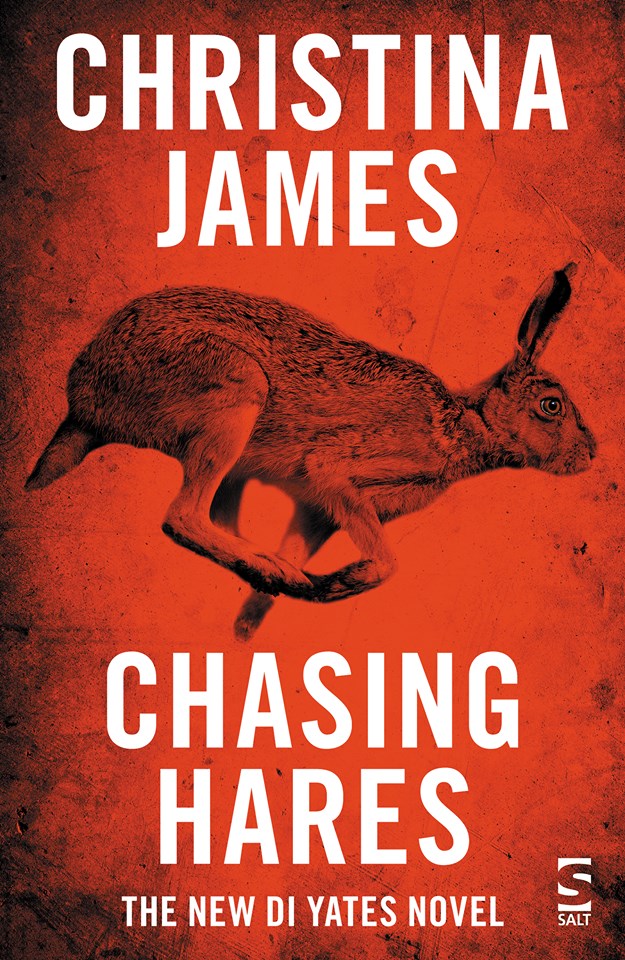


Thank you, Annika, for choosing this for me…
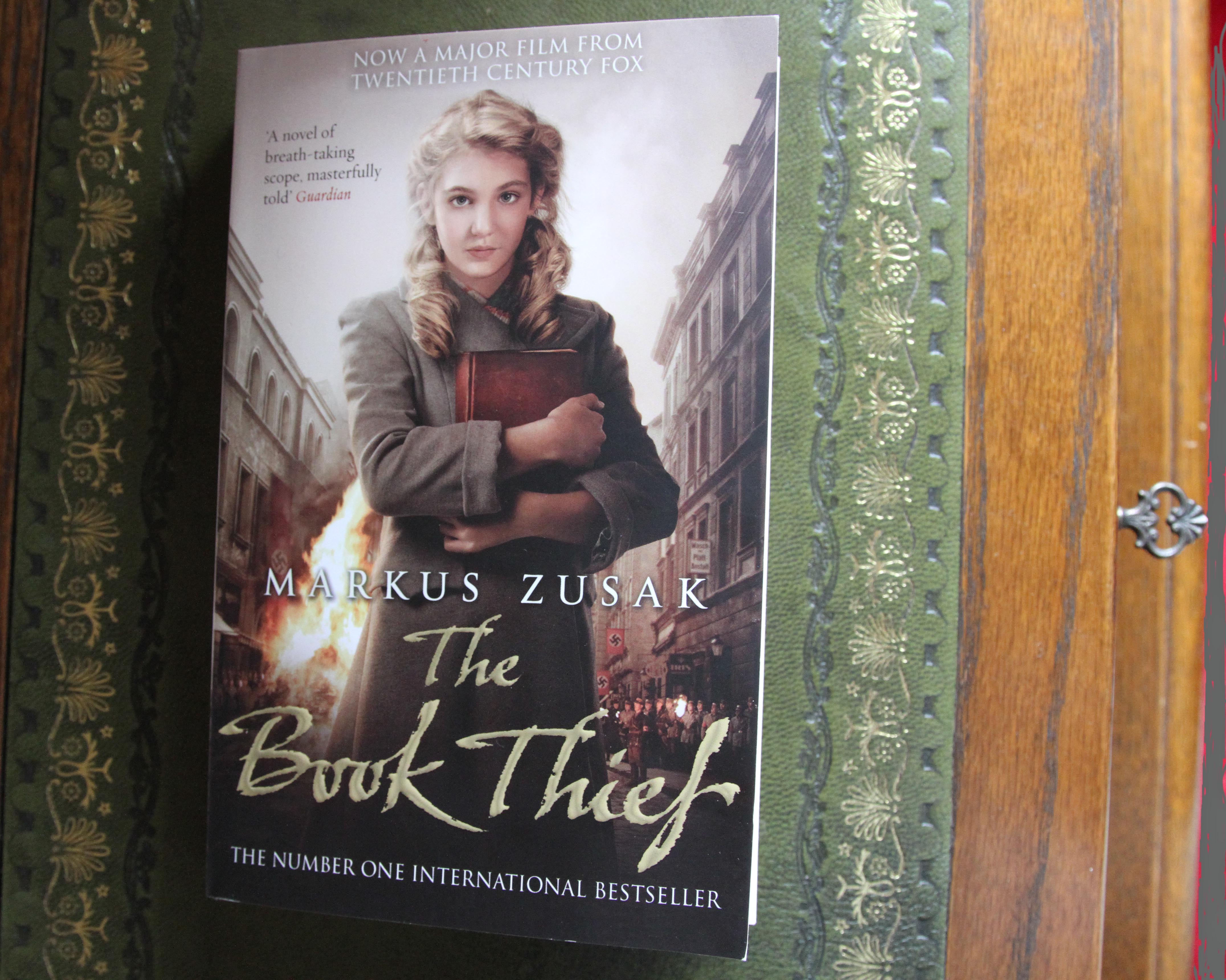
The Book Thief, by Markus Zusak
I know I am the latest in a very long line of people to say this, or something like it, but here goes: The Book Thief is a monumental yet delicate and extraordinarily beautiful novel. It is the sort of novel that stays with your forever once you’ve read it; the sort of novel that you know you’ll want to read again. (For me, very few novels make it into this category.)
Why is it so amazing? The publisher’s blurb gives almost nothing away: Liesel, a nine-year-old girl, is living with a foster family on Himmel Street. Her parents have been taken away to a concentration camp. Liesel steals books. This is her story and the story of the inhabitants of her street when the bombs begin to fall. This sounds intriguing, but conventional. Yet another tale about the Second World War, you might think, made slightly unusual (but not unique) by being told from the point of view of a German child.
Some of the narrative is indeed presented from Liesel’s weltanschauung; the remainder, from the viewpoint of an altogether more shadowy and amorphous character, Death himself (or herself – Zusak is not sexist about this, so we don’t actually find out whether Death has a gender). Strangely, given Liesel’s tragic background (she watches her little brother die during a train journey and shortly afterwards is brutally separated from her mother, her father having already ‘disappeared’) and Death’s status, one of the most striking things about this novel is that every sentence is written with love. Death itself loves his or her victims and reflects ruefully on the absurdities that have put them in his / her way. The far-from-perfect characters are all drawn with love, so that the reader is made to appreciate the best in them: Rosa Hubermann, Liesel’s fat, irascible and scatological foster-mother; Frau Holtzapfel, the niggardly neighbour who pays Liesel with increasingly scarce groceries to read to her; Max Vandenburg, the rather cowardly Jewish refugee taken in by the Hubermanns at great personal risk to themselves and the mayor’s wife who owns a large library and whose mind has been permanently impaired by the loss of her son during the First World War – all are drawn by the author with love. The greatest of this authorial love is lavished on Rudy Steiner, Liesel’s playmate and would-be childish boyfriend, and Hans Hubermann, her stepfather. But even Hitler is portrayed with sidelong glints of love.
The author himself seems to be as much a painter as a poet. He writes more emotively about colour than any other writer I’ve encountered. Not only does he assign unexpected colours to things both animate and inanimate, but he seems to attach values to them. Hans Hubermann’s repeatedly described silver eyes are full of sterling worth; black is the colour of incomprehension and confusion; the rights of white to be considered a colour are tenaciously asserted. Colours are even turned into verbs: “The sky was beginning to charcoal.”
Of the many paradoxes that make up The Book Thief, the greatest is that it is an overtly moral tale that neither preaches nor follows an accepted moral code. It achieves this both despite and because of the small moralising paragraphs, always presented in bold, that on one level resemble parodies of the ‘lessons’ in Victorian morality tales, on another set in shorthand the tone of the next scene: “A Portrait of Pfiffikus. He was a delicate frame. He was white hair. He was a black raincoat, brown pants, decomposing shoes, and a mouth – and what a mouth it was.”
The contradictoriness of morality that the book captures throughout is displayed in the title. Liesel is herself the eponymous Book Thief, yet the reader never believes that her theft of eight selected books one by one at longish intervals during her childhood is immoral. In some ways each theft is life-affirming, though ironically the first is of a gravedigger’s manual, stolen for comfort before Liesel is able to read and therefore understand its contents. Hans subsequently teaches her to read by ploughing through this book with her during the long nights when her nightmares drive away sleep, because he refuses to leave her to suffer them on her own: so the act of reading, celebrated throughout the novel as the great life-affirming skill that is also often Liesel’s saviour, grows out of a damp tome of death and a young girl’s horrific sense of loss. Each book that she steals teaches Liesel more about life – not always because of its contents: sometimes it is because of the circumstances in which the book is acquired – so that each theft marks a milestone in the process of her growing-up, her loss of innocence. Finally, she receives as a birthday present a book that has been written especially for her, a hymn to her goodness concealed within an ironical yet harrowing account of the rise and rise of ‘the Fuehrer’.
At the macro level, The Book Thief symbolises the story of a nation trying to make sense of what happened to it and therefore understand how it managed to lose its way. It is a story of the riches that may be found in poverty, the generosity towards others that may yet be found within the hearts of those in extreme danger, the puzzle that is life itself. It also affirms, strongly yet subtly, pervasively yet unobtrusively, that there is nothing, was nothing and never has been anything inherently ‘bad’ in the German race. Germans, then as now, came in all the myriad colours of morality, just like the members of every other race on the earth.
I’d like to offer my very great thanks to Annika for choosing The Book Thief for me.
Fascination with the aristocracy? Read this…
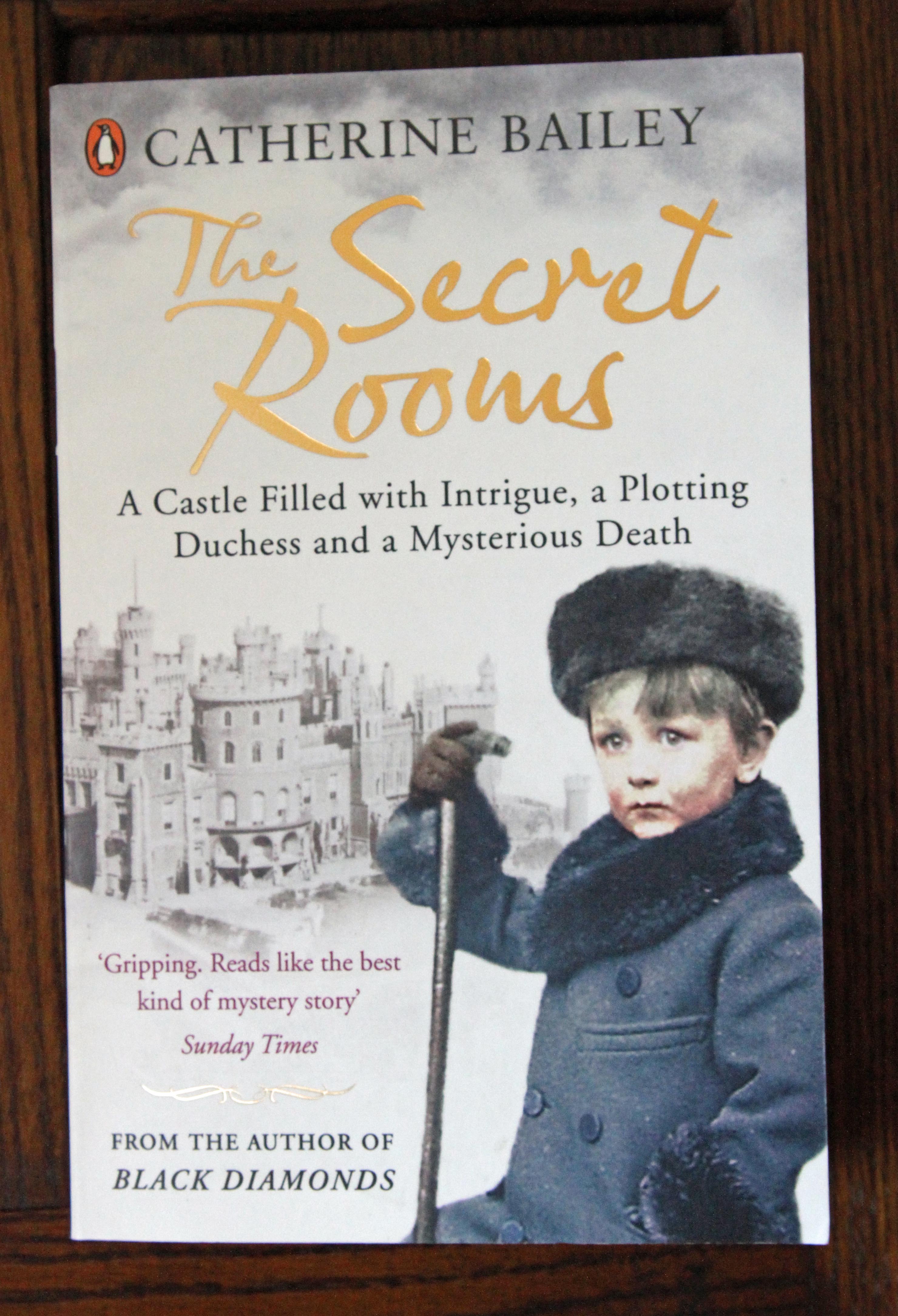
I first encountered Catherine Bailey’s work when I read Black Diamonds, a book to which I was drawn by an article in The Sunday Times about Wentworth Woodhouse, a massive stately home not far away from where I live and of which I had previously been barely aware.
By chance, The Secret Rooms is also about a stately home situated in an area with which I am very familiar, Belvoir Castle in Leicestershire. It isn’t too far away from Spalding and is a place which I visited several times in my childhood, once on a primary school trip and at least twice more when my mother was hooked on Sunday afternoon visits to the grand houses that had begun to open their doors to the public in order to make ends meet (admission charges were half a crown for adults, children half-price).
Although I’m sure that the guides I encountered and the guide-book that my mother would have religiously bought told me something about the Manners family who lived there, I have long since forgotten the details. I do, however, remember the name ‘Manners’ and I knew that Lady Diana Manners, the sister of the ninth Duke of Rutland, was a renowned beauty who eventually became the witty society hostess Lady Diana Cooper, wife of the journalist Duff Cooper. She and he were both writers and still writing when I got my first job in the book industry.
Like Black Diamonds, The Secret Rooms gradually uncovers the secrets of an aristocratic family that tried its best to conceal them. The chief concealer in this instance is the ninth Duke. He occupies the central role in this story (I won’t call him a ‘hero’, as he doesn’t quite match up to the term). His full name was John Brinsley Henry Manners. A World War One veteran (of sorts), he died of a chest infection when only in his fifties, a death certainly hastened and possibly caused by shutting himself up in the dank basement servants’ quarters at Belvoir for days on end with the family papers, from which he excised many details relating to himself. He particularly wanted to expunge all trace of three distinct periods in his life. Catherine Bailey manages to get to the bottom of his secrets in two of these; the third remains a mystery.
If John is not a hero, neither is he quite an anti-hero, but Bailey provides a fine portrait of an anti-heroine: Violet, Duchess of Rutland, John’s mother. Partisan (even when distributing her favours among her own children), snobbish and scheming, she sweeps through the book, an anachronism even in her own time, the epitome of ruthless privilege, an arch-representative of a social class that was finally annihilated by the Second World War. Bailey tries to suggest that Violet was responsible for all or most of John’s shortcomings. In this, she does not quite succeed. From her account, John may have been more melancholy than his mother and, warped by her rejection of him during childhood, undoubtedly less socially confident, but she can hardly be held to account for the shabby way in which he treated his much younger wife, or indeed the way in which he exploited women generally. The reader sympathises, however, with the fact that John’s talents as a historian – he became a distinguished self-taught mediaevalist – are scorned by the family, who simply see his accomplishments as further evidence of his ‘oddness’. Only his uncle, Charles Lindsay, shows any real empathy with him or insight into his character. It may be significant that ‘Charlie’ is a closet homosexual. The author hints that some of John’s behaviour might be attributed to his own suppressed sexual proclivities.
Black Diamonds is a very successful book. The Secret Rooms has already won many plaudits and is well on its way to being as stellar, if not more so, than its predecessor. Bailey has grown more assured as a writer in the latter book, which is generally of benefit to the reader, and both books are equally well-researched. Her control of the narrative is admirable, although it occasionally results in a certain amount of artifice which can jar a little. For example, her account of John’s movements during the First World War does not follow the chronological order of events, unlike the rest of the book; we are ambushed with the details, first, of his broken engagement and secondly, of his marriage, with no prior warning of the existence of either of the women concerned. Granted, this makes the book read more like a thriller (if that’s want the reader wants); it may also indicate that these episodes were written with one eye on turning it into a film or television documentary. But I’m being too churlish, now, about a book that absorbed me for four evenings in a row during a recent short break on the East coast, when I was also recuperating from a nasty cold. If you like well-written English social history, have a fascination with the aristocracy, or just enjoy immersing yourself in a true-life mystery, you will not be disappointed in this book.
London grit: Anya Lipska’s latest…
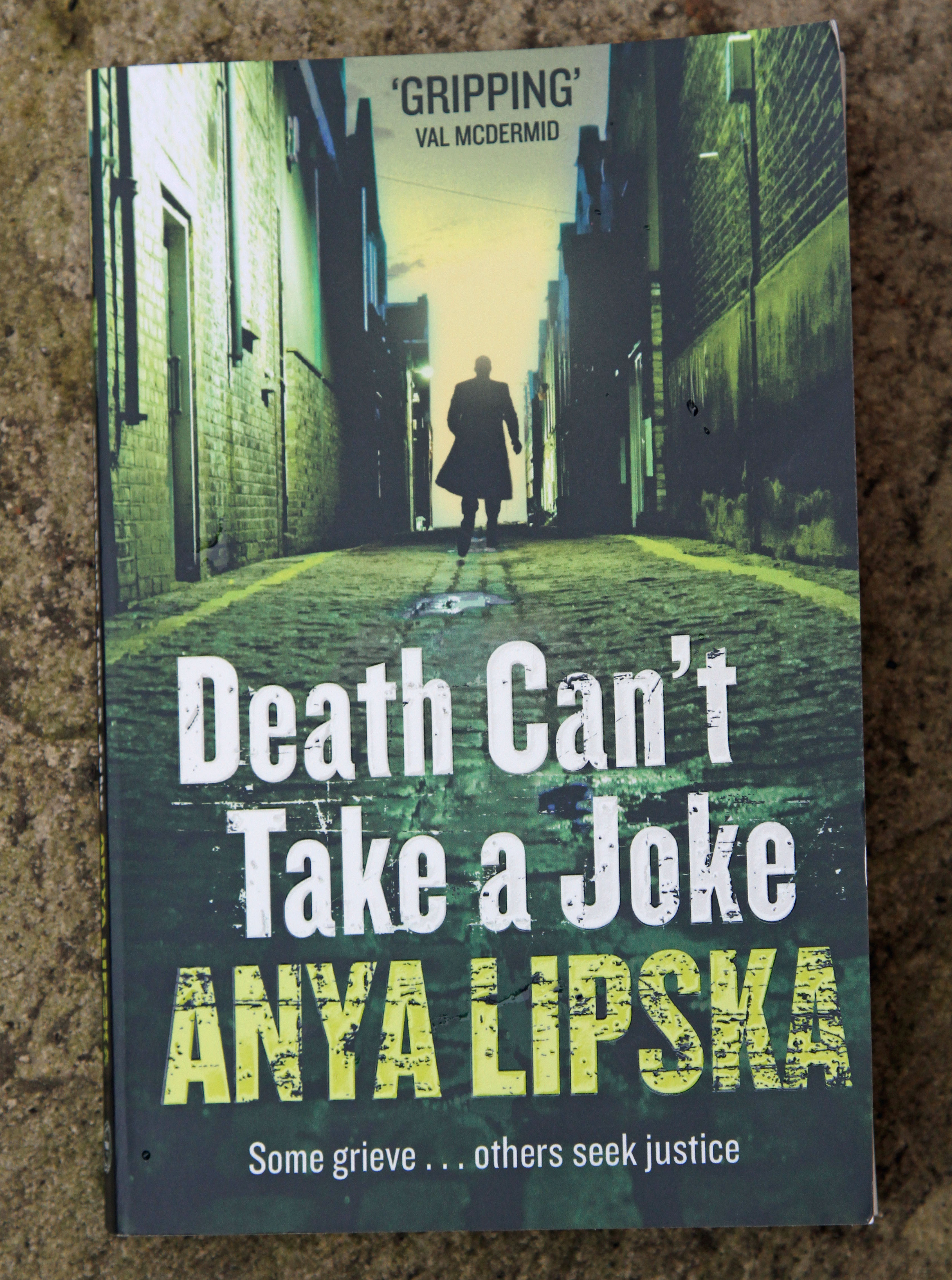
This is Anya Lipska’s second novel and again features Janusz Kiszka, the maverick unofficial private investigator, and DC Natalie Kershaw, by now not quite a rookie, of London Docklands Police. As with Where the Devil Can’t Go, the first of the series, at the heart of the novel lies the tension of the complex relationship that is unfolding between these two central characters. It is counter-balanced by the inner torments and insecurities that each of them experiences individually. Kiszka, in particular, is haunted by demons from the past, especially for the death in Poland of his first love some twenty years before, for which he feels responsible. Kershaw is gradually gaining confidence as she begins to succeed in her chosen career; she is proud to have been assigned to her first murder case. It takes only a little adversity to knock her back, however. Lipska shows the reader their thoughts and feelings through an adroit use of a dual interior monologue, created with a light touch.
Once again, much of the rich texture of this novel is derived from Lipska’s portrayal of the Polish community in London. It is clearly a milieu that she understands well, but this is not to detract from her skill in depicting it. Not every writer is capable of conveying with authenticity the character of an environment with which he or she is familiar. It is also clear that, like all good writers, she does not merely present us with the raw material; she shapes it, so that she succeeds in making even the minor Polish characters memorable and not mere stereotypes. Her judicious use of Polish words contributes to the texture of the writing and never seems forced. (Apparently I’m not the only reader who has been intrigued by them: in response to demand, Lipska has included at the end of the novel a glossary of the Polish words that she has used.)
One character that had seemed to be a little in danger of tipping into the stereotype category in the first novel was that of Kershaw’s boss, Sergeant ‘Streaky’ Bacon. However, in this book, his personality is much more rounded, with some surprising touches: most notably, his concern for Kershaw herself. Kershaw’s relationship with him improves as he takes on board her capabilities and notices her dedication.
I’ve not said much about the plot of this novel because it is so tightly constructed, with so little superfluous detail, that it would be only too easy to mar this review with a ‘spoiler’. Very briefly, an apparent suicide which Kershaw is sent to investigate and the murder of one of Kiszka’s friends both take place within a very short space of time. Are the two deaths linked?
Kershaw and Kiszka set out on separate missions to discover the identities of the perpetrators, Kiszka’s cavalier disregard for orthodox methods clashing with Kershaw’s commitment to operating within the law. There are some nice ironies along the way, including a surprising last twist near to the end, but there is nothing in this plot that seems contrived: it unfolds with perfect conviction.
Death Can’t Take a Joke is my top read for this spring. I thoroughly recommend it and I’d like to suggest that, if you missed Where the Devil Can’t Go when it was first published, you won’t be disappointed if you decide to splash out and buy both novels at the same time.
Anya’s book is being launched on 27th March 2014 and I wish her the very best for that!
Copyright and Clark

I’ve just written a review of Clark’s Publishing Agreements: A Book of Precedents (Ninth Edition). It’s been published by Bloomsbury and costs £130 (you get a CD for this as well). I’m not expecting many of my readers to be interested in buying it, but, in case you are, you can obtain a 35% discount off the cover price if you’re attending the London Book Fair. The ISBN is 978 1 78043 220 5.
The General Editor is Lynette Owen, a colleague and acquaintance whom I admire greatly. She picked up the baton when Charles Clark, the doyen of copyright law in publishing, died in 2006. I never met him, but I’ve met people who did and I’ve also seen photos of him. I picture him as a sort of Rumpole character, a larger-than-life man of what used to be called ‘breeding’ and great intellect, who was both as sharp as a tack and tenacious as a street Arab when it came to defending authors’ and publishers’ right to get paid for their labours.
In fact, although copyright has always needed to be defended, Charles Clark died before the real squeeze began. Beginning with the Digital Economy Act (2010), which was closely followed by the Hargreaves Report (2011), Richard Hooper’s work on the Copyright Hub (2012) and the Finch Report on Open Access (also 2012), UK copyright law has come under strenuous attack from a government that seems neither to appreciate that the intellectual property of writers and their publishers needs to be protected as much by law as, say, design patents protect pioneering engineers, nor fully to realise just how much of the national income is generated by a flourishing publishing industry. That industry has, of course, responded with vigour, but in clear-headed fashion. It is to the credit of both publishers and authors that, on the whole, they have not lost their cool over this. Instead, they have worked hard together – along with various trade organisations and lawyers – to modify copyright law so that it is accepted as fit for purpose in a digital age without allowing it to be dismantled to the extent that large-scale publishing becomes unsustainable. (I’m not talking about self-publishing here: it has its own micro-economy that is distinctly related to the efforts of the individual author. But self-publishing is not viable for many types of book, including multi-author works and the numerous academic or non-fiction works that need high levels of pre-publication investment.) Richard Hooper’s collaborative work demonstrates this patient, reasoned approach at its best.
The backbone of the 9th edition of Clark consists of a series of ‘model’ contracts pertaining to most of the different types of publishing situation – print and digital, individual and collective, direct and through third parties – for publishers and authors to consult. Most of them can be amended according to individual needs and circumstances. The ‘precedents’ therefore collectively represent an up-to-date compendium of best practice in publishing which takes into account all of the recent legislation and the industry’s informed responses to it.
The book offers much more than that, however. The prefaces to the precedents, the introduction and the nine extensive appendices together explain the context in which the precedents have been set – i.e., the complex world in which writers and publishers have to operate today. I found Appendix G, which explains exactly what an author’s ‘moral rights’ are, particularly fascinating. I’d go further, and say that this book has yet more significance: for the collected precedents, commentaries and articles which it contains together demonstrate why copyright is valuable and why everyone who is active in the creative industries should fight to keep it.
Each year since his death, Charles Clark’s family has sponsored the Charles Clark Memorial Lecture. It always addresses some aspect of copyright and I always try to attend. The lecture is organised by the Publishers Licensing Society [PLS] and delivered at the London Book Fair. Two years ago, the guest speaker was Maria Martin-Prat, Head of the Copyright Unit at the European Commission Internal Market Directorate General. Her speech was eloquent and well-reasoned. She said many things that resonated with her audience – and undeniably, since it largely comprised publishers and authors, she was preaching to the converted. However, just one point that she made, towards the end of her presentation, has really stuck in my mind. Speaking of Open Access, she said that she could understand why the talented and ambitious young people currently studying at universities or working for professional qualifications appreciated being able to obtain yet more and more content free of charge and were therefore vociferous supporters of the ‘free at the point of access’ principle on which Open Access is based; but, in a few years’ time, a considerable proportion of those same young people will have themselves become authors. If they fail to understand copyright now, and therefore do not help to protect it, they will discover, too late, that they can demand no financial reward for their work nor claim any right to its ownership. Maria Martin-Prat’s message to her audience was that, if all types of writing are to continue to flourish and to delight, there can be no more important task that demonstrating to the young that copyright is precious and should be treasured. It is a point that I make as often as I can when I am speaking to young audiences.
I can’t conclude without congratulating Lynette Owen on her flawless work as editor. I’m sure that Charles Clark is resting in peace, knowing that his work continues to live on under her capable tutelage.
Something that I just cannot swallow, but the book is a good read…

I remember reading a review of this book when it first appeared, though I’m surprised, now that I’ve looked at the title page, to discover that it was published in 1999. I didn’t read the book itself then and, although I acquired my copy last autumn (by somewhat roundabout means – I didn’t exactly choose it), I have been in no hurry to read it. However, a couple of weeks ago, having subsisted for perhaps too long on a reading diet of mostly crime fiction, but too tired to embark on one of the ‘serious’ history books I have in reserve, I decided to give it a go.
I was pleasantly surprised to discover that it is both witty and extremely erudite. Mea culpa, but, either because I misremembered the review or the review misrepresented the book, I had assumed that it would be lighter and frothier than it actually is. Beginning with the stories of the mistresses of the Greek gods and continuing with that of Heloise and Abelard (in which I have a particular interest, because George Moore offers a version of it in one of his novels), it traces the story of the mistress through history, sorting her into types: the royal mistress, the political mistress, the artist’s mistress etc. Griffin announces at the very start of the book that she is a mistress herself. She says this with some defiance, indicating that she has chosen the role in preference to that of wife, and that ‘mistress-types’, particularly if they are writers, like herself, or pursuers of some other creative career, value the freedom that being a mistress gives them. Wise mistresses know not to stray into the territory of the wife and they certainly don’t seek to replace her: those who attempt the latter usually find that they lose their lovers in the process.
Griffin is both knowledgeable and entertaining, but there is something about this basic premise that I just can’t swallow. Given that she concedes that mistresses not only have to endure the privations associated with being forced to keep their liaisons secret, but also spend many hours waiting in vain for their lovers to arrive, I cannot understand how this makes them ‘free’ to pursue their own interests. For example, only a very special type of writer can shut out all specific annoyances and worries from the external world to get on with her/his work. Most writers are super-sensitive to any kind of external niggle or worry and find that thinking about it impairs or completely destroys their concentration. Not knowing when, or even if, their lovers were going to turn up would certainly not help mistresses who were also writers to fill in the intervening hours with productive work.
Then there’s that burden of secrecy. The brunt of it is shouldered by the mistress, who sometimes cannot confide in or complain to even her closest friends if her lover neglects, forgets or completely abandons her. It is a condition insisted upon by the lover in order to protect his ‘real’ life, to ensure that it is comfortable and free from a wife’s chidings, tears or worse. In other words, engaging in an ‘affair’ or illicit liaison carries very unequal benefits for the two participants. I’ve known only a few mistresses during the course of my life (though there may have been others among my friends and acquaintances who were discreet enough to conceal their affairs completely) and, without exception, they’ve been worn down by the deceit, the waiting, the uncertainty and often, ultimately, tragic abandonment after many years of ‘service’. Griffin herself acknowledges that she and her lover have discussed whether, if his wife were to die or divorce him, they would marry, and concludes that they probably would. ‘But’, says the lover, ‘I really want you to be my mistress.’ Griffin presents this conversation as mature, sophisticated and loving. To me it reveals a childish man with a huge ego, a man who succeeds in getting away with ruthlessly having his cake and eating it by cloaking his real outlook with a flimsy veneer of wistfulness. He is doubly fortunate in that Griffin, who is proud of her financial independence, also refuses to let him pay for her, whereas a mistress from an earlier era would undoubtedly have expected substantial monetary assistance from her lover.
Something else that I find difficult about this book is that all the ‘mistresses’ are women – ‘the other woman’; all the lovers (i.e., duplicitous two-timers) are men. The book would have had more credibility had Griffin also included some accounts of two-timing women being unfaithful to their husbands. History offers some famous examples: Emma, Lady Hamilton; Georgiana, Duchess of Devonshire; even some of the mediaeval queens, such as Isabella of France, who cuckolded Edward II when she embarked upon her liaison with Roger Mortimer. Although she devotes a chapter to George Eliot and George Henry Lewes, Griffin says little about the equally interesting affair that precipitated Eliot into Lewes’ arms: that between Agnes, Lewes’ wife and Thornton Hunt, which, very unusually for the mid-Victorian period, had resulted in Agnes’ giving birth to several of Thornton’s children whom Lewes then acknowledged as his own.
I’d like to suggest that today this is no longer an unusual phenomenon and that women are just as capable as men of being the double-dealer in a love triangle. I offer a very commonplace example, my second cousin Ruby, some years my senior, a pale and fairly insipid girl who aspired neither to obtaining a good education nor to building a career and had only limited interest in becoming a ‘home-maker’ – I realise that this is a very catty description, but Ruby, who certainly won’t be reading it, would as certainly agree that it is accurate if she were to. She bore one man’s child very shortly after her marriage to another man who was not the child’s father and caused both men to come to blows as they competed for her favours.
I suppose what I’m trying to say is that women can give as good as they get and that mistresses who accept martyrdom sugared over with ‘free spiritedness’ have only themselves to blame, particularly today, when the kind of double standard that allowed Lewes to mix with the Victorian literati while George Eliot was obliged to sit at home, completely ostracised, no longer prevails. Psychologists say that in every relationship there is always one partner who cares more than the other. I think that perhaps this is the truth that I am trying to explore and I’d suggest that in probably 90% of cases it is the ‘secret’ mistress who cares more for her lover than he for her and that she is deluding herself if she believes otherwise, however noble and ‘pure’ (in the sense of independent of material consideration) she may paint their love.
Nevertheless, The Mistress is a book of many delights because of the histories that it recounts and the ideas it expresses, all captured in Victoria Griffin’s very fine prose. I am sure that it will become a classic, if it is not regarded as one already (hence the reprint). I recommend it to anyone who is looking for some unusual and gripping non-fiction to read this weekend. Let me know what you think!
Doing it differently…
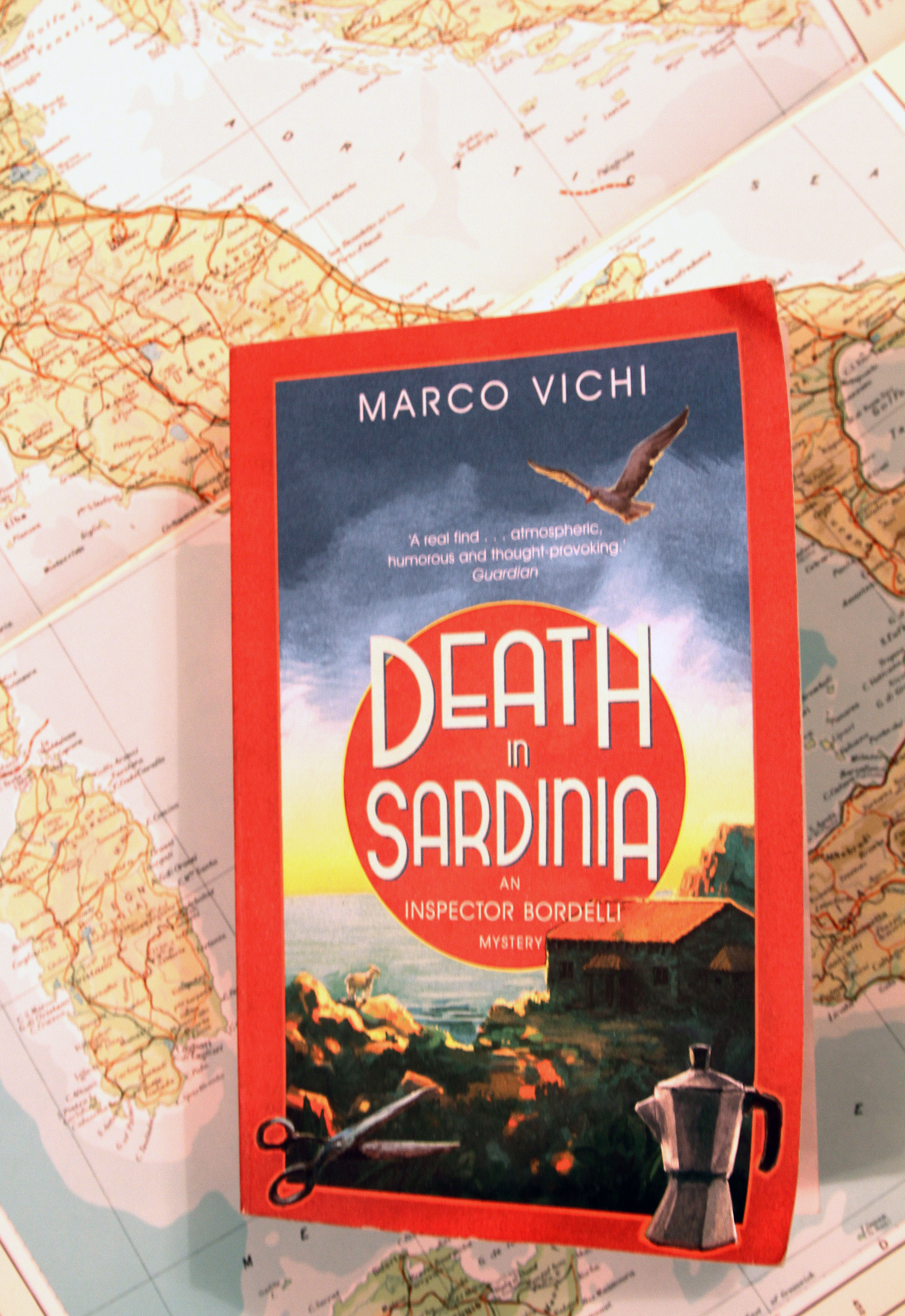
I know from the blurb on the back of this crime novel and the short reviews that accompany it that it is one of a series, but – like the anonymous Guardian reviewer who is quoted on the front cover – I’d never come across this author or his work until I found Death in Sardinia in a bookseller’s warehouse just before Christmas. The Guardian reviewer says: ‘A real find… atmospheric, humorous and thought-provoking.’
I agree with all of these adjectives and to them I’d add, ‘highly original’. One of the most appealing things about this novel from my point of view is that it is set in the Italy of the 1960s, in the aftermath of the Fascist régime, when the country was still reeling from the effects of its Second World War defeat. That the author presents Italy from the perspective of a policeman who formerly served as a soldier in a defeated army gives it both depth and substance. Partly because of the background to its setting and partly because the main action in the novel takes place fifty years ago, Vichi is able to create a springboard for some serious – but never over-weighty or didactic – reflections on morality. (For example, Inspector Bordelli recalls an occasion during the war when he and some fellow soldiers came upon an isolated detachment of Americans who were shaving, and decided not to kill them because they were thus rendered defenceless.) The murder investigation that is central to the novel – it is the killing of a very unpleasant debt collector, stabbed in the neck by a pair of scissors – also raises some knotty moral issues, which increase in complexity as Bordelli closes in on the killer.
But above all, it is the glorious cast of characters that makes this novel special. All are originals; some, like Rosa, the ex-whore who is one of Bordelli’s ill-assorted menagerie of friends, are highly eccentric, yet none lacks credibility. Then there is Bordelli himself, a highly-principled, slightly lonely character who doesn’t exactly live for his job yet often ponders on what he will do without it, now that his retirement looms. His repeated invitation that acquaintances should join him for dinner on Christmas Eve gathers poignancy as none of them quite refuses, but – until very late in the day – none of them gives him a firm acceptance, either. He is very susceptible to the charms of the women and girls that he meets during the course of his work, sometimes dangerously so, but he always manages to wrestle down temptation and allow his professionalism to win the day. His solicitude for his dying colleague Baragli particularly arouses the reader’s sympathy.
Three quarters of the way through the book, the narrative temporarily takes on a picaresque style, as several of the characters relate in detail stories that have been of key influence in their lives. Despite the almost Chaucerian vitality and immediacy of these stories, on a first reading they have the annoying effect of stalling the plot, but eventually the relevance of each of them becomes apparent and I’m certain that, if I were to read the book again, I should be less impatient of them and enjoy them to the full for the minor masterpieces that they are.
Death in Sardinia is a crime novel, but it is much more than that. It is a perceptive distillation of the human condition that captures many of its foibles as well as the depravity into which it is capable of sinking and the acts of nobility to which it can sometimes rise. This novel apparently comes third in the Inspector Bordelli sequence; I am now determined to seek out some of its companion works and enjoy them, too.
Sorry, Michael, for my previous prejudice… may I make amends!
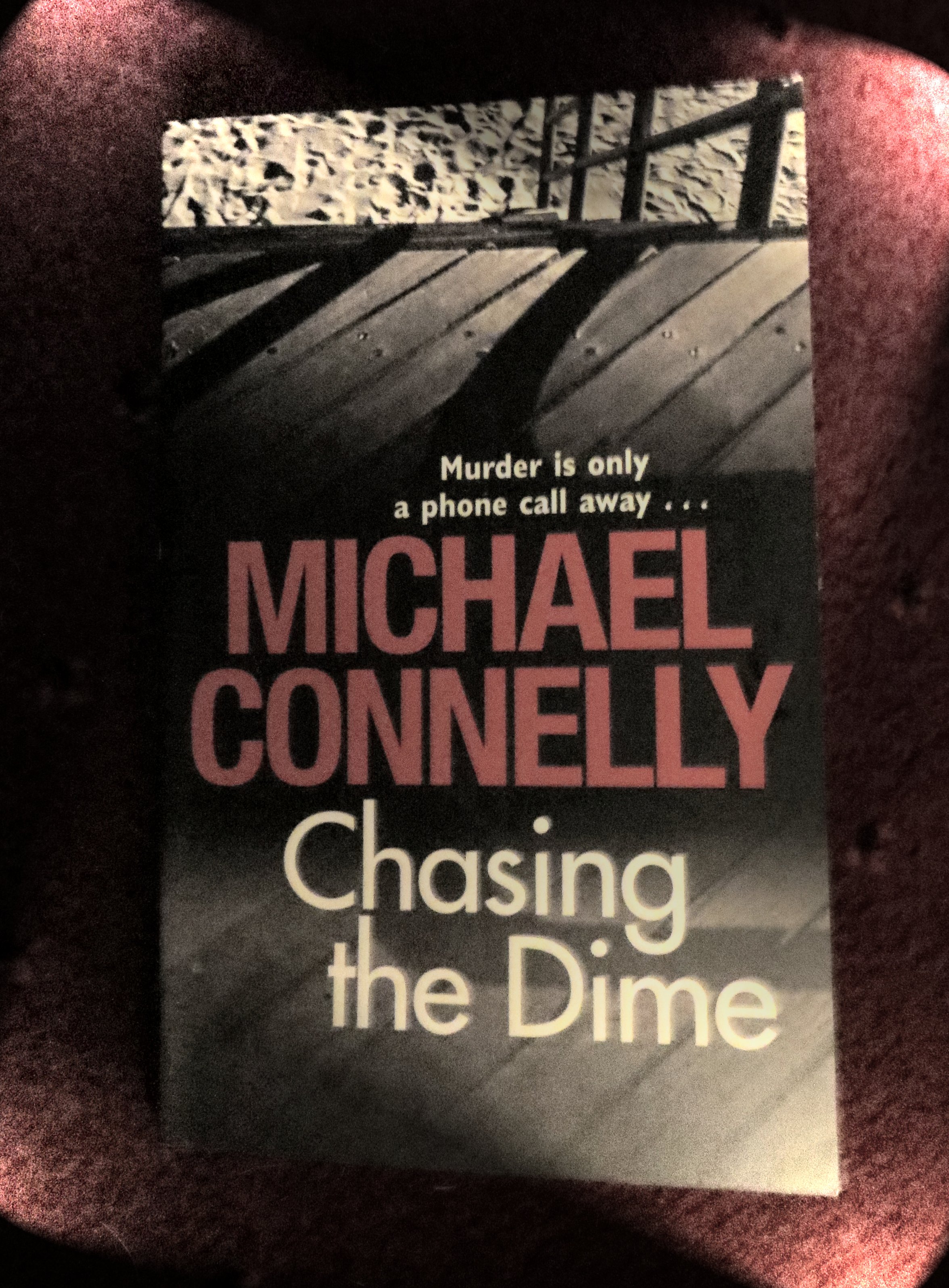
I am going to start this review with a confession: although I have been given several books written by Michael Connelly and even lent them to my friends, Chasing the Dime is the first one that I have read – and, ironically enough, I bought it at a book sale in a Co-op supermarket near Oxford, because I’d run out of things to read. Normally, I wouldn’t buy books from a supermarket because I believe in supporting local bookshops. So, two firsts in one go!
The reason I’ve not read a Connelly novel until now is that, and my ignorance is pretty unpardonable, I’d been led to believe him to be the kind of blockbuster author in whom I’m least interested: big-picture, change-the-world sort of stuff (x saved the world single-handed from the next atom bomb, Hermann Göring, Nuremberg and suicide notwithstanding, has been alive and well in South America for the last sixty years and running drug rings, that sort of thing). Chasing the Dime is not like that at all. Instead, it is one of the most perfectly-crafted murder stories that I’ve ever read.
There’s the background, for a start. The hero, Henry Pierce, runs his own R & D company. It is conducting research into molecular computing, in a highly competitive sector where several other companies are also in the race to crack the conundrum. Their mission: to create a computer the size of a dime. Hence the title – but the title also reflects the company’s need to find sponsors and also, sadly, refers to why beautiful young women are forced to prostitute themselves. (The title is one of many aspects of the book that works on several levels.) I’m sure that when Connelly wrote this novel (it’s now well over ten years old), there was a race to bring such a molecular computer to the market in just the way that he describes, but it says a lot about his talent as a writer that, although during the course of the novel he reveals many facts about the complex technology involved (and has clearly mastered what these are), he never obtrudes knowledge on the reader in such a way that this information seems to be anything other than an integral part of the story. Few writers can pull this off.
Then there’s the plot. Henry’s obsessive research has just caused his girlfriend to break with him. Henry moves into a new flat, for which his PA acquires a new telephone number. The problems start straight away: the number had obviously previously been allocated to a call-girl. Because of certain facts in his past – which Connelly allows to emerge at enigmatic intervals throughout the story – Henry decides to find out the identity of the call-girl and what has happened to her. Owing to several rash but perfectly understandable (from the reader’s point of view) decisions, he quickly becomes a murder suspect.
I won’t say any more, for obvious reasons. However, I’d add one further thing: nothing in the plot is incredible; there are no fantastic twists or turns and not much transpires in a way that the reader can’t guess; yet, because of Connelly’s psychological insights and his fast-paced but not too whacky writing, the reader is held, spellbound, until the last page.
I owe Michael Connelly an apology for doubting him for so long. As it is, I shall do ‘penance’ in the most pleasurable of ways: by reading the rest of his novels in short order. You will, I’m sure, be lining up to tell me that his Harry Bosch series is a must-read and roundly ticking me off for my shocking prejudice.
It is Christmas Eve, so I’d like to take the opportunity to thank everyone who has read this blog and supported it with so many kind, helpful and insightful comments over the past year. It has been my very great pleasure to have ‘met’ you in this way and I feel extraordinarily humbled that you have spared the time to take so much interest in me and my writing. For those of you who celebrate Christmas and for those of you who don’t, I’d like to wish you a very happy and relaxing time and a spectacularly successful New Year – wherever you are and whatever you are doing. If you are a writer, I wish you some of that elusive luck that all writers need.
P.S. The blog-posts have been a little erratic in recent weeks, as I’ve been away a lot. I shall try to do better as my main New Year’s resolution! However, I’d like to share with you that the day-job is taking me to China in the first full week of the new year, so they may be a bit thin on the ground then – though you can be sure that I shall recount my experiences in as much detail as you can take afterwards!
For me, as fascinating as crime and certainly great to read on dark winter evenings…

I’ve always thought it a great paradox that there’s no better way of relaxing than with a good crime novel. I don’t know why this should be; it is perhaps because reading about murder and mayhem, trickery and treachery helps you to appreciate the safety and security of your own world and to put all the people who’ve annoyed you during the course of the working day into perspective: a perspective reinforced also by all the ones who’ve been especially helpful or kind (as there are many more lovely people in the world than crime writers acknowledge).
I read voraciously all the time and I like to alternate reading fiction with non-fiction, sometimes having two novels and two non-fiction books simultaneously on the go. My preferred non-fiction subject categories are biography, memoirs, natural history, (more selectively) geography, particularly of Lincolnshire and Yorkshire, archaeology and history. Especially history. I love local history (again, particularly of ‘my’ two counties, as I’ve mentioned before), but I read history books about all periods and places, all of the time. Coming back to what is most relaxing, I think that nothing can beat history books about the high middle ages – perhaps because, just like crime novels, they tell of appalling acts that are remote enough to reassure the reader that he or she is unlikely to experience them first-hand, whilst offering the opportunity to drink up the excitement that they offer.
I’ve read many more books about the Wars of the Roses than any other mediaeval period, so in my most recent expedition to a bookshop (it was Waterstones in Leeds) I decided to buy Dan Jones’ The Plantagenets: the kings who made England. I have read accounts of individual reigns in the Plantagenet period, but until now I’ve had no broad overview of it. Jones’ book turned out to be the ideal choice for this purpose. He succeeds superbly well at explaining how each Plantagenet king built on the heritage of his predecessor to make England a strong, united country (they also enjoyed modest successes in Wales, made almost no headway in Scotland and none at all in Ireland) with well-defined laws. Despite the fact that, at the beginning of the Plantagenet period, in the mid-twelfth century, the English king and nobles also held vast swathes of land in France and by the end of it, two and a half centuries later, almost all of these had been lost, the Plantagenets also transformed England from being an impoverished country largely ignored by its European counterparts to a prosperous land and international force to be reckoned with, whether for peaceful trading or highly aggressive warfare.
As with all dynasties that span long periods of time, the Plantagenets had their failures as well as their successes. The greatest Plantagenet kings were Henry III and Edward III; the weakest were Edward II (who was spectacularly incompetent) and Richard II (who was less so, but like Edward II failed to understand the dangers of empowering his favourites). It was directly owing to Richard II’s shortcomings that the great Plantagenet dynasty fell. No less fascinating are the Plantagenet queens: they may have been consorts rather than rulers in their own right, but such royal wives as Eleanor of Aquitaine, Eleanor of Castile and Isabella of France were every bit as colourful, determined – and fierce – as their husbands; in each case, they were the de facto monarchs of England for significant periods of their husbands’ reigns; and in each case they defied their husbands at crucial junctures, often changing the course of history in the process: for example, Isabella of France was directly responsible for deposing the insipid and unkingly Edward II and placing Edward III on the throne instead. She and her lover Roger Mortimer then tried to manipulate the new king, a ploy that failed because Edward reasserted the power and pride of the Plantagenet line in all its pomp and glory. Mortimer was executed; but Isabella carried on enjoying full regal honours as the king’s esteemed mother. One queen for whom I did feel pity as I was reading was Berengaria of Navarre, Richard I’s plain and neglected wife. He seems to have married her simply because he was determined not to marry Alice of France, to whom he had been betrothed as a child but who had probably been seduced by his father, Henry II. They had no children: there is some evidence that Richard was a latent homosexual (though Jones does not subscribe to this theory).
I enjoyed this long book hugely. I have a few reservations about it: one is the portrayal of Richard I himself. Jones seems to have accepted the version of him traditionally peddled to primary school children, of a brave and warlike king who brought honour and renown on his country by fighting against Saladin in the crusades. Most works of scholarship now concur that it was irresponsible of Richard to abandon his country and run up huge debts, especially as he knew that his brother John would make a weak, self-interested king. Jones also uses certain phrases irritatingly frequently: the one that grated on me the most was ‘smacks of’, which he uses in the sense of ‘seems to be’. This is not how I would use this phrase myself, but, even if I agreed with Jones’ usage, I’d still like to see this figure of speech appear less frequently.
But these are minor quibbles. The dark, cold winter nights are upon us now. If you want to take a break from crime, but still want something thrilling to read that will absorb you totally in adventure and happenings stranger than fiction, this book is for you.
The narrative glints and morphs like coloured squares of glass in a kaleidoscope…

A couple of weeks ago I started writing a review of Rose Tremain’s Merivel and got sidetracked into writing about how I discovered Tremain as an author. I’ve since been distracted by a variety of other events, as the kind regular readers of this blog will appreciate, but I was determined to get back to Merivel eventually and today I have finally managed it.
Merivel is subtitled ‘A Man of His Time’. The significance and the poignancy of this gradually dawns on the reader as the book goes on, because Merivel is the sequel to Restoration, the stellar novel that made me one of Tremain’s undying admirers. Restoration is about Charles II in his heyday and how Merivel, also in his prime, acts as the King’s physician and performs other, more private, services that bind them together in a not altogether comfortable but mutually affectionate relationship. In Merivel, by contrast, both the protagonist and the king are ageing. Merivel might be ‘man of his time’, but the question is, which time? His old bones creak. He suffers various bereavements, some of them tragic almost beyond endurance; he has the opportunity to embark upon one last turbulent full-blown love affair, with Louise, a beautiful, poised and aristocratic woman twenty years his junior, and discovers that when it comes to it he does not have the stomach to reciprocate her own hot-blooded desires. He continues to practise as a physician, and with some skill, Tremain implies, but still he can work only with the primitive methods known to doctors of his day. It is a measure of Tremain’s expertise that she can immerse her reader in the late seventeenth century and yet still offer a perspective based on modern knowledge. The account of Merivel’s operation on Violet Bathurst’s tumour is both horrific and beautifully written.
Yet Merivel is much more than a pensive account of the decline of two elderly men, one an eminent monarch, the other an obscure doctor, and their contemporaries. It is also a brilliant satire, not just on the Caroline age, but also about humanity in any age – though perhaps satire is too strong a word: Tremain can be hard-hitting, but to say that Merivel is a comedy of manners might convey better what I mean, as long as this does not imply that the novel is not ‘serious’.
But perhaps ‘serious’ is not the right word either! Some of the scenes are absurdly comic, some pathetically so. The account of the abortive sojourn of both Merivel and Jan Hollers, the clock-making Dutchman, at the court of Louis XIV, demonstrates both their absurdity (each is out to make a fast buck if he can) and the pathos of their situation (Hollers is a skilled craftsman whose precision-made clocks are rejected by the King’s dour mistress, Madame de Maintenon, simply because they don’t keep the same time as the no doubt faulty clock over the palace coach-house in whose accuracy she invests all her faith; Merivel, despite the letters of introduction with which he is armed and the intervention of his new mistress, never manages to meet the King.). Sometimes Tremain writes with Rabelaisian gusto, as in the scene that takes place with the ‘drab’ in the carriage when Merivel is at last on his way to Switzerland to be reunited with Louise (this woman, the sole female fellow-traveller in a full coach, despite her grotesque proportions and shameless habits, succeeds in inflaming lust in all of her companions, and persuades each of them in turn to pay for sex while the others look on). The drab scene is pivotal to the novel, because it represents Merivel’s last act of bawdy – and it is a tawdry parody of all the hilarious and unrepentant romps that took place in Restoration. Significantly, it unmans him, so that coitus, even with a woman as lovely and willing as Louise, no longer holds sufficient attraction for him.
The narrative of Merivel glints and morphs like coloured squares of glass in a kaleidoscope. As I have illustrated, it is difficult, if not impossible, to pin this book down, to attempt to corral it into a single genre or style, and it would probably be impertinent to try. I hope, however, that I have managed to convey enough of its flavour to entice others to its pages.
This book is my bag…

I first mentioned One Summer: America 1927, by Bill Bryson, a couple of weeks ago. It was one of the best trophies in the phenomenally generous goody-bag supplied to delegates at the BA Conference and I promised to review it when I’d read it. I completed it yesterday.
It’s a fascinating book, combining a great deal of research with Bryson’s trademark humorous and throwaway delivery. It explores the events of a six-monthish period during 1927 which, Bryson avers, changed the course not only of American history, but also of that of the world.
He focuses on a relatively small but rich cast of characters: the aviator Charles Lindbergh and ace baseball player Babe Ruth probably get the most words devoted to them, but Bryson also manages to include, among other things, accounts of the activities of two (extraordinarily bad) presidents, Warren G. Harding and Calvin Coolidge and, of especial interest to me, two convictions for murder, both of them causes célèbres of their day, that of Ruth Snyder and Judd Gray, for killing Snyder’s husband (they were almost certainly guilty of the alleged crime) and Bartolomeo Vanzetti and Nicola Sacco, for acts of terrorism leading to several deaths (they almost certainly weren’t). All four were sentenced to death and died by the relatively new method of controlled electrocution.
Many lesser tales are told along the way: how the presidential sculptures at Mount Rushmore came to be conceived of and commissioned; the rise of the ‘flapper’; the early years of talking pictures and their effect both on the entertainers and those they were entertaining; how Prohibition began and its appalling effects on the economy and morality and, more surprisingly, the numbers of people drinking (they increased) and the numbers of deaths caused by ‘denaturised’ (read ‘contaminated’) alcohol. Wayne B. Wheeler, the fanatical teetotaller who inspired Prohibition, dictated that some of the alcohol captured by the state should be denatured – i.e., rendered undrinkable – by the addition of poison instead of some more harmless spoiler, such as soap, and scores if not hundreds perished from his efforts. Effectively, the state had legalised murder.
This is one of the topics on which Bryson abandons his customary tongue-in-cheek stance and writes in deadly earnest. Another state-inspired action that elicits his wholehearted contempt is the mass sterilisation that took place of women who were considered to be too intellectually inferior to bear children. It is estimated that up to 11,000 women suffered this fate. Although Bryson does not belabour the point, implicitly he draws some analogies between what happened in America in the 1920s and the appalling experiments carried out by the Nazi Dr Mengele in Germany in the following decades. In fact, he says that to all the epithets that have been applied to the America of the 1920s, he’d like to add one of his own: the Age of Loathing. “There may never have been another time in the nation’s history when more people disliked more other people from more directions and for less reason. Bigotry was casual, reflexive and well nigh universal.” In fact, he probably doesn’t need to beat up his own nation quite as much as he does: I’ve also been reading about British and Dutch colonialism recently and there could hardly have been greater bigotry than arose in the colonies of those countries, particularly the ones that were created in Africa in the second half of the nineteenth century. As we all know, some of those African nations have only very recently been released from colonial oppression; and bigotry is still alive and well in almost all ‘civilised’ countries.
I mustn’t dwell on this aspect of the book too much, though, because if I do I shall fail to convey the wonderful balance that Bryson manages to achieve in his narrative. One of its most endearing qualities is the way in which it conveys how different America was then and yet how recognisably the country that it has become today. America in 1927 was a country devoted to popular culture – the crowds that Lindbergh attracted have never been equalled since; it was a country that idolised film stars before the rest of the world embraced this kind of hero-worship; it was the country that had just invented hire purchase, thus starting an ‘American dream’ that increasingly depended on each household’s ability to acquire as many consumer items as possible; above all, it was a country that suddenly emerged from being behind Europe in terms of technological achievement to audaciously taking the lead in cutting-edge sciences such as aeronautical engineering, a lead which it has never since relinquished.
All of this happened (just) within living memory. Piquantly for me, 1927 was the year in which my mother was born; and one or two of my friends still have living parents who were born in this year or even before it. Bryson brings home to readers how much the world has changed since their youth – and actually teaches later generations why they should be forgiven for some of their prejudices and foibles. Above all, he shows us that, while we may laugh at the excesses and stupidities of a thrusting if less well-educated age, future generations will probably find the behaviour of our present age just as risible and bizarre.
 Christina James, crime novelist