

A perspective of Priory LSST Academy, Lincoln: Supporting creative writing talent!

Low-rise school with covered ways, fountains and flowers
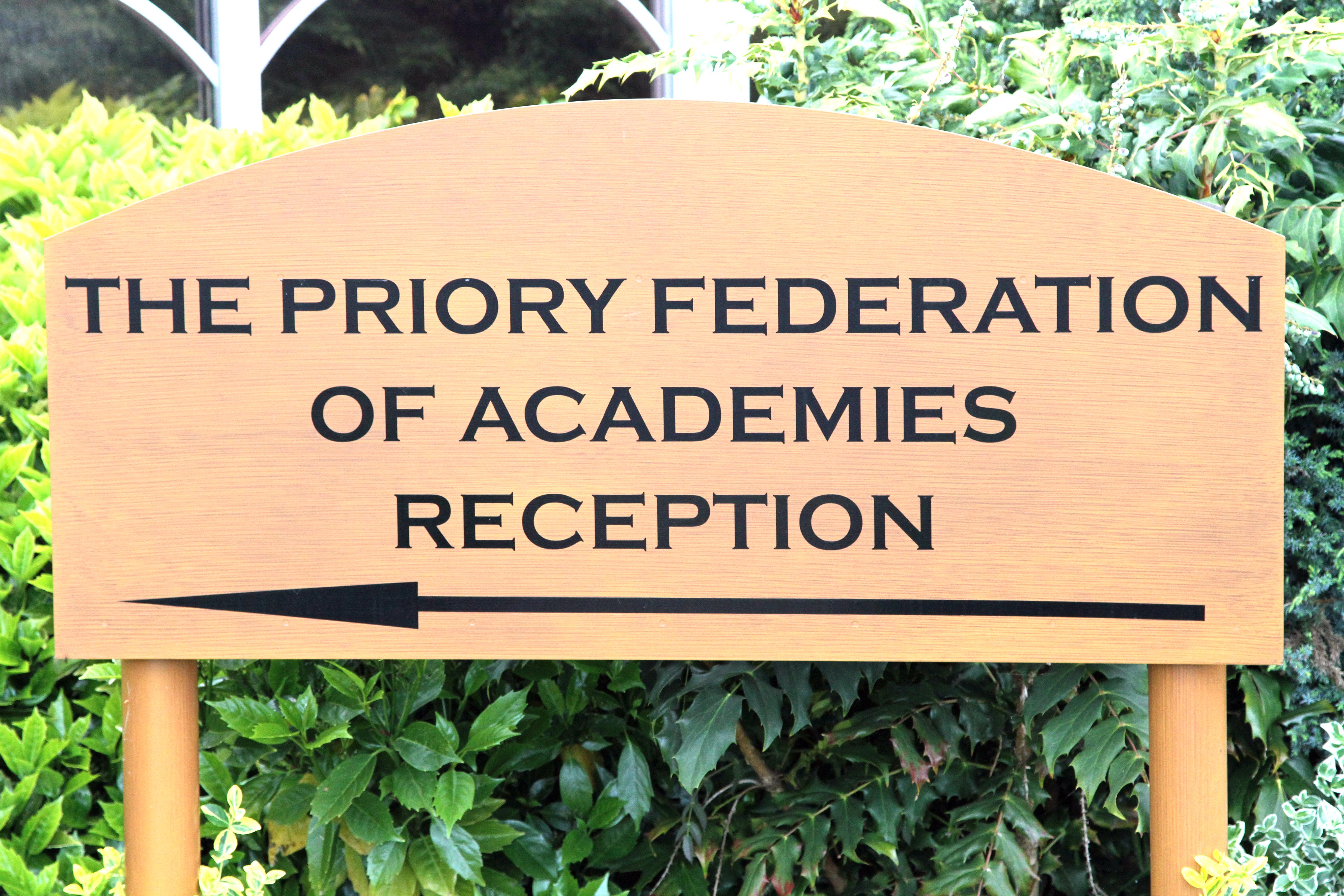
A warm reception at Priory LSST

Played into school!
I was extremely privileged last Wednesday to have been invited to join the first literary festival to be launched at the Priory LSST Academy in Lincoln. It was actually a festival within a festival, arranged by Mrs. Sarah Oliver, the energetic and enthusiastic writer-in-residence at the Academy, with the help of the very talented Sara Bullimore, who is one of the organisers of Lincoln Inspired, the city’s arts and literature festival. My contribution was to offer creative writing students feedback on the work they had submitted for a crime-writing competition, organise and take part in two writing workshops for younger students
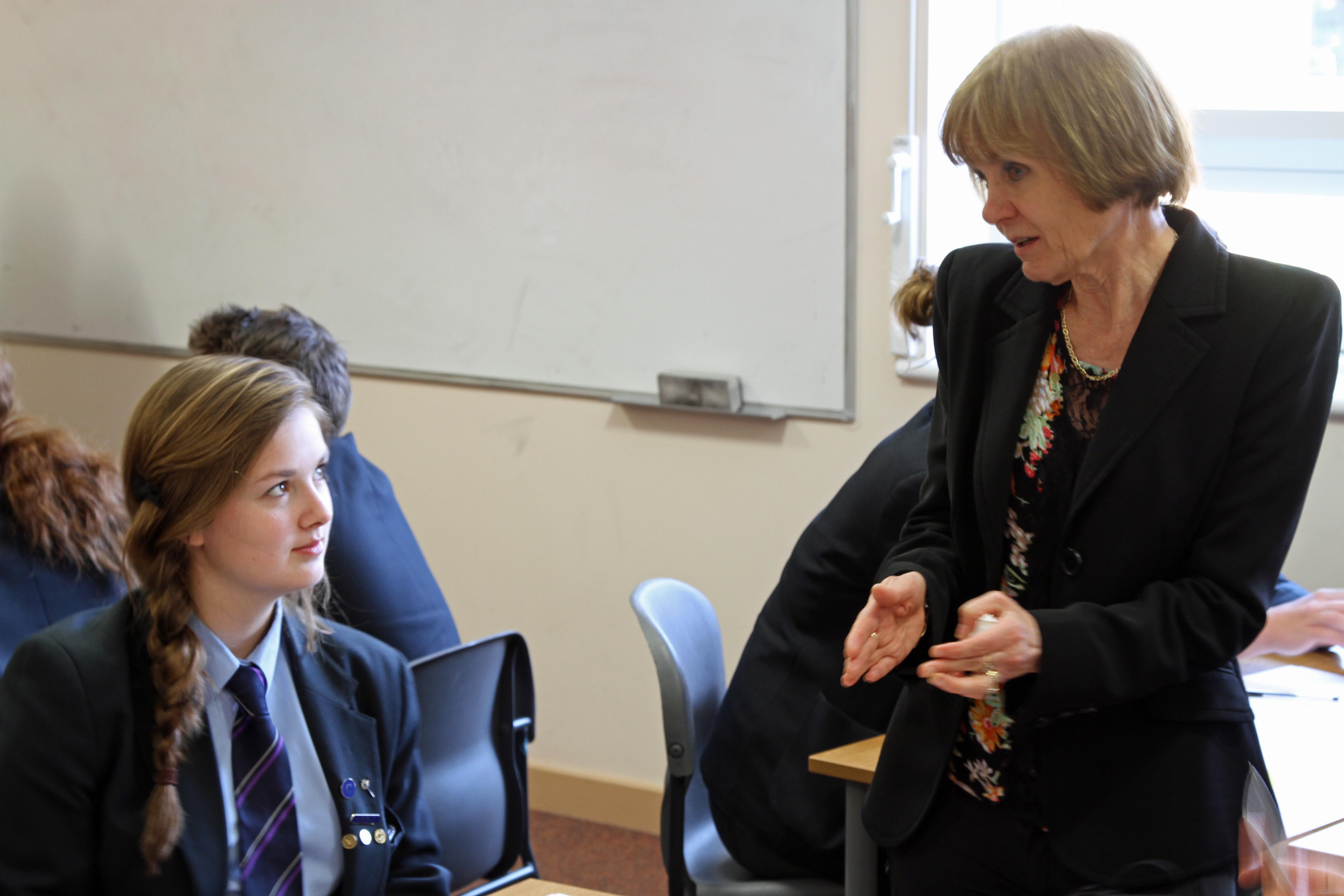
Year 10 crime writer workshop

Absolute concentration in the crime writer workshop
and deliver the festival keynote talk later in the afternoon. Members of the public were admitted to the latter.
Before I go on to describe the day in more detail, I’d just like to pause to say what an amazing place the Priory Academy is. One of the first academies to have been set up after the government announced its support for them, it is situated on a sprawling site with several buildings and many beautifully laid-out gardens, distinguished particularly by their modern sculptures and water features. Students move from one building to another via a series of covered walkways. The academy also has a planetarium, an Olympic-standard running track, an incredibly well-equipped gym and a swimming pool. Although it is a state school, it takes sixth-form boarders (they are usually either students from overseas or from armed services families). Those who attend it are greatly privileged and keenly aware of this. All of the students I met were impeccably polite; several of them told me how passionate they were about the Academy itself.
The sixth-form creative writing course was set up by Sarah Oliver at the beginning of the current academic year; it is voluntary and after school. Many more students wished to take the course than she could accommodate. Eventually fourteen were selected, of whom twelve entered the creative writing competition. They were asked to write the opening chapter of a crime novel (with a 500-word limit) and a synopsis of the whole novel (with a 300-word limit). This in itself was a pretty tall order, but they succeeded admirably. It is no exaggeration to say that I believe that every one of those students could go on to be a successful writer. The prize was for the student who wrote the winning entry to have his or her chapter published in the Lincolnshire Echo and the two runners-up to have theirs published in the online version of the same newspaper.
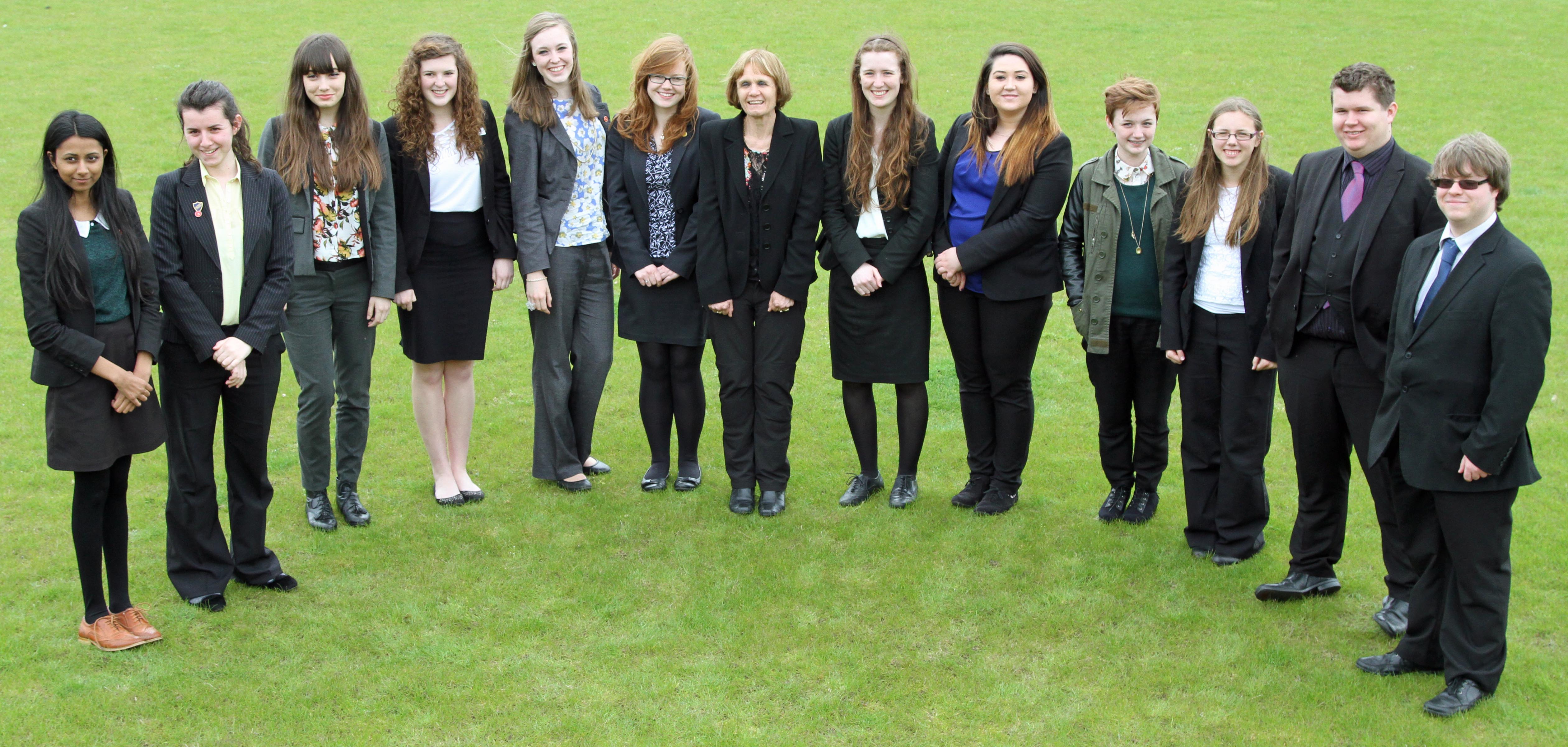
Priory creative writers
Choosing the winner was a daunting task. I asked my husband, who also acts as my copy-editor, to help. We decided to evaluate each entry on the following seven attributes: the opening sentence; consistency (did the chapter match the synopsis?); how compelling we found the writing; the quality of the plot; characterisation; the accuracy of the writing; the quality of the writing. It’s of course impossible for me to describe all of the entries in detail here, but to give my readers some idea of the quality of the entries, I’ve listed below a few of the opening sentences from the students’ submissions:
Bryant’s breath condensed in the plastic of his gas mask before fading away, only to be replaced every time he exhaled. It was stifling.
It’s the screech of the tyres that haunts, and the sickening crunch of metal splintering on bone.
Peer pressure. It was always peer pressure to blame when we got caught.
A myriad of birds shot out of the trees as loud sirens blazed past and a blur of blue lights blinded the night sky.
Sally heard the breathing in the darkness. The short gasps of air slowly faded into the inky night as she crouched, frozen, behind a wild hedge.
My job as judge was made more difficult because the opening chapter and synopses that we both considered to be the best ones were not written by the same person. Furthermore, there was a third entrant who, while she wrote neither the best chapter nor the best synopsis, had the best stab at both put together.
The rules of the competition organised by Sarah Oliver in conjunction with the Lincolnshire Echo were clear-cut. The best chapter was undoubtedly written by James, so we awarded the prize to him. Fatmira and Katie therefore became the runners-up.

With James, Fatmira and Katie, crime writer winners
The constraints of the competition were, however, considerable, and I knew that I wanted to see more of these students’ work. By great good fortune, Jean Roberts, Business Development Director at PrintOnDemandWorldWide, had very generously said that, if the winner wanted to complete his or her novel within a year of entering the competition, she would print ten copies of it free of charge and also put it into legal deposit, PODWW’s distributor channels and its own new online bookselling venture, The Great British Bookshop. I decided that James, Fatmira and Katie all deserved to be eligible for this new prize, so I have now set up a further contest for the three of them. If they can get their completed novels to me by the end of this year, I’ll choose the best of them and send it on to Jean. PrintOnDemandWorldWide also very generously gave all the students a Great British Bookshop notebook, pen and box of Union Jack sweets. Both the students and all those who attended the afternoon keynote also received PODWW’s pamphlet giving advice and writing tips to would-be authors.
I shall write more on this blog at intervals about James, Fatmira and Katie and the progress that they are making. I hope that you will join me in following their journey, perhaps also offering your own support and encouragement along the way. In the meantime, I’d like to celebrate the achievement of all the student writers at the Priory Academy. I’m certain that we shall be hearing more of at least some of them in years to come.
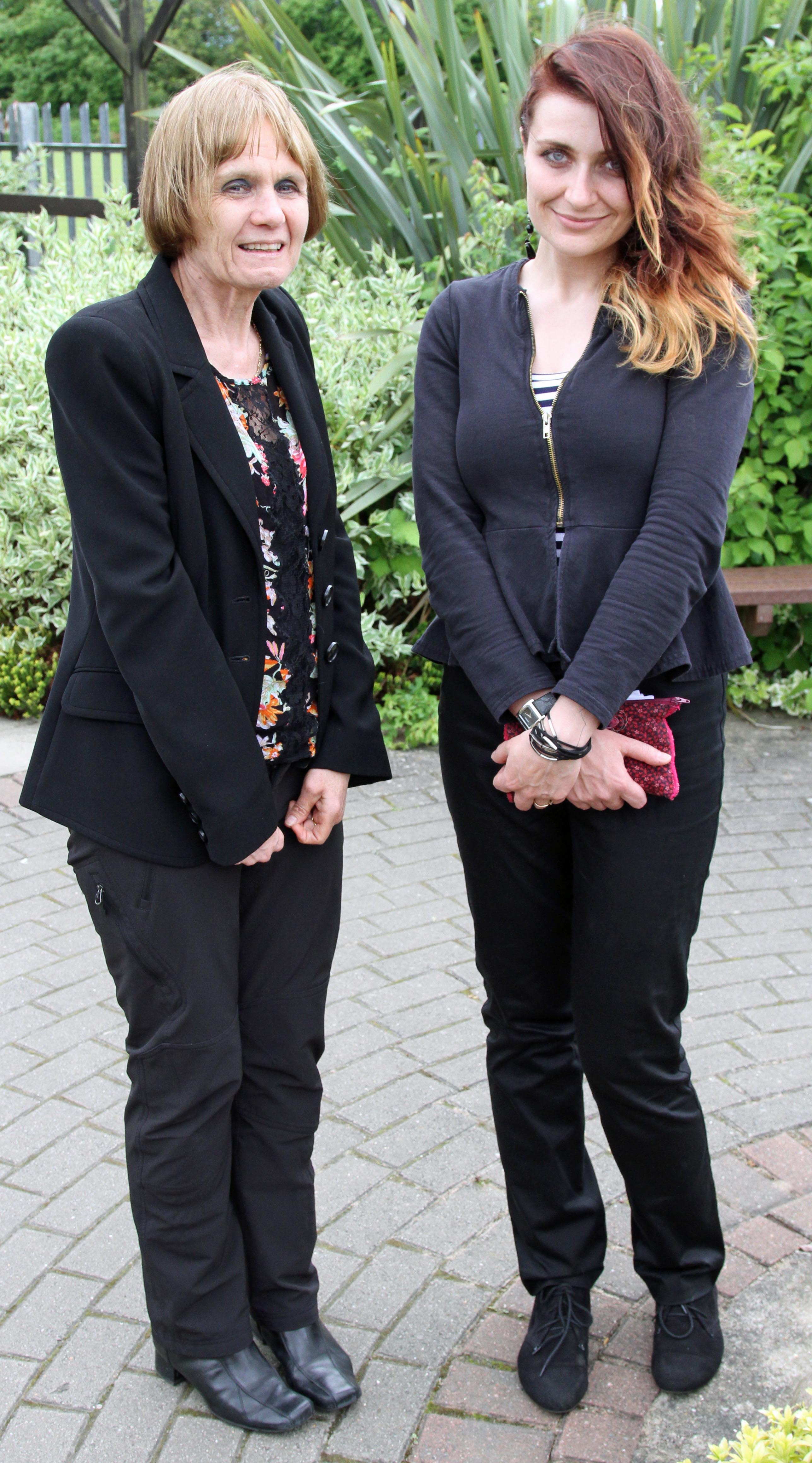
With Sarah Oliver, Priory’s writer in residence and literary festival organiser
Christina James, happily hopping from one blog to another… #Mondayblogs

I have Jenny Lloyd to thank for nominating me for The Writing Process ‘blog hop’. (Why do I dislike this term? I’ve never liked the ugly sound of ‘blog’ and ‘hop’ has unfortunate ‘bunny’ associations – as if I’ve been given fluffy ears and a scut to bounce around in – hah!) Jenny is renowned as the author of Leap the Wild Water, a widely-acclaimed historical novel focusing upon the sufferings of women and the harsh conflicts and unbearable tensions between self and society in rural Wales two hundred years ago; she’s getting close to releasing a sequel to it, The Calling of the Raven, and is already working on the third book. Thanks, Jenny, for this opportunity to join The Writing Process and best wishes for The Raven! (Do visit her blog at http://jennylloydwriter.wordpress.com/, which for me has wonderfully sensitive insights into her homeland, its people and its history… wiv pitchers!)
So, here I go, with a bounce:
What am I working on?
I’m just writing the concluding chapters to Sausage Hall, the third DI Yates novel. Like the first two novels in the Yates series, it is set mostly in Lincolnshire, though some of the action also takes place in Norfolk. Sausage Hall is the name that the locals give the house that is called Laurieston in the novel. It is situated in the village of Sutterton and based on an actual house, which really was nicknamed Sausage Hall, because it had been built by a butcher who’d gone bankrupt in the 1850s. My grandmother, having worked in domestic service all of her life, moved when she was sixty to Sutterton, which is about ten miles from Spalding and seven miles from Boston, to become companion to a very old lady who lived there. The old lady had been the wife of a gentleman farmer who was twenty years her senior, so he must have been born in the mid-nineteenth century. The house was frozen in a time warp. It was packed with quaint furnishings, but the most astounding thing about it (though as a child I just accepted it as normal) was that the walls were decorated with many sepia photographs of the old lady’s husband when he’d been on safari in Africa as a young man. These photographs must have been taken in the 1870s or 1880s and in many of them he was accompanied by several black women wearing very little except strings of beads. It has long been my intention to write about what I think might have happened in this house. When I began researching the period and the district, my plot was given a considerable boost when I discovered that someone very famous had lived nearby in the late nineteenth century. That person appears in the novel, too. The book is set in the present, but the characters and their actions are considerably influenced by what went on at Sausage Hall more than a century ago.
How does my work differ from others in this genre?
As is well-known (especially by those who organise creative writing courses!), the genre of crime fiction is usually divided into several sub-genres. I’m only interested in a few of these: primarily the psychological crime novel, with a slighter nod to the ‘woman at risk’ variant. Except tangentially – for I do try to get the facts right about policing, the law and the justice system – I’m not what is known as a ‘procedural’ crime writer. I don’t plod through all of the police action step by step, leaving no ‘i’ undotted or ‘t’ uncrossed. Nor do I seek to hold my readers’ attention or shock them with descriptions of excessive violence or bloody massacres. I don’t write action thrillers or spy novels. Conversely, I’m not a creator of what has been called ‘cosy’ crime: the type of novel that those of a nervous disposition can happily read in bed at night when in the house on their own. I like to think that, through careful characterisation and as much psychological insight as I can command, my novels explore some pretty gritty truths and moral dilemmas. I also try to flip the crime-writing conventions on their head in various ways: for example, I tend not to tie up all the loose ends (life’s just not like that) and, flying in the face of the notion of catharsis, I don’t always make it absolutely clear who the perpetrator is. I’ve been told by several reviewers that I’ve broken new ground in the crime genre, but I try not to stretch this too far. For example, I don’t think it works to try to mix genres and combine crime with Science Fiction or Fantasy – a few authors might be able to pull it off, but they’d have to be very skilful indeed. More prosaically, although my novels are set in the present, the town of Spalding in which most of the action in the Yates series occurs is the Spalding of my childhood, not the town as it is today. This gives me the advantage of being able to write about a finite, unchanging place that only I have access to, because it is locked in my memory (with all that that implies).
Why do I write what I do?
I’m not wedded always to being exclusively a crime writer. I’ve written novels and short stories which would certainly be pigeon-holed in the ‘literary fiction’ bracket by most publishers. However, although the quality of my writing was praised when I tried to publish some of these (others have not been and never will be shown to anyone!), I repeatedly received feedback that I needed to tighten up on the plot and make my work more accessible generally. I therefore decided to try writing crime fiction, because it requires a tight and carefully-constructed plot and the action itself keeps the novel moving on nicely. The constraints of the genre provide an excellent way of creating and maintaining self-discipline in the writing. I have to weed out the ‘purple passages’ when revising if I realise that they don’t contribute to the plot. Once I have a sound plot, I’m also less likely to get stuck or suffer from ‘writer’s block’ than when writing literary fiction. However, although I’m very happy writing crime fiction and shall continue to do so, I do have other plans in the pipeline as well.
How does my writing process work?
Following on from what I’ve said in the paragraph above, plot is very important in crime fiction. Once I have an idea for a novel, I work painstakingly on the plot, often during my long annual holiday in France, until I am satisfied that I can make it work. I will usually also draft a half-page outline for each chapter. I don’t always stick exactly to my original plot afterwards, but, if I change it, I make sure that the changes don’t create inconsistencies elsewhere in the novel. I don’t start out by conducting the research. Although I do research the background to my books thoroughly, I tend to do this as I go along. This works better for me than conducting the research at the outset, because, like most writers, I am easily seduced by reading. It’s very easy to spend several days on what you might like virtuously to term ‘research’ when what you’re actually doing is enjoying yourself by feeding a curiosity that far exceeds the requirements of the novel! I’m a firm believer in writing every day if possible, though I don’t set myself huge word targets. I’m satisfied with 1,000 words a day or a little more. I revise constantly – the first revision usually takes place on the same day as the original writing, and I’ll often revise it the next day before I start writing again. Thereafter, I revise in groups of chapters – every time I’ve completed, say, the next eight or ten chapters, I’ll revise this group as a single ‘chunk’ of writing. Often I do this on long train journeys. Finally, I revise the whole book all the way through, sometimes more than once, keeping a sharp look-out for inconsistencies and other solecisms and sharpening up the text. Then I hand the MS over to my husband for checking. He is an even fiercer critic of my work than I am and, as well as weeding out inconsistencies, will scrutinise the grammar, punctuation and syntax. Although I don’t always agree with his suggested revisions, his contribution is invaluable.
‘Ere, Valerie, your turn! Have some fluffy ears and a white fluffy tail and go hopping! I nominate Val Poore @vallypee for this excitement. She’s both a teacher of English for business and academic purposes and a historic bargee… sorry, she owns a historic live-aboard barge in Rotterdam and has turned her rich experiences in England, South Africa and The Netherlands into both funny and serious stories, both autobiographical and fictional. One, The Skipper’s Child, recently won the Wishing Shelf Silver Award. Respek! You’ll find her faring along the European canal system or simply soaking up the atmosphere of Oude Haven, here: http://wateryways.blogspot.co.uk/
Oh, as for blog-hopping, I don’t know quite how it happened, but Jenny’s nomination for today coincided with Bodicia’s very kind guest blog opportunity here. I had to use a bit of the same material for this post on my site, so I hope you will forgive me for that.
Surprises come in threes at Oadby Library!

During the latter part of last Thursday afternoon, after a sun-splashed if chilly week, the heavens opened and the rain came bouncing down. The gate that leads into our garden was sodden in no time. The M1, which we had just joined to begin our journey to the event at Oadby Library, quickly became waterlogged: there were treacherous sheets of water to negotiate as the traffic on the approaches to the various cities that we passed built up towards rush hour. By the time that we reached the Leicester ring-road, we’d encountered virtual gridlock. Irate drivers were crawling along for a few yards at five mph before juddering once again to a standstill, their progress and tempers not helped by the rain, Leicester’s amazingly laid-back traffic lights system and the fact that in several places on the dual carriageway two lanes merge into one (every driver being reluctant to yield to another).
This was not an auspicious start to an event that had been planned months in advance and strenuously published, by Chris and Jen at Salt Publishing, by myself and by various other kind tweeters along the way. I had known not to expect too much, as the library had already warned me that only three tickets had been sold – and indeed would have ‘pulled’ the event had I not insisted that I should be happy to speak even if only one person turned up to hear me.
I arrived precisely on time, at 6.30 p.m., later than intended, and my audience – consisting indeed of just three people – had all got there before me. I barely had time to notice that Oadby has a lovely library before I hastened into the ante-room where they had assembled, together with the librarian, Anne Sharpe. However, by this time I had already experienced the first of several wonderful surprises. The first person that I met after Anne was Rosalind Adam. We are mutual bloggers and Twitter friends – I’ve been enjoying Rosalind’s blog for some time, though we had not met before. It was a delight to be able to talk to Rosalind in the flesh. We each agreed that the other was exactly what we had expected – and that this was not always the case when meeting someone previously encountered only through the ether. At the moment, I’m particularly excited about a book for children on Richard III that Ros has just finished writing and hope to be able to review it on this blog in due course.
I was a bit slow on the uptake at registering the second surprise. I’ll have to excuse myself by offering the explanation that I was busy sorting out my books and papers for the readings. I’m also quite short-sighted, but I prefer to wear my spectacles only when I’m driving. Anyway, the event was about to start when I looked up and recognised that the only male member of the audience was Colin Marshall, for many years the manager of the campus bookshop at Leicester University and still employed by the university today, although he has now ascended to a higher plane and is in charge of all the retail operations on the campus there. Colin’s presence introduced one of those occasions when my life as a novelist collides with the day job – and this time it was the most enjoyable collision imaginable. Colin has for several decades attended the conference for which I have organised for some fourteen years the speaker programme. He was also awarded the Booksellers Association’s Lifetime Achievement Award in 2013. His presence at the event was not entirely a coincidence, as he had been kindly told about it by Professor Christine Fyfe, the Pro-Vice-Chancellor in charge of Teaching and Learning – and the Library – at Leicester University, whom we both know. However, there was also a real coincidence at work: Colin and his wife Sandra live in Oadby and she had quite separately seen the event advertised by the library and decided that she would like to attend. Having the opportunity to meet Sandra was the third lovely surprise of the evening: she’s funny, sensitive, extremely well-read, loves dogs and cats (she told me that she and Colin have managed to organise their lives with such symmetry that they have four children, three dogs and two cats), is a great companion and raconteur and furthermore is living proof that Colin is a dark horse!
Ros, Colin, Sandra and Anne therefore constituted my audience at Oadby. It was the smallest audience I’ve ever had. I’ve attended other writers’ events that have managed to attract only small audiences and I’ve found that they divide into two categories: small and dismal, and small and select. I’d like to state unequivocally that, thanks to Ros, Colin, Sandra and Anne, this event was of the latter type. It began quite formally with a reading from In the Family and a Q & A session, but before long had turned into a lively debate about writing, literature, other crime writers and future events at Oadby Library. We overshot the allotted time by half an hour, so that I had barely time to conclude with my ‘world première’ reading of the first chapter of Sausage Hall, third title in the DI Yates series, which I’m grateful to be able to say was very well-received.
At the end of the evening, we took a quick look round the library and had our photograph taken there. Ros had to leave at this point: she has kindly already written about the evening on her blog. We said goodbye to Anne, our charming and extremely well-read hostess, and retired to the car park to release our dog, who had accompanied us for the ride. Then Sandra, Colin, my husband, the dog and I adjourned to the pub down the road (The Fox) to continue the conversation. Eventually, Sandra and Colin went home and we headed back North through the rain-sodden night.
There are some evenings, unfortunately all too rare, when, as a writer, you really feel that you are making progress in the most worthwhile of ways, by talking to a group of sympathetic and interested readers. (The size of the group is immaterial.) For me, the event at Oadby Library was such an occasion. Anne said that she would invite me back again later in the year. I’m looking forward to it already. I’d like to thank her for her wonderful hospitality, and to thank Ros, Sandra and Colin for braving the elements to visit the library last Thursday and for contributing to the marvellous conversation that took place there.
The writer and her blog: Dr Lucy Robinson

Dr Lucy Robinson, from the University of Sussex website
I’ve been in Brighton for most of this week, attending the academic bookselling and publishing conference for which I’ve been organising the speaker programme for the past fourteen years. I shall eventually write about the whole of this conference, but in a different forum and for a different audience: I don’t think that a detailed account of the present hot topics in academic publishing would greatly appeal to most of the readers of this blog! However, I do think – and hope – that you’ll be interested in the following account of the comments made by Dr Lucy Robinson, lecturer in Modern History at the University of Sussex and published historian, during a fascinating panel session for authors that took place on the first day of the conference.
Lucy said that there was sometimes a tension between writing her blog and writing her book (she has already published a book with Manchester University Press and is currently working on another). Sometimes, she almost feels that there is a competition going on between them and wonders which is the right way to go: should she focus more on the book or concentrate on the blog? But she also said that a smart author could create a ‘virtuous circle’ in which the blog could feed creatively into the book.
She said that she disseminates her research via a number of social networks, but at the same time wants to publish her history of the 1980s in a conventional publishing format. She explained that the challenges facing a contemporary historian are different from those that a historian of, say, the early modern period has to address. For the latter, the main difficulty lies in getting his or her hands on the small amount of material that now survives. Lucy’s challenge is that her material is ‘everywhere’ and that it is important to tell a version of everyone’s story, down to, for example, the cakes that people in the ’80s made or ate. The format that she uses is therefore to a large extent the product of the particular time that she writes about. To organise the material in a conventional book with the same effectiveness that the digital format allows is difficult. Nevertheless, she wants to see her work in both formats.
One of her reasons for this is that, although she values the internet as a medium, she also loves books. Another is that, for an academic, getting a book published by a recognised publisher is an ‘esteem marker’. Academic careers depend upon producing ‘globally significant research in academic form.’ The object is to influence others – fellow academics, researchers, students – to do or think something differently as a result of the research. This goal of impact cannot be achieved unless the research has been published in a traditional, authenticated format. This does not mean that she does not value the blog, however. She said that “the blog helps you to keep up-to-date. It allows you to change your mind. It is little. It is safe. I can best describe it as a way of being ecological with your work: then you can write it up in your book afterwards to give the work authority.”
She added that writers are now on a journey and it is a tricky one. Social networking enables a sort of autobiographical build-up of identity. Parallel to this is the other persona of the academic writing the book, ‘saying clever stuff and selling it to people.’ She repeated that there is a tension there. One of the audience asked her why the print output of her work was so important to her. She replied that she simply wanted to write a book called ‘The History of the 1980s’.
I found this really interesting, because I think that fiction writers often experience the same kind of dichotomy. We, too, value both formats; most of us also seek validation via the printed word. We understand the value of reaching our readers online, via social networking and blogs, and we don’t begrudge the time and effort spent producing work for them to consume free of charge, work that we hope that they will enjoy. There can be few greater rewards for a writer than to gain a following of loyal online readers who are under no compulsion to read our work but nevertheless return to it time and again because they appreciate it. At the same time, most of us also want to write more formally and there can be few writers who don’t mind whether or not they are paid for their formal creative output. Payment is itself a kind of validation. I said this to Lucy over a cup of tea after her presentation and also mentioned that, for me, there was the further dilemma of not having the energy – or, sometimes, merely the ‘bandwidth’ – to write both blog and book and do the day job as well. She agreed, and said that, although for the conference she had distilled her experiences as an academic writer, many of the things of which she spoke had come from the world of fiction writing originally. Academic writers had picked up on some of the digital initiatives that fiction writers had developed and adapted them to their own writing.
Food for thought, and fascinating, I hope you’ll agree. Lucy’s blog may be found here. I hope that perhaps she will become an occasional visitor to this blog now. I’d also welcome comments from other writers who would like to join this debate.
Rummaging in the rooms, cupboards and fireplaces of my past…

Visiting friends just before Christmas, we came to talk about how buildings change and the feeling of dislocation that this sometimes brings. The building we were actually discussing was a special case: my husband had worked there for most of his career before it was knocked down and rebuilt. Responding to local pressure, however, the organisation that owned it was constrained to preserve carefully the original early twentieth-century façade (which I’d always thought was very second empire, but was certainly more imposing than any modern constrained-by-budget counterpart would have been), even as it created an entirely new structure behind. Therefore, the new building is quite different from its predecessor in every respect except one: to enter it you have to climb the same flight of steps and pass through the same solid door, flanked by two storeys of massive man-sized sash windows, that gave access to the old one. Beyond, if you remember the old building as clearly as I do, and aren’t very familiar with the new one, you encounter a true Alice-through-the-looking-glass experience.
As I’ve said, this rebuilt building presents a special case, but talking about it has made me think about all the buildings I’ve lived in during my life: the three houses in Spalding that were my family homes until I was respectively nine, sixteen and eighteen; my hall of residence at Leeds University and the run-down student flat in Leeds that I subsequently shared with my closest friend; the rather grand flat where my husband and I lived during the first few months of our marriage, before we were ousted by a greedy estate agent who wanted to triple the rent; and the subsequent three houses that became our own family homes – the humble two-up, two-down 1939 brick box in Chapel Allerton, the much more substantial Edwardian semi in Halton and our present house that is tucked away in a picturesque Pennine village.
All of these buildings are still standing. Some will have known many owners or tenants since I lived in them; some have been refurbished; others have sunk yet further into dilapidation. As far as I know, none except my present home still contains any imprint or vestige of myself. I have revisited most of them at long intervals, but I haven’t been inside a single one of them since they ceased to be ‘mine’. Recently, after I began to write the Tim Yates stories, I deliberately went back to the site of the shop in Westlode Street, Spalding, where my great uncle David worked for his whole life (it is now a café, run by eastern European immigrants) and also parked for a few minutes outside the mid-nineteenth century house in Sutterton where my grandmother lived and worked as a paid companion when I was a child and where most of the third novel in the Tim Yates series – the one I am still writing – takes place. I didn’t go into the café for a coffee because I wanted to remember the shop as it was. I almost (but not quite) plucked up courage to ring the doorbell of the house in Sutterton (it was, after all, more than forty years since I was last inside it), but again I decided not to, and not only because I realised that the present occupants might not appreciate having to entertain an eccentric woman brimming with nostalgia on their doorstep. It was also because I’m still writing about this house and I want to remember it exactly as it was.
I don’t subscribe to theories that represent time as anything other than a linear continuum (though I know that serious scientists have begun to argue otherwise); nor do I have conclusive proof that buildings have memories (though I could be persuaded to believe this: I’m certainly convinced that some buildings exude a powerful sense of atmosphere). Yet still I am intrigued by the fact that all of these buildings have continued to lead parallel lives to mine: they have grown older as I have grown older; like me, they have made friends, good, bad and indifferent, who have treated them with kindness, indifference or malice along the way. If I could return to them now – really return, to be given the opportunity to explore every room, every cupboard, every fireplace – or, in some instances, either to wonder or lament at ‘improvements’ that have meant that the rooms and cupboards and fireplaces that I knew are no more – that would be a looking-glass experience much more fundamental to what has shaped me as a person than my occasional, albeit eerie, walking beyond the façade of the building that became my husband’s new workplace. As I’ve said before, place is important to me… and one of the lynchpins of my writing. I remember the places I’ve lived at, stayed at and passed through very clearly. If I could have alternative, updated views of what, for me, have been the most significant of these, I wonder if I would find it an unsettling or an enriching experience, or both of these things? And, even more, I wonder what effect it might have on the store of memories on which I rely when I am writing.
Sorry, Michael, for my previous prejudice… may I make amends!
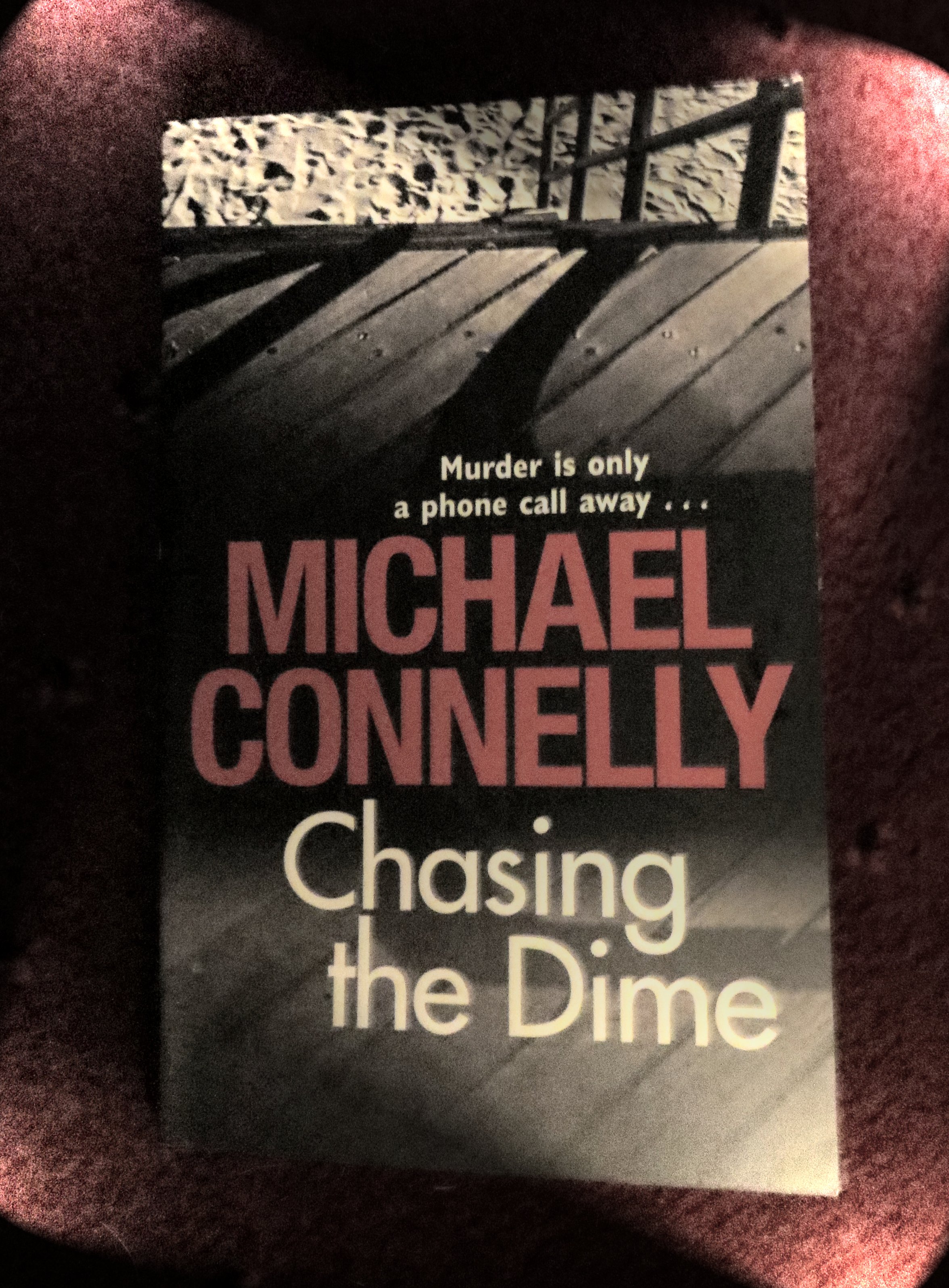
I am going to start this review with a confession: although I have been given several books written by Michael Connelly and even lent them to my friends, Chasing the Dime is the first one that I have read – and, ironically enough, I bought it at a book sale in a Co-op supermarket near Oxford, because I’d run out of things to read. Normally, I wouldn’t buy books from a supermarket because I believe in supporting local bookshops. So, two firsts in one go!
The reason I’ve not read a Connelly novel until now is that, and my ignorance is pretty unpardonable, I’d been led to believe him to be the kind of blockbuster author in whom I’m least interested: big-picture, change-the-world sort of stuff (x saved the world single-handed from the next atom bomb, Hermann Göring, Nuremberg and suicide notwithstanding, has been alive and well in South America for the last sixty years and running drug rings, that sort of thing). Chasing the Dime is not like that at all. Instead, it is one of the most perfectly-crafted murder stories that I’ve ever read.
There’s the background, for a start. The hero, Henry Pierce, runs his own R & D company. It is conducting research into molecular computing, in a highly competitive sector where several other companies are also in the race to crack the conundrum. Their mission: to create a computer the size of a dime. Hence the title – but the title also reflects the company’s need to find sponsors and also, sadly, refers to why beautiful young women are forced to prostitute themselves. (The title is one of many aspects of the book that works on several levels.) I’m sure that when Connelly wrote this novel (it’s now well over ten years old), there was a race to bring such a molecular computer to the market in just the way that he describes, but it says a lot about his talent as a writer that, although during the course of the novel he reveals many facts about the complex technology involved (and has clearly mastered what these are), he never obtrudes knowledge on the reader in such a way that this information seems to be anything other than an integral part of the story. Few writers can pull this off.
Then there’s the plot. Henry’s obsessive research has just caused his girlfriend to break with him. Henry moves into a new flat, for which his PA acquires a new telephone number. The problems start straight away: the number had obviously previously been allocated to a call-girl. Because of certain facts in his past – which Connelly allows to emerge at enigmatic intervals throughout the story – Henry decides to find out the identity of the call-girl and what has happened to her. Owing to several rash but perfectly understandable (from the reader’s point of view) decisions, he quickly becomes a murder suspect.
I won’t say any more, for obvious reasons. However, I’d add one further thing: nothing in the plot is incredible; there are no fantastic twists or turns and not much transpires in a way that the reader can’t guess; yet, because of Connelly’s psychological insights and his fast-paced but not too whacky writing, the reader is held, spellbound, until the last page.
I owe Michael Connelly an apology for doubting him for so long. As it is, I shall do ‘penance’ in the most pleasurable of ways: by reading the rest of his novels in short order. You will, I’m sure, be lining up to tell me that his Harry Bosch series is a must-read and roundly ticking me off for my shocking prejudice.
It is Christmas Eve, so I’d like to take the opportunity to thank everyone who has read this blog and supported it with so many kind, helpful and insightful comments over the past year. It has been my very great pleasure to have ‘met’ you in this way and I feel extraordinarily humbled that you have spared the time to take so much interest in me and my writing. For those of you who celebrate Christmas and for those of you who don’t, I’d like to wish you a very happy and relaxing time and a spectacularly successful New Year – wherever you are and whatever you are doing. If you are a writer, I wish you some of that elusive luck that all writers need.
P.S. The blog-posts have been a little erratic in recent weeks, as I’ve been away a lot. I shall try to do better as my main New Year’s resolution! However, I’d like to share with you that the day-job is taking me to China in the first full week of the new year, so they may be a bit thin on the ground then – though you can be sure that I shall recount my experiences in as much detail as you can take afterwards!
I’m on the train! Again… :(
Once again I am on a train travelling south to London, and once again it is winter. I’ve made this journey many times since I last wrote about my fellow-travellers in January, but today it is quite cold outside and the people who have crowded on to this train are much more reminiscent of my January acquaintances than any I’ve encountered since.
Today, the people travelling in first class (it is very cheap on this service) are lively and cheerful. Most are talking to each other animatedly, so there is less scope for me to guess about their backgrounds or attribute murderous motives to them. Some are clearly business people, but many are going to London for a day out, to shop for Christmas. Several appear to be families engaged in both activities: the man (or woman) poring over spreadsheets or reports while other family members chat noisily over his or her head. One conspicuous difference at this time of year is that all the blocks of four seats around the large tables are taken. The ‘airliner’ seats for one, each with a smaller table, have mostly been shunned. I love the airliner seats, which are usually in heavy demand, but today I feel anti-social, sitting here in solitary splendour tapping away at my laptop.
The most extraordinary thing about these pre-Christmas travellers is that not one of them is glued to a mobile phone. There are no raised voices enunciating “I’m on the train”, intruding upon others’ thoughts with infuriating penetration; no ever-so-busy women spending the time from when they board the train at Doncaster to when they get off it at King’s Cross systematically calling everyone in their address book (it’s surprising how often my journeys have fallen victim to one of these); no raucous men calling their mates to reminisce about having had a few too many the night before.
The only thing that disappoints about this group – and the disappointment is a big one – is that not a single one of them seems to me to be likely murderer material. I realise that murderers come in all shapes and guises, but they have one thing in common: if they’re not being paid to kill, they exhibit some kind of negative excess. All are excessively desperate, or vengeful , or greedy, or deranged. It is hard to believe that any of these joyful, excited people now sharing the carriage with me harbours such qualities with sufficient intensity to be transformed to a killer.
So what shall I say about them? Guessing what they’d like for Christmas might be fun.
I’ll start with the easy ones. The two femmes d’un certain age sitting opposite me are both swathed in expensive scarves: one sports a bright red pashmina-style creation with tassels, the other a svelte black velvet cravat discreetly patterned in silver. If they buy presents for each other, I’m sure that it will be festive scarves again. Again? Well, the ones they’re wearing were probably last year’s reciprocated presents.
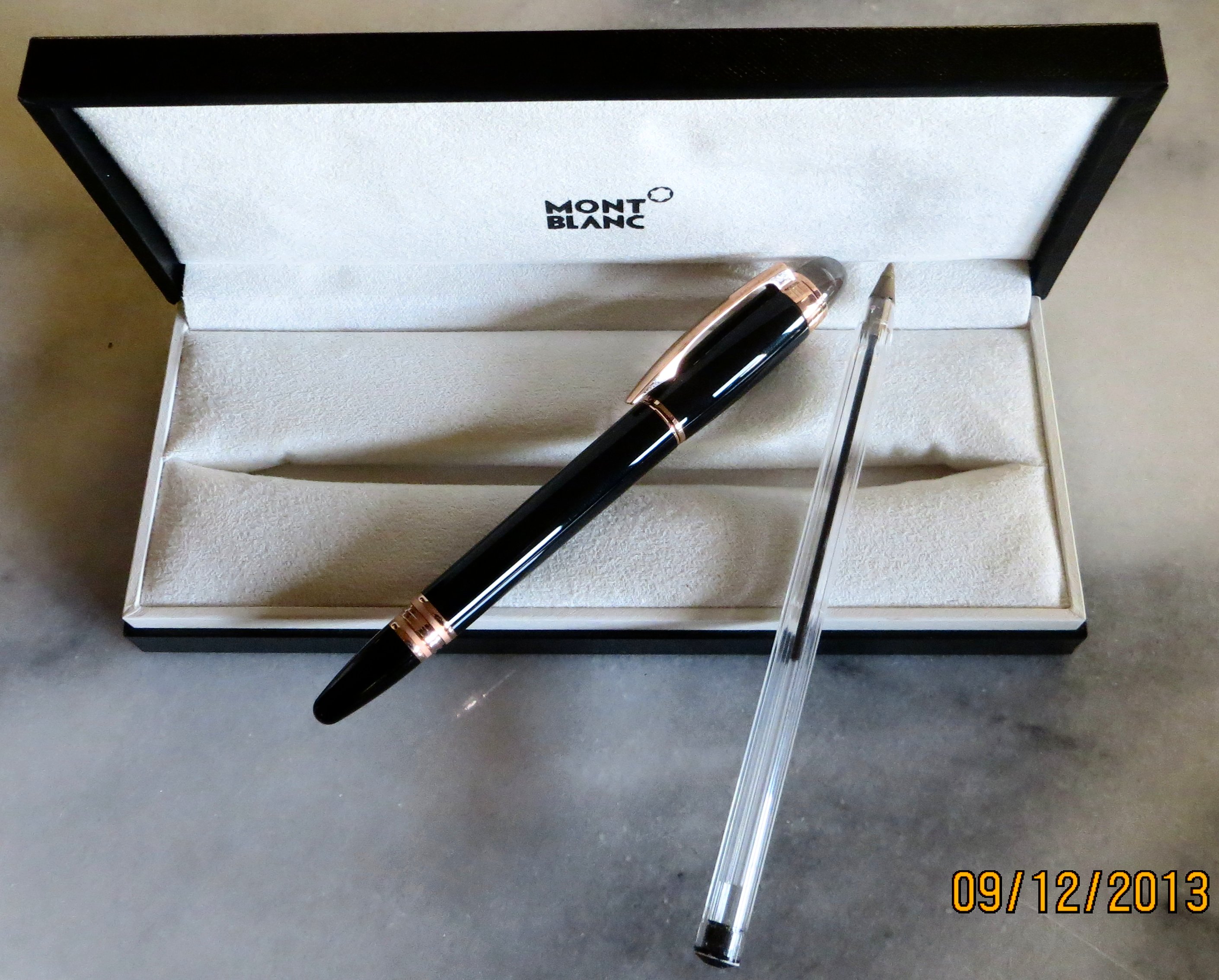
The man at the next table, still hunched over his report as his wife and two teenage daughters chatter and wave their arms, is making occasional notes with an ancient, chewed biro that looks as if it might have started life as a promotional gift from Kwik-Fit. If he really has to toil so hard for the whole journey (and is not just taking the soft option by ignoring his family), I feel that he deserves a decent pen. A Waterman, at least, if not a Mont Blanc. The two girls, both dressed in gauzy tops with lots of silver jewellery, huge eyes accentuated with expertly-applied make-up, are probably expecting to receive more of all of these things… and a lot more besides. The elder looks old enough to drive …. so Dad probably does need to keep on with the grafting. His wife, fingertips nail-barred to perfection, is sporadically reading on her Kindle between joining in the laughter and the chat. I doubt that Kindle vouchers will hack it for her, though. She, too, is wearing jewellery, much less than her daughters, but items of a different order from theirs: two sleek rings, one with a diamond embedded; a slender gold necklet; studs in her ears, which look suspiciously like diamonds. Her watch is probably gold, though mounted on a plain black leather strap. I’m sure she’d like an upgrade: a new gold watch for her, complete with a gold bracelet this time, please.
Time to hazard a guess at the tastes of the more inscrutable passengers now. The three companionable men sitting together: what would they like? They don’t look like football fans and, mercifully, aren’t discussing sport. One is reading the paper; one (I’m pleased to say, silently) listening to music; one sipping coffee and looking out of the window. No clues there. I could award them all new boxers and socks, but it wouldn’t be very enterprising of me. I think I’ll take a risk and give them all tickets for a murder mystery weekend. I know that Walton Hall, near Wakefield, has a couple coming up. I might even go to one of them myself. I may not be able to spot any latent murderers on this train, but there’s no harm in getting some of its occupants into the right frame of mind.
Cut-throat Charlie? No, far more sophisticated than that!

This photograph is of my dentist, Charlie. He’s been my dentist for about five years; before that, it was a colleague of his, called Dave. If I had a picture of Dave to post as well, you’d see that he was quite unlike Charlie. In fact, Dave struck me as being an almost archetypal specimen of the genus dentist: he was slight, wiry, nervy, cerebral and doing his bit to save the earth (a vegetarian, his main mode of transport was by bicycle and he once sang in a choir with my husband).
Charlie, on the other hand, although I consider him to be exceptionally skilled and an ornament to his profession, is no-one’s idea of a dentist. If I’d been shown a photo of him before I met him and asked to guess what he did for a living, I might have said that he was probably a bookmaker; or an estate agent; or a very burly jockey; or a rather emaciated sumo wrestler. If he’d been an actor, he would have made an ideal Magwitch in a dramatised version of Great Expectations.
Charlie obviously enjoys life. His main mode of transport is a motorbike in the summer, a substantial car (forgive me, I’m no good at brands) in winter. For a dentist, he dresses unconventionally, in leather jackets, jeans and trainers.
As my readers know, I like to write occasional pieces about interesting people and I’ve always found Charlie interesting. He’s fascinating to talk to, and I enjoy listening to his take on life while he pokes and pummels at my teeth. When I visited him yesterday, therefore (in tandem with my husband – we try to make our visits to the dentist two for the price of one), I asked if I might take his photograph, and explained about the blog. I gave him one of my Christina James postcards so that he could look up its url.
To my surprise and delight, I struck gold! Charlie is an avid reader of crime novels and was only too happy to have his photo taken. Better than that, he offered me an idea for a plot for my next novel. Not only was it excellent, but it was also based on his own scientific expertise: he trained as a biochemist before becoming a dentist. I promised him that I would use the plot and he said that he had several more up his sleeve when I’d exploited that one. I shan’t forget. Future visits to this dentist will be looked forward to with great anticipation, rather than with dread!
By this time, my husband had taken my place in the chair, but, since Charlie and I were still deep in conversation, I didn’t return to the waiting-room. We started talking about trust in professionals and how people always expect professional men and women to have unimpeachable moral standards, which is why the exposure of serial murderers such as Harold Shipman and Beverley Allitt shocks us to the core. (The Hannibal Lecter novels are actually based on this norm.)
With his eye twinkling and with his customary geniality, Charlie announced that he’d once thought of how to commit the perfect murder. It would be based on his scientific knowledge and next to impossible to detect. (I won’t give away any more, as the plot that he offered me makes use of the same information.) By this time, I was completely rapt. My husband, however, was still lying prone in the surgery chair and showing some signs of nerves.
“Do you think we should change our dentist?” he asked, once we were back out in the street.
A flat cap is not just for t’ ‘ead, tha knows…

Nowt like a reet wild book signin’…
Ian McMillan, South Yorkshire’s own shrewd and very funny poet (the ‘bard of Barnsley’ and ‘poet in residence’ at Barnsley FC), gave a book launch and signing session at Rickaro Books in Horbury yesterday evening. It was an event that I’d been looking forward to for a long time, having heard Ian perform once before, at a school. He is a performance poet second to none.
I arrived early at the shop with my husband. Ian was already there, entertaining all the other early arrivals. Even Richard Knowles, the owner of Rickaro Books, seemed excited. Richard is professionally lugubrious: his catch-phrase when I worked with him a quarter of a century ago was ‘Life is Cricklewood, not Hollywood.’ Yet he’d invested in a big box of Cadbury’s Celebrations (only slightly dimming the gesture by explaining that they were left over from Trick or Treat night and also instructing his guests to take the Snickers chocolates first, as he doesn’t like them) and shared his special ‘bookseller’s provender’- malted milk chocolate biscuits – with Ian. He had even brought along his flat cap for the occasion.
At this point, I should perhaps explain that Ian’s new book, a collaboration with eminent cartoonist Tony Husband, is entitled 101 Uses for a Flat Cap. Published by Dalesman, whose account manager was also at the meeting – he’d kindly brought along copies of all Ian’s books – this latest offering from Ian and Tony does exactly what it says on the tin… er, sorry, book. It consists of 101 pieces about the trademark Yorkshire flat cap, inserted by its author into every possible historical and practical situation: ‘All made up! Every one of them!’ Ian kept on cheerfully insisting. He read several of these poems as well as, with passion, a more poignant extract from another recent title, The Tale of Walter the Pencil Man. Dedicated to his great uncle, Joseph Fletcher, who died at the Somme aged twenty-four, this is the reflective and touching tale of a Yorkshire pit village lad who tries with his pencil and paper to cope with what is happening around him as he fights on the First World War battlefields. It’s very topical, of course, and I’m sure will enjoy many sales this year and next, as we approach the centenary of the start of the Great War.
Tony Husband, Ian’s illustrator, accompanied him. It was a real thrill to meet him: he’s a very accomplished, not to say distinguished, artist, who draws for several famous publications, including Private Eye (Yobs), and has been Cartoonist of the Year several times. He told me that he and Ian Hislop arrived at the Eye at about the same time, twenty-five years ago (about the same time that Richard and I ceased to be colleagues!). Tony worked fast and incredibly hard all evening: he not only signed every book that was purchased, but drew a picture in it as well; he also drew a picture to accompany each of the poems, simultaneously with Ian’s recitation, and distributed them among members of the audience afterwards. The picture he gave to me, which I shall certainly have framed, illustrates the poem entitled ‘The Flat Cap Scene from King Lear (now lost)’. It’s my particular favourite, not least because it’s arch about Lincolnshire (my home county) and Norfolk (home of my publisher, Salt), though Ian did qualify his comments by saying that he loved South Lincolnshire and even recollected an event that he’d given at ‘one of the Gedneys’ – impressive, as the Gedneys are very small villages in the back of beyond.
Here’s a taster of the poem; the rest is hilarious, but you’ll need to buy the book to find out! (Plug, plug…)
Lear: Oh fool, what dost sport upon thy head?
It seems exceeding flat and dull, i’faith,
As Lincolnshire and Norfolk, two flat places in the East.
This occasion was everything that an event in a bookshop should be: convivial, hospitable (Richard’s wife Carole provided a delicious and warming mulled wine) and humorous, with a great deal of ad libbing from both Ian McMillan and Tony Husband, as well as from members of the audience. It was extremely well attended and I’m sure that, like us, everyone who was there went home happy and enriched by all the pleasures that it brought. Richard also used the occasion to promote BOOKS ARE MY BAG, an initiative that is close to my heart, as readers of this blog will know.
And there was no charge for attending: certain chain booksellers, please take note!
Very many thanks to Rickaro Books, Tony and Ian, for an evening to remember:

The fabulous Tony Husband, putting me in the picture…

Richard Knowles, of Rickaro Books, looking for the 102nd use of a flat cap…

Visual and verbal, speaking ‘louder than a gun’…

Tony Husband, finding himself in no-man’s-land…

The Flat Cap Scene from ‘King Lear’ (now lost)
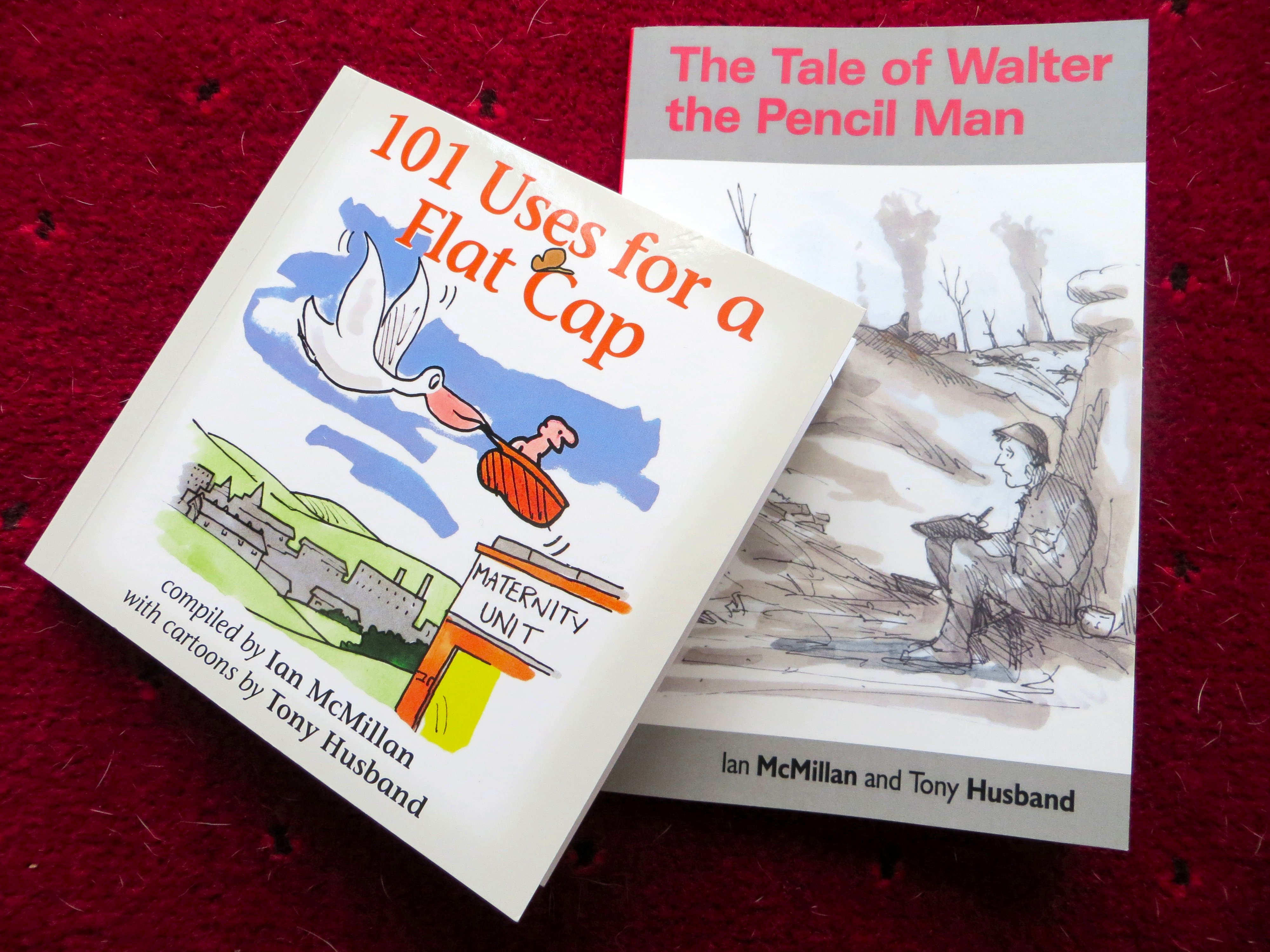
A couple of lovely collaborations, by a couple of lovely collaborators…

A precious signed first edition! Love you, Tony and Ian! 🙂
Into Lincolnshire, for the Wolds Words Writers’ Workshop…

Louth Library, Lincolnshire
The writers’ workshop that my husband and I jointly led on Friday 18th October was part of the thirteenth Wolds Words Festival. It is a flourishing event that takes place annually in and around the pretty market town of Louth. The workshop was scheduled in the library, an impressively busy place in which the considerable bookstock was displayed most invitingly. The library staff were all great: extremely helpful, both to those attending the workshop and to their regular library users. It’s one of the most successful small libraries I’ve ever visited and clearly the librarians work hard to achieve this.
We said that we would work with up to twelve participants and the workshop quickly sold out (though not everyone actually made it on the day). We were asked to focus on two aspects of writing: crime and using local history in fiction. We heard that a workshop on plot construction that had taken place on the previous day had also been very successful.
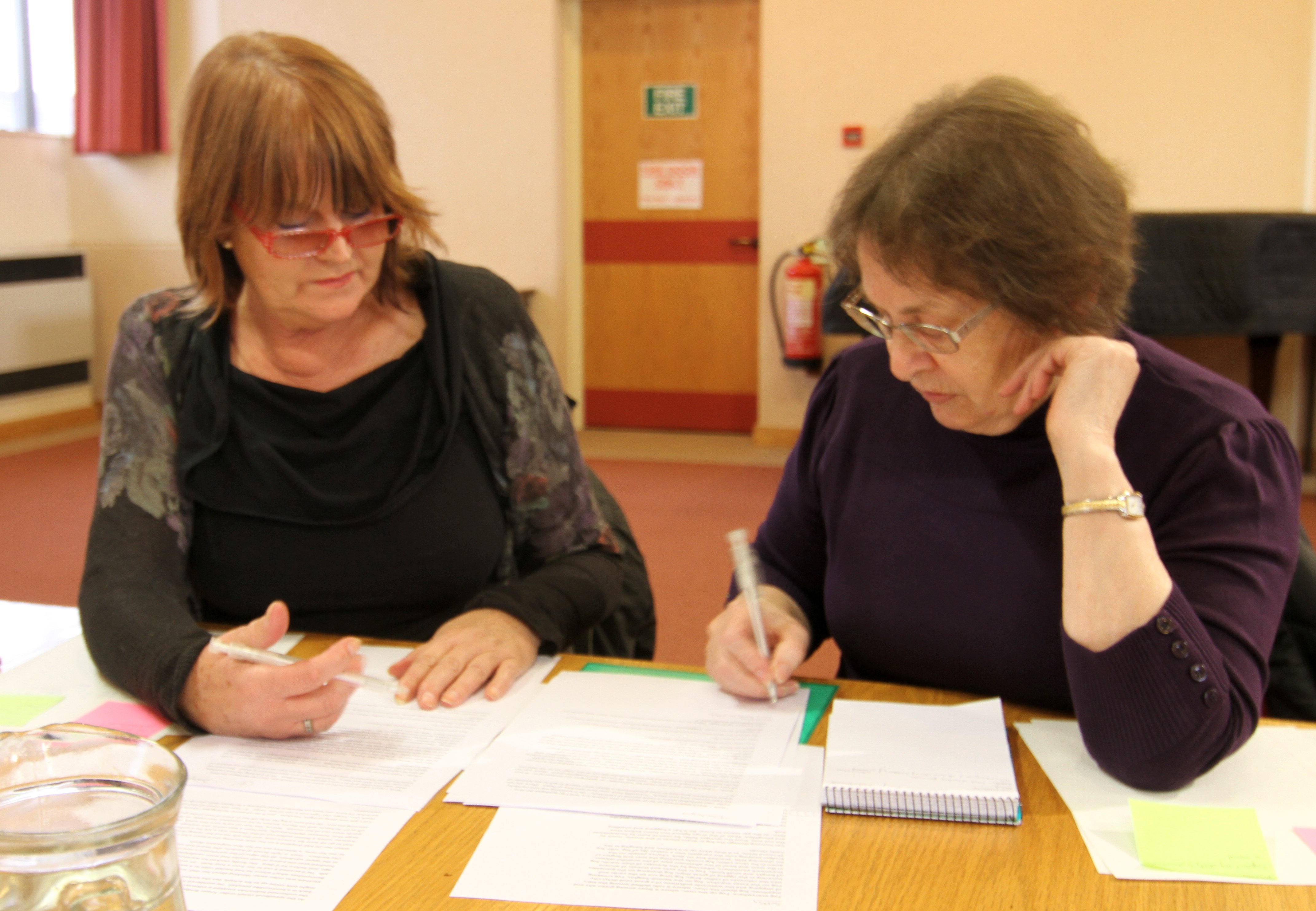
Wolds Writers’ Workshop
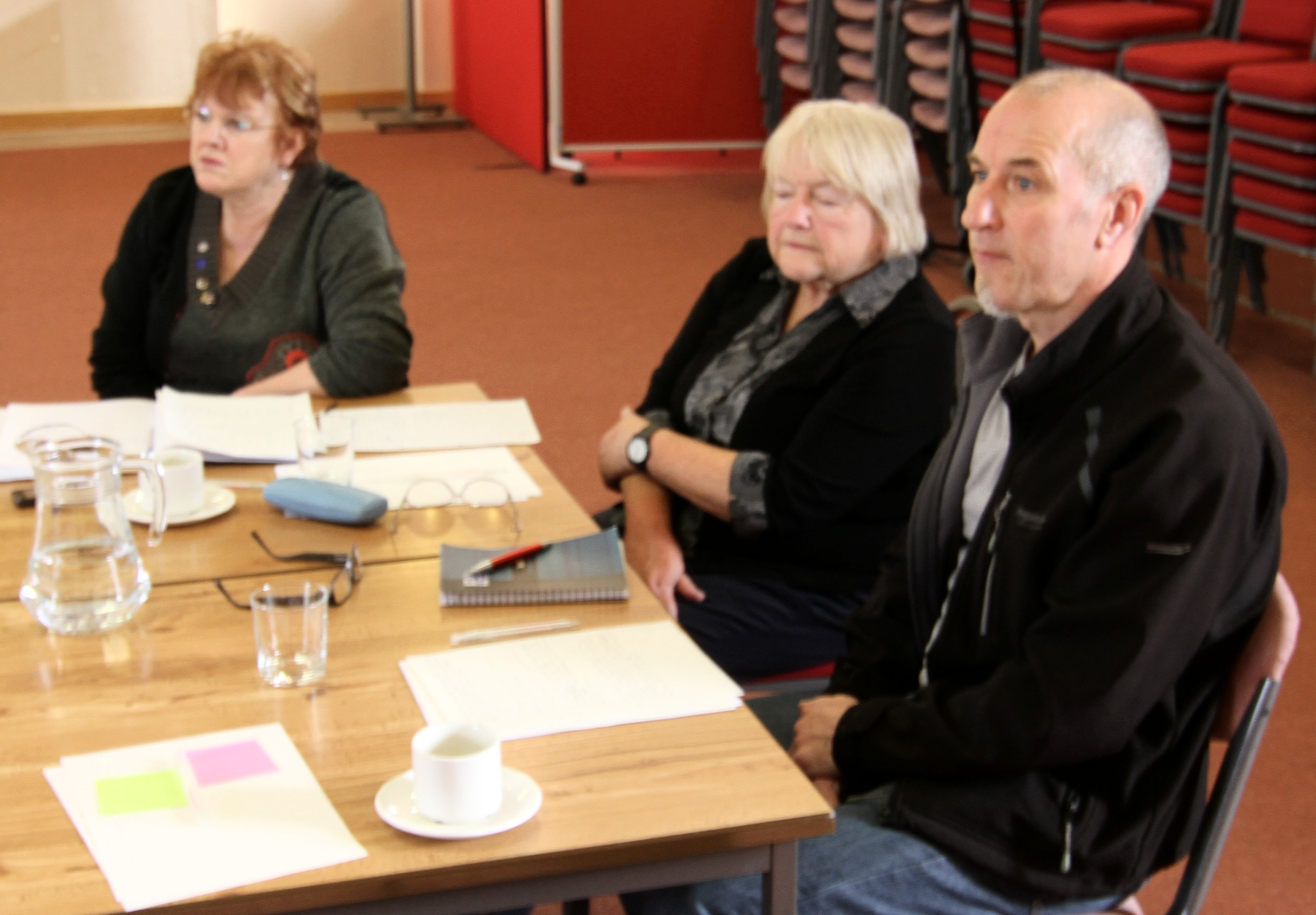
Wolds Writers’ Workshop
As a warming-up exercise, I gave the group some of my own tips on how to get published. As I’ve already offered some of these in this blog and shall be writing about others in more detail in future posts, I’m not covering them again here. Similarly, I’m not including my tips on how to incorporate local history into fiction here, saving them for a separate post.

Wolds Writers’ Workshop
We moved on to discussing why the participants had chosen the workshop and what they hoped to get out of it. Their answers were, perhaps not too surprisingly, very similar, and boiled down to a single joint ambition with three further ‘sub-wishes’. The over-arching goal of everyone present was to see their work published. One of the writers had already had poems published in anthologies; one had published a factual account of the sea some twenty years before and one had contributed short stories to an online magazine. None of the others had had work published. Two had written novels, but neither had been successful in finding a publisher.
The ‘sub-wishes’ were perhaps even more interesting: they each concerned confidence, or the lack of it. They included the expressed desire to write something that was worth reading ‘at all’; the fear that a certain flaw – in one case, an inability to write convincing dialogue – was an insurmountable stumbling-block; and the suspicion that the author’s take on life was too left-field ever to find a publisher. To these doubts, I replied that almost everyone can write something worth reading if they work at it hard enough; that ‘flaws’ can be overcome or minimised, again with hard work; and that many readers prefer a more unusual viewpoint to something more conventional, though I agreed that this may make it more difficult to attract a traditional publisher.

Wolds Writers’ Workshop
Next we read and explored four short passages from very different novels, each demonstrating some particular aspect of writing. We looked at the ‘fog’ passage from Bleak House as an example of creating atmosphere; Virginia Woolf’s description of the Ramsays’ holiday house in To the Lighthouse to establish a sense of place; a passage from Where the Devil Can’t Go, a novel by Anya Lipska, a talented new crime writer whom I’ve written about previously in the blog, that depicts her heroine’s character; and finally a piece of dialogue from my own novel, In the Family. We each took forty minutes to write a short passage following on from one of these, or alternatively any short fictional piece of our own choosing. The writings were shuffled and passed around until we had each read all of the passages; no-one knew who had written which. Each of us then told the others what we liked about the piece that we had in front of us at the end. We all found plenty to praise, which I think confirmed resoundingly that there is a writer in almost everyone. I should very much like to thank all the writers for their really enthusiastic and participative response to the occasion.

Wrights of Louth, Bookshop
Copies of my books were sold at the event by the local bookshop in Louth, which I also visited afterwards. One of its distinguishing features is that its sign hangs upside down! There is a story behind this: The shop used to be a general grocery store of the kind that I remember as a child, but which has completely disappeared now. Its owner, a man called Bill Platt, who ran it for many years from 1913 until he was in his seventies, was famed for his knowledge of local history as well as for the quality of his shop in Little Eastgate. He had business acumen, too. When the sign over his shop doorway blew down in a storm, it was affixed by accident the wrong way up; Bill recognised that it quickly became a talking point and therefore a good advert and simply left it like that. A local businessman, Mick Wright, who, with his wife Carol, turned the store into a newsagent’s and bookshop, has continued the tradition!

In conversation with bookshop owner Dean Wright
I had a long and pleasant conversation with Mick and his joint owner son Dean, and was extremely impressed by their can-do attitude towards running a bookshop in modern times. Their strategy is to diversify without abandoning the bookshop’s essential character and to provide exemplary service; they specialise in books about Lincolnshire. I purchased several by local authors, and was extremely grateful to be given a discount!
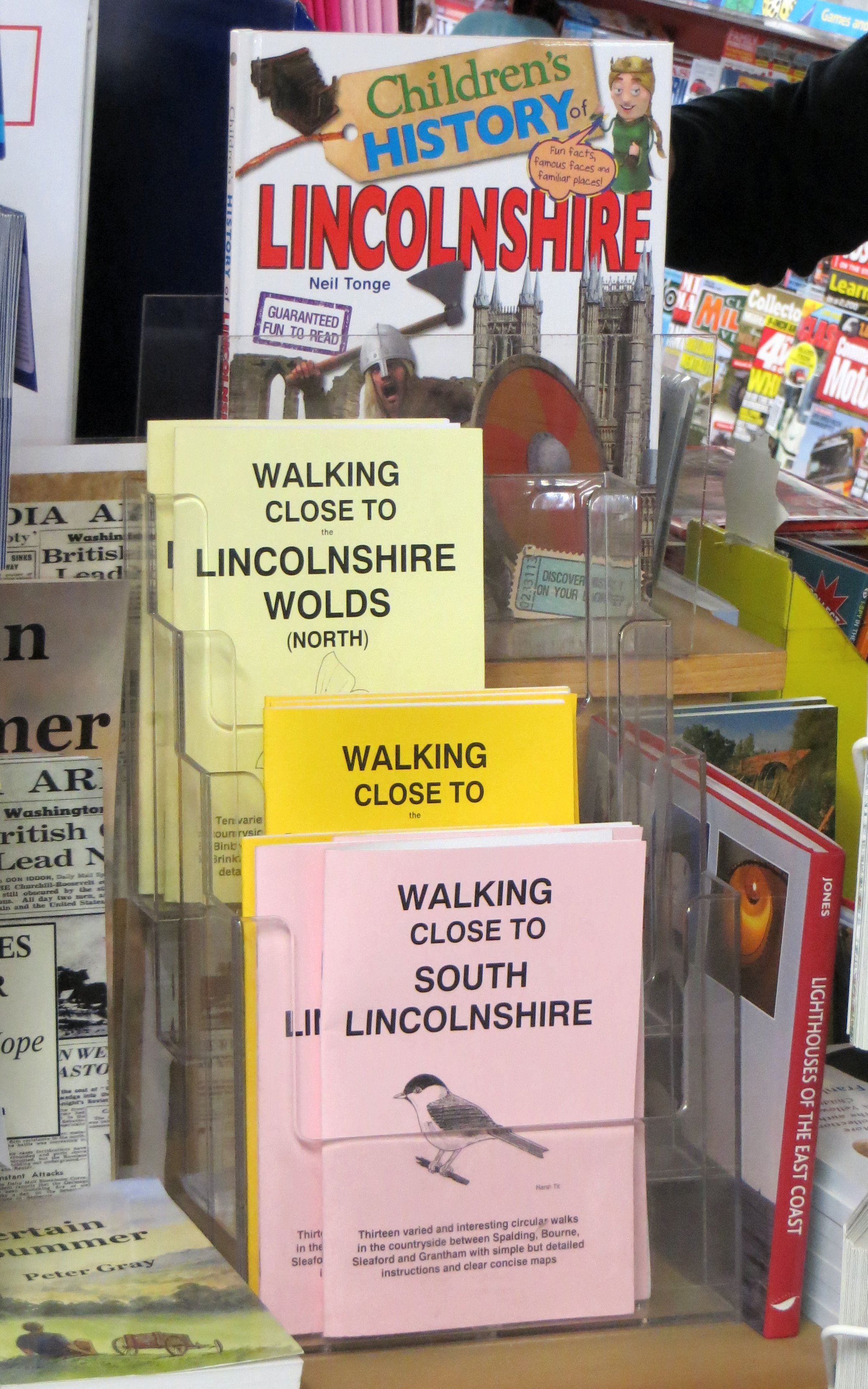
Speciality: Lincolnshire!
As you can see, I’ve included a few pictures of the event, the library and the bookshop. I’d never been to Louth before: it is quite a distance from Spalding. It is a lovely old market town; having now discovered it, I certainly plan to return. If you are ever in the area, it is well worth a visit – and don’t forget to take in the library and the bookshop while you’re there!
 Christina James, crime novelist