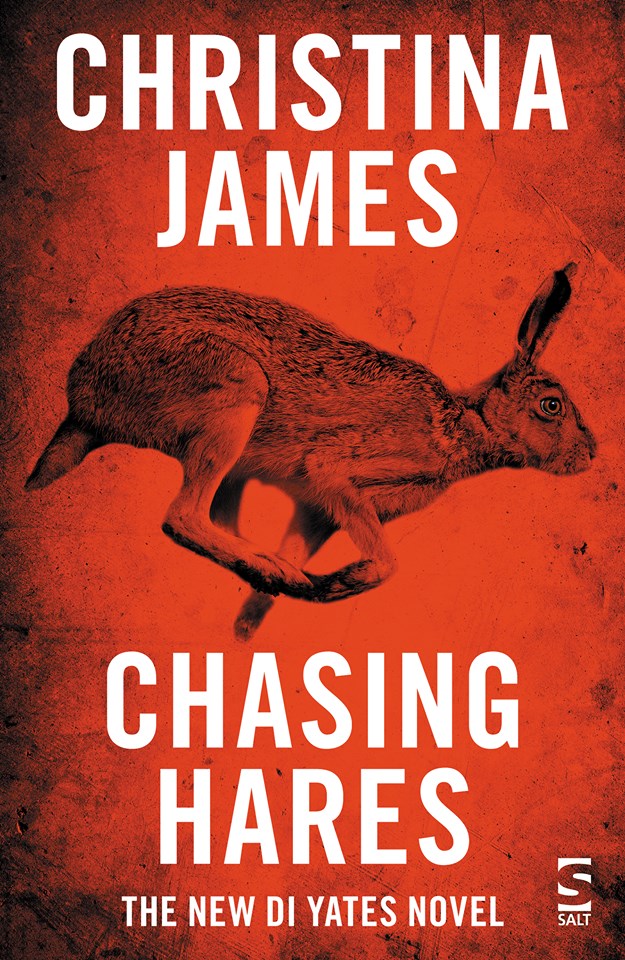


Forget the storm – the welcome in Bookmark is beautifully warm!

A warm welcome from Christine Hanson, owner of Bookmark
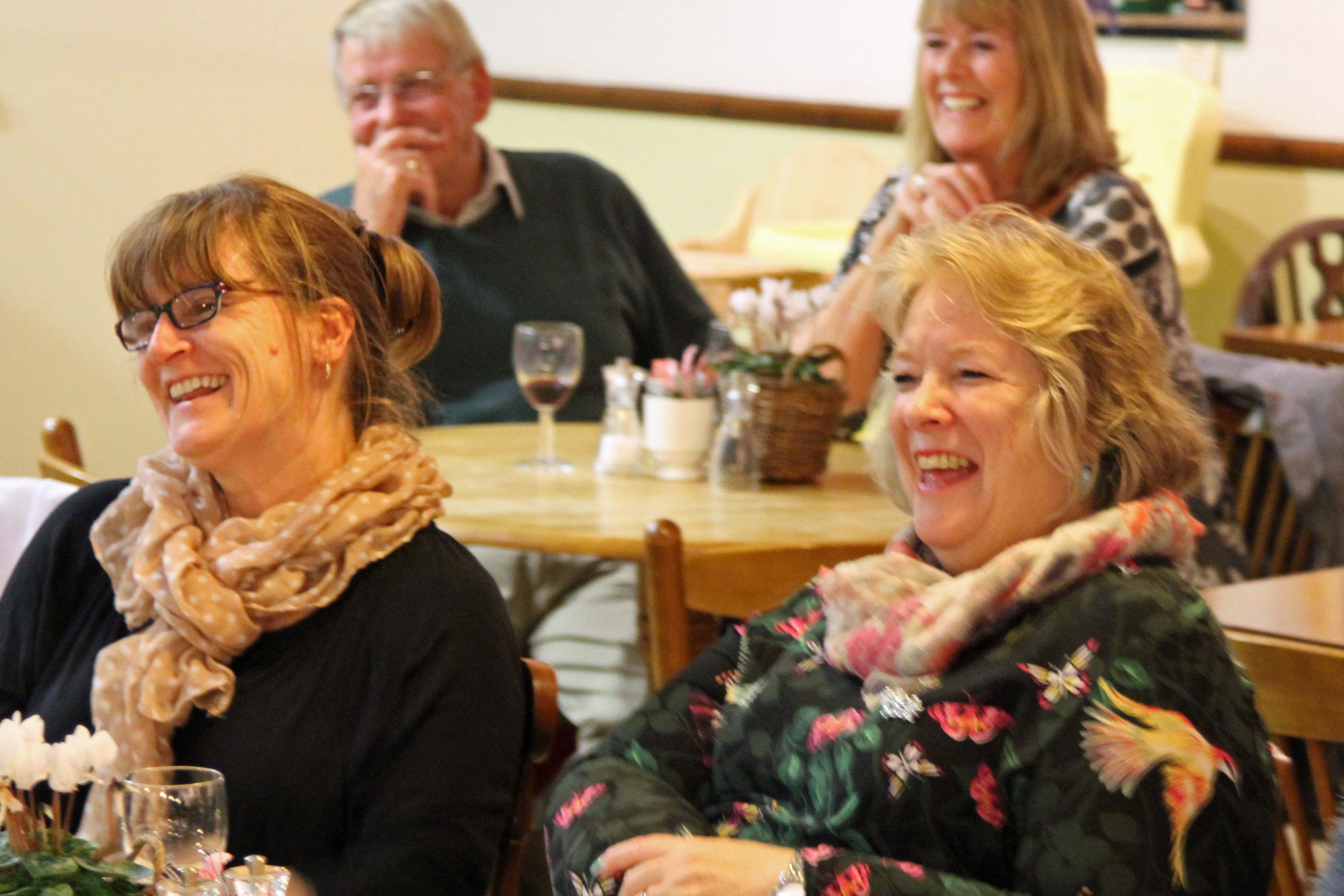
The Crossing seems fated to attract stormy weather! Recently, I described travelling through squalls and heavy rain to reach the pre-launch event at Harlow Carr. Yesterday, the day of the launch proper, a dual event organised by Bookmark in Spalding (Christine and Sam were wonderful as always!) dawned bright and clear, but by the time I’d arrived in Spalding it was starting to rain. The showers rapidly exploded into a torrential downpour which deterred all but the most stalwart shoppers, even though it was market day. By the evening, the rain had slackened but been replaced by gale force winds.
The day-time signing session had been as successful as possible under the circumstances. I enjoyed talking to some interesting people and was fascinated by what they had to say, but I was very nervous about the evening event. Though I knew the shop had sold a lot of tickets, I doubted that many members of my audience would want to venture out. Some, I knew, would have to travel quite a distance to get there.
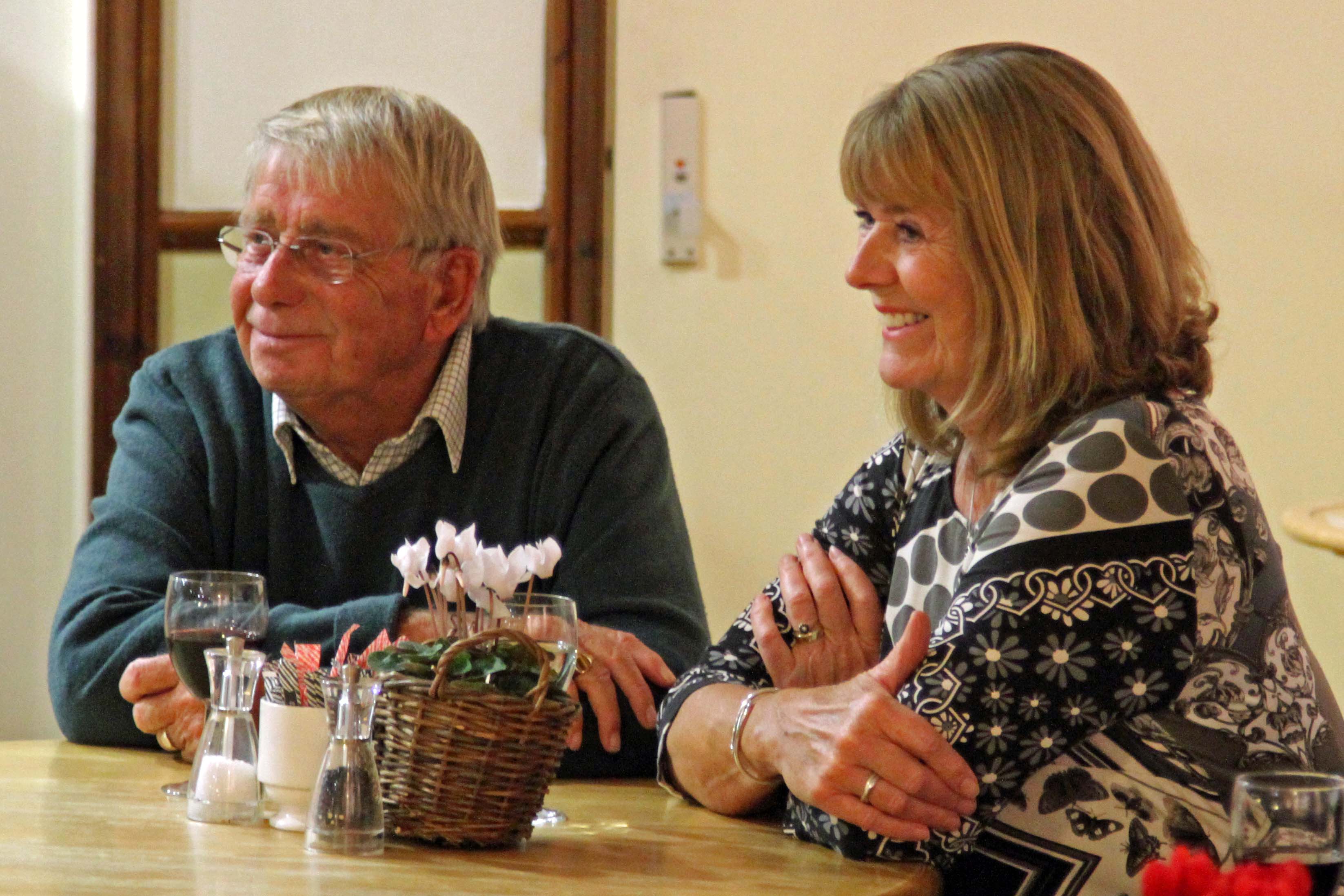
Inexcusably, considering my antecedents, I had reckoned without the influence of true Lincolnshire grit! Everyone who had bought a ticket showed up, and there were a few on-spec visitors as well. No-one even bothered to mention the weather. The audience was among the best I have ever had: lively, engaged, perceptive and eloquent. Several of them had already bought The Crossing, even though it was first displayed in the shop only on Monday, and many more bought it at the event (and some of my other books, as well). I was impressed by the stamina shown by Peter, a member of Bookmark’s flourishing book club, who had sat down to read The Crossing solidly all day, finally finishing it a couple of hours before the event, so that he could talk about it.

Peter, having read The Crossing in a day!
I was both delighted and grateful to learn that the book club has chosen The Crossing as its next title, apparently the second time it has opted for a DI Yates novel.

A couple of readings
I told them a bit about how I’d come to write the book, especially the real-life event on which the opening chapter is based.

Background to the story of the first chapter
I think I’ve already mentioned it on this blog, but, for new visitors, here are a few details: When my great aunt was the crossing-keeper at a remote hamlet called Sutterton Dowdyke, there was a terrible railway accident. The Peterborough to Skegness train, in heavy fog, ploughed into a lorry standing on the crossing, derailing some of the carriages, which crashed into my great aunt’s tied lodge-house and turned it round on its foundations. She was physically unhurt, but her mind was affected for the rest of her life. In the novel, the accident is the catalyst for the whole chain of events that follows. A strong theme throughout is imprisonment and how a person’s character is affected when completely subjugated to someone else’s will: what integrity compromises must such a prisoner be obliged to make in order to survive?


The Bookmark audience and I talked about this. We also discussed memory, place, old Spalding, what sort of research I carry out when writing the books, books in prisons, other books we like to read and the relationship between fact, memory and fiction. We concluded by discussing significant events in their lives that perhaps they’d like to write about.

add

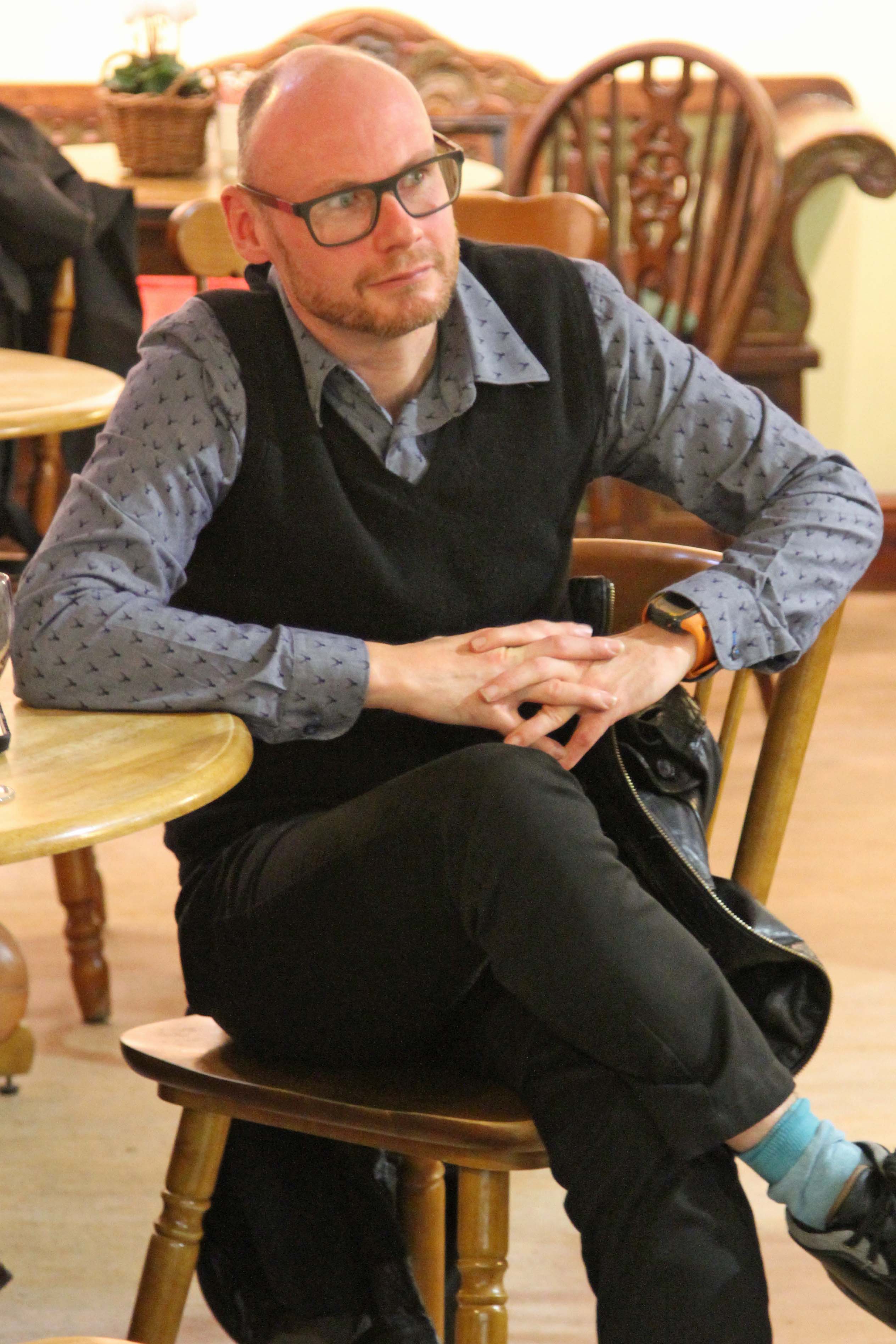


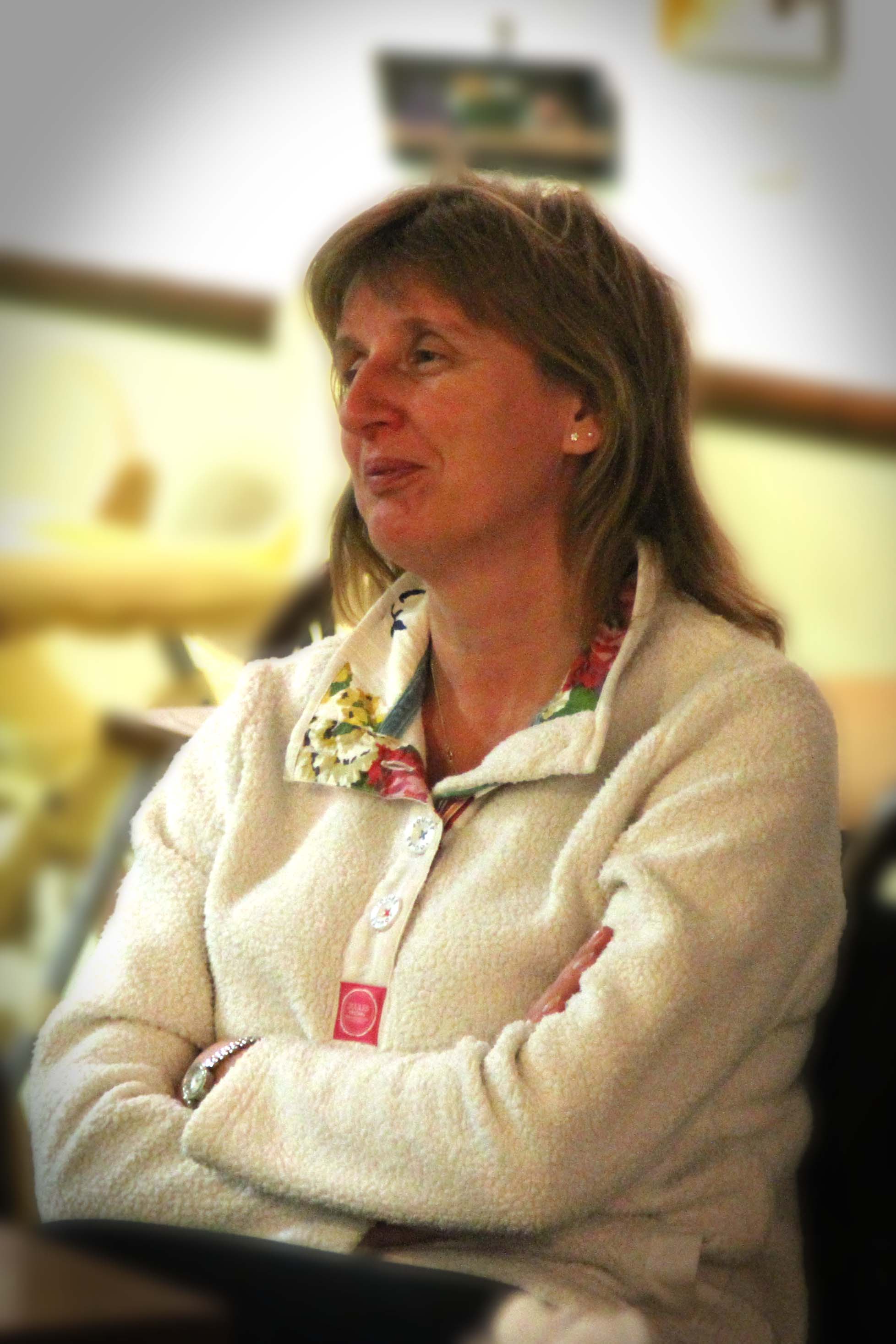
One very enjoyable moment stands out: a question from the floor to put the speaker on the spot! “What do you like to read?” Now I simply can’t resist buying books when I find myself in a bookshop and, since I had my purchases from Bookmark tucked under the table, I enjoyed sharing my tastes with a group of very like-minded people – interaction doesn’t get much better than that. 
I’d like to say how grateful I am to everyone who came yesterday evening, both for braving the elements and for all your wonderful contributions to the conversation. And heartfelt thanks, of course, to Christine and Sam.
I shall be popping in to Bookmark briefly again to sign a few more books on 17th December, if any of my readers is interested. If so, I look forward to meeting you then.
Stimulus for a story…

In South Lincolnshire on the afternoon of 28th January 1970, the countryside was enveloped in thick, freezing fog. It made the roads treacherous and there were protracted delays on the trains. Driving in country lanes was especially hazardous. Although some level crossings had already been fitted with so-called ‘continental barriers’, with relatively sophisticated warning systems, most were still simple five-barred gates operated manually. The practice in country districts where there wasn’t much traffic was to leave the gates closed against the road. Vehicles wishing to cross had to summon the crossing-keeper, who usually resided in an adjacent lodge-house tied to the job. Such an arrangement existed at Sutterton Dowdyke, a tiny hamlet a few miles south of Boston and east of the A16.
On 28th January, the regular Peterborough to Skegness train was considerably delayed by the fog. The driver of a tanker lorry owned by the council who regularly travelled on Dowdyke Road rang the bell to summon the crossing keeper to open the gates. The driver and his mate had been sent to empty a cesspit in the area and, task completed, were now returning to their depot. The crossing keeper, a woman in late middle age, came out and chatted with them briefly before opening the gates. The driver eased the lorry onto the crossing (most crossings at the time were notoriously bumpy) and was sitting right in the middle of it when the train came thundering through the fog, which had muffled the noise it was making until this moment, and flung the lorry into the air. The train was derailed. It ploughed into the lodge-house and turned the building one hundred and eighty degrees on its foundations. The lorry driver’s mate was killed instantly; the lorry driver himself was taken to hospital, critically injured.
Miraculously, the crossing-keeper was not hurt, but collapsed at the scene and was also taken to hospital, badly shocked.
My family and I first learned of the accident when watching the nine o’clock news that evening. The site of the accident wasn’t named, but my father recognised the lodge-house. We drove there immediately and then on to the Pilgrim Hospital to visit the crossing keeper. She was my father’s aunt and my own great-aunt.
My memories of that night sowed the first seeds of the plot of The Crossing, the fourth DI Yates novel, which I have just completed.
Into the lists…
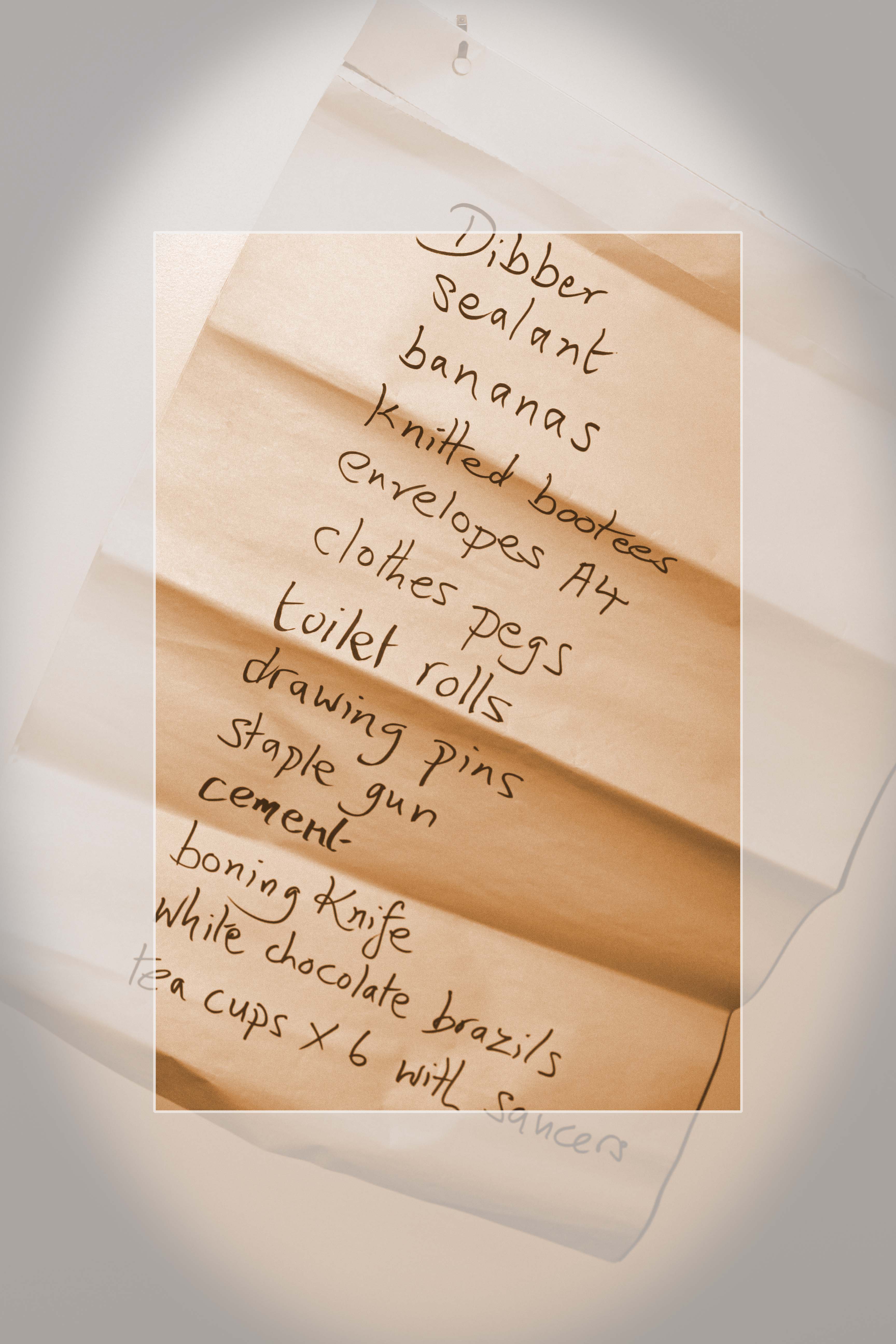
The magazine that accompanied Saturday’s edition of The Times was full of lists. Each of the regular journalists contributed an article based on them, presumably to show solidarity with a population that is currently either toiling away at compiling Christmas lists or trudging through the streets to fulfil them as December sets in and we realise – indeed are perpetually being reminded by the media – that there are only x shopping days left. To be honest, the result is a bit contrived, though some of the lists – especially Caitlin Moran’s – are great fun. That said, I’ve long had a fascination with lists myself. Consciously, it dates back to my student days, when I remember that my tutor drew attention to James Joyce’s magnificent series of lists in Ulysses. “They may look effortless or random,” he told us, in his mildly admonishing way, “but just try writing lists to equal them yourself. You’ll find out then that only a genius can produce lists like Joyce’s.”
Whatever the truth of this, some of Joyce’s lists are indeed difficult to surpass. One of my favourites is the list that begins as a pastiche of a passage from the King James Bible and reaches its climax with the following description of Leopold Bloom, fleeing through the streets of Dublin from a hostile reception:
“And they beheld Him even Him, ben Bloom Elijah, amid clouds of angels ascend to the glory of the brightness at an angle of fortyfive degrees over Donohoe’s in Little Green Street like a shot off a shovel.”
Lists were a part of my life long before I read that, of course. I belonged to a generation whose mothers sent us up to the corner shop at a very tender age, a note tucked into a purse that also contained exactly the right money to pay for the items listed. And, as well as shopping lists and Christmas lists, there were birthday lists, lists of people you wanted to come to your party (always more than you were allowed to invite), lists of books you wanted from the library and, on a more mundane note, the elaborate lists of ‘essential’ clothes and equipment that were part of the rite of passage of first attending a grammar school. Later, as my friends and I married, there were wedding lists – a phenomenon to which I’ve never been able to reconcile myself. The French go in for them in an even bigger way than we do: the poshest linen and china shops in France all carry ‘listes de mariages’ signs in the windows. But I’ve always thought that wedding lists are too specific, and therefore slightly off-colour, not to say mercenary. For example, it may be fine to tell your future wedding guests that you would like tea-cups, but it surprises me that accepted etiquette also allows you to specify ‘Wedgwood Daisy Tea Story’, or some such. It’s like smiling at someone while you’re simultaneously twisting her arm halfway up her back: ‘You will buy me this china, each set of six cups and saucers costing an eye-watering £240, because I have invited you to my wedding.’
Nevertheless, lists, both your own and other people’s, are mesmerising, and since I’m sure The Times has not devoted a whole magazine to them on a whim, I’m clearly not alone in thinking so. I’m not sure why this should be. Perhaps it’s because a list combines comprehensiveness with brevity. An eclectic list also allows the reader a tantalising, if puzzling, glimpse of its author’s mind:
“The time has come,” the Walrus said, “To talk of many things: Of shoes–and ships–and sealing-wax– Of cabbages–and kings– And why the sea is boiling hot– And whether pigs have wings.”
Lists can be sinister as well as humorous; they can help you to cope with everyday irritations; they can soothe by striking a common chord with the rest of humanity:
“I’ve got a little list–I’ve got a little list
Of society offenders who might well be underground,
And who never would be missed–who never would be missed!
There’s the pestilential nuisances who write for autographs–
All people who have flabby hands and irritating laughs–
All children who are up in dates, and floor you with ’em flat–
All persons who in shaking hands, shake hands with you like _that_–
And all third persons who on spoiling tête-a-têtes insist–
They’d none of ’em be missed–they’d none of ’em be missed!”
And despite what my tutor averred, I think that compiling a list is an excellent way of achieving literary distinction without having to try too hard. It allows its author to give free rein to his or her imagination without having to take on the full responsibility of plot, characterisation or format. In order to create a list all you need to do is, as the saying goes, empty your head on to the paper. Though, with even half an eye on prosperity, you’re likely to want to tweak your list a little before you show it to anyone else.
I’m going to indulge myself by concluding with a bit of a digression. It’s about the word ‘list’ itself. It’s one of those words that has multiple meanings. Thus boats list when they’re sinking. Knights jousted in the lists. And ‘list’ was an archaic word for ‘please’. I love words like this! And since today’s has been a post full of quotations, I’ve chosen a suitably gnomic one that uses a different meaning for list, to conclude:
“Marvel not that I said unto thee, Ye must be born again. The wind bloweth where it listeth, and thou hearest the sound thereof, but canst not tell whence it cometh, and whither it goeth: so is every one that is born of the Spirit. Nicodemus answered and said unto him, ‘How can these things be?’”.
Happy Christmas shopping! Don’t forget your list – you might not survive Christmas without it! 😉
From Wakefield to Covent Garden, ‘Sausage Hall’ has found great friends!

Launching ‘Sausage Hall’ at Wakefield
This is the final post on my launch week activities for Sausage Hall. I’m covering the last two events: Tea at Sausage Hall, an imaginative tea-party given last Wednesday by Alison Cassels, Lynne Holroyd, Claire Pickering and their colleagues at the Wakefield Library at Wakefield One, which regular readers of this blog will know has provided me with granite-strength support ever since In the Family was published two years ago,

Tea at Sausage Hall (And yes, there was cake!)
and an evening of conversation and readings at the Covent Garden branch of Waterstones, rounding off the celebrations with a London launch on Thursday.
Ever resourceful, Alison and her team provided sausage rolls, cake (Yes, there was cake!) and biscuits for the tea party. (Her e-mail to me when organising the event reads ‘Can you put chocolate cake in the title of your next book?’)

Lynne Holroyd, the liveliest purveyor of refreshments I’ve ever known!
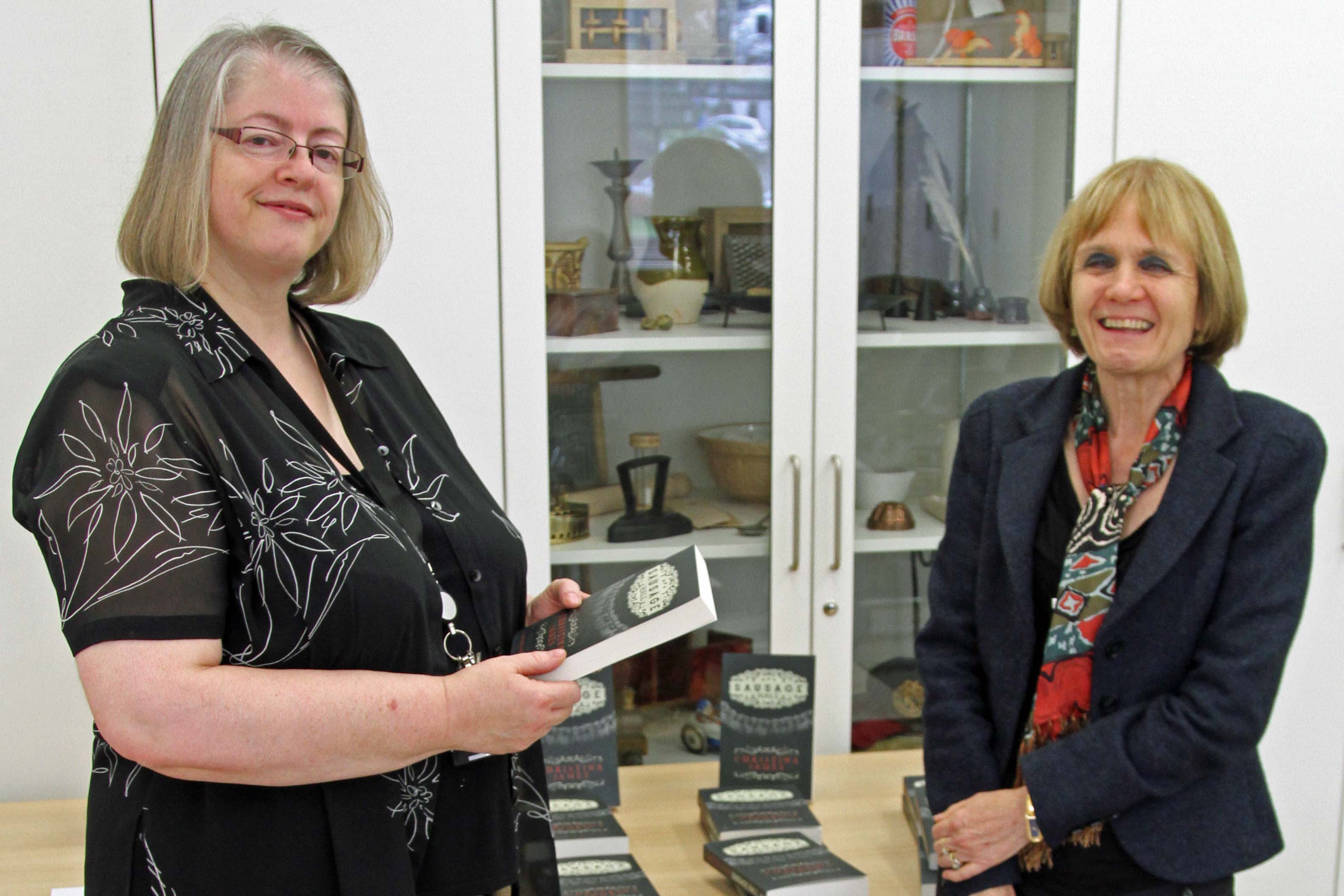
A warm welcome, as always, from Alison Cassels
As always, she promoted the occasion superlatively well and attracted a lively and engaging audience, amongst whom were old friends (such as Marjorie and Pauline – both also fab visitors to my blog) from the library’s book club, as well as many interesting new faces.
There’s obviously a lively and diverse events programme at Wakefield One: under the table bearing the tea-cups was a box containing a plastic skeleton (I was rather disappointed that someone arrived to remove it, as a suitable visual aid never goes amiss), while high on one of the shelves was a stuffed green parrot in a glass case. (My husband dared me to say ‘Norwegian Green? Is it nailed to its perch?’, but, though tempted, I’m afraid I failed to rise to the occasion, having on my mind things other than late parrots gone to meet their maker.)
Wakefield One audiences are truly wonderful.
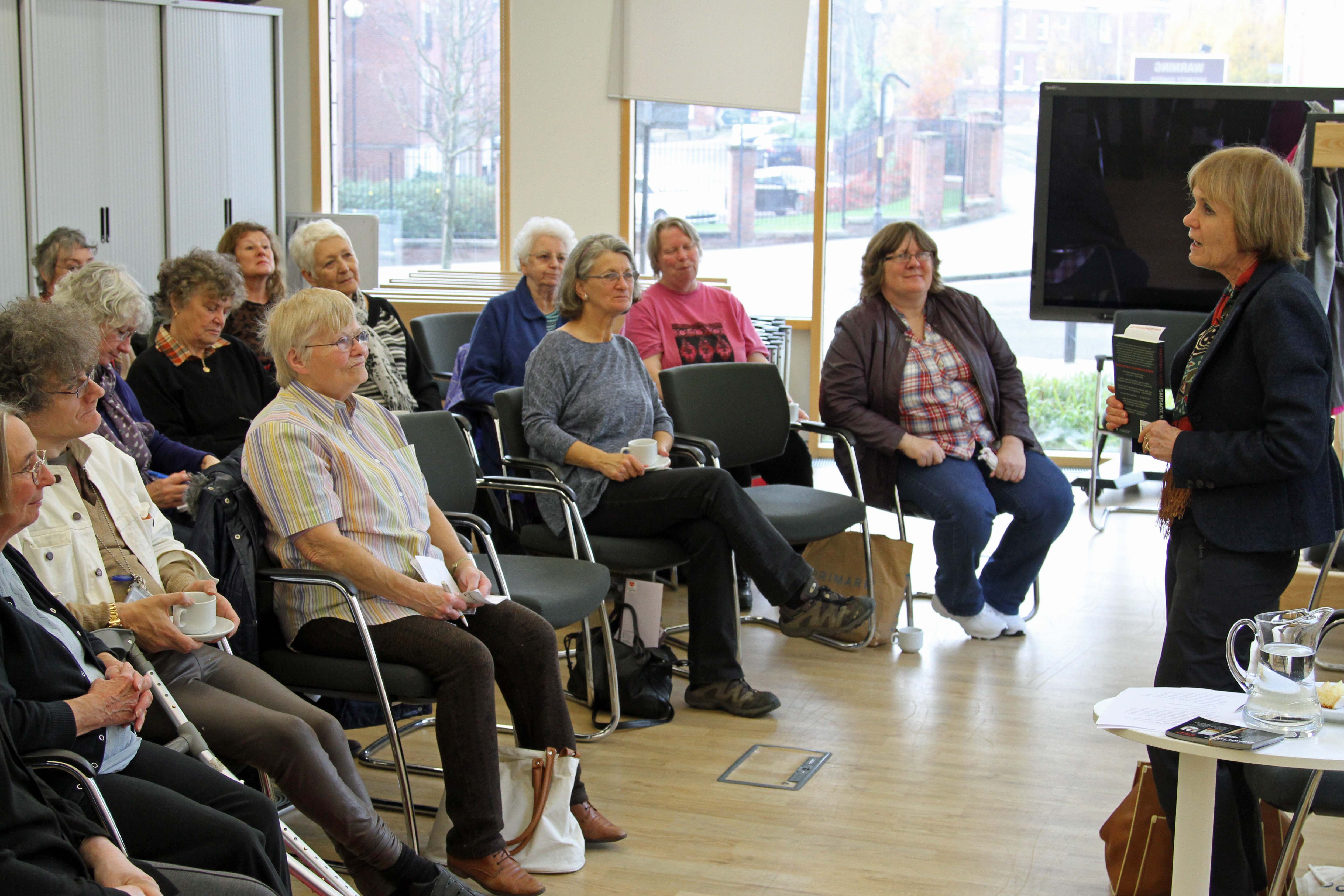

They are united in their love of books and reading, and not afraid to tell it how it is. I’m delighted that they like my novels, because they would certainly tell me if they didn’t – during the course of the afternoon, they told me exactly what they thought of the work of a writer who is much better known than I am! As well as being extremely perspicacious, they’re fun and they like to have fun.

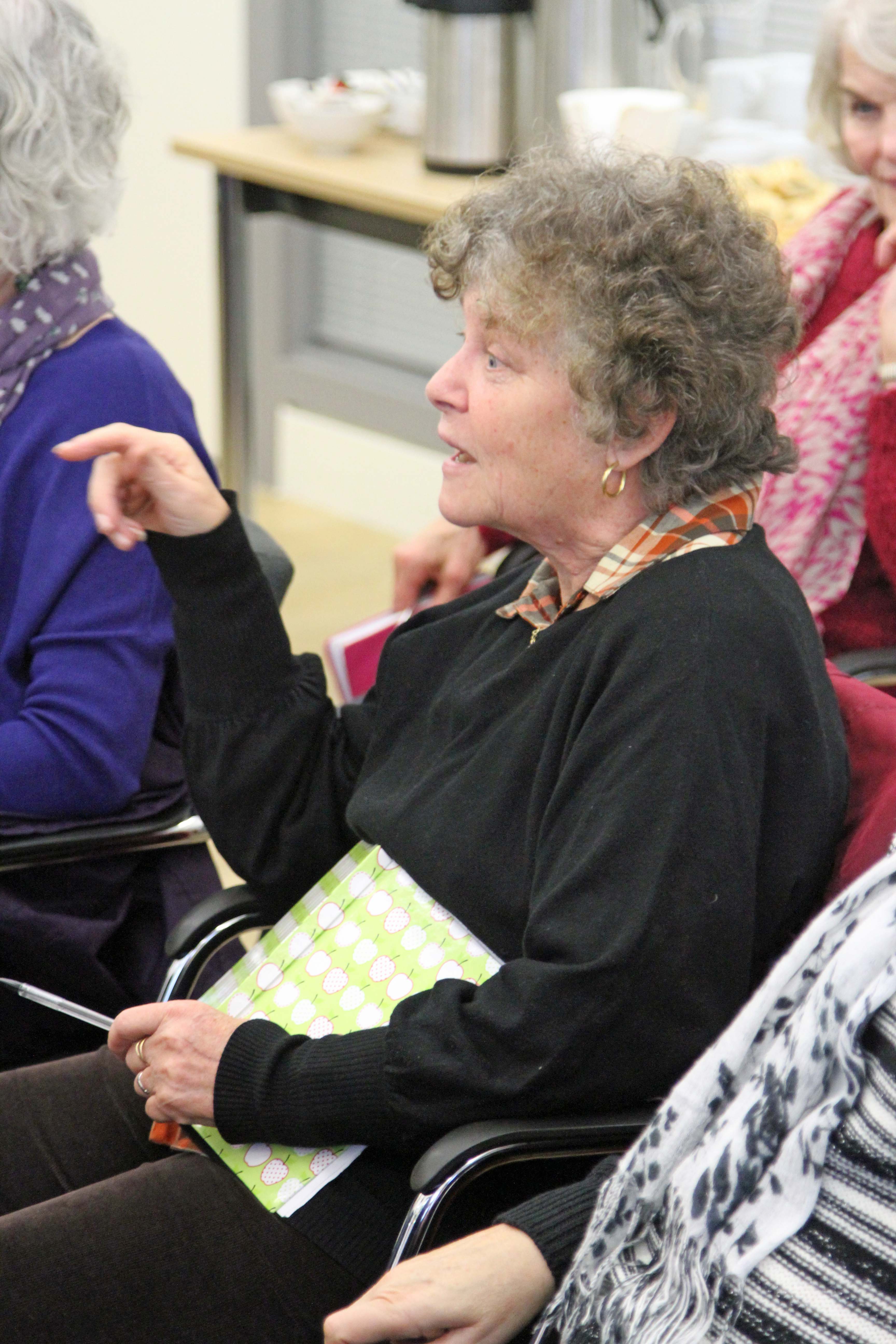
They know what they want and they want more of it: I’ve already promised to return to talk to them about DI Yates numbers 4 and 5. It was my first Wakefield audience that told me how much they enjoyed reading about Juliet Armstrong and that they’d like to see more of her. I hope that they’ll think I’ve done so in Sausage Hall, where Juliet’s story takes a new turn.
Several of the Wakefield readers had already bought Sausage Hall and came armed with it for me to sign. Others bought it during the tea-party; as at my other Wakefield events, the books were kindly supplied by Rickaro Books in Horbury. A man in the audience asked for an interesting, and very relevant, inscription (see caption): apparently, these are the nicknames of his brother and sister-in-law!
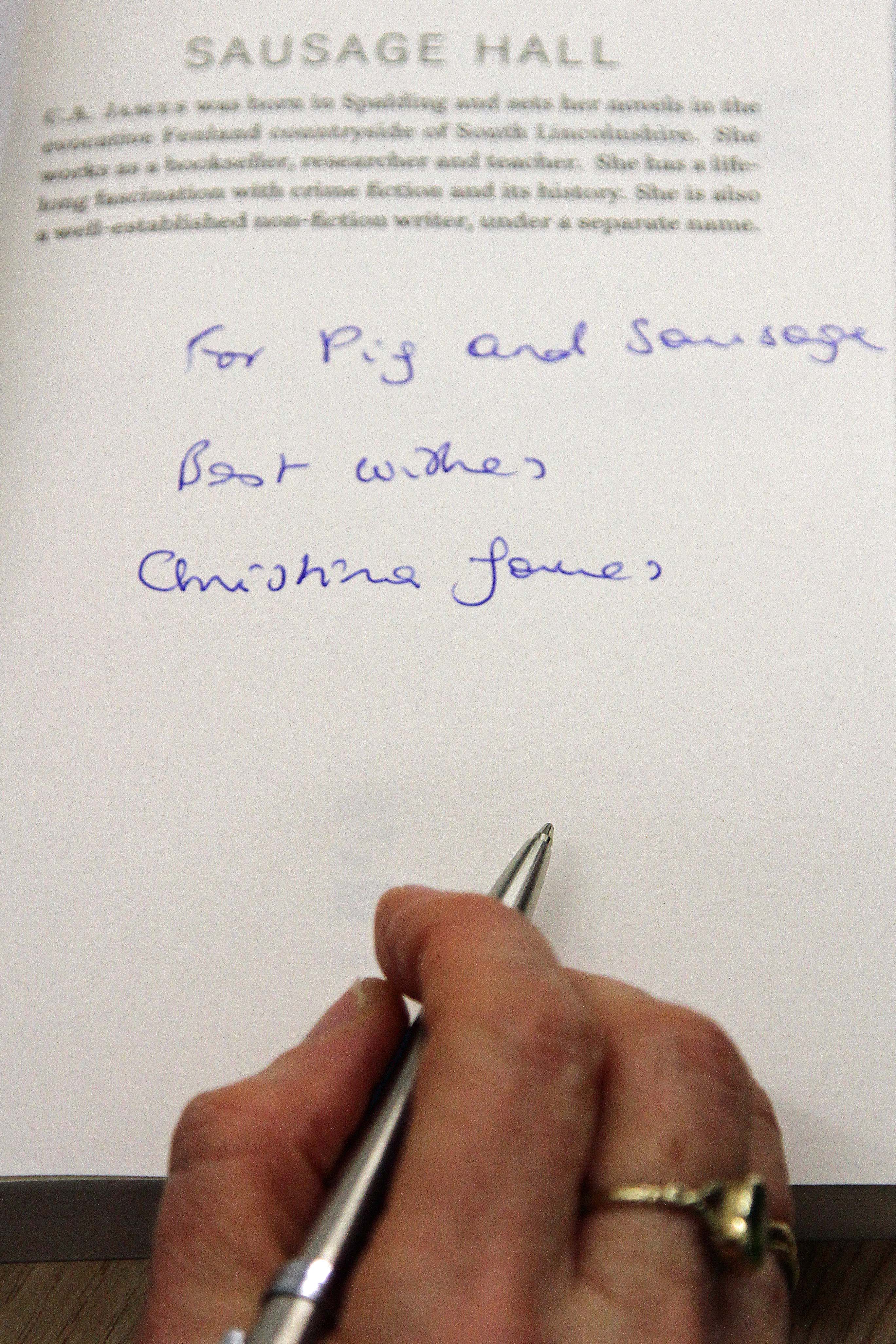
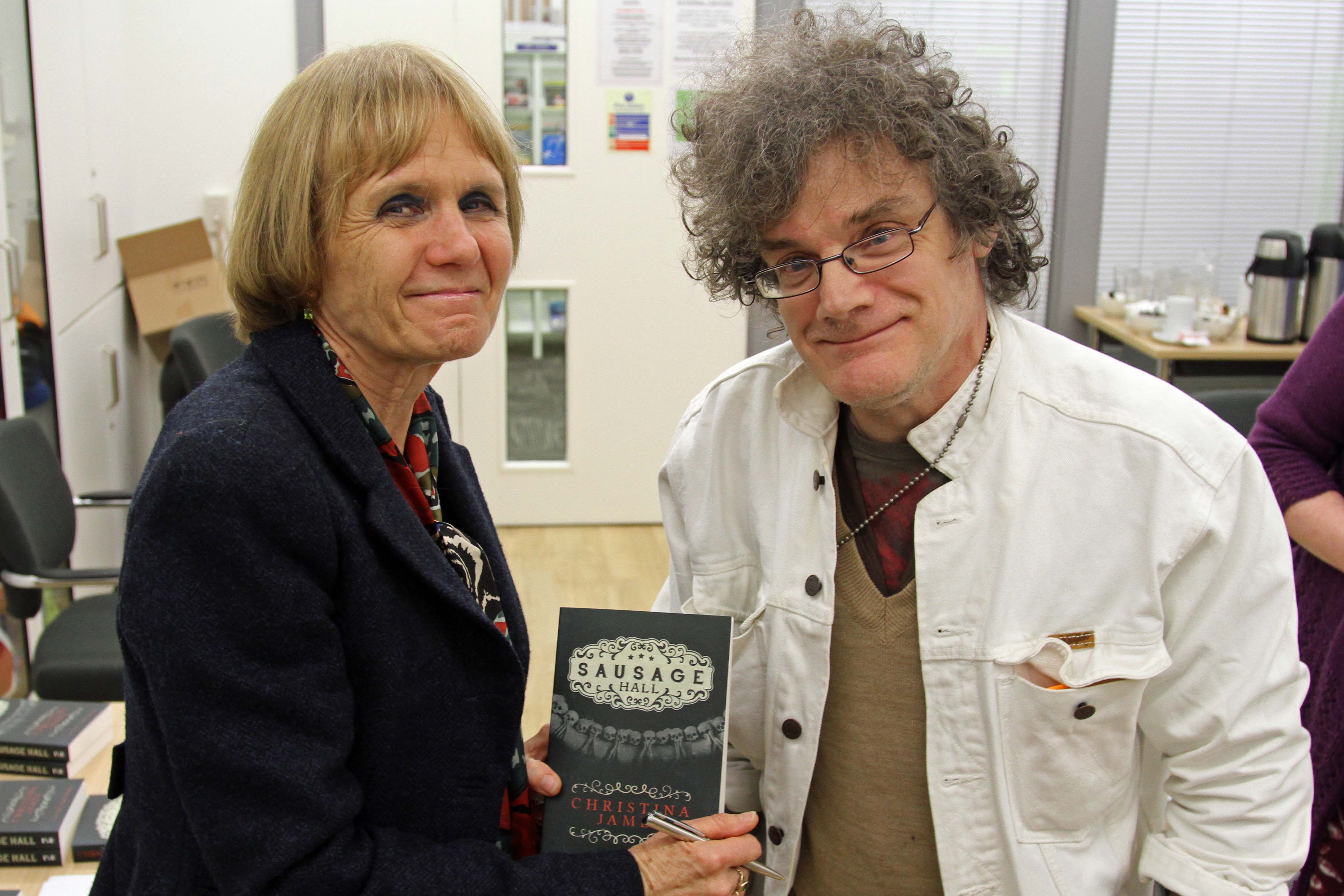
To Pig and Sausage, with love!
The event at Waterstones Covent Garden was masterminded by Jen Shenton, the bookshop’s lovely ‘can-do’ manager.
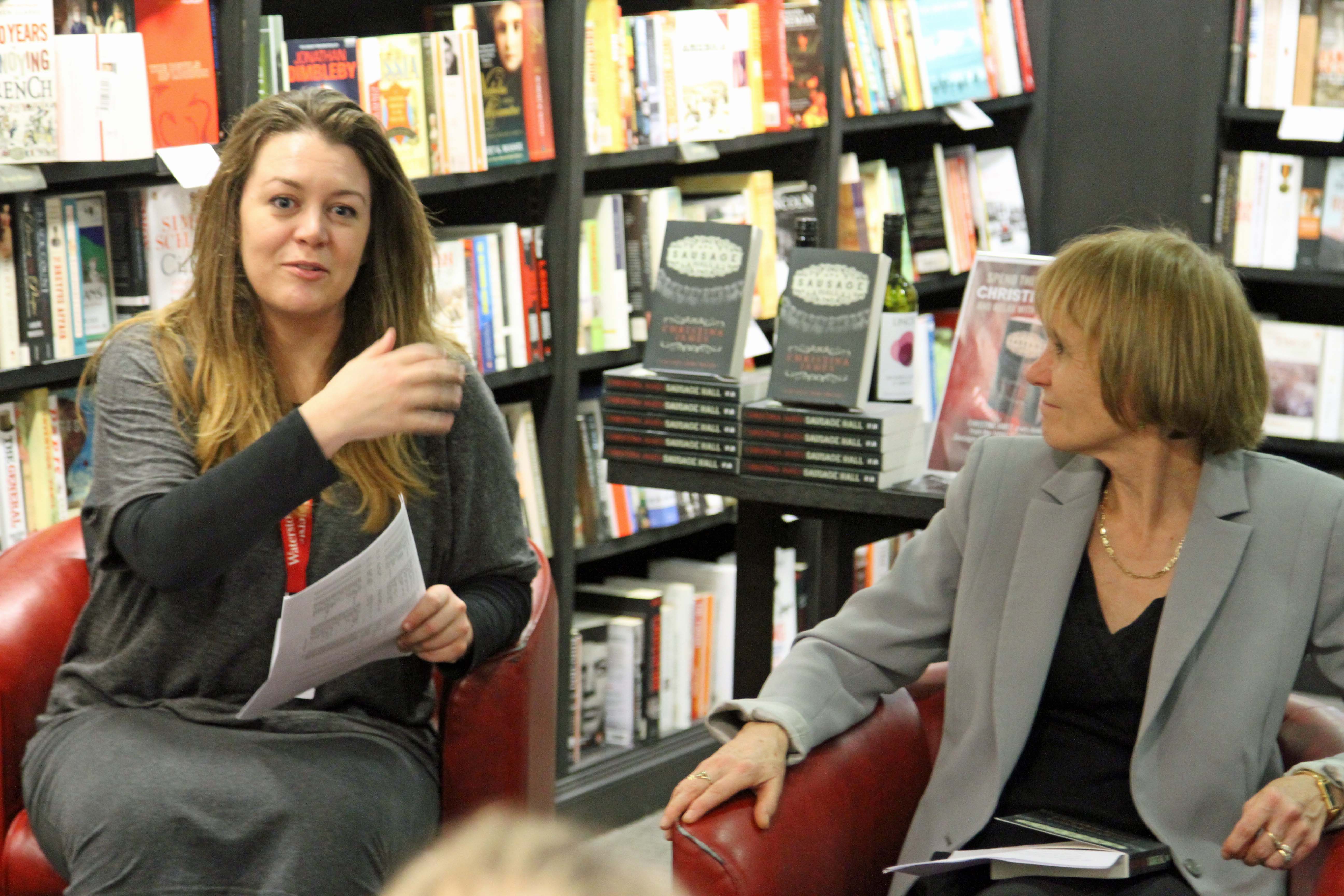
Waterstones Covent Garden Manager Jen Shenton welcomes me to her beautiful bookshop
I hadn’t met her before, but as soon as I saw her I knew what a distinguished bookseller she is. It’s something you can’t fake: I honestly believe that the best booksellers are born, not made, though that’s not to say they don’t work hard all the time in order to stay ahead. I didn’t leave Jen’s shop until almost 9 p.m., and she was still there behind the till, helping customers, smiling and looking as fresh as a daisy, even though she must have been feeling exhausted.
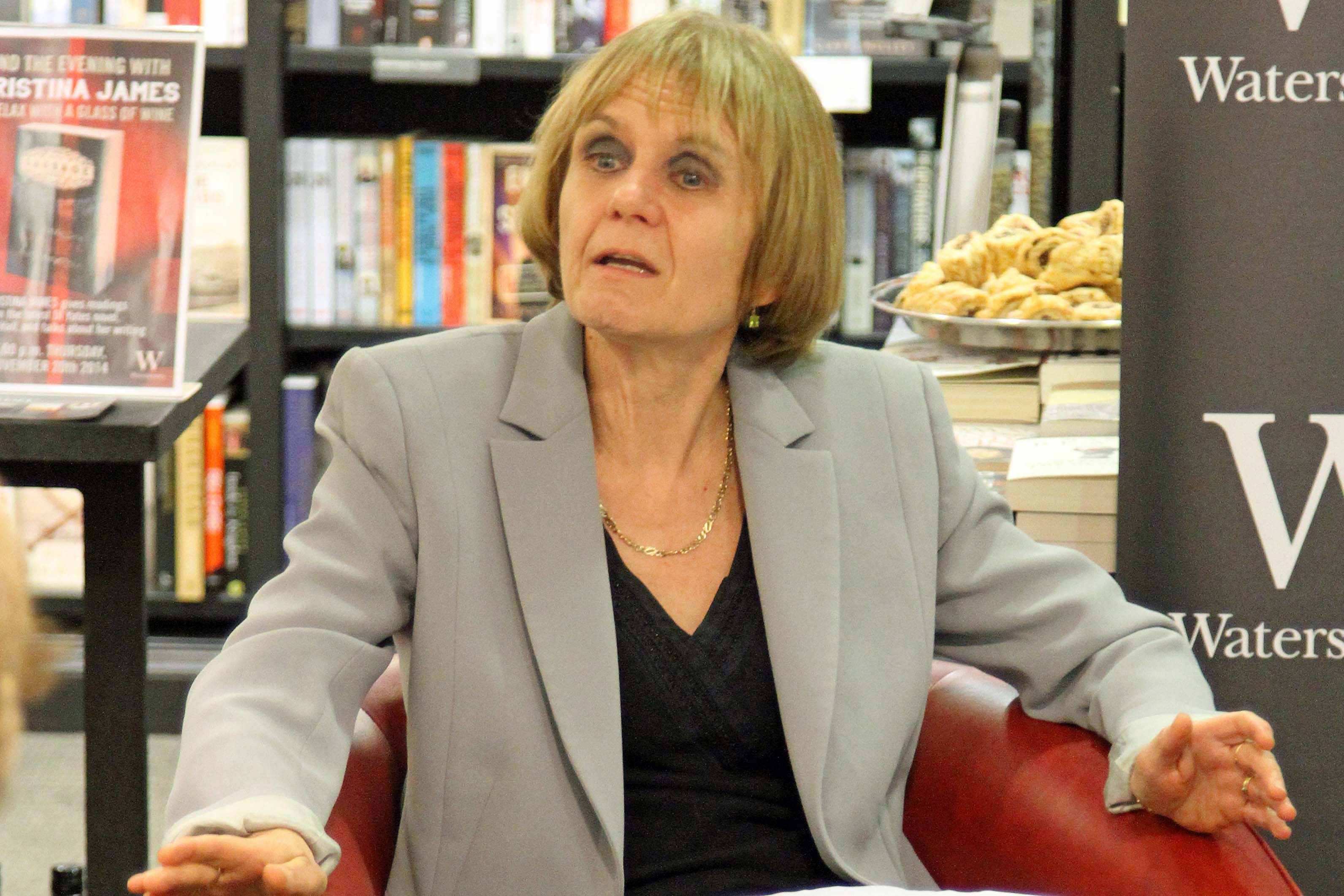
This event also had a wonderful audience.
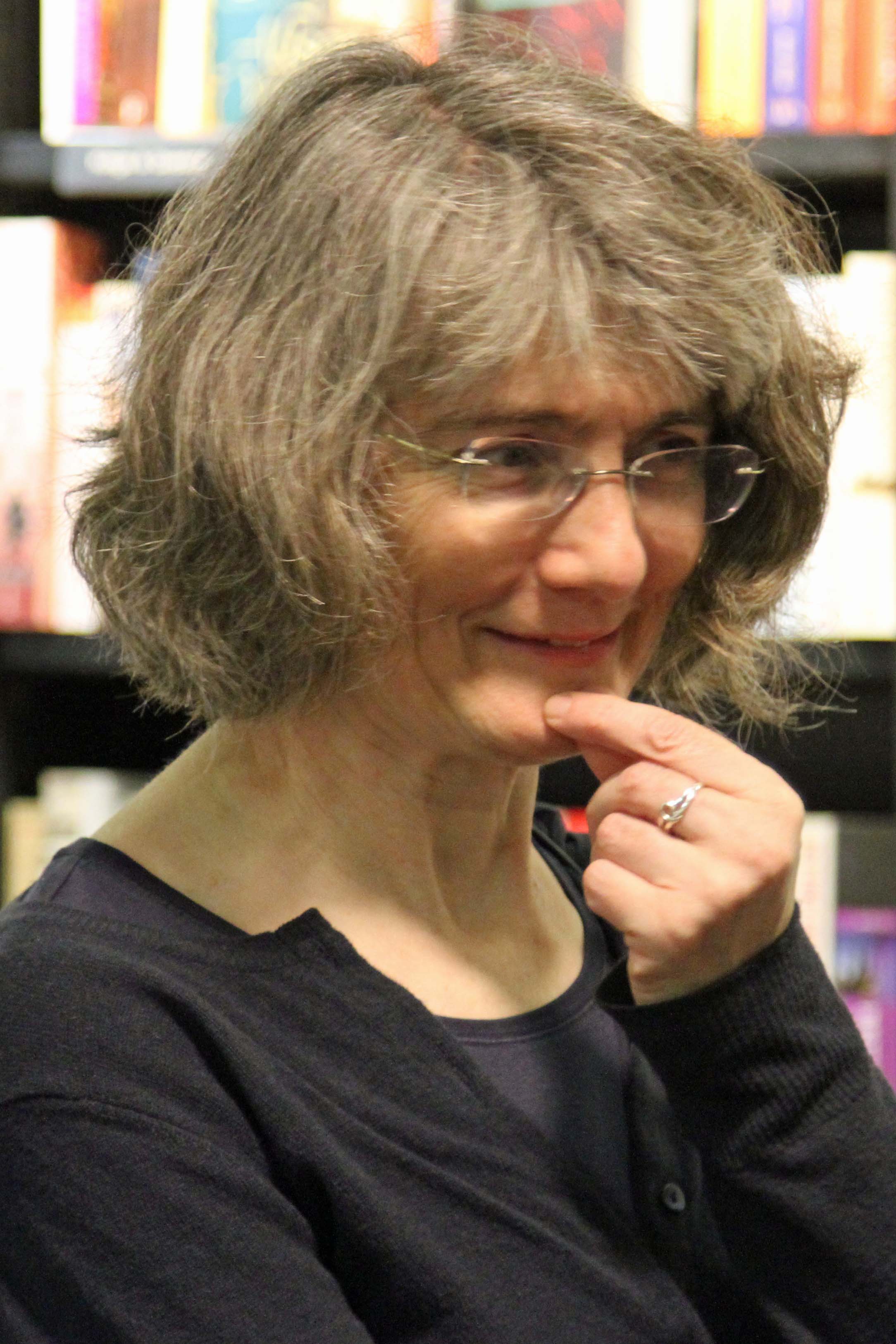


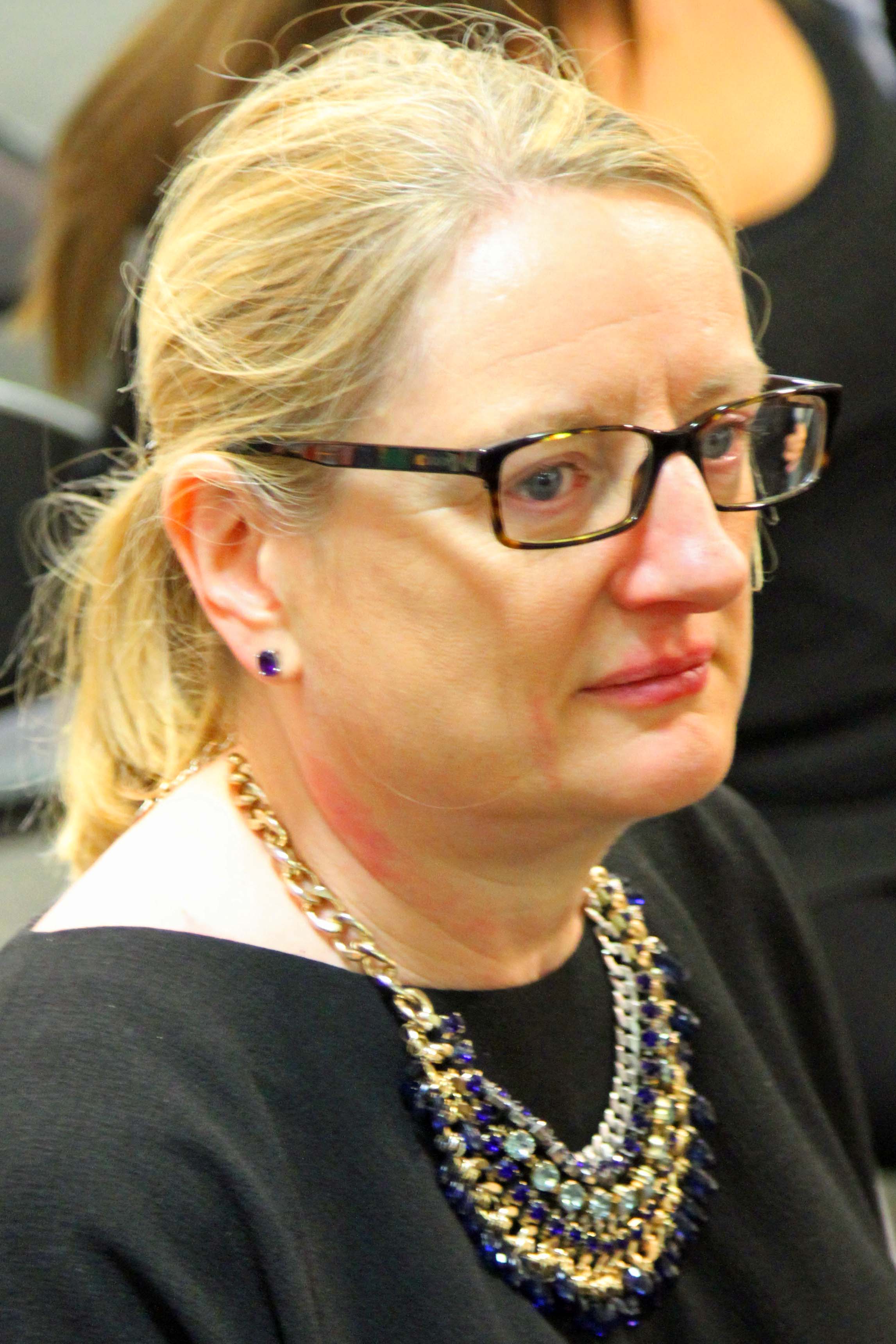

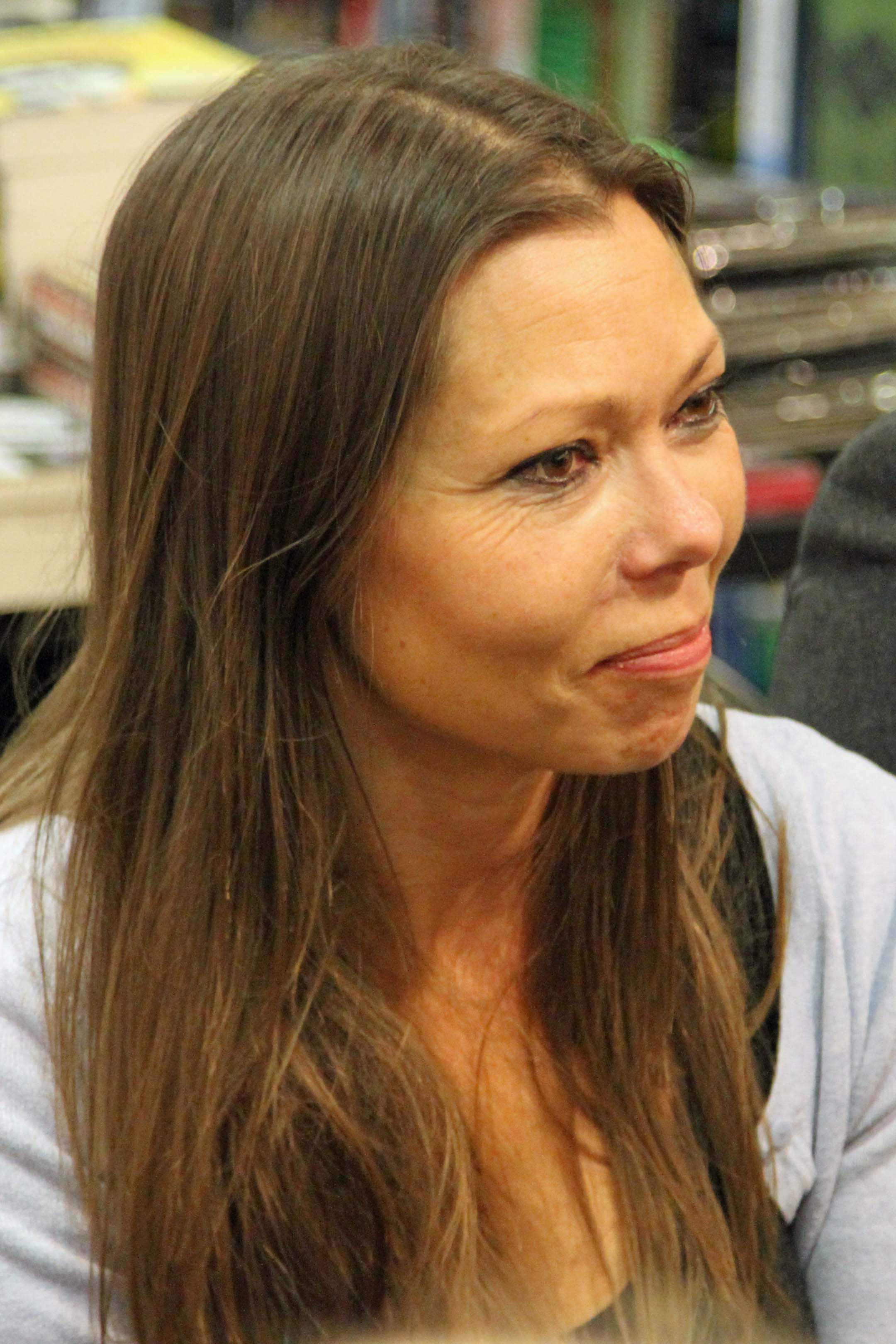


Many of my friends from the book industry came (which meant they bowled me a few googlies when it came to the questions). It was a light-hearted, laughter-filled evening, well lubricated with Waterstones wine and sustained by Adams & Harlow sausage rolls. I was delighted that Tabitha Pelly, who has worked with Salt on PR for Sausage Hall, was able to come. Like Jen Shenton, she seems never to tire or have a negative thought in her head.
I left the shop laden with some book purchases of my own and headed for King’s Cross station to catch the last train. It was the perfect end to an extraordinary week. My only sadness was that Chris and Jen Hamilton-Emery, my publishers at Salt, were unable to come. But I know that they’ve been keen followers of my progress as I’ve sprung Sausage Hall upon the world and I look forward to catching up with them next week. Today is Chris’s birthday: I’d like to take the opportunity to wish him many happy returns!

Grateful thanks, once again, to Adams and Harlow for their wonderful sponsorship of the launch of Sausage Hall.
One writer looking back… lots of writers looking forwards!
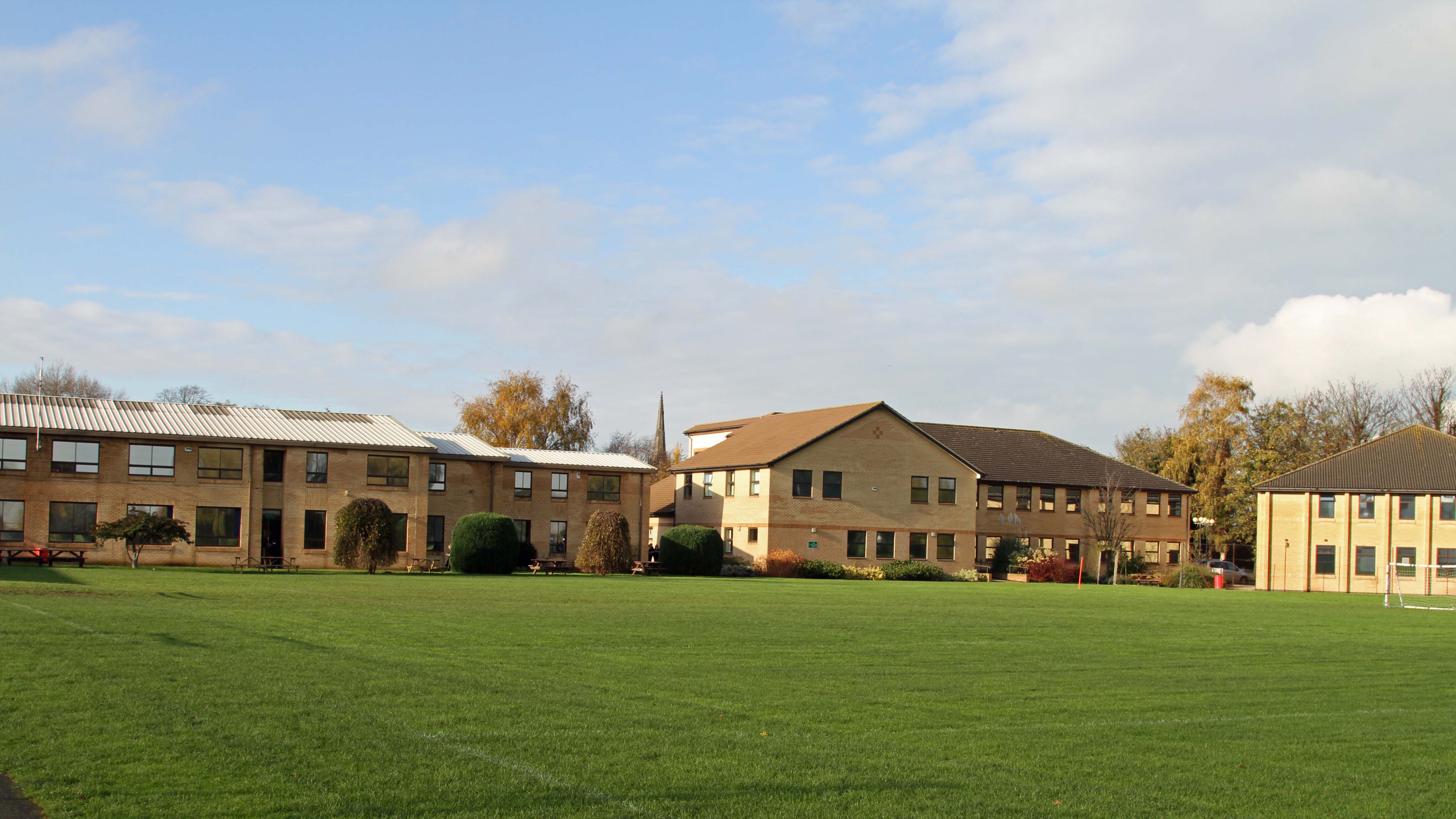
Spalding High School
At first light yesterday, I travelled to Spalding High School, my own former school, to which I had returned only once previously since leaving the sixth form. I received a wonderful welcome from Adrian Isted, the newly-appointed Head of English, who began the day’s activities by showing me round the school.

With Adrian Isted, Head of English
First stop was the office of the headteacher, Mrs. Michele Anderson, who is also fairly new to the school. She was fascinated to hear a little more from me about Mrs. Jeanne Driver, the first married headteacher at the school, who was its leader throughout my school career. Born Jeanne Ouseley, she lived at 10, High Street, a large house of several storeys situated near the River Welland in Spalding. Part of this house was divided into flats and there were usually several other teachers living there, as well as two of my fellow sixth formers, Cheryl Ouseley and Elizabeth Davies, both of whom were her nieces. They called her ‘Auntie Jeanne’, a name that the rest of the sixth form also used affectionately, if unofficially. Mrs. Driver was one of several strong women who influenced me as a girl. She had a strong sense of duty and an even stronger work ethic. We found some of the things she said highly amusing (for example, ‘I stand up whenever I hear the national anthem, even if I’m in the bath.’). Sometimes she took the notion of duty to an extreme. I remember she told us that when her husband, who had been in ill health for some time, finally died, she finished marking a set of books before setting in train the preparations for his funeral. But her influence has lasted all my life.
The school has been added to, but otherwise is little changed. I suppose the thing that struck me most yesterday is how it seems to have shrunk. The corridors seemed longer, the stairways steeper, the ceilings higher when I first attended it as an eleven-year-old, then for only a part of the school week – pupils belonging to the first two school years still spent most of their time at the old school building in London Road, the first home of Spalding High School when it was established in 1920 on the site of its predecessor, the privately-owned ‘Welland Academy for Young Ladies’. (The present school building was completed in 1959, but the London Road property continued to be used by younger pupils for more than twenty years afterwards.) The assembly hall still boasts its luxurious but absurdly impractical parquet floor.

In my day it doubled up as a gym (there is now a separate sports hall) and we were obliged to do PE barefoot, which we all hated, so that the floor wouldn’t become scuffed by gym shoes. The same grand piano stands in the corner, to the left of the stage. In the corridor outside the headteacher’s office are several group photographs taken of all the teachers and pupils at intervals during the school’s history. After some searching, I was able to discover myself on one of these – and I could also name all the other girls in my form and most of the teachers.

Guess which is the young Christina James!
After the tour, I was interviewed by Eleanor Toal and Holly Hetherington for High Quarterly, the school’s completely online magazine (which is streets ahead of the drab, dark-red-covered printed production of my youth). Eleanor, the e-zine’s editor, also writes articles for the Spalding Guardian, carrying on the long-standing relationship between the school and the local newspaper. Eleanor and Holly (who edits Gardening and Food in the mag) knew they were going to be asked to interview me only very shortly before we met, because the intended interviewer was ill, but I wouldn’t have known if they hadn’t told me. I was much struck by the sensitivity and perspicacity of their questions and enjoyed answering them.

Holly, left, and Eleanor interview me for High Quarterly
After lunch, I talked to sixth form English students about how to get published. Jean Hodge, who reports on cultural affairs for the Spalding Guardian, also attended and joined in. It was quite an exciting occasion, because it also took the first steps towards setting up a short-story competition that the Great British Bookshop has agreed to sponsor at the High School. Adrian and his colleagues and I will choose the best ten or twelve stories submitted to be published in a single volume at The Great British Bookshop’s expense. Winners will each receive a free copy of the book, which will then go on sale in TGBB’s extensive distribution network. I’ll be writing more about the competition in this blog very shortly.
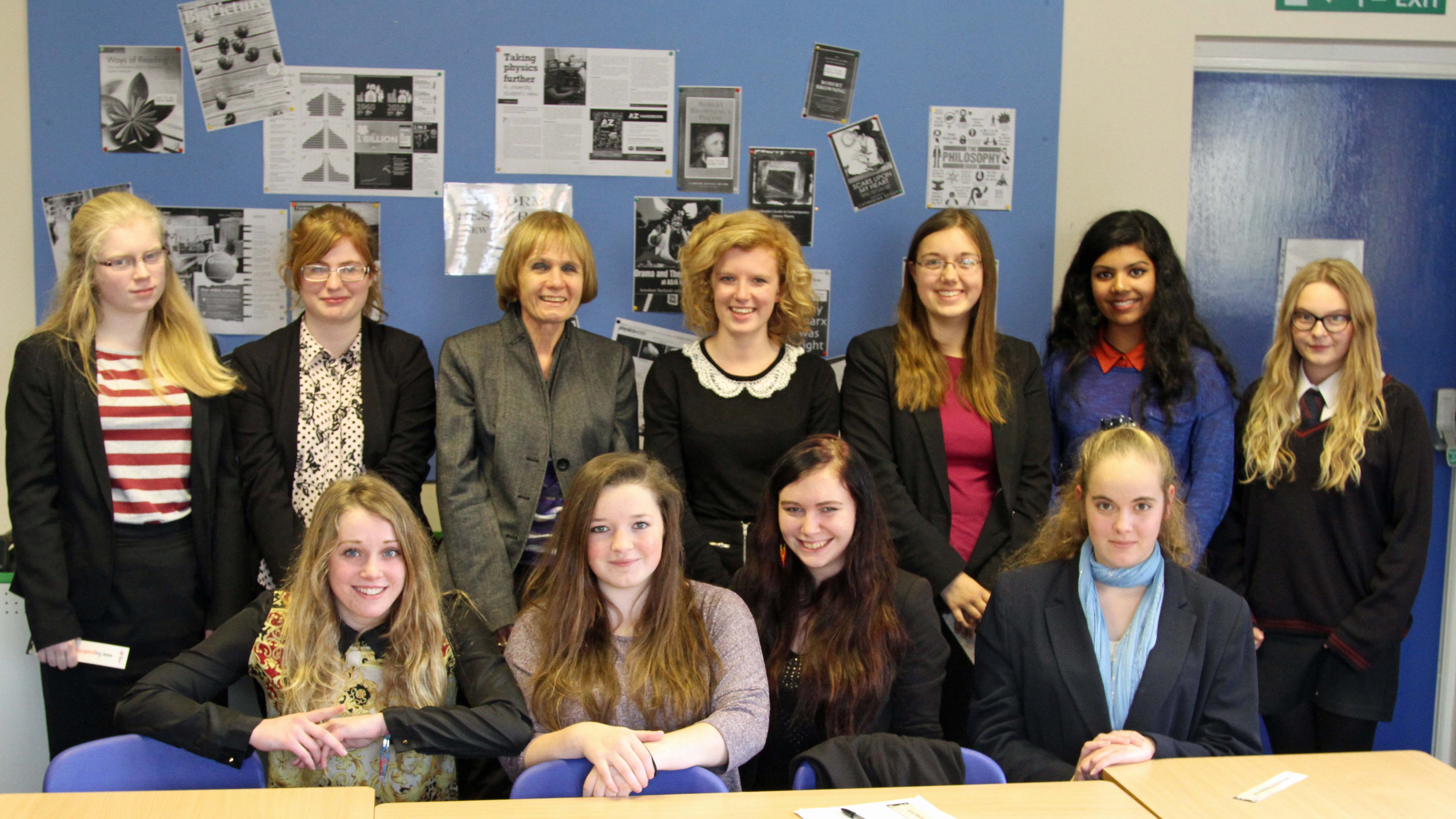
Sixth Form writers
I completed my day at the school with a writers’ workshop for Years 7, 8 and 9 students. The participants explored some of the key elements of crime fiction (they proved to be very well read) and collaborated to put some of those into practice. Their discussion illustrated their excellent grasp of linguistic and literary effects and the results were amazing! Nearly all of these students bought one of my books at the end of the session; some bought all three. Thank you!

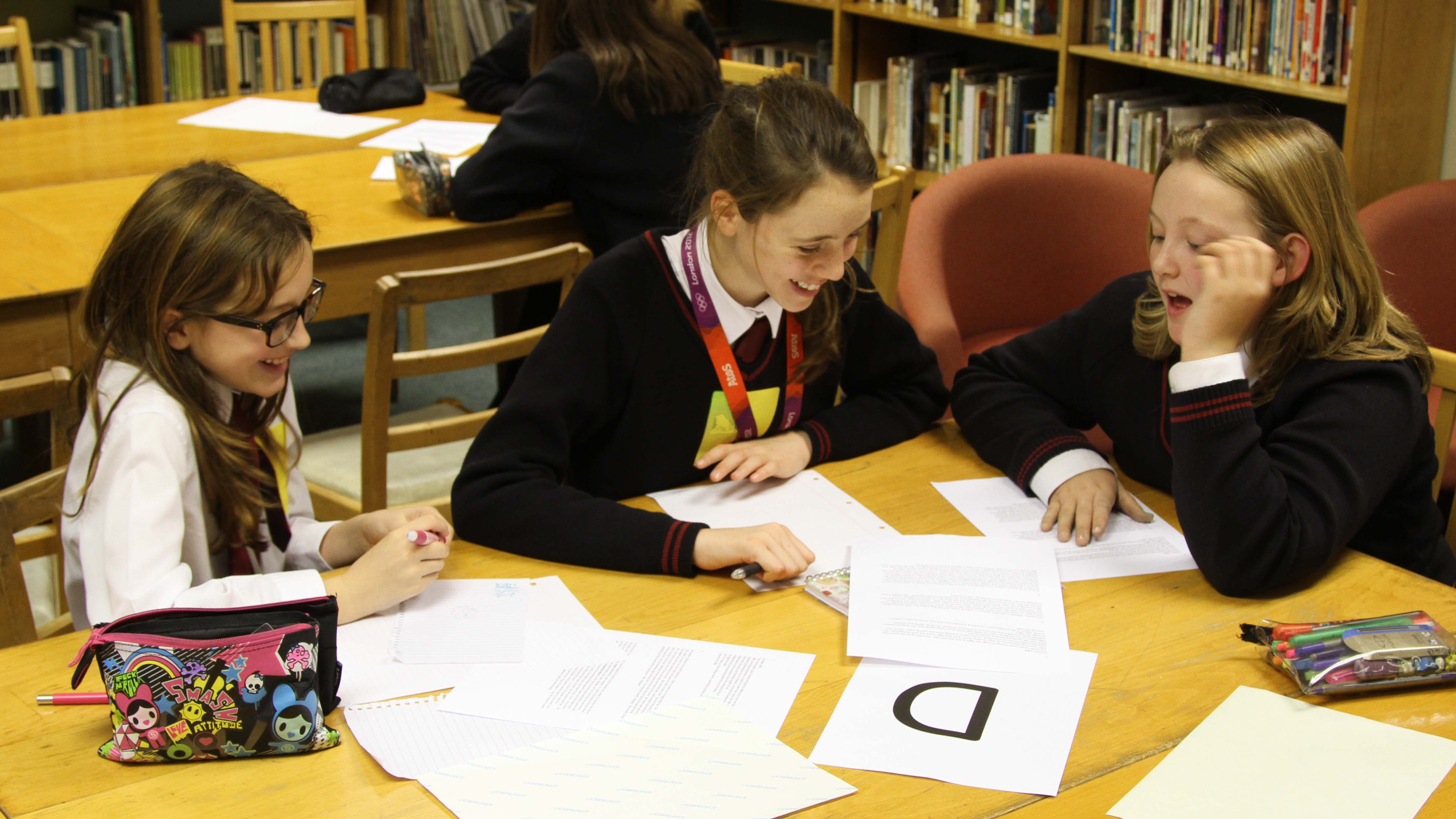


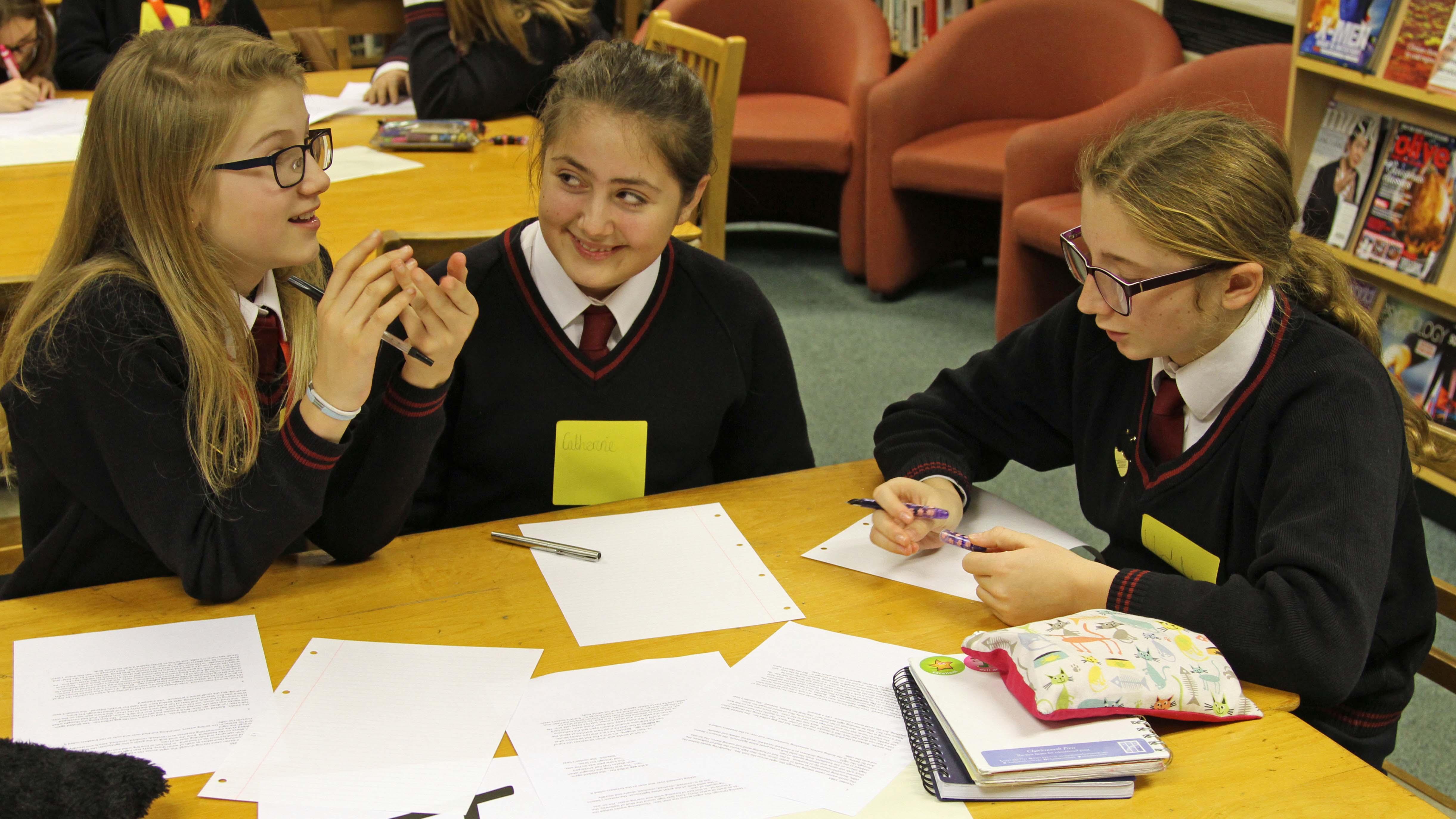
I can’t conclude this post without saying that a remarkable library now exists at Spalding High School. The library is housed in the same room that I knew, but what a difference in the stock! The emphasis is on supplying students with books to read for pleasure. It’s a place of relaxation and also a place where students can go to work in groups. There’s none of the shushing and grim looks that any talking in the library produced when I was a schoolgirl and all the dusty old Latin grammars and ancient editions of Gray’s Anatomy have been disappeared. Hats off in particular to Kirsty Lees, the School Librarian and Learning Resources Manager, and to her team. The school knows how lucky it is to have them and to be able to enjoy the warm and inviting place (complete with crime scene rug featuring a splayed body) that they have turned it into.
It’s almost impossible for me to thank all the people who made this day so special. I’m deeply grateful to Michele Anderson for making it possible; to Adrian Isted and Kirsty, for making it happen; to Eleanor and Holly, for giving me such a delightful interview; to Jean Hodge, for all her support for Sausage Hall both at this event and elsewhere and, especially, to all the students whom I met yesterday, who were such a joy to work with and who were so keen to develop their own writing. Thank you all!
In in verse proportion: half the stress; double the delight!

Richard of Rickaro Books presents the Tracey Emin-endorsed Books Are My Bag bag
Yesterday I spent a superlative afternoon at Rickaro Books, Horbury, to celebrate three events: the launch of Holding Your Hand Through Hard Times, by A Firm Of Poets (some of whom are now also Firm Friends of this blog!) on the first day of this year’s Books Are My Bag festivities; the birthday of one of Rickaro Books’ regular customers; and last, but by no means least, the thirteenth birthday of Rickaro Books itself. Toasts were drunk in sparkling wine while it rained outside: a wonderfully cosy and pleasantly decadent way of spending a Saturday afternoon!
The four poets who performed yesterday were Ralph Dartford, a founding member of A Firm Of Poets, accounts of whose at once tongue-in-cheek and poignant performances (‘Now then! / In November 1950 / Pablo Picasso / visited Sheffield / for a hair cut, / Peace, / and some toast.’) have graced this blog before (he has a lovely wife who always supports his performances);

Ralph Dartford
Matt Abbott, a born performance poet, whose rendering of a pathetic yet comic drunk was particularly hilarious (‘I’ll have a bottle of Beck’s from the fridge / ‘cause you all might have stopped drinking / but I’m from Horbury Bridge / and I’m – yeah, I’ll have some gravy, love …’);

Matt Abbott
and, new to me but very impressive indeed, the goth poet Geneviève Walsh (‘So many love songs which compare desire to sunshine, / a practice as futile as comparing art to dust. / This is England, see, and the sunshine’s more akin / to a tax rebate / or a lottery win’).

Geneviève Walsh
The work of all these poets, as well as that of John Darwin and Matthew Hedley Stoppard (whom I’ve also met and been wowed by at an event at Rickaro Books, so I was disappointed that he couldn’t be there yesterday) appears in the beautifully-produced, chapbook-style Holding Your Hand Through Hard Times.

Holding Your Hand Through Hard Times
If you happen to be in West Yorkshire, you could do no better than to buy it from Rickaro Books and have a look round the shop at the same time – it is a very distinctive shop which sells both new and antiquarian books.
But I mentioned four poets and I’ve only described three. There was, in fact, a fourth poet present, who also performed, joining A Firm Of Poets as he regularly does; his poems (which he read from his mobile phone, having forgotten to bring the text with him!) don’t feature in Holding Your Hand Through Hard Times. His name is William Thirsk-Gaskill.
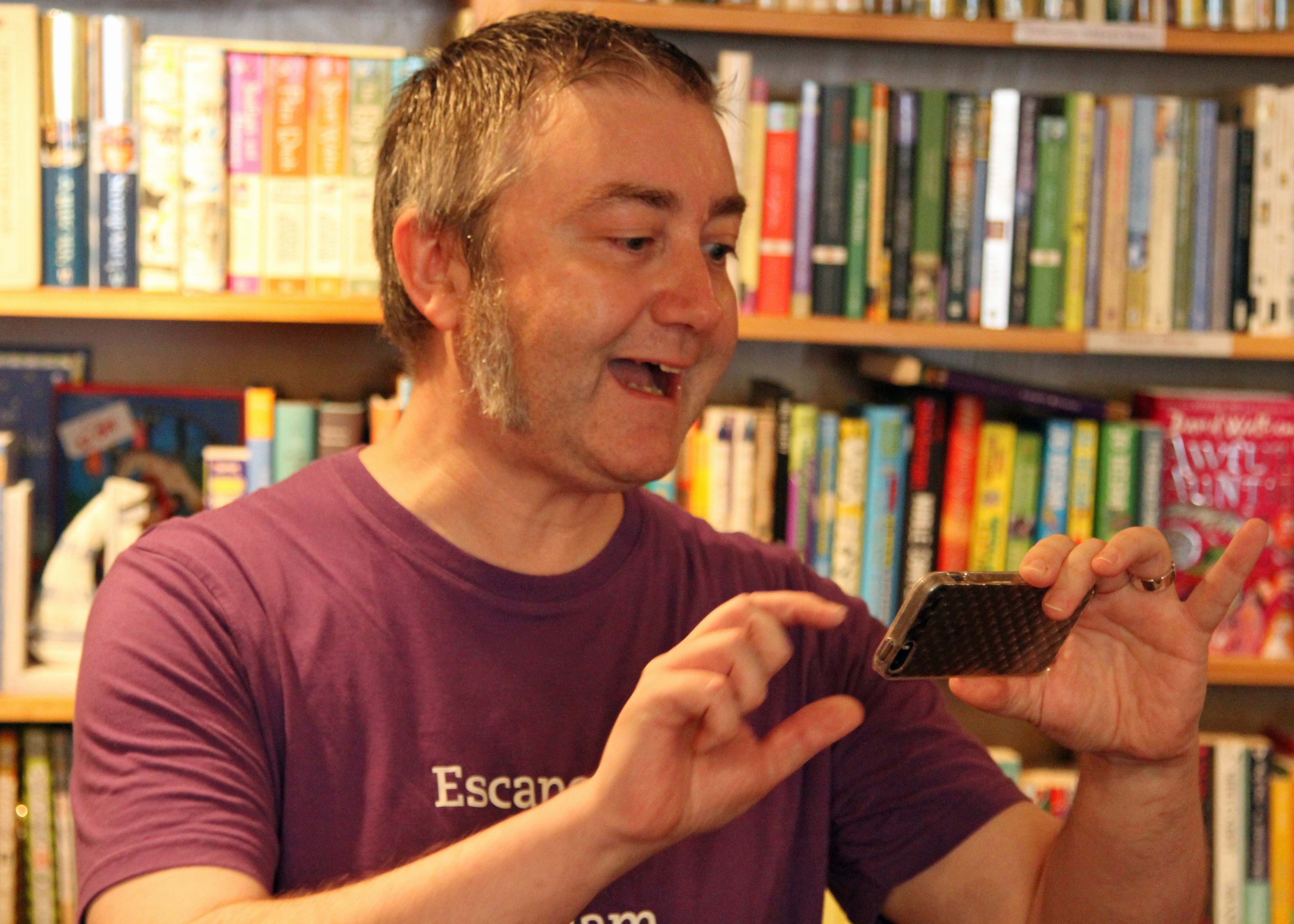
William Thirsk-Gaskill
Perhaps because he now has a double-barrelled name, my husband and I didn’t recognise the former plain William Gaskill at first – though my husband says that he knew the voice as soon as he heard William speak. When we first met, he was a very talented schoolboy and we were also young, though not as young as he was (William obligingly informed us that my husband was twenty-nine at the time, so I will have been twenty-eight!). To see him again gave the day an extra special bonus. William was also selling a book: Escape Kit, a novella, which we have bought but have yet to read. I’ll review it here when I’ve finished it.
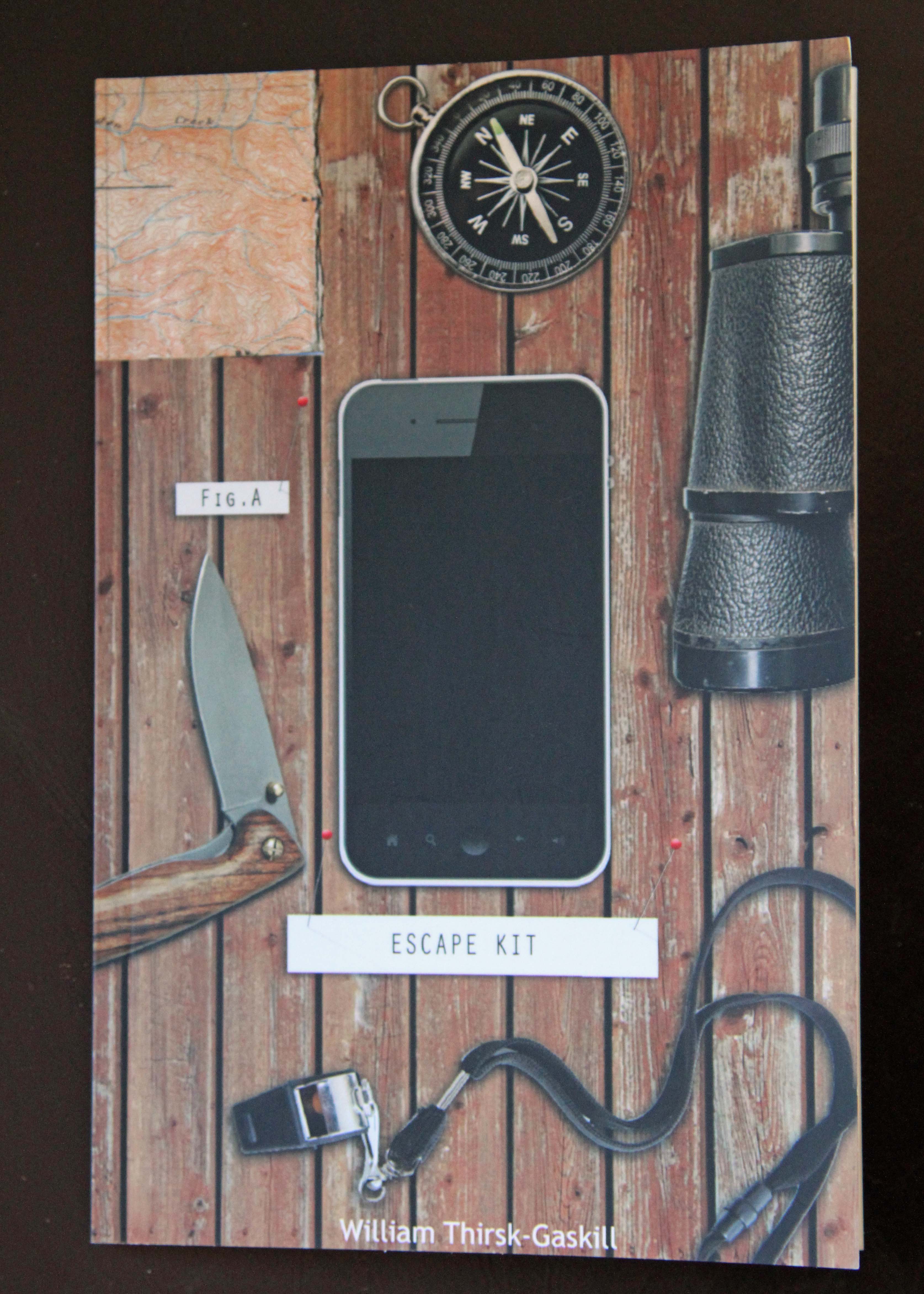
Escape KIt
Events at Rickaro Books are always distinctive, memorable and successful. It was a great privilege to be able to attend its Books Are My Bag launch and celebrate with A Firm of Poets. I am therefore extraordinarily proud to be able to tell my readers that Richard of Rickaro Books will be supplying the stock at ‘Tea at Sausage Hall’, Wakefield One’s wonderful way of celebrating the publication of the third of my DI Yates series, on November 19th. And I’m thrilled that some of A Firm of Poets have said that they will be supporting me by attending. Riches indeed! Thank you all so much. I’m looking forward to it already. Meantime, I wish you every success with your books.

Books Are My Bag 2014
WriterFest!

Yesterday Jim, my editor, and I enjoyed the immense privilege of running a writers’ workshop at Wakefield One, the City of Wakefield’s wonderful new complex that incorporates the library and other arts and community facilities. Like the event in which I took part at Wakefield One last year, it was part of Wakefield’s LitFest, and impeccably organised by Alison Cassels, who, in my experience, is second to none at enthusing and gathering in intelligent and appreciative audiences for such occasions.
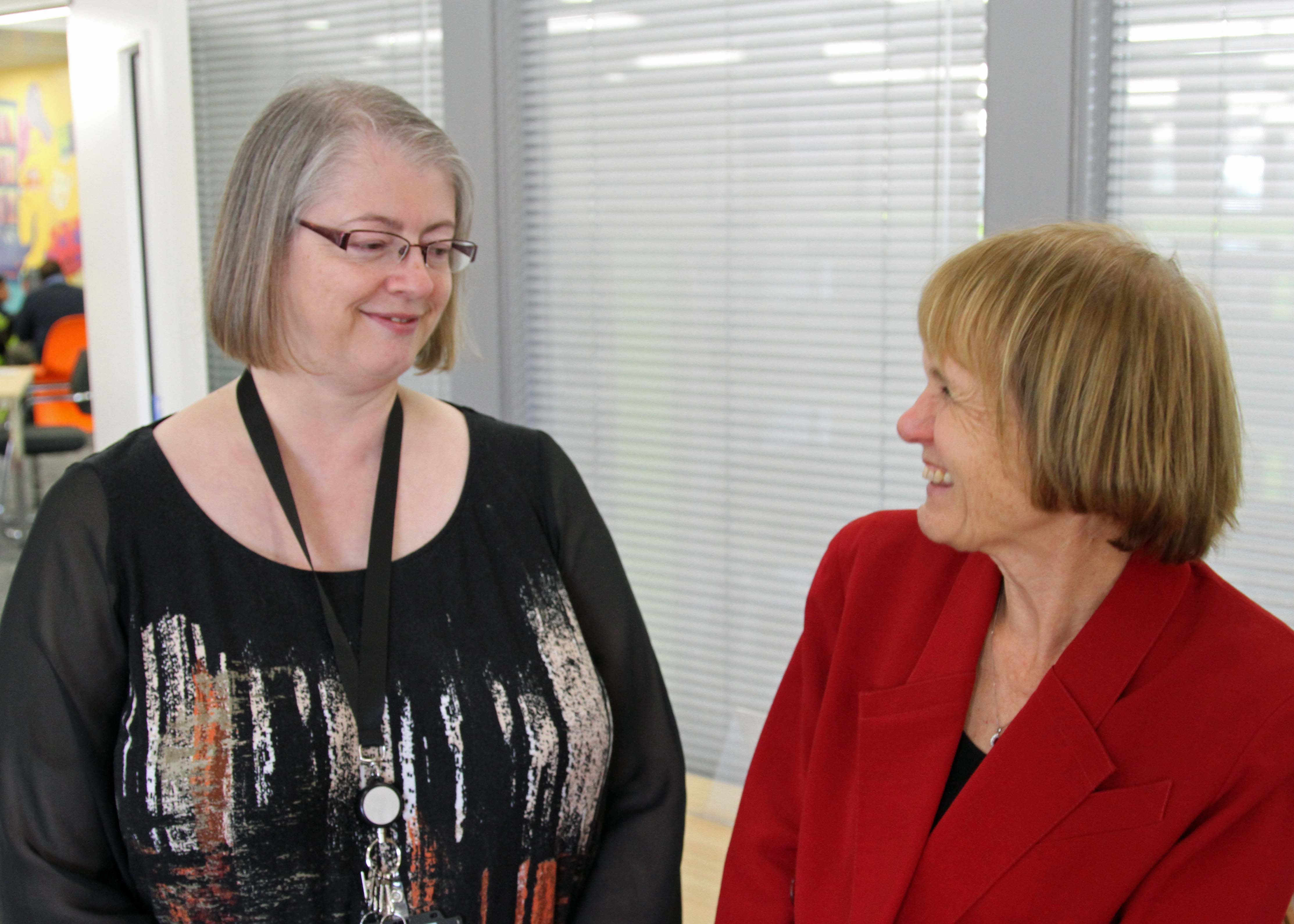
Alison Cassels, organiser par excellence
Eventually, there were twenty-two lively and responsive participants of all ages, from twenty upwards. One recent graduate came with his grandfather.

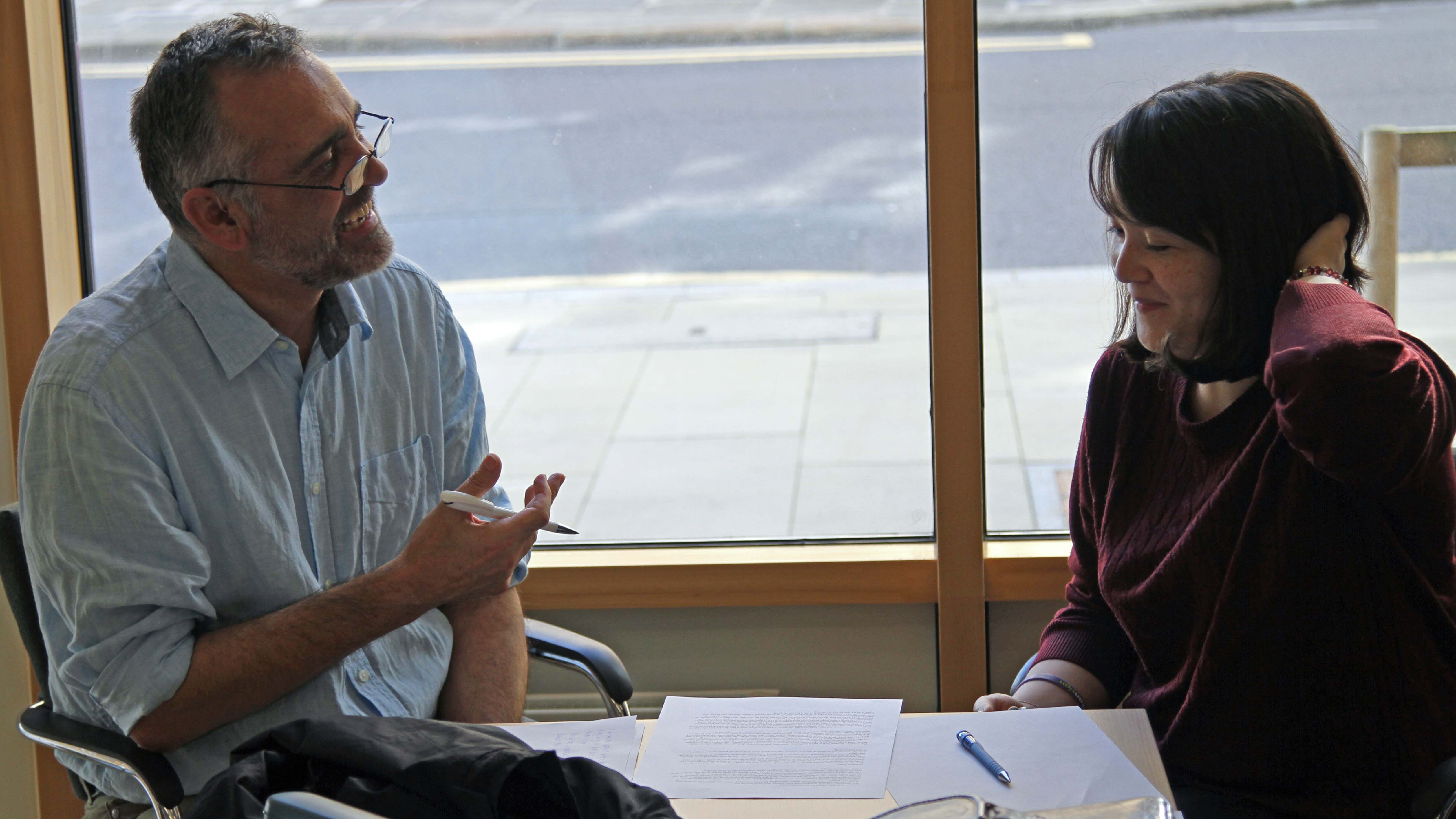
We began by giving the workshop delegates a sheet containing the opening paragraphs of six novels and asked them to take on the editor’s task of choosing (and providing justification for their selection!) just one that they would personally want to publish. The results were Illuminating: although one of the extracts (actually from a novel by Ruth Rendell) emerged as the clear winner, all six had at least one champion. Everyone was thus able to appreciate the dilemma of choice that an editor faces when sent many different manuscripts. Then, in pairs and against the clock, the group accepted the challenge of producing an opening paragraph that might persuade an editor not to reject it. The results were exceptional: all were coherent, interesting and, most impressively, cliché-free; the activity itself generated wonderful engagement, as you can see in the photographs here.



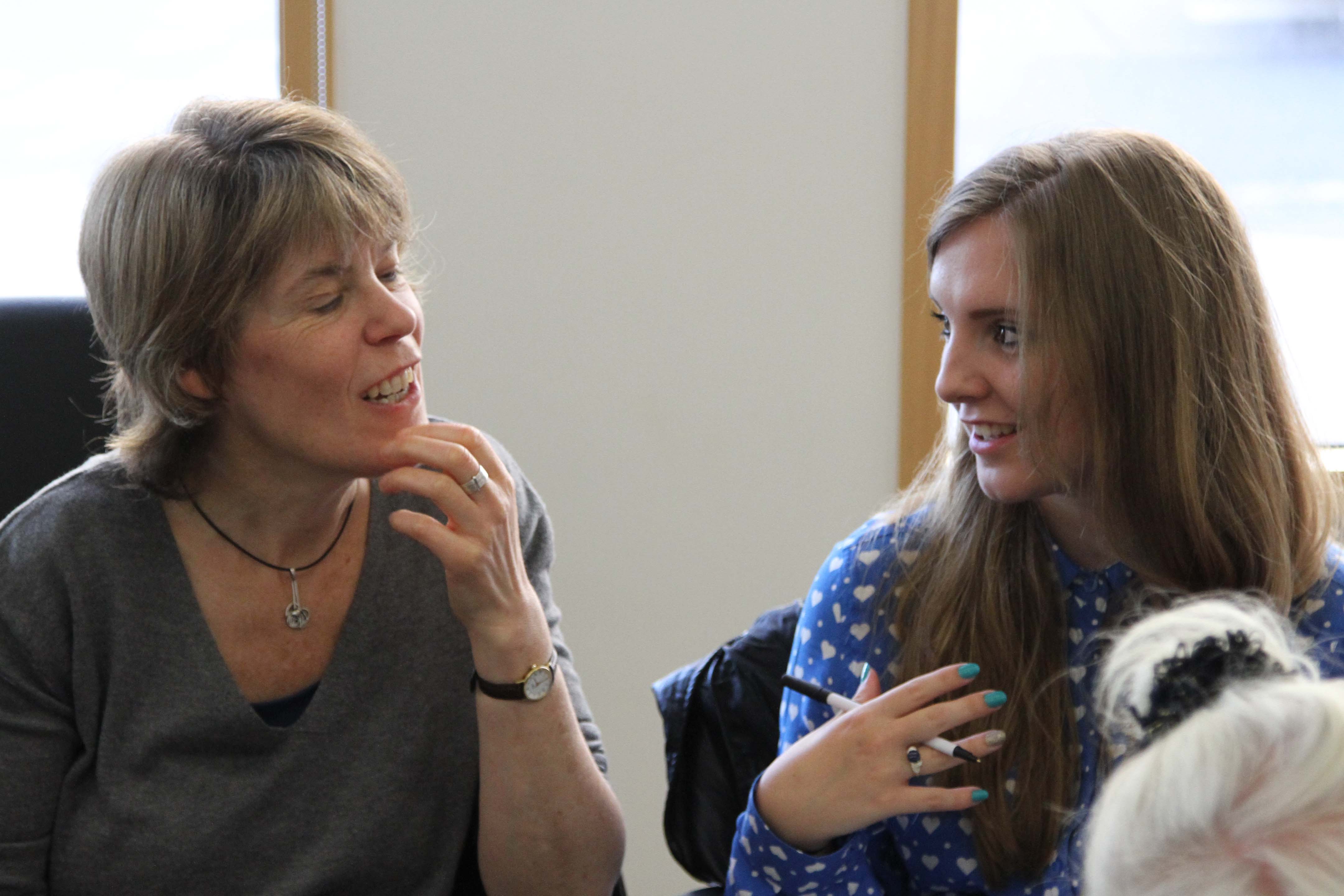
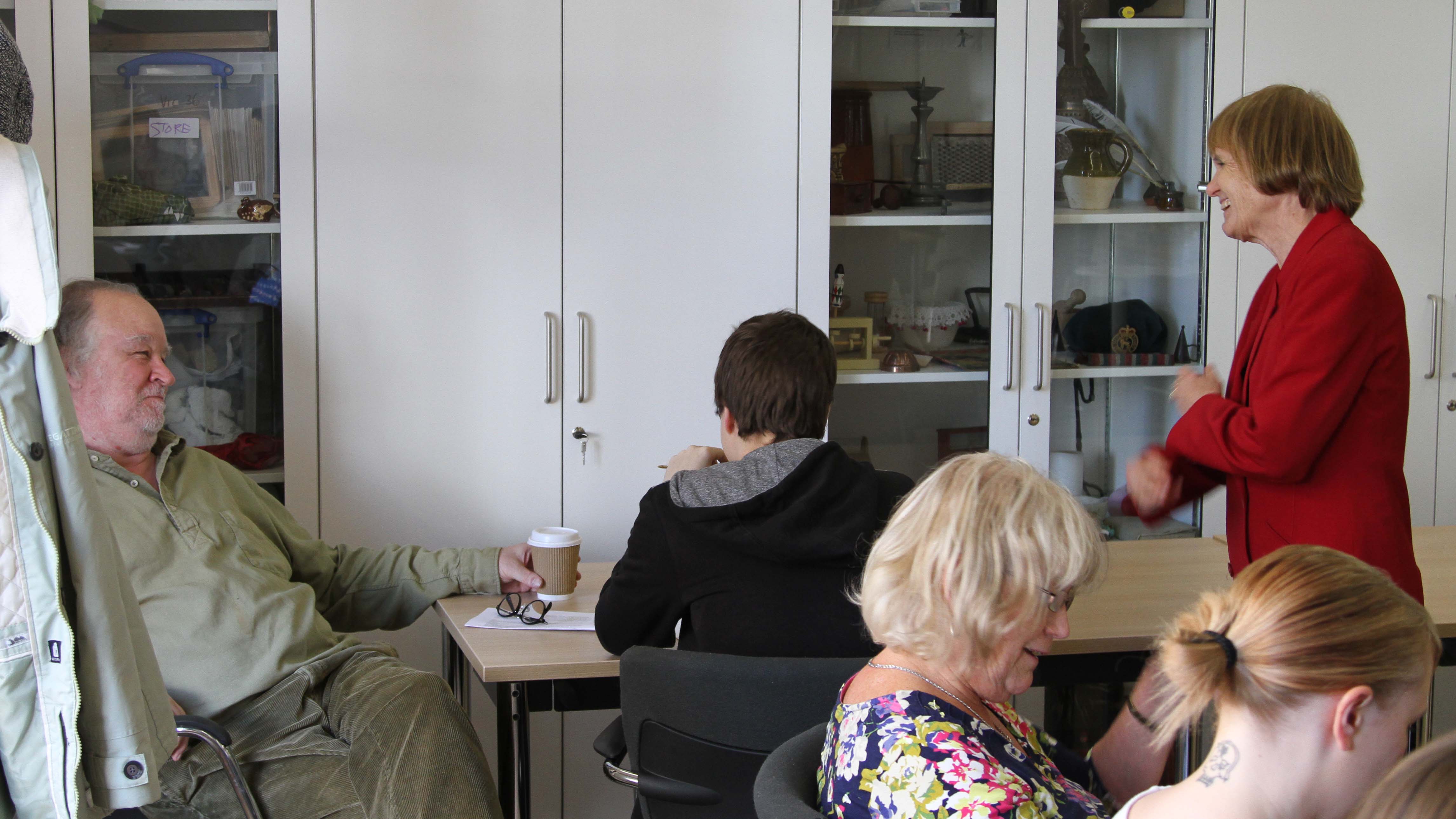
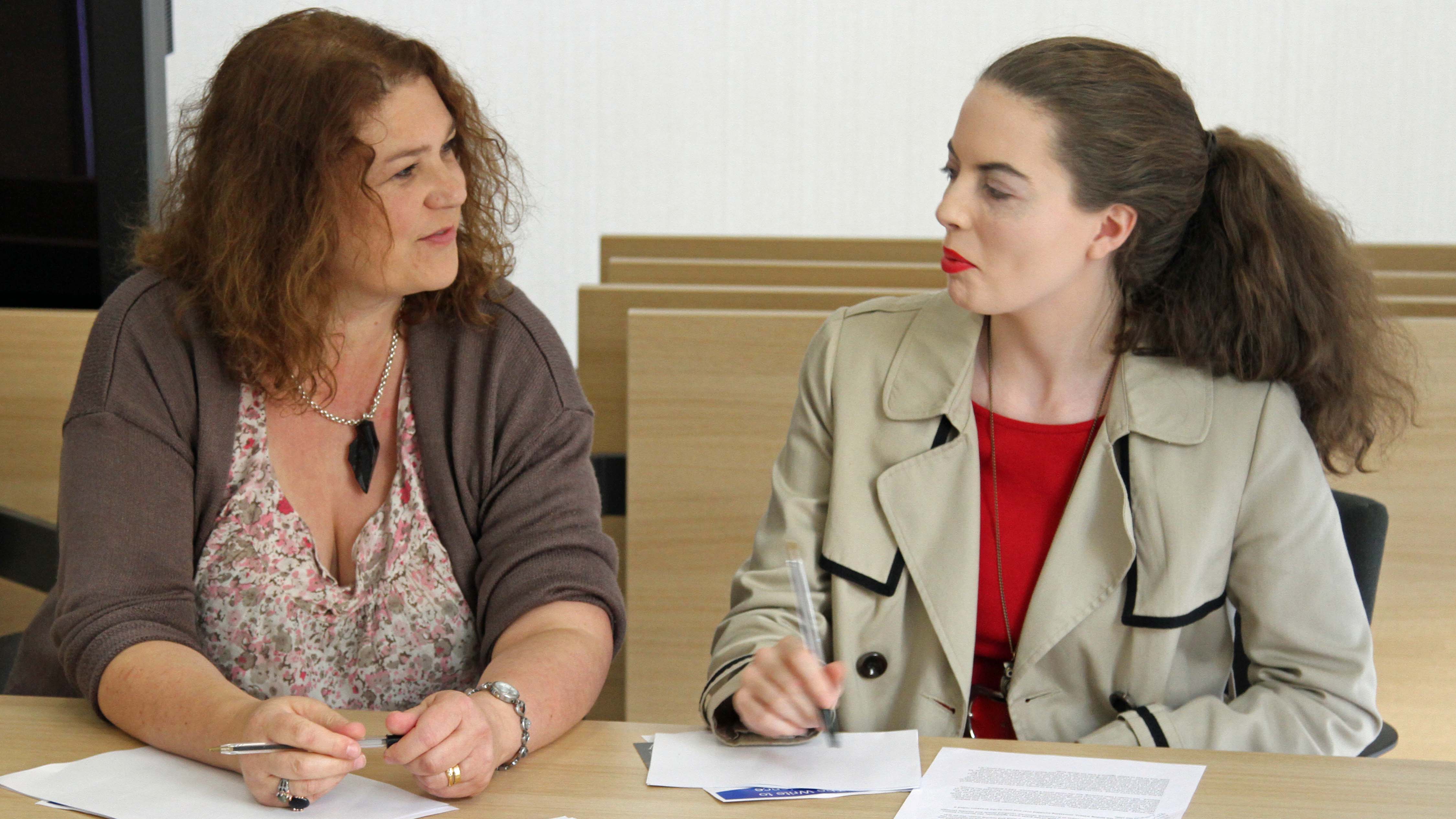

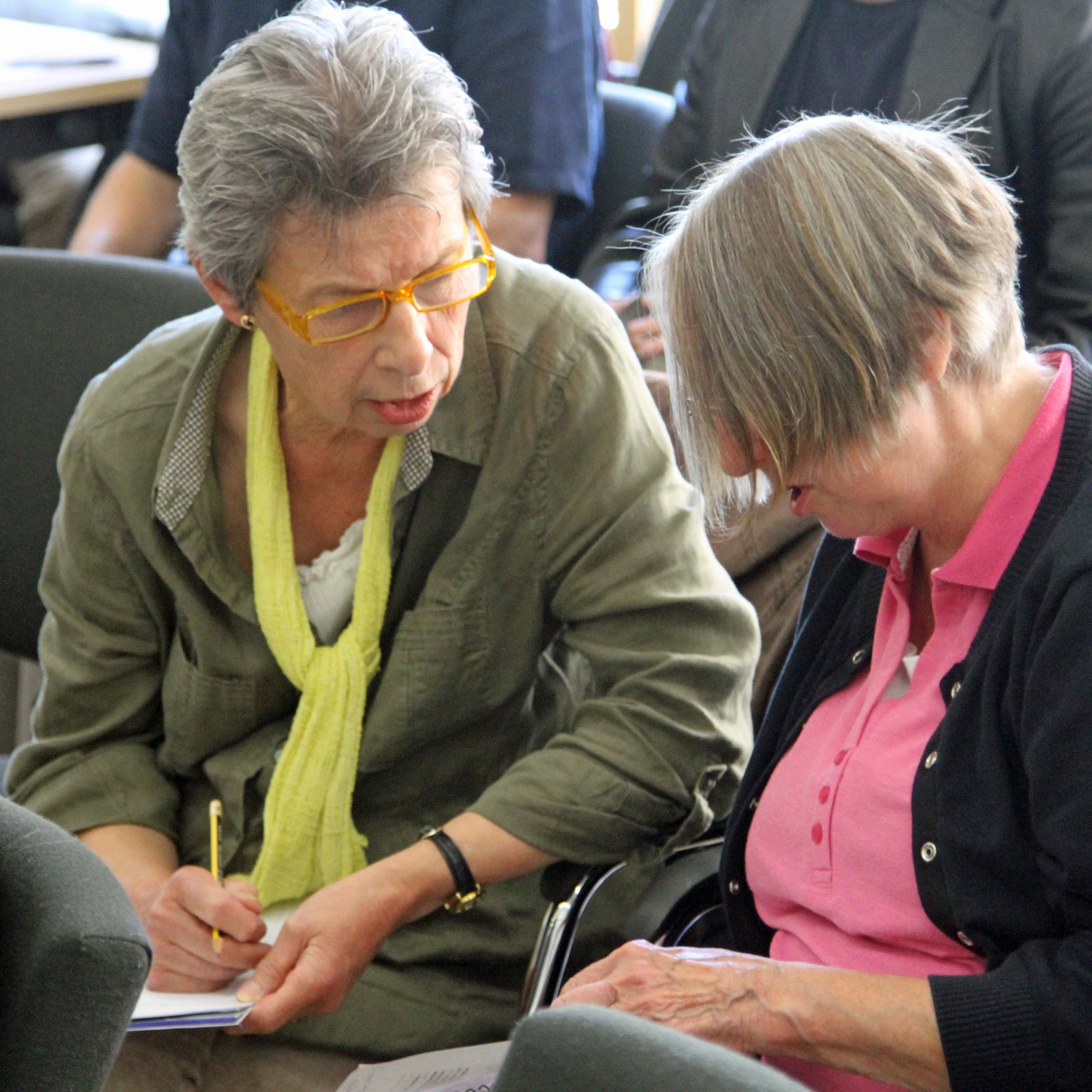


I then went on to explore some of the practicalities of getting published and what new (and, indeed, established) authors need to do in order to engage and keep their readers. This audience was thoughtful as well as appreciative and turned it into a dynamic, interactive session. Finally, I read the opening chapter of Sausage Hall, the third in the DI Yates series, which will be published on 17th November; it was well-received (I’d been holding my breath, as I’m sure all authors do when they give their new ‘baby’ its first airings). The workshop members were generous: many bought copies of In the Family and Almost Love in the signing session at the end; some were kind enough to buy both.
The informal debate continued after the workshop was officially over. Several participants said that they’d been delighted to receive Salt Publishing’s online alerts. If any of the readers of this blog would also like to obtain these, just let me know and I’ll pass on the information.
Very many thanks indeed to Alison Cassels and the rest of the staff at Wakefield One (not forgetting those who work in the Create coffee shop, which produces a mean cappuccino!) and heartfelt gratitude to all those who joined the workshop – I hope that you will become occasional or even regular visitors to this blog.
Liverpool, making virtual a reality, with panache…

Yesterday I was privileged to attend the Writing on the Wall (WoW) literary festival in Liverpool. It was held in Liverpool’s wonderful new (it opened to the public just over a year ago) central library, which has been expertly refurbished so that it combines the best of the old, classically-built library exterior with a stunning, light-filled new building, the atrium of which is awe-inspiring in its use of space and light.

Liverpool Central Library, atrium and skylight dome
Yesterday’s event was superlatively well organised by Abi Inglis, a recent graduate of Liverpool John Moores University, who runs her own online magazine (Heroine) for women and has been helping with or running literary events in the city for several years. Madeline Heneghan was the overall festival director and Mike Morris the operations director.
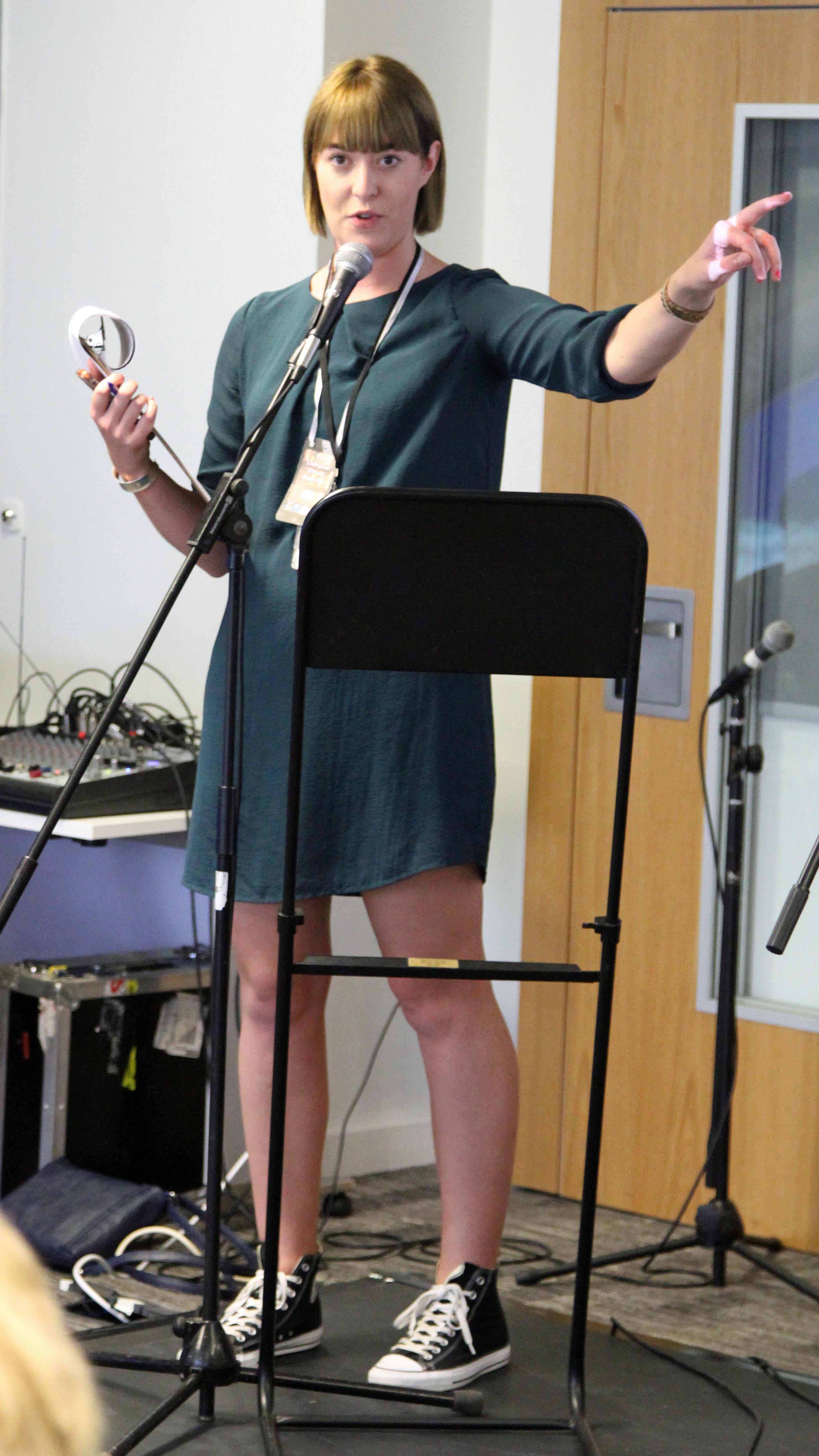
Abi Inglis, Wowfest organiser
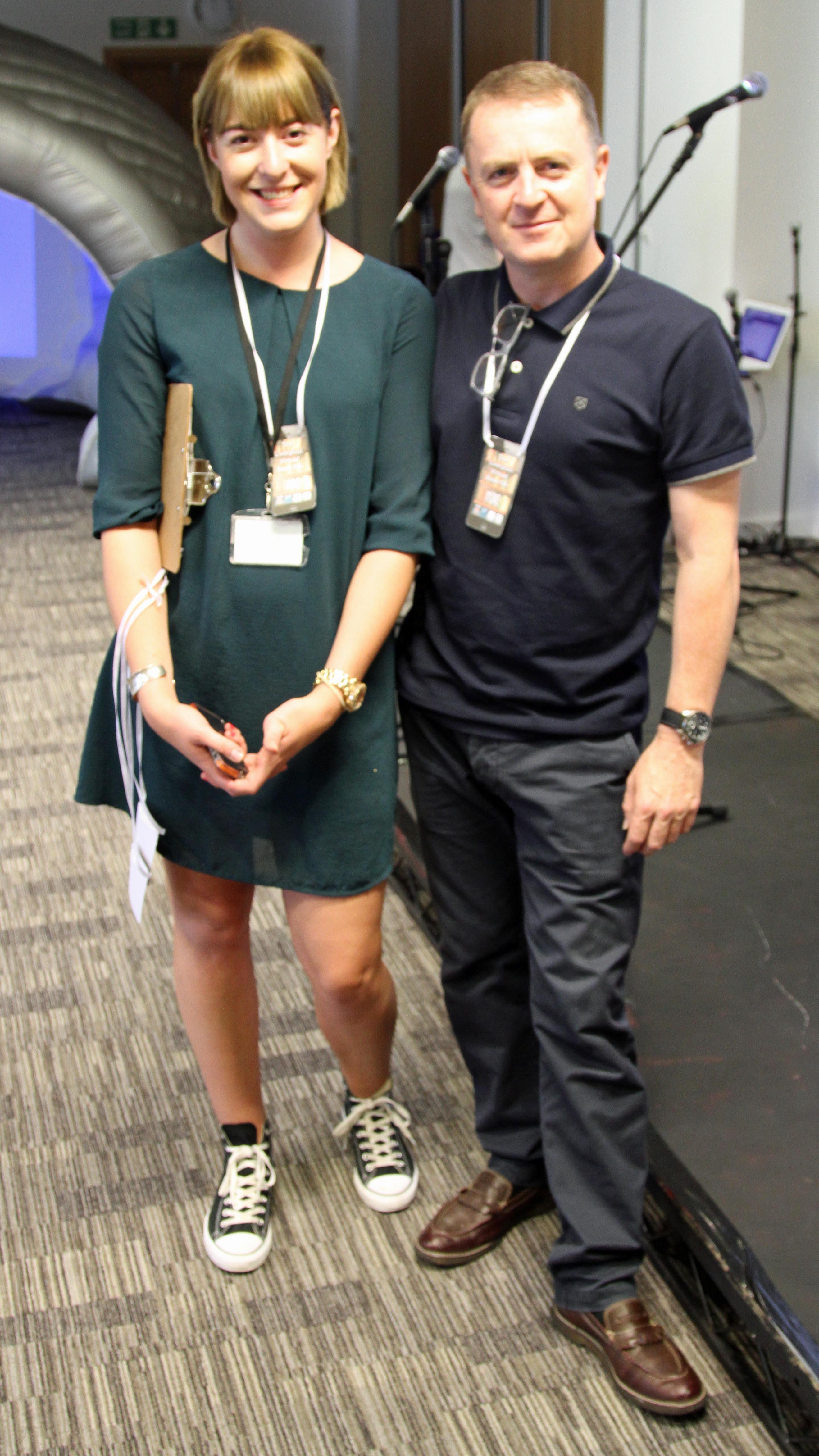
Abi Inglis and Mike Morris, completely confident of the impact of Writing on the Wall!

Festival Director Madeline Heneghan opens Wowfest
I was doubly grateful to Abi, because, as well as inviting me to talk at the festival about how to get published, she also gave me a short slot to read the opening chapter of my next DI Yates novel, Sausage Hall, which will be published on 17th November. This was Sausage Hall’s first public outing, and marks the start of a series of events that Salt and I are planning both in the lead-up to the publication date and immediately afterwards.

Giving ‘Sausage Hall’ its first outing
Even better, Abi devoted a large part of yesterday afternoon to Salt and Salt authors. Mike Morris, himself a published playwright, interviewed Jon Gale, a young Liverpudlian author whom he obviously admires greatly and whose novella Albion was recently published by Salt as part of the Modern Dreams series.
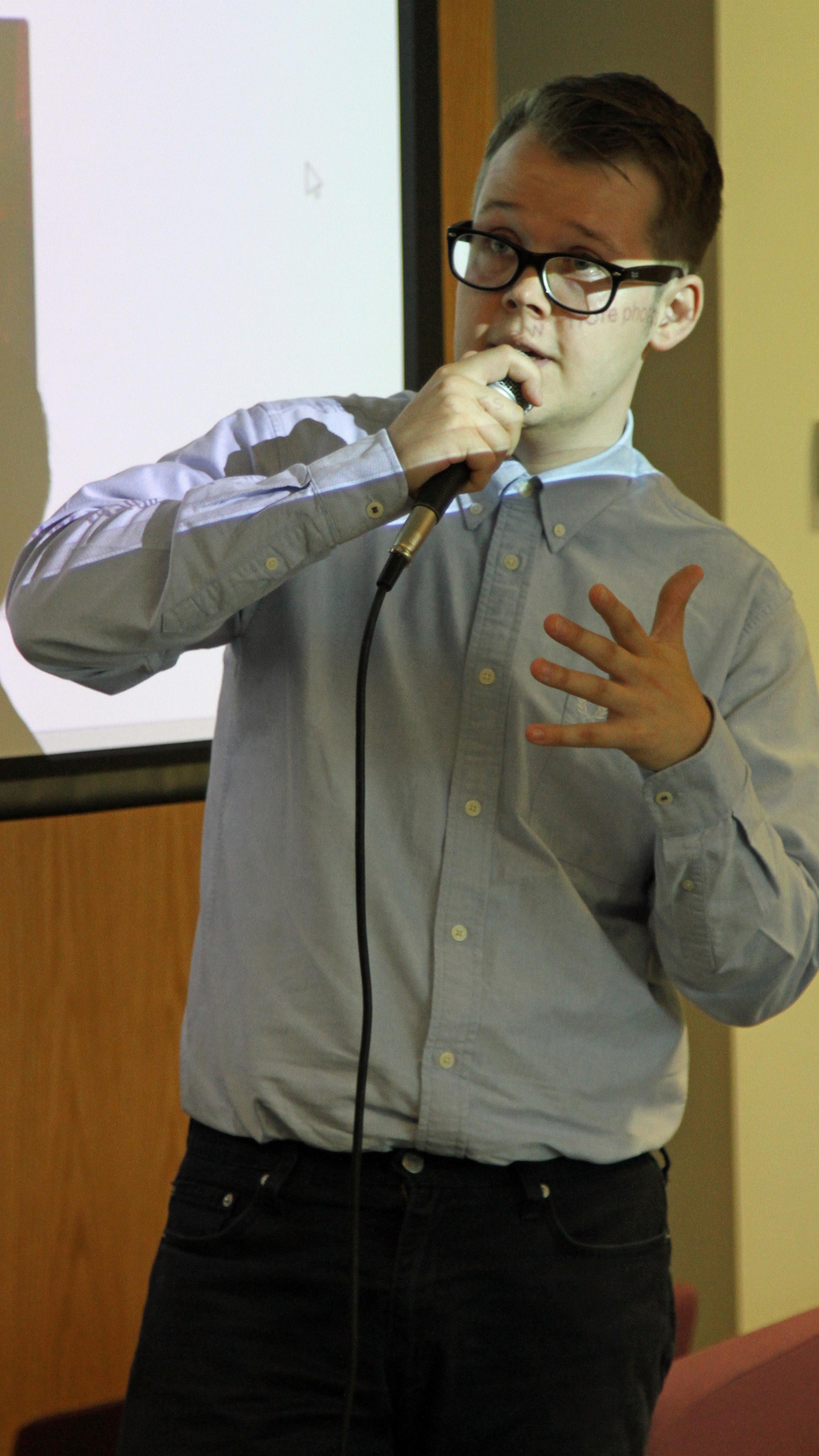
Jon Gale in animated response to Mike Morris’ questions
Mike then chaired a panel session of four Modern Dreams authors: Jon Gale, Denny Brown, Michelle Flatley and Jones Jones. This was one of the best panel sessions I’ve ever seen conducted at a literary festival. Mike elicited comments from each of the authors with great skill, giving them each an equal opportunity to talk, and they were all courteous, articulate and extremely interested in each other’s work. It was a proud day for Salt!
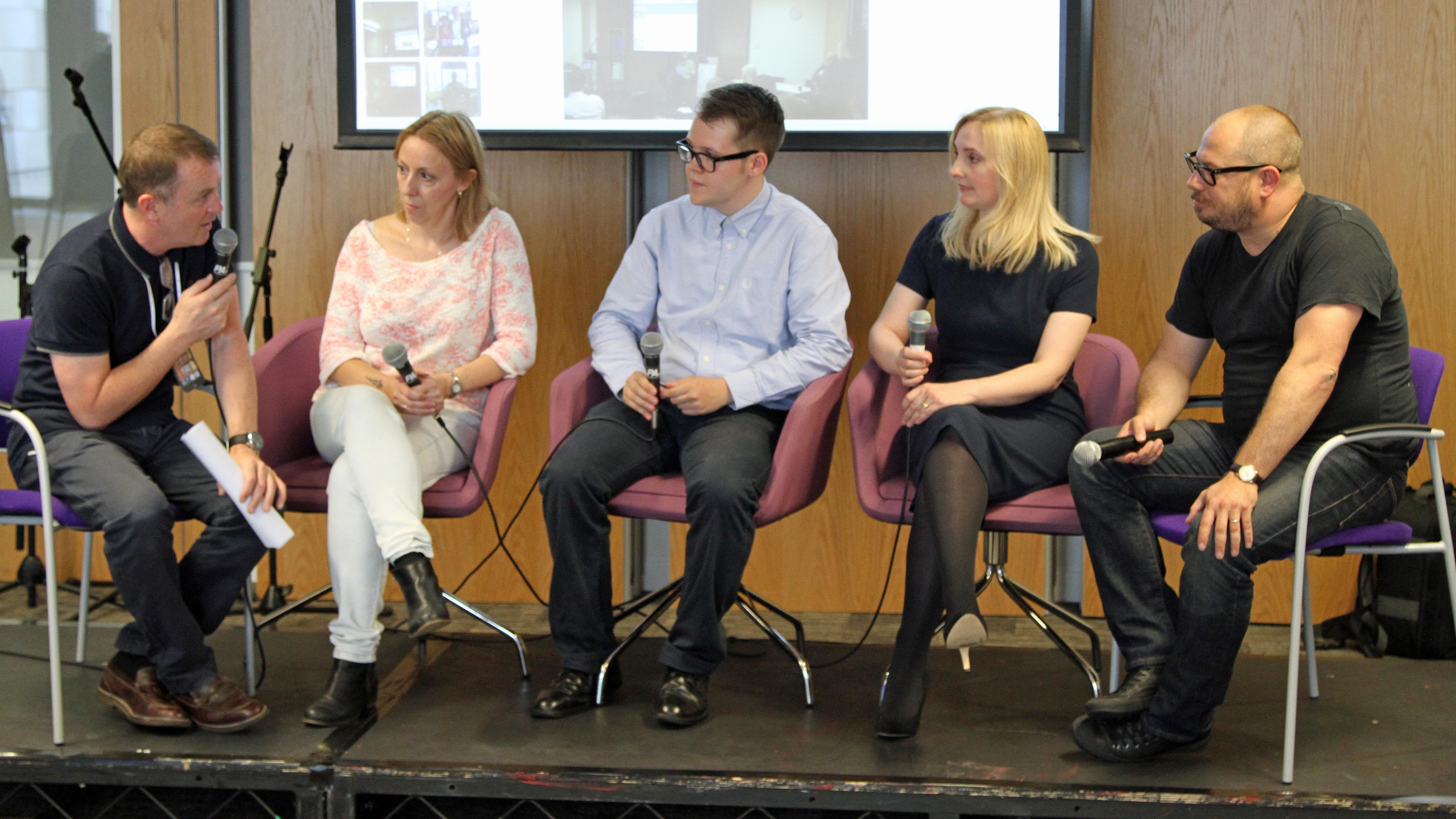
Mike Morris and the Salt Publishing ‘Modern Dreams’ panel
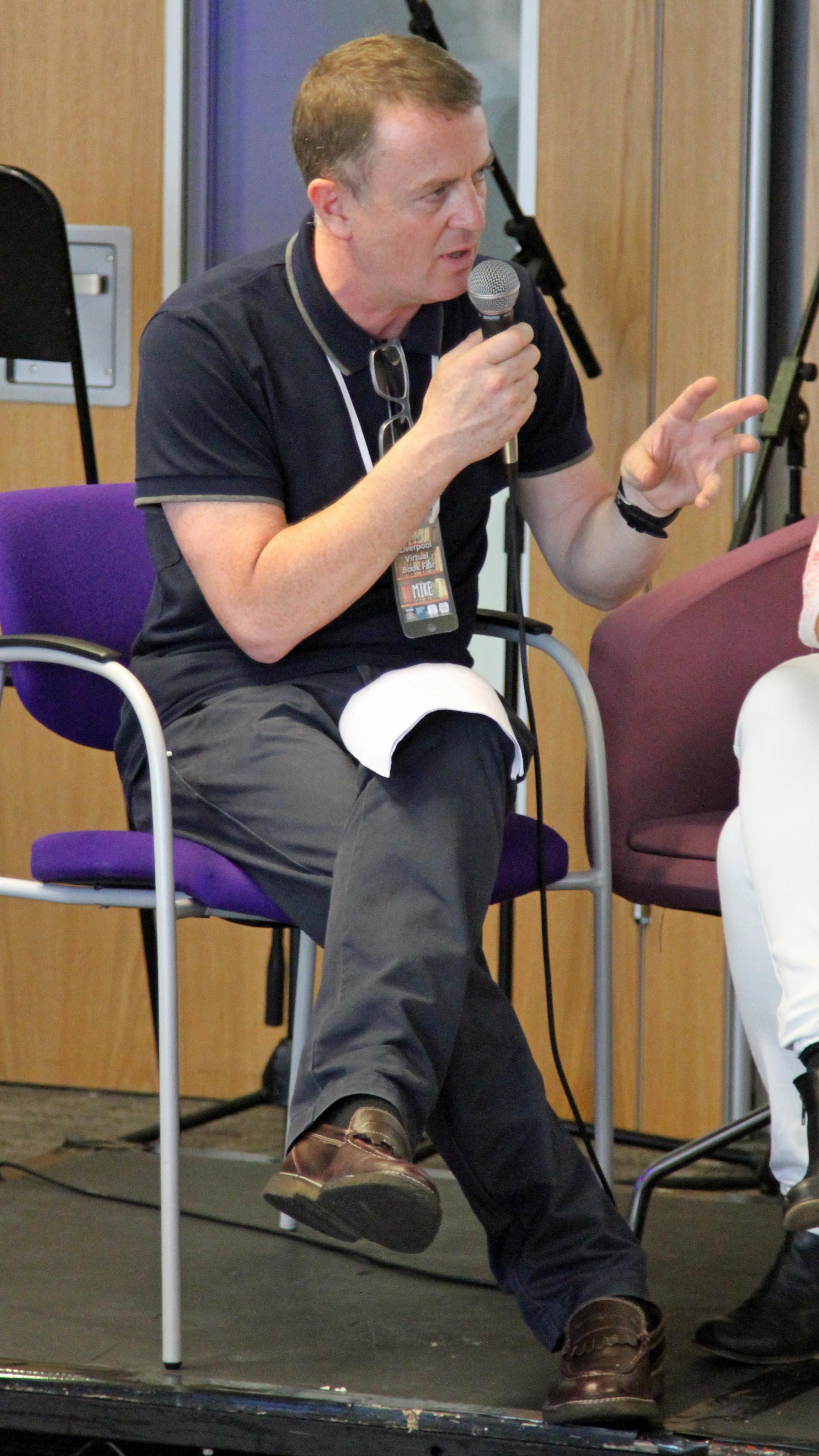
Mike in fine form, drawing out the best from the panel members
Knowing that I was going to meet them, I read each of these authors’ novellas before the event, and was hugely impressed by them (Denny Brown’s is called Devil on your Back,

Denny Brown
Michelle Flatley’s Precious Metal,

Michelle Flatley
and Jones Jones’ Marg).

Jones Jones
They all had an interesting story to tell about their journeys towards being published by Salt: Denny Brown, a mother of five, was the victim of an abusive marriage; Michelle Flatley is an artist who teaches refugees; Jones Jones is a journalist who has recently felt the compelling need to write fiction; Jon Gale has struggled for several years to find a publisher since leaving university. I recommend all their novellas: they’re ideal for commutes or train journeys, or simply for rainy evenings at home – I’m certain you’ll find that the time spent reading them will be more entertaining than watching TV. All are available as e-books from a variety of channel providers, including Amazon, which has just launched a promotion for the whole Modern Dreams series.

A privilege to sit at the feet of so much talent
I was sponsored to talk about ‘How to get Published’ by PrintonDemandWorldWide, whose new venture, The Great British Bookshop, provides authors with an alternative to Amazon if they want to self-publish but need help with sales channels.

‘How to get published’, talk sponsored by PrintonDemandWorldWide
PODWW gave me some notebooks, pens and guidelines for authors to distribute at the festival, which proved to be extremely popular.
I can’t conclude this post without mentioning what a wonderful public audience the city of Liverpool produced for this event.

Snapshot view of an ever-changing but ever-attentive and supportive Liverpudlian audience
It was one of the most diverse audiences I’ve met at a literary festival: families brought their children; there were many teenagers and young adults; quite a few senior citizens and some people with disabilities took advantage of the easy access to the library to join in the festival fun. All listened keenly, welcomed the authors enthusiastically and asked great questions. The main festival arena was packed at all times and the ante-rooms, where authors’ surgeries and DVD presentations about apps took place, were also always full. An inflatable ‘pod’, another of Abi’s brainwaves, which offered a range of activities for children, was also very popular – and frequented by children of all ages!
Well done, the festival team and the city of Liverpool, for an absolutely stunning event.

Framed by Wowfest!
Footnote: If you’re organising a literary event this autumn and would like me to give a reading from Sausage Hall and explain how I came to write it, please let me know. Salt is also offering a limited number of reading copies and there will be a competition later in the autumn to help to promote it. More details will appear here and on the Salt website.

The Liverpool Central Library roof terrace and skylight dome

One of the views from the roof terrace
The art is in the telling at Winchester…

Judith Heneghan, Festival Director
I’ve just returned from two days at the University of Winchester Writers’ Festival. It is one of the more famous and established UK festivals, now in its thirty-fifth year. It was my own first visit, however, so I know nothing of its previous history, but I do know that Judith Heneghan took over as its director this year. Before I write more about the festival, I’d like to thank both Judith and Sara Ganjai for their superlative organisation and unfailing good temper during the whole two-day period. It was a wonderful occasion, extremely well-attended, that also benefited from taking place at the exact point of the summer solstice (Stonehenge is, of course, not so very far from Winchester) and during two days of exceptional sunshine, which itself contributed to the general good humour. Nevertheless, I know from my own experience of organising events that there must have been many small hiccups and minor catastrophes which Judith and Sara and their team handled silently and efficiently, whilst always appearing entirely unruffled. Judith is already putting her own stamp on the festival as it enters a new era: an innovation that she has introduced this year is a scholarship programme which awards ten free places to young writers. It was my privilege to have been able to meet some of them.
Early on Saturday morning, Joanne Harris gave the keynote talk. This was planned as the pivotal event of the festival and it did not disappoint. Introducing her, Judith said that she had invited Joanne because she is an extraordinary writer who defies categorisation: her characters are memorable to both young and old and she is not afraid to take risks with her writing.
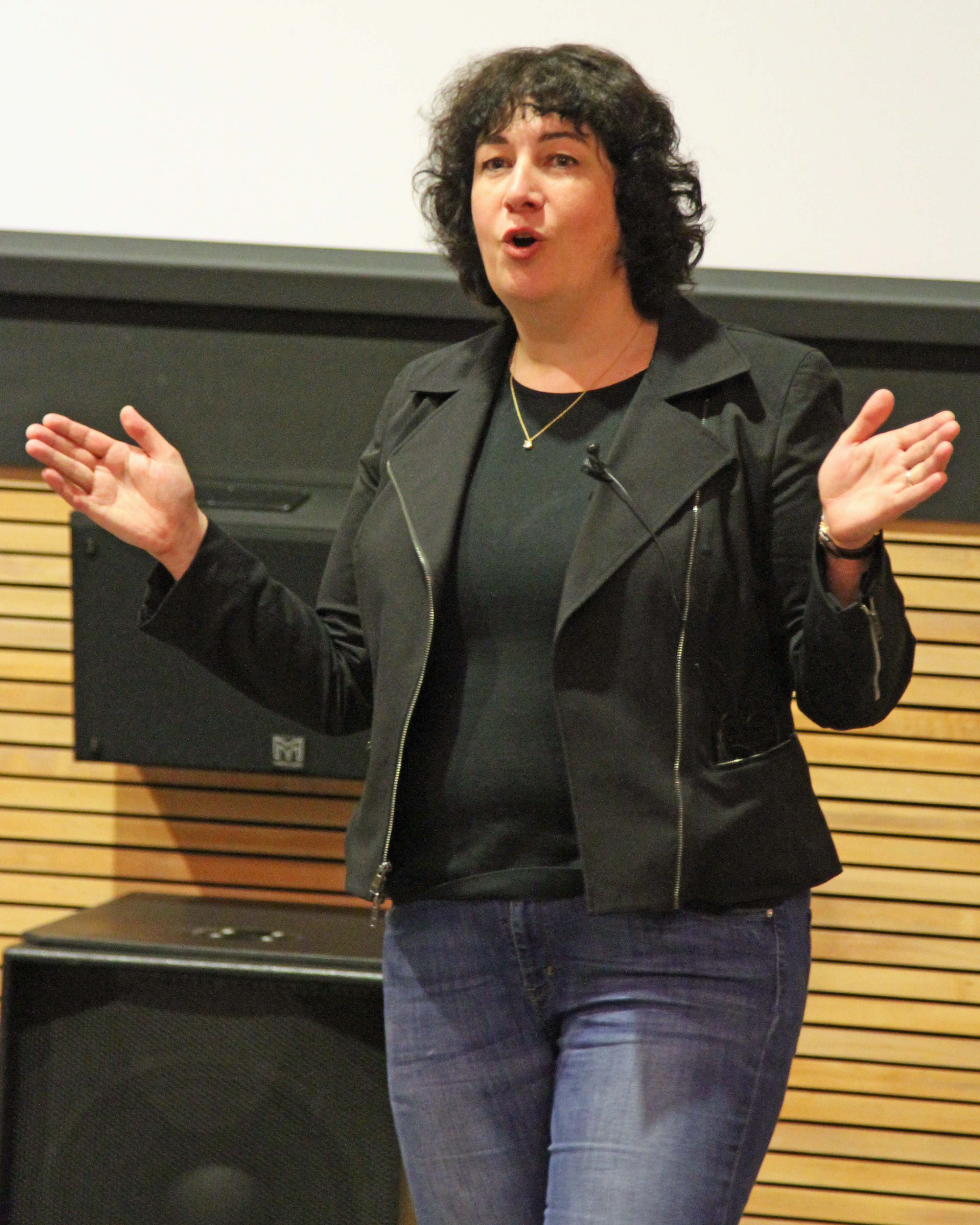
Joanne Harris, Keynote Speaker
Joanne began by saying that finding stories and recognising their value is sometimes more important than telling them. She herself grew up in a house full of stories. However, both her her parents were teachers, so it was clear (some enjoyable irony here!) that she also was being ‘genetically groomed’ to be a teacher. Her mother was quite a tough matriarch and when, aged seven, Joanne said that she’d like to write books, her mother said ‘Oh, yes, is that so?’ and led her to her own bookshelves, which were full of the works of dead French authors and poets (her mother was French) who she said had died destitute in the gutter. ‘Darling, this is why you need a proper job.’ Joanne said that actually all writers need a proper job and that hers (as a teacher of languages at Leeds Grammar School) had, in fact, provided her with many stories!
She continued with an anecdote that was personally fascinating to me, living as I now do in South Yorkshire, about Barnsley Library, which she was allowed to join, aged seven, and issued with a pink junior ticket. This was not the library that exists today in Barnsley, that I am myself familiar with, but its forerunner. She said that it was situated above the Centenary Rooms and was characterised by a big vaulted archway, an odour of damp and dust… and utter silence. There was only one shelf of books considered suitable for children: Joanne instantly wanted to know what the ‘unsuitable’ books were about, particularly as her mother had herself acted as censor of Joanne’s reading and imposed several ‘banned’ categories, including works of fantasy and science fiction. However, mythology was allowed and consequently the first book Joanne took out was The Thunder of the Gods, by Dorothy G. Horsford. She was held spellbound by this book and borrowed it many times subsequently, until, aged nine, she was allowed to obtain a blue ticket and join the adult library, even though you were supposed to be thirteen before you could do this (I’ve written elsewhere about how I was similarly allowed to join the adult section of the library in Spalding while I was still at primary school.). As an example of ‘stories coming back to bite us’, she said that many years later she found herself looking for a copy of The Thunder of the Godsto give to her daughter. It was long out of print, but she managed to track down a copy on Amazon’s AbeBooks. When it arrived, she realised that it was the same copy that she had borrowed from Barnsley Library as a child. This anecdote was an inspired way of introducing her latest book, The Gospel of Loki.
Joanne Harris concluded her talk with some thoughts on her theory that telling stories has a ‘chaos effect’. She said that a properly-written story can do all sorts of things: it can change people’s lives, make them want to read (or not to read) or empower them. She had been surprised to find that reading Chocolat had inspired some of her readers to open chocolate shops. Chocolat had itself spawned lots of other stories. Her publishers had asked her to write a cookery book that included some of the recipes that she’d featured in Chocolat, and although ‘not much of a cook’, she’d agreed to do this because she wanted to give the proceeds to Médecins Sans Frontières to supports its fight against sleeping sickness in Africa. Because of her donation, MSF sent her to the Congo, where she stayed for two months – longer than she had intended – and, in a remote village, met a very old woman, who was probably in her 90s and spoke French. She’d never left the village and found it difficult to envisage where Joanne had come from, but they each had a fund of stories about similar things: magic, witches and rivers. Joanne collected many stories from her and concluded that this was an example of the ‘chaos effect’ at work. When the old woman had recovered from her illness, she got up to leave with all her possessions piled on her head. Looking back over her shoulder, she delivered her parting shot: ‘Remember this: stories do everything. You should encourage other people to write stories. Write some of my stories: they are good stories.’ This was an inspiring note on which to end the keynote address of the festival; indeed, as a talk to inspire budding or struggling authors to keep on writing, in my own experience this one has had few equals.
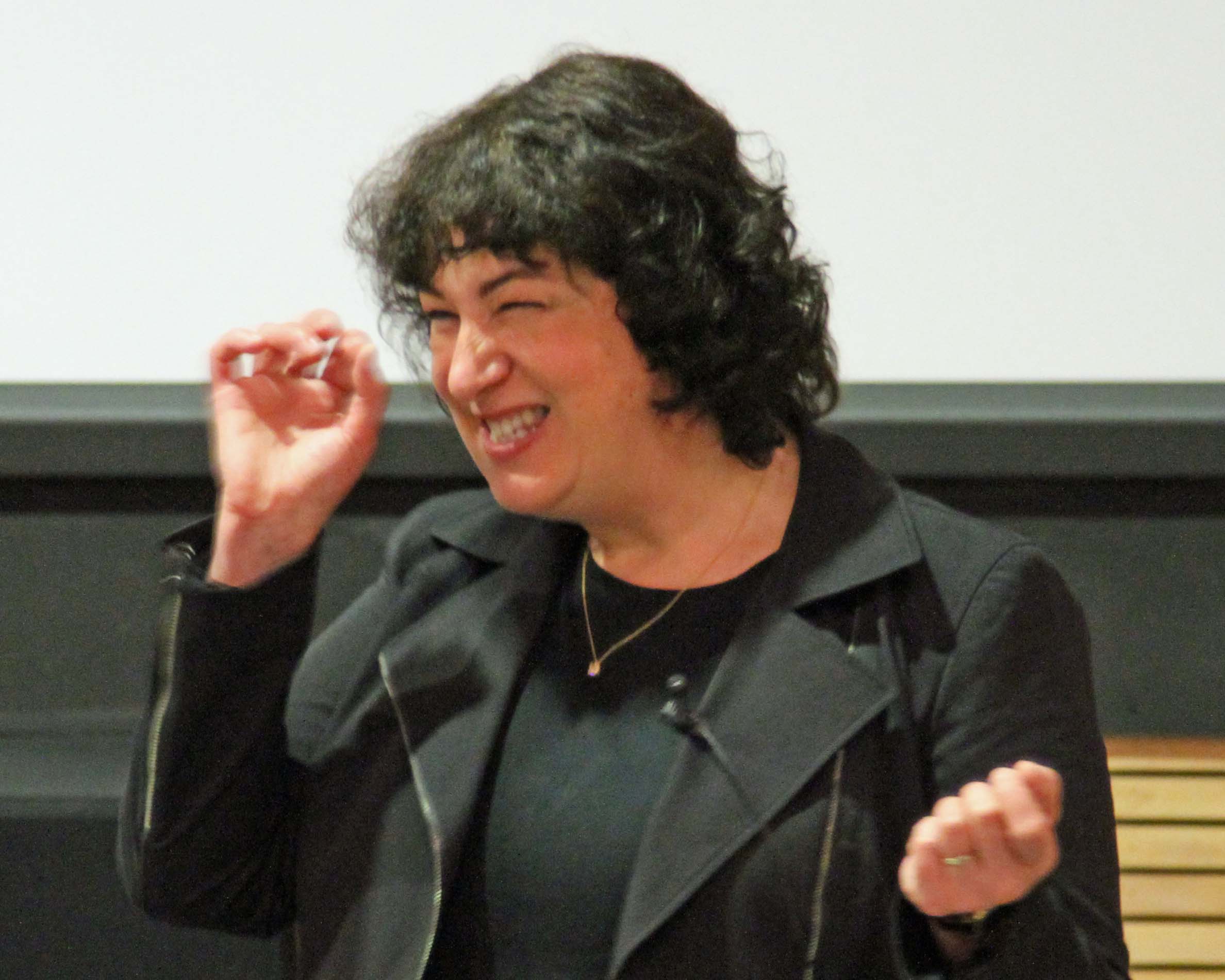
A lively delivery!
This is already quite a long post, but I can’t conclude it without mentioning a few other things that particularly struck me about the festival. Firstly, there was the book stall, run with unfailing professionalism and courtesy throughout the entire event by David Simpkin and some of his staff from the P & G Wells (independent) bookshop in Winchester. I’m proud to welcome David to this blog and delighted to have him as a Twitter friend. I’d also like to pay tribute to the creative writing students at Winchester University, who worked hard to make sure that all delegates had exactly what they needed at all times. Finally, I’d like to thank the many authors who chatted to me and shared with me their ideas and experiences. It was a very great pleasure to meet you and I certainly hope that some of our paths will cross again. If you’re reading this now, welcome here!
This best-laid plan of Mister Gove… awry!
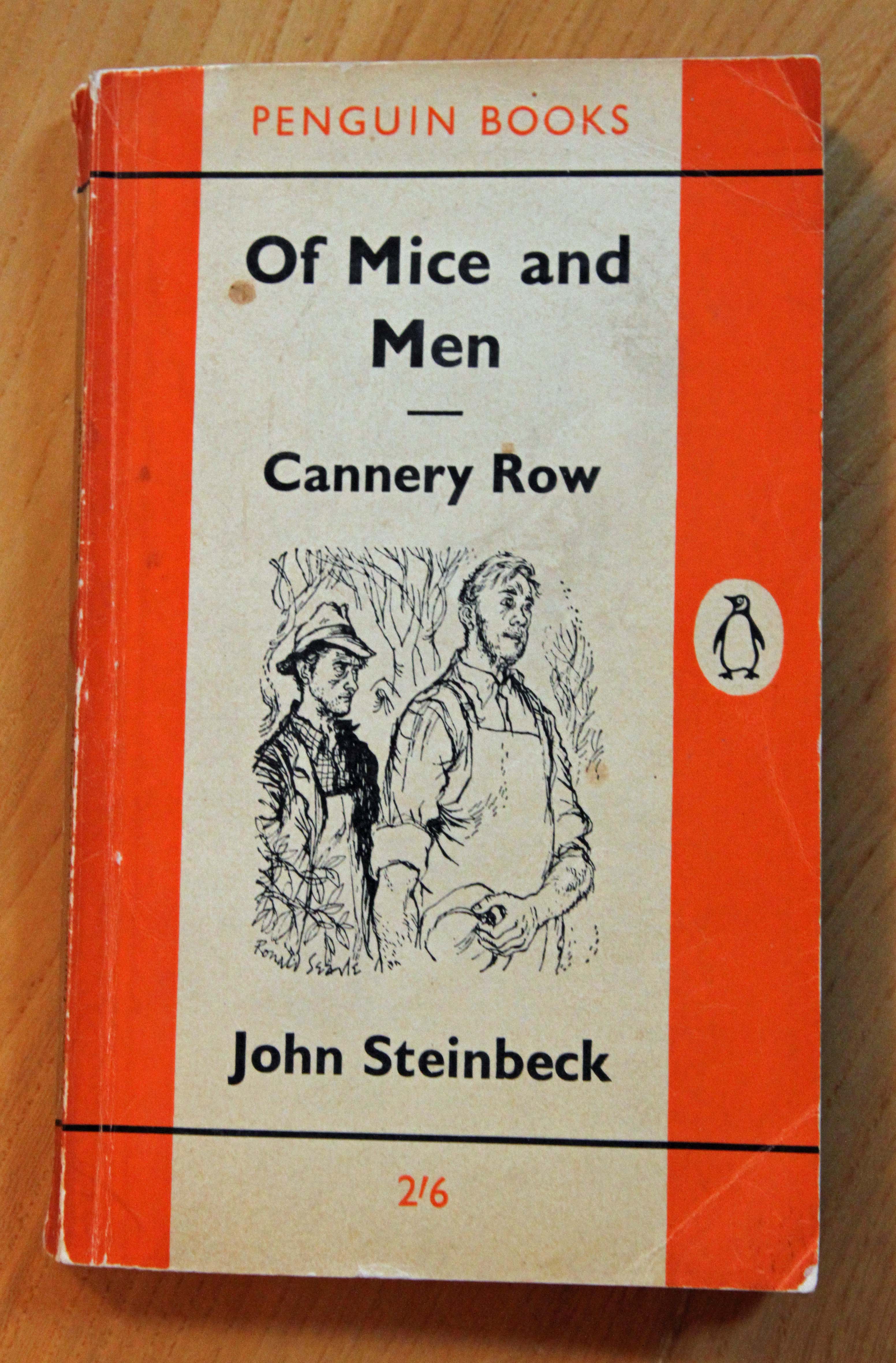
I have been following with interest and more than a degree of indignation Michael Gove’s latest attack on teachers. This time it has been directed at their choice of the fiction to be studied by GCSE English Literature students. Mr Gove seems to be determined to outstrip UKIP by including non-British (albeit anglophone) novels as part of the current general political witch-hunt to root out anything or anyone that does not originate in these islands and to take one of his regular side-swipes at the teaching profession in the process.
Everyone is entitled to his or her opinion about Of Mice and Men, of course. But I would question whether Mr Gove has a right to thrust his own idiosyncratic dislikes and preferences on to those whose daily occupation it is to teach or to set examination syllabi. It seems to me that he should respect the judgment of the teaching profession, which has a collective understanding not only of the needs and capabilities of students in modern, multi-cultural schools, but also a profound appreciation of what makes those students ‘tick’. It is all too common for people to think that they are experts in teaching, just because they have themselves been to school, though I’ve always been surprised by the arrogance of this assumption. It’s easy to look back on one’s own school-days with (possibly spurious) rose-tinted spectacles, as Mr Gove apparently frequently does, but this hindsight is about as relevant to what is going on now as asserting that a woman’s place is in the home or that shops should not open on Sundays.
As it happens, something good has come from Mr Gove’s latest outrage, in my own household, at least: until this week, I was not familiar with Of Mice and Men, though we have a copy of it in the house; I have read other novels by Steinbeck, including The Grapes of Wrath and Cannery Row, but somehow Of Mice and Men had passed me by. I mentioned this to my husband, who offered to read it aloud to me in the evenings. He completed it in three sessions.
My husband is an inspired reader-aloud as well as being a very fine teacher. I realise that it’s in no small measure owing to this that he held me spellbound throughout, but I was also entranced because of the quality of the book itself. As readers of this blog may have deduced, I have several English degrees and, even more to the point, am a lifelong avid reader (though I don’t think this has made me blasé in any way – I’m always looking forward to the next book), but I still found this novel exceptional. I know that it will stay with me. It is deceptively simple (not clunky or clumsy, as Mr Gove avers). It belongs to the ancient tradition of the fable. Because I had the privilege of listening to it, the characters appeared to me in more heightened relief than if I had been reading it myself. I saw them as clearly delineated as if they had been woodcuts in an early printed book.
Like all classic fables, Of Mice and Men explores fundamental issues of right and wrong, masculine and feminine (in the widest sense – for example, some of the ‘archetypal’ feminine characteristics are displayed by George, one of the two protagonists) and the nature of the damage that humans inflict on each other – through mental and physical oppression or unthinking prejudice. That Curley’s wife has no name is intentional. Characterised as a ‘tart’ by the bunk-house ‘swamper’ Candy and even by the normally perceptive George, she is in fact as lost and lonely as the drifting ranch-workers, the disabled Candy and the despised ‘nigger’ Crooks, who is not allowed in the bunk-house. The troubled existence of the mentally-retarded Lennie, a man cast loose upon an uncaring world with no-one to protect him except George once his tough but sympathetic Aunt Clara has died, points up the flaws of a society in which people lead such a brutalised, hand-to-mouth existence that there is little room for true humanity. Only a few exceptional individuals, such as George and the hieratic and god-like Slim, are able to show compassion. Yet it is also a funny novel, even if in a bittersweet way. Steinbeck achieves this in part through George’s oft-quoted vision of the ‘little place’ (‘An’ rabbits, George!’) that he and Lennie are going to buy – which turns out to be every casual ranch-worker’s shared dream – and in part through the everyday ironies and minor triumphs and disappointments that make up the lives of these untutored folk. The character of Aunt Clara is a touch of genius: although she never appears ‘on stage’, she acts as a forceful presence throughout, chiding, chivvying and cherishing Lennie to the end.
After my husband had finished reading this novel to me, we had an impassioned conversation about the purpose of teaching literature and what this means in a comprehensive school where the students’ abilities range from very gifted to what can be expected from those who come from deprived homes where reading is not encouraged at all. He said that part of the magic of Of Mice and Men is that the book appeals to students across the whole ability spectrum. The brightest ones can pick up all the nuances and ironies in which the book abounds – almost every word has significance in this, one of the most sparingly written works I’ve ever come across – and even those who struggle with basic literacy can derive a real sense of achievement from empathising with its characters. This is why teachers choose it: not because it represents a ‘soft’ option, but because, at different levels, it holds magic for everyone.
Its magic certainly worked on me. I feel the richer for those three evenings during which my husband read it to me (He ‘does’ American superbly, by the way!). I hope that this will be the start of a new tradition in our household, in which we read to each other on a daily basis. But more than anything, I hope that our teachers of English, embattled and increasingly circumscribed by rules and random strictures as they are, will somehow be able to discover another novel that holds such universal appeal now that Of Mice and Men will be no longer available to them. My message to Mr Gove is to make no mistake: this will not be as easy as it sounds. Today’s students do not want to share in his childhood nostalgia. They have lives of their own to lead and sensibilities that can certainly be touched by literature, but not necessarily through the books which he endorses. He doesn’t understand how young people now can be intellectually stimulated: why would he? But he doesn’t need to: this country has an admirable army of more than 600,000 teachers, all of whom know better than he. Listen to them, Mr Gove. Just listen. And perhaps ask someone to read to you Of Mice and Men aloud.
 Christina James, crime novelist