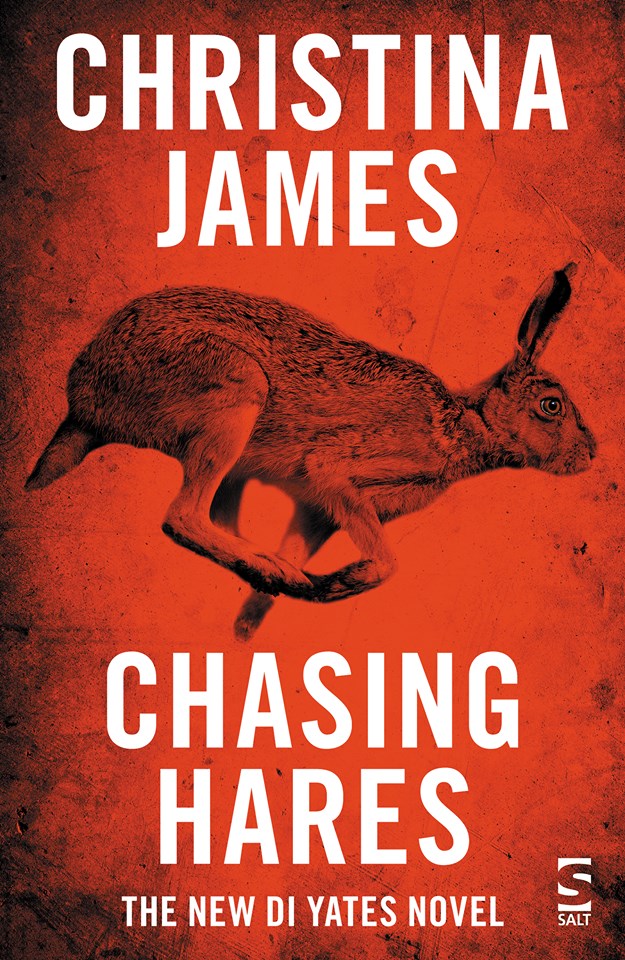


Boris Johnson won’t do for me!
The well-known quotation from Jane Austen’s 1816 letter to her nephew, Edward [“the little bit (two inches wide) of ivory on which I work with so fine a brush, as produces little effect after much labour”] seems to have been a metaphor comparing the fashion for painting miniature portraits of people upon small sections of ivory to the delicate depiction of characters in Jane Austen’s own writing. There is (Don’t we know it!) author frustration here, as well as an acknowledgement that creating characters who are convincingly real is a lengthy and laborious business. Readers often ask if fictional characters are based on real people, especially when their delineation is complex; the beauty of fiction is that our contact with humanity provides not only a splendid range of interesting individuals, but also (much more useful!) unlimited character traits and mannerisms to drum into service in a book. Bits of this and bits of that may be merrily joined together into a fictional original; ‘larger than life’ is an apt way of describing such a one. In these days of (sadly) increasing conformity to society’s norms, what is really exciting is to meet real larger-than-life characters, as they spring uniquely fully formed, with glorious individualities and eccentricities, out of the amorphous mass of the majority.
As a writer, I might take the ‘idea’ of a Boris Johnson, but, even with all his astonishing absurdities, I shouldn’t have a place for him in my book; he wouldn’t fit. He is much better left where he is, in reality, for people to enjoy there.
Blanc is the new noir
 In true Leadbelly fashion, I woke up this morning convinced that the blues had got me; it must have been the impact of too much noir in books and on television over the weekend. What is it in human nature that always pushes us towards ever-darker stimulation? I am reminded of the fashion for gothic in the late eighteenth century, when there was plenty of noir about to titillate readers ever more hungry for the gruesome, the erotic and the oneiric. Fortunately for sanity, there is always an antidote to this and parodies of noir inevitably follow too great an emphasis on the nastier, seamier side of life. Jane Austen’s splendid satire on the gothic novel, Northanger Abbey, must have been very refreshing to readers suffering too much of a bad thing.
When I have had enough of the mean streets of the gritty city and the jaundiced and jaded detective soured by too much corruption amongst criminals and police superiors, I start looking for something lighter to compensate. Too much Philip Kerr? Perhaps I’ll come up with some Birmingham Blanc. Nothing like a bit of fun when the blues get you.
It’s fiction, after all…

November morning over Nottingham
Some wonderful skyscapes have been recently circulated on Twitter – and enjoyable comments, too, about the sky and the weather, such as: ‘Sky the colour of boredom.’ (@CathStaincliffe) Those of us who live in the British Isles, quite understandably, talk, think, eat, sleep and dream weather; it’s part of our psyche. Hardly surprising, then, that writers should use weather to reflect human feelings or to create mood or to set a scene. Ruskin coined the term ‘pathetic fallacy’ for the way human feelings falsely find themselves attributed to non-human things, personifying them, in effect. There is the poet in us who makes a connection between feelings and (especially) weather – and the hard scientific or meteorological reality can go hang. A sky can threaten rain, of course, but a threatening sky can become a powerful symbol of human danger: Banquo: ‘It will be rain tonight.’ 1st Murderer: ‘Let it come down.’ The Brontës were not unacquainted with the technique (Well, they lived in Haworth, after all!) and you don’t have to go far into crime fiction to come across it. We love it and exploit it and it would be a dismally humdrum realist who would take issue with its authenticity!
@EMAldred has kindly allowed me to use a Nottingham skyscape to illustrate this post. I hope, too, that visitors here will contribute their favourite crime fiction weather moments as illustrations.
Laura Thompson’s Daily Telegraph article on crime fiction
Laura Thompson’s Daily Telegraph article, Emma and the detectives, http://www.telegraph.co.uk/culture/books/booknews/9672296/Emma-and-the-detectives.html today poses the question ‘Is crime the new literary fiction?’, in advance of tonight’s Kings Place debate on the topic. Having considered whether crime fiction provides contemporary relevance (Of course, some of it does!), Laura Thompson moves to her central thesis, that it is the superior entertainment value that causes its popularity, rather than its presentation of life in today’s world. Daringly, she offers this: “I would go so far as to say that, in a sense, all novels should aspire to the condition of crime writing: that the genre showcases what is desirable, even necessary, in a book.” To which I should reply, “If any novel is good, it will inevitably contain features characteristic of good literature; its genre is irrelevant.”
She goes on to cite Emma as a literary example of a crime novel; I have no argument with this self-evident truth. What worries me is that she goes on to say: “At the end of the book, when Emma realises, ‘with the speed of an arrow, that Mr Knightley must marry no one but herself’, the solution has all the satisfying ‘Oh, of course!’ that one gets when a murderer is identified.” Perhaps my reading of Emma is different, but Laura Thompson might like to consider that the ‘speed of an arrow’ moment is in fact the ultimate irony for alert readers who have guessed this outcome almost from the beginning of the book.
I agree with her about the entertainment value of crime fiction; however, what for me makes the best crime fiction makes the best fiction: plot, characterisation, mood, setting, suspense and to crown the lot, fine use of language.
I’m sure that a great deal of good sense will be talked tonight.
Fog at the BBC
I have always loved Bleak House and I have always found its opening chapter amongst the most powerful and satirical of beginnings. In terms of creation of mood, it is also there at the top. Dickens knew how to exploit repetition, in this case of a single word, to drive home his damning assault upon the English justice system. A description of London under fog follows a description of mire, in which people slip and slide. The fog is ‘everywhere’ and its ubiquitousness is confirmed in a panoramic sequence of memorable descriptive detail. It culminates, using a technique familiar to film audiences, with an ever-more-penetrating focus upon Chancery. ‘The raw afternoon is rawest, and the dense fog is densest, and the muddy streets are muddiest near that leaden-headed old obstruction, appropriate ornament for the threshold of a leaden-headed old corporation, Temple Bar. And, … at the very heart of the fog, sits the Lord High Chancellor, in his High Court of Chancery. Never can there come fog too thick, never can there come mud and mire too deep, to assort with the groping and floundering condition which this High Court of Chancery, most pestilent of hoary sinners, holds this day in the sight of heaven and earth.’
I have read about and watched the unfolding disaster at the Beeb with all the horror of someone who discovers that a much loved member of the family (an auntie, perhaps) has betrayed that affection and regard. With obfuscation so widespread at the BBC, I fear that the corporation has become so leaden-headed that I cannot feel sorry for it. What the Dickens did it think it was up to?
Anne Zouroudi – a lesson in style
 To read that which is beautifully written is a joy and a burst of unanticipated surprise in these days of abbreviated txt and abrupt communication. I have recently re-visited Anne Zouroudi’s The Messenger of Athens and remain as captivated as ever by the author’s capacity to express the hidden significance of things and to create a mood by magic, for we are barely conscious of her technique, so mesmerised are we by her unaffected style and visual clarity. It is not just the Greek island topography, which is evoked by subtle selection of appropriate detail and diction, but the darker touches of her sharp and cynical delineation of human nature and the sense of people’s insignificance in the wider scheme of things that nudge us into a world which is tellingly harsh; the irony of this in what is a stereotypical tourist setting is striking. A deceptively simple example from the text (four letters) is the paragraph describing how Thodoris Hatzistratis’ ‘Grandpa’ (such a warm and comfortably affectionate term) has been laid out for burial by the women, his appearance rejuvenated in death and by their ministrations. Delicate use of pejorative vocabulary, such as ‘jaundiced’, suggests a darker tone. Then, in a powerfully brief one-sentence paragraph, comes: ‘Around his nostrils, a fat fly crawled.’
Anne doesn’t know me, but I became more interested in her work after I attended a seminar that she gave at Bloomsbury Publishing in June. If you haven’t read her novels, you should.
Trains to Liverpool

I have almost finished reading The Suspect, by Michael Robotham. I hadn’t come across the author before – the book was recommended to me by a friend. I am extremely impressed by Robotham’s skilful characterisation and especially by the way that he gains the reader’s sympathy for the protagonist, who is not a very attractive character. I’m fascinated that one of the pivotal events of the novel involves a train journey to Liverpool. By coincidence, a train journey to Liverpool is also significant in the plot of my own novel, In the Family, although of course for a different purpose and with a very different outcome: Robotham’s Professor O’Loughlin finds evidence that will vindicate him in Liverpool, while my own character, Hedley Atkins, goes there to meet catastrophe. I am also gratified (See my blog entry of October 25th.) to note that the opening chapter of The Suspect gives a detailed account of the history of a cancer patient and his rescue from a suicide attempt and that this character does not appear in the novel again!
Here a post; there an entry
Yesterday I wrote an entry in my writer’s journal. It contains short entries about things that have happened and some commonplace-book-style quotations from authors I like. The journal itself was a present from a friend who had visited Florence. It has a beautiful tooled Italian leather cover and many pages – though I note with shame that the first entry was made in June 2006 and the last in August this year, so I have hardly been prolific. I think that it was Barbara Pym who said that the trouble with keeping a diary is that when you have time to write nothing is happening and when something happens there is no time to write about it. Looking at the most recent entry, I see that it describes the two stout sisters who owned the holiday gite where I was staying embroiled in a ferocious argument at dusk, while the bats flitted where swallows had twittered a little earlier and the scent of roses filled the garden. Several of their fourteen cats were standing sentry nearby and one, the most sociable, lay snoozing on the garden cushion beside me, completely at ease with the altercation… Would I have remembered this if I hadn’t written about it?
 Christina James, crime novelist