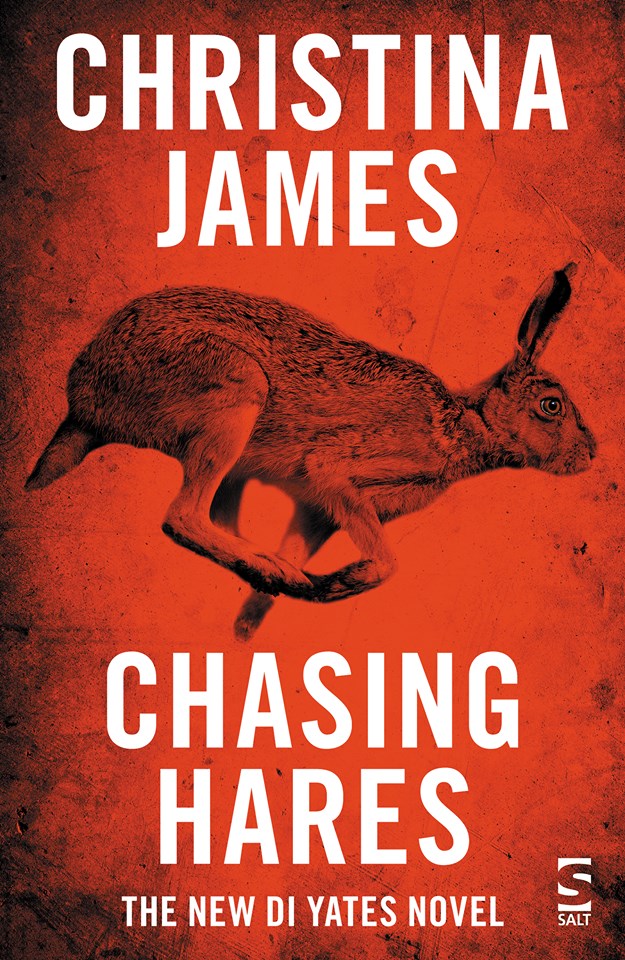


The Village: Short story opening 1.
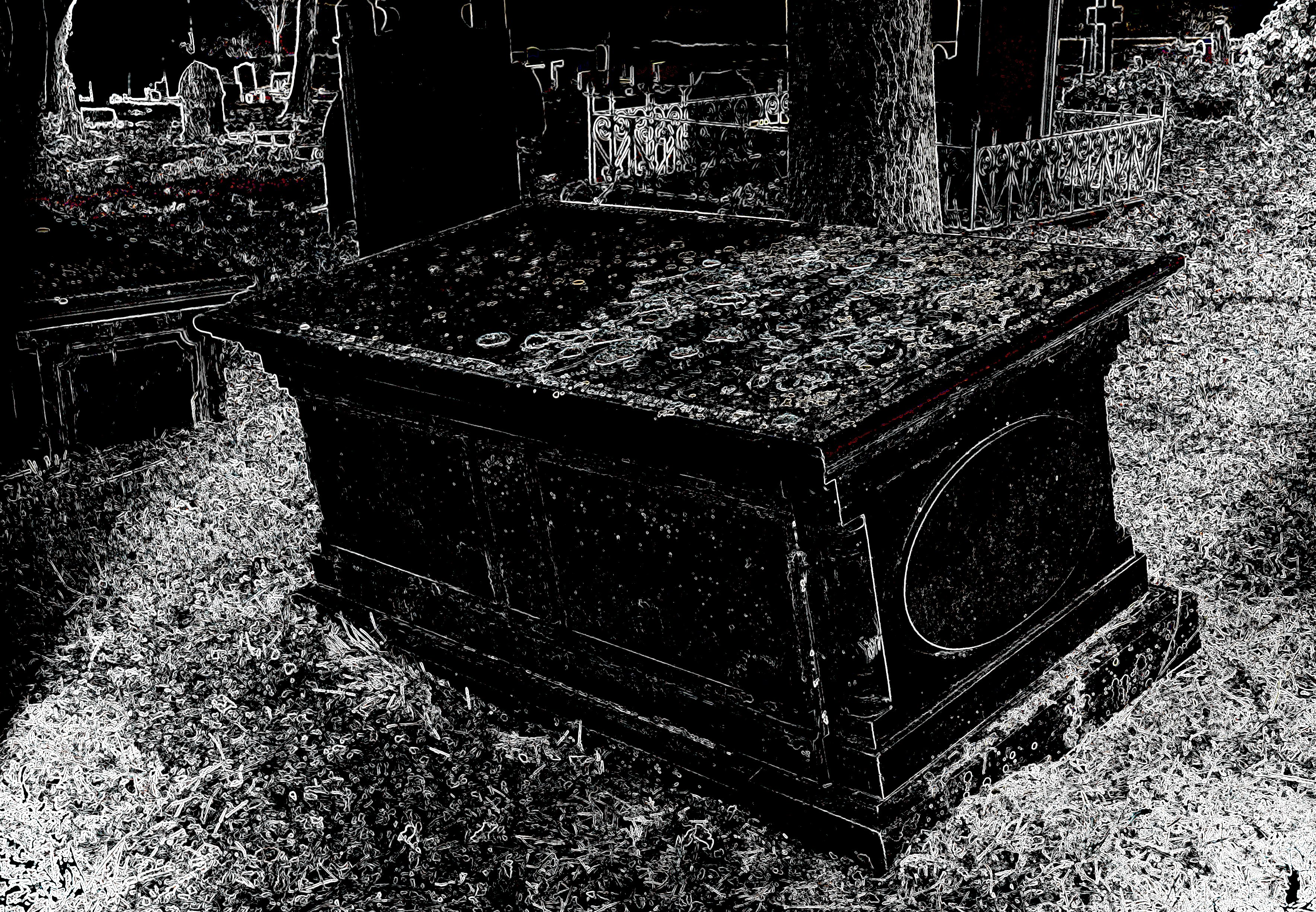
It was a long walk through the village. She paused at every entrance, every house. Dogs barked as she passed. The wind was high and there was a full moon, so that she could see the grim storm clouds sweeping by. Her leg was hurting.
Light winked palely from one or two of the houses. Odd that they were not shuttered. She paused at the junction and braced herself to climb the steep hill to the church. She hoped her leg would bear it. She passed the Hall and then the home farm. She had put every vestige of light behind her now. There was nothing but the long dark stretch past the yew hedge to the churchyard.
She was walking more slowly… and not only because of the pain in her leg. She was not afraid of the churchyard, certainly not of death or the dead, but she felt an intense loathing for the place, a terror of returning. It had been a very long time since she was last there, or so she thought; her memory played tricks on her occasionally; she knew that.
The path was bumpy. The yews huddled together, dense gatekeepers of the consecrated ground. A car rounded the corner suddenly, raking her with its headlights. She could see the driver’s face; she thought that he looked startled.
She rested against the low wall next to the yews. When she was a girl, people had said that they’d been planted here by Druids; that they had been here long before the church and were the reason that it had been built here.
She rubbed her leg; it did not help the pain. She crossed the road, so that she was standing under the lych-gate. She heard a strange noise – a squeak or a suppressed laugh – and it alerted her. She peered into the grey of the churchyard. The broken table tombs nearest the church door loomed out at her, but she could see nothing else.
The most compelling first novel I’ve read in a long time…
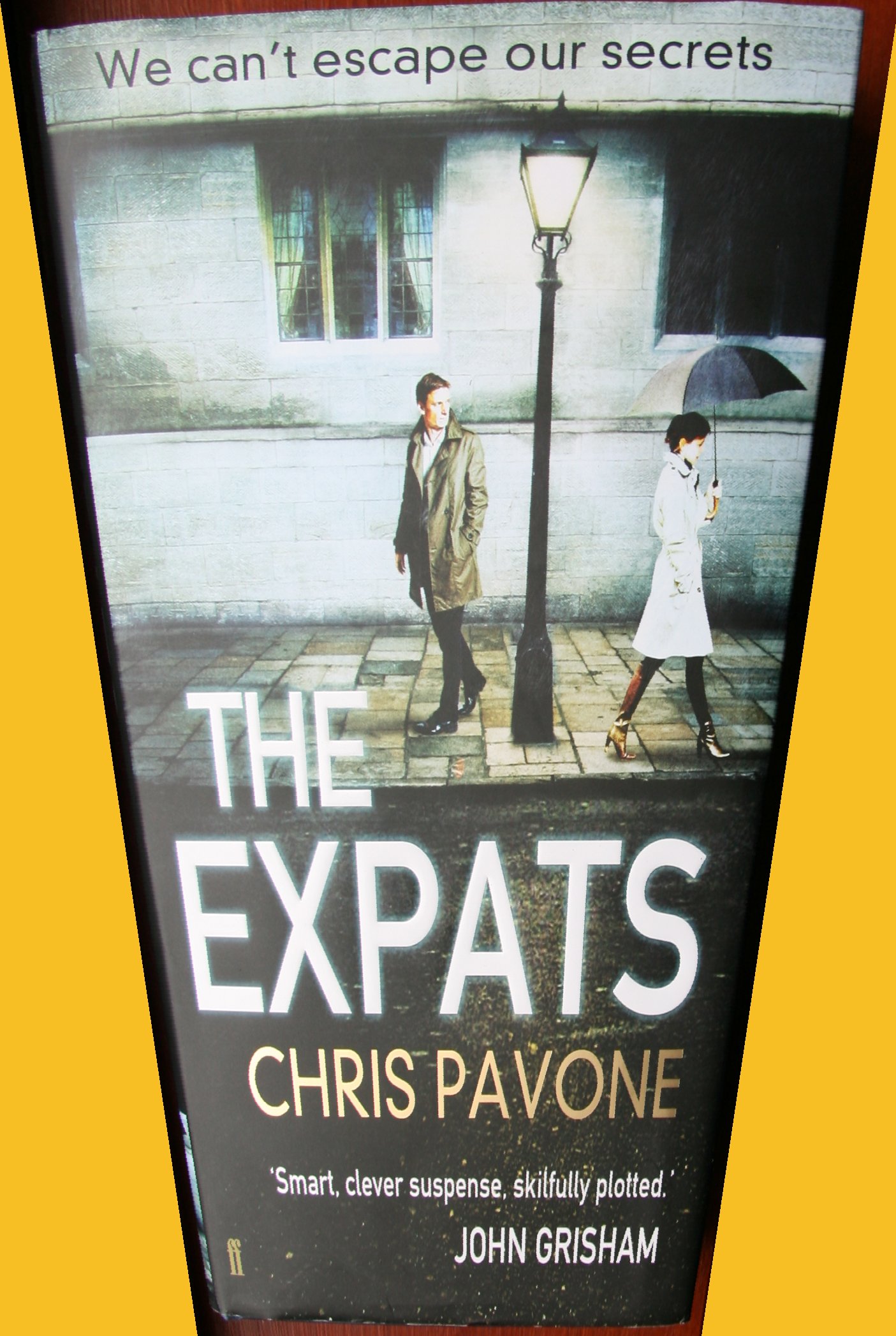
The Expats, by Chris Pavone, is undoubtedly the most compelling first novel I’ve read in a long time. Since the blurb says that the author has been a book editor for twenty years and his list of people to acknowledge includes such luminaries as Molly Stern, Angus Cargill and Stephen Page, I conclude that he had a bit of a head start over most new fiction writers, but I wouldn’t want to hint, even for a moment, that the author of this brilliant book does not deserve heaped praise.
The overall plot is a little reminiscent of that of Mr. and Mrs. Smith – and, indeed, I could imagine Angelina Jolie and Brad Pitt playing the lead roles if the novel were ever made into a film. Like the Stieg Larsson novels, it is also about an expert hacker. Pavone is more subtle than Larsson when he explores the moral issues connected with the murky worlds of undercover agents and hackers – the female protagonist, Kate Moore, especially ponders whether an illegal or dishonest action can be justified in order to promote a greater good, and does not find reassuring answers.
The characters of Kate and her husband, Dexter Moore, are especially well-drawn and the portrayal of the two ‘villains’, Bill and Julia, is very successful, because for most of the book the extent and nature of their villainy is difficult to gauge; in fact, at one stage, we are made to think that they might be good guys after all, though the reader’s gut instinct is not to trust this possibility. I also love the character of the Smiley-like Hayden, who has a rich cameo part.
The author’s descriptions of various European settings – Paris, the Alps, Amsterdam and, above all, Luxembourg – are compelling. Twists and turns of plot continue until almost the last page, but never seem far-fetched. If I have a very minor complaint, it is that Kate’s sudden access of sentimentality at the end is unconvincing.
One small sadness is that, although I should like to see more of Kate in future novels, the ending makes this unlikely (though not impossible). Whatever Chris Pavone’s plans for his next book, I await it with impatience.
Footnote: Tomorrow I am going to a conference (day-job!) and shall be away for five days. I shall continue with the blog-posts, however. Regular readers of the blog may remember that one of the early posts was about how I trained for In the Family by writing a series of short stories, at Chris Hamilton-Emery’s suggestion. There are ten stories altogether. I’ve been revising them recently and may try to publish them. For each of the next five days, I intend to post on the blog the opening paragraphs of the first five. If you’d like to make any comments, they’d be extremely welcome.
Gangs on the land…

Still reading about rural life, I was interested that the history of nineteenth century Lincolnshire that I have just completed and a more general book about farm labourers both mention gang labour. Gangs were self-assembled groups, sometimes of both sexes, sometimes consisting entirely of men or of women, who hired themselves out to farmers as an entity. The advantage to them was that, as a group, they were less likely to be exploited; some gangs also contained children (I suspect that, although the gang may have saved these minors from exploitation by the farmer, it was probably less punctilious about appropriating their wages!). However, they were often troublesome and, in Lincolnshire in the later nineteenth century, by-laws were introduced to attempt to curb their excesses of behaviour and to set out clearly the terms under which they could be employed.
Both books say that the practice of developing and employing gangs had become obsolete by the turn of the twentieth century. However, when I was a student in the 1970s, taking summer holiday jobs working in the local canning factory, gangs were certainly still being employed there. They were of three kinds:
A group of twenty or so Maltese women was taken on in the key fruit and vegetable harvesting months of June, July, August and September and they lived in trailers on the factory site. I remember that when I was cycling home in the evening, having worked the four hours’ overtime allowed, I would sometimes meet two of them carrying a crate of beer to share with the others.
Then there was a group of Irish women of all ages, many of them well-educated and some also students. They were boarded with regular factory workers who were prepared to take them in, their keep being paid for by the company.
Finally, there were local agricultural gangs, I imagine of exactly the kind that these history books refer to, who, like other local casual labour, turned up each day and were not provided with accommodation.
The gangs I knew consisted entirely of women. They were extremely rough and foul-mouthed and were usually put to work together; they were shunned by everyone else on the factory floor because they would pick a fight at the drop of a hat. One year, the forewoman (whose name was Dulcie – she had a voice like a squeaking gate) made the mistake of hiring two rival gangs. I vividly remember a woman from each of them fighting one Friday lunchtime, thrashing it out on the concrete floor. It was the most vicious event I have ever witnessed. They tore out handfuls of each other’s hair and scratched faces with fingernails, as well as landing punches. Eventually they were rolling on the ground, pulling at each other’s clothes. One of them ended up shirtless, her white bra bloodied and dusty. Dulcie and one of the male supervisors eventually succeeded in separating them and both gangs were dismissed. I guess that they spent the rest of the summer working on the land: at the time it was still possible to turn up at most farms and work at bean-pulling, potato-picking or bulb-cleaning for cash in hand at the end of the day. With hindsight, my guess is that most gang members were the virtual slaves of a single gang-master, or perhaps a few ‘élite’ overseers. I hope that the practice of gang employment has finally ceased now, but I suspect that the recent influx of immigrants to the agricultural communities of East Anglia may mean that it has ‘enjoyed’ an ignominious revival.
Whose jurisdiction? Cops and the county boundary…
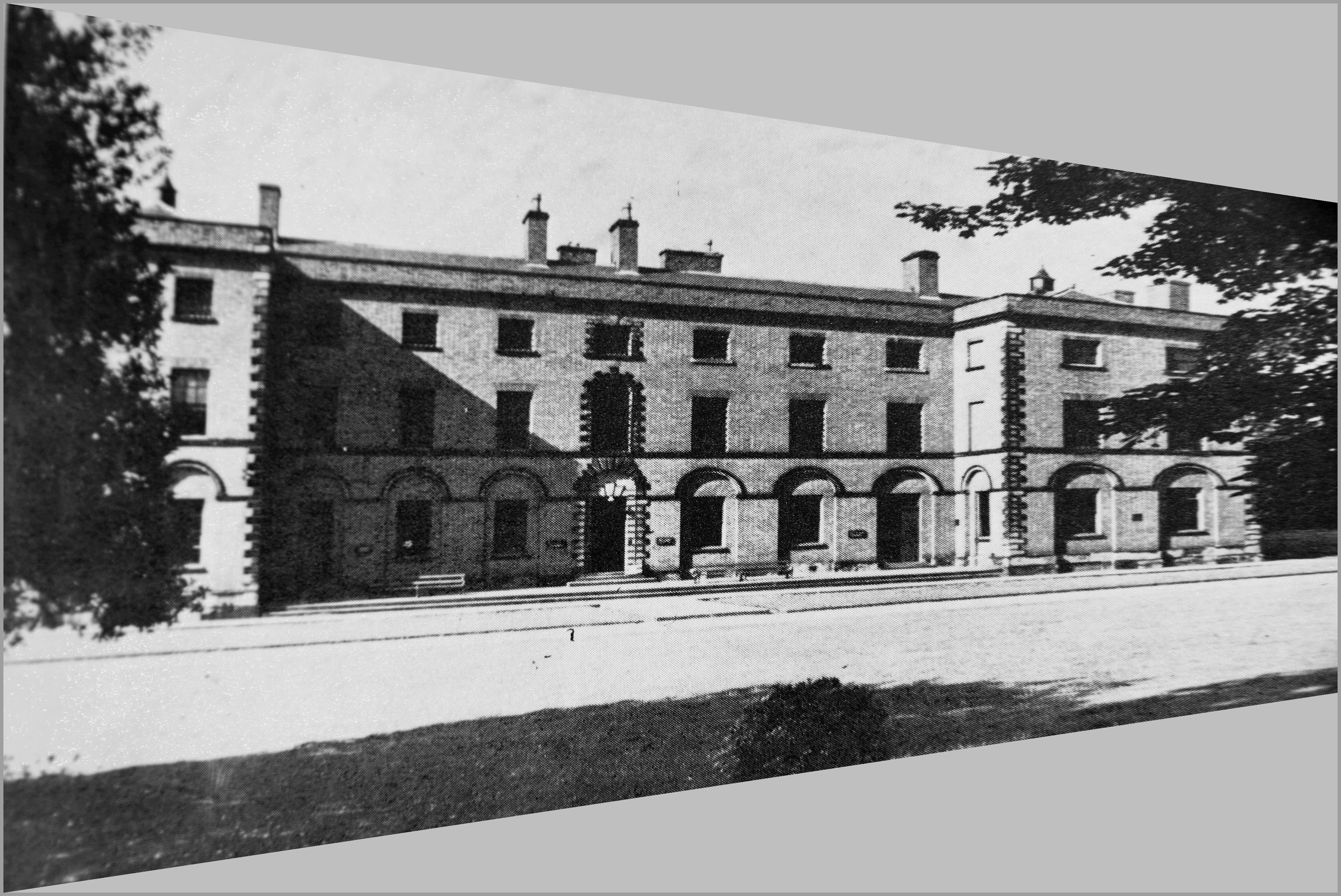
Lincoln County Gaol
My husband is an aficionado of Traffic Cops, a television programme that I abhor. It’s an extraordinary thing, but I’ve yet to meet a woman who likes it and, similarly, to meet a man who doesn’t. (No doubt I shall soon be hearing contradictions from both sexes!) For me, it illustrates far more reliably than football the adage that men are from Mars and women are from Venus; ours is a strictly non-football-supporting household, regardless of gender, and I know many others where both husband and wife are football enthusiasts (although not always rooting for the same team!). Yet Traffic Cops seems to appeal exclusively to males – apparently all of them. Why do they like it? When I’ve glanced at it, it has featured two burly no-nonsense coppers of limited vocabulary driving along the motorway until they manage to apprehend some idiot who is doing something particularly stupid while at the controls of a car. After they’ve stopped him (or her, but it is most often a he), they’re filmed saying, with music hall politeness,‘Would you mind sitting in the back of our car for a few minutes, sir?’ One of them then winks at the camera and says to viewers out of the corner of his mouth ‘We’ve got a right one ’ere.’ And so it goes on.
On the few occasions that I’ve been persuaded to watch these snippets, I’ve felt particular disdain when the cops have reached the county boundary without managing to catch their quarry and turned back. This has seemed to me to be nimby officialdom at its worst! My husband, however, assures me that it must be some time since I watched it, as they don’t do this any more – the different police forces now co-operate with each other across county divides and have even celebrated on the programme their newly-established collaboration.
I was reminded of this yesterday when I began reading about nineteenth-century Lincolnshire in preparation for my next novel. It will be set in the twentieth century, but I want to understand what the background and values of some of the older characters would have been; in other words, the kind of place it was when they were growing up. I was fascinated to read that felons who were arrested on the Great North Road (today’s A1) were often acquitted because the exact spot on which they were arrested was in dispute. If it could not be established whether it was in Holland, Kesteven or Lindsey (Lincolnshire’s equivalent to the Yorkshire Ridings), they were released. Police from Holland weren’t supposed to ‘trespass’ in Kesteven in the line of duty; police from Kesteven didn’t venture into Lindsey, etc. – a rule apparently observed by their modern-day counterparts until very recently. In the earlier part of the nineteenth century, when more than a score of offences carried the death penalty, my guess is that this meant that criminals were pretty hot on their Fenland geography.
None of the three districts of the county had adequate prison facilities until Lincoln Gaol was built. Lincoln is situated in Lindsey, the largest and most ancient of these districts (once a kingdom in its own right). It was agreed that all three districts could avail themselves of Lincoln’s new ‘house of correction’: Lindsey would pay half the costs, Kesteven two thirds of the remainder, and Holland the rest. I was amused to read that after some years it was suggested that the salary of the ‘chief gaoler’ (today he would be called the prison governor) should be raised by £16. The councils of Lindsey and Kesteven agreed to pay, but Holland – the region in which I grew up – demurred. It used to be said that the people of Holland were ‘tighter even than Yorkshire folk’ and, on this occasion, they did not disappoint. Their refusal to pay a little more than £3 extra annually to this no doubt very hard-working gentleman was exactly true to form. Reading it gave me not a feeling of pride, but certainly a warm glow of understanding. I can just imagine my great uncles arguing the toss over such an issue and prudently deciding to keep their wallets closed.
I’m glad that police forces are co-operating now and have ceased to observe artificial boundaries. I know that this is a loophole that has been exploited many times in the past, sometimes allowing people to get away with murder – literally.
The likes of a blogpost? A crime of expression…

As I’ve admitted in a previous post to having pedantic tendencies, I won’t apologise for them again today. In fact, snowed in and beleaguered by a power-cut as I am and having, at the time of writing, no hot water, no central heating and no means of obtaining hot drinks or cooking food (though mercifully I am sitting in front of a warm stove with a goodly supply of logs to burn and books to read), I have decided to treat myself to a bit of a Saturday rant.
Every so often, an expression that I particularly dislike seems to pop up with alarming frequency in the media. The one that I am thinking of at the moment is ‘the likes of’. It has been around for a long time and has always made me shudder. I associate it very much with certain annoying adults of my childhood who both used it and also perpetuated other hateful stereotypical sayings, such as ‘Had you thought of that?’ (thus indicating none too subtly that the speaker regarded himself or herself as of superior sense and intelligence) or, most heinous of all to me, ‘Yes, but…’ to any helpful suggestion that I might have ventured to make.
However, I had believed that use of ‘the likes of’ had been steadily waning in popularity for at least three decades. I had not encountered it much at all for ten years or so, until January this year. Now it seems to have resurfaced with a vengeance, like a virus that has lain dormant and suddenly been exploded back into life by some trick of the climate. The first occasion on which I noticed its resurgence was when Bradley Wiggins made his winning appearance at the BBC Sportspersonality of the Year Awards and said that he had never imagined that he would be standing there on stage with ‘the likes of’ the Duchess of Cambridge and the others with her. Among the rash of new incidences that have cropped up since then, a recent review by a well-known literary columnist referred to ‘the likes of Kafka’ and yesterday a newscaster on Radio 4, announcing bad weather warnings, spoke of ‘the likes of Oxford and Wales’.
Aside from the fact that to me it sounds more than a little derogatory, what exactly is meant to be conveyed by ‘the likes of’? Whom else besides the Duchess herself (pace Hilary Mantel) could possibly be described as ‘the likes of’ the Duchess of Cambridge? Who is the ‘like’ of Kafka, that most uncompromisingly individual of authors? Where are ‘the likes of’ Oxford and Wales, two distinctive geographical places, one a city, the other a country, which are not remotely like each other and neither of which, to my knowledge, resembles anywhere else? Is the expression supposed to liberate some kind of imaginative power in the listener, by inviting him or her to supply his or her own references to fill the implied gap? Thus I might think ‘this is like Kafka and Jeffrey Archer’ or you might think ‘this is like Oxford and Orkney’: all very confusing and not at all helpful.
What I’m attempting, I suppose, is to understand why the phrase exists at all. What does it add to the point that is being communicated? If Bradley Wiggins had said, ‘I never expected to be standing on stage with the Duchess of Cambridge and…’, would anything have been lost by the omission of ‘the likes of’? Would he not actually have come across as more gracious and complimentary? If the newscaster had simply said, ‘There are severe weather warnings for Oxford and Wales’, would our understanding of the message have been impaired by his not having included the rogue phrase?
Sometimes I’m a fan of redundant phrases. They can make what we say more graphic, more picturesque, even more nuanced and sensitive. But ‘the likes of’? Spare me! If the likes of you and me agree to boycott this nasty conjunction of three little words, perhaps we can start a fashion that will spread throughout the English-speaking world until, like smallpox, the expression has been completely eradicated. ‘Yes, but,’ you might say colloquially, ‘one day the likes of Bradley Wiggins is sure to emerge again. Had you thought of that?’
Elly Griffiths and Tom Benn in fine form at Breckland!




The small Norfolk town of Watton yesterday afternoon braced itself for bleak and squally weather, the rain coming in short eddies between gusts of wind that made the temperature seem even colder than it was. Inside, the library was a haven of warmth and hospitality, as Claire Sharland and her colleagues put the finishing touches to the Breckland Book Festival crime-writing event and offered welcoming cups of tea.
Elly Griffiths, Tom Benn and I all arrived early, as requested, and gathered in a small office to introduce ourselves and get to know each other a little better before we were ‘on’. I was fascinated to discover that Elly also writes novels about the Italian ex-pat community as Domenica de Rosa, her fabulous real name, and that Tom was encouraged to publish by his tutor at UEA, who helped him to place his first novel, The Doll Princess, with Jonathan Cape.
When we emerged from the small office at 3 p.m., the events space in the library had filled completely with people. I estimate that there were about forty in the audience – an impressive turn-out on such a dismal day.
Tom and Elly both read from their latest novels. Tom made the distinctive Mancunian dialect in which he writes come alive with his reading and, by doing so, also brought out the sophisticated humour which runs like a fine thread through the whole of Chamber Music. Elly also chose a humorous piece of dialogue from Dying Fall, and made the audience laugh with her vivacious rendering.
We were fortunate to have such a receptive and intelligent audience. Most had read the work of one of the authors; some had read both. Their comments and questions took in a discussion about the two writers’ very different but, in each case, key use of topography, character development, how each uses his or her writing to explore and develop relationships and the extent to which they feel defined by belonging to the crime writing genre (they don’t). We even managed to get on to some more general topics, such as e-books, authors’ royalties and the Net Book Agreement (the latter introduced, not by me, but by a member of the audience who had been a bookseller in the distinguished Waterstones bookshop at UEA).
Time flew in the company of Elly and Tom and their audience of like-minded lovers of literature. I had not read either Elly’s or Tom’s books before, but shall certainly keep them in my sights from now on. I hope also that we shall meet again in the future.
I can’t conclude without adding that the tea and home-made cakes with which we were rewarded at the start of the signing session were excellent. I’ve discovered that cake and conversation are two things that Norfolk does very well indeed!

All in the mix and the muddle

Plotting the plants
I was amused to read that the judge’s direction to the jury in the Vicky Pryce case included an instruction to avoid taking notice of irrelevant detail so that they ‘could see the wood for the trees’ and therefore ‘avoid red herrings’ when deciding upon their verdict. Mr. Justice Sweeney had good cause for making the point, having already had to discharge one jury for incompetence, even though his use of the English language might have been open to debate. It made me wonder if judges are often guilty of introducing mixed metaphors into their summings-up or directions to juries.
A Google search reveals that, in July 2011 in the USA, Kenton Circuit Court judge Martin Sheehan summed up with the following words his feelings about a trial during which a new (potentially harmonious) development had emerged:
‘Such news of an amicable settlement [has] made this Court happier than a tick on a fat dog because it is otherwise busier than a one-legged cat in a sand box and, quite frankly, would have rather jumped naked off a twelve-foot step ladder into a five-gallon bucket of porcupines than have presided over a two-week trial of the herein dispute, a trial which, no doubt, would have made the jury more confused than a hungry baby in a topless bar and made the parties and their attorneys madder than mosquitoes in a mannequin factory.’
No doubt this judge spent some time on crafting his words in order to achieve the courtroom-stopping hilarity with which he was rewarded. Almost certainly, his mixed metaphors were constructed deliberately, which shows that, pace the correct usage that was taught at grammar schools like my own, the mixed metaphor can be legitimately deployed for colourful and arresting self-expression and, by extension, permitted, if used carefully, in ‘serious’ fiction.
I’m even more inclined to champion my last point after looking up ‘mixed metaphor’ on a scholarly publishing site. Here I found the following:
‘The paper explores the phenomenon of metaphors that occur in a close textual adjacency, i.e. as metaphor clusters, but do not share a similar cognitive basis. Clusters frequently mix ontologies and are thus devoid of coherence that can be explained as emerging from a single conceptual metaphor. Evidence to that effect comes from a British corpus (Sun and Guardian) or 675 newspaper commentaries covering the 2004/05 EU referenda (in all, 2574 metaphors).’
Wow! And what I have quoted is only one third of the abstract of the article! I have not read the full article (a full download has to be paid for with sweat and brass), but it might be worth the subscription price, as it would appear to prove the meat and drift of my argument. Furthermore, I’d be very intrigued to read the author’s comparisons between the texts of two newspapers that have until now (because of the rich and fertile loam of their respective word wombs) seemed to me to occupy the opposing poles of the literary spectrum! Could this be the equivalent of mixing bullshit with champagne? Or a blend of codswallop and caviar? Or the gutter and the galaxy?
Too much lead and levity for one day. Must get back to plotting the plants in my next crime novel.
‘Almost Love’ almost flowering…
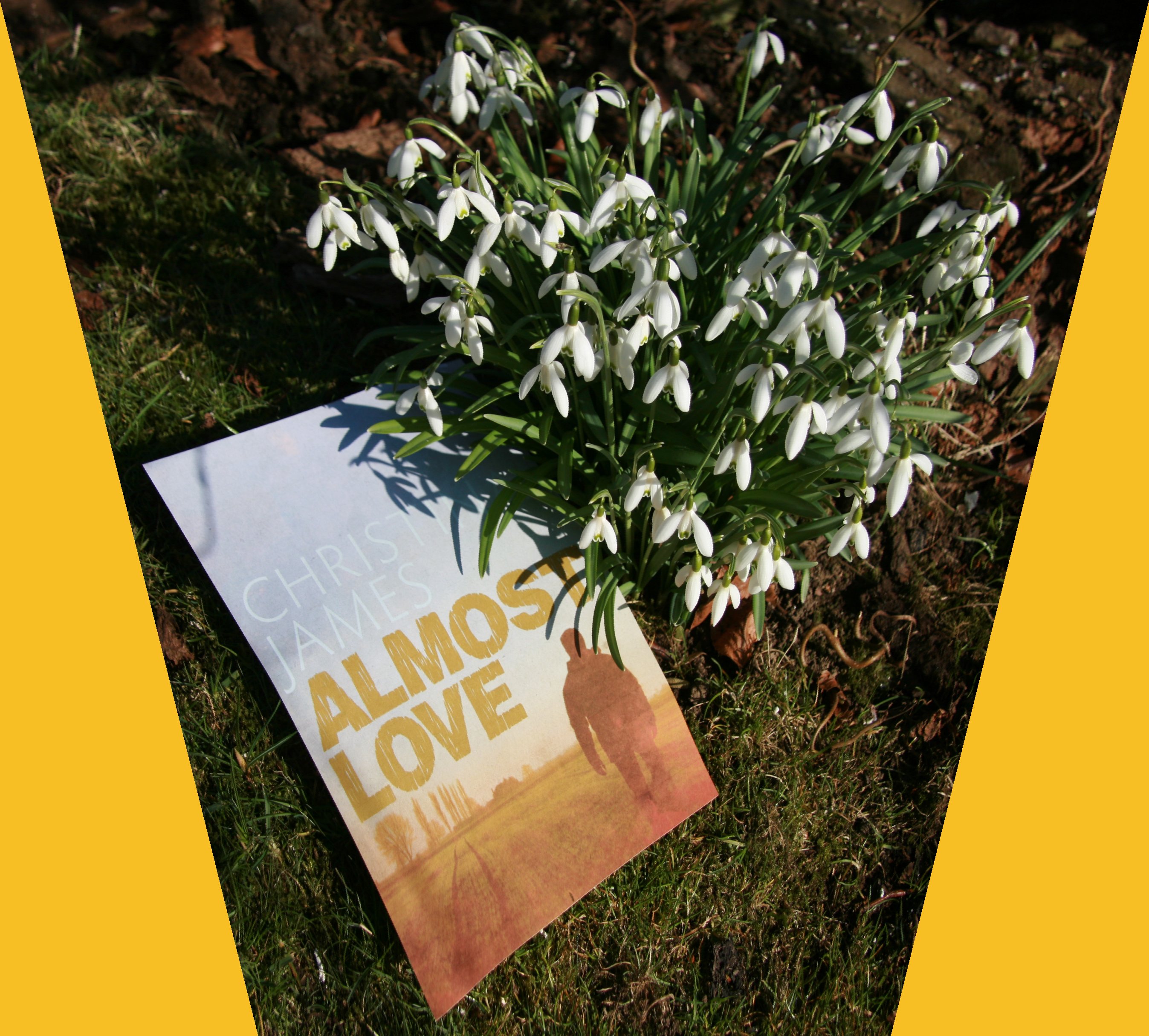
Yesterday was the first of March, St. David’s Day. Although there was frost on the ground, the sun, when it broke through the cloud, was shining brightly and with real warmth. The snowdrops and primulas have already been in flower for some time and yesterday I noticed that the dwarf daffodil buds are swelling. When I drove out at 6.15 p.m., there was still some daylight left. Spring is pushing aside a bleak winter!
Yesterday was also the day on which I wrote the last few sentences of Almost Love. Because of the non-sequential way in which I write (a habit that I am trying to break), they belong to a chapter about one hundred pages from the end; it was a chapter that I’d been trying to finalise for some time. Then, when there was nothing else left to work on (and therefore no way out of attending to it), it almost sorted itself, quietly and relatively quickly.
There’s still revision to be done, of course, although I revise all the time while I’m writing, but rounding off this novel has been quite different from finishing In the Family, which left me feeling battered and dazed. (I remember it well, partly because it was completed on the day of the royal wedding, which gave me more time to myself than usual.) This time I just felt happy in an understated sort of way.
The next novel is germinating at the back of my mind. It will need quite a lot of research, which I shall enjoy. For the moment, however, I shall focus on tending to Almost Love and enjoying the time before it bursts into bloom in June.
Doing away with your wife…
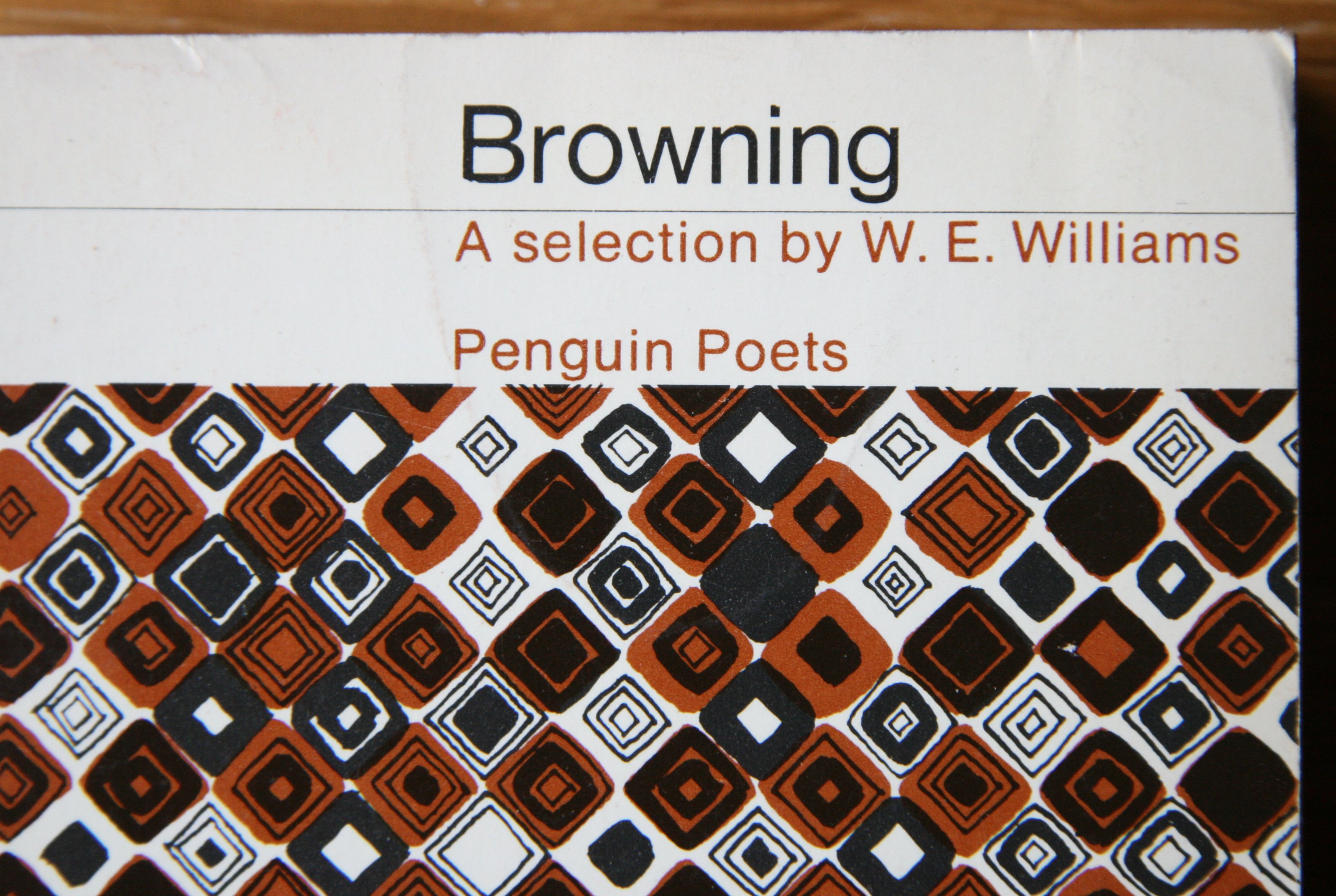
I have written before on this blog on the subject of dramatic monologues and of Browning’s use of them in his poem Porphyria’s Lover. I make no apology for turning once more to Browning’s poetry, which I love (even though Oscar Wilde damned him as a poet: ‘Meredith is a prose Browning, and so is Browning.’), for a glance at the literature which has influenced my own writing and its portrayal of the criminal mind.
My Last Duchess is a poem which works subtly on a psychological level. I remember reading it for the first time and being astonished at the way in which it made me engage with the situation it depicts, a powerful duke’s receiving an emissary and showing him a painting of his previous wife. (It is commonly thought that this man was the fifth Duke of Ferrara, seeking to marry a daughter of the Holy Roman Emperor, Ferdinand I, and coming to marriage terms via her brother, Count of Tyrol, Ferdinand II.) I didn’t need factual historical background to understand the poem, which itself, line by line, gradually led me along a trail of suggestions and clues to the horrified realisation that he had had his wife ‘done away with’.
In fact, the first thing that struck me as I read the opening lines (‘That’s my last Duchess painted on the wall, Looking as if she were alive.’) was that this was like Paulina’s presentation, in The Winter’s Tale, of Queen Hermione’s ‘statue’ (it is really Hermione herself) to the king, Leontes, who believes that his jealousy caused her death. Leontes says, in astonishment at the sculptor’s skill, “The fixture of her eye has motion in’t, As we are mocked with art.” The portraiture of the Italian Renaissance was, of course, sublime in its depiction of looks and character and I was initially lulled by my reading of The Winter’s Tale into thinking that this poem would similarly celebrate artistic achievement. I could not have been more mistaken.
The monologue forces the reader into the shoes of the emissary, listening to the Duke and drawing conclusions about his attitudes, opinions and personality, just as we might upon meeting someone for the first time in real life. Browning’s power lies in his understated use of speech; it is all so matter-of-fact! Line by line, we receive the duke’s description of the cheerful friendliness of this young woman, who smiled on all alike, and we gradually realise that he thought that she should smile for no-one but himself and preserve for the rest a haughty reserve. Then comes the shock: ‘I gave commands; Then all smiles stopped together.’ Now, with a hammer’s clang, we see why only he may draw the curtains which conceal her lifelike, smiling face: he has ensured that she will smile only for him. He passes on, leading the emissary, and talking of another artwork with equal lack of emotion.
I have read this poem countless times and it has itself the freshness of a new painting whenever I come back to it. I look for this psychological detail in the presentation of villains in crime novels and I am delighted when I find it. There is, for me, far less enjoyment in more stereotypical portrayals, which rely more for impact upon the brutality of actions than upon the workings of minds.
“btw you do ‘street’ so well!”

In the wonderful wordy world of Twitter, I have discovered wit and wisdom as well as utter tripe; philosophical musings and mundane mutterings; verbal zeniths and linguistic nadirs. I arrived on this astonishing ethereal plane only last October, armed with a mighty prejudice against it, but told that it was essential to the contemporary writer’s existence. I still don’t know whether this latter is true, but I have, contrary to my biased expectations, had a fun time of it! I was certainly delighted to receive the above compliment about my idiomatic use of language from ‘The Grumbling Gargoyle’ (@LynnGerrard), who, btw, does a well bad tweet.
‘Fun time of it ? That’s a bit colloquial, Christina! Are you letting your standards slip? That’s the trouble with Twitter: it’s full of acronyms and slang. It’s like television, appealing to the lowest common denominator and debasing your every utterance…’ Oh, dear: the voice of a high school mistress, prim and proper and insisting on perfect phrasing and enunciation.
One of the really interesting (to me, at least) ironic things about having received a ‘formal’ education in grammar is the fact that it was a straitjacket that for many years constrained my own writing, even if it ensured that my expression was ‘correct’. Over time, however, I let my creative hair down and played… and played. I broke rules and loved being a linguistic iconoclast; the results were so much more interesting and original. However, I do remain firmly of the belief that this works only if the rules to be broken are understood and the ungrammatical is deliberate.
An English teacher I know was bewailing the fact that her pupils in their conversation almost universally use street slang, such as ‘sick’ and ‘wicked’ and ‘evil’ and ‘bad’, all degrees of approbation; I’m not sure why anyone, least of all English teachers, should mind this, as pupils are consciously employing and enjoying irony in their daily interactions. What’s wrong with that? Revelling in opposites seems like fun and kids like fun and learn from it; they are playing. Give me a wicked (not ‘wickedly’!) ironic conversation rather than a formal Govean lesson on what irony is, any day. I expect that most teachers are still doing their best (Rock on!) to provide a strong grammatical foundation and I can understand why they might be frustrated by the prevalence of, say, ‘could of ’ in pupils’ formal writing, as it reveals lack of understanding of the spoken corruption of ’ve, but I hope that they are also broad-minded enough to enjoy the verbal devilment of children’s experimentation with words.
Thank you, Twitter, for the best of your frivolity. U iz well cool.
 Christina James, crime novelist