

Killing off your character
The second DI Yates novel
As I am in the process of completing only my second DI Yates novel, I hope that I shall not need to worry about whether I have exhausted his potential for some time yet. However, how writers manage to keep on presenting the lead character in a series in a fresh way is something that I find fascinating. Conan Doyle, wanting to save his mind ‘for better things’, killed off Sherlock Holmes at the Reichenbach Falls, only to resurrect him in response to public demand. Peter Robinson gives DI Banks a rich personal life, an often racy account of which forms a sub-plot in each of those novels. Ian Rankin announced that the seventeenth Rebus book would be the last and then changed his mind: Standing in Another Man’s Grave was published in November. I’m sure that Rankin’s revival of Rebus, like Doyle’s of Sherlock Holmes, was created in response to popular demand and that Rebus still has a rich future ahead of him, thanks particularly to Rankin’s inventive plot skills.
Some characters (no names, no pack drill!) do, however, seem to me to have run their literary course and should be allowed to die or retire. Surely their creators must realise this? Yet it takes a brave writer not only to know that the time has come to kill her/his cash cow, but also to do the deed.
I’m sure that, once it is done, authors mourn the hero or heroine who has been so much part of their inner life for so many years. I do, however, have more than a little admiration for an author who does not allow a relationship with a popular character to become too comfortable!
Helix pomatia comes out fighting to avert a local crime
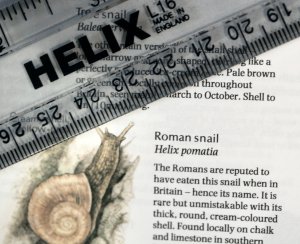
Get the measure of the foe before the fray – helix (pomatia) rules, ok?
Yesterday, on Twitter, I amused myself (and, apparently, the good people of Harpenden, in Hertfordshire) with abusing literary quotations in support of the Westfield Action Group’s attempt to achieve Town Green status for a recreational green space threatened by town council development. The land has, in its favour, a resident colony of threatened and protected Roman Snails (helix pomatia), which for me symbolise the very small and vulnerable with at least the potential to conquer the very strong; in essence, a David versus Goliath. This is the stuff of legend, of the imagination and of crime writing, for here is the opposition of good and evil, life and death, virtue and vice, in the midst of which is the lone law enforcer (a Sarah Lund, say!) doing battle with the big wheels of government, international conglomerates and criminal organisations to strike at the heart of wrongdoing, often at the expense of his or her own personal life and peace of mind. We love the chance to see the mighty fall and are captivated by the process by which it can, sometimes, happen; it is the sign of the weakness at the heart of all of us that cries out for justice.
So, today, there is a public inquiry and the town council, bulwarked by a barrister, is meeting on the metaphorical field its no doubt much under-rated opponent, the Chair of the Westfield Action Group, fellow writer and blogger, Carol Hedges, whose local community story immediately grabbed me when I read about it in my first visit to her blogsite. I believe that she has a fair chance of success, not least because of the presence of the snails, and I sincerely hope that the process she has no doubt had to be obsessive about has not turned her into one of those manic lone rangers of the crime novel!
Here is one of yesterday’s tweets, for illustration:
Westfield: This other Eden, demi-paradise, this fortress built by Nature for herself against the council and its barrister.
Voices that sound loudly in my head
I don’t have a good memory for faces – it may be because I’m quite short-sighted – but voices stay in my head for decades after I’ve heard them. (No… I don’t mean I hear voices telling me to do things!) My grandmothers died in 1966 and 1979 respectively and I can still hear both of their voices clearly. One of them had quite a strong Lincolnshire accent, with flat vowels and little modulation. “That’s what you do” was one of her customary expressions, as in: “You need to be more careful; that’s what you do.” The other, who came from Kent, had spent all her life ‘in service’, so the way in which she spoke was more genteel, but I suspect that her long-drawn-out vowels and rather slow way of speaking were Kentish in origin. She often coloured her speech with proverbs and other regularly-used sayings: “Never say die; up man and try!” (used for both sexes) and “Red hat… no drawers!” (pleasantly spicy!) were two of her favourites. As a schoolgirl, I had a permanently exasperated teacher who prefaced almost every sentence with “Yes, but …” – another Lincolnshire voice, this one crackling and rising with irritation.
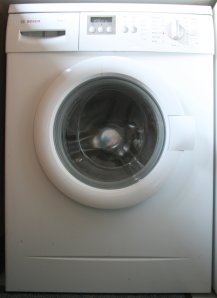
Our otnineen!
Harder to remember are the childhood voices of people, now adult, with whom I have always stayed in touch. I can still remember many of the things my son said when he was small, but hearing the exact voice in which he said them, though not impossible, requires quite a lot of concentration as I work back through the layers of adult and teenage years. “Building socite” and “Arndale socentre” were entertaining confusions, whilst “clothes-banger” and “otnineen” (see image) were two words he minted as a toddler, his voice high and piping and full of laughter.
People with no voice – as far as I am concerned – are intriguing. Their mystique is partly owing to the fact that I can’t hear them. Margaret Thatcher was in power during a period in my life when I owned no television and rarely listened to the radio, so she was years into her premiership before I first actually heard her. The result was disappointing; she sounded just like what she was: a Lincolnshire lady who had had elocution lessons, a type from my own childhood.
I feel teased and frustrated by never being able to know how authors spoke in the past. I have listened to recordings of writers who have died relatively recently – Tennyson, for example, and Virginia Woolf – but it is impossible to be able to tell whether they really spoke like that, or whether the sound has been corrupted by primitive technology or the passing of time.
And, of course, no-one will ever be able to do more than guess about the myriads who died before the end of the nineteenth century. Do we think of William Shakespeare with a colourful Brummy accent or are we seduced by the voices of actors who deliver his ‘immortal verse’ into thinking he sounded like royalty?
One thing I am sure of: the voices of my fictional characters sound loudly in my head.
In the name of ‘godliness’ – hah!
 I’ve almost finished reading The English Civil War, by Diane Purkiss. It is a huge book, admirably researched. Its sub-title is ‘A People’s History’, which gives a clue as to why it is such a captivating read. Although Diane Purkiss has a fine grasp of the complex political and religious conflict which precipitated the war, it is the stories of ordinary people caught up in the carnage that really inspire her. Bringing together first-hand accounts from many different sources, she captures the full barbarity and misery of the war as it affected families, communities and industries. Civil war must be the most bitter and savage type of warfare conceivable. Purkiss’ tour-de-force reminds me of narratives about the American Civil War, though none of the ones I have read is her equal in matchless research combined with an exceptional power of description.
Particularly harrowing are her accounts of betrayal – son denouncing father, brother at odds with brother – sometimes done for material gain but more frequently in the name of ‘godliness’. What is also striking is that, in the long term, humanity has benefited from none of the lessons that were so hard-learned in the seventeenth century. A trawl of news websites reveals that half a dozen civil wars are taking place worldwide at the moment, each one conducted with the same unreasoning fury and hatred that drove the clashes between English Royalists and Parliamentarians more than three and a half centuries ago.
BAFTA 195, venue for a literary lunch
 Yesterday I had lunch at the BAFTA Club. It is an extraordinary place, decorated both inside and out in the grand style (slightly decayed). It is situated at 195 Piccadilly, in an unassuming building conveniently equidistant between two great bookshops: Waterstone’s Piccadilly and Hatchard’s. I entered a small foyer and mounted a shallow flight of steps. Massive red velvet curtains, drawn, not open, hang at the top of the steps, presumably so that the club’s more distinguished members can burst upon the scene with a flourish. To the unfamiliar and more humble visitor (especially this one with a bent for crime fiction) these curtains are vaguely intimidating. What might lurk behind them? The answer proves to be a 1950s-style reception console, ‘womanned’ by two terrifyingly efficient ladies. The Greek masks of tragedy and comedy have been fixed high on the wall to their right.
The dining-room is small, cosy and cramped. The waiter service is friendly but formal and the food is excellent, in an old-fashioned upper-class clubby sort of way. I was there to meet Matthew Pritchard, an author new to the crime-writing scene; we had both been invited by a literary agent. I have had the privilege of reading some of Matthew’s work in draft and I am very impressed. He is definitely an author to look out for.
In fact, watch those curtains – he might just pop out from them!
Not about a baby… but a moral crime, in my book
Views my own, but one or two people may share them!
Our society thrives on gossip and there is, apparently, nothing more entertaining to us than to get the goss on celebrities, especially when they are members of the royal family. I believe that there has been some news this week about a couple of them, but, for myself, I have done no more than register the single central fact of the story, just for knowledge’s sake. I can do the rest in my head rather than have my head done in by a stream of statements of the obvious which the rest of the world seems to want to pore over, with some noticeable exceptions on Twitter!
Frankly, if ever there were a need for gagging the media, it’s now, as they focus with the usual unacceptable intensity upon the private lives of a young couple who deserve to be left well alone. Their families aside, who have a right to be interested in the detail, I honestly feel the rest of us can manage well enough with our knowledge of procreation. There are currently some very worrying stories about women in the world which should demand our attention and, whilst we might like some good news to cheer our miserable December souls, we don’t need to have pages of it rammed down our gullets. Good luck to you, happy fecund female and proud mate; we understand your excitement, your discomfort and your joy. We’ll want to know that both mother and baby are healthy and well on your publication day, but now the world really does have other things to think about.
‘We’re expecting’ … less intrusion.
Woman is pregnant. Sorted.
My fiercest critic
 My six author’s copies of In the Family came from Salt Publishing yesterday. They looked very nice, nestling in the box like a litter of kittens. Even though I need only one for myself, I shall part with them reluctantly! However, I have already sent one on its way, with my full blessing: I’ve given it to Anita, my neighbour, who had not the slightest idea until today that I am a writer. Nor is she a reviewer, a bookseller or anything remotely to do with publishing; she does not even belong to a reading group. She keeps a horse and dogs (lots of them).
When she was ill a few years ago, she discovered in herself a liking for books that she had not experienced when she was younger and (since my house is heaving with them) I became her unofficial librarian. We have a shared liking for crime novels and our tastes are remarkably similar. We also both hate the winter! When the evenings began to draw in, a year ago, she asked me if I had some books for her to read and I took round a wheelbarrow-load. They just about lasted her until the spring. I think of Anita as my yardstick: she is my model for all the unseen people I can never know personally for whom ‘a good read’ is an important part of life and who know what they like without analysing it too much. One thing I can rely on Anita to do is to tell me the truth. As a Yorkshirewoman through and through, if she doesn’t like In the Family, she will certainly say so. If she says that she does like it, I shall feel greatly privileged.
Susan Hill: The Mist in the Mirror
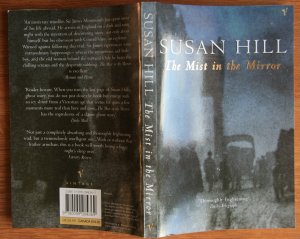 I’ve just finished reading Susan Hill’s The Mist in the Mirror. Although I continued with it to the end, it wasn’t one of those books that grabbed me so much that I resented having to do anything else until I had devoured it. It seemed to me to be the perfect pastiche of the nineteenth-century supernatural novel; the narrator, James Monmouth, a Mr. Lockwood lookalike. I realised that this was the author’s intention and therefore that the novel is a technical success. However, someone once said that pastiche should be better than the original and, as I read, I wasn’t sure that it passed this test.
Two days after completing it, though, I can’t get it out of my mind. It is not the horrific night that James Monmouth spends imprisoned at Kittiscar (the climax of the novel) that haunts me; it is the low-key final chapter that describes how the remaining forty years of his life are wasted, his spirit broken, his nerves jangled, his confidence so wrecked that he dare not marry and have children: a fine description of a curse, indeed, and much more powerful than the spectacular firework display of rot, chaos, physical danger and terror that lesser writers so often deploy for their denouement.
I am a criminal… not.

In regular use at this address
I have got to the age and stage at which I do not suffer fools gladly. The fools in question today belong to TV Licensing, that very unaugust organ of the state charged with the task of preventing anyone from receiving television programmes without first parting with the annual television licence fee of £145.50. (I won’t digress here to discuss whether I think it’s worth it to support the BBC…)
For the past seven years, this impersonal body has been sending out letter after letter to our household to warn us that we might be watching television illegally, as no record of a licence at the address it has for us seems to exist. Back in 2005, when the letters started to arrive, we did as requested and rang the given number to explain very carefully that the postcode which TV Licensing was using did not exist and that the property at our correct postcode was properly licensed. The overseas call centre telephonist assured us that this would be rectified. Nothing happened and the letters continued to arrive. Diligently, we repeated the process four times; nothing happened and the letters continued to arrive. We felt that we had fulfilled our moral and legal duty and therefore took no further action. The letters have since continued to decorate our doormat and have varied in their threat level with all the graphic appearance of the rolling English road. They are still coming and the one announcing an imminent summons is in front of me, looking very fierce; I think that we have had several of those over the years.
We have dutifully paid our licence fee throughout our time at this, our proper postcode; the ‘legal occupier’ of the fictional and extremely draughty house in the field over the road has not. It will be an interesting day in court.
The Cold Caller: a very cool crime novel (in brief – the antidote to NaNoWriMo!)
 Streaming cold… cold medicine… stream-of-consciousness cold… cold front… Coldstream Guard… cold war… out in the cold… in cold water… cold feet… cold woman… cold-hearted… cold comfort… cold meal… cold meat… cold turkey… cold sweat… cold cuts… cold steel… in cold blood… out cold… stone cold… ice cold… deathly cold… dead cold… dead, cold… laid out cold… in cold storage… trail cold… cold crime… cold-shouldered… cold case… cold facts… in from the cold… case solved.
Chilling.
Hot stuff!
 Christina James, crime novelist