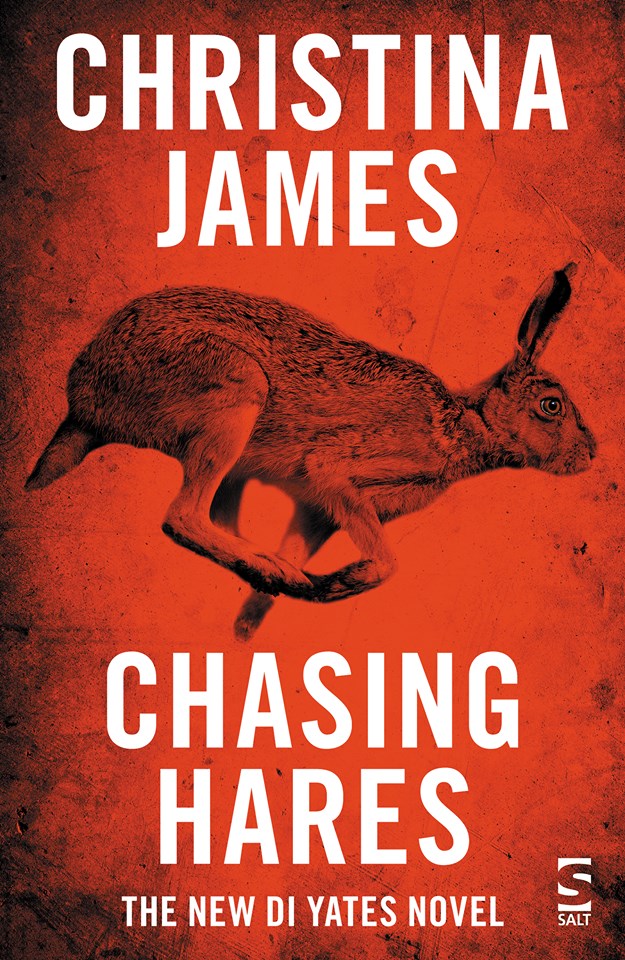


Finale to my National Crime Reading Month daily blog series

Today is the last day of June and therefore today’s is the last of my daily blog posts to celebrate Crime Reading Month. I’d like to pay tribute to the CWA for coming up with the idea of CRM and to the countless people who have supported it. I’d particularly like to thank everyone who has contributed to these thirty posts by providing so many magnificent insights and vignettes and for giving up their time so generously to help me. It’s impossible to pinpoint highlights – I feel as if I’ve been on a high all month! – although a few moments stand out for me personally. I was struck by Hannah Deuce’s comment that all writers are different, so she supports each one in different ways; by Natalie Sammons’ observation that if you write to please yourself, you won’t be disappointed ‘whatever the outcome’; and perhaps most of all by Frances Pinter’s description of Brexit in one punch-packing word: ‘frivolous’. Frances’ post was all about the importance of peace and how we should dread the danger of war that is looming once again; sadly, as we reach the end of this month, the conflict in Ukraine is no nearer to resolution than it was on 1st June.
CRM has given me some humbling opportunities to read or re-read some fine works of fiction: Snegurochka, by Judith Heneghan, and The Manningtree Witches, by A.K. Blakemore impress with their originality and fine use of language, but I have enjoyed all the novels that I have written about this month and am in awe of all their authors. In this, I include Annie, the only poet featured, whose stark poems about domestic violence bring home the enormity of it more vividly than any number of newspaper and court reports. I’d also like to pay tribute to those who have always supported me as a writer and continue to do so: Annika, Valerie, Noel, Dea and now, Hannah, please take a bow. I salute those who have dedicated their lives to supporting the bookselling and publishing industries: Richard, Nick, Lynette, Linda and, again, Frances and Noel. I’d love to be a member of Deirdre’s reading group – she and her book club friends seem to have such fun! And finally, I’d like to thank Betsy, Tara and Hannah for publishing The Canal Murders to the usual high Bloodhound standards; and I’d like to take the opportunity to apologise for (temporarily) having forgotten my own publication date!
As readers of this whole series of posts will know, I have been privileged to speak at four libraries during the course of the month. I have, of course, known for many years how much librarians bring to their communities, but when I met Helen, Kathryn, Tarina and Kay and their teams, their generosity, talent and tireless efforts to help people were brought home to me all over again. I’d like to thank them once more for their wonderful hospitality – and the equally wonderful audiences to whom they introduced me, each of which taught me far more than I felt I had to offer them. I now know about ran-tanning, the use of opium for Fenland agues and many more facts about life in Lincolnshire, both past and present, than when I started out. The library visits also gave me the opportunity to research some unsolved Lincolnshire murders, including that of Alas! Poor Bailey, my favourite. My encounter with the vicar of Long Sutton church will stay with me.
When I introduced this blog series, I promised to tell my readers at the end of it why I write about the Spalding of my childhood even though my novels are set in the present. I renew that promise now, but I hope you will allow me a short delay. It is because – as I mentioned earlier this week – I am currently on holiday in Orkney – in fact, sadly, my time here is drawing to an end; and while I am still able to imbibe the magic of this place I should like to introduce you to one of the island’s serial murderers – the great skua. Called “the pirate of the seas” or, in Orkney, “the bonxie”, this formidable bird – which appears not to be afraid of humans – hunts other birds on the wing. Today my husband and I watched spellbound as a pair of great skuas systematically chased a curlew through the soft blue skies and engaged above and around us in aerial combat with greater black-backed gulls. I came to Orkney for inspiration as a writer and I have found more here than I could ever have dreamed about.
As I prepare to return home and submit myself to the discipline of the keyboard once more, I should like to conclude by thanking everyone who has read even one of these posts. I do hope you have enjoyed them. There are more to come – I was surprised and grateful to have more offers from would-be contributors than there are days in the month of June. And of course I shall not forget my promise.
I leave you with a cheerful picture of one of Orkney’s denizens.

An Orcadian digression
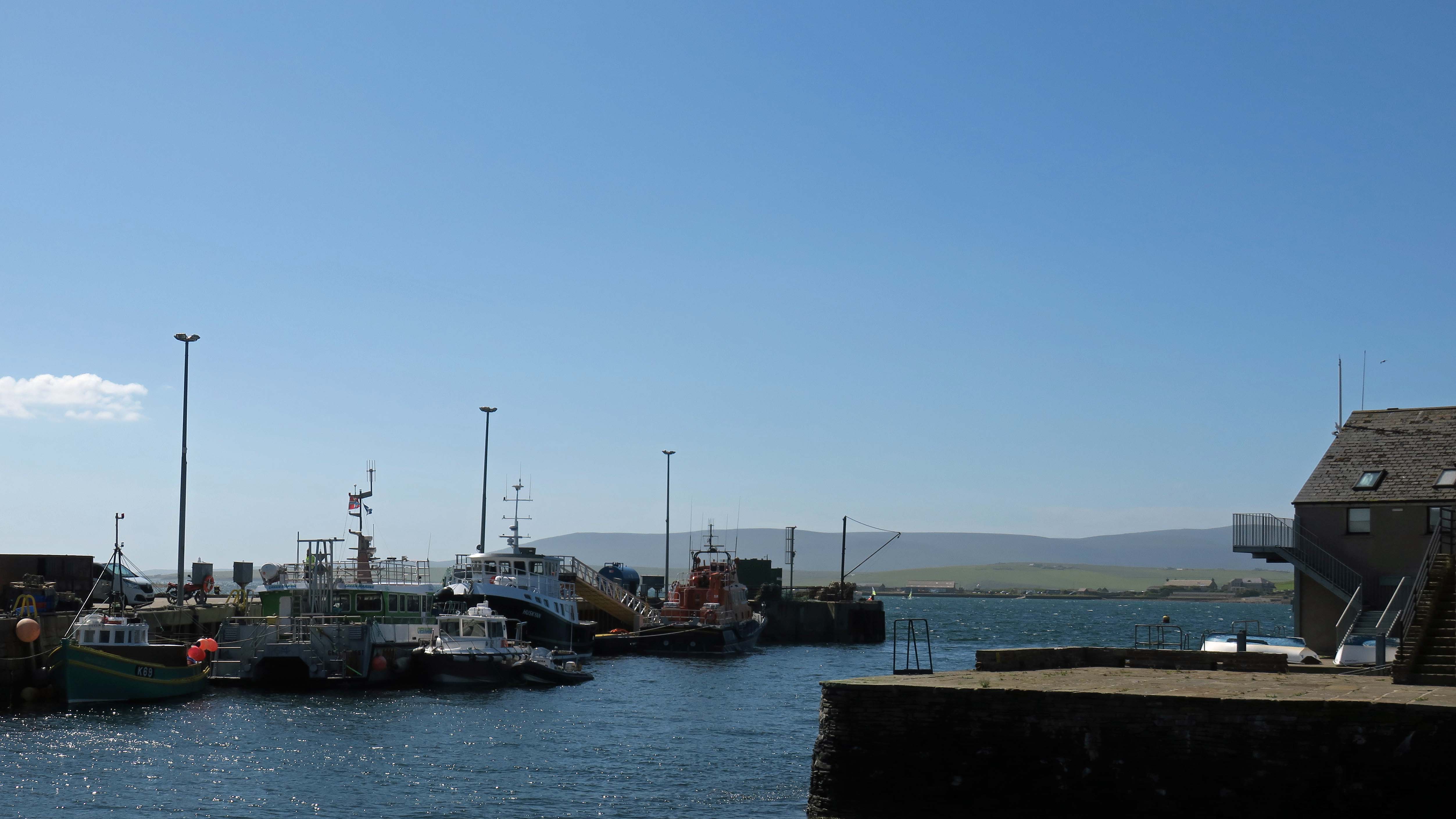
Today’s post is a bit of a self-indulgence. I hope you’ll forgive me, because it is only tangentially related to National Crime Reading Month and crime fiction, or indeed to any of the other topics this blog has covered since 1st June.
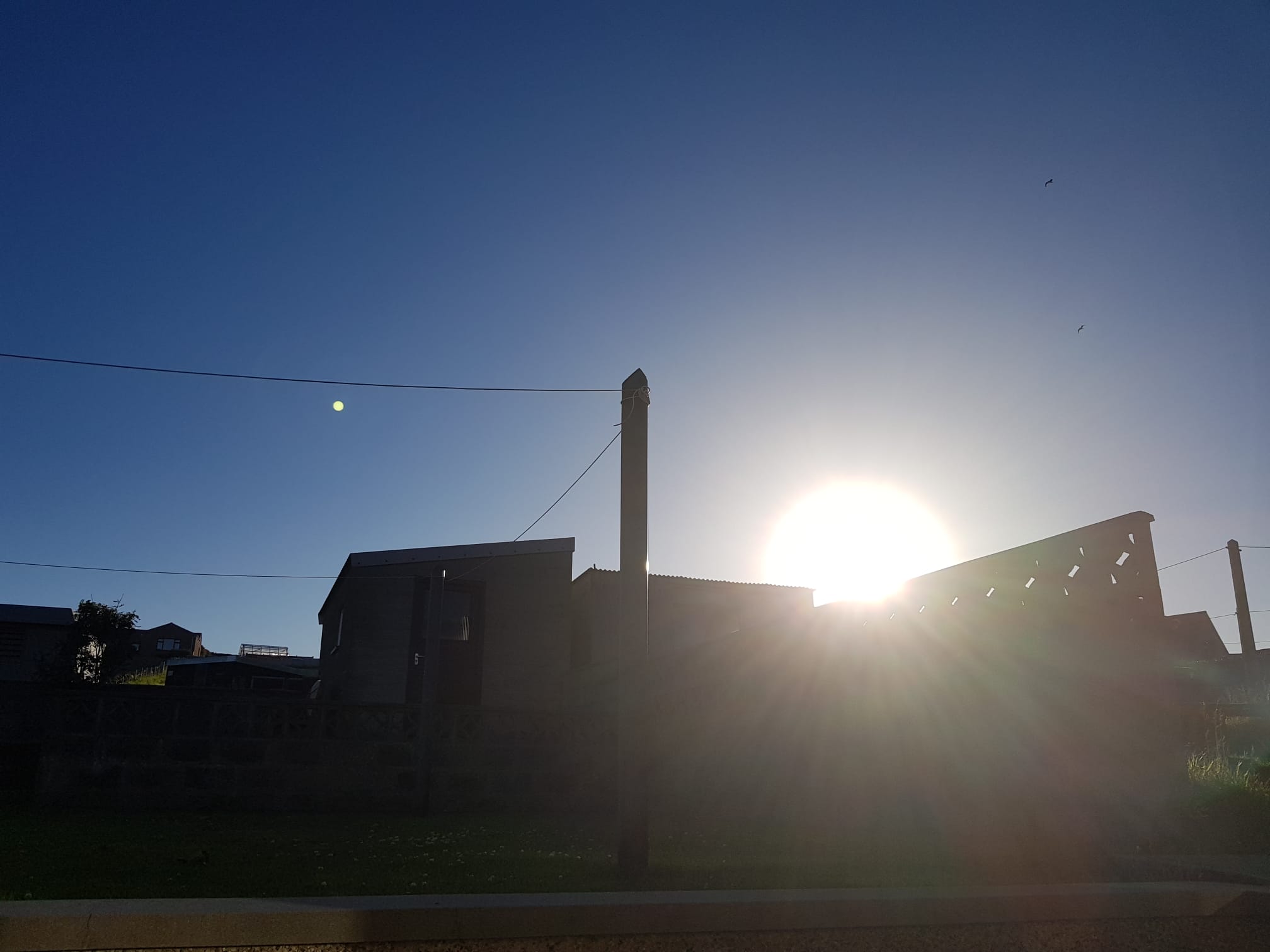
Allow me to explain. Since Thursday, I have been travelling north with my husband through the whole length of Scotland, reaching Stirling on Thursday evening and Thurso on Friday. Yesterday, we boarded the ferry for Orkney and reached our holiday house for the week – which is in Stromness – late yesterday afternoon. It has been one of my lifelong ambitions to visit Orkney and it does not disappoint. It is a magical place, palpably the residence still of the ancient, tricky-to-propitiate Norse gods of the old sagas, but with plenty of more recent history to explore and enjoy. Our first evening also gave us a moment of northern summer splendour, too, a sparkling view into space!
The gods seemed very close in the early hours of this morning when we got up at 03.40 am to try to watch the rare conjunction of five planets. It was almost daylight and we could see the moon, a fine sliver

in the pearl-grey sky, but unfortunately the fast-scudding clouds soon obliterated it and kept the planets out of view. We braced ourselves to stay outside for fifteen minutes to watch the rising of the chilly dawn and then returned to bed.
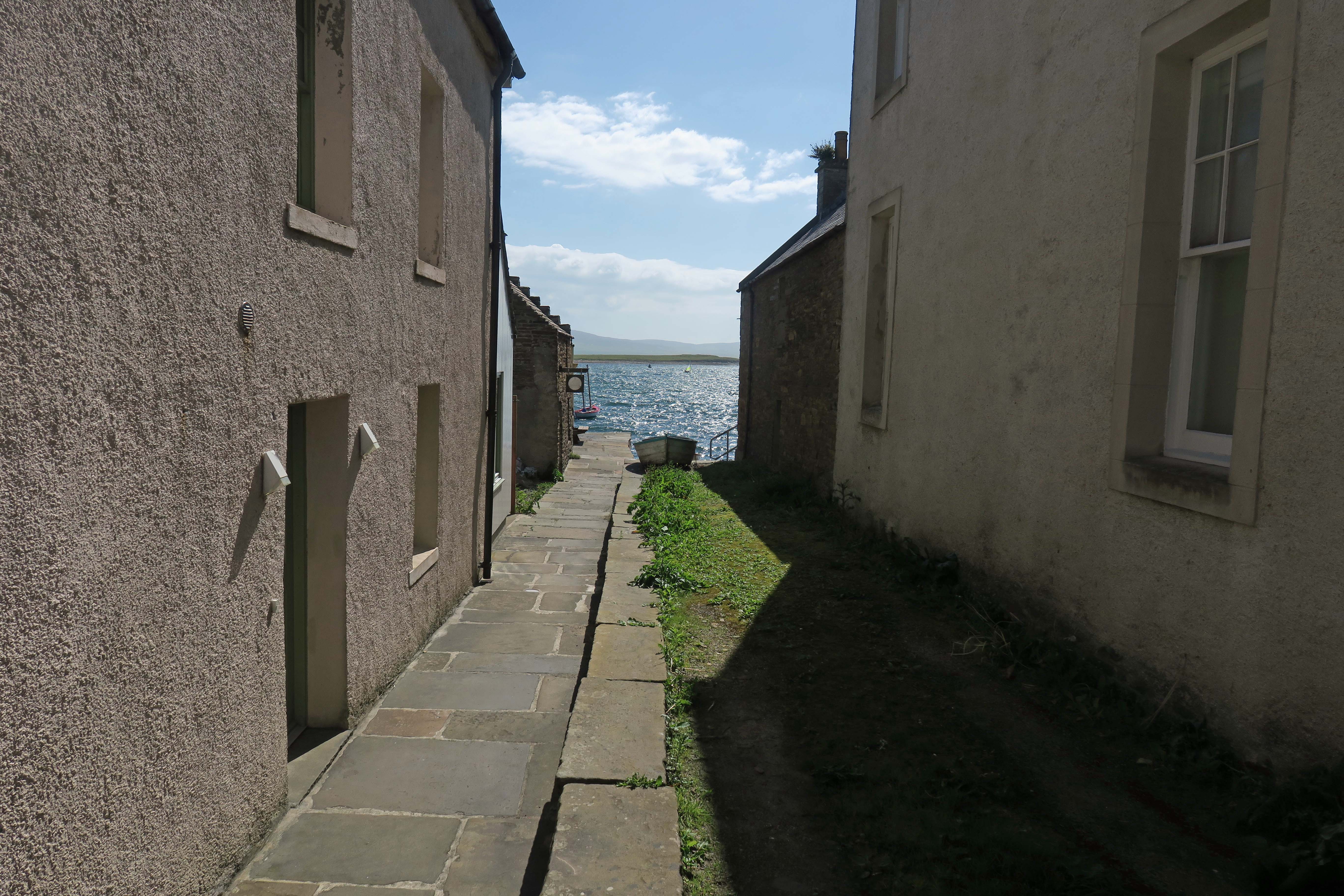
Today we have explored Stromness, a venerable port and fishing village.


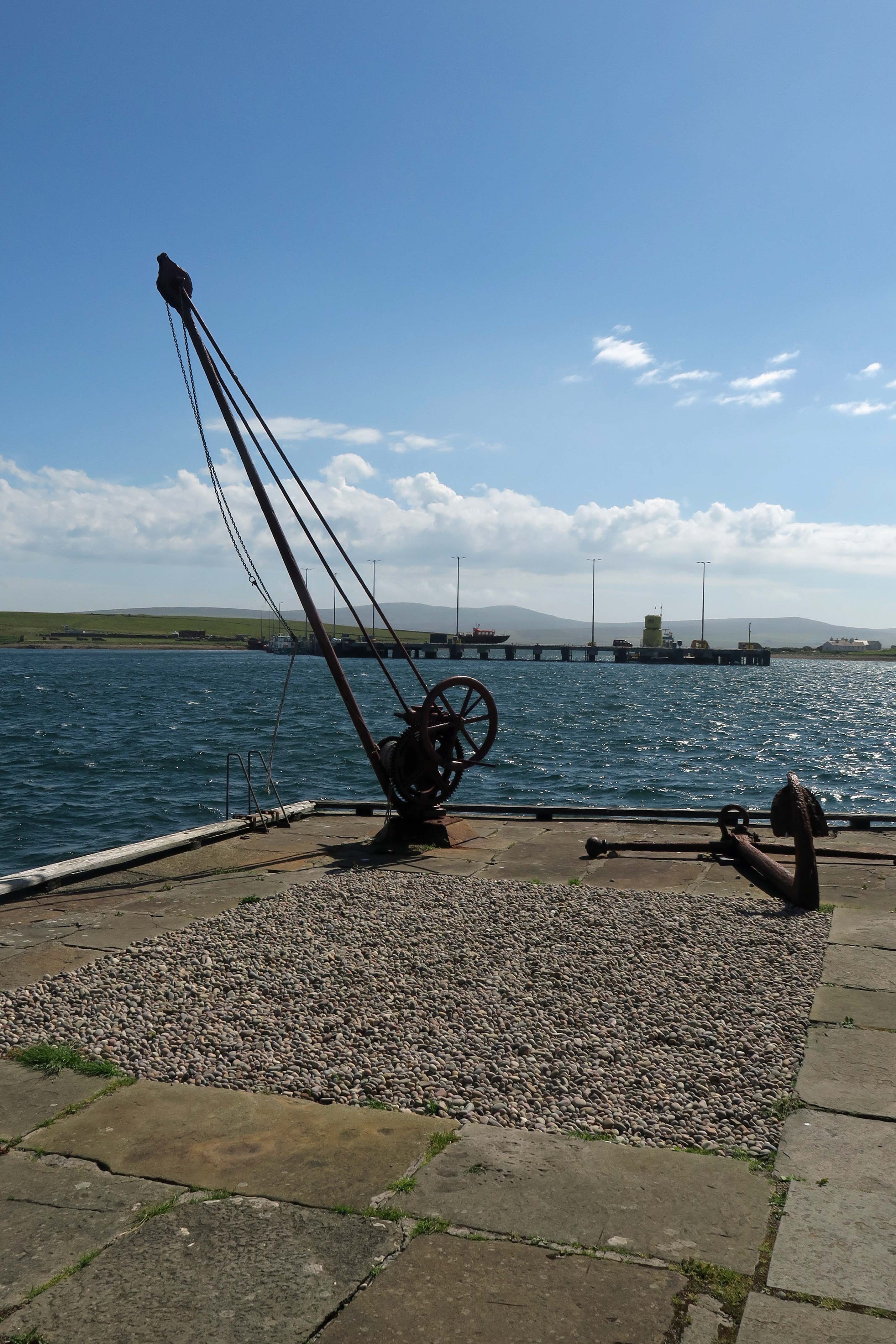
A warm sun was shining on its mellow grey stones, tempered by a sharp and intermittently buffeting wind. The boats in the harbour gleamed white and blue, the waves turned briskly, flecking the blue-green sea with cream, and the mountains in the distance presided over all with summery bonhomie. (I imagine they loom with a much grimmer aspect in the winter.) People were out strolling on the cobbles or seated at the outdoor cafés drinking coffee. The ferry came and went again. Most of the quaint old shops were open – though the bookshop was closed, a visit to it therefore a treat to be saved for later in the week.

So, what has all this got to do with CRM and writing crime fiction? Well, to be honest, not much – yet. To be even more frank, today’s post is mainly an excuse to show off the wonders of Orkney by posting some nice photographs. But please have patience: I am also on writing alert. I already have a plot in mind and am thinking of ways in which I can make the most of this unique place to set the scene.
Murders in Orkney? I have read of a few, including a relatively recent one which is too harrowing either to discuss here or make use of in a novel. There will soon be a murder or two in Orkney – according to me – but they will not be founded in fact. I do not wish to arouse the wrath of the old Norse gods. I shall leave them to slumber until they themselves choose to wake again and you to stroll with us round Stromness:


Murders in the Fens

As I mentioned on Friday, the talk that I gave at Sleaford Library was the last in my series of six talks about Murder in the Fens, four of which were prepared to celebrate National Crime Reading Month (NCRM). As I don’t like giving the same talk twice – I don’t believe it is ever possible to replicate the momentum if you deliver the same words again – for each of these talks I researched a different Lincolnshire murder that, in the eyes of the police, remains unsolved. This post offers a brief account of each of these ‘murders’ – though I think that only three of them deserve to be so called.
John Bailey was a country doctor who lived in Long Sutton and was murdered in April 1795. On Tuesday 21st April he went to Tydd St Mary, a village about four miles from Long Sutton, to visit a patient. Early the following morning, his horse returned home without him. Following a report by a servant girl that she had seen a man lying in the grass on the side of the road, a group of local residents went to look for Bailey and found him where the girl had indicated. Alive, but with horrific head injuries, he tried to write something in the silty soil, but could not do so and shortly afterwards died. The motive appeared to be theft, though only the doctor’s watch was missing. There was a nationwide search for his killers and several people were arrested, but no charges were brought. Arrests, incidents of mistaken identity and false confessions continued to plague his wife and son for many years afterwards.
In 1979, Gordon Snowden, a sixty-year-old petrol pump attendant at Sutton Bridge Motors, was attacked at 2 am on 17th April. The motive appeared to be robbery – the cash till with all the takings was stolen. The police made no headway with solving the crime and never announced any suspects. No longer even regarded as ‘cold case’, it has now been archived. In other words, however tragic Gordon Snowden’s murder and however outrageous, it has become a statistic. It will never be reopened.
On May 22nd 1934, Mrs Ethel Major, of Kirby-on-Bain, near Horncastle, made her husband Arthur his customary ‘tea’ of corned beef, bread and butter. Shortly afterwards, he became ill and was soon unable to stand or speak. Two days later he had a seizure and died. The police discovered that Ethel had received anonymous letters telling her that her husband was having an affair with Rose Kettleborough, their neighbour. Police eventually concluded that Ethel had poisoned her husband, using as their main source of evidence an anonymous letter from the same person who had written to Ethel about the affair – which might have been Rose Kettleborough herself. Ethel pleaded not guilty to murder, but was hanged on December 19th 1934 by Albert Pierrepoint, the crown executioner famous for the compassion with which he treated convicted prisoners. Ethel Major was the last Lincolnshire woman to be hanged. Today the evidence against her would be deemed insufficient – and there are many people living in the Horncastle area whose ancestors always doubted her guilt. Horncastle people apparently divided into ‘Rose’ and ‘Ethel’ camps – though there was only circumstantial evidence that either was to blame for Arthur’s death.
Beatie Simpson, who was twenty, and a nineteen-year-old girl who was not named by police were both employed at a tobacco factory in Nottingham. In 1922, they travelled to Mablethorpe for a fortnight’s holiday, which they rashly extended by one week, even though they knew this would result in dismissal from their jobs. According to the girl who survived, they made a suicide pact because they could see no way out of their dilemma and both took Lysol while they were still staying in their seaside boarding house, which was owned by a blacksmith and his wife. Beatie Simpson was badly burned in the mouth and stomach by the corrosive liquid, but the doctor who carried out the post-mortem said that it would have been the effects of the poison on her heart and nervous system that killed her. She left a suicide note. It is not clear why the nineteen-year-old girl survived, although when the girls were discovered attempts were made to force them to drink salt water to cause them to vomit, and apparently Beatie’s mouth was clamped so tightly shut that she could not be made to swallow it. The coroner ruled that the girl who did not die was guilty of murder, as suicide was illegal at the time. The logic of this is hard to understand today: the coroner’s rationale was presumably that if a crime had been committed and someone could be made to pay for it, they should. However, the nineteen-year-old girl was eventually acquitted.
Barbara Grice died from a ruptured liver following a trip to Billinghay Feast (a kind of fair held annually near Sleaford) on 17th October 1956. Tantalisingly, I can find nothing more about this crime – I don’t even know why the police classified it as a murder. Was Barbara Grice pushed from one of the fairground rides or attacked by someone? In any event, no one has ever been charged with her murder.
Lastly, a twenty-six-year-old man named Charles Trier died in Gainsborough in 1995 during a game of Russian roulette. The police charged one man with his murder, then released him owing to lack of evidence. From my perspective, this barely counts as an unsolved murder, although it raises some interesting questions: for example, if you play Russian roulette of your own free will and die as a result, is the cause of your death murder, suicide or an over-developed gambling instinct? If you were coerced into playing, that of course is a different matter. Lovers of ‘The Deer Hunter’ will no doubt have a view!
Of these six deaths, I think that only John Bailey’s, Gordon Snowden’s and, probably, Arthur Major’s – although forensic science was not as conclusive in his day as it is now – would today be classified as murders. Beatie Simpson’s suicide certainly would not, unless it could be proved that her faculties were weak and the nineteen-year-old girl had unduly influenced her; the circumstances surrounding Charles Trier’s death are too uncertain to determine whether he pulled the trigger of his own free will; and Barbara Grice’s demise, as I have indicated, remains shrouded in mystery.
Pinter’s Plea for Peace

It may seem strange to publish a piece on peace (if you’ll forgive the wordplay!) to celebrate Crime Reading Month. However, taking the big picture approach, the worst murders are committed during wars – as the conflict in Ukraine has demonstrated yet again. Wartime atrocities emphasise that peace is vital and, as Dr Pinter says, generations who have grown up knowing only peace lose – dangerously – awareness of the calamity of war. On the smaller canvas, classic crime fiction always ends with a denouement in which normality is restored – as peace follows war.
Dr Frances Pinter, who is currently Executive Chair of the Central European University Press [CEUP], is probably best known by readers of this blog for her outstanding – and continuing – work to promote Open Access models that work for academics, readers, librarians and publishers equally. Frances is passionate about achieving the fair dissemination of knowledge and equally committed to working towards world peace, and particularly the maintenance of peace in Europe. These two ambitions are, of course, not unrelated.
When Frances was writing her PhD in the early 1970s, she came into contact not just with academics but also with practitioners in the study of conflict and research into peace. These were very new academic disciplines. Frances, who was totally committed to the concepts, found herself meeting all kinds of unusual academics. She understood that there was not sufficient understanding of the processes that needed to be worked through to achieve the satisfactory resolution of conflict – something she learnt while studying the conflict in Northern Ireland for her PhD which included pub crawls with the IRA. As a result of many studies that she and others later published, we now have a corpus of vital information on the subject – although politicians are not good at deploying it.
Frances founded her own publishing company at the young age of twenty-three. This happened by accident: she was still working on her PhD when she “ran into someone whom I thought would write a wonderful book and decided to try my hand at publishing”.
Although for a short time she subsequently took a job as an academic, she carried on with the publishing and loved the whole process. She also decided that she would make a much better publisher than an academic, but if she wanted to expand her publishing activities and therefore leave academia, she “needed to find a way to have enough money to eat”. Her solution was to take out a mortgage, buy a large house in Oxford and fill it with tenants. It was a period of high inflation, so she was able to keep on borrowing against the increasing value of the property and use the money to invest in the new publishing company, which was originally called Frances Pinter Publications and then simply Pinter Publishers. She gave the company her name because she wouldn’t then have to carry out a search to see if another company was using the name she chose – which would have incurred an unnecessary expense. She became a successful medium-sized Social Sciences and Humanities publisher.
The company was twenty-one years old when George Soros invited Frances to work for his foundation. He had contacted her to suggest that it would be a good idea for the Social Science and Humanities classics of the West to be translated into all the languages of the post-Communist countries; and could she do it? Although Frances saw instantly that this would change her whole life, she accepted the offer and sold Pinter Publications.
Working from Budapest for the Open Society Foundation, she began the translation programme. This turned out to be just part of the work required. Soon she had set up the Centre for Publishing Development, whose mission was to help the new private publishing sector that was emerging in thirty post-Communist countries. She visited all the countries that were being supported and worked in all of them. Budapest acted as the hub for the programme; each country had a publishing officer and Frances worked through them. She ceased working full-time for the Foundation at the turn of the millennium, but continued in her capacity as adviser for a few years afterwards.
All these activities were either directly or indirectly focused on peace. Frances says her family history – some were victims of the Nazis in the second world war – has played its part in her recognition of the most profound importance of peace. Sometimes this made her prescient. She knew when she was working in Eastern Europe in the ‘90s that some of the West’s approaches to bringing ‘democracy and capitalism’ to the East would backfire. Former Communist states were presented with an ideal, but the reality they observed – generated by hubris and hypocrisy – was far different and generated an enormous amount of resentment. “We were rich and they were poor and much that has happened since stems from this. It pained me terribly – I could see the parallels with the resentment felt in Germany after World War I that led to the rise of Hitler. It got worse after the financial crash of 2008. Transitional and developing countries suffered far more than we did.”
Like Frances, I was the child of the generation that was shaken by the Second World War and vowed it would never happen again. She observes that, inevitably perhaps, we were followed by a generation of Europeans who didn’t think about it so much. “Suddenly, people ARE thinking. Now is one of the saddest periods of my life – to see what we were building in the West unravel.” In this, she includes Britain’s withdrawal from the European Union. During the referendum, she reminded British politicians that, fundamentally, the EU was a peace project, created to maintain peace in Europe. Every politician under the age of sixty-five scoffed at the idea that Europe might engage in another war. “They knew the facts but didn’t feel the weight of them. Now they bloody well should. Europe has been deeply destabilised because so many people didn’t understand.” She feels that pro-Brexit comments are frivolous. Britain has weakened its power to promote peace in Europe by standing outside the EU.
Frances visited Kiev a few times in the 1990s, during the period in which Judith Heneghan’s novel Snegurochka is set. One of her abiding memories is the very keen desire of the Ukrainian people to have the books she was offering them translated into Ukrainian, even though everybody could read Russian.
On a positive note, Frances believes that the current generation of young adults is again engaged in searching for profound truths. Recently, in Vienna, she met a colleague of Linda Kinstler, a young American journalist who has written a book entitled Come to this Court and Cry. The book describes Kinstler’s quest to establish whether her Latvian grandfather was really working for the Nazis or the Russians. “The truth is shrouded in secrecy, but all the time she is digging into it.” Truth leads to peace.
Murder in Horncastle and Mablethorpe

Yesterday was an exciting day for me. It involved a very early start – in perfect early summer daylight, the gentle sunshine gradually getting stronger – as I travelled to the first two of the four library talks I have been invited to give in Lincolnshire to celebrate Crime Reading Month.
The first was scheduled to take place at the library in Horncastle, which is a fine old market town of brick, mellow stone and painted rendered buildings.
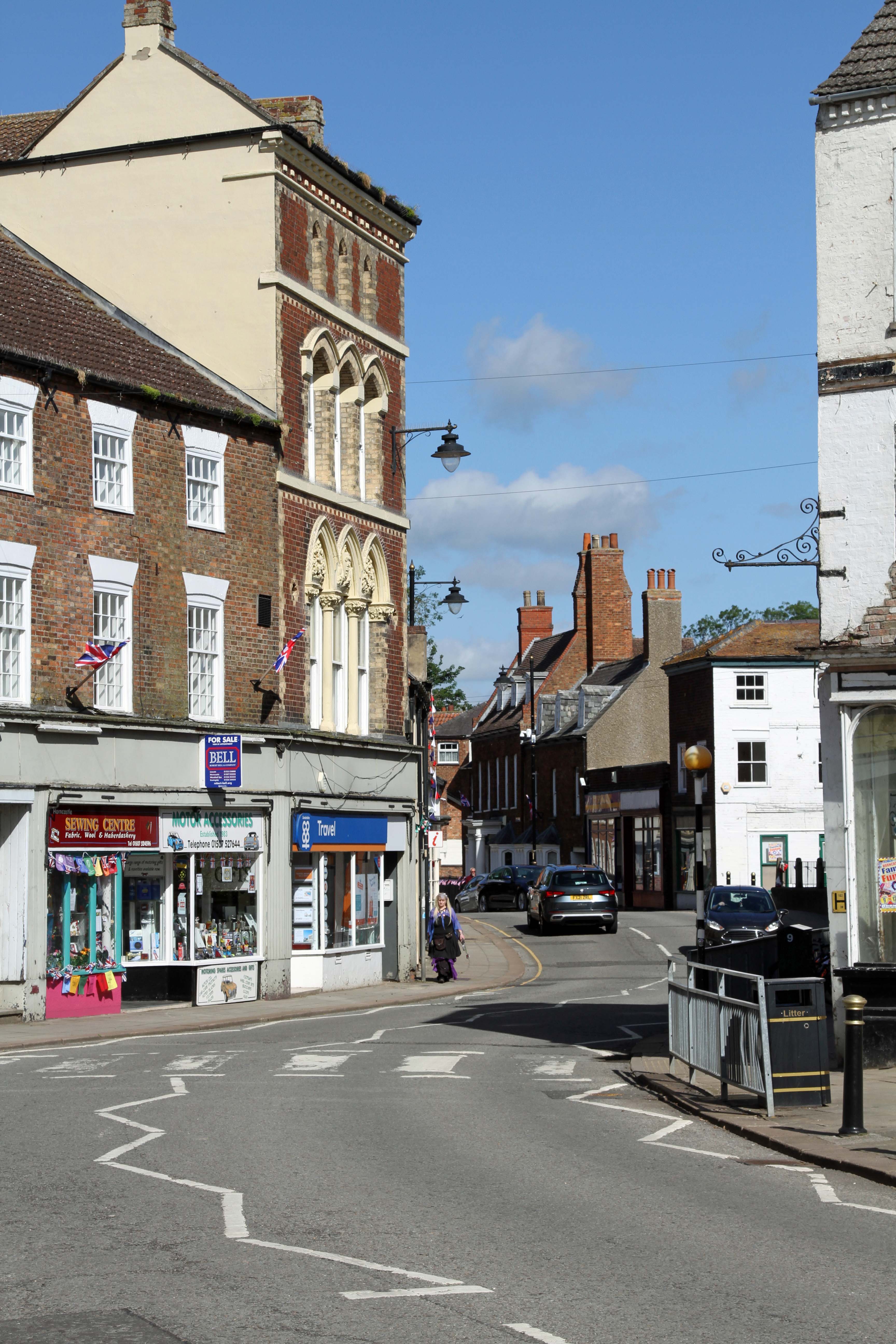
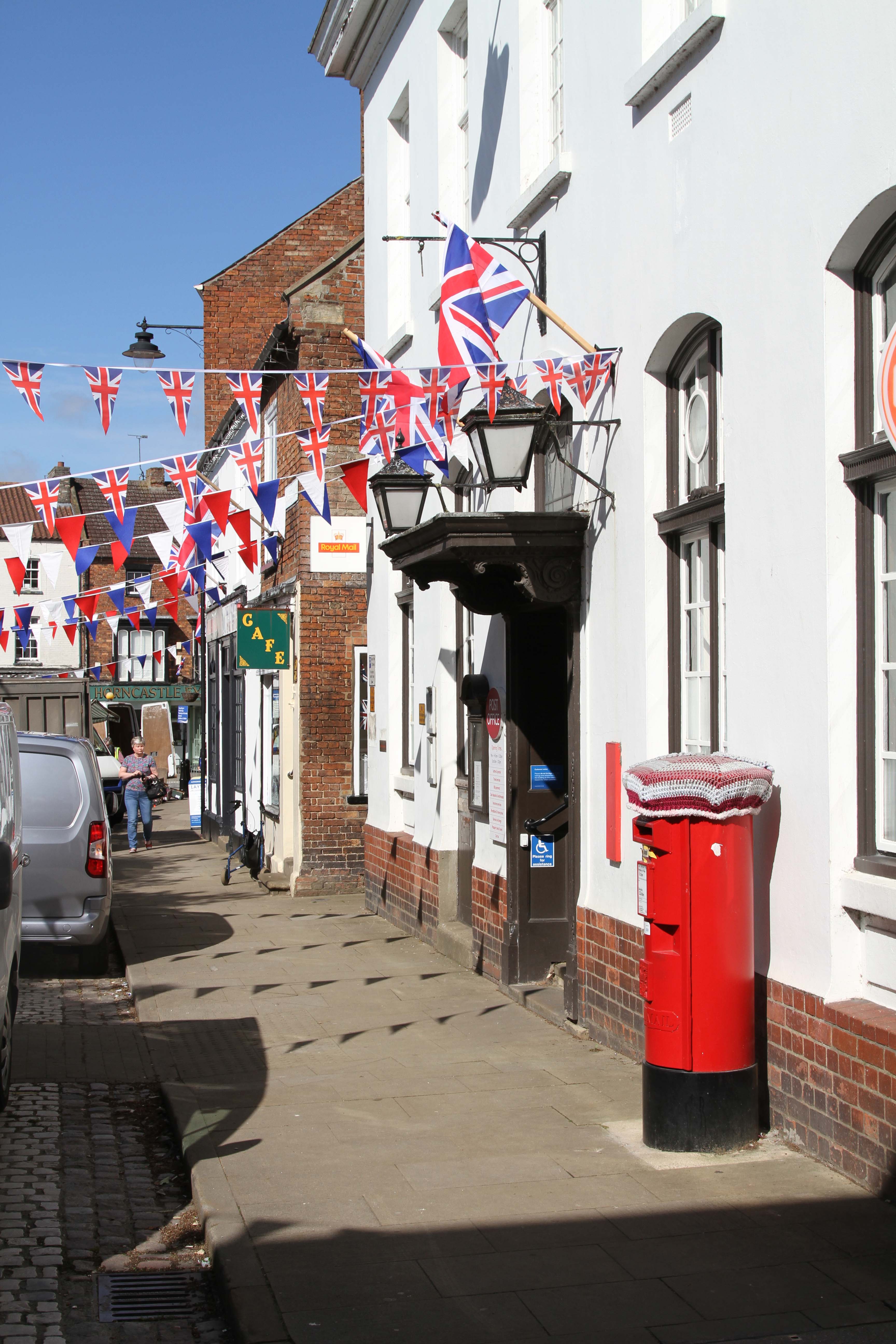
It was also my first visit there. It was market day – I love Lincolnshire markets! – and I had time to buy new potatoes (‘Boston potatoes’), the rich local soil still clinging to them, and some strawberries.

The event was very ably hosted by Helen, the library manager, and Donna and Hannah, two of the library’s librarians.
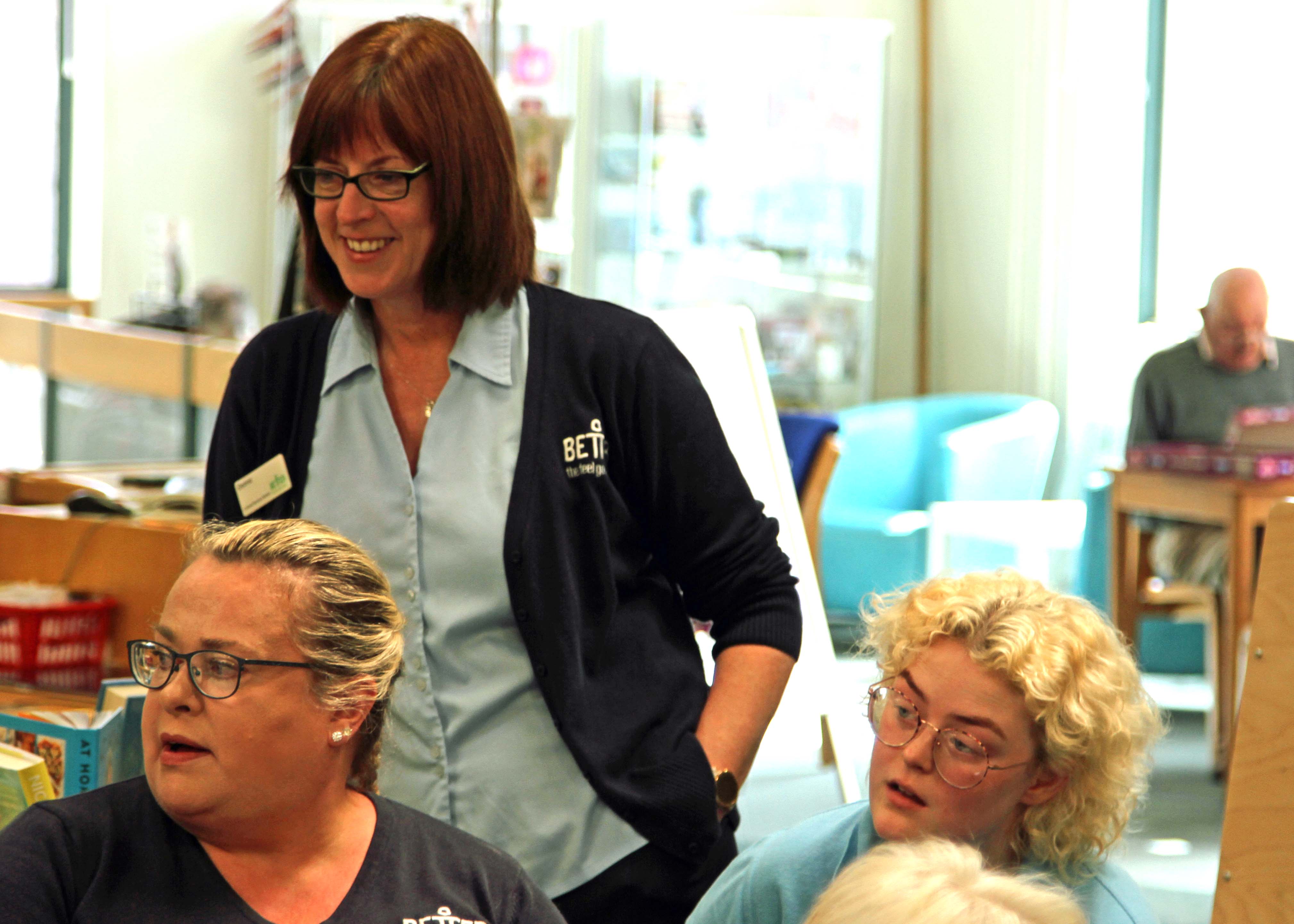
All were wonderfully hospitable and knowledgeable about the history of the town and famous people who have lived there: I discovered, for example, that the poet Alfred Lord Tennyson was born at Somersby, near the town. The audience – some of them members of the library’s book club – was also formidably knowledgeable, as well as being avid crime fiction readers. After the formal part of the talk, the discussion ranged far and wide. Over tea and biscuits, we managed to talk about local murders, discrimination against women, why I use a pseudonym, local tycoons and local customs – including an explanation of the fascinating ‘ran-tanning’, something I had never come across before, even though I am Lincolnshire born and bred. It was an ancient practice adopted by the neighbours of a wife-beater, who would surround his house and make a racket by beating on pots, pans and farm implements until he treated his wife with more respect. If he transgressed again, the process was repeated: an early version of Neighbourhood Watch and vigilantism combined which was probably more effective than calling the police today. It might be worth a revival.
I stayed talking with the Horncastle audience for so long that I only just made it to Mablethorpe for the afternoon event.

Kathy, Manager of the recently built and very well-stocked library, and her colleagues had gathered an impressive audience which consisted of local people across the age range, including several children.
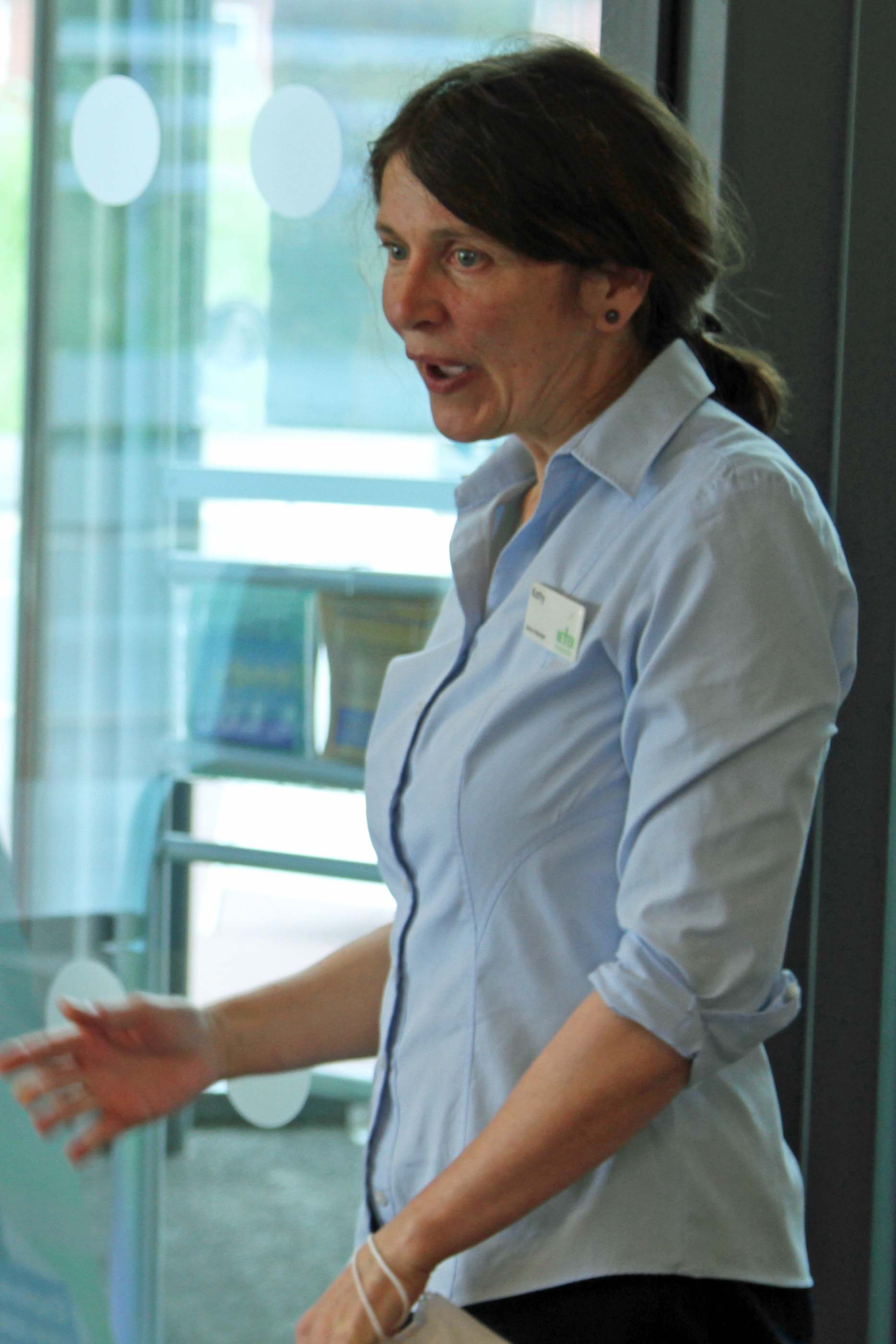
Once more, there was a lively discussion which covered many topics – again accompanied by tea and biscuits – after the main talk. This audience was interested in the process of writing, how to get published and how authors exercise their rights over the more unusual outputs of publishing – films, TV scripts, audio etc.
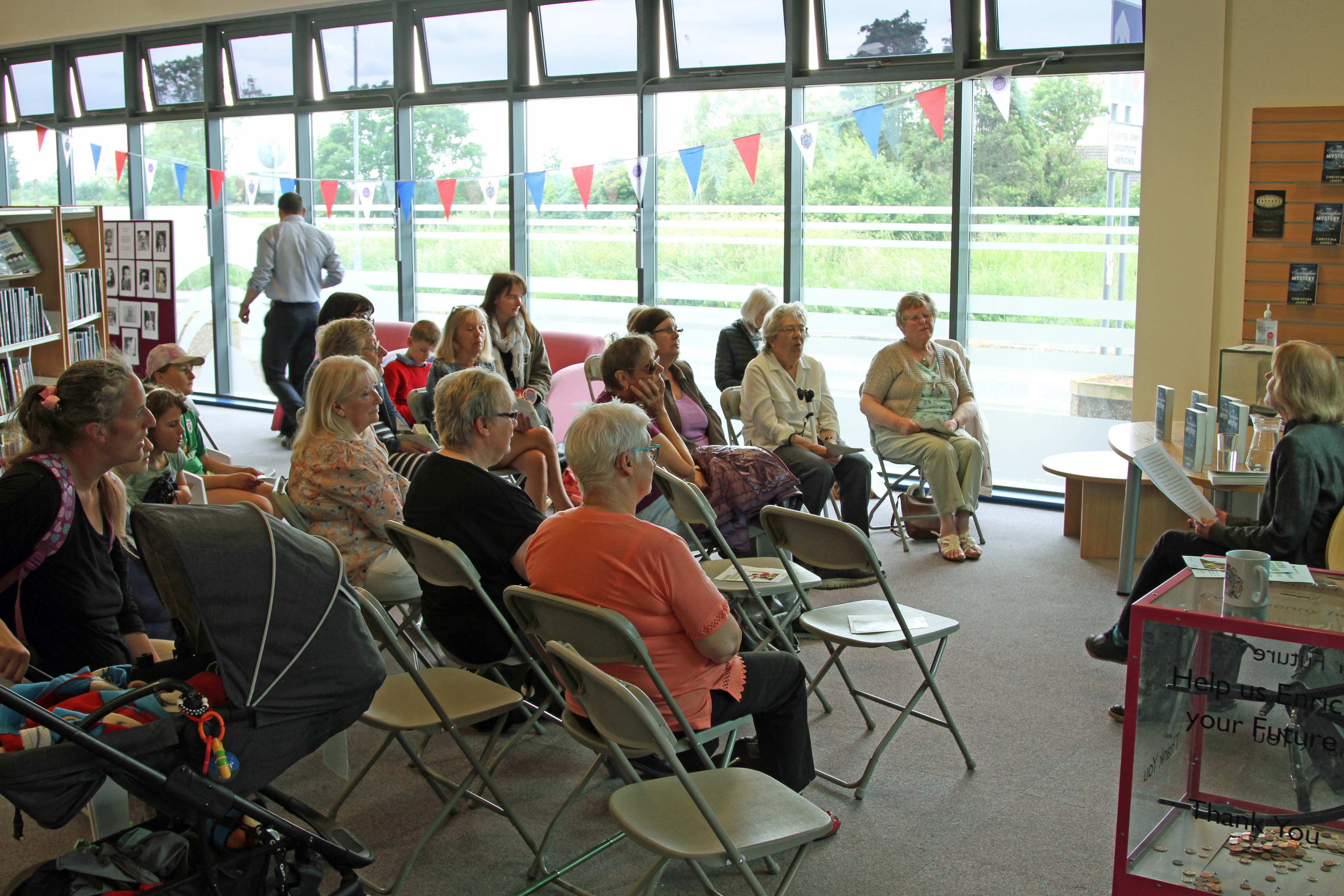
They particularly wanted to know whether, if I sold the film rights to my books, I would let the film company alter the characters and the endings of the books. (My answer was a resounding ‘No!’ 😉) They said they had often been disappointed when they’d watched films of books they had read, only to discover that the script writer had “mucked about” with the author’s story.
One of the young women present and two of the children were aspiring writers who wanted to know how to get their work noticed. One of the children had already won a writing competition. Ebony, her sister, presented me with a tiny, fluffy feather, which I have carefully brought home. I think it is beautiful. I suggested that they should start a blog and post on it often, sometimes supporting other writers, attend festivals, book themselves into author surgeries at events and, above all, exercise patience, courage and self-belief! Regular readers of this June CRM series will see that I have ‘borrowed’ many of these tips from others who have contributed to it.
For this series of Lincolnshire talks I have carried out some research to find an unsolved murder which took place in each of the towns in which I am speaking. As I still have two more talks to go – I am at Long Sutton library next Monday (13th June) and at Sleaford library on Friday 17th June I won’t today bomb the blog by introducing a spoiler that tells more. I shall, however, write a post about these murders – some of them very unusual – when the talks have all been delivered.
Huge thanks to Helen, Donna and Hannah and Kathy and her team for all the work they put into making these talks a success and for their magnificent hospitality. Massive thanks also to all the members of the two marvellous audiences. I hope that some of you will find this post, read it and like it – and that we may meet again. Kathy has already expressed enthusiasm for my suggestion of including a writers’ workshop next time I come. So, two more exceptional library teams that are awe-inspiring in their people skills, organisational flair and warmth of personality. Well done, Lincolnshire!
And a very special thank you to Ebony. I shall treasure the feather!

 Christina James, crime novelist