

Pinter’s Plea for Peace

It may seem strange to publish a piece on peace (if you’ll forgive the wordplay!) to celebrate Crime Reading Month. However, taking the big picture approach, the worst murders are committed during wars – as the conflict in Ukraine has demonstrated yet again. Wartime atrocities emphasise that peace is vital and, as Dr Pinter says, generations who have grown up knowing only peace lose – dangerously – awareness of the calamity of war. On the smaller canvas, classic crime fiction always ends with a denouement in which normality is restored – as peace follows war.
Dr Frances Pinter, who is currently Executive Chair of the Central European University Press [CEUP], is probably best known by readers of this blog for her outstanding – and continuing – work to promote Open Access models that work for academics, readers, librarians and publishers equally. Frances is passionate about achieving the fair dissemination of knowledge and equally committed to working towards world peace, and particularly the maintenance of peace in Europe. These two ambitions are, of course, not unrelated.
When Frances was writing her PhD in the early 1970s, she came into contact not just with academics but also with practitioners in the study of conflict and research into peace. These were very new academic disciplines. Frances, who was totally committed to the concepts, found herself meeting all kinds of unusual academics. She understood that there was not sufficient understanding of the processes that needed to be worked through to achieve the satisfactory resolution of conflict – something she learnt while studying the conflict in Northern Ireland for her PhD which included pub crawls with the IRA. As a result of many studies that she and others later published, we now have a corpus of vital information on the subject – although politicians are not good at deploying it.
Frances founded her own publishing company at the young age of twenty-three. This happened by accident: she was still working on her PhD when she “ran into someone whom I thought would write a wonderful book and decided to try my hand at publishing”.
Although for a short time she subsequently took a job as an academic, she carried on with the publishing and loved the whole process. She also decided that she would make a much better publisher than an academic, but if she wanted to expand her publishing activities and therefore leave academia, she “needed to find a way to have enough money to eat”. Her solution was to take out a mortgage, buy a large house in Oxford and fill it with tenants. It was a period of high inflation, so she was able to keep on borrowing against the increasing value of the property and use the money to invest in the new publishing company, which was originally called Frances Pinter Publications and then simply Pinter Publishers. She gave the company her name because she wouldn’t then have to carry out a search to see if another company was using the name she chose – which would have incurred an unnecessary expense. She became a successful medium-sized Social Sciences and Humanities publisher.
The company was twenty-one years old when George Soros invited Frances to work for his foundation. He had contacted her to suggest that it would be a good idea for the Social Science and Humanities classics of the West to be translated into all the languages of the post-Communist countries; and could she do it? Although Frances saw instantly that this would change her whole life, she accepted the offer and sold Pinter Publications.
Working from Budapest for the Open Society Foundation, she began the translation programme. This turned out to be just part of the work required. Soon she had set up the Centre for Publishing Development, whose mission was to help the new private publishing sector that was emerging in thirty post-Communist countries. She visited all the countries that were being supported and worked in all of them. Budapest acted as the hub for the programme; each country had a publishing officer and Frances worked through them. She ceased working full-time for the Foundation at the turn of the millennium, but continued in her capacity as adviser for a few years afterwards.
All these activities were either directly or indirectly focused on peace. Frances says her family history – some were victims of the Nazis in the second world war – has played its part in her recognition of the most profound importance of peace. Sometimes this made her prescient. She knew when she was working in Eastern Europe in the ‘90s that some of the West’s approaches to bringing ‘democracy and capitalism’ to the East would backfire. Former Communist states were presented with an ideal, but the reality they observed – generated by hubris and hypocrisy – was far different and generated an enormous amount of resentment. “We were rich and they were poor and much that has happened since stems from this. It pained me terribly – I could see the parallels with the resentment felt in Germany after World War I that led to the rise of Hitler. It got worse after the financial crash of 2008. Transitional and developing countries suffered far more than we did.”
Like Frances, I was the child of the generation that was shaken by the Second World War and vowed it would never happen again. She observes that, inevitably perhaps, we were followed by a generation of Europeans who didn’t think about it so much. “Suddenly, people ARE thinking. Now is one of the saddest periods of my life – to see what we were building in the West unravel.” In this, she includes Britain’s withdrawal from the European Union. During the referendum, she reminded British politicians that, fundamentally, the EU was a peace project, created to maintain peace in Europe. Every politician under the age of sixty-five scoffed at the idea that Europe might engage in another war. “They knew the facts but didn’t feel the weight of them. Now they bloody well should. Europe has been deeply destabilised because so many people didn’t understand.” She feels that pro-Brexit comments are frivolous. Britain has weakened its power to promote peace in Europe by standing outside the EU.
Frances visited Kiev a few times in the 1990s, during the period in which Judith Heneghan’s novel Snegurochka is set. One of her abiding memories is the very keen desire of the Ukrainian people to have the books she was offering them translated into Ukrainian, even though everybody could read Russian.
On a positive note, Frances believes that the current generation of young adults is again engaged in searching for profound truths. Recently, in Vienna, she met a colleague of Linda Kinstler, a young American journalist who has written a book entitled Come to this Court and Cry. The book describes Kinstler’s quest to establish whether her Latvian grandfather was really working for the Nazis or the Russians. “The truth is shrouded in secrecy, but all the time she is digging into it.” Truth leads to peace.
My favourite bookshop!

Yesterday I visited Waterstone’s Gower Street, which in my mind is called simply ‘Gower Street’ and, in many other people’s, is still indelibly fixed as ‘Dillons’. A great bookshop and, of all the bookshops I have visited (there have been a few), easily my favourite. It’s situated in the heart of Bloomsbury. Approaching from Gordon Square, you come upon it suddenly, an Arts and Crafts enchanted castle before which there is always a litter of student bicycles, as if thrown down in homage at its feet. On an early spring day, especially when the sun is shining, your heart lifts immediately.
The shop was founded by Una Dillon, herself one of the extended ‘Bloomsbury set’. Almost every other door of the houses in Gordon Square and adjoining Fitzroy Square is adorned with a blue plaque celebrating the fact that a Bloomsbury author lived there; Una Dillon created the shop to serve them. The building was originally an early experiment in franchise retailing, a sort of forerunner of the Galeries Lafayette or Selfridges. It was designed to house twenty-four retail units, one of which was initially taken by Una Dillon. Gradually, over a period of years, she expanded until she had bought all of the units and therefore the whole building. (This also lifts my heart: I wonder if there is the remotest possibility that this could still happen today? Could a bookshop oust, say, Zara, Boots, Gap, Marks & Spencer and their ilk from such an ‘emporium’? I have my doubts!) Consequently, behind the scenes, it is a rabbit warren of corridors and small offices. It is also a protected building – of which I’m entirely in favour – although it does mean that not even a nail can be knocked into the wall without English Heritage’s being first consulted.
This shop came under my jurisdiction for several years in the 1990s. At the time, there were booksellers there who could remember Una Dillon’s being wheeled into staff meetings in her wheelchair and who were still in awe of her memory. (I must admit that the image of this is conflated in my mind, unfairly I’m sure, with the image of Jeremy Bentham’s stuffed corpse, similarly wheeled into meetings at UCL nearby, but I’m sure that Una was still alive on the occasions of which they spoke!)
I myself have many excellent memories connected with the shop – for example: the launch for George Soros’s book, which attracted so many people that it had to be held in a lecture theatre at UCL, with a television link to an overspill room; coming out of the manager’s office and finding Will Self chatting to the staff in the reception area; walking back a little dazed to King’s Cross through a summer dawn on a Sunday morning, having – with all of the staff – been up all night stocktaking. And it is still my favourite place for browsing and buying books.
Great bookshops are like people – they have personalities. A great old bookshop like Gower Street also has secrets. As far as I know, there has never been a murder committed there, but there could have been. Maybe someone will write a novel about it!
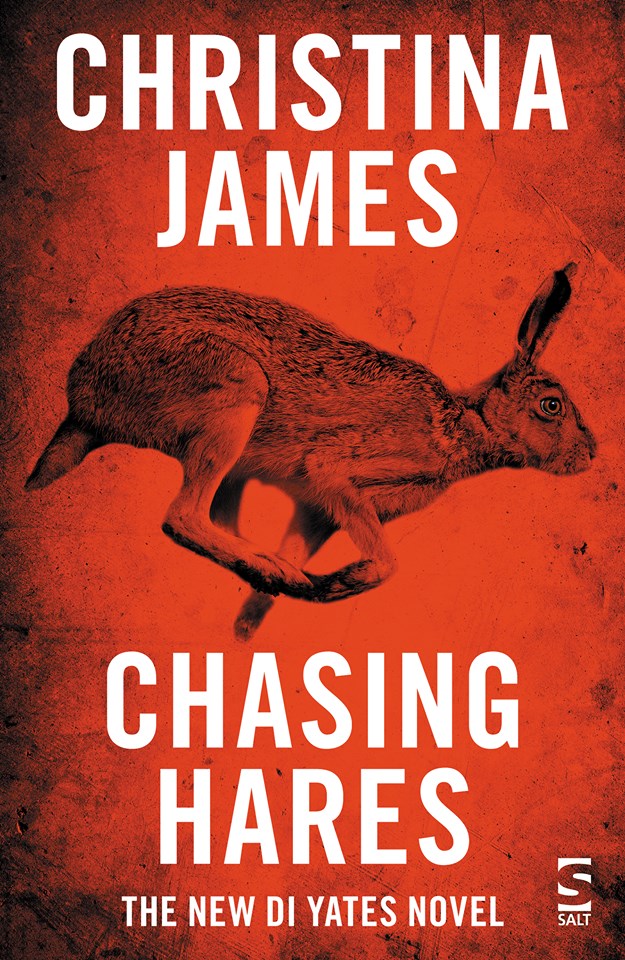
 Christina James, crime novelist