

When fear overpowers reason…
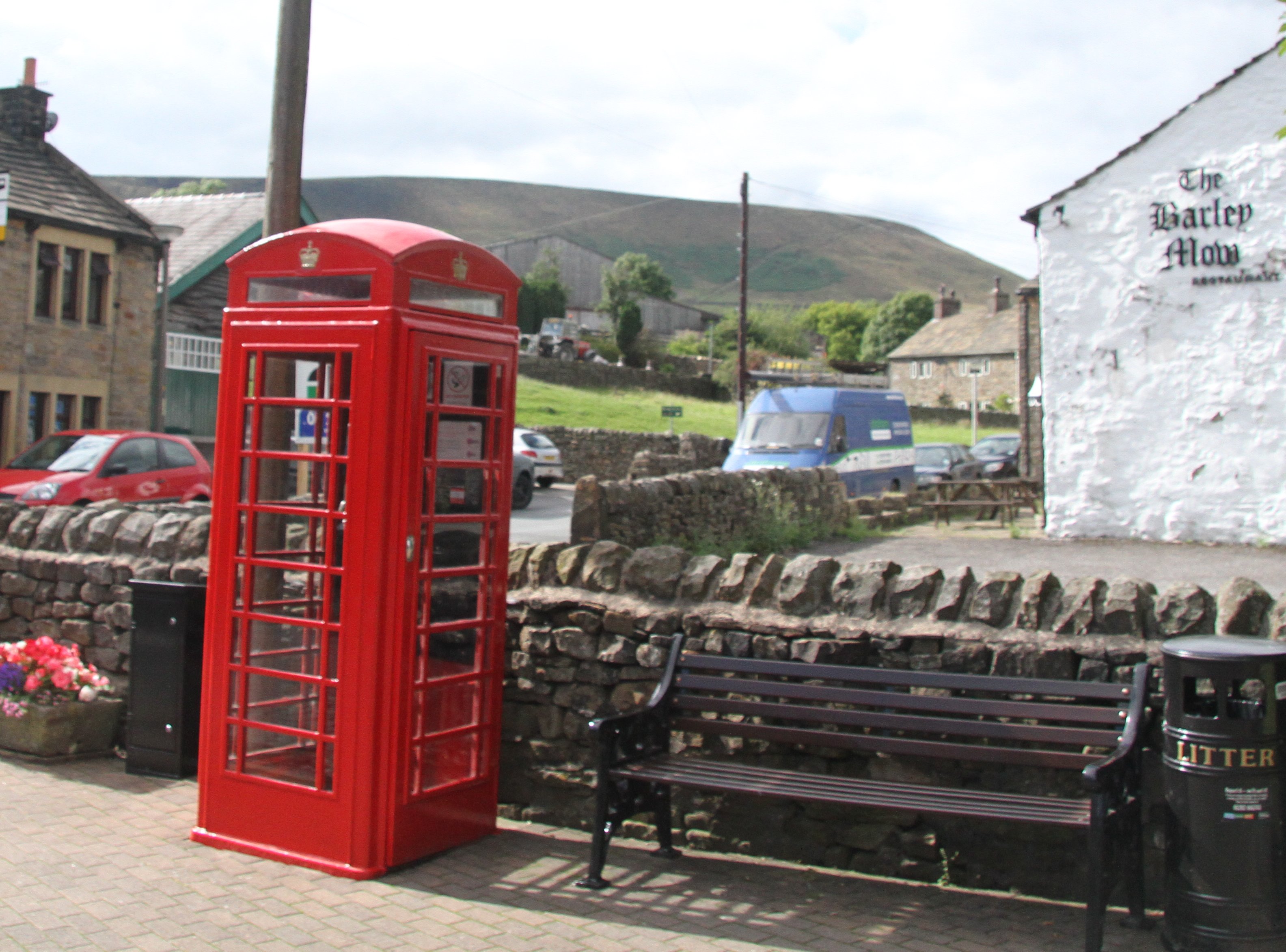
Pendle Hill, from the village of Barley
A week ago today I took the day off and went with my husband to meet friends in order to walk up Pendle Hill in Lancashire. I’ve been meaning to write about it ever since and have finally been spurred to do so by a book review I’ve just read – of which more shortly. I’d never been to this part of Lancashire before and had no idea of how beautiful it is.
Pendle Hill, which is perhaps best accessed via the picturesque village of Barley, is well worth the steep climb that it demands of those intent on reaching the top. It is a windswept plateau unprotected against the elements, even on a fine summer’s day (though a stone circle, grouse-butt style, has been erected as a kind of refuge); once you have arrived at the summit, it is possible to see much of the Lake District, the Yorkshire Dales (including the Three Peaks), Derbyshire’s High Peak, North Wales and, on a very clear day, so I’m told, the Isle of Man. The 360˚ view is truly spectacular.
Aside from the wonderful panorama of Pendle Hill, the area is famous as the home of the defendants in the Pendle Witch Trial, in 1612. Twenty people from the Pendle district, sixteen of them women, were tried at Lancaster Assizes for witchcraft. The crimes that they were accused of committing were diverse, varying from murder by witchcraft to ‘bewitching’ people or animals, usually by causing them to fall sick or die. Some of them were sentenced to death; others had to stand in the pillory in the markets of Clitheroe, Padiham, Colne and Lancaster.
Their stories make sobering reading. Those indicted of witchcraft were usually, but not always, old women. One of the most renowned of the Pendle witches was Ann Whittle, alias ‘Chattox’, who lived in the Forest of Pendle. She was indicted on several counts of sorcery and admitted (probably under duress) that some fourteen or fifteen years before her arrest she had sold her soul to the devil. Her daughter was also accused of witchcraft. The nineteenth-century chroniclers of the witches conclude their account of her story as follows: “… no longer anxious about her own life, she acknowledged her guilt, but humbly prayed the judges to be merciful to her daughter, Anne Redferne; but her prayer was in vain.”
The roots of the Lancashire Witch Trials were political: they formed part of the Protestant response to the Counter-Reformation that reached its peak in this country during James I’s reign. More locally, they played on much older superstitions that had survived in rural societies, possibly from pre-Christian times.
What I didn’t know when I visited Pendle Hill was that there was a Lincolnshire equivalent to the Pendle Witches. Two sisters, Margaret and Philippa Flower, were hanged for witchcraft in Lincoln in 1619. They were therefore the exact contemporaries of the Lancashire witches. Their story is told in Witches: a tale of sorcery, scandal and seduction, by Tracy Borman, a newly-published book which was reviewed in The Sunday Times on 11th August and which I shall certainly buy and read. Yet more interesting, from my perspective, is that the Flower sisters were employed as maidservants at Belvoir Castle by the Earl of Rutland and were accused of bewitching his children, one of whom died. Belvoir Castle and Burghley House were the two great houses of the area in which I grew up and I visited them several times during my childhood. I also knew Lincoln well. The present prison was built in the late nineteenth century, in gothic style, and before that prisoners were held in the eighteenth century gaol at Lincoln Castle; the Flower sisters were probably locked in the Castle dungeons. Public hangings took place above the upper town, from the north-east tower, until 1868. (My stepfather’s mother’s family kept a theatrical boarding house in Lincoln and she was a small child there, almost, though not quite, within living memory of the hangings: she died in the 1980s, when she was well into her nineties. She remembered tales of the scene, with cheers and jeers from the watching crowd below.) Taking them as a yardstick of how little progress civilisation had made in the intervening three centuries perhaps makes it less surprising, if no less shocking, that women were being put to death for witchcraft only four hundred years ago. Even more shamefully, old women have been persecuted simply for being old and misshapen during my own lifetime. When I was a primary school child, there was a row of tumbledown cottages that I had to walk past every day. Two of them were home to two ancient ladies with wispy white hair. One was almost bent double. She walked very slowly with a stick, her eyes usually fixed on the ground. She had warts on her face and the prognathous chin that very old ladies sometimes develop. It’s difficult now to say how old she might have been: as she’d spent most of her life without benefit of the National Health Service, she may not have been as aged as she looked. But I remember quite clearly that schoolboys used to shout ‘Witch!’ at her as they passed, if she happened to be standing outside. With hindsight, I shudder at the pain she must have felt, and that she had to suffer because she was old and ‘different’. It can be a pale reflection only, I know, but still it offers some insight into the anguish and terror that the Lancashire witches and Margaret and Philippa Flower had to endure before rough hands finally put them out of their misery.
Could such persecution happen today? In Western society, not in its literal form, perhaps, but Arthur Miller’s inspired choice of the Salem Witch Trials in The Crucible to illustrate Senator McCarthy’s irrational pursuit of communists and the Cleveland child abuse investigations both illustrate that modern parallels still exist. Old women may no longer be the prime targets, but we still harbour primitive fears of people who are different, and, motivated by fear, are still capable of turning upon them savagely.

The Pendle Inn sign, Barley
Let’s consider the general good of the English-speaking world…

As I’ve mentioned, I’ve just spent several days at a conference – the sort of event where I meet people whom I haven’t seen since the last conference or, in some instances, for two or three years before that. If you’re British (as I am), good manners dictate that making the courteous enquiry ‘How are you?’ at such meetings is inescapable. Naturally, such etiquette under such circumstances tends to be more for convention than for information. The answer that I dread getting back is a prolix account of all the ailments that the acquaintance has suffered in the interim (‘My sciatica hasn’t been playing up lately, but I had ’flu really badly this winter, despite getting the injection, and I’m still not feeling …’ etc., etc.), the speaker (and listener) obliged all the time to stand in a hot, crowded, noisy room and drink outsize glasses of red wine, on the whole coping remarkably well with his or her various infirmities.
The next worst response is short but irritating: ‘I’m good’. It’s an expression that I first encountered about twelve years ago, interestingly also at an event. I had to think about what it meant for a moment. Clearly an American import, as a stock response it gained ground slowly at first and then with rapidly-increasing speed. I shall come back to it in a minute.
‘Good’ is a slippery word. Used as an interjection, it can variously signify an approving verbal nod, a comment on the speaker’s views or performance, or just something to say – a more positive alternative to ‘Oh’. Its use as an adjective is familiar to everyone (though I’m sure there are many gradations of meaning from individual to individual when saying that something is good), but I must have been about forty before I realised that good in the singular is also a noun. I discovered this in rather traumatic circumstances, having been required to teach a first-year postgraduate class basic economics as part of an MBA course, even though economics was a subject of which I had been entirely innocent until that moment. (Don’t ask – it involved university in-fighting, a topic on which I can wax at length in very bitter and twisted fashion!) I still dislike this use of the word. I don’t mind ‘goods’ in the plural – ‘goods train’, for example, is a term that appeals with its expansive connotations of plenty; but ‘a good’? It is too abstract, too pedantic, too stuffy. To me it represents a kind of emotional shorthand, like being given a plastic token instead of a gift.
Then there is ‘goody’ – as in sweets (‘goodies’) and also as someone who is sickeningly good (Goody Two-Shoes). It was Arthur Miller who taught me (in The Crucible) that Goody was originally an abbreviated version of ‘Goodwife’. The male equivalent was Goodman, but this does not seem to have survived in any modern context. I don’t like Goody as an alternative to Mrs – or Mistress, as I suppose it was then. It’s too oppressive, maybe too exclusive – it was a term that belonged to Puritanism. (Miller, of course, exploits the irony of this.)
And so I return to ‘I’m good’. What is it about this expression that makes it so objectionable to me? I think it’s because it has a number of undesirable overtones: it seems prickly (‘How impertinent of you to ask’); defiant (‘Why would you think I was anything other than fine?’) and superior (‘Everything about me is excellent. What about you?’). It also involves incorrect usage, judged by UK English standards, anyway. When offered it, I am very tempted to reply, “Oh, really? I had always considered you to be very wicked and bad!”
Good, that’s sorted. I rest my case.
 Christina James, crime novelist