Gangs on the land…

Cash in hand

Still reading about rural life, I was interested that the history of nineteenth century Lincolnshire that I have just completed and a more general book about farm labourers both mention gang labour. Gangs were self-assembled groups, sometimes of both sexes, sometimes consisting entirely of men or of women, who hired themselves out to farmers as an entity. The advantage to them was that, as a group, they were less likely to be exploited; some gangs also contained children (I suspect that, although the gang may have saved these minors from exploitation by the farmer, it was probably less punctilious about appropriating their wages!). However, they were often troublesome and, in Lincolnshire in the later nineteenth century, by-laws were introduced to attempt to curb their excesses of behaviour and to set out clearly the terms under which they could be employed.
Both books say that the practice of developing and employing gangs had become obsolete by the turn of the twentieth century. However, when I was a student in the 1970s, taking summer holiday jobs working in the local canning factory, gangs were certainly still being employed there. They were of three kinds:

A group of twenty or so Maltese women was taken on in the key fruit and vegetable harvesting months of June, July, August and September and they lived in trailers on the factory site. I remember that when I was cycling home in the evening, having worked the four hours’ overtime allowed, I would sometimes meet two of them carrying a crate of beer to share with the others.

Then there was a group of Irish women of all ages, many of them well-educated and some also students. They were boarded with regular factory workers who were prepared to take them in, their keep being paid for by the company.

Finally, there were local agricultural gangs, I imagine of exactly the kind that these history books refer to, who, like other local casual labour, turned up each day and were not provided with accommodation.

The gangs I knew consisted entirely of women. They were extremely rough and foul-mouthed and were usually put to work together; they were shunned by everyone else on the factory floor because they would pick a fight at the drop of a hat. One year, the forewoman (whose name was Dulcie – she had a voice like a squeaking gate) made the mistake of hiring two rival gangs. I vividly remember a woman from each of them fighting one Friday lunchtime, thrashing it out on the concrete floor. It was the most vicious event I have ever witnessed. They tore out handfuls of each other’s hair and scratched faces with fingernails, as well as landing punches. Eventually they were rolling on the ground, pulling at each other’s clothes. One of them ended up shirtless, her white bra bloodied and dusty. Dulcie and one of the male supervisors eventually succeeded in separating them and both gangs were dismissed. I guess that they spent the rest of the summer working on the land: at the time it was still possible to turn up at most farms and work at bean-pulling, potato-picking or bulb-cleaning for cash in hand at the end of the day. With hindsight, my guess is that most gang members were the virtual slaves of a single gang-master, or perhaps a few ‘élite’ overseers. I hope that the practice of gang employment has finally ceased now, but I suspect that the recent influx of immigrants to the agricultural communities of East Anglia may mean that it has ‘enjoyed’ an ignominious revival.
A fascinating period piece…

A New Lease Of Death

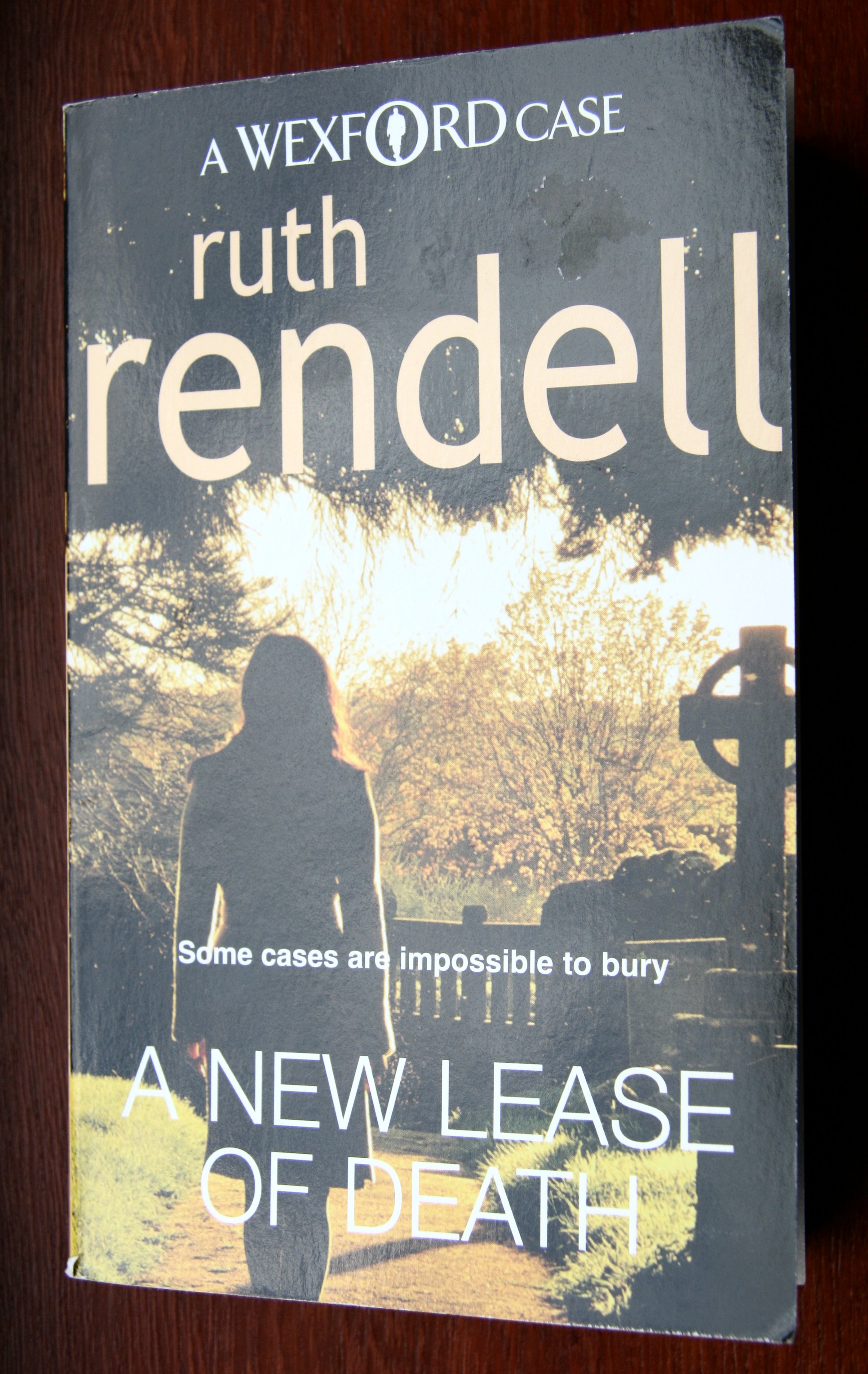
New Lease of Death is a relatively early Ruth Rendell novel, although Chief Inspector Wexford is already middle-aged and jowly. First published in 1967 and reprinted many times since, it is a fascinating period piece. It vividly describes a post-war England that is familiar to many – class-ridden, hidebound and generous only to those who obey the rules; still crime-writing territory for some authors, it has long since vanished. I’m not just talking about the topography, the clothes or the vehicles, but the outlook and mores of the characters. Without giving too much away, the plot hinges on the covering-up of an indiscretion which today would be regarded as neither shameful nor indiscreet.
All the later Rendell hallmarks are there: the cynicism yet essential decency of Wexford and Burden; the intricately-created family relationships; the credible twists of plot, the unspoken secrets. With hindsight, I’d say that one or two elements of the novel lack the sureness of touch that the author develops in her later work. What I found hardest to swallow was why Irene Painter’s second husband, Tom Kershaw, the delightful amateur polymath and full-time optimist, would ever have wanted to marry such a dreary, desiccated, sexless woman in the first place. More credible, but still jarring to the modern reader, is the busybodying intervention of the pious Reverend Archery. Nowadays he would be regarded as a prurient hypocrite whose son would have laughed him to scorn, but it is just possible that, when Rendell was writing in 1967, she intended the reader to take him at face value.
New Lease of Death is a period piece, but none the less enchanting for that. It is an undemanding good read, to be kept for cold nights on the same shelf as Agatha Christie and Ngaio Marsh.

Whose jurisdiction? Cops and the county boundary…

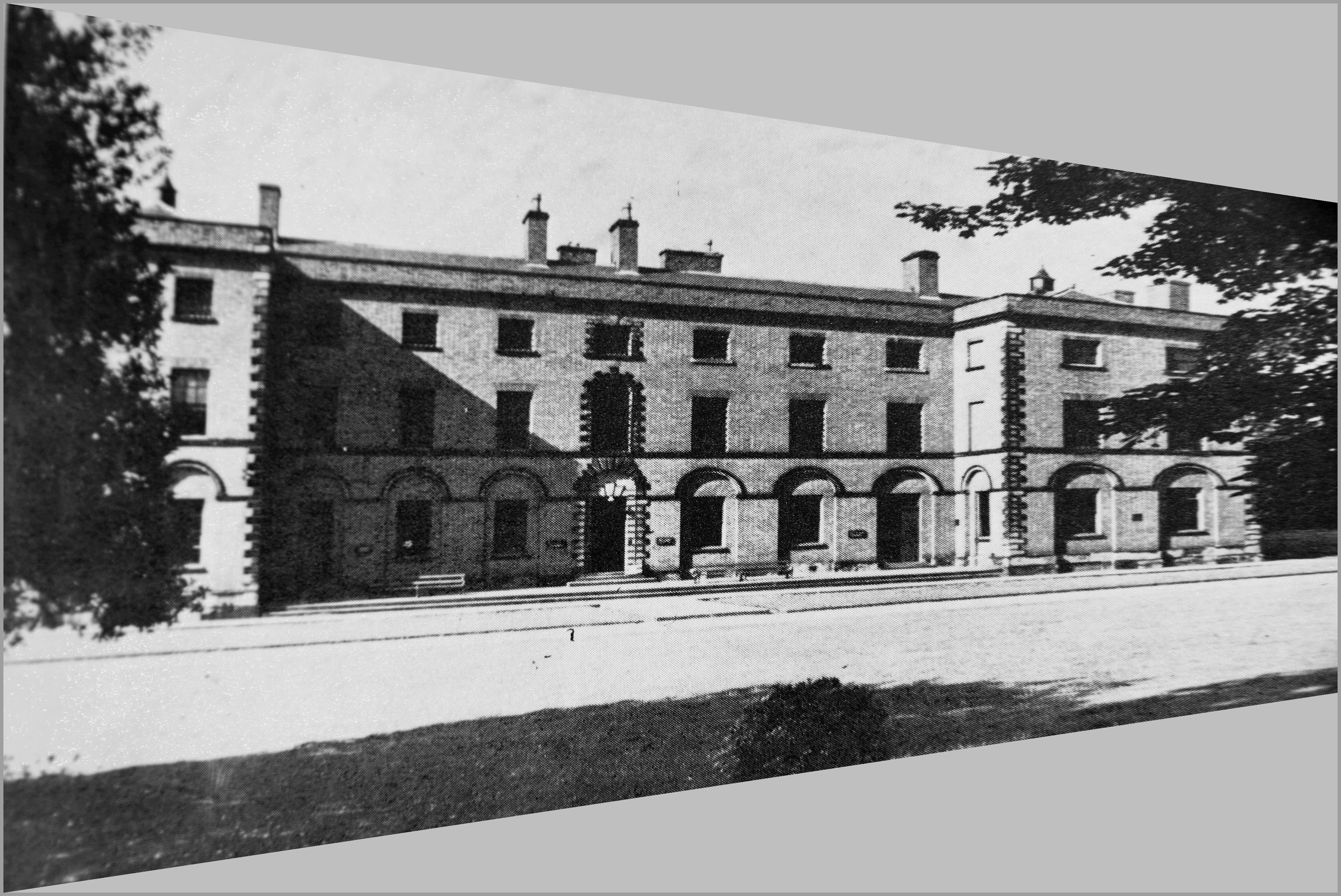
Lincoln County Gaol

Lincoln County Gaol

My husband is an aficionado of Traffic Cops, a television programme that I abhor. It’s an extraordinary thing, but I’ve yet to meet a woman who likes it and, similarly, to meet a man who doesn’t. (No doubt I shall soon be hearing contradictions from both sexes!) For me, it illustrates far more reliably than football the adage that men are from Mars and women are from Venus; ours is a strictly non-football-supporting household, regardless of gender, and I know many others where both husband and wife are football enthusiasts (although not always rooting for the same team!). Yet Traffic Cops seems to appeal exclusively to males – apparently all of them. Why do they like it? When I’ve glanced at it, it has featured two burly no-nonsense coppers of limited vocabulary driving along the motorway until they manage to apprehend some idiot who is doing something particularly stupid while at the controls of a car. After they’ve stopped him (or her, but it is most often a he), they’re filmed saying, with music hall politeness,‘Would you mind sitting in the back of our car for a few minutes, sir?’ One of them then winks at the camera and says to viewers out of the corner of his mouth ‘We’ve got a right one ’ere.’ And so it goes on.
On the few occasions that I’ve been persuaded to watch these snippets, I’ve felt particular disdain when the cops have reached the county boundary without managing to catch their quarry and turned back. This has seemed to me to be nimby officialdom at its worst! My husband, however, assures me that it must be some time since I watched it, as they don’t do this any more – the different police forces now co-operate with each other across county divides and have even celebrated on the programme their newly-established collaboration.
I was reminded of this yesterday when I began reading about nineteenth-century Lincolnshire in preparation for my next novel. It will be set in the twentieth century, but I want to understand what the background and values of some of the older characters would have been; in other words, the kind of place it was when they were growing up. I was fascinated to read that felons who were arrested on the Great North Road (today’s A1) were often acquitted because the exact spot on which they were arrested was in dispute. If it could not be established whether it was in Holland, Kesteven or Lindsey (Lincolnshire’s equivalent to the Yorkshire Ridings), they were released. Police from Holland weren’t supposed to ‘trespass’ in Kesteven in the line of duty; police from Kesteven didn’t venture into Lindsey, etc. – a rule apparently observed by their modern-day counterparts until very recently. In the earlier part of the nineteenth century, when more than a score of offences carried the death penalty, my guess is that this meant that criminals were pretty hot on their Fenland geography.
None of the three districts of the county had adequate prison facilities until Lincoln Gaol was built. Lincoln is situated in Lindsey, the largest and most ancient of these districts (once a kingdom in its own right). It was agreed that all three districts could avail themselves of Lincoln’s new ‘house of correction’: Lindsey would pay half the costs, Kesteven two thirds of the remainder, and Holland the rest. I was amused to read that after some years it was suggested that the salary of the ‘chief gaoler’ (today he would be called the prison governor) should be raised by £16. The councils of Lindsey and Kesteven agreed to pay, but Holland – the region in which I grew up – demurred. It used to be said that the people of Holland were ‘tighter even than Yorkshire folk’ and, on this occasion, they did not disappoint. Their refusal to pay a little more than £3 extra annually to this no doubt very hard-working gentleman was exactly true to form. Reading it gave me not a feeling of pride, but certainly a warm glow of understanding. I can just imagine my great uncles arguing the toss over such an issue and prudently deciding to keep their wallets closed.
I’m glad that police forces are co-operating now and have ceased to observe artificial boundaries. I know that this is a loophole that has been exploited many times in the past, sometimes allowing people to get away with murder – literally.

Another fine psychological read…

Rush of Blood

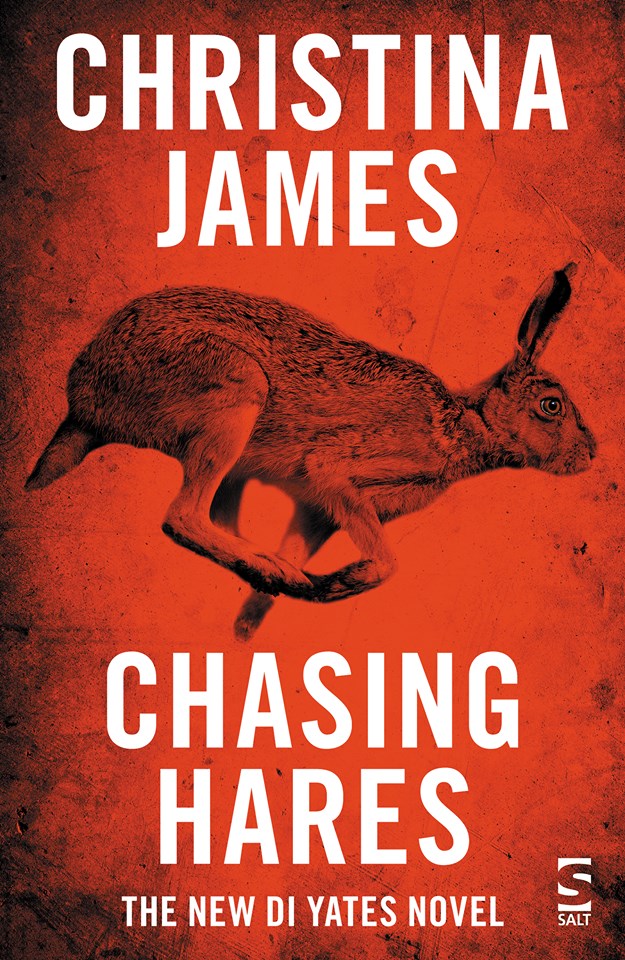
I first read a book by Mark Billingham when I was given a proof copy of Scaredycat at the London Book Fair and read it on the train on the way home.  I thought that it was an impressive novel, though a bit too sensational for my tastes.   I’ve read at least one more of his novels since then (In the Dark, which his publisher does not class as crime), but am amazed to discover that he has now completed ten crime novels altogether.

I began Rush of Blood when I was on my own on Wednesday evening and completed it on Thursday (as we might say in Yorkshire: ‘It were that good!’).  It is a very fine book indeed.  I’d describe it as a psychological thriller rather than a crime novel.  (Scaredycat is as well, but, as I’ve said, much more overtly violent.)  It tells the story of how three British couples meet at a tawdry, manufactured beach resort in Florida.  Although there are tensions between them from the start, they agree to have dinner together on their last evening at the resort.  Earlier that day, a thirteen-year-old girl who is intellectually disabled goes missing.  Among the many touches of genius in this book is the way by which Billington indicates that she is ‘slow’ and shows others’ reactions to her limited mental capabilities without actually applying any medical or ‘politically-correct’ terms to her condition.  Her worn-down but amusing middle-aged single mother is also extremely well-drawn.

The British couples return home, but are somehow drawn to each other, perhaps because they ‘shared’ knowledge of this event.  The girl’s body is not discovered until some weeks later, by which time they have set up a schedule of dinner dates at each other’s houses.  Although they have given statements to the American police, the discovery of the body prompts further action.  A trainee British detective, Jenny Quinlan, liaises with Jeffrey Gardner, the much more experienced black American detective on the case, and volunteers to interview the three couples again.  He directs her to ask just some basic questions to fill in the gaps in his original statements, but Jenny is both keen and driven (she is a little bit reminiscent of Clarice Starling) and probes much deeper.  In the process, she discovers that each of the three couples lied about their exact whereabouts at the time when the girl disappeared.  The omniscient narrator (Billingham handles this technique well) reveals further flaws about each one of them and anomalies in each of their relationships, expanding on their characters just enough to tell the reader that any one of the individuals or couples could have committed the crime – or it could have been someone else altogether: the girl’s mother admitted chatting up a good-looking man several times during the days leading up to her disappearance.

I did guess who did it, but only a few pages before the end.  Yet the denouement is not forced in any way: the trail of clues that Billingham lays is entirely logical when reviewed in retrospect.

I have two minor quibbles, both of which concern shortfalls in editing.  Almost every time two or more people are gathered to discuss something, Billingham says that they ‘lean in’ to each other; and he uses the adjective ‘stupid’ on just about every page.  At first, it is just a kind of catch-phrase of the girl’s mother and perfectly acceptable used like this, as one of her speech mannerisms, but eventually it is extended to the thoughts and actions of more or less everyone in the book.  All authors have these blind spots: there is a word or phrase at the back of your mind that keeps on popping up and you have no idea how many times you have used it.  A good editor will spot this.  For me, these small blemishes caused a minor irritation in what is otherwise a superlative read.  I now plan to read some of the crime novels that Billingham wrote after Scaredycat.  Whatever impression they make, I am convinced that Rush of Blood will be the novel in which he transcends the crime genre.  He will always be a great crime writer, but this novel makes him a great writer full stop, by whatever standards he is judged.

There may have been criminal lapses in some NHS care, but it’s a crime not to praise the NHS for what it does well.

Bourbon Creams

Earlier this week, I was booked into my local NHS hospital as a day-patient in order to undergo a minor medical procedure.  I’ve always had excellent service from the NHS and try to take the trouble to say so each time I use it, as it has had, just recently, a lot of bad press.  The irreproachable care that it dispenses 95% of the time often fails to get a mention.

Mine was the first generation to benefit from the NHS from birth.  Early memories include solemnly hanging on to the handle of the pushchair when my younger brother was being taken to the clinic.  (That pushchair was something else: made of a kind of khaki canvas, with solid metal wheels, it folded up crabwise, so that the wheels lay flat under the canvas.  It weighed a ton and had been used by several babies in the family.  If they’d had pushchairs in the First World War trenches, I’m sure that they would have looked like this.  Apologies for the digression!)  One of the best things about the clinic was the unusual, NHS-exclusive foods that it dispensed.  These included cod liver oil (which wasn’t nearly as bad as people now make out), tiny intensely-flavoured tangerine vitamin pills and, my favourite, an orange concentrate that could be diluted to make a long drink which was called orange juice.  It didn’t taste of orange juice, but it was delicious and I’ve never encountered anything that remotely resembled it since.  A slightly later memory is of standing in a queue in the freezing cold yard of the doctor’s surgery with all my primary-school classmates, waiting to be inoculated against polio.  The injection hurt, but the nurse was at the ready with a twist of paper containing several brightly-coloured boiled sweets for each child.

When I came back from the theatre this week, the comfort of NHS comestibles immediately kicked in again.  A severe young nurse, who was rather old-fashioned (plump, with dark curly hair and a fresh face, she would have made an excellent poster girl for a 1950s nurses’ recruitment drive), forbade me to get out of bed until I had consumed tea and toast.  She returned immediately with two doorstep slices of white bread slathered with butter, a cup of mahogany-coloured tea like that my grandmother used to make – I think you can achieve the desired effect only with industrial quantities of ‘real’ tea-leaves and plenty of whole milk – and a packet of three chocolate Bourbon biscuits.  Immediately, I recalled the last occasion on which I had seen such a packet of biscuits, also at an NHS hospital.  It had been more than a quarter of a century ago, towards the end of my final ante-natal class at St. James’s Hospital in Leeds.  Having spent upwards of an hour with several other imminent mothers, alternately lying on the floor like so many beached whales to practise breathing exercises and grabbing each other’s ankles to simulate contractions  (what a joke this was only became apparent some time later), we were blissfully interrupted by the tea lady, doing her rounds with mahogany tea and packets of Bourbon biscuits.  The latter tasted all the better for being forbidden – we’d all just been lectured on eating the right foods for ‘baby’ and the crime of putting on too much weight – when this no-nonsense lady appeared and made it obligatory for us to tuck in.

I suspect that one of the reasons why the nation takes the NHS so much to its heart is that it has always managed to embrace this ambiguity between what is ‘good’ for you and what forbidden fruits it will allow in order to cheer you up.  Another is that the treats themselves have not changed over the years.  Doorstep toast, mahogany tea, packets of Bourbons biscuits – they all belong to the relative innocence of the 1960s, when it didn’t take too much to please.

Stuffed as I was with toast, I couldn’t manage my Bourbon biscuits as well, but I asked the nurse if I could bring them home with me and I certainly intend to enjoy them.  In spite of what appear to be thoroughly unacceptable lapses in Mid Staffordshire from the very high standards I have always found in evidence in my visits to hospitals, I shall continue to praise the NHS and the homespun comforts that it offers.  If someone could rustle up a bottle of that concentrated orange juice, I would give it a blog-post all to itself.

Conflicting swirls of belief…

Oeuf

Easter is a curious festival.  Claimed by both Christians (to celebrate Christ’s death and resurrection) and Jews (to celebrate the Passover), it has its roots in even more ancient pagan rites that grew up to mark the emergence of the spring.  This year, as I sit in my office looking out at a row of icicles, each more than two feet long, and the snowy landscape beyond, nature seems to have played a bizarre trick.  The Christian ‘moveable feast’ concept would be perfectly logical if the holiday could be chosen after spring had demonstrably arrived, but I suppose that at some point we – or the government – would have to plump for a date and we might still get caught out by freak snowstorms.  I doubt if David Cameron would want to be held responsible for a wet, cold Easter on top of everything else.

Easter is associated with the rising of the moon, the heavenly body worshipped by many prehistoric peoples.  In Babylon, it was the feast of the Ashtaroth, the moon-goddess who also represented fertility; yet, paradoxically, there is evidence that babies were slaughtered on her altar.   In modern times, Easter, like Christmas, has become a kind of black spot for domestic murders.  One of the most notorious was the murder of eleven family members by James Ruppert in Ohio in 1975.  A slightly-built, quiet-spoken man, he had no history of violence until he chose this day to lash out at the family that he felt had continually marginalised and despised him.

On a lighter note, Norwegians are apparently busy creating a new tradition of using the leisure offered by the Easter break to engage in their own personal crimefests, or several-day concerted sessions of reading crime novels.  I suppose they have the reputation of having produced some of the world’s foremost crime-writers to uphold, but sociologists also attribute the trend to the deeper, more primeval association of Easter with death.

So far I’ve dwelt mainly on Easter’s powerful association with death, but, as I’ve suggested, it is a Janus-like event, intended to celebrate life and death together.  Eggs, chicks, lambs, bunnies, Easter hares – all are familiar symbols of hope and regeneration.  Personally, the thing that I like best about them is that each is available in chocolate.  Chocolate was invented more than three thousand years ago by the Aztecs, another race of people with a penchant for human slaughter.  It brings substance to the idea of killing for a box of chocolates.   If everyone gives generously of chocolate this Easter, it won’t be necessary – we’ll all have plenty!  And peace will break out.

Miry March in South Holland

Watergate shed

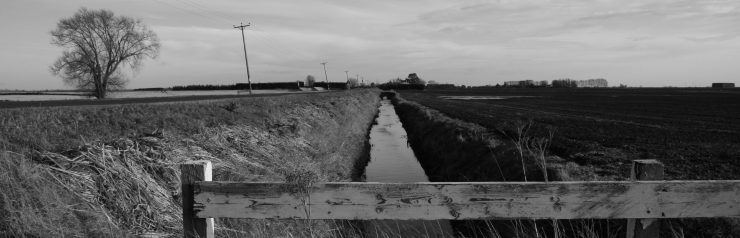
At Quadring Eaudyke the drains run, easing the water from the earth. Watergate and Rushy Drove sing their names of fen and farm to the listening land. Lincs Pumps and Pipelines are in business. Now muddy, mid-March Lincolnshire leans to the spring as tractors tread the acres, their mighty ploughs furling multi-shared furrows, bright with gleaming soil and screaming gulls following to feed, heads black with breeding splendour. Close to the dyke, a fancy pheasant fluffs a whirr of wings and ruffles up a creck-creck call to hens, subsides and pecks again.
Everywhere, home-made ‘Mud on road’ signs celebrate the gloriously spreading feast of mire, while ‘Leeks for sale’ promote the remaining winter crop, with a field half-plucked and batteries of trimmed, pale white and green vegetable bounty on boxes on the verge. The cabbages are past their best: sheep graze the leftovers of leaves and stalks or browse the dedicated crops of roots.
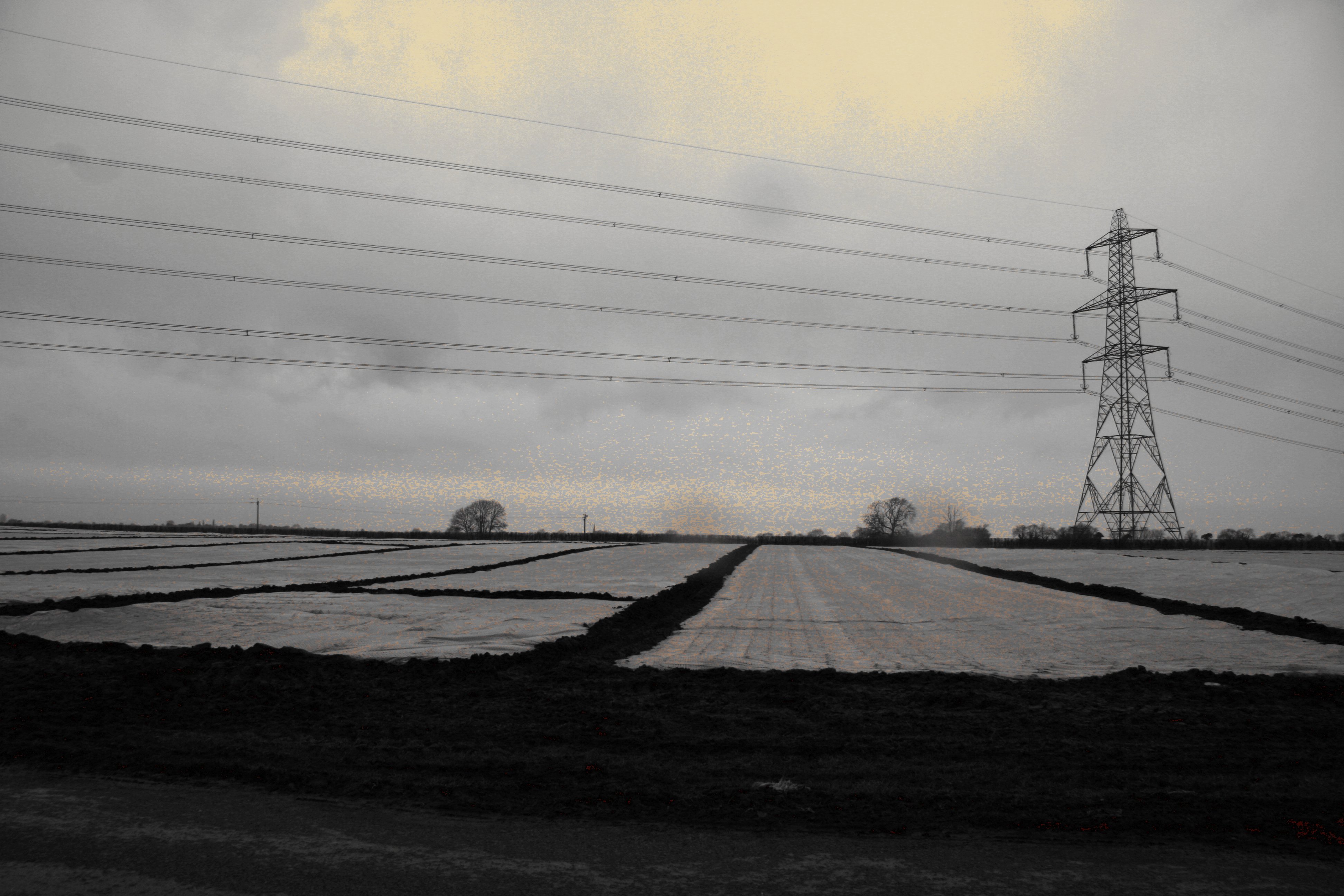
And now, against horizons of leaning spires of churches, metal frames of pylons and grey skies that don’t just threaten but pelt with slanting rain or driven snow, so fickle is the season, roll in the rippling tides of plastic sheeting spread on soil and seed to speed new growth.

Sheeted fen

And further south, where Surfleet Seas End and Moulton Seas End mark where once the real tides washed ashore, down towards Peppermint Junction, vast swathes of Taylors Bulbs are already deep green and undulate in windy waves; glass houses feed the nation’s supermarkets and those abroad with tonnes of early daffs, with millions of blooms to follow from the open fields. It might be Holland, and is named so, the land reclaimed and drained by dykes twenty feet wide and plenty deep. Here the banks of smaller dykes, protected from cold North Sea winds, have daffodils and periwinkles full in flower, with snowdrops hanging on in drifts of white. Above them, weeping willows are bright yellow with swelling buds and pussy willow catkins grey with fur.
It is spring in the Fens, though the harshest of winter weather still beats in from the east, and the casual passing eye might miss the signs that tell people here that the dark season is done.

Fen road and dyke

Chaos and casual brutality in Leeds…

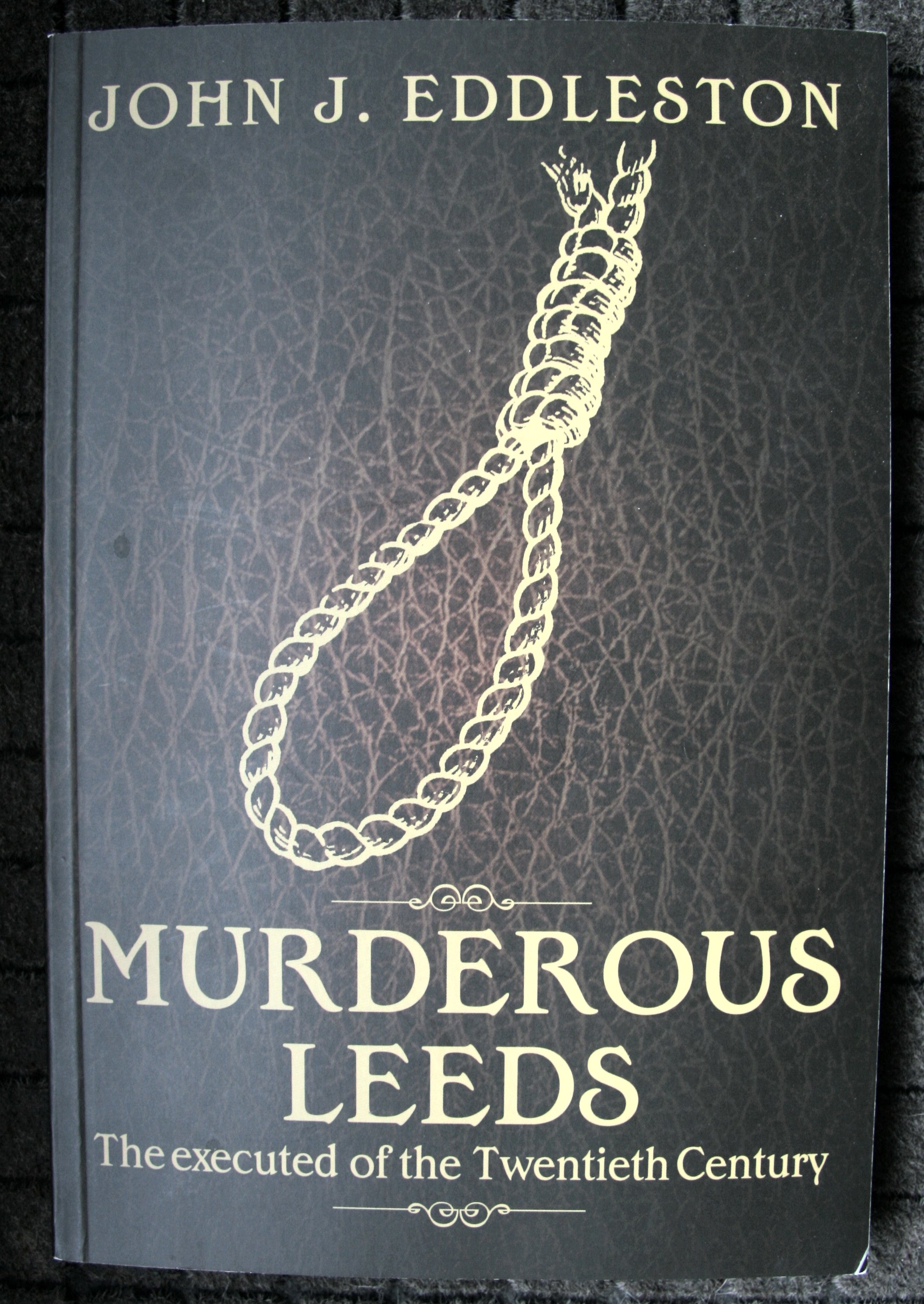
Murderous Leeds

A book that I dip into occasionally is Murderous Leeds, by John J. Eddleston.  Subtitled The executed of the Twentieth Century, it is a volume of short case studies, sourced from newspapers  and court reports, of the trials of people convicted of murder in the first half of the twentieth century in Leeds.

Some of the murders were horrifically brutal; some were pathetic.  The extreme poverty of most of those convicted was usually one of the most significant factors in their turning to crime.  Many of these people – most were men, but some of the stories are about women – were of no fixed abode and drifted from one tawdry lodging-house to another or picked up women – or men – who were prepared to take them home.  Some of the women paid for their generosity with their lives.  Yet most of the convicted had jobs of some kind.  It is hard to believe that, just two generations ago, many working men could not earn enough money to pay for a roof over their heads.

The saddest of all the stories is the first.  It tells how, in 1900, a man called Thomas Mellor, aged 29, killed his two small daughters because he no longer had the means to support them.  The jury that found him guilty commended him for his kindness in rescuing them from destitution in this way.  He still paid for the crime with his life.

Among the most horrific tales is that of William Horsely Wardell, who persuaded a woman called Elizabeth Reaney to give him shelter and then brutally battered her to death.  Attracted by the small reward on offer, her neighbours fell over themselves to ‘shop’ him.

Some of the accounts are bizarre, some are almost funny and a few exhibit a certain amount of intelligence on the part of the perpetrator.  Most, however, portray a depressing picture of the grubby chaos and casual brutality of everyday urban working-class life.  Many of the murders were not planned, but the result of drunken arguments, some of them ‘domestics’.  The banality of these stories is one of the two reasons why I only dip into the book; I still have not read it all the way through.  The other reason is that the author has decided to rely on verbatim accounts given by witnesses and judges’ summings-up.  Whilst this is in many ways commendable – a treasure trove of fact of this kind is invaluable to a crime fiction writer – it has the drawback of resulting in a certain sameness if more than two or three of the stories are read in one go.

I do plan to tackle the book in one sitting at some point, though, because, as it spans the period 1900 – 1961, I know that a careful  reading of it will show me how police methods improved during that time.  It strikes me that, in 1900, real villains (as opposed to the desperate and probably mentally ill Thomas Mellor) could get away with almost anything; on the other hand, the forensic evidence produced in court in 1961 in order to convict Zsiga Pankotia, a Hungarian, of the murder of prosperous market trader Eli Myers was very sophisticated indeed.

When I’m walking through the streets of Leeds, especially in the market area, it often strikes me that the people I see may be the children, grandchildren and great-grandchildren of some of the victims whose fates are described in this book.  Some may even be the descendants of their murderers.  Sixty-seven people were hanged in Armley Gaol in the sixty-one years that the book covers.  Apart from the exotically-named Pankotia and one Wilhelm Lubina (executed in 1954), almost all of them had good, sturdy Yorkshire names.  I do hope that their descendants enjoy a more privileged existence than they did.

A role singularly prone to abuse and crime

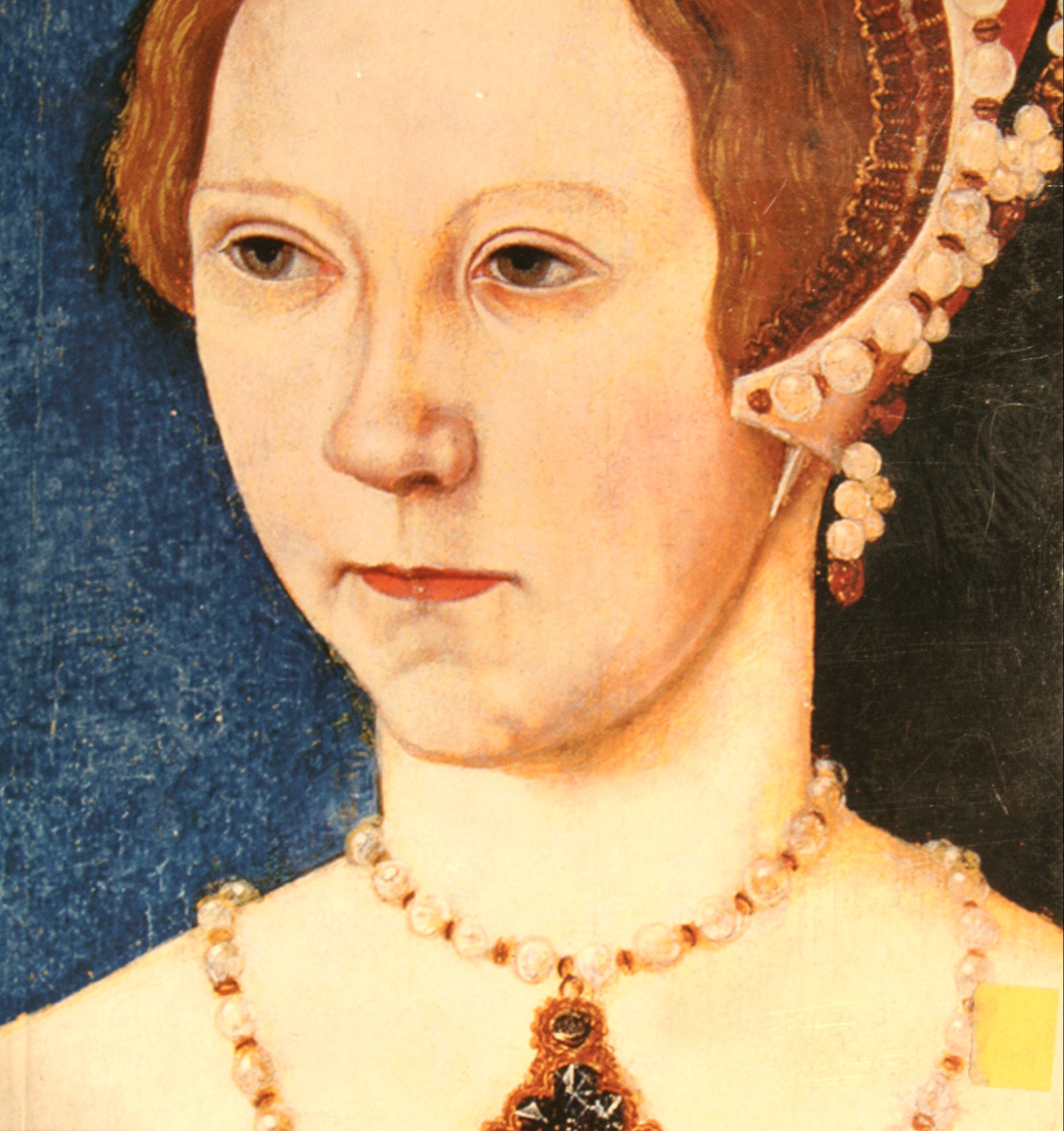
Mary Tudor

There is a shop in Wakefield that sells party dresses for little girls. The name over the door is ‘Little Princess’ and its stock is overwhelmingly pink. As well as dresses, it sells shoes, capes, handbags, party bags, toys, napery and little crowns – almost all in pink.
To the girls of my generation, frilly party dresses were a cause for rebellion. I and my contemporaries fought hard to be allowed to wear trousers (‘trews’, as they were called by shop assistants, to make them respectable and distinguish them from what boys wore; I remember that my grandmother almost fainted the first time I appeared in a pair of trousers with flies) and later jeans. When we were a little older, we wanted to be different (like everyone else) by dressing entirely in black. We recognised that, although these battles were trivial in themselves, they were necessary to give us identity, to reject the ideas that we existed to be sweetly dressed up and that we were correspondingly feeble-minded, not to be taken seriously. I think that it is a great shame, therefore, that the current generation of little girls has taken what to me seems to be the retrograde step of favouring the types of apparel that my mother’s generation was all too keen on thrusting upon its daughters.
In case you are wondering, this post is not shaping up to be a feminist piece, however. What I should like to focus on is what is apparently a prevalent ambition amongst today’s little girls: to become a princess.
I have no illusions about my ancestors. I am quite certain that every one of them toiled at some menial occupation. Their very names suggest that they were shepherds, hewers of wood and farm labourers. The ones that I know about were domestic servants and small shopkeepers. I know that their womenfolk led drab work-filled lives which were unfairly skewed towards the service of their men: my paternal grandmother had four brothers and each Saturday night was made to polish the shoes and press the suits of them all, so that they would look smart for church on Sunday. Yet at least it is unlikely that any of my female ancestors suffered the worst possible of fates: I’m pretty certain that none of them was a princess.
I’ve been prompted to think about this by reading history books for most of the weekend. Princesses were powerless pawns, to be manipulated by their powerful fathers and brothers. Brought up to believe that the men in their families were infallible and that therefore all the wars that they engaged in were just, they were then obliged to perform complete about-turns as these same men married them off to sworn enemies for dynastic advantage or to fulfil the terms of a treaty. Henry VIII repeatedly betrothed his daughter Mary to various crowned heads of Europe during her childhood, then changed his mind as he fell out with them and finally rendered her prospects hopeless when she was of marriageable age by repudiating her mother and denouncing her as a bastard.
Girls whose betrothals culminated in marriage were sent far away from home. Many never saw their families again. They arrived in a strange, hostile country, often unable to speak the language, usually able to keep their accompanying entourage only for a short time, sometimes to be married to a man three times their age, or, conversely, to a boy ten years their junior. Death in childbirth was common and likelier for a royal wife than for a peasant woman, subject as she was to the barbaric quackeries of doctors of any period before the mid-nineteenth century. It was a very exceptional royal husband who was faithful to his wife. He was likely to regard her as a baby-producing machine and reserve his affections for his mistresses. The wife would suffer even greater ignominy if she failed to produce an heir. If she had no children, or all her children were daughters, it was always her fault. Although her father and her brothers may have taken elaborate steps to hedge about her dowry with conditions, captive as she was in a foreign country, she had no wealth that she could call her own and faced destitution if she displeased her husband or he died (like Henry VIII’s elder brother Arthur) and her father-in-law was dubious about her continued usefulness. Discarded or disgraced princesses could hope, at best, to be exiled to a nunnery; more commonly they were executed or died in mysterious circumstances.
Curiously, although widows were often regarded as a nuisance and marginalised, some royal widows managed to become extremely powerful. Isabella of France, Edward II’s wife, was one of these. She almost certainly engineered her own widowhood by arranging to have her royal husband killed and then ruled in his place during her son’s minority. Posterity has denounced her as a wicked murderess, unmindful of the fact that killing was the business of kings. Her son, Edward III, eventually murdered her lover, but he spared his mother and allowed her to continue maintain the lifestyle of a great lady after he took control of his throne.
But Isabellas were few and far between. Most princesses were faceless, downtrodden and decorative: if not dressed in pink (as far as I know never considered to be a regal colour), their other purpose, besides child-bearing, was to look the part.
And that is why I think it is sad that little girls aspire to this ‘ideal’. They want to look the part. They have yet to understand that this particular look, if they don’t grow out of it, may condemn them to life in a gilded cage. As for many footballers’ wives, their idyll may end in divorce – which is a risky way of gaining independence – or it may eventually goad them into committing a crime that removes their freedom forever. Isabella was a fairytale princess who got away with murder. But she lived in the fourteenth century. It is a harder feat to accomplish today.

Succumbing to snow…

Snow March 22

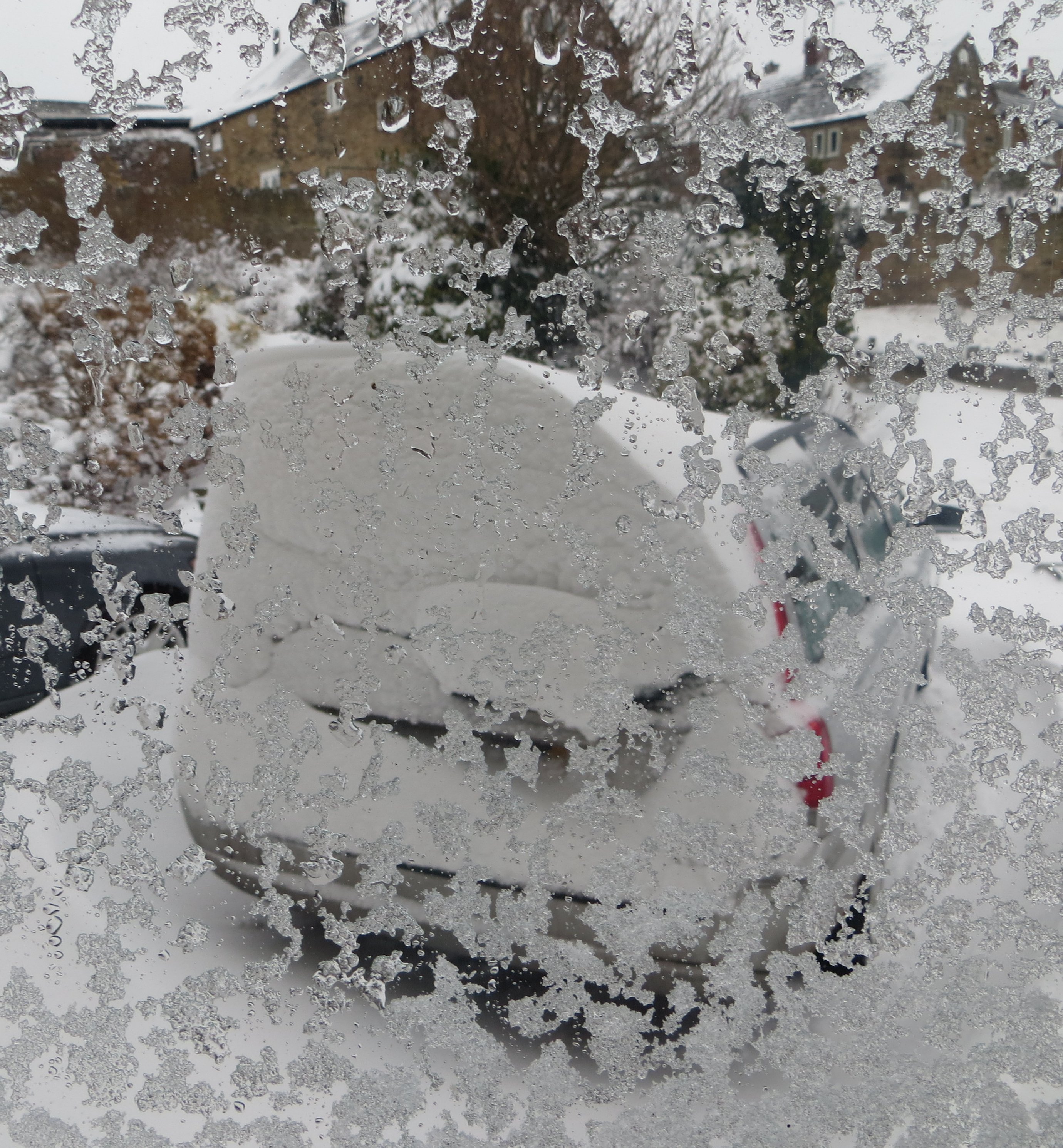
At the risk of sounding hackneyed – because it seems to me that the whole country is talking of nothing else – I have decided to devote today’s post to snow.  How could I not?  I have now been effectively snowed in (it has been just about possible to walk out but not drive) for forty-eight hours, twenty of those without electricity.  And towards the end of March, too! I have been living here for almost twenty years and have seen snow like this only once before, on 25th January 1996.  I remember the date because it was Burns Night and also the anniversary of the day on which I got engaged.  I was driving home from the library supply company in Scotland at which I was working at the time and narrowly missed having to spend the night in my car on the A66 as the snow came thicker and faster.  I remember my sense of relief when I finally made it to Scotch Corner, only to find the A1 gridlocked in both directions.  It took me more than four hours to crawl into Leeds, where the traffic had virtually ground to a halt.  Eventually I arrived at a roundabout with an adjacent hotel and went in to see if I could get a room for the night.  A Burns Night dinner had been taking place there and most of the diners were stranded, so there was a shortage of rooms.  However, when I told the receptionist I had driven from Scotland, she was so impressed that she gave me the bridal suite for the night, complete with flowers, fruit and mini bottles of champagne!  The irony was that my husband and son were also stranded nearby, but we couldn’t contact each other.  In those days, cellphones were rarer; my company had just bought one for me, but none of us had personal mobiles.  On the next day, when I finally reached home (having passed my husband’s abandoned car, its roof now neatly bisected by a snow-laden branch), the snow was not as deep then as it is now; and it was the fourth week of January, after all, and not the third week of March!  I feel not so much a sense of outrage at this current deluge as one of disbelief: seeing lambs in the snow is one thing, but snow on nesting blackbirds quite another!

Yesterday I also discovered how little can be accomplished without electricity.  I couldn’t shower, cook, clean, listen to music, put on the washing machine or do the ironing.  Instead I wrote yesterday’s blog-post, made some final adjustments to Almost Love, toasted myself in front of the wood-burning stove, acted as referee between the dog and cat as the occasional skirmish broke out for pole position on the hearthrug and read the first two hundred pages of Vanished Kingdoms by Norman Davies, my treat to myself when I visited Leeds on Friday (along with a cappuccino and a slice of Belgian chocolate tart).  I also meditated on possible plots for my next novel and read last week’s papers for inspiration.  The Joss Stone attempted murder case amazes with its improbability.  Few writers would dare to invent anything so bizarre!

Most of this was very enjoyable, though I was beginning to feel twitchy by the time that power was restored in the late afternoon. As soon as the lights came back on, I rushed for the shower in case the power bounty proved to be temporary.  My husband was more philosophical.  He had decided that the opportunity for Saturday ablutions had been and gone and devoted himself instead to clearing away the debris of a day’s accumulated washing-up.  (Next time there is a power-cut I must remember that unwashed husband = clean dishes.)

Today it is bitterly cold, although the sun is shining.  The snow is being whipped up by the wind and inflicting sharp stings to the face and any other exposed skin.  Drifts on the verges are several feet deep, meaning that it is only possible to walk on the roads, which have now mostly been cleared to a single track.  Nevertheless, I was determined to go out this morning.  I once had a colleague who was sent to work in Canada in the winter months; he said that, for him, cabin fever set in after two or three weeks of snow.  I can cope with barely one day!  We accompanied the dog on his normal three-mile walk.  It took twice as long as usual, but the woods were spectacularly beautiful.

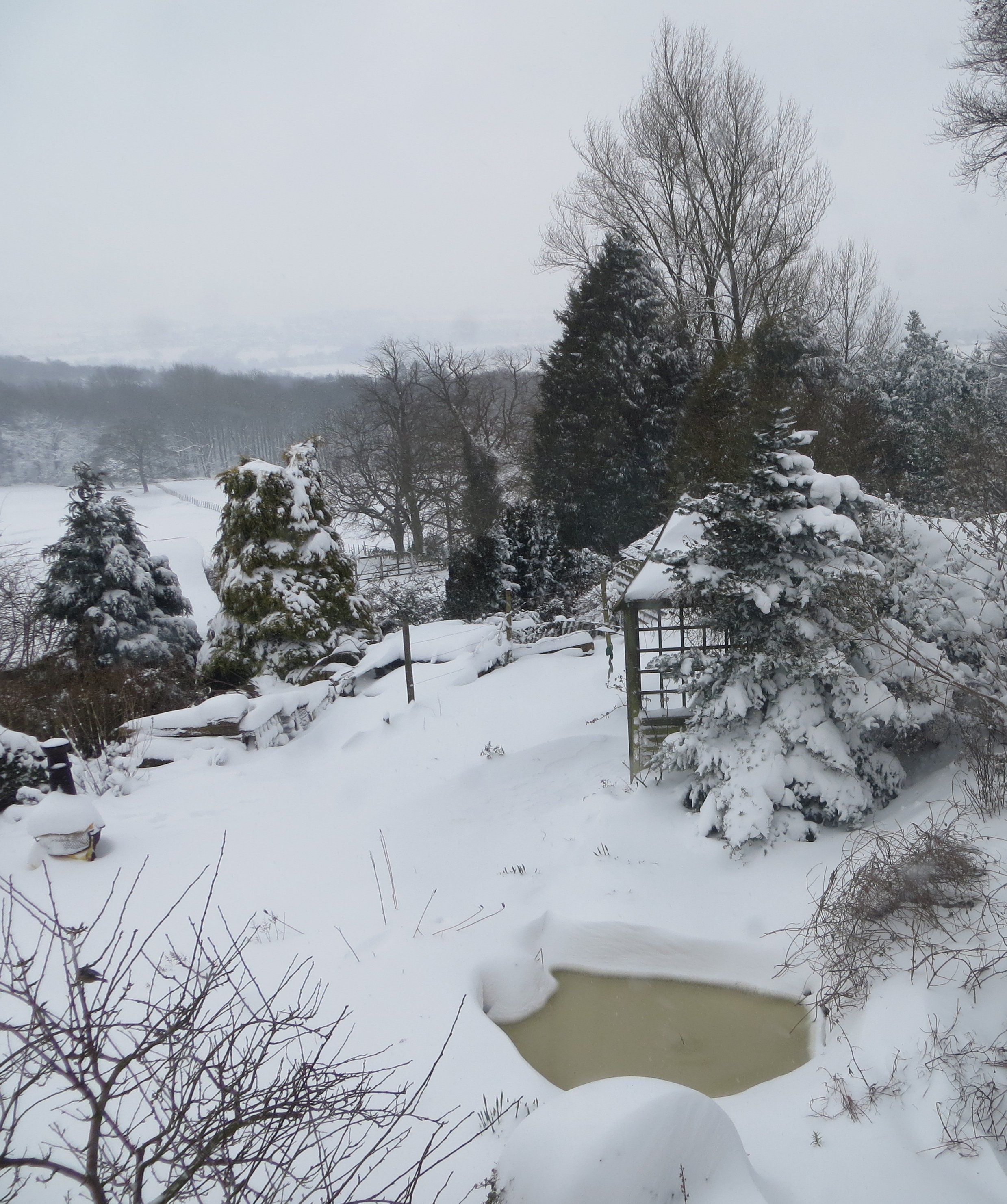
I am including some pictures of my garden, which I took yesterday.  The whole of this blog-post is really an excuse to share them!

Snow March 22 dSnow March 22 b

O' Canada

Reflections on Canadian Culture From Below the Border

oliverstansfieldpoetry

A collection of free verse poetry.

Easy Michigan

Moving back home

Narrowboat Mum

Fun, Frugal and Floating somewhere in the country!

Maria Haskins

Writer & Translator

lucianacavallaro

Myths are more than stories

Murielle's Angel

A novel set on the Camino de Santiago

jennylloydwriter

Jenny Lloyd, Welsh author of the Megan Jones trilogy; social history, genealogy, Welsh social history, travel tales from Wales.

Chris Hill, Author

I'm Chris Hill - author of novels Song of the Sea God and The Pick-Up Artist

littlelise's journey

Sharing experiences of writing

unpublishedwriterblog

Just another WordPress.com site

Les Reveries de Rowena

Now I see the storm clouds in your waking eyes: the thunder , the wonder, and the young surprise - Langston Hughes

Diary of a Wimpy Writer

The story of a writer who didn't like to disturb.

Rebecca Bradley

Murder Down To A Tea

Helen Carey Books

Helen Carey Books