The idyll and the agony, with Anne Zouroudi (@annezouroudi) …

The Feast of Artemis

The Feast of Artemis is the seventh novel that Anne Zouroudi has written about her mysterious amateur detective Hermes Diaktoros.  It’s only the second of the series that I’ve read – I completed The Messenger of Athens last year, shortly after hearing Zouroudi speak at a crime writers’ evening held at the offices of Bloomsbury, her publisher – so I now have the very great pleasure of being able to look forward to devouring the other five.  I shall buy them as soon as I can.

I find the quality of Zouroudi’s writing almost haunting.  It is classic in that it belongs to the oldest European literary tradition of all, that which has Homer himself sitting at its head.  I’ve written elsewhere about how Zouroudi’s intensely poetical yet austerely precise descriptions of the Greek landscape remind me of Homer’s own accounts of the Greek islands in The Odyssey, which, more than two millennia after they were conceived, still amaze with their freshness.  The Feast of Artemis also contains such evocative passages, but Zouroudi – always reinventing herself within the universe that she has created – in this novel focuses especially on describing food.  The clue, though, is in the title: as the reader is aware, Artemis is the feisty goddess of hunting; in Greek mythology, she at various times exacts retribution, and in the novel terrible things are done in her name, some with unforeseen and unintended consequences.

Just as beneath this glittering, sun-drenched paradise lives the peasant community of Dendra, whose members are tarnished with all the human vices, so concealed within their sumptuous festive meals lurk danger and destruction.  Food is both the bringer of life and the harbinger of death in this novel.  The finely-drawn characters, whilst naturally displaying none of the urbanity of Diaktoros himself, show both cunning and a taste for revenge that matches that of the gods of old.

The central plot concerns a generations-long feud between two olive-growing families.  A cycle of vengeance and retaliation results in the death of the patriarch of one of these families and the mutilation by fire of a youth from the other.  One of the book’s many masterly touches consists of a kind of tightening of the screw as the plot unfolds: we are told early on that the youth has been burnt, but the full significance of this is not revealed until the closing stages.  The small clouds that hover over the sunny landscape right from the beginning grow darker as the novel progresses and the effects of evil are revealed.

Yet such is the author’s subtlety that none of the characters in The Feast of Artemis is evil through and through.  The publisher has placed it within the crime genre, probably correctly, but it belongs to that relatively small group of distinguished crime novels that can be read on more than one level.  Fundamentally, it is a book about the human condition.  Although Hermes was the messenger of the gods, and Hermes Diaktoros, in his guise as moral arbiter, shares some of his namesake’s characteristics, he is also a modern-day Zeus, swooping down, not in anger, but with a kind of sadly humorous wisdom, as he conducts his inexorable quest to get at the truth and show the perpetrators of the crimes the errors of their ways.  That he himself has foibles is a stroke of genius: in a place where life and death are governed by food, he is continually tempted by delicacies that threaten his own well-being because he is already overweight.  It also emerges that he is brave to eat some of the food that he is offered, knowing as he already does that those providing it are guilty of introducing poison to their seemingly delicious comestibles.  Yet he is nimble on his tennis-shoe-clad feet and has a brain of quicksilver. That he is not perfect lends authority to his perspicacity and ensures that it is not marred by overt moralising.  Another fine touch is the introduction of his brother Dino, who is as much a slave to wine as Hermes is to food: Dino – the echo of the name is surely intentional – plays Dionysius to his Zeus.  (I’m not sure whether Dino also appears in some of the five novels that I haven’t yet read: my guess is that this is not his first appearance in Zouroudi’s oeuvre.)

At the end of the book, resolution is achieved, but at a price.   Peace is brought to the community of Dendra, but it is made clear that its inhabitants will continue to bear the scars – and in some cases, to pay custodial penalties – for their wrongdoing.  Hermes Diaktoros himself, having arranged to pay for the best plastic surgery that money can buy for the damaged youth from his own seemingly bottomless yet inexplicably acquired funds, simply melts away.  God’s in his heaven, all’s right with the world – until, we hope, the next time that his intervention is required.

If you haven’t yet read Anne Zouroudi, you should; you will find her compelling command of the Greek ‘idyll’ as stuffed with flavour and irony as the roasted lamb from the fire pits of her opening chapters in this book.

When a much-loved author doesn’t please…

The Man from Beijing
I should say straightaway that I have long admired Henning Mankell and consider him to be the most distinguished of that very select group of Scandinavian crime writers that has continued to intrigue and amaze us over the last ten or fifteen years. I’m saying this now, because I found The Man from Beijing a very disappointing novel indeed.
It starts brilliantly, with the graphic but not unduly sensational description of the brutal massacre of almost the whole population of a remote Swedish village. Only one of the victims, a young boy, is not a resident of the village. The murder case is led by Vivi Sundberg, a brusque, unimaginative policewoman who is not meant to appeal to the reader. Instead, our sympathies are evoked by Birgitta Roslin, a middle-aged judge whose health is not good and whose marriage appears to have entered a state of gentle decline which she finds depressing. Birgitta is a complex and well-drawn character, one of Mankell’s best, and is, in fact, the only fully-rounded character in the whole book. She gets unofficially involved in the case because she realises that two of the murder victims are the very elderly step-parents of her own mother.
So far, so good. But then, through a chain of unlikely and unconvincing circumstances, Birgitta’s private investigation takes her to China. She happens to have a friend who is a Sinologist who happens to be speaking at a conference there. Both Birgitta and her friend were ardent supporters of Chairman Mao in their youth.
At this point, the novel separates into two strands. One of these, by far the weaker, continues with what are obviously going to be Birgitta’s fruitless efforts to get to the bottom of the mystery of the massacre. It is spiced up by the ever-present suggestion that her life is in danger. The other strand, which goes on for many pages – at least half of a book that totals 550 pages – is a political diatribe thinly disguised as fiction. Ostensibly, it is about the corruption of power and how far modern China has deviated from Mao’s ideals – themselves always false, which is made clear – while still paying lip-service to them; it is a political warning against the present-day colonisation of Africa by the Chinese government.
The political sub-plot – which after a short while almost completely eclipses the main plot – depends on two things: the literary device of using an omniscient narrator to describe certain atrocities carried out against a particular Chinese family during the nineteenth century, and the vicious manoeuvrings, even against each other, of a high-status Chinese political family in the present. It is suggested, but never made clear, that the latter are the descendants of one of the former, and that the wheel of human exploitation and misery has turned full circle. The modern Chinese characters are sketchily drawn – only two of them, Hong Qiu and her brother Ya Ru – have any distinguishing attributes, and the reader senses that these have been bolted on only in order to oil the creaking mechanism of the plot.
At the end of the novel, after several more deaths along the way, the mystery of the identity of the original murderer is solved, but unconvincingly. Several clues scattered at the beginning of the book remain unaccounted for. I’m not suggesting that this is in itself a fault (as I’ve made clear elsewhere, I dislike crime novels in which every ‘i’ is dotted and every ‘t’ crossed), but these clues are so extraordinary that I feel that we are owed some kind of explanation for them.
Most of all, however, the novel is dissatisfying because the reader feels bamboozled. I am aware that Henning Mankell is an expert on Africa and that he has written eloquently about its woes on many occasions. Even so, it just isn’t fair to place two or three hundred pages of what is at times a rambling political exegesis between the covers of what is meant to be a work of crime fiction. I read the book to the end in homage to the many hours of unalloyed pleasure that Mankell’s work has given to me. I suspect that some of its other readers will have lost patience long before they get there.

A fair bit of nostalgia…

Dodgems
As a child I always visited the circuses and funfairs that came to Spalding, because my great-uncle, who kept a shop, was given free tickets or tokens for rides in return for placing advertising posters in the shop windows. I was never very keen on circuses – the captured animals forced to perform tricks, their eyes sad and defeated, troubled me even then. But I loved the funfairs! Yesterday, I stumbled upon one completely unexpectedly when stopping to walk in a small picturesque village when out for a drive.
I hadn’t been to a funfair for many years. The last time that I can recall was during a holiday in France, when my family and I were passing through the handsome old Roman town of Saintes and saw that it was en fête. The main street of the town, which is shady because of the plane trees lining it on either side, had been cordoned off and a modern funfair set up adjacent to the ancient manège (roundabout) that always seems to be there when we visit. I remember that fair especially for its mingled scents of hot metal, warm sugar and cooking meats.
Yesterday’s fair presented me with a similar surge of aromas. The heated metal and candyfloss smells were particularly pervasive in the warm sunshine. What also fascinated was the very dated appearance of the rides – dodgems, cakewalks, giant rocking-boats, one of those terrifying cylindrical rides that depends on centrifugal force not to tip its occupants onto the tarmac as it bends and tilts and, for the younger children, bobbing yellow plastic ducks to ‘catch’ with magnetised canes as they swim endlessly round tiny artificial rivers and a small roundabout of aeroplanes fitted with joysticks for their infant pilots to manipulate them up and down – all standard fairground machinery, perhaps, but, extraordinarily, existing as if in a 1950s time-warp. Each piece was painted and decorated in the same way as those of the fairs that I remember in Spalding as a very small child: there were pictures of Marilyn Monroe and Laurel and Hardy; the cylindrical ride was even topped with a figurine of Elvis Presley.
What transported me back into the past yet more vividly was the wonderful carnival atmosphere that the fair brought with it. Whole families had gathered and were chatting, happy and relaxed, in the streets. Children danced giddily off the rides and played next to them with their friends or tugged at their parents for the cash to buy another go. Fathers pushed buggies and women congregated in groups, sipping coffee or nibbling ice-creams. A local café was selling half-pizzas. Hot dogs, hamburgers, candyfloss and giant sweets proclaiming ‘I love you’ together gave off their distinctive mingled scents. There wasn’t a mobile phone or an iPad in sight. For a couple of hours, it seemed as if I had stepped through the looking-glass into an era of lost innocence and almost forgotten leisure, when it was OK to while away the afternoon doing not much in the company of others doing the same.
Of course, being a crime novelist with more than my fair (!) share of cynicism, I still had my eyes open to the possibility that the opportunity for some nefarious deed might be lurking below the holiday surface. The killing of a young girl on a fairground ride featured in a televised crime programme not so long ago; though she apparently just fell from the ride, she had in fact been stabbed. My eyes turned to the giant fan-belts that powered the more terrifying of the machines; they, too, belonged to a bygone age, an age that depended on a mechanical rather than an electronic infrastructure. What if they had not been inspected with sufficient rigour when the fair was erected? What if a madman were to interfere with them and bring horror to the happy scene? Please don’t worry about me; it’s all just a bit of internal fiction… and I did have a wonderfully nostalgic time!

A merciless killer…

Late blackbird
A half-tunnel of hedgerow shades the path from the sun; new bramble tentacles rear up and across the way, reaching for light, their tips still soft, but their stems already clutching at clothing; rabbits are nervous tics at the edge of vision, ready to bolt. This is a lonely, little-used link between roads, though at one end, in the undergrowth under the hazels, illicit, smutty relationships are consummated and discarded with their condoms; the entrance by the field gate, where cars can pull in, is a drift of fast food bags, cartons and fly-tipped debris. Ah, the beauty of rural England!
It is, in fact, part of a favourite walk for us and, especially, the dog, since pheasant and partridge are here in numbers; he will hold a point for over half an hour, which would, were we shooters, make a twelve bore superfluous – a butterfly net would make better sport. As I climb over the stile into the field, where a small herd of bonny brown cows and calves grazes the bank, I encounter a neat heap of dark feathers. The Python team would call this a late blackbird, too late in its take-off to escape the trademark kill of the sparrowhawk. Foxes and cats dispatch their prey untidily, scattering feathers far and wide and often leaving other debris as well. The sparrowhawk, by contrast, is the most thrifty and purposeful of murderers. He calculates. He acts with intent, each action precise and pre-meditated. He uses the terrain, hedges being particularly appropriate for his silent up-and-over surprise attack. Small birds may just flit into the dense hedgerow in time, but his yellow-rimmed eyes are burning with bloodlust and his whole being utters supremacy. He extracts nourishment gram by methodical gram from his hapless quarry, gorging on blood, flesh and bone until there is nothing left except that pathetic heap of feathers, dropped straight down from the branch on which he sits as he feasts.
Imagine that you are the sparrow or the blackbird, caught in those dread talons even as you realise the danger, so swift is the arrowed form. At least your exit is quick.

I finally get around to reading an author I should have read before…

Ann Cleeves (novels)
I’d heard a lot about Ann Cleeves; I had followed her on Twitter, to a kind reciprocation; the reading groups that I joined at Wakefield One had heaped glowing praise upon her work. Yet I had never read her – it was therefore high time that I rectified matters.

I bought two of her books from Rickaro: The Crow Trap, which is set in the Pennines, and Red Bones, one of her Shetland Isles stories (I know that these have been televised, but I haven’t seen any of the programmes). I chose novels set in two different locations, because, as I’ve said before, topography is important to me. I know that Ann Cleeves has a reputation for creating fine atmospheric settings – as one of the reading group members said, Shetland ‘almost becomes a person’ in the books set there – and I wanted to see how she achieved it.

I’m not, however, going to write here about her use of setting, because, although I endorse everything that has been said about it by others, I have nothing new to add. What I’d like to focus on especially, therefore, is her skill at character portrayal, particularly of women. I find her female characters fascinating, not only because of the way she draws them, but because she captures with subtle and skilful nuances some of the ways by which women are still exploited by men – though she is by no means a militant feminist and the male characters in her novels suffer from certain injustices, too. Some of her women characters find their own ways of fighting back: Anne Preece in The Crow Trap tries to make use of both her husband and Godfrey Waugh to provide her with the lifestyle that she craves, although both in their turn exploit her as part of the chess-like game of shifting relationships that forms a fine sub-plot to this novel; and Jimmy Perez, the policeman hero of Red Bones, is continually kept guessing about the depth of feeling that his vivacious, unconventional girlfriend Fran entertains for him.

I enjoyed both of these novels immensely. Ann Cleeves writes quite unlike any other crime novelist whose work I know. If I had to choose between them, I’d say that The Crow Trap has the edge on Red Bones, mainly because, although both are set in remote areas, the Shetland novel offers less scope for variety in characterisation. Both are rural variants of the country house murder convention, each with its own subtle twists that bring new life to this sub-genre. However, Red Bones has a strong archaeological theme, which was of special interest to me because when I read it I had just completed Almost Love, which is in part about the disappearance of a famous female archaeologist and set against the activities of the members of a famous archaeological society.

I see that Ann Cleeves is a prolific writer who has written many books. I can therefore look forward to many more hours of happy reading in her company.

My new acquaintance…

RSC Library
In yesterday’s post, I wrote about my visits to Burlington House and said that I’d met an interesting new acquaintance. Her name is Andrea and she has recently been appointed to the newly-created position at the Royal Society of Chemistry of Diversity Manager. (Her work will be vital in not only attracting minorities of all kinds to the study of chemistry, but also in helping to develop their careers later on.) Prior to that, she was a forensic scientist for thirteen years, until the government closed down its forensic science unit.
My ears pricked up when I heard this. I was also fascinated to learn that Andrea was brought up in a village close to mine. More than once I’ve made DI Tim Yates say that he doesn’t believe in coincidences, but truth is obviously stranger than fiction, as this is the second big coincidence that’s happened to me in less than a week (the first was meeting Carol Shennan, with whom I was at school in Spalding decades ago, in Bookmark).
Andrea has kindly agreed to be interviewed for the blog in a few weeks’ time. She’s also sent me an article that she wrote about being a forensic scientist for Chemistry, the RSC’s magazine. I won’t spoil my future post after I’ve interviewed her by quoting too much from it now, but here is a taster:
I became a forensic scientist long before shows like CSI and its spin-offs resulted in the general public having a distorted view of how forensic science is used by police forces to investigate crime. Forget Armani suits; most of the time we were dealing with skanky knickers, jumpers crawling with bugs, and clothes so sodden with blood that they had gone mouldy in the packaging.
A DNA profile in minutes – no chance! Our quickest test took around 12 hours and there were times that we had to wait well over a week. CSI also doesn’t show the endless samples of ‘touch DNA’ that fail to give a DNA profile at all, or ones that give a profile so complex it is uninterpretable. Nor do they feature the heart-wrenching cases that demonstrate the depravity that exists in our society: cases involving babies, the elderly or vulnerable; people who are murdered simply because they were in the wrong place at the wrong time.

Riveting, isn’t it? I look forward very much to talking to Andrea again soon.

I happen upon a murder… in a very grand place…

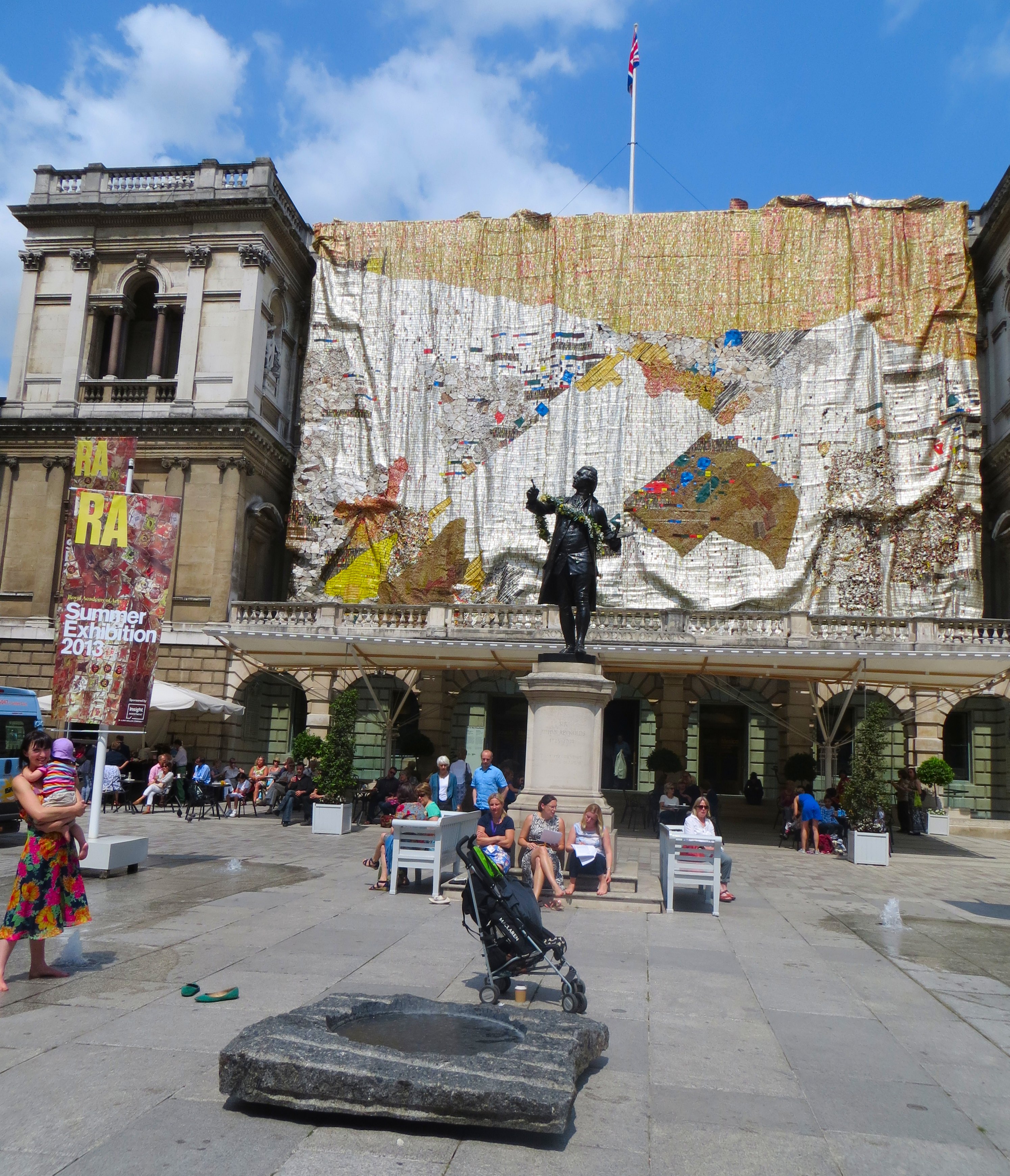
Burlington House courtyard

Burlington House courtyard


Over the past week I’ve spent three days (day job) at the Royal Society of Chemistry’s HQ, Burlington House, in Piccadilly. The building is also the home of the Royal Academy of Arts, the Society of Antiquaries, the Linnean Society, the Geological Society and the Royal Astronomical Society. It is an amazing place: turning your back on the dust and roaring traffic of Piccadilly, you enter an archway and are immediately transported into an enchanted world that carries with it all the grace and serenity of the finest seventeenth-century architecture – a mini-Versailles in the heart of London.

Intrigued by its splendour, when I was there yesterday I asked if there were any record of its history. I was given several pamphlets and leaflets and discovered on the first page of one of them, The Story of Burlington House, by Dennis Arnold, that in earlier days it was the scene of what was almost certainly a domestic murder.

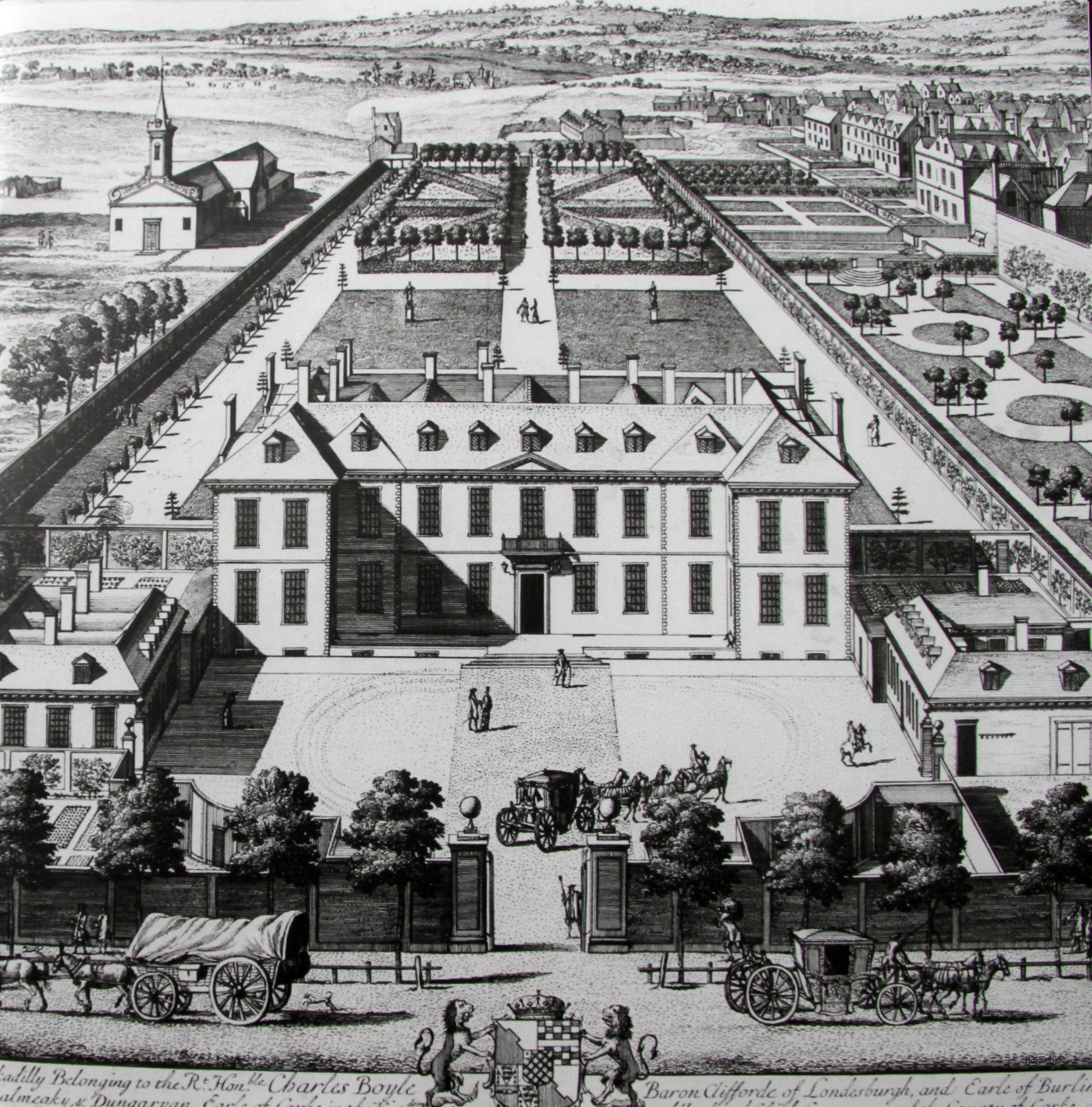
The original Burlington House was built by Sir John Denham, a wealthy lawyer and poet (he was also Surveyor General to the Crown) for his new bride, Margaret Brooke. She was eighteen and he was fifty (and apparently limped). Margaret very quickly became the mistress of James, Duke of York, who had attended their wedding (and was later to become King James II). Their affair was common knowledge, as certain salacious entries in Pepys’ diaries make clear.

Margaret was found dead at Burlington House, evidently from some kind of overdose. Everyone assumed that Sir John was responsible for her death, though he wasn’t brought to trial. Despite her infidelity, public feeling ran high and Sir John’s life was threatened by the mob if he tried to leave the building. He managed to achieve the complete about-turn of the populace’s emotion by providing Margaret with a magnificent funeral, with ‘four times as much burnt wine as had been drunk at any funeral in England.’

Sir John did not stay long at the house after his wife’s death, however. Perhaps he could not bear this constant reminder of the collapse of the domestic idyll that he had planned; perhaps he was haunted by guilt every time he saw the place where she died. In 1668, Burlington House was bought by the first Earl and Countess of Burlington, who gave it its name.

I’ve never considered writing historical fiction, even if it’s about crime, but this story has captured my imagination. Perhaps I’m destined to write about Lady Denham, who I’m sure would have had a great deal to say in her own defence – married as she was to a (probably nasty) old man and (probably) unable to refuse the overtures of a future king.

I’ll write some more about Burlington House in a future post. I’ve not yet even started to describe its wonderful literary legacy, or the fascinating new acquaintance whom I met there yesterday.

Burlington House c. 1700

Burlington House c. 1700

Happy coincidences and old friends at Bookmark, Spalding…

Fine car; finer bookshop

Fine car; finer bookshop

Bookmark 8
Bookmark 12
Bookmark 11
Bookmark 10
Bookmark 9
Bookmark 7
Bookmark5
Bookmark 4
Bookmark 1

Bookmark's creative owner, Christine Hanson

Bookmark’s creative owner, Christine Hanson

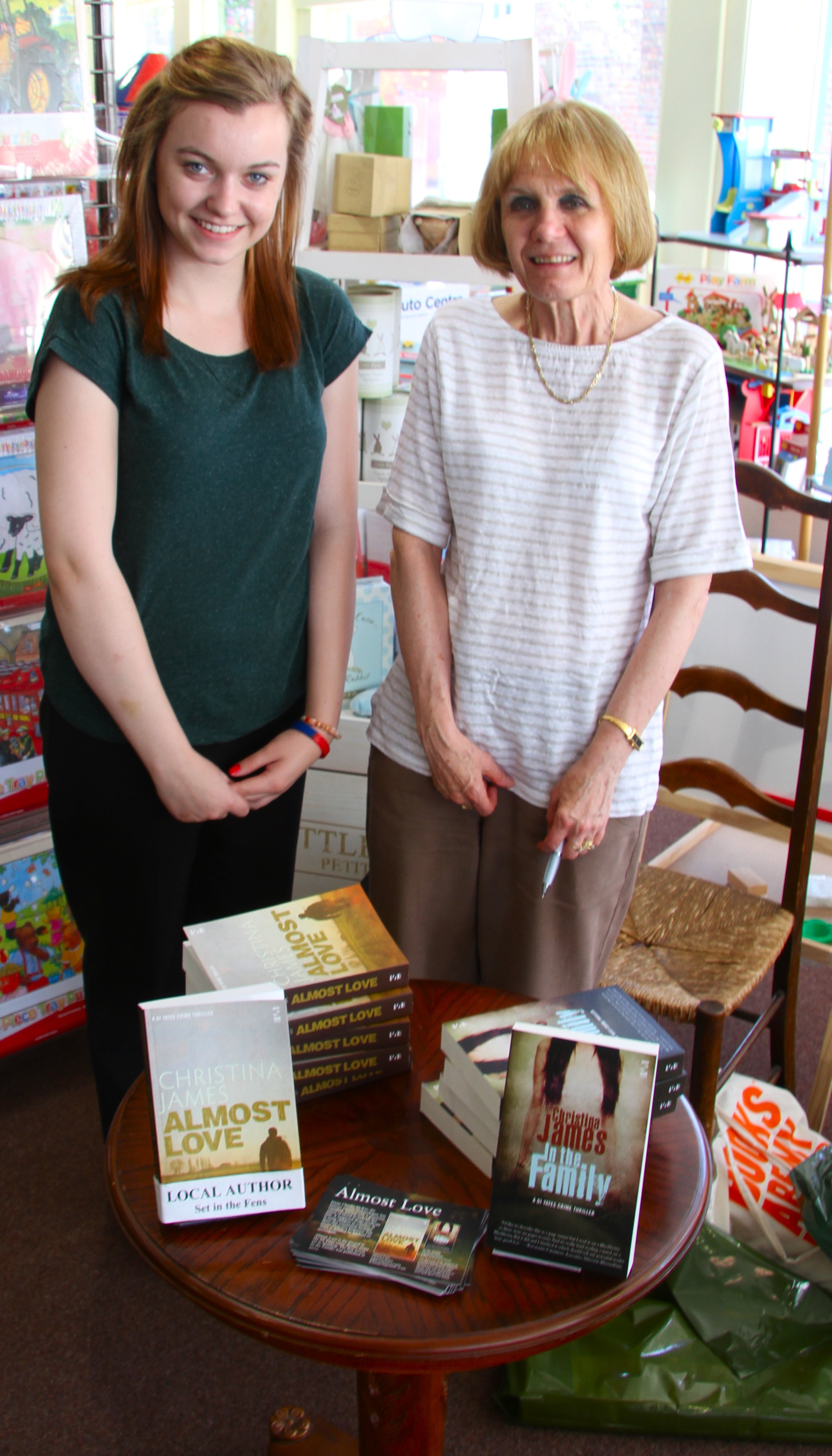
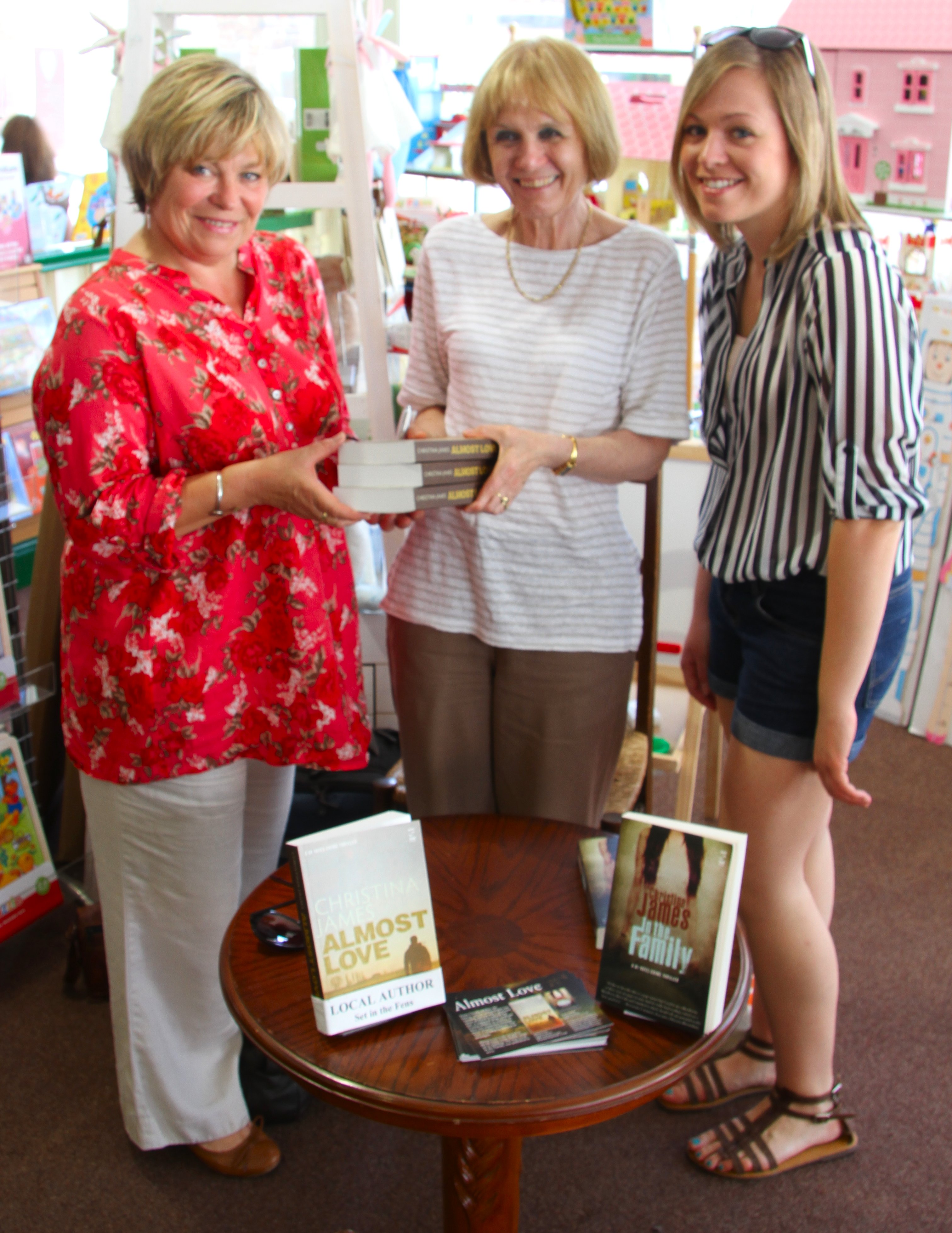
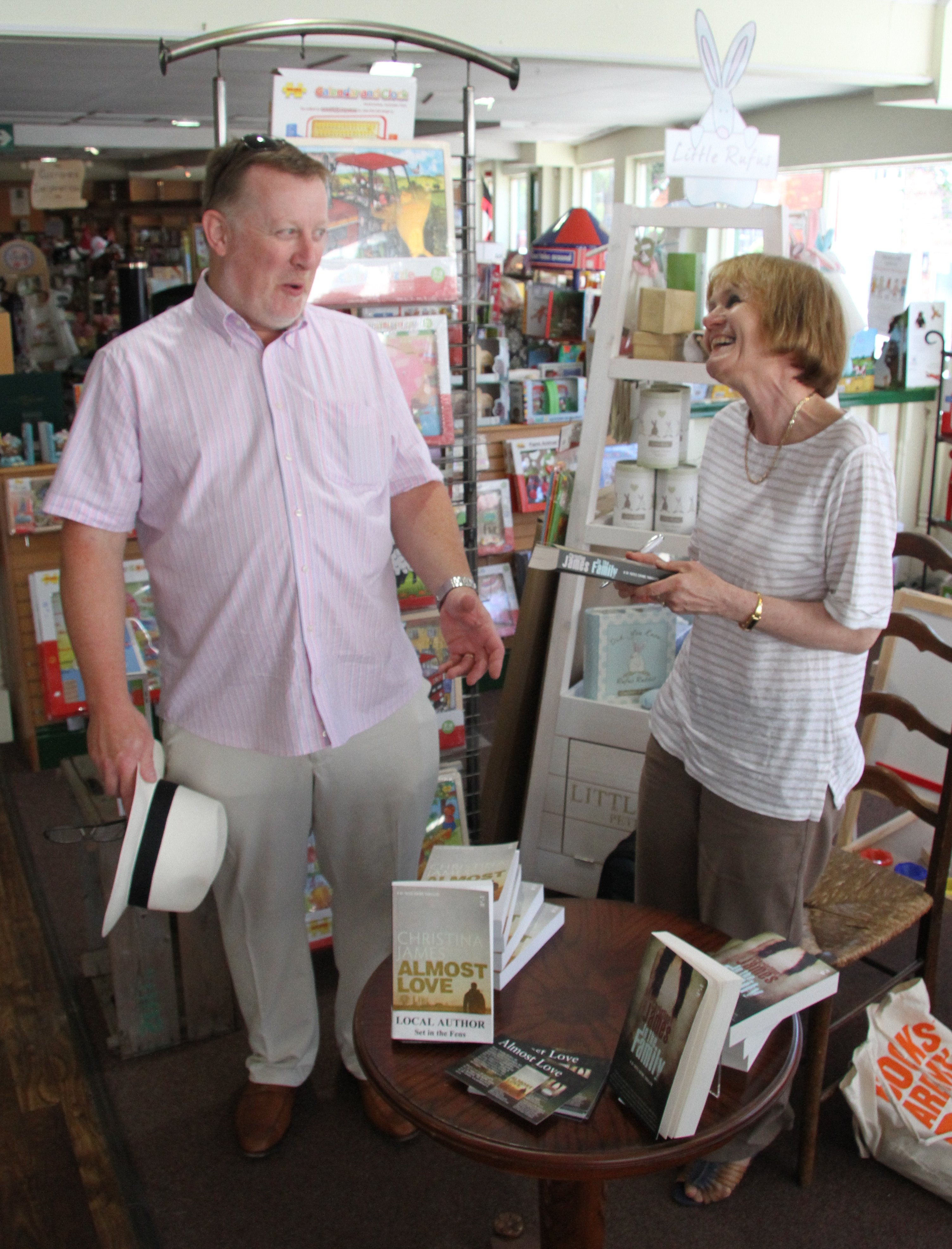
Yesterday was one of those perfect days that become legendary in memory. I had travelled to Spalding, having been invited to give a signing session at Bookmark, a very distinguished bookshop which I also visited and wrote about just before Christmas last year.

There was a carnival atmosphere in the town. Christine Hanson, Bookmark’s owner, was feeling particularly happy, because hers and other businesses in Spalding had banded together to offer fun activities to passers-by in one of the yards in the Hole-in-the-Wall passageway. Christine said that it marked a significant step forward in the town’s initiative not only to save the high street but also to ensure that it thrives. She flitted back and forth between the shop and the Hole-in-the-Wall all afternoon and, despite being so busy, still provided my husband and me with her customary wonderful hospitality.

My signing session began with a remarkable and totally unexpected coincidence. Two ladies who had been paying for books at the till came over to speak to me. Noticing their accents, I asked if they were American. One of them said that she’d been born in Spalding, but had lived in America for twenty-five years. She now teaches environmental science at the University of California. Judging her to be about my age, I asked if I knew her. She said that her name was Carol Shennan. I knew the name immediately; she had lived about five doors away from me in Chestnut Avenue when we were both growing up. She said that her mother, who is eighty-nine, still lives in Spalding, and that she was just there for the week to visit her. It was an unbelievable stroke of luck that we should meet in Bookmark. Carol bought In the Family, and I look forward very much to receiving a future contribution to this blog from her when she’s read it.

Several babies came into the shop. I was introduced to Oliver, who arrived with his grandmother and aunt, who each kindly bought both books, and Harry, who came with his grandparents. His grandfather (I’m sorry that I can’t remember his name: his wife’s name is Carole) is a keen local historian and said that he doubted that my novels would cover villages as remote as Sutterton, which is where he was born and still lives. By another strange quirk of coincidence, I was able to tell him that my third novel, which I’ve just started writing, is set in Sutterton. I hope that Harry’s grandparents also will contribute to the blog when they’ve read the copy of In the Family that they bought.

My very dear old friend Mandy came in and bought an armful of books to give other friends as presents, just as she did at Christmas. At the end of the afternoon, she returned to guide us to her house, where we spent an idyllic evening eating supper and drinking wine in her garden with her husband Marc and her friends Anthony and Marcus. We ate new potatoes, broad beans and strawberries from her allotment and talked about books, teaching and cooking (Marcus is a chef). Afterwards, we drove home through the twilight. The fields of South Lincolnshire were looking at their best: the corn was just turning, and in one place acres of linseed coloured the landscape blue-mauve. The skies were as big and beautiful as always.

An idyllic day, as I said. I’d especially like to thank Sam at Bookmark for arranging the signing session, and Christine, Sally and Shelby for looking after me so well and for providing a great welcome: I heartily recommend the café at Bookmark, if you’re ever in the area. Many thanks also to the many people who stopped to speak to me – the conversations were fascinating – and for buying the books. And thank you, Mandy and Marc, for being amazing hosts and for introducing us to Anthony and Marcus, who provided me with their suggestion for DI Yates 4!

Copyright

Christina James copyright
I’ve been in London for three days, at two conferences that have each dealt, inter alia, with copyright. I’m going to write more about copyright at intervals over the next two weeks, as it has reached a crossroads in its history. I think it vital that all writers understand what is going on and, if they wish, contribute to the debate.
Today’s post is not about opinion, however. It reports a presentation given by Ben White, Head of Intellectual Property at the British Library, last Monday afternoon at the JISC Conference on Open Access for Books. Ben was asked to summarise copyright law as it stands at the moment. Despite the fact that it is a complex subject, his talk was wonderfully succinct and clear. I’ve arranged my report in bullet-points, in an attempt to offer a step-by-step account.
• Copyright sits with the author, unless s/he is an employee (in the sense of having been paid by the publisher, for example to edit a collection of poems and contribute a preface). It is automatic and lasts for life plus seventy years.
• Since 1988, the author has also been able to assert her/his ‘Moral Right’ to be identified as author. As well as being acknowledged as the copyright-holder, this entitles the author not to be misattributed in works that quote or are about her/his work; to object to ‘derogatory treatment’ of his or her work (though what actually constitutes this is necessarily subjective); and, under UK copyright law, to ‘lend, sell, give and waive’ copyright, just as if the work were a physical possession. European jurisdictions take a slightly different approach.
• Exclusive rights would mean that the author had sole control over her/his work – that s/he would exercise de facto monopoly. In fact, few jurisdictions give the author absolute control; most allow ‘exemptions’. In the educational sphere, in particular, these are very important; they allow a specified amount of copying by schools, etc. Publishers have been criticised for interpreting what is meant by exemption too narrowly. Scholars, teachers and others have asserted that when they want to use excerpts from the works of authors for purposes of criticism, review, etc., publishers have been too restrictive in what they will allow.
• One result of the technological innovation made possible by new media is that copyright holders have become more sensitive about defending their rights.
• Copyright can be ‘simple, complex and structured however you want.’ A survey carried out by the Association of Learned, Professional and Society Publishers [ALPSP] in 2008 found that 26% of the publishers who took part no longer required authors to transfer their copyright to the publisher (the remaining 74% still enforced this requirement).
• Copyright can be assigned. This keeps it simple for the publisher.
• Moral rights cannot be assigned, but they can be waived and may or may not have been asserted by the publisher. They can also be asserted for a limited period of time – e.g. for one edition or one printing of the book.
• Creative Commons Licences have been devised in order to allow authors to make their work available free of charge if they wish. Usually, but not always, this means making the work available ‘free’ digitally. Academics may have been directed by their institution to place works created in ‘working hours’ in the institution’s digital repository.
• By making a work available free, the author is not relinquishing her/his rights. Copyright still applies for the standard duration (author’s lifetime plus seventy years); the author can still assert his or her moral right and require that the work is attributed to her/him; limitations and exceptions still apply; and the author can specify that the work is only available free for non-commercial use; anyone who wishes to use a published work in order to develop a business proposition can still be asked to pay for it. This sometimes introduces a complex tiered system of charging that can be confusing and is open to misinterpretation.
I hope that this is useful, and look forward perhaps to engaging with you in a debate on copyright issues over the next few weeks.

Oh, poison again… in my blog, just a little at a time!

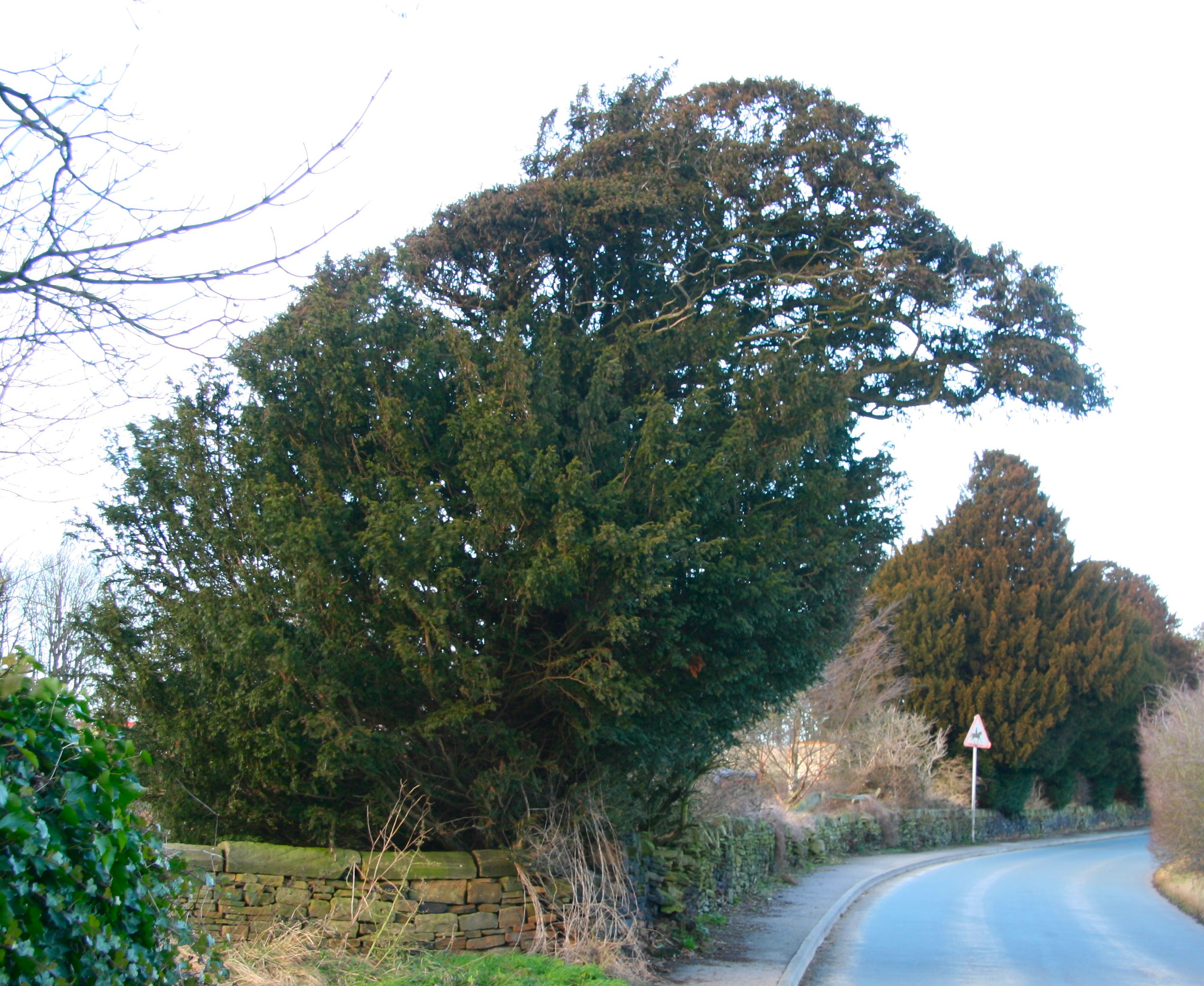
The yew, source of very poisonous seeds and leaves

The yew, source of very poisonous seeds and leaves


I had such interest yesterday in the post about digitalis that I hope you will indulge my taking the subject of poison a little further today; poison little and often, then!
I’ve said several times that I’m not a blood-and-guts writer. Most of the murders in my books take place off-stage. Sometimes, if it is a cold case crime, the method that the murderer has chosen cannot be established. When murders do happen on set, as it were, I don’t dwell on the details: I don’t describe the brutal physiological results of a stabbing or shooting. I choose not to do this from personal preference and have recently had my choice endorsed by the reading groups whose meetings I have had the privilege to attend. I’m certain that there are readers who enjoy graphic accounts of violence, but I haven’t met many and, in this respect at least, my novels don’t cater for them.
Murders have to come about by some means, even so, and there are many methods I have yet to explore. I guess that if I were to put my imagination to work on them full-time, the possibilities would be endless. The literary canon is studded with outlandish murders, from George Duke of Clarence’s drowning in a butt of Malmsey wine to Hannibal Lecter’s grotesque destruction of his guards and Jo Nesbø’s Leopard’s inventive use of a ‘Leopold’s apple’. Murders tend to fall into categories, nevertheless. And one of them is poison.
Of course there are some famous male poisoners, both in fact and fiction, but, used as an instrument for plotting and arranging death, poisoning is supposed to be a peculiarly feminine choice; think arsenic and old lace as the stereotype. I’m not quite sure why. It’s true that it doesn’t require the force that stabbing, strangling and bludgeoning dictate, nor is it as a rule as messy (though this isn’t inevitable: nux vomica is very aptly named). Yet, if remoteness from the deed is the most prized attribute when the murderer is considering the best MO, shooting wins outright. The victim and murderer don’t have to speak, touch or engage with each other in any way for a fatal shooting to take place. If s/he is careful, the shooter leaves no forensic evidence except the bullet itself; the gun that fired the bullet can be matched to it if discovered, but disposing of a gun is not difficult. This is obviously why shooting is favoured by contract killers, but it demands both a particular skill-set and the possession of a gun, which can be daunting, if you’re not a member of the underworld.
By contrast, poisons are all around us. The average household must contain several dozen potentially murderous poisons, from items that only become dangerous if taken in excess, such as analgesics and alcohol, to paraquat (Susan Barber’s weapon of choice for disposing of her husband, Michael, in 1981), bleach and the multitude of cleaning fluids which are only safe in a domestic setting because the average adult would not dream either of ingesting them or of putting them in the way of the naïve or unsuspecting. Then there is the garden, a veritable hotbed of powerful poisons, from the tall and handsome purple and white foxgloves I wrote about yesterday to the exquisite scarlet yew berries or arils, the seeds in which are highly poisonous, as are the yew’s leaves. One of the best television crime series that I’ve seen was Mother Love, which featured Diana Rigg as the spurned first wife who killed her husband’s second wife with home-made biscuits sandwiched together with mashed yew-berries.
Perhaps I’ve just hit on why there seems to be a particular affinity between poison and female killers. It requires premeditation: a master-plan that is ruthlessly adhered to even as the victim is suffering terrible agonies and could perhaps still be saved by a would-be killer overcome by compassion. The poisoner has to have nerves of steel and a strong motive to murder, as well as excellent organisational powers. Revenge is the most likely motive to have spawned the crime, a revenge born of a long and brooding grievance that the perpetrator has fed and nurtured until the murder seems to be not only an act of justice, but unavoidable. Poisoning is an act of pure malice. No mitigating circumstances can be offered: it is never spur-of-the-moment. It cannot be attributed to a sudden access of anger, outrage or grief, unlike the more ‘masculine’ crimes of shooting and stabbing. In order to get away with the deed, poisoners need to be reflective, good at research, possessed of a chillingly high order of intelligence. I’ve listed some common poisons in the paragraph that precedes this one. Identifying poison is not difficult, but choosing and applying the one that achieves the desired effect before the victim seeks medical help, one that also cannot be traced back to the poisoner, may be tricky. It demands sustained effort, application of knowledge, scrupulous attention to detail and a high IQ.
Consider this for a moment. It is an apt description of many a multi-tasking mother and wife who is running a home and at the same time successfully holding down a job. The only difference is that, typically, she has neither the time nor the inclination to murder. In short, it’s a good thing that most of us don’t carry the murder gene in our DNA. If we did, there would be a population implosion!

O' Canada

Reflections on Canadian Culture From Below the Border

oliverstansfieldpoetry

A collection of free verse poetry.

Easy Michigan

Moving back home

Narrowboat Mum

Fun, Frugal and Floating somewhere in the country!

Maria Haskins

Writer & Translator

lucianacavallaro

Myths are more than stories

Murielle's Angel

A novel set on the Camino de Santiago

jennylloydwriter

Jenny Lloyd, Welsh author of the Megan Jones trilogy; social history, genealogy, Welsh social history, travel tales from Wales.

Chris Hill, Author

I'm Chris Hill - author of novels Song of the Sea God and The Pick-Up Artist

littlelise's journey

Sharing experiences of writing

unpublishedwriterblog

Just another WordPress.com site

Les Reveries de Rowena

Now I see the storm clouds in your waking eyes: the thunder , the wonder, and the young surprise - Langston Hughes

Diary of a Wimpy Writer

The story of a writer who didn't like to disturb.

Rebecca Bradley

Murder Down To A Tea

Helen Carey Books

Helen Carey Books