Time to move on…

Engine
A film starring both Colin Firth and Nicole Kidman is bound to be worth watching. I therefore decided that I wanted to see The Railway Man without having much idea about what it was about, such being the ‘pull’ of actors who have previously captivated me. I knew that it was neither a violent ‘adventure’ movie nor a romcom, and almost any other genre (except perhaps a Kung Fu feature) would have been OK with me. (Pause for deep sighs from film buffs!)
It was a pretty safe bet that I’d enjoy this film, but I was unprepared for how much I’d be moved by it. It tells the story of a man, Eric Lomax, damaged by his experiences as a prisoner-of-war of the Japanese while working on the Burma railway and suffering what is these days called post-traumatic stress disorder. His surviving comrades and fellow captives, like him, now live in the same run-down seaside town in the North East and, also like him, are unable to move on. The focus of their lives is the shabby ex-servicemen’s club which they haunt daily.
So far, so good: the plot is well-constructed and the acting superlative, but there are few surprises. The film appears to follow faithfully in the footsteps of the many stories, both real and fictional, of the brutality of the Japanese during World War II and the permanent psychological damage that they inflicted on those who managed to survive captivity under their jurisdiction. As a child, I knew a number of war veterans who had also been prisoners-of-war. Those who had been captured by the Germans were fairly philosophical about what had befallen them; those who had been held by the Japanese were uniformly vitriolic about their captors and, by association, hated the whole Japanese race and all things Japanese. After the Japanese ‘economic miracle’ had burst upon the world in the 1970s, I had a colleague who would go to any lengths to avoid buying Japanese-made technology.
However, the rather stereotypical scene-setting of The Railway Man that I have described undergoes a sea-change when Colin Firth, now middle-aged, meets Nicole Kidman on a train and falls in love with her (in a rather charming parody, acknowledged in some of her lines, of Brief Encounter). It is only after they have married that she discovers that he still suffers violent nightmares – they are of almost hallucinogenic intensity – about his time on the railway and, particularly, the occasions on which he was brutally tortured; the waterboarding scene is horrifically realistic. From this point on, the film depicts his quest for the mental peace that he must seek in order to make his marriage whole and complete. The actions that he has to undertake to achieve this are drastic – they involve travelling back to the Burma railway twice – and the outcomes are surprising. Risk of spoiling prevents my revealing more, so I’ll just say that, fundamentally, The Railway Man is not so much about the atrocities committed by the Japanese military as about the nature of suffering and guilt, atonement and forgiveness. It is about the strength of the human spirit and the power of love.
There is one other comment that I’d like to add: it concerns the troubling nature of war crimes. Of course, I understand and appreciate why, in the aftermath of World War II, many prosecutions were brought for crimes against humanity. Although there is a grim irony in the concept that there should be ‘rules’ for warfare – and therefore that only some types of killing are acceptable, while torture is inadmissible under any circumstances (though even this basic tenet has been called into question in recent years) – as time goes on, the crucial difference between acts of violence ‘legitimately’ carried out under the rules of warfare and ‘atrocities’ seems to me to become ever more blurred. I’m not referring to the prosecution of those who took part in the death camps (this is a separate issue), but to the pursuit of men who were then very young, no doubt scared, soldiers, who were both acting under orders and caught up in the tumult of war. Most of these men are now nonagenarians or in their late eighties and their accusers likewise. Not only does it seem to me to be impossible to ascertain now exactly what happened then, but I also cannot comprehend how any useful purpose can be served by prosecuting these men seventy years on.
I’m thinking particularly of the man who has recently been arrested for his alleged part in the massacre that took place at Oradour-sur-Glane in 1944. German soldiers, recalled to Germany towards the end of the war from their postings further south, shot all the men in this French village and then rounded up almost all of the women and children, herded them into the church and set it on fire. Only a handful escaped. I have twice visited the site of this atrocity: the first time was in the 1980s, when my husband and very young son and I stumbled upon it almost by accident as we took a break from a long drive to the Pyrenees. At that time, the village was still deserted, the shattered houses (all were blown up or burned down) and ruined church left exactly as they had been as a memorial to those who died. The rusting, abandoned 1940s vehicles and the many ancient Singer sewing machines set out on the walls told a particularly poignant story. My second visit was much more recent. By then, the place had been ‘sanitised’ and had turned into a tourist attraction. By this process, the horror and sadness of what had happened there had been softened.
Maybe this was a good thing. I’m not suggesting that we should ‘forget’ the war; I think that those ‘historians’ who try to sweep the Holocaust under the carpet by providing ‘evidence’ that it didn’t exist are mendacious exhibitionists at their best and evil propagandists at their worst. But I do question whether any good can come from the prosecution of a man who, seventy years ago, was eighteen years old and may or may not have been directly responsible for some of the civilian deaths at Oradour. Justice comes in many forms. In order to be whole, mankind has to reconcile itself with what happened in the past and carry on with life, knowing what happened and not forgetting it, but drawing a profounder truth from the reconciliation of the demands of memory and the present. This is the ultimate message of The Railway Man. It is one of the most thought-provoking films I have ever seen.

Memory the only takeaway from a magical Chinese experience…

The Emperor's Palace, Beijing

The Emperor’s Palace, Beijing

It’s impossible to conclude my blog-posts about China without writing about the food. I’m not actually a big fan of Chinese food when I’m in England, principally because so many Chinese restaurants here adulterate their cuisine with monosodium glutamate. (The Chinese restaurant in which I worked when I was a student, which was home to the cook called Moon, star of a previous post, was an honourable exception.) If I consume this substance, which I believe is also called ‘Chinese taste powder’, I invariably get a headache and feel dizzy the following day.
However, I was assured that monosodium glutamate is never used in restaurants in China and I certainly didn’t detect it in any of the food there. I was very honoured to be treated with the utmost hospitality throughout my stay and, as food plays a big part in Chinese standards of courtesy, I was presented with what was effectively a banquet every night. Although when at home the Chinese usually confine themselves to three or four dishes, which in Shanghai always includes a soup (It was explained to me that soup helps to regulate the body temperature if the climate is hot and dry or if other foods are spicy.), when guests are taken out to eat it is not uncommon for ten or twelve main dishes to be ordered, as well as many appetisers and side dishes. These don’t all appear at once: the waiting staff bring them in one by one and place them on a huge circular glass ‘lazy Susan’ (the Chinese use the same words), which is spun slowly round by each diner in turn, with all the tantalising magic of what felt like a place at a gastronomic ouija board.
All the food that I ate in China was delicious: without exception, it was very fresh and featured many different kinds of vegetable (though an actual vegetarian would have a tough time there, as most dishes also include meat or fish of some kind). At every dinner there was also a whole sea bass garnished with herbs and spices – an expensive treat, presented to guests as part of the impeccable code of hospitality. I was only once offered a delicacy that I was reluctant to try: on my last evening in Shanghai, the pièce de resistance was a dish of pickled ducks’ tongues. One of my fellow diners told me that they tasted like mackerel, but I was too cowardly to find out if this was true!
Among my favourite foods were the exquisitely-crafted dumplings that usually appear after the main entrées. The smaller ones contain meat, the larger ones a special soup: they require eating with great care, so that none of the soup is lost.

Soup (large) and meat (small) dumplings

Soup (large) and meat (small) dumplings

Rice and noodles are served separately at the end of the meal, because guests are encouraged to eat their fill of the finer dishes before filling up on these staples. Desserts are simple and light, consisting usually of sweet soups (plum is a favourite) or yogurt and honey. Tea is the main beverage. Light beer is also served, but drunk sparingly. Wine was not served at any of the dinners that I ate and no alcohol was ever served at lunch.
My two Beijing dinners were particularly special. The first was at the original Peking Duck restaurant, which is close to the main campus of Peking University (The University retains the name ‘Peking’, choosing not to call itself ‘Beijing University’ because it is proud of its heritage. It is China’s oldest and most prestigious university.). This restaurant has been serving Peking Duck since the 1930s, when it invented the recipe.

My number's up for this Peking duck...

My number’s up for this Peking duck…

Each diner is given small dishes of cucumber, chopped spring onion and plum sauce and a round box of steamed pancakes. I discovered that Peking Duck is one of the most authentic dishes served in Chinese restaurants in England. In Beijing, the duck itself was oilier and therefore richer than in the UK, but apart from that the taste of all the ingredients was similar: the key difference was the dexterity with which the waitress demonstrated how to flip the pancake on to the plate with chopsticks, fill it and form it into a neatly-wrapped parcel. None of my parcels looked like hers! As they leave, diners are given a certificate to prove that they have eaten genuine Peking Duck in this restaurant.

Proof of the eating in the original Peking Duck restaurant

Proof of the eating in the original Peking Duck restaurant

On my last night in Beijing I enjoyed the most special dinner of all. It was a banquet held in the ‘Emperor’s Palace’, a restaurant whose real name is the Bai’s Home Courtyard. It was originally the palace home of Prince Li of the Qing Dynasty. The courtyard is in fact a succession of formally laid-out gardens, each one containing a single-story building that once formed part of the Emperor’s palace and has now been converted into a dining-room. The buildings are guarded by young men dressed in the traditional garb of Imperial soldiers, and the waitresses are young women attired in beautiful traditional silken costumes and head-dresses.

Waiting at table in the Emperor's Palace

Waiting at table in the Emperor’s Palace

On their feet they wear tall pattens – the platforms of these, on which the centre only of the foot is balanced, are about four inches off the ground. One of the girls told me that it takes a week to learn how to walk in these shoes. Twelve of us ate that evening and we were served throughout by four silk-clad waitresses. Our dining-room was dedicated to longevity, symbolised in the detail of the wall-hangings.

Opulence and longevity in the Emperor's Palace

Opulence and longevity in the Emperor’s Palace

The table was round, for equality, and all the chairs except one richly covered in yellow silk; this single chair was made of intricately-carved wood. Originally, it would have been the one in which the Emperor sat. No woman ever sat in the Emperor’s chair – at least, not then!

No woman may sit in the Emperor's chair - ha!

No woman may sit in the Emperor’s chair – ha!

We were served perhaps two dozen dishes at the Emperor’s Palace, some of them tiny, all of them delicious and beautifully presented. My favourites were a very special kind of smoked fish and venison stewed with chillies. The banquet lasted for about three hours. Once outside again, we discovered that it had turned bitterly cold – some of the fountains in the gardens had frozen over and the walkways as we made our way back to the street were lit with bright orange lanterns that picked out the tiny dots of silver frost on the profusion of plants flourishing on the small ponds and spilling over the low formal walls designed to contain them.

A cold night in the Emperor's Palace garden

A cold night in the Emperor’s Palace garden

It was a magical, almost an enchanted, evening, a marvellous culmination to eight days of extraordinary new experiences. If I did not have the photographs, I might believe that I had dreamt it.

All text and photographs on this website © Christina James

Mighty river…

Across the Huangpu from the Bund

Across the Huangpu from the Bund

On my travels in other countries, some of the most evocative moments have been spent contemplating rivers. I’ve stood on O’Connell Bridge in Dublin and watched the (on that occasion very murky) waters of the Liffey and remember thinking, as I looked into its Guinness-coloured depths, that it must have been entirely James Joyce’s poetic imagination that produced such a beautiful name as Anna Livia Plurabelle. I’ve seen dhows swooping along the Nile, their single white sails bending gracefully to the breeze. I’ve marvelled at the massive businesslike barges speeding along the Danube, powerful and swift as crocodiles on the move. The bridges and embankments of the Seine are still vividly precious for their romance on our honeymoon. Closer to home, as I’ve written in a previous post, I’ve admired the spectacular night-time views from Waterloo Bridge in London as the Thames makes its sudden sweep to the East. And I still feel great affection for the dear, dirty River Welland that threads its way through the town of Spalding, much humbler than these great waterways, though still, in its day, a significant bringer of prosperity to the people who dwelt nearby, just like all the great rivers of the world.
Unsurprising then, that I should have been captivated by the magic of the great Yangtze, the fourth longest river in the world, as it pours itself at Shanghai into the East China Sea. Wide and fast-flowing, the Yangtze has brought traders to Shanghai for thousands of years, making it one of the world’s great cosmopolitan cities long before the rest of China emerged from its self-imposed insularity.
Even the Yangtze’s much smaller tributary, the Huangpu River that cuts right through the city centre, is a majestic waterway, which I visited first on a cold but sunny Sunday afternoon when people were promenading along the Bund, the waterfront area opposite Pudong, on a built-up walkway that enables walkers to get close to the river’s banks and where festive street food stalls abound.

All lit up on the river!

All lit up on the river!

Two days later, on a bitterly frosty but fine, clear evening, I was taken to the Huangpu’s junction with the Yangtze. On both occasions I was able to watch barge after nimble barge (they are longer and slenderer than the ones on the Danube) power by, almost as if in convoy, while the waters displaced by their passage lapped energetically against the shore. The barges and other ships are lit up in the evening, as is the spectacular Shanghai skyline that forms a backdrop to the Yangtze. The result is a profusion of golden lights that disport themselves against the inky blackness of the waters. The scene is dynamic, full of energy and passion, the legacy of very many years of trade, hard-won prosperity, daring, risk and chance and, I’m certain, not a little skulduggery and murder. The effect is by no means cosy, but it is exhilarating! At the back of my mind lurked the half-remembered knowledge that, in years gone by, to be ‘Shanghaied’ meant to be kidnapped and forced to serve as a sailor on board one of the many ships that plied their trade to the East and, ultimately, to Shanghai. I could imagine someone creeping up on a strong young man as he stood, unsuspecting, and rendering him unconscious; imagine his anguish as he awoke, his head sore, far out at sea, unable to tell his family and friends what had befallen him… that he was on his way to China.
Every river has a personality, which I think was James Joyce’s point about the Liffey. The Yangtze’s is particularly complex: on the one hand, it courses past Shanghai, bearing its gift to this great city of enterprise and generations of toleration for many creeds and cultures; on the other, it penetrates deep into a country that until recent times was secret, withdrawn, enclosed and shut away from all outside influence.

All text and photographs on this website © Christina James

For all the tea in China, I’d need several fortunes…

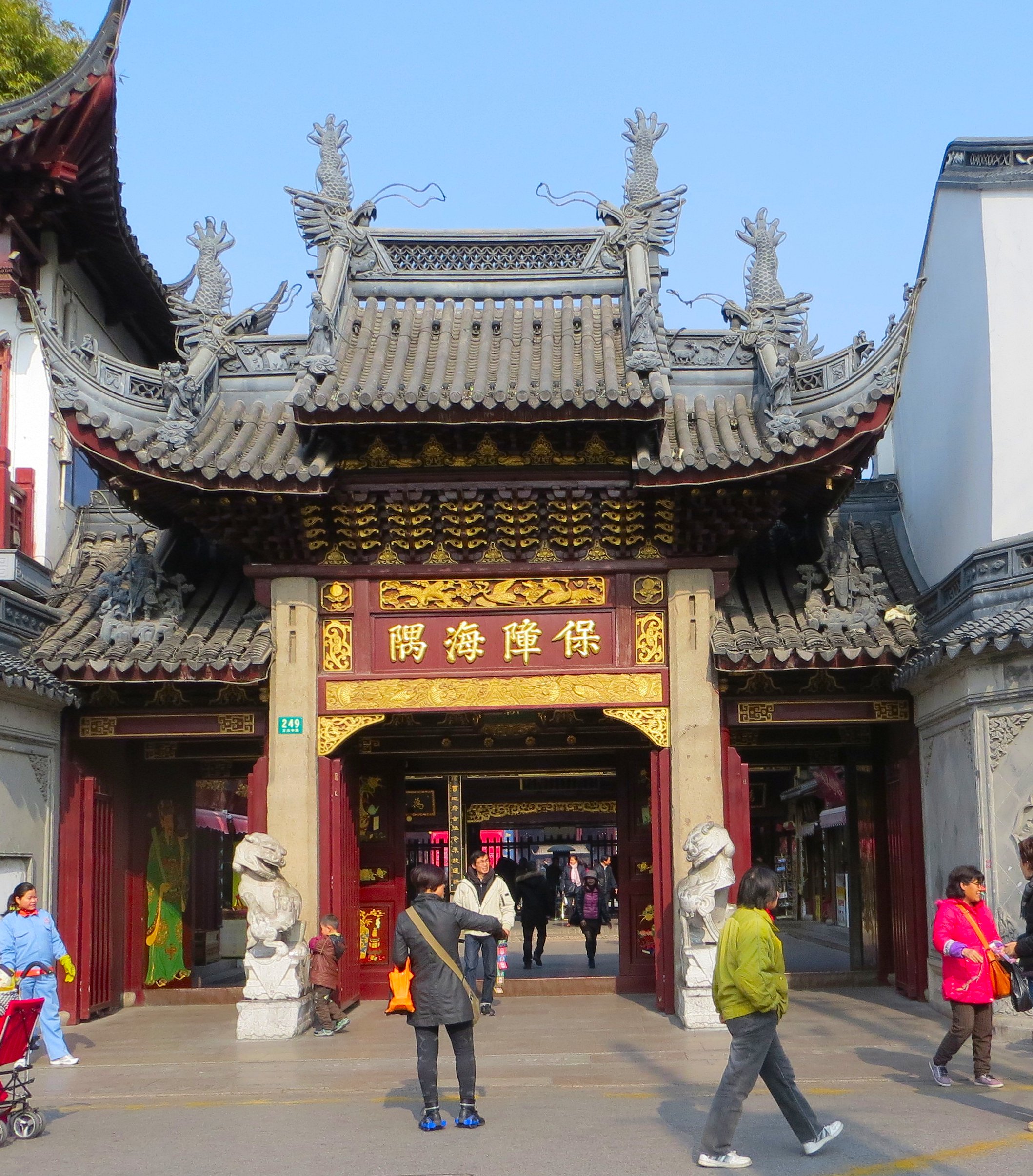
Entrance to Yu Garden, Shanghai

Entrance to Yu Garden, Shanghai


This is my first full day at home after my visit to China, and I’ve just enjoyed a nice cup of tea. Tea is one of our national clichés – the universal British remedy for everything, from broken hearts to bereavement, and also the beverage that most Brits look forward to the most when returning home from foreign adventures. However, I can hardly claim to have been tea-deprived during my five-day sojourn in Shanghai or the two days I spent in Beijing. Tea is what you drink with every meal in China, and there are hundreds of different kinds. I managed to sample a few of them, sometimes in very special surroundings. It is served with some ceremony in restaurants: waiters hover with teapots and fill your cup again as soon as you’ve drained it. As with wine, special kinds of tea are recommended for some types of food: for example, a rich, smoky tea accompanied the duck that I ate in the original Peking Duck restaurant in Beijing (more of this in a separate post). Tea is also used in very traditional restaurants to cleanse crockery and cutlery at the table.
I had only two half-days to myself, as mine was a business trip, not a holiday, but, aided by some kind Asian colleagues, I was able to make the most of them. On the Sunday after I arrived in Shanghai, I took a taxi to the Yu Garden,
Temple courtyard in Yu Garden, Shanghai

Temple courtyard in Yu Garden, Shanghai


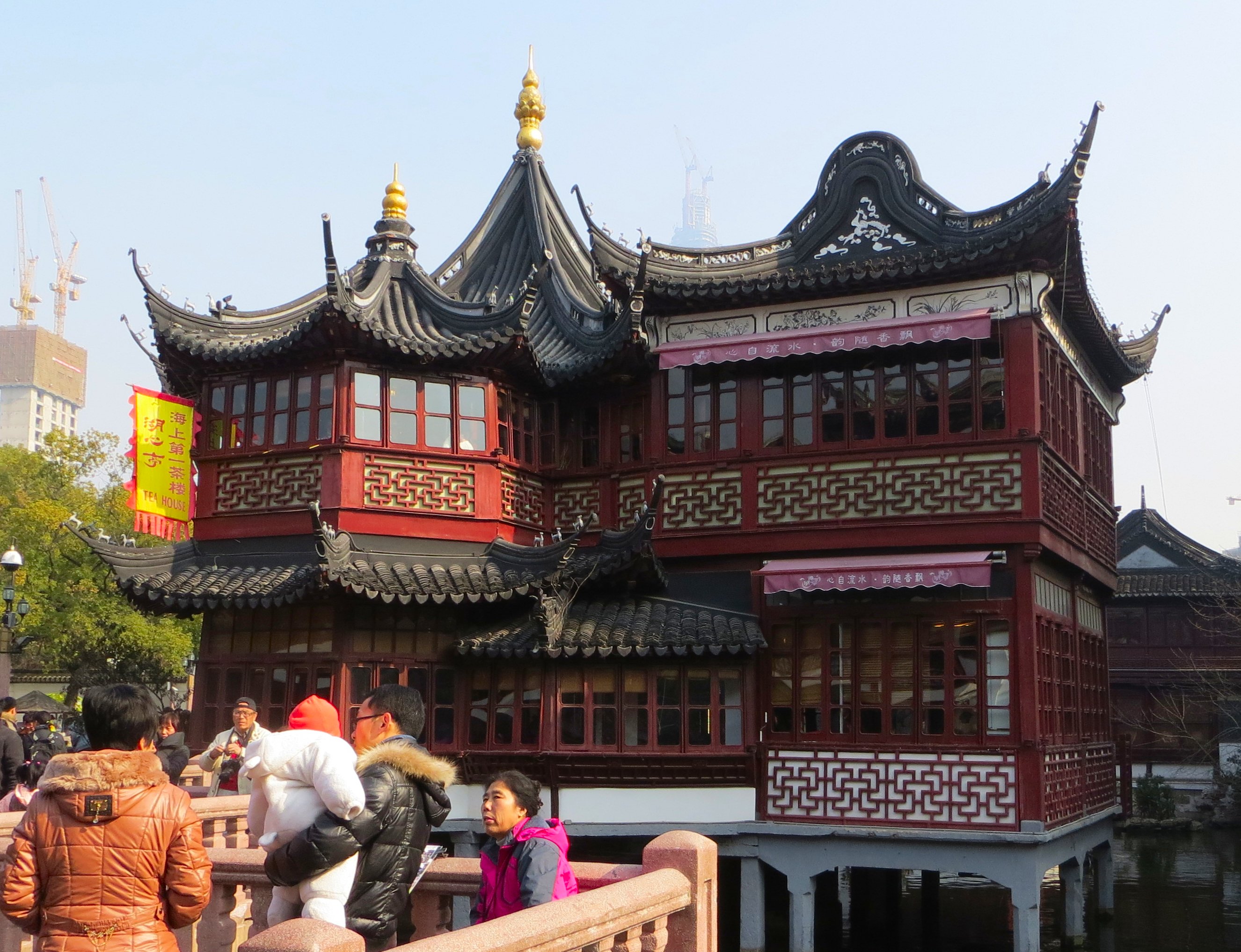
a mesmerising complex of temples, waterways and ancient shops, and, after an hour or two of sightseeing, found myself standing outside the fabled Huxinting Tea House, the oldest tea house in Shanghai (the building is about 230 years old, becoming a tea house in 1855).
Huxinting Tea House, Yu Garden

Huxinting Tea House, Yu Garden


Naturally, I went in and was delighted to find that I’d chanced upon a mid-afternoon lull in business, so it wasn’t too crowded.
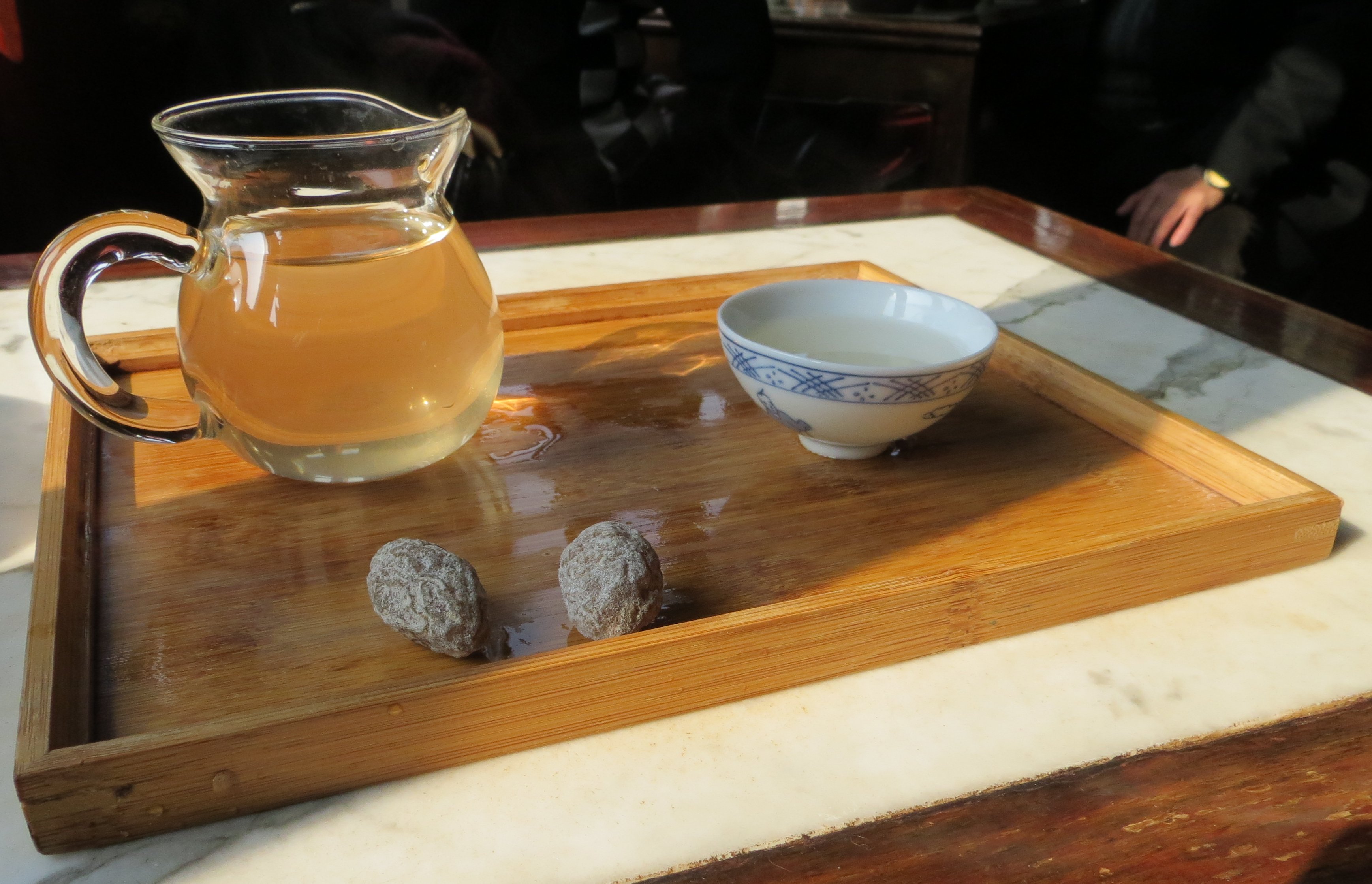
Inside, the tea house is opulent but not flamboyant. The waitresses are dressed in a uniform based on one of the many forms of Chinese national dress and they are attentive but unobtrusive. There are scores of types of tea to choose from, some of them extremely expensive. I chose jasmine, which came in a glass jug and was accompanied by two aromatic sweetmeats.
Jasmine tea for one, please...

Jasmine tea for one, please…


It was quite delicious: fragrant and refreshing, exotic without being strange. It wasn’t cheap, either: it cost the same as a couple of lattes from Starbucks would have cost in the UK, which by Chinese standards is very expensive indeed. But it was well worth the price: I understand why Chinese people think that the tea house is so special and come here for a treat. It’s not only the ambience inside the building itself that gives so much pleasure; it is also being able to look out across the water of the lake in which it stands on stilts to the picturesque buildings beyond. The paths and walkways are always teeming with people and the tea house itself offers a haven of tranquillity from which to observe them, as well as a feeling of privilege. The elderly couple sitting next to me were obviously savouring every moment, whilst also engaging in a very animated conversation.
Or tea for two...

Or tea for two…


Each type of tea is served in a different type of vessel and theirs was in terracotta pots with lids, which they had refilled more than once. I’d have loved to have been able to ask them what their choice had been.
Since I came home, I’ve read about the Huxinting Tea House online and discovered that the Queen has visited it. I don’t suppose that she had to worry about the cost of her tea, but I do wonder if, having imbibed its product, Her Maj was constrained to use the establishment’s facilities. If so, I’d like to know what she made of the shaft-style convenience,
For the convenience of the tea house customer...

For the convenience of the tea house customer…


which was the first, but by no means the last, of this type of porcelain that I encountered in China. (I should add that the one in the Huxinting Tea House was spotless.)
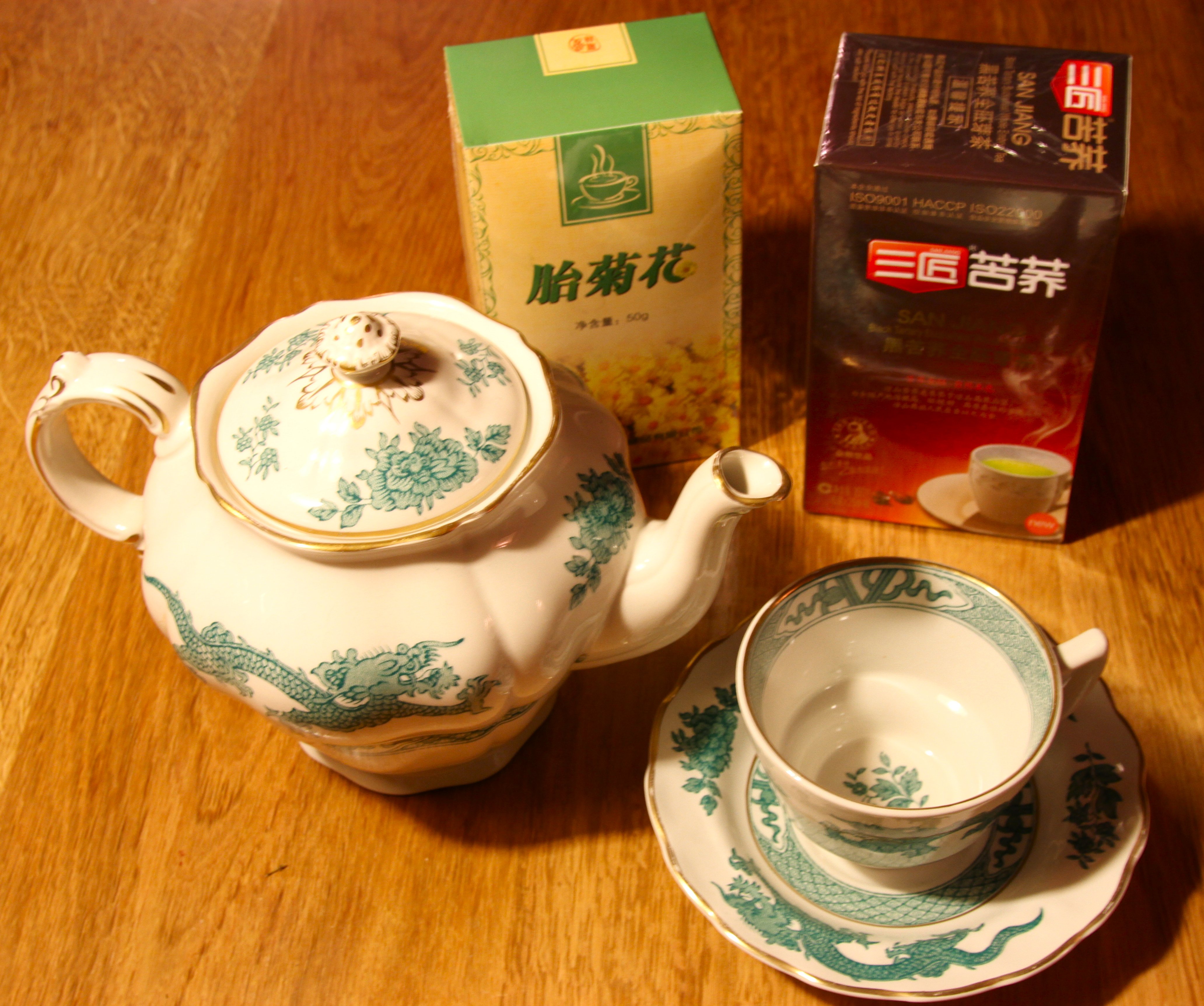
I wanted to bring some tea home with me, but was advised against buying it from one of the specialist purveyors of tea or at the airport as being prohibitively expensive in either. On my last day in Beijing, I therefore walked to a local supermarket and bought two types of tea there, one of them a chrysanthemum tea that I’d first seen earlier in the week when it was ordered by a librarian during a conference that took place at Shanghai Jiao Tong University. On that occasion, it was served in a tall glass mug with a mash of dried chrysanthemum flowers floating on the surface of the hot water. More prosaically, I think that my own purchase will consist of more conventional-looking tea leaves, albeit made out of chrysanthemums. Chrysanthemum tea sounds unpleasant – I was sceptical until I tried it, thinking that it might taste as the half-dead ‘chrysanths’ which I remember adorning the graves in Spalding Cemetery used to smell, but in fact it is delicate to the taste-buds and very refreshing.
Going to the supermarket offered me one of only a few rare opportunities to encounter ordinary Chinese people as they went about their business. I was grateful for this experience. Once again, I was also astounded by how expensive the tea was and how greatly prized. In the supermarket where I bought mine, it was kept upstairs with the alcohol and closely guarded by a security man. It cost about three times as much as a packet of ‘builder’s tea’ in England. I wonder what Chinese builders drink? I’d like to think that their day is fuelled by an infusion of chrysanthemums!
China tea at home...

China tea at home…

All text and photographs on this website © Christina James

2014, starting at the pace of a skeleton bob…

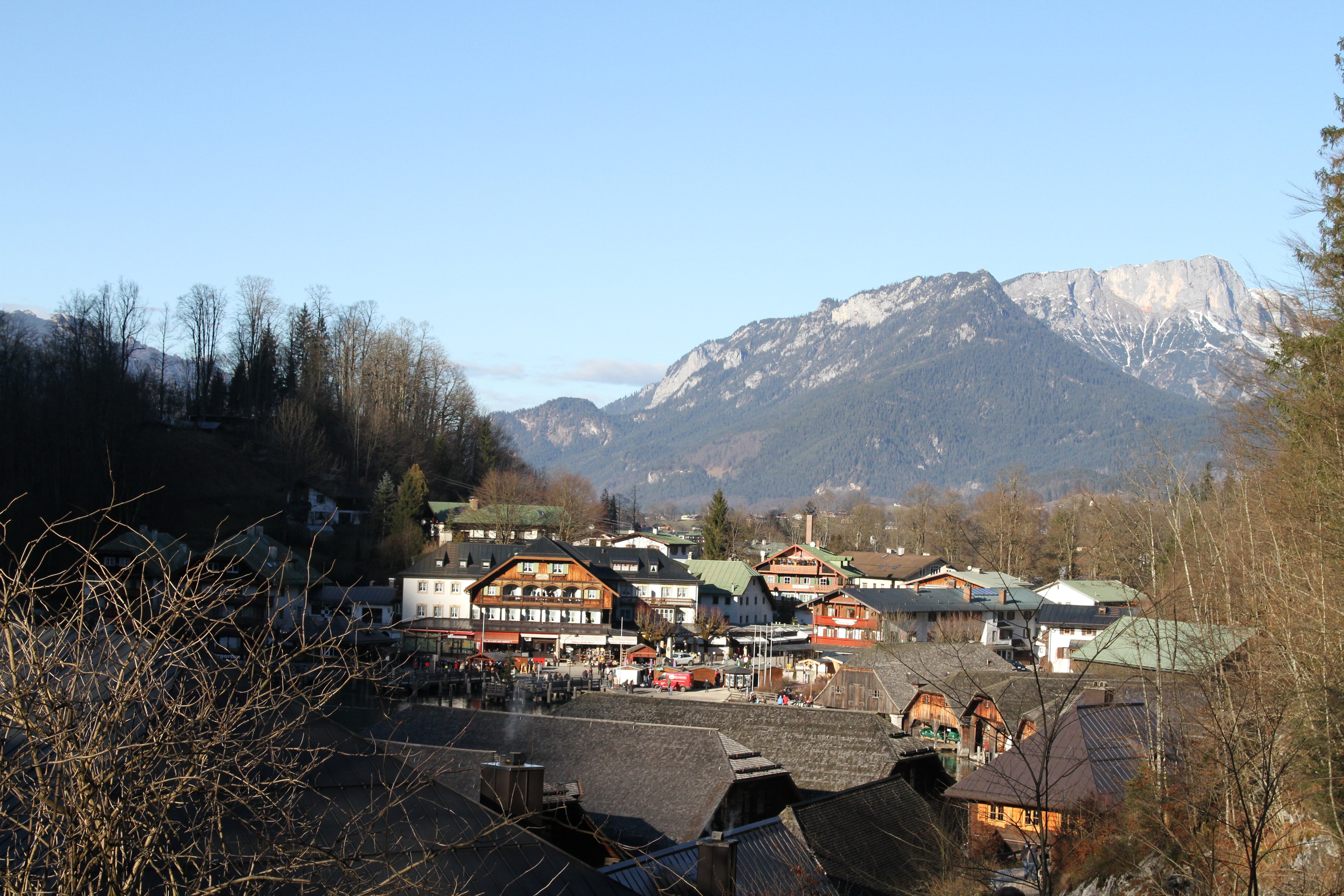
Schönau am Königsee

Schönau am Königsee

New Year’s Day 2014 was one of the most varied and interesting I have ever experienced. It began with breakfast in Bad Reichenhall, a small Bavarian town that nestles among the mountains on the Austrian border, on a cold but sunlit morning. My friends and I then drove to Schönau am Königsee, a traditional Alpine town just south of Berchtesgaden that has become a winter sports resort, and took a small circular walk around part of the Königssee, a lake etched so deep into the landscape that it looks like a Norwegian fjord; it’s Germany’s third deepest and well known for the echo created by its rocky walls. There is a church on the other side of this lake, but the sun was shining so brightly, with its light reflected so brilliantly on the surface of the water, that it was impossible to see through the glare.

Königssee in winter sunshine

Königssee in winter sunshine

Towards the end of the circular walk is a ski slope which is in constant use, thanks to snow machines. (Somewhat bizarrely, there is a hen-run to one side of it, complete with a wooden chicken coop on wheels and several brightly-plumaged hens.) Unable to ski myself, I marvelled at the grace and speed with which the skiers descended. There were some snowboarders, too: mostly children, who were tackling the challenge of the swift descent with extraordinary confidence and fluidity of movement.

Enjoying winter at Schönau am Königsee

Enjoying winter at Schönau am Königsee

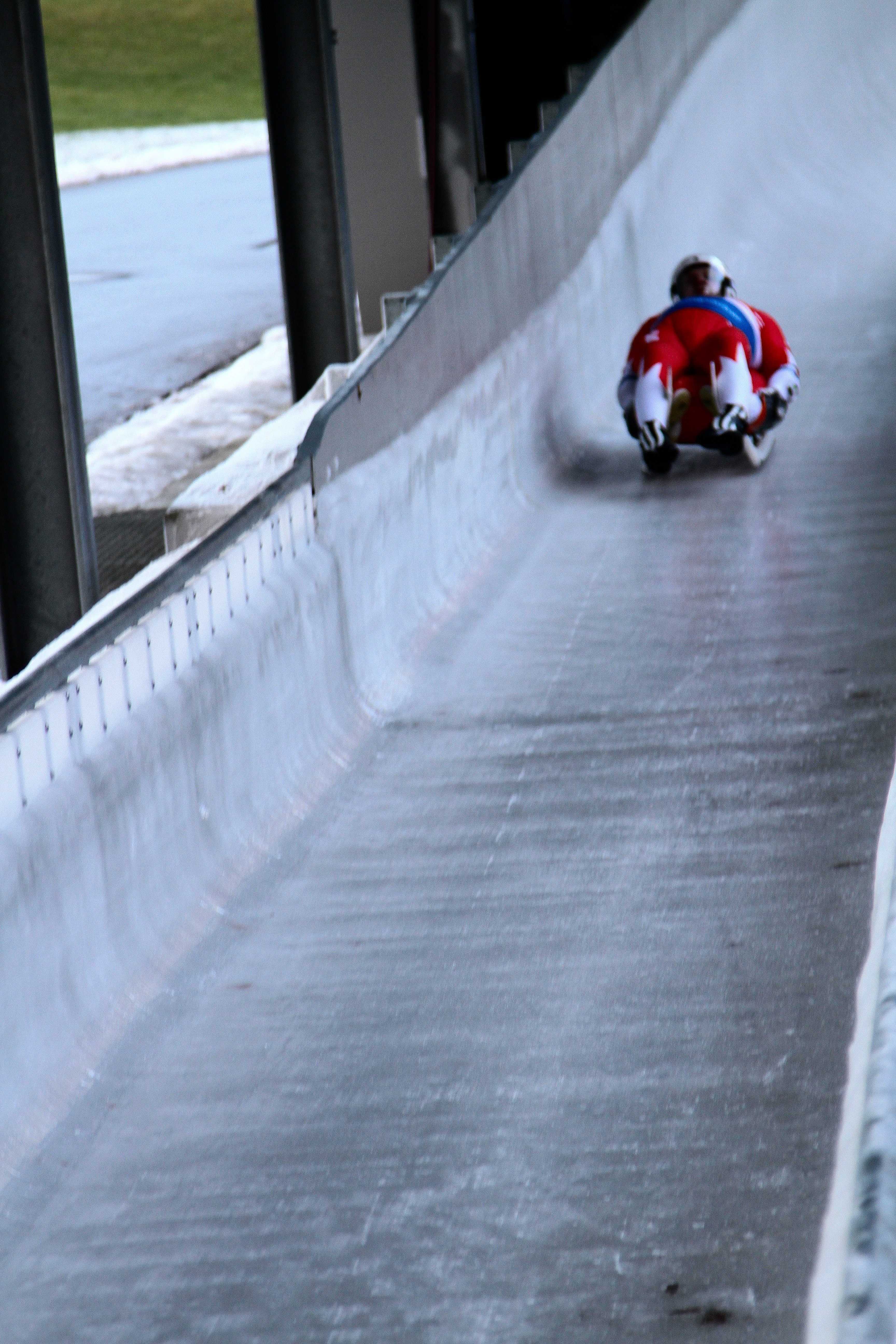
The town itself is a bit of a tourist trap (I’m not sure what kind of Alpine souvenir a fluffy pink teddy bear represents), complete with live ever-so-genuine-Bavarian volksmusic, but by climbing beyond the car park and the town we swiftly reached the Olympic-standard permanent sled run.

Welcome to bobsleigh!

Welcome to bobsleigh!

The World Cup 2013-14 season for both skeleton and bobsleigh ends here on January 26th 2014, and by chance and great good fortune we were able to watch several of the national teams practising solo skeleton, which is an even hairier version of bobsleighing: the competitor lies face up, feet first, on a small sledge as it zooms down the ice track. His entire journey takes less than a minute.

Solo skeleton bob - phew!

Solo skeleton bob – phew!

One rider came to grief as he passed us and skithered on his side to the final bend, where he came to an ignominious halt and clambered in ungainly fashion over the barrier, clutching his sledge. He was embarrassed and annoyed, but otherwise unharmed.

Boathouses at Königssee

Boathouses at Königssee

By this time, it was getting dark, but we were keen to complete our excursion by making a short detour to the site of the Berghof, Hitler’s Alpine home and headquarters. Beyond this lies the Eagle’s Nest, the bolt-hole to which he planned to withdraw in the event of a defeat while he was in residence at the Berghof. Of course, he was in his Berlin bunker when the Allies finally closed in on him, but I was interested to be informed that, although the Berghof was first bombed by the RAF and then torched by the SS troops just before their departure, the Allies decided to leave the Eagle’s Nest itself intact. It still stands to this day, as a café-restaurant, though cannot be reached in the winter.
The Berghof itself has been reinvented as a ‘documentation centre’. It is also now a small tourist attraction, with some access to the bunker system, together with a car park, a restaurant and a shop. The ascent to it from Berchtesgaden is steep, and the road precarious: there is no barrier for much of the way and the drops below the bends are lethal. I imagined the people of Berchtesgaden and the Obersalzberg area going about their business over seventy years ago, prevented by a closely-patrolled security cordon from their earlier nineteen-thirties jaunts up the mountain to catch sight of Hitler, only vaguely aware that something ‘important’ was going on above them when Hitler’s soldier aides descended upon the town to buy supplies.
Unfortunately, the document centre was closed on New Year’s Day, so we were unable to view the grim records of the Third Reich that it houses. It may have been because of this, or perhaps owing to the beauty and almost sacred tranquillity of the place – which, save for that one short period of depraved activity, has obtained almost since the dawn of mankind – that I could gather no real sense of the evil that once lurked there. It is true that there are clues for those who care to look for them: for example, the distinctive archways that now form the windows of the shop were once part of Hitler’s garage complex, as the footage from old films, shown on a constant ‘newsreel’ in one of those windows, illustrates, but I experienced none of the deathly despair and outrage that visits to other wartime sites have prompted in me. I suppose that that in itself is a triumph: a sign that the bedrock of primeval goodness in this place has triumphed over the temporary evil that it once harboured and then cast out.
Happy New Year, everyone!

All text and photographs on this website © Christina James

Salt and I inextricably linked, even on holiday…

Salzach River, Salzburg

Salzach River, Salzburg

Chocolatiers' Mozart Christmas grotto, Bad Reichenhall

Chocolatiers’ Mozart Christmas grotto, Bad Reichenhall

Salzburg skyline in December

Salzburg skyline in December

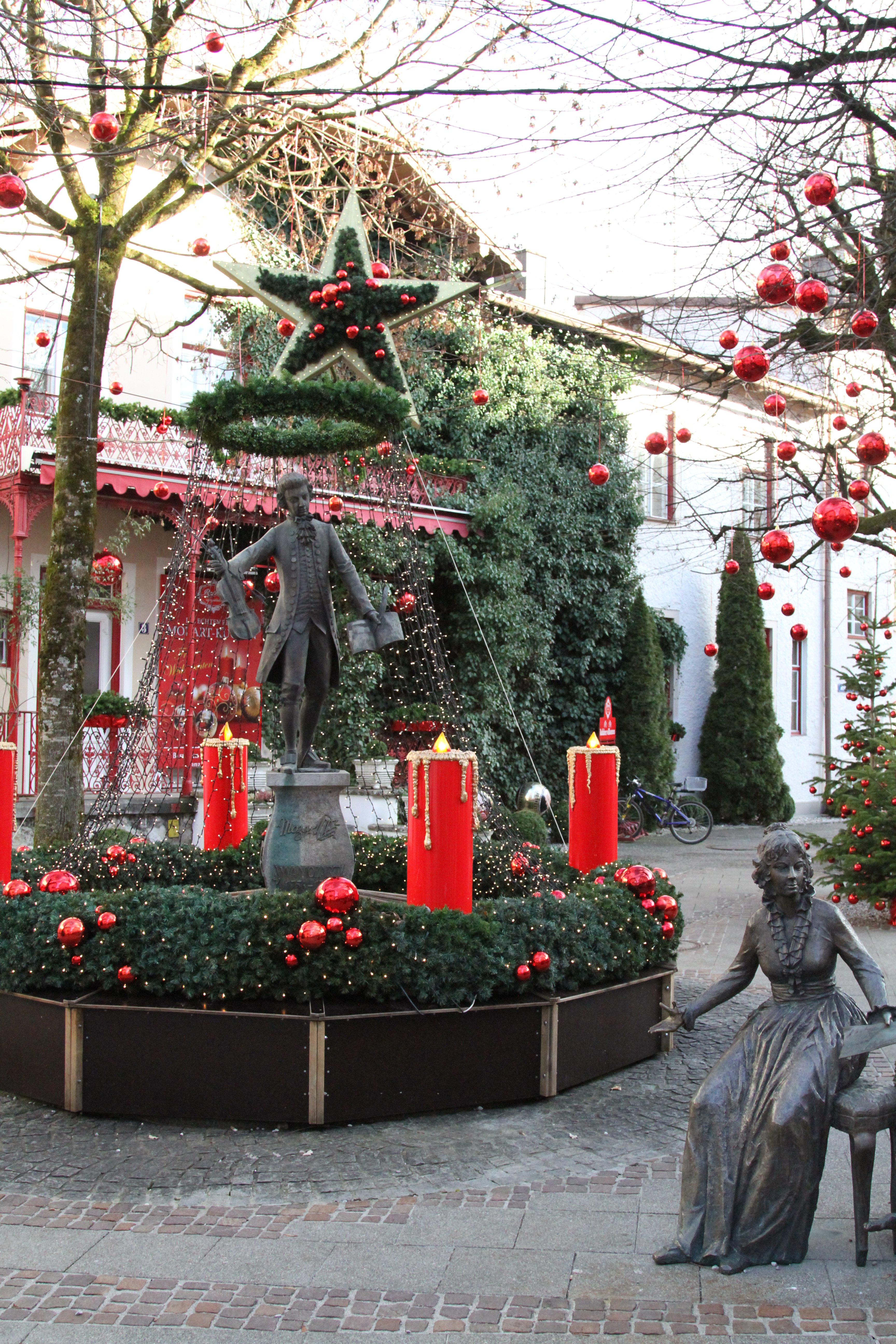
Salzburg is a breathtakingly beautiful city that seems to exist mainly to ensure the immortality of one man: the child prodigy composer Wolfgang Amadeus Mozart. There are Mozart cafés, Mozart restaurants and Mozart museums – and even tourist gift shops where you can buy Mozart rubber ducks and flying birds with Mozart’s face, all wearing powdered wigs. There is a spectacular concert hall where the programme includes the work of many composers, foremost among whom is – Mozart. There are Mozart chocolates, made by two rival companies: the original chocolatiers, whose business is very small and still confined mainly to the Salzburg region, and a younger, upstart firm whose aggressive marketing has been so successful that its distinctive round, filled chocolates, individually-wrapped in red foil, can now be purchased in many countries besides Austria. This company has created a Mozart grotto next to its main shop over the border in Bad Reichenhall, which features a statue of the composer, a fountain and bushes hung with winking red lights and huge baubles in its trademark silvery red.
Today, the city’s prosperity depends very much on Mozart tourism, but it was a wealthy place long before the composer’s birth. As its name suggests, its fortune was built on salt. This, of course, resonates with me, because Salt, good fortune and creativity are very much linked in my mental map. There is a famous salt mine close by the city which offers tours to visitors. We decided not to visit, as we have recently been to a similar attraction in Kraków. The Austrian one, apparently, makes a particular attempt to please family parties: its offers include enabling children to dress up as eighteenth-century peasant salt-workers.
The river that runs through the city also takes its name from salt: tolls on the salt-carrying barges created some of its wealth. Walking along the boulder-strewn riverside is a pleasing experience and there are several picturesque bridges, one of which is hung all the way along with lovers’ padlocks.
The Salzburg area has been unseasonably warm between Christmas and the New Year. There is snow here, but only high in the mountains. The local people are amazed at how mild the weather has been. Nevertheless, the people in the streets all wear hats, scarves, boots and quilted jackets or loden coats. Babies in buggies are muffled to the eyebrows. It is possible to stand in the sun and feel real warmth on your face, but as soon as you step into one of the many alleyways or just enter the shadows of the tall terraced buildings, the cold bites. There may be no snow at the moment, but you feel that it is only biding its time. February is the coldest month here: the Austrian mountain winter has really only just begun.
What does Salzburg have to offer in the way of inspiration for a crime fiction writer? On the face of it, this bright, industrious city, peopled with serene residents and laughing holidaymakers, does not seem a promising setting for dark deeds. However, in the alleyway marked ‘Juden Gasse’, with its stolpersteine or brass commemorative cobblestones, we stumble upon some of the darkest deeds that man has ever perpetrated upon man; and, not many kilometres away, lurks the Eagle’s Nest, mountain retreat of one of the world’s most sinister fantasists and almost the most prolific murderer of all time.

Rummaging in the rooms, cupboards and fireplaces of my past…

Facade
Visiting friends just before Christmas, we came to talk about how buildings change and the feeling of dislocation that this sometimes brings. The building we were actually discussing was a special case: my husband had worked there for most of his career before it was knocked down and rebuilt. Responding to local pressure, however, the organisation that owned it was constrained to preserve carefully the original early twentieth-century façade (which I’d always thought was very second empire, but was certainly more imposing than any modern constrained-by-budget counterpart would have been), even as it created an entirely new structure behind. Therefore, the new building is quite different from its predecessor in every respect except one: to enter it you have to climb the same flight of steps and pass through the same solid door, flanked by two storeys of massive man-sized sash windows, that gave access to the old one. Beyond, if you remember the old building as clearly as I do, and aren’t very familiar with the new one, you encounter a true Alice-through-the-looking-glass experience.
As I’ve said, this rebuilt building presents a special case, but talking about it has made me think about all the buildings I’ve lived in during my life: the three houses in Spalding that were my family homes until I was respectively nine, sixteen and eighteen; my hall of residence at Leeds University and the run-down student flat in Leeds that I subsequently shared with my closest friend; the rather grand flat where my husband and I lived during the first few months of our marriage, before we were ousted by a greedy estate agent who wanted to triple the rent; and the subsequent three houses that became our own family homes – the humble two-up, two-down 1939 brick box in Chapel Allerton, the much more substantial Edwardian semi in Halton and our present house that is tucked away in a picturesque Pennine village.
All of these buildings are still standing. Some will have known many owners or tenants since I lived in them; some have been refurbished; others have sunk yet further into dilapidation. As far as I know, none except my present home still contains any imprint or vestige of myself. I have revisited most of them at long intervals, but I haven’t been inside a single one of them since they ceased to be ‘mine’. Recently, after I began to write the Tim Yates stories, I deliberately went back to the site of the shop in Westlode Street, Spalding, where my great uncle David worked for his whole life (it is now a café, run by eastern European immigrants) and also parked for a few minutes outside the mid-nineteenth century house in Sutterton where my grandmother lived and worked as a paid companion when I was a child and where most of the third novel in the Tim Yates series – the one I am still writing – takes place. I didn’t go into the café for a coffee because I wanted to remember the shop as it was. I almost (but not quite) plucked up courage to ring the doorbell of the house in Sutterton (it was, after all, more than forty years since I was last inside it), but again I decided not to, and not only because I realised that the present occupants might not appreciate having to entertain an eccentric woman brimming with nostalgia on their doorstep. It was also because I’m still writing about this house and I want to remember it exactly as it was.
I don’t subscribe to theories that represent time as anything other than a linear continuum (though I know that serious scientists have begun to argue otherwise); nor do I have conclusive proof that buildings have memories (though I could be persuaded to believe this: I’m certainly convinced that some buildings exude a powerful sense of atmosphere). Yet still I am intrigued by the fact that all of these buildings have continued to lead parallel lives to mine: they have grown older as I have grown older; like me, they have made friends, good, bad and indifferent, who have treated them with kindness, indifference or malice along the way. If I could return to them now – really return, to be given the opportunity to explore every room, every cupboard, every fireplace – or, in some instances, either to wonder or lament at ‘improvements’ that have meant that the rooms and cupboards and fireplaces that I knew are no more – that would be a looking-glass experience much more fundamental to what has shaped me as a person than my occasional, albeit eerie, walking beyond the façade of the building that became my husband’s new workplace. As I’ve said before, place is important to me… and one of the lynchpins of my writing. I remember the places I’ve lived at, stayed at and passed through very clearly. If I could have alternative, updated views of what, for me, have been the most significant of these, I wonder if I would find it an unsettling or an enriching experience, or both of these things? And, even more, I wonder what effect it might have on the store of memories on which I rely when I am writing.

Sorry, Michael, for my previous prejudice… may I make amends!

Chasing the Dime

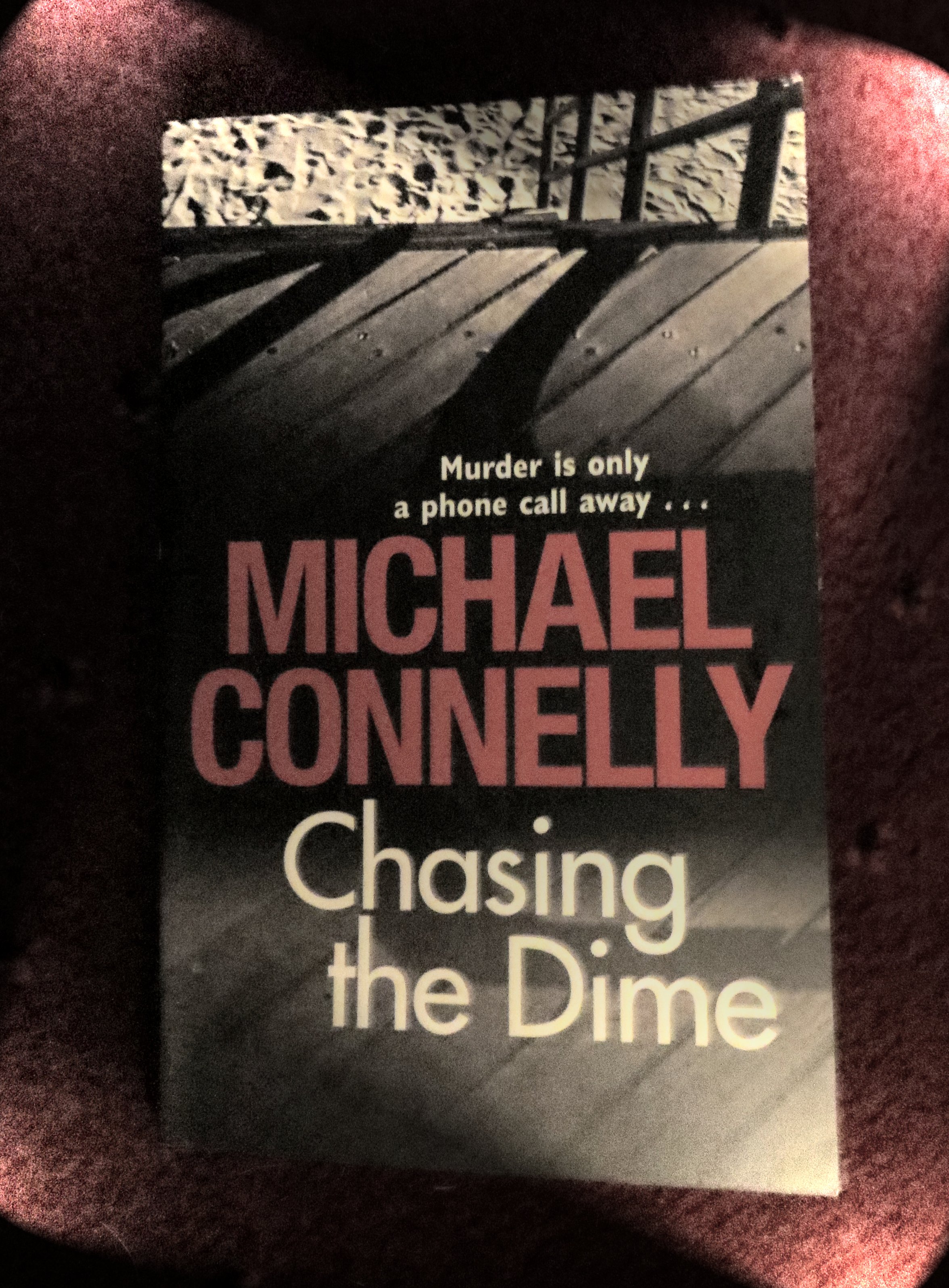
I am going to start this review with a confession: although I have been given several books written by Michael Connelly and even lent them to my friends, Chasing the Dime is the first one that I have read  – and, ironically enough, I bought it at a book sale in a Co-op supermarket near Oxford, because I’d run out of things to read.  Normally, I wouldn’t buy books from a supermarket because I believe in supporting local bookshops.  So, two firsts in one go!

The reason I’ve not read a Connelly novel until now is that, and my ignorance is pretty unpardonable, I’d been led to believe him to be the kind of blockbuster author in whom I’m least interested: big-picture, change-the-world sort of stuff (x saved the world single-handed from the next atom bomb, Hermann Göring, Nuremberg and suicide notwithstanding, has been alive and well in South America for the last sixty years and running drug rings, that sort of thing).  Chasing the Dime is not like that at all.  Instead, it is one of the most perfectly-crafted murder stories that I’ve ever read.

There’s the background, for a start.  The hero, Henry Pierce, runs his own R & D company.  It is conducting research into molecular computing, in a highly competitive sector where several other companies are also in the race to crack the conundrum.  Their mission: to create a computer the size of a dime.  Hence the title – but the title also reflects the company’s need to find sponsors and also, sadly, refers to why beautiful young women are forced to prostitute themselves.  (The title is one of many aspects of the book that works on several levels.)  I’m sure that when Connelly wrote this novel (it’s now well over ten years old), there was a race to bring such a molecular computer to the market in just the way that he describes, but it says a lot about his talent as a writer that, although during the course of the novel he reveals many facts about the complex technology involved (and has clearly mastered what these are), he never obtrudes knowledge on the reader in such a way that this information seems to be anything other than an integral part of the story.  Few writers can pull this off.

Then there’s the plot.  Henry’s obsessive research has just caused his girlfriend to break with him.  Henry moves into a new flat, for which his PA acquires a new telephone number.  The problems start straight away: the number had obviously previously been allocated to a call-girl.  Because of certain facts in his past – which Connelly allows to emerge at enigmatic intervals throughout the story – Henry decides to find out the identity of the call-girl and what has happened to her.  Owing to several rash but perfectly understandable (from the reader’s point of view) decisions, he quickly becomes a murder suspect.

I won’t say any more, for obvious reasons.  However, I’d add one further thing: nothing in the plot is incredible; there are no fantastic twists or turns and not much transpires in a way that the reader can’t guess; yet, because of Connelly’s psychological insights and his fast-paced but not too whacky writing, the reader is held, spellbound, until the last page.

I owe Michael Connelly an apology for doubting him for so long.  As it is, I shall do ‘penance’ in the most pleasurable of ways: by reading the rest of his novels in short order.  You will, I’m sure, be lining up to tell me that his Harry Bosch series is a must-read and roundly ticking me off for my shocking prejudice.


It is Christmas Eve, so I’d like to take the opportunity to thank everyone who has read this blog and supported it with so many kind, helpful and insightful comments over the past year.  It has been my very great pleasure to have ‘met’ you in this way and I feel extraordinarily humbled that you have spared the time to take so much interest in me and my writing.  For those of you who celebrate Christmas and for those of you who don’t, I’d like to wish you a very happy and relaxing time and a spectacularly successful New Year – wherever you are and whatever you are doing.  If you are a writer, I wish you some of that elusive luck that all writers need.

P.S. The blog-posts have been a little erratic in recent weeks, as I’ve been away a lot. I shall try to do better as my main New Year’s resolution!  However, I’d like to share with you that the day-job is taking me to China in the first full week of the new year, so they may be a bit thin on the ground then – though you can be sure that I shall recount my experiences in as much detail as you can take afterwards!

‘The Lord is a shoving leopard’: the humour of Gervase Phinn

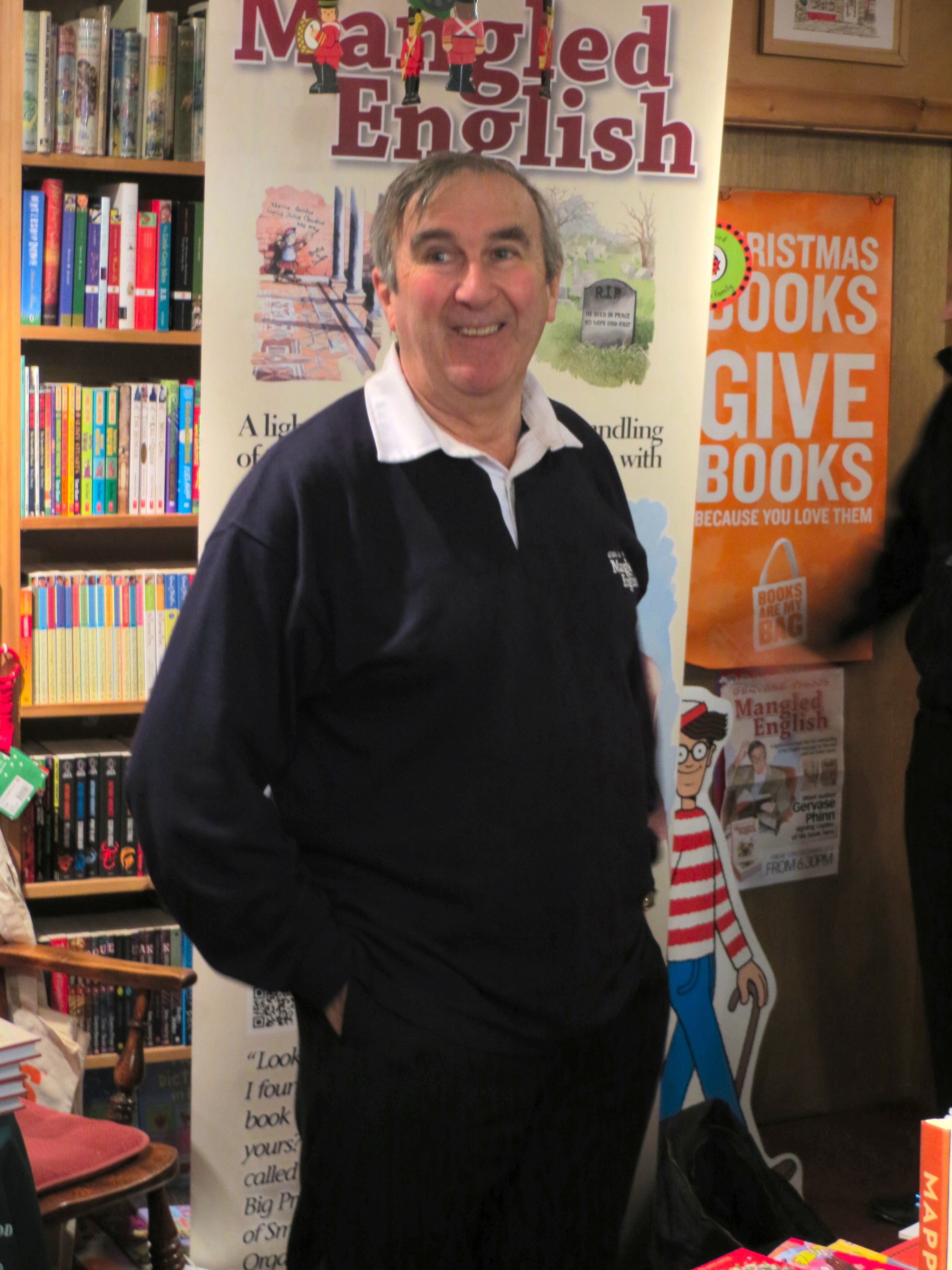
With Gervase Phinn

With Gervase Phinn

Gervase Phinn at Rickaro Books

Gervase Phinn at Rickaro Books

Last Friday, I spent another fascinating evening at Rickaro Books. I’d been looking forward to it with great anticipation since the Ian McMillan / Tony Husband event that took place several weeks ago. This time, the author was Gervase Phinn. I hadn’t met him before – though my husband is very familiar with his books – and he did not disappoint. The event was extremely well attended: I calculate that at least forty people managed to squeeze into this distinguished but pocket-sized bookshop.
He focused upon his latest book, Mangled English, which delights in highlighting the way we all misuse the language (I certainly do!), and touched upon such matters as mis-spellings, Spoonerisms, Malapropisms and howlingly bad verse (guilty!). He also told many amusing anecdotes about people he’d met. He now spends some of his time as a performing artist on cruise ships, so the tales he had to tell were varied. However, the one that I liked best – although it was also one of the most poignant – was the one about the old people in a care home. One of them was actually his mother-in-law. She was obviously out of the conversation (he was very sensitive in the way that he talked about her dementia), but he derived real humour from recounting the reaction of the old man who was sitting next to her when he was asked his name. He wouldn’t give it and, when asked whether he had played any part in ‘the war’, would only reply ‘I might have done’. Getting no other response from him, Gervase turned to his mother-in-law and asked her name. While she was struggling to remember it, the old man suddenly burst out: “Don’t tell him, Pikey!”
In a more serious vein, Gervase extolled the virtues of encouraging children to read at a young age – as he had himself been encouraged as a boy – and deplored the government’s ever-changing education strategy. As a former inspector of schools, he is better qualified than most to do so. He took an especial interest in the children at the event.
It was a privilege to meet him and I had two opportunities to talk to him. However, the best part of the evening for me was actually being at Rickaro Books itself, looking at the excellent rare books collection that is on sale there and drinking mulled wine – it was the gateway to Christmas for me, in fact. The experience was made even better by being invited to join Richard and Carole Knowles, the proprietors of the bookshop, for dinner afterwards in their local Italian restaurant . As I’ve said in a previous post, Richard and I go back a long way, and it was very good to have the opportunity to listen once more to his (sometimes elliptical, always amusing) take on life, the universe and bookselling… and to get to know Carole a little better.
Watch this space: I’m sure that there will be more posts about Rickaro Books in the future. Should you ever be in Horbury, I wholeheartedly recommend that you take a detour (it won’t be much of one, as the bookshop is in the very heart of the town) to pay a visit.

If I could return to the past, I’d have no desire to be a great lady…

Rufford Old Hall

Rufford Old Hall

Rufford Old Hall - Great Hall roof timbers

Rufford Old Hall – Great Hall roof timbers

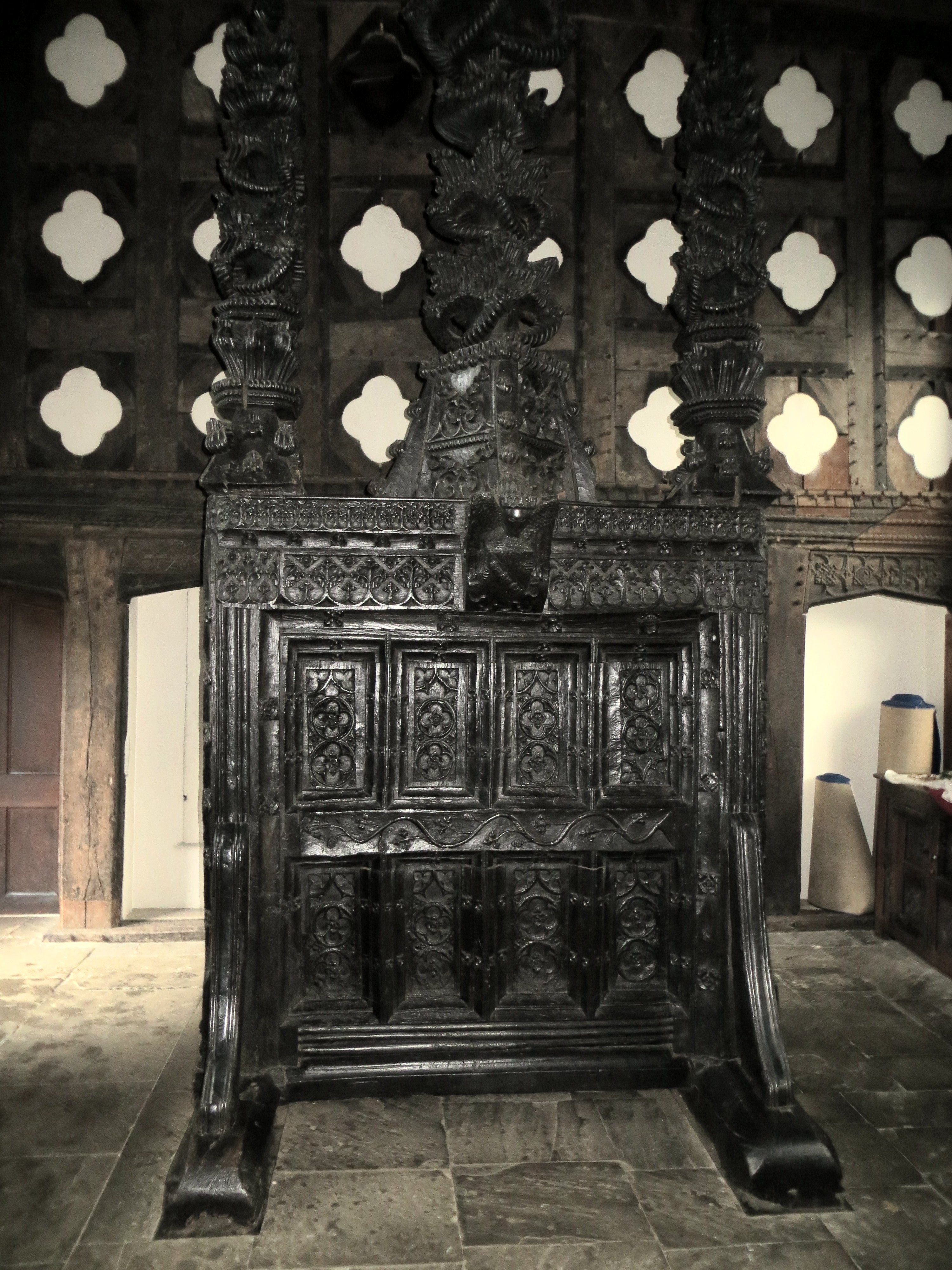
Rufford Old Hall - Great Hall screen

Rufford Old Hall – Great Hall screen

Rufford Old Hall - Great Hall screen - fingers!

Rufford Old Hall – Great Hall screen – fingers!

After bouncing round the country like a yo-yo for ten days, penetrating some of the less glamorous outer reaches of bookselling (Don’t ask: it’s nothing you’d ever see on the high street!), on Saturday we spent another wonderful day with Priscilla and Rupert in Lancashire. This time our walk – with two frisky dogs – entailed walking across fields and along a canal bank to Rufford Old Hall, a fine Tudor building.
This in itself was a great treat. An Elizabethan manor-house, it made me realise that, if I could return to the past, I’d have no desire to be a great lady (fat chance – I’m sure all my ancestors were peasants, probably of the most primitive kind; my family name actually means ‘sheep-shearer’ and we are all squat, blue-eyed Saxons, not tall, interesting Normans, fiery, red-haired Danes or exotic, white-blond Flemings).
But I digress. I’d have no desire to be a great lady, at the mercy of political fortune, likely to have a husband who would either leave me for long periods while he fought in wars (expecting me on occasion to raise militia to protect our estate), or be obliged to entertain the monarch on a tour of ‘progress’ and therefore invite my own financial ruin. It would have been much pleasanter and more settled to have been one of the fortunate Hesketh family, who owned Rufford for many generations, and lady of the manor of a substantial but not pretentious house like theirs.
When we visited, the upstairs of the house (which is now owned by the National Trust) was being renovated and therefore out of bounds, but the downstairs, including the wonderful Great Hall (which is not too ‘great’ to be cosy when lit by an open fire) and various rooms of later dates, was open to the public. I was especially fascinated by the screen at the entrance to the Hall, the only survivor of its kind, which acted as a joint draught-excluder and obscurer of servants bearing away unsightly dirty dishes. It is a beautiful piece of carved oak, complete with quirks that say so much about the early Heskeths who commissioned it: for example, one of its panels is upside down and one of the angels it depicts has a supernumerary finger: A tribute to Anne Boleyn, also supposed to have had this ‘blemish’ (which was later produced as evidence that she was a witch)? Or, more probably, an observance of the mediaeval belief that no work of art should be perfect, lest it offend God? Also intriguing was the signature carved in the original Elizabethan glass of the bay window of the Hall, dated 1513 (so it was five centuries old this year). I’d love to have met its author!
The National Trust guardians of the Hall were sympathetic, cheerful folk, not at all forbidding or restrictive, as some of their counterparts at other NT houses have been. They’d decked the Hall to celebrate Dickens. Placards with quotations from A Christmas Carol were everywhere, and the guides themselves had dressed up in mid-Victorian garb.
And so back to Priscilla and Rupert’s, to sample their sloe gin and blackberry brandy: the good life, indeed, and the best foretaste of Christmas we could ever have dreamt of! Not forgetting a trip to see the huge willow tree that the weather had part tumbled and Rupert had finished off, at great risk to his life, while Priscilla was in bed with ‘flu. What is it about men and trees? Never mind OK lumberjacks in high heels: it seems to me that every man contains within his soul a death-wish – not just a desire to perish in any old way, but by having a tree fall on him, or (to me) worse horror, by means of a chain-saw or axe. Fortunately, although Rupert fell fifteen feet, he survived with a few scratches… and suffered more from the (just) excoriation of Priscilla’s wrath.
I feel I haven’t done full justice to male folly and trees in this post: I’ll come back to it again. Remind me to tell you of a monster ‘useful piece of hardboard’; of Fred (of bird impersonation fame), thirty feet up a ladder, his grasp firmly around the top of a tree he was in the act of chopping off; of Ken, who made our dining-room table, almost sawing off his index finger ‘by mistake’!

O' Canada

Reflections on Canadian Culture From Below the Border

oliverstansfieldpoetry

A collection of free verse poetry.

Easy Michigan

Moving back home

Narrowboat Mum

Fun, Frugal and Floating somewhere in the country!

Maria Haskins

Writer & Translator

lucianacavallaro

Myths are more than stories

Murielle's Angel

A novel set on the Camino de Santiago

jennylloydwriter

Jenny Lloyd, Welsh author of the Megan Jones trilogy; social history, genealogy, Welsh social history, travel tales from Wales.

Chris Hill, Author

I'm Chris Hill - author of novels Song of the Sea God and The Pick-Up Artist

littlelise's journey

Sharing experiences of writing

unpublishedwriterblog

Just another WordPress.com site

Les Reveries de Rowena

Now I see the storm clouds in your waking eyes: the thunder , the wonder, and the young surprise - Langston Hughes

Diary of a Wimpy Writer

The story of a writer who didn't like to disturb.

Rebecca Bradley

Murder Down To A Tea

Helen Carey Books

Helen Carey Books