

Snapshot of a diner in Barcelona…

As someone who has written at some length about birds – the herons and curlews of Lincolnshire; the pheasants that go in fear of their lives during the winter months in the Pennine village in which I live – I’ve been very interested in the bird life of Barcelona. Most of the birds here are exactly what you would expect to find in a major city with lots of parks which is also a Mediterranean sea-port. I’ve seen gulls and feral pigeons, sparrows and ducks a-plenty; swifts swirling around the buildings: in other words, the same birds that I should encounter in similar habitats in England at appropriate times of year. I have, however, been amazed that the many palm trees of Barcelona are filled, not with the melodious song of the blackbird and song-thrush, but with the raucous cry of the parakeet. These piratical birds swoop screeching down upon the crusts and pizza-ends discarded by tourists and, despite their inferior size, give the pigeons a fairly vicious dusting down if they try to put up a fight. They’re nothing but semi-tropical thugs, really, but I can’t help feeling a sneaking admiration for them, even so. It’s not just that they live by their wits, but also because they do it in such a brazen way. I suppose that in one sense they have no option: gorgeous in luminous lime green, they can hardly make their livelihoods by stealth. There is something entertaining about the fact that they carry their finds up to a safe branch and, clutching the morsel in one foot, nibble delicately at it like over-dressed and picky diners on the terrasses beneath them.
Exquisitely conceived…

As it has been some time since I posted about a grand sculptural project, I have decided to take advantage of a current opportunity to rectify matters. I’m enjoying a brief respite from the pressures of work and find myself in Barcelona, where today I have visited the remarkable Casa Milà, better known perhaps as La Pedrera, the apartment building designed by Antoni Gaudí and finished in 1910.
For someone who spends a great deal of time reading and thinking about the dark side of life, walking into this magnificent architectural accomplishment is a spirit-lifting contrast like the gladdening of the heart that comes with the warmth of the sun after one of the bleakest winters I have ever known. And Barcelona is blissfully warm, too, its trees already covered in fresh green leaves and its beaches full of sunbathers.
Those of my readers who have toured La Pedrera will, I hope, indulge my hugely enthusiastic response to Gaudí’s work here. All ripples and curves and fanciful challenges to the dismal straight line, the building is, in fact, a temple to the harmony of art and practical purpose. Its roof, a miraculous sculptural garden of delights, tu rns chimneys, stairways, ventilation ducts and water-management into elegant figures and organic forms, rising and falling above the exquisite catenary arches of the loft beneath. Gaudí designed this latter to be insulation for the apartments from both the heat of summer and the cold of winter. Following the loft galleries around the two internal courtyards (which, lower down, allow natural light to enter the rooms), has the feeling of walking around the caves of some grand champagne house, though windows at intervals permit light and air to enter.
The apartments themselves, one level of which is open as a museum to visitors, are still occupied by private families and various businesses, in keeping with the original intention. I could live here! Original parquet and marble flooring, completely flexible space (the pillar and steel beam structure means that none of the internal walls is load-bearing) and an almost complete absence of four-square normality, together with calm natural lighting, all inspire a sense of peace and joy. I do not exaggerate.
The views from the roof are spectacular panoramas over Barcelona, to the hills and to the sea; those from the windows are down to either the cool interior courtyards or along the bustling streets outside. Balconies, with their hallmark black and scrolled wrought iron balustrades, encourage a desire to watch the world go by below.
I spent some happy hours there today, leaving with a lightened heart and the strong sense of well-being that comes from exposure to something incredibly beautiful and superbly designed. La Pedrera is a marvel.

BOOKS ARE MY BAG: WOW!
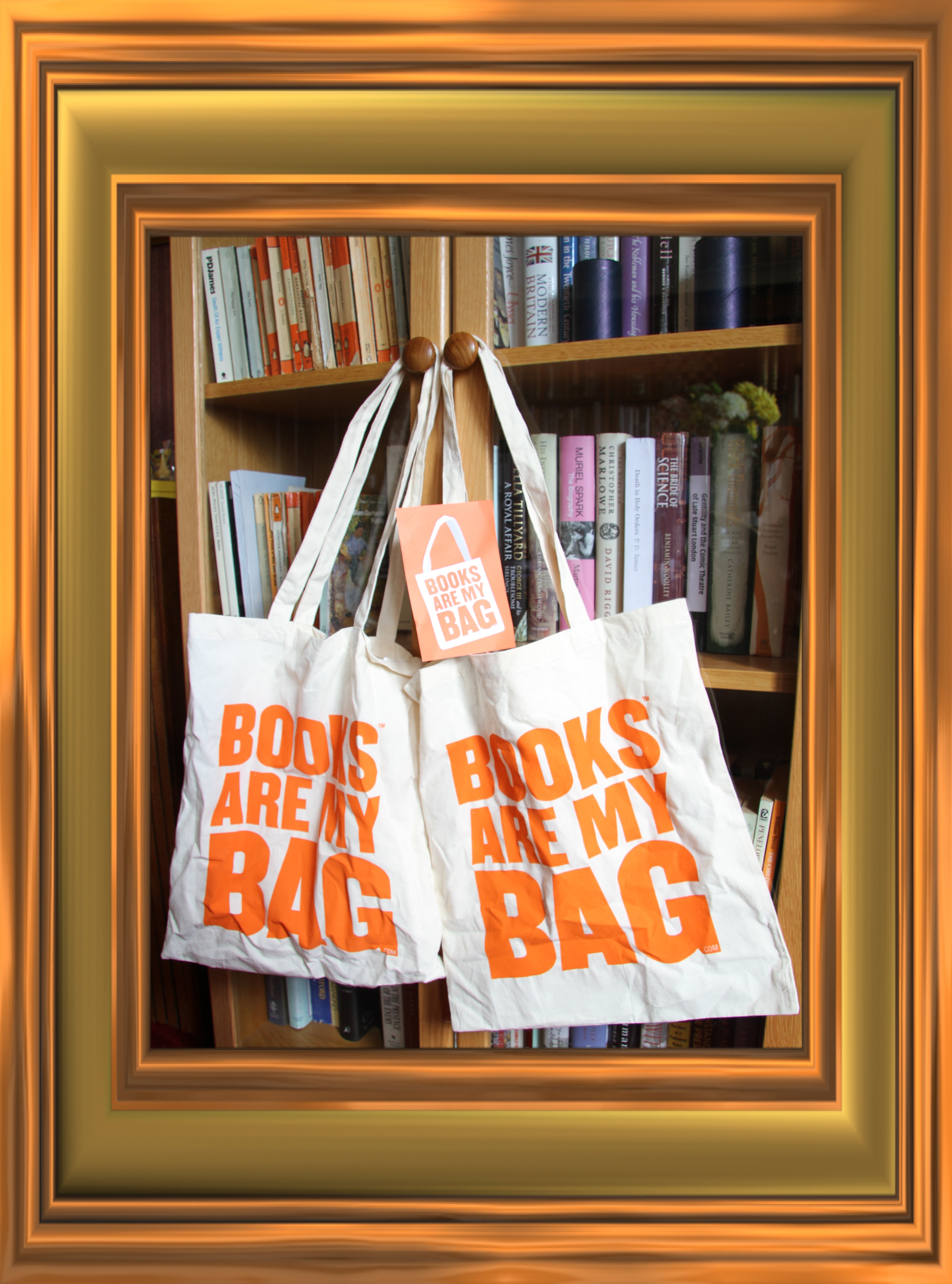
As a former bookseller, my heart was gladdened by attending the announcement of the Books are My Bag campaign, which for me was the most exciting single event held at the London Book Fair this year. The campaign has been devised by M & C Saatchi and is entirely based on a single, simple, very effective message: that the passion for books and bookshops is a precious part of our national heritage and something that we should cherish, celebrate and promote. It is a campaign of perfect solidarity: all booksellers (whether they belong to chains or independents) and publishers are uniting with one voice to celebrate the pleasures and cultural importance of the high street bookshop.
Tim Godfray, CEO of The Booksellers Association and Richard Mollet, CEO of the Publishers Association, both spoke at the event. They were joined by some industry legends, including Patrick Neale, currently President of the Booksellers Association and joint owner of the marvellous Jaffé Bookshop in Oxfordshire (in a previous life he was the inspiration behind the equally wonderful Waterstone’s Sauchiehall Street bookshop in Glasgow) and Gail Rebuck, Chair and CEO of Random House (who, like Dame Marjorie Scardino, has proved that women can get to the top of large corporate publishing houses and stay there).
Patrick’s message was strong and direct. He made the point perfectly that there is far more to the experience of buying a book than receiving a brown cardboard parcel through the post: “We all know that there are many ways to buy and sell books, but what Books are My Bag captures and celebrates is the physical; the simple truth that bookshops do more physically to let people enjoy their passion for books.” Gail Rebuck said: “In these challenging times for the UK High Street, it is terrific that a world-renowned advertising company – M & C Saatchi – has devised such a positive campaign for all booksellers.”
In keeping with its message about the physical presence of bookshops, the campaign will feature strong branding and a very distinctive prop: a cloth bag with the words BOOKS ARE MY BAG printed on it in capitals in neon orange. These bags will be given to customers by bookshops across the country when the campaign is launched on 14th September. I wasn’t sure about the colour when I first saw it – and I was hugely impressed that Tim Godfray was prepared to spend the whole day wearing a matching T-shirt emblazoned with the orange slogan. However, throughout the Book Fair, I spotted people carrying these bags (the BA gave them out daily) and I concluded that they are very effective indeed. As Patrick put it, “This is the first time anyone has needed sun-glasses when inside the London Book Fair.” I have acquired two of them, one from the BA stand and one from the event, and I shall carry them with pride throughout the summer.
Anyone reading this blog who is interested in knowing more about this, here is your link Books are My Bag to its dedicated website.
I love bookshops!
A London Book Fair 13 seminar about using social networking to create author presence


I cannot miss the opportunity to comment in today’s post on the social networking session yesterday morning at the London Book Fair. First, may I thank the very many people who attended and made the event very special indeed; you were a lovely, attentive audience and we all valued your interest and contributions.
Secondly, I should like to thank Elaine Aldred (@EMAldred, Strange Alliances blog), who very generously agreed some time ago to chair this session and, with her characteristic attention to detail, introduced the panel and provided a succinct summary of the key points arising, as well as modestly managing us and our timekeeping!
I was very pleased to meet and honoured to join my much more experienced social networking fellow panellists, Katy Evans-Bush @KatyEvansBush) and Elizabeth Baines (@ElizabethBaines), and to be able to listen to the social networking supremo, Chris Hamilton-Emery, Director of Salt Publishing (@saltpublishing), all of whom provided different perspectives from my own. However, though we may have addressed in various ways the topic of how to make the most of the best of social networking, I felt that we were un
 animous about the terrific value of what Chris called ‘the confluence’ of such media as Twitter, Facebook and personal blogs in creating author presence and profile. I believe that we also affirmed the essential need to be ourselves (however uncomfortable it may initially feel to present our private side, as Elizabeth very pertinently explained) and to interact with the people we ‘meet’ in a genuine way. We shared the view that ramming our books down the throats of our online audience in a ‘hard sell’, as some people do, is counter-productive; it is much better for us to engage with others in discussion of the things which matter to us, such as the business of writing, literature, topical issues and so on. Katy pinpointed the effectiveness of social networking in creating a global family of friends and followers, something we also all felt.
All in all, the session emphasised that participation, helping others, reciprocating generosity and showing real interest in people whom we come to know online are crucial to creating a lasting author presence. It is really important that authors recognise that they need to have such a profile; with it, books certainly do sell and, as Chris put it, without it they don’t.
Finally, we all accepted the inevitable consequence of managing all of the personal interactions online: it is extremely time-consuming and we have to find our own ways of handling that; if we succeed, the benefits are very clear to see.
My thanks again to all concerned in what was for me a very memorable occasion.

It’s tomorrow! Making the most of the best of social networking…

Today’s post is a repeated ‘shout-out’ about tomorrow’s Salt Publishing seminar at this year’s London Book Fair, when there will be an opportunity to listen to Chris Hamilton-Emery, founding director of this world-renowned independent publisher, and three of its authors talk about how to use social networking to promote books and good writing. There will be a question-and-answer session to develop discussion about the topic How to Build Social and Brand Equity on a Shoestring. Elaine Aldred, an independent online reviewer, will chair the occasion.
Date: Tuesday 16th April 2013
Time: 11.30-12.30
Place: Cromwell Room, EC1, Earls Court
I’ll be joining Katy Evans-Bush, writer and editor, and Elizabeth Baines, novelist and short story writer, to offer some personal experiences of social networking as a means to achieving an online bookworld presence. Readers of this blog will already guess from previous posts here about both Salt and social networking, how much I personally value the opportunities provided by the Internet to meet and mingle with booklovers across the world. I have also made it very clear just how proud and privileged I am to be supported as a writer by Chris Hamilton-Emery and how exciting it is to be associated with an independent publisher with the finest of literary lists.
I hope to become real to at least some of my ethereal friends at the London Book Fair this year!
I’d kill for a slice of coffee and walnut cake…

Get stuck in to a good book…
On Thursday, I had a conversation with a librarian in Doncaster who would like me to take part in a literary festival that will be run in May by the Doncaster Library Service. After further discussion, we decided that it would probably be more effective for everyone if, instead of participating in one of the library-based events, I were to run a couple of writers’ workshops, one at a local school and one at an open prison. I warmed to this idea immediately; as a bookseller, I have supplied books to two open prisons; more recently, I have read the MS of a fascinating memoir written by a writer-in-residence who works in a prison in the North-East. I shall be happy to work further with the prison community if I can be of use. I’ll write more about these two events nearer the time.
Before we decided on this plan of action, when the idea was still that I should participate in a library-focused event, our chat had been about what sort of writer we should choose to present with me. To my initial surprise, she suggested a cookery writer, but, the more I thought about it, the more appropriate I thought that this was. Aside from the interest in food (among many other subjects) that both this blog and the many other crime-writing blogs to which it has been introduced (and introduced itself) have expressed, now that I’ve thought about it, I think that a crime writer and a cookery writer have a lot in common.
The similarities are there if you look for them. Firstly, and of most importance, we are both genuinely interested in the craft of writing: although the crime writer’s main purpose is to devise an interesting plot peopled with intriguing characters and the cookery writer’s is to develop practical recipes that people really want to try out, the means, for both of us, is as important as the end. In a certain sense, we are both genre writers, but the style and standard of the writing is important to us; mostly we don’t deserve to have the word ‘genre’ applied to us in a condescending or pejorative way (though we have both suffered from this). I don’t deny that there is huge variation in the quality of writing accomplished by both crime writers and cookery writers, but at our best we produce classics. When my friend Sally gave me How to Eat and The Domestic Goddess as a very generous birthday present ten years ago, I was both amazed and entranced by Nigella Lawson’s wonderfully fresh and funny prose style. You may gorge yourself upon her books both literally and metaphorically, delighting in the sensual language and wonderful photographs even as you assemble the ingredients for a luscious cake and anticipate eating it later. The best crime novels are like this, too: each page not to be gobbled down quickly because it gets you a little closer to the denouement, but lingered over and savoured for the pleasure that the words bring of themselves.
Similarly, a well-set-out recipe is like a well-crafted short story. It tells a tale, from the beginning, when there might be a note on some kind of utensil – a springform cake tin, for example, or a coeur à la crème ramekin – to the afterword, which might offer serving suggestions or other tips once the culinary masterpiece has been completed. Conversely, a poorly-conceived recipe, one which perhaps is not clear about quantities or method, disappoints and exasperates just as much as a badly-written thriller. And, whilst I don’t think that it is possible to ‘learn’ writing step-by-step in quite the way in which you follow a recipe, writers can certainly give others pointers to how their writing can be developed – hence the workshop idea. Conversely, an inspired cook will add some special twist or variation to a recipe to make it more delicious and uniquely his or her own.
There is one point on which we will always be at opposite poles, however: cookery-writing is about celebrating life and that which sustains it. Food and the sharing of food is a civilising influence. Almost every great nation has developed its own cuisine. Crime writing, on the other hand, is about what threatens a civilised existence, sometimes including life itself: a sobering thought, yet, as I’ve said before, the end of a crime novel usually brings with it some kind of catharsis and a feeling that all is right with the world again. And along the way, both heroes and villains can enjoy some excellent food. From the Victorian victuals described by Wilkie Collins to DI Banks’ pub lunches and Paola Brunetti’s elegant meals en famille, crime-writing owes a lot to cookery. I’d better not embark upon a consideration of how cookery-writing might be indebted to crime; otherwise my imagination might run riot!
Let’s consider the general good of the English-speaking world…

As I’ve mentioned, I’ve just spent several days at a conference – the sort of event where I meet people whom I haven’t seen since the last conference or, in some instances, for two or three years before that. If you’re British (as I am), good manners dictate that making the courteous enquiry ‘How are you?’ at such meetings is inescapable. Naturally, such etiquette under such circumstances tends to be more for convention than for information. The answer that I dread getting back is a prolix account of all the ailments that the acquaintance has suffered in the interim (‘My sciatica hasn’t been playing up lately, but I had ’flu really badly this winter, despite getting the injection, and I’m still not feeling …’ etc., etc.), the speaker (and listener) obliged all the time to stand in a hot, crowded, noisy room and drink outsize glasses of red wine, on the whole coping remarkably well with his or her various infirmities.
The next worst response is short but irritating: ‘I’m good’. It’s an expression that I first encountered about twelve years ago, interestingly also at an event. I had to think about what it meant for a moment. Clearly an American import, as a stock response it gained ground slowly at first and then with rapidly-increasing speed. I shall come back to it in a minute.
‘Good’ is a slippery word. Used as an interjection, it can variously signify an approving verbal nod, a comment on the speaker’s views or performance, or just something to say – a more positive alternative to ‘Oh’. Its use as an adjective is familiar to everyone (though I’m sure there are many gradations of meaning from individual to individual when saying that something is good), but I must have been about forty before I realised that good in the singular is also a noun. I discovered this in rather traumatic circumstances, having been required to teach a first-year postgraduate class basic economics as part of an MBA course, even though economics was a subject of which I had been entirely innocent until that moment. (Don’t ask – it involved university in-fighting, a topic on which I can wax at length in very bitter and twisted fashion!) I still dislike this use of the word. I don’t mind ‘goods’ in the plural – ‘goods train’, for example, is a term that appeals with its expansive connotations of plenty; but ‘a good’? It is too abstract, too pedantic, too stuffy. To me it represents a kind of emotional shorthand, like being given a plastic token instead of a gift.
Then there is ‘goody’ – as in sweets (‘goodies’) and also as someone who is sickeningly good (Goody Two-Shoes). It was Arthur Miller who taught me (in The Crucible) that Goody was originally an abbreviated version of ‘Goodwife’. The male equivalent was Goodman, but this does not seem to have survived in any modern context. I don’t like Goody as an alternative to Mrs – or Mistress, as I suppose it was then. It’s too oppressive, maybe too exclusive – it was a term that belonged to Puritanism. (Miller, of course, exploits the irony of this.)
And so I return to ‘I’m good’. What is it about this expression that makes it so objectionable to me? I think it’s because it has a number of undesirable overtones: it seems prickly (‘How impertinent of you to ask’); defiant (‘Why would you think I was anything other than fine?’) and superior (‘Everything about me is excellent. What about you?’). It also involves incorrect usage, judged by UK English standards, anyway. When offered it, I am very tempted to reply, “Oh, really? I had always considered you to be very wicked and bad!”
Good, that’s sorted. I rest my case.
Balmy Bournemouth: edgy enough for murder? At the weekend, maybe…

Classy Bournemouth
I find it ironical that, in one of the coldest springs on record, I have already visited five seaside resorts: Robin Hood’s Bay, Whitby, Brighton, Cromer and now Bournemouth. Temperatures were low during all of these visits, but cold comes in many guises, each one having a different effect upon enjoyment. Robin Hood’s Bay and Whitby were bracing and sunny; Brighton snowy, with a vicious wind whipping in from the East; the similarly cutting wind in Cromer was accompanied by some sunny intervals; and, at Bournemouth, where I have just spent four days, there was initial bright sunshine, followed by cloud, followed by two days of driving rain and then, just as I was departing, bright sunshine once again, this time accompanied by some real warmth.
By circumstance now something of a 2013 seaside connoisseuse, I’ve had the opportunity to discover that I much prefer the rugged east coast to the smoother, more luxuriant yellow sands and vast bays of the south. To my amusement, I have also been able to verify a colleague’s observation that Bournemouth has two faces: one for the weekend; another for the working week. I’ve stayed there several times before when attending conferences, but this was the first time that I’d needed to arrive at the weekend. I’d previously considered Bournemouth to be a refined sort of place, but I now know that weekend Bournemouth is much edgier.
Arriving last Saturday just before 6 p.m., I decided to make the best of the bright sunshine and still light evening by going straight out for a walk along the promenade. For a while, this was fine: families on the beach were just packing up, a few beach-hut owners were still relaxing in their doorways in deck chairs. Then, suddenly, all of these people had gone and I realised that there was no-one in sight except for perhaps twenty skateboarders, all young men, who had suddenly appeared and were performing expert manoeuvres all along the prom. I probably read too many crime reports in the newspapers, but the thought struck me forcibly that if one of them were to swoop down on me and snatch my handbag and then either sail away or pass it on to one of his friends, I’d have no chance of getting it back. I beat a hasty retreat to the hotel. (Apologies to all honest skateboarders everywhere for this shocking stereotyping!)
This hotel had been booked at the last minute, when I realised that Sunday travel would be impossible. It was all I could get and not of the standard of the conference hotel, to which I moved at the end of the weekend. It turned out to be the sister hotel of the hotel in Torquay on which Fawlty Towers was based. I have also stayed in the latter, and I can say only that both hotels live up to their reputation. The bucket in the corridor, to catch drips from the ceiling (someone had probably let their bath overflow) was dispiriting; the room itself was tiny – I could lie in bed and touch both walls with my elbows. (I smiled at the child’s Z-bed in the corridor: any parents who could get their offspring as well as themselves into such a room must have been contortionists!)
My colleagues were arriving very late, so I ate dinner alone, an uncanny backward time travel to the first restaurant meals that I experienced as an adolescent. The set menu was filled with culinary clichés: prawn cocktail, toasted grapefruit, melon boat, gammon and pineapple, coronation chicken, apple pie and baked Alaska. The couples dining seemed to have passed through some invisible looking-glass from the 1970s. The dining-room was vast: half a football pitch away, a very large group (the waiter called them ‘the tour’ – I think he meant ‘coach party’) erupted into song at intervals. They sang ‘Happy birthday to you’, ‘For he’s a jolly good fellow’, and, for good measure, ‘You’ll never walk alone’. The dining couples stolidly ignored them, the men sipping beer with their food, the women drinking coke.
Outside in the foyer, a group of very young women, obviously members of a hen-party, were about to embark upon a night on the town. They were brightly and uniformly dressed in what appeared to be clinging T-shirt dresses (shorter even than ‘pelmet’ skirts). The bride was instantly recognisable, because she was wearing a veil anchored by a crown of artificial flowers. Two of the other girls were carrying the lower half (i.e., the waist, hips and legs) of a shop-window mannequin, its modesty preserved by the addition of a pair of scarlet lace knickers. They all thought that this was hilariously funny and burst into incontrollable giggles as they carried it out through the door. By chance I saw them returning to the hotel some hours later, by which time the legs seemed to have been mislaid, if you’ll forgive the pun.
I retired to my room to read until my colleagues arrived. When they came, they suggested that we met for a drink, but by this time ‘the tour’ had filled the hotel bar. They were still singing traditional crowd songs, while heavy metal music pounded in the background. We decided to escape to the bar of the hotel next door. The music there was, if not understated, more schmaltzy, and our fellow drinkers consisted mainly of the members of a fairly decorous wedding party. The mother of the bride, dressed head to toe in leopardskin-printed chiffon, was a little the worse for wear. She was semi-recumbent upon a banquette, her eyes closed, her killer stilettoes kicked off. We paid through the nose for cocktails and managed to have a civilised conversation (in the sense that we could hear each other speak) before deciding to return to our own hotel, hoping that it would not be too noisy to get a decent night’s sleep.
Outside it was bitterly cold and very dark. A pergola had been erected between the two hotels, and something was glowing red inside it. Coming nearer, I saw that the bride and groom were sitting there, she still wearing her sleeveless, strapless dress with not even a wrap to keep her warm. Each was smoking a cigarette.
On Sunday, I moved to the conference hotel and the Bournemouth that I have always known sprang back into place again. What does all of this have to do with crime fiction? I’m not sure, but I think there may be the seed of a plot forming in the back of my mind. A silent killer moving between hotels, perhaps, inhabiting two worlds.
Edgy place, Bournemouth…
Gangs on the land…

Still reading about rural life, I was interested that the history of nineteenth century Lincolnshire that I have just completed and a more general book about farm labourers both mention gang labour. Gangs were self-assembled groups, sometimes of both sexes, sometimes consisting entirely of men or of women, who hired themselves out to farmers as an entity. The advantage to them was that, as a group, they were less likely to be exploited; some gangs also contained children (I suspect that, although the gang may have saved these minors from exploitation by the farmer, it was probably less punctilious about appropriating their wages!). However, they were often troublesome and, in Lincolnshire in the later nineteenth century, by-laws were introduced to attempt to curb their excesses of behaviour and to set out clearly the terms under which they could be employed.
Both books say that the practice of developing and employing gangs had become obsolete by the turn of the twentieth century. However, when I was a student in the 1970s, taking summer holiday jobs working in the local canning factory, gangs were certainly still being employed there. They were of three kinds:
A group of twenty or so Maltese women was taken on in the key fruit and vegetable harvesting months of June, July, August and September and they lived in trailers on the factory site. I remember that when I was cycling home in the evening, having worked the four hours’ overtime allowed, I would sometimes meet two of them carrying a crate of beer to share with the others.
Then there was a group of Irish women of all ages, many of them well-educated and some also students. They were boarded with regular factory workers who were prepared to take them in, their keep being paid for by the company.
Finally, there were local agricultural gangs, I imagine of exactly the kind that these history books refer to, who, like other local casual labour, turned up each day and were not provided with accommodation.
The gangs I knew consisted entirely of women. They were extremely rough and foul-mouthed and were usually put to work together; they were shunned by everyone else on the factory floor because they would pick a fight at the drop of a hat. One year, the forewoman (whose name was Dulcie – she had a voice like a squeaking gate) made the mistake of hiring two rival gangs. I vividly remember a woman from each of them fighting one Friday lunchtime, thrashing it out on the concrete floor. It was the most vicious event I have ever witnessed. They tore out handfuls of each other’s hair and scratched faces with fingernails, as well as landing punches. Eventually they were rolling on the ground, pulling at each other’s clothes. One of them ended up shirtless, her white bra bloodied and dusty. Dulcie and one of the male supervisors eventually succeeded in separating them and both gangs were dismissed. I guess that they spent the rest of the summer working on the land: at the time it was still possible to turn up at most farms and work at bean-pulling, potato-picking or bulb-cleaning for cash in hand at the end of the day. With hindsight, my guess is that most gang members were the virtual slaves of a single gang-master, or perhaps a few ‘élite’ overseers. I hope that the practice of gang employment has finally ceased now, but I suspect that the recent influx of immigrants to the agricultural communities of East Anglia may mean that it has ‘enjoyed’ an ignominious revival.
There may have been criminal lapses in some NHS care, but it’s a crime not to praise the NHS for what it does well.
Earlier this week, I was booked into my local NHS hospital as a day-patient in order to undergo a minor medical procedure. I’ve always had excellent service from the NHS and try to take the trouble to say so each time I use it, as it has had, just recently, a lot of bad press. The irreproachable care that it dispenses 95% of the time often fails to get a mention.
Mine was the first generation to benefit from the NHS from birth. Early memories include solemnly hanging on to the handle of the pushchair when my younger brother was being taken to the clinic. (That pushchair was something else: made of a kind of khaki canvas, with solid metal wheels, it folded up crabwise, so that the wheels lay flat under the canvas. It weighed a ton and had been used by several babies in the family. If they’d had pushchairs in the First World War trenches, I’m sure that they would have looked like this. Apologies for the digression!) One of the best things about the clinic was the unusual, NHS-exclusive foods that it dispensed. These included cod liver oil (which wasn’t nearly as bad as people now make out), tiny intensely-flavoured tangerine vitamin pills and, my favourite, an orange concentrate that could be diluted to make a long drink which was called orange juice. It didn’t taste of orange juice, but it was delicious and I’ve never encountered anything that remotely resembled it since. A slightly later memory is of standing in a queue in the freezing cold yard of the doctor’s surgery with all my primary-school classmates, waiting to be inoculated against polio. The injection hurt, but the nurse was at the ready with a twist of paper containing several brightly-coloured boiled sweets for each child.
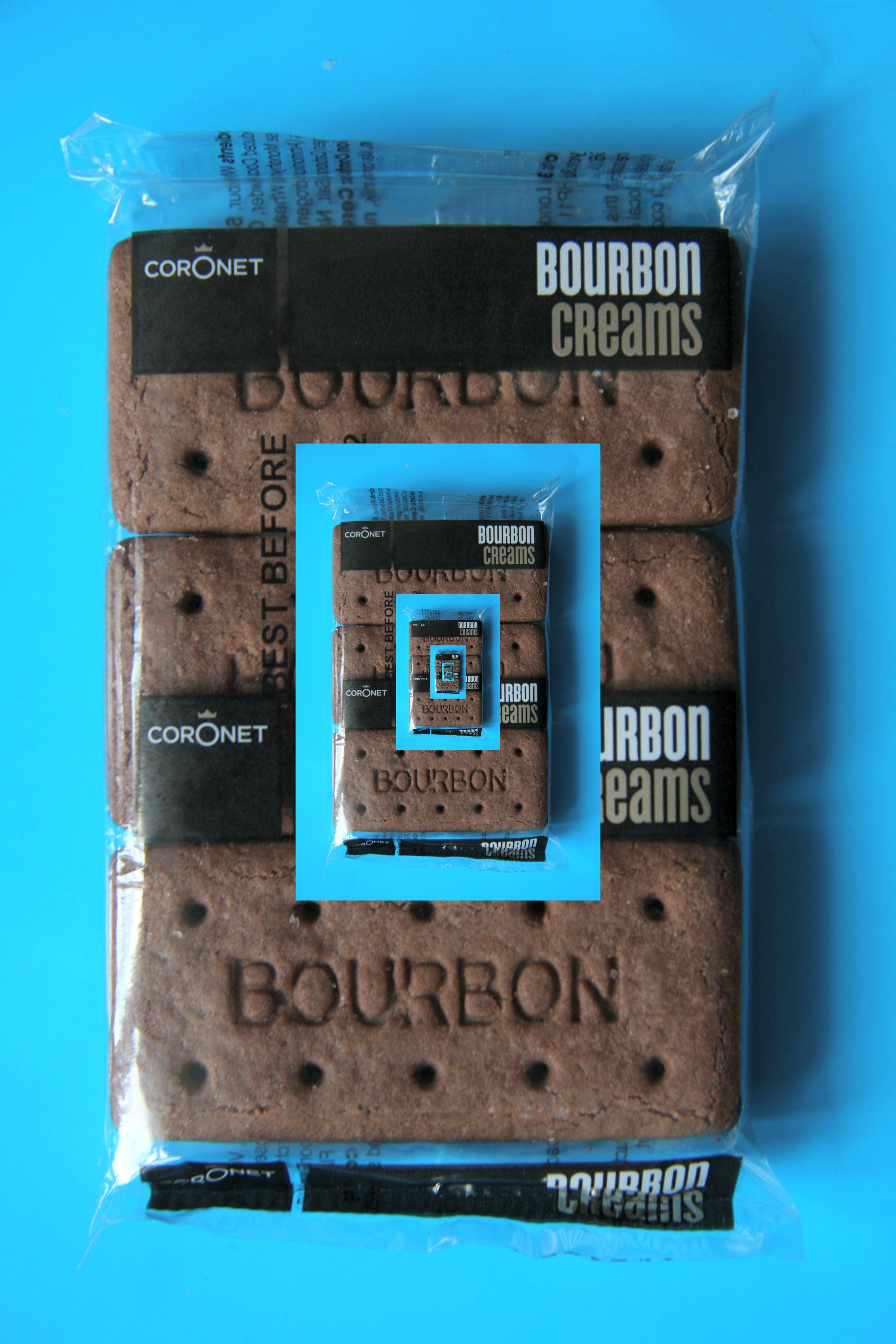
When I came back from the theatre this week, the comfort of NHS comestibles immediately kicked in again. A severe young nurse, who was rather old-fashioned (plump, with dark curly hair and a fresh face, she would have made an excellent poster girl for a 1950s nurses’ recruitment drive), forbade me to get out of bed until I had consumed tea and toast. She returned immediately with two doorstep slices of white bread slathered with butter, a cup of mahogany-coloured tea like that my grandmother used to make – I think you can achieve the desired effect only with industrial quantities of ‘real’ tea-leaves and plenty of whole milk – and a packet of three chocolate Bourbon biscuits. Immediately, I recalled the last occasion on which I had seen such a packet of biscuits, also at an NHS hospital. It had been more than a quarter of a century ago, towards the end of my final ante-natal class at St. James’s Hospital in Leeds. Having spent upwards of an hour with several other imminent mothers, alternately lying on the floor like so many beached whales to practise breathing exercises and grabbing each other’s ankles to simulate contractions (what a joke this was only became apparent some time later), we were blissfully interrupted by the tea lady, doing her rounds with mahogany tea and packets of Bourbon biscuits. The latter tasted all the better for being forbidden – we’d all just been lectured on eating the right foods for ‘baby’ and the crime of putting on too much weight – when this no-nonsense lady appeared and made it obligatory for us to tuck in.
I suspect that one of the reasons why the nation takes the NHS so much to its heart is that it has always managed to embrace this ambiguity between what is ‘good’ for you and what forbidden fruits it will allow in order to cheer you up. Another is that the treats themselves have not changed over the years. Doorstep toast, mahogany tea, packets of Bourbons biscuits – they all belong to the relative innocence of the 1960s, when it didn’t take too much to please.
Stuffed as I was with toast, I couldn’t manage my Bourbon biscuits as well, but I asked the nurse if I could bring them home with me and I certainly intend to enjoy them. In spite of what appear to be thoroughly unacceptable lapses in Mid Staffordshire from the very high standards I have always found in evidence in my visits to hospitals, I shall continue to praise the NHS and the homespun comforts that it offers. If someone could rustle up a bottle of that concentrated orange juice, I would give it a blog-post all to itself.
 Christina James, crime novelist