

On the road to self-sufficiency and thrift…
Since returning from my holiday at the end of July, I’ve spent a considerable portion of my time freezing fruit and vegetables. My husband has been growing produce for several years, a neighbour having generously allowed him to fence off part of a paddock for the purpose. This year is the first year that we’ve had a glut, so, in the interests of both quality of life and thrift (quickly skating over the cost of a new freezer and pasteuriser and their running costs!), I’ve taken up food preservation on an almost industrial scale. I wasn’t going to mention this, as I thought it might bore you, but now I am, since today’s newspaper contains half a page of tips from the wife of the new Governor of the Bank of England on how to avoid spending too much on pencils, folders and pencil cases when preparing for ‘back-to-school’ (she recycles everything: I’d have hated her if she’d been my mother, as I loved buying stationery at the start of a new term, the more colourful and expensive, the better; besides, imagine her embarrassment if one of her kids were to flaunt a pencil with ’10 Downing Street’ inscribed on it! I recommend that she visits Poundland – of which more anon).
So, here are my top five dos and don’ts for successful freezing. I’ve included some advice on harvesting the crop as well – think Nigella Lawson (I wish!) with a touch of Alan Titchmarsh.
DON’TS
- If you have to pass beehives on your way to your vegetable garden, DON’T walk across the front of the hive. This will annoy the bees, particularly if your favourite colour is blue and you are wearing blue clothes, which to a bee is (pardon the simile) like a red rag to a bull. Instead, walk round the back of the hive, even if this means bumping your head on the low-hanging branches of any apple trees that might just be growing there. (In the good life, experience is everything.)
- If a horse should put its head over the fence that separates your garden from the paddock, DON’T offer it a handful of whatever it is you’re harvesting, however much it appreciates your friendship. If you do, next time you look round, you’ll find four or five horses, all of which seem to have the necks of giraffes and the effrontery of Barbary macaques.
- DON’T allow marauders into the kitchen to steal handfuls of the raw peas or fruit that you’ve harvested and prepared. Bolt the door and make them go out and pick their own.
- DON’T bother to blanch peas. They’re fine placed straight into the containers from the pod and you can munch them as you work – after all, you picked and shelled them. (But you will have to blanch beans, otherwise they turn brown).
- It’s a good idea to chill the water that you plunge vegetables into after having boiled them for one minute to blanch; but DON’T do this by adding ice cubes. It is sossy, inevitably causes you to skim across the kitchen on the one that got away and requires a new batch of ice cubes for each lot. Instead, place a freezer brick in the water. My mother-in-law, who never did culinary tasks by halves, once gave me one only slightly smaller than Sisyphus’s rock; but two ordinary ones will do the job.
DOS
- DO use small plastic boxes (rather than bags) in the freezer. They stack better and protect the contents. Recycled Chinese takeaway cartons are excellent (although on no account allow this as an excuse for increased male consumption of chop suey). My rather poncy local supermarket sells boxes at £2 for eight. I bought up all its stock (three packs of eight) and, in desperate need for more, for the first time entered Poundland’s less portentous portals, where I found similar packs of eight costing what it says on the shop. While there, I also bought a book that I’d been looking for about British colonial Africa, which is probably the most unlikely literary find I’ve ever made! Poundland rules, OK? But never let it be said that Christina is cheap, like Maureen 118 212.
- If you think ahead and buy ice cream to accompany your defrosted fruit, DO conceal the tubs behind items unlikely to appeal to the male psyche – e.g., ‘cubed beetroot for borscht’. Understand that this may not be a sufficient deterrent: the tubs may also need booby-trapping.
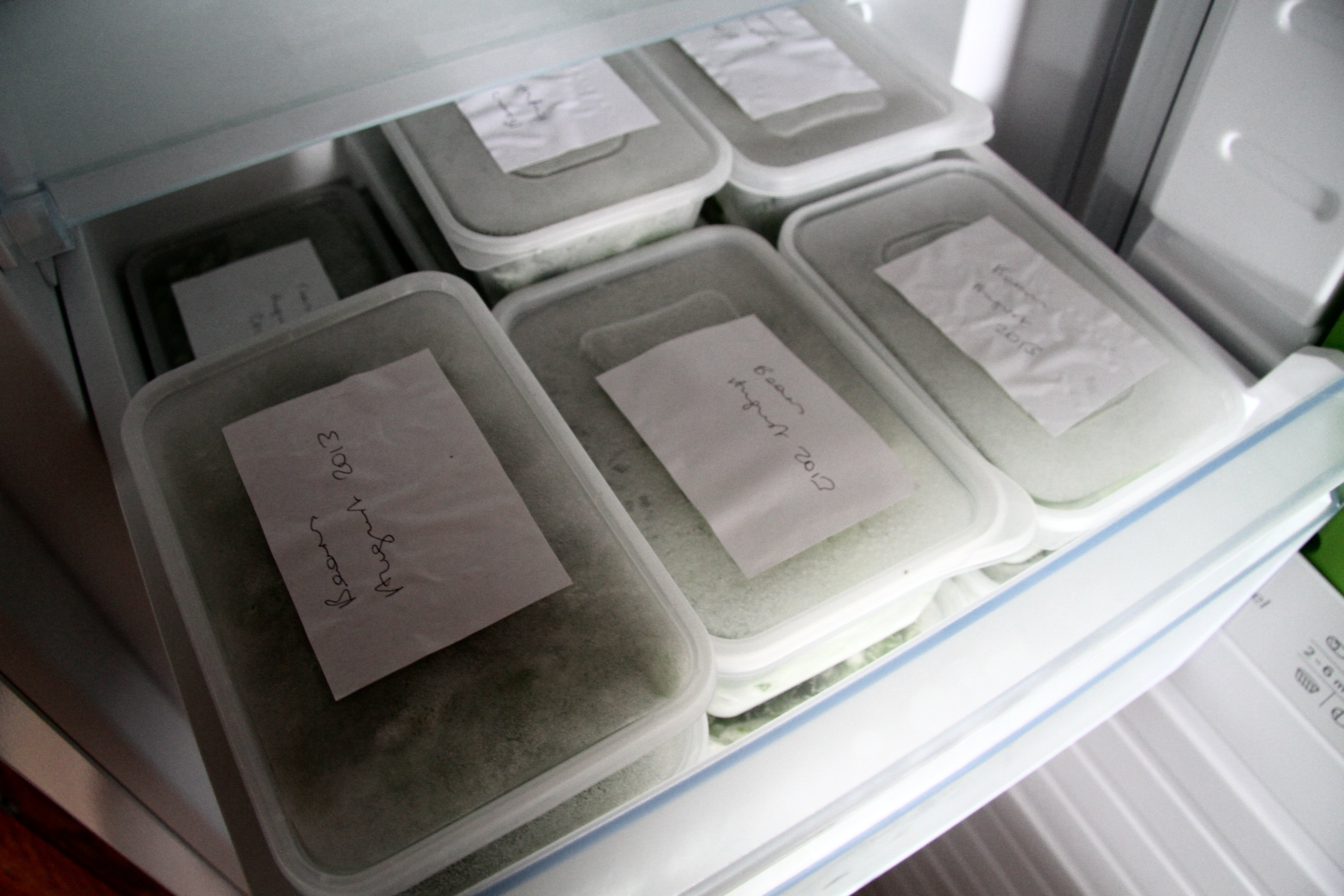
- DO label the boxes with the date and note of the contents – though there is no need to go overboard. Mine say ‘Peas, July 2013’ or ‘Beans, August 2013’. It is a mistake to convert labelling into an art form: “White Lady, sliced. Harvested 6th August at 06.00 on a dewy morning, sun just peeping through. Blanched and chilled between 10.10 and 10.20 hours. Put to freeze at 10.30 hours. Twelve ounces: serves four.” Apart from the time that it takes, it will turn you into a freezer nerd. And no, I don’t harvest beans at 06.00.
- DO fill the freezer pretty much to capacity if you can. I can’t prove this personally, but all the electricity companies say that this cuts down on fuel consumption (and who would doubt their integrity?).
- DO remember how much stuff you’ve got in there, especially when you’re shopping for fruit and vegetables in the winter. You don’t want next summer to come round and find that you’re still eating last year’s produce, having in the meantime absent-mindedly spent a fortune and incurred thousands of airmiles on asparagus from Peru.
Finally, I have one tip that can be either a DO or a DON’T, depending on your point of view:
If you want to pick and freeze blackberries, you may choose to ask your husband to accompany you, as he will probably know all the best places, can reach higher and further into the brambles than you can, and may be impervious to their thorns. However, be aware that he may also be paranoid about other blackberry pickers discovering his favourite spots, especially if these are close by a road. He may therefore expect you to squat down behind the brambles every time a car passes by, in order to avoid drawing attention to your blackberrying activities, which is not only murder on the knees, but will convince your dog and other dog-walkers and their dogs that you are mad. The choice is yours.
I hope that this has been useful… and at least as interesting as pencils. Happy freezing!
Disclaimer: All characters in this post are fictitious. No husbands or mothers-in-law have been harmed in the freezing process. (Though chest freezers do lend themselves to… no, I won’t go there.)
Led to a lovely real place by reading a magical book…

Het Witte Huis

Kubuswoningen

Valerie Poore’s Vereeniging

Open air workshop
Heavy metal

Oude Haven
‘Shakin’ that ass!’
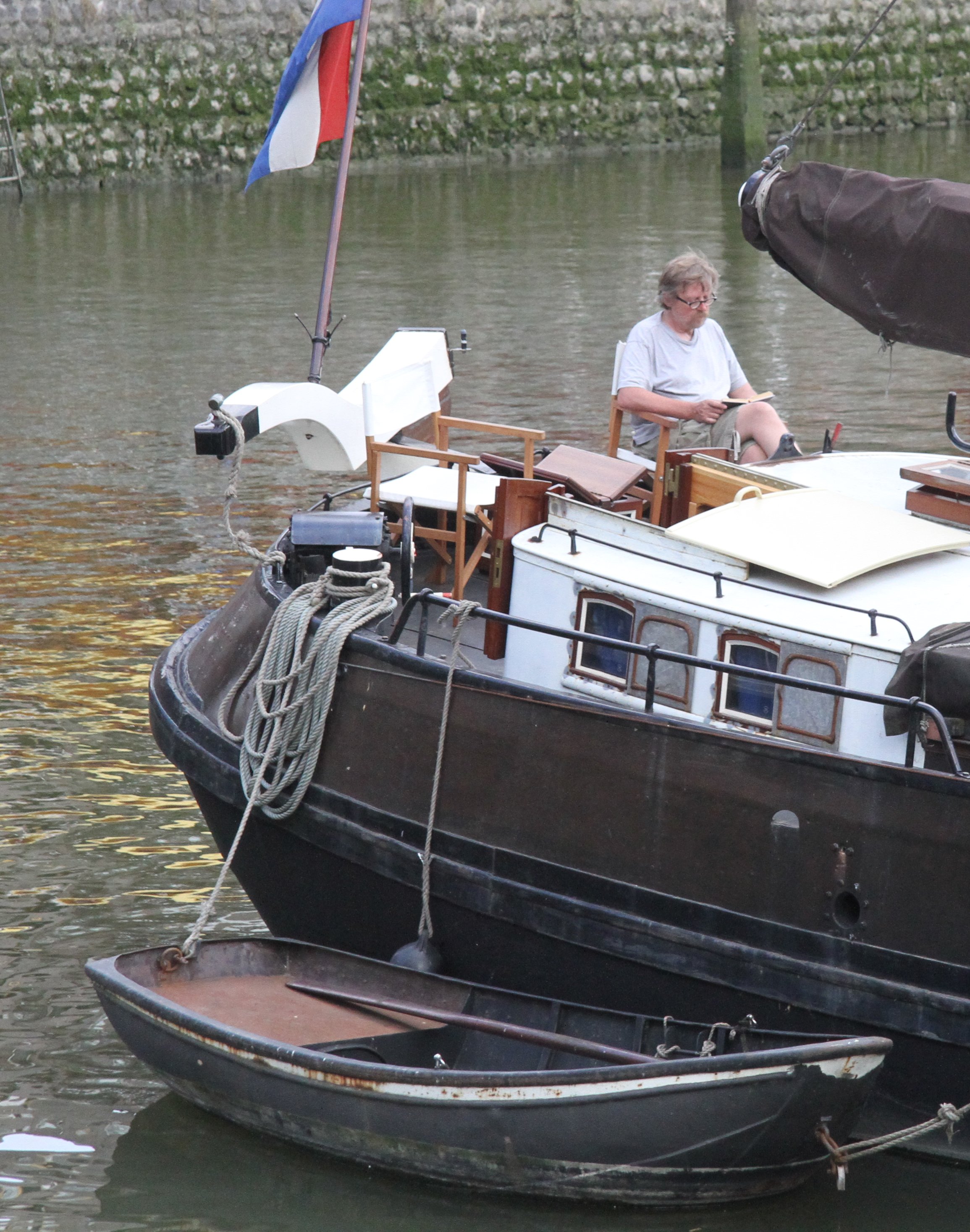
Lots of hard work and just a little rest

Raised from the mud

Along Haringvliet
[Click on pictures to enlarge them.]
Though I’m not a travel writer, I’d like to share a recent visit to a place I had previously never considered exploring, but, having read a book by a Facebook and Twitter friend and seen pictures of it on her pages, I resolved to stop and have a look at her world. I occasionally pass close to this location, but am always en route to somewhere else (Aren’t we all?), with deadlines and people to meet, and it had never before spoken to me with seductive siren tones nor even given me a glimpse of its hidden beauties and charms.
This time, I wasn’t even sure if we would manage the detour, but my husband and I started out early from Germany and covered the intervening kilometres without delay, aided by what he had always previously eschewed but which now proved absolutely essential, sat nav. Negotiating foreign cities, especially those with road systems apparently designed to doom motorists to madness, is always fraught with tension; navigating Rotterdam’s streets may be a piece of coffee and walnut to its residents, but without help or prior knowledge, the new visitor might as well be in the wilderness.
We were heading for Oude Haven, the ‘Old Port’, or the oldest harbour in the city, now home to a collection of historic Dutch barges which Valerie Poore, @vallypee, not only writes about in her books, but has lived on and restored here, for Oude Haven is a working museum with a team of enthusiastic owners, metal- and wood-working skills and the heavy gear to lift huge vessels out of the water to repair and return them to their original state.
I can tell a nightmare story of parking in Amsterdam, which perhaps I’ll relate here some other time, so we were prepared with plenty of small change to feed the greedy meters and defy the wardens, when we eventually turned into Haringvliet, which we had strolled down on Google Maps and determined as our best stopover point for the harbour; however, our research had not been thorough enough, as we discovered that the meters are not fed with money, but with prepaid cards to be got from a range of locations (however, it was a Sunday and we had no means of finding them easily). Then we discovered, by dint of guessing at the truly double Dutch meter instructions that some meters could be accessed by credit card, but we couldn’t immediately see one of those. The masts of the barges and the gorgeous array of moored boats just in front of us seemed to float off into the mists of meter mania.
Rescue came in the form of a bluff but very personable gentleman who had just been buying flowers from the stall at one end of Haringvliet, where, he said, was a credit card meter. Not only did he walk us to it, but used his own card to meet our two-hour stay and accepted our cash payment only very reluctantly. How’s that for hospitality?
The way was now open to explore, albeit quite briefly, the harbour and to locate Vereeniging, the elegant barge belonging to Valerie. The place is a marvel of architecture, considering that most of the area was flattened in WWII. Perhaps most striking is Het Witte Huis, The White House, an art-nouveau skyscraper building designed by architect Willem Molenbroek and erected in 1897-1898, which miraculously escaped destruction in 1940 and which still towers over the port, though it has long since lost its original place as the tallest multi-storey structure; the eye is then ineluctably drawn to the astonishing ‘Kubuswoningen’ or ‘Cube Houses’, the 1984 brainchild of architect Piet Blom, just along the wharf.
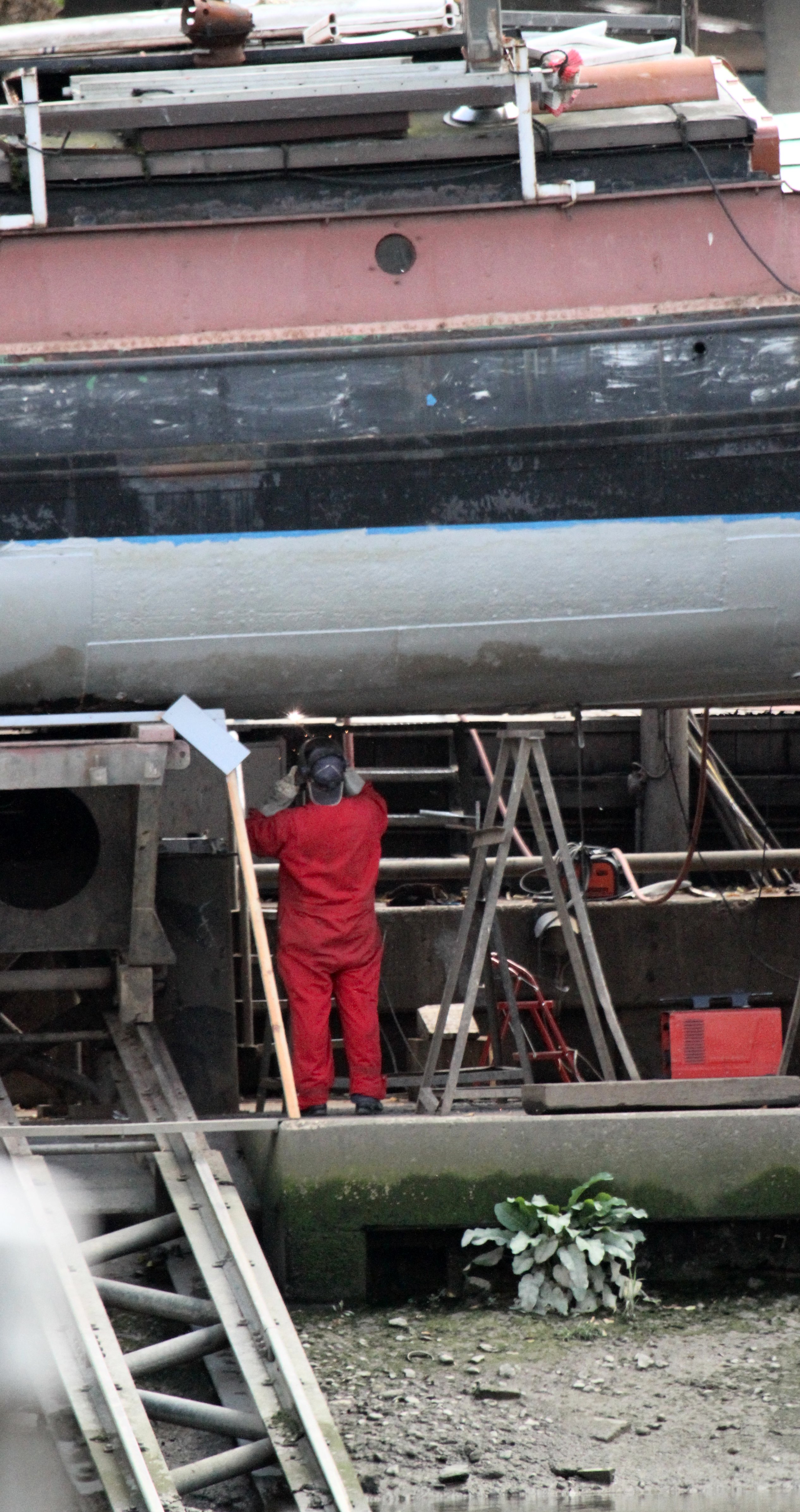
But we were here, as lovers of English canal boats and boating, to look at what was on the water (or, in the case of barge Luna, raised out of it to the dockside repair cradle and undergoing some heavy metal treatment – welding was well under way, if the boat wasn’t!). The barges are remarkable, with their sheer size, huge masts and characteristic leeboards (for they are sailing cargo vessels), and we should have loved to have been able to look inside them.
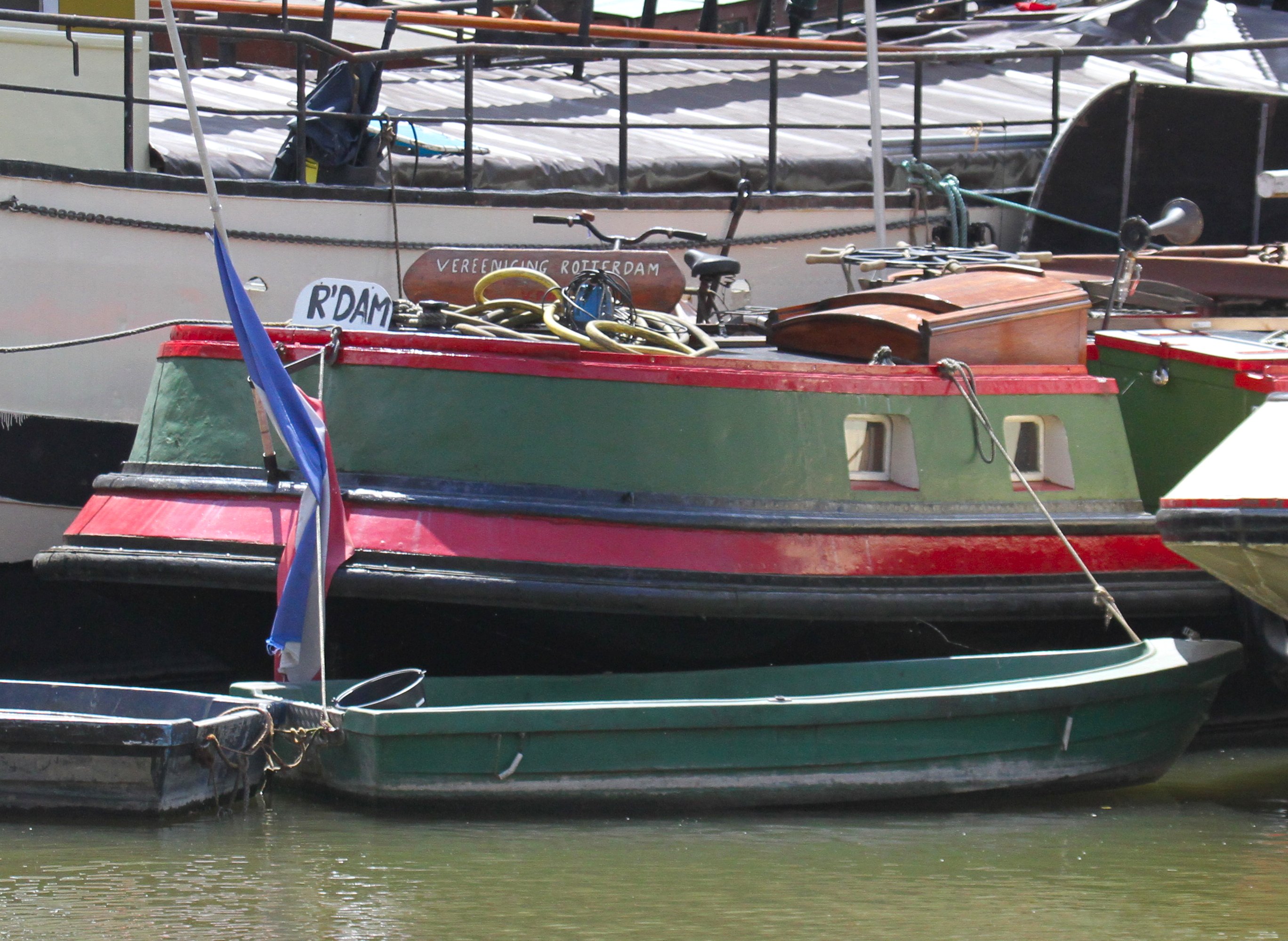
Vereeniging, just about the smallest of them all, nestled in her elegant green and red livery amongst the others… and I could see at a glance what had captured Valerie’s heart about her. She seemed so much more of a living presence, thanks to my reading of ‘Watery Ways’, and her character was buoyant and bubbly, with all the sprightliness and effervescence of a gig compared to the barouche landau sedateness of most of the other boats. I can’t wait to read the next instalment of her history, ‘Harbour Ways’, now in the making! An old bicycle stood to attention on the deck; theft of about eight others has made the owner chary of leaving a valuable machine on board.
We walked around the harbour, ate and drank local beer at one of the cafés (probably not the best one!) and captured a picture of Vereeniging’s stern from across the water. Strolling back along the other side of Haringvliet, we came upon the corpse of a once-yellow bicycle rescued from the muddy depths (but unlikely to be restored like the barges!) and said hello to a ship’s cat, a ginger pirate with the capacity to leap eight feet from deck to harbour steps and to take his ease in the sun.
But time had sadly run out for further sightseeing. We had avoided the parking police, thank goodness, and sailed away to Europoort with the powerful sensation of having travelled to somewhere very special indeed. The homeward ferry was a terribly disappointing contrast to what we had just been seeing.
GBH in a quiet country lane…
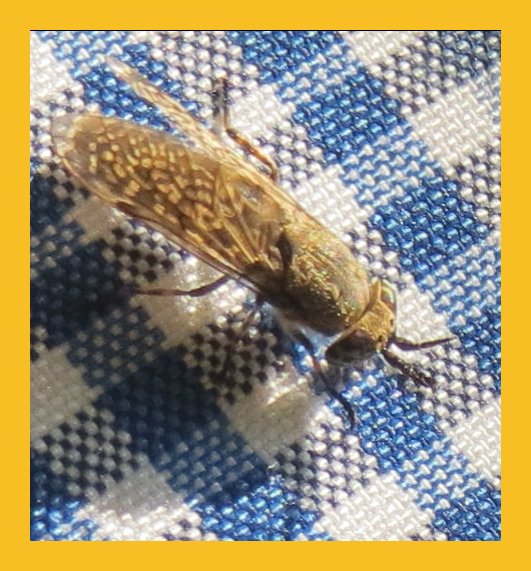
Horse-fly
He is a loafer and a bandit, sauntering along the lanes and woodland rides, nonchalantly taking his ease amongst the shadows. Nothing of the soldier in him: he is not on patrol, nor does he work with comrades, though he might consort with them. He’s a poser in aviator shades – lazy, handsome in a dark way, always with an eye to the main chance and single-minded in his conquests. Though his tastes swing either way, he much prefers women: he adores their scented hair, their soft and fragrant flesh. Men can’t compete for sweetness; they are coarser-skinned, sourer to the taste and less aromatic, but he’s not too fussy – if one comes along, legs provocatively bared to the knee against the heat, he’ll rise to meet him. Not head on, though. Never that. He is a guerrilla, with tactics to match.
At first he introduces himself as a companion, humming softly at the ear, a wayfarer travelling in the same direction. He slouches along sloppily, dipping and swooping around the head and shoulders of his prey, weaving ever closer to the skin, seeking perhaps an undone button or an untucked shirt rippling in the breeze. He annoys, perhaps is flapped away, but he is droopily persistent. The more he’s repelled, the more assiduously attentive he becomes, though still languid in manner. Not for him the spitfire menace of the wasp or the swiftly suicidal sting of the honey-bee. His passion becomes a frenzy of desire as he smells sweat rising from skin, imagines the blood beneath. He penetrates, spiking the flesh and wounding, then flitting out of range, drunk now with the luscious red fluid that he has extracted. He’s swapped it for some of his poison. But he’s not finished yet: dizzily inebriated, he lusts for more. Half in ecstasy, he swirls and dips in taunting arrogance, whisking himself beyond the reach of now flailing, panic-stricken arms; he may distance himself for a while, waiting for the flapping to falter , but still he is there, riding the air, pacing himself, moving as one with his victim, ready for his chance. When it comes, he dives in again, landing so softly he can pierce and suck unnoticed, until he is so glutted that he is forced to let go.
If quick enough and not too distraught with pain, that innocent victim now has a fleeting chance for revenge. The attacker, bloated and engorged, is sluggish now, eyes drooping with sleep. A lucky handslap or dexterous swat with a stick may pitch him, whirling, into oblivion.
Self-defence, m’lud, but come too late: the great red poisonous weals that he has inflicted will impose their own sentence of many days.
[Footnote: In fact, it is the female of the species which bites and sucks blood, but I’m a fiction writer… 😉 ]
A merciless killer…

A half-tunnel of hedgerow shades the path from the sun; new bramble tentacles rear up and across the way, reaching for light, their tips still soft, but their stems already clutching at clothing; rabbits are nervous tics at the edge of vision, ready to bolt. This is a lonely, little-used link between roads, though at one end, in the undergrowth under the hazels, illicit, smutty relationships are consummated and discarded with their condoms; the entrance by the field gate, where cars can pull in, is a drift of fast food bags, cartons and fly-tipped debris. Ah, the beauty of rural England!
It is, in fact, part of a favourite walk for us and, especially, the dog, since pheasant and partridge are here in numbers; he will hold a point for over half an hour, which would, were we shooters, make a twelve bore superfluous – a butterfly net would make better sport. As I climb over the stile into the field, where a small herd of bonny brown cows and calves grazes the bank, I encounter a neat heap of dark feathers. The Python team would call this a late blackbird, too late in its take-off to escape the trademark kill of the sparrowhawk. Foxes and cats dispatch their prey untidily, scattering feathers far and wide and often leaving other debris as well. The sparrowhawk, by contrast, is the most thrifty and purposeful of murderers. He calculates. He acts with intent, each action precise and pre-meditated. He uses the terrain, hedges being particularly appropriate for his silent up-and-over surprise attack. Small birds may just flit into the dense hedgerow in time, but his yellow-rimmed eyes are burning with bloodlust and his whole being utters supremacy. He extracts nourishment gram by methodical gram from his hapless quarry, gorging on blood, flesh and bone until there is nothing left except that pathetic heap of feathers, dropped straight down from the branch on which he sits as he feasts.
Imagine that you are the sparrow or the blackbird, caught in those dread talons even as you realise the danger, so swift is the arrowed form. At least your exit is quick.
Slaughtered before their time?
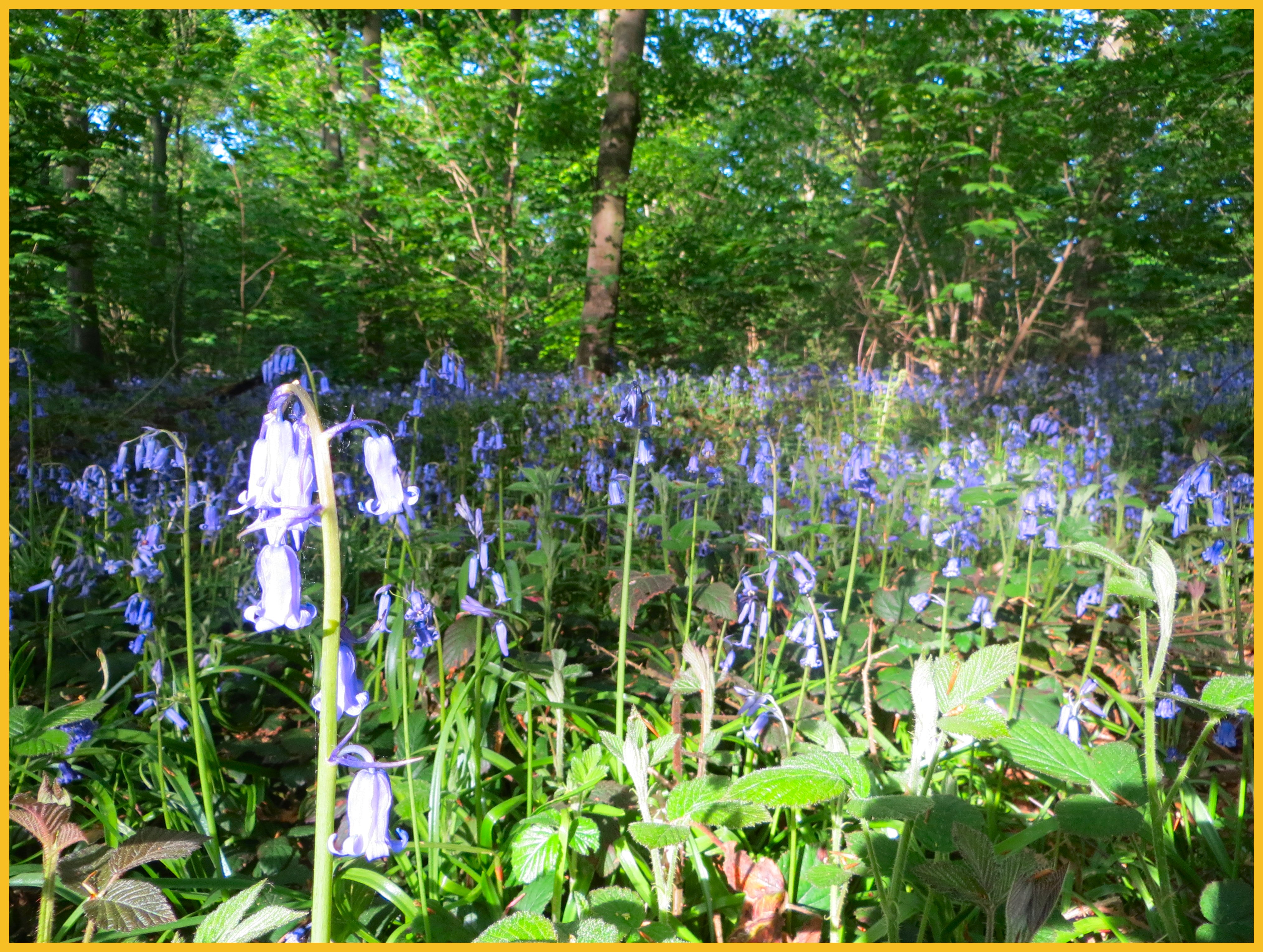
As I walked down in the woods today, there were no bears, but dark forces were threatening beauty, as they do every year at this time… but this May is different, for the beauty is still young.
The cold, snowy winter and even snowier March, following a brief spell of mild weather that fooled both the birds and the very early flowers, upset the order of the usual harbingers of spring, as many are late: the daffodils have collided with the tulips; flowering currant and cherry are blooming together. Perhaps ironically, the fruit trees are full of promise; up here in the hills, they often succumb to the devious daggers of frost, but their blossom has arrived so late that it has dodged the devastating chill. I’m anticipating a late summer and early autumn laden with bounty.
Anyway, back to the woods, where normality is not well: the bluebells, one of my favourite wild flowers, have been cautious, dithering in the cold and arriving at least two weeks later than usual. The trees, by contrast, are embracing the spring in a rush. Perhaps nurtured by the continuous snow and rain of the endless winter months, their green leaves are burgeoning unusually thickly and very fast for the time of year. The bluebells, in their huge swathes, have yet to reach perfection, that moment when the understorey is carpeted so richly with their violet-blue that all the trees appear to be floating in an indigo haze. This year, however, they will have to make haste if they are to work their customary mood magic, for the woodland canopy is fast closing over. It seems that they will be slaughtered before their time, starved of light and stifled. In most years, by mid-May, they are bedraggled by a month in flower, their loveliness fulfilled and their seeds set. But not this year.
The phases of woodland plant life are delicately juxtaposed, each species adapted to take advantage of the moment. But now the time is out of joint and there is nothing to be done to set it right.
Dog eat dog on the street…

Life can be raw on the mean streets of Barcelona. Down La Rambla, in spite of the police presence, teams of pickpockets roam, taking advantage of the tourists’ distraction to coax valuables out of pockets and purses from handbags. ‘Three-cup-where’s-the-ball?’ hoodwinks naïve player and unwitting audience alike (not all are audience). Along the pavements, with heads and shoulders bent into four-wheeled municipal refuse bins, scavengers of everything from metal to cardboard sift and sort the unwanted detritus of urban life and load it into supermarket trolleys, selling it on later at street corners where, next level up, men with vans pay only low denominations in return. Beggars with appealing canine companions or a pair of crutches play to the emotions of passers-by. Buskers in teams work the subway trains, as does the ‘poet’ with his single learned verse. Tuneless extroverts invade bars and restaurants to serenade diners, prodding shoulders with a nudge and placing an empty bowl on the table. The homeless sleep in parks.
A separate economy is operating beneath the tourist world and it is hard-bitten and single-minded; it has its own hierarchy and its own rules. Though the casual observer may see nothing much of it, careful scrutiny of just a small portion of a street or a tube station unveils the surreptitious transfer of illicit packages, information or cash; eyes that are everywhere and nowhere, looking for gain or Guardia with equal determination. There is a quality in shiftiness that singles out its owner from the rest of the urban swirl and it’s always interesting to use the invisibility of a café vantage point to sift out bad from good. Crowds down the ages have been the haven of criminals, cutpurses and vagabonds, the noise and crush and apparently innocent jostle enabling skilful sleight of hand and surreptitious, instant disappearance.
Too much mistrust springing from too much reading of crime? Not so: watch the hands and eyes and see for yourself. It’s a dog-eat-dog dogfight on the streets.
Don’t get me wrong. I love Barcelona, its lovely Catalan people and its edge. I’m just playing with reality…
The Village: Short story opening 5
Madison left Cathy to live with me. They got a divorce, even though she didn’t want it, and we were married immediately. Five months later he was dead. His death was quick, but strange; even the doctor didn’t really know why he had died. Several causes of death were listed on the birth certificate: organ failure, oedema, pneumonia – but they all seemed wrong, somehow. He wasn’t a young man, but he hadn’t been unhealthy. However, at the inquest, the coroner accepted that he’d died from natural causes.
At the time of his death, no settlement with Cathy had been agreed. Madison had been astute financially and had employed excellent lawyers and accountants. He’d started salting money into various bank accounts for me, some of them offshore, almost as soon as we met. He knew that it had always been my ambition to run my own business and he was determined not to let Cathy stand in my way. He said he was too old to work again, but it would be his very great pleasure to watch me succeed.
There was a will: it split his assets equally between Cathy and me. My lawyer said that this was fair, since, if he had left Cathy to live on his own and offered her a fifty-fifty split, this would have been more than generous. Now that he had passed on, his share had come to me, as was fitting. After all, I was his wife. Her lawyer disagreed because of the surprising smallness of the estate: it was worth less than fifty thousand pounds. Even the house that Cathy lived in had been re-mortgaged. There must be much more money, concealed somewhere, said her lawyer. Madison’s accountants blamed the modesty of the inheritance on some unwise business ventures. Cathy contested the will, but her appeal failed.
Braemar Cottage, the house that I had shared so briefly with Madison, was old – built in the eighteenth century, according to the deeds, though Madison thought that an even older property had once stood on the site. Montrose, the house that Cathy now lived in alone, was also several hundred years old – Madison had liked old buildings.
I don’t care for the past: thinking about it depresses me; seeing evidence of it all around suffocates me. Besides, the neighbours said that there was a ghost at Braemar Cottage, of a headless woman in a blue dress. The place gave me the creeps. I decided to sell it and buy somewhere bright and new: a place that would give me a clean sheet, with no past. I found a buyer almost immediately – it is amazing how many people are sentimental about ‘period’ properties. It was through him that I discovered that Montrose had also been put on the market (I suppose that Cathy couldn’t afford to keep it), but he had preferred Braemar Cottage, because of the new bathrooms and kitchen that I had insisted should be installed before I had agreed to live there.
The sale went through so quickly that I had to move into a hotel for a while. I found my perfect residence quickly, too: a luxury flat on the top floor of a new tower block in Camden – the internal fittings and decorations weren’t even completed when I viewed – with integral office space for my new business. The building possessed all of the virgin blankness that I craved. It was ultra-modern, stylishly asymmetrical, minimalist but opulent in an understated way. For example, although there were three conventional lifts for tradespeople and visitors, residents were given a pass to a special glass lift that had been installed exclusively for their use. Day and night there were two porters at the security desk in the main entrance, as well as a doorman standing sentry at the revolving doors. It was one of the porters, a short, cheerful East-Ender called Jarvis, who, during one of my inspection visits, volunteered to introduce me to the glass lift.
“I hope you don’t get vertigo,” said Jarvis as, with a waft of his pass-card, the glass doors slid open. We were on my floor at the top of the building, the eighteenth. He pressed the button, the doors snapped shut and the lift shot swiftly into motion, all, it seemed, in the same second. I had hardly had time to take in the spectacular view across London before the lift, its glass walls, sides and floor all so highly polished that we appeared to be suspended in air, plummeted like a diving angel. The sensation was extraordinary: it was like being in free-fall through space, both exhilarating and frightening. I held on to the rail, and looked down through the glass as the marble floor of the basement flew towards me. As I looked, the black-and-white squares of the floor broke apart and revealed a gaping pit beneath. There was something in the pit, writhing and hideous. I tapped Jarvis’s arm, forcing myself not to grip it.
“What’s that?” I gasped.
Jarvis and I stared down together. At the same moment, the lift slowed and drew smoothly to a halt.
“What?” said Jarvis. “See something interesting as we was coming down, did you? What was it?”
I shrugged.
“I thought that the floor was opening up. Obviously I was wrong – it must have been a trick of the light.”
“It’s with it being glass,” said Jarvis. “It plays tricks on your eyes. Optical illusions, innit? That’s part of the fun.”
Footnote: This concludes the series of five short story openings under the theme of ‘The Village’. Readers of In the Family may perhaps recognise my experimentation with some of the fundamental features of fictional writing (plot development, narrative voice and perspective, character depiction, dialogue, context, atmosphere and mood and so on) that did influence my writing of the novel. I hope that you have enjoyed dipping into them. Thanks to those of you who have commented here and on Twitter and to those who have very kindly retweeted for me whilst I have been away. Normal service resumes tomorrow!
The Village: Short story opening 4
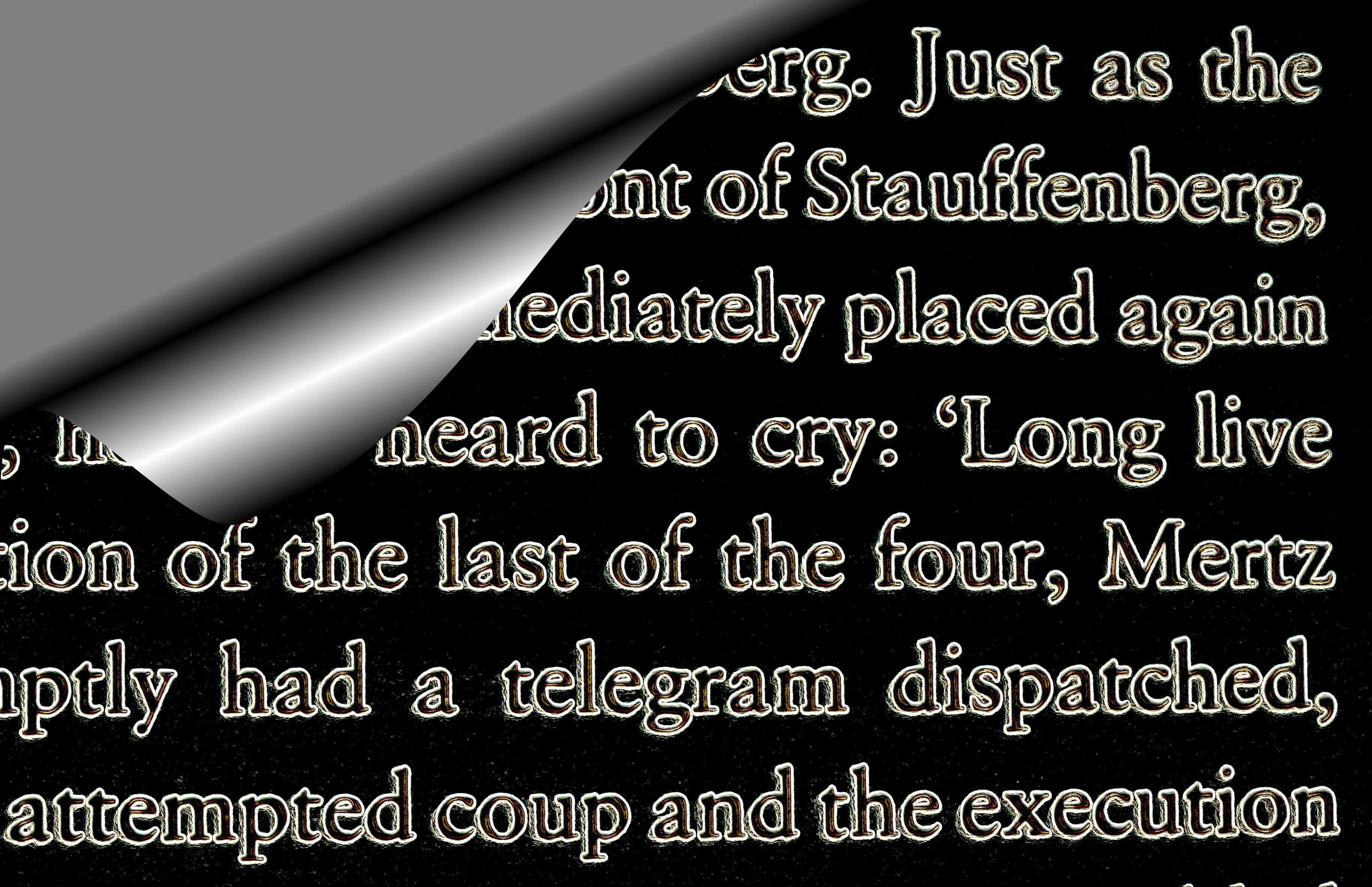
“I would gladly go on living and would gladly accompany you a bit further on this earth. But then I would need a new task from God. The task for which God made me is done.”
I have published this message in many ways and read it to many people. I hoped that it would help them. I also hoped that it would allow them to understand the man that he was – the man I was proud to call my husband. Yet too many of them have misunderstood and the lack of sympathy has grown worse as the decades have become more unbuttoned. It fills me with a great anger, and with a profound sorrow, that people think that the words are tepid, too restrained; that they do not contain real love; that at the end he took the easy way out because he knew it was the only thing that he could do and capitulated while still paying lip service to his broken ideals.
He died sixty-four years ago, and I still live. I was young, but not very young, when it happened. I was already the mother of three boys. I was old enough to be considered guilty if I were caught helping him; mature enough to understand his aspirations; wise enough, even, to give him my blessing – though I could not have foreseen the empty space that he would leave as I lived on for so very many years.
I believe that I have led a useful life, if one that has been hollow. I have worked hard, for causes I believe in, and I think that he would have approved. Many years after his death, I took a lover (Eugen, an old friend of mine, whom he also knew), but we did not marry. I think that he would have approved of that, too – both of the relationship and of the fact that I have always kept my innermost, private self (as well as displaying my most public self) for him.
I do not know if we shall meet again. When he died, I believed passionately that we would. Now I am not so sure. I think that there is an afterlife, but I do not know if you can reach those whom you have not seen for so long, whose life you ceased to share many decades ago, even if you are still filled with love for them and they for you. Perhaps it may be that he has been watching me. I still believe that he is talking to me sometimes, but the conviction is of the intellect rather than of the emotions – it is as if I am able to place myself in his brain as I say, “What would Helmuth have done?” and my knowledge of his character, always so constant and open, tells me the answer.
I remember so well the day that we met. It was in 1929. The country was poor and demoralised. Helmuth himself had a bitter cross to bear – coming as he did from one of our most distinguished Junker families. To have lost the war was a disgrace for them. Helmuth did not speak of it much, but I am certain that this is why he became a lawyer instead of following the family tradition to become a soldier. He was a very fine lawyer – and generous and enlightened to me when I said that I wanted to study Law, too. He encouraged me every step of the way. We were married in 1931, but, unusually for a married woman then, I studied Law and did not start to have my babies until I had qualified.
My father was a rich and powerful man, but no aristocrat. He was a banker, but his work did not light him up. It merely provided the financial means for him to spend as much time as possible immersed in literature and the arts: interests which he shared with my mother. We spent our summer holidays at a hotel in the Grundlsee, always with a group of friends of my parents who had met to debate and study books and works of art.
In 1929, Helmuth became part of the group. He and I spent whole days walking, talking, laughing. He had to return to his legal studies while this rest of us remained on holiday, but he wrote to me almost immediately to say that he thought that we were kindred souls. I knew that he was right. I was never afraid of becoming a Gräfin: it seemed so natural for me to be able to complement the way that he lived, to enact what society expected of us both. I rejected the title after the war, though. It had become a mockery.
Footnote: I am away at a conference (day-job!) for five days from Saturday April 6th. I am continuing with the blog-posts, however. Regular readers of the blog may remember that one of the early posts was about how I trained for In the Family by writing a series of short stories, at Chris Hamilton-Emery’s suggestion. There are ten stories altogether, belonging to the theme of ‘The Village’. I’ve been revising them recently and may try to publish them. For each of these five days, I am posting on the blog the opening paragraphs of the first five. If you’d like to make any comments, they’d be extremely welcome; I’ll respond to them on my return.
The Village: Short story opening 3
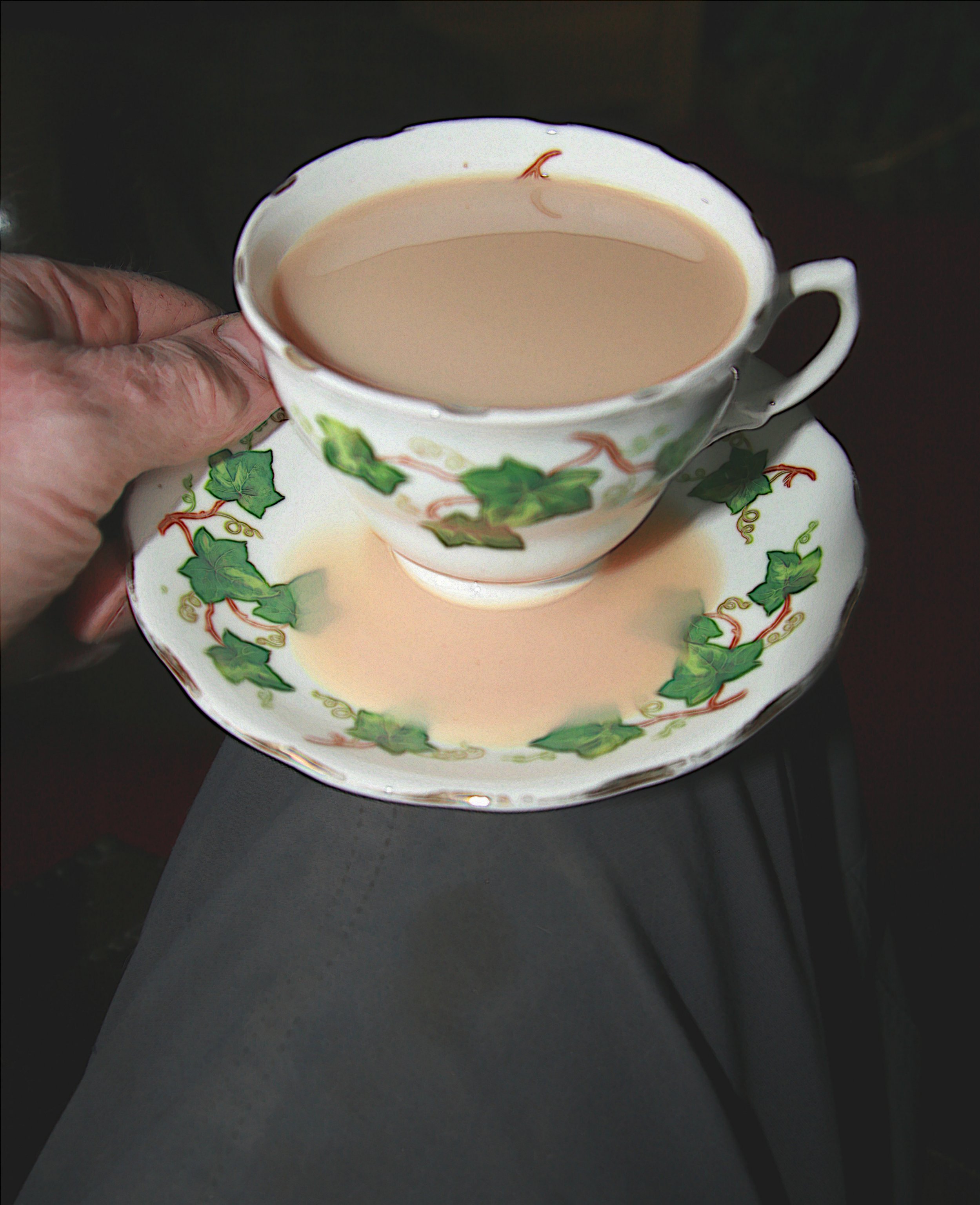
Frank O’Dwyer sat in front of the television in Mrs. Dodds’ front room, drinking a cup of Mrs. Dodds’ overmilky tea. The picture on the screen was of an aeroplane taxi-ing along the tarmac at RAF Brize Norton. It was a bitterly cold day and the gaggle of soldiers and politicians huddled at the end of the runway looked cold and crestfallen. The door of the plane swung open and two men emerged. The first, (according to the commentator, a diplomat) was dapper in suit and overcoat and placed a protective hand on the arm of the other. The second man was quite bulky and had a face that was pale and drawn, despite his incipient double chin. He was wearing a baseball cap, cheap windcheater and jeans. He looked lost, disorientated.
Frank shifted his position, forgetting the cup of tea on his knee. Some of it slopped into the saucer, and he had to make a grab for it to stop it, saucer and all, pitching to the floor. Mrs. Dodds came in at that moment, wearing the flour-stained green sailcloth apron that she reserved for baking.
“That him, is it?” she asked. Frank nodded. “He looks too old to be your son. More like your brother.”
Frank managed a temporary smirk. It was true that Connell was a chip off – right down to the indefinite waistline and distinct lack of bone structure. It was the receding hairline that made him look so much older than he was – that and his present dreadful pallor.
“He’s likely to look old, poor sod, after what he’s been through.”
The two men walked slowly across the tarmac. The second man, the one whom Frank had claimed as his son, had a limp and could not move fast. Eventually they reached the waiting reception committee. A well-known politician stepped forward to shake each of them by the hand. Then he gestured to a man and a woman standing on the fringes of the group. The second man pushed his way through to them and hugged them in turn. The camera showed a close-up of the woman’s face, wet with tears.
“ ….Connell Davy, reunited with his family …” came the even voice of the commentator. Frank seized the remote abruptly and turned the television off.
“Seen enough, have you?” said Mrs. Dodds. “I don’t know why you didn’t leave it on a bit longer. They might have interviewed him. He might have said something interesting about what he’s been put through.”
“I doubt it,” said Frank in a taut voice. “They probably won’t let him say anything – they’ll want to ‘debrief’ him, or some such rubbish.” He pronounced the word with a sneer. “But I’ll tell you one thing: this whole episode has been mismanaged by the authorities from start to finish and I’m not going to let them get away with it. I’m going to expose the bumbling mess that they’ve made. If it had been handled better, there would have been five men walking down that gangway today, not just Connell.”
“Still,” said Mrs. Dodds, “Connell’s the one that matters, isn’t he, as far as you’re concerned?”
Frank, still working on his fury, did not reply.
“By the way,” she added, as if the thought had just struck her, “who were that man and woman who came to meet him? It said they were his step-parents; but you’re his Dad. How come they were the ones who were asked to meet him? Is the woman your ex-wife?”
“No,” Frank said shortly, “she isn’t. My ex is dead. I’m going to make some phone calls.”
Footnote: I am away at a conference (day-job!) for five days from Saturday April 6th. I am continuing with the blog-posts, however. Regular readers of the blog may remember that one of the early posts was about how I trained for In the Family by writing a series of short stories, at Chris Hamilton-Emery’s suggestion. There are ten stories altogether, belonging to the theme of ‘The Village’. I’ve been revising them recently and may try to publish them. For each of these five days, I am posting on the blog the opening paragraphs of the first five. If you’d like to make any comments, they’d be extremely welcome; I’ll respond to them on my return.
The Village: Short story opening 2.
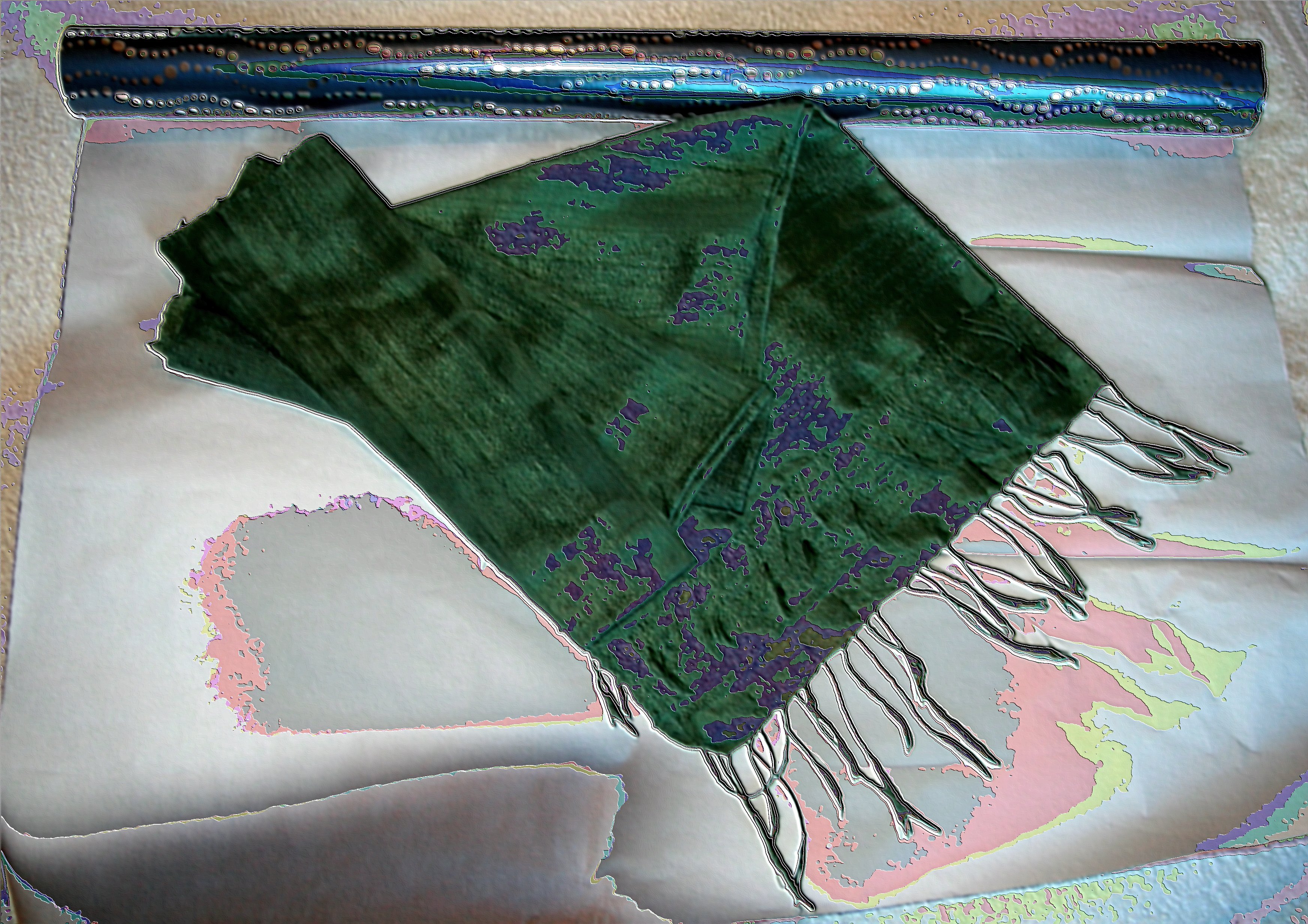

Matilda carried a twin-entry accounting system in her brain. It was a tally of favours and gifts that people had presented to her and the ones that she had given in return. If the former exceeded the latter, Matilda was happy. If it didn’t, she felt angry and cheated; and, when Matilda felt angry and cheated, she became abusive and destructive.
The main problem with Matilda’s cerebral twinlock system was that it was not an exact science and Matilda liked things to be in black and white; she did not believe in the benefit of the doubt. Sometimes, by expending a virtuous amount of energy, she could line up her figures more or less exactly. For example, although the brilliant green silk scarf that she had given her work colleague Joyce for Christmas appeared to be more generous than Joyce’s gift to her of some cologne and a desk diary (and, if Joyce checked, she would think that Matilda had spent almost three pounds more than she had), Matilda knew that she had in fact bought the scarf in a sale at a reduction of five pounds.
But what if Joyce had also bought her presents in a sale? Matilda might have been cheated, after all.
Favours were even more of a headache. What price should she put on looking after Blackie Daff, the tomcat next door, while his family was on holiday for the week? Was it worth more than having free access to the contents of Mr. Daff’s greenhouse for the period of the favour – of which offer Matilda had taken full advantage – and the “true friend” china dish that Mrs. Daff had produced upon her return? Looked at one way, feeding the cat and giving his bowls a rudimentary rinse out had barely taken fifteen minutes of Matilda’s time each day, so she was the undisputed gainer; looked at another way, if the Daffs had put Blackie into a cattery, it would have cost them twenty – possibly thirty – pounds. If that was the going rate for cat-minding, had she taken enough cucumbers and tomatoes to be able to compute with certainty that the produce together with the dish were fitting recompense? Questions like this were very vexing.
From infancy, Matilda had been used to getting her own way. The late only child of a woman who was widowed shortly after her birth, she had been brought up at the Hall, where her mother had secured the position of housekeeper to Samuel Jessop and his wife Kitty, then in their seventies. Pampered by three adults and at the same time resentful that she shared in the Jessop heritage only by proximity, she had come to think that it was her right to be in the right. She would brook no contradiction and, while still a very small child, she could, if thwarted, summon up a magnificent tantrum, all the while observing that it was having the desired effect from one keen eye that pierced through the tears. Although she was too young at the time to put the concept into words, it was then that she devised the tally system.
When her own children were born (of course, she was married first, but the husband was a detail), she saw before her a two-decade opportunity to build up capital on the balance-sheet. She had a son and a daughter and both, as she had intended, worshipped her. Over time, they came to scorn their father.
Footnote: I am away at a conference (day-job!) for five days from Saturday April 6th. I am continuing with the blog-posts, however. Regular readers of the blog may remember that one of the early posts was about how I trained for In the Family by writing a series of short stories, at Chris Hamilton-Emery’s suggestion. There are ten stories altogether, belonging to the theme of ‘The Village’. I’ve been revising them recently and may try to publish them. For each of these five days, I am posting on the blog the opening paragraphs of the first five. If you’d like to make any comments, they’d be extremely welcome; I’ll respond to them on my return.
 Christina James, crime novelist