

February Fenland
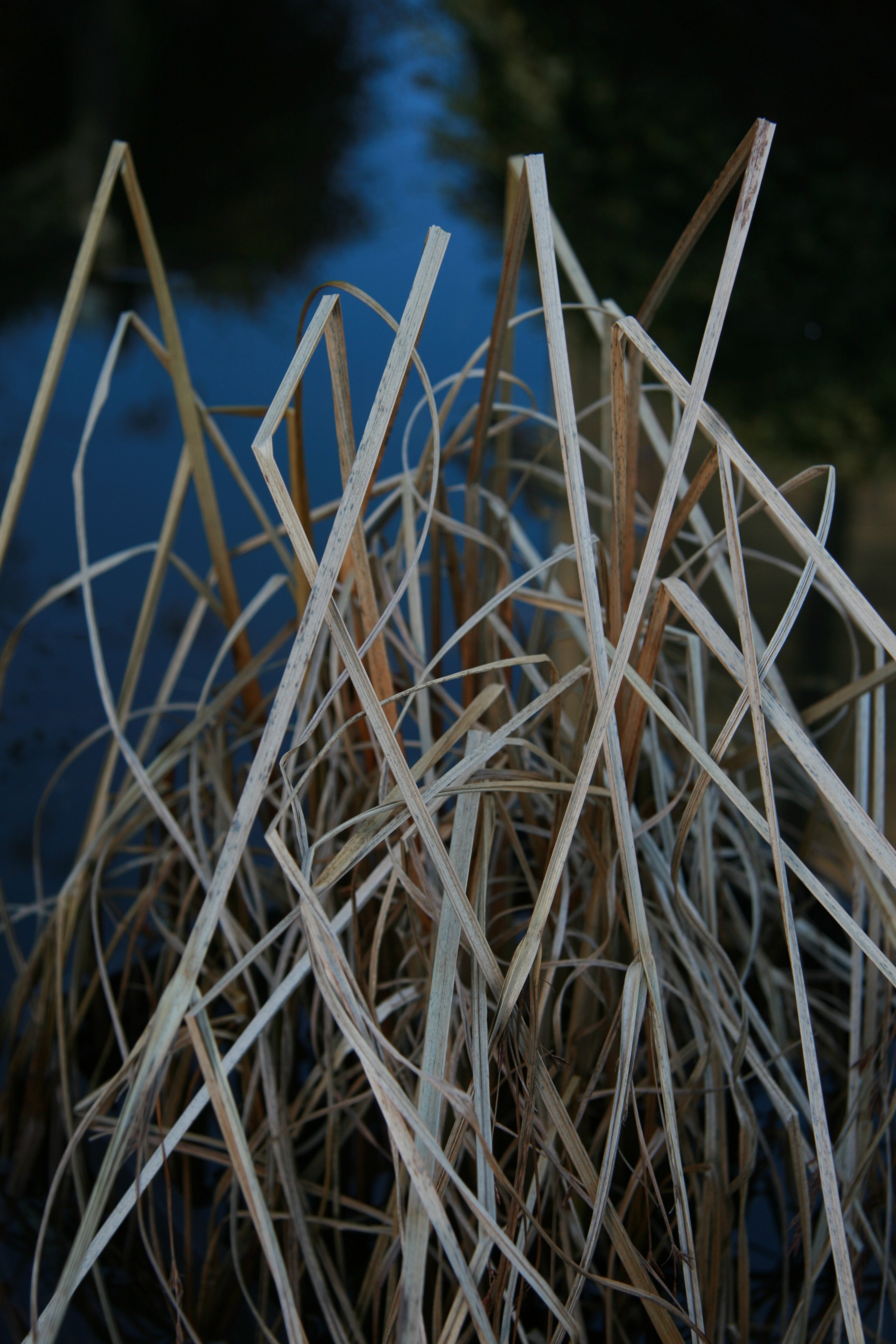

Somewhere, in the middle distance, there is the sound of sighing, the susurration of dry reedbeds in the breaths of the first, softer, south-westerly winds of the year. Zephyr-mild and whispering the warmth of a climbing sun, these breezes are the harbingers of a brighter time to come. The colours of the February Fens are muted yet, with the fawns of stubble acres and last year’s broken sedges; the raw umbers and charcoals of the turned soil; the sky is still ice-blue.
The dykes are snow-melt bright, surface-painted by the leaning lines of power poles that disappear into distance. Mallard, pochard and teal splash to landings on open water; the geese are already on the move. South-facing banks and scrubby corners by tumbling corrugated sheds are stirring with life; a dandelion blooms; the cheerful, chirpy two-tone of great tits rings from the elders and the wren whirrs amongst the brambles. The blackbirds are already building in the holly hedge by the farmyard wall. Look closely and the sap green spears are thrusting; round village ponds the daffodil buds are clustering. More cold may come, but, inexorably, the Fens are swelling with warmth and light and water, a hope-filled harmony of growth and life. The land is rich with promise, with gilded silt.
February swings its way between the seasons, but the farmer eyes the sky and sniffs the air, kicks the drying turf and sees the scales dip into Spring; the Fens will soon open again to the ploughshares and the seed-drills. Soon… soon…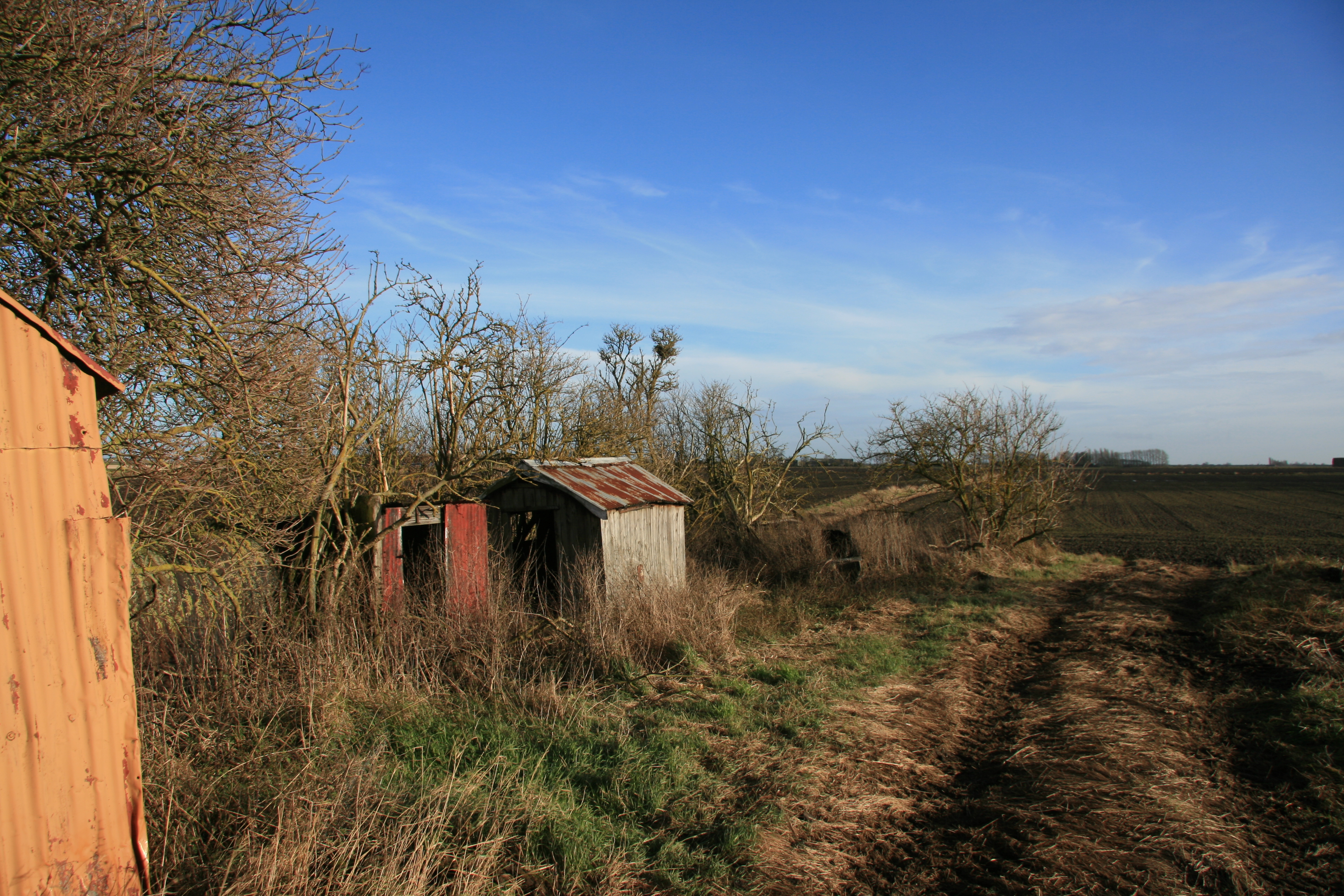
Into the Fens again!

Parish Church of St. Mary and St. Nicholas, Spalding
Yesterday, I made my second East Anglian excursion of the year, this time to Cambridge. It was a bitterly cold day and, although it was dawn by the time that I reached Peterborough, the light remained subdued by one of those swirling mists that often accompanies sub-zero winter days. I did not enjoy the cold (it was impossible to get warm, even by wearing a coat on a heated train), but I was delighted by the mist, as it enhanced the jolt of surprise that Ely Cathedral always springs when it sails suddenly into view. Not for nothing is it called the ‘Ship of the Fens’ and yesterday it truly looked like a huge galleon that had just weighed anchor on a white-capped sea.
Whilst Ely is one of the country’s oldest cathedrals (parts of it date back to the seventh century), the Fens as a whole are famous for their beautiful churches. When I was a child, every shopping expedition to Peterborough included a visit to Peterborough Cathedral. It was here that I first learned of the beheading of Mary Queen of Scots at Fotheringhay. She was originally buried in Peterborough Cathedral, though later exhumed and reinterred, by order of James I, in Westminster Abbey.
However, some of the finest Fenland churches are not cathedrals, but the more modest – although still magnificent – parish churches. I was both baptised and married in the Parish Church of St. Mary and St. Nicholas in Spalding; I was a pupil at Spalding Parish Church Day School, affiliated to this church.
I have recently acquired several books about South Lincolnshire in order to research Almost Love, my next novel. Among these is Geese, Gowts and Galligaskins, by Judith Withyman, a history of life in a fenland village from the mid-sixteenth to the mid-seventeenth centuries. (I shall review it when I’ve finished reading it.) Most of the papers that she draws on, in this vivid re-creation of how people lived in the Fens three or four hundred years ago, were discovered by her in the 1970s, in a chest kept in St. Mary’s Church at Pinchbeck, a large village that has become almost a ‘suburb’ of Spalding.
Such records are treasures and I wonder how many other Lincolnshire churches contain such secrets that are silently waiting to be yielded up to the interested and observant?
Outings…

My family and I visited Robin Hood’s Bay and Whitby today – both favourite haunts of long standing – to celebrate my son’s birthday. While we were having lunch in The Dolphin, an ancient fishermen’s pub in Robin Hood’s Bay, the array of real beer bottles decorating the bar triggered reminiscences of staff trips to the East Coast when I first started bookselling. (There was also an association here with Beryl Bainbridge’s Booker-shortlisted, Guardian Fiction Prize-winning novel, The Bottle Factory Outing.)
I was bemused when I first learnt of the annual ritual of the staff trip. It seemed to me to belong to the period of charabancs and bathing huts – and to be about as outdated. Every year, our small library supply company would close for one day in June or early July, and the whole staff, of about thirty-five people, would climb on to a specially-hired coach.
My first staff trip was to Scarborough; later ones focused on walled cities – Chester, Lincoln, York, Durham – and the last of all, some fourteen years after the first, was to the Beamish Museum. Scarborough was the most popular destination; we went there at least four times. The company paid for the coach, a stop for coffee en route and a slap-up lunch in a hotel. Everyone was then free to spend the afternoon as she or he chose before piling back on to the coach in the early evening. The venues for coffee and lunch were chosen by the boss, a redoubtable connoisseur of hostelries across the country. He didn’t travel on the coach with the rest of us, but followed close behind in his latest Jaguar (except for the year that he was persuaded to leave the car behind, when somehow we managed to abandon him at a motorway service station; he was not amused!). Each trip brought its own adventure. That first far-off time in Scarborough featured the stock clerk, lying prone, very much the worse for wear, on the floor of the lunch hotel, while the boss prodded him with his umbrella and shouted, Captain Mainwaring-style: ‘Get up, you stupid boy!’
To be honest, I thought that these staff trips were paternalistic and more than a little condescending. When eventually I became managing director, I abolished them and gave everyone an extra day’s holiday instead. I was surprised and somewhat humbled when the following year I received a small delegation of fellow employees imploring me to reinstate the annual expedition. I did as they asked, but I didn’t claw back the additional day’s holiday, allowing them to keep it as well. I shall never know whether the outing satisfied some primeval need for a bonding ritual or whether this outcome was just an instance of canny Yorkshire folk managing to have their cake and eat it.
Richard III: ‘a serviceable villain’?

My interest in Richard III was kindled when I was a young bookseller, because my boss was a member of the Richard III Society. I’ve subsequently read several books about the Wars of the Roses and also visited Richard’s castle at Middleham. That he had strong links with Yorkshire has increased his fascination for me.
Few English kings have inspired such intense posthumous opinion as Richard. Henry VIII, Charles II and George III have all had their fierce supporters and detractors, but none has had vitriol heaped upon him as Richard has. He could hardly have been as wicked as he was reputed to be; his shimmeringly evil reputation, much enhanced by the distorted character that Shakespeare created to please his Tudor mistress, even had the unintentional effect of giving him the same kind of glamour as Milton’s Satan. Shakespeare was also responsible for exaggerating his physical deformities; unlike Dorian Gray three hundred years later, the fictional Richard’s evil soul was supposed to have been made manifest in an ugly face and twisted body.
The Richard III Society was founded to put the record straight, but, like almost all societies that support the memory of controversial historical and literary characters, it quickly became so partisan that some of its published ‘research’ stretched the facts. Nevertheless, it is to one of its present-day members that we are indebted for the discovery of Richard’s remains under a car park in Leicester. Amazingly, modern science, in particular miraculous DNA matching techniques, proves conclusively that the bones did belong to this last Plantagenet king. I am sure that a great book will come out of the story of their discovery and testing (which, as last night’s Channel 4 programme showed, has been meticulous).
In the popular imagination, Richard’s worst act has always been his reputed murder of his two nephews, the so-called ‘princes in the tower’. They were the heirs of Edward IV. The elder of them, Edward V, was never crowned king, but the title was reserved for him, even so; the next King Edward was crowned Edward VI. There is no proof that Richard killed the two princes. It is known that they lived in the Tower of London for many months and gradually disappeared from view; first they were seen playing frequently, then infrequently, then not at all. Although it is fairly certain that bones discovered in the tower in the late 1990s belonged to the princes, there is no conclusive proof of who murdered them. Was it indeed Richard? Or did the order come from Henry VII (the preferred candidate of the Richard III Society) after his accession? Of course, I don’t know, though I’d rather like to think it was Henry myself, partly because Richard has always been such an underdog, partly because Henry was a cruel cold fish of a man. He was certainly capable of killing them.
Whoever it was, the outpouring of emotion that this murderous act has generated is illogical. Perhaps it is because they were children; perhaps because one of them was a king and kings were sacred. Yet there can have been no king between William I and Richard III who did not commit murder, except, perhaps, Henry VI, who was himself murdered for the national good; and, although the Tudors themselves considered the murder of kings to be taboo, Shakespeare’s own queen, Elizabeth I, herself killed an anointed queen, Mary Queen of Scots. I conclude that Richard’s infamy stuck because of the genius of Shakespeare himself. The beauty and the irony of these famous lines have touched every generation since they were written in 1592:
Now is the winter of our discontent
Made glorious summer by this sun of York;
And all the clouds that low’r’d upon our house
In the deep bosom of the ocean buried.
The bones retrieved from the car park were of a slight and delicately-formed man; he did, indeed, suffer from scoliosis, but it probably only made one shoulder appear slightly higher than the other; otherwise, he may have cut an attractive, even a refined, figure. I should never want to lose Shakespeare’s magnificent villain, but perhaps now that the real Richard has been found, he can co-exist with his alter ego. There is surely room in our heritage for both of them.
A view of ourselves… in the northern landscape.
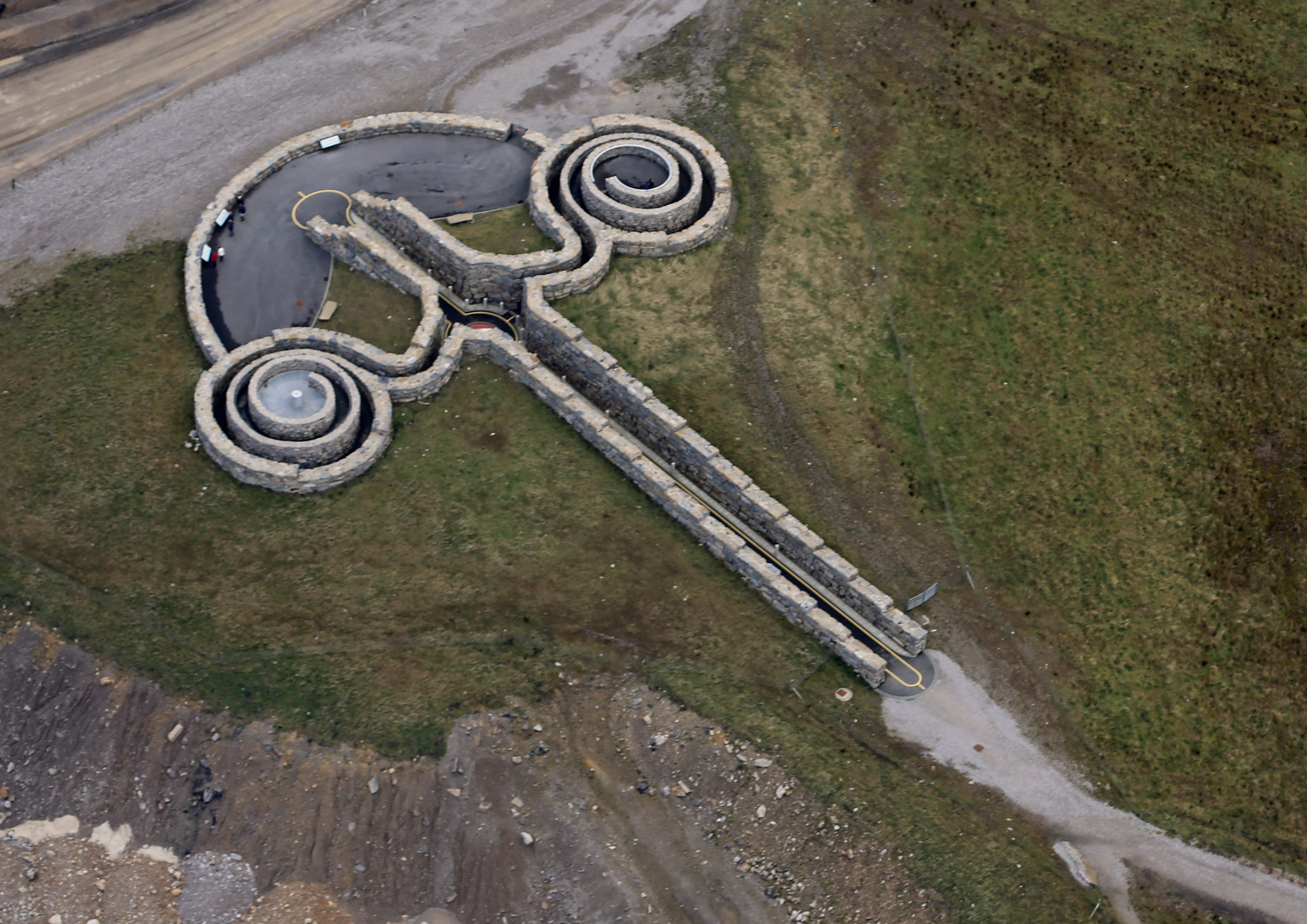
Andy Goldsworthy, Charles Jencks, Anthony Gormley and Andrew Sabin have all changed the way we look at the world, thanks to their vision and landscape-changing sculpture on a monumental scale. Whether we look at the huge tree trunks incorporated into dry-stone walls that Goldsworthy created at the Yorkshire Sculpture Park, the ‘Goddess of the North’, into which Jencks transformed the debris of Shotton surface mine in Northumberland, the ‘Angel of the North’ that Gormley raised upon on a hill near Gateshead or ‘Coldstones Cut’, Sabin’s sculptural symbol overlooking a Nidderdale limestone quarry, we cannot fail to be moved. There is something elemental about the work of these men, which returns us to a land of ancient myth and to stories told around fires from generation to generation; their impact upon our psyche is immeasurable, though we may try to quantify it. We are thrust deep into the earth, forced to look upon the wild ocean’s swelling rages, inspired to peer out from our little world into the universe, led to contemplate the natural processes of time and conjured into the mysteries of legends that have haunted our race over millennia.
I visited ‘Coldstones Cut’ yesterday, on a clear, cold and brutally windy day. I followed the footsteps of the (already!) more than forty thousand visitors that the Sabin sculpture has attracted, although it was completed only two and a half years ago; practically speaking, it is the viewing platform for a stone quarry otherwise visible only from the air, so skilfully has it been hidden in the Pennine landscape. As I took advantage of the chance to view the magnificently clear 360-degree landscape from the tips of the twin ramshorn curls that shake themselves at the sky, I could understand the artist’s presentation of an internal ‘street’ (complete with bollards, yellow lines and humped roundabout) to demonstrate the purpose to which the quarry’s materials are put and, much more beguiling to me, draw my own conclusions about a shape which for me evokes male and female organs and the myths of fertility gods and goddesses. How imaginative the minds which first conceived of this project! How lucky for all of us that there were others to plan and argue for its completion! How monumental the task to bring such a sculptural idea into being!
Here we are, in the 21st Century, still desperately in need of the same sense of purpose as those who, in the far-off lands of our past, cut horses into hills and drew wild beasts on walls of caves. We are one humanity, living with the creative urge of our ancestors and looking for the same answers as they. We may carve, build, draw, paint… or write, but our need is the same: to place ourselves somewhere and to make sense of why we are here.
Thank you, Andrew Sabin and the many people it took to deliver this wonderful artwork to us. It is a living, life-affirming and awe-inspiring emblem of stark, brutal beauty and significance.
The old curiosity shop…
I’ve been asked by several readers of In the Family about the shop where Doris Atkins lived; it was also, of course, the place where she was murdered. As I’ve written in a previous post, this shop was drawn almost entirely from my memories of the establishment that my great-uncle kept when I was a child. My grandmother lived there, too, and was effectively the housekeeper. It was the house in which they’d both grown up. My great-grandfather died in the 1930s, but my great-grandmother was still alive when I was born. I have a very vague memory of her sitting up in bed, a tiny frail old lady with waist-length snow-white hair. She died a horrible death by falling on an electric fire.
The shop itself had been the front room of the fairly substantial family home, built, I’d say, in the mid-nineteenth century. It would be incorrect to call it a terraced house; it was rather one of those houses that you still find in some old towns: detached, but snuggling right up to its neighbour. The neighbouring building on one side was a much smaller, newer house; on the other, the Punch Bowl pub (where dancing lessons were held on Saturday mornings: my grandmother tried in vain to persuade me to learn tap-dancing). The address was Westlode Street, as in the novel. I’ve since discovered that this is the only street in the country bearing this name.
The shop itself was relatively modern. Although my great-uncle was a Scrooge-like character (he would give my brother and me packets of out-of-date jelly babies and dolly mixtures at birthdays and Christmas), he had spent some money on modernising it, possibly because he’d once run foul of the environmental health department at Spalding Council. My grandmother was certainly an obsessive cleaner and scrubbed the floor and all the surfaces in the shop every day. The bay windows on either side of the door had been converted into ‘picture windows’ that took displays. There was a tall, glass-fronted cupboard which was filled up every day by the Sunblest man with loaves of bread, tea-cakes and currant loaves. He usually also brought a tray of cream cakes. The cream was all the colours of the rainbow; I shudder now to think of the dyes that must have been used in these creations. Another daily visitor was the pop man: my father told me that his visits had removed the need for the shop to make its own carbonated drinks; as a schoolboy, he and his friends had had fun making fruit sodas three times as effervescent as they should have been!
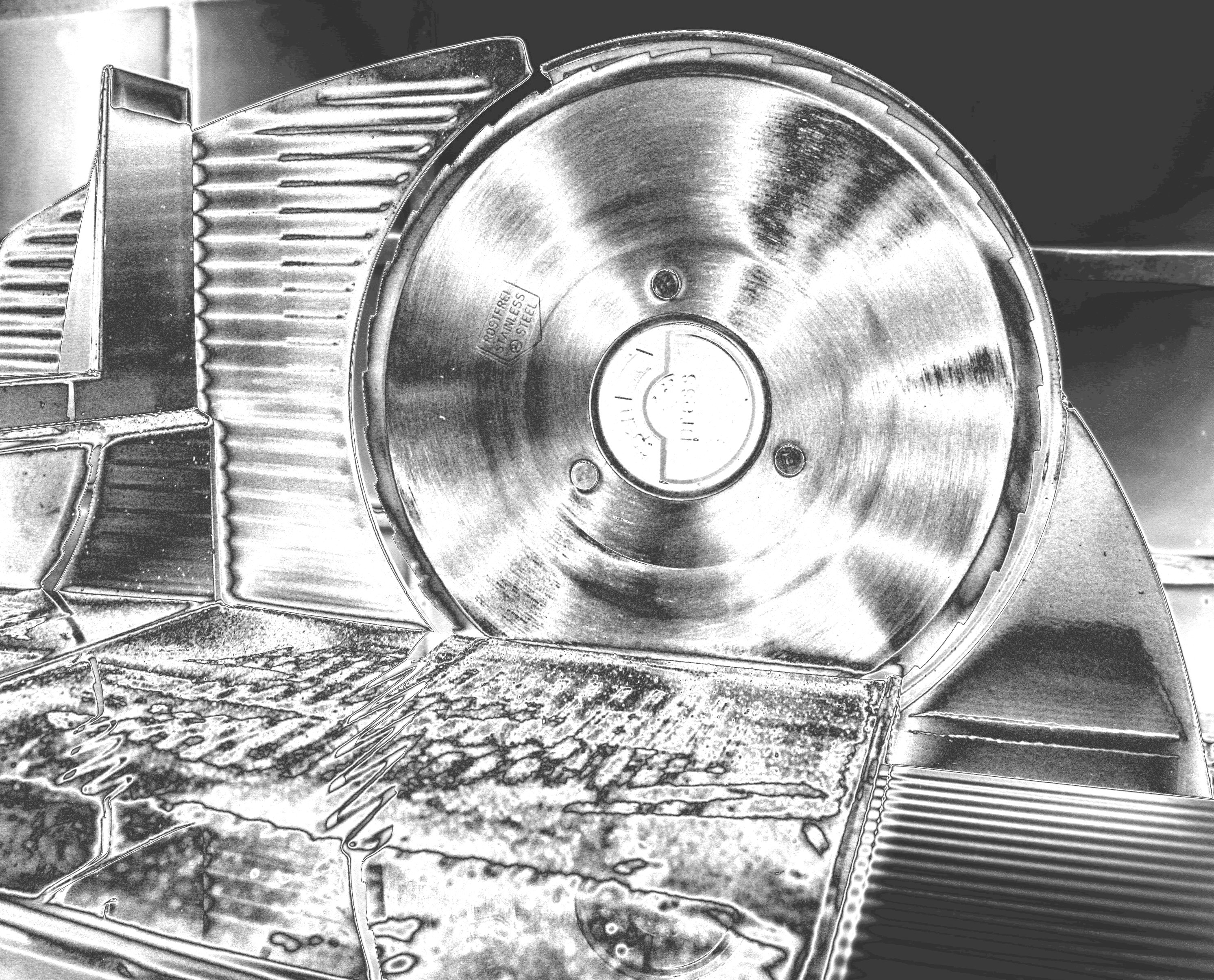
The shop also had a manual ham and bacon slicer – one of those fire-engine red machines with a lethal circular cutting blade to be seen in most general shops of the time – and several fridges, including a shiny rectangular-shaped Frigidaire with a glass display front that was great-uncle’s pride and joy. It did not impress me as much as the squat, square fridge in which he kept ice-cream. I was intrigued less by the contents than by the mystery of its black rubber lid; this was several inches thick – presumably for insulation purposes – and too heavy for a child to lift (which may have been part of its attraction for its owner – there was no risk that his great-nephews and -nieces would plunder the stock).
Pocket-money sweets were laid out in trays near the till, right under great-uncle’s nose. He always wore a long, dun-coloured shopman’s coat and was rarely seen without his trilby hat. When he wasn’t busy serving, he sat in the shop on a tall stool, painstakingly writing out the price-tags that were stuck into meat and vegetables on vicious-looking skewers. He had a few secrets under the counter, too. For years I wondered what the box labelled ‘ONO’ contained and why my mother was so cross when I tried to look inside it. It was only after I had left home that I read in a novel that this was the brand-name of a type of contraceptive.
But the crown jewels of the place, for me and for all children who visited, were the serried ranks of tall sweet jars that stood on shelves along the back wall. They were uniform in size and shape, with thick lids of many colours – perhaps made not of plastic, but of one of its predecessors, such as Bakelite. They contained bulls’ eyes; mint imperials; Fox’s Glacier Mints; Nuttall’s Mintoes; Bluebird liquorice toffee; Milk Maid dairy toffees; aniseed balls; gobstoppers; red liquorice strands; black liquorice strands; winter mixture; chocolate Brazils; Liquorice Allsorts; Payne’s Poppets. I could go on. They looked so beautiful standing there together, a hymn to the confectioner’s craft. Choose a quarter of any of them – it would be conveyed by a tin trowel to a narrow, trough-like pair of scales – and their spell was broken. Their real charm was collective; it resided in their magnificent diversity of shape, colour and size. They inspired a sort of sensory holy grail quest that making no single choice could ever satisfy, because their pull was visual as well as visceral.
I had hoped to write about the house behind the shop, but I’ve probably said enough for now. I’ll come back to it in a future post!
 Christina James, crime novelist