

The gold of reader loyalty
Were I to say that readers are not unimportant to writers, I’d be providing you with an extreme example of litotes. Readers are an author’s lifeblood. If a novel has no readers, it barely deserves to be called a book, just as a portrait kept forever in the dark is scarcely a picture. I feel blessed that as a crime writer I have been ‘discovered’ by some loyal readers who have subsequently read and reviewed all my books. No one has been more staunchly supportive of my work or sympathised more with what I have set out to achieve than Valerie Poore. Recent posts of mine have featured Fraser Massey, a fledgeling crime writer and Mickey J Corrigan and Sarah Stephens, two established writers whom I’ve never met in person. Similarly, I have never met Valerie (a couple of times, on my way through Holland, I tried to visit her on her vintage Dutch barge in the Oude Haven in Rotterdam – there are two links here – but, sadly, on those occasions she was not there). I know she supports other authors as well as myself. I have asked her to write a short post on why she is so generous with her support for others – and how she finds the time to do it!
For several consecutive years, I’ve looked forward eagerly to each of Christina James’ nine crime novels. If I remember correctly, In the Family, her first DI Yates book, was also the first crime fiction I’d ever read from a novelist who wasn’t already widely known in the genre. I was a detective novel fan of old and had read most of the big name authors: PD James, Elizabeth George, Ian Rankin, to name just a few. But at some point, I found the plots becoming ever more harrowing and disturbing – so much so that I stopped reading crime fiction for quite some time.
As a result, I was somewhat hesitant to start down the detective novel path again, but after meeting Christina James on Twitter and enjoying our interaction, I decided to give In the Family a try. To my delight, the book ticked all my mystery-solving boxes and I can say with some conviction that Christina gave me back my taste for crime (so to speak). It was an extra benefit that having ‘met’ her on Twitter, I could also continue to interact with her and support her writing on social media.
Since then, I’ve added several other, mostly independent, authors to my list of favourite crime fiction writers, nearly all of whom I’ve discovered through Twitter and book bloggers. And even though I’m not a crime writer, it’s still the fiction genre I read the most, so I love being able to support their books as a reader, reviewer and tweeter.
So when Christina asked what motivated me to help other authors through social media support, the answer came easily: it’s because I was an avid reader long before I became an author myself. Without exaggeration, I can say I’ve loved immersing myself in books my entire life and nothing gives me more pleasure than reading. I also appreciate others’ excellence in writing, so if I read an author whose prose, dialogue, plot development or even turn of phrase I admire, I instinctively want to tell the world about them and share my enthusiasm.
As a student and young adult, I could talk books for hours with my friends – I studied English and French literature, which helped, of course. These days, that appreciation is more easily conveyed through social media, as I no longer have the time to linger with fellow readers to the same extent; nor do I live in an environment which would tempt me to do so. My home for twenty years has been on an old barge in the Netherlands among folk whose passion is restoring historic vessels. Welding, not reading, is what lights their fires. And although I’ve written about these colourful neighbours in my memoirs, I cannot talk books with them.
My solution, then, is to share my reading discoveries on social media where I can promote and interact with the authors whose books I enjoy. But there’s a spin-off benefit too: I now belong to a community of readers and authors, many of whom reciprocate by reading and sharing my books too. Promotion, I discovered, is reciprocal. What you give is what you get, a further reason (as if I needed one) to share and share alike.
So, there you have it: someone who loves crime fiction and promotes it, brilliantly! I should add that Val is a writer of memoirs other than those of her experiences on the canals of the Netherlands, Belgium and France, for she has lived in South Africa, too. I’m adding the link to her fascinating blog so that you may wander with her if you wish! I’ve also provided two links to my posts about my visits to the Oude Haven, if you’re interested. I’ll finish with a photographic flavour of her watery life and her books about it:


Pinter’s Plea for Peace

It may seem strange to publish a piece on peace (if you’ll forgive the wordplay!) to celebrate Crime Reading Month. However, taking the big picture approach, the worst murders are committed during wars – as the conflict in Ukraine has demonstrated yet again. Wartime atrocities emphasise that peace is vital and, as Dr Pinter says, generations who have grown up knowing only peace lose – dangerously – awareness of the calamity of war. On the smaller canvas, classic crime fiction always ends with a denouement in which normality is restored – as peace follows war.
Dr Frances Pinter, who is currently Executive Chair of the Central European University Press [CEUP], is probably best known by readers of this blog for her outstanding – and continuing – work to promote Open Access models that work for academics, readers, librarians and publishers equally. Frances is passionate about achieving the fair dissemination of knowledge and equally committed to working towards world peace, and particularly the maintenance of peace in Europe. These two ambitions are, of course, not unrelated.
When Frances was writing her PhD in the early 1970s, she came into contact not just with academics but also with practitioners in the study of conflict and research into peace. These were very new academic disciplines. Frances, who was totally committed to the concepts, found herself meeting all kinds of unusual academics. She understood that there was not sufficient understanding of the processes that needed to be worked through to achieve the satisfactory resolution of conflict – something she learnt while studying the conflict in Northern Ireland for her PhD which included pub crawls with the IRA. As a result of many studies that she and others later published, we now have a corpus of vital information on the subject – although politicians are not good at deploying it.
Frances founded her own publishing company at the young age of twenty-three. This happened by accident: she was still working on her PhD when she “ran into someone whom I thought would write a wonderful book and decided to try my hand at publishing”.
Although for a short time she subsequently took a job as an academic, she carried on with the publishing and loved the whole process. She also decided that she would make a much better publisher than an academic, but if she wanted to expand her publishing activities and therefore leave academia, she “needed to find a way to have enough money to eat”. Her solution was to take out a mortgage, buy a large house in Oxford and fill it with tenants. It was a period of high inflation, so she was able to keep on borrowing against the increasing value of the property and use the money to invest in the new publishing company, which was originally called Frances Pinter Publications and then simply Pinter Publishers. She gave the company her name because she wouldn’t then have to carry out a search to see if another company was using the name she chose – which would have incurred an unnecessary expense. She became a successful medium-sized Social Sciences and Humanities publisher.
The company was twenty-one years old when George Soros invited Frances to work for his foundation. He had contacted her to suggest that it would be a good idea for the Social Science and Humanities classics of the West to be translated into all the languages of the post-Communist countries; and could she do it? Although Frances saw instantly that this would change her whole life, she accepted the offer and sold Pinter Publications.
Working from Budapest for the Open Society Foundation, she began the translation programme. This turned out to be just part of the work required. Soon she had set up the Centre for Publishing Development, whose mission was to help the new private publishing sector that was emerging in thirty post-Communist countries. She visited all the countries that were being supported and worked in all of them. Budapest acted as the hub for the programme; each country had a publishing officer and Frances worked through them. She ceased working full-time for the Foundation at the turn of the millennium, but continued in her capacity as adviser for a few years afterwards.
All these activities were either directly or indirectly focused on peace. Frances says her family history – some were victims of the Nazis in the second world war – has played its part in her recognition of the most profound importance of peace. Sometimes this made her prescient. She knew when she was working in Eastern Europe in the ‘90s that some of the West’s approaches to bringing ‘democracy and capitalism’ to the East would backfire. Former Communist states were presented with an ideal, but the reality they observed – generated by hubris and hypocrisy – was far different and generated an enormous amount of resentment. “We were rich and they were poor and much that has happened since stems from this. It pained me terribly – I could see the parallels with the resentment felt in Germany after World War I that led to the rise of Hitler. It got worse after the financial crash of 2008. Transitional and developing countries suffered far more than we did.”
Like Frances, I was the child of the generation that was shaken by the Second World War and vowed it would never happen again. She observes that, inevitably perhaps, we were followed by a generation of Europeans who didn’t think about it so much. “Suddenly, people ARE thinking. Now is one of the saddest periods of my life – to see what we were building in the West unravel.” In this, she includes Britain’s withdrawal from the European Union. During the referendum, she reminded British politicians that, fundamentally, the EU was a peace project, created to maintain peace in Europe. Every politician under the age of sixty-five scoffed at the idea that Europe might engage in another war. “They knew the facts but didn’t feel the weight of them. Now they bloody well should. Europe has been deeply destabilised because so many people didn’t understand.” She feels that pro-Brexit comments are frivolous. Britain has weakened its power to promote peace in Europe by standing outside the EU.
Frances visited Kiev a few times in the 1990s, during the period in which Judith Heneghan’s novel Snegurochka is set. One of her abiding memories is the very keen desire of the Ukrainian people to have the books she was offering them translated into Ukrainian, even though everybody could read Russian.
On a positive note, Frances believes that the current generation of young adults is again engaged in searching for profound truths. Recently, in Vienna, she met a colleague of Linda Kinstler, a young American journalist who has written a book entitled Come to this Court and Cry. The book describes Kinstler’s quest to establish whether her Latvian grandfather was really working for the Nazis or the Russians. “The truth is shrouded in secrecy, but all the time she is digging into it.” Truth leads to peace.
Ukraine: an author’s evocation of Kyiv (Kiev) in the 1990s
Today’s and tomorrow’s posts both touch on the war in Ukraine and feature interviews with an author and a publisher who have a marked affinity with the country. In today’s post, Judith Heneghan talks about Snegurochka, her debut novel for adults (she was already a prolific children’s author when she wrote it), which is set in the Ukraine of the 1990s, shortly after the breaking-up of the Soviet Union. The novel was published by Salt in 2019.
Q: Snegurochka is set in Kiev in the 1990s. Briefly, could you describe what it’s about.
A: Snegurochka is the story of a young English woman, Rachel, who lives in newly independent Ukraine in 1992 with her journalist husband and their new baby. Isolated, unable to speak Russian or Ukrainian, she develops a crippling fear of the balcony at their apartment. The city below is distrustful of foreigners and reeling from economic freefall, but her own needs create dependency and soon she is caught in a frightening endgame between the elderly caretaker, a money launderer and the boy who lives upstairs. Each is defined by their past, but Rachel doesn’t know how, until it is too late. All she wants is to keep her baby safe.
Q: It is a very powerful novel. Does it draw on personal experience?
A: Yes, I am drawing on personal experience, in that I lived in Kiev (as we called it back then) with my journalist husband and our new baby. This allowed me to use my own memories of places and public events. However, the characters are all invented; we were far too boring. I have placed made-up characters and their problems in some real environments with many fictitious scenarios and outcomes. I think this is how much fiction is written – it’s a potent mix of experience and imagination. I am drawing on my memories of how hard it was to make friends, to find nappies, to navigate a city where people still carried the legacy of famine, invasion, suspicion and, of course, Chernobyl.
Q: Have you visited Kiev again since you wrote the book? Had it changed?
A: I did visit at the end of 2018, although I chose not to go back before then, while I was writing the novel, for fear of recent changes diluting my memories of thirty years ago. And it was such a joy to find that what I loved about Kiev remained – the exquisite churches and monasteries, the broad, tree-lined boulevards, the cobbles and cafes and the over-priced (still) Bessarabsky Market. However, what had made it a difficult place to live had changed. Now people seemed open, welcoming, happy to smile, to talk to strangers. Young families were everywhere. There were, also, new memorials and shrines to those who had lost their lives in Crimea and Donbas since 2014 – another layer of history now ran through the city’s streets – but the atmosphere was vibrant, forward-looking, hopeful.
However, one theme of the novel is the way we as foreigners might think we know a country and a people. My impressions in 2018 were superficial, and of course any place is much more complicated than that.
Q: You must feel particularly horrified by the war in Ukraine. Are there people (especially writers, but anyone) there you are in touch with? Are they safe?
A: The war is utterly horrifying. I think most Europeans feel this, and of course when one has lived in a place that is being bombed, there is more to imagine, and perhaps it is less easy to forget. But the journalists we mixed with back in 1992 have all moved on, and I had very few Ukrainian friends because of the language barrier. So no, I’m not in touch with people there now. I watch the news, feeling helpless, as do we all.
Q: If the novel were to be made into a film, who would you choose to play Ruth? And Lucas?
A: Absolutely no idea! Lucas is described as looking like the Marlboro Man, if anyone remembers those ads…
Q: Are you working on a new book now? If so, can you describe it very briefly?
A: I am working on a new novel, yes. It is set in the Catskills, in Upstate New York, in a small, hippyish commune-style community on the verge of folding. It has young strangers in it, and a river, and mountains and pickups and dogs…
Q: Who are your own favourite authors – both classical and contemporary?
A: Oh, I feel a list coming on… in no particular order, Elizabeth Strout, A M Homes, Zadie Smith, Hilary Mantel, Sebastian Barry, Colm Toibin, Joseph O’Connor… less contemporary (and the loves of my late teenage years) John Steinbeck and Thomas Hardy.
Q: I understand that you teach creative writing. What would be your top three tips to would-be authors?
A:
- Learn the conventions so that you can break them.
- The scene is the queen (unless… see above).
- Don’t worry if you don’t have a plan.

Murder in Horncastle and Mablethorpe

Yesterday was an exciting day for me. It involved a very early start – in perfect early summer daylight, the gentle sunshine gradually getting stronger – as I travelled to the first two of the four library talks I have been invited to give in Lincolnshire to celebrate Crime Reading Month.
The first was scheduled to take place at the library in Horncastle, which is a fine old market town of brick, mellow stone and painted rendered buildings.
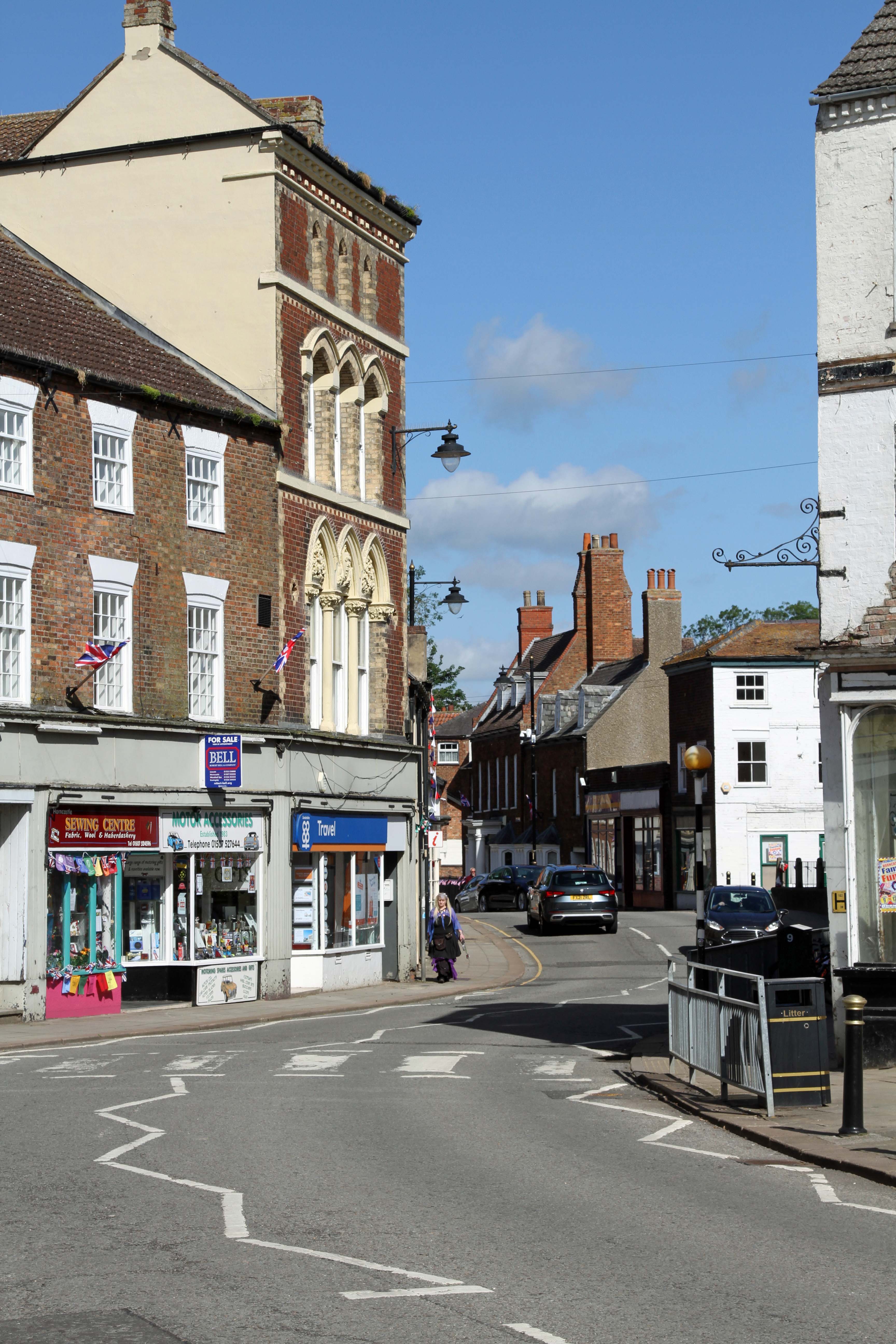
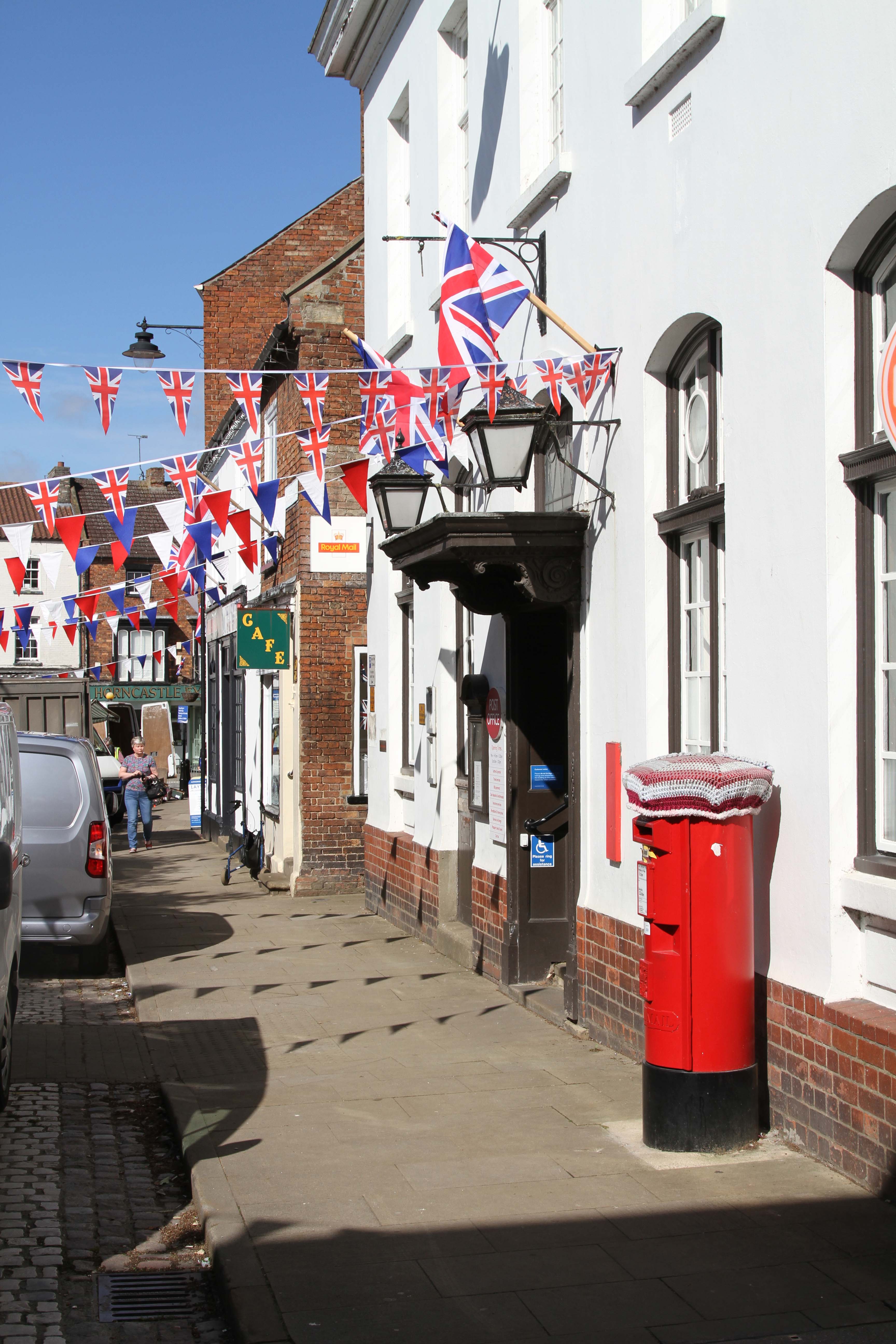
It was also my first visit there. It was market day – I love Lincolnshire markets! – and I had time to buy new potatoes (‘Boston potatoes’), the rich local soil still clinging to them, and some strawberries.

The event was very ably hosted by Helen, the library manager, and Donna and Hannah, two of the library’s librarians.
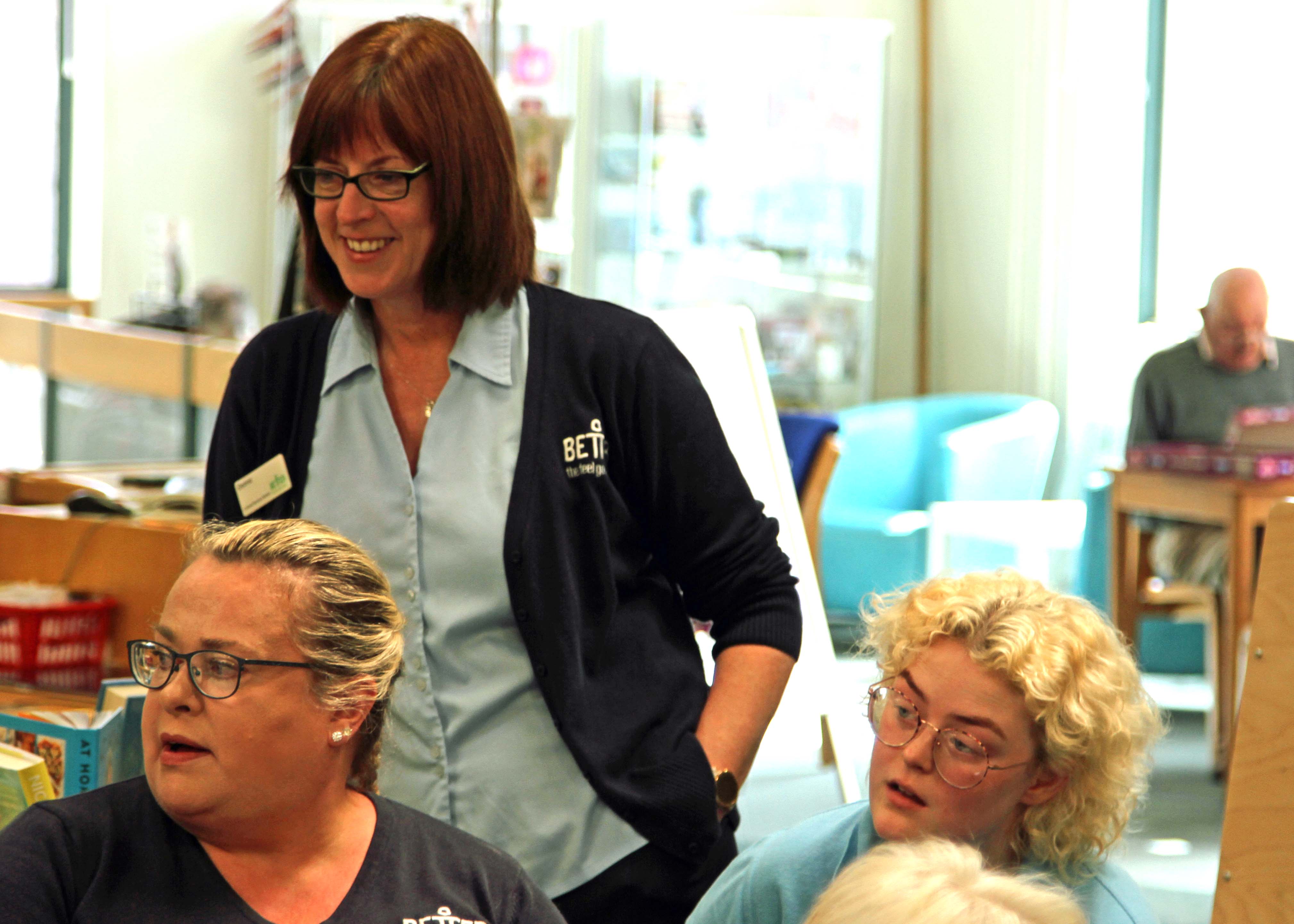
All were wonderfully hospitable and knowledgeable about the history of the town and famous people who have lived there: I discovered, for example, that the poet Alfred Lord Tennyson was born at Somersby, near the town. The audience – some of them members of the library’s book club – was also formidably knowledgeable, as well as being avid crime fiction readers. After the formal part of the talk, the discussion ranged far and wide. Over tea and biscuits, we managed to talk about local murders, discrimination against women, why I use a pseudonym, local tycoons and local customs – including an explanation of the fascinating ‘ran-tanning’, something I had never come across before, even though I am Lincolnshire born and bred. It was an ancient practice adopted by the neighbours of a wife-beater, who would surround his house and make a racket by beating on pots, pans and farm implements until he treated his wife with more respect. If he transgressed again, the process was repeated: an early version of Neighbourhood Watch and vigilantism combined which was probably more effective than calling the police today. It might be worth a revival.
I stayed talking with the Horncastle audience for so long that I only just made it to Mablethorpe for the afternoon event.

Kathy, Manager of the recently built and very well-stocked library, and her colleagues had gathered an impressive audience which consisted of local people across the age range, including several children.
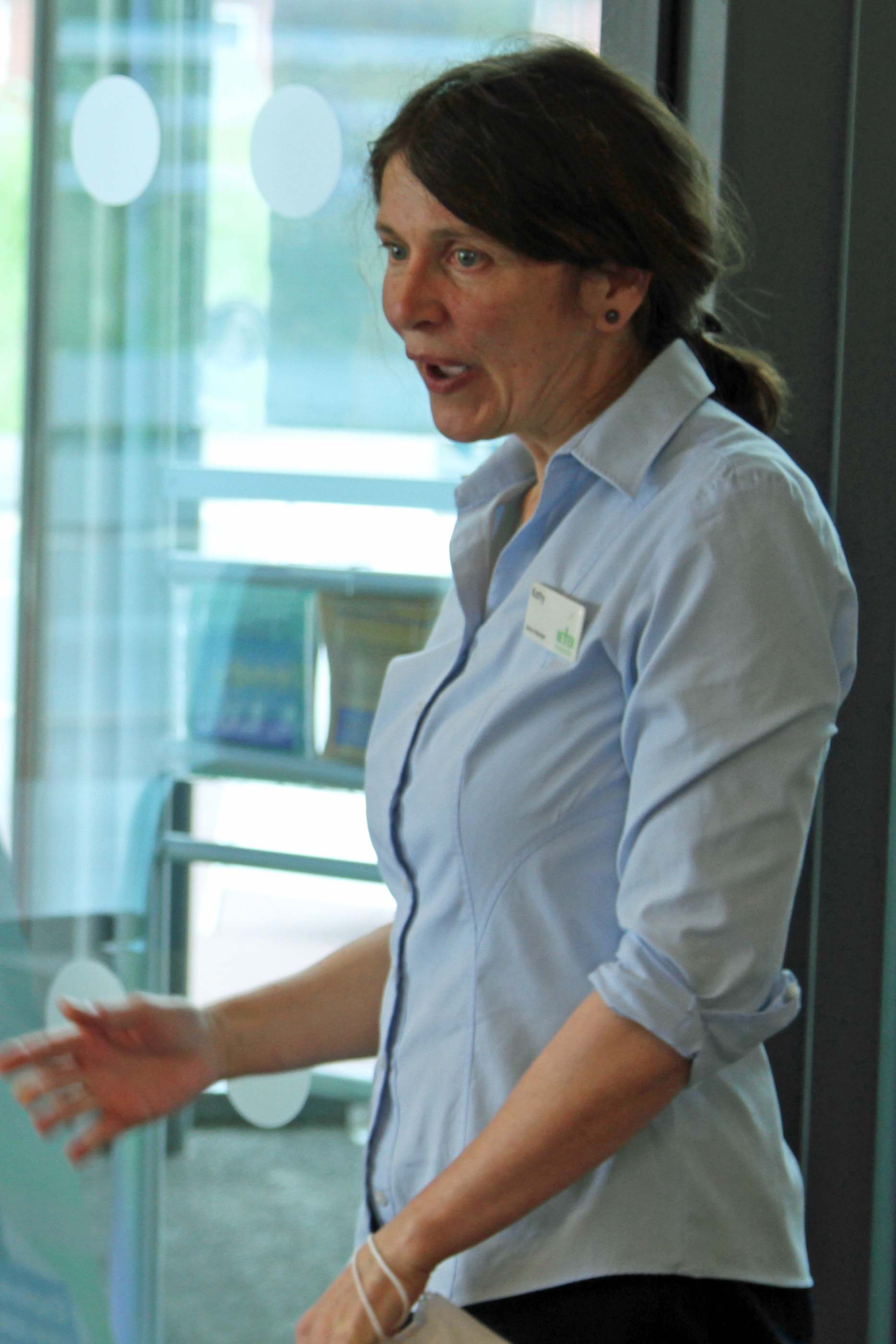
Once more, there was a lively discussion which covered many topics – again accompanied by tea and biscuits – after the main talk. This audience was interested in the process of writing, how to get published and how authors exercise their rights over the more unusual outputs of publishing – films, TV scripts, audio etc.
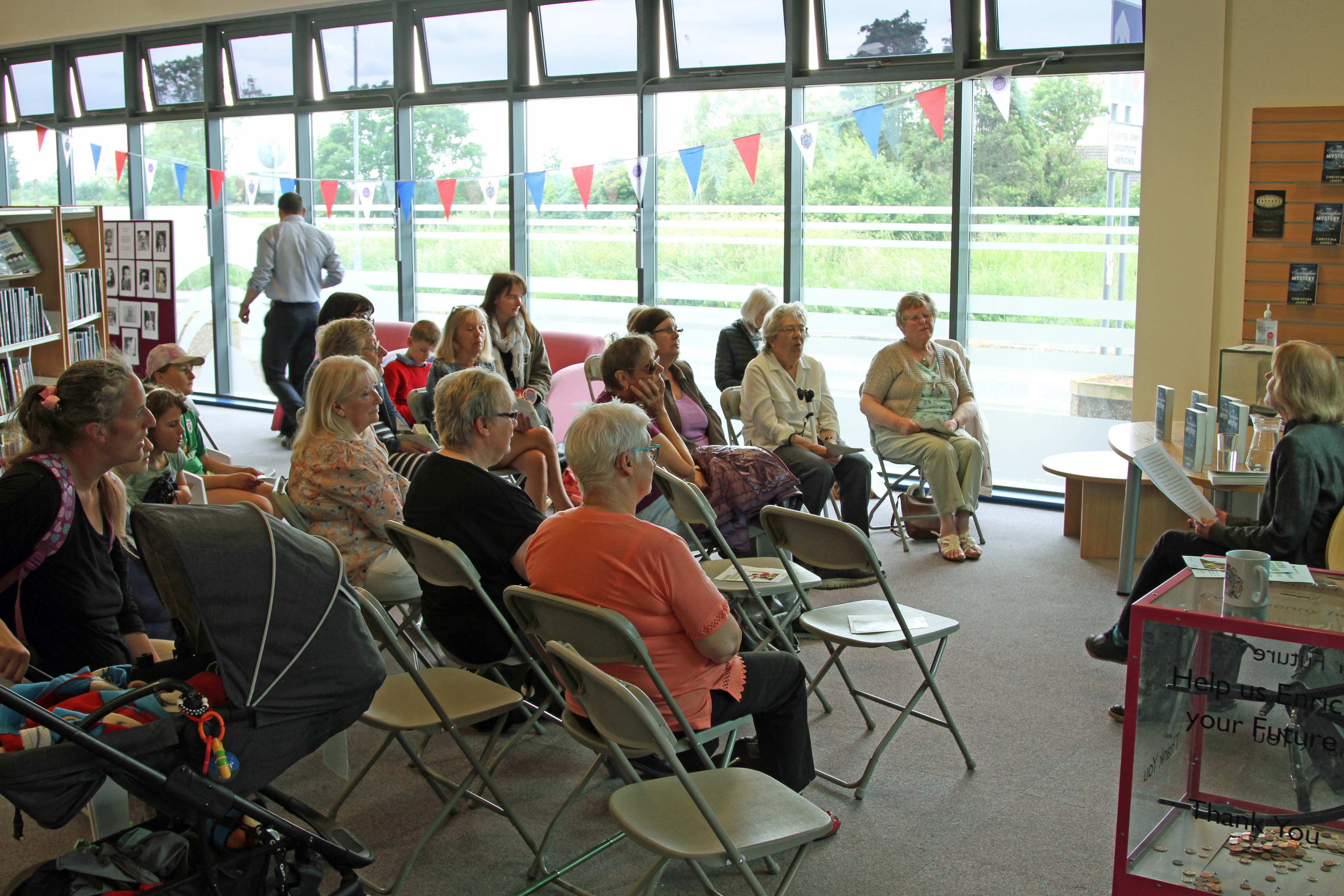
They particularly wanted to know whether, if I sold the film rights to my books, I would let the film company alter the characters and the endings of the books. (My answer was a resounding ‘No!’ 😉) They said they had often been disappointed when they’d watched films of books they had read, only to discover that the script writer had “mucked about” with the author’s story.
One of the young women present and two of the children were aspiring writers who wanted to know how to get their work noticed. One of the children had already won a writing competition. Ebony, her sister, presented me with a tiny, fluffy feather, which I have carefully brought home. I think it is beautiful. I suggested that they should start a blog and post on it often, sometimes supporting other writers, attend festivals, book themselves into author surgeries at events and, above all, exercise patience, courage and self-belief! Regular readers of this June CRM series will see that I have ‘borrowed’ many of these tips from others who have contributed to it.
For this series of Lincolnshire talks I have carried out some research to find an unsolved murder which took place in each of the towns in which I am speaking. As I still have two more talks to go – I am at Long Sutton library next Monday (13th June) and at Sleaford library on Friday 17th June I won’t today bomb the blog by introducing a spoiler that tells more. I shall, however, write a post about these murders – some of them very unusual – when the talks have all been delivered.
Huge thanks to Helen, Donna and Hannah and Kathy and her team for all the work they put into making these talks a success and for their magnificent hospitality. Massive thanks also to all the members of the two marvellous audiences. I hope that some of you will find this post, read it and like it – and that we may meet again. Kathy has already expressed enthusiasm for my suggestion of including a writers’ workshop next time I come. So, two more exceptional library teams that are awe-inspiring in their people skills, organisational flair and warmth of personality. Well done, Lincolnshire!
And a very special thank you to Ebony. I shall treasure the feather!

Three great librarians and what makes them tick

This month I shall be lucky enough to give talks at four Lincolnshire libraries: Horncastle, Mablethorpe, Long Sutton and Sleaford. The first two are on Thursday. In the first instance they were arranged by Lynne Kershaw, who has welcomed me to Gainsborough Library several times. When I was last there I asked Lynne and her colleagues to describe what it means to be a librarian.
On 24th May, it was my privilege to be invited to give a talk on crime fiction at Gainsborough Library in North Lincolnshire. I had visited the library before and was looking forward to the warm welcome that the librarians, Lynne, Fabi and Jill, always provide.
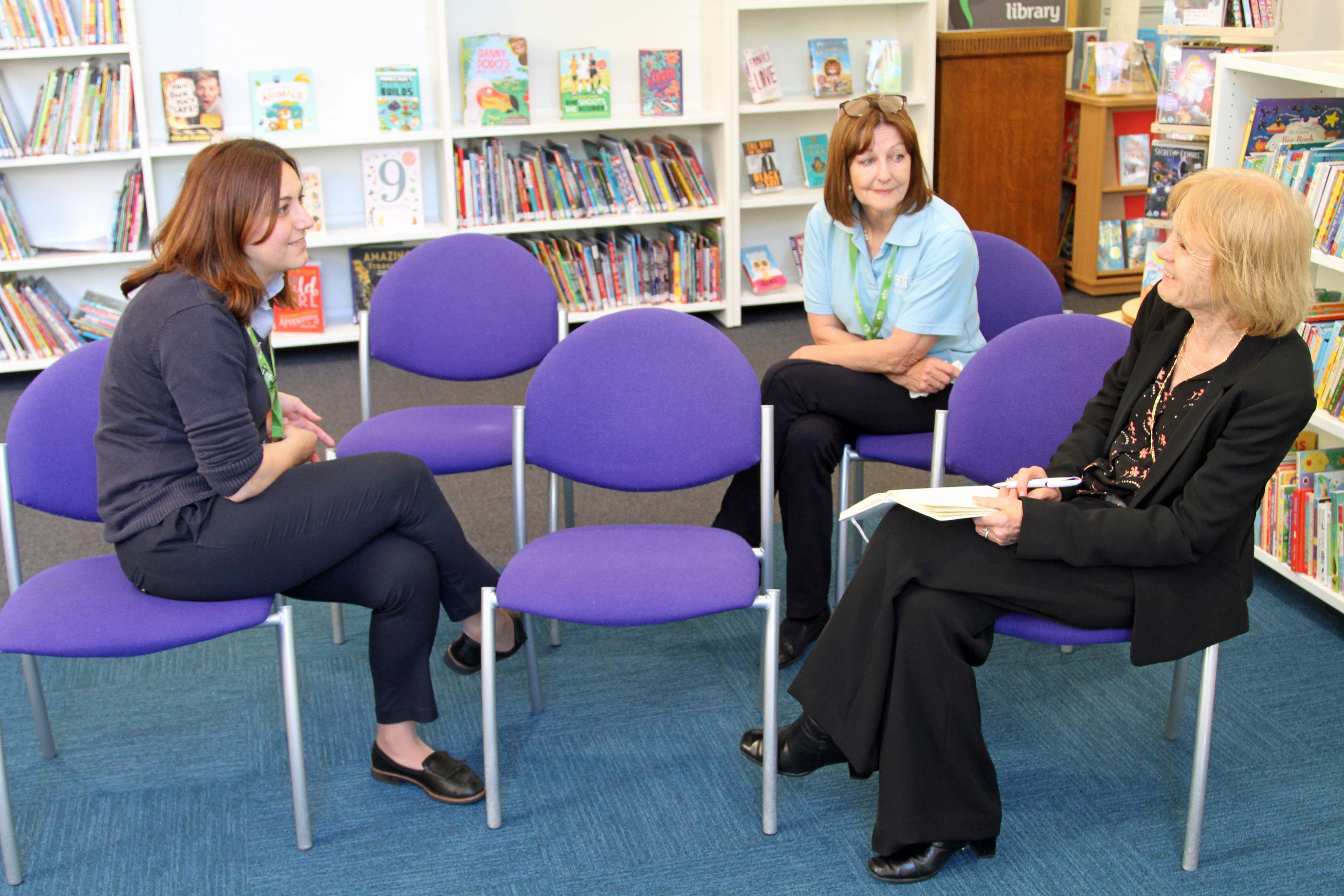
Between them they have devoted fifty-one years to the library (Lynne has worked there for twenty-six years, Fabi for nineteen and Jill, seven). I asked them what inspires them. What makes them so committed to their jobs?
They said they love reading and books, being with people and helping those who use the library. They are much more than advisers about and dispensers of books: their patrons confide in them and often need their support to help sort out problems.
“There’s a lady who’s been using the library for a long time who told us she had been bereaved. She was very lonely and needed to get more activities into her life. We put her in touch with people who could help her. Now the only free day she has is Tuesday.”
These librarians are particularly devoted to helping children. “We want to inspire people to read. It’s a real joy when children want to come in and choose books to read. There are still many families who have no books at home.”
The library has set up a writing group of a special kind. Led by a journalist, it aims to provide therapy for people who are depressed or suffering from a disability. And many people who visit the library regularly come to use the computers. Being able to access computers has become a crucial element of all library services since applications for government benefits switched to online. Often people who are entitled to benefits don’t have computers of their own and, quite frequently as a result, they don’t know how to use them. The librarians have had some training in assisting with this, but the technology is always changing and it’s sometimes hard to keep up with it. A ‘computer buddy’ therefore offers sessions in the library on Mondays and Tuesdays. The library is made available to other groups and societies who want to use it, too.
Lynne, who is the library manager, said that her mum used to bring her to Gainsborough Library when she was very small – she thinks from the age of seven. Recalling what the library was like then, she remembers that all the books were catalogued in card index files and there was always an old bloke smoking a pipe who had come in to read the newspapers. (The library has kept its collection of old newspapers.) After she left school, she worked in a bank; then, when she had her first child, she looked for a job in the library and has been working there ever since.

They organise as many events as they can cope with. ‘My’ event was obviously about crime fiction. Many events are intended to keep children reading: they were preparing for a sequence of Platinum Jubilee events when I was there. They will also launch a Summer Reading Challenge, which will last for six weeks. A separate event is planned for each week and children are encouraged to read six books in the period. Each time they read two books, they receive a prize, and a certificate when the challenge finishes.
Despite all this activity – and very hard work – the librarians say that it is sometimes difficult to explain how librarians and libraries add value. They are continually having to justify their existence to the government and others who scrutinise the (relatively modest) costs of running a public library service. “It’s hard to define qualitative work.”
As an author, I can say librarians have certainly added shed loads of value for me – and, I’m sure, for other authors, too. It’s not just the joy of being welcomed to a place where my novels are really appreciated or the buzz of being invited to talk about writing – though both are of course important – it’s achieving the holy grail of being able to interact with readers in the flesh, of having the chance to ask them what they like to read, who their favourite authors are and what they think of individual books. In my experience, readers pull no punches – but they are also amazingly generous. The amount of time they are prepared to spend on reading my books and afterwards thinking and talking about them is truly humbling. It may sound trite to say it, but readers are the lifeblood of writing; and authors would attract far fewer readers if librarians did not devote every day to promoting their books.
Her Majesty the Queen Investigates: The Windsor Knot, by S.J. Bennett

As a small offering to the finale of the Platinum Jubilee long weekend, I thought it would be jolly to review this zinger of a book. First published in 2020, the same year as The Thursday Murder Club, the first of Richard Osman’s crime fiction series about OAP sleuths, The Windsor Knot delights with a similar combination of wicked irreverence, compassion and incisiveness and a similar regard for the prowess of the elderly. Is it too fanciful to suggest that these two novels, both published in the first year of lockdown and therefore written before COVID struck, sparkle with a pre-pandemic joy that is only slowly being rekindled in fiction?
The Windsor Knot tells the story of a murder that takes place in 2016 at Windsor Castle after a soirée that the Queen has agreed to host for wealthy Russians to please Prince Charles, who is hoping for donations to one of his charities. Some of the guests are invited to stay the night and the following morning one of the performers, a young dancer with whom the Queen herself has danced, is found hanged in a cupboard. At first, he seems to have accidentally suffocated whilst engaging in an arcane sexual practice – Bennett has a lot of fun depicting a scene between the Queen and her private secretary in which the latter tries to explain the nature of this practice while cloaking it with a delicate vagueness that immediately causes the Queen to probe further: as she later remarks with terse precision to Prince Philip – who has just observed that the young dancer had been ‘strung up like a Tory MP’ – the official cause of death was ‘autoerotic asphyxiation’. She had looked it up on her iPad.
The Queen, however, comes to realise the accidental death notion won’t wash. Reluctantly she accepts that the young Russian has been murdered and then, with increasing enthusiasm, sets out to uncover the killer. I won’t reveal any more of the plot, as it would be certain to introduce some spoilers; but suffice it to say that at every twist and turn she displays a commonsense attitude coupled with uncanny acumen and impressive levels of expertise in all sorts of areas that perfectly reflect what the actual Queen allows to be known of her character.
As well as trying to shield her from the seamy side of life, people with whom the Queen comes into contact regularly patronise her. She accepts this behaviour with a grace and wry amusement that is shared with the reader. Here she is with Gavin Humphreys, the new Director General of MI5:
She stopped in her tracks, calling briefly to the dogs, who were keen to keep going. ‘Assassination?’ she repeated. ‘That seems unlikely.’
‘Oh, no at all,’ Humphreys said, with an indulgent smile. ‘You underestimate President Putin.’
The Queen considered that she did not underestimate President Putin, thank you very much, and resented being told she did. ‘Do explain.’
There are several prescient accounts of geopolitical events that had not occurred when the book was written but have happened since, the sinister references to Putin included. There are also some scenes that are both funny and sad, particularly those between the Queen and Prince Philip, who in the novel is semi-retired from public life, but still very much alive. About to set off on a trip to Scotland, he asks the Queen if he can bring anything back for her: ‘Fudge? Nicola Sturgeon’s head on a platter?’
‘Actually,’ she said, as he bent arthritically to drop a kiss on her forehead, ‘I wouldn’t mind some fudge.’
Poignantly, the Queen as she appears in The Windsor Knot is ‘only’ eighty-nine and still in robust good health, as the real Queen was at that age. There is now a sharp contrast between this fictional figure and the frail if still beautiful and determined matriarch full of years who appeared so briefly on the balcony of Buckingham Palace last Thursday. The jacket of the book – again, by coincidence – sharpens up the pathos with its illustrations of the Queen’s familiar black handbag, the Queen herself dressed in powder blue, a brooch pinned high on her chest, in an outfit very similar to the one she was wearing last week.
This is a brilliant novel: it sends up the establishment, but only very gently, it offers huge laugh-aloud entertainment, it’s a great whodunnit and, for those who care to look for them, it offers some profound insights into Britishness and what makes the British nations tick. It sparkles with wit but most decidedly is not ‘cosy crime’ – a term I abhor and which is used far too loosely to pigeonhole a work of crime fiction that is not filled with gore and violence on every page. It is crime fiction for grown-ups. I had never encountered S.J. Bennett’s work before I bought this book. The blurb tells us that she ‘wrote several award-winning books for teenagers before turning to adult mysteries.’ I understand that there are already three titles in the Her Majesty the Queen Investigates series. I shall certainly read the others. I hope the real Queen knows about them and has found time to read them, too, as they would certainly make her laugh.
Richard Reynolds: the pure genius

As John Aubrey, the seventeenth century polymath, bibliophile – and bookseller – observed, “to read a book is demanding, for one must stay awake; to write a book is more demanding, for one must stay awake and think; but to sell a book – ah, that is a work of pure genius!”
I’m starting this series of celebratory posts with a piece about Richard Reynolds, the undisputed doyen of crime booksellers. Why begin with a bookseller? Because without the services of the bookseller, the entire creative process that concludes with the finished book would be pointless. Bookselling is an art under-rated by everyone who has not practised it.
Richard began his working life in September 1976 as a ‘classical music consultant’ at Hardman Radio in Manchester. He loved reading and would trawl new and secondhand bookshops and market stalls in the city. In early 1980 he spotted a job advert in Jardine’s bookshop, applied for it and began his bookselling career a few months later. In 1981, he was appointed buyer for the sports section at the famous Heffer’s bookshop in Cambridge, progressing to travel and biography and then to the literature department, which boasted an impressive twenty-five standard book ‘drops’ (book cases).
Richard’s manager knew he was a crime fiction buff and encouraged him to use a small space under the ledge near to the stairs to develop a crime fiction section. As sales took off, crime was promoted to more prestigious areas in the shop.
Heffer’s is famous for its crime fiction events. Richard explains that these began in a small way in 1990 with Bodies in the Bookshop. Heffer’s put on “a wonderful display of crime fiction titles and ephemera on the platform halfway down the central staircase. Penguin Crime Classics sponsored a competition: the winner to supply the scream in Agatha Christie’s The Mousetrap. I still have the poster! Heffer’s first crime fiction catalogue was produced at the same time. Five authors came to sign books on the last Saturday of the month: Colin Dexter, Lindsay Davis, Reginald Hill, Minette Walters and Michael Dibdin.”
Sixty authors took part in the last of these events, for which, for seventeen years, Richard compiled the catalogues. He still receives ‘heartening’ requests for copies from readers trying to fill gaps in their collections. As the numbers of authors increased, what had been a single annual event became three separate ones: What’s Your Poison, Murder under the Mistletoe and Murder Will Out, now organised by events manager Kate Fleet.
Since the COVID restrictions were lifted, events have resumed but been smaller: a launch party for After Agatha, by Sally Cline, Kate Rhodes in conversation with Sarah Vaughan about her book Reputation, and a launch party (with jazz quartet!) for Peter Morfoot’s Essence of Murder. On June 23rd, Financial Times reviewer Barry Forshaw and Kate Rhodes will discuss Simenon: The Man, The Books, The Films and The Devil’s Table, the fifth of Kate’s Scilly Islands series.
Richard finds it very difficult to name an individual crime writer as his favourite. During lockdown, he re-read the whole Scilly Isles series, as well as books by Nicola Upson, Rennie Airth, Barry Maitland and Charles Todd. In 2019, as he approached his fortieth year as a bookseller, he compiled his personal list of 100 Favourite Crime Novels. If pushed to choose he says his favourite book would be The Murder of Roger Ackroyd and his favourite author Agatha Christie.


Richard is still a bookseller, but he now combines this with editorial and publishing activities. This began when he suggested to Penguin Random House which authors they should reissue under the Vintage Crime imprint. He has acted in a similar capacity for Ostara Books, Oleander Press and Clerical Crime and assisted with the publication of six Gold Age titles under Oleander Press’s Oreon imprint. More reissues are planned in the coming months.
He says he is grateful to his wife, Sally, for tolerating a house full of books! His small attic study is stacked high with collections of Penguin Green Crime, Gollancz yellow jackets, Golden Age titles, Cambridgeshire crime fiction, translated crime fiction, historical whodunnits, much recent detective fiction, a substantial collection of crime reference books and… and… and..!
Musing on his career, he says, “I suppose specialising in crime fiction is like being paid to pursue a hobby. Badgering publishers to re-publish good authors is a privilege. I enjoy working out the best fit between the author and the publisher. I serve as chairman of the CWA Gold Dagger Award for best crime novel of the year, for which there have been 260 submissions this year, making it hard to create the long list. The winner will be announced on 29th June.”
For aspiring booksellers, he offers the following message: “The late John Cheshire, a chatty, encouraging and supportive Heffer’s shop manager, told me not to spend my small salary on books but instead ask reps for proof/reading copies so that I could help publicise them. I have kept to that advice – and I’d like to thank all the reps and publishers who’ve kindly kept me supplied with reading material. And it’s important for booksellers to keep on reading ephemera about books: articles, reviews, blogs, information on publishers’ and authors’ websites.”
Asked what his advice to someone just starting out on a crime fiction writing career would be, he says that as writing is a solitary occupation it is important to chat to local booksellers and meet other authors, especially at events or festivals such as Crimefest and the Harrogate International Festival or one of the many good smaller festivals that now exist. It’s also a good idea to attend other writers’ launch parties, read widely – and try not to overwrite! Having some bookmarks printed is an inexpensive way of getting noticed – it’s easy to underestimate how useful they can be.
As an author, I am inexpressibly grateful to Richard and all the booksellers who make it their life’s work to support writing and reading. He is a man who practises sheer genius every day! If he were still alive, I know John Aubrey would be the first to agree.

Tomorrow’s post will be about an aspiring crime fiction writer, Fraser Massey, who is already a distinguished journalist.
The Sandringham Mystery: launched at two stellar events
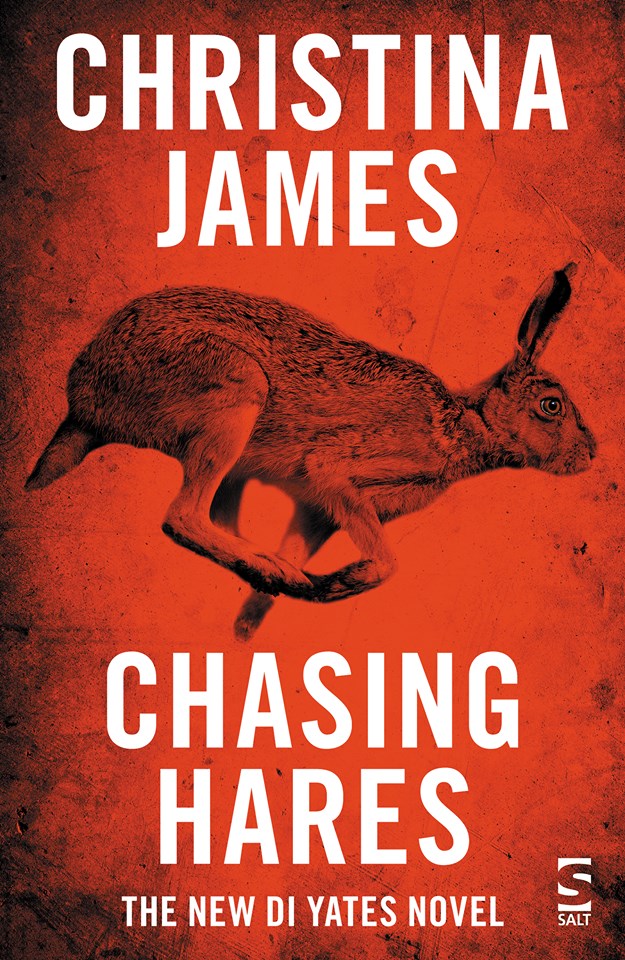
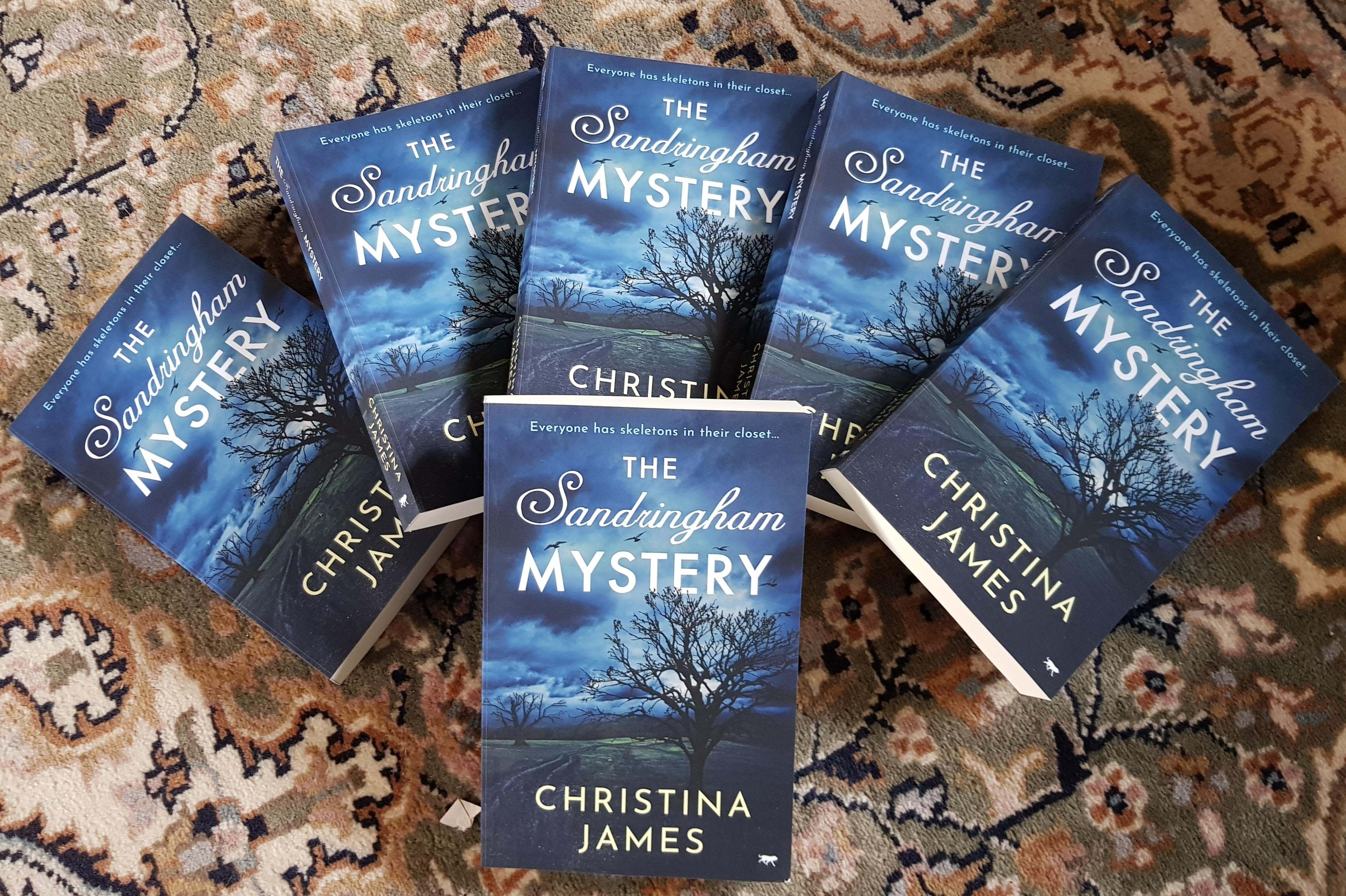
The Sandringham Mystery was published by Bloodhound Books on April 19th, just after the Easter break. The Bloodhound jacket is brilliant – I’m delighted with both it and the support I’m getting from the Bloodhound team. They even sent me an inscribed mug to celebrate the publication date – a first in my experience!

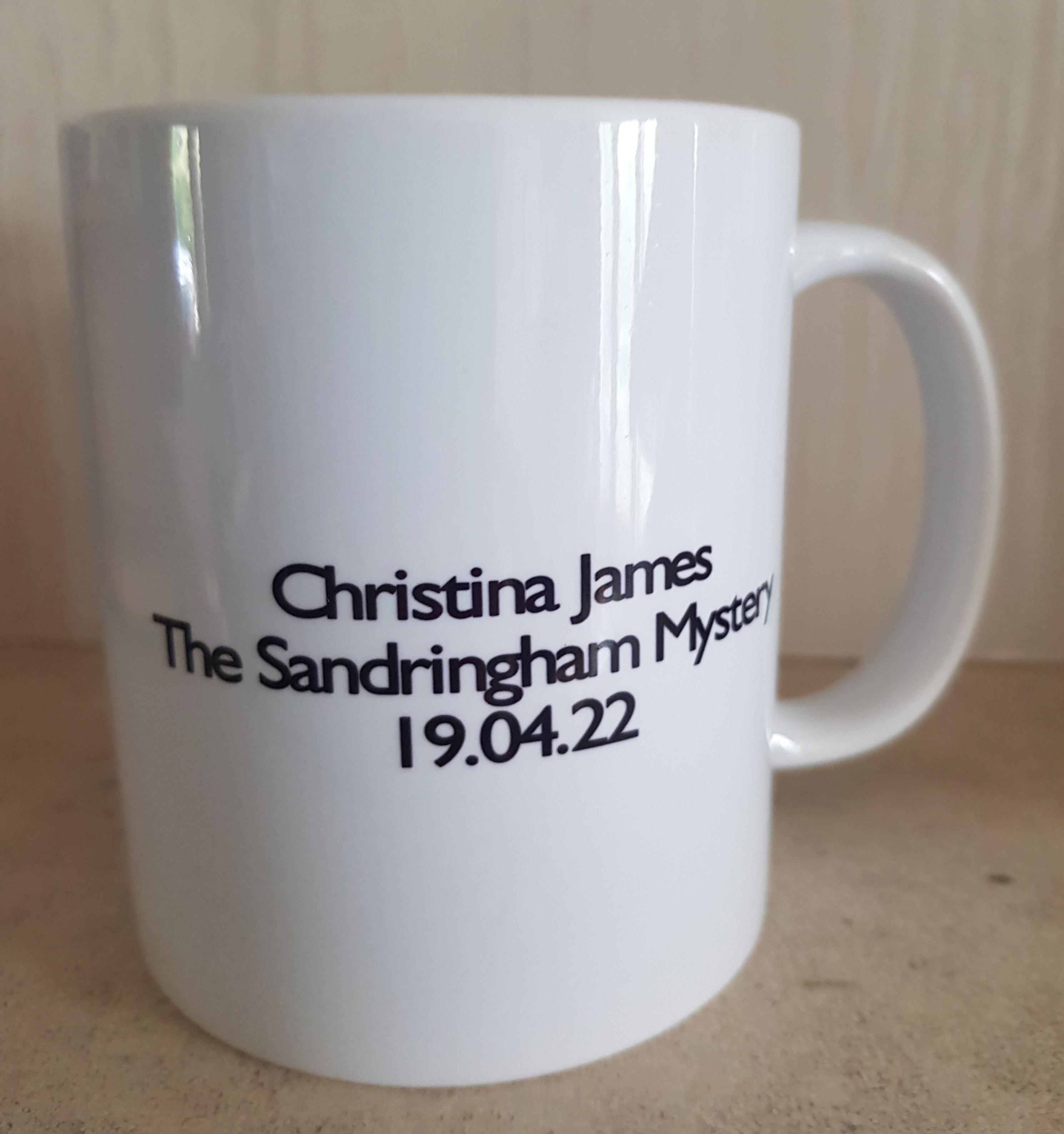
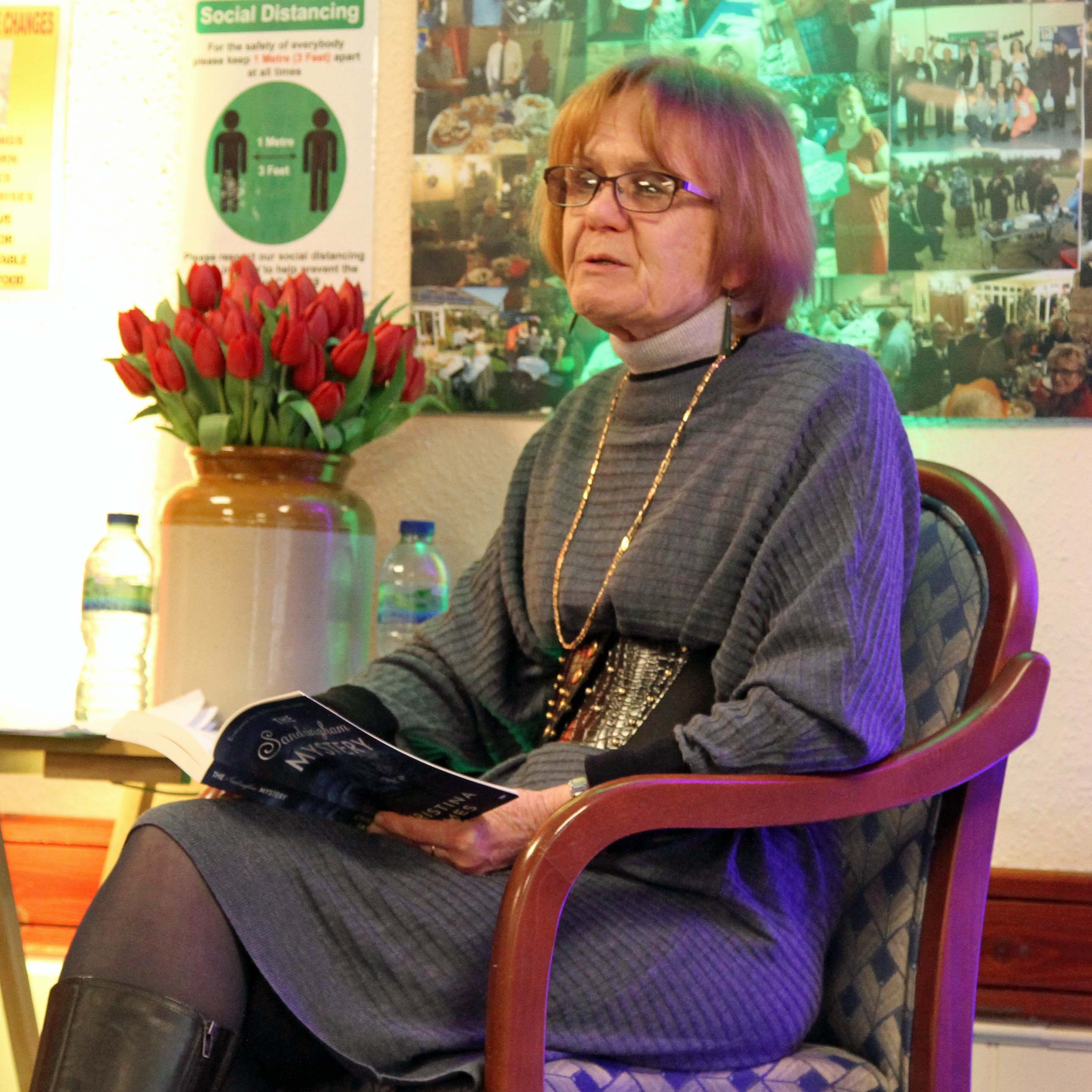
I feel extremely privileged to have been invited to speak at two events very shortly after the book came out. First was the Deepings Literature Festival, where I gave a talk in the Oddfellows Hall at Market Deeping on April 29th to a very lively and engaging audience. I was so happy to be able to speak at the festival at last – I had been scheduled to make my debut there in 2020, but COVID intervened. Astonishingly, since I grew up in Spalding, which is only twelve miles away, I’d never been to Market Deeping before. (I know Deeping St Nicholas well – my great aunt lived there – and I visited Deeping St James as a child – with my father, whose job included dropping in on sugar beet farmers.)
I know of several Oddfellows Halls in Lincolnshire and, as the name has always intrigued me, I looked it up. The name ‘Oddfellows’ was first used in the early eighteenth century, but their practices were much older – the movement derived from the mediaeval guilds and there are even some suggestions that its roots lay in ancient Rome. The Oddfellows were – are? – akin to the Masons, but the two groups have always preserved distinct identities. They were/are certainly not peculiar to or especially relevant to Lincolnshire (though someone no doubt will correct me on this!) and, since they seem in the past to have had strong links to Roman Catholicism – they were keen supporters of Bonnie Prince Charlie – their strong Lincolnshire associations are surprising. The county is more renowned for its championship of Wesleyanism than Catholicism.
The Oddfellows Hall in Market Deeping turned out to be a very hospitable place. I was grateful that so many people chose to attend the event – the hall was packed – and to stay behind to talk to me afterwards. Huge thanks to Linda Hill and Jenny Spratt for organising and promoting it.
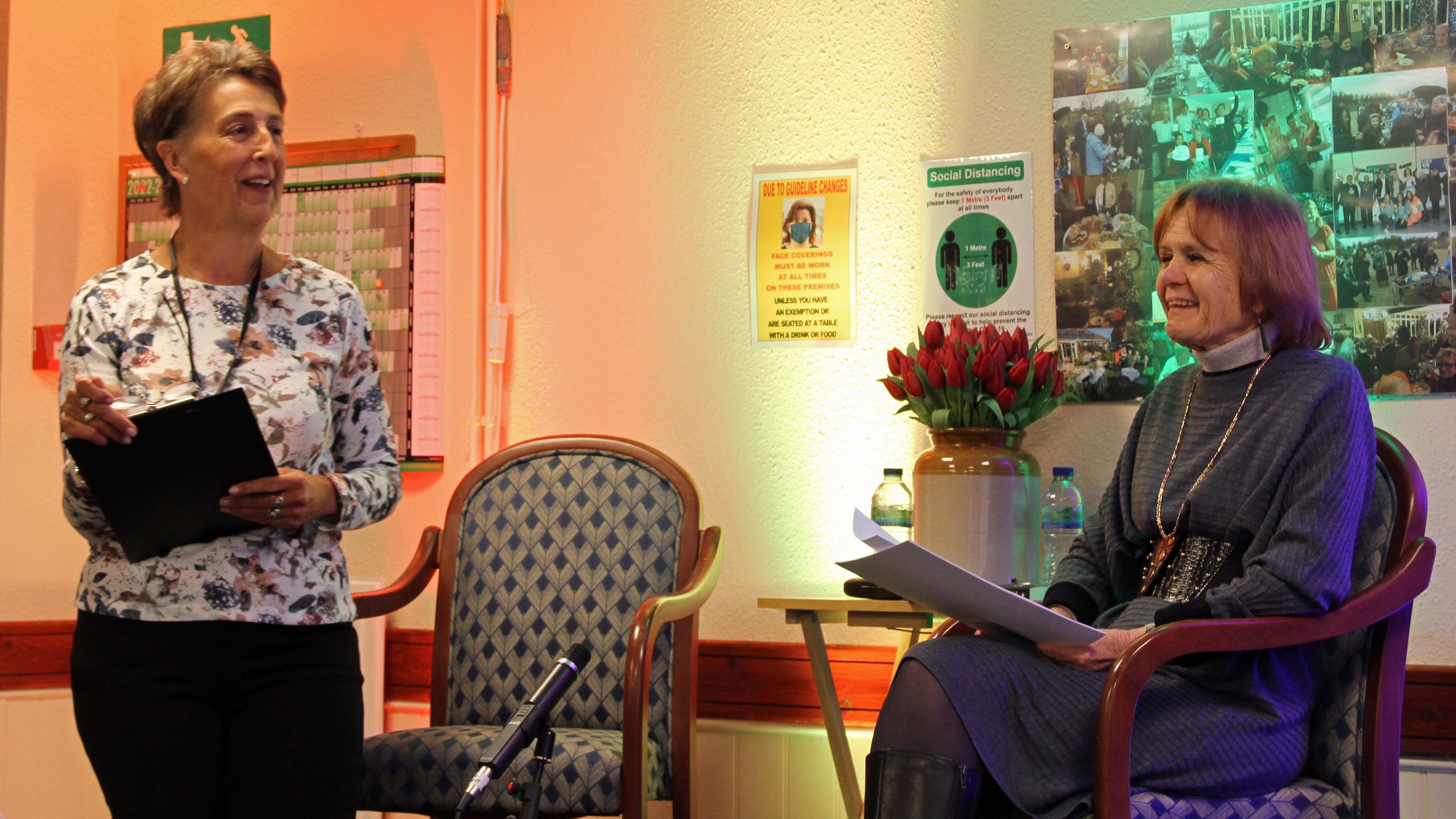
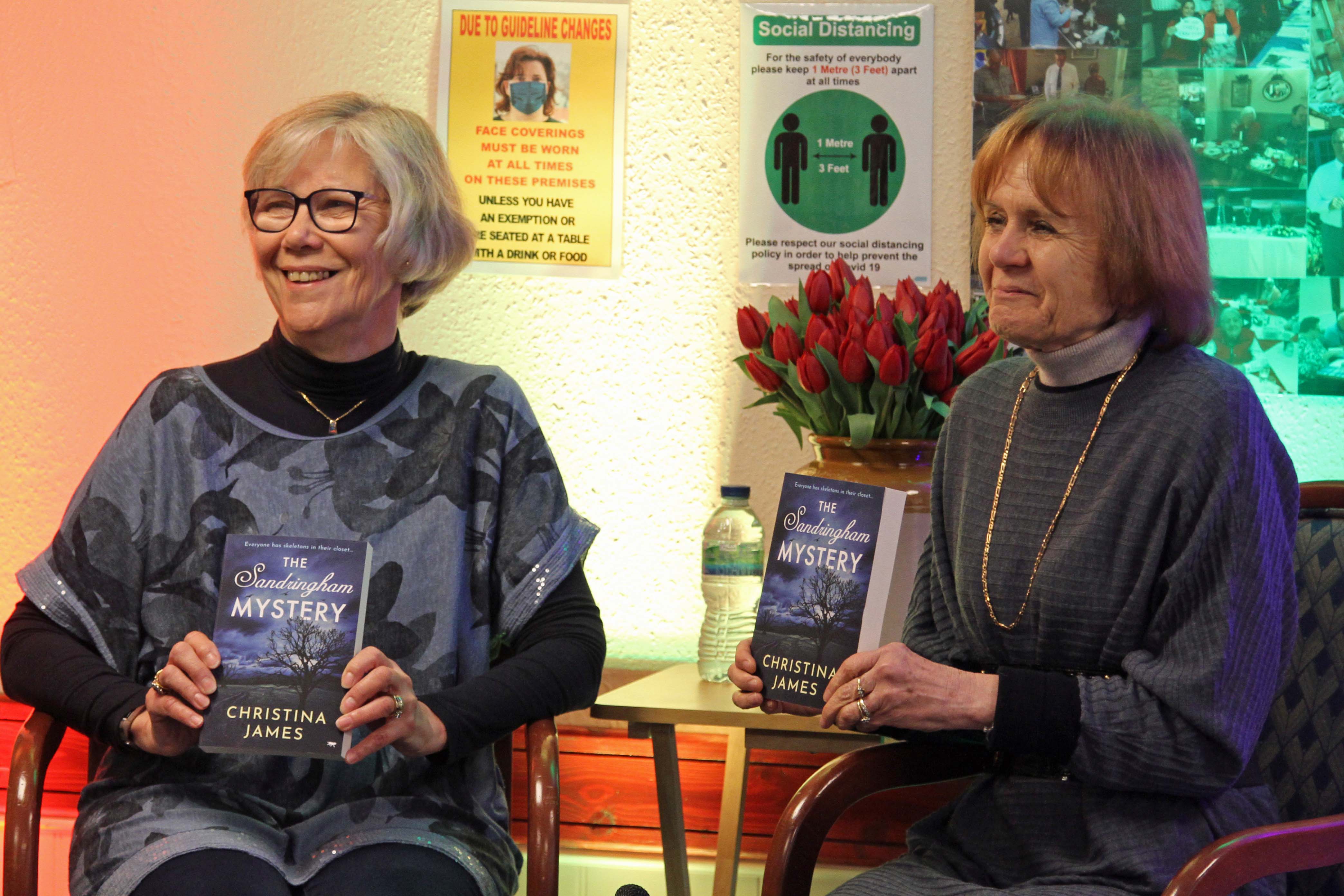
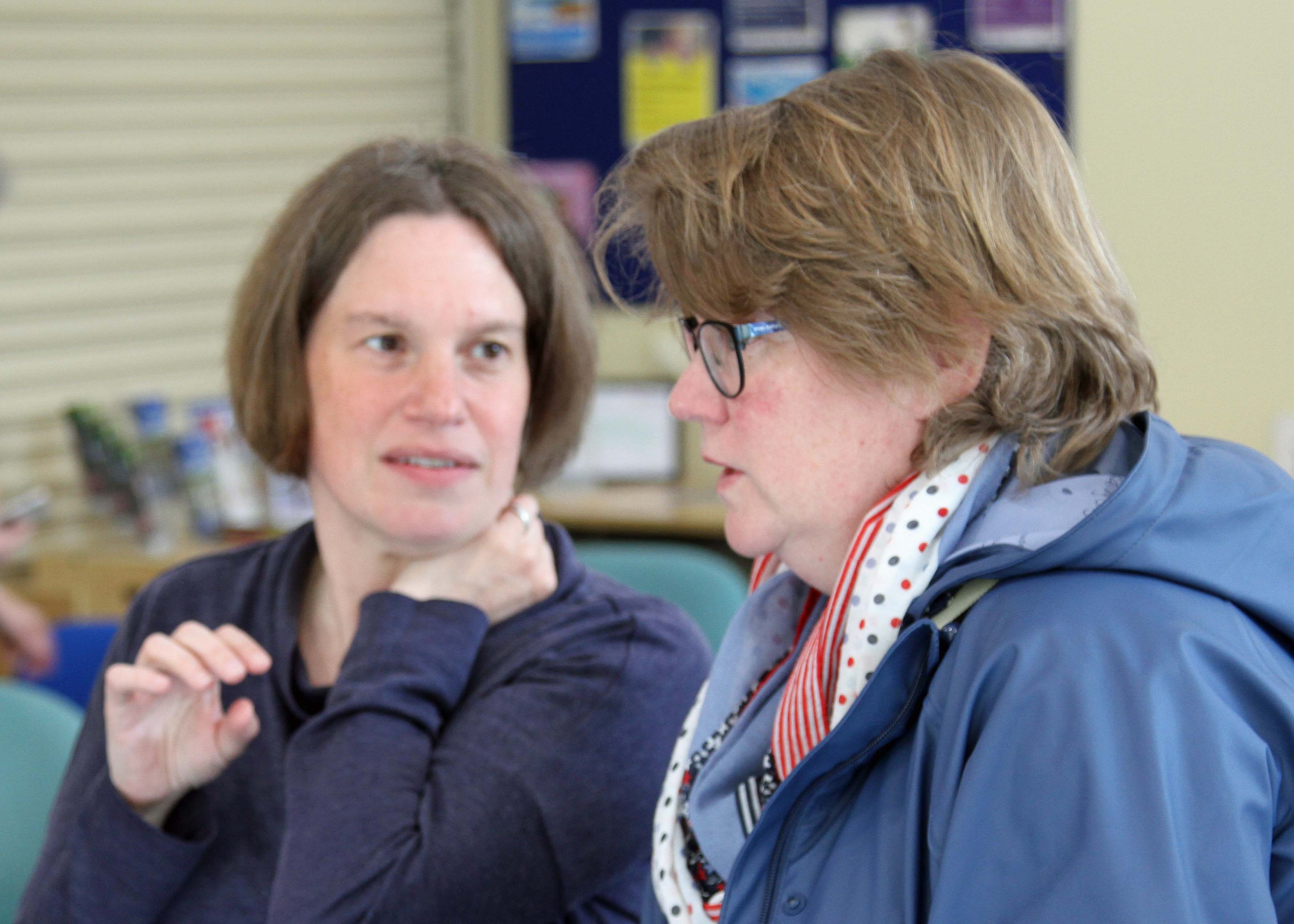
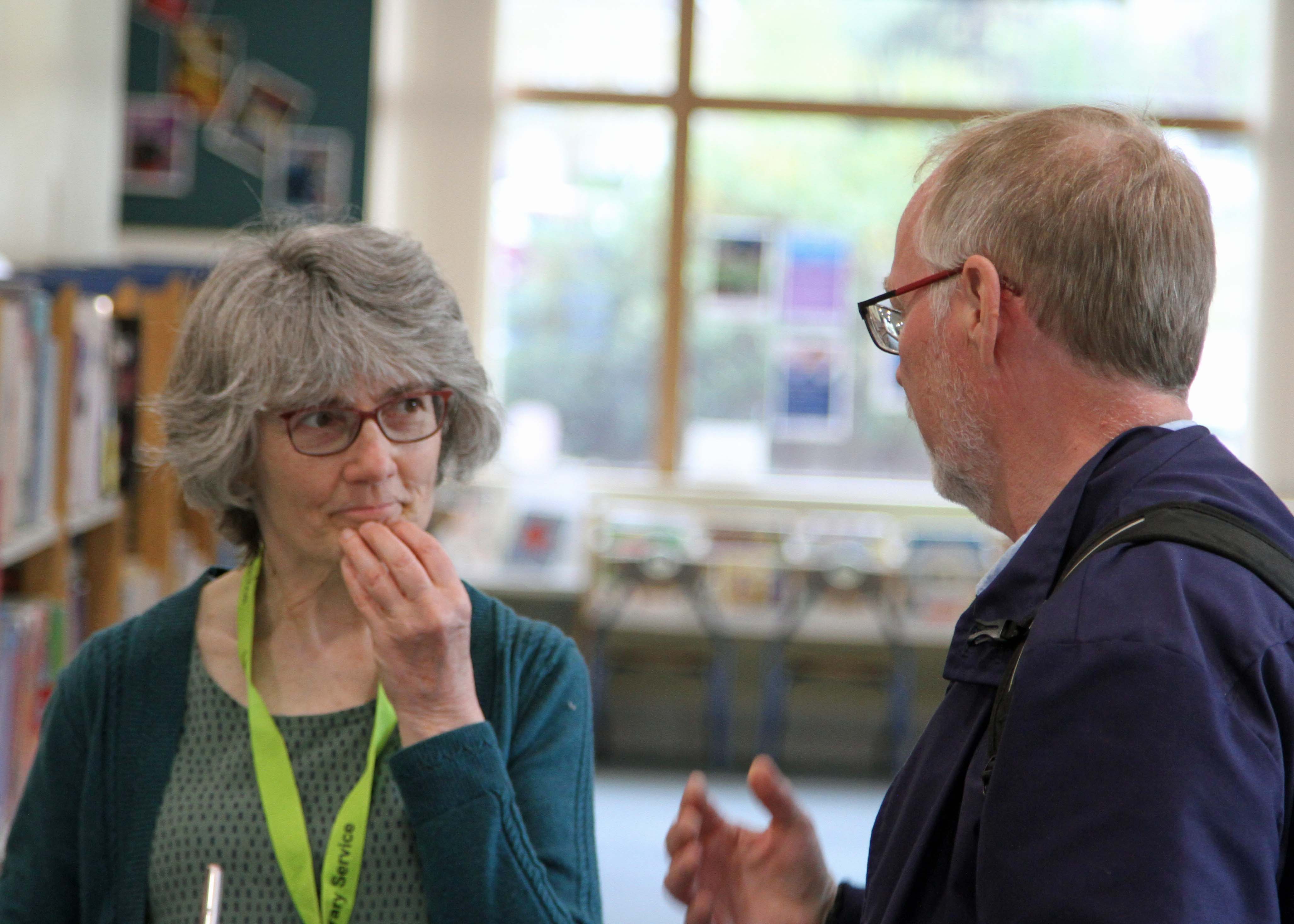
Five days later I was welcomed to the library at Papworth Everard, where I was honoured to take part in the first author event there since the COVID lockdowns of March 2020. This was attended by another large and lively audience, including at least two fellow authors. We managed to discuss many topics, including the relevance of government crime statistics, the importance of place in crime fiction, how to plan a novel and how authors use real crime stories for inspiration while at the same time being careful not to cause distress by depicting the real-life victims. Huge thanks again to Nicola and Terri, who put in an enormous amount of work to make this a success.



It is great to be back on the author circuit again. I’m certain that many other authors feel the same. This will be the best year we’ve had since 2019 – the magic created, as always, by wonderful readers and audiences. I’m hoping to take part in many more events as the spring turns into summer. If you are running a library, a festival or a bookshop and think I can make an interesting contribution, please do let me know.
The Sandringham Mystery and some personal memories of places and people with a part to play in its creation
When I was a child, the motor car was the ultimate status symbol. Families aspired to own one and felt they had ‘arrived’ when the car did, however shabby or humble it might be.
Our next-door neighbours, Harry and Eileen Daff, were the first in our street to bring home a car. Theirs was a forties Morris with running boards which looked as if it belonged on a film set, but that made it yet more glamorous in the eyes of the local children. The Daffs went out for Sunday afternoon rides in their car. Mrs Daff – ‘Auntie Eileen’ – was always promising to take me, too, but the invitation never materialised.
My father acquired our first car about three years afterwards, when I was nine. It was a two-door Ford Popular which we nicknamed ‘Hetty’. I can remember the registration number: it was HDO 734. Hetty, like the Daffs’ Morris, was not only second-hand but practically vintage. My father had saved hard to afford her and had still needed a loan from my miserly – but loaded – Great Uncle David to complete the purchase.
Great Uncle David lived – indeed, spent his every waking moment – working in the convenience shop in Westlode Street which he had inherited from his parents despite being their youngest son, presumably because he had scoliosis and was considered ‘delicate’. My paternal grandmother kept house for him. They were only a short bike ride away.
My mother’s mother, however, was the paid companion of a very old lady and lived in Sutterton, nine miles distant, which meant that in pre-Hetty days visits had to be accomplished by bus. It was usually she who visited us, invariably spending the morning of her day off shopping in Spalding and then walking to ours for lunch. Post-Hetty, we were able to make more frequent visits to Sutterton. However, I was still sometimes allowed to travel there alone on the bus. It was nearly always on a damp, foggy day when the sun never broke through the Fenland mists.
The house she lived in was the house I have called Sausage Hall in The Sandringham Mystery. It was a big, gloomy red-brick house in considerable need of repair. Sometimes she occupied the breakfast room when she had visitors, but her natural habitat was the kitchen with its adjoining scullery, in both of which roaring fires were kept burning night and day throughout the winter months. The kitchen fire had a built-in oven in which she would bake perfect cakes. Lunch would be tinned tomato soup and bread, followed by a big hunk of cake. Cherry cake was my favourite.
Her employer’s name was Mrs James. My grandmother always referred to her as ‘the old girl’. Mrs James’s first name was Florence and she was one of a large family of sisters, the Hoyles, who had been brought up in Spalding in extreme poverty. One of the sisters still lived in what could only be described as a hovel in Water Lane and occasionally, after one of my visits to Sutterton, I would be sent round with cake or chicken. Miss Hoyle never invited me in. She would open the door a few inches, her sallow face and thin grey hair barely distinguishable from the shadows of the lightless cavern behind her, and reach out a scrawny hand to take what I had brought, barely muttering her thanks before she shut the door again.
My grandmother, also the eldest of a large family of sisters, despised the Hoyles. Mrs James was not exempt. My grandmother’s father had been a farm manager, employed by a local magnate. He was a respectable, hard-working man of some substance in the community, unlike the allegedly feckless Mr Hoyle. According to my grandmother, Florence had ensnared Mr James with her pretty face, but that did not excuse her humble beginnings.
Florence, long widowed, had taken to her bed, for no other apparent reason than that she was tired of the effort of getting up every day. My grandmother delivered all her meals to her bedroom and sometimes sat there with her. When I visited I was expected to call in to see her before my departure. I never knew what to say. She would extend a plump, soft white hand from beneath the bedclothes and offer it to me. I’d shake it solemnly. Once, when I’d been reading a Regency novel, I held it to my lips and kissed it. She was momentarily surprised – I saw the gleam of interest in her eyes before her spirit died again.
Mrs James’s sons, both middle-aged gentlemen farmers, also performed duty visits. My grandmother and I were expected to call them ‘Mr Gordon’ and ‘Mr Jack’. In The Sandringham Mystery, Kevan de Vries, head of the de Vries empire, has his staff call him ‘Mr Kevan’. I lifted the idea from my experience of the two James brothers. I was about nine when I met them and could identify condescension when I encountered it.
Hetty broadened our horizons immeasurably. Instead of going out for bike rides at weekends, we drove to local beauty spots – Bourne Woods, the river at Wansford, Barnack – and sometimes on nice days even further afield, to Hunstanton, Skegness and Sandringham.
Sandringham, the Queen’s Norfolk estate, consists of many acres of forest, most of which were already open to the public, though the house itself wasn’t. It was possible to visit the church. Both local people and visitors would wait outside the wall beyond the churchyard for glimpses of the royal family when they were in residence. I saw Princess Margaret once. She had the most astonishing violet-blue eyes.
I associate Sandringham particularly with the clear bright cold of Easter holidays and the drowsy late-summer warmth of blackberrying. The blackberries there were enormous and my brother and I would scratch the skin on our arms to ribbons trying to reach the best ones. Parts of the woods were deciduous, but the blackberries seemed to flourish in the areas where the pine trees grew, planted in squares and divided up by trails (‘rides’). When I was writing The Sandringham Mystery, I remembered vividly a clearing in the woods that had been made by the crossroads of two trails. In the novel, it is here that the body of a young girl is discovered, the start of a police investigation that not only reveals why she was murdered, but also uncovers some other terrible murders that took place in the past, in Sausage Hall itself. The Sandringham Mystery is published by Bloodhound Books today. I hope you will enjoy it.
National Libraries Week
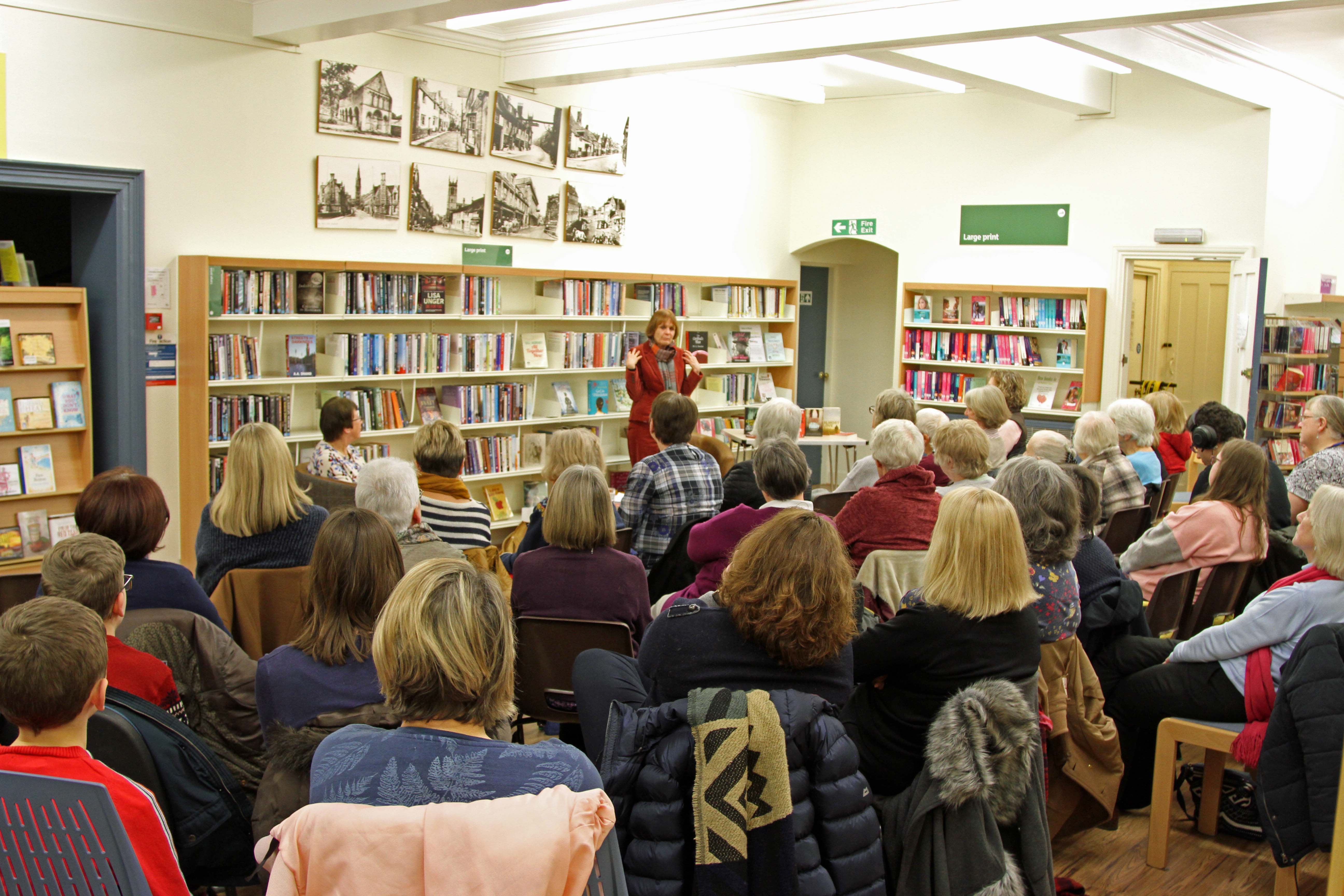
It is National Libraries Week (see Libraries Week). This is a great occasion for public libraries in the UK to showcase all their brilliant initiatives and demonstrate how much they do to support their local communities. Each year, National Libraries Week adopts a theme; this year’s is ‘Taking Action, Saving Lives’.
Given the unprecedented events of the last (almost) two years, it could hardly be more apposite. Like almost every kind of institution, public libraries here closed down for a few weeks during the first lockdown – and, like millions of people, I immediately noticed this left a big draughty gap in my life. Some people felt the loss much more acutely – both practically and emotionally, they really had lost a lifeline.
We were fortunate that most libraries continued to be resourceful, even in lockdown – my former school friend, Jane Barber, who works at Stamford Library, told me how she had quickly mastered how to run story-telling events and competitions online. Staff at the British Library searched their world-class collections to dazzle and entertain members with a stream of online displays and exhibitions and, as a result, I have discovered more about maps, newspapers, oriental art, Anthony Gormley, ‘killer bunnies’ and many other topics that I would otherwise never have explored. Wonderful as all these things were and are, it was with great joy that I received the notification on 17th August that the British Library Reading Rooms were open again – with no need to book. Long may that last!
I have written many times on this blog about how libraries have supported me and my books by inviting me to take part in readings and other events and, most importantly, by also finding great audiences to attend them. The last event I took part in – ‘The Body in the Library’ – was at Stamford in late January 2020.
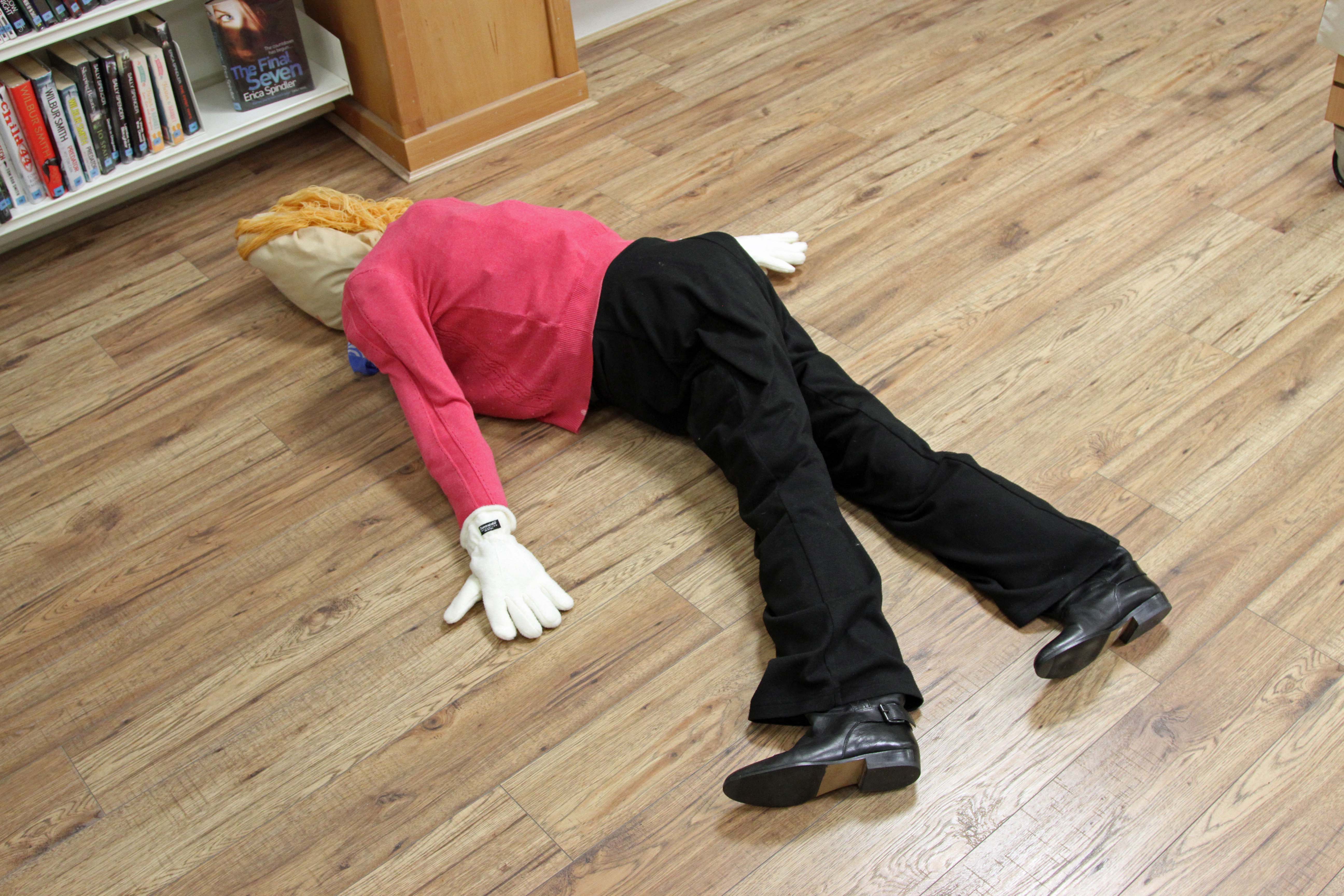
Shortly after that, Stamford and every other library in the country had to cancel events and shut their doors. As I’ve said, the libraries didn’t stay completely closed for long – they operated click-and-collect facilities, allowed patrons to enter in limited numbers and developed other ingenious stratagems to provide essential services. Events, however, remained untenable. First to disappear from the library schedule, they have also (of course with good reason) been last to be reinstated.
I was therefore delighted last week to receive an invitation from Sharman Morriss, librarian at Spalding Library, to kick off its celebrations for National Crime Month by taking part in an event at the library on 4th November. Sharman and I had a call about it earlier today, during which she gave me total carte blanche over what form the event should take. So far, we have just agreed that it will start at 14.00 on 4th November and last perhaps for one-and-a-half or two hours. My editor and I will come up with a programme for it shortly and, after Sharman and her colleagues have approved, I’ll post more details about it on the blog. If you’re in the Spalding neighbourhood on that day, I do hope you will find time to come! More than anything else since the lockdown regulations were relaxed in July, Sharman’s invitation has persuaded me that we’re back on the road to normality.
In the meantime, I shall scrutinise the National Libraries Week website avidly each day and celebrate the huge variety of events that librarians are sharing to celebrate it. Sharman said that earlier today she and her colleagues had welcomed guide dogs to Spalding Library. Other libraries are posting details about initiatives that support the housebound, prisons and mental well-being. There will be more as the week progresses.
I know I’ve said this before, so I hope you’ll forgive the repetition: Librarians and booksellers are the (largely) unsung but nevertheless peerless civilisers of modern existence. They deserve our support; we’d be lost without theirs.

 Christina James, crime novelist