

The art is in the telling at Winchester…

Judith Heneghan, Festival Director
I’ve just returned from two days at the University of Winchester Writers’ Festival. It is one of the more famous and established UK festivals, now in its thirty-fifth year. It was my own first visit, however, so I know nothing of its previous history, but I do know that Judith Heneghan took over as its director this year. Before I write more about the festival, I’d like to thank both Judith and Sara Ganjai for their superlative organisation and unfailing good temper during the whole two-day period. It was a wonderful occasion, extremely well-attended, that also benefited from taking place at the exact point of the summer solstice (Stonehenge is, of course, not so very far from Winchester) and during two days of exceptional sunshine, which itself contributed to the general good humour. Nevertheless, I know from my own experience of organising events that there must have been many small hiccups and minor catastrophes which Judith and Sara and their team handled silently and efficiently, whilst always appearing entirely unruffled. Judith is already putting her own stamp on the festival as it enters a new era: an innovation that she has introduced this year is a scholarship programme which awards ten free places to young writers. It was my privilege to have been able to meet some of them.
Early on Saturday morning, Joanne Harris gave the keynote talk. This was planned as the pivotal event of the festival and it did not disappoint. Introducing her, Judith said that she had invited Joanne because she is an extraordinary writer who defies categorisation: her characters are memorable to both young and old and she is not afraid to take risks with her writing.
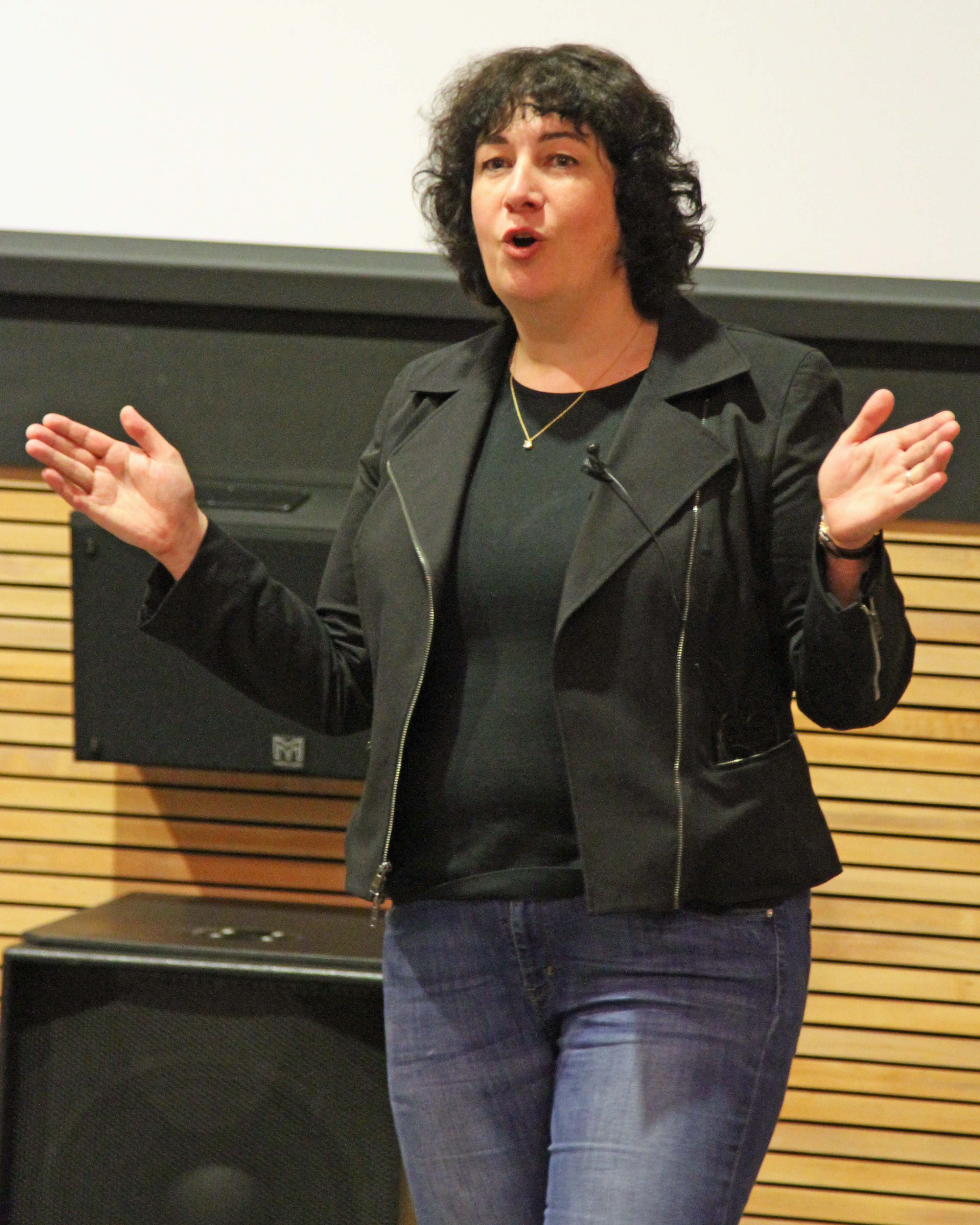
Joanne Harris, Keynote Speaker
Joanne began by saying that finding stories and recognising their value is sometimes more important than telling them. She herself grew up in a house full of stories. However, both her her parents were teachers, so it was clear (some enjoyable irony here!) that she also was being ‘genetically groomed’ to be a teacher. Her mother was quite a tough matriarch and when, aged seven, Joanne said that she’d like to write books, her mother said ‘Oh, yes, is that so?’ and led her to her own bookshelves, which were full of the works of dead French authors and poets (her mother was French) who she said had died destitute in the gutter. ‘Darling, this is why you need a proper job.’ Joanne said that actually all writers need a proper job and that hers (as a teacher of languages at Leeds Grammar School) had, in fact, provided her with many stories!
She continued with an anecdote that was personally fascinating to me, living as I now do in South Yorkshire, about Barnsley Library, which she was allowed to join, aged seven, and issued with a pink junior ticket. This was not the library that exists today in Barnsley, that I am myself familiar with, but its forerunner. She said that it was situated above the Centenary Rooms and was characterised by a big vaulted archway, an odour of damp and dust… and utter silence. There was only one shelf of books considered suitable for children: Joanne instantly wanted to know what the ‘unsuitable’ books were about, particularly as her mother had herself acted as censor of Joanne’s reading and imposed several ‘banned’ categories, including works of fantasy and science fiction. However, mythology was allowed and consequently the first book Joanne took out was The Thunder of the Gods, by Dorothy G. Horsford. She was held spellbound by this book and borrowed it many times subsequently, until, aged nine, she was allowed to obtain a blue ticket and join the adult library, even though you were supposed to be thirteen before you could do this (I’ve written elsewhere about how I was similarly allowed to join the adult section of the library in Spalding while I was still at primary school.). As an example of ‘stories coming back to bite us’, she said that many years later she found herself looking for a copy of The Thunder of the Godsto give to her daughter. It was long out of print, but she managed to track down a copy on Amazon’s AbeBooks. When it arrived, she realised that it was the same copy that she had borrowed from Barnsley Library as a child. This anecdote was an inspired way of introducing her latest book, The Gospel of Loki.
Joanne Harris concluded her talk with some thoughts on her theory that telling stories has a ‘chaos effect’. She said that a properly-written story can do all sorts of things: it can change people’s lives, make them want to read (or not to read) or empower them. She had been surprised to find that reading Chocolat had inspired some of her readers to open chocolate shops. Chocolat had itself spawned lots of other stories. Her publishers had asked her to write a cookery book that included some of the recipes that she’d featured in Chocolat, and although ‘not much of a cook’, she’d agreed to do this because she wanted to give the proceeds to Médecins Sans Frontières to supports its fight against sleeping sickness in Africa. Because of her donation, MSF sent her to the Congo, where she stayed for two months – longer than she had intended – and, in a remote village, met a very old woman, who was probably in her 90s and spoke French. She’d never left the village and found it difficult to envisage where Joanne had come from, but they each had a fund of stories about similar things: magic, witches and rivers. Joanne collected many stories from her and concluded that this was an example of the ‘chaos effect’ at work. When the old woman had recovered from her illness, she got up to leave with all her possessions piled on her head. Looking back over her shoulder, she delivered her parting shot: ‘Remember this: stories do everything. You should encourage other people to write stories. Write some of my stories: they are good stories.’ This was an inspiring note on which to end the keynote address of the festival; indeed, as a talk to inspire budding or struggling authors to keep on writing, in my own experience this one has had few equals.
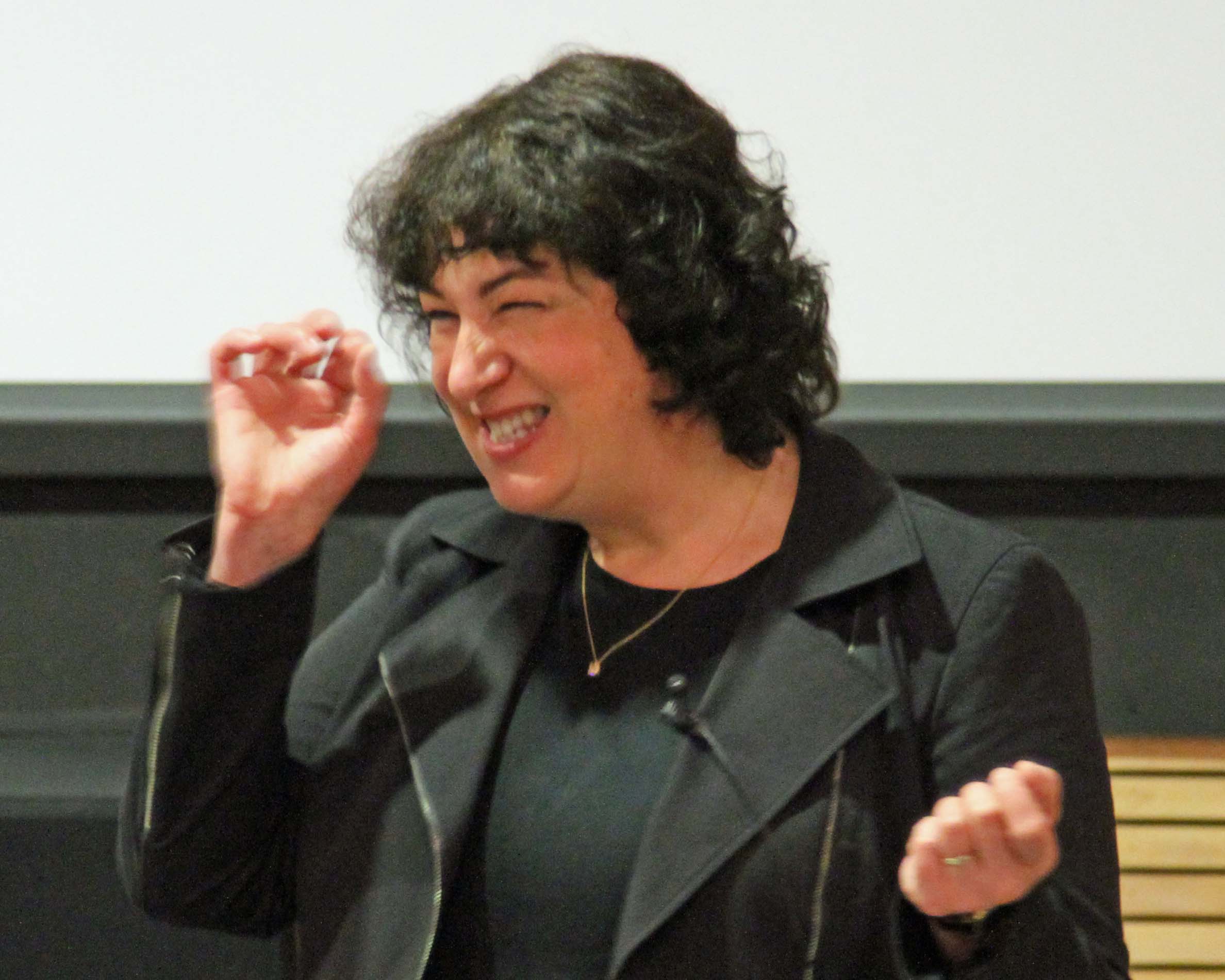
A lively delivery!
This is already quite a long post, but I can’t conclude it without mentioning a few other things that particularly struck me about the festival. Firstly, there was the book stall, run with unfailing professionalism and courtesy throughout the entire event by David Simpkin and some of his staff from the P & G Wells (independent) bookshop in Winchester. I’m proud to welcome David to this blog and delighted to have him as a Twitter friend. I’d also like to pay tribute to the creative writing students at Winchester University, who worked hard to make sure that all delegates had exactly what they needed at all times. Finally, I’d like to thank the many authors who chatted to me and shared with me their ideas and experiences. It was a very great pleasure to meet you and I certainly hope that some of our paths will cross again. If you’re reading this now, welcome here!
The Calder Valley, happy in its carefully-depicted ironies…

The last episode of the six-part television series Happy Valley was broadcast yesterday evening. I’ve sat, rapt, through every one of them. I know it has received many plaudits in the national press, including a two-page article in The Times last week (which I haven’t read as I didn’t want it to colour my own effort in this post), but I so enjoyed it and was so moved by it that I’d like to add my two-penn’orth.
It’s one of the best TV series I’ve seen for a long time and, for me, certainly the best crime programme since The Bridge, but it is about much more than crime. It is about a whole community and its ills (and successes) and also about the strengths and frailties of human nature and how some people manage to survive knock-backs and adversity in life, while others are completely corrupted or destroyed by them. On top of this, it is by turns funny, ironical and topical; the dialogue sparkles and the drama is set in my adopted county of Yorkshire (actually in the Hebden Bridge valley, original home of Ted Hughes and close by the place where Sylvia Plath is buried). What more could I want?
An early review I did read said that Sarah Lancashire, as Catherine Cawood, carries the whole thing ‘on her broad shoulders’. Lancashire is superb – I’ll come back to her later – but I don’t think that this is a fair assessment. James Norton gives a brilliantly disturbing performance as the psychopath Tommy Lee Royce – in last night’s closing scenes, especially, we saw the damaged and frightened character behind his dangerously unpredictable behaviour. Siobhan Fineran is always delightful to watch: as Claire, Catherine’s originally wayward, then much stronger, sister, she uses her fine and subtle acting talent to feel her way tentatively to support Catherine as the latter suffers temporary moral disintegration following her beating by Royce. Their roles are reversed, but not in too obvious a way – Catherine still comes back strongly sometimes, even when she appears to be at her weakest, and Claire’s new-found confidence is easily knocked.
Other memorable performances are given by Steve Pemberton, as Kevin Weatherill – he’s a descendant of Uriah Heep, sycophantic, toadying, pusillanimous and with a heart full of envy and hatred, made the more repugnant by his whining self-justification – and Rhys Connor, who is impressively consistent in his portrayal of Ryan Cawood, the vulnerable but not likeable product of the rape of Catherine’s deceased daughter, Becky, by Royce.
But I have to agree that, even though it is not the only good performance, Sarah Lancashire’s is the greatest. It must surely win an award. When I look back on two of her recent performances, as the outwardly perfect, inwardly troubled Caroline in Last Tango in Halifax and this one as Catherine Cawood, I wonder where she has been all my (albeit very selective) viewing life. She has enormous talent, as her creation of these two quite different roles proves. Catherine is much more of a rough diamond than Caroline, yet at times the small town police sergeant looks poised and beautiful, at times as washed out, dull and haggard as a drug addict. The moral dilemmas and dichotomies which lie at the heart of the story are almost all filtered through Catherine’s character in some way – her daughter’s rape and suicide, the birth of the unwanted Ryan, the murder of the young policewoman (Sophie Rundle), the kidnapping and rape of Ann Gallagher (Charlie Murphy), also by Royce, which echoes his assault on Becky, Catherine’s son’s alienation and the break-up of her marriage following Becky’s death.
Most of these dilemmas are presented in a straightforward way until the last episode, when it is suggested that Becky brought at least some of her misfortunes on herself; that Kevin Weatherill would never have suggested the kidnapping if his boss Nevinson Gallagher (George Costigan) had been more generous when he requested a pay-rise; and that Catherine’s distress at the death of her daughter and subsequent belief that she was obliged to care for Ryan actually caused her to destroy what was left of her own family. The viewer rejects some of these alternative scenarios (e.g., the Weatherill / Gallagher one) immediately; others leave a strong sense of the ambiguous nature of how best to love or to behave that cannot be resolved.
The author of Happy Valley is Sally Wainwright. She also wrote Last Tango in Halifax. She is to be congratulated on the subtlety, distinction and fine irony of her work and also for the golden author / actor relationship that she has established with Sarah Lancashire. I hope that more extraordinary dramas will result from this exceptional partnership.
Seal of approval!
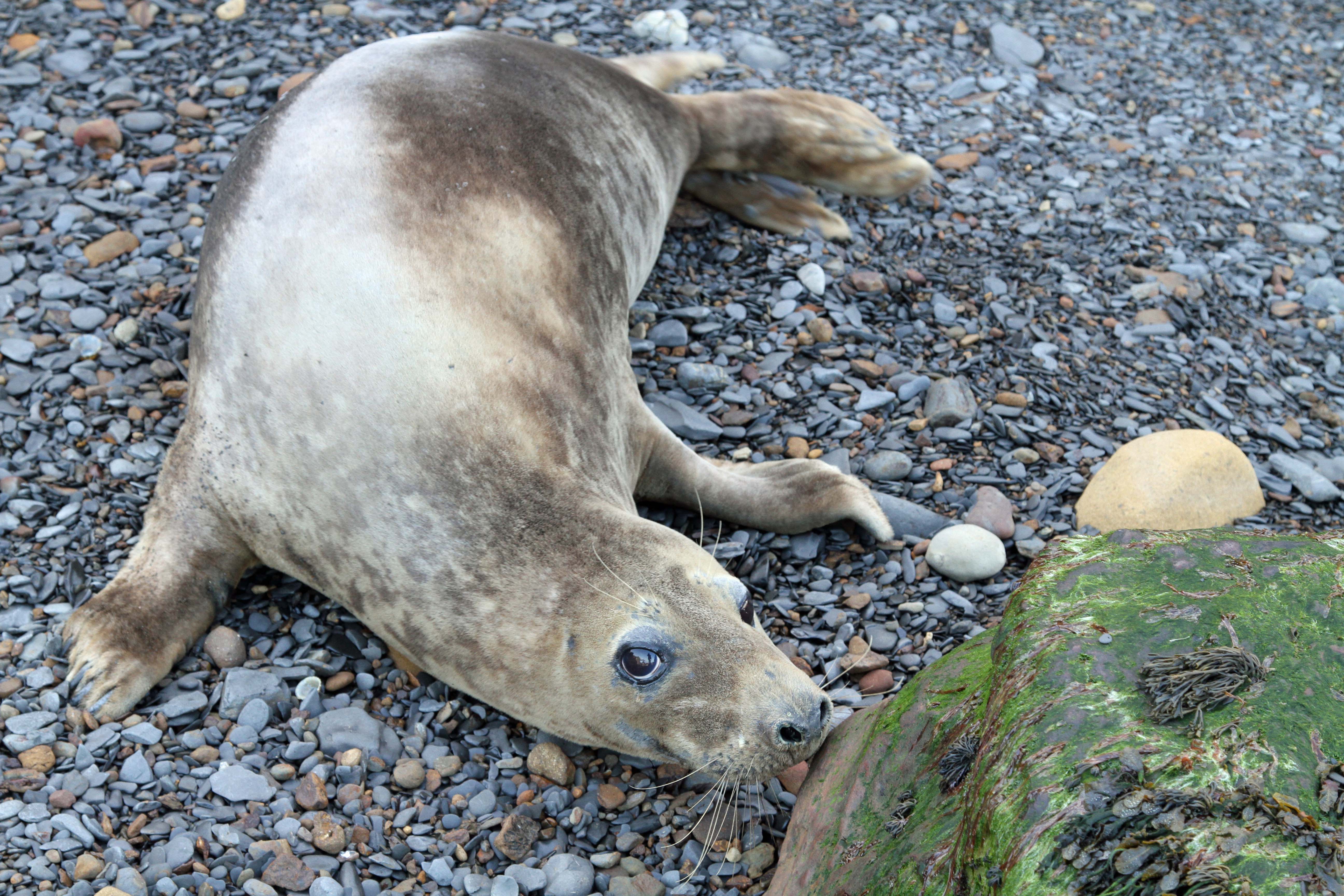
Seal pup, Ravenscar
At Easter, I took a short break on the east coast of North Yorkshire and have been meaning to write about it ever since! It’s a region that we know well as a family: my husband spent many holidays in Filey as a child and, when we were first married, some friends owned a house at Robin Hood’s Bay, at which we spent several wonderful long weekends. Built in the seventeenth century, this was the house that stands nearest the sea, adjacent to the ‘quarterdeck’, or man-made apron for viewing the bay, and, on stormy nights, the waves broke right over it and the whole building shook. (It’s next door to what was the Leeds University/Sheffield University Marine Laboratory from 1912 to 1982 and now, rebuilt, a National Trust visitor centre.) The house is still there, though no longer owned by our friends. During its time, it has been several times hired by authors wanting a quiet place in which to write without disturbance (though when I visited the house its plumbing system was so eccentric that a great deal of time had to be deployed in pumping out sewage and clearing the drains!). Robin Hood’s Bay itself is the setting of the Bramblewick novels, by Leo Walmsley.
No visit to the East coast is complete without a visit to this mediaeval fishing village. However, this year, my husband and I headed a little further north, to Port Mulgrave, a hamlet near Staithes. Bleaker and more desolate than ‘the Bay’, this place really could have been at the end of the world.
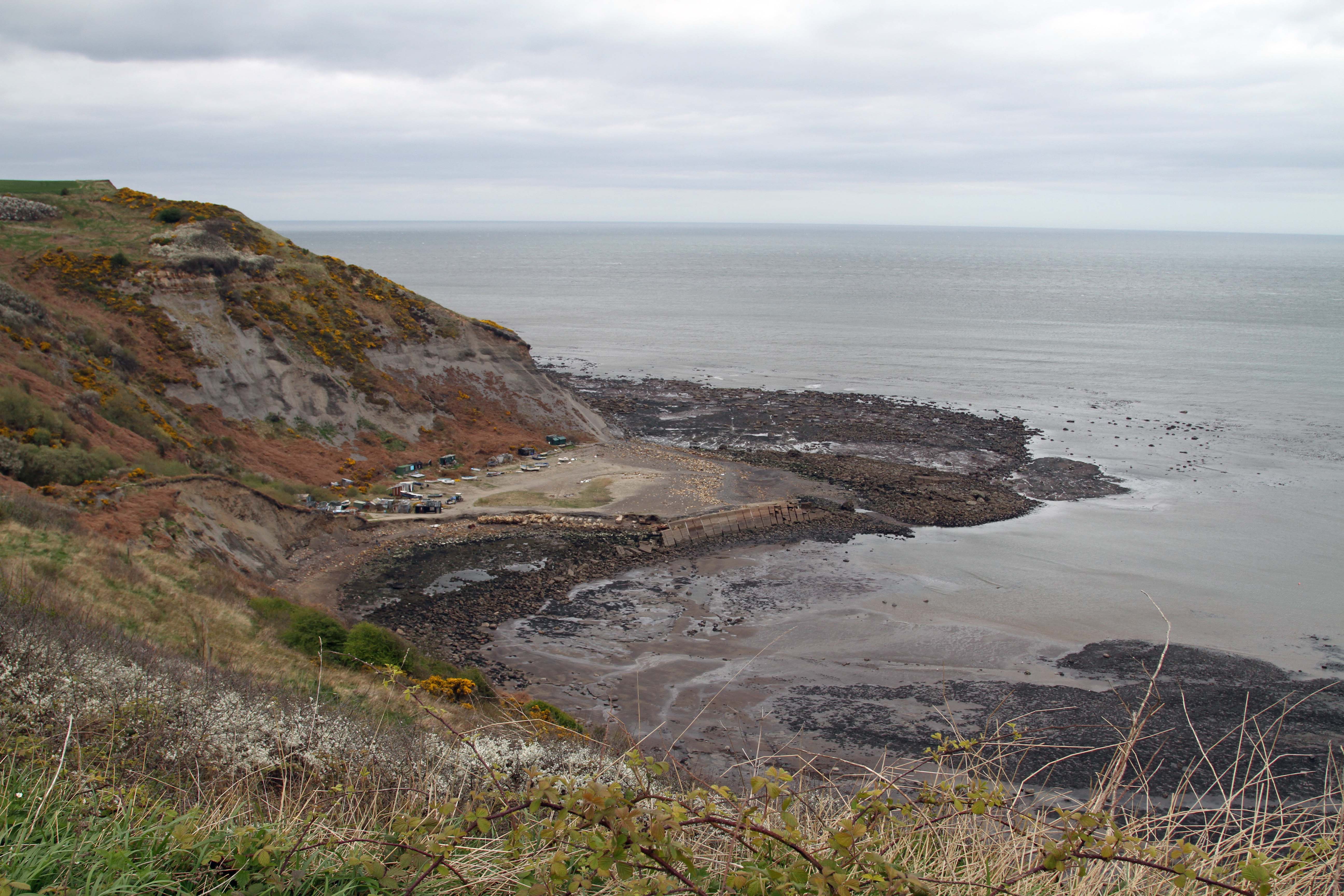
The ‘harbour’ at Port Mulgrave, North Yorkshire
One of the most magnificent things about this stretch of Yorkshire coast is that visiting it is like stepping back into the past, but in an unpretentious way (quite unlike, for example, the self-conscious ‘olde-worlde’ well-preserved streets of towns such as Harrogate). The house in which we stayed was a massive building that dated from the period when ironstone was mined there during the nineteenth century. I’m not sure what the purpose of this building was originally: it may simply have been a dwelling for the ironstone workers, or it may have been part dwelling, part factory. Today it has been divided into several cottages, one of which was our holiday house. Intriguingly, the end cottage was burned down some time ago, without any damage having been caused to the rest of the building. Its owner still visits regularly to tend the garden and the empty space where the cottage once stood.
I hadn’t heard of Port Mulgrave before. When I came to look it up, I discovered that the Mulgrave Estate covers a massive area at the centre of which lies Whitby. By chance, on this holiday, we also happened to pass the estate office in Sandsend.

Whitby from Sandsend
Although it was Easter, we managed to avoid the crowds, apart from an ill-advised foray into Whitby – another favourite haunt – on Good Friday. On Easter Saturday, we walked from Robin Hood’s Bay

Fulmar on the cliffs
to Ravenscar and climbed the cliff that leads to the golf links and the Raven Hall Hotel, where we bought a sandwich lunch and sat outside to soak up the sunshine.

Robin Hood’s Bay from Ravenscar
We stumbled upon several plump seal pups at the boulder-strewn end of the beach, just before the start of the climb up the cliff. One of them growled menacingly at our dog, clearly more than a match for him (He’s a very mild-mannered dog, and certainly wouldn’t have hurt it; he stood timidly several feet away and looked in wonderment at it!). Almost full-grown, they were evidently awaiting the return of the parent seals with more food.

I’d never been as close as this to seals before and had no idea how beautiful they are. Glistening and glossy, each was a different colour. Some were dappled like horses.

I admit it, I wrote this post largely as an excuse to share with my readers their beauty and that of this magnificent coastline! Also, some Twitter friends have wondered about my promotion of Yorkshire seafood, especially crab. Now you know! I love this place and everything it has to offer.
[Text and photographs © Christina James 2014]
At Lord’s, with open access, but not for the cricket…

Monday May 19th was a sweltering hot day and I was in St John’s Wood. I’d travelled there to visit Lord’s Cricket Ground, where a seminar on Open Access, sponsored by the publisher Taylor & Francis, was taking place. It’s the nearest that I’m likely to get to a cricket pitch while I’m able to exercise free will, as cricket is a game that has always mystified and bored me in equal measures of profundity. I had been a guest at a Lord’s hospitality suite once before, in the late 1990s, when I worked at Waterstones. Unusually for me, I can’t remember the exact purpose of this earlier meeting. I therefore conclude that it was probably about something quite unpleasant – such as redundancies, budgetary shortfall or the like – and that, accordingly, I’ve edited it from memory.
However, on this particular Monday, the sun was shining, which always puts me in a good mood. I was also pleased to have arrived in London early enough to explore a bit of St. John’s Wood en route. It’s not an area of London with which I’m familiar, but as lovers of late Victorian and Edwardian fiction will know, it was created to serve the semi-honourable purposes of aristocratic males who ‘played away’ by installing longstanding mistresses in bijou, affordable little houses not too far distant from the male clubs and the West End. St. John’s Wood thus became safe and ‘respectable’, at least on the surface, but was at the same time too humble and modest to attract dangerous interest from aristocratic wives and their friends. I’ve therefore always imagined that it would be smart and slightly exotic, with a hint of raffishness… and so it might have been a hundred years ago. Today, it has a slightly run-down air. Nevertheless, the pretty little houses are now obviously occupied by people with some means, as the expensive boutiques and upmarket coffee shops that throng the main street bear witness. I amused myself by sitting outside one of the latter, sipping a cappuccino and listening to a very young Yummy Mummy, with a designer baby on her hip, recounting the rigours of her day to two adoring older women. It was with reluctance that I tore myself away from eavesdropping on their conversation and pressed on to the cricket ground itself.
By mid-day, the conference was going well. The air conditioning was very efficient, which meant that spending the lunchtime break inside would have been a good soft option. But I knew I could not miss this rare opportunity to explore Lord’s, considered by ‘foreigners’ to be as much a national treasure as Madame Tussaud’s or the Tower of London. I therefore made the valiant effort to venture into the heat of the noonday sun (not quite a mad dog nor, clearly, an Englishman) to try to capture some of its venerated atmosphere.
I soon discovered that those who have renovated and re-designed the cricket ground in recent years have cunningly made it almost impossible for non-patrons to sneak in and spectate illicitly. Given my total failure to appreciate the charms of cricket, this didn’t worry me in the slightest, though it did mean that the only photographs I could take were extremely long shots of the pitch. I quickly also found that, although the day was perfect for snoozing in the stands, the match in progress had attracted somewhere between fifty and a hundred spectators – certainly no more. Tier upon tier of seats were standing empty.
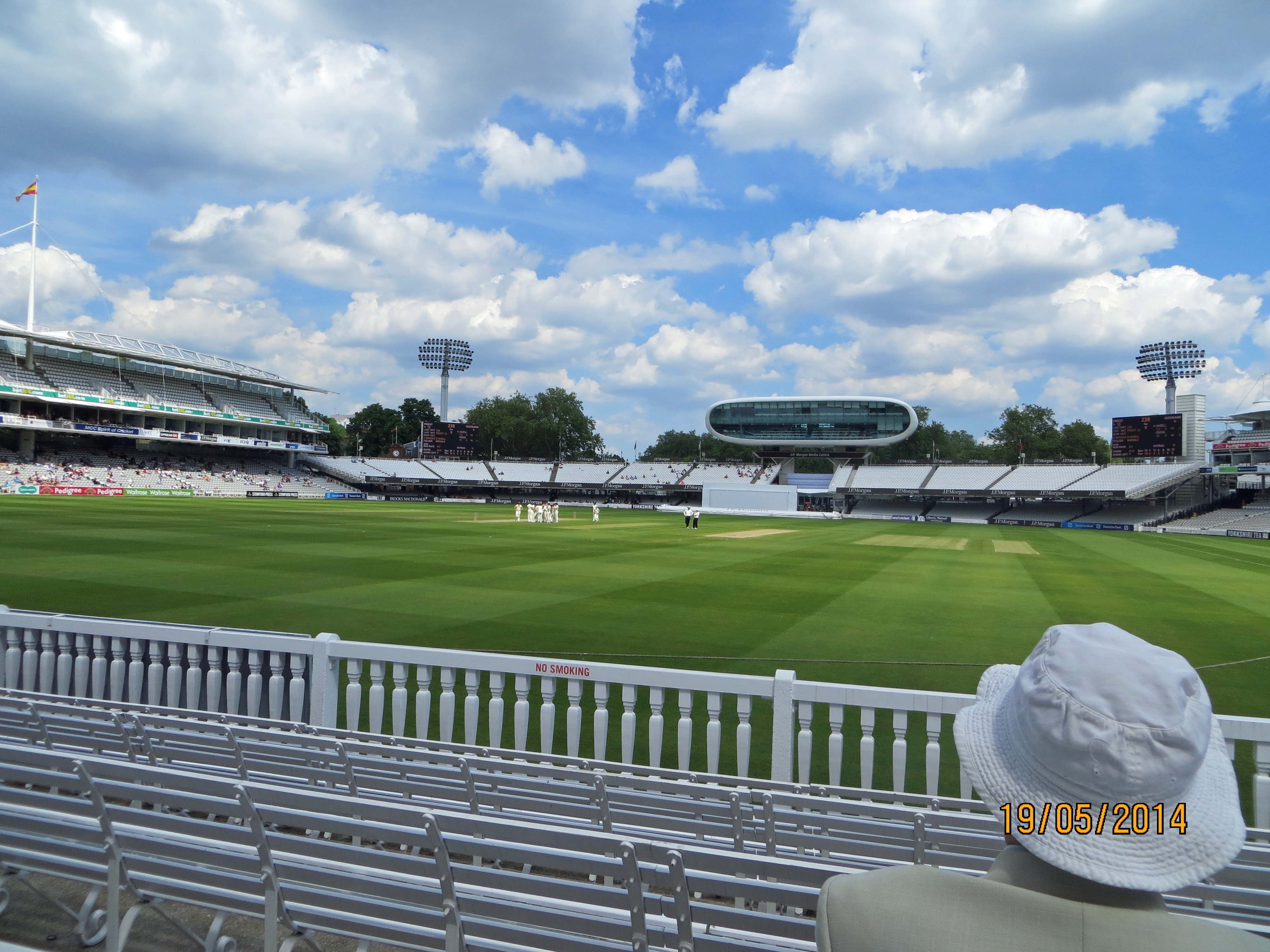
From this (rightly or wrongly!), I deduce that the great majority of the population feels roughly the same about cricket as I do and I suppose that the winter’s utter humiliation of the national side down under hasn’t helped to put bums on seats. How, then, does the game manage to perpetuate itself? I looked around me. Not only are there several hospitality suites at Lord’s, in the grandest of which my conference was taking place, but there are also some very chic bars and cafés, a shop selling ‘artisan’ ice-creams and another selling Lord’s souvenirs. It’s clearly one of those places you go to in order to be seen and say that you’ve been, and incidentally spend a significant amount of money in the process. This must be how the fine old institution of Lord’s not only survives but thrives, financially speaking. The cricket itself to me seems incidental, a charmingly eccentric pastime engaged in by a few aficionados and the equally stalwart cognoscenti who constitute their fans.
And so the quintessential Britishness of the Lord’s experience is preserved for posterity. It’s a kind of double standard, not unlike the double standard operated by those not-quite-caddish gentlemen who ‘protected’ their mistresses in St. John’s Wood whilst ensuring that they caused their wives no distress or embarrassment by letting them loose in Kensington or Belgravia. (A less generous approach, if you’ll forgive me, wouldn’t have been ‘cricket’.) How fitting that this suburb’s now old-fashioned charms should still be home to a national game that does not quite seem to have kept pace with the times.
For those who love wood: Ursula Von Rydingsvard says it in cedar
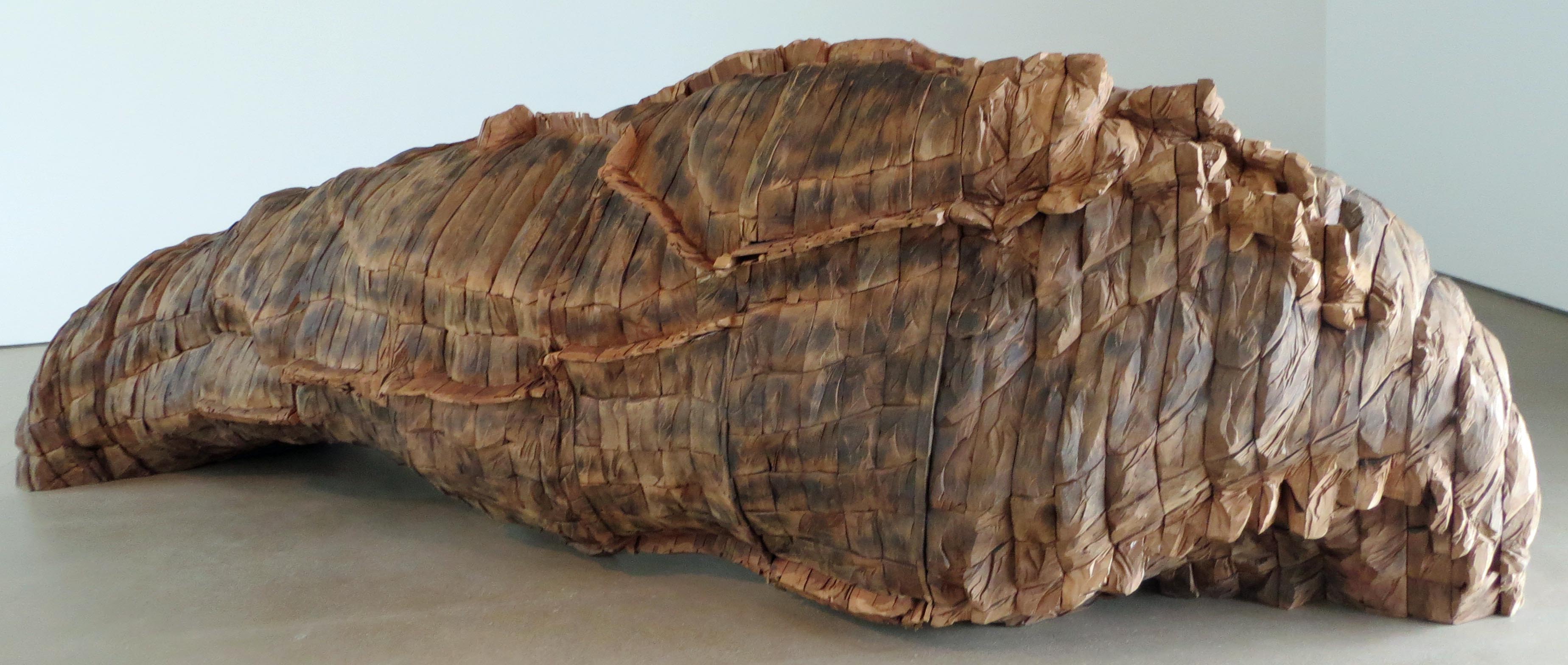
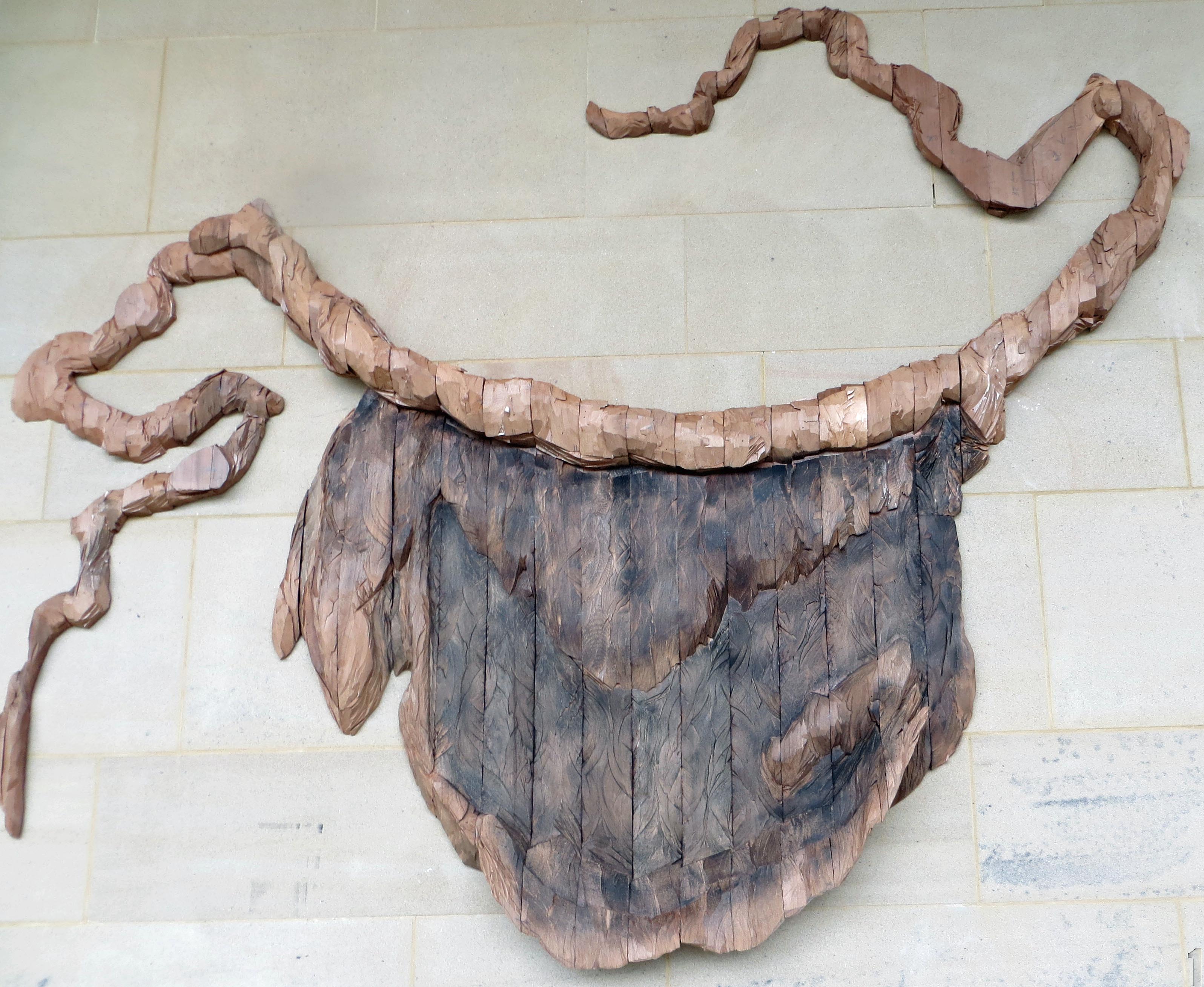
Last weekend, I visited the Yorkshire Sculpture Park. We often take our dog for walks there, but last Saturday, although the dog came too, I was on a mission: to visit its latest exhibition, a stunning major show of more than fifty pieces by the American sculptor Ursula Von Rydingsvard.
As her name suggests, she wasn’t born in the USA, but in Germany, to a Polish mother and Ukrainian father, in 1942. After a tough time in various refugee camps, she and her family emigrated to America in 1952. Admirers of her work say that they see the suffering of her childhood rooted in it. She herself says that it may be there, but that no single piece of her work conveys a single message, because that would bore her, and probably bore others, too.

Bronze Bowl with Lace 2013-2014
I agree wholeheartedly with this, and was certainly not thinking about her past when I walked, awe-struck, past the pieces in the gardens at YSP and then on to the indoor part of the exhibition which is housed in the spectacular underground studio there. Von Rydingsvard is particularly fascinated by cedar and many of the pieces consist of huge planks of cedar wood that she has sculpted to bring out its innate qualities in more stylised form. Her monumental bronze and synthetic material sculptures also convey the textures of their cedar moulds. One of these, Bronze Bowl with Lace, has a fine, billowing filigree band at the top, based on a real piece of lace; it is astonishing to see how delicate this is. She first talked of achieving this as long ago as 2002 and it is undoubtedly her most ambitious piece so far. It is internally lit with an ember glow and has external base lighting, too, so it transforms itself over a twenty-four hour period.

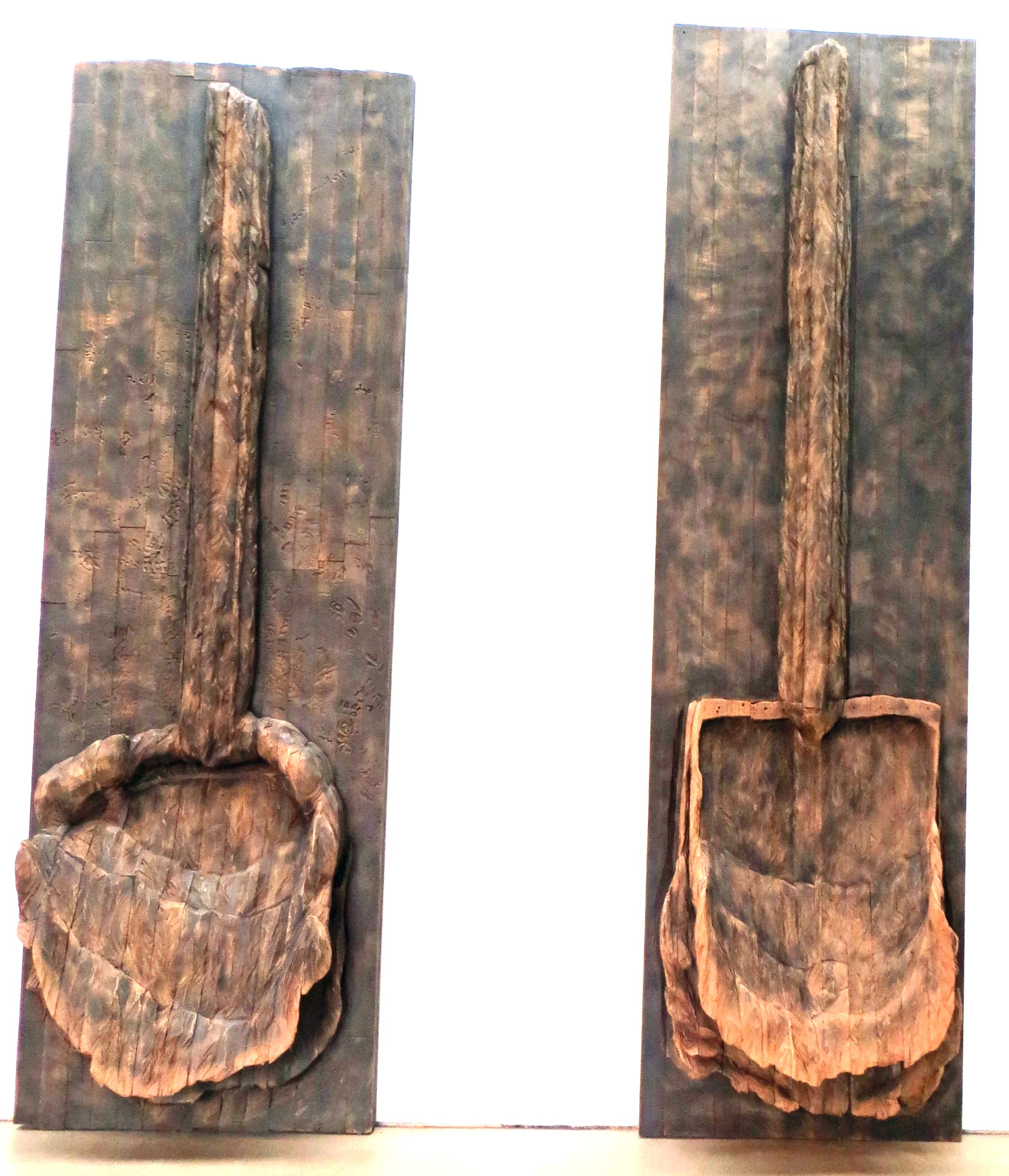
It was, however, the pieces actually made out of cedar that I liked best. Some of these are huge figures or monuments that tower over the visitor. Others, though still relatively large, are representations of more homely objects, such as spoons and other household utensils. [“I did not play games nearly as much as other children did. When I did play them, they were in a style I recall as being serious. I often played with sticks, wooden balls and other knife-carved wooden objects made with a child’s will and awkward technical skills. I also played with crude domestic objects in bombed-out brick buildings, the ruins of which were layered in ways that for me felt exciting.”] There are also some textiles pieces. There are identifiable ‘periods’ to Von Rydingsvard’s work, but she has remained faithful to cedar, in many different incarnations, for the whole of her career.

Right at the end of the indoor exhibition was a small seating area where visitors could linger to watch a video of Von Rydingsvard describing her work. I was at first surprised at how halting, nervous and at times almost incoherent she seemed in this production. Then I realised how arrogant it was of me to make this observation. Sculpture is her medium, not words, and she has indicated in many interviews that she is uncomfortable with trying to analyse her sculpture too closely or on too simple a level. It’s impossible as well as invidious to try to compare different art forms and I’d challenge any writer to try to convey his or her work in sculpture. Why, therefore, should we expect a sculptor to wish to convey hers in words?

The Ursula Von Rydingsvard exhibition will remain at the Yorkshire Sculpture Park until next spring. If you are interested in sculpture, it is a must-see. If you haven’t visited the YSP before, that in itself is a rare treat!


A perspective of Priory LSST Academy, Lincoln: Supporting creative writing talent!

Low-rise school with covered ways, fountains and flowers
A warm reception at Priory LSST

Played into school!
I was extremely privileged last Wednesday to have been invited to join the first literary festival to be launched at the Priory LSST Academy in Lincoln. It was actually a festival within a festival, arranged by Mrs. Sarah Oliver, the energetic and enthusiastic writer-in-residence at the Academy, with the help of the very talented Sara Bullimore, who is one of the organisers of Lincoln Inspired, the city’s arts and literature festival. My contribution was to offer creative writing students feedback on the work they had submitted for a crime-writing competition, organise and take part in two writing workshops for younger students
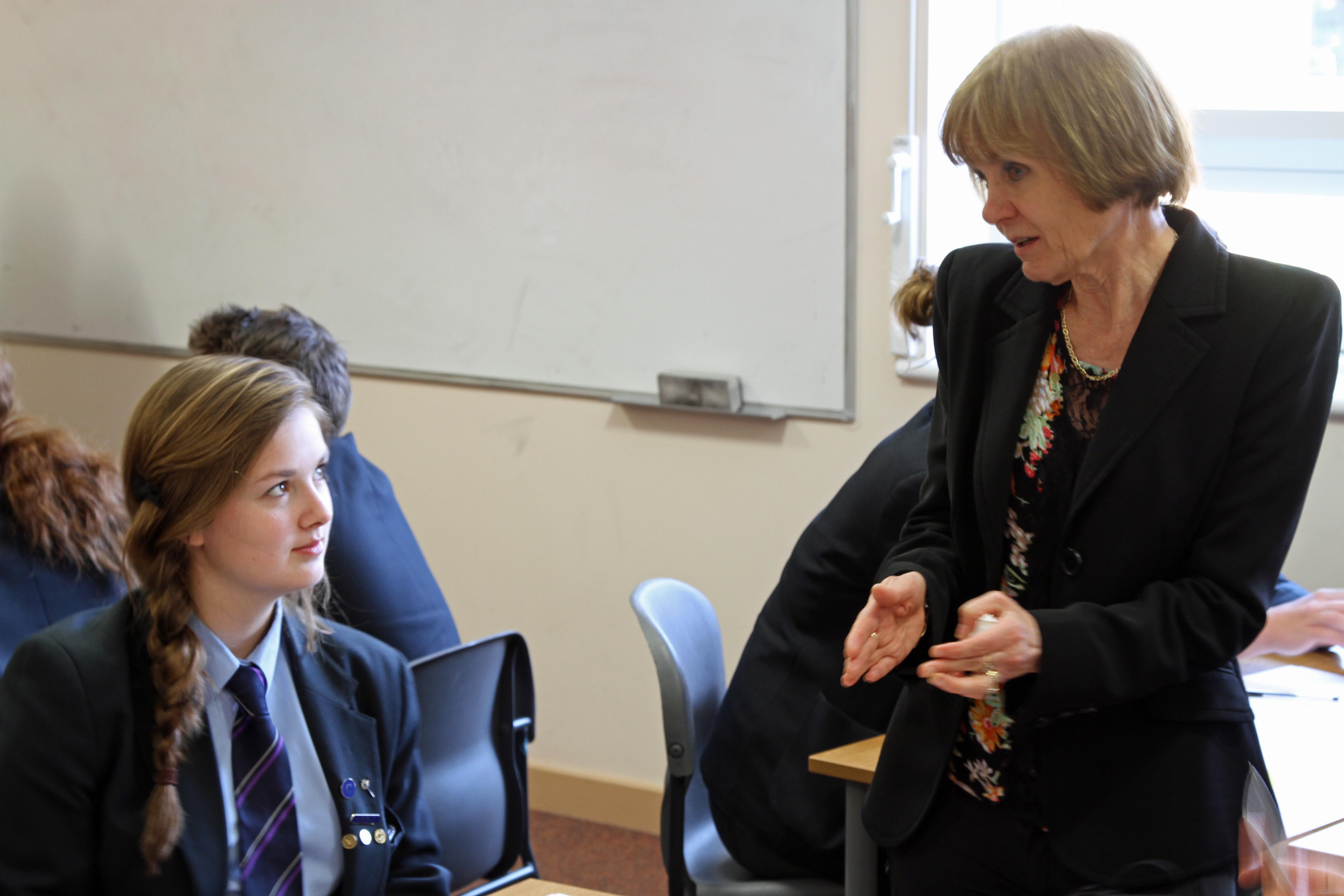
Year 10 crime writer workshop

Absolute concentration in the crime writer workshop
and deliver the festival keynote talk later in the afternoon. Members of the public were admitted to the latter.
Before I go on to describe the day in more detail, I’d just like to pause to say what an amazing place the Priory Academy is. One of the first academies to have been set up after the government announced its support for them, it is situated on a sprawling site with several buildings and many beautifully laid-out gardens, distinguished particularly by their modern sculptures and water features. Students move from one building to another via a series of covered walkways. The academy also has a planetarium, an Olympic-standard running track, an incredibly well-equipped gym and a swimming pool. Although it is a state school, it takes sixth-form boarders (they are usually either students from overseas or from armed services families). Those who attend it are greatly privileged and keenly aware of this. All of the students I met were impeccably polite; several of them told me how passionate they were about the Academy itself.
The sixth-form creative writing course was set up by Sarah Oliver at the beginning of the current academic year; it is voluntary and after school. Many more students wished to take the course than she could accommodate. Eventually fourteen were selected, of whom twelve entered the creative writing competition. They were asked to write the opening chapter of a crime novel (with a 500-word limit) and a synopsis of the whole novel (with a 300-word limit). This in itself was a pretty tall order, but they succeeded admirably. It is no exaggeration to say that I believe that every one of those students could go on to be a successful writer. The prize was for the student who wrote the winning entry to have his or her chapter published in the Lincolnshire Echo and the two runners-up to have theirs published in the online version of the same newspaper.
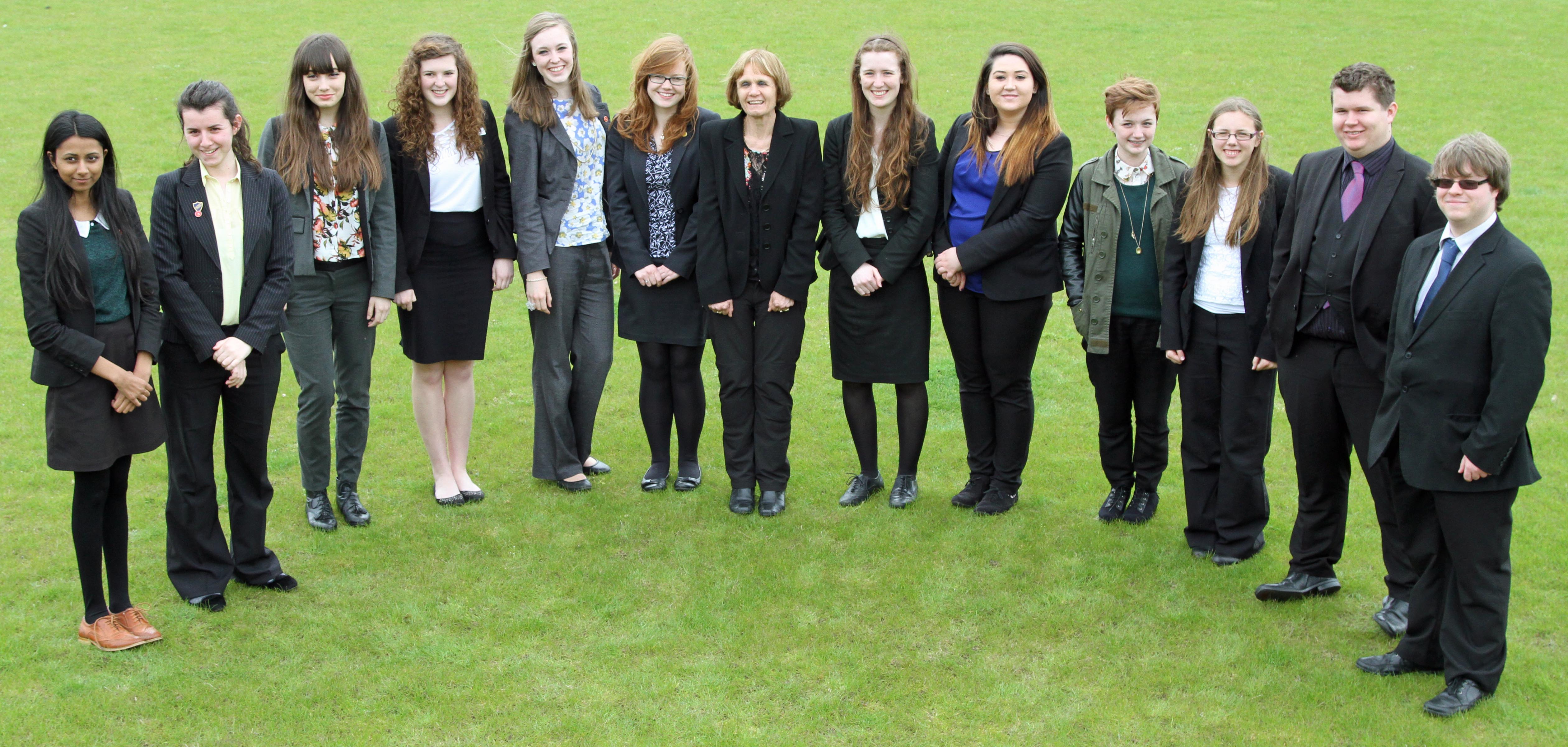
Priory creative writers
Choosing the winner was a daunting task. I asked my husband, who also acts as my copy-editor, to help. We decided to evaluate each entry on the following seven attributes: the opening sentence; consistency (did the chapter match the synopsis?); how compelling we found the writing; the quality of the plot; characterisation; the accuracy of the writing; the quality of the writing. It’s of course impossible for me to describe all of the entries in detail here, but to give my readers some idea of the quality of the entries, I’ve listed below a few of the opening sentences from the students’ submissions:
Bryant’s breath condensed in the plastic of his gas mask before fading away, only to be replaced every time he exhaled. It was stifling.
It’s the screech of the tyres that haunts, and the sickening crunch of metal splintering on bone.
Peer pressure. It was always peer pressure to blame when we got caught.
A myriad of birds shot out of the trees as loud sirens blazed past and a blur of blue lights blinded the night sky.
Sally heard the breathing in the darkness. The short gasps of air slowly faded into the inky night as she crouched, frozen, behind a wild hedge.
My job as judge was made more difficult because the opening chapter and synopses that we both considered to be the best ones were not written by the same person. Furthermore, there was a third entrant who, while she wrote neither the best chapter nor the best synopsis, had the best stab at both put together.
The rules of the competition organised by Sarah Oliver in conjunction with the Lincolnshire Echo were clear-cut. The best chapter was undoubtedly written by James, so we awarded the prize to him. Fatmira and Katie therefore became the runners-up.

With James, Fatmira and Katie, crime writer winners
The constraints of the competition were, however, considerable, and I knew that I wanted to see more of these students’ work. By great good fortune, Jean Roberts, Business Development Director at PrintOnDemandWorldWide, had very generously said that, if the winner wanted to complete his or her novel within a year of entering the competition, she would print ten copies of it free of charge and also put it into legal deposit, PODWW’s distributor channels and its own new online bookselling venture, The Great British Bookshop. I decided that James, Fatmira and Katie all deserved to be eligible for this new prize, so I have now set up a further contest for the three of them. If they can get their completed novels to me by the end of this year, I’ll choose the best of them and send it on to Jean. PrintOnDemandWorldWide also very generously gave all the students a Great British Bookshop notebook, pen and box of Union Jack sweets. Both the students and all those who attended the afternoon keynote also received PODWW’s pamphlet giving advice and writing tips to would-be authors.
I shall write more on this blog at intervals about James, Fatmira and Katie and the progress that they are making. I hope that you will join me in following their journey, perhaps also offering your own support and encouragement along the way. In the meantime, I’d like to celebrate the achievement of all the student writers at the Priory Academy. I’m certain that we shall be hearing more of at least some of them in years to come.
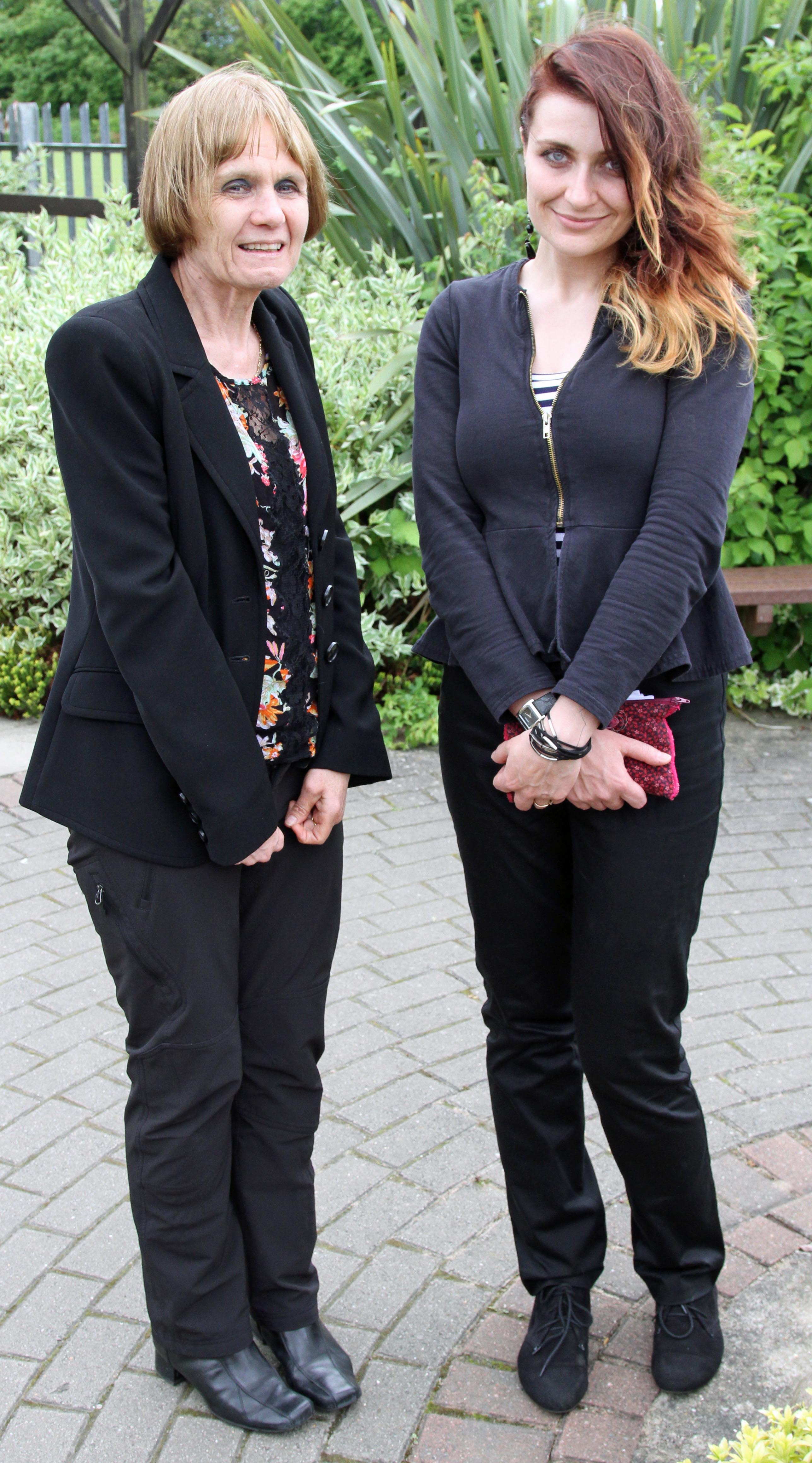
With Sarah Oliver, Priory’s writer in residence and literary festival organiser
Fascination with the aristocracy? Read this…
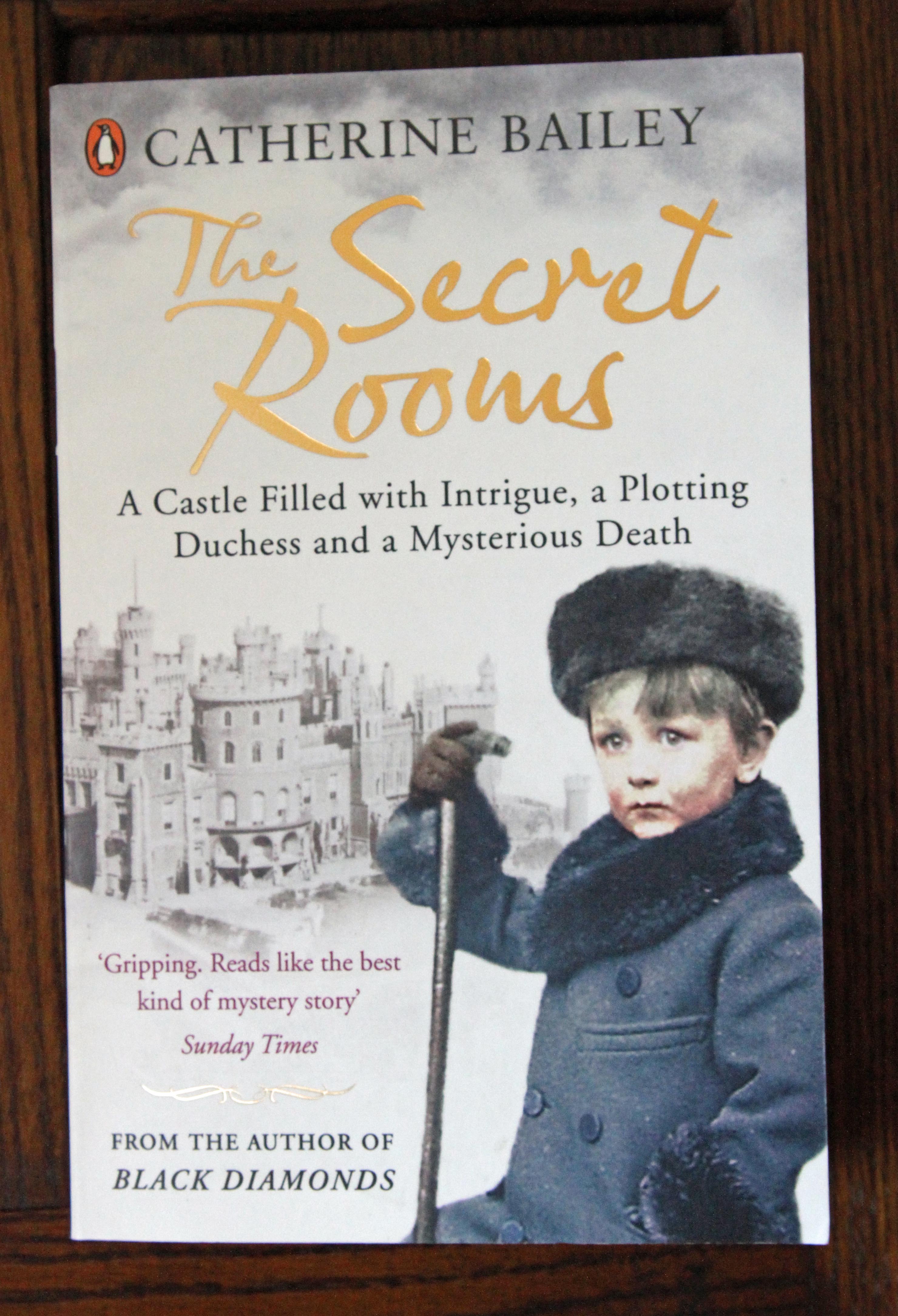
I first encountered Catherine Bailey’s work when I read Black Diamonds, a book to which I was drawn by an article in The Sunday Times about Wentworth Woodhouse, a massive stately home not far away from where I live and of which I had previously been barely aware.
By chance, The Secret Rooms is also about a stately home situated in an area with which I am very familiar, Belvoir Castle in Leicestershire. It isn’t too far away from Spalding and is a place which I visited several times in my childhood, once on a primary school trip and at least twice more when my mother was hooked on Sunday afternoon visits to the grand houses that had begun to open their doors to the public in order to make ends meet (admission charges were half a crown for adults, children half-price).
Although I’m sure that the guides I encountered and the guide-book that my mother would have religiously bought told me something about the Manners family who lived there, I have long since forgotten the details. I do, however, remember the name ‘Manners’ and I knew that Lady Diana Manners, the sister of the ninth Duke of Rutland, was a renowned beauty who eventually became the witty society hostess Lady Diana Cooper, wife of the journalist Duff Cooper. She and he were both writers and still writing when I got my first job in the book industry.
Like Black Diamonds, The Secret Rooms gradually uncovers the secrets of an aristocratic family that tried its best to conceal them. The chief concealer in this instance is the ninth Duke. He occupies the central role in this story (I won’t call him a ‘hero’, as he doesn’t quite match up to the term). His full name was John Brinsley Henry Manners. A World War One veteran (of sorts), he died of a chest infection when only in his fifties, a death certainly hastened and possibly caused by shutting himself up in the dank basement servants’ quarters at Belvoir for days on end with the family papers, from which he excised many details relating to himself. He particularly wanted to expunge all trace of three distinct periods in his life. Catherine Bailey manages to get to the bottom of his secrets in two of these; the third remains a mystery.
If John is not a hero, neither is he quite an anti-hero, but Bailey provides a fine portrait of an anti-heroine: Violet, Duchess of Rutland, John’s mother. Partisan (even when distributing her favours among her own children), snobbish and scheming, she sweeps through the book, an anachronism even in her own time, the epitome of ruthless privilege, an arch-representative of a social class that was finally annihilated by the Second World War. Bailey tries to suggest that Violet was responsible for all or most of John’s shortcomings. In this, she does not quite succeed. From her account, John may have been more melancholy than his mother and, warped by her rejection of him during childhood, undoubtedly less socially confident, but she can hardly be held to account for the shabby way in which he treated his much younger wife, or indeed the way in which he exploited women generally. The reader sympathises, however, with the fact that John’s talents as a historian – he became a distinguished self-taught mediaevalist – are scorned by the family, who simply see his accomplishments as further evidence of his ‘oddness’. Only his uncle, Charles Lindsay, shows any real empathy with him or insight into his character. It may be significant that ‘Charlie’ is a closet homosexual. The author hints that some of John’s behaviour might be attributed to his own suppressed sexual proclivities.
Black Diamonds is a very successful book. The Secret Rooms has already won many plaudits and is well on its way to being as stellar, if not more so, than its predecessor. Bailey has grown more assured as a writer in the latter book, which is generally of benefit to the reader, and both books are equally well-researched. Her control of the narrative is admirable, although it occasionally results in a certain amount of artifice which can jar a little. For example, her account of John’s movements during the First World War does not follow the chronological order of events, unlike the rest of the book; we are ambushed with the details, first, of his broken engagement and secondly, of his marriage, with no prior warning of the existence of either of the women concerned. Granted, this makes the book read more like a thriller (if that’s want the reader wants); it may also indicate that these episodes were written with one eye on turning it into a film or television documentary. But I’m being too churlish, now, about a book that absorbed me for four evenings in a row during a recent short break on the East coast, when I was also recuperating from a nasty cold. If you like well-written English social history, have a fascination with the aristocracy, or just enjoy immersing yourself in a true-life mystery, you will not be disappointed in this book.
Bank on books and invest in public libraries – do it, David!

I know that some of the readers of this blog have been following my contribution to the ‘Save Lincolnshire Libraries’ campaign. I thought, therefore, that you might also be interested in an article that appeared in The Times last Thursday, which says:
“Economists have calculated the monetary value of sporting and cultural activities and found that going to the library frequently was – in satisfaction terms – worth the same as a pay rise of £1,359.”
Playing team sports came close behind – but still it was behind – at a value of £1,127.
Now, I’m not naïve enough to expect anyone to swallow this without a little pinch of salt. How do you put a monetary value on any activity? It could be taken to extreme limits: for example, I could estimate that the monetary value of my husband is £5,000 per annum, but only if he does the hoovering. If he doesn’t do the hoovering, it drops to -£5; and either figure would have to be offset by the amount that he ratchets up on my credit card buying stuff for his greenhouse. I jest, of course, though some of the assumptions made by the research team at the London School of Economics strike me as equally far-fetched. The article continues: “The authors … speculated that … the sort of person who went to a gym was probably already tired of life and unhappy with their lot.” I have no idea how they arrived at this conclusion. Most of the people I know who attend gyms are irritatingly bouncy, dripping their endorphins and their self-righteous early morning starts all over everyone else. I’m quite grateful for this observation, nevertheless, as it obviously lets me off ever setting foot in a gym again for the rest of my life.
But let me get back to the point. If libraries are worth so much to the well-being of the individual, you’d think that, by now, the government – and especially David Cameron, with his slightly suspect ‘well-being index’ – would have latched on to this and decided that it was a bad idea to keep on closing libraries and cutting their services. Just think how they could keep inflation down if every time someone asked for a pay-rise, they could be told that £1,359 of it would be paid in library benefits! By the by, the Prime Minister has responded to the splendid petition and letter given to him by ‘Save Lincolnshire Libraries’ campaigner Julie Harrison by passing them on to the Department for Culture, Media and Sport, as being rather too hot to handle himself. He should realise just how much libraries mean to, especially rural, communities in the county of my birth and elsewhere and take a lead on this at least.
I know that the government is struggling to see the value of libraries in today’s society and that it can’t get away from the idea that they are ‘old hat’. In reply, I’d like to tell them to dust off their history books a little. Recently, I have been reading David Kynaston’s Austerity Britain. If you haven’t come across David Kynaston’s three books, which at present cover the years 1945 – 1959 (there are more in the pipeline), you should rush out and buy them immediately, because they are the most brilliant evocation of post-war society you are ever likely to come across. Austerity Britain chronicles the years 1945 – 1951 and, by chance also on Thursday, I reached the section on public libraries. Kynaston quotes some Mass Observation opinions on why public libraries were so little used in 1947 and why people preferred magazines:
–None of them subjects is interesting to me. All I like is gangster stories, though there’s precious much chance of reading here. Three rooms we got and three kids knocking around. No convenience, no water. I’m glad to get out of the house, I can tell you.
– Cos I ain’t got no interest in them [books] – they all apparently lead up to the same thing.
– I’m not very good at reading, I never was. I’ve never liked it some’ow.
– Too long. I have started books and I have to read through the first pages two or three times. I like to get stuck straight into a story – there’s too much preliminary, if you see what I mean.
You might have expected public libraries to be more appreciated at this time of austerity, when wages were low and almost everything was rationed. Apparently they weren’t. But ten years later, when the nation was back on the road to prosperity, public libraries were enjoying the start of their heyday. This lasted for at least three decades. When I started work as a young library supplier at the end of the 1970s, public libraries were still highly regarded and librarians enjoyed considerable prestige. They were also extremely well-supported by both local and national government.
Is there a moral here? I’d say that if the experience of the past can teach us anything, it is that people are more interested in culture, including cultural services, when their lives are financially stable. It makes sense, if you think about it, for people who are happy and settled in their jobs and home life to ‘make time’ to go to the library. It is also understandable if people who are unemployed and desperately looking for work don’t feel able to find space for using the free public library service. That is my take on it, anyway, and I think that the government should note the facts. If Mr Gove is as worried as he says he is about standards of literacy among the young, he should encourage his colleagues at the Culture Department to stick up for public libraries. There can be no cheaper or more effective way of encouraging high standards of literacy than to get children interested in books at an early age and to make as many books as they can read available to them, regardless of their social background.
When I was a child growing up in Spalding, the public library was on the ground floor of Ayscoughfee Hall. (It subsequently moved to a purpose-built building in Henrietta Street and it was while taking a gap year to work as an assistant at this library that my friend Mandy brought me the book about Jack the Ripper when I was working in the Chinese restaurant with the putatively murderous cook called Moon.) There were only a few shelves of children’s books, and I had exhausted these long before the end of my primary school years. The librarian there, a kindly lady, used her discretion and allowed me to join the adult section of the library, even though the rules stated that this was not possible for children under twelve. There exists a very stereotypical idea of librarians as mousy, unhumorous and devoted to regulations (especially ‘no talking’); I’m certain that this is unfair and that librarians like the one I knew in Spalding quietly go the extra mile all of the time in order to help people read and enjoy books. We should celebrate librarians as well as libraries: along with booksellers, they are the great unsung heroes and heroines of civilised society.
(But before I get too eulogistic, I’d like to add that I’m now planning a future blog-post called Librarians I Have Known. I won’t pre-empt it by offering more than a glimpse here, but, suffice it to say, it will include tales of red shoes, prostitutes, Spirella corsets and Sanderson sofas. I may just have been lucky, but many of the librarians I’ve encountered have been very far removed from the stereotype.)
The best of the London Book Fair 2014

LBF bag and mag
This year’s London Book Fair and the Digital Minds Conference that preceded it were characterised for me by two related issues that recurred time and again: the importance of preserving copyright and the need for publishers to experiment and be flexible about formats, business models and sustainable pricing. Associated with the latter, in particular, were several inspired talks and presentations that demonstrated the opportunities that can be harvested from adopting an intelligent approach towards print and electronic content and therefore finding ways to enable them to complement, rather than compete with, each other.
I was particularly impressed by Martha Lane Fox, the former Internet entrepreneur recently made Chancellor of the Open University, who gave the afternoon keynote talk at the Digital Minds Conference. She said that she was ‘crazy about the Web every single day because of the power it can bring to people’s lives,’ sometimes in very complex situations. She was referring particularly to countries where strict censorship is practised, or where women have not yet achieved equality of opportunity. She said that publishers should continue to fight for basic digital skills to be introduced across all communities. “The consumer has an incredible time of it right now. It is the duty of the publisher to help the consumer on his or her journey.”
Also fascinating was the panel session at the conference entitled Hybrid and Author Publishing, which was essentially about self-publishing. Orna Ross, of the Alliance of Independent Authors, was a particularly compelling speaker, because she has both published with an eminent publisher (Penguin) and published her own works, and she said that she infinitely preferred the latter experience. Her reason? She feels that self-publishing gives her greater freedom of expression and the ability to experiment: for example, this year she has set herself the task of publishing nine short books (one a month, with some break months). She said that she ‘absolutely didn’t want her first self-published book to be taken up by a traditional publisher.’ However, she acknowledged that her writing career had been supported by the initial successes that she had gained through traditional publishing. Hugh Howey, another author who took part in this session, said that audiobooks were under-valued by authors and highly sought after by the reading public. Having spotted this, he has ensured that all of his books are available in audio format and revealed that he ‘could live off his audio sales.’ Food for thought!
Another panel session was entitled Subscription Models: Pros and Cons. It discussed the relatively new trend of selling trade e-books via subscription models. Andrew Weinstein, of Scribd, said that it had been launched as a dedicated subscription service for consumers. Subscribers pay $1 per month and publishers are paid per download. Scribd works closely with HarperCollins, which has promoted its growth by making many HarperCollins backlist titles available in e-format. Nick Perrett of HarperCollins said that there is a rapid shift taking place in publishing from what was essentially a trade-focused structure to what is now becoming a consumer structure. The best outcome for the publisher is to have multiple points at which consumers can access content. After this, their core job is to maximise the royalties that go back to authors. Good analytics are therefore vital: one of the advantages that HarperCollins has gained from working with Scribd is that it obtains a rich data set which can be used to inform both marketing and publishing decisions. There is more about Scribd here.
Among the speakers at the digital seminars that take place throughout the Fair was Rebecca McNally, Publishing Director at Bloomsbury UK, who described the genesis of Bloomsbury Spark, a born-digital imprint for Young Adults. She said that Spark is a one-of-a-kind global imprint for Young Adult literature which publishes across all fiction genres. Bloomsbury has particularly focused on the YA market because it has a burgeoning online reading and writing community. It is also less susceptible to market variation across geographical regions than, for example, picture books. It has some powerful informal advocates among the blogging community and, as a result, is migrating to digital faster than any other fiction sector. Young Adult in digital format actually has a broader constituency than it has in print.
Authors benefit from Spark because Bloomsbury is able to offer a global publishing structure accompanied by local marketing support; it has a fair e-book deal that includes a print option; the translation rights are sold for p and e formats; the list is highly selective and distinguished. Bloomsbury carries out a massive cross-promotional campaign across the Spark publications; it encourages authors to send submissions direct to the Bloomsbury website, rather than operating through agents. Rebecca cautioned would-be Spark authors to remember the target reader (so far 180 submissions out of about 3,000 have been considered ‘too porny’) and to read the submission guidelines (she estimated that 30% of submissions had been disqualified because they weren’t followed). More information about Bloomsbury Spark can be found here.
Continuing with the copyright / flexibility in publishing themes, this year’s Charles Clark lecture was delivered by Shira Perlmutter, Acting Administrator for Policy and External Affairs at the United States Patent and Trademark Office [USPTO]. Her talk set out the differences between recent legislation on copyright in the USA and Europe and indicated the areas in which each could claim to be ahead of the other. She said that, given the shared interests and concerns of both communities, close transatlantic co-operation in the future would be vital. There were three main issues to consider: to ensure that the development of international markets be allowed to continue without jeopardising copyright; that specific legal rules, although they might have to be rigid, should be embedded where possible in a more flexible framework; that more legislation should be developed to set boundaries and limits, rather than addressing specific copyright infringement issues.
After several years at Earls Court, in 2015 the London Book Fair will move back to the Olympia conference centre, which has been refurbished in its absence. Those of us who remember many earlier book fairs are quite pleased about this, as, although Olympia is harder to reach than Earls Court, it seems like an old friend. I think that most of us are also hugely grateful that an earlier plan to give the Excel Conference Centre, in East London, another chance has been rejected. Those who attended LBF 2006 there have not forgotten the almost total lack of ladies’ toilets, the absolutely total lack of anywhere decent to eat, the stands labelled back-to-front as if we’d just walked through Alice’s looking-glass, the unfortunate proximity of London Junior Fashion Week (half-naked giggling teenagers wandering by accident amongst the books) and the nightmare of the first day, when we were riding round and round on the unmanned Docklands Light Railway with no clue about when to get off the train or where we were meant to be heading when we did! Whereas next year, if I can’t be bothered to wait for the spur railway to Olympia, at least I’ll know that if I turn left out of Kensington High Street station and keep walking, eventually I’ll arrive at the exhibition centre, where there will be toilets, civilised cafés, a proper floor plan and no accidental captives!
Under way and making way at Greenwich University…
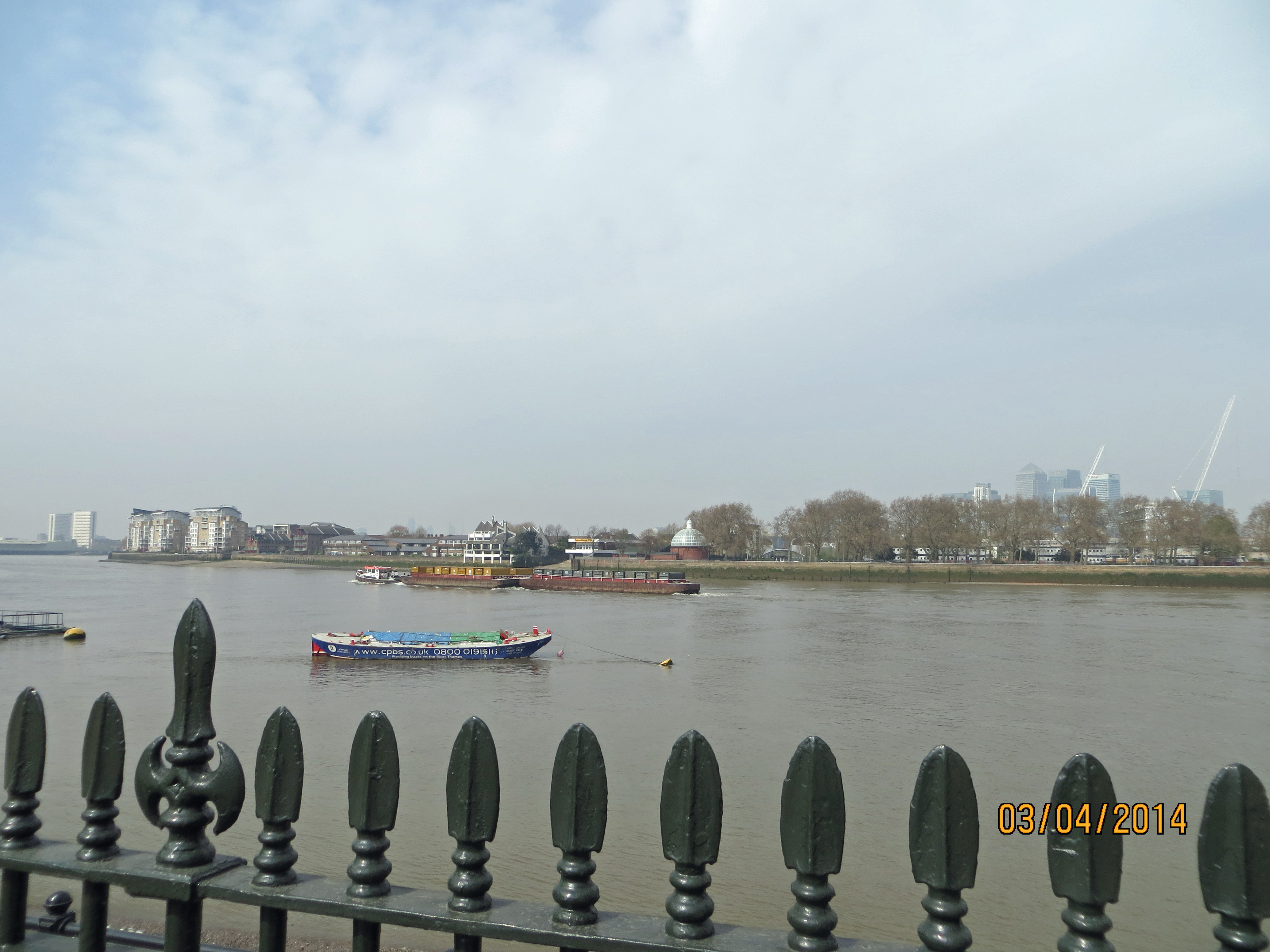
The Thames at Greenwich

Old Royal Naval College, Greenwich
Greenwich University is a vibrant place. It has long been the home of the Maritime College: there have been naval buildings there since Elizabethan times. Adjacent is Deptford, famous for its docks and as the place where Christopher Marlowe, allegedly a spy for the Elizabethan government, was murdered. Greenwich itself is the final resting place of the Cutty Sark. The university dates from the mid-nineteenth century, though some of the buildings are much older. It stands proudly against a steep curve of the Thames, alongside a stretch of the river that is uncompromisingly wide and majestic. This is frequented by both barges and pleasure boats, which reminded me a little of the river traffic in Shanghai.
The university is housed in a series of white stone buildings with evocative names such as Queen Anne Court, Queen Mary Court, King William Court and the Dreadnought Library. Much more recently, one of the buildings has been dedicated to the memory of Stephen Lawrence. There is a maritime museum, admission to which is free, and across the road another museum which is currently hosting an exhibition of J.M.W. Turner’s sea paintings. Unfortunately, I had no time to visit either of them, but I shall be returning later in the summer and plan to be much better-organised then.
I know from personal experience that, as well as being cosmopolitan, Greenwich students are extremely switched on, because for the last several years I have recruited student panels from among their ranks for some of the conferences and seminars that I have organised. Like students everywhere, they seem to prefer to wear a uniform. This spring, for the girls, it is cropped tops and pale (very short) denim shorts, these worn with thick tights and brightly-coloured canvas ankle boots, and, for the boys (many of whom sport Pete Doherty-style pork pie hats), skinny jeans with long plaid shirts.
Not to be confused with the ‘real’ students was the seemingly endless procession of secondary school parties that were doing a tour of the campus and its attractions. Each was (more or less) in the care of two or three harassed teachers, though the pupils were without exception doing their best to ignore the latter; they were slouching along at a snail’s pace, spread out across the pathways two or three abreast, just like the pupils I have seen dawdling to and from our local secondary school. The real-deal students, by contrast, were marching along rapidly and purposefully, busy, busy, busy, laughing and chatting, with too much to do but taking it all in their stride. A couple of years ago they were probably staunch members of the slow-stroll brigade. Is university really so effective at inspiring them to action, I wonder, or are those having to endure the ignominy of supervision just trying to drive their teachers berserk by taking the longest possible time to trail from A to B?
Despite the somewhat alarmist weather reports about the ‘Stage 10’ smog in London which I heard being discussed on the Tube and elsewhere during my journey, it was a beautiful, clear, sunny spring day in Greenwich and at least five degrees warmer than the dank and misty Yorkshire that I’d left at 7 a.m. Spring may be coming slowly, if surely, to the North, but I can bear witness that in London and environs it is now full-on.
My meeting about the journal slid by all too quickly, three hours gone in an Augenblick. I’d hoped to have time for at least a quick peek at the Cutty Sark before I left, but my watch told me that I had less than an hour to get back to King’s Cross if I were not to endure the combined wrath and triumph of the ticket collector as he rejected my fixed-time ticket and forced me to buy another. I’ll therefore have to save that pleasure for next time, too.
However, as I was waiting at the traffic lights in one of the busy main streets that threads through the old town of Greenwich, I happened to look back and see the masts of this historic ship rising surreally above the buildings and a row of buses, as if it had just joined the queue of local available public transport. I took a quick snap before I hurried on.

Cutty Sark
 Christina James, crime novelist