

John le Carré on top form… but I still miss Smiley!

I’ve been a fan of John le Carré’s for a very long time, especially of the Smiley novels. I know that Smiley had to be put out to grass when the Cold War finished, but – I imagine like le Carré himself – I mourned his eclipse and secretly I’ve always hoped that Smiley will enjoy some kind of reinvention one day. In the meantime, his creator has had to tackle the problem of how to write about espionage and amoral acts of skulduggery without the wonderfully ambiguous backdrop of East-West relations to sustain him. (This leads me to hope, in passing, that perhaps in some future book he may take as his topic Putin’s Russia and its significance for present-day relations between the East and the West.)
Meantime, I’ve been a faithful reader of the post-Smiley le Carré novels, but I have to confess that, although every one of them is skilfully put together and tells a cracking tale of intrigue, mystery, vice and complicated modern moral issues, I haven’t enjoyed any of them as much as the chronicles of the lugubrious George Smiley and his flawed but semi-likeable nemesis, Karla. It was therefore not exactly with misgiving, but with a resigned knowledge of knowing more or less what to expect, that I began to read A Delicate Truth.
Oh me of little faith! This novel is a masterpiece. It begins in Gibraltar, with a man who is only half in the know masquerading as someone called ‘Paul’. He has been persuaded to carry out an assignment that seems to consist of very little except several days of near-terminal boredom spent in a seedy hotel, followed by one burst of swift, strenuous activity, handsome remuneration and repatriation. Paul is mostly in the dark about the true nature of the assignment, yet he accomplishes it (rather gracelessly), picks up his financial reward and goes home to his comfortable middle-class, Middle England existence. He is a little uneasy that something about the assignment didn’t exactly go as planned, but he soon persuades himself to forget about it.
Fast forward three years. Paul’s identity and his home circumstances are gradually revealed. Another man who was involved in the assignment turns up at his house and his club and then mysteriously ‘commits suicide’. Paul is challenged with some uncomfortable assertions about what it was that went wrong in Gibraltar and has to swallow his cowardice and inclination to turn a blind eye to find out if they are true.
I won’t reveal any more of the plot, as that would spoil it for those who have not yet read the book – which I recommend them to do at the earliest opportunity. I’ll therefore conclude by saying that A Delicate Truth shows le Carré in top form again. He’s created a subtle and complex group of characters who together grapple with that most fundamental of issues, the nature of good and evil. As I’ve said, it’s a masterpiece.
Nevertheless, I’d still love to believe that one day I might enjoy a further dose of old Smiley!
The Calder Valley, happy in its carefully-depicted ironies…

The last episode of the six-part television series Happy Valley was broadcast yesterday evening. I’ve sat, rapt, through every one of them. I know it has received many plaudits in the national press, including a two-page article in The Times last week (which I haven’t read as I didn’t want it to colour my own effort in this post), but I so enjoyed it and was so moved by it that I’d like to add my two-penn’orth.
It’s one of the best TV series I’ve seen for a long time and, for me, certainly the best crime programme since The Bridge, but it is about much more than crime. It is about a whole community and its ills (and successes) and also about the strengths and frailties of human nature and how some people manage to survive knock-backs and adversity in life, while others are completely corrupted or destroyed by them. On top of this, it is by turns funny, ironical and topical; the dialogue sparkles and the drama is set in my adopted county of Yorkshire (actually in the Hebden Bridge valley, original home of Ted Hughes and close by the place where Sylvia Plath is buried). What more could I want?
An early review I did read said that Sarah Lancashire, as Catherine Cawood, carries the whole thing ‘on her broad shoulders’. Lancashire is superb – I’ll come back to her later – but I don’t think that this is a fair assessment. James Norton gives a brilliantly disturbing performance as the psychopath Tommy Lee Royce – in last night’s closing scenes, especially, we saw the damaged and frightened character behind his dangerously unpredictable behaviour. Siobhan Fineran is always delightful to watch: as Claire, Catherine’s originally wayward, then much stronger, sister, she uses her fine and subtle acting talent to feel her way tentatively to support Catherine as the latter suffers temporary moral disintegration following her beating by Royce. Their roles are reversed, but not in too obvious a way – Catherine still comes back strongly sometimes, even when she appears to be at her weakest, and Claire’s new-found confidence is easily knocked.
Other memorable performances are given by Steve Pemberton, as Kevin Weatherill – he’s a descendant of Uriah Heep, sycophantic, toadying, pusillanimous and with a heart full of envy and hatred, made the more repugnant by his whining self-justification – and Rhys Connor, who is impressively consistent in his portrayal of Ryan Cawood, the vulnerable but not likeable product of the rape of Catherine’s deceased daughter, Becky, by Royce.
But I have to agree that, even though it is not the only good performance, Sarah Lancashire’s is the greatest. It must surely win an award. When I look back on two of her recent performances, as the outwardly perfect, inwardly troubled Caroline in Last Tango in Halifax and this one as Catherine Cawood, I wonder where she has been all my (albeit very selective) viewing life. She has enormous talent, as her creation of these two quite different roles proves. Catherine is much more of a rough diamond than Caroline, yet at times the small town police sergeant looks poised and beautiful, at times as washed out, dull and haggard as a drug addict. The moral dilemmas and dichotomies which lie at the heart of the story are almost all filtered through Catherine’s character in some way – her daughter’s rape and suicide, the birth of the unwanted Ryan, the murder of the young policewoman (Sophie Rundle), the kidnapping and rape of Ann Gallagher (Charlie Murphy), also by Royce, which echoes his assault on Becky, Catherine’s son’s alienation and the break-up of her marriage following Becky’s death.
Most of these dilemmas are presented in a straightforward way until the last episode, when it is suggested that Becky brought at least some of her misfortunes on herself; that Kevin Weatherill would never have suggested the kidnapping if his boss Nevinson Gallagher (George Costigan) had been more generous when he requested a pay-rise; and that Catherine’s distress at the death of her daughter and subsequent belief that she was obliged to care for Ryan actually caused her to destroy what was left of her own family. The viewer rejects some of these alternative scenarios (e.g., the Weatherill / Gallagher one) immediately; others leave a strong sense of the ambiguous nature of how best to love or to behave that cannot be resolved.
The author of Happy Valley is Sally Wainwright. She also wrote Last Tango in Halifax. She is to be congratulated on the subtlety, distinction and fine irony of her work and also for the golden author / actor relationship that she has established with Sarah Lancashire. I hope that more extraordinary dramas will result from this exceptional partnership.
A perspective of Priory LSST Academy, Lincoln: Supporting creative writing talent!

Low-rise school with covered ways, fountains and flowers
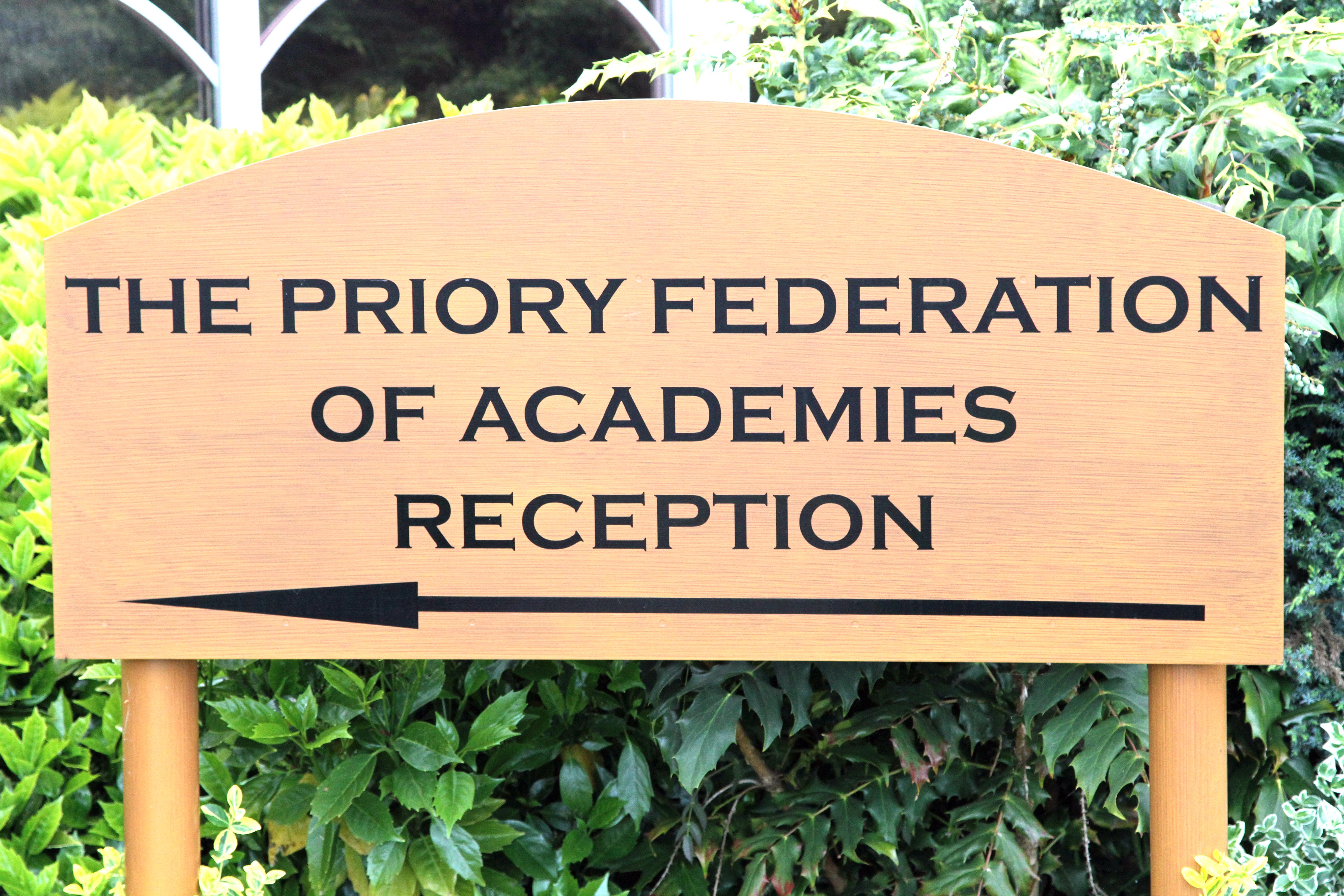
A warm reception at Priory LSST

Played into school!
I was extremely privileged last Wednesday to have been invited to join the first literary festival to be launched at the Priory LSST Academy in Lincoln. It was actually a festival within a festival, arranged by Mrs. Sarah Oliver, the energetic and enthusiastic writer-in-residence at the Academy, with the help of the very talented Sara Bullimore, who is one of the organisers of Lincoln Inspired, the city’s arts and literature festival. My contribution was to offer creative writing students feedback on the work they had submitted for a crime-writing competition, organise and take part in two writing workshops for younger students

Year 10 crime writer workshop

Absolute concentration in the crime writer workshop
and deliver the festival keynote talk later in the afternoon. Members of the public were admitted to the latter.
Before I go on to describe the day in more detail, I’d just like to pause to say what an amazing place the Priory Academy is. One of the first academies to have been set up after the government announced its support for them, it is situated on a sprawling site with several buildings and many beautifully laid-out gardens, distinguished particularly by their modern sculptures and water features. Students move from one building to another via a series of covered walkways. The academy also has a planetarium, an Olympic-standard running track, an incredibly well-equipped gym and a swimming pool. Although it is a state school, it takes sixth-form boarders (they are usually either students from overseas or from armed services families). Those who attend it are greatly privileged and keenly aware of this. All of the students I met were impeccably polite; several of them told me how passionate they were about the Academy itself.
The sixth-form creative writing course was set up by Sarah Oliver at the beginning of the current academic year; it is voluntary and after school. Many more students wished to take the course than she could accommodate. Eventually fourteen were selected, of whom twelve entered the creative writing competition. They were asked to write the opening chapter of a crime novel (with a 500-word limit) and a synopsis of the whole novel (with a 300-word limit). This in itself was a pretty tall order, but they succeeded admirably. It is no exaggeration to say that I believe that every one of those students could go on to be a successful writer. The prize was for the student who wrote the winning entry to have his or her chapter published in the Lincolnshire Echo and the two runners-up to have theirs published in the online version of the same newspaper.

Priory creative writers
Choosing the winner was a daunting task. I asked my husband, who also acts as my copy-editor, to help. We decided to evaluate each entry on the following seven attributes: the opening sentence; consistency (did the chapter match the synopsis?); how compelling we found the writing; the quality of the plot; characterisation; the accuracy of the writing; the quality of the writing. It’s of course impossible for me to describe all of the entries in detail here, but to give my readers some idea of the quality of the entries, I’ve listed below a few of the opening sentences from the students’ submissions:
Bryant’s breath condensed in the plastic of his gas mask before fading away, only to be replaced every time he exhaled. It was stifling.
It’s the screech of the tyres that haunts, and the sickening crunch of metal splintering on bone.
Peer pressure. It was always peer pressure to blame when we got caught.
A myriad of birds shot out of the trees as loud sirens blazed past and a blur of blue lights blinded the night sky.
Sally heard the breathing in the darkness. The short gasps of air slowly faded into the inky night as she crouched, frozen, behind a wild hedge.
My job as judge was made more difficult because the opening chapter and synopses that we both considered to be the best ones were not written by the same person. Furthermore, there was a third entrant who, while she wrote neither the best chapter nor the best synopsis, had the best stab at both put together.
The rules of the competition organised by Sarah Oliver in conjunction with the Lincolnshire Echo were clear-cut. The best chapter was undoubtedly written by James, so we awarded the prize to him. Fatmira and Katie therefore became the runners-up.

With James, Fatmira and Katie, crime writer winners
The constraints of the competition were, however, considerable, and I knew that I wanted to see more of these students’ work. By great good fortune, Jean Roberts, Business Development Director at PrintOnDemandWorldWide, had very generously said that, if the winner wanted to complete his or her novel within a year of entering the competition, she would print ten copies of it free of charge and also put it into legal deposit, PODWW’s distributor channels and its own new online bookselling venture, The Great British Bookshop. I decided that James, Fatmira and Katie all deserved to be eligible for this new prize, so I have now set up a further contest for the three of them. If they can get their completed novels to me by the end of this year, I’ll choose the best of them and send it on to Jean. PrintOnDemandWorldWide also very generously gave all the students a Great British Bookshop notebook, pen and box of Union Jack sweets. Both the students and all those who attended the afternoon keynote also received PODWW’s pamphlet giving advice and writing tips to would-be authors.
I shall write more on this blog at intervals about James, Fatmira and Katie and the progress that they are making. I hope that you will join me in following their journey, perhaps also offering your own support and encouragement along the way. In the meantime, I’d like to celebrate the achievement of all the student writers at the Priory Academy. I’m certain that we shall be hearing more of at least some of them in years to come.
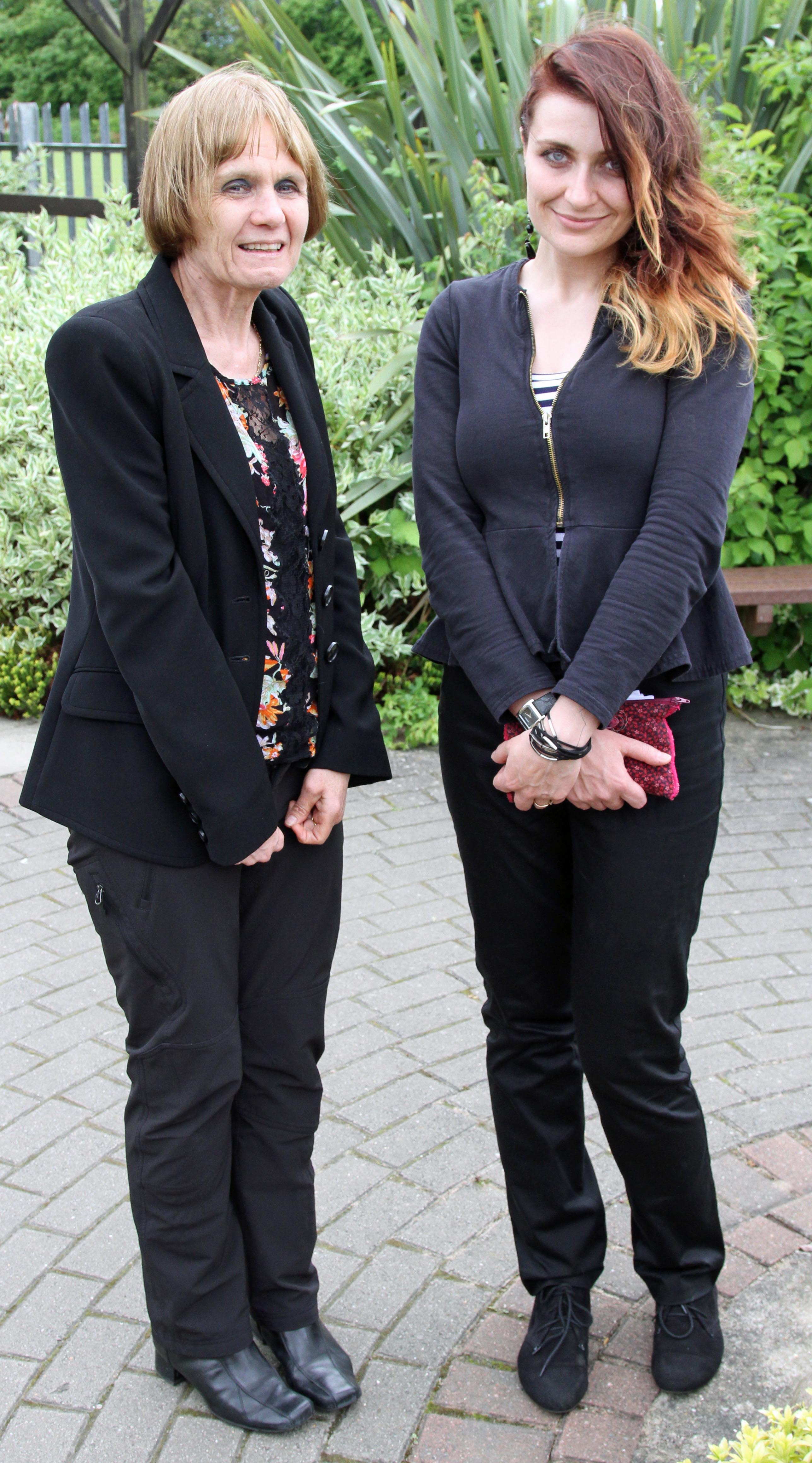
With Sarah Oliver, Priory’s writer in residence and literary festival organiser
Christina James, happily hopping from one blog to another… #Mondayblogs

I have Jenny Lloyd to thank for nominating me for The Writing Process ‘blog hop’. (Why do I dislike this term? I’ve never liked the ugly sound of ‘blog’ and ‘hop’ has unfortunate ‘bunny’ associations – as if I’ve been given fluffy ears and a scut to bounce around in – hah!) Jenny is renowned as the author of Leap the Wild Water, a widely-acclaimed historical novel focusing upon the sufferings of women and the harsh conflicts and unbearable tensions between self and society in rural Wales two hundred years ago; she’s getting close to releasing a sequel to it, The Calling of the Raven, and is already working on the third book. Thanks, Jenny, for this opportunity to join The Writing Process and best wishes for The Raven! (Do visit her blog at http://jennylloydwriter.wordpress.com/, which for me has wonderfully sensitive insights into her homeland, its people and its history… wiv pitchers!)
So, here I go, with a bounce:
What am I working on?
I’m just writing the concluding chapters to Sausage Hall, the third DI Yates novel. Like the first two novels in the Yates series, it is set mostly in Lincolnshire, though some of the action also takes place in Norfolk. Sausage Hall is the name that the locals give the house that is called Laurieston in the novel. It is situated in the village of Sutterton and based on an actual house, which really was nicknamed Sausage Hall, because it had been built by a butcher who’d gone bankrupt in the 1850s. My grandmother, having worked in domestic service all of her life, moved when she was sixty to Sutterton, which is about ten miles from Spalding and seven miles from Boston, to become companion to a very old lady who lived there. The old lady had been the wife of a gentleman farmer who was twenty years her senior, so he must have been born in the mid-nineteenth century. The house was frozen in a time warp. It was packed with quaint furnishings, but the most astounding thing about it (though as a child I just accepted it as normal) was that the walls were decorated with many sepia photographs of the old lady’s husband when he’d been on safari in Africa as a young man. These photographs must have been taken in the 1870s or 1880s and in many of them he was accompanied by several black women wearing very little except strings of beads. It has long been my intention to write about what I think might have happened in this house. When I began researching the period and the district, my plot was given a considerable boost when I discovered that someone very famous had lived nearby in the late nineteenth century. That person appears in the novel, too. The book is set in the present, but the characters and their actions are considerably influenced by what went on at Sausage Hall more than a century ago.
How does my work differ from others in this genre?
As is well-known (especially by those who organise creative writing courses!), the genre of crime fiction is usually divided into several sub-genres. I’m only interested in a few of these: primarily the psychological crime novel, with a slighter nod to the ‘woman at risk’ variant. Except tangentially – for I do try to get the facts right about policing, the law and the justice system – I’m not what is known as a ‘procedural’ crime writer. I don’t plod through all of the police action step by step, leaving no ‘i’ undotted or ‘t’ uncrossed. Nor do I seek to hold my readers’ attention or shock them with descriptions of excessive violence or bloody massacres. I don’t write action thrillers or spy novels. Conversely, I’m not a creator of what has been called ‘cosy’ crime: the type of novel that those of a nervous disposition can happily read in bed at night when in the house on their own. I like to think that, through careful characterisation and as much psychological insight as I can command, my novels explore some pretty gritty truths and moral dilemmas. I also try to flip the crime-writing conventions on their head in various ways: for example, I tend not to tie up all the loose ends (life’s just not like that) and, flying in the face of the notion of catharsis, I don’t always make it absolutely clear who the perpetrator is. I’ve been told by several reviewers that I’ve broken new ground in the crime genre, but I try not to stretch this too far. For example, I don’t think it works to try to mix genres and combine crime with Science Fiction or Fantasy – a few authors might be able to pull it off, but they’d have to be very skilful indeed. More prosaically, although my novels are set in the present, the town of Spalding in which most of the action in the Yates series occurs is the Spalding of my childhood, not the town as it is today. This gives me the advantage of being able to write about a finite, unchanging place that only I have access to, because it is locked in my memory (with all that that implies).
Why do I write what I do?
I’m not wedded always to being exclusively a crime writer. I’ve written novels and short stories which would certainly be pigeon-holed in the ‘literary fiction’ bracket by most publishers. However, although the quality of my writing was praised when I tried to publish some of these (others have not been and never will be shown to anyone!), I repeatedly received feedback that I needed to tighten up on the plot and make my work more accessible generally. I therefore decided to try writing crime fiction, because it requires a tight and carefully-constructed plot and the action itself keeps the novel moving on nicely. The constraints of the genre provide an excellent way of creating and maintaining self-discipline in the writing. I have to weed out the ‘purple passages’ when revising if I realise that they don’t contribute to the plot. Once I have a sound plot, I’m also less likely to get stuck or suffer from ‘writer’s block’ than when writing literary fiction. However, although I’m very happy writing crime fiction and shall continue to do so, I do have other plans in the pipeline as well.
How does my writing process work?
Following on from what I’ve said in the paragraph above, plot is very important in crime fiction. Once I have an idea for a novel, I work painstakingly on the plot, often during my long annual holiday in France, until I am satisfied that I can make it work. I will usually also draft a half-page outline for each chapter. I don’t always stick exactly to my original plot afterwards, but, if I change it, I make sure that the changes don’t create inconsistencies elsewhere in the novel. I don’t start out by conducting the research. Although I do research the background to my books thoroughly, I tend to do this as I go along. This works better for me than conducting the research at the outset, because, like most writers, I am easily seduced by reading. It’s very easy to spend several days on what you might like virtuously to term ‘research’ when what you’re actually doing is enjoying yourself by feeding a curiosity that far exceeds the requirements of the novel! I’m a firm believer in writing every day if possible, though I don’t set myself huge word targets. I’m satisfied with 1,000 words a day or a little more. I revise constantly – the first revision usually takes place on the same day as the original writing, and I’ll often revise it the next day before I start writing again. Thereafter, I revise in groups of chapters – every time I’ve completed, say, the next eight or ten chapters, I’ll revise this group as a single ‘chunk’ of writing. Often I do this on long train journeys. Finally, I revise the whole book all the way through, sometimes more than once, keeping a sharp look-out for inconsistencies and other solecisms and sharpening up the text. Then I hand the MS over to my husband for checking. He is an even fiercer critic of my work than I am and, as well as weeding out inconsistencies, will scrutinise the grammar, punctuation and syntax. Although I don’t always agree with his suggested revisions, his contribution is invaluable.
‘Ere, Valerie, your turn! Have some fluffy ears and a white fluffy tail and go hopping! I nominate Val Poore @vallypee for this excitement. She’s both a teacher of English for business and academic purposes and a historic bargee… sorry, she owns a historic live-aboard barge in Rotterdam and has turned her rich experiences in England, South Africa and The Netherlands into both funny and serious stories, both autobiographical and fictional. One, The Skipper’s Child, recently won the Wishing Shelf Silver Award. Respek! You’ll find her faring along the European canal system or simply soaking up the atmosphere of Oude Haven, here: http://wateryways.blogspot.co.uk/
Oh, as for blog-hopping, I don’t know quite how it happened, but Jenny’s nomination for today coincided with Bodicia’s very kind guest blog opportunity here. I had to use a bit of the same material for this post on my site, so I hope you will forgive me for that.
Surprises come in threes at Oadby Library!

During the latter part of last Thursday afternoon, after a sun-splashed if chilly week, the heavens opened and the rain came bouncing down. The gate that leads into our garden was sodden in no time. The M1, which we had just joined to begin our journey to the event at Oadby Library, quickly became waterlogged: there were treacherous sheets of water to negotiate as the traffic on the approaches to the various cities that we passed built up towards rush hour. By the time that we reached the Leicester ring-road, we’d encountered virtual gridlock. Irate drivers were crawling along for a few yards at five mph before juddering once again to a standstill, their progress and tempers not helped by the rain, Leicester’s amazingly laid-back traffic lights system and the fact that in several places on the dual carriageway two lanes merge into one (every driver being reluctant to yield to another).
This was not an auspicious start to an event that had been planned months in advance and strenuously published, by Chris and Jen at Salt Publishing, by myself and by various other kind tweeters along the way. I had known not to expect too much, as the library had already warned me that only three tickets had been sold – and indeed would have ‘pulled’ the event had I not insisted that I should be happy to speak even if only one person turned up to hear me.
I arrived precisely on time, at 6.30 p.m., later than intended, and my audience – consisting indeed of just three people – had all got there before me. I barely had time to notice that Oadby has a lovely library before I hastened into the ante-room where they had assembled, together with the librarian, Anne Sharpe. However, by this time I had already experienced the first of several wonderful surprises. The first person that I met after Anne was Rosalind Adam. We are mutual bloggers and Twitter friends – I’ve been enjoying Rosalind’s blog for some time, though we had not met before. It was a delight to be able to talk to Rosalind in the flesh. We each agreed that the other was exactly what we had expected – and that this was not always the case when meeting someone previously encountered only through the ether. At the moment, I’m particularly excited about a book for children on Richard III that Ros has just finished writing and hope to be able to review it on this blog in due course.
I was a bit slow on the uptake at registering the second surprise. I’ll have to excuse myself by offering the explanation that I was busy sorting out my books and papers for the readings. I’m also quite short-sighted, but I prefer to wear my spectacles only when I’m driving. Anyway, the event was about to start when I looked up and recognised that the only male member of the audience was Colin Marshall, for many years the manager of the campus bookshop at Leicester University and still employed by the university today, although he has now ascended to a higher plane and is in charge of all the retail operations on the campus there. Colin’s presence introduced one of those occasions when my life as a novelist collides with the day job – and this time it was the most enjoyable collision imaginable. Colin has for several decades attended the conference for which I have organised for some fourteen years the speaker programme. He was also awarded the Booksellers Association’s Lifetime Achievement Award in 2013. His presence at the event was not entirely a coincidence, as he had been kindly told about it by Professor Christine Fyfe, the Pro-Vice-Chancellor in charge of Teaching and Learning – and the Library – at Leicester University, whom we both know. However, there was also a real coincidence at work: Colin and his wife Sandra live in Oadby and she had quite separately seen the event advertised by the library and decided that she would like to attend. Having the opportunity to meet Sandra was the third lovely surprise of the evening: she’s funny, sensitive, extremely well-read, loves dogs and cats (she told me that she and Colin have managed to organise their lives with such symmetry that they have four children, three dogs and two cats), is a great companion and raconteur and furthermore is living proof that Colin is a dark horse!
Ros, Colin, Sandra and Anne therefore constituted my audience at Oadby. It was the smallest audience I’ve ever had. I’ve attended other writers’ events that have managed to attract only small audiences and I’ve found that they divide into two categories: small and dismal, and small and select. I’d like to state unequivocally that, thanks to Ros, Colin, Sandra and Anne, this event was of the latter type. It began quite formally with a reading from In the Family and a Q & A session, but before long had turned into a lively debate about writing, literature, other crime writers and future events at Oadby Library. We overshot the allotted time by half an hour, so that I had barely time to conclude with my ‘world première’ reading of the first chapter of Sausage Hall, third title in the DI Yates series, which I’m grateful to be able to say was very well-received.
At the end of the evening, we took a quick look round the library and had our photograph taken there. Ros had to leave at this point: she has kindly already written about the evening on her blog. We said goodbye to Anne, our charming and extremely well-read hostess, and retired to the car park to release our dog, who had accompanied us for the ride. Then Sandra, Colin, my husband, the dog and I adjourned to the pub down the road (The Fox) to continue the conversation. Eventually, Sandra and Colin went home and we headed back North through the rain-sodden night.
There are some evenings, unfortunately all too rare, when, as a writer, you really feel that you are making progress in the most worthwhile of ways, by talking to a group of sympathetic and interested readers. (The size of the group is immaterial.) For me, the event at Oadby Library was such an occasion. Anne said that she would invite me back again later in the year. I’m looking forward to it already. I’d like to thank her for her wonderful hospitality, and to thank Ros, Sandra and Colin for braving the elements to visit the library last Thursday and for contributing to the marvellous conversation that took place there.
London grit: Anya Lipska’s latest…
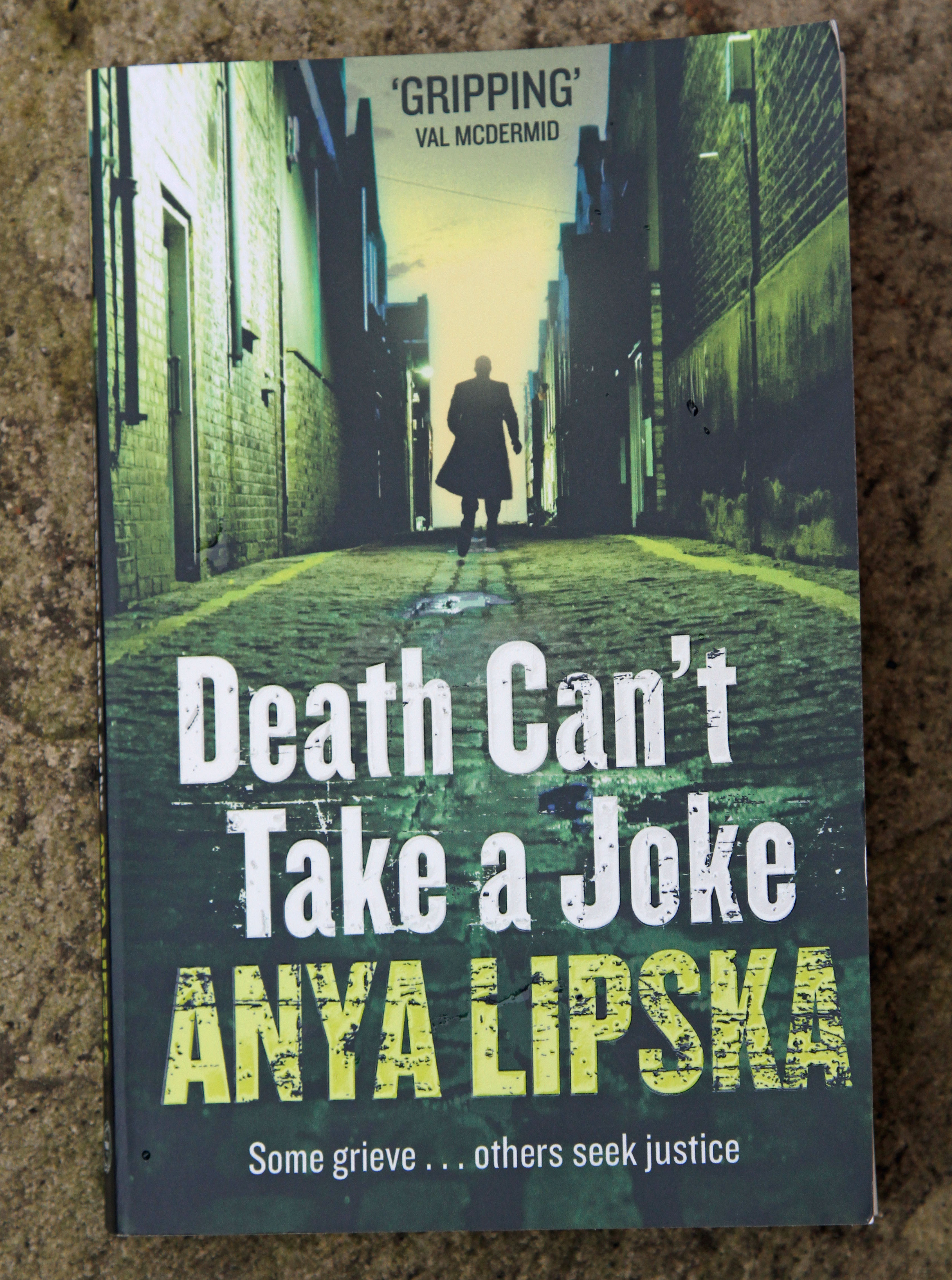
This is Anya Lipska’s second novel and again features Janusz Kiszka, the maverick unofficial private investigator, and DC Natalie Kershaw, by now not quite a rookie, of London Docklands Police. As with Where the Devil Can’t Go, the first of the series, at the heart of the novel lies the tension of the complex relationship that is unfolding between these two central characters. It is counter-balanced by the inner torments and insecurities that each of them experiences individually. Kiszka, in particular, is haunted by demons from the past, especially for the death in Poland of his first love some twenty years before, for which he feels responsible. Kershaw is gradually gaining confidence as she begins to succeed in her chosen career; she is proud to have been assigned to her first murder case. It takes only a little adversity to knock her back, however. Lipska shows the reader their thoughts and feelings through an adroit use of a dual interior monologue, created with a light touch.
Once again, much of the rich texture of this novel is derived from Lipska’s portrayal of the Polish community in London. It is clearly a milieu that she understands well, but this is not to detract from her skill in depicting it. Not every writer is capable of conveying with authenticity the character of an environment with which he or she is familiar. It is also clear that, like all good writers, she does not merely present us with the raw material; she shapes it, so that she succeeds in making even the minor Polish characters memorable and not mere stereotypes. Her judicious use of Polish words contributes to the texture of the writing and never seems forced. (Apparently I’m not the only reader who has been intrigued by them: in response to demand, Lipska has included at the end of the novel a glossary of the Polish words that she has used.)
One character that had seemed to be a little in danger of tipping into the stereotype category in the first novel was that of Kershaw’s boss, Sergeant ‘Streaky’ Bacon. However, in this book, his personality is much more rounded, with some surprising touches: most notably, his concern for Kershaw herself. Kershaw’s relationship with him improves as he takes on board her capabilities and notices her dedication.
I’ve not said much about the plot of this novel because it is so tightly constructed, with so little superfluous detail, that it would be only too easy to mar this review with a ‘spoiler’. Very briefly, an apparent suicide which Kershaw is sent to investigate and the murder of one of Kiszka’s friends both take place within a very short space of time. Are the two deaths linked?
Kershaw and Kiszka set out on separate missions to discover the identities of the perpetrators, Kiszka’s cavalier disregard for orthodox methods clashing with Kershaw’s commitment to operating within the law. There are some nice ironies along the way, including a surprising last twist near to the end, but there is nothing in this plot that seems contrived: it unfolds with perfect conviction.
Death Can’t Take a Joke is my top read for this spring. I thoroughly recommend it and I’d like to suggest that, if you missed Where the Devil Can’t Go when it was first published, you won’t be disappointed if you decide to splash out and buy both novels at the same time.
Anya’s book is being launched on 27th March 2014 and I wish her the very best for that!
Called to serve…
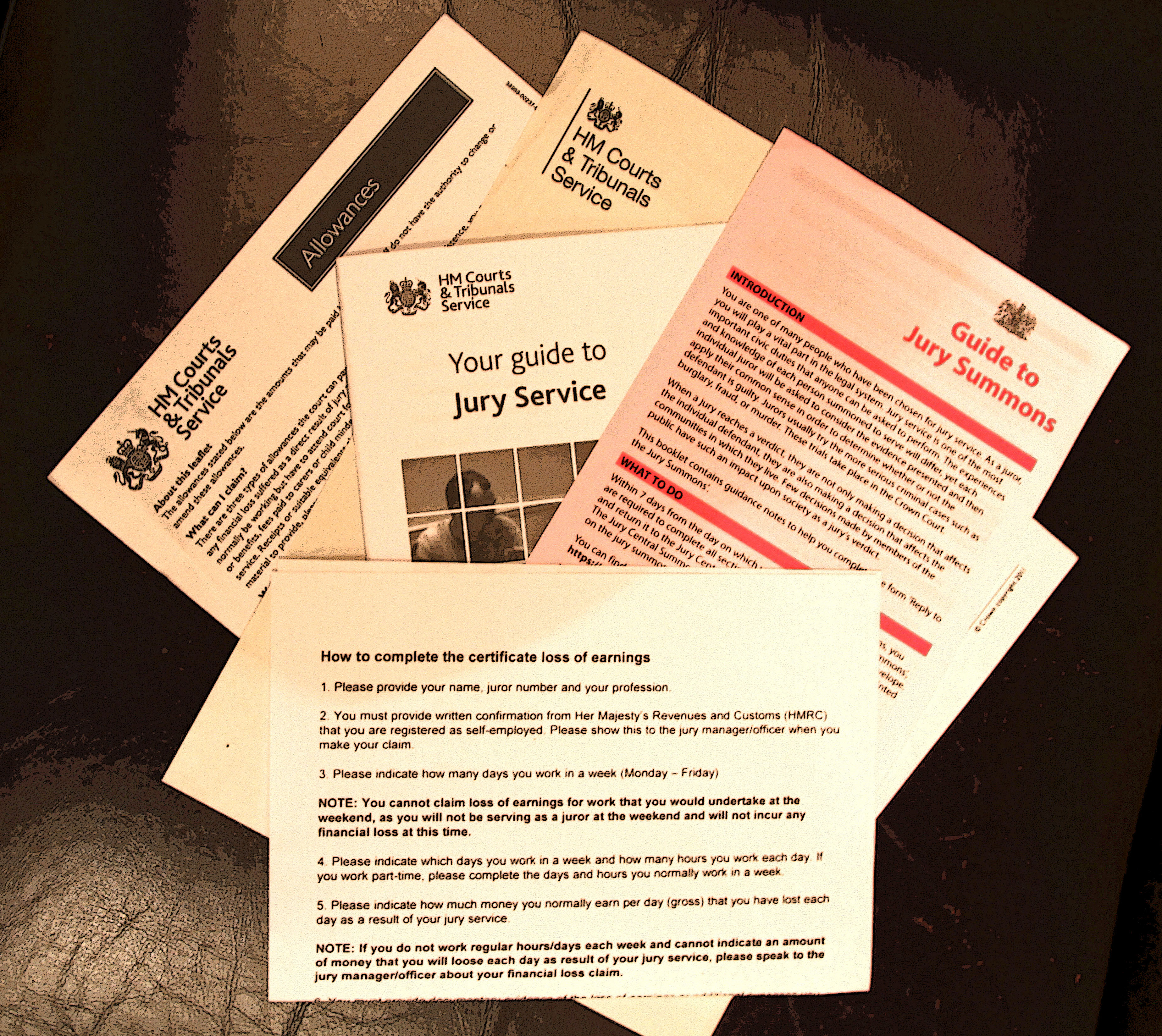
First of all, I’d like to apologise to everyone who reads this blog for having been so silent lately. I’ve been doing jury service, which has knocked the wind out of my sails much more than I expected – partly because I’ve had to keep up with bits of the day job as well (in particular, the March conference for which I organise the speaker programme), partly because it was quite a debilitating experience. However, I’d like you all to know how much I appreciate your continued interest in the blog and I promise to do better in future, starting with today!
I’m not going to write too much about the trial itself, as I don’t think that this would be fair, particularly as the judge has yet to pass sentence on the two defendants (whom we found guilty on one of the three counts, not guilty on the other two), but I should like to reflect briefly on the overall experience.
I was first called to serve on the jury of a much bigger trial, of a doctor who is accused of thirteen counts of rape that are alleged to have taken place across four decades. I’d very much like to have been one of these jurors, but the judge warned that this trial would last for at least six weeks, so I had to ask to be excused, because of the very conference I’ve already mentioned. I was a little apprehensive about it, because this judge was quite strict about which excuses he would accept – he didn’t rate lambing as a good one, for example.
I’d been warned by others who’ve done jury service that it involves a lot of waiting about. This is true, but the only really tedious bit is waiting to be assigned to a trial. I was assigned to ‘my’ trial on the morning of the second day – not bad, considering I’d already been asked to serve in the rape case – but at least one juror in waiting who arrived at the same time as I did on the Monday morning was still waiting to be called at the end of the first week!
Jurors are repeatedly told that they are the most important people taking part in a trial, because, of course, it is their verdict that finally finds the defendant guilty or not. Despite this, being a juror was curiously like the first day at primary school – trouping around with a group of other people, all of us united in not really knowing what we were supposed to do next. We soon got the hang of it and we had a particularly nice court usher looking after us – a woman called Shirley who, surprisingly, said that one of the most interesting cases she could remember involved a dispute between neighbours over bees (she indicated that, after a while, ushers become blasé about rapes and murders, because they have to listen to evidence about so many). My ears pricked up at this, as my husband keeps bees, as does one of our neighbours, but (as far as I know!) their relationship is extremely amicable and mutually supportive and neither has yet tried to sabotage the other’s hives.
Even when a jury has been sworn in and the trial has started, jurors get lots of breaks. Some of these are to allow the lawyers to discuss ‘points of law’; some are because witnesses are delayed or there is some other hitch – for example, a policewoman giving evidence at our trial had to go back to her office to fetch her notebook. The jury sits out short breaks in an ante-room just beyond the court; if the break is likely to be longer, the usher escorts the jury members back to the jury waiting room, where there is a small café, a television and a supply of books and magazines. Jurors are given a swipe-card that allows them to spend £5.71 per day on drinks and food from the café. (The sum appears to be adequate for female jurors, while most male jurors need to supplement it!)
Jury service officially lasts for two weeks, but if the trial takes longer jurors have to serve longer; if the trial is shorter, sometimes the jurors are allowed to go early. Some jurors serve on four or five short cases, each of which lasts only a day or two. Our trial went on for eight and a half days, which meant that we had fulfilled our duty as jurors by the time that it was over. More than a day of this was spent on reaching our verdict – it was a difficult case for several reasons, not least being that the victims suffered from dementia and therefore could not testify.
As a crime writer, I had been looking forward to doing jury service and although, as I’ve said, I don’t intend to write about the trial directly, I’m certain that the experience will have benefited my writing. Nevertheless, I was unprepared for how physically and emotionally exhausting it would be – hence my long silence. I’d like to apologise again for this. Thank you for waiting for me.
Doing it differently…
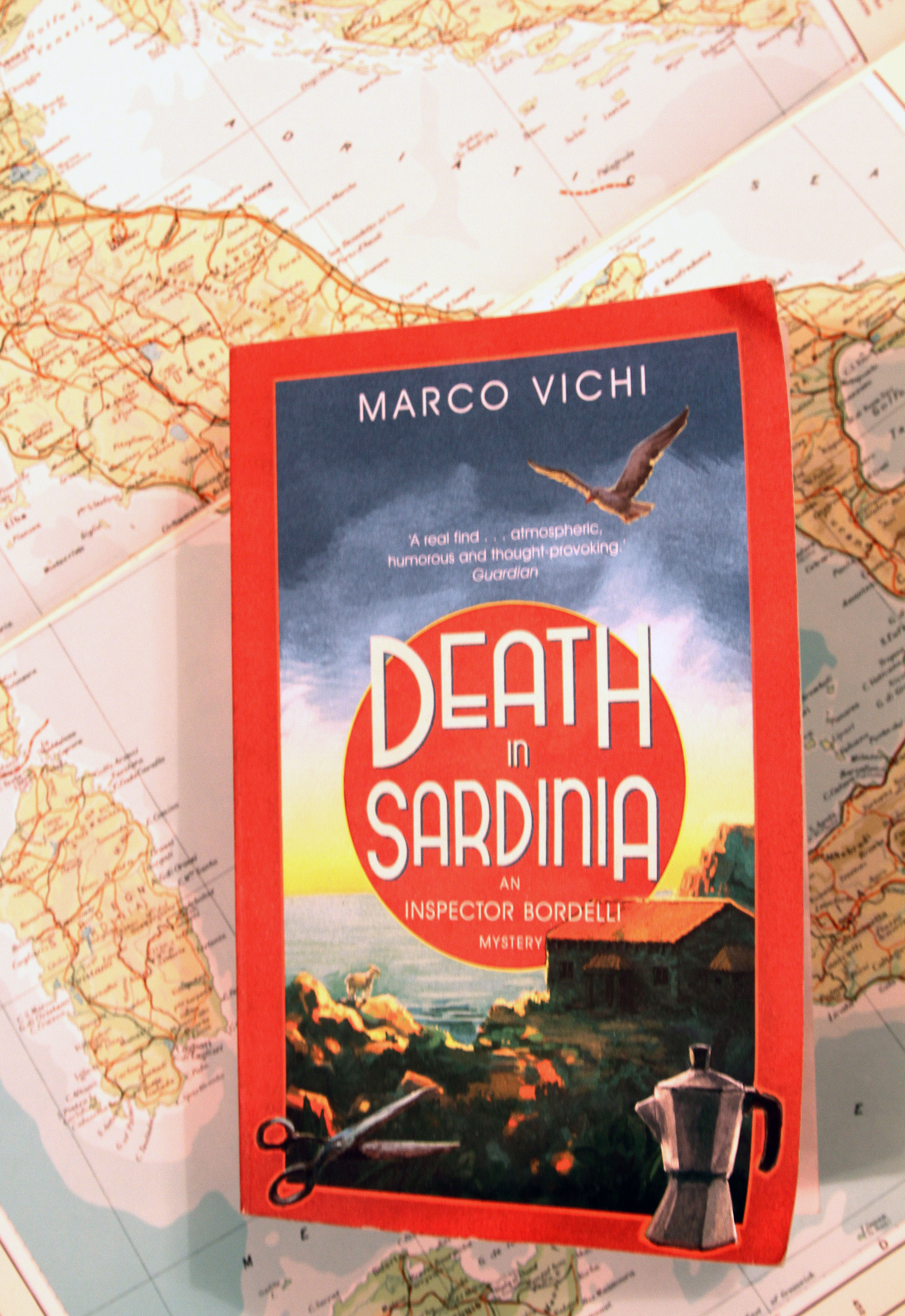
I know from the blurb on the back of this crime novel and the short reviews that accompany it that it is one of a series, but – like the anonymous Guardian reviewer who is quoted on the front cover – I’d never come across this author or his work until I found Death in Sardinia in a bookseller’s warehouse just before Christmas. The Guardian reviewer says: ‘A real find… atmospheric, humorous and thought-provoking.’
I agree with all of these adjectives and to them I’d add, ‘highly original’. One of the most appealing things about this novel from my point of view is that it is set in the Italy of the 1960s, in the aftermath of the Fascist régime, when the country was still reeling from the effects of its Second World War defeat. That the author presents Italy from the perspective of a policeman who formerly served as a soldier in a defeated army gives it both depth and substance. Partly because of the background to its setting and partly because the main action in the novel takes place fifty years ago, Vichi is able to create a springboard for some serious – but never over-weighty or didactic – reflections on morality. (For example, Inspector Bordelli recalls an occasion during the war when he and some fellow soldiers came upon an isolated detachment of Americans who were shaving, and decided not to kill them because they were thus rendered defenceless.) The murder investigation that is central to the novel – it is the killing of a very unpleasant debt collector, stabbed in the neck by a pair of scissors – also raises some knotty moral issues, which increase in complexity as Bordelli closes in on the killer.
But above all, it is the glorious cast of characters that makes this novel special. All are originals; some, like Rosa, the ex-whore who is one of Bordelli’s ill-assorted menagerie of friends, are highly eccentric, yet none lacks credibility. Then there is Bordelli himself, a highly-principled, slightly lonely character who doesn’t exactly live for his job yet often ponders on what he will do without it, now that his retirement looms. His repeated invitation that acquaintances should join him for dinner on Christmas Eve gathers poignancy as none of them quite refuses, but – until very late in the day – none of them gives him a firm acceptance, either. He is very susceptible to the charms of the women and girls that he meets during the course of his work, sometimes dangerously so, but he always manages to wrestle down temptation and allow his professionalism to win the day. His solicitude for his dying colleague Baragli particularly arouses the reader’s sympathy.
Three quarters of the way through the book, the narrative temporarily takes on a picaresque style, as several of the characters relate in detail stories that have been of key influence in their lives. Despite the almost Chaucerian vitality and immediacy of these stories, on a first reading they have the annoying effect of stalling the plot, but eventually the relevance of each of them becomes apparent and I’m certain that, if I were to read the book again, I should be less impatient of them and enjoy them to the full for the minor masterpieces that they are.
Death in Sardinia is a crime novel, but it is much more than that. It is a perceptive distillation of the human condition that captures many of its foibles as well as the depravity into which it is capable of sinking and the acts of nobility to which it can sometimes rise. This novel apparently comes third in the Inspector Bordelli sequence; I am now determined to seek out some of its companion works and enjoy them, too.
Whitelocks

Whitelocks in Turk’s Head Yard, Leeds
I’ve always had a strong affection for the very heart of Leeds and first knew it when the buildings were still black with soot and vehicles could go everywhere in what is now a huge pedestrian precinct. I particularly remember shopping here before Christmas in the early seventies and finding it almost impossible to make my way along the pavements, which were packed with shoppers because the roads were likewise thronged with cars. It is much more pleasant now, with space for pedestrians as well as pavement cafés (one in a street completely covered with a glass roof that seals it from the weather and gives it the feel of the various Victorian arcades that lead off Briggate) and talented buskers; the several covered shopping centres (the latest, Trinity Leeds, adjoining Boar Lane) are a magnet to thousands of visitors from across Yorkshire and beyond.
The casual visitor, however, will probably miss the ‘ginnels’ (passageways) and ‘yards’ that preserve the history of Victorian Leeds and that thread their way through the buildings a breath away from the main shopping streets. The entrance to the far-famed ‘City Varieties’ theatre is in one such, though it has been considerably changed and modernised. And in one of these, leading off Briggate and cheek by jowl with the Trinity Centre, is the oldest pub in the city, Whitelocks. I suppose that I, too, should have missed it, but my husband, who seemed as a student to manage to find his way to most of the hostelries in town, took me there many years ago. I went back with him to enjoy lunch there on my return from China.
Here, indeed, is local Leeds. Sitting alongside us were a grandfather (his accent marking him out as a Leeds man) and his two grand-daughters, both of them students, who bought him lunch and beer, put him in the picture about their mother, his daughter, and bid him a merry farewell as they headed off to afternoon lectures; to my left, during the time we were there, a succession of elderly Horsforth (I asked!) couple, a market trader I recognised from many years’ enjoyable shopping in Vicar Lane’s Leeds City Market and a younger man who came in to sup his pint and put the working day aside for a while. The long bar was crowded with suits on lunchbreak and large groups of city workers of one kind or another.
Whitelocks has to be seen and experienced first-hand: it is a jewel of Victorian/Edwardian décor, replete with brass and copper and marble and coloured tile and mirrors and stained glass and ironwork. It gleams with a sociable splendour that makes ‘having a drink’ into an occasion of moment. For the contemporary cognoscenti, the range of real ales is special, the food traditional and beautifully prepared. Here is an inn which cherishes its guests and makes them feel warm inside.

Whitelocks bar tiles
It opened as an inn in 1715, serving local traders and customers in what was then a Briggate market; its original name, The Turk’s Head, lives on as the name of the yard, but the inn was rebuilt and (as its blue plaque confirms) extended to absorb a row of Georgian working men’s dwellings by the first of the Whitelock family, who took over the licence in 1867 and transformed it. Fortunately, it has been preserved for future generations of Leeds folk to enjoy.
My imagination was caught by my first visit there, on a foggy November evening; there may not have been gas lamps, but there was gloom in the ginnel and a warmth of welcome within. The past reached out and drew me in, to think of the divide between the relatively wealthy Victorian and Edwardian customers of ‘Whitelocks First City Luncheon Bar’ and the vagabonds and urchins and footpads outside in the sooty darkness, who no doubt relieved some of them of their wallets and purses. For a crime writer, pubs with character and a powerful history have huge potential. I’m sure that Whitelocks could very easily find its way into a story and may very well already have done.
Time to move on…

A film starring both Colin Firth and Nicole Kidman is bound to be worth watching. I therefore decided that I wanted to see The Railway Man without having much idea about what it was about, such being the ‘pull’ of actors who have previously captivated me. I knew that it was neither a violent ‘adventure’ movie nor a romcom, and almost any other genre (except perhaps a Kung Fu feature) would have been OK with me. (Pause for deep sighs from film buffs!)
It was a pretty safe bet that I’d enjoy this film, but I was unprepared for how much I’d be moved by it. It tells the story of a man, Eric Lomax, damaged by his experiences as a prisoner-of-war of the Japanese while working on the Burma railway and suffering what is these days called post-traumatic stress disorder. His surviving comrades and fellow captives, like him, now live in the same run-down seaside town in the North East and, also like him, are unable to move on. The focus of their lives is the shabby ex-servicemen’s club which they haunt daily.
So far, so good: the plot is well-constructed and the acting superlative, but there are few surprises. The film appears to follow faithfully in the footsteps of the many stories, both real and fictional, of the brutality of the Japanese during World War II and the permanent psychological damage that they inflicted on those who managed to survive captivity under their jurisdiction. As a child, I knew a number of war veterans who had also been prisoners-of-war. Those who had been captured by the Germans were fairly philosophical about what had befallen them; those who had been held by the Japanese were uniformly vitriolic about their captors and, by association, hated the whole Japanese race and all things Japanese. After the Japanese ‘economic miracle’ had burst upon the world in the 1970s, I had a colleague who would go to any lengths to avoid buying Japanese-made technology.
However, the rather stereotypical scene-setting of The Railway Man that I have described undergoes a sea-change when Colin Firth, now middle-aged, meets Nicole Kidman on a train and falls in love with her (in a rather charming parody, acknowledged in some of her lines, of Brief Encounter). It is only after they have married that she discovers that he still suffers violent nightmares – they are of almost hallucinogenic intensity – about his time on the railway and, particularly, the occasions on which he was brutally tortured; the waterboarding scene is horrifically realistic. From this point on, the film depicts his quest for the mental peace that he must seek in order to make his marriage whole and complete. The actions that he has to undertake to achieve this are drastic – they involve travelling back to the Burma railway twice – and the outcomes are surprising. Risk of spoiling prevents my revealing more, so I’ll just say that, fundamentally, The Railway Man is not so much about the atrocities committed by the Japanese military as about the nature of suffering and guilt, atonement and forgiveness. It is about the strength of the human spirit and the power of love.
There is one other comment that I’d like to add: it concerns the troubling nature of war crimes. Of course, I understand and appreciate why, in the aftermath of World War II, many prosecutions were brought for crimes against humanity. Although there is a grim irony in the concept that there should be ‘rules’ for warfare – and therefore that only some types of killing are acceptable, while torture is inadmissible under any circumstances (though even this basic tenet has been called into question in recent years) – as time goes on, the crucial difference between acts of violence ‘legitimately’ carried out under the rules of warfare and ‘atrocities’ seems to me to become ever more blurred. I’m not referring to the prosecution of those who took part in the death camps (this is a separate issue), but to the pursuit of men who were then very young, no doubt scared, soldiers, who were both acting under orders and caught up in the tumult of war. Most of these men are now nonagenarians or in their late eighties and their accusers likewise. Not only does it seem to me to be impossible to ascertain now exactly what happened then, but I also cannot comprehend how any useful purpose can be served by prosecuting these men seventy years on.
I’m thinking particularly of the man who has recently been arrested for his alleged part in the massacre that took place at Oradour-sur-Glane in 1944. German soldiers, recalled to Germany towards the end of the war from their postings further south, shot all the men in this French village and then rounded up almost all of the women and children, herded them into the church and set it on fire. Only a handful escaped. I have twice visited the site of this atrocity: the first time was in the 1980s, when my husband and very young son and I stumbled upon it almost by accident as we took a break from a long drive to the Pyrenees. At that time, the village was still deserted, the shattered houses (all were blown up or burned down) and ruined church left exactly as they had been as a memorial to those who died. The rusting, abandoned 1940s vehicles and the many ancient Singer sewing machines set out on the walls told a particularly poignant story. My second visit was much more recent. By then, the place had been ‘sanitised’ and had turned into a tourist attraction. By this process, the horror and sadness of what had happened there had been softened.
Maybe this was a good thing. I’m not suggesting that we should ‘forget’ the war; I think that those ‘historians’ who try to sweep the Holocaust under the carpet by providing ‘evidence’ that it didn’t exist are mendacious exhibitionists at their best and evil propagandists at their worst. But I do question whether any good can come from the prosecution of a man who, seventy years ago, was eighteen years old and may or may not have been directly responsible for some of the civilian deaths at Oradour. Justice comes in many forms. In order to be whole, mankind has to reconcile itself with what happened in the past and carry on with life, knowing what happened and not forgetting it, but drawing a profounder truth from the reconciliation of the demands of memory and the present. This is the ultimate message of The Railway Man. It is one of the most thought-provoking films I have ever seen.
 Christina James, crime novelist