

Bodies and what to do with them…
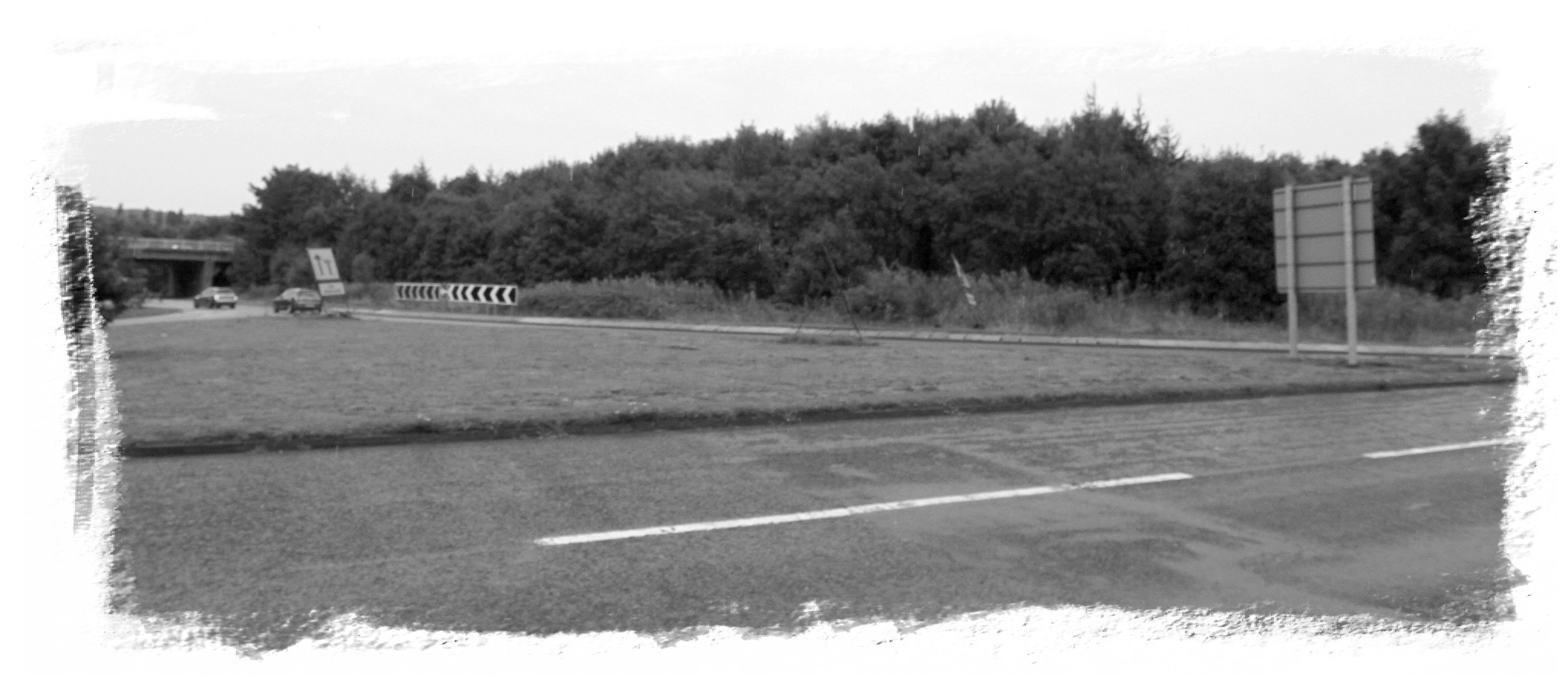
Handy off-road parking under that bridge over there… and oodles of space under the roundabout’s trees…
My husband drove me to the station yesterday morning. I was on my way to yet another (day-job) conference. On the way, we noticed that the slip road that takes us on to the motorway was once again half-closed for repairs. This led to a re-run of one of our favourite conversations – which, incidentally, I capitalised on at the beginning of In the Family. Murdering your victim is fine (so to speak), but how you dispose of the body is a much trickier problem.
Unless they live deep in the Russian steppes, this is a perennial problem for murderers. Some have resorted to ingenious solutions, yet still been found out. I’m thinking of Haigh, the acid bath murderer, or the ‘lady in the lake’ killer (the woman’s husband, Gordon Park, was eventually found guilty: he got away with it for half an adult lifetime, but was still caught in the end, when divers found the body). In certain rare circumstances, justice has not required the discovery of the body in order to convict the killer. Muriel McKay’s body was never found (there was a gruesome theory that she was fed to pigs on the farm where she was held captive), but the two brothers responsible for her death were imprisoned nevertheless.
There are many ways of disposing of a body, especially if the killer isn’t squeamish, but on a crowded island like ours there is always the danger of being spotted, even in the middle of the night. This brings me to my husband’s preferred method of victim disposal. He says that if he were to commit his hypothetical murder, he would bury the body in the middle of a large roundabout. There are two not so very far from where we live that might do nicely. The larger of these is overgrown with a wild thicket of shrubs and trees that is never penetrated by the Council’s gardeners. A body buried there would not be discovered for many years, unless a decision were to be taken to change the route of the motorway. Potentially there would be two problems to overcome, however: the ground might be very hard and unyielding (like our garden, which had virtually no topsoil until we imported some) and therefore it might take a long time to dig a large, deep hole; furthermore, situated as the roundabout is, near a hotel and the beginnings of a large conurbation, the danger of being discovered in the act of digging there would be great. This hazard would be compounded by the fact that there is nowhere inconspicuous to park adjacent to this roundabout. My husband would therefore have to risk parking on the hard shoulder and pretend to have broken down, which might prompt an interesting conversation with the inevitable helpful passing police patrolman:
‘Why did you leave your car unattended, sir?’
‘I was just digging a hole on this roundabout.’
‘Why was that, sir?’
Alternatively he would need to park in one of the nearby streets and lug the body several hundred yards, crossing a busy road and the motorway slip-road in order to reach the roundabout. He’d also have to be strong enough to carry a dead weight of, probably, nine stone or so (assuming that his victim was a woman) or half that much again if a man. You begin to see why some murderers resort to the ghoulish job of cutting up their victims.
No, my husband decided, the smaller of the two roundabouts, which is still large and overgrown in the middle, would be a better bet. A hole could easily be dug in advance there, for the undergrowth is thick and, in the leafy season, impenetrable to the eye. It has the advantage of being accessible from a long, poorly-lit slip-road that is often deserted at night, with a lay-by very close to it. Unfortunately, the lay-by itself is the popular haunt of men in vans during the day (I’ve never been able to fathom why, but judging from what I’ve seen, I wouldn’t be surprised if a few dodgy transactions took place there) and sometimes used as an overnight stop by truck drivers. My husband would therefore have to make sure that there were no truckers there on the night he buried the body. Much more convenient, he said, is the hard standing underneath the motorway bridge, right on the roundabout, where many a time we’ve seen lorries and cars parked, sometimes overnight. Twenty yards maximum for the heavy lifting. Then, he said, he’d dump the body quickly and drive the car away, so that the vehicle would be there for no more than five minutes, if that. He’d already have had the body in the freezer, wrapped in plastic, so it would be a neat and clinical affair. A pair of heavy duty gloves and an ex-military trenching tool (this latter he has had for some time – it folds neatly into a small case that can be attached to a belt) would complete his kit for an inconspicuous return on foot to complete the job. He’d be able to take his time to put the body in the hole, replace the soil and cover the grave well with the dead leaves that lie there so that no-one would notice that the earth had been disturbed before it grew over properly again. Simple.
I was not convinced. For one thing, there’d still be a chance of the ubiquitous police patrolman spotting the car and stopping to investigate. Or a lorry driver might turn up late. Then there’s Sierra Yankee Nine-Nine, South Yorkshire’s proudly-owned police helicopter. What if the pilot were out for a late night recce, and spotted him from above? There is also the forensics to consider: even wrapped in plastic, the body might leave some traces in his car and, if the remains were found sooner than he expected, he’d have to explain why soil matching that on the roundabout had clung to the soles of his boots. But for me the insurmountable obstacle would be the corpse’s necessary, if temporary, residence in my freezer. I have not spent the latter part of the summer freezing vegetables to have them jostle with a grisly cadaver; nor could I ever feel the same about Ben and Jerry’s Dough-ble Whammy ice-cream if I’d seen a lifeless hand nestling against the carton.
No, it’s back to the drawing-board for my husband. He’ll have to find a less domesticated way of getting rid of his victim. He says we could have a trial run with me as a dummy corpse, but I’m not to be taken in by that one. The journey to the station, however, passed very quickly.
When fear overpowers reason…
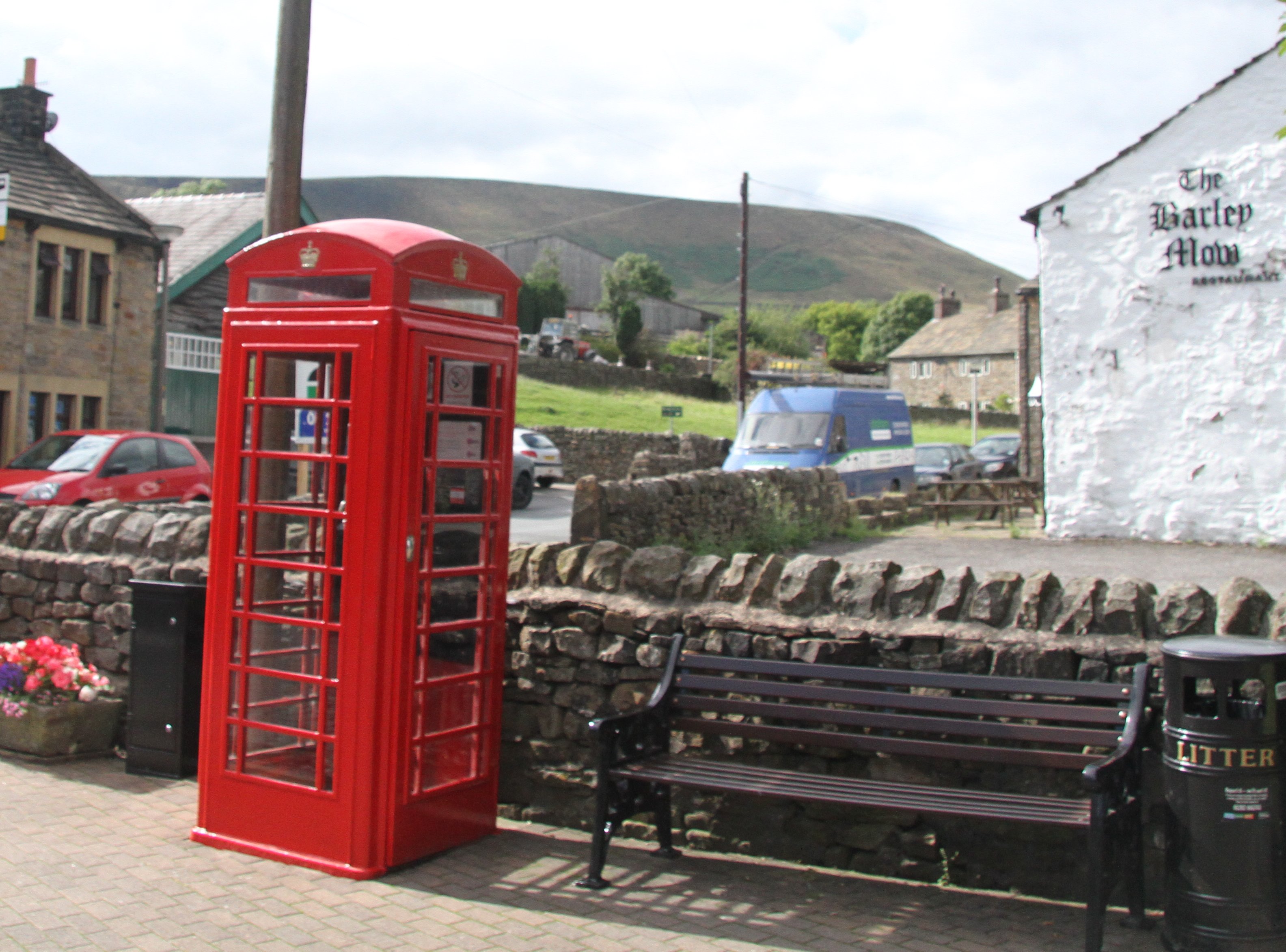
Pendle Hill, from the village of Barley
A week ago today I took the day off and went with my husband to meet friends in order to walk up Pendle Hill in Lancashire. I’ve been meaning to write about it ever since and have finally been spurred to do so by a book review I’ve just read – of which more shortly. I’d never been to this part of Lancashire before and had no idea of how beautiful it is.
Pendle Hill, which is perhaps best accessed via the picturesque village of Barley, is well worth the steep climb that it demands of those intent on reaching the top. It is a windswept plateau unprotected against the elements, even on a fine summer’s day (though a stone circle, grouse-butt style, has been erected as a kind of refuge); once you have arrived at the summit, it is possible to see much of the Lake District, the Yorkshire Dales (including the Three Peaks), Derbyshire’s High Peak, North Wales and, on a very clear day, so I’m told, the Isle of Man. The 360˚ view is truly spectacular.
Aside from the wonderful panorama of Pendle Hill, the area is famous as the home of the defendants in the Pendle Witch Trial, in 1612. Twenty people from the Pendle district, sixteen of them women, were tried at Lancaster Assizes for witchcraft. The crimes that they were accused of committing were diverse, varying from murder by witchcraft to ‘bewitching’ people or animals, usually by causing them to fall sick or die. Some of them were sentenced to death; others had to stand in the pillory in the markets of Clitheroe, Padiham, Colne and Lancaster.
Their stories make sobering reading. Those indicted of witchcraft were usually, but not always, old women. One of the most renowned of the Pendle witches was Ann Whittle, alias ‘Chattox’, who lived in the Forest of Pendle. She was indicted on several counts of sorcery and admitted (probably under duress) that some fourteen or fifteen years before her arrest she had sold her soul to the devil. Her daughter was also accused of witchcraft. The nineteenth-century chroniclers of the witches conclude their account of her story as follows: “… no longer anxious about her own life, she acknowledged her guilt, but humbly prayed the judges to be merciful to her daughter, Anne Redferne; but her prayer was in vain.”
The roots of the Lancashire Witch Trials were political: they formed part of the Protestant response to the Counter-Reformation that reached its peak in this country during James I’s reign. More locally, they played on much older superstitions that had survived in rural societies, possibly from pre-Christian times.
What I didn’t know when I visited Pendle Hill was that there was a Lincolnshire equivalent to the Pendle Witches. Two sisters, Margaret and Philippa Flower, were hanged for witchcraft in Lincoln in 1619. They were therefore the exact contemporaries of the Lancashire witches. Their story is told in Witches: a tale of sorcery, scandal and seduction, by Tracy Borman, a newly-published book which was reviewed in The Sunday Times on 11th August and which I shall certainly buy and read. Yet more interesting, from my perspective, is that the Flower sisters were employed as maidservants at Belvoir Castle by the Earl of Rutland and were accused of bewitching his children, one of whom died. Belvoir Castle and Burghley House were the two great houses of the area in which I grew up and I visited them several times during my childhood. I also knew Lincoln well. The present prison was built in the late nineteenth century, in gothic style, and before that prisoners were held in the eighteenth century gaol at Lincoln Castle; the Flower sisters were probably locked in the Castle dungeons. Public hangings took place above the upper town, from the north-east tower, until 1868. (My stepfather’s mother’s family kept a theatrical boarding house in Lincoln and she was a small child there, almost, though not quite, within living memory of the hangings: she died in the 1980s, when she was well into her nineties. She remembered tales of the scene, with cheers and jeers from the watching crowd below.) Taking them as a yardstick of how little progress civilisation had made in the intervening three centuries perhaps makes it less surprising, if no less shocking, that women were being put to death for witchcraft only four hundred years ago. Even more shamefully, old women have been persecuted simply for being old and misshapen during my own lifetime. When I was a primary school child, there was a row of tumbledown cottages that I had to walk past every day. Two of them were home to two ancient ladies with wispy white hair. One was almost bent double. She walked very slowly with a stick, her eyes usually fixed on the ground. She had warts on her face and the prognathous chin that very old ladies sometimes develop. It’s difficult now to say how old she might have been: as she’d spent most of her life without benefit of the National Health Service, she may not have been as aged as she looked. But I remember quite clearly that schoolboys used to shout ‘Witch!’ at her as they passed, if she happened to be standing outside. With hindsight, I shudder at the pain she must have felt, and that she had to suffer because she was old and ‘different’. It can be a pale reflection only, I know, but still it offers some insight into the anguish and terror that the Lancashire witches and Margaret and Philippa Flower had to endure before rough hands finally put them out of their misery.
Could such persecution happen today? In Western society, not in its literal form, perhaps, but Arthur Miller’s inspired choice of the Salem Witch Trials in The Crucible to illustrate Senator McCarthy’s irrational pursuit of communists and the Cleveland child abuse investigations both illustrate that modern parallels still exist. Old women may no longer be the prime targets, but we still harbour primitive fears of people who are different, and, motivated by fear, are still capable of turning upon them savagely.

The Pendle Inn sign, Barley
The most atmospheric of writers…
One of the great pleasures to be obtained from reading crime fiction is that most crime writers are acutely aware of both the geography and the mood of the communities that they write about. I won’t claim that there is such a thing as national character – I know that I shall immediately be shot down in flames if I even hint at it – but I’m certain that the massive popularity that Scandinavian crime writers have achieved owes a significant debt to the ambience of their work: the dark nights and cold days that they evoke, which in turn inspire brooding and melancholy characters who seem determined always to spot the worm in the bud, despite the consummate beauty of their surroundings. Similarly, the novels of Donna Leon and Michael Dibdin, which are set in Italy, skilfully succeed in communicating the rich cultural heritage of that country.
No-one, however, captures the essence or psyche of a country better than Barbara Nadel. Perhaps I should say city, rather than country, as all of her novels that I’ve read have been set in Istanbul. With apparent ease, she captures the contradictions of a city that has always looked both East and West: its exoticism and squalor; the brutality of some of its people and the sophisticated philosophical outlook of others; the thrusting modernity that jostles but does not oust more ancient superstitions. Other writers have written eloquently about this city, especially Orhan Pamuk, whose Nobel prize-winning work, so exquisitely wrought, seems to derive its depth from these very contradictions; yet, in my opinion, no-one, not even Pamuk, surpasses Nadel’s descriptions of Istanbul’s mean streets and boisterous crowds when she is writing at her best.
I’ve read three or four of her books now. I particularly admire her depiction of her world-weary but wise and humorous detective, Çetin Ikmen, who is beleaguered not only by the absurdities of red tape and the inefficiency and bigotry of his colleagues at work, but also by his large, unruly and ever-growing extended family at home. The latter is presided over by his ebullient and chaotic, much less well-educated wife, Fatma.
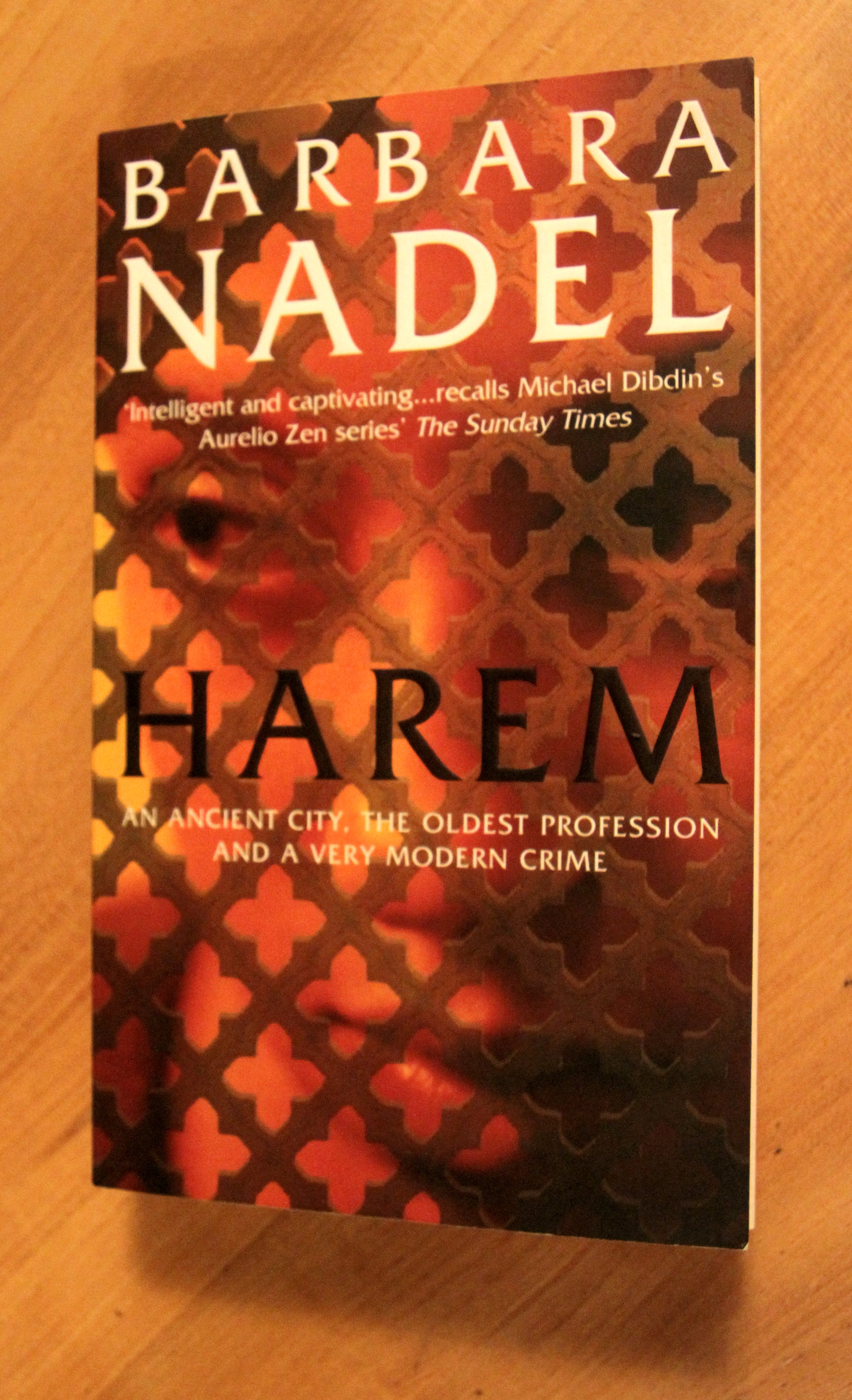
Harem is a particularly accomplished novel, because it examines issues of profound significance in Western countries through the filter of setting them in Istanbul. This not only makes it easier for the Western European reader to read about them, but also points up the dual thinking still prevalent in almost all countries by presenting it as a peculiarly Turkish phenomenon. This provokes the immediate response: ‘That couldn’t happen here!’, followed soon afterwards by: ‘Or could it?’ The original crimes committed in Harem are rape and the exploitation of women, leading in some instances to murder. The first of the murder victims is Hatice, a friend of Ikmen’s teenage daughter Hulya. Nadel’s account of Ikmen’s boss’s reluctance to pursue the girl’s murderers and bring them to justice because she evidently was not a virgin before they attacked her is particularly poignant. We might try to flatter ourselves that such an attitude could not prevail in our country, were it not that only in the last few days a British barrister has described a thirteen-year-old girl against whom sexual offences were committed as ‘predatory’. Nor does Nadel pull her punches when it comes to describing the perpetrators of rape. Hatice had unwittingly become involved with a group of people practising organised depravity, but her case is mirrored by one even closer to home for Ikmen, that of the abusive relationship that exists between two of his own police officers. As one would expect from a writer of Nadel’s talent, the moral conclusions that she draws are complex, but she is quite clear that women should never suffer from sexual abuse, whatever their personal moral code. This message may seem obvious, yet it is one that societies everywhere seem to be taking a long time to digest. Harem makes a very valuable contribution to the debate.
Of the other characters, several old friends feature in this novel. My particular favourite is Mehmet Suleyman, Ikmen’s disdainfully aristocratic colleague, who in this book finds himself less able than usual to sail, cosseted and immaculate, through his life, as if the teeming, grubby throng of humanity that it is his job to police does not really exist. Suleyman’s volatile Irish wife is suffering from post-natal depression and he has to run the gauntlet of her tantrums and her misery. And then there is Fatma, impossible but lovable, weaving her idiosyncratic magic on her weary but essentially adoring husband.
I wholeheartedly recommend Harem. If you’re new to Barbara Nadel, you won’t lose anything by starting with this book, as, despite being one of a series, it stands completely on its own, as such novels should. However, I’m certain that, if you do read Harem first, it will make you also want to sample some of the others.
A significant writer, with flair: M.R. Hall, @MRHall_books
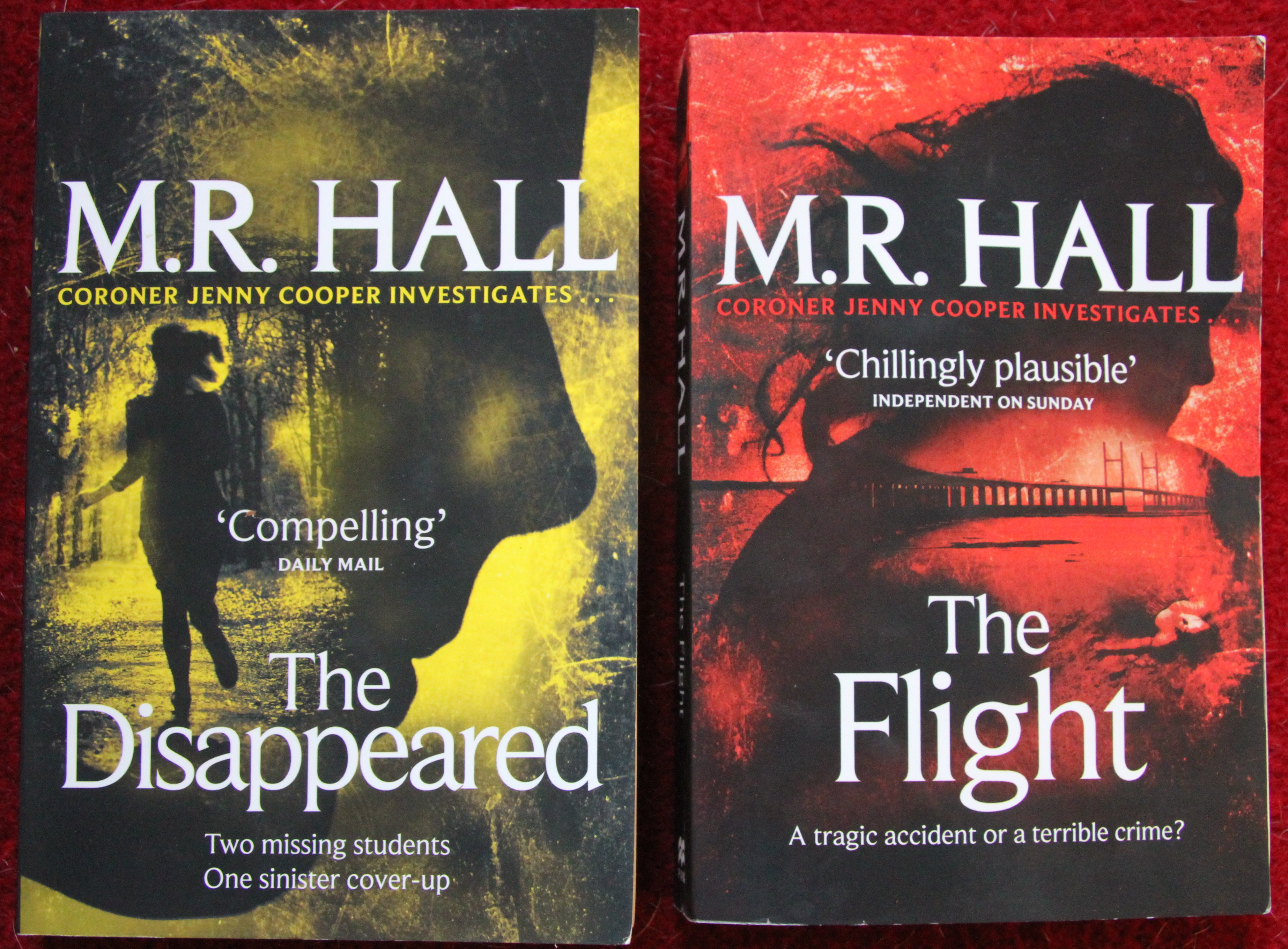
I bought The Flight and The Disappeared, by M.R. Hall, from Bookmark in Spalding and took them with me on holiday to read. I had not heard of the author before, but Christine Hanson, the proprietor of Bookmark, had mounted a display of them in the shop and had also read The Flight, which she said was excellent. I was certainly prepared to accept her judgment.
To confess the exact truth, I started The Flight, which is the later novel, first, and didn’t much like it. It deals with an air crash, and the first fifty pages or so reminded me very much of those disaster movies that were so popular in the 1980s, which had a very thin storyline and depended on the histrionics of the disaster itself to maintain interest. This was compounded by an amazing amount of technical detail that, although I dislike segregating books into ‘men’s reads’ and ‘women’s reads’, struck me as having more of a male than a female appeal.
I therefore put The Flight aside and embarked upon The Disappeared. Upon picking it up, I thought immediately that it would be much more to my taste. The story is about the disappearance of two Muslim teenagers and how Jenny Cooper, the Severn Vale District Coroner, mounts an investigation into the cause of their deaths (as they have officially been declared dead, but no bodies found) seven years afterwards, at the request of the mother of one of them. The novel deals with several topical and sensitive issues, including Muslim extremism and the activities, sometimes of dubious legality, of the security services. All this is riveting, and beautifully written. What engaged me most of all, however, was the detailed and delicate portrayal of states of mind that can perhaps be described as hyper-sensitive, but by no means indicate madness or irrationality, and how those suffering from them can be persecuted by unscrupulous people trying to serve their own unethical purposes by discounting them or even bringing them into disrepute by suggesting that they are unreliable. Fine parallels are drawn between Jenny’s own mental state and that of Amira Jamal, the mother of one of the missing youths. Both need professional help for their mental conditions, yet each is perceptive and intelligent, with an intuitive understanding of the forces that are really at work, despite being disbelieved and ‘rubbished’ by others and, to differing extents, cowed by this. Yet, in both instances, the reader is left in some lingering doubt about their powers of judgment. A particularly good example of this occurs when Jenny’s sulky teenage son (with whom a more mentally robust mother would have had a straightforward conversation, setting out a few home truths) enlists the help of her smug ex-husband to move out of her house. While the son is packing, the husband explains that one of the reasons that the son is going is that Jenny is not fit to look after him, citing the fact that there is never any food in the house. From what has gone before, the reader knows that this statement, if exaggerated, has on several occasions been true (there are further occasions when the son has selfishly demolished all the food). It is left to the reader to reflect that a son in his last year at college should not be as helpless as this one appears to be, but it is a manifestation of the author’s considerable talent that Hall demonstrates that there are faults on both sides. It is from such balanced depiction of human relationships, and how they fray and chafe against each other, that the book gains distinction. The taut relationship between Jenny Cooper and her ex-policewoman clerk, Alison Trent, is also particularly well-drawn.
So, having enjoyed The Disappeared immensely and devoured it impatiently to the last page, I decided to give The Flight another try. To any other reader who, like me, finds the first eighth or so of this book daunting, I’d like to say that it’s well worth persevering with. It’s true that there is a lot of technical detail throughout (and I can only applaud the author’s obvious mastery of it; I’m sure that a huge amount of research must have gone into the crafting of this novel), but the reason for it becomes increasingly apparent as the story progresses. M.R. Hall has constructed an intricate but worryingly believable plot which, even more than in The Disappeared, entrances as it unfolds. Jenny’s personal story is also developed well in this later work: she is released from some of her demons, but manages to create others in their place; and her dealings with Alison are even more fraught than in its predecessor.
I’m delighted to have discovered M.R. Hall, especially through one of my favourite bookshops, and look forward with impatience to the next Jenny Cooper story. In the meantime, I believe that there are a couple of others in the series that I have yet to read. Do I have any reservations at all? Only one comparatively minor one. It concerns the character of Jenny herself. Hall has been much praised for getting inside the head of a woman with such sympathy and understanding. I’d say that 95% of the time this praise is well-deserved, but sometimes Jenny is just a bit too snivelly and self-pitying for my taste, though she soon snaps out of it. Hall should perhaps consider that resourceful women who live alone never (in my experience) behave like this. They know that the knight in shining armour won’t come rushing to their aid and adopt a pragmatic approach accordingly – as Jenny always does, after her odd lapses. But, as I’ve said, this is a minor personal niggle, and possibly it’s unfair even to mention it.
GBH in a quiet country lane…
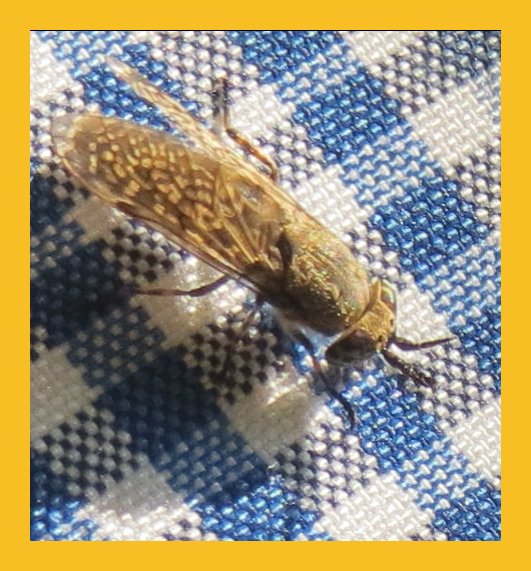
Horse-fly
He is a loafer and a bandit, sauntering along the lanes and woodland rides, nonchalantly taking his ease amongst the shadows. Nothing of the soldier in him: he is not on patrol, nor does he work with comrades, though he might consort with them. He’s a poser in aviator shades – lazy, handsome in a dark way, always with an eye to the main chance and single-minded in his conquests. Though his tastes swing either way, he much prefers women: he adores their scented hair, their soft and fragrant flesh. Men can’t compete for sweetness; they are coarser-skinned, sourer to the taste and less aromatic, but he’s not too fussy – if one comes along, legs provocatively bared to the knee against the heat, he’ll rise to meet him. Not head on, though. Never that. He is a guerrilla, with tactics to match.
At first he introduces himself as a companion, humming softly at the ear, a wayfarer travelling in the same direction. He slouches along sloppily, dipping and swooping around the head and shoulders of his prey, weaving ever closer to the skin, seeking perhaps an undone button or an untucked shirt rippling in the breeze. He annoys, perhaps is flapped away, but he is droopily persistent. The more he’s repelled, the more assiduously attentive he becomes, though still languid in manner. Not for him the spitfire menace of the wasp or the swiftly suicidal sting of the honey-bee. His passion becomes a frenzy of desire as he smells sweat rising from skin, imagines the blood beneath. He penetrates, spiking the flesh and wounding, then flitting out of range, drunk now with the luscious red fluid that he has extracted. He’s swapped it for some of his poison. But he’s not finished yet: dizzily inebriated, he lusts for more. Half in ecstasy, he swirls and dips in taunting arrogance, whisking himself beyond the reach of now flailing, panic-stricken arms; he may distance himself for a while, waiting for the flapping to falter , but still he is there, riding the air, pacing himself, moving as one with his victim, ready for his chance. When it comes, he dives in again, landing so softly he can pierce and suck unnoticed, until he is so glutted that he is forced to let go.
If quick enough and not too distraught with pain, that innocent victim now has a fleeting chance for revenge. The attacker, bloated and engorged, is sluggish now, eyes drooping with sleep. A lucky handslap or dexterous swat with a stick may pitch him, whirling, into oblivion.
Self-defence, m’lud, but come too late: the great red poisonous weals that he has inflicted will impose their own sentence of many days.
[Footnote: In fact, it is the female of the species which bites and sucks blood, but I’m a fiction writer… 😉 ]
The idyll and the agony, with Anne Zouroudi (@annezouroudi) …

The Feast of Artemis is the seventh novel that Anne Zouroudi has written about her mysterious amateur detective Hermes Diaktoros. It’s only the second of the series that I’ve read – I completed The Messenger of Athens last year, shortly after hearing Zouroudi speak at a crime writers’ evening held at the offices of Bloomsbury, her publisher – so I now have the very great pleasure of being able to look forward to devouring the other five. I shall buy them as soon as I can.
I find the quality of Zouroudi’s writing almost haunting. It is classic in that it belongs to the oldest European literary tradition of all, that which has Homer himself sitting at its head. I’ve written elsewhere about how Zouroudi’s intensely poetical yet austerely precise descriptions of the Greek landscape remind me of Homer’s own accounts of the Greek islands in The Odyssey, which, more than two millennia after they were conceived, still amaze with their freshness. The Feast of Artemis also contains such evocative passages, but Zouroudi – always reinventing herself within the universe that she has created – in this novel focuses especially on describing food. The clue, though, is in the title: as the reader is aware, Artemis is the feisty goddess of hunting; in Greek mythology, she at various times exacts retribution, and in the novel terrible things are done in her name, some with unforeseen and unintended consequences.
Just as beneath this glittering, sun-drenched paradise lives the peasant community of Dendra, whose members are tarnished with all the human vices, so concealed within their sumptuous festive meals lurk danger and destruction. Food is both the bringer of life and the harbinger of death in this novel. The finely-drawn characters, whilst naturally displaying none of the urbanity of Diaktoros himself, show both cunning and a taste for revenge that matches that of the gods of old.
The central plot concerns a generations-long feud between two olive-growing families. A cycle of vengeance and retaliation results in the death of the patriarch of one of these families and the mutilation by fire of a youth from the other. One of the book’s many masterly touches consists of a kind of tightening of the screw as the plot unfolds: we are told early on that the youth has been burnt, but the full significance of this is not revealed until the closing stages. The small clouds that hover over the sunny landscape right from the beginning grow darker as the novel progresses and the effects of evil are revealed.
Yet such is the author’s subtlety that none of the characters in The Feast of Artemis is evil through and through. The publisher has placed it within the crime genre, probably correctly, but it belongs to that relatively small group of distinguished crime novels that can be read on more than one level. Fundamentally, it is a book about the human condition. Although Hermes was the messenger of the gods, and Hermes Diaktoros, in his guise as moral arbiter, shares some of his namesake’s characteristics, he is also a modern-day Zeus, swooping down, not in anger, but with a kind of sadly humorous wisdom, as he conducts his inexorable quest to get at the truth and show the perpetrators of the crimes the errors of their ways. That he himself has foibles is a stroke of genius: in a place where life and death are governed by food, he is continually tempted by delicacies that threaten his own well-being because he is already overweight. It also emerges that he is brave to eat some of the food that he is offered, knowing as he already does that those providing it are guilty of introducing poison to their seemingly delicious comestibles. Yet he is nimble on his tennis-shoe-clad feet and has a brain of quicksilver. That he is not perfect lends authority to his perspicacity and ensures that it is not marred by overt moralising. Another fine touch is the introduction of his brother Dino, who is as much a slave to wine as Hermes is to food: Dino – the echo of the name is surely intentional – plays Dionysius to his Zeus. (I’m not sure whether Dino also appears in some of the five novels that I haven’t yet read: my guess is that this is not his first appearance in Zouroudi’s oeuvre.)
At the end of the book, resolution is achieved, but at a price. Peace is brought to the community of Dendra, but it is made clear that its inhabitants will continue to bear the scars – and in some cases, to pay custodial penalties – for their wrongdoing. Hermes Diaktoros himself, having arranged to pay for the best plastic surgery that money can buy for the damaged youth from his own seemingly bottomless yet inexplicably acquired funds, simply melts away. God’s in his heaven, all’s right with the world – until, we hope, the next time that his intervention is required.
If you haven’t yet read Anne Zouroudi, you should; you will find her compelling command of the Greek ‘idyll’ as stuffed with flavour and irony as the roasted lamb from the fire pits of her opening chapters in this book.
A fair bit of nostalgia…

As a child I always visited the circuses and funfairs that came to Spalding, because my great-uncle, who kept a shop, was given free tickets or tokens for rides in return for placing advertising posters in the shop windows. I was never very keen on circuses – the captured animals forced to perform tricks, their eyes sad and defeated, troubled me even then. But I loved the funfairs! Yesterday, I stumbled upon one completely unexpectedly when stopping to walk in a small picturesque village when out for a drive.
I hadn’t been to a funfair for many years. The last time that I can recall was during a holiday in France, when my family and I were passing through the handsome old Roman town of Saintes and saw that it was en fête. The main street of the town, which is shady because of the plane trees lining it on either side, had been cordoned off and a modern funfair set up adjacent to the ancient manège (roundabout) that always seems to be there when we visit. I remember that fair especially for its mingled scents of hot metal, warm sugar and cooking meats.
Yesterday’s fair presented me with a similar surge of aromas. The heated metal and candyfloss smells were particularly pervasive in the warm sunshine. What also fascinated was the very dated appearance of the rides – dodgems, cakewalks, giant rocking-boats, one of those terrifying cylindrical rides that depends on centrifugal force not to tip its occupants onto the tarmac as it bends and tilts and, for the younger children, bobbing yellow plastic ducks to ‘catch’ with magnetised canes as they swim endlessly round tiny artificial rivers and a small roundabout of aeroplanes fitted with joysticks for their infant pilots to manipulate them up and down – all standard fairground machinery, perhaps, but, extraordinarily, existing as if in a 1950s time-warp. Each piece was painted and decorated in the same way as those of the fairs that I remember in Spalding as a very small child: there were pictures of Marilyn Monroe and Laurel and Hardy; the cylindrical ride was even topped with a figurine of Elvis Presley.
What transported me back into the past yet more vividly was the wonderful carnival atmosphere that the fair brought with it. Whole families had gathered and were chatting, happy and relaxed, in the streets. Children danced giddily off the rides and played next to them with their friends or tugged at their parents for the cash to buy another go. Fathers pushed buggies and women congregated in groups, sipping coffee or nibbling ice-creams. A local café was selling half-pizzas. Hot dogs, hamburgers, candyfloss and giant sweets proclaiming ‘I love you’ together gave off their distinctive mingled scents. There wasn’t a mobile phone or an iPad in sight. For a couple of hours, it seemed as if I had stepped through the looking-glass into an era of lost innocence and almost forgotten leisure, when it was OK to while away the afternoon doing not much in the company of others doing the same.
Of course, being a crime novelist with more than my fair (!) share of cynicism, I still had my eyes open to the possibility that the opportunity for some nefarious deed might be lurking below the holiday surface. The killing of a young girl on a fairground ride featured in a televised crime programme not so long ago; though she apparently just fell from the ride, she had in fact been stabbed. My eyes turned to the giant fan-belts that powered the more terrifying of the machines; they, too, belonged to a bygone age, an age that depended on a mechanical rather than an electronic infrastructure. What if they had not been inspected with sufficient rigour when the fair was erected? What if a madman were to interfere with them and bring horror to the happy scene? Please don’t worry about me; it’s all just a bit of internal fiction… and I did have a wonderfully nostalgic time!
A merciless killer…

A half-tunnel of hedgerow shades the path from the sun; new bramble tentacles rear up and across the way, reaching for light, their tips still soft, but their stems already clutching at clothing; rabbits are nervous tics at the edge of vision, ready to bolt. This is a lonely, little-used link between roads, though at one end, in the undergrowth under the hazels, illicit, smutty relationships are consummated and discarded with their condoms; the entrance by the field gate, where cars can pull in, is a drift of fast food bags, cartons and fly-tipped debris. Ah, the beauty of rural England!
It is, in fact, part of a favourite walk for us and, especially, the dog, since pheasant and partridge are here in numbers; he will hold a point for over half an hour, which would, were we shooters, make a twelve bore superfluous – a butterfly net would make better sport. As I climb over the stile into the field, where a small herd of bonny brown cows and calves grazes the bank, I encounter a neat heap of dark feathers. The Python team would call this a late blackbird, too late in its take-off to escape the trademark kill of the sparrowhawk. Foxes and cats dispatch their prey untidily, scattering feathers far and wide and often leaving other debris as well. The sparrowhawk, by contrast, is the most thrifty and purposeful of murderers. He calculates. He acts with intent, each action precise and pre-meditated. He uses the terrain, hedges being particularly appropriate for his silent up-and-over surprise attack. Small birds may just flit into the dense hedgerow in time, but his yellow-rimmed eyes are burning with bloodlust and his whole being utters supremacy. He extracts nourishment gram by methodical gram from his hapless quarry, gorging on blood, flesh and bone until there is nothing left except that pathetic heap of feathers, dropped straight down from the branch on which he sits as he feasts.
Imagine that you are the sparrow or the blackbird, caught in those dread talons even as you realise the danger, so swift is the arrowed form. At least your exit is quick.
I finally get around to reading an author I should have read before…

I’d heard a lot about Ann Cleeves; I had followed her on Twitter, to a kind reciprocation; the reading groups that I joined at Wakefield One had heaped glowing praise upon her work. Yet I had never read her – it was therefore high time that I rectified matters.
I bought two of her books from Rickaro: The Crow Trap, which is set in the Pennines, and Red Bones, one of her Shetland Isles stories (I know that these have been televised, but I haven’t seen any of the programmes). I chose novels set in two different locations, because, as I’ve said before, topography is important to me. I know that Ann Cleeves has a reputation for creating fine atmospheric settings – as one of the reading group members said, Shetland ‘almost becomes a person’ in the books set there – and I wanted to see how she achieved it.
I’m not, however, going to write here about her use of setting, because, although I endorse everything that has been said about it by others, I have nothing new to add. What I’d like to focus on especially, therefore, is her skill at character portrayal, particularly of women. I find her female characters fascinating, not only because of the way she draws them, but because she captures with subtle and skilful nuances some of the ways by which women are still exploited by men – though she is by no means a militant feminist and the male characters in her novels suffer from certain injustices, too. Some of her women characters find their own ways of fighting back: Anne Preece in The Crow Trap tries to make use of both her husband and Godfrey Waugh to provide her with the lifestyle that she craves, although both in their turn exploit her as part of the chess-like game of shifting relationships that forms a fine sub-plot to this novel; and Jimmy Perez, the policeman hero of Red Bones, is continually kept guessing about the depth of feeling that his vivacious, unconventional girlfriend Fran entertains for him.
I enjoyed both of these novels immensely. Ann Cleeves writes quite unlike any other crime novelist whose work I know. If I had to choose between them, I’d say that The Crow Trap has the edge on Red Bones, mainly because, although both are set in remote areas, the Shetland novel offers less scope for variety in characterisation. Both are rural variants of the country house murder convention, each with its own subtle twists that bring new life to this sub-genre. However, Red Bones has a strong archaeological theme, which was of special interest to me because when I read it I had just completed Almost Love, which is in part about the disappearance of a famous female archaeologist and set against the activities of the members of a famous archaeological society.
I see that Ann Cleeves is a prolific writer who has written many books. I can therefore look forward to many more hours of happy reading in her company.
My new acquaintance…

In yesterday’s post, I wrote about my visits to Burlington House and said that I’d met an interesting new acquaintance. Her name is Andrea and she has recently been appointed to the newly-created position at the Royal Society of Chemistry of Diversity Manager. (Her work will be vital in not only attracting minorities of all kinds to the study of chemistry, but also in helping to develop their careers later on.) Prior to that, she was a forensic scientist for thirteen years, until the government closed down its forensic science unit.
My ears pricked up when I heard this. I was also fascinated to learn that Andrea was brought up in a village close to mine. More than once I’ve made DI Tim Yates say that he doesn’t believe in coincidences, but truth is obviously stranger than fiction, as this is the second big coincidence that’s happened to me in less than a week (the first was meeting Carol Shennan, with whom I was at school in Spalding decades ago, in Bookmark).
Andrea has kindly agreed to be interviewed for the blog in a few weeks’ time. She’s also sent me an article that she wrote about being a forensic scientist for Chemistry, the RSC’s magazine. I won’t spoil my future post after I’ve interviewed her by quoting too much from it now, but here is a taster:
I became a forensic scientist long before shows like CSI and its spin-offs resulted in the general public having a distorted view of how forensic science is used by police forces to investigate crime. Forget Armani suits; most of the time we were dealing with skanky knickers, jumpers crawling with bugs, and clothes so sodden with blood that they had gone mouldy in the packaging.
A DNA profile in minutes – no chance! Our quickest test took around 12 hours and there were times that we had to wait well over a week. CSI also doesn’t show the endless samples of ‘touch DNA’ that fail to give a DNA profile at all, or ones that give a profile so complex it is uninterpretable. Nor do they feature the heart-wrenching cases that demonstrate the depravity that exists in our society: cases involving babies, the elderly or vulnerable; people who are murdered simply because they were in the wrong place at the wrong time.
Riveting, isn’t it? I look forward very much to talking to Andrea again soon.
 Christina James, crime novelist