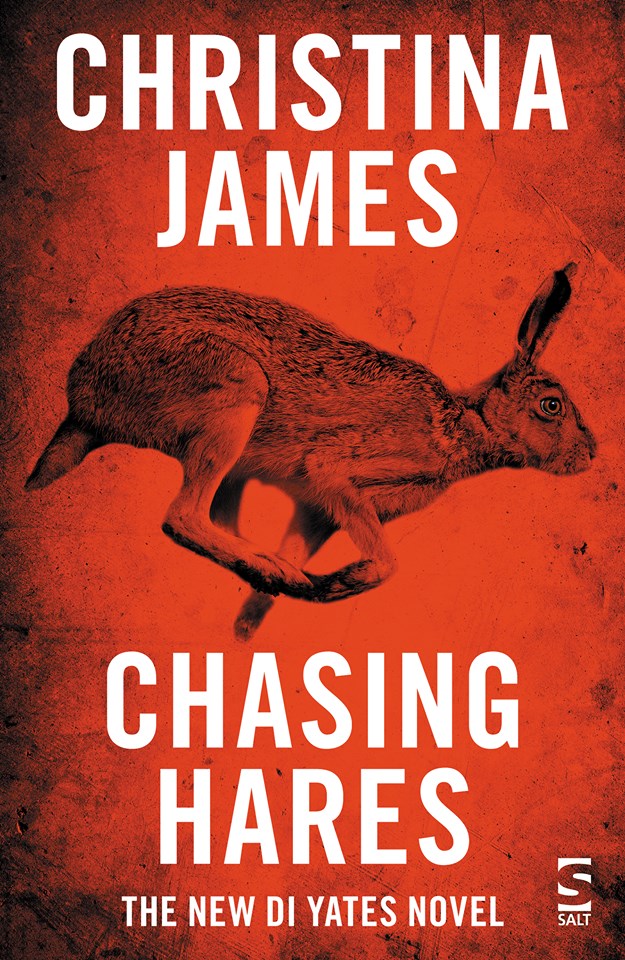


The oddest book title…
I’ve just read that the shortlist of six titles has been chosen for this year’s Diagram Prize for Oddest Book Title of the Year. This is the thirty-fifth year that the prize will have been awarded, although I became aware of it myself only a few years ago.
I’m not sure about the candidacy of Was Hitler Ill?, by Henrik Eberle and Hans-Joachim Neumann [Polity]. As I’ve read several books about Hitler’s state of health and his bizarre use of both conventional drugs and quack remedies, this seems to me to be a perfectly logical choice of title – and I’d guess that the authors intend it to convey irony as well (Was Hitler Sane? might make me sit up more).
Lofts of North America: Pigeon Lofts, by Jerry Gagne [Foy’s Pet Supplies], is perhaps quite amusing, but anyone familiar with the many minority publications that America’s huge population is able to support will know that it is not out-of-the way extraordinary; for example, when I was a bookseller, I remember deciding that the title How to Raise Your Own Barn was unlikely to thrill the UK public library community that I served at the time.
I am slightly disdainful of God’s Doodle: The Life and Times of the Penis, by Tom Hickman [Square Peg], as being a bit of a boys’ snigger title (I remember I once attended an author event at which Claire Rayner was speaking, when she amused the audience by saying that she was convinced that ‘every man was born with a ruler in his hot little hand’). I’m sure that Carol Midgley (The Times) would comment very bluntly on this particular choice!
How Tea Cosies Changed the World, by Loani Prior [Murdoch], succeeds with its juxtaposition of the mundane and the all-encompassing, but it doesn’t make me fall about; and Goblinproofing One’s Chicken Coop, by Reginald Bakeley [Conari], is an arresting title, but (as one who lives in an area richly populated by foxes can testify), if ‘Goblin’ is taken as a pseudonym for Mr. Tod, it becomes a perfectly plausible one.
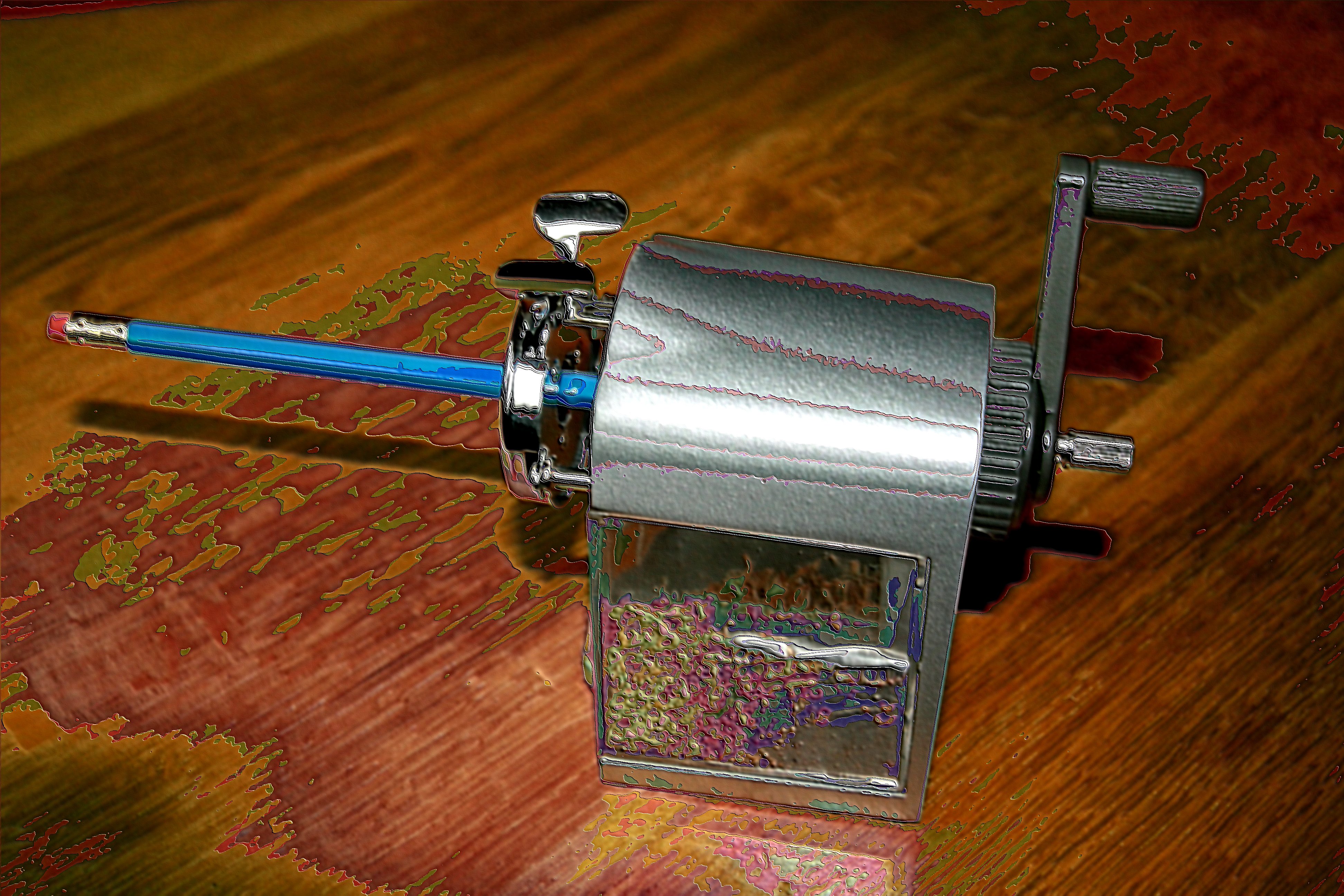
So what is my tip for the award? I’d give the prize to How to Sharpen Pencils, by David Rees [Melville House]. I take my hat off to anyone who can write a whole book on this topic… And now my quirky memory takes me back more than a couple of decades, to the bossy, humourless teacher of my son’s reception class, who told me with great condemnatory contempt that he spent all of his time sharpening pencils. So sadly uninspiring (by comparison with the many vital, enthusiastic and creative teachers he subsequently had the good fortune to know) was her manner that I could quite understand his interest in playing with a pencil-sharpener, especially (for him) as it was one of those desk-mounted ones, with an exciting handle to turn. I should like to make her a present of this book!
Gosh. I hadn’t realised just how much she still rankles in my memory!
“btw you do ‘street’ so well!”

In the wonderful wordy world of Twitter, I have discovered wit and wisdom as well as utter tripe; philosophical musings and mundane mutterings; verbal zeniths and linguistic nadirs. I arrived on this astonishing ethereal plane only last October, armed with a mighty prejudice against it, but told that it was essential to the contemporary writer’s existence. I still don’t know whether this latter is true, but I have, contrary to my biased expectations, had a fun time of it! I was certainly delighted to receive the above compliment about my idiomatic use of language from ‘The Grumbling Gargoyle’ (@LynnGerrard), who, btw, does a well bad tweet.
‘Fun time of it ? That’s a bit colloquial, Christina! Are you letting your standards slip? That’s the trouble with Twitter: it’s full of acronyms and slang. It’s like television, appealing to the lowest common denominator and debasing your every utterance…’ Oh, dear: the voice of a high school mistress, prim and proper and insisting on perfect phrasing and enunciation.
One of the really interesting (to me, at least) ironic things about having received a ‘formal’ education in grammar is the fact that it was a straitjacket that for many years constrained my own writing, even if it ensured that my expression was ‘correct’. Over time, however, I let my creative hair down and played… and played. I broke rules and loved being a linguistic iconoclast; the results were so much more interesting and original. However, I do remain firmly of the belief that this works only if the rules to be broken are understood and the ungrammatical is deliberate.
An English teacher I know was bewailing the fact that her pupils in their conversation almost universally use street slang, such as ‘sick’ and ‘wicked’ and ‘evil’ and ‘bad’, all degrees of approbation; I’m not sure why anyone, least of all English teachers, should mind this, as pupils are consciously employing and enjoying irony in their daily interactions. What’s wrong with that? Revelling in opposites seems like fun and kids like fun and learn from it; they are playing. Give me a wicked (not ‘wickedly’!) ironic conversation rather than a formal Govean lesson on what irony is, any day. I expect that most teachers are still doing their best (Rock on!) to provide a strong grammatical foundation and I can understand why they might be frustrated by the prevalence of, say, ‘could of ’ in pupils’ formal writing, as it reveals lack of understanding of the spoken corruption of ’ve, but I hope that they are also broad-minded enough to enjoy the verbal devilment of children’s experimentation with words.
Thank you, Twitter, for the best of your frivolity. U iz well cool.
Shades of meaning: how exquisitely delicate are the implications of words!
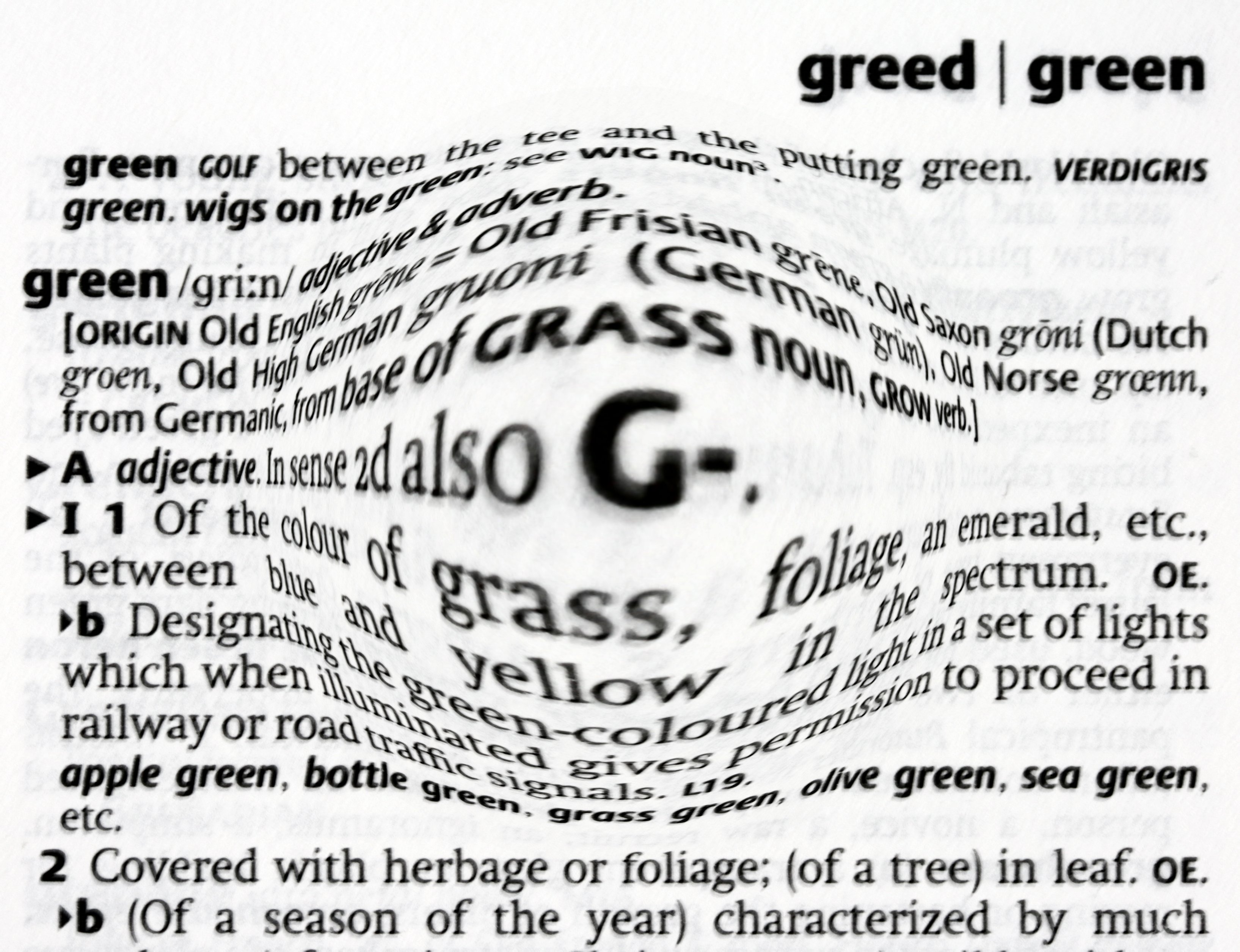
In our household, we often have energetic arguments about colour. I don’t mean that any of us is colour-blind; we can all distinguish between red and green. However, I often say that something is blue when my husband and son think it is green and my husband has a pair of grey trousers that he insists on calling ‘brown’, which doesn’t help me when I’m trying to help him to find them! My daughter-in-law speaks a glorious palette of colours that can nevertheless leave my son mystified.
What I’d dearly like to know is whether each of our optic nerves registers colours differently, or whether we are actually seeing the same colour but using different words to describe it. Is the problem sensual or semantic?
As a writer, I am acutely aware that the same word resonates with different people in quite different ways. A client (from the day-job) was once very offended when I said that some research that he had undertaken was ‘robust’. It is, of course, a term commonly used to indicate that research has been carried out properly, but he thought that it smacked of rudeness.
I acknowledge that, when it comes to particular words, I myself have many preferences and prejudices. For example, I’ve never been much of a fan of the words ‘beauty’ and ‘beautiful’; to me, they carry undertones of full-blown roses, enjoying their last blast of loveliness before withering. I used to like ‘lovely’, but it has been debased by its idiomatic use for everything from ‘nice’ meals out to individual character and personality, especially if the person in question has died. If the deceased was a woman, a newspaper reporter usually manages to dredge up a friend or acquaintance who will describe her as having been ‘lovely’ or, even more frequently, ‘bubbly’, which to me always conjures up an image of her chained to the sink, up to her elbows in soap-suds (‘Hands that do dishes…’). And I think that ‘pleasant’ is a really nastily bland word, although, in its case, I know that I associate it with someone who turned out to be other than he seemed; it was one of his favourite epithets.
Words associated with crime hold particular connotations and resonances for me. ‘Murder’ is a very grand word, sometimes too lofty for the often grubby and chaotic crimes that are committed in its name. ‘Kill’ and ‘killer’ have more immediacy and strike more terror into the heart. Similarly, while ‘murdered’ conjures up the image of a lifeless body, a verb that conveys how the murder has been committed evokes the pity and horror of knowing how the victim suffered before he or she died: used within context, ‘shot’, ‘stabbed’ and ‘poisoned’ can be almost unbearable words, whilst ‘liquidate’ strikes with the fear of knowing that a ruthless and unstoppable mind has been at work… and is still out there. Any description associated with blood and bleeding makes me want to hide behind the sofa, metaphorically speaking, and, while I sometimes have to create blood-stained scenes myself, I try to keep them to a minimum. I am not a blood-and-guts writer from conviction, but I am also not one, I acknowledge, out of squeamishness.
When I think of how words have evolved in the English language, sometimes within small communities largely cut off from the wider world for hundreds of years, it amazes me that, despite the differences in perception of shades of meaning which we all experience, 90% of the time we manage to communicate the same thing with extraordinary efficiency. The remaining, stubbornly ambiguous 10%, consisting of differences in interpretation, different approaches to innuendo, and the bending of the language to just this side of breaking-point to wrest from it a new image of startling freshness and truth, should be cherished. That is what makes us different from each other; it allows us to be surprised and delighted by writers who deploy our language in ways which we ourselves should never have considered.
Let us be nice in our use of words!
Two retiring types… in one day!
Yesterday, as I read the first instalment of an enchanting new blog by Charlotte Sing (@oncealibrarian), the Pope announced his retirement. This was a piece of serendipity, as the blog-post was also about retiring and what it means. It doesn’t perhaps seem strange that a librarian of thirty-six years’ standing should retire, but it does seem – if not odd, then – worthy of comment that a Pope who has reigned for rather less than eight years should decide to retire, even though he is eighty-five years old. Apparently only four popes (out of a total of 265 since St. Peter became the first) are definitely known to have retired; four others might have done. The last documented papal retirement happened 598 years ago, in 1415 (interestingly, at a time when the concept of retirement was unknown to the common working man or woman). They are therefore very rare events indeed, averaging one every five hundred years or so; so Pope Benedict’s was very slightly overdue.
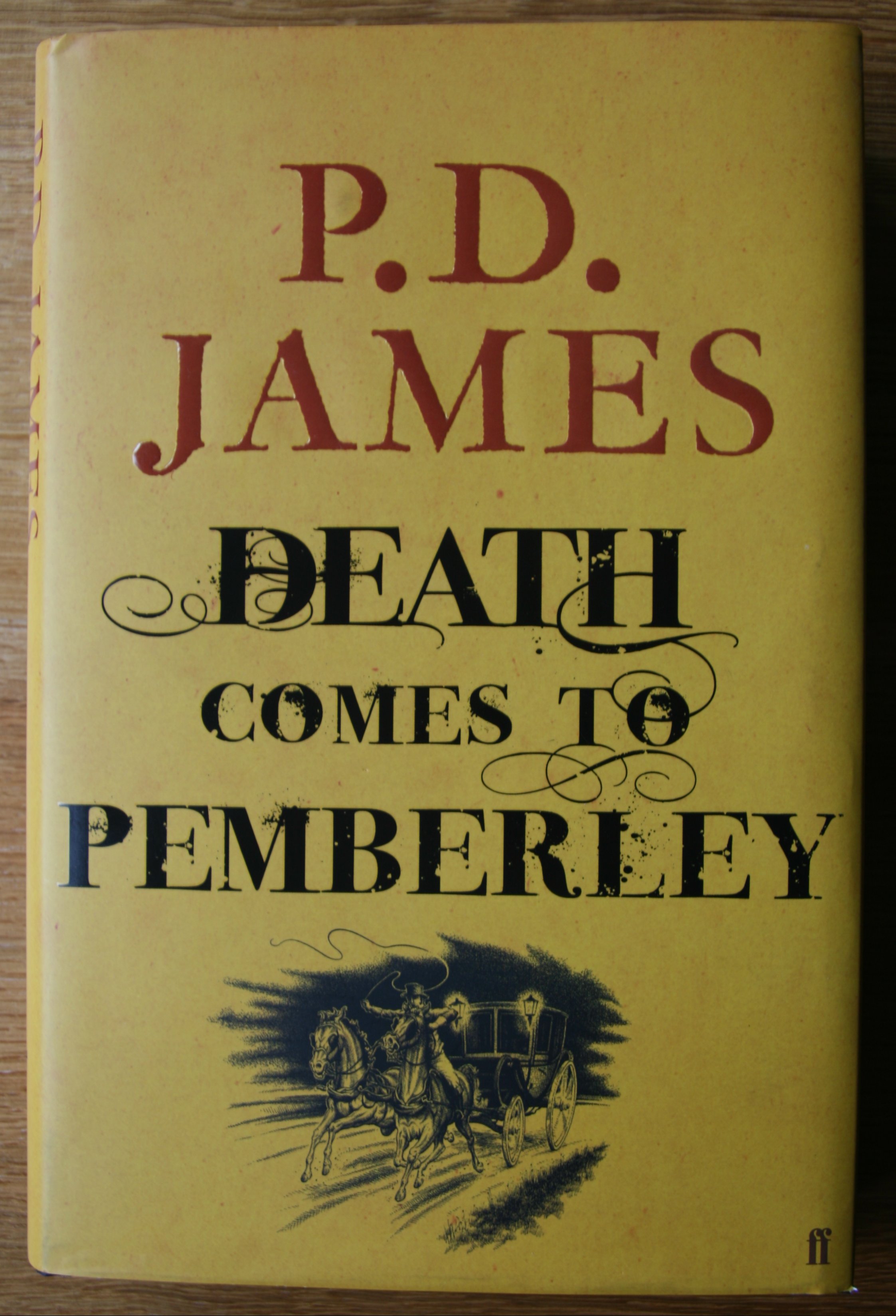
Why does it seem so odd, though? These days, most people expect to retire at some point. Typical exceptions are monarchs and monarchs-in-waiting – Prince Charles, aged 64, has yet to get started! – and people engaged in some of the professions. As well as clergymen of all creeds, lawyers, judges, academics and doctors often work far beyond the accepted retirement age. And authors, of course. I am conscious that one of the things that has always attracted me to becoming a writer is the fact that (unless my mental faculties decide to go AWOL) I shall not have to retire. P.D. James wrote Death comes to Pemberley in 2011, when she was 91; George Bernard Shaw wrote and saw performed Shakes versus Shav in 1949, when he was 93; and, according to the Guinness Book of Records, the oldest author to have a first book published was a British woman, Bertha Wood, who was born on 20th June 1905. Her book, Fresh Air and Fun: The Story of a Blackpool Holiday Camp was published on her 100th birthday, on 20th June 2005.
Personally, I find this a delightful state of affairs. It means that, although I have spent many years working as a bookseller, academic and researcher, I can, if I play my cards right, expect to spend even more time writing and always have a profession. I don’t begrudge the Pope his retirement, particularly as it is rumoured that he, a published writer, wants to spend more time writing himself. I wish him a new lease of life instead. And the same also to Once a Librarian: Welcome, Charlotte, to this world of bloggery! We writers are a hardy breed… and mischievous, to boot.
Bodies in the library… not what you might think!

I was a little dismayed when I studied the latest Public Lending Right [PLR] figures over the weekend. I’m a great supporter of Public Lending Right; I remember when it was first set up thirty years ago. Originally campaigned for by authors like Brigid Brophy and Antonia Fraser, and more recently Andrew Motion and Monica Ali, its purpose is to make payment (from a fund awarded by the government) to authors whose books are borrowed from public libraries. The Authors’ Licensing and Copyright Society [ALCS] grew out of the original campaign. I met John Sumsion, its first director and the genius behind the system that computes how much each author should be paid, several times before his untimely death (he had previously worked in I.T. in the shoe industry) and am proud to be able to count its present director, Dr. Jim Parker, who has now been at the helm for twenty-five years, a good friend. He has not only worked tirelessly to support PLR in this country, but has also acted as its ambassador in many countries across the world. He is a published historian who has written brilliantly about the East India Company.
Back to this year’s figures, though. Unsurprisingly, crime novels feature prominently on the lists of books borrowed in 2011-2012. So far so good. I’m by no means a xenophobe when it comes to reading and appreciating the work of other authors, as my blog-posts will testify, yet I do find it a little disheartening to see that, of the twenty crime writers most-borrowed in British public libraries, American authors predominate and that only three British authors – MC Beaton, Agatha Christie and Ian Rankin – have made the top twenty at all. Yet more astonishing is that Ian Rankin, whose books account for 10% of all the crime novels sold in the UK (according to book-industry-produced statistics), ranks as only the twentieth most borrowed author.
Book trade research suggests that people who borrow books also buy books and therefore that libraries and booksellers are not in competition with each other, but have a symbiotic effect on each other’s activities. I wonder how the PLR figures fit in with this? Do people borrow books by authors different from the ones whose works they buy? Are the shelves of our public libraries more heavily stocked with books by American than by British authors and, if so, why? Or is it the case that people are so impatient to read the latest Ian Rankin, Stephen Booth or Peter Robinson that they don’t want to wait for it to become available in the library and so go out and buy it or order it online, at the same time taking out a James Patterson to tide them over? This last is the most optimistic explanation that I can think of, but I should love to undertake some proper research to substantiate my theory!
Marriage and crime: a question of coercion?

The Chris Huhne / Vicky Pryce case raises some interesting questions about marriage, crime and morals. Before the Married Woman’s Property Act of 1870, married women could not own property – after marriage, de facto everything belonged to their husbands. It followed that they could not run up debts and some enterprising ladies wrought their revenge by exercising this loophole in the law! Spinsters and widows could, however, hold wealth in their own right. Wealthy male landowners and other magnates would sometimes devise ingenious trusts and make provisions in their wills for married daughters, so that their husbands could not get their hands on all the cash. Even so, it does make you wonder why any woman of substance consented to marry! At the moment I’m reading Wylder’s Hand, by Sheridan Le Fanu, a mid-nineteenth century crime novel that tells how a beautiful heiress was unscrupulously passed around by several men in her extended family so that each could benefit from her wealth.
In the past, as The Taming of the Shrew illustrates, husbands were expected to be allowed to shape their wives’ views and opinions. Women, economically dependent and physically weaker in eras when even aristocrats would resort to physical force to subdue them, were always guilty if they lost their ‘virtue’. Richardson’s Clarissa died after she was seduced; Hardy’s Tess killed her lover in what nowadays would be called a crime of passion and paid for it with her life.
Until our own times, women have mostly drawn the short straw – though not always. Some, like the Wife of Bath, have prevailed over men through sheer strength of character. However, I imagine that it is because women have habitually been the underdogs of matrimony that laws of ‘spousal privilege’ were conceived. Ostensibly, these were meant to promote marital harmony, but it is also rather self-evidently true that wives, whether because of collusion or coercion, are unlikely to ‘shop’ their husbands. If the court could not rely on their testimony, it was best not to ask for it in the first place.
Today, at least in countries where girls and boys receive a similar education, women have more or less gained equality of opportunity and, unless they are in abusive relationships, there is no question of their having to agree with their husbands’ opinions. Some famous marriages have been built on successfully ‘agreeing to ‘disagree’: that of Denis and Edna Healey, for example. Can a woman of formidable intellect who has a high-profile career in her own right really be coerced by her equally high-profile husband into breaking the law and compromising her own moral integrity because he asks her to? I don’t have the answer to that. Thinking of my own husband, I am convinced that he would not have asked in the first place. But if he had ….?
Richard III: ‘a serviceable villain’?

My interest in Richard III was kindled when I was a young bookseller, because my boss was a member of the Richard III Society. I’ve subsequently read several books about the Wars of the Roses and also visited Richard’s castle at Middleham. That he had strong links with Yorkshire has increased his fascination for me.
Few English kings have inspired such intense posthumous opinion as Richard. Henry VIII, Charles II and George III have all had their fierce supporters and detractors, but none has had vitriol heaped upon him as Richard has. He could hardly have been as wicked as he was reputed to be; his shimmeringly evil reputation, much enhanced by the distorted character that Shakespeare created to please his Tudor mistress, even had the unintentional effect of giving him the same kind of glamour as Milton’s Satan. Shakespeare was also responsible for exaggerating his physical deformities; unlike Dorian Gray three hundred years later, the fictional Richard’s evil soul was supposed to have been made manifest in an ugly face and twisted body.
The Richard III Society was founded to put the record straight, but, like almost all societies that support the memory of controversial historical and literary characters, it quickly became so partisan that some of its published ‘research’ stretched the facts. Nevertheless, it is to one of its present-day members that we are indebted for the discovery of Richard’s remains under a car park in Leicester. Amazingly, modern science, in particular miraculous DNA matching techniques, proves conclusively that the bones did belong to this last Plantagenet king. I am sure that a great book will come out of the story of their discovery and testing (which, as last night’s Channel 4 programme showed, has been meticulous).
In the popular imagination, Richard’s worst act has always been his reputed murder of his two nephews, the so-called ‘princes in the tower’. They were the heirs of Edward IV. The elder of them, Edward V, was never crowned king, but the title was reserved for him, even so; the next King Edward was crowned Edward VI. There is no proof that Richard killed the two princes. It is known that they lived in the Tower of London for many months and gradually disappeared from view; first they were seen playing frequently, then infrequently, then not at all. Although it is fairly certain that bones discovered in the tower in the late 1990s belonged to the princes, there is no conclusive proof of who murdered them. Was it indeed Richard? Or did the order come from Henry VII (the preferred candidate of the Richard III Society) after his accession? Of course, I don’t know, though I’d rather like to think it was Henry myself, partly because Richard has always been such an underdog, partly because Henry was a cruel cold fish of a man. He was certainly capable of killing them.
Whoever it was, the outpouring of emotion that this murderous act has generated is illogical. Perhaps it is because they were children; perhaps because one of them was a king and kings were sacred. Yet there can have been no king between William I and Richard III who did not commit murder, except, perhaps, Henry VI, who was himself murdered for the national good; and, although the Tudors themselves considered the murder of kings to be taboo, Shakespeare’s own queen, Elizabeth I, herself killed an anointed queen, Mary Queen of Scots. I conclude that Richard’s infamy stuck because of the genius of Shakespeare himself. The beauty and the irony of these famous lines have touched every generation since they were written in 1592:
Now is the winter of our discontent
Made glorious summer by this sun of York;
And all the clouds that low’r’d upon our house
In the deep bosom of the ocean buried.
The bones retrieved from the car park were of a slight and delicately-formed man; he did, indeed, suffer from scoliosis, but it probably only made one shoulder appear slightly higher than the other; otherwise, he may have cut an attractive, even a refined, figure. I should never want to lose Shakespeare’s magnificent villain, but perhaps now that the real Richard has been found, he can co-exist with his alter ego. There is surely room in our heritage for both of them.
My literary perspective of ‘Life in the United Kingdom’…

I’m not usually a big drum banger, but the announcement yesterday of a new version of Life in the United Kingdom, the handbook for would-be British citizens, has got under my skin. I’m familiar with the previous version of this publication, because my daughter-in-law bought it last year to prepare herself for her (successful) bid to become a British national. In the process, she learnt and understood much more about British law and customs (according to the handbook, that is) than any of the born-British members of the family and we were amused and slightly alarmed by the number of hoops through which we should have been unable to jump if we’d had to renew our own citizenship. The sports questions would have been a particular nightmare for me, who eschews ball games and much appreciates walking in deserted local woods and parks on Saturday afternoons when there is a ‘big match’ on. Love of the countryside would seem not to qualify me for being a fine, upstanding Briton.
However, as I’ve said, all that was quite funny. What is not funny is the selection of British authors that, according to Mark Harper, the Immigration Minister, aspiring British citizens are supposed to familiarise themselves with. Prominent among these are Sir Kingsley Amis, Sir Arthur Conan Doyle and J.K. Rowling. I have no quibble with the inclusion of J.K. Rowling, but it doesn’t escape my notice that the two male authors have together been dead for a total of almost 100 years. Conan Doyle died in 1930, which was seventeen years before the British handed India back to the Indians; Kingsley Amis in 1995, the year in which this year’s first-time voters were born. I’m not sure what they have to teach newcomers to the UK about being British today. Conan Doyle is famous for Sherlock Holmes and a dogged belief in the existence of fairies; Kingsley Amis for an admittedly well-crafted series of novels which proclaim the benefits of casual sex, adultery and the flippant flouting of the institution of marriage.
But even this is not what makes me want to bang my drum. What I find really indefensible is that these literary choices take no account of the wonderfully-rich range of cultures and social backgrounds that British authors have come from and drawn upon in the past fifty years. I’m thinking of Monica Ali and Brick Lane; Kazuo Ishiguro and The Remains of the Day; Salman Rushdie and Midnight’s Children: all books by British writers from different ethnic origins. Surely novels like these are more relevant to the aspirations of today’s immigrants and offer more to admire in our ethnically-diverse British culture and literature than fairies and infidelity? Besides, in the view of this reader at least, they are much finer works of art.
 Christina James, crime novelist