


A location I have used in Almost Love… and there’s no ‘almost’ in my feelings about it!

It was a glorious spring day when I was in London in advance of my visit to Gower Street last Thursday. People were sitting or lying on the grass in the parks. The grounds of the British Museum were packed with museum staff, office workers and tourists, all getting their first proper burst of vitamin D from this year’s English sunshine. The mobile refreshments van parked just inside its wall was doing a roaring trade.
I didn’t need to take advantage of its services, because I had already visited one of my favourite London restaurants, an unassuming Spanish-owned eatery called El Parador. It is a brisk ten-minute walk from Euston station; the restaurant stands in the middle of the last parade of shops before Eversholt Street reaches Mornington Crescent (now there’s a name to conjure with!). On Thursday, I noticed for the first time that it is also immediately opposite the imposing edifice from which Levertons, London’s foremost undertaker, plies its sombre trade.
A family-owned restaurant, El Parador can lift your spirits with a burst of fine cooking on even the dreariest winter day. In the spring and summer, it is a festive place. Tables are laid in the garden. Both restaurant and garden are busy – there’s rarely a spare table after 1 p.m. – and the whole place buzzes with laughter, conversation and the tinkling of glasses. The staff – there are usually only two or three on duty – almost run between the tables, nimbly delivering a continuous stream of hot tapas dishes as they are ordered. Unequivocally, it serves the best tapas that I have ever eaten anywhere. My husband accompanied me there for the first time on Thursday and has already become an enthusiastic champion of the place.
I have another reason for liking it, though. The décor is plain, even homely. The tables are plain deal, the chairs of the simple round-backed wooden type still found in a few old-fashioned pubs. The walls are painted dark cream and, aside from a few small mirrors, there is little other decoration. Save for one thing: the bar, a glorious suggestion of a boat, is decorated with a flamboyant mosaic of pieces of tile, ceramics and mirror, all in shades of turquoise and black. It draws your eye as soon as you walk through the door. Pure 1960s, there is something lethal about its splendour. You feel as if a character played by one of the sex sirens of the ’60s – Jayne Mansfield, say, or Barbara Windsor – might come sashaying out from behind it and break off one of the pieces of mosaic to stab an errant lover through the heart.
I’ve written about this bar in Almost Love.
The essence of crime fiction: things are not always what they seem…
I was awake during the night, thinking vaguely about today’s blog-post and, much more strenuously, about how to get back to sleep, when a twenty-year-old memory presented itself unbidden. It was, in fact, a series of memories that covered a period of five years or so.
I was running a small library supply company. Most of us had individual PCs, but we needed a proper computer system. Having interviewed a number of candidates (including some very poncy large-company operators who didn’t get out of bed for less than six figures at one end of the scale and hilarious wide boys at the other who wouldn’t have fooled a child with their patter), we opted for a small hardware company that had been established for some time in Leeds and the consultant to whom they sub-contracted systems and software development. His name was Will.
Over the next few months, I came to know Will a little. He took endless trouble to make sure he understood how our quirky manual system worked so that he could replicate it ‘virtually’, ironing out a few of the inconsistencies along the way. He always carried with him a large portable Compaq, and he carried out all of his configurations on this. He seemed to have unlimited patience. Software development was at the stage when it took a proficient techie five minutes to type in a piece of code, after which he would have to wait for half an hour or so for the machine to whirr and rumble through its set of tricks in order to produce the next stage of the programme. Like all computer guys of the period, therefore, Will spent a lot of time sitting around drinking coffee and smoking cigarettes (it was before they were banned in offices). If we were not too busy, sometimes he would talk to us about the business while he waited; occasionally, he would tell us about his personal life.
He said that he had a wife called Catherine. They didn’t always live together because she suffered from depression and, when it got really bad, she would go to stay with her mother for a spell. They had a son whose name was Ian, who went to a special school and so was away during term-time. Will gave me to understand that Ian was exceptionally gifted, which was why they were investing so much in his education.
Will was tall – taller than my husband, who is six foot three – and heavily built. He had a soft voice and a rather alternative way of dressing (not uncommon in geeks). Everyone in the office liked him. He told us that his mother called him ‘the gentle giant’.
A few months into the project, Will was suddenly taken ill. He was admitted to Leeds General Infirmary and told that he had lung cancer (in retrospect, after so many cigarettes, it was not surprising), but that the prognosis was good, because, as far as they could tell, only one lung was affected. The diseased lung was removed. My boss and I visited him at the hospital shortly afterwards. It was a boiling hot July evening. Will had lost a lot of weight; his face was pale and gaunt, but his skin seemed flawlessly clear, as if made of alabaster, and he’d grown his hair, always on the long side, to shoulder-length. He looked almost Christ-like. He was very thirsty and said he’d like some beer. The ward sister said it would be OK, so my boss went out to an off-licence to buy some cans of Guinness.
Will’s mother was his other visitor. A diminutive, bird-like woman (it seemed hardly credible that this giant of a man could be her son), she was notable for her inquisitive bright brown eyes and flushed cheeks. She said that she also had lost a lung and had managed with a single one for many years, so she was sure that Will would be OK. Will himself was enthusing about a generous present of money that he had received from a relative, which he intended to spend on walking gear for himself and Karen. It would be part of his fitness regime when he was discharged from hospital.
“Who’s Karen?” I asked.
Will looked at his mother, obviously discomfited. “My wife.”
“I thought her name was Catherine?”
“It is. She sometimes uses Karen, though. She likes it.”
I didn’t understand, but he was obviously keen to change the subject and it would have been rude to press him further. My boss returned with the beer and after half an hour or so we left. As we said goodbye, Will promised to keep in touch and to let us know as soon as he was well enough to start work again.
After I hadn’t heard from him for three months, I wrote him a letter. I had his mobile phone number (not many people had mobiles then: he was an early adopter), but I thought that writing would be less intrusive. The next day I received a telephone call from a woman who identified herself as Karen. She told me that Will had died almost four weeks previously. I told her that I was sorry. She brushed off my condolences quite brusquely – I put it down to grief and was about to apologise for troubling her when she interrupted. She said that Will had left a lot of computer equipment and some software in ‘his’ house, together with manuals belonging to clients, and that if I thought that there was anything belonging to my company I should come and claim it.
I knew that Will had lived in an old lodge house, close to a paper mill at which he had worked as the manager before he took up software design full-time. It was easy to find. Karen was waiting for me at the gate. She was a short, plump woman with long, very dark hair and a conspicuous limp. I’d say she was in her late thirties – Will had been some years older. She led me into a room in which she had set out several computers, other pieces of equipment and a large array of folders. I rummaged through the latter and found the one containing confidential information about my company. It was impossible for me to identify which of the floppy disks contained the code that Will had been working on; I knew that we’d have to write off the project. Although Karen was friendly, she seemed very weary. I left as quickly as I could.
Of course we talked about Will for a while at work, but we hadn’t known him well and his memory quickly faded. A new software engineer was brought in and a new system designed. After some years, I left the company to take up a post at a much larger organisation.
My new boss was a woman – the only woman boss I’ve ever had and, ironically, the most unreasonable and psychotic of all my bosses. She was half Italian, half what was then called Yugoslav, and I can testify that this produced a volatile set of genes! Many times I had to work late into the night, writing a report that she’d requested at 4 p.m., to be delivered the following day.
It was on such an occasion that, having worked for a couple of hours one evening and with at least another couple ahead of me, I went downstairs to make tea. Popping my head round the door to ask my husband if he would also like some, I saw that he was watching a television programme. To my amazement, the woman whose face filled the screen, now older and more drawn, was Karen’s. I stayed to listen to what she was saying.
The camera moved from the close-up shot so that the viewer could take in more of the setting. I saw that she was standing in a cemetery. The camera moved to the headstone, and I saw that it marked Will’s grave.
“I don’t feel bitter for myself,” she said, “but I wish that I had left him sooner. I tried many times, but he always persuaded me to come back to him. I blame myself that I didn’t go for good when I found that I was pregnant. When he beat me up, I was terrified for the baby.”
“The baby was born damaged?” asked the unseen commentator gently.
“Yes,” she said flatly. “He is epileptic and has learning difficulties. Severe learning difficulties.” She wasn’t crying, but her face was inexpressibly sad.
“And what about you? You say that your injuries are progressive. How does that affect you?”
“My spine is damaged. I can just about walk with a stick. I’ve been told that I’ll be in a wheelchair in five years or so.” Again, it was the matter-of-factness and the resignation in her tone that were harrowing.
The programme cut to another woman with a similar story to tell. I watched it until the end. It concluded with a list of telephone numbers and addresses to which battered wives could turn for help.
I’ve often wondered since about Catherine. Was it a name that Will concocted in order to exonerate himself, to distance himself in some way from his appalling actions by pretending that his victim wasn’t Karen? Or was it a name that she herself had used on those occasions on which she had tried to escape from him?
[For obvious reasons, I have changed the names in this account. Everything else is completely true and unembellished.]
Surbiton – potential (for me) as a crime novel location…

As some of my readers with good memories may recall, DI Tim Yates has a sister who lives in Surbiton. So far, his sister has appeared only in In the Family and has no name; she makes no appearance in Almost Love. However, she is a benign, if shadowy, presence waiting in the wings and (I am certain) will crop up in a more central role in a future book.
As I’ve said before, topography and a sense of place are important to me, both in my own writing and in that of others, and I therefore try to place my characters in settings that I know well. I’m familiar with Surbiton because my long-suffering friend Sally lives there. She has allowed me to stay in her lovely turn-of-the-twentieth-century house on almost all of my visits to London over the past fourteen years and she makes strenuous occasions like the London Book Fair tolerable during the day and a joy when I return to her house in the evenings for conversation, wine and good food.
Surbiton is itself an interesting place. It is the quintessential English suburb – even its name suggests it. If you were to hear of it without knowing its location, you would not conjure up an image of a Fenland village or a rugged Scottish town. It sounds like what it is; it even has an equally suburban twin: Norbiton. The twins have mellowed together, their streets laid out and their houses and gardens maintained much as they were in late Victorian times. Even the shops have old-fashioned façades. You feel you might meet Mr Pooter coming round the corner, or see Jerome K Jerome and his friends boating on Surbiton’s stretch of the Thames. Many of the gardens in the street where Sally lives contain beautiful magnolia trees, a feature I think also of the time when they were first laid out, when magnolias were very popular. I love to see them in bloom and am always glad when the Book Fair coincides with their flowering, as it did this year.
Even Surbiton has to move a little with the times, however. On my latest visit, I was amused to see a sign directing would-be purchasers to a new housing development; amused, because the developers have called it Red Square. Now that is a brave step! I don’t know how established residents of Surbiton might feel about this designation, but, as someone who has visited its more famous Russian namesake, I have to confess I see few points of similarity.
I’ve not yet decided upon the exact street in which Tim’s sister lives. Originally, I had conceived of a rather genteel existence for her, perhaps working as a lecturer at nearby Kingston University and living in one of the pretty, solid, semi-detached houses within walking distance of the station. But perhaps she is not like this at all. Younger than Tim, perhaps she is an undercover agent working for MI5. She may even be about to move into a safe house in Red Square.

I’d like to knock down that Victorian edifice…

Taking up the theme of food again, I’m still reading about Victorian houses and customs in order to get a feel for how the very old people whom I knew in my youth grew up. One of the things that strikes is me is how indelibly the Victorian age made its mark on those who were born within it. My grandmother was born in 1892 and was nine when Queen Victoria died, yet all her life she was a Victorian. She even dressed like one, in ankle-length skirts and pastel-coloured blouses trimmed in lace, with high collars.
Not only did Queen Victoria’s reign seem to imbue everyone who lived in it with norms and values that were immediately spurned by the next generation, but it succeeded in erecting an almost insuperable barrier between itself and the age which preceded it. The most alarming thing of all is how women seemed to become walled up as part of this process.
They were literally walled up: condemned to stay in the house almost all of the time, maintaining and cleaning it or supervising its cleaning and maintenance, depending on their class; spending each day of their lives ensuring that the master of the house returned to a perfectly-kept residence. This in itself would have been irksome enough, but social aspirations added to women’s domestic workload in the most intolerable way. In an age when the middle classes were burgeoning, so that many people had more of what is now called ‘disposable income’, and when, for the first time, machinery could churn out materials and finished goods very cheaply, houses became filled with all kinds of artefacts, many of them quite useless. Whether they were bought or made at home, all of these things also needed care and maintenance – the latter involving a great deal of washing and cleaning when houses were warmed by coal fires and lit by candles or gas. Clothes and food became much more elaborate. Women were not only not allowed to go out to work, they felt compelled to spend every waking hour carrying out tasks which today we would regard as of minimal value or even futile. Meals in middle-class households consisted of many dishes. When providing food, the housewife was expected to achieve an illogical combination of outward show – especially when there were guests at the table – and the practice of frugality. This often meant that the same food appeared on the table several times running before it was finally consumed, each time ingeniously and time-consumingly served up in a slightly different way.
I’ve often reflected that, to a greater or lesser extent, all except the very young spend some of their time living in the past. Although my own and my husband’s tastes in furniture are quite traditional, and therefore most of our possessions have not dated all that much, I know that the décor and soft furnishings in my house are very much of the period at which we moved in to it in 1994, and that visitors will recognise this. It is a phenomenon that was yet more true of previous generations: they thriftily kept the same furniture until it had, quite literally, worn out. And it wasn’t just the surroundings that belonged in the past; attitudes, values and points of reference were also behind the times. Exactly how far behind often depended on location, sometimes also on education. In London at the turn of the twentieth century, the Bloomsbury Group famously rejected the lifestyle and morals of their Victorian parents; however, Victorian lifestyles and morals were still alive and well in the Spalding of the 1950s and 1960s. It took the combination of the pop scene (I don’t just mean the music, but everything that went with it) and the advent of the first working-class generation to be university-educated to instigate real change.
In some ways I feel privileged to have lived through all of this and, through aligning my reading with my own memories, to have come, belatedly, to some kind of understanding of it. Women today still complain about glass ceilings and the impossibility of ‘having it all’. True equality has been a long time coming and is not quite here yet. The journey was started by those Victorian girls who were allowed just enough education to understand what they were missing. Some nineteenth century women were so frustrated, or so badly treated by their husbands, that they turned to murder (the weapon of choice was poison), knowing that the death penalty would surely be their fate if they were caught.
What I’d really like to be able to do would be to travel back to the past and knock down that huge Victorian edifice, as the Berlin Wall was knocked down, in order to be able to see beyond it to the Georgian age that preceded Victoria’s. I wonder what those women, in their lighter, brighter, more sparsely-furnished houses, were like; whether they led happier lives than their Victorian descendants; whether knowing them better would prove the hypothesis that civilisation develops, not in linear fashion, but in loops and curlicues, like oxbow lakes. The Victorians, so enterprising in so many ways, were out there in their boats, not realising that they were grounded in a swamp.
I’d kill for a slice of coffee and walnut cake…

Get stuck in to a good book…
On Thursday, I had a conversation with a librarian in Doncaster who would like me to take part in a literary festival that will be run in May by the Doncaster Library Service. After further discussion, we decided that it would probably be more effective for everyone if, instead of participating in one of the library-based events, I were to run a couple of writers’ workshops, one at a local school and one at an open prison. I warmed to this idea immediately; as a bookseller, I have supplied books to two open prisons; more recently, I have read the MS of a fascinating memoir written by a writer-in-residence who works in a prison in the North-East. I shall be happy to work further with the prison community if I can be of use. I’ll write more about these two events nearer the time.
Before we decided on this plan of action, when the idea was still that I should participate in a library-focused event, our chat had been about what sort of writer we should choose to present with me. To my initial surprise, she suggested a cookery writer, but, the more I thought about it, the more appropriate I thought that this was. Aside from the interest in food (among many other subjects) that both this blog and the many other crime-writing blogs to which it has been introduced (and introduced itself) have expressed, now that I’ve thought about it, I think that a crime writer and a cookery writer have a lot in common.
The similarities are there if you look for them. Firstly, and of most importance, we are both genuinely interested in the craft of writing: although the crime writer’s main purpose is to devise an interesting plot peopled with intriguing characters and the cookery writer’s is to develop practical recipes that people really want to try out, the means, for both of us, is as important as the end. In a certain sense, we are both genre writers, but the style and standard of the writing is important to us; mostly we don’t deserve to have the word ‘genre’ applied to us in a condescending or pejorative way (though we have both suffered from this). I don’t deny that there is huge variation in the quality of writing accomplished by both crime writers and cookery writers, but at our best we produce classics. When my friend Sally gave me How to Eat and The Domestic Goddess as a very generous birthday present ten years ago, I was both amazed and entranced by Nigella Lawson’s wonderfully fresh and funny prose style. You may gorge yourself upon her books both literally and metaphorically, delighting in the sensual language and wonderful photographs even as you assemble the ingredients for a luscious cake and anticipate eating it later. The best crime novels are like this, too: each page not to be gobbled down quickly because it gets you a little closer to the denouement, but lingered over and savoured for the pleasure that the words bring of themselves.
Similarly, a well-set-out recipe is like a well-crafted short story. It tells a tale, from the beginning, when there might be a note on some kind of utensil – a springform cake tin, for example, or a coeur à la crème ramekin – to the afterword, which might offer serving suggestions or other tips once the culinary masterpiece has been completed. Conversely, a poorly-conceived recipe, one which perhaps is not clear about quantities or method, disappoints and exasperates just as much as a badly-written thriller. And, whilst I don’t think that it is possible to ‘learn’ writing step-by-step in quite the way in which you follow a recipe, writers can certainly give others pointers to how their writing can be developed – hence the workshop idea. Conversely, an inspired cook will add some special twist or variation to a recipe to make it more delicious and uniquely his or her own.
There is one point on which we will always be at opposite poles, however: cookery-writing is about celebrating life and that which sustains it. Food and the sharing of food is a civilising influence. Almost every great nation has developed its own cuisine. Crime writing, on the other hand, is about what threatens a civilised existence, sometimes including life itself: a sobering thought, yet, as I’ve said before, the end of a crime novel usually brings with it some kind of catharsis and a feeling that all is right with the world again. And along the way, both heroes and villains can enjoy some excellent food. From the Victorian victuals described by Wilkie Collins to DI Banks’ pub lunches and Paola Brunetti’s elegant meals en famille, crime-writing owes a lot to cookery. I’d better not embark upon a consideration of how cookery-writing might be indebted to crime; otherwise my imagination might run riot!
Let’s consider the general good of the English-speaking world…

As I’ve mentioned, I’ve just spent several days at a conference – the sort of event where I meet people whom I haven’t seen since the last conference or, in some instances, for two or three years before that. If you’re British (as I am), good manners dictate that making the courteous enquiry ‘How are you?’ at such meetings is inescapable. Naturally, such etiquette under such circumstances tends to be more for convention than for information. The answer that I dread getting back is a prolix account of all the ailments that the acquaintance has suffered in the interim (‘My sciatica hasn’t been playing up lately, but I had ’flu really badly this winter, despite getting the injection, and I’m still not feeling …’ etc., etc.), the speaker (and listener) obliged all the time to stand in a hot, crowded, noisy room and drink outsize glasses of red wine, on the whole coping remarkably well with his or her various infirmities.
The next worst response is short but irritating: ‘I’m good’. It’s an expression that I first encountered about twelve years ago, interestingly also at an event. I had to think about what it meant for a moment. Clearly an American import, as a stock response it gained ground slowly at first and then with rapidly-increasing speed. I shall come back to it in a minute.
‘Good’ is a slippery word. Used as an interjection, it can variously signify an approving verbal nod, a comment on the speaker’s views or performance, or just something to say – a more positive alternative to ‘Oh’. Its use as an adjective is familiar to everyone (though I’m sure there are many gradations of meaning from individual to individual when saying that something is good), but I must have been about forty before I realised that good in the singular is also a noun. I discovered this in rather traumatic circumstances, having been required to teach a first-year postgraduate class basic economics as part of an MBA course, even though economics was a subject of which I had been entirely innocent until that moment. (Don’t ask – it involved university in-fighting, a topic on which I can wax at length in very bitter and twisted fashion!) I still dislike this use of the word. I don’t mind ‘goods’ in the plural – ‘goods train’, for example, is a term that appeals with its expansive connotations of plenty; but ‘a good’? It is too abstract, too pedantic, too stuffy. To me it represents a kind of emotional shorthand, like being given a plastic token instead of a gift.
Then there is ‘goody’ – as in sweets (‘goodies’) and also as someone who is sickeningly good (Goody Two-Shoes). It was Arthur Miller who taught me (in The Crucible) that Goody was originally an abbreviated version of ‘Goodwife’. The male equivalent was Goodman, but this does not seem to have survived in any modern context. I don’t like Goody as an alternative to Mrs – or Mistress, as I suppose it was then. It’s too oppressive, maybe too exclusive – it was a term that belonged to Puritanism. (Miller, of course, exploits the irony of this.)
And so I return to ‘I’m good’. What is it about this expression that makes it so objectionable to me? I think it’s because it has a number of undesirable overtones: it seems prickly (‘How impertinent of you to ask’); defiant (‘Why would you think I was anything other than fine?’) and superior (‘Everything about me is excellent. What about you?’). It also involves incorrect usage, judged by UK English standards, anyway. When offered it, I am very tempted to reply, “Oh, really? I had always considered you to be very wicked and bad!”
Good, that’s sorted. I rest my case.
The Village: Short story opening 5
Madison left Cathy to live with me. They got a divorce, even though she didn’t want it, and we were married immediately. Five months later he was dead. His death was quick, but strange; even the doctor didn’t really know why he had died. Several causes of death were listed on the birth certificate: organ failure, oedema, pneumonia – but they all seemed wrong, somehow. He wasn’t a young man, but he hadn’t been unhealthy. However, at the inquest, the coroner accepted that he’d died from natural causes.
At the time of his death, no settlement with Cathy had been agreed. Madison had been astute financially and had employed excellent lawyers and accountants. He’d started salting money into various bank accounts for me, some of them offshore, almost as soon as we met. He knew that it had always been my ambition to run my own business and he was determined not to let Cathy stand in my way. He said he was too old to work again, but it would be his very great pleasure to watch me succeed.
There was a will: it split his assets equally between Cathy and me. My lawyer said that this was fair, since, if he had left Cathy to live on his own and offered her a fifty-fifty split, this would have been more than generous. Now that he had passed on, his share had come to me, as was fitting. After all, I was his wife. Her lawyer disagreed because of the surprising smallness of the estate: it was worth less than fifty thousand pounds. Even the house that Cathy lived in had been re-mortgaged. There must be much more money, concealed somewhere, said her lawyer. Madison’s accountants blamed the modesty of the inheritance on some unwise business ventures. Cathy contested the will, but her appeal failed.
Braemar Cottage, the house that I had shared so briefly with Madison, was old – built in the eighteenth century, according to the deeds, though Madison thought that an even older property had once stood on the site. Montrose, the house that Cathy now lived in alone, was also several hundred years old – Madison had liked old buildings.
I don’t care for the past: thinking about it depresses me; seeing evidence of it all around suffocates me. Besides, the neighbours said that there was a ghost at Braemar Cottage, of a headless woman in a blue dress. The place gave me the creeps. I decided to sell it and buy somewhere bright and new: a place that would give me a clean sheet, with no past. I found a buyer almost immediately – it is amazing how many people are sentimental about ‘period’ properties. It was through him that I discovered that Montrose had also been put on the market (I suppose that Cathy couldn’t afford to keep it), but he had preferred Braemar Cottage, because of the new bathrooms and kitchen that I had insisted should be installed before I had agreed to live there.
The sale went through so quickly that I had to move into a hotel for a while. I found my perfect residence quickly, too: a luxury flat on the top floor of a new tower block in Camden – the internal fittings and decorations weren’t even completed when I viewed – with integral office space for my new business. The building possessed all of the virgin blankness that I craved. It was ultra-modern, stylishly asymmetrical, minimalist but opulent in an understated way. For example, although there were three conventional lifts for tradespeople and visitors, residents were given a pass to a special glass lift that had been installed exclusively for their use. Day and night there were two porters at the security desk in the main entrance, as well as a doorman standing sentry at the revolving doors. It was one of the porters, a short, cheerful East-Ender called Jarvis, who, during one of my inspection visits, volunteered to introduce me to the glass lift.
“I hope you don’t get vertigo,” said Jarvis as, with a waft of his pass-card, the glass doors slid open. We were on my floor at the top of the building, the eighteenth. He pressed the button, the doors snapped shut and the lift shot swiftly into motion, all, it seemed, in the same second. I had hardly had time to take in the spectacular view across London before the lift, its glass walls, sides and floor all so highly polished that we appeared to be suspended in air, plummeted like a diving angel. The sensation was extraordinary: it was like being in free-fall through space, both exhilarating and frightening. I held on to the rail, and looked down through the glass as the marble floor of the basement flew towards me. As I looked, the black-and-white squares of the floor broke apart and revealed a gaping pit beneath. There was something in the pit, writhing and hideous. I tapped Jarvis’s arm, forcing myself not to grip it.
“What’s that?” I gasped.
Jarvis and I stared down together. At the same moment, the lift slowed and drew smoothly to a halt.
“What?” said Jarvis. “See something interesting as we was coming down, did you? What was it?”
I shrugged.
“I thought that the floor was opening up. Obviously I was wrong – it must have been a trick of the light.”
“It’s with it being glass,” said Jarvis. “It plays tricks on your eyes. Optical illusions, innit? That’s part of the fun.”
Footnote: This concludes the series of five short story openings under the theme of ‘The Village’. Readers of In the Family may perhaps recognise my experimentation with some of the fundamental features of fictional writing (plot development, narrative voice and perspective, character depiction, dialogue, context, atmosphere and mood and so on) that did influence my writing of the novel. I hope that you have enjoyed dipping into them. Thanks to those of you who have commented here and on Twitter and to those who have very kindly retweeted for me whilst I have been away. Normal service resumes tomorrow!
The Village: Short story opening 4
“I would gladly go on living and would gladly accompany you a bit further on this earth. But then I would need a new task from God. The task for which God made me is done.”
I have published this message in many ways and read it to many people. I hoped that it would help them. I also hoped that it would allow them to understand the man that he was – the man I was proud to call my husband. Yet too many of them have misunderstood and the lack of sympathy has grown worse as the decades have become more unbuttoned. It fills me with a great anger, and with a profound sorrow, that people think that the words are tepid, too restrained; that they do not contain real love; that at the end he took the easy way out because he knew it was the only thing that he could do and capitulated while still paying lip service to his broken ideals.
He died sixty-four years ago, and I still live. I was young, but not very young, when it happened. I was already the mother of three boys. I was old enough to be considered guilty if I were caught helping him; mature enough to understand his aspirations; wise enough, even, to give him my blessing – though I could not have foreseen the empty space that he would leave as I lived on for so very many years.
I believe that I have led a useful life, if one that has been hollow. I have worked hard, for causes I believe in, and I think that he would have approved. Many years after his death, I took a lover (Eugen, an old friend of mine, whom he also knew), but we did not marry. I think that he would have approved of that, too – both of the relationship and of the fact that I have always kept my innermost, private self (as well as displaying my most public self) for him.
I do not know if we shall meet again. When he died, I believed passionately that we would. Now I am not so sure. I think that there is an afterlife, but I do not know if you can reach those whom you have not seen for so long, whose life you ceased to share many decades ago, even if you are still filled with love for them and they for you. Perhaps it may be that he has been watching me. I still believe that he is talking to me sometimes, but the conviction is of the intellect rather than of the emotions – it is as if I am able to place myself in his brain as I say, “What would Helmuth have done?” and my knowledge of his character, always so constant and open, tells me the answer.
I remember so well the day that we met. It was in 1929. The country was poor and demoralised. Helmuth himself had a bitter cross to bear – coming as he did from one of our most distinguished Junker families. To have lost the war was a disgrace for them. Helmuth did not speak of it much, but I am certain that this is why he became a lawyer instead of following the family tradition to become a soldier. He was a very fine lawyer – and generous and enlightened to me when I said that I wanted to study Law, too. He encouraged me every step of the way. We were married in 1931, but, unusually for a married woman then, I studied Law and did not start to have my babies until I had qualified.
My father was a rich and powerful man, but no aristocrat. He was a banker, but his work did not light him up. It merely provided the financial means for him to spend as much time as possible immersed in literature and the arts: interests which he shared with my mother. We spent our summer holidays at a hotel in the Grundlsee, always with a group of friends of my parents who had met to debate and study books and works of art.
In 1929, Helmuth became part of the group. He and I spent whole days walking, talking, laughing. He had to return to his legal studies while this rest of us remained on holiday, but he wrote to me almost immediately to say that he thought that we were kindred souls. I knew that he was right. I was never afraid of becoming a Gräfin: it seemed so natural for me to be able to complement the way that he lived, to enact what society expected of us both. I rejected the title after the war, though. It had become a mockery.
Footnote: I am away at a conference (day-job!) for five days from Saturday April 6th. I am continuing with the blog-posts, however. Regular readers of the blog may remember that one of the early posts was about how I trained for In the Family by writing a series of short stories, at Chris Hamilton-Emery’s suggestion. There are ten stories altogether, belonging to the theme of ‘The Village’. I’ve been revising them recently and may try to publish them. For each of these five days, I am posting on the blog the opening paragraphs of the first five. If you’d like to make any comments, they’d be extremely welcome; I’ll respond to them on my return.
The Village: Short story opening 3
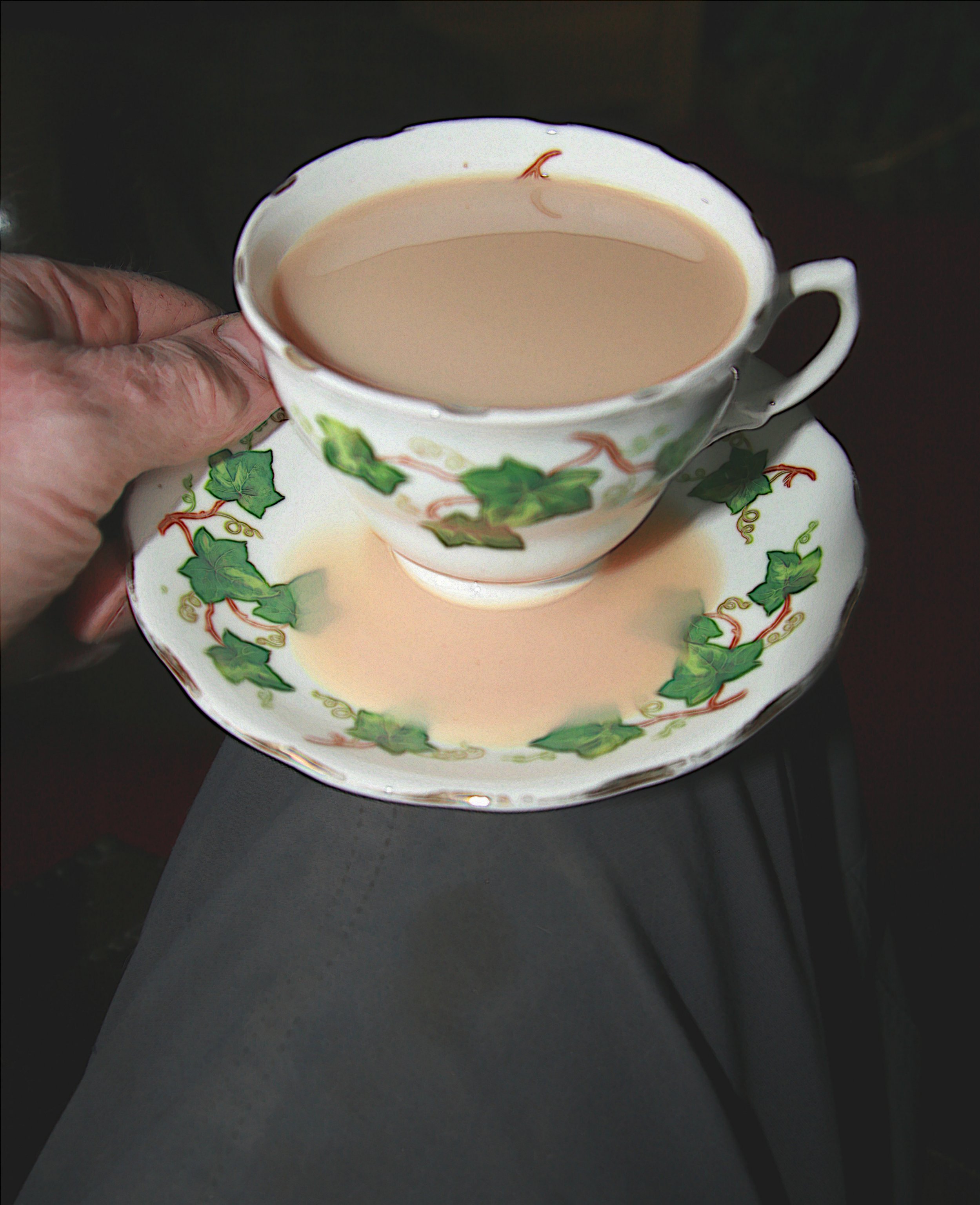
Frank O’Dwyer sat in front of the television in Mrs. Dodds’ front room, drinking a cup of Mrs. Dodds’ overmilky tea. The picture on the screen was of an aeroplane taxi-ing along the tarmac at RAF Brize Norton. It was a bitterly cold day and the gaggle of soldiers and politicians huddled at the end of the runway looked cold and crestfallen. The door of the plane swung open and two men emerged. The first, (according to the commentator, a diplomat) was dapper in suit and overcoat and placed a protective hand on the arm of the other. The second man was quite bulky and had a face that was pale and drawn, despite his incipient double chin. He was wearing a baseball cap, cheap windcheater and jeans. He looked lost, disorientated.
Frank shifted his position, forgetting the cup of tea on his knee. Some of it slopped into the saucer, and he had to make a grab for it to stop it, saucer and all, pitching to the floor. Mrs. Dodds came in at that moment, wearing the flour-stained green sailcloth apron that she reserved for baking.
“That him, is it?” she asked. Frank nodded. “He looks too old to be your son. More like your brother.”
Frank managed a temporary smirk. It was true that Connell was a chip off – right down to the indefinite waistline and distinct lack of bone structure. It was the receding hairline that made him look so much older than he was – that and his present dreadful pallor.
“He’s likely to look old, poor sod, after what he’s been through.”
The two men walked slowly across the tarmac. The second man, the one whom Frank had claimed as his son, had a limp and could not move fast. Eventually they reached the waiting reception committee. A well-known politician stepped forward to shake each of them by the hand. Then he gestured to a man and a woman standing on the fringes of the group. The second man pushed his way through to them and hugged them in turn. The camera showed a close-up of the woman’s face, wet with tears.
“ ….Connell Davy, reunited with his family …” came the even voice of the commentator. Frank seized the remote abruptly and turned the television off.
“Seen enough, have you?” said Mrs. Dodds. “I don’t know why you didn’t leave it on a bit longer. They might have interviewed him. He might have said something interesting about what he’s been put through.”
“I doubt it,” said Frank in a taut voice. “They probably won’t let him say anything – they’ll want to ‘debrief’ him, or some such rubbish.” He pronounced the word with a sneer. “But I’ll tell you one thing: this whole episode has been mismanaged by the authorities from start to finish and I’m not going to let them get away with it. I’m going to expose the bumbling mess that they’ve made. If it had been handled better, there would have been five men walking down that gangway today, not just Connell.”
“Still,” said Mrs. Dodds, “Connell’s the one that matters, isn’t he, as far as you’re concerned?”
Frank, still working on his fury, did not reply.
“By the way,” she added, as if the thought had just struck her, “who were that man and woman who came to meet him? It said they were his step-parents; but you’re his Dad. How come they were the ones who were asked to meet him? Is the woman your ex-wife?”
“No,” Frank said shortly, “she isn’t. My ex is dead. I’m going to make some phone calls.”
Footnote: I am away at a conference (day-job!) for five days from Saturday April 6th. I am continuing with the blog-posts, however. Regular readers of the blog may remember that one of the early posts was about how I trained for In the Family by writing a series of short stories, at Chris Hamilton-Emery’s suggestion. There are ten stories altogether, belonging to the theme of ‘The Village’. I’ve been revising them recently and may try to publish them. For each of these five days, I am posting on the blog the opening paragraphs of the first five. If you’d like to make any comments, they’d be extremely welcome; I’ll respond to them on my return.
The Village: Short story opening 2.

Matilda carried a twin-entry accounting system in her brain. It was a tally of favours and gifts that people had presented to her and the ones that she had given in return. If the former exceeded the latter, Matilda was happy. If it didn’t, she felt angry and cheated; and, when Matilda felt angry and cheated, she became abusive and destructive.
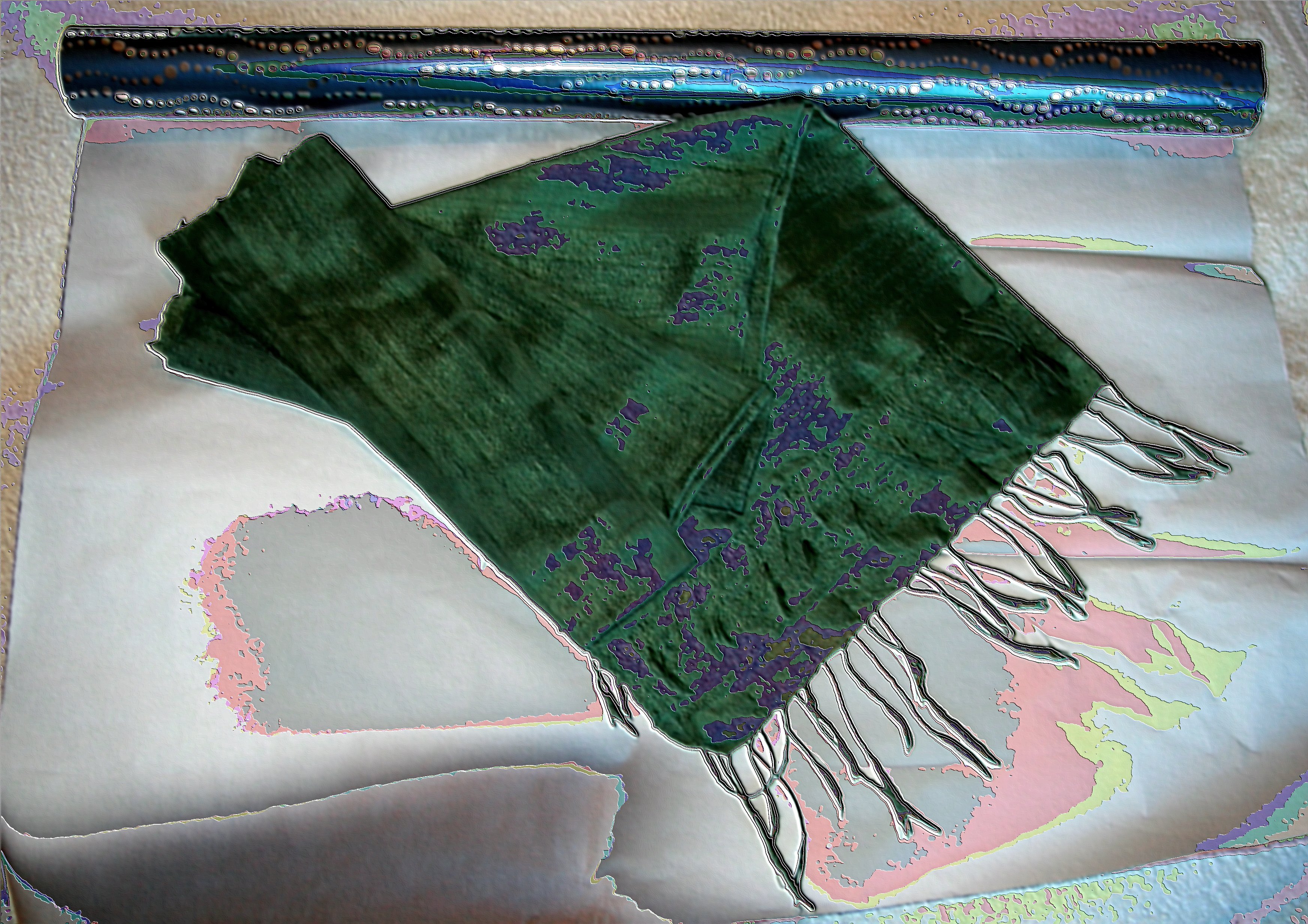
The main problem with Matilda’s cerebral twinlock system was that it was not an exact science and Matilda liked things to be in black and white; she did not believe in the benefit of the doubt. Sometimes, by expending a virtuous amount of energy, she could line up her figures more or less exactly. For example, although the brilliant green silk scarf that she had given her work colleague Joyce for Christmas appeared to be more generous than Joyce’s gift to her of some cologne and a desk diary (and, if Joyce checked, she would think that Matilda had spent almost three pounds more than she had), Matilda knew that she had in fact bought the scarf in a sale at a reduction of five pounds.
But what if Joyce had also bought her presents in a sale? Matilda might have been cheated, after all.
Favours were even more of a headache. What price should she put on looking after Blackie Daff, the tomcat next door, while his family was on holiday for the week? Was it worth more than having free access to the contents of Mr. Daff’s greenhouse for the period of the favour – of which offer Matilda had taken full advantage – and the “true friend” china dish that Mrs. Daff had produced upon her return? Looked at one way, feeding the cat and giving his bowls a rudimentary rinse out had barely taken fifteen minutes of Matilda’s time each day, so she was the undisputed gainer; looked at another way, if the Daffs had put Blackie into a cattery, it would have cost them twenty – possibly thirty – pounds. If that was the going rate for cat-minding, had she taken enough cucumbers and tomatoes to be able to compute with certainty that the produce together with the dish were fitting recompense? Questions like this were very vexing.
From infancy, Matilda had been used to getting her own way. The late only child of a woman who was widowed shortly after her birth, she had been brought up at the Hall, where her mother had secured the position of housekeeper to Samuel Jessop and his wife Kitty, then in their seventies. Pampered by three adults and at the same time resentful that she shared in the Jessop heritage only by proximity, she had come to think that it was her right to be in the right. She would brook no contradiction and, while still a very small child, she could, if thwarted, summon up a magnificent tantrum, all the while observing that it was having the desired effect from one keen eye that pierced through the tears. Although she was too young at the time to put the concept into words, it was then that she devised the tally system.
When her own children were born (of course, she was married first, but the husband was a detail), she saw before her a two-decade opportunity to build up capital on the balance-sheet. She had a son and a daughter and both, as she had intended, worshipped her. Over time, they came to scorn their father.
Footnote: I am away at a conference (day-job!) for five days from Saturday April 6th. I am continuing with the blog-posts, however. Regular readers of the blog may remember that one of the early posts was about how I trained for In the Family by writing a series of short stories, at Chris Hamilton-Emery’s suggestion. There are ten stories altogether, belonging to the theme of ‘The Village’. I’ve been revising them recently and may try to publish them. For each of these five days, I am posting on the blog the opening paragraphs of the first five. If you’d like to make any comments, they’d be extremely welcome; I’ll respond to them on my return.
 Christina James, crime novelist