

Before and beyond the grave…
 Yesterday, I learned belatedly of the death of someone to whom I was once close. Although I had not seen him for many years, I felt sad about the conversations that will now never take place and the questions that will now never be asked or answered.
Death is one of the stocks-in-trade of crime writers. Do we write about it carelessly or frivolously? I don’t think so. Murder stories tend to begin with one or more innocent deaths that have to be avenged – usually, but not always, according to the law – in order to restore the moral balance and demonstrate to the reader that all is right with the world again. Often the perpetrator dies or is killed; a good writer will shape this death into a kind of catharsis, so that the survivors can ‘move on’.
Real life is messier. Humans are creatures governed by memory. An individual’s ‘life’ therefore neither begins with his or her birth, nor ends with his or her death.
When I was a child, I listened to a radio programme in which was interviewed a very old lady whose great aunt had once met Jane Austen. The great aunt had recounted to her the conversation that had taken place and she was repeating it for the benefit of listeners in the 1960s. It had therefore been passed on at just one remove from an author whose life had ended in 1817. Why are we fascinated by such things? I think it is because we like to believe that we are part of a continuum that is greater than one person. It is more modest than a quest for immortality, but contains a strong element of the desire to survive for some time in memory.
As a baby, I was held by each of my great-grandmothers, both of whom were born in the 1870s. Both died before I started school, but I have hazy memories of them. I hope that, in my turn, I shall be remembered by my as-yet-unborn grandchildren, who, by the law of averages, are likely to live into the twenty-second century. This represents almost a quarter of a millennium of ‘immortality’. Can we ask for more?
Rest in peace, John.
Hamlet – a masterclass in making the audience think
 If you’re looking for the essentials of a classic crime thriller, Hamlet has the lot, including a touch of the supernatural! There are the obvious elements, of course, not least of which is the splendidly-outrageous line-up of dead bodies. For me, however, what makes this, of all Shakespeare’s plays, special is not its bloodthirsty aspects, nor the suspense, nor the sacrifice of a young and beautiful woman, nor even (my own usual delight and preference!) the astonishing psychological portrayal of the protagonist, but the delicately-poised opposition of the villain and the hero.
In what must be one of the most subtle presentations ever of the opposing forces of a story, the court scene near the beginning of the play, Claudius and Hamlet are contrasted in such a way that our feelings about each are always uncertain. The former, having seized power, perhaps by nefarious means (his brother, Hamlet’s father the king, having been found dead), and grabbed the throne, is in supreme political control of the court, deftly balancing and managing the foreign and domestic affairs of state, assessing the risk of war, making decisions, showing personal interest in and generosity towards his Lord Chamberlain’s son’s intentions AND adroitly attending to the inwardly-seething hatred and outwardly-sulking presence of his nephew, the rightful heir. Of course, contemporary expectations were that the most suitable (i.e. most powerful) person should be king, not necessarily the next-in-blood, and Claudius shows himself to be a much more authoritative monarch than Hamlet might have been at this point and for some time to come. What are we to make of them both?
We probably have sympathy for Hamlet, with his obviously moody feelings of bereavement, and empathy with his bitterness that his mother has married his uncle only a month after his father’s death (he does not yet know – and nor do we – that his uncle murdered his father), but he doesn’t come across well, being introverted and inconsolable. Claudius, on the other hand, is slick and assured in speech and behaviour; but is his smooth talk too perfect? Nothing predictable here; just the beginning of a fascinating contrast which challenges our understanding of both characters throughout the action of the whole drama, making us question more and more what is really going on.
Challenging and playing with audience perceptions: the mark of the excellent crime thriller writer.
Killing off your character
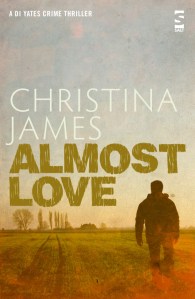
The second DI Yates novel
As I am in the process of completing only my second DI Yates novel, I hope that I shall not need to worry about whether I have exhausted his potential for some time yet. However, how writers manage to keep on presenting the lead character in a series in a fresh way is something that I find fascinating. Conan Doyle, wanting to save his mind ‘for better things’, killed off Sherlock Holmes at the Reichenbach Falls, only to resurrect him in response to public demand. Peter Robinson gives DI Banks a rich personal life, an often racy account of which forms a sub-plot in each of those novels. Ian Rankin announced that the seventeenth Rebus book would be the last and then changed his mind: Standing in Another Man’s Grave was published in November. I’m sure that Rankin’s revival of Rebus, like Doyle’s of Sherlock Holmes, was created in response to popular demand and that Rebus still has a rich future ahead of him, thanks particularly to Rankin’s inventive plot skills.
Some characters (no names, no pack drill!) do, however, seem to me to have run their literary course and should be allowed to die or retire. Surely their creators must realise this? Yet it takes a brave writer not only to know that the time has come to kill her/his cash cow, but also to do the deed.
I’m sure that, once it is done, authors mourn the hero or heroine who has been so much part of their inner life for so many years. I do, however, have more than a little admiration for an author who does not allow a relationship with a popular character to become too comfortable!
Voices that sound loudly in my head
I don’t have a good memory for faces – it may be because I’m quite short-sighted – but voices stay in my head for decades after I’ve heard them. (No… I don’t mean I hear voices telling me to do things!) My grandmothers died in 1966 and 1979 respectively and I can still hear both of their voices clearly. One of them had quite a strong Lincolnshire accent, with flat vowels and little modulation. “That’s what you do” was one of her customary expressions, as in: “You need to be more careful; that’s what you do.” The other, who came from Kent, had spent all her life ‘in service’, so the way in which she spoke was more genteel, but I suspect that her long-drawn-out vowels and rather slow way of speaking were Kentish in origin. She often coloured her speech with proverbs and other regularly-used sayings: “Never say die; up man and try!” (used for both sexes) and “Red hat… no drawers!” (pleasantly spicy!) were two of her favourites. As a schoolgirl, I had a permanently exasperated teacher who prefaced almost every sentence with “Yes, but …” – another Lincolnshire voice, this one crackling and rising with irritation.

Our otnineen!
Harder to remember are the childhood voices of people, now adult, with whom I have always stayed in touch. I can still remember many of the things my son said when he was small, but hearing the exact voice in which he said them, though not impossible, requires quite a lot of concentration as I work back through the layers of adult and teenage years. “Building socite” and “Arndale socentre” were entertaining confusions, whilst “clothes-banger” and “otnineen” (see image) were two words he minted as a toddler, his voice high and piping and full of laughter.
People with no voice – as far as I am concerned – are intriguing. Their mystique is partly owing to the fact that I can’t hear them. Margaret Thatcher was in power during a period in my life when I owned no television and rarely listened to the radio, so she was years into her premiership before I first actually heard her. The result was disappointing; she sounded just like what she was: a Lincolnshire lady who had had elocution lessons, a type from my own childhood.
I feel teased and frustrated by never being able to know how authors spoke in the past. I have listened to recordings of writers who have died relatively recently – Tennyson, for example, and Virginia Woolf – but it is impossible to be able to tell whether they really spoke like that, or whether the sound has been corrupted by primitive technology or the passing of time.
And, of course, no-one will ever be able to do more than guess about the myriads who died before the end of the nineteenth century. Do we think of William Shakespeare with a colourful Brummy accent or are we seduced by the voices of actors who deliver his ‘immortal verse’ into thinking he sounded like royalty?
One thing I am sure of: the voices of my fictional characters sound loudly in my head.
The New Yorker on Great Novels with Bad Endings
The New Yorker has just run an article on Great Novels with Bad Endings – see http://www.newyorker.com/online/blogs/books/2012/11/on-great-novels-with-bad-endings.html. Although I agree with almost every word, it is amusing that this comes from America, where crime novels, especially, often suffer from the lame ending phenomenon. I don’t think it’s because American crime writers run out of imagination before they finish writing; rather, that there is something in-built in the psyche of the American reader – and undoubtedly these authors understand their readers much better than I do – that demands a return to the cosy status quo at the end of the book. Almost all of the many Kellerman novels end with a cheerful family gathering or similar, the evil perpetrator having been killed or gaoled so that the family can dust down the barbecue again. The Hannibal Lecter novels likewise conclude with happy domestic scenes that almost seem to have been superimposed, as if it is essential to bat away the darkness and return to the safe banality of normal life, even at the expense of art. It is America’s own take on ‘the willing suspension of disbelief’! But perhaps this is what crime writing is about: it helps us to make sense of evil and then reassures us that good will always win. The challenge therefore is how to write as powerfully about happiness and security as about dark threats, death and strife. Which authors are able to rise to this? Only Jane Austen springs to mind.
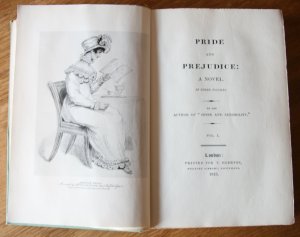 Oh, dear, I’ve taken on the States! Am I just too full of English pride and prejudice?
Let the stalker beware…

Monday November 26th 2012 saw new anti-stalking laws brought into force in England and Wales: six months in prison and/or a fine to a maximum of £5,000 for conviction for this offence. I am astonished that it has taken so long to achieve this here; we certainly seem to have lagged behind other countries. Fictional representations of potentially lethal stalking immediately spring to mind. Ian McEwan’s Enduring Love (1997) and the Clint Eastwood film Play Misty for Me (1971) are two examples that made me think about the psychology of stalking; there are, of course, others – the element of the stalker in Thomas Harris’ Red Dragon (1981), for example, was something which struck me when I read it as a proof copy – and, though the murder rate for the victims of stalkers is in reality quite low, all of these fictional stories have a tremendous psychological interest.
Obsession of one kind or another afflicts many people and manifests itself in many ways; stalking is one which is particularly frightening and sinister, as victims are unable to defend themselves from the invasion of their privacy and from the fear and threat of harm. Newspapers here referred this week to the 2005 murder by a stalker of Clare Bernal in the Harvey Nichols Knightsbridge store – the welcome new laws have been a long time coming. I hope that they will prove effective in keeping the behaviour and the crime firmly in fiction.
Putting my story down

I write for a living and that, to me, is both a privilege and a pain, because much of what I write is to meet external constraints and demands. I’m not complaining, however, because writing to meet the exacting needs of others is interesting and challenging in its own way, even if it doesn’t fulfil the inner energy I have to write for myself. There are deadlines for both, of course, and the pressures of my own writing sometimes seem overpowering, which will not be a surprise to established authors.
The total immersion in my own story, its tendrils curling in ever greater complexity, has its own particular power, which non-fiction writing cannot match: coffee and tea go cold in the cup; the postman knocks in vain; the weather storms by unnoticed. Fortunately the boys in the household go about their usual business without me and eat, walk and play happily according to their own inclinations.
The story stalks me and lingers on street corners, at the checkout or down the corridor of the train, just at the edge of vision; sometimes meets me face to face with frightening force. I cannot get it out of my mind and fear that I am losing a sense of proportion. I am afraid of it and yet crave it. The only way to tame it is to put it down… on paper.
Laura Wilkinson’s review of Sweet Home
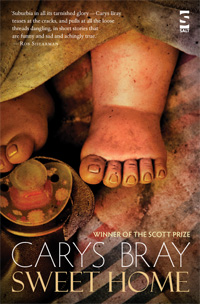 When someone writes well, turning and shaping the words with deft control into an elegant final piece, one may enjoy the result and admire the skill. Words can be as lumpy as wet clay and just as unmanageable; the product is therefore a measure of the creator.
It may seem a touch incestuous for a writer to review the review of a writer, but I am still feeling very happy to have, over the weekend, stumbled upon Laura Wilkinson’s assessment of Carys Bray’s Scott-Prize-winning short story collection, Sweet Home. http://laura-wilkinson.co.uk/ What I look for in a book review is a sense of the scope of the work and the lucid but succinct identification of the qualities which define it. This one does that and also (for me the telling detail) reveals the personal response of the reviewer and her engagement with what she has been reading; it is therefore an excellent encouragement to get hold of the book and read it for oneself. There is, additionally, an interview with the author and, generously, a link to a fuller and very-well-written review by freelance writer Sarah Schofield.
All this, for free! As for Sweet Home, money well spent, I think.
Crime writers – the best criminals?
 If, with William Golding, you see the reality of human vice behind a civilised veneer, then you might be willing to consider that there is something of the criminal in all of us. Yesterday, I wrote of Margaret Yorke, who was a diligent researcher for her novels, and it occurred to me that there is amongst the body of crime writers a fine skill set for the execution of the perfect crime. We devote time and effort to convince our readers and ponder with microscopic care the ways by which our character/s will do the deed and cover the traces. Put some of us together and we should be a formidable force for naughtiness. Are we criminals manqués?
Some of the best crime fiction does present the fine line between crook and cop and demonstrate that there is not a lot to choose between them. Perhaps we are fascinated by the depiction of what is in fact our own potential for doing wrong. Do we then go on to create a parallel universe in which we vicariously enjoy being very wicked?
I’m beginning to feel quite uncomfortable. It’s all very well holding the mirror up to nature, but when the face in the mirror is my own…
The power of the monologue
In my novel In the Family, Hedley Atkins speaks for himself, his monologue providing an insight into his character and psychology. I remember first being transfixed as a school pupil by the monologue of Browning’s Porphyria’s Lover, a powerfully atmospheric poem in which the speaker sits with Porphyria, strangled by him with her own hair, upon his knee and reveals (with the delicacy of touch that Browning also deploys in My Last Duchess, a poem about a very powerful man who has his wife done away with) how he has quite matter-of-factly ensured that she will be entirely his. A combination of scene-setting (a contrast between the storm outside and the cosy cottage atmosphere created by Porphyria) and the brooding personality of the lover heightens the sense of menace. The horror is achieved in an understated way, not by graphic depiction of blood and guts. The power of monologue is well-known in drama, too: for example, Alan Bennett’s Talking Heads characters brilliantly demonstrate how apparently incidental details cohere to develop our engagement and to surprise us.
Are we so hardened by our exposure to the prevalent and unsubtle presentation of graphic violence on film and in books that we are no longer absorbed and excited by suggestion? I hope not.
 Christina James, crime novelist