

When reality strains belief, what hope has fiction?

Now here is a news story that must give heart to writers worried about whether their fictional situations are going to be too unbelievable: Man throws puppy at biker gang, does a moonie and escapes on bulldozer. Before anyone takes issue with me for referring her or him to a story in which a puppy and some innocent biker boys are grossly abused (but, please note, neither puppy nor bikers perished in this incident), may I say that my main reason for writing a post about this is the matter of realism in crime novels. I am always disappointed when a crime writer, in the interests of a plot, strains credibility so much that my willing suspension of disbelief is compromised; it’s as bad for me as one memorable occasion at the Leeds Playhouse (no, not the West Yorkshire Playhouse, but its excellent predecessor, which clung to the back of the Leeds University sports hall back in the seventies), when the balcony in a production of Romeo and Juliet collapsed under the lovers’ combined weight and I was torn between convulsions of laughter, waves of sympathy for the actors and, most significant of all, anguish at the loss of the moment.
You will by now, if you have recovered from that news story, be thinking that I’m just considering far-fetched scenarios, but there are other things, too: I was much struck by an excellent recent post (Facebook December 24th 2012 -scroll to date), written by the very astute crime novelist Margaret Murphy (whose research to support the realism of her work is painstaking), which presented a subtle point about the need for a writer to include precise and convincing technical detail, but not to overwhelm the reader with an overdose of it; her sense of the need for convincing her reader is highly-developed and she has her audience very firmly in mind.
For me, as someone whose interest lies more in the psychological portrayal of characters than in procedural elements, my mind was less affected by the absurdity of the situation in the news report than by the mind of the man who committed this astonishing series of acts. I know that this is one of those news stories which will never be followed up in the media and that the only way I’ll ever find out more about this man will be by visiting the area of Germany in which it all happened and doing research there. I’m left to my own mental devices, therefore, and I’m imagining all kinds of things beyond the mere ‘stopped taking depression medication’ comment. There are so many psychological aspects to this that my mind is running on how I might have prepared the reader by my characterisation, were this incident to have featured in a novel of mine, to make this reality achieve a fictional realism.
I confess, I’m struggling!
Pedant power…
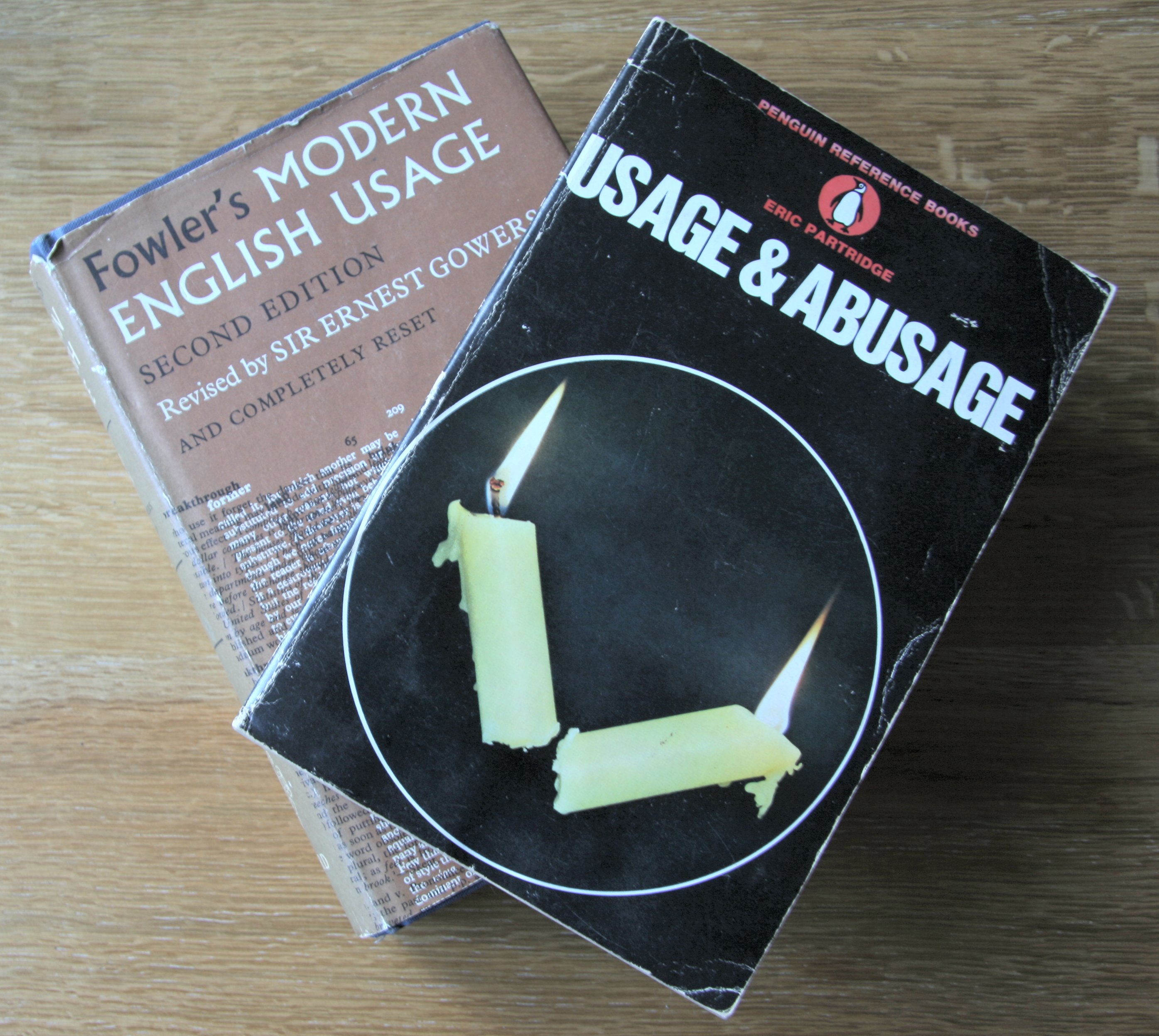
There is nothing worse than a pedant when it comes to the use of language and things grammatical; the last thing that any writer wants is to have some linguistic know-it-all ram rules down her throat. (You just know that all the pedant wants is to parade his or her own knowledge.) There have been and still are plenty of excellent writers of prose whose verbal accuracy leaves something to be desired, but fortunately the editing process by self or others eliminates the things which would undoubtedly annoy a reader. Where do I stand on all this?
The fact is, I am, I think, my own worst critic and I constantly read and re-read my work to pick up the inevitable errors that have occurred as I have striven to achieve what are, arguably, much more important things, such as creation of mood, descriptive interest or aspects of characterisation. I’m sorry to say that I’m a bit anal about the accuracy of what I post on this blog and (yes, I am a bit sad!) go back to look at past posts because I read them again with a greater distance and objectivity. I do find things I’m not happy about and sometimes (to me, anyway) shocking mistakes like lack of agreement of subject and verb.
I hope that writers on the receiving end of an editor’s amendments take them in good part; the additional critical eye is something to be grateful for, not to squirm under. If someone else ‘corrects’ my prose, my first instinct is to bristle, but then to remember what this is all about: improvement. I may not agree with the amendments, but if they make me re-think, as well as re-read, I can do it better! I’m married to a pedant who provides an in-house critical view and we have some humdingers of disagreements, but, in the end, I do realise that he is on my side. Annoyingly, he is frequently right.
Cryptic to the end…

I come from a family of avid crossword addicts. My mother and my late father-in-law each completed the cryptic crossword on most days. Both especially liked crosswords set by ‘Araucaria’, which has therefore been a household name for me since I was a child. I still can’t pass a monkey-puzzle tree without thinking of his crosswords.
I did not know this crossword-setter’s true identity, so was fascinated to discover in today’s Sunday Times that his real name is the Reverend John Graham and that he is ninety-one years old. I was also saddened to go on to read that he has contracted cancer of the oesophagus, which is being treated with palliative care only. His life is therefore likely to end soon.
However, I was heartened when I also read that he intends to keep going while he can; his crossword-setting days are not over yet. And I take my hat off to him for his ability to view even his terminal illness with both humour and with a professional eye. He has created a crossword puzzle which tells readers who solve the four relevant clues that ‘Araucaria has cancer of the oesophagus, which is being treated with palliative care.’
Crossword puzzle setters and crime writers have a great deal in common. They look at life in a certain way. Word-play and coincidences, double- entendres and things not being quite as they seem are their stock-in-trade. Much of their lives are lived through their work. (I suspect that readers of crime fiction may often have a penchant for crossword puzzles, too.)
Crime writers have to be resilient. Having dragged their readers through slaughter, mayhem and near-Armageddon, they have to bounce back and recreate a status quo in which all is right with the world again. It is still fiction, though. Should I receive warning that the end of my life is near, as Araucaria has, I hope that I shall be as full of robust common sense and equanimity as he is. By incorporating the announcement of his death into his professional work with such modest good humour, it seems to me that he has already succeeded in pre-empting the end of his life by making it imitate art and has in the process regained control, even achieved a victory. He has found a brave and wonderful way of playing the grim reaper at his own game.
Bare bones
 The landscape may now be bare, but it is beautiful in its skeletal outline. I love leaves, but the winter scene has shape and structure and filigree form that catches the eye and holds it, particularly when a tree stands alone and has grown with all the advantages of light and space into its true adult character. I love the light in January, too, especially in the late afternoon of a clear and frosty day, when the trees stand out against a Jan Pieńkowski sky; there is exquisite contrast of black against that glorious blue and the very essence of the natural world is revealed.
In crime fiction terms, the tree’s winter skeleton is the Agatha Christie of plots: precise, ingenious and with no unattached loose ends. (Rankin does a dandy plot, too.) Intricacy and artifice combine in a natural, convincing and connected story that conforms to the conventions of crime novels. Writing such is a challenge; published authors sometimes acknowledge that they have only a vague idea of plot when they start to write and just allow it to unfold; some admit that they don’t do it in order – I’m not sure that the anguish of plot uncertainty is worth it, especially if the chapters and sections end up across the carpet in an effort to pull the pieces together! Getting the right degree of complexity (too much and the reader is flapping helplessly around in the branches; too little and there is insufficient challenge) is essential and, for me, sub-plot interest and alternative narratives make for appealing additional subtlety. That’s not to say that plot is everything, but a clear view of the structure is fundamental to a novel’s success. I’m working hard at my second and looking out of the window with envy at an oak tree’s perfect form.
No, not the best plot device for me…

It seems an incredible irony that the more developed our society becomes, with the undoubted benefits of technology and communication, the less kind it seems to be (There ought to be plenty of advantages for the crime writer in that!). For example, with the mobile phone came theft, intimidation and bullying, as schoolchildren were quick to discover; camera-enhanced phones only worsened the problem, as ‘happy-slapping’ ensued.
Now, as the phones become smarter and smarter, people’s capacity to exploit them for malicious purposes seems to grow and grow. How different was the mobile-less world of my childhood, which had only public telephones with buttons A (which you pressed to speak once the call got through) and B (to get un-used money back). Even then, the human mind was looking to exploit an opportunity: young children (self included!) always nipped in to press button B in the hope that someone had forgotten to retrieve their pennies (the big coins of pre-decimal days) and there were naughty ways of clicking the receiver to make free calls (though I was too young to master them!). Nevertheless, I don’t think people were particularly at risk from using a telephone box, whereas now a mugger on a bike will snatch a phone from someone’s hand and make off with it; parents now provide their children with a phone to improve their safety and by doing so increase the risk of danger.
For me, mobile phones are a very mixed blessing, as some excellent and very humorous bloggers of my acquaintance have recently confirmed. I hate having to listen to other people using them, which they seem to do all the time on train journeys; the battery on mine is always flat at the time I really need to make a call; my husband’s phone is invariably switched off when I call him (Read into that what you like!); someone rings when I’m taking a quiet walk in the countryside; I could go on and on. Worst of all, though as an owner of one I ought to be completely au fait with how it works, I’m not conversant with its finer capabilities and I certainly know that I won’t be using it as a plot device any time soon, because there would inevitably be a glaring technical error for all to laugh at! I’m not keen on procedurals, anyway.
Chopped up and served. Chianti, anyone?

Last week I wrote about situations that I’ve encountered that have literary potential. Today I’d like to focus on one of the characters I’ve met who has made a similarly lasting impression on me.
His name was Moon. I don’t know if this was his real name, an onomatopoeic approximation of his real name, or a translation of it. Perhaps he had adopted a simple, monosyllabic appellation because he was fed up with people’s mispronunciation of his real name all of the time.
He was a Chinese chef in the takeaway that I worked in as a student when I returned to Spalding for the holidays. Unlike Henry Pang, the lithe, diminutive owner of the business (and married to Hilary, a Lincolnshire lass through and through), Moon was massive, tall and broad, with big bones and – no pun intended – a large round moon face.
Other than the shop, he had no home. He slept on a mattress in the store-room above it. The premises were situated in one of the eighteenth century terraced buildings in New Road, and perennially dark. The ground floor of the building was divided into two: the shop at the front; the kitchen behind it. Moon seemed to spend all of his time in the kitchen or the store-room. He never went out. It occurs to me now that he may have been an illegal immigrant.
He never spoke to me and I didn’t know how much English he understood. He took the orders from a menu that I had marked up. He never cooked the wrong dishes, but I wondered if he could read what was there or whether Henry had helped him to memorise which items occurred where on the list.
Moon was a dab hand with a cleaver. The one that he used was massive and rarely out of his sight. He would take it in his huge fleshy hand and cut mushrooms and chestnuts into exquisite wafer-thin slivers.
Business was brisk at the takeaway on Fridays and Saturdays, but often slack on other days, especially Mondays and Tuesdays. Then I would sit in the shop from 6 p.m. to 10 p.m. with nothing to do but read a book. Moon would wait in the kitchen.
My friend Mandy, who had taken a year out between school and college and was working in the public library, would sometimes call in for a chat on her way home from work – or on her way to spend an evening in the pub with our other friends. I was already fascinated by the Jack the Ripper stories and had ordered from the library a book that had just been published about them. (Here I pause to pay tribute to the tiny library in Henrietta Street, which throughout my school and student years never failed to get for me a book that I requested, however arcane the topic.) We opened the book at the photographs and shuddered at the picture of Mary Jane Kelly’s intestines draped around the room in which she had died.
Moon appeared, to see who was with me in the shop. He stood in the doorway for a few moments, clutching his cleaver, before disappearing again into the murk of the kitchen.
Mandy had at least as vivid an imagination as I: “Never mind Jack the Ripper,” she said as she was leaving, “what about Moon the Ripper?”
I spent the rest of the evening sitting on my stool in trepidation, scared to look at the book any more, hoping that Moon was too busy chopping mushrooms to be entertaining murkier thoughts of the uses to which he might put his cleaver.
Sexy settings…
If you have been reading this blog for any length of time, you will know that settings are important to my writing. The ones that I write about are often taken from life, though of course adapted or otherwise presented through a glass, darkly. I count myself fortunate in having a good memory – for things that interest me! If they don’t, I am at a loss; I am completely baffled by our motorway systems, for example. I can often recall in vivid detail people and events from a long way back in the past. I’m also very lucky that I have sometimes been the passive and curious observer of some very interesting settings, a couple of which I’ll share here:
When I was a postgraduate student, I lived in a flat in Brudenell Road in Leeds, which was (and still is) quite a run-down area. My room overlooked a ginnel (local dialect for an alley or a snicket!), beyond which were the back doors of a row of terraced houses. A great many men seemed to come and go at all hours of the day to the one immediately opposite my window. Occasionally, a woman appeared, framed in the doorway and wearing her dressing-gown. Being a naïve girl from Lincolnshire, I needed a boyfriend to tell me that it was what he called a ‘knocking-shop’. I watched the to-ings and fro-ings all the more avidly after this.
Just before Christmas, my flat-mate’s mother came for shopping in Leeds and stayed for the night. She and my flatmate slept in my room, which had a double bed, and I moved into the other one. In the morning, when her mother appeared, she was haggard and exhausted. “Thank goodness you weren’t sleeping in there last night,” she said. “There was a police raid on that place over the road, and we didn’t get a wink of sleep.” Damn! Damn! Damn!

Much more recently, I made a short visit to Russia to conduct some seminars for a group of Russian librarians who worked for a charity which had been set up to supply e-books to poor Russian students. The seminars lasted for several days. The charity had arranged for us to stay at a conference complex about thirty miles outside Moscow, explaining that, if we met in Moscow itself, the librarians ‘would only try to escape’. I was somewhat alarmed by this until I realised that it meant only that they might try to do a bunk from the seminars, lured by the attractions of the city. Nevertheless, the conference centre was quite an intimidating place. It had been an old KGB sanatorium and was still guarded by troops (who, I was fascinated to observe, wore different coloured combats every day – while I was there, they were resplendent successively in blue, brown and green). The rooms in the centre were luxury itself. Not much austerity seems to have been practised by the KGB! The carpets were all knee-deep wool pile, and all the bedrooms had fantastic marbled bathrooms. The food was a little strange: Meals consisted of many courses, almost every one featuring pork. There was no wine, but every night new bottles of brandy and vodka were placed on each table (which seated four people). In the reception area, a huge parrot with exotic plumage sat on a perch, neither shackled nor perturbed by the constant stream of human traffic. There were extensive grounds, bounded by the river Moskva. I walked down to the river one day with one of the librarians. An old sign leaned crookedly on the bank. “What does that mean?” I asked. “Oh,” he said. “It says that anyone trying to swim across the river will be shot!”
I honestly haven’t made a word of this up! It is raw material, still to be worked on by passing it through the dark glass. I may even have to tone it down, in the interests of credibility.
Spalding: a setting for ‘In the Family’, but more to it than that…

The Pied Calf, in Spalding’s Sheep Market
When I returned to Spalding recently for a signing session at Bookmark, I was struck by the beauty of this old town, the layout of which has remained essentially unchanged since the eighteenth century. Because it was a market town to which livestock were driven for auction – there were various market-places, such as Hall Place and what is still called the Sheep Market – the approach roads were made broad and straight at a time when streets in other towns were narrow and winding. The River Welland also makes a significant contribution to its character. Deep and full, with steep banks that have been fortified in places, within living memory it carried ships to the town from the Lincolnshire coast. I myself can remember the grain boats that were still plying their trade between Fosdyke and Birch’s, the cattle cake merchants in the High Street, when I was a primary school child.
While I was growing up in Spalding, however, I was pretty impervious to its charms. I was impatient to leave what seemed to me to be an intellectual backwat er where sugar beet and tulips were the main topics of conversation, the Young Farmers’ Club dominated social events and the local newspaper – the Spalding Guardian – was full of photographs of girls who had been a few years ahead of me at school, now smiling and swathed in Nottingham lace, marriage being the traditional rite of passage of a farmer’s wife. This was not the life for me. I sought the wider horizons that I believed a university education could give me.
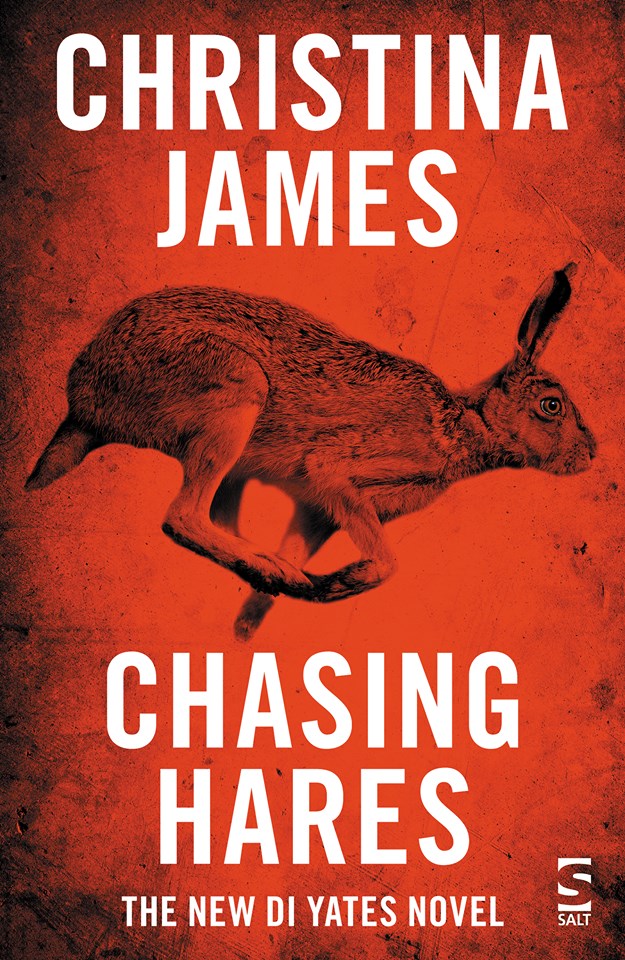
Therefore it was with a certain sense of irony that I set the DI Yates novels in Spalding. I acknowledge now that Spalding gave my young self many more gifts than I could appreciate at the time: a sense of community, the genuine interest that professionals – teachers, clergymen, doctors – showed in helping me to fulfil my ambitions, a safe environment where my friends and I could wander freely with no adults present. Now, almost unexpectedly – I did not at first plan to give Tim Yates a home and a career in Spalding – I continue to benefit from its bounty. Perhaps it has always been a benign presence at the back of my subconscious. Perhaps now I also know that exploring those wider horizons was not necessarily as rewarding as what I had to start with.
For the muddy-minded!

A boot-sucking quagmire
It is now official that 2012 has been the wettest year in my part of the world since records began (and in most other parts of England – it is apparently only because Scotland and Northern Ireland have been drier that this dubious distinction has not been earned by the UK as a whole). As I look back on it, I remember it less as a year of rain than a year of mud: mud squelching underfoot every day on the dog walk; the banks of streams reduced to treacherous muddy jellies after continually being breached by waters in spate; mud topped by thick blankets of leaves plastered together like papier mâché, creating involuntary ski runs down the hillside for the unwary; mud-caked wellies, mud-spattered trousers and trails of mud every day on the kitchen floor as boots and paws traverse it; even mud on my handbag once, as I carelessly rested it in the footwell, having already clambered into the car with mud on my boots. Mud, mud, mud.
I’m always on the look-out for new experiences and situations to write about, but, until yesterday, mud seemed an unpromising material for a crime-writer to work with. Bodies are often hidden under snow, lie obscured by drifts of crisp chestnut-coloured leaves or are tossed into miraculously-dry ravines to dry for years so that they become mummified. But mud? Only a manic or very foolish murderer would try to dig in sodden mud to conceal a body: there would be tell-tale boot-prints everywhere; the hole would keep on filling with water; the whole business would be a muddle!
Then, yesterday, as I was toiling back up the hill, my feet slipping and sliding on a path made smooth by running water and wading through patches of boot-sucking quagmire, my heart leapt as the grinning visage of a skull confronted me. It was re-emerging from the mud, its head turned towards me, the teeth grimacing, the backbones arching clear of the water. It took me a moment to realise that it had belonged to a sheep, presumably one that had got caught in the blackthorn hedge last summer or even the summer before that, and died.
So mud could hold copy for a crime-writer, because inexorably, over time, it might yield up its grisly secrets.
The power of a ferret!
Flicker, son’s ferret, 1995
We all have our favourite stories, from childhood onwards, and some of them have an almost religious significance in our memories, their words ringing in our minds like learned responses in church, that meant little to us as children, but had a resonance and a magic that almost overpowered literal meaning. One such for me is Sredni Vashtar, by Saki (H.H. Munro), the tale of a boy, his polecat ferret and revenge. Saki’s storytelling is legendary; it has the power to touch the imagination. In this story, it is the imagination of the ten-year-old Conradin which enables him to challenge the overbearing and unloving supervision of his cousin-guardian, Mrs. De Ropp. The boy is weak and not expected to live for more than five years, but he devises a way of eliminating her from his imagination, which is sacred and clean territory, and ultimately from his life. In a shed hidden away from Mrs. De Ropp’s prying eyes, he keeps a hen and a ferret, both of which he loves, but the latter in particular becomes, in his own created religion, a god with appropriate powers of authority. His guardian, noticing his fascination with the shed, aims to thwart him by disposing of the hen (not noticing the ferret hutch in the darkness at the back), the severity of which loss he silently turns into vengeance, appealing to Sredni Vashtar to do ‘one thing’ for him.
As a school pupil reading this story for the first time, I was utterly convinced of the power of Sredni Vashtar, who represented for me the reality of justice for suffered wrongs and the way by which a child could deal with unpleasantly dictatorial adults! Much more influential, however, was the strong focus of the tale upon imagination, which I understood implicitly and which has always underpinned my writing. When my son started keeping a huge hob ferret, which went out with him, sat upon his shoulder and eyed strangers with steady suspicion, I never worried for his safety! I still love the story.
(The Project Gutenberg text of the story is available online.)
 Christina James, crime novelist