

The Village: Short story opening 4
“I would gladly go on living and would gladly accompany you a bit further on this earth. But then I would need a new task from God. The task for which God made me is done.”
I have published this message in many ways and read it to many people. I hoped that it would help them. I also hoped that it would allow them to understand the man that he was – the man I was proud to call my husband. Yet too many of them have misunderstood and the lack of sympathy has grown worse as the decades have become more unbuttoned. It fills me with a great anger, and with a profound sorrow, that people think that the words are tepid, too restrained; that they do not contain real love; that at the end he took the easy way out because he knew it was the only thing that he could do and capitulated while still paying lip service to his broken ideals.
He died sixty-four years ago, and I still live. I was young, but not very young, when it happened. I was already the mother of three boys. I was old enough to be considered guilty if I were caught helping him; mature enough to understand his aspirations; wise enough, even, to give him my blessing – though I could not have foreseen the empty space that he would leave as I lived on for so very many years.
I believe that I have led a useful life, if one that has been hollow. I have worked hard, for causes I believe in, and I think that he would have approved. Many years after his death, I took a lover (Eugen, an old friend of mine, whom he also knew), but we did not marry. I think that he would have approved of that, too – both of the relationship and of the fact that I have always kept my innermost, private self (as well as displaying my most public self) for him.
I do not know if we shall meet again. When he died, I believed passionately that we would. Now I am not so sure. I think that there is an afterlife, but I do not know if you can reach those whom you have not seen for so long, whose life you ceased to share many decades ago, even if you are still filled with love for them and they for you. Perhaps it may be that he has been watching me. I still believe that he is talking to me sometimes, but the conviction is of the intellect rather than of the emotions – it is as if I am able to place myself in his brain as I say, “What would Helmuth have done?” and my knowledge of his character, always so constant and open, tells me the answer.
I remember so well the day that we met. It was in 1929. The country was poor and demoralised. Helmuth himself had a bitter cross to bear – coming as he did from one of our most distinguished Junker families. To have lost the war was a disgrace for them. Helmuth did not speak of it much, but I am certain that this is why he became a lawyer instead of following the family tradition to become a soldier. He was a very fine lawyer – and generous and enlightened to me when I said that I wanted to study Law, too. He encouraged me every step of the way. We were married in 1931, but, unusually for a married woman then, I studied Law and did not start to have my babies until I had qualified.
My father was a rich and powerful man, but no aristocrat. He was a banker, but his work did not light him up. It merely provided the financial means for him to spend as much time as possible immersed in literature and the arts: interests which he shared with my mother. We spent our summer holidays at a hotel in the Grundlsee, always with a group of friends of my parents who had met to debate and study books and works of art.
In 1929, Helmuth became part of the group. He and I spent whole days walking, talking, laughing. He had to return to his legal studies while this rest of us remained on holiday, but he wrote to me almost immediately to say that he thought that we were kindred souls. I knew that he was right. I was never afraid of becoming a Gräfin: it seemed so natural for me to be able to complement the way that he lived, to enact what society expected of us both. I rejected the title after the war, though. It had become a mockery.
Footnote: I am away at a conference (day-job!) for five days from Saturday April 6th. I am continuing with the blog-posts, however. Regular readers of the blog may remember that one of the early posts was about how I trained for In the Family by writing a series of short stories, at Chris Hamilton-Emery’s suggestion. There are ten stories altogether, belonging to the theme of ‘The Village’. I’ve been revising them recently and may try to publish them. For each of these five days, I am posting on the blog the opening paragraphs of the first five. If you’d like to make any comments, they’d be extremely welcome; I’ll respond to them on my return.
The Village: Short story opening 3
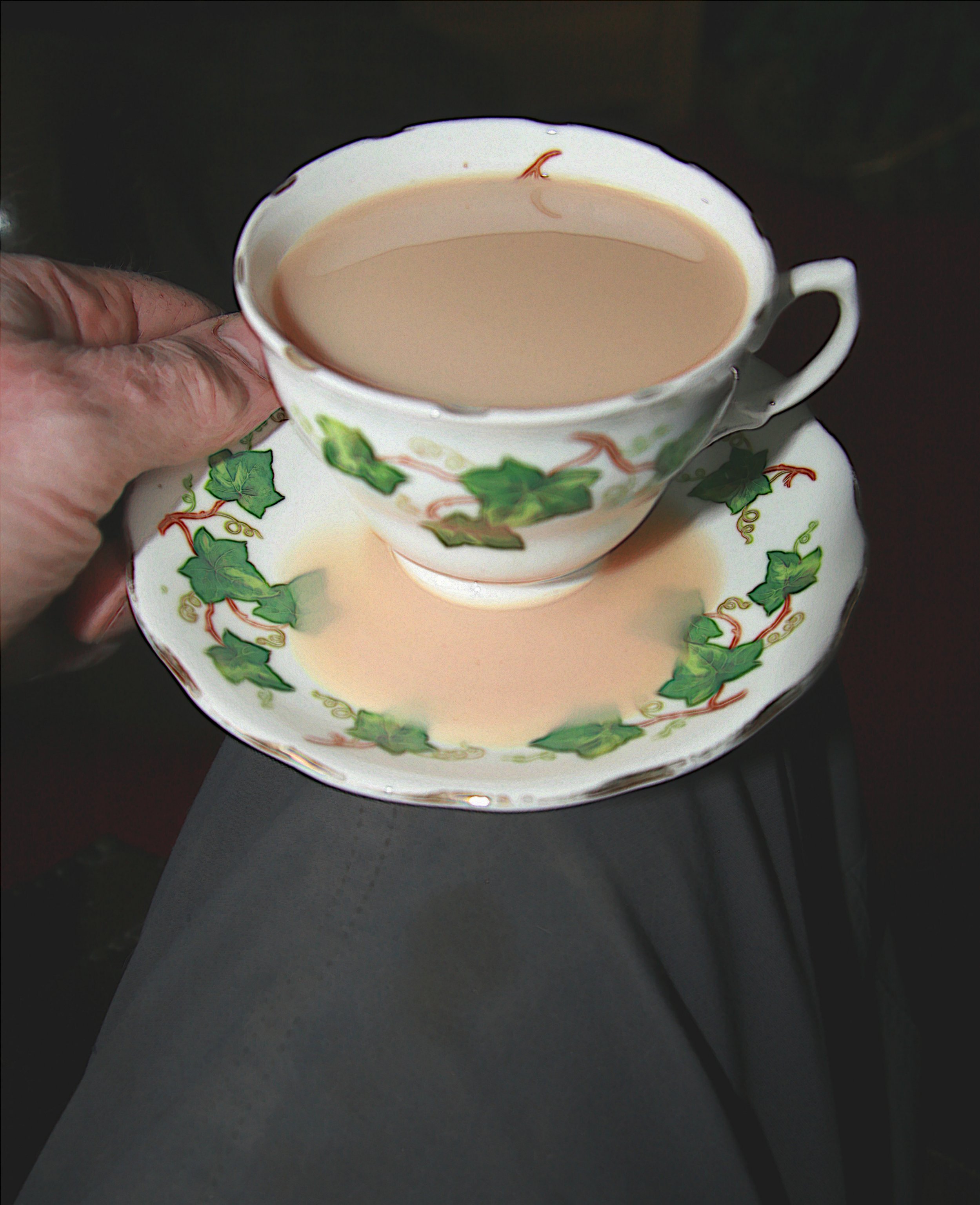
Frank O’Dwyer sat in front of the television in Mrs. Dodds’ front room, drinking a cup of Mrs. Dodds’ overmilky tea. The picture on the screen was of an aeroplane taxi-ing along the tarmac at RAF Brize Norton. It was a bitterly cold day and the gaggle of soldiers and politicians huddled at the end of the runway looked cold and crestfallen. The door of the plane swung open and two men emerged. The first, (according to the commentator, a diplomat) was dapper in suit and overcoat and placed a protective hand on the arm of the other. The second man was quite bulky and had a face that was pale and drawn, despite his incipient double chin. He was wearing a baseball cap, cheap windcheater and jeans. He looked lost, disorientated.
Frank shifted his position, forgetting the cup of tea on his knee. Some of it slopped into the saucer, and he had to make a grab for it to stop it, saucer and all, pitching to the floor. Mrs. Dodds came in at that moment, wearing the flour-stained green sailcloth apron that she reserved for baking.
“That him, is it?” she asked. Frank nodded. “He looks too old to be your son. More like your brother.”
Frank managed a temporary smirk. It was true that Connell was a chip off – right down to the indefinite waistline and distinct lack of bone structure. It was the receding hairline that made him look so much older than he was – that and his present dreadful pallor.
“He’s likely to look old, poor sod, after what he’s been through.”
The two men walked slowly across the tarmac. The second man, the one whom Frank had claimed as his son, had a limp and could not move fast. Eventually they reached the waiting reception committee. A well-known politician stepped forward to shake each of them by the hand. Then he gestured to a man and a woman standing on the fringes of the group. The second man pushed his way through to them and hugged them in turn. The camera showed a close-up of the woman’s face, wet with tears.
“ ….Connell Davy, reunited with his family …” came the even voice of the commentator. Frank seized the remote abruptly and turned the television off.
“Seen enough, have you?” said Mrs. Dodds. “I don’t know why you didn’t leave it on a bit longer. They might have interviewed him. He might have said something interesting about what he’s been put through.”
“I doubt it,” said Frank in a taut voice. “They probably won’t let him say anything – they’ll want to ‘debrief’ him, or some such rubbish.” He pronounced the word with a sneer. “But I’ll tell you one thing: this whole episode has been mismanaged by the authorities from start to finish and I’m not going to let them get away with it. I’m going to expose the bumbling mess that they’ve made. If it had been handled better, there would have been five men walking down that gangway today, not just Connell.”
“Still,” said Mrs. Dodds, “Connell’s the one that matters, isn’t he, as far as you’re concerned?”
Frank, still working on his fury, did not reply.
“By the way,” she added, as if the thought had just struck her, “who were that man and woman who came to meet him? It said they were his step-parents; but you’re his Dad. How come they were the ones who were asked to meet him? Is the woman your ex-wife?”
“No,” Frank said shortly, “she isn’t. My ex is dead. I’m going to make some phone calls.”
Footnote: I am away at a conference (day-job!) for five days from Saturday April 6th. I am continuing with the blog-posts, however. Regular readers of the blog may remember that one of the early posts was about how I trained for In the Family by writing a series of short stories, at Chris Hamilton-Emery’s suggestion. There are ten stories altogether, belonging to the theme of ‘The Village’. I’ve been revising them recently and may try to publish them. For each of these five days, I am posting on the blog the opening paragraphs of the first five. If you’d like to make any comments, they’d be extremely welcome; I’ll respond to them on my return.
The Village: Short story opening 2.

Matilda carried a twin-entry accounting system in her brain. It was a tally of favours and gifts that people had presented to her and the ones that she had given in return. If the former exceeded the latter, Matilda was happy. If it didn’t, she felt angry and cheated; and, when Matilda felt angry and cheated, she became abusive and destructive.
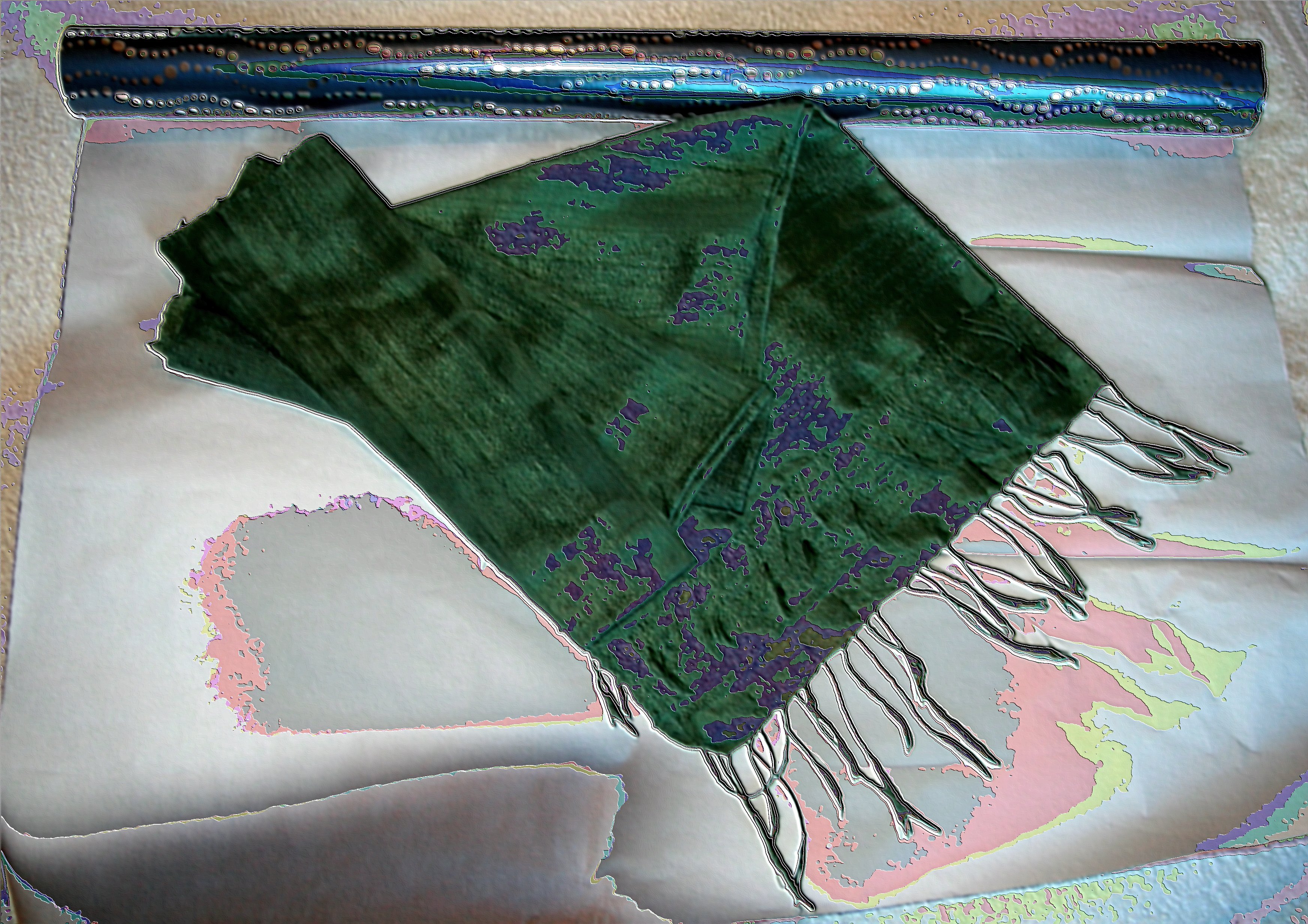
The main problem with Matilda’s cerebral twinlock system was that it was not an exact science and Matilda liked things to be in black and white; she did not believe in the benefit of the doubt. Sometimes, by expending a virtuous amount of energy, she could line up her figures more or less exactly. For example, although the brilliant green silk scarf that she had given her work colleague Joyce for Christmas appeared to be more generous than Joyce’s gift to her of some cologne and a desk diary (and, if Joyce checked, she would think that Matilda had spent almost three pounds more than she had), Matilda knew that she had in fact bought the scarf in a sale at a reduction of five pounds.
But what if Joyce had also bought her presents in a sale? Matilda might have been cheated, after all.
Favours were even more of a headache. What price should she put on looking after Blackie Daff, the tomcat next door, while his family was on holiday for the week? Was it worth more than having free access to the contents of Mr. Daff’s greenhouse for the period of the favour – of which offer Matilda had taken full advantage – and the “true friend” china dish that Mrs. Daff had produced upon her return? Looked at one way, feeding the cat and giving his bowls a rudimentary rinse out had barely taken fifteen minutes of Matilda’s time each day, so she was the undisputed gainer; looked at another way, if the Daffs had put Blackie into a cattery, it would have cost them twenty – possibly thirty – pounds. If that was the going rate for cat-minding, had she taken enough cucumbers and tomatoes to be able to compute with certainty that the produce together with the dish were fitting recompense? Questions like this were very vexing.
From infancy, Matilda had been used to getting her own way. The late only child of a woman who was widowed shortly after her birth, she had been brought up at the Hall, where her mother had secured the position of housekeeper to Samuel Jessop and his wife Kitty, then in their seventies. Pampered by three adults and at the same time resentful that she shared in the Jessop heritage only by proximity, she had come to think that it was her right to be in the right. She would brook no contradiction and, while still a very small child, she could, if thwarted, summon up a magnificent tantrum, all the while observing that it was having the desired effect from one keen eye that pierced through the tears. Although she was too young at the time to put the concept into words, it was then that she devised the tally system.
When her own children were born (of course, she was married first, but the husband was a detail), she saw before her a two-decade opportunity to build up capital on the balance-sheet. She had a son and a daughter and both, as she had intended, worshipped her. Over time, they came to scorn their father.
Footnote: I am away at a conference (day-job!) for five days from Saturday April 6th. I am continuing with the blog-posts, however. Regular readers of the blog may remember that one of the early posts was about how I trained for In the Family by writing a series of short stories, at Chris Hamilton-Emery’s suggestion. There are ten stories altogether, belonging to the theme of ‘The Village’. I’ve been revising them recently and may try to publish them. For each of these five days, I am posting on the blog the opening paragraphs of the first five. If you’d like to make any comments, they’d be extremely welcome; I’ll respond to them on my return.
The Village: Short story opening 1.
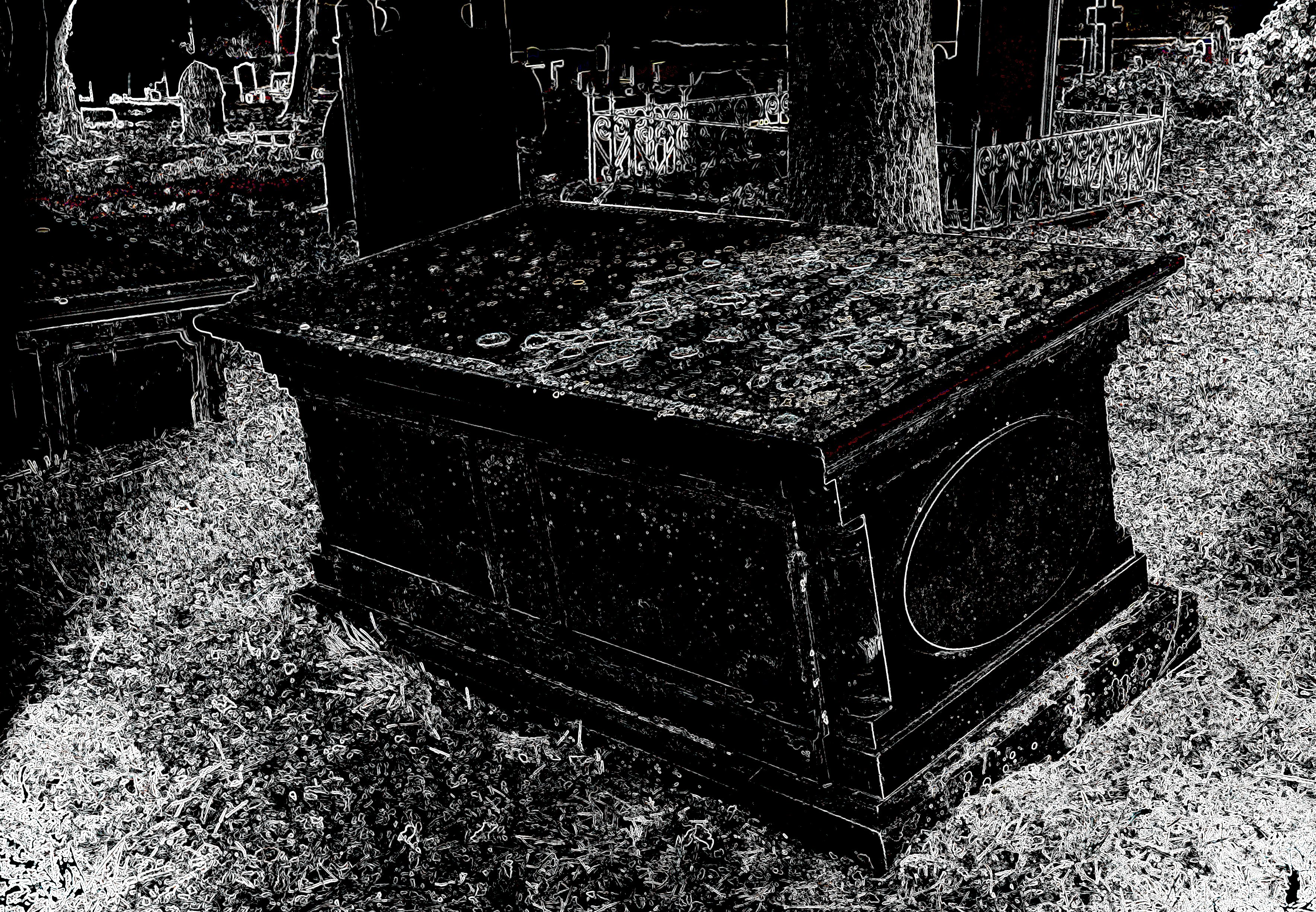
It was a long walk through the village. She paused at every entrance, every house. Dogs barked as she passed. The wind was high and there was a full moon, so that she could see the grim storm clouds sweeping by. Her leg was hurting.
Light winked palely from one or two of the houses. Odd that they were not shuttered. She paused at the junction and braced herself to climb the steep hill to the church. She hoped her leg would bear it. She passed the Hall and then the home farm. She had put every vestige of light behind her now. There was nothing but the long dark stretch past the yew hedge to the churchyard.
She was walking more slowly… and not only because of the pain in her leg. She was not afraid of the churchyard, certainly not of death or the dead, but she felt an intense loathing for the place, a terror of returning. It had been a very long time since she was last there, or so she thought; her memory played tricks on her occasionally; she knew that.
The path was bumpy. The yews huddled together, dense gatekeepers of the consecrated ground. A car rounded the corner suddenly, raking her with its headlights. She could see the driver’s face; she thought that he looked startled.
She rested against the low wall next to the yews. When she was a girl, people had said that they’d been planted here by Druids; that they had been here long before the church and were the reason that it had been built here.
She rubbed her leg; it did not help the pain. She crossed the road, so that she was standing under the lych-gate. She heard a strange noise – a squeak or a suppressed laugh – and it alerted her. She peered into the grey of the churchyard. The broken table tombs nearest the church door loomed out at her, but she could see nothing else.
The most compelling first novel I’ve read in a long time…

The Expats, by Chris Pavone, is undoubtedly the most compelling first novel I’ve read in a long time. Since the blurb says that the author has been a book editor for twenty years and his list of people to acknowledge includes such luminaries as Molly Stern, Angus Cargill and Stephen Page, I conclude that he had a bit of a head start over most new fiction writers, but I wouldn’t want to hint, even for a moment, that the author of this brilliant book does not deserve heaped praise.
The overall plot is a little reminiscent of that of Mr. and Mrs. Smith – and, indeed, I could imagine Angelina Jolie and Brad Pitt playing the lead roles if the novel were ever made into a film. Like the Stieg Larsson novels, it is also about an expert hacker. Pavone is more subtle than Larsson when he explores the moral issues connected with the murky worlds of undercover agents and hackers – the female protagonist, Kate Moore, especially ponders whether an illegal or dishonest action can be justified in order to promote a greater good, and does not find reassuring answers.
The characters of Kate and her husband, Dexter Moore, are especially well-drawn and the portrayal of the two ‘villains’, Bill and Julia, is very successful, because for most of the book the extent and nature of their villainy is difficult to gauge; in fact, at one stage, we are made to think that they might be good guys after all, though the reader’s gut instinct is not to trust this possibility. I also love the character of the Smiley-like Hayden, who has a rich cameo part.
The author’s descriptions of various European settings – Paris, the Alps, Amsterdam and, above all, Luxembourg – are compelling. Twists and turns of plot continue until almost the last page, but never seem far-fetched. If I have a very minor complaint, it is that Kate’s sudden access of sentimentality at the end is unconvincing.
One small sadness is that, although I should like to see more of Kate in future novels, the ending makes this unlikely (though not impossible). Whatever Chris Pavone’s plans for his next book, I await it with impatience.
Footnote: Tomorrow I am going to a conference (day-job!) and shall be away for five days. I shall continue with the blog-posts, however. Regular readers of the blog may remember that one of the early posts was about how I trained for In the Family by writing a series of short stories, at Chris Hamilton-Emery’s suggestion. There are ten stories altogether. I’ve been revising them recently and may try to publish them. For each of the next five days, I intend to post on the blog the opening paragraphs of the first five. If you’d like to make any comments, they’d be extremely welcome.
Bodies have a habit of turning up…

John Taylor, an undertaker, has been imprisoned for seventeen years for murdering his wife, even though the police have found no body; I suppose that an undertaker is in a uniquely convenient situation for disposing of a corpse without trace. When I read the story, it reminded me of the murder of Muriel McKay, whose body was also never found, though two men were convicted of killing her (police believed that her assassins mistook her for Rupert Murdoch’s then wife, Anna Murdoch, who is also a writer). Such murders stick in the mind because it is so rare for the body not to be discovered. Even where there isn’t sufficient evidence to convict without one and the murderer appears to have got away with it, bodies have an odd habit of turning up unexpectedly, sometimes many years later. I’m thinking now of the ‘lady in the lake’ murder of Carol Park, who disappeared in 1976, but whose body was not found until 1997, by which time her husband, Gordon, who was then convicted of her murder, had married twice again.
The new Pompeii and Herculaneum exhibition at the British Museum shows us how durable human remains are – though these particular skeletons were preserved by unusual natural phenomena. Yet well-preserved ancient skeletons from the past are often found in ordinary graves – the recent discovery of Richard III’s almost intact bones offers a good example. Even unceremoniously-buried bones, such as those found in an old charnel pit discovered during this year’s Crossrail excavations and thought to date from the time of the Great Plague of 1665 show remarkable resistance to the passage of time. The supreme example, of course, of a body which has stood the test of time and miraculously appeared millennia after his demise is that of ‘Ötzi the Iceman’ in the Ötztal Alps; ice is a great preserver.
You’d think it would be easy to conceal a body for ever, but clearly it isn’t. No doubt some murderers have managed to do it; some will even have committed the ‘perfect crime’ – i.e., one that has not been discovered. This is a macabre kind of virtuoso performance that can never be boasted about or celebrated, though no doubt some will have been unable to resist and fallen into the trap of talking about the deed, thus giving themselves away.
Bodies: the stuff of crime writing; tough and surprisingly persistent in making their appearance.
Shakespeare, a man more sinning?

Recent research, I was amused to read, shows that Shakespeare was fined for hoarding malt and corn and selling it to his neighbours at times of poor harvest. At the time, he was already an established author with (presumably) a reasonable income, so indigence could not have been an excuse. We already knew that in his youth he poached deer and that as an adult he was fined for not attending church. The two latter are perhaps more in keeping with the anarchic streak that we expect from a writer, but discoveries of the Bard’s foibles and failings are always greeted with a sense of incredulity, if not outrage. This is curious, for surely it is illogical to expect the nation’s most profound student of character to have been himself a colourless tabula rasa. Besides, living in Elizabethan England was an uncertain business at all social levels and we know that Shakespeare was not without the type of social ambition that could be fuelled only by money. His acquisition of New Place, a substantial house, would have sent a message to prosperous Stratford burghers that he could claim his place as their equal.
The world seems to require a moral standard from Shakespeare, as if his intellect and wordpower somehow elevate him to a heavenly plane, where there is a writer paradise entirely free from sin, that we may look up to and admire; we don’t seem to require this of other writers in the same way. Byron’s poetry, for example, is not judged by his immorality. So why the sense of shock with Shakespeare? Perhaps it is because we know so little of Shakespeare’s life, so that every new snippet of information about him carries greater weight and significance than if his career were better documented. I do, however, think that it is more likely that it is because he is viewed as a kind of literary god, whose grasp of humanity is superhuman, and as the yardstick by which we judge all our literary heritage; it is unthinkable to ascribe grubby behaviour to such a mighty individual!
However, as a writer of murder stories, I am glad that Shakespeare was demonstrably a sinner and very human. His understanding of and rapport with the realities of human behaviour and character paved the way for the rest of us by creating some of the most eloquent murderers of all time. I’m not sure that a goody two shoes would have been able to manage that.
Gangs on the land…

Still reading about rural life, I was interested that the history of nineteenth century Lincolnshire that I have just completed and a more general book about farm labourers both mention gang labour. Gangs were self-assembled groups, sometimes of both sexes, sometimes consisting entirely of men or of women, who hired themselves out to farmers as an entity. The advantage to them was that, as a group, they were less likely to be exploited; some gangs also contained children (I suspect that, although the gang may have saved these minors from exploitation by the farmer, it was probably less punctilious about appropriating their wages!). However, they were often troublesome and, in Lincolnshire in the later nineteenth century, by-laws were introduced to attempt to curb their excesses of behaviour and to set out clearly the terms under which they could be employed.
Both books say that the practice of developing and employing gangs had become obsolete by the turn of the twentieth century. However, when I was a student in the 1970s, taking summer holiday jobs working in the local canning factory, gangs were certainly still being employed there. They were of three kinds:
A group of twenty or so Maltese women was taken on in the key fruit and vegetable harvesting months of June, July, August and September and they lived in trailers on the factory site. I remember that when I was cycling home in the evening, having worked the four hours’ overtime allowed, I would sometimes meet two of them carrying a crate of beer to share with the others.
Then there was a group of Irish women of all ages, many of them well-educated and some also students. They were boarded with regular factory workers who were prepared to take them in, their keep being paid for by the company.
Finally, there were local agricultural gangs, I imagine of exactly the kind that these history books refer to, who, like other local casual labour, turned up each day and were not provided with accommodation.
The gangs I knew consisted entirely of women. They were extremely rough and foul-mouthed and were usually put to work together; they were shunned by everyone else on the factory floor because they would pick a fight at the drop of a hat. One year, the forewoman (whose name was Dulcie – she had a voice like a squeaking gate) made the mistake of hiring two rival gangs. I vividly remember a woman from each of them fighting one Friday lunchtime, thrashing it out on the concrete floor. It was the most vicious event I have ever witnessed. They tore out handfuls of each other’s hair and scratched faces with fingernails, as well as landing punches. Eventually they were rolling on the ground, pulling at each other’s clothes. One of them ended up shirtless, her white bra bloodied and dusty. Dulcie and one of the male supervisors eventually succeeded in separating them and both gangs were dismissed. I guess that they spent the rest of the summer working on the land: at the time it was still possible to turn up at most farms and work at bean-pulling, potato-picking or bulb-cleaning for cash in hand at the end of the day. With hindsight, my guess is that most gang members were the virtual slaves of a single gang-master, or perhaps a few ‘élite’ overseers. I hope that the practice of gang employment has finally ceased now, but I suspect that the recent influx of immigrants to the agricultural communities of East Anglia may mean that it has ‘enjoyed’ an ignominious revival.
A fascinating period piece…
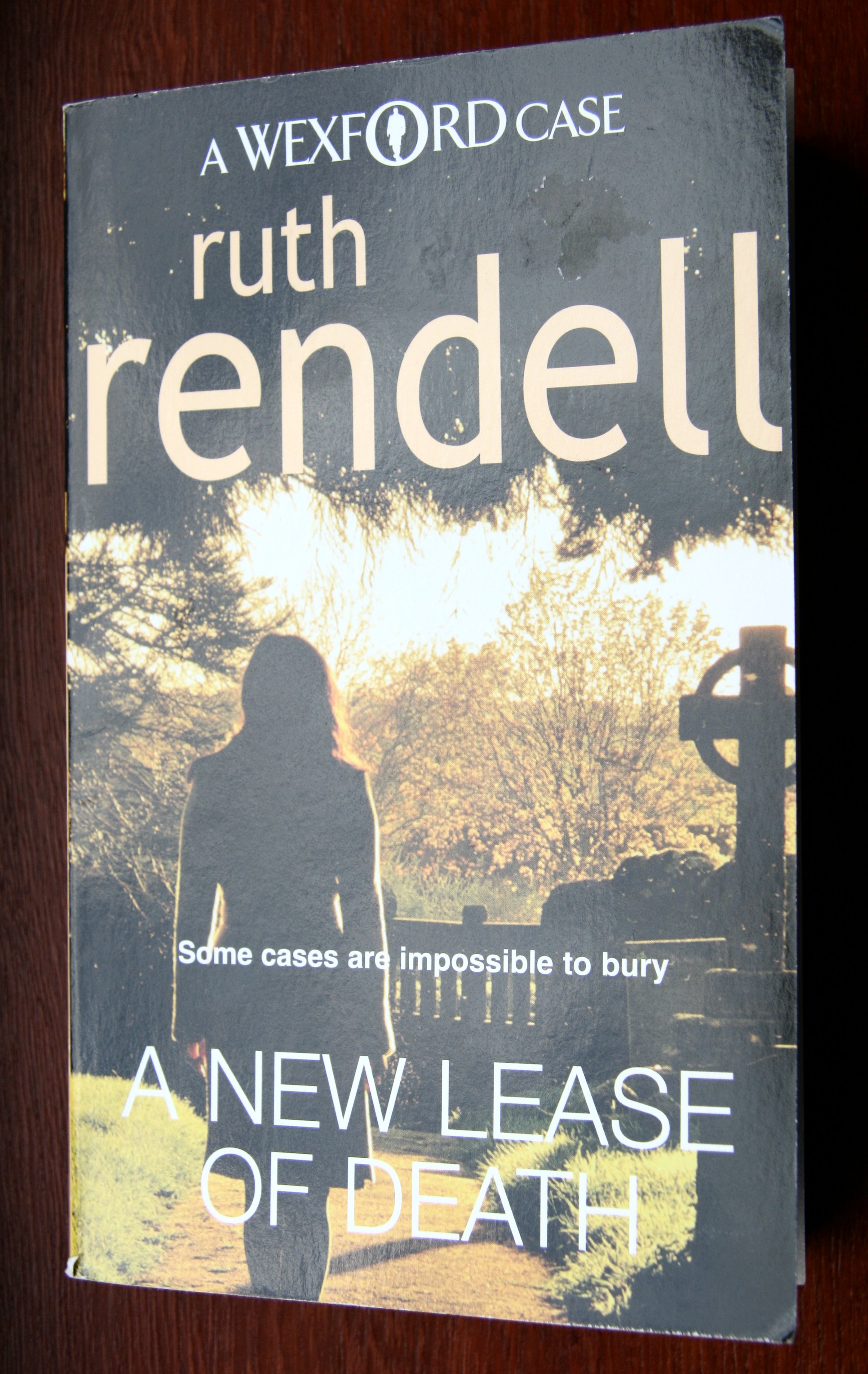
New Lease of Death is a relatively early Ruth Rendell novel, although Chief Inspector Wexford is already middle-aged and jowly. First published in 1967 and reprinted many times since, it is a fascinating period piece. It vividly describes a post-war England that is familiar to many – class-ridden, hidebound and generous only to those who obey the rules; still crime-writing territory for some authors, it has long since vanished. I’m not just talking about the topography, the clothes or the vehicles, but the outlook and mores of the characters. Without giving too much away, the plot hinges on the covering-up of an indiscretion which today would be regarded as neither shameful nor indiscreet.
All the later Rendell hallmarks are there: the cynicism yet essential decency of Wexford and Burden; the intricately-created family relationships; the credible twists of plot, the unspoken secrets. With hindsight, I’d say that one or two elements of the novel lack the sureness of touch that the author develops in her later work. What I found hardest to swallow was why Irene Painter’s second husband, Tom Kershaw, the delightful amateur polymath and full-time optimist, would ever have wanted to marry such a dreary, desiccated, sexless woman in the first place. More credible, but still jarring to the modern reader, is the busybodying intervention of the pious Reverend Archery. Nowadays he would be regarded as a prurient hypocrite whose son would have laughed him to scorn, but it is just possible that, when Rendell was writing in 1967, she intended the reader to take him at face value.
New Lease of Death is a period piece, but none the less enchanting for that. It is an undemanding good read, to be kept for cold nights on the same shelf as Agatha Christie and Ngaio Marsh.
 Christina James, crime novelist